
At the start of the millennium, Almeria won the right to host the 2005 Mediterranean Games. This meant the development of a new stadium, much closer to the city centre than the existing Estadio Juan Rojas, which was in the northern suburb of Torrecárdenas. To complicate matters (professional football in Almeria has a history of being complicated) there were two clubs in the city vying for the locals’ support. However, things were about to change.
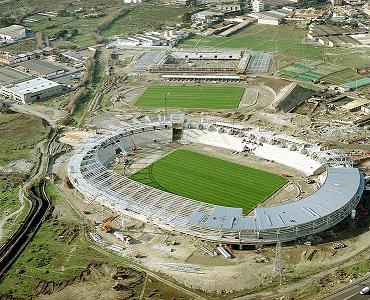
We will pick up the story during the 2000-01 season, which saw both Almeria CF & CP Almeria competing in Group IV of Segunda B. The two clubs met at the Estadio Juan Rojas on 5 November 2000, with Almeria CF winning by two goals to one. All was not well with CP Almeria, as debts were high and the results were poor. The club played its last official match on 6 December 2000, drawing 1-1 at home to Ecija Balompié. CP Almeria resigned from the league shortly afterwards and during the Christmas break, some of the club’s players crossed town to join Almeria CF. On 10 January 2001, Almeria CF changed its name to Unión Deportiva Almería and the newly christened club finished the season in eleventh place. The 2001-02 campaign would see UD Almeria emulate their success from seven years earlier, by winning promotion to La Segunda. The next few seasons saw UD Almeria struggle to establish itself in La Segunda, finishing 18th in 02-03 and 16th a year later. The 2003-04 season also saw UD Almeria’s last match at the Estadio Juan Rojas. On 14 June 2004, the club beat Sporting Gijón by two goals to one. The Estadio de los Juegos Mediterráneos opened on 31 July 2004, hosting the Spanish Athletics Championships. UD Almeria had to wait until 29 August to play at the new stadium, which was the opening match of the 2004-05 which was lost to Celta Vigo.

The summer of 2004 not only saw UD Almeria move into the new stadium, but it also saw the arrival of Alfonso García Gabarrón as club president. After a sluggish first season, which saw the appointment of four first-team coaches, the club started to progress, finishing sixth in 2005-06. The following season saw UD Almeria finish second in La Segunda and emulate AD Almeria in reaching La Primera. Under the guidance of coach Unai Emery, and with ex-Real Madrid striker Álvaro Negredo banging in the goals, UD Almeria surpassed all expectations in finishing eighth. Emery departed to Valencia at the start of the 2008-09 season and Alfonso García Gabarrón restarted the managerial merry-go-round. Five coaches came and went over the next three seasons of diminishing returns. Eventually, UD Almeria slipped back into La Segunda at the end of the 2010-11 season, finishing bottom with some hefty defeats to FC Barcelona and Real Madrid along the way. Some consolation was achieved when the club reached the semi-finals of the Copa del Rey for the first time. Almeria returned to the top flight in June 2013, thanks to a third-place finish in the league and victory in the playoffs over UD Las Palmas & Girona FC.
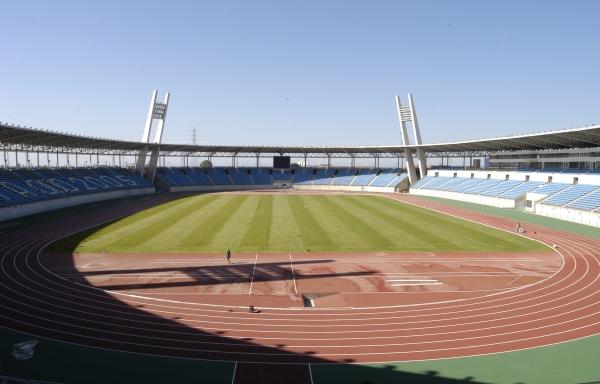
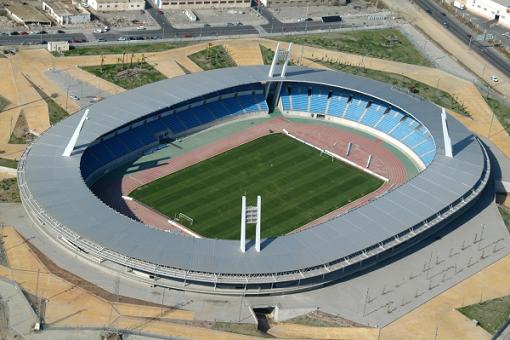
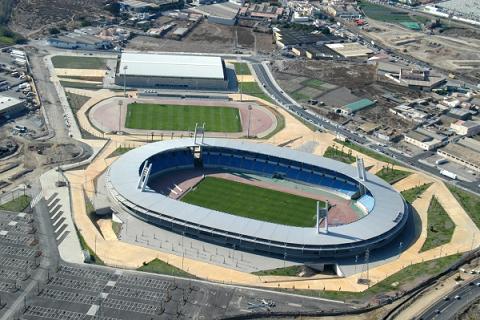
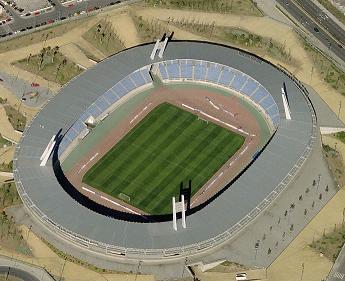
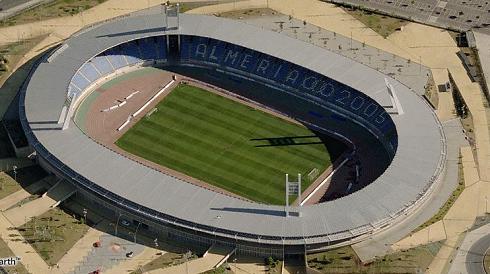
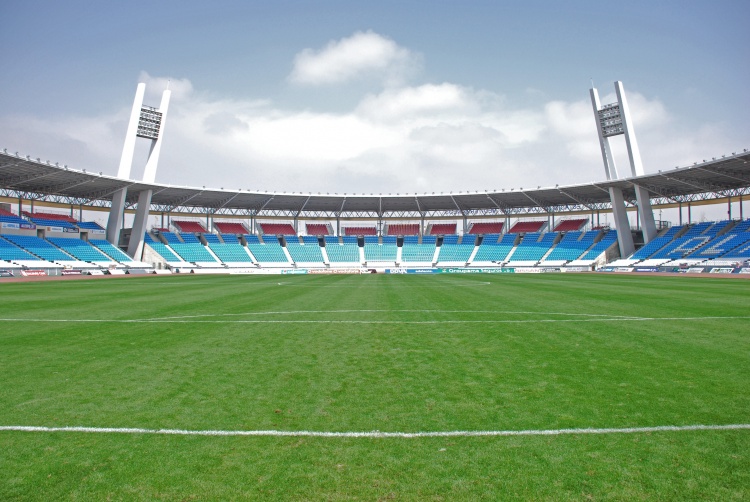
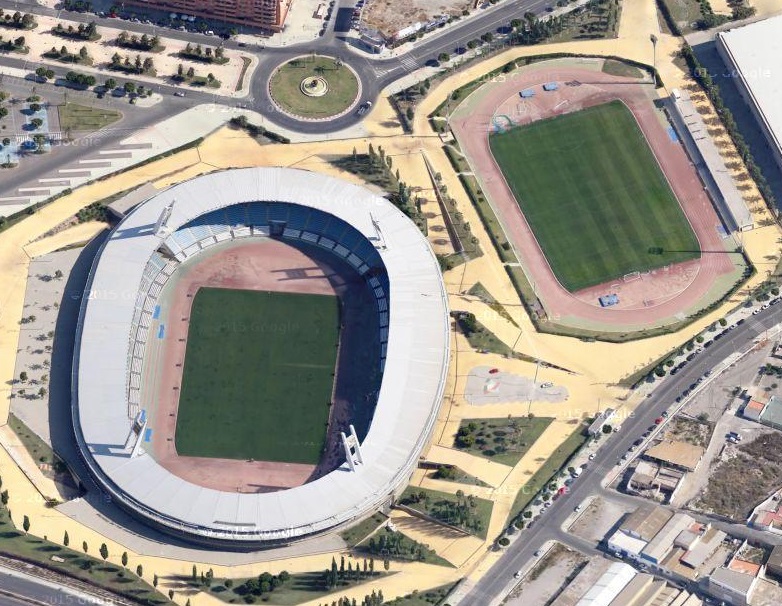
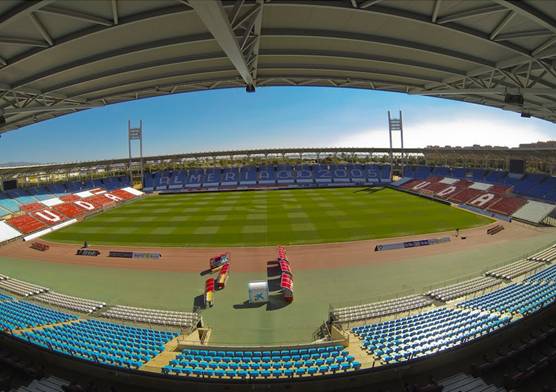
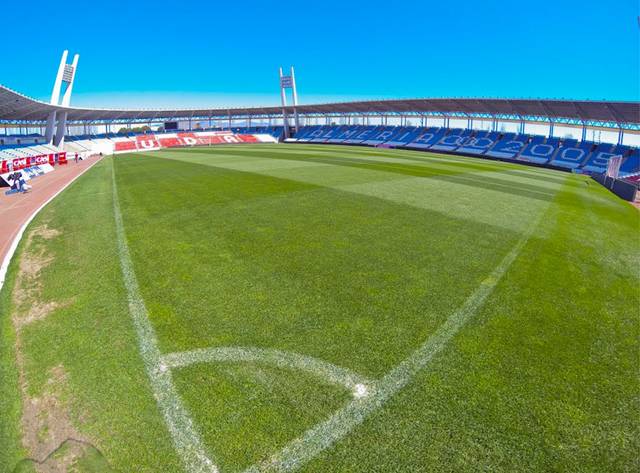
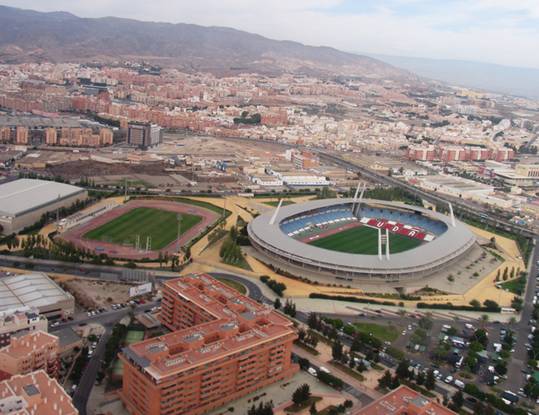
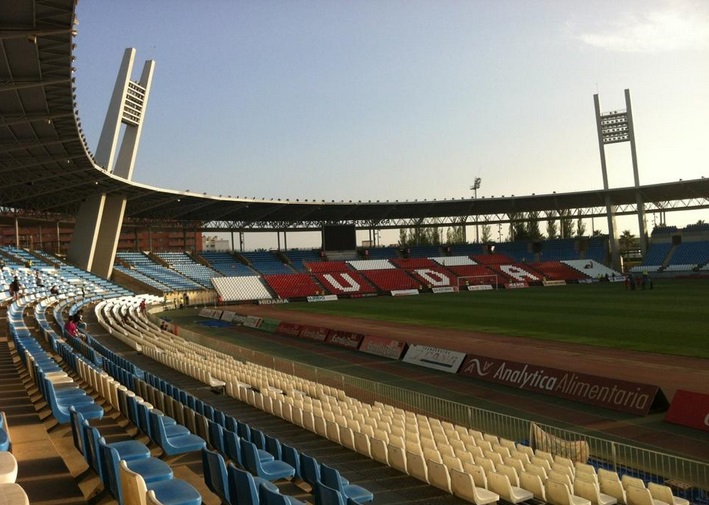
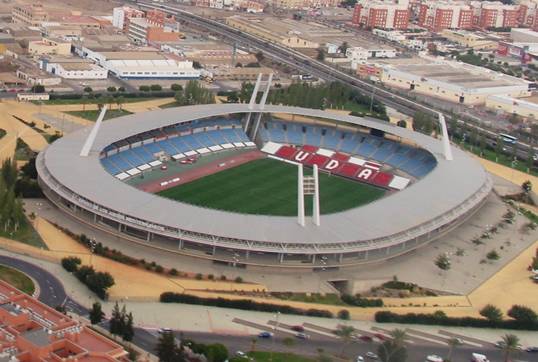
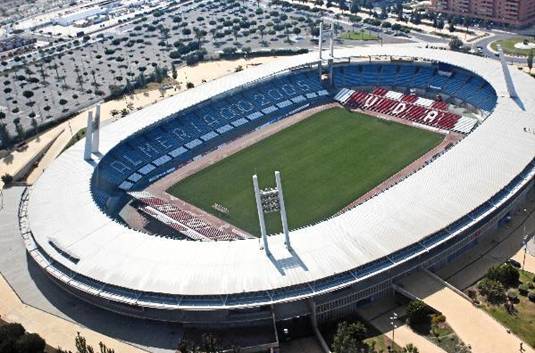
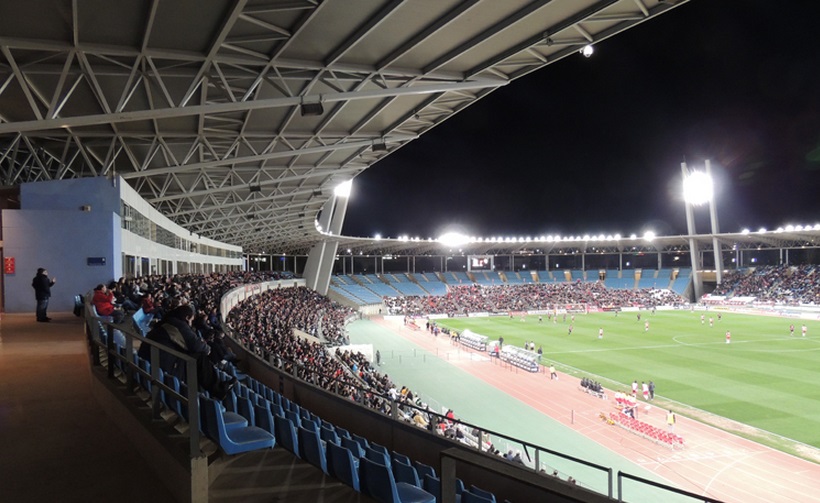
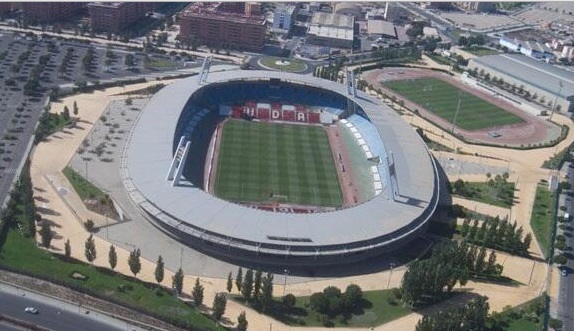
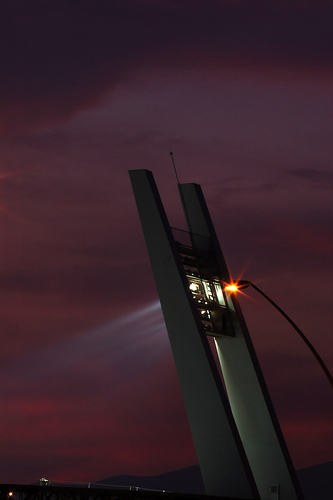
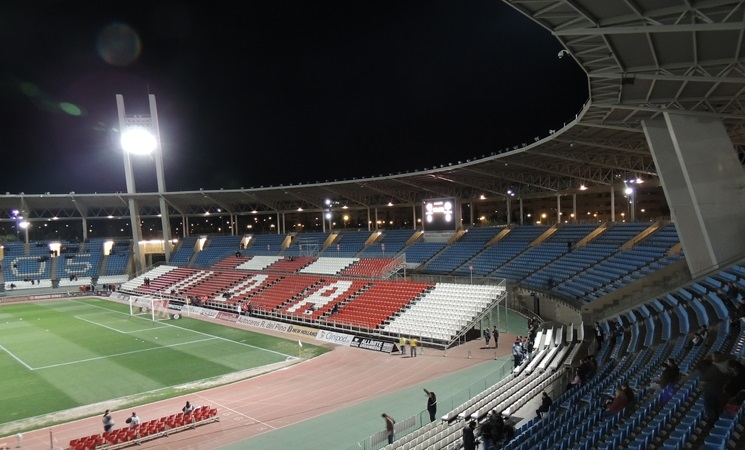
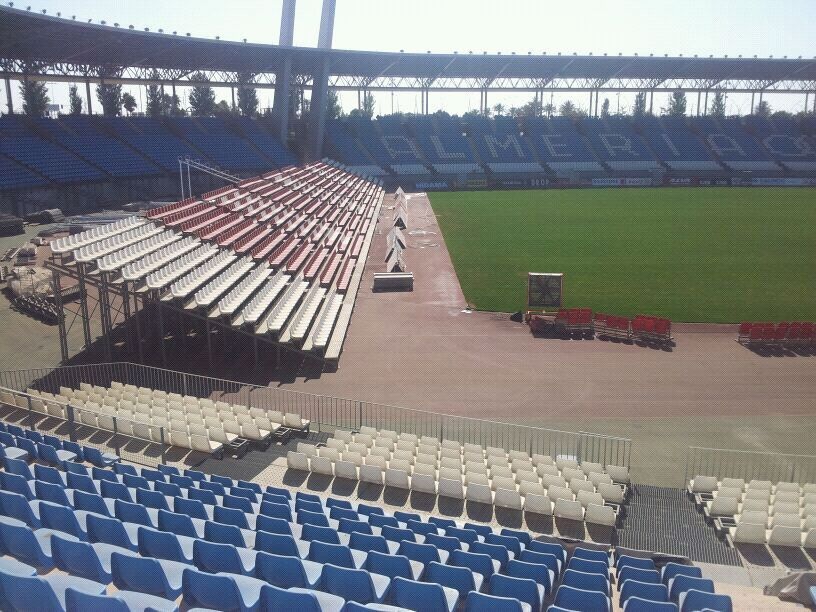
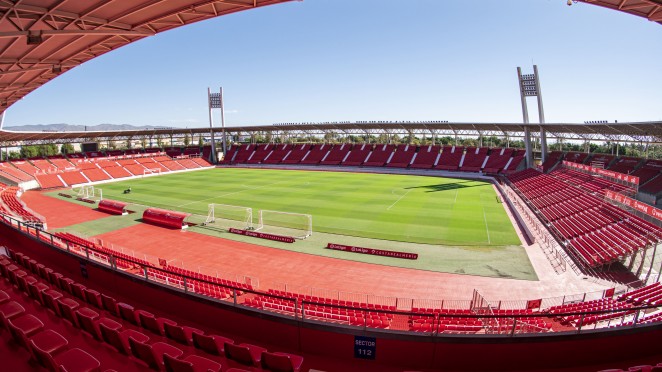
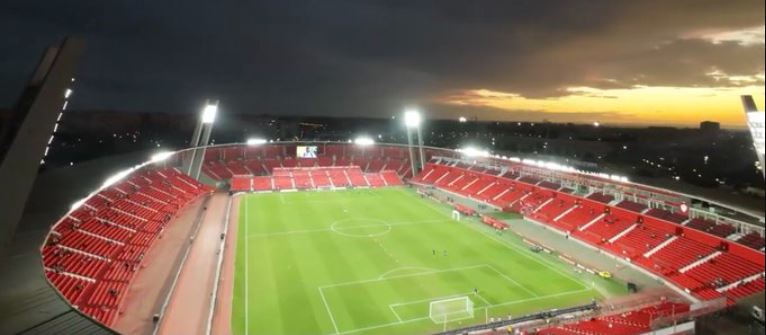
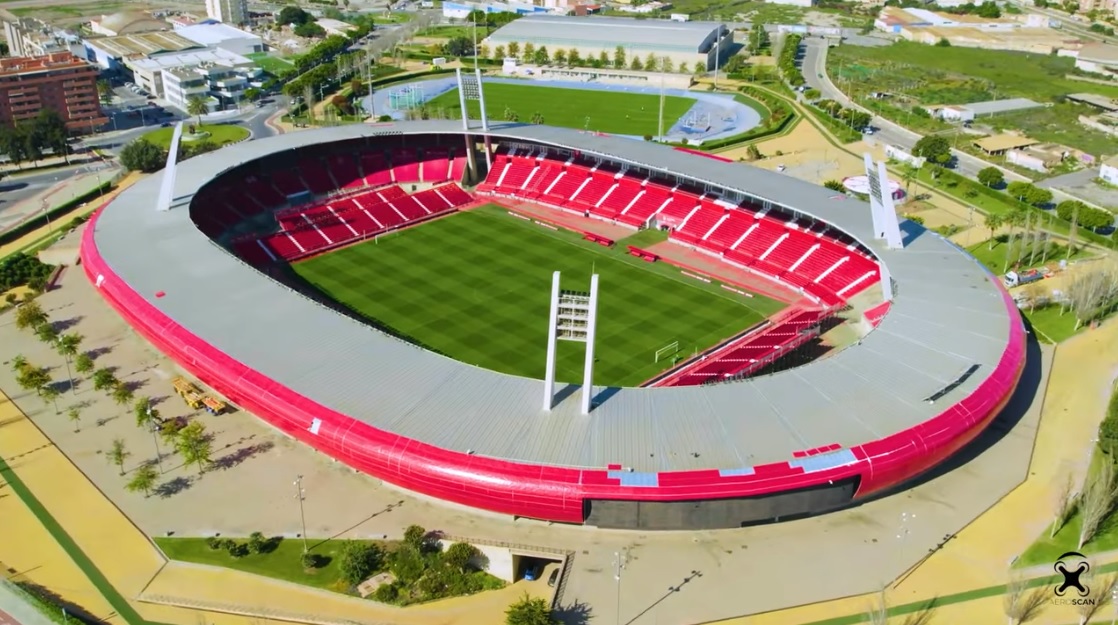
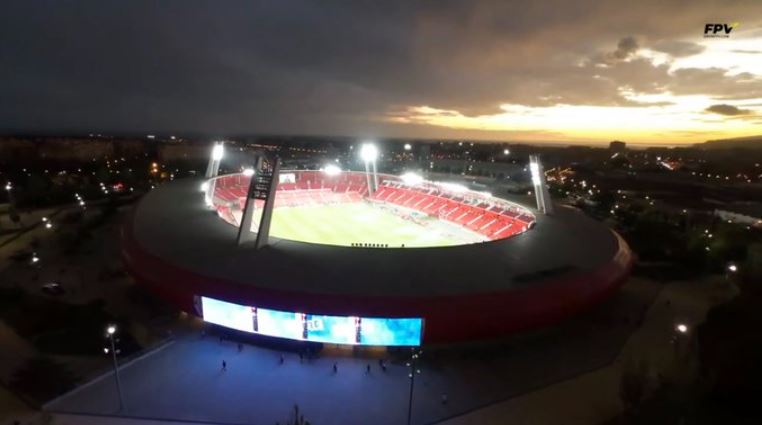
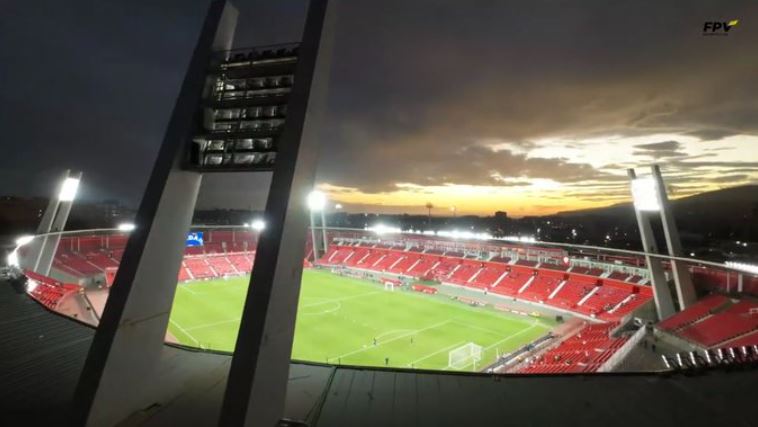
So far as athletics stadiums go, I liked the Estadio de los Juegos Mediterráneos. Admittedly, that is a back-handed compliment as it is still a fairly impractical football stadium, but Antonio Lamela’s design has some nice touches. The original layout of 15,000 seats was hindered by an additional gap of 10 metres or so between the front seats and the athletics track. This was countered by raising the seating tier so that the front seats of each block were 2 metres off the ground. Instead of a single tier that sweeps around the whole ground, the stadium is broken up into four separate stands. The break is achieved by the concrete pylons of the floodlights. These pierce through the steel framework of the cantilevered roof, like four immense toothpicks. The floodlights then gently lean towards the pitch, providing contrast to the sweeping curves of the roof.
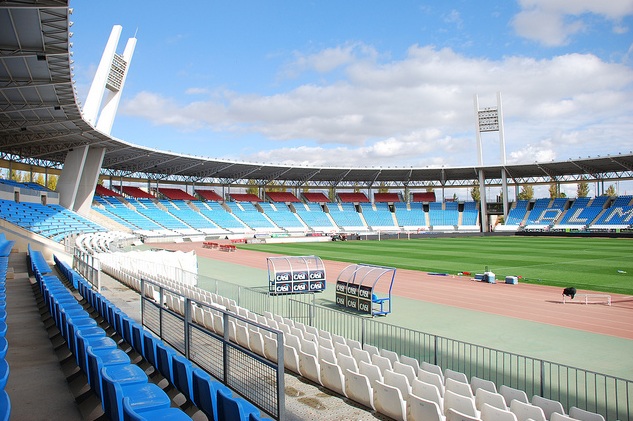
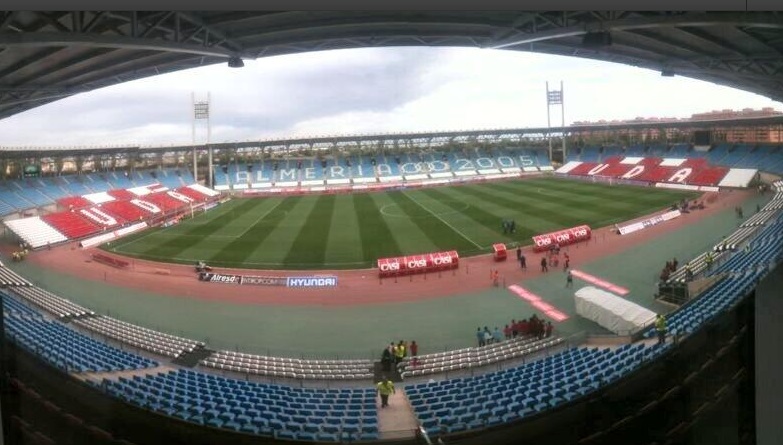
The municipality had forked out €21m on this new multi-sports arena, and then several million more in the summer of 2010 when additional seats were added. Four rows of white seats were built in front of the existing stands, and blocks of red seats were added at the rear of the end stands, to raise the capacity to 22,000. The stadium was rarely full when UD Almeria played in La Primera, so it wasn’t money well invested, particularly as another change was made in June 2012. In a move that mimicked the changes seen at Cagliari and other Italian stadiums, temporary stands were erected on the arc behind the goal, bringing the crowd closer to the pitch. This gave the stadium a temporary capacity of around 15,000, which was perfectly adequate when the home games averaged just over 10,000 spectators. From the start of the 2011-12 season, the stadium occasionally hosted Almeria B matches, although smaller matches were still played at the adjacent Anexo.
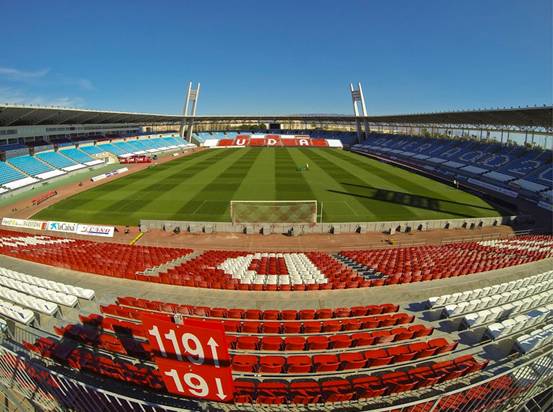
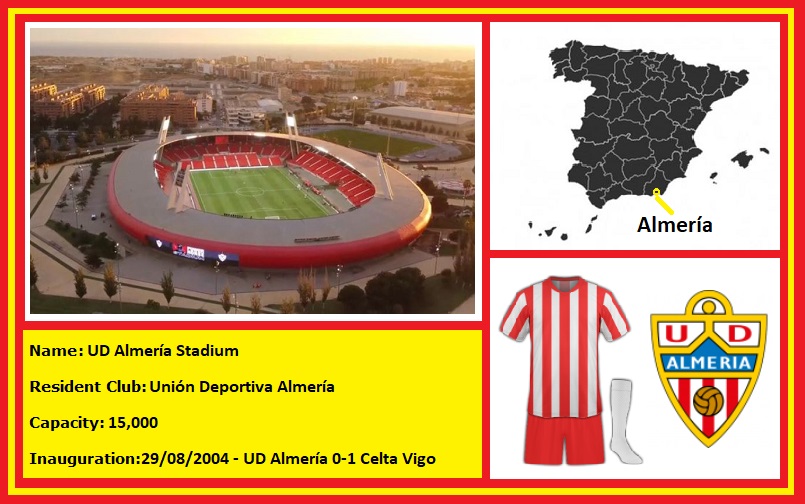
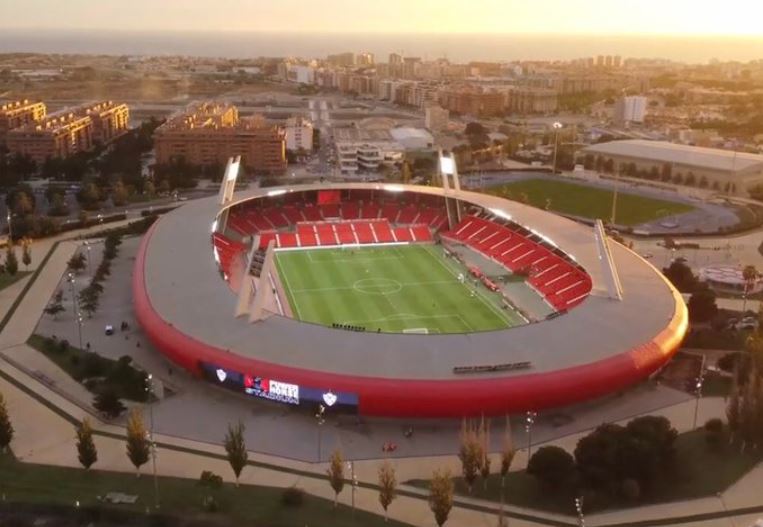
In August 2019, Saudi businessman Turki Al-Sheikh bought the club for €20m. Among many changes implemented during Turki Al-Sheikh’s presidency was the €5m renovation of the stadium. During the summer of 2022, the exterior walls were re-clad with a red polyurethane skin, whilst all of the stadium’s seats were resprayed in a matching shade of red. The temporary seating in the arcs behind each goal was removed in 2023, but with many seats cordoned-off in the upper tier, the official capacity sits at 15,000. This coincided with promotion back to La Primera and the renaming of the stadium, when Austrian energy drinks manufacturer Power Horse Energy Drinks GmbH, agreed to a 3-year deal. As was the case when UD Almeria previously reached the top flight, the stay was short-lived, with the club returning to La Segunda after just two seasons. The deal with Power House finished a year early and in August 2024, the stadium was renamed the UD Almería Stadium.

As a club, UD Almeria finally appears to have attained a degree of stability, albeit punctuated by short stays in the top flight. Considering the trials and tribulations of all its ancestors, this is probably the most startling achievement in just over one hundred years of football in this corner of Andalucia.






 Estadios de España