
Article updated: 25/07/2026
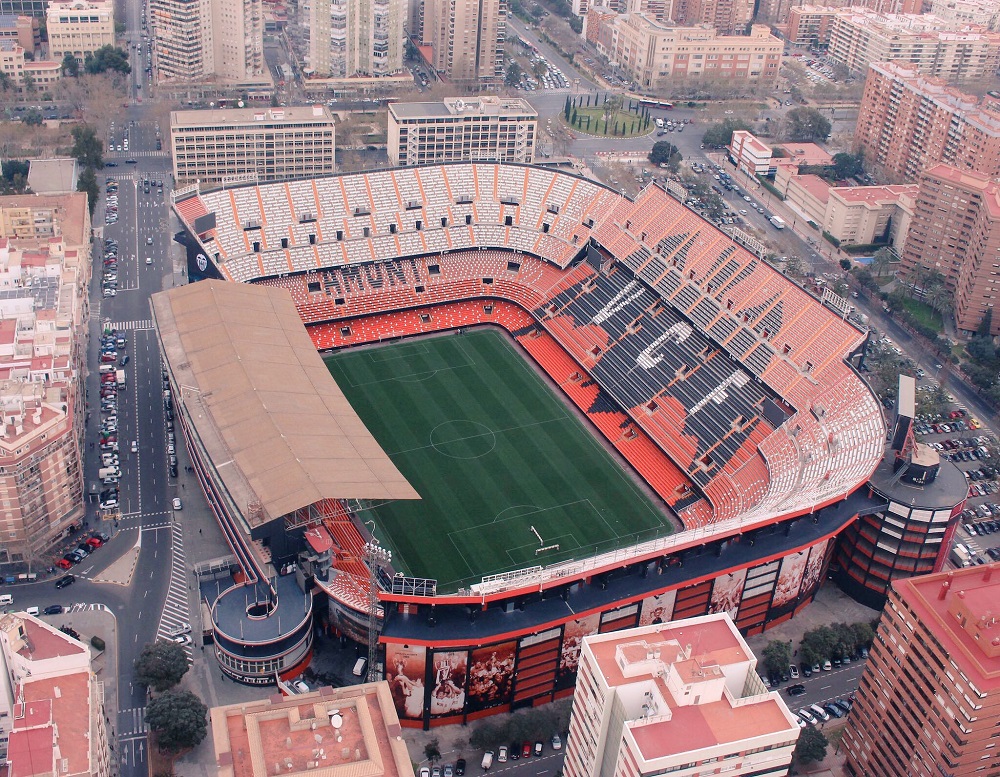
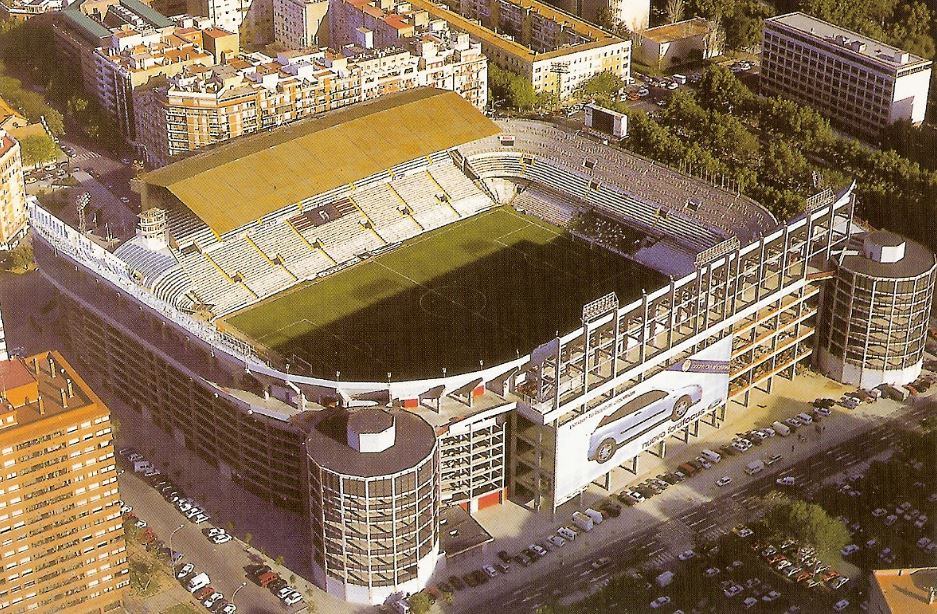
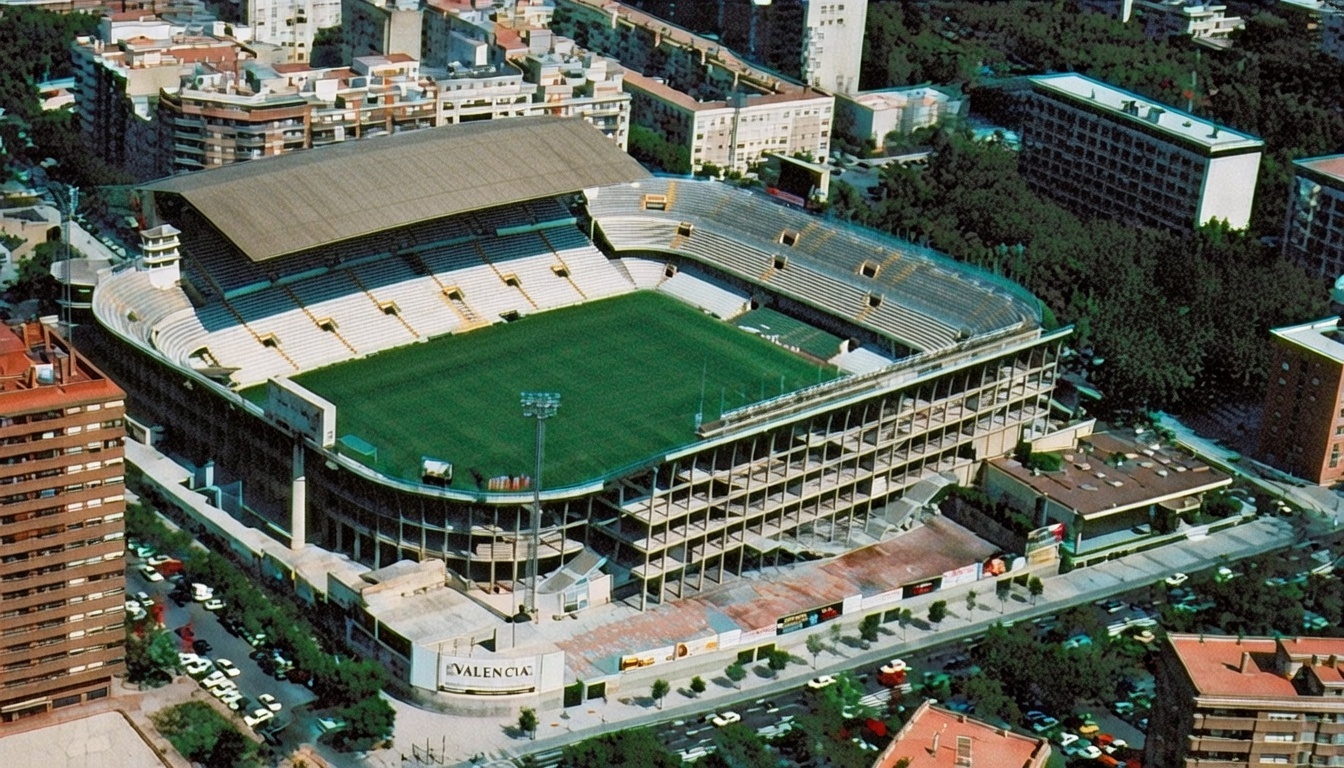
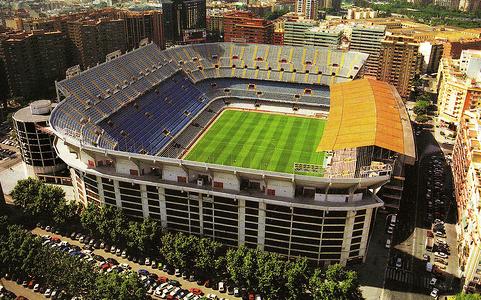
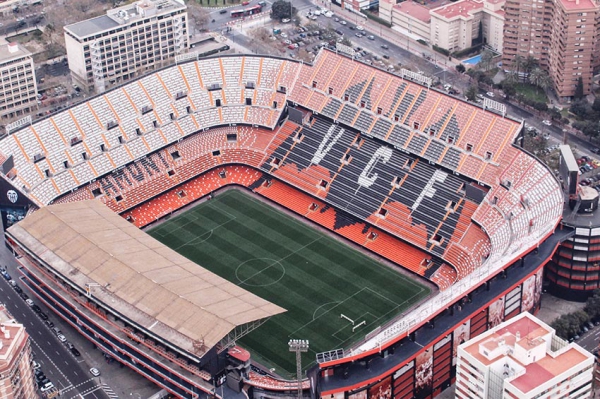
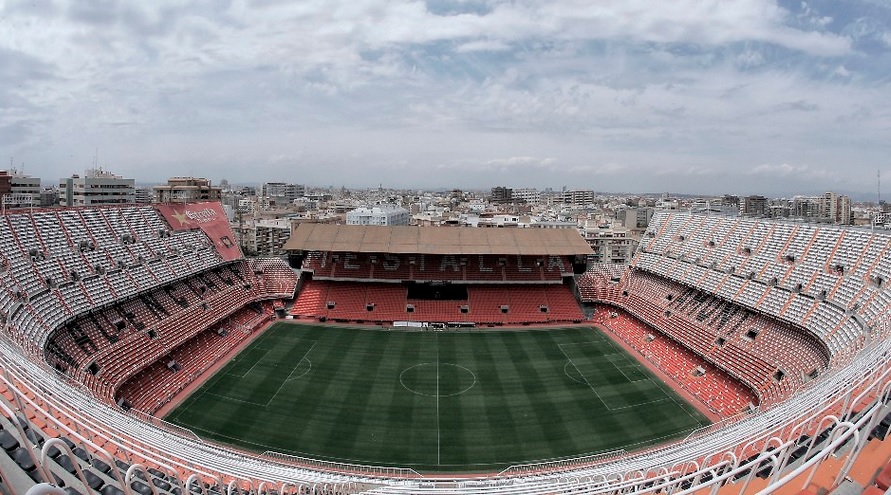
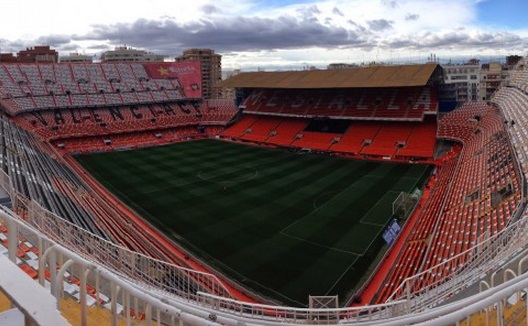
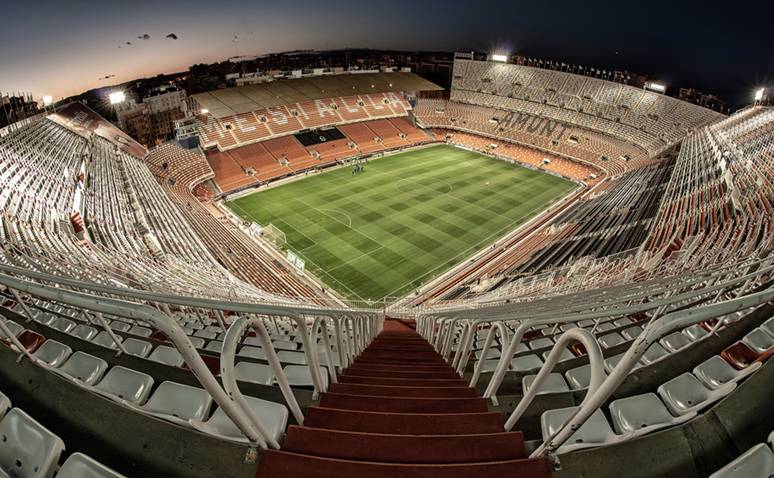
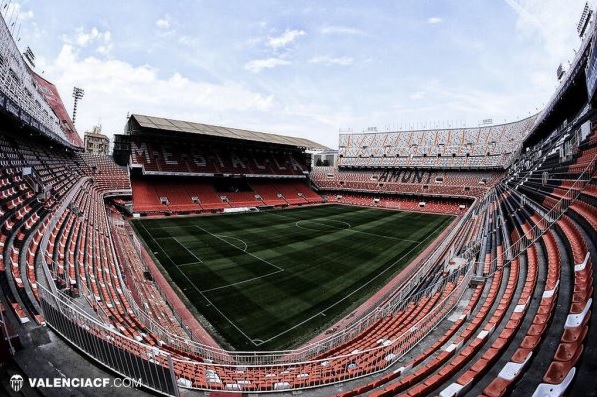
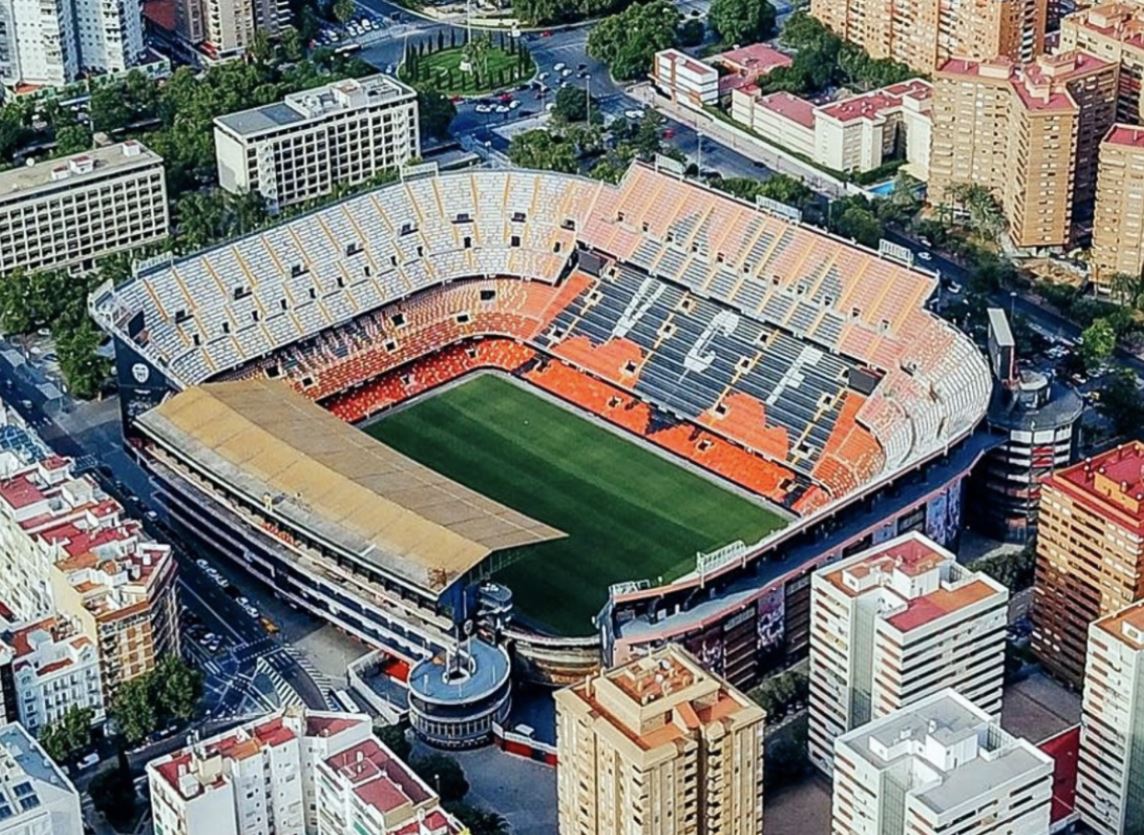
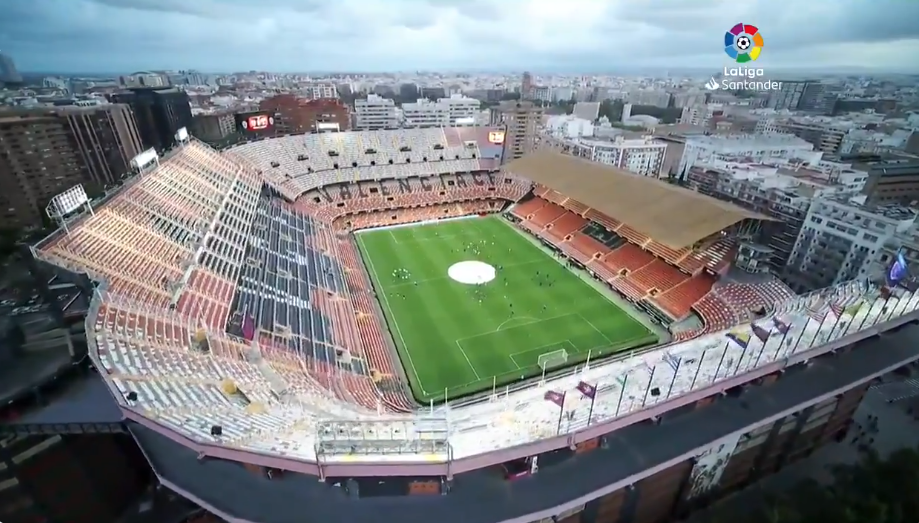
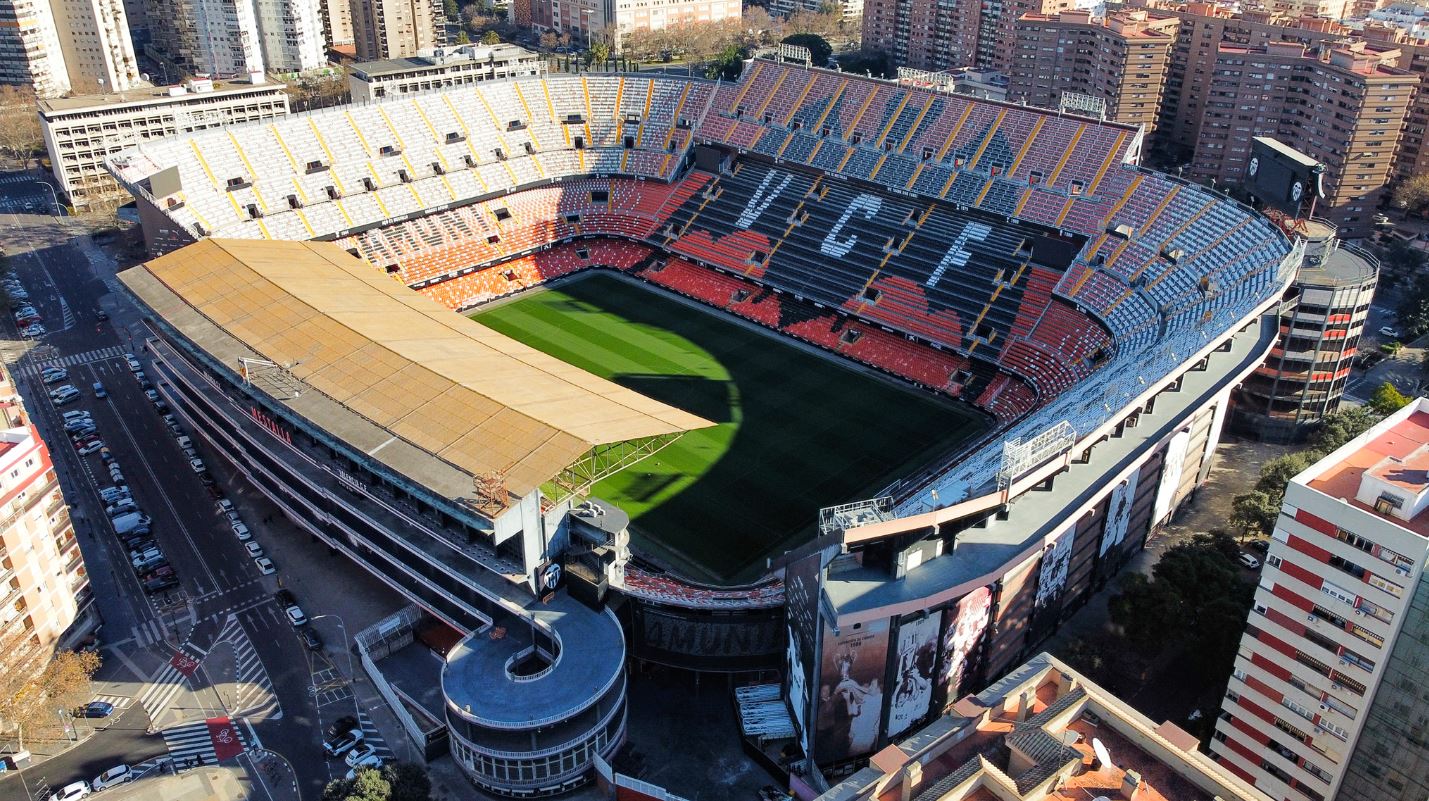
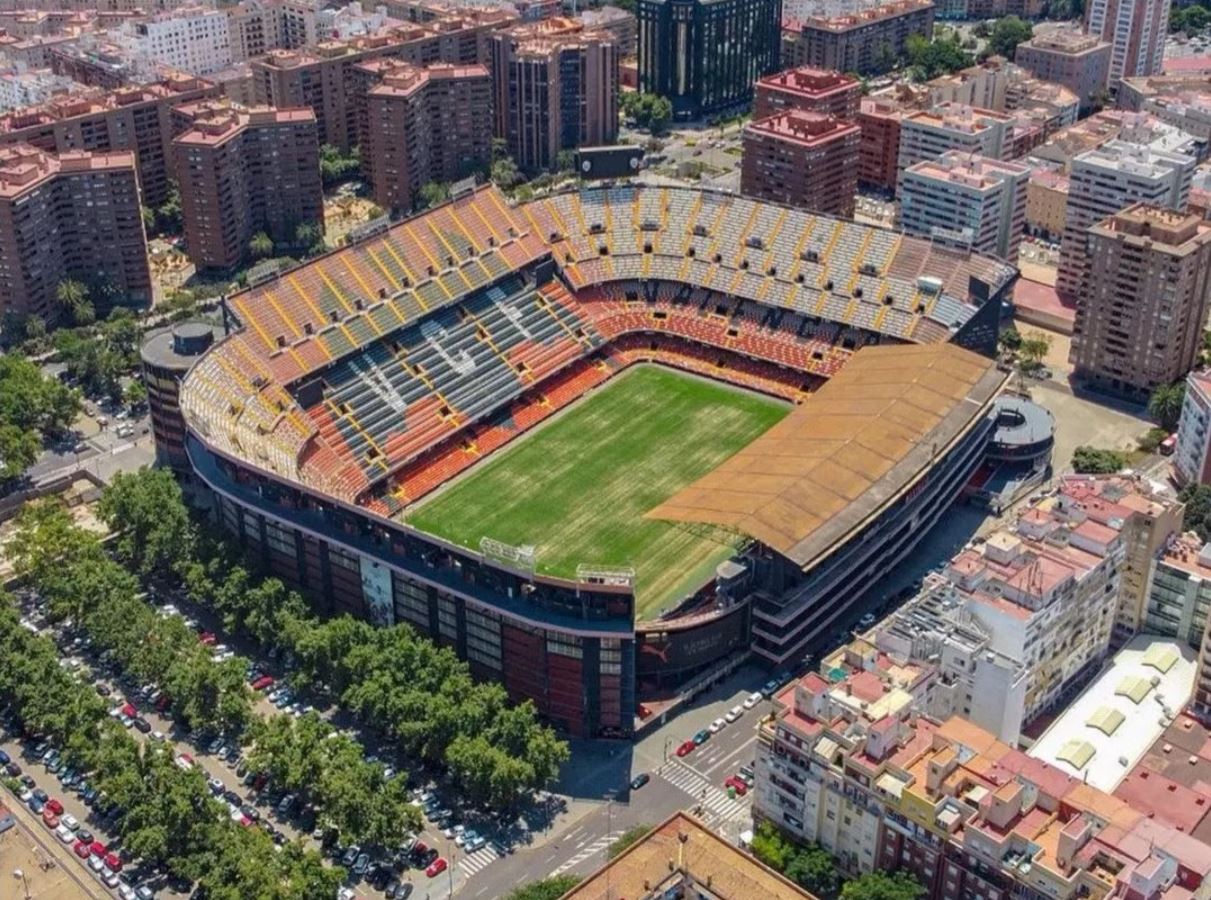
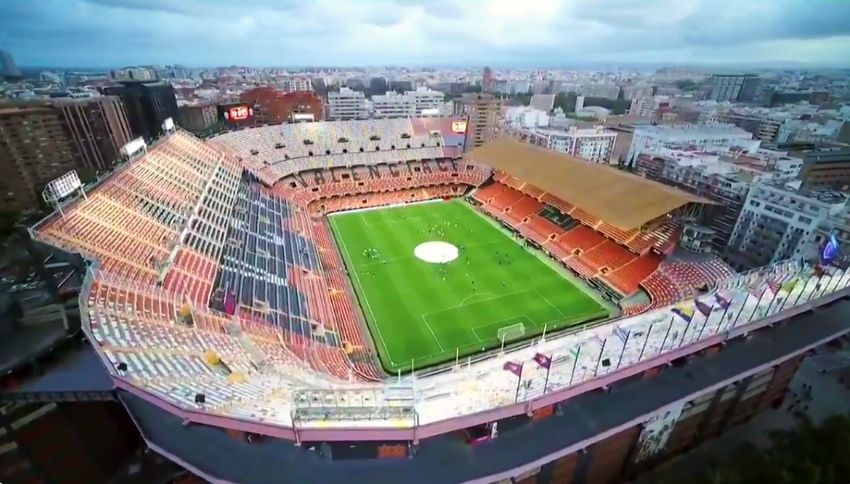
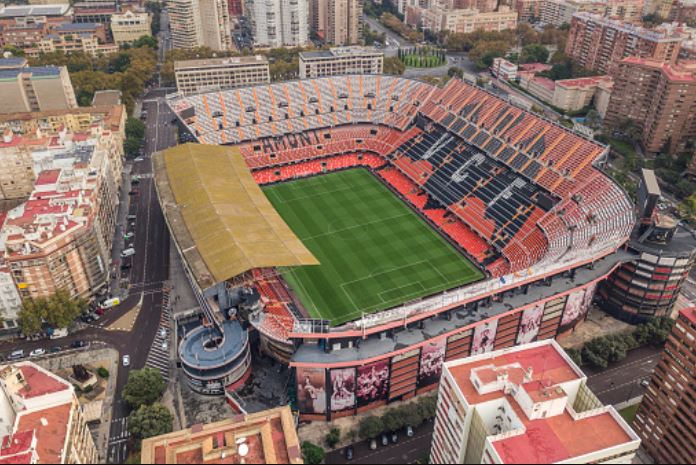
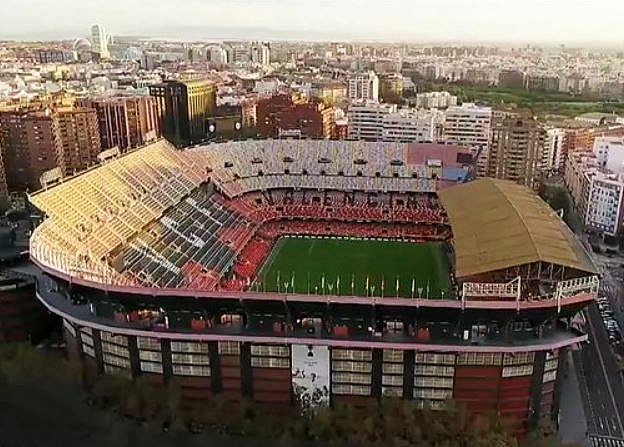
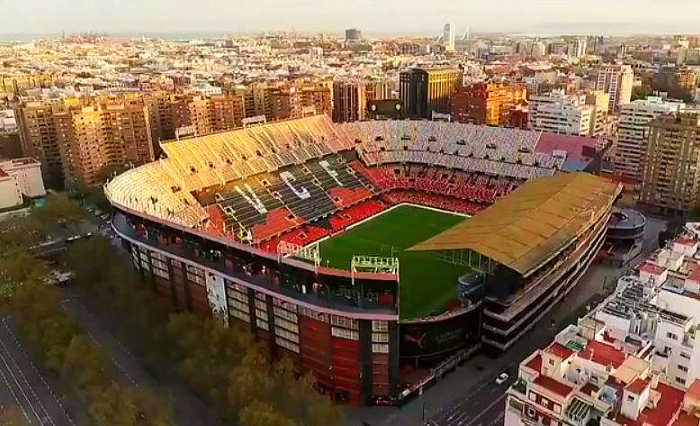
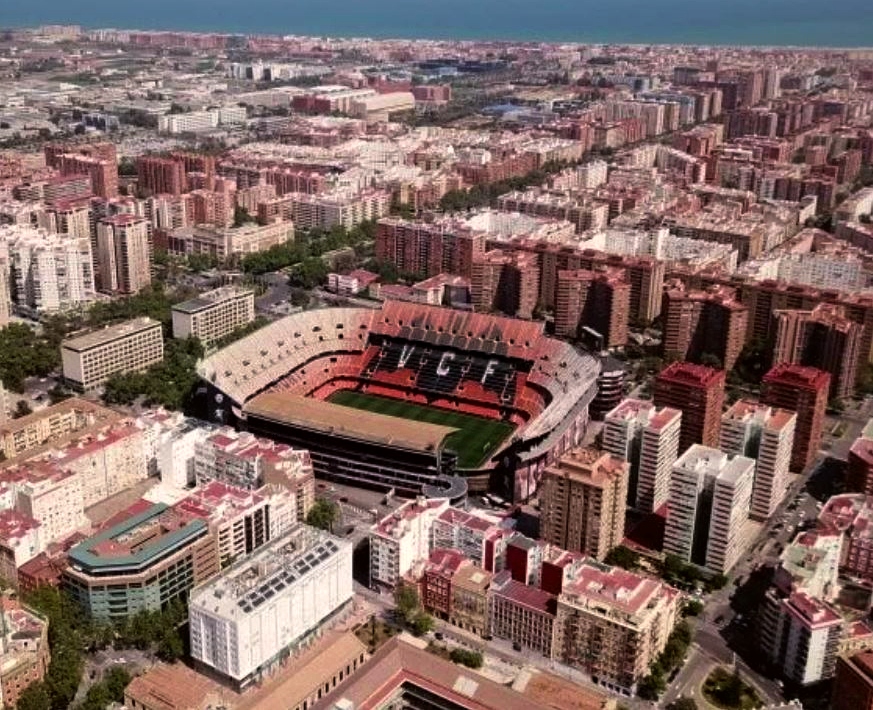
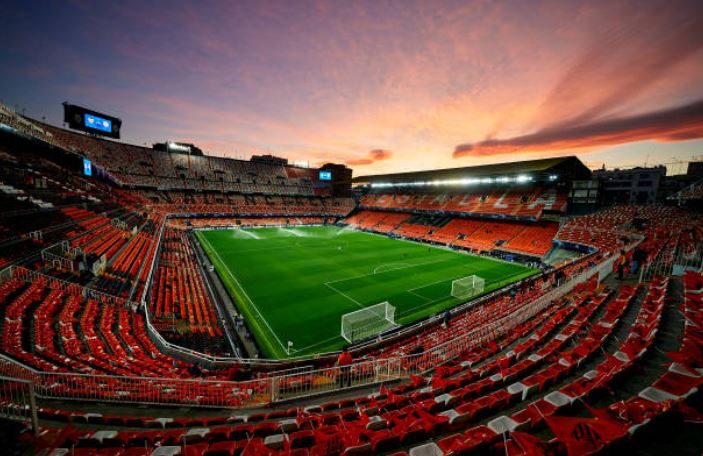
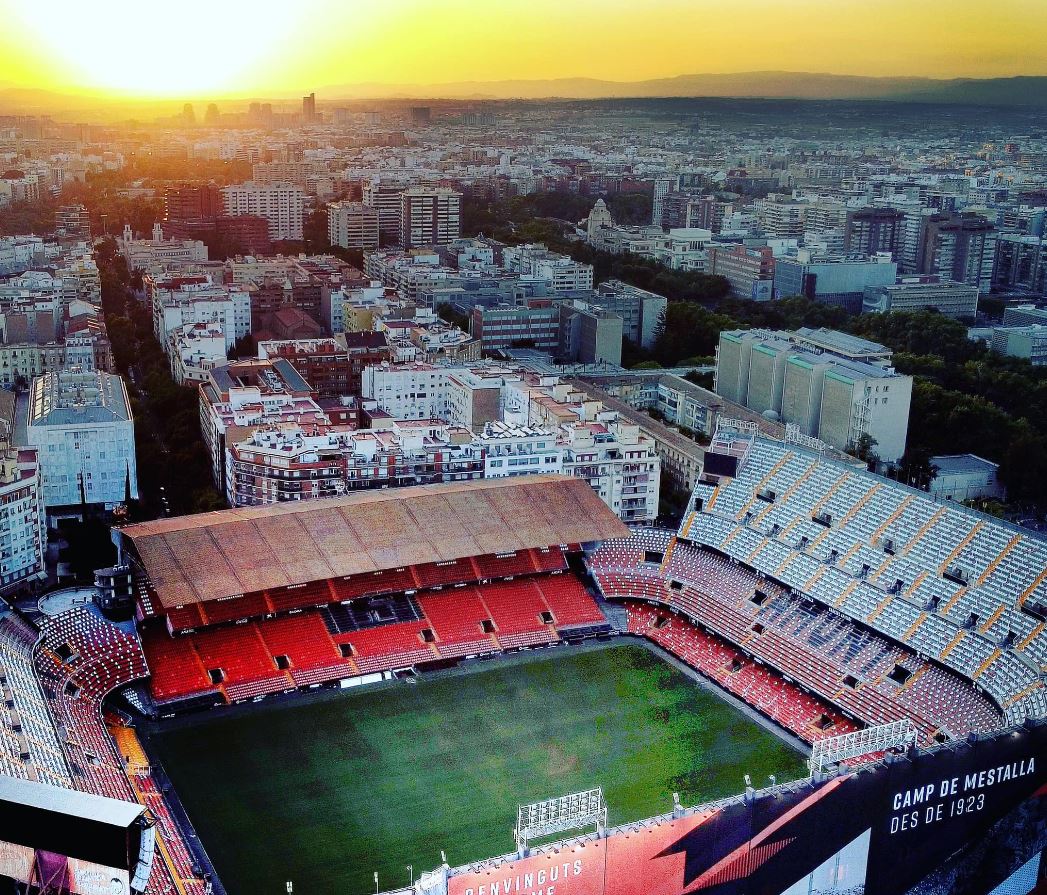
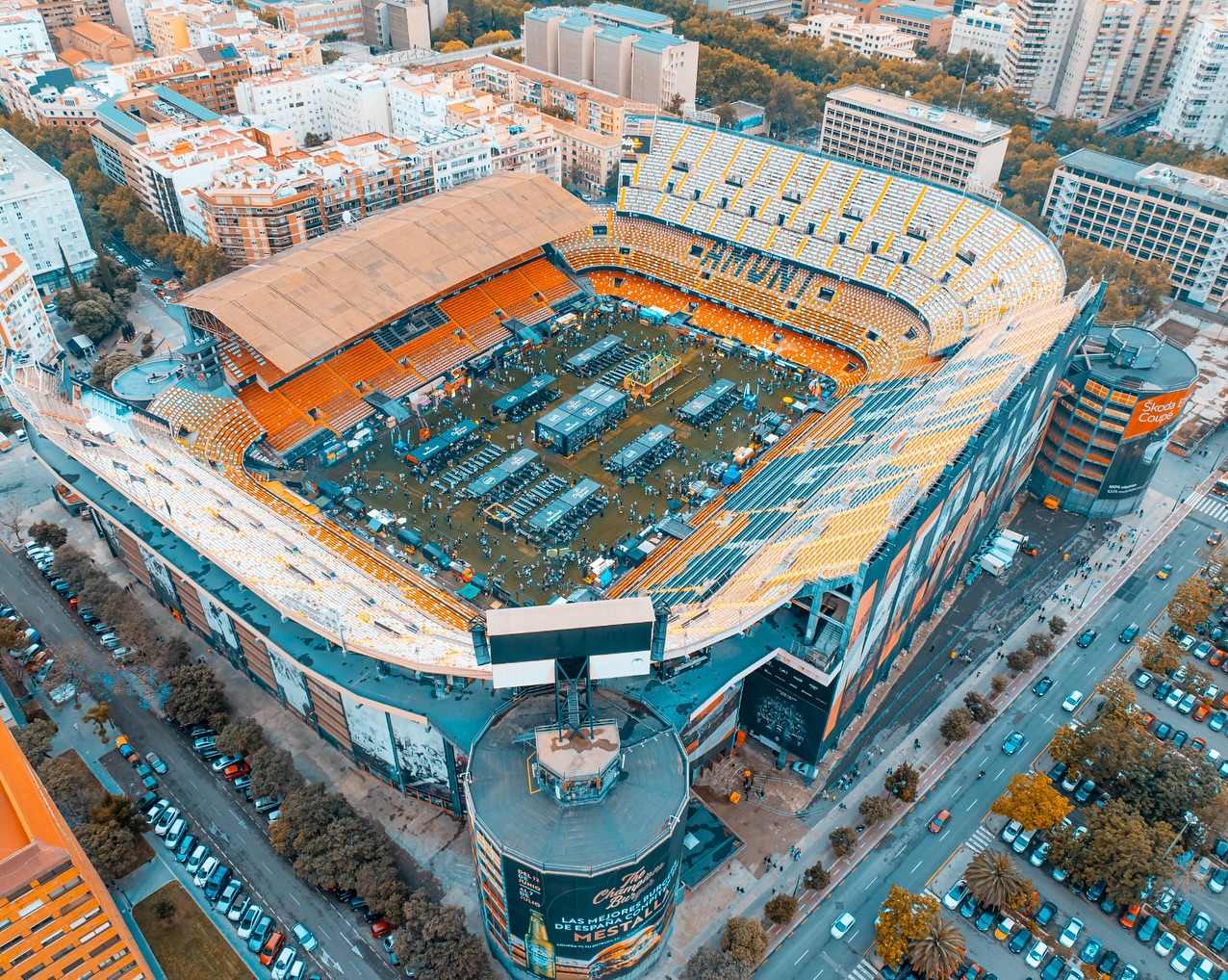
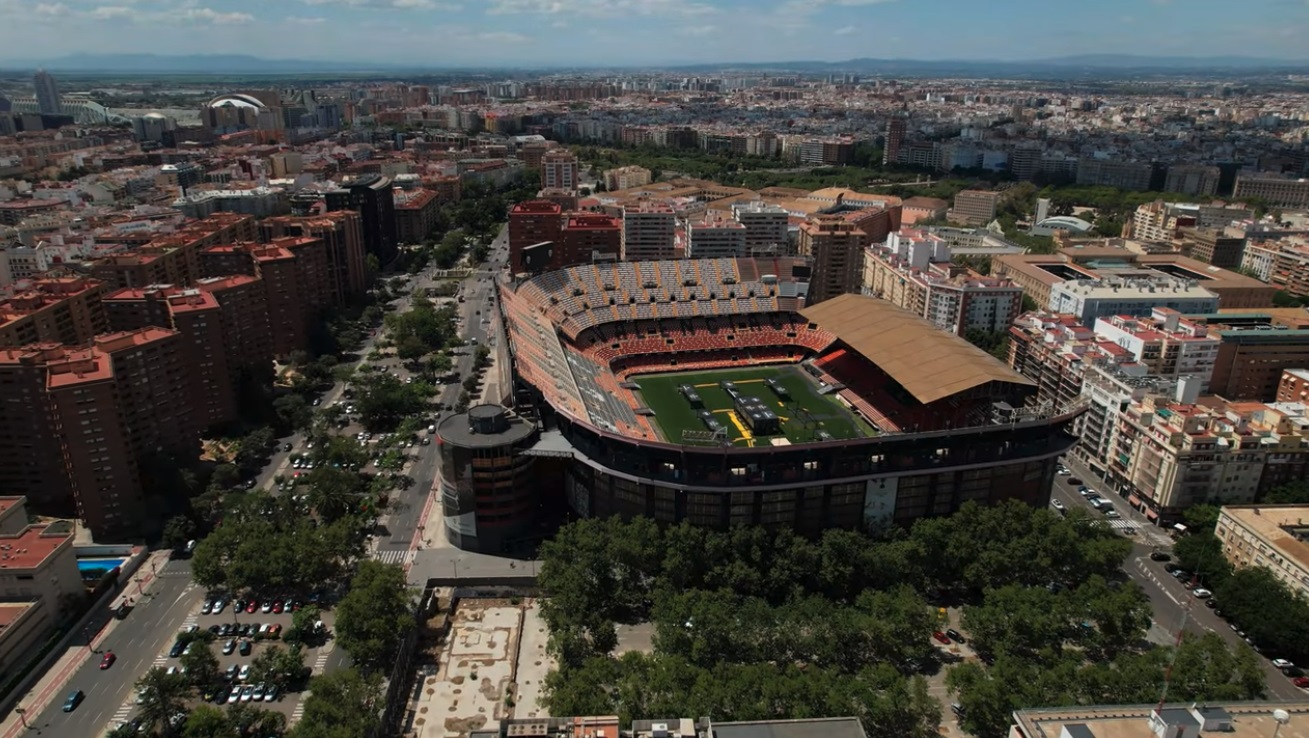
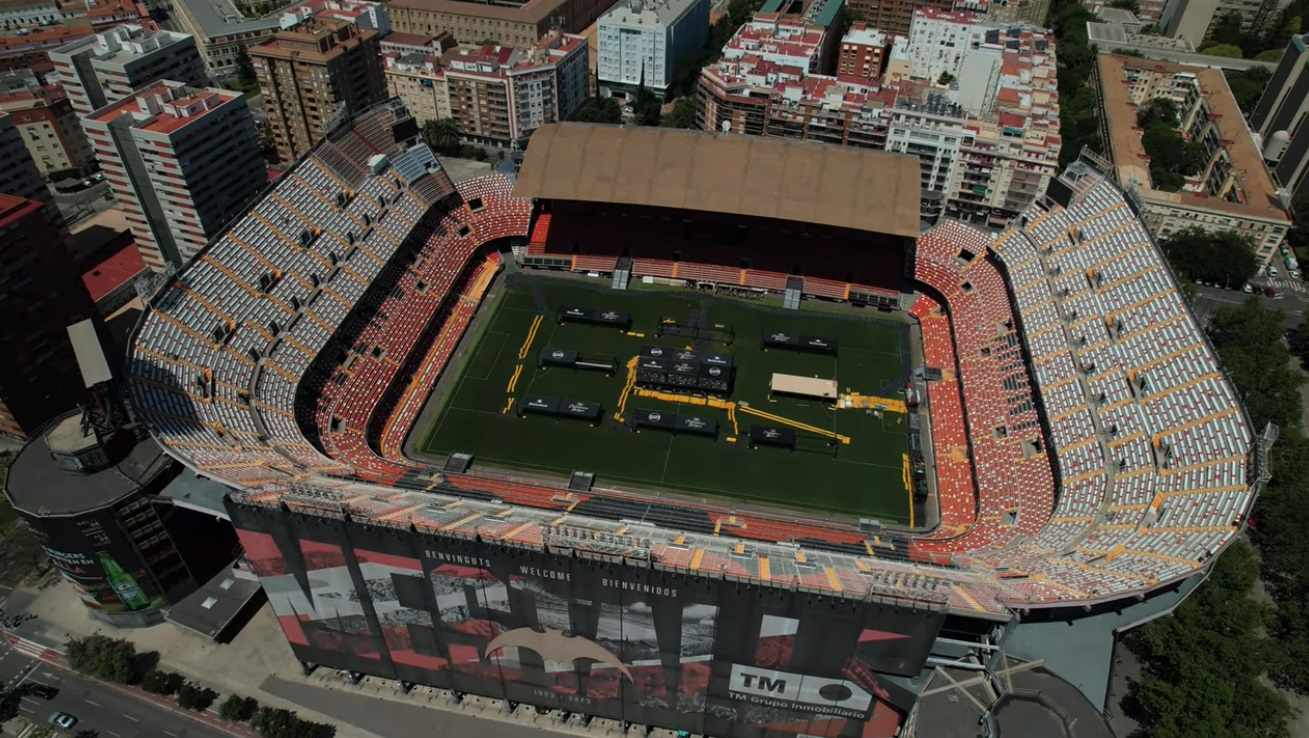
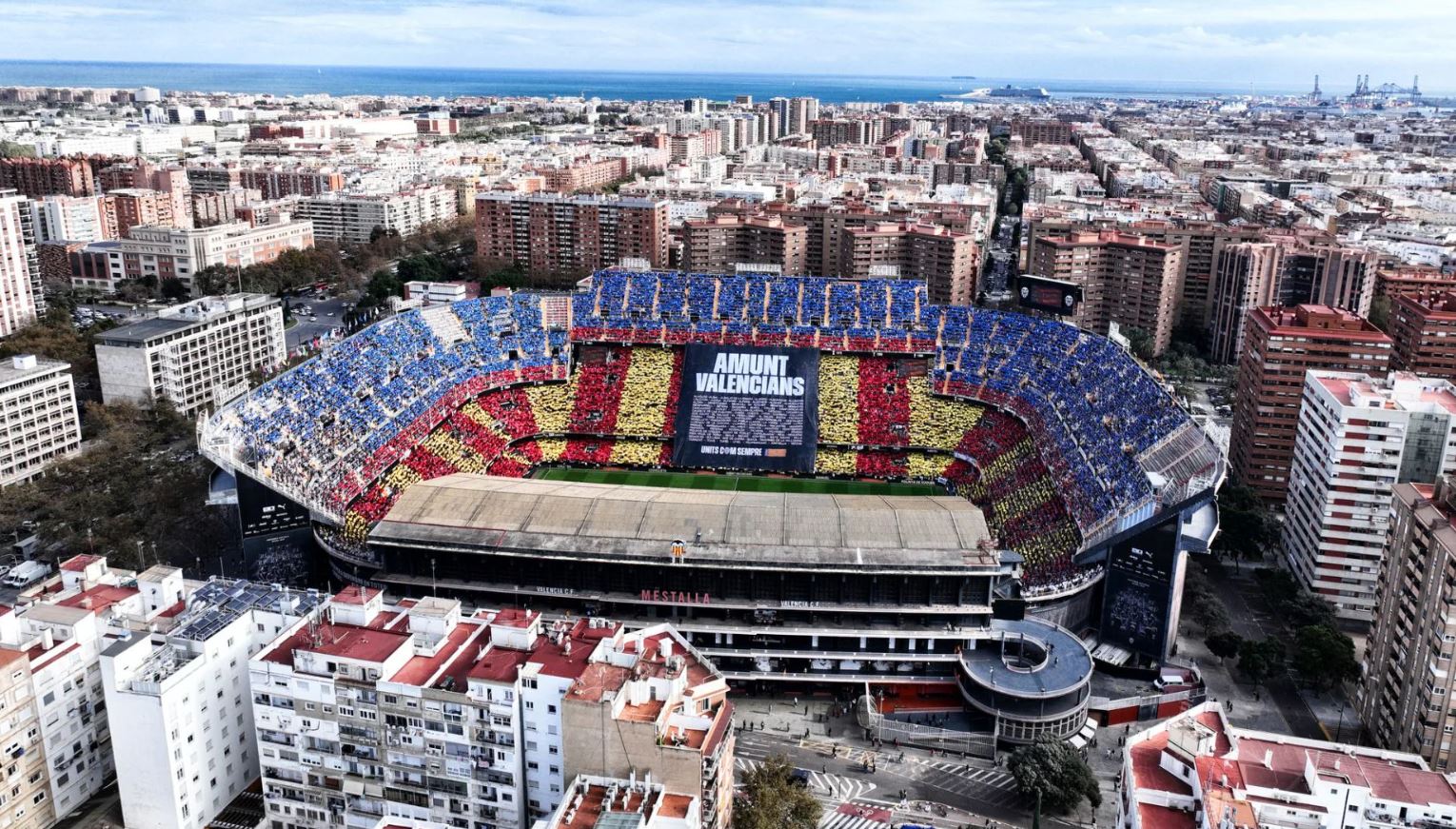
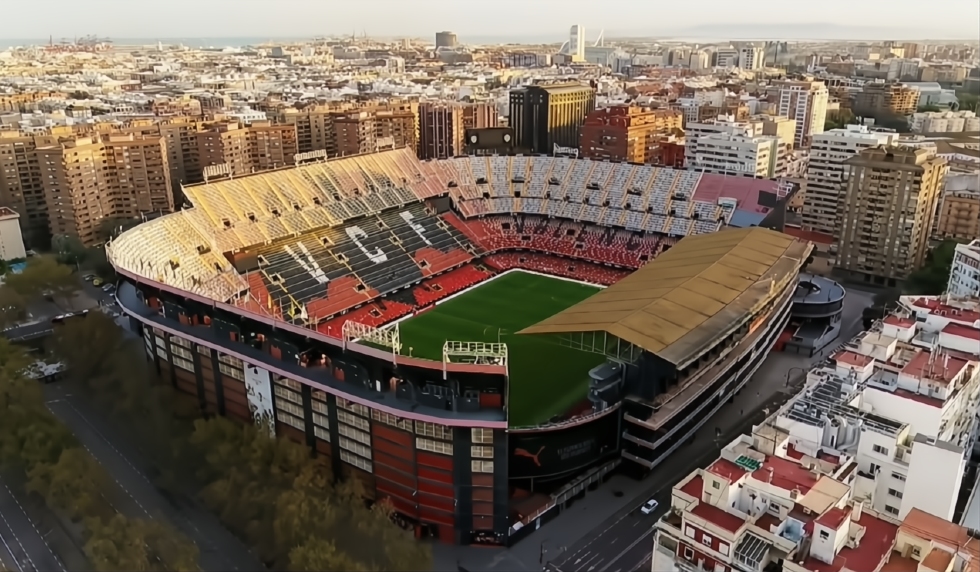
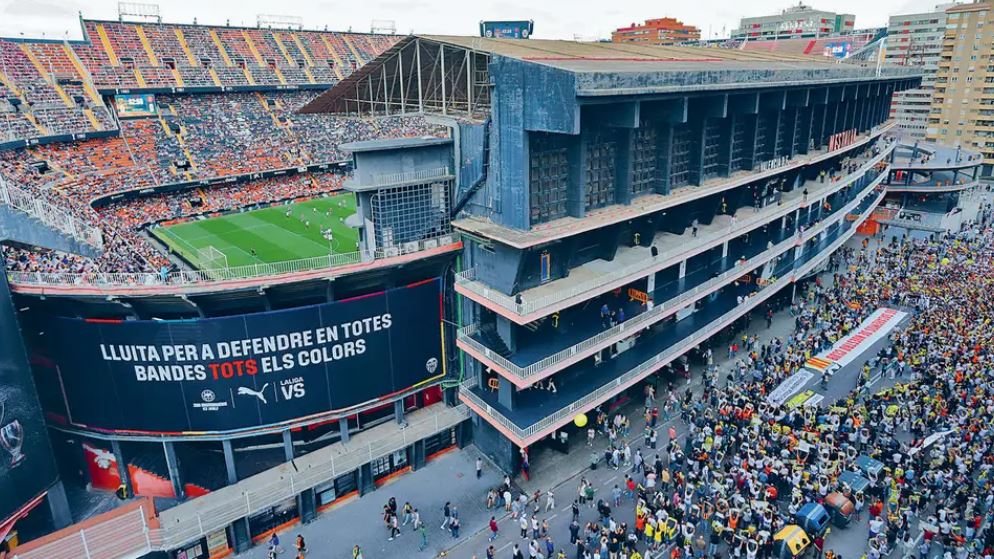
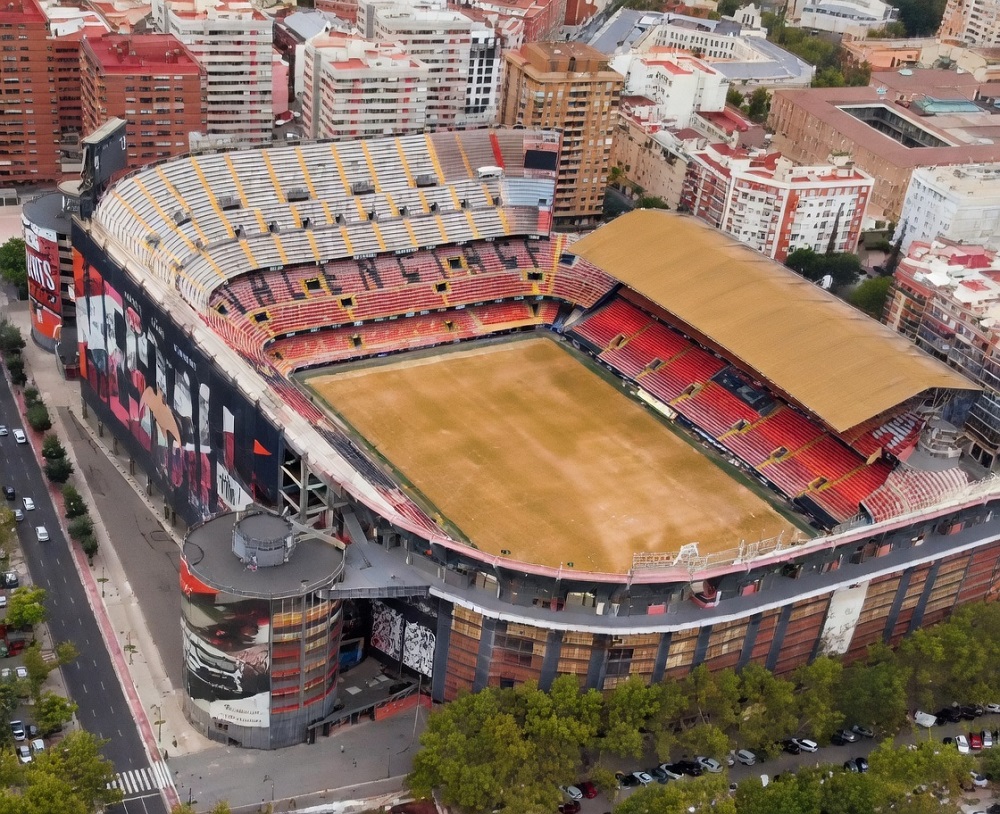
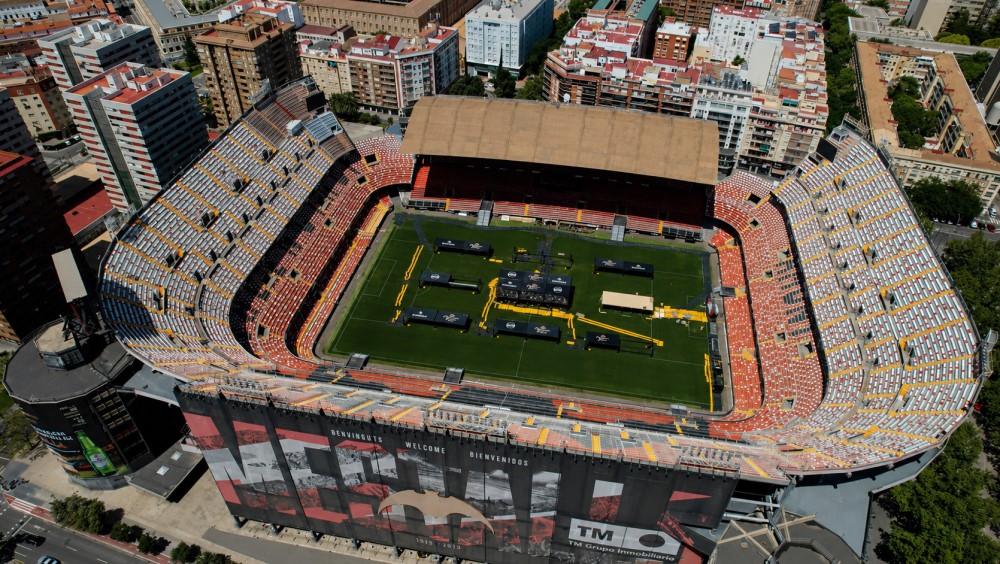
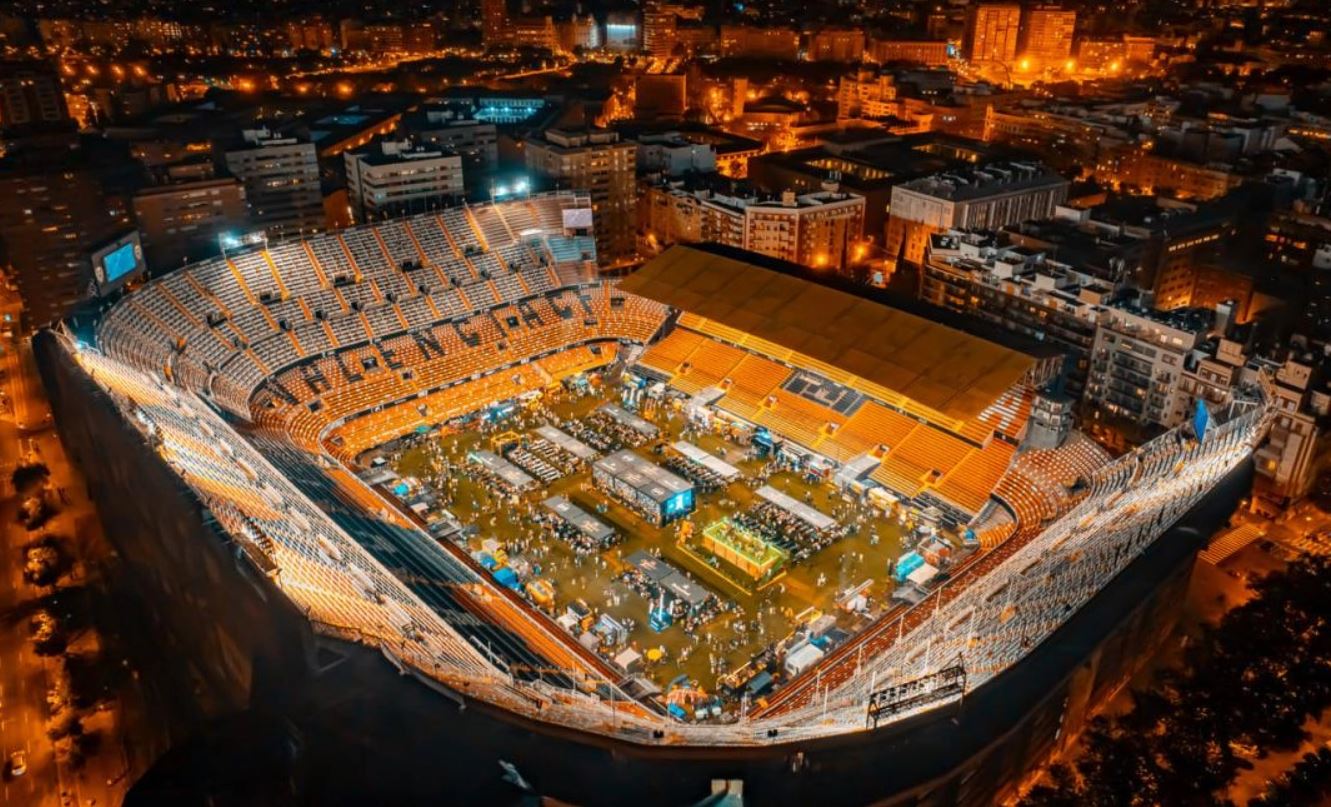
With its precipitous stands and implausibly deep roof, Valencia’s Mestalla is a truly wonderful stadium. It is an arena that oozes class and atmosphere, and when full, it can scare the bejesus out of the opposition and their travelling support. Alright, it dates from an era when supporter comfort meant that you were lucky if you weren’t standing in an inch of urine when you visited the toilets, but back then it was simple – You watched the match, and that was it.
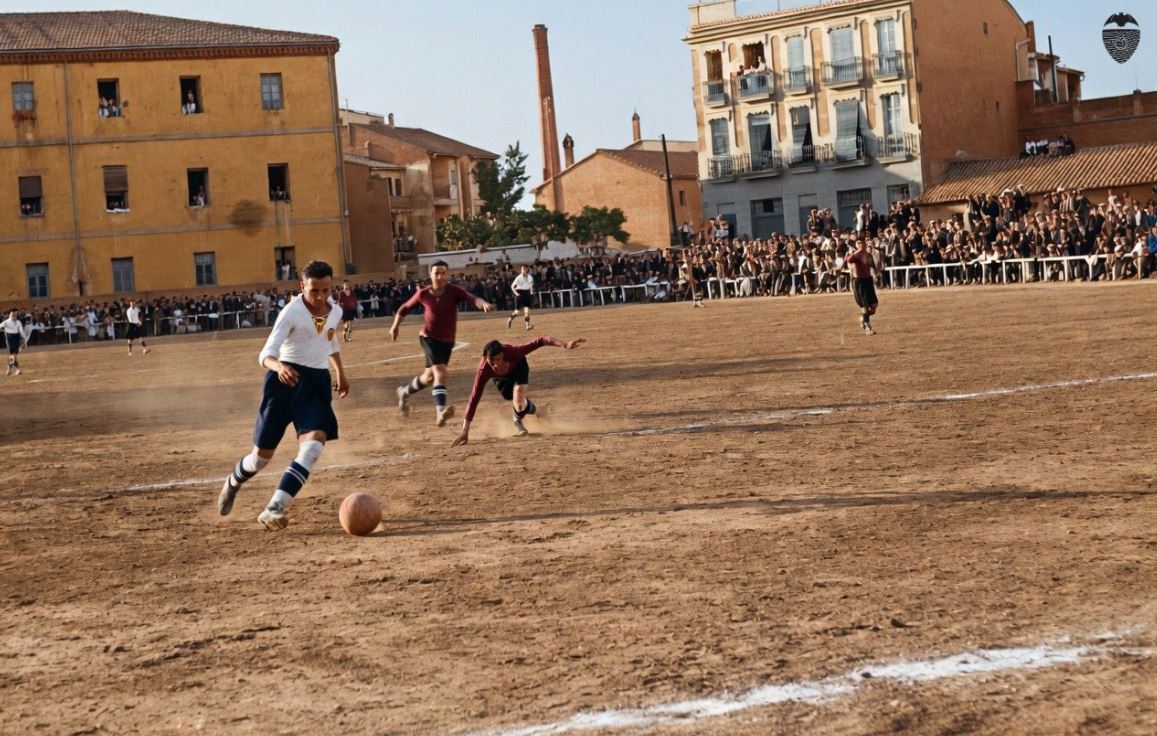
Several attempts were made in the early days of the twentieth century to form a senior club in Valencia, and whilst some trace the club’s origins back to 1902, the official date of formation for Valencia Club de Fútbol is 18 March 1919. Home for the first three and a half years was a tight ground close to the Rio Turia. The Campo de Algirós saw Valencia’s first match on 7 December 1919 against Sport Club Castalia, which ended goalless. The ground occupied a wedge of land next to the Cavalry Barracks, the Civil Guard headquarters and the Estación de Aragon. It was rented from Señor Eugenio Miguelo for 100 pesetas per month and was also used by other Valencian clubs. Algirós was surrounded by a wall, meaning it was ideally suited to charge admission and had rudimentary bleachers. However, the pitch was very narrow, being only 47 metres wide, and as Valencia’s following grew (by 1923 they had 2,500 members), the ground’s 5,000 capacity proved inadequate, so the club sought new premises.
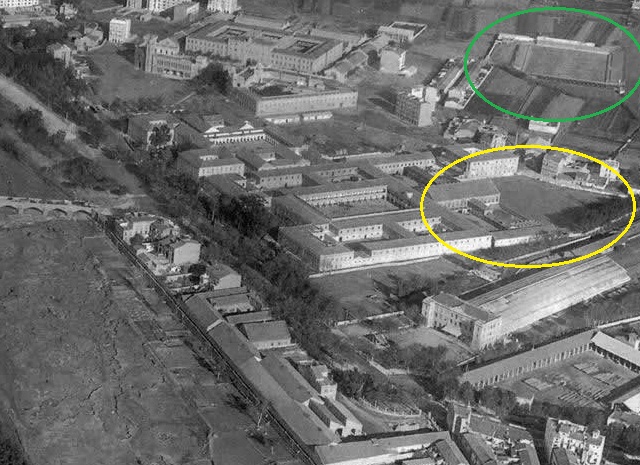
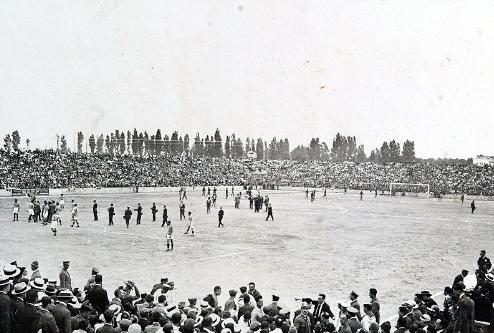
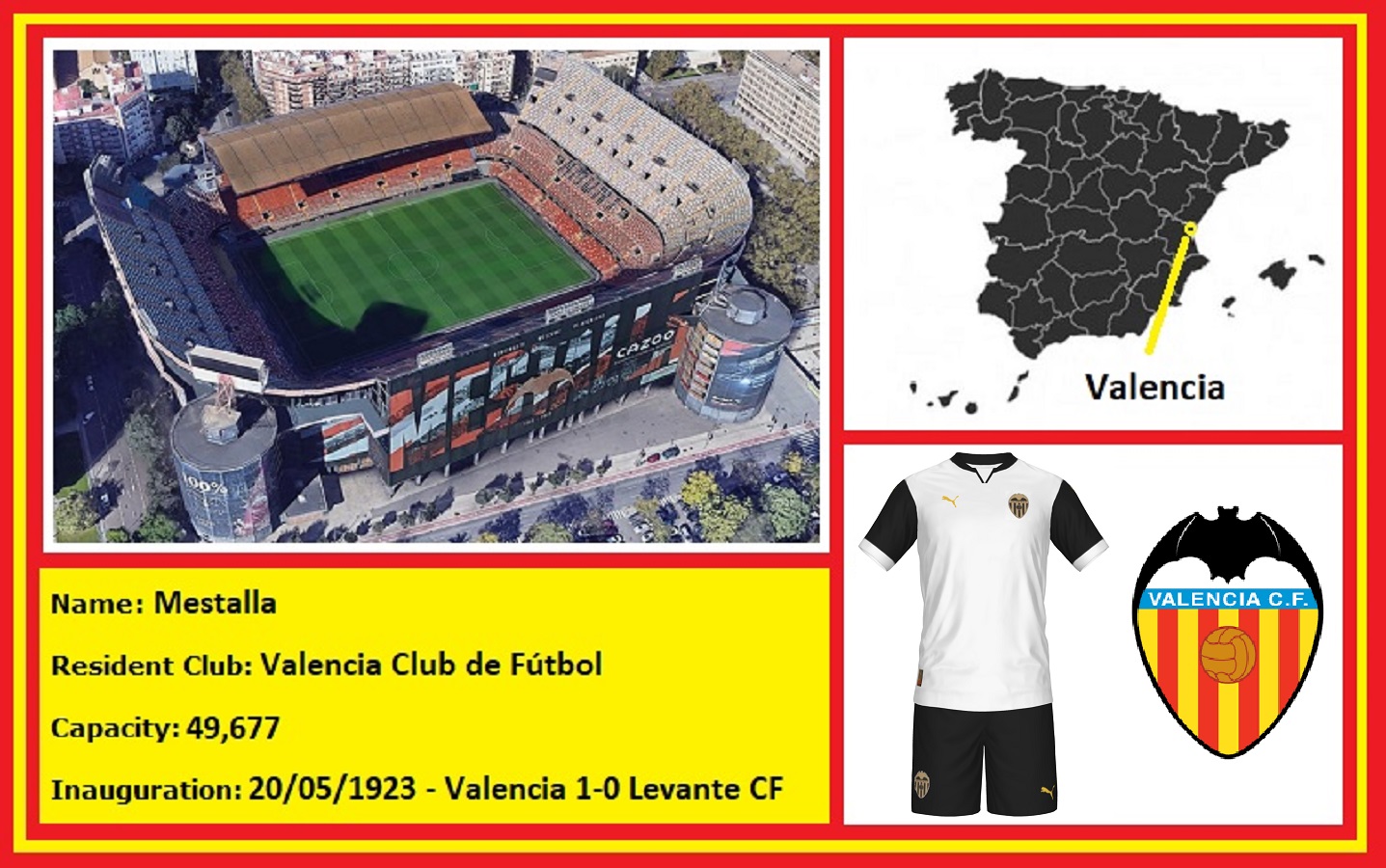
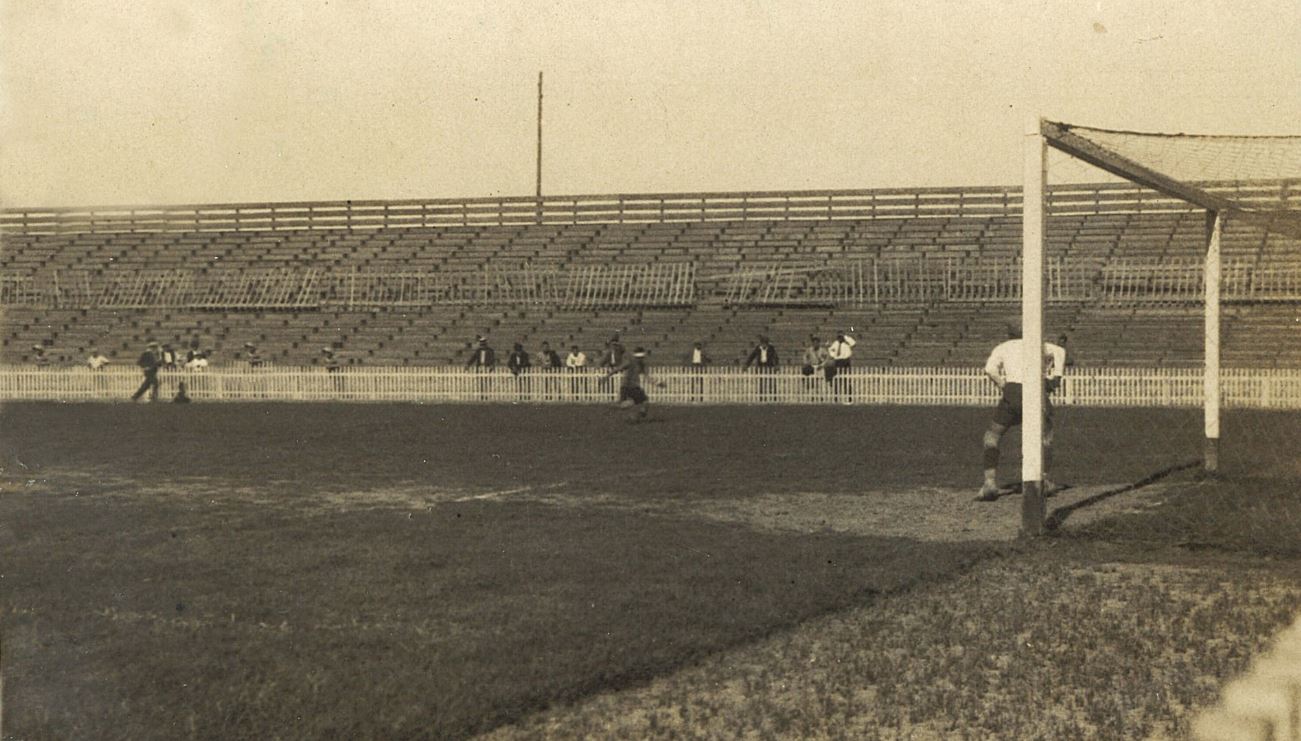
In 1923, Valencia purchased a plot of land 150 metres to the north of Algirós, close to the Mestalla drain, for the sum of 316,000 pesetas. Club President and architect Francisco Almenar Quinzá designed the stadium, which was constructed by club member and builder Ramón Ferrer Aguilar. The first phase consisted of 10 rows of uncovered bleachers around a sand/lime pitch, which was larger than Algirós at 100m x 59m. The new stadium, with a capacity of 17,000, opened on 20 May 1923 with a match against Levante, which the home team won 1-0 with a goal from Arturo Montes. A few weeks later, Mestalla staged its first international match on 14 June 1925 when Spain beat Italy 1-0.
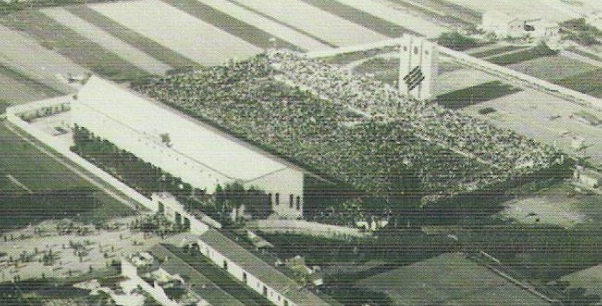
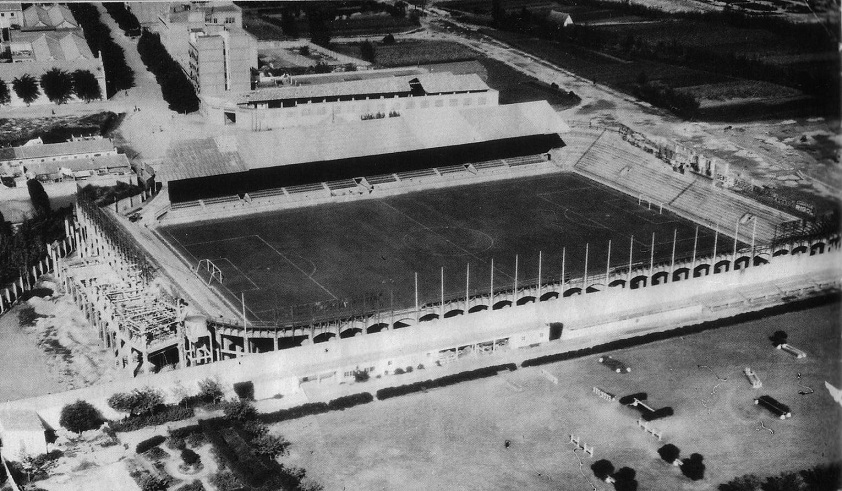
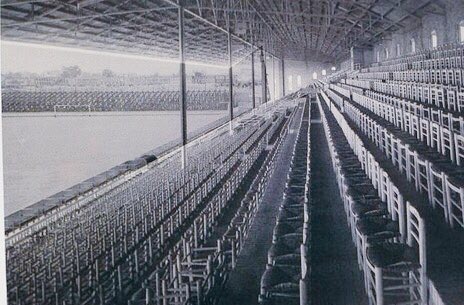
The improvements to Mestalla continued and in 1926 work commenced on a new grandstand. This would cost 212,000 pesetas alone and featured a front terrace, 14 rows of seats and a directors’ box. Dressing rooms and club offices were situated under the stand. The grandstand and additional work to the final end terrace increased the capacity to 25,000, and the new layout was inaugurated on 23 January 1927 with a match against Castellón. The dirt pitch was replaced with a grass pitch in the autumn of 1927. It was now one of the premier stadiums in Spain, and due to its convenient location, equidistant between Madrid and Barcelona, it became a popular neutral venue for the final of the Copa del Rey. In 1929, Valencia played in the inaugural season of La Segunda, finishing fifth. A year later they came sixth before winning the title in 1930-31. Mestalla was already proving to be an intimidating arena, as Valencia lost just one fixture at home during these three seasons.
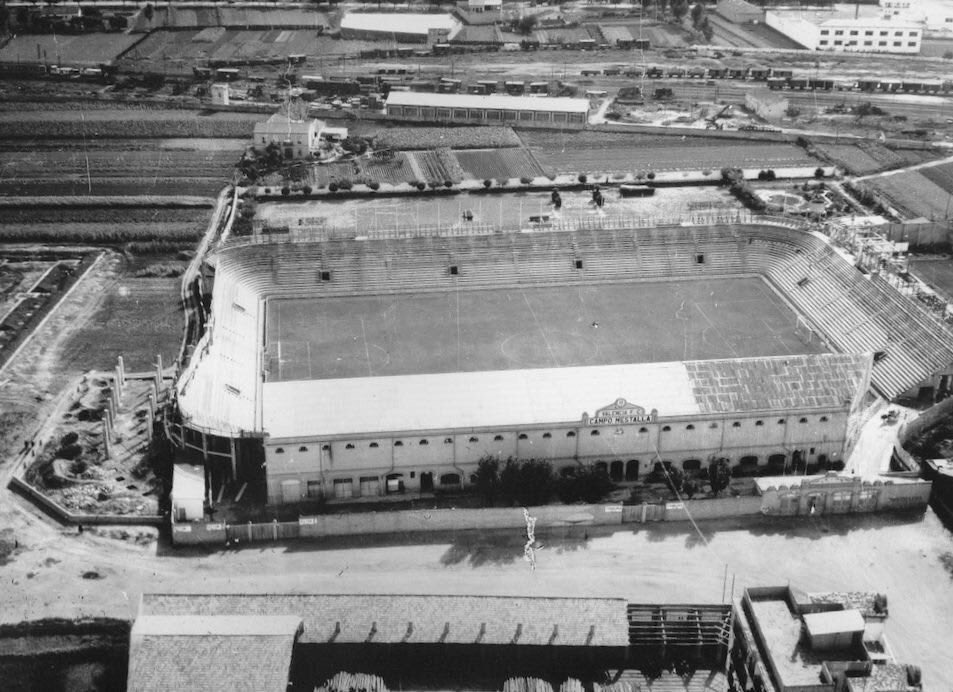
Valencia debuted in La Primera at the start of the 1931-32 season, and over the next five seasons they struggled to avoid relegation. In fact, if it were not for the impressive form at Mestalla, they would certainly have dropped back into La Segunda. On 3 October 1936, the Spanish Football Federation suspended all competitions due to the deteriorating situation caused by the Civil War. The club was particularly badly affected, due to the close proximity of the military barracks and Valencia’s dockyards. The ground was used as a camp for political prisoners and by the end of the war, stripped of all usable material, Mestalla was derelict. The club immediately set about rebuilding the stadium, as practically all of the wooden terracing had gone and so had the roof of the grandstand. The club played its first post-war match at Mestalla on 18 June 1939, which by then had a remodelled capacity of 22,000.

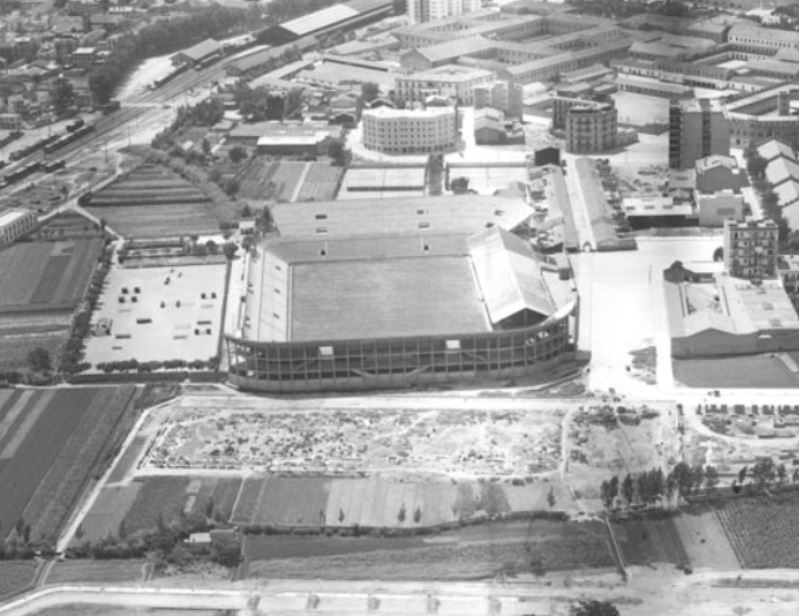
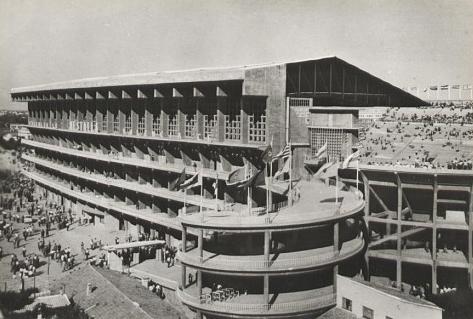
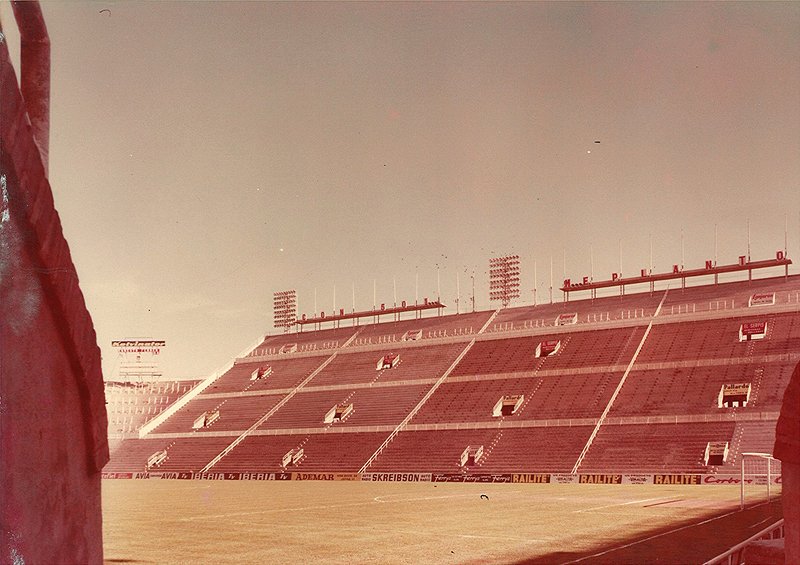
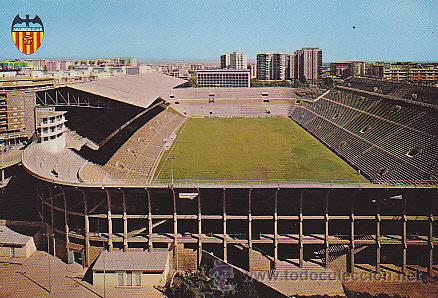
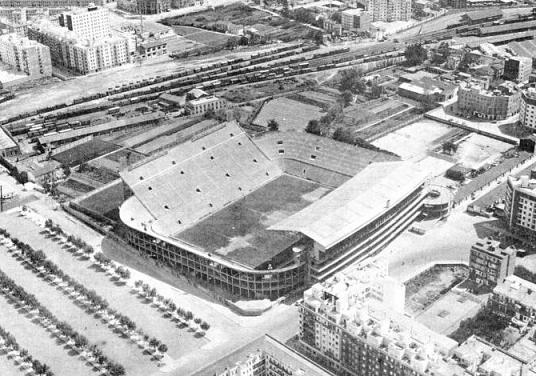
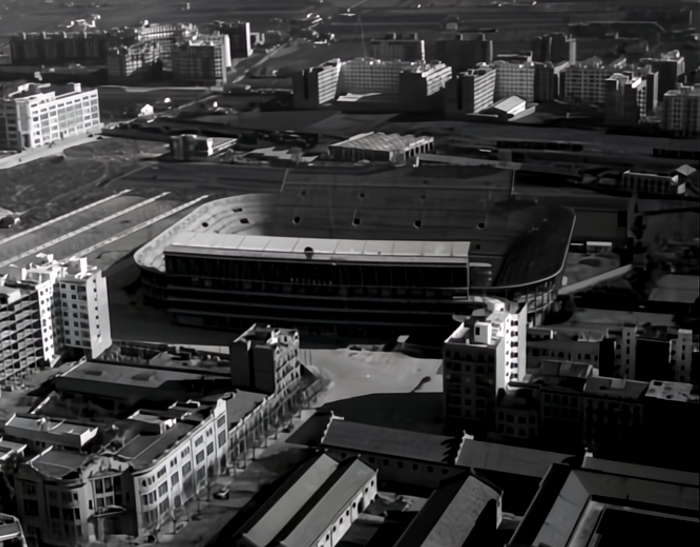
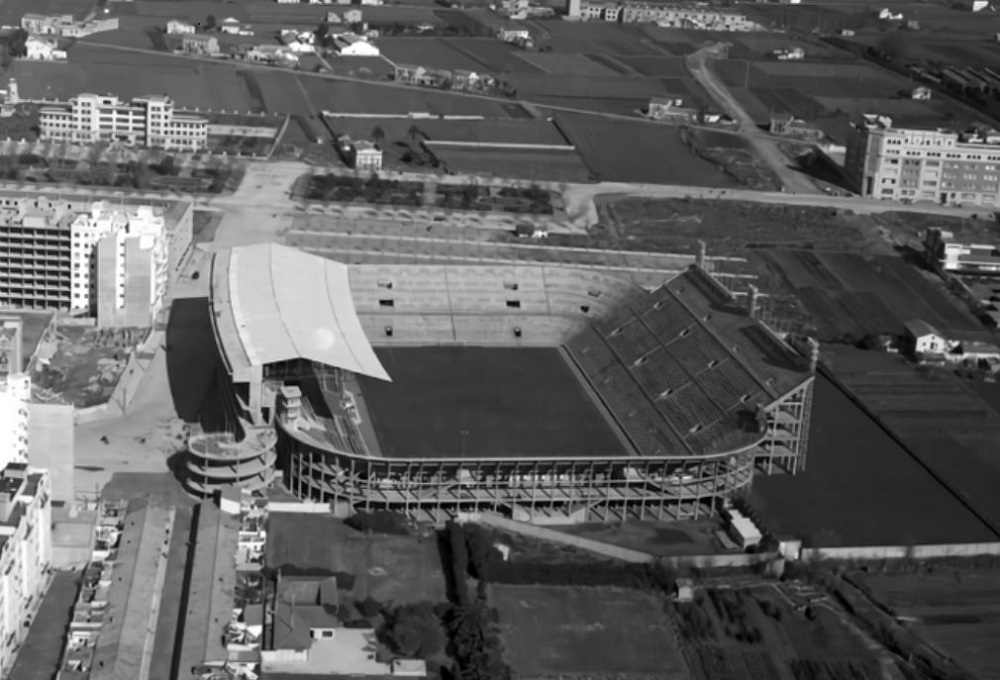
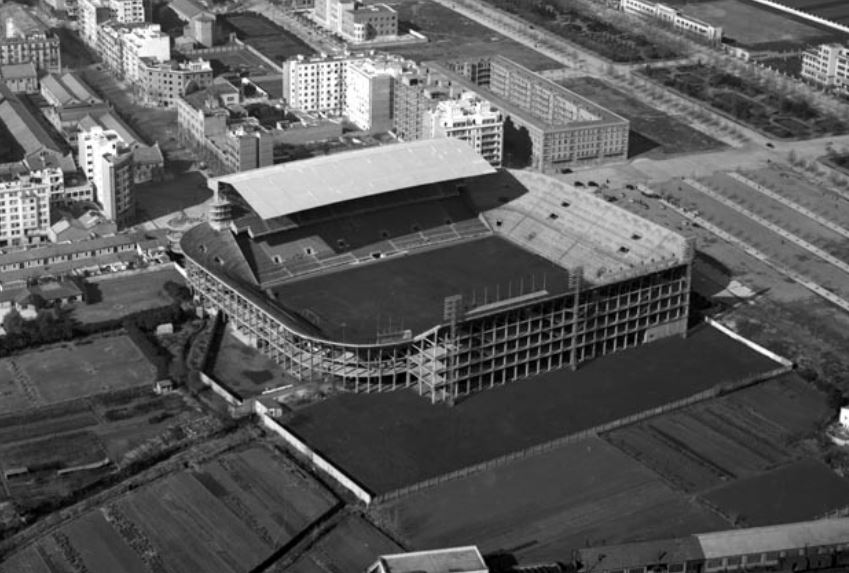
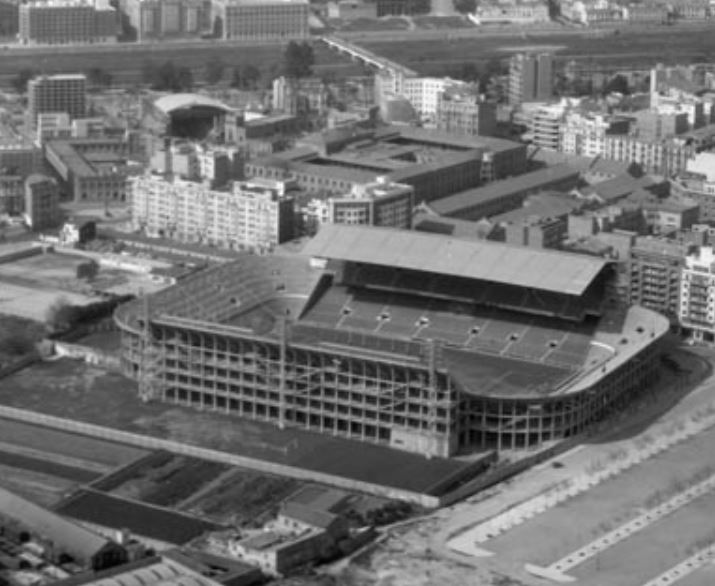
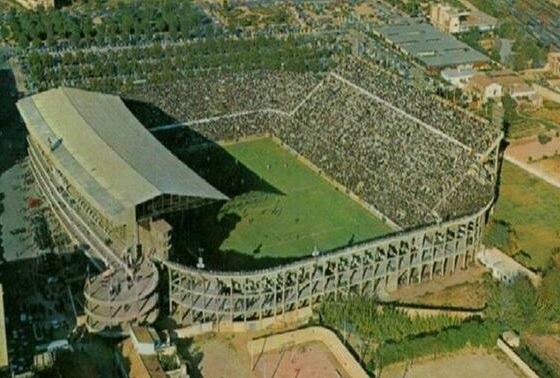
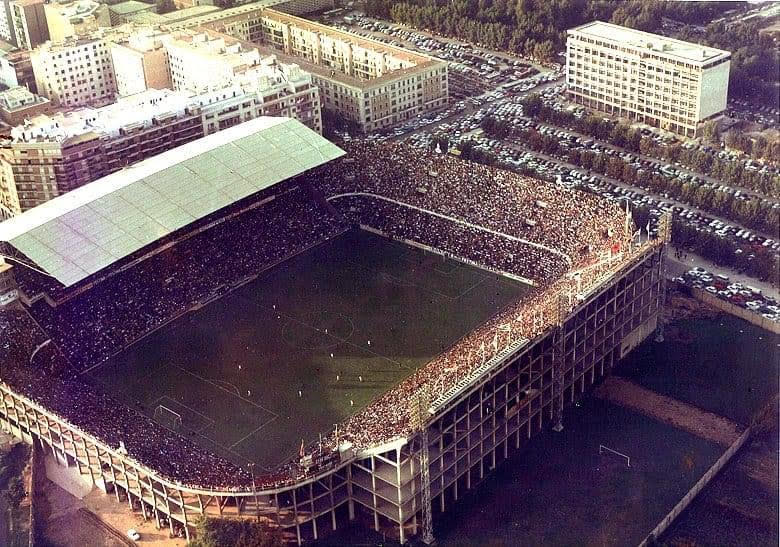
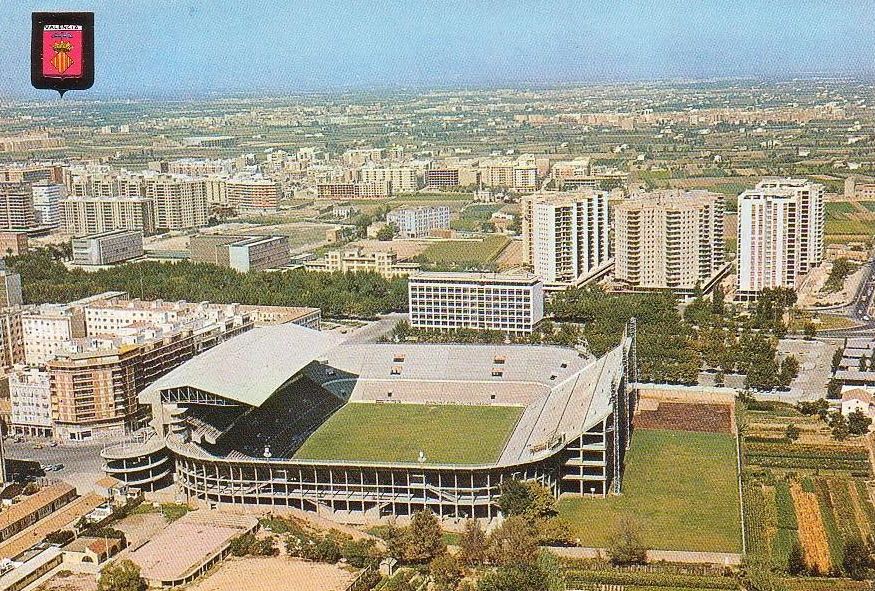
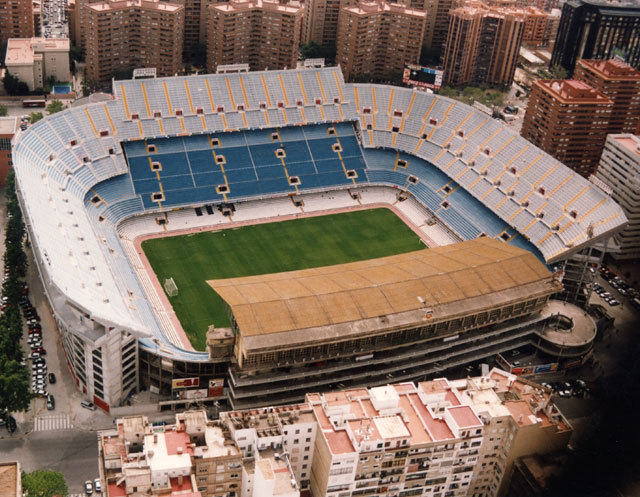
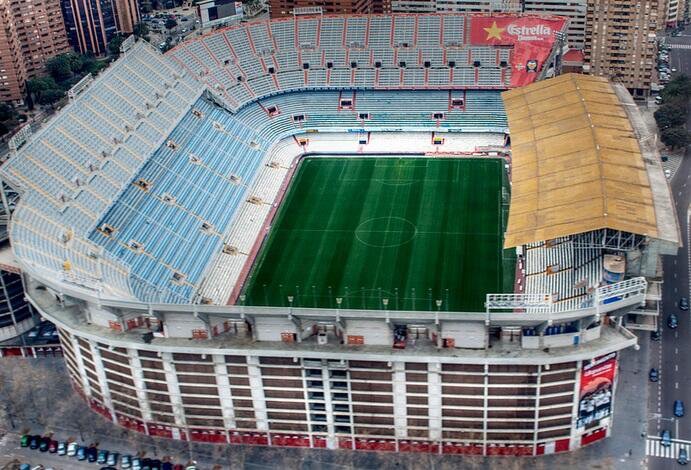
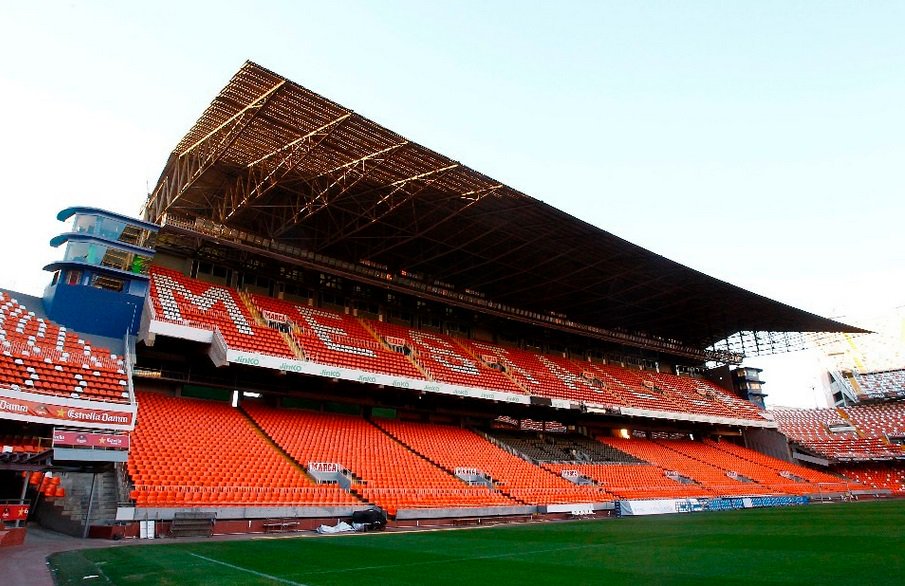
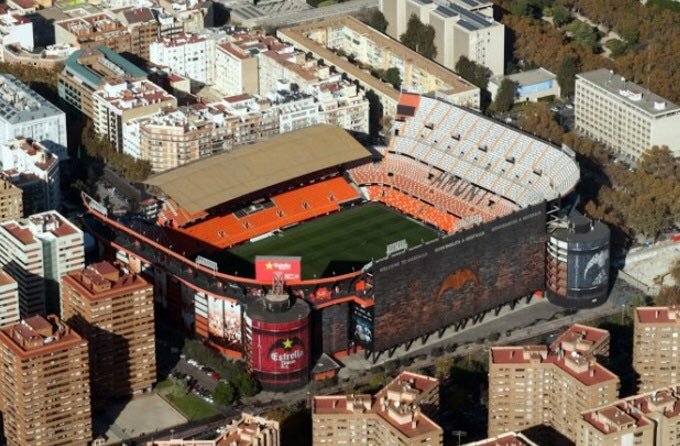
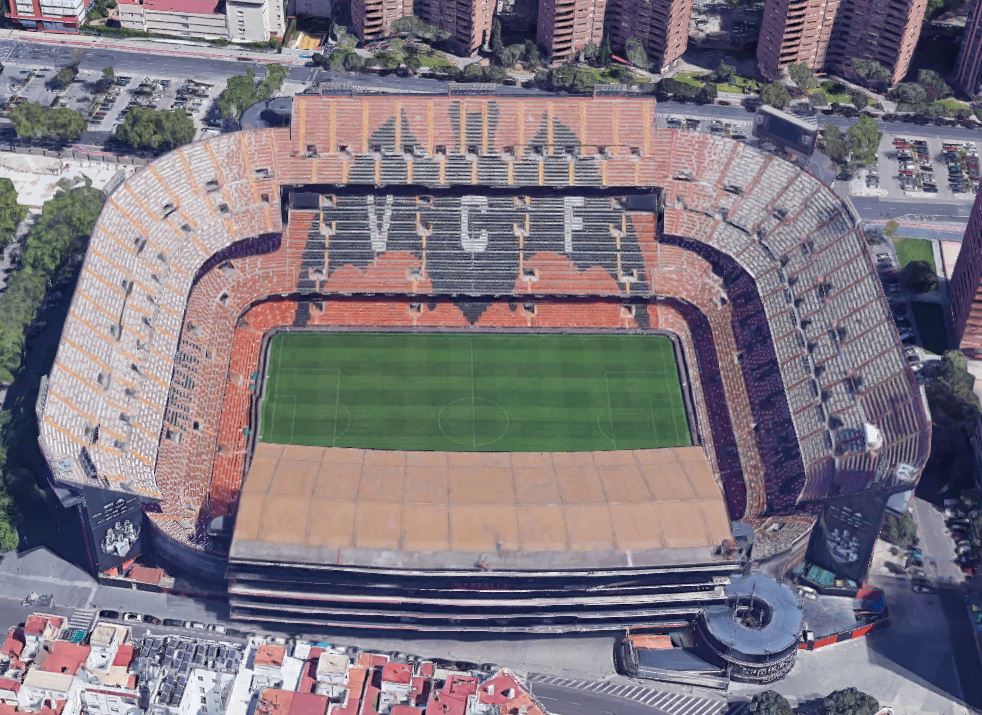
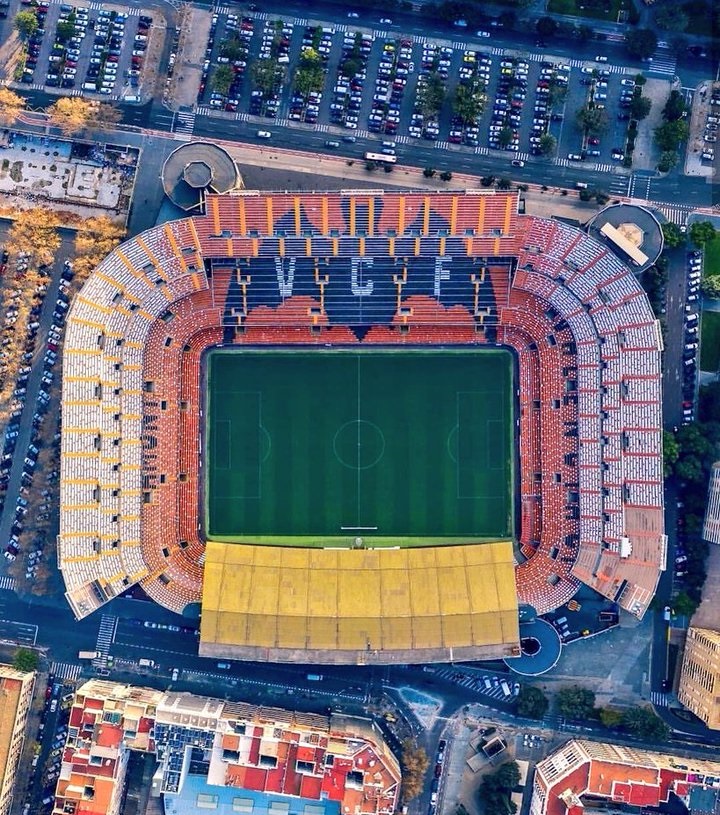
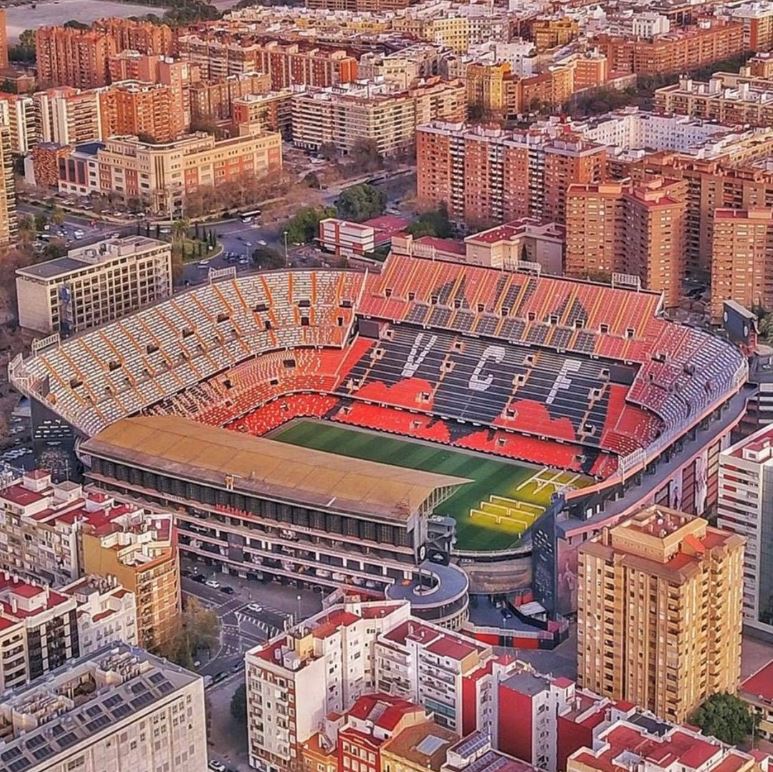
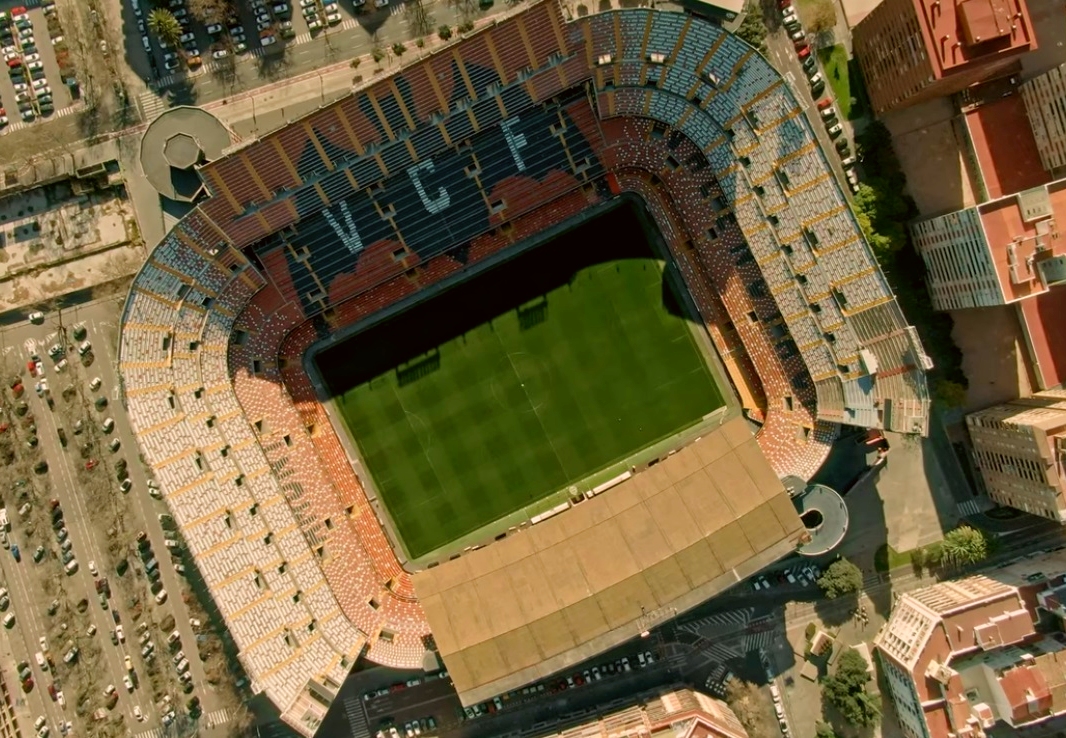
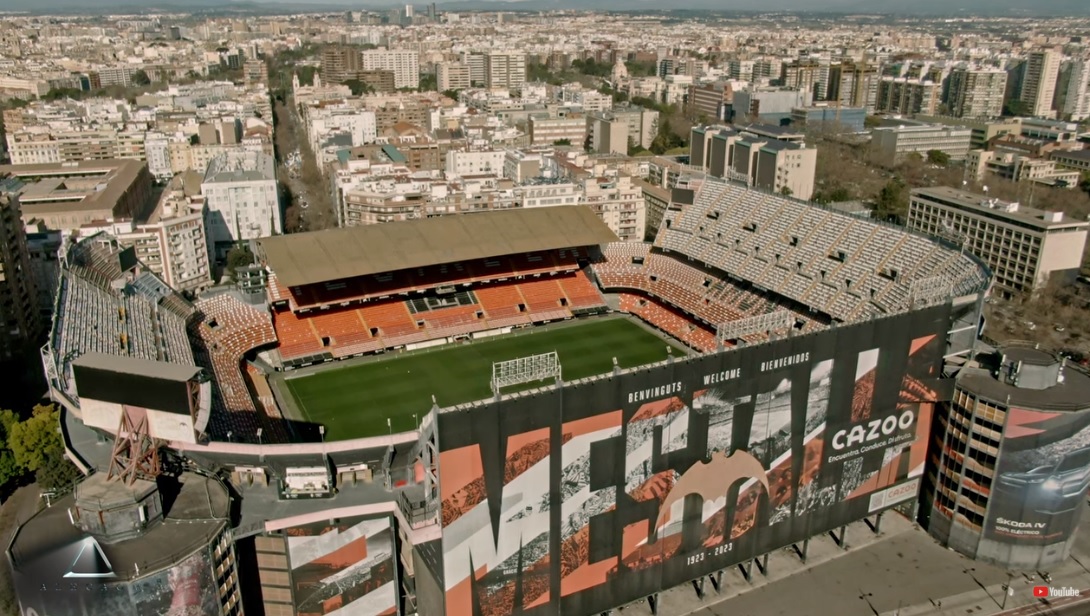
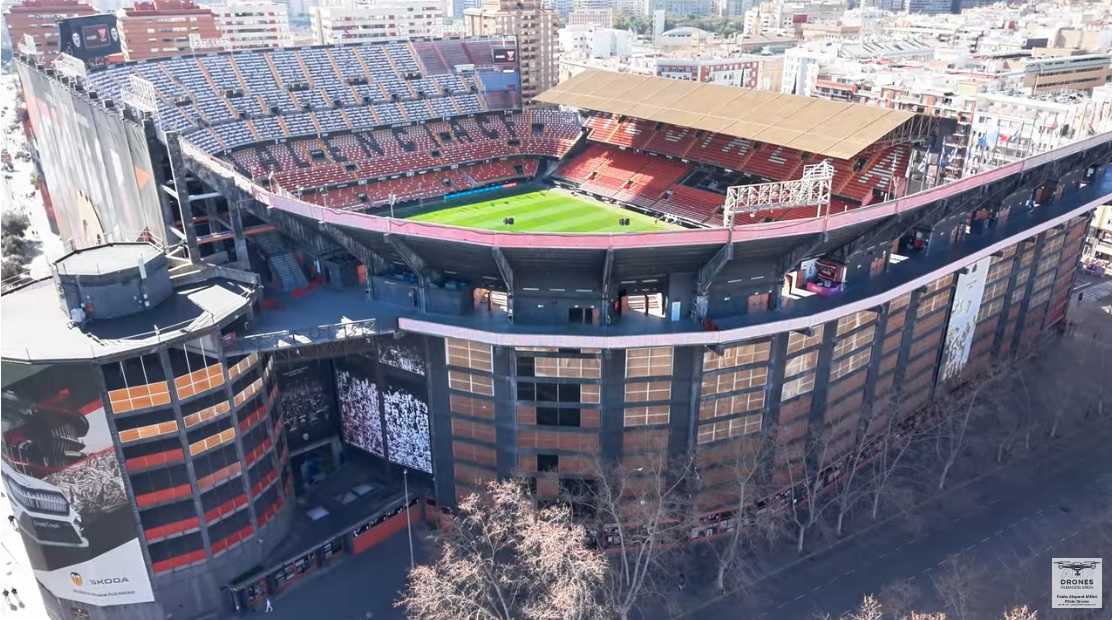
The 1940s saw the first golden era for the club when La Primera title was won in 1941-42, 1943-44 & 1947-48. There were also victories in La Copa in 1941 and again in 1949. Based on this success, club president Luis Casanova Giner was keen to further expand Mestalla. In 1950, the club spent 7 million pesetas on land that adjoined the stadium. Architect Salvador Pascual Gimeno was commissioned to design the new stadium and work started on building more substantial concrete gradas to the north and south of the ground. In 1954, Gimeno started work on a replacement for the main stand and what a replacement it was! Holding 12,000 over two tiers, the striking feature was a cantilevered roof that was daringly high and deep for the 1950s. Still standing today, it resembles a pre-war stand with the roof supports knocked out. Flanking this archaic-looking roof are two stylised three-storey booths that once housed the stadium’s media facilities. The new stand opened on 27 December 1955, but two years later, Mestalla was underwater as Valencia was ravaged by floods when the Rio Turia burst its banks. Development continued until the end of the decade, with the east side developed to include a slab-like anfiteatro, taking the capacity to over 50,000. Floodlights were added in March 1959 and first used for a Fairs Cup match against Stade de Reims.
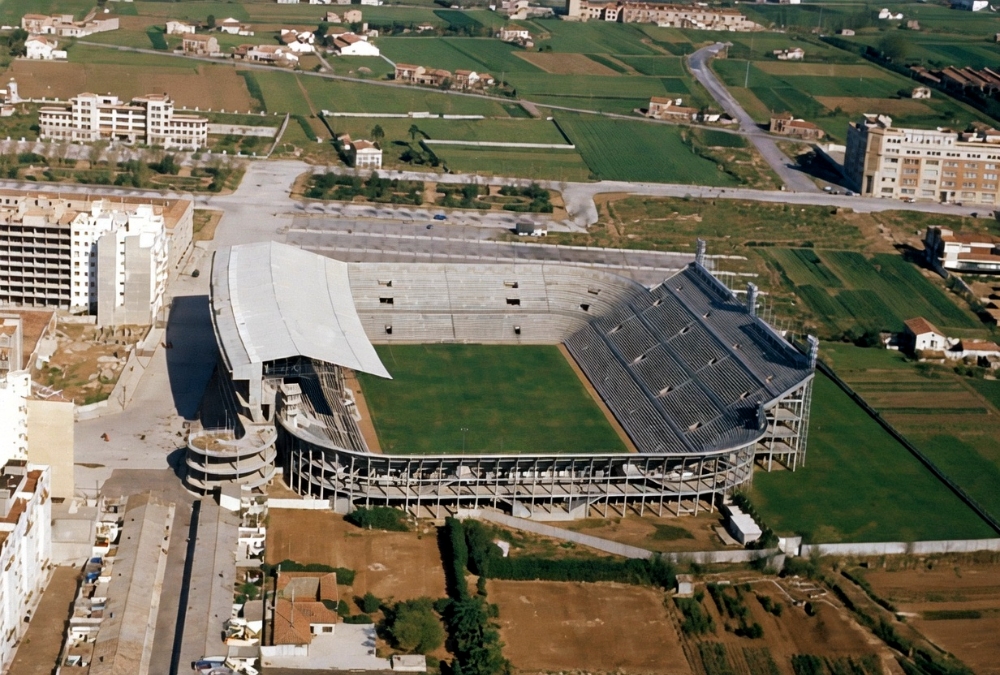
Things had been quiet on the field during the fifties with just one triumph in the 1954 Copa del Rey. With the stadium complete and the club on a stable footing, the sixties didn’t bring the domestic glory the club and fans had hoped for, as Real Madrid reigned supreme in Spain. The best chance was in a competition that Los Merengues could not enter, the Inter Cities Fairs Cup. Valencia won the tournament in 1962 with a 7-3 aggregate win over FC Barcelona, winning the first leg at Mestalla 6-2. A year later, Los Ches won the Fairs Cup again with a 4-1 aggregate victory over Dinamo Belgrade. The Copa del Rey was won in 1967 with a 2-1 victory over Athletic Club at the Bernabeu. In 1969, the club renamed Mestalla to honour their inspirational president, Luis Casanova Giner. So for the next twenty-five years, the stadium became known as the Estadio Luis Casanova. Casanova was overwhelmed and admitted to not being entirely comfortable with the gesture. In 1994, in his eighty-fifth year, Casanova requested that the stadium revert to its original name. The seventies saw more silverware with a fourth La Liga title in 1970-71 and a fifth Copa del Rey in 1979 with a 2-0 victory over Real Madrid at the Vicente Calderón. In the following year, Valencia went on to win the European Cup-Winners Cup with a victory over Arsenal.
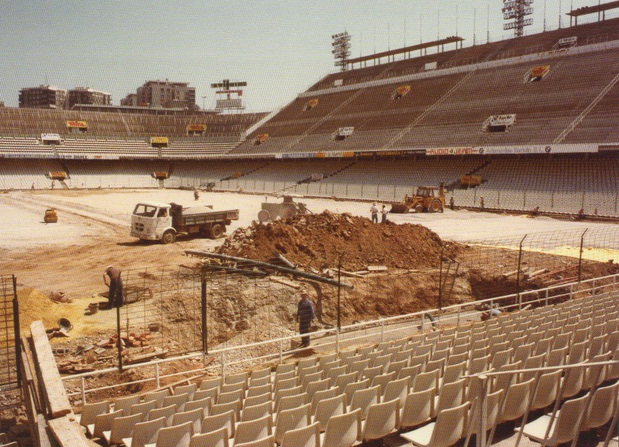
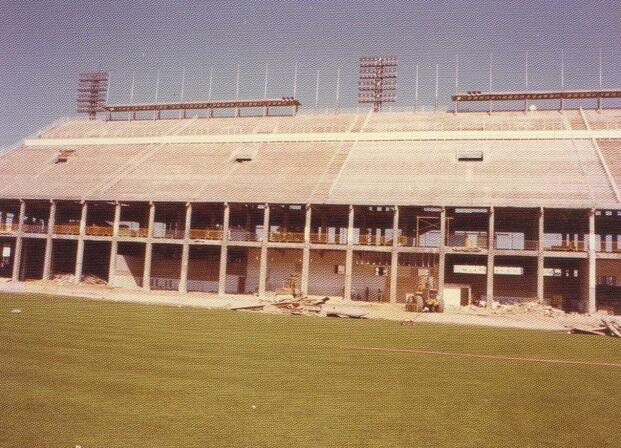
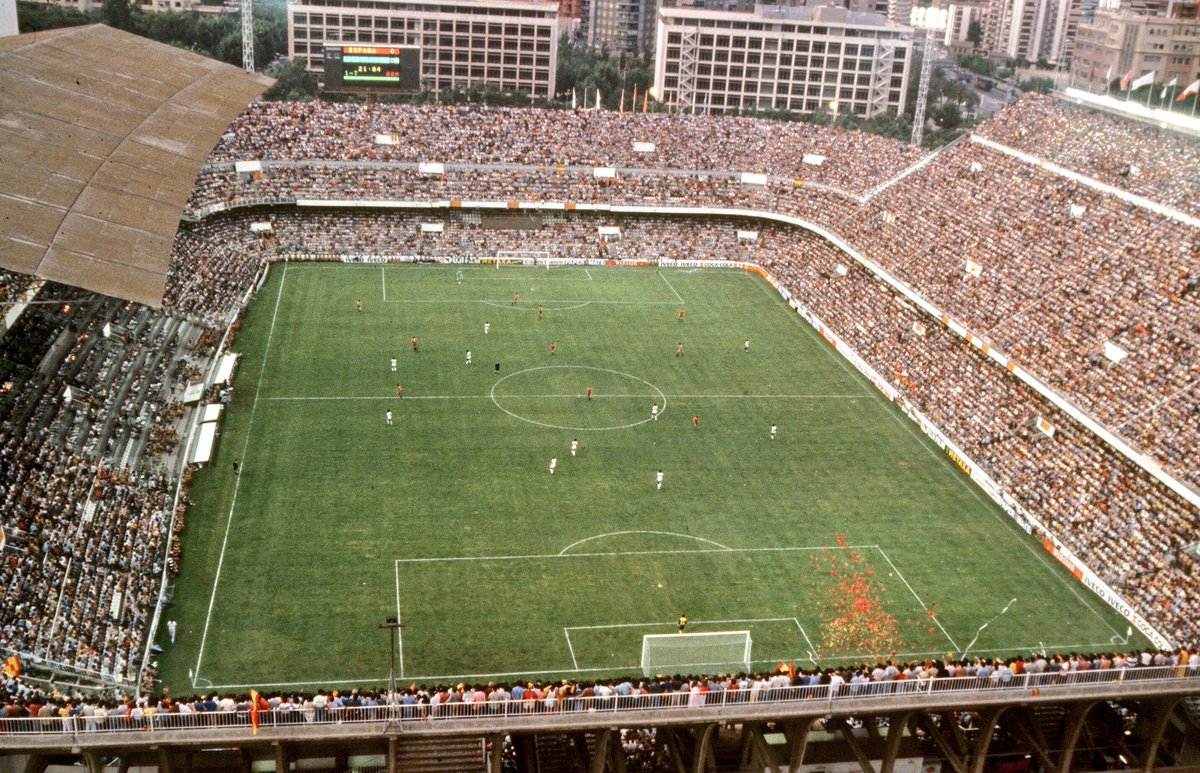
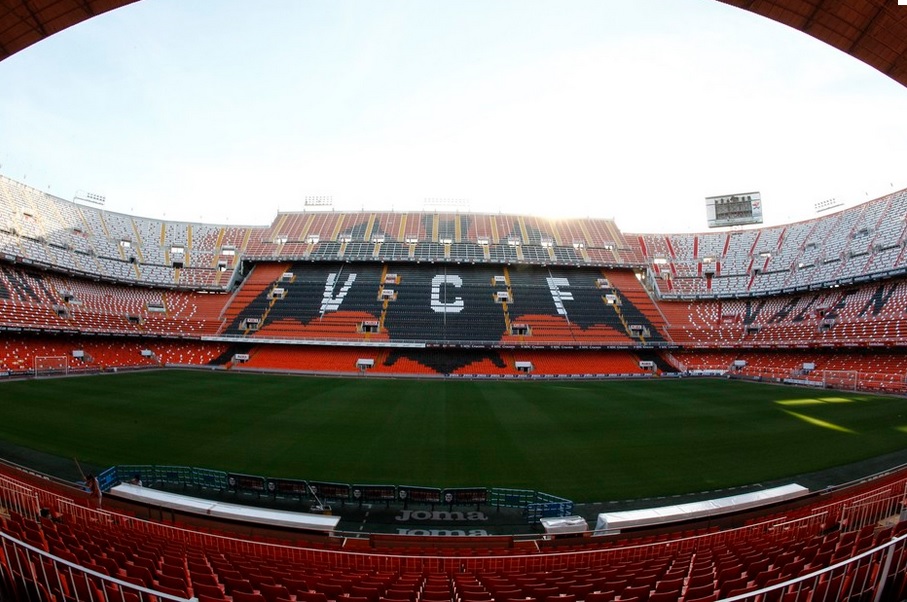
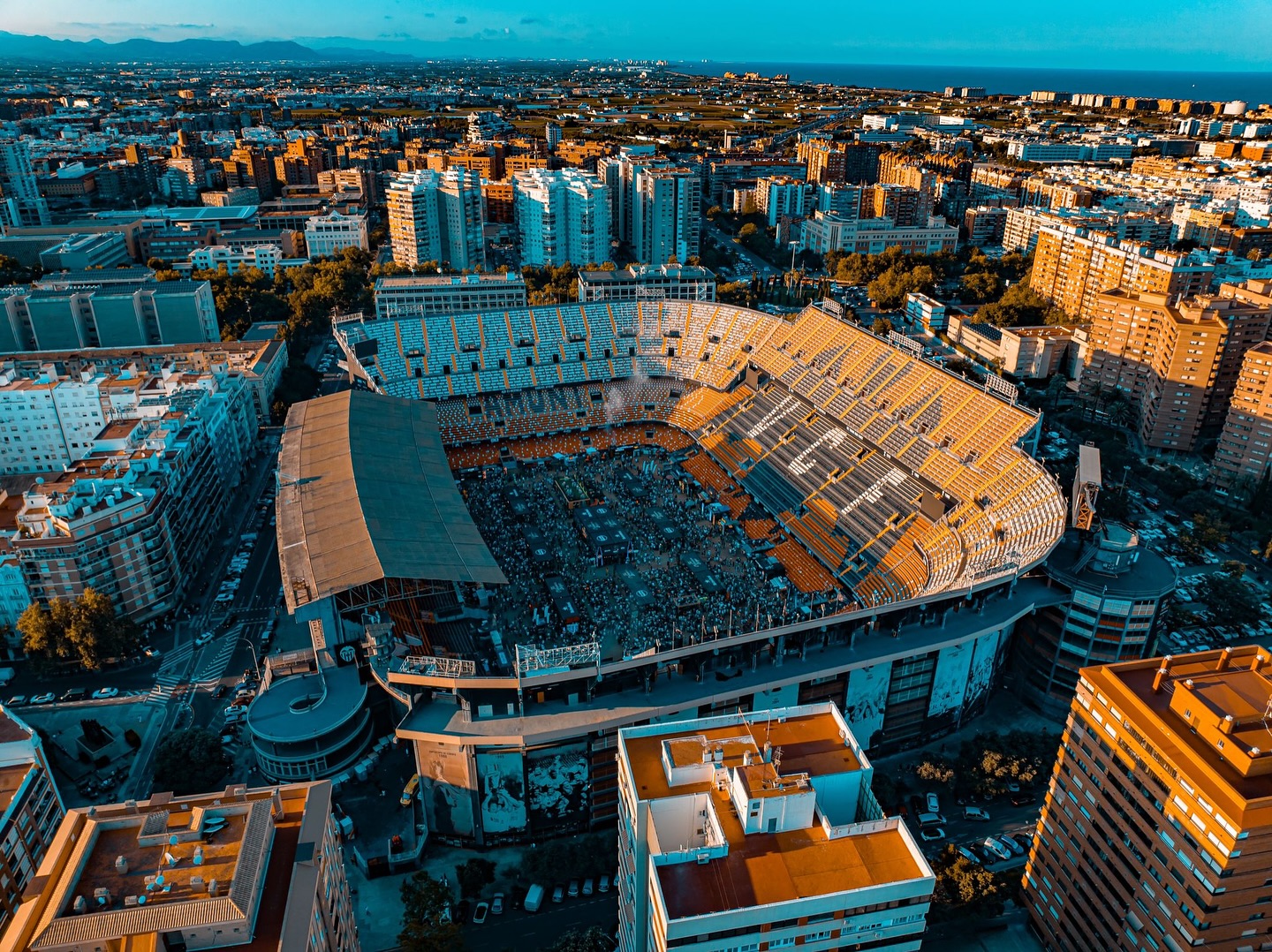
The Estadio Luis Casanova (or Mestalla!) underwent its next phase of redevelopment in 1978 when, in preparation for the 1982 World Cup, architects Salvador and Manuel Pascual came up with an ingenious idea to increase capacity. As the stadium could not expand outwards or upwards due to the close proximity of the neighbouring buildings, the pitch was excavated to build a new lower tier. The first few rows of all the existing stands were also removed, and in their place, several metres lower, went 20 rows of seats. Still in place today, the back 10 rows are covered by extensions to the existing stands. This mammoth operation was not without reward, as Spain played their first three matches in España 82 in front of a packed Estadio Luis Casanova. With additional seating added to other areas of the stadium, the capacity remained at 50,000; 33,053 were seated. This gave the fans something to admire, for, on the pitch, Valencia was in a slump. This culminated with a drop to La Segunda in 1986, the club’s first and to date, only relegation. The 1986-87 season was a tortuous affair with 34 regular season and 10 postseason matches, but Valencia came through and won the title from CD Logroñés with three points to spare.
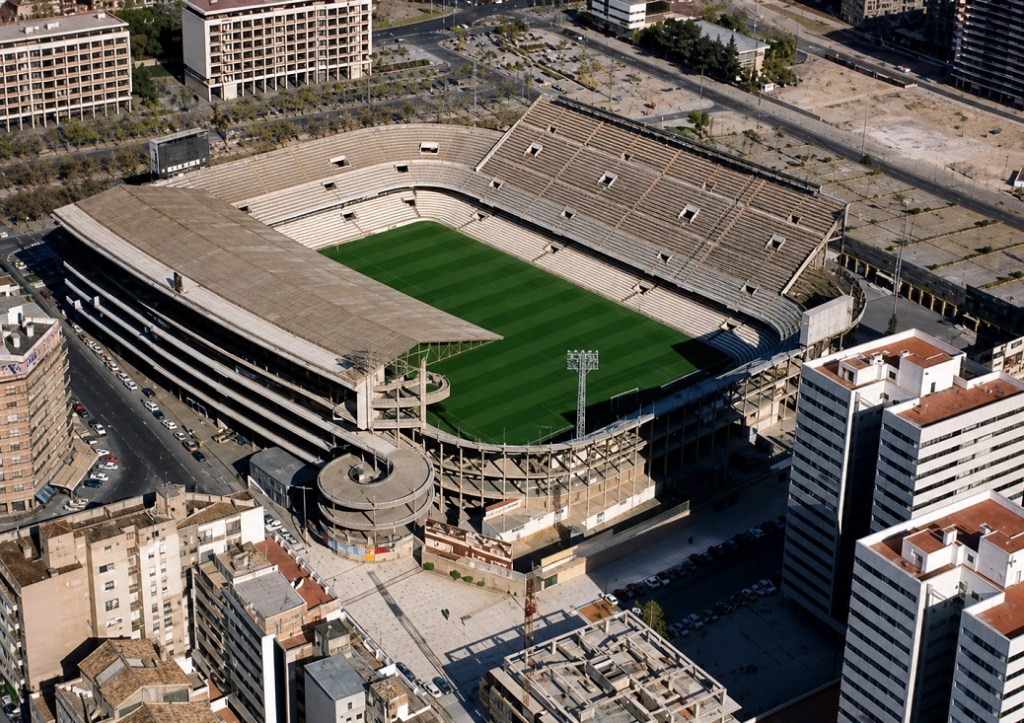
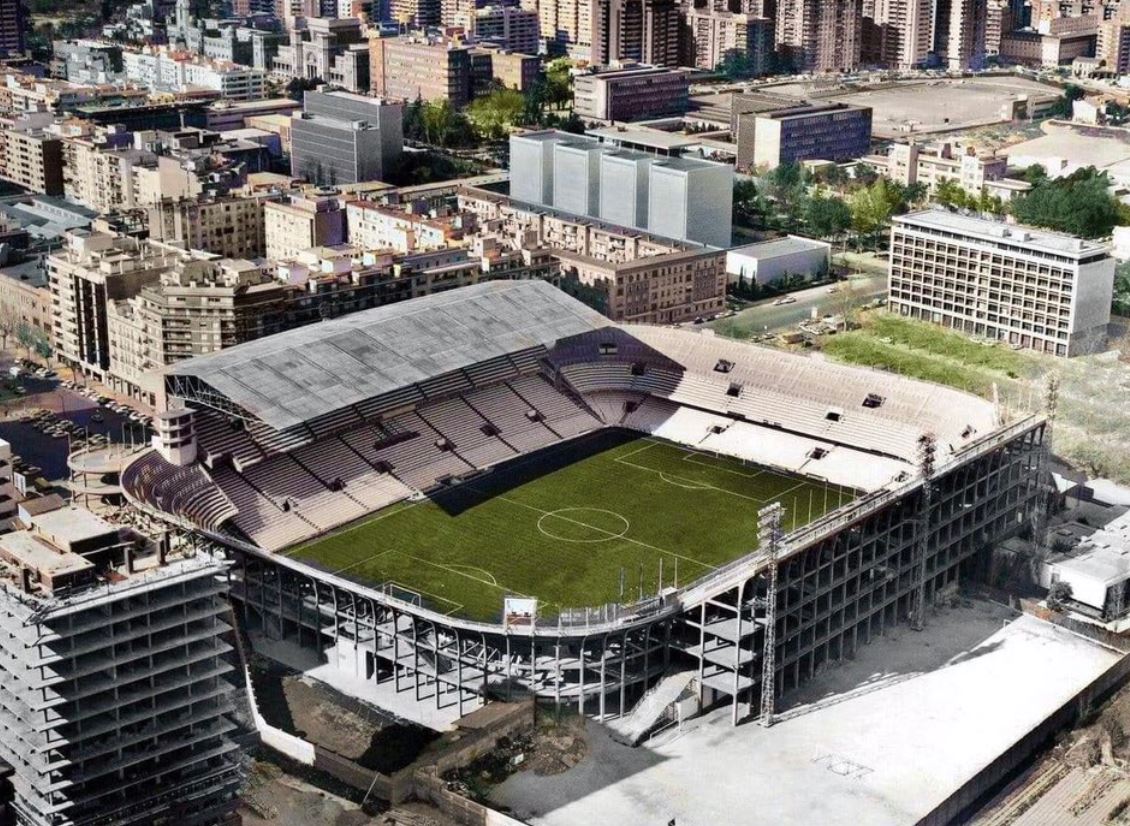
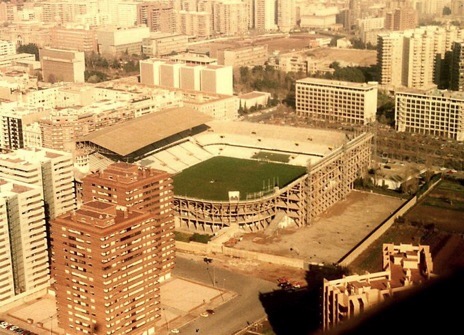
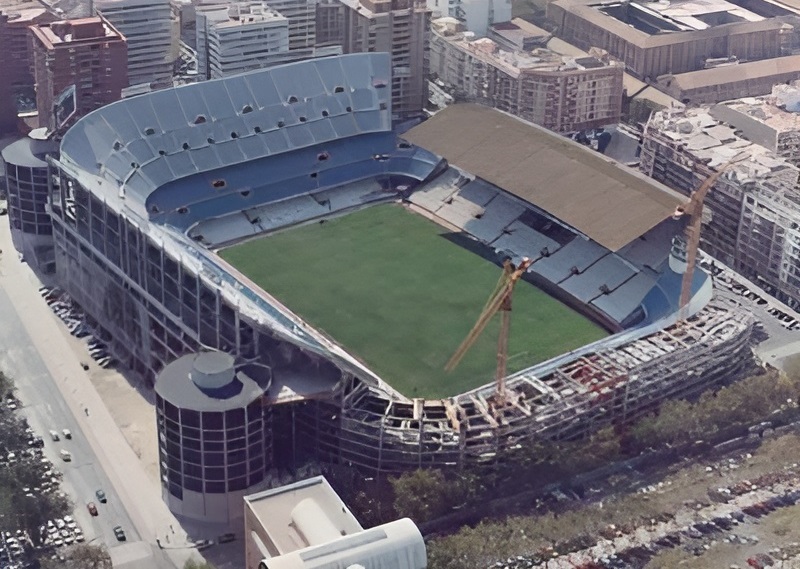
Valencia made an impressive return to La Primera with four top-five finishes in five seasons from 1988-89. In the summer of 1992, the stadium hosted ten matches during the Olympic football tournament, including all of the Spanish national teams’ games up to their final success at the Camp Nou. Buoyed by their first appearance in the Champions League and taking advantage of land that had become available around the renamed Mestalla, President Paco Roig pressed on with plans to add another tier to the three open sides of the ground. Between 1997 and 2001, the stadium was converted into a 49,677-seat arena, starting with the south stand and finishing with the north stand, for a cost-effective €24 million. By this time, Valencia had competed in and lost the previous two Champions League finals, but success in La Primera followed in 2001-02 with the club winning its fifth title. Two seasons later, Valencia were champions of Spain again and added the UEFA Cup to boot. With money arriving by the lorry-load, Valencia genuinely thought they could consistently challenge the established hierarchy of Spanish football, namely Real Madrid and Barcelona. They had the players, but they believed they needed a larger stadium.
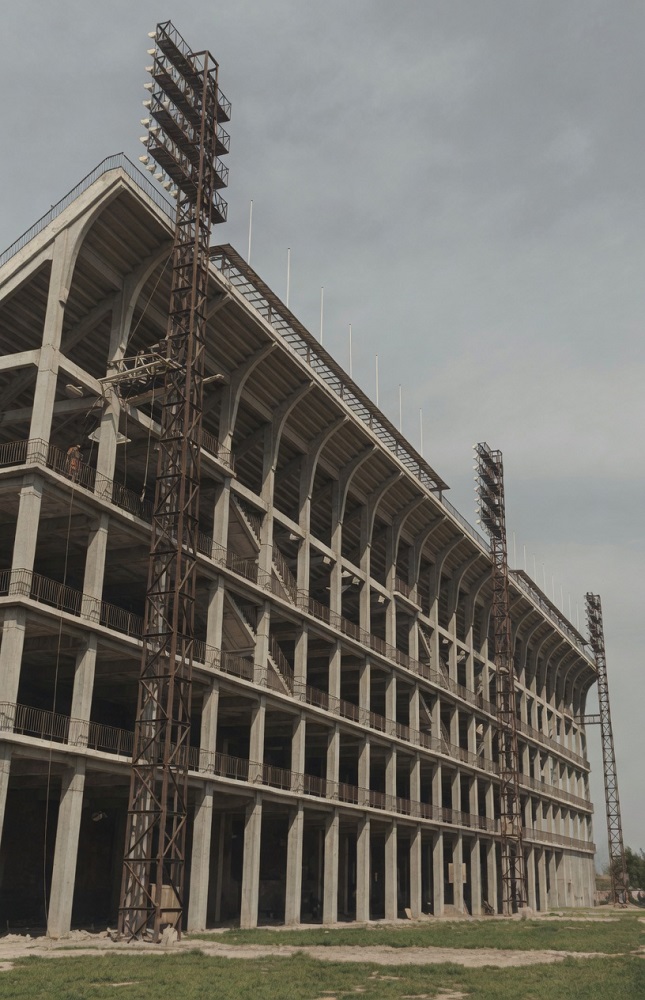
In November 2006 the club unveiled plans to move from Mestalla to a new stadium in the northwest of the city on the Avenida Cortes Valencianas. The stadium would seat 75,000 and include commercial and retail outlets, and cost €340m. Work began on 1 August 2007, but Valencia was just about to endure its worst domestic season for nearly 20 years and, as a result, would not qualify for the Champions League. No Champions League means no lorry-loads of euros, and with the world financial crisis looming, the banks started to get twitchy. Things were not going well at the new stadium either. On 26 May 2008, four construction workers died when scaffolding collapsed on one of the ten main towers. A further failure to qualify for the Champions League in 2008-09 saw the club’s debt rise to over 500 million euros. In the summer of 2009, the club defaulted on several payments to the construction company, and work stopped on the new stadium. The site lay empty for 15 years whilst the club’s debt was reduced; the project was all but abandoned.
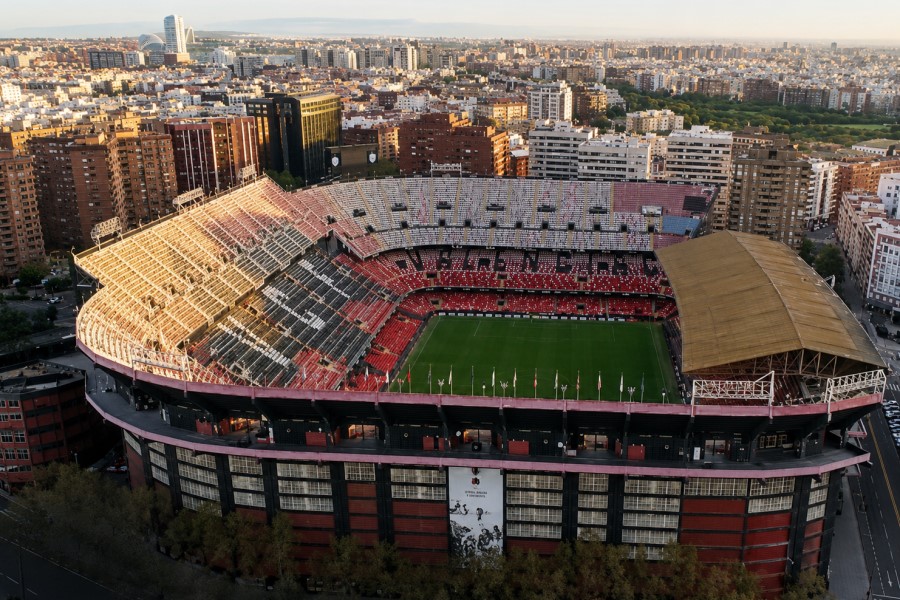
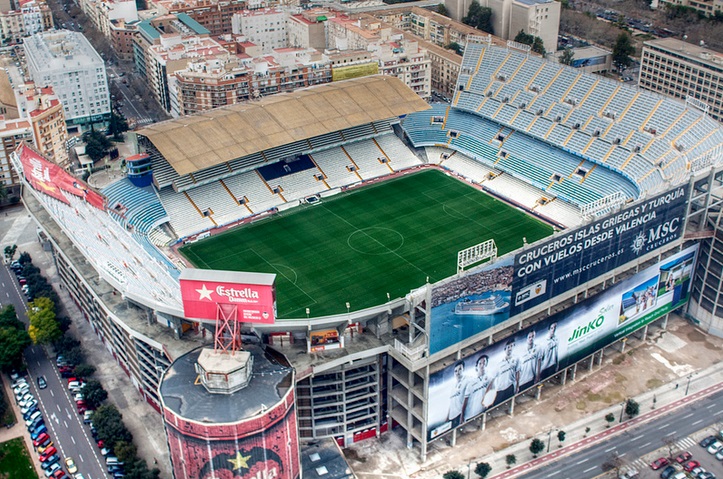
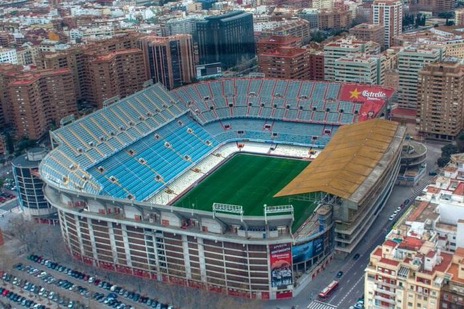
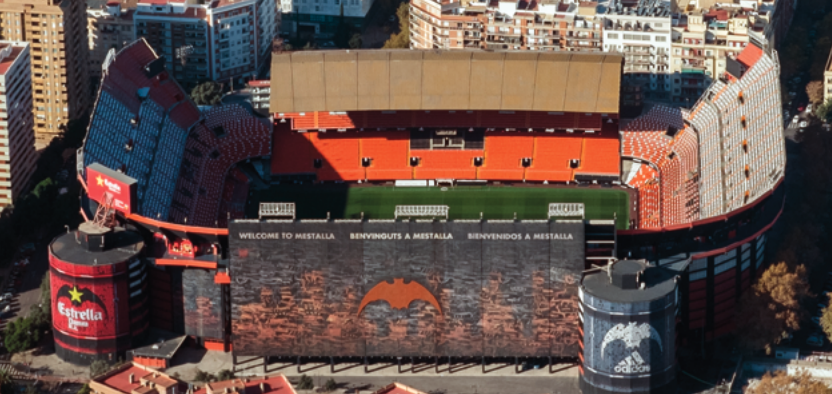
With its medium-term future remaining at Mestalla, Valencia set about the extensive refurbishment of its home in 2014. The existing seating was spray-painted to produce a vibrant mix of orange, black & white. The exterior was repainted and clad with gigantic club-themed banners. Things appeared to look brighter on the financial front when the club gained a new owner in the shape of Singapore businessman Peter Lim. Lim’s priority was to stabilise the club’s finances, but any investment in the squad and the Nou Mestalla did not materialise. The team regularly teetered on the brink of relegation from La Primera, but managed to escape the drop. After several attempts to restart the Nou Mestalla project, work finally got back underway in January 2025, and, with a very late bid to include it as a venue for the 2030 World Cup, it looks as if the Mestalla’s days are numbered. When the curtain finally comes down on 100+ years of football at the Mestalla, Valencia, Spain and the wider footballing community will have lost one of the world’s truly iconic stadiums.







3 thoughts on “Valencia – Mestalla”
Comments are closed.