Coria is one of Spain’s oldest continuously inhabited towns, with a history stretching back about 2,600 years. Founded by the Celtic Vettones, it later became the Roman town of Caurium, whose impressive walls still largely survive. Under the Visigoths, Coria became an important bishopric before being incorporated into Muslim al-Andalus as Medina Cauria in the 8th century. After its reconquest, Coria developed as a regional religious, administrative, and agricultural centre. Over the centuries, it has weathered wars, economic hardship and depopulation. Today, it remains a small but important hub for northwestern Extremadura, known for its Roman walls, cathedral, castle, and remarkably well-preserved historic centre. As for football, well, that developed much later than in other Spanish towns. There are anecdotal reports that the sport was played informally during the 1920s behind the Civil Guard barracks and at Campo de Las Eras, but no organised club emerged. Lack of support from the church or schools meant that football remained an unstructured pastime, with no records of any clubs competing before the Civil War.
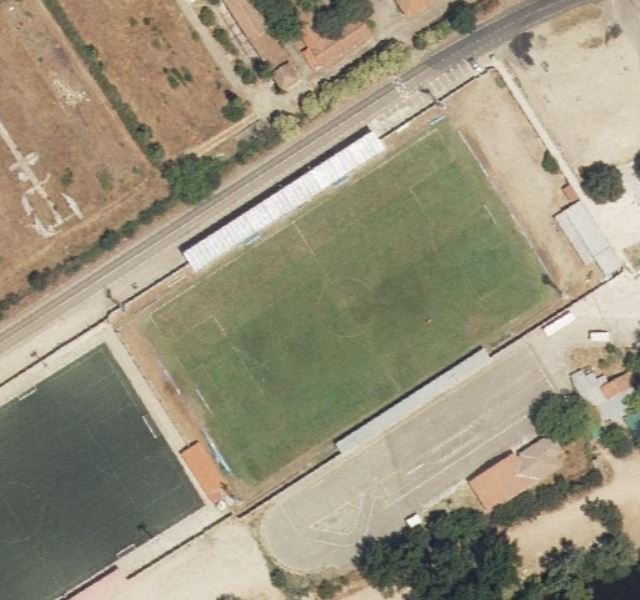
After the conflict, reconstruction and other social needs delayed the growth of organised sport. Football in Coria was largely confined to the students at local religious colleges, who played on a stretch of open land beside the Rio Alagón known as La Isla. By the late 1940s, as football’s popularity spread across Spain, the municipality responded by developing a sports complex at La Isla. The project included a football pitch and swimming pool, providing the infrastructure needed for organised sport. The facilities were inaugurated in 1949, and whilst the 25-metre swimming pool was perfectly acceptable, the area dedicated to football was little more than an open field. Contrary to some records, the playing field was actually to the west of the current stadium, more or less on the site of the current Campo de Fútbol Municipal César Sánchez. This layout remained in place for the next two decades. The opening coincided with the formation of the city’s first federated club, Club Deportivo Coria de Educación y Descanso. They competed in the Extremeña Tercera Regional in the 1950-51 season, but withdrew thereafter, due to the cost of travel and lack of suitable players. By the mid-1950s, all traces of the club had disappeared, and whilst it was home to a junior team, CD Coria Juvenil, senior football did not return to the Campo de La Isla until the late 1960s.
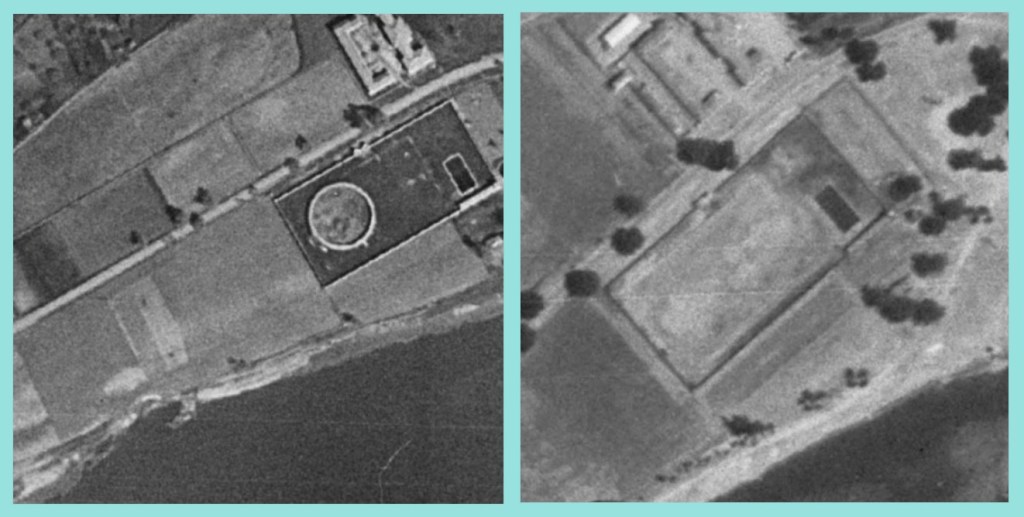
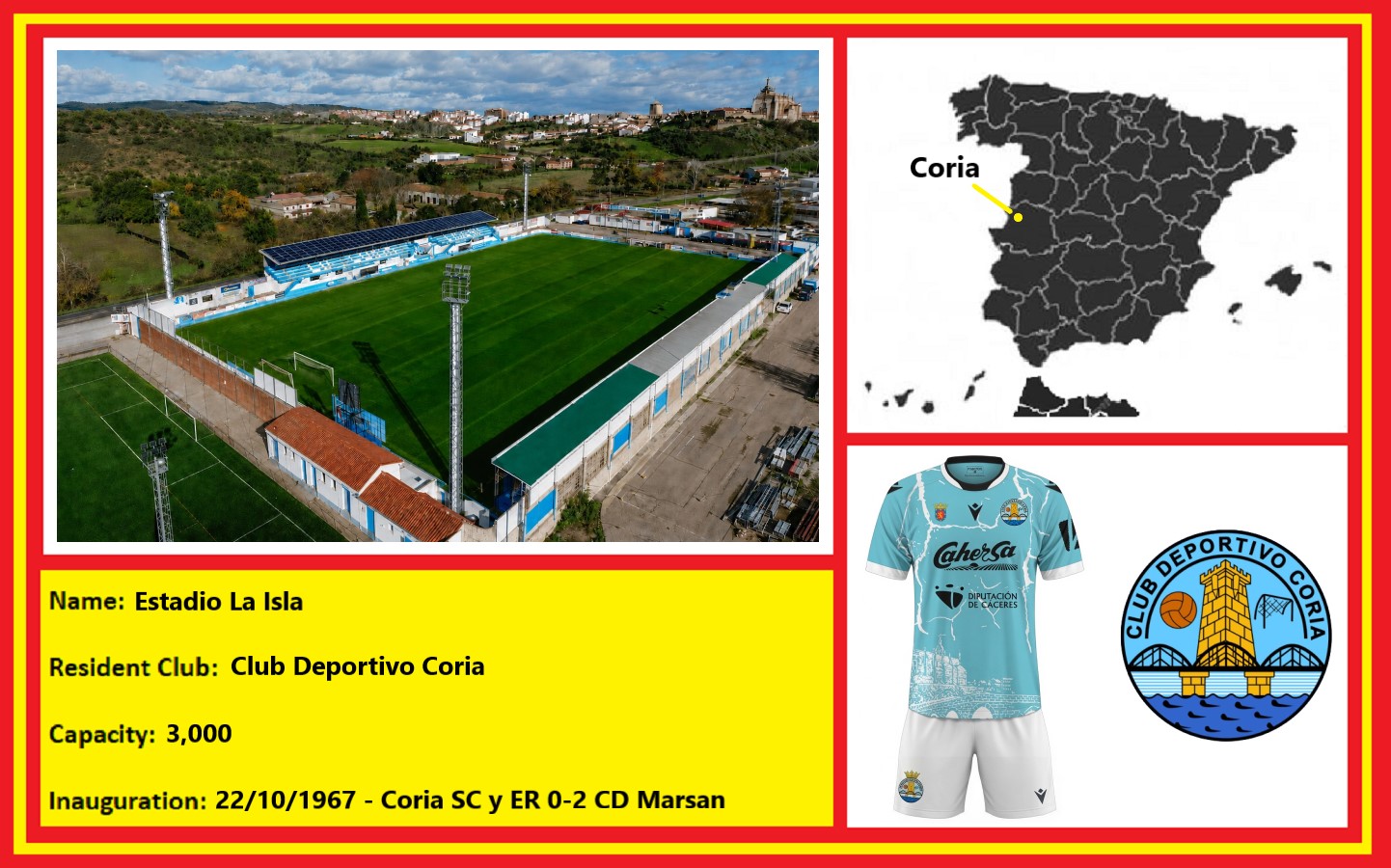
In the mid-1960s, local businessman and enthusiast Juan de Luis Antón set about reviving the defunct Coria SC y ER, registering the club in the Segunda Federación for the 1967-68 season. Earlier that year, the municipality had built an enclosed ground on the site between the swimming pool and the Campo de La Isla. Coria SC y ER played their first competitive match at the new Estadio La Isla on 22 October 1967, losing 0-2 to Club Deportivo Marsan. The following campaign was abandoned after just four rounds, when Coria SC y ER resigned. Now under the presidency of Juan de Luis Antón, it had grown dissatisfied with the constraints of the Obra Sindical de Educación y Descanso, the state-run syndicate for worker recreation and sports. After careful planning and discussion, Club Deportivo Coria was officially founded on 7 August 1969, with Juan de Luis Antón becoming president. The new club quickly established its identity, adopting a light blue shirt, white shorts, and an official crest. It successfully lobbied the local Federación to join the Primera Regional Extremeña for the start of the 1969-70 season, where it finished fifth. The promising start continued into the 1970-71 season, when the club finished third, but it soon began a downward trajectory that would see little upturn for the next 15 years.
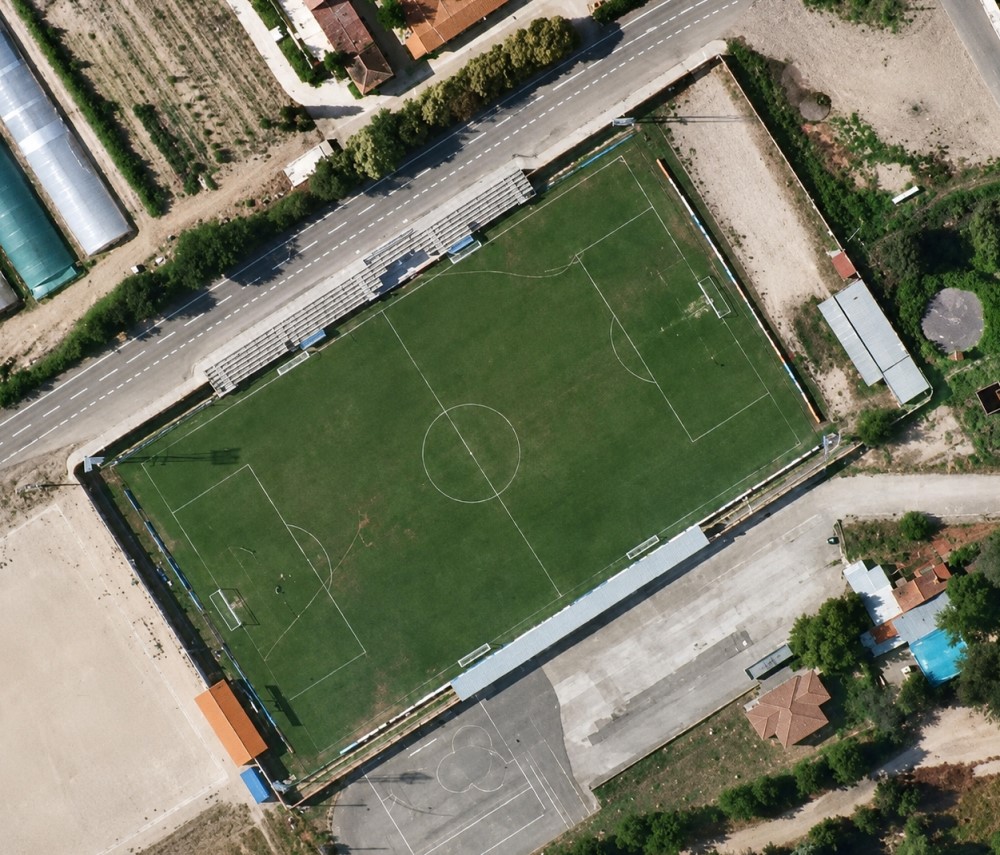
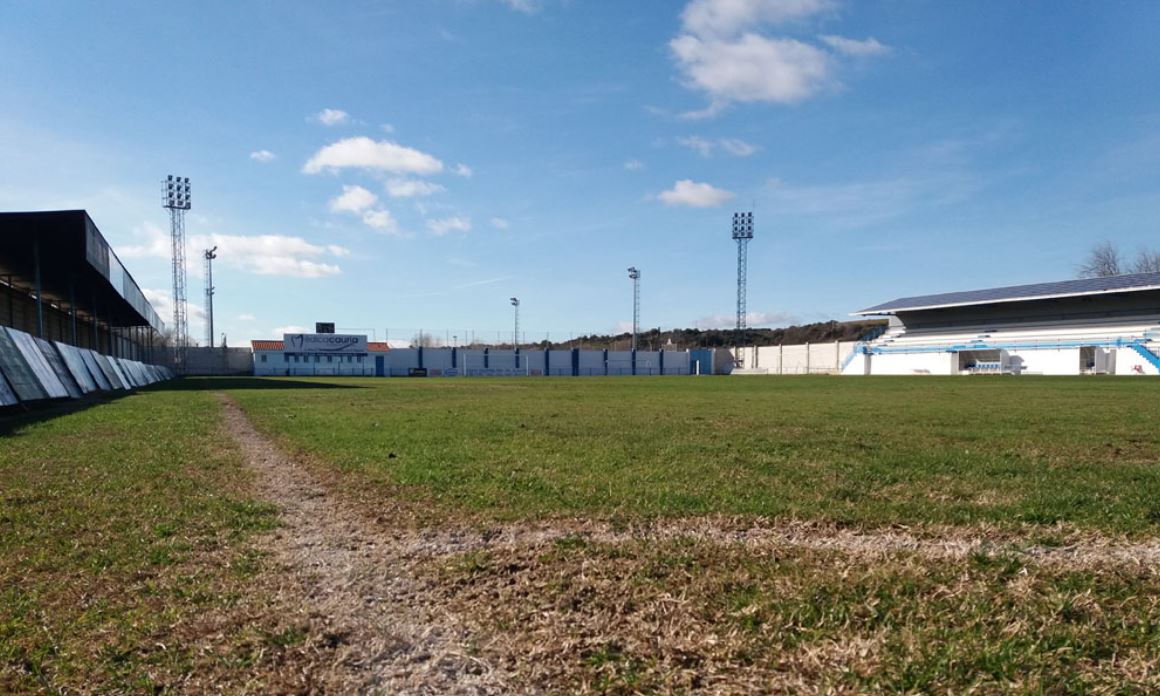
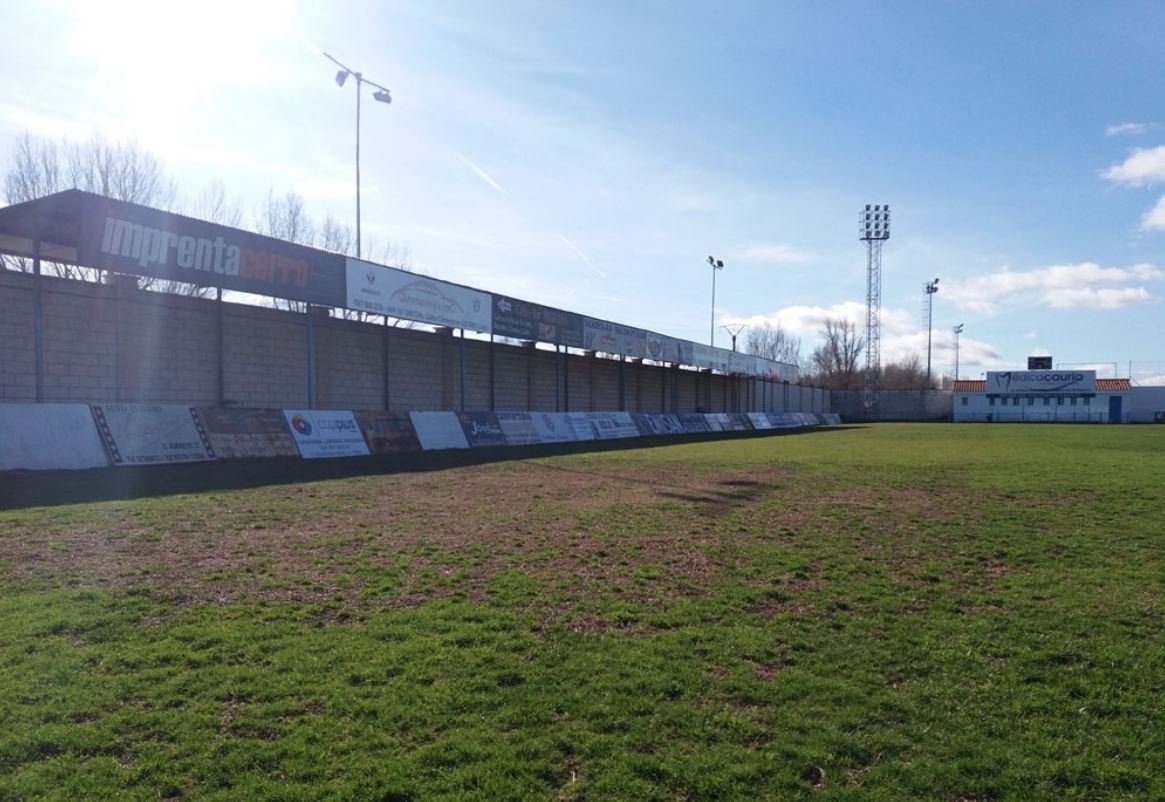
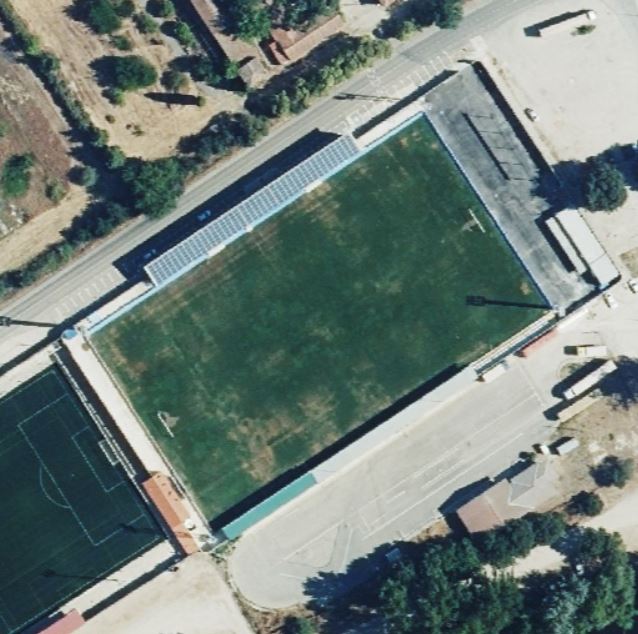
With the majority of the 1970s & 80s played out in the Regional Preferente, CD Coria was handed a stroke of luck in 1987 when the restructuring of the Spanish leagues presented them with a chance to step up to the Tercera. They seized the opportunity, beating CP Guareña 7-1 on aggregate. Their debut season at the national level saw CD Coria finish 13th, and over the next three decades, they became a stalwart of the Extremaduran section of the Tercera. Yes, there were a few relegations to the Regional Preferente, but the club quickly returned to the Tercera and mid-table dependability. Promotion to the Tercera necessitated some changes at the Estadio La Isla. During the 1980s, the enclosure was extremely basic, featuring a short 10-metre raised terrace on the northern side, a short 20-metre cover over the southern side and a narrow changing block in the southeast corner. In 1990, a 70-metre-long raised terrace was built on the northern side. A more substantial 50-metre cover was added over a few steps of terracing on the southern side, whilst the old municipal pool behind the eastern end was filled in, and a clubhouse was built in the corner of the enclosure. The sand/lime playing surface remained until 1994, when the first grass pitch was installed. La Isla’s capacity stood at 1,200, which was perfectly adequate, given the town’s population of 11,000.
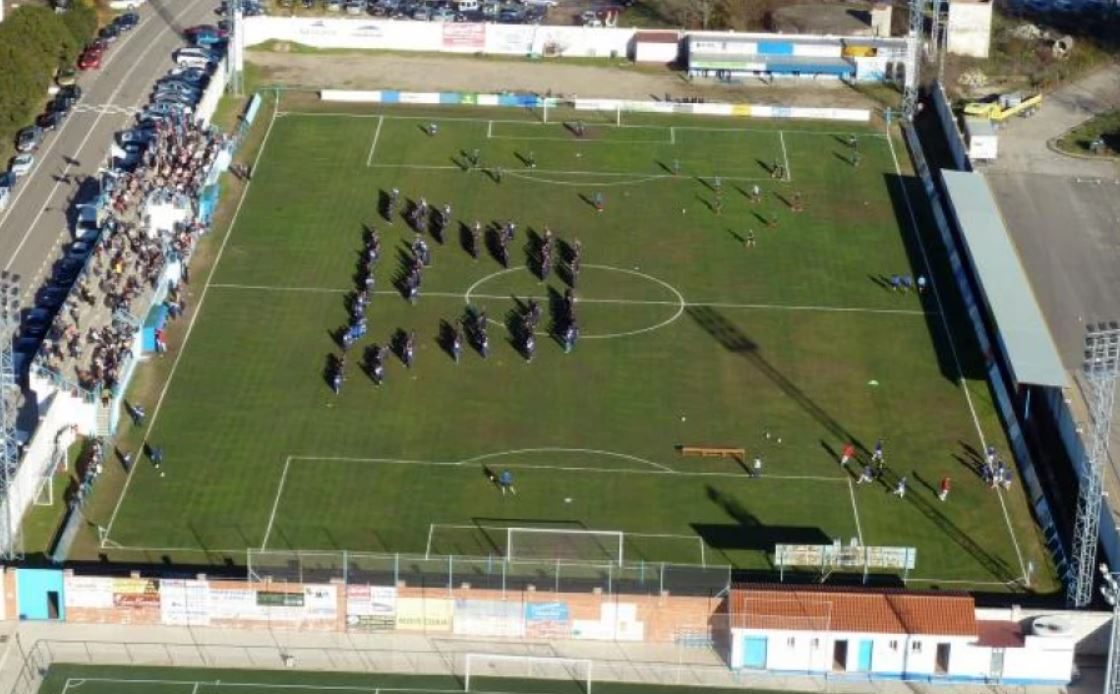
Over the last decade or so, CD Coria has undergone a remarkable upturn in fortunes under the presidency of Aurelio Gutiérrez. After a series of near misses, the club first made the promotion playoffs to Segunda B in 2018, but lost to Getafe B. They repeated the feat a year later, but this time, CF Villarubia had their number. The 2019-20 season was curtailed due to the COVID-19 pandemic, with CD Coria second in the league, but a one-off match in Mérida against CP Cacereño saw the light blues lose in the playoffs for a third successive year. Undeterred, CD Coria finished as runners-up in the league and overcame the challenges of Jerez CF and CD Diocesano to earn a place in the newly established Segunda Federación. The club’s coach for much of this period was Rai Rosa, who led them for one more season, during which they made another playoff appearance. The playoffs paired the club with La Nucia, who won the one-off match 2-0 in Benidorm. Rosa left at the end of the season, and CD Coria’s upward trajectory stalled in the 2022-23 season, culminating in relegation to the Tercera Federación after conceding a 90th-minute equaliser in the final match. The club bounced back immediately, finishing runners-up and beating CP Moralo and CD Azuaga in the playoffs. Rai Rosa returned as coach in 2024, and their rise continued with playoff victories over CD Minera and Oviedo Vetusta, to earn the club an historic promotion to Primera Federación and Spain’s professional ranks.
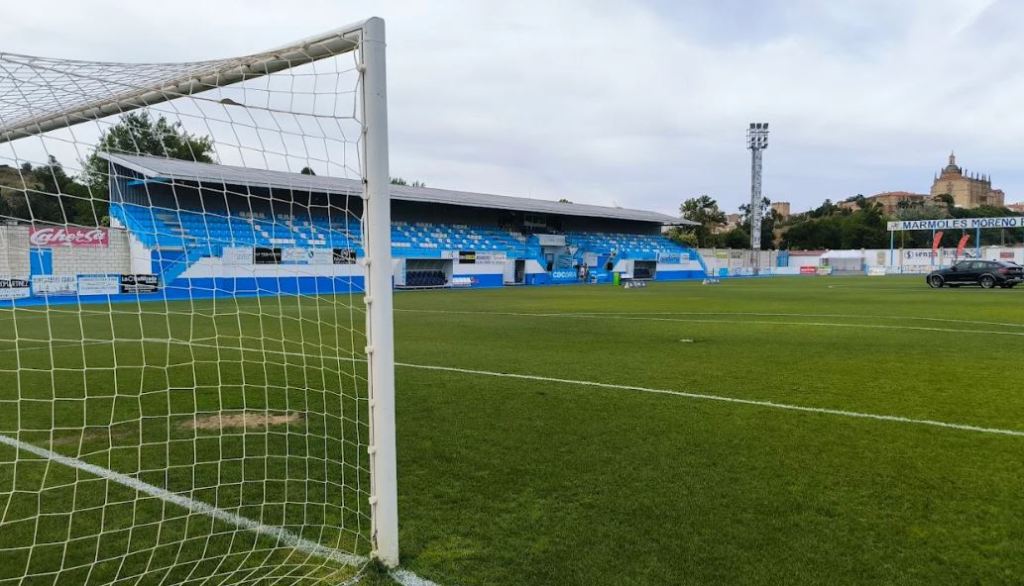
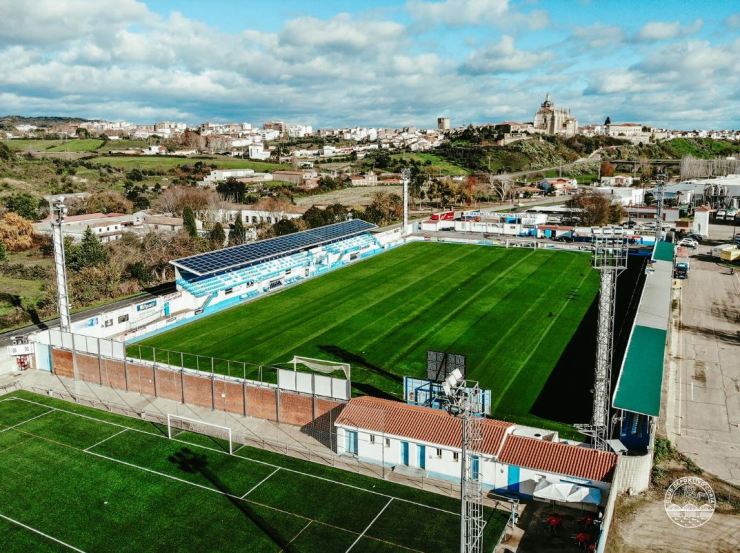
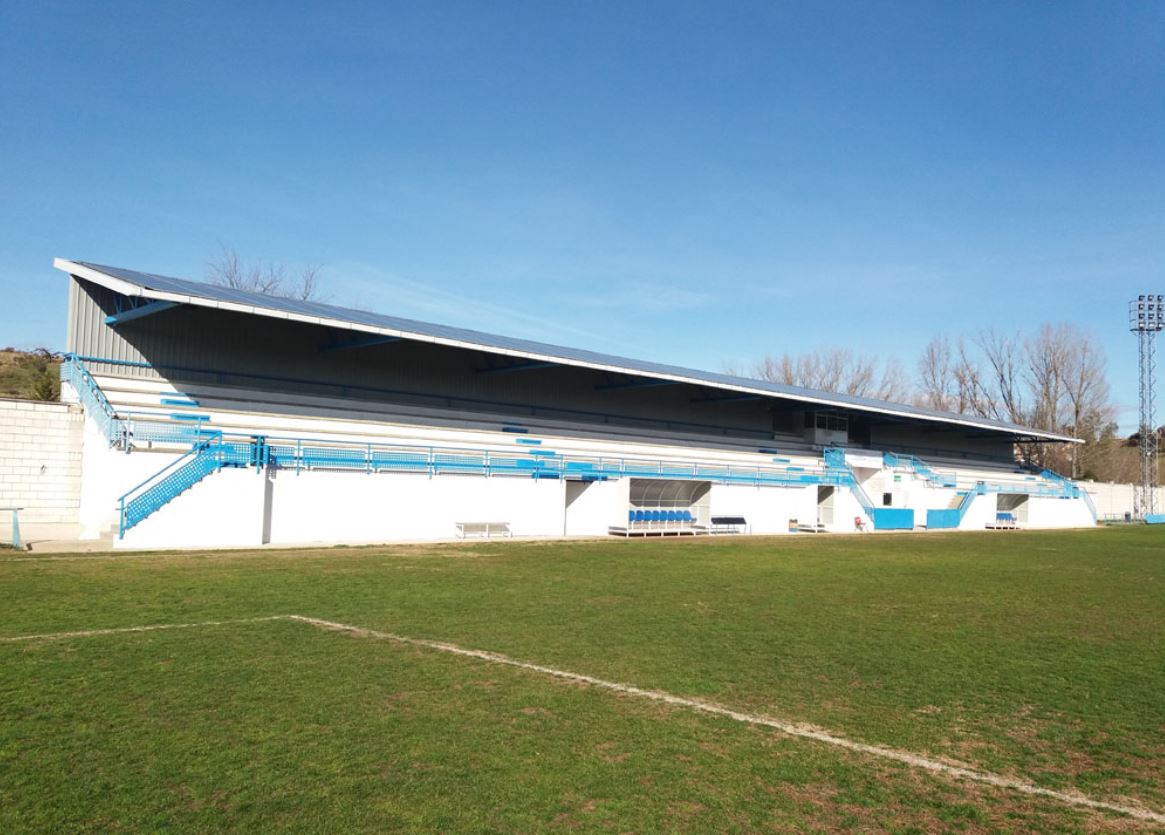
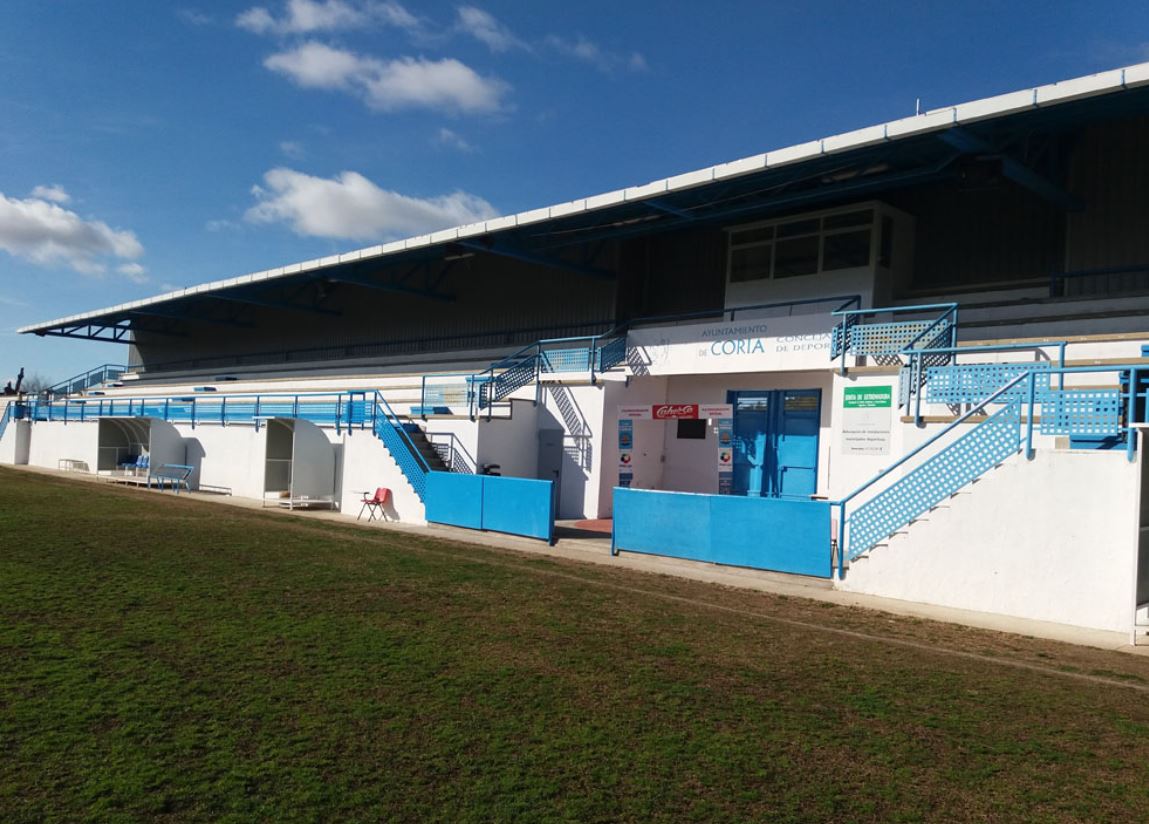
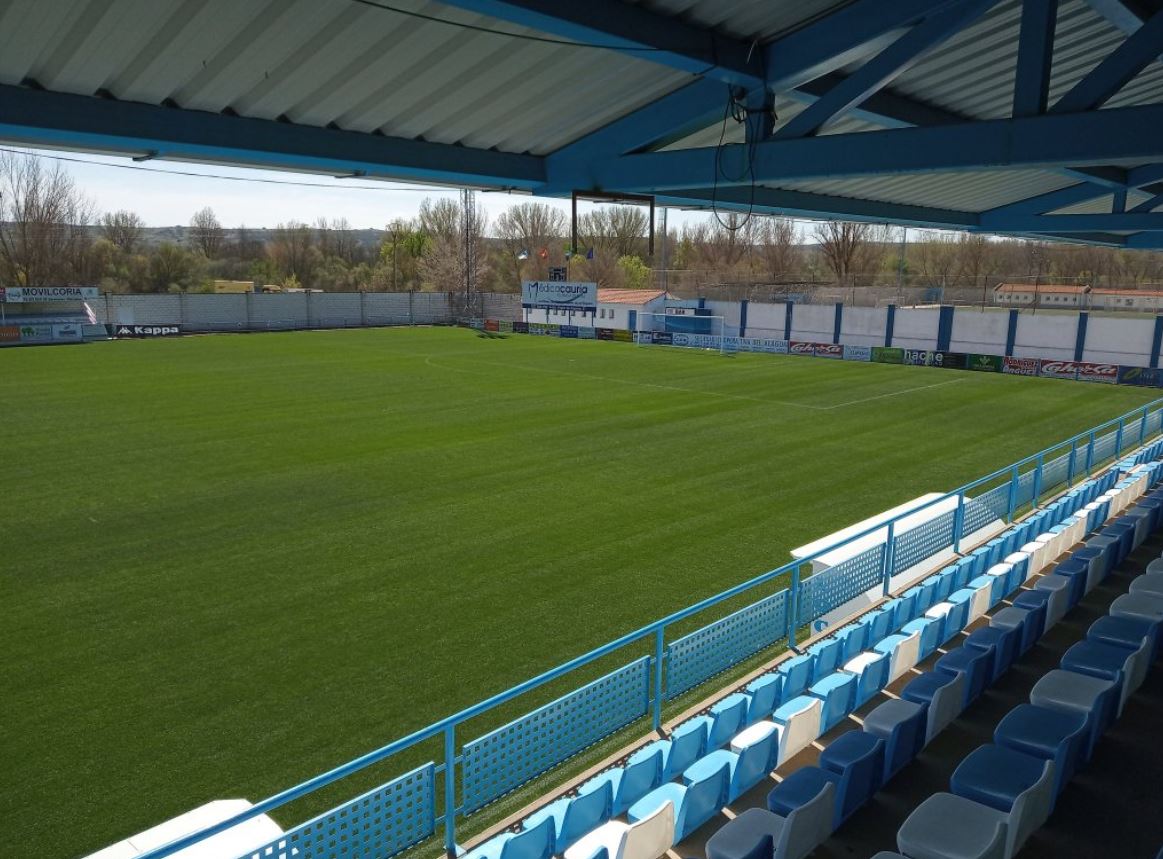
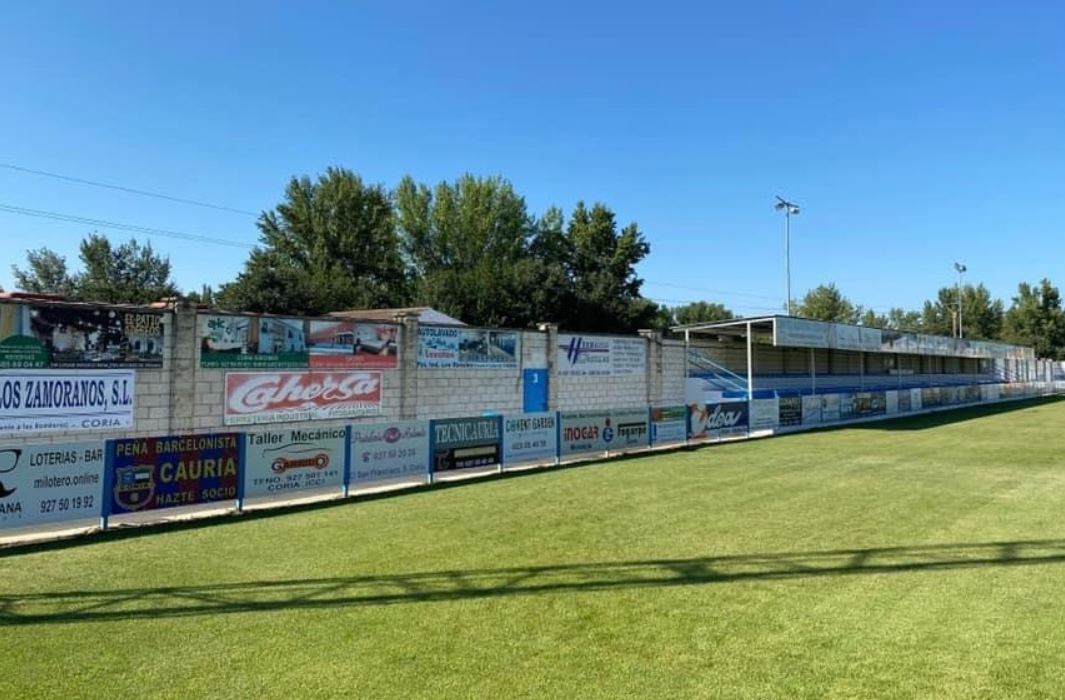
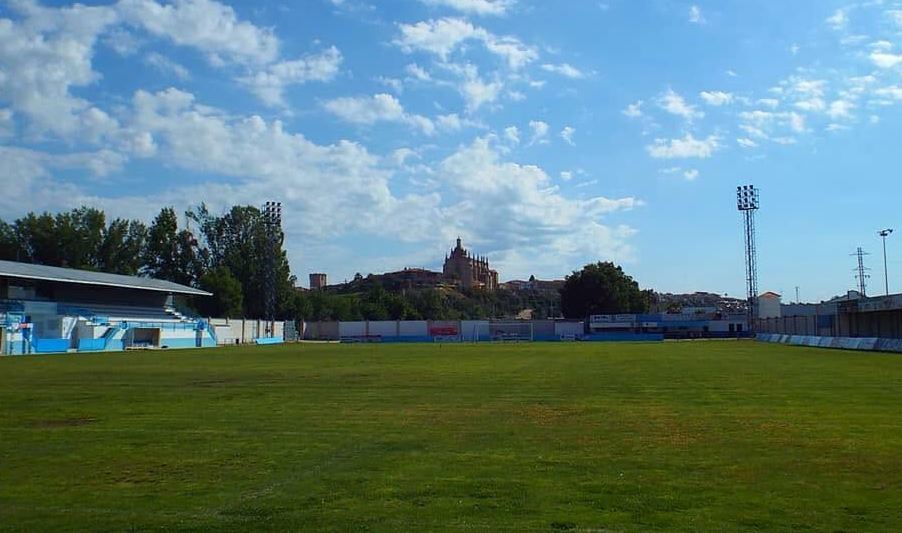
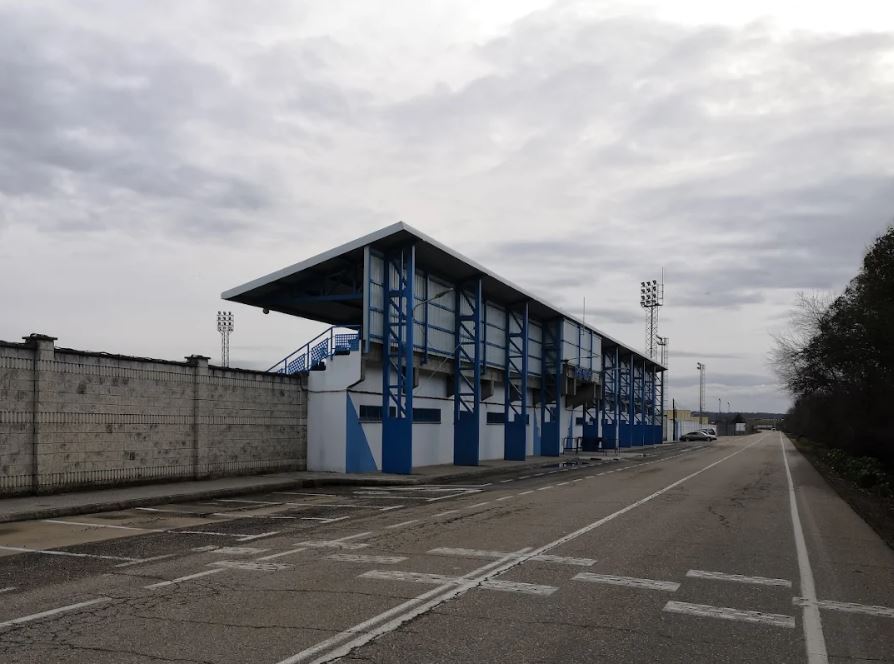
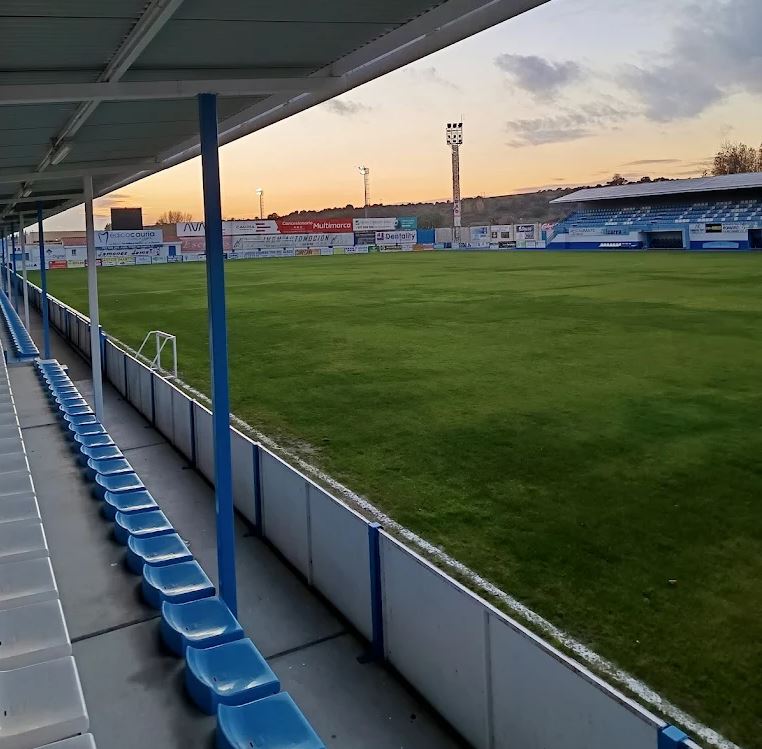
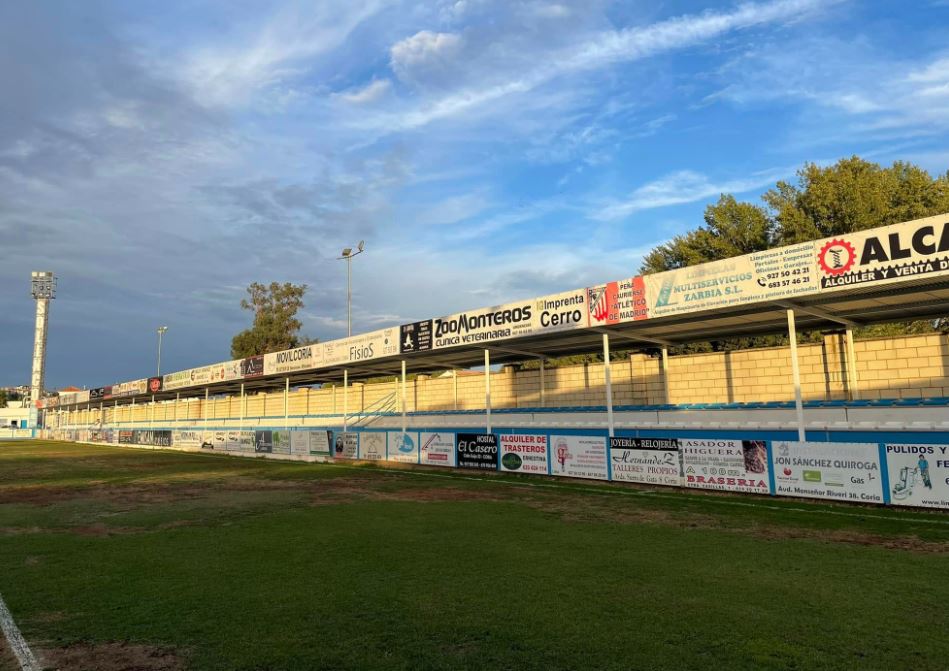
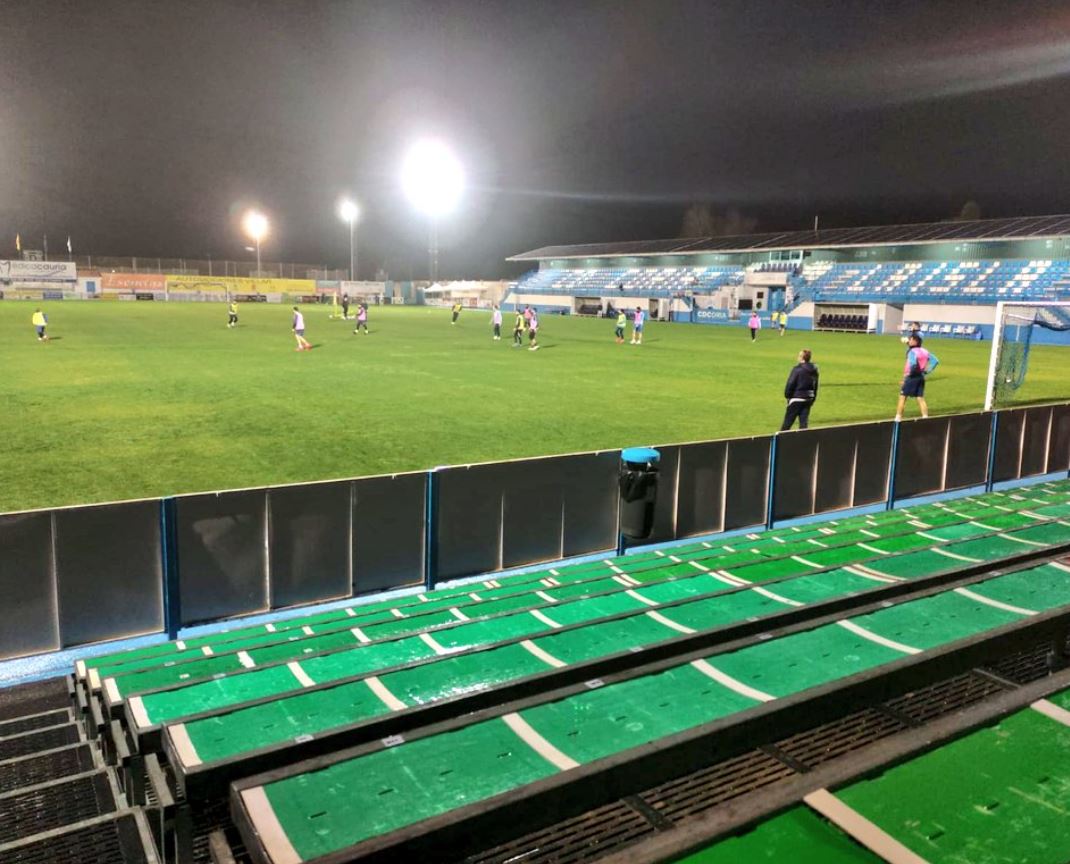
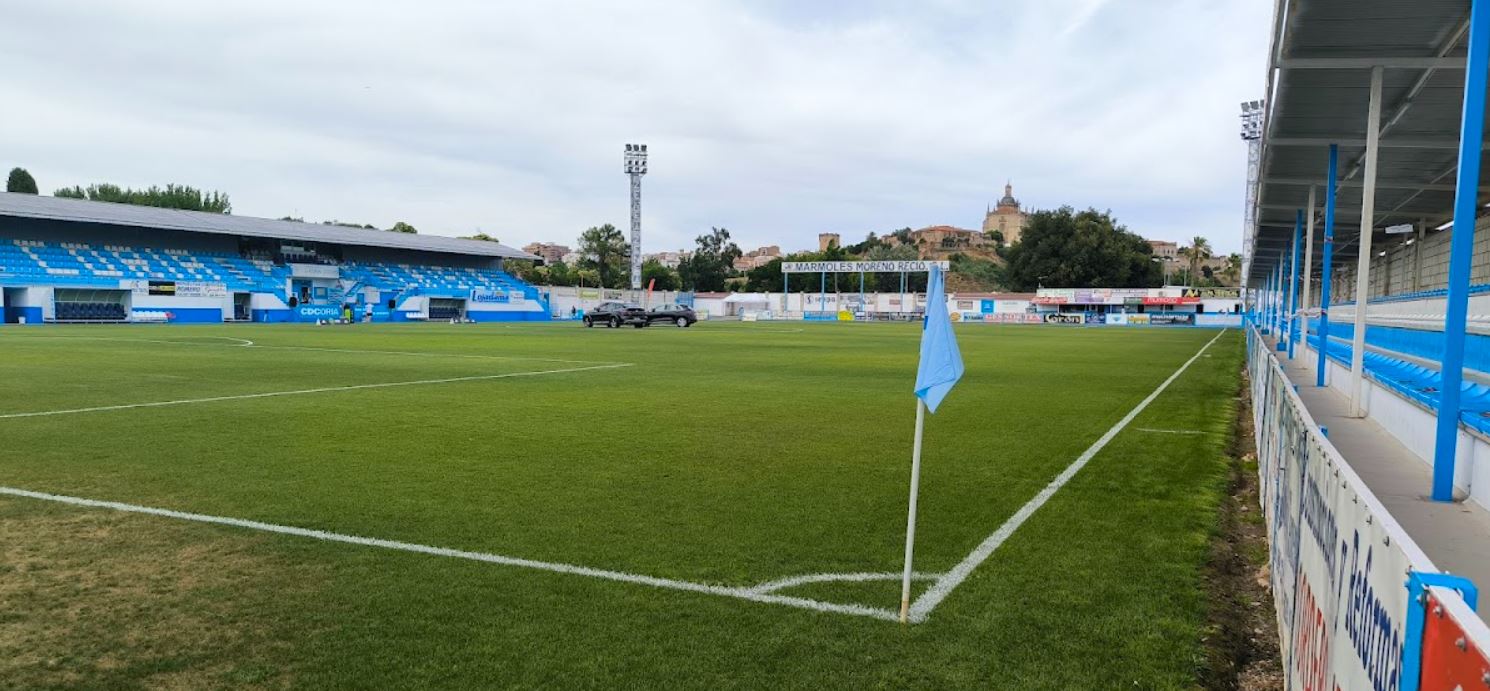
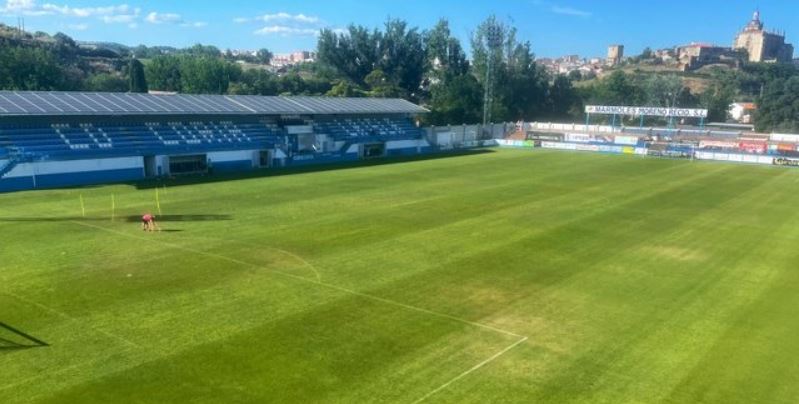
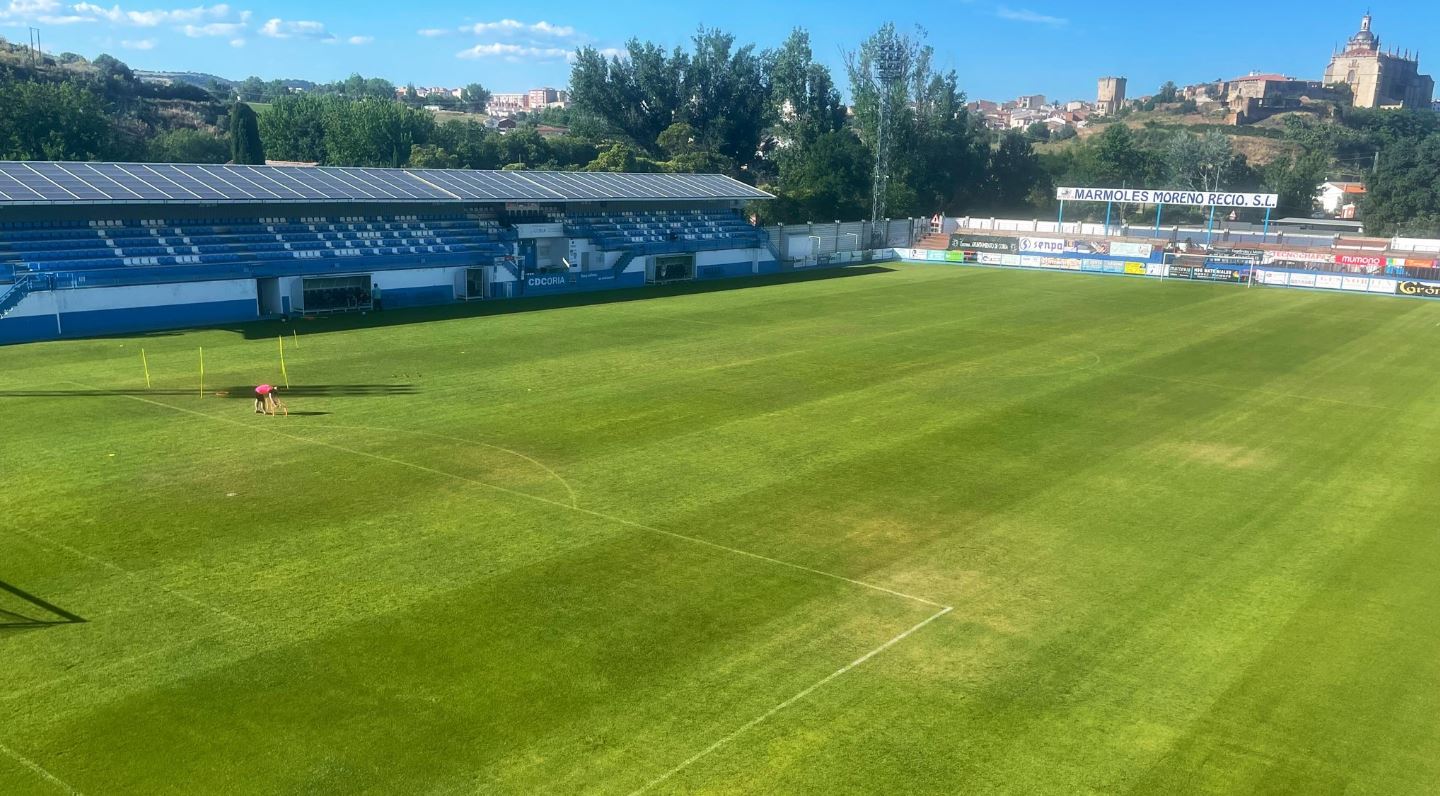
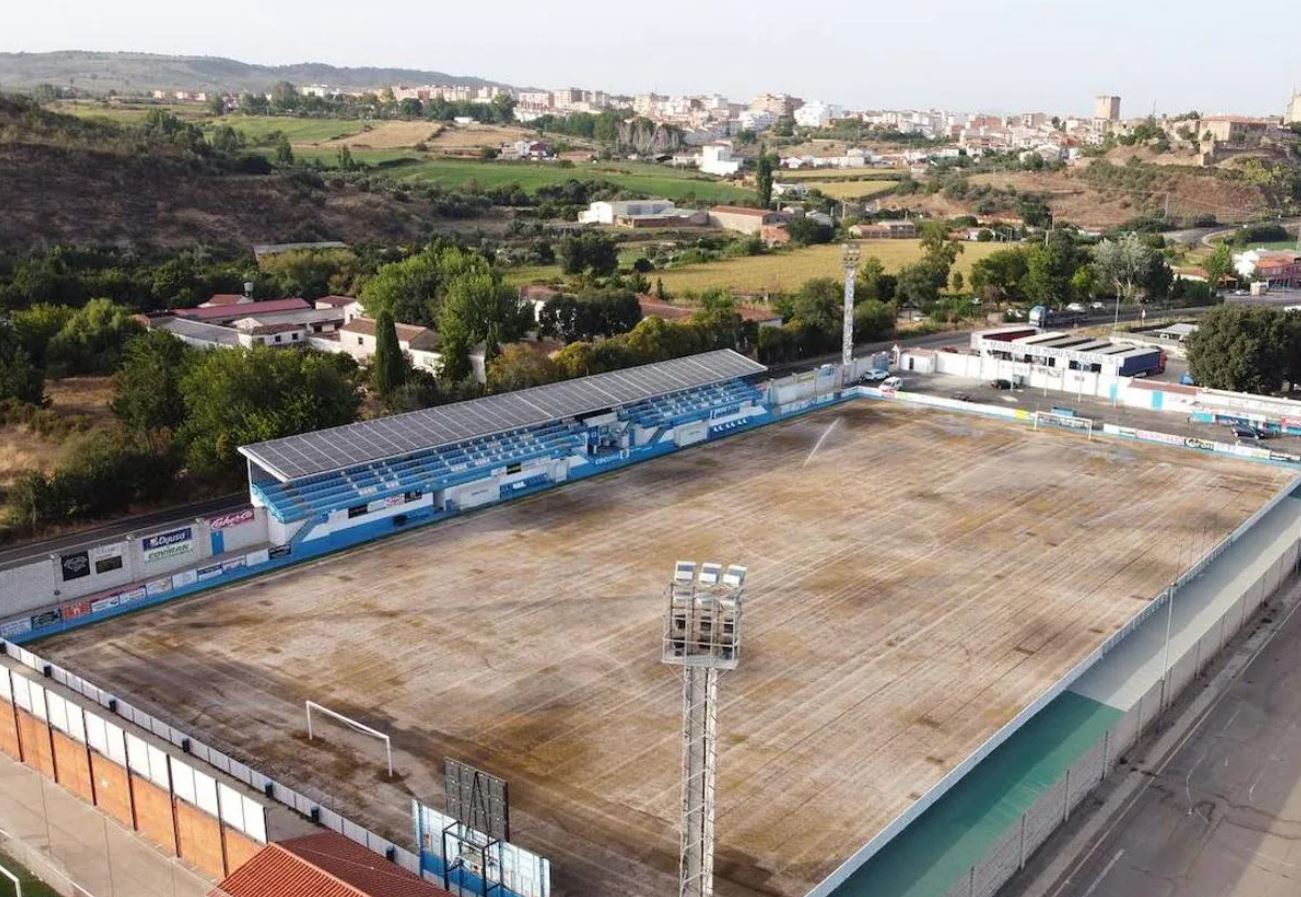
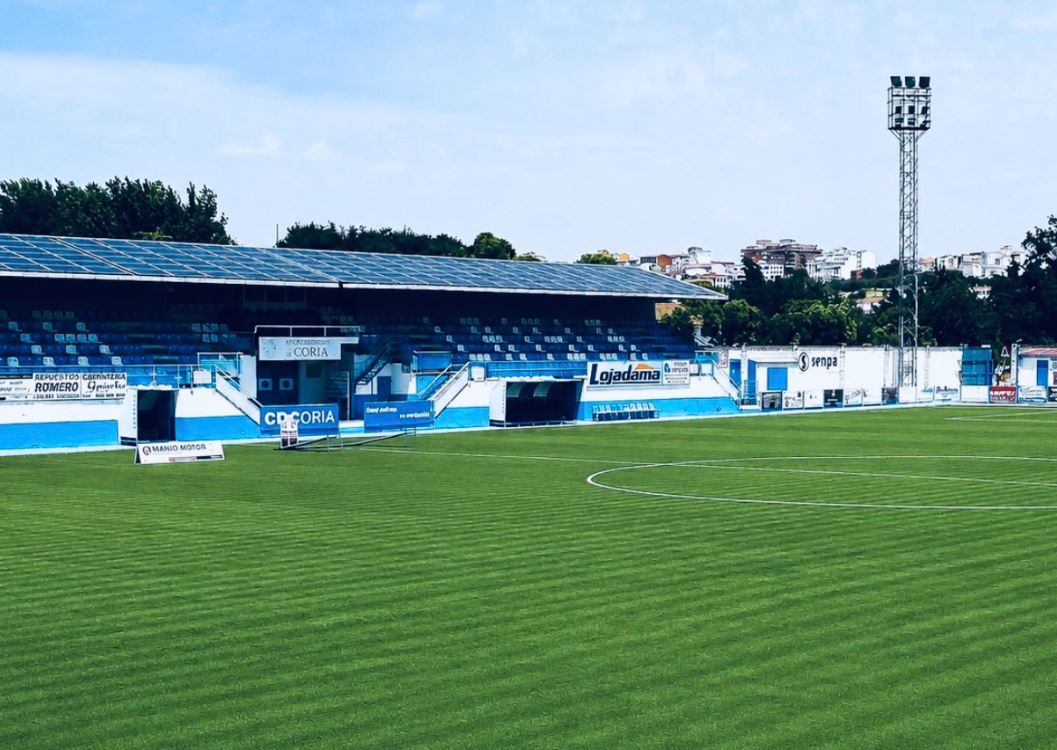
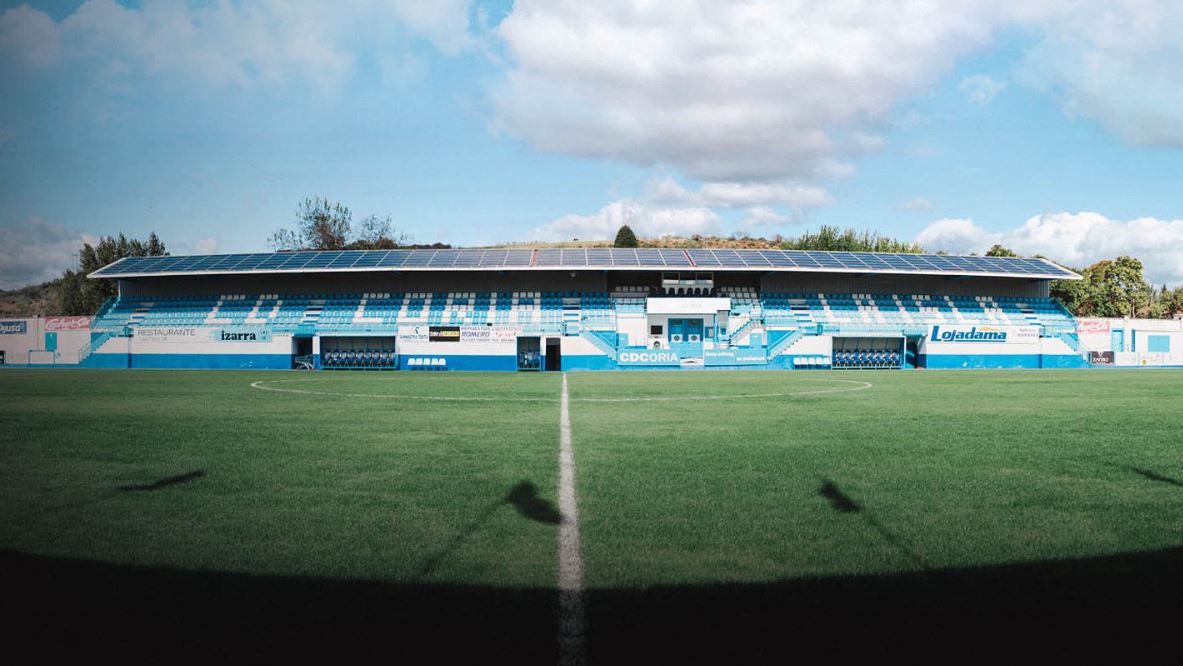
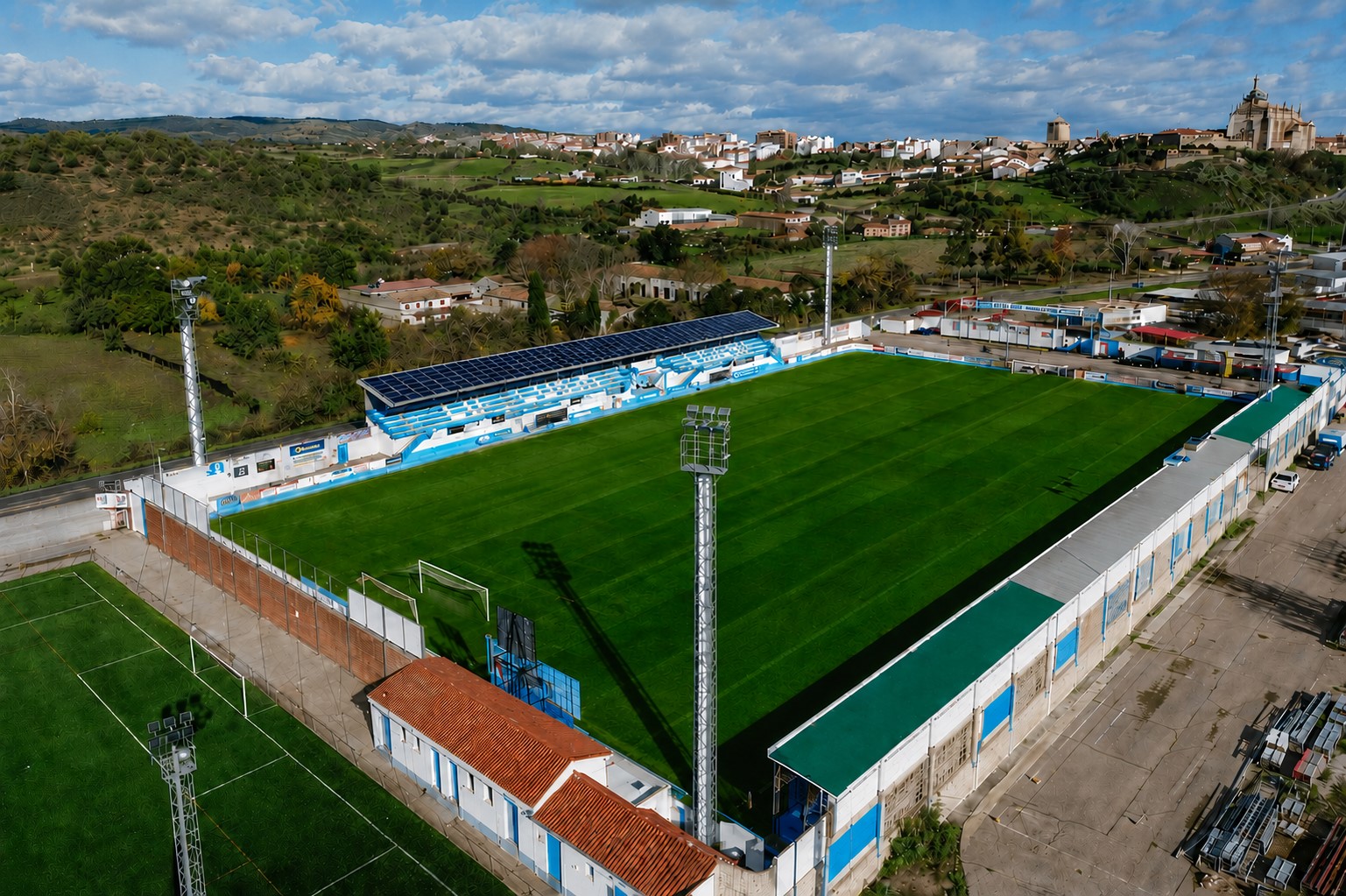
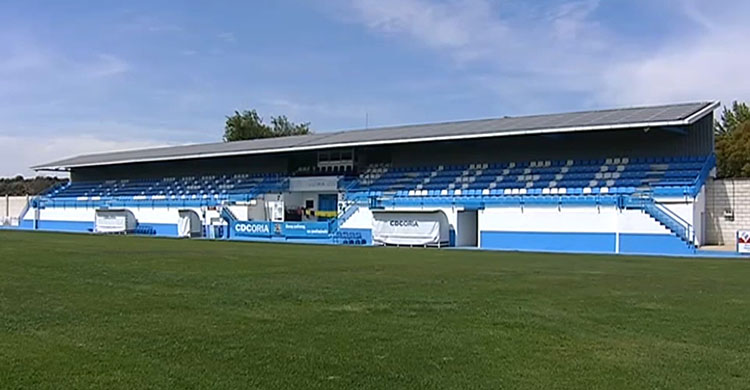
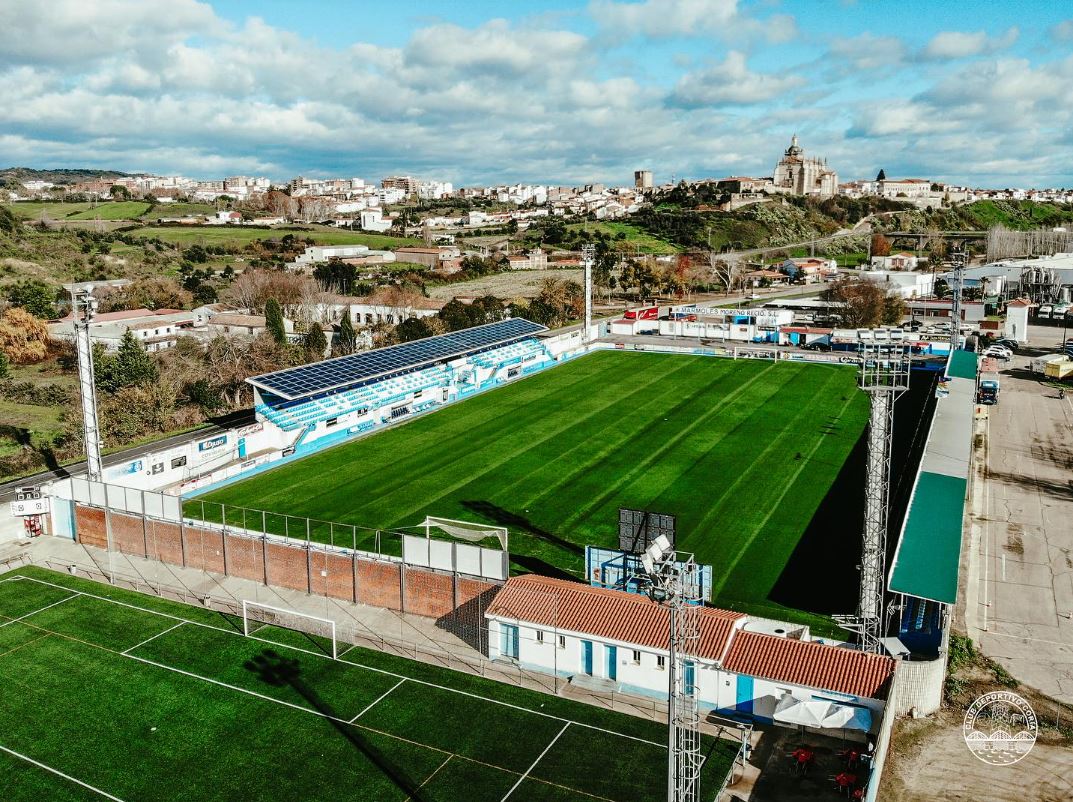
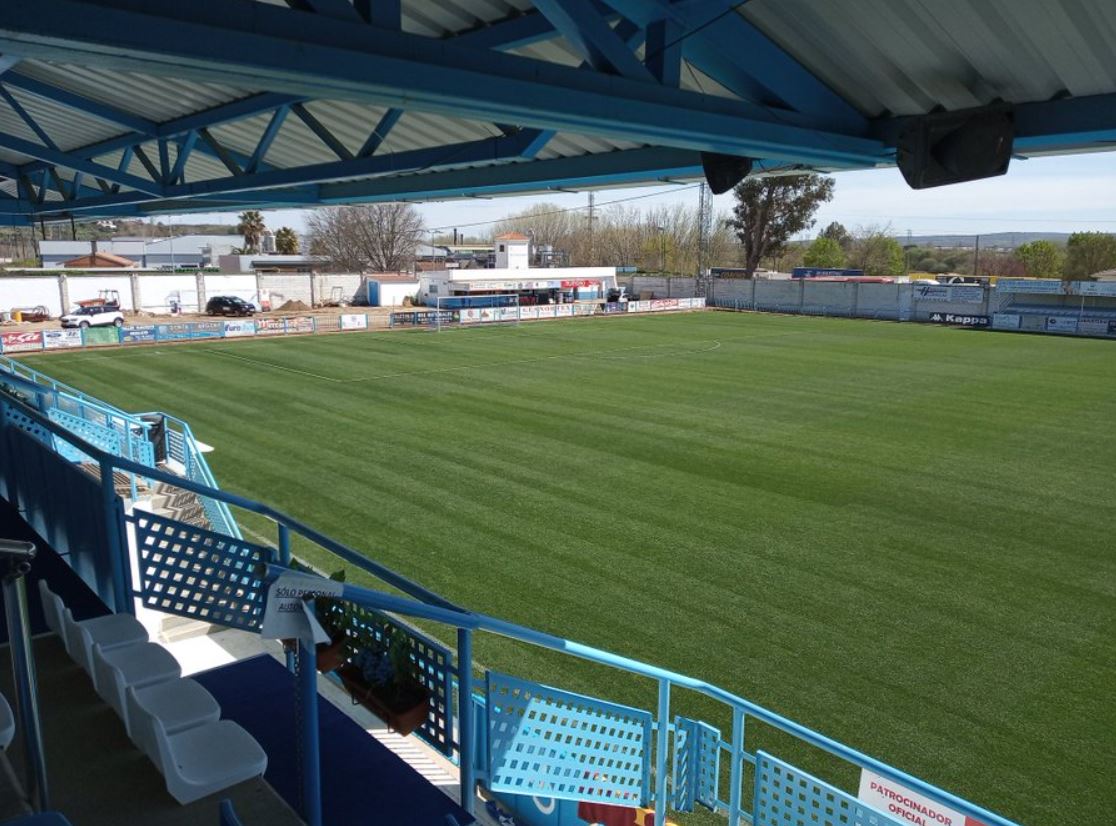
La Isla, and for that matter, the majority of the municipality’s outdoor sports facilities, stand on the flood plain of the Rio Alagón. It is a location that has suffered from extensive flooding over the years, and as recently as February 2026. On the plus side, when the weather behaves itself, it is a wonderful location, with views of the ancient city, its historic Cathedral of Saint Mary of the Assumption and the surrounding valley. Rather than stand out, La Isla blends into this pastoral setting, with its relatively low-rise buildings, soft colours and open spaces. The body of the main stand dates from 1990 and is slightly offset to the west. It contains dressing rooms, a room for the match officials, press facilities and club offices. The upper seated deck has six rows of pale blue seats, with “CORIA” and “LA ISLA” spelt out in contrasting white seats. The stand gained a roof in 2013, and solar panels were added in 2017. Opposite the main stand, on the southern side of the ground, is a covered terrace. In 2021, two 50-metre extensions were added to each side of the original cover, and three rows of seats were added. Hard standing is provided at each end of the ground, with the larger north occasionally housing prefabricated seating during Copa del Rey ties and the playoffs. Promotion to the Primera Federación will require improvements to floodlighting, broadcast facilities, security and segregation. Capacity may get a slight nudge towards 3,500, but given Coria’s bucolic isolation, any travelling hordes descending on La Isla will be confined to its Extremaduran neighbours.
La Futbolteca’s article on Club Deportivo Coria: http://lafutbolteca.com/club-deportivo-coria/

