
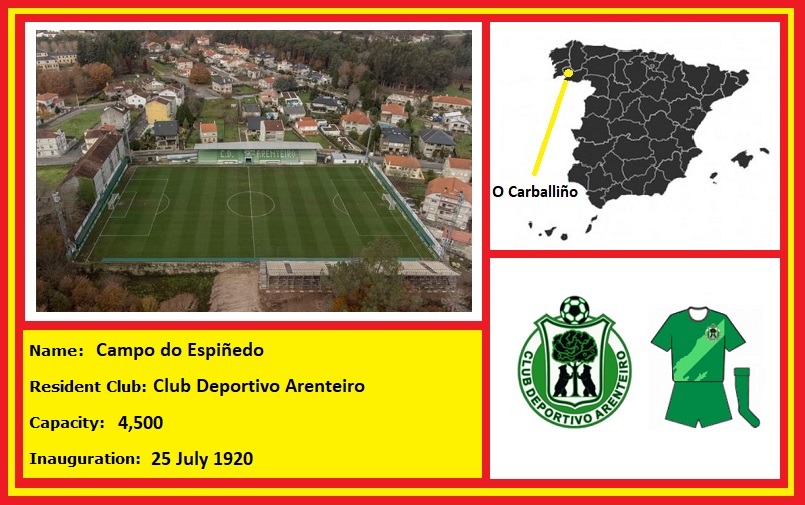
Club Deportivo Arenteiro hail from the city of O Carballiño, which lies around 15 miles northwest of the provincial capital of Ourense. Set in the Carballiño National Park and framed to the north by the Sierra del Faro, CD Arenteiro takes its name from the river that winds its way through the city. The club’s Campo do Espiñedo lies around 500 metres to the south of the Rio Arenteiro and has hosted the city’s football clubs since 1920.
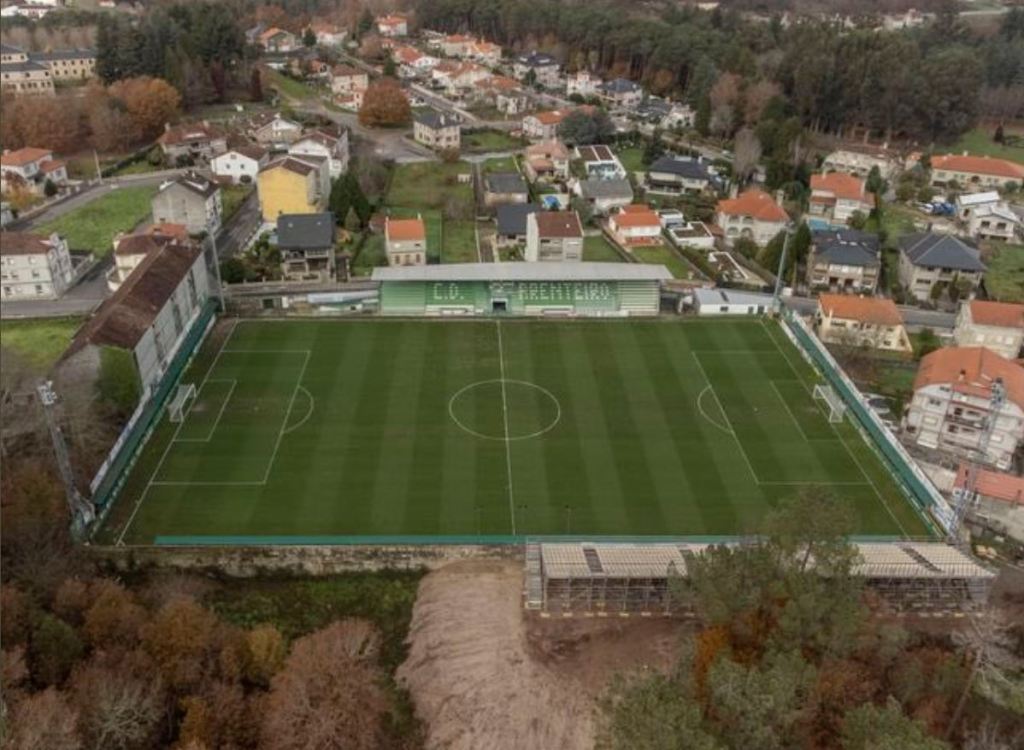
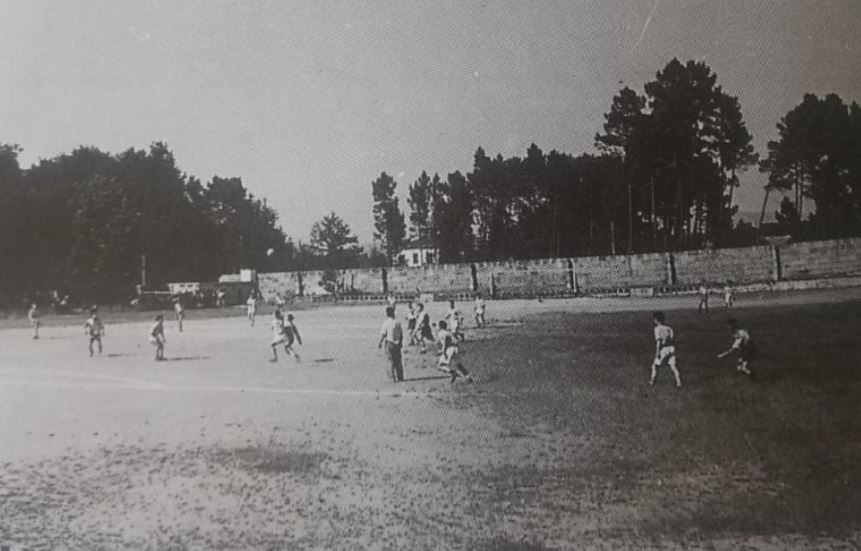
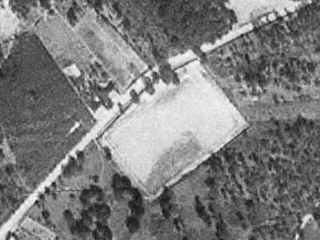
The first club to emerge from the city was Carballino Foot-ball Club, who played in the provincial championship from 1910-12. Their home was a basic field to the west of the city, on the road to Pontevedra. Interest in the club waned and by 1918 they had folded, only to be replaced by Estrella Sporting Club. In the summer of 1920, Estrella moved to a patch of open land to the south of the city and on 25 July held the first match on the newly named Campo do Espiñedo. Whilst Estrella’s progress was initially stellar, the club was soon hit with financial problems, brought about by the costs incurred from their regular away matches in Vigo, Pontevedra & beyond. Estrella folded in 1924 and this would be a recurring theme, as clubs in the city struggled with the costs of travel and recruitment as they progressed up the football pyramid. Next to take up the challenge was Carballino Sporting Club, who were formed on 28 December 1928. They played in the lowest level of the Provincial league until 1933, but reverted to playing friendlies up until the Civil War. This arrangement continued after the war until 1945, when they rejoined the league. The club had progressed to the Galician Primera by 1949, finishing as high as third in 1951-52. However, the old problems of the cost of travel and recruitment hit hard and following a disastrous 1957-58 season, the club folded.

Having just lost their club, a group of fans set about forming a new team that would be called Club Deportivo Arenteiro. Aware of the problems that had beset its predecessors, players were recruited from the area in and around O Carballiño. Choosing colours of Green shirts & white shorts, the club joined the local federation on 1 July 1958. Starting out in Galician Serie A (Tier 4), CD Arenteiro played its first competitive match on 9 November 1958, beating AD Couto from Ourense by 2 goals to nil. The club made steady progress over the next five seasons, eventually winning the title in 1964 and with it, promotion to the Tercera. As a result of reaching the third tier, the Campo do Espiñedo saw its first significant development since opening, when a covered stand with changing facilities was built on the northern side of the ground. Over the following three seasons, CD Arenteiro encountered many of the problems of its predecessors, as it travelled the length and breadth of Galicia. After 12th & 11th placed finishes, the club finished 16th and last in the Tercera in 1966-67, and returned to Serie A. It would take 13 years for CD Arenteiro to return to the Tercera, a period which also saw the club drop to the Primera Regional for three seasons in the mid 1970s.

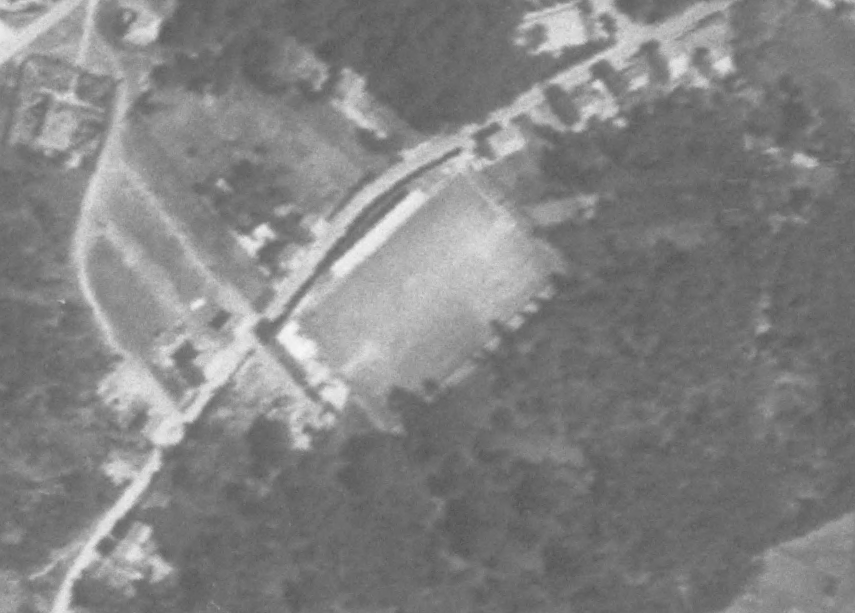
The Galician Tercera during the 1980s was no pushover, with clubs such as Racing Ferrol, Pontevedra, Lugo, Arosa SC & Ourense providing regular opposition for CD Arenteiro. The club made steady, if unspectacular progress for much of the decade, never seriously troubling either end of the table. Then, just as the Spanish Federation announced that Segunda B would expand to four regional divisions, CD Arenteiro sprang into life. The club finished runners-up in the 1986-87 Galician Tercera, winning 21 of its 38 games and finishing the campaign as the division’s top scorers. Promotion to Segunda B would see CD Arenteiro play league football outside of Galicia for the first time. Group I of Segunda B for the 1987-88 season stretched across the north of Spain, featuring clubs from Asturias, Euskadi, Cantabria and Castile y León. It was always going to be a tough season, but CD Arenteiro acquitted themselves admirably, securing safety with a 2-1 victory over Galician neighbours CD Lalín on the final day of the season. There would be no such joy in the season that followed, as CD Arenteiro finished 16th and was relegated back to the Tercera. There would be no immediate bounce back, in fact it would take 23 seasons for the club to get back to the Tercera.
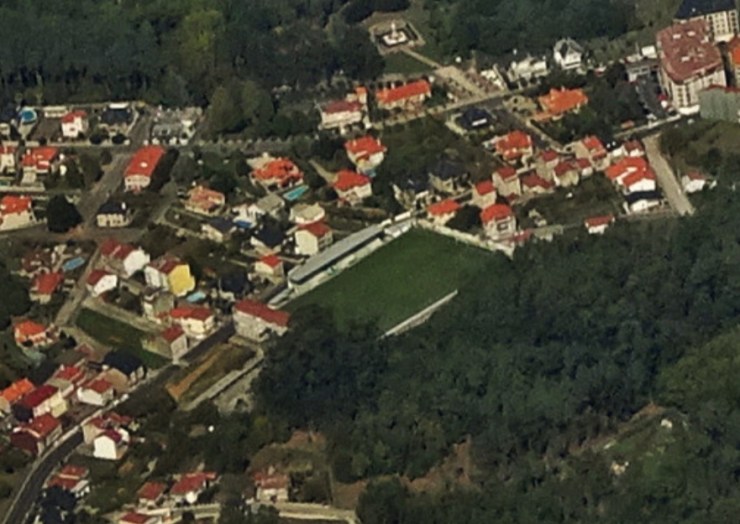
They say you have to hit the bottom before you bounce back up. Well for over two decades, CD Arenteiro, clambered around the lower reaches of the Regional Preferente as well as dropping to the depths of the Primeira División Autonómica, or sixth tier on three separate occasions. The bounce back eventually arrived in 2014, when under the presidency of Francisco Cachorro, the club won promotion back to the Regional Preferente, reaping the benefit of an investment in a local youth team. With CD Ourense folding in 2014, CD Arenteiro was now the largest club in the region. Promotion back to the Tercera followed in 2017 and the upward trajectory continued, when in the foreshortened 2020-21 season, the club comfortably took the Galician Tercera title to earn promotion to the newly formed Segunda División RFEF. The rise continued, when promotion was earned to the Primera División RFEF following a stunning 2022-23 season that saw CD Arenteiro win the league by 14 points, whilst losing just 3 of their 38 matches.
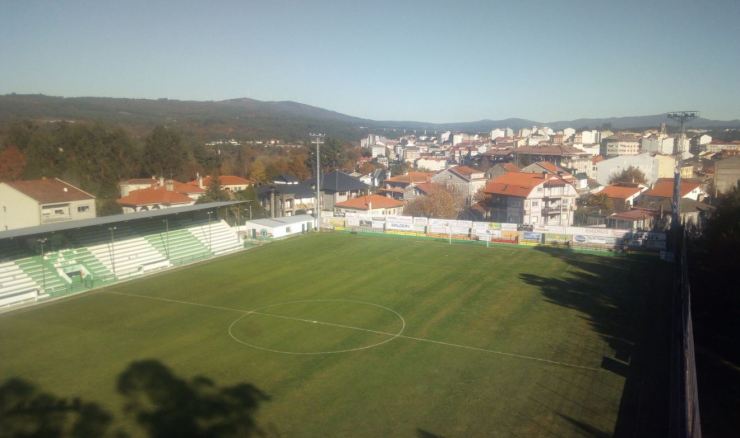
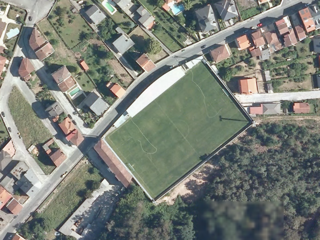
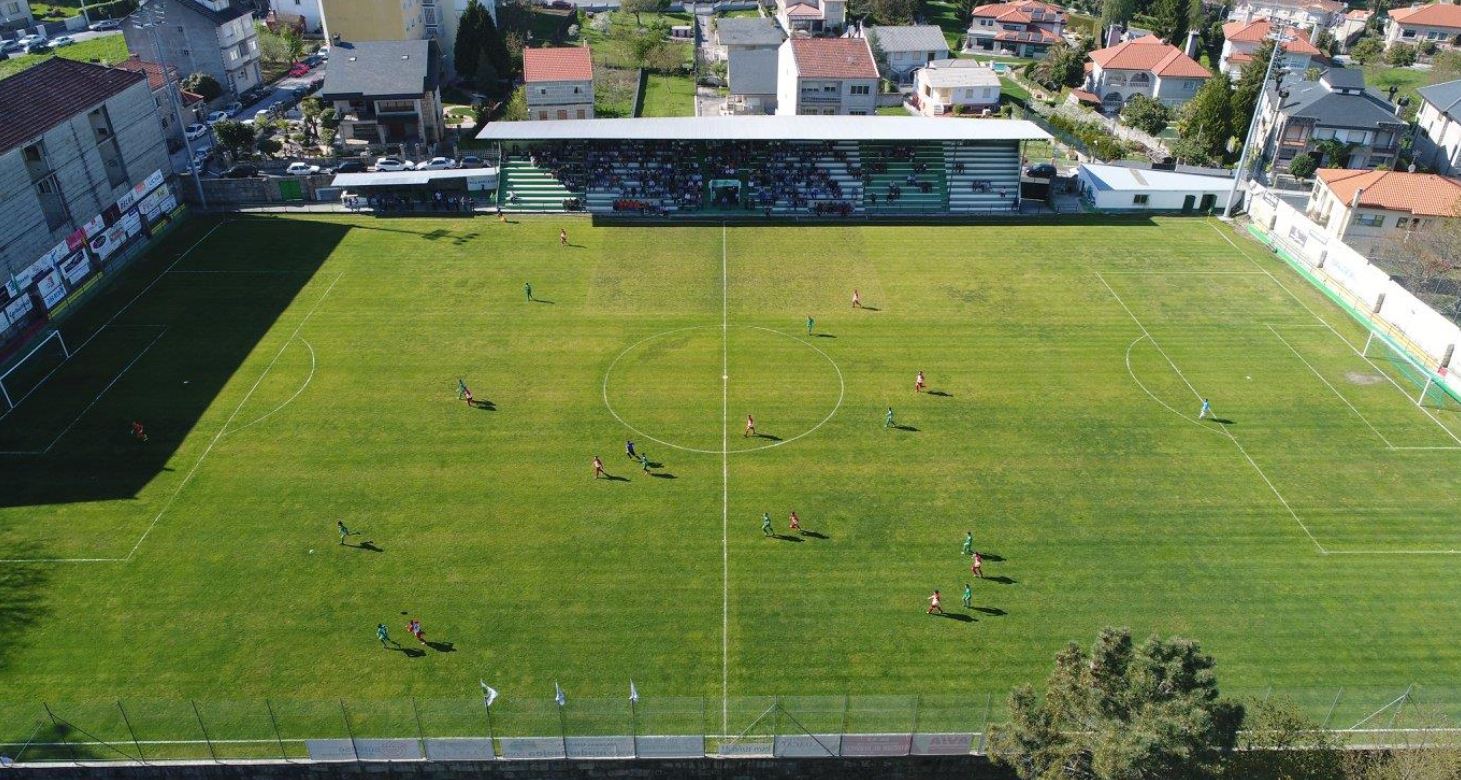
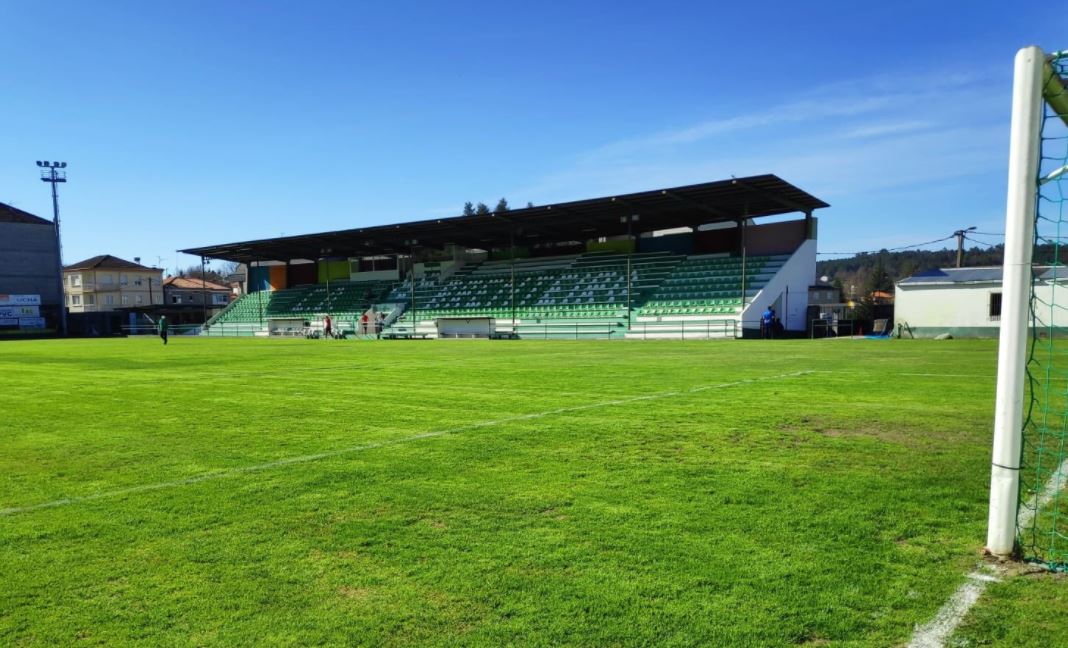
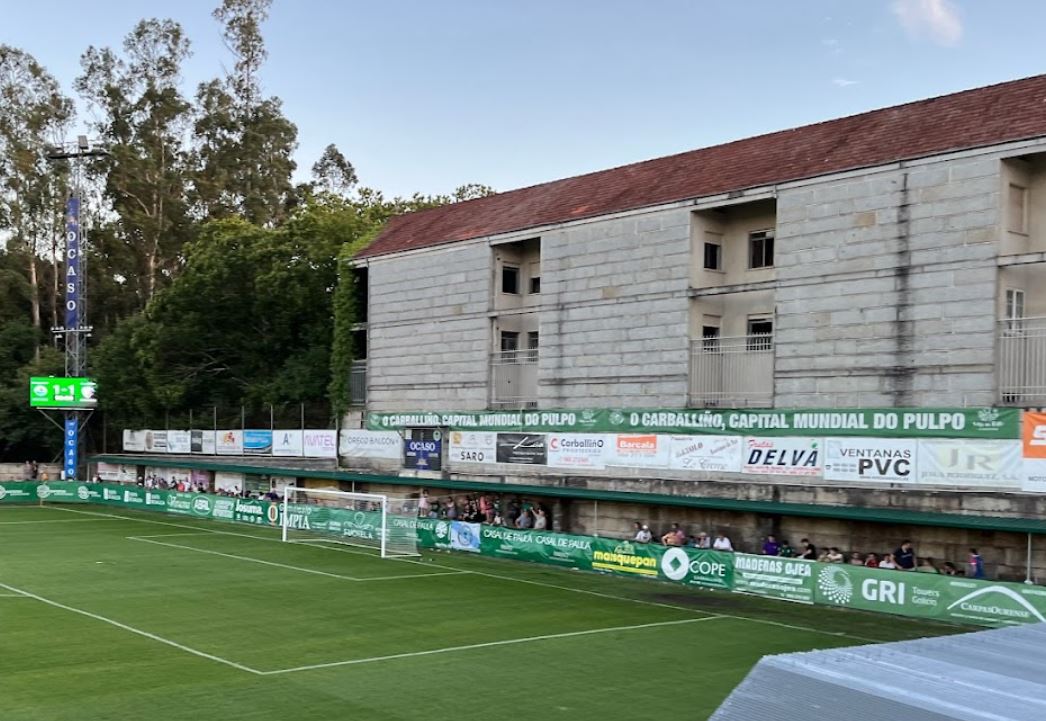
Whilst CD Arenteiro’s form may be unrecognisable from a decade ago, little has changed at the Campo do Espiñedo. Which is not a bad thing. Despite all the structures of any substance being located on the northern side of the ground, the Campo do Espiñedo has an enclosed, almost claustrophobic feel, thanks to tall, residential buildings at either end and woodland running along the southern side. The main stand on the northern side dates from 1964, although the benches have been replaced with green & white bucket seats, whilst the cover, the rear of which now follows the curve of the road, dates from the 1990s. This was also when new changing facilities were built in the northeast corner. In the northwest corner is the main entrance to the ground and a fantastic bar. Following promotion to Primera División RFEF, shallow covers were erected over the hard-standing on the remaining three sides of the ground. Espiñedo has also hosted a couple of high-profile ties in the Copa del Rey. For the visits of Valencia in December 2021 & Atlético Madrid a year later, temporary seating was erected on the southern side of the ground, which boosted capacity to 4,500.



 Estadios de España