
Article updated on: 24/08/2025
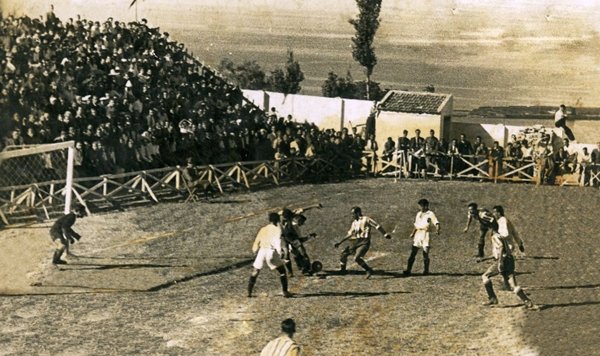
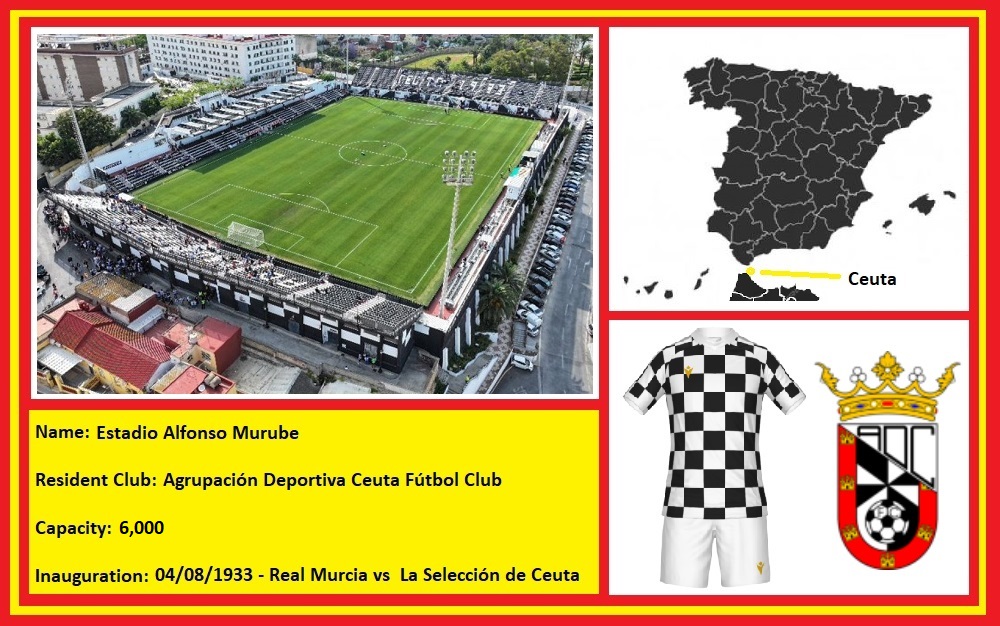
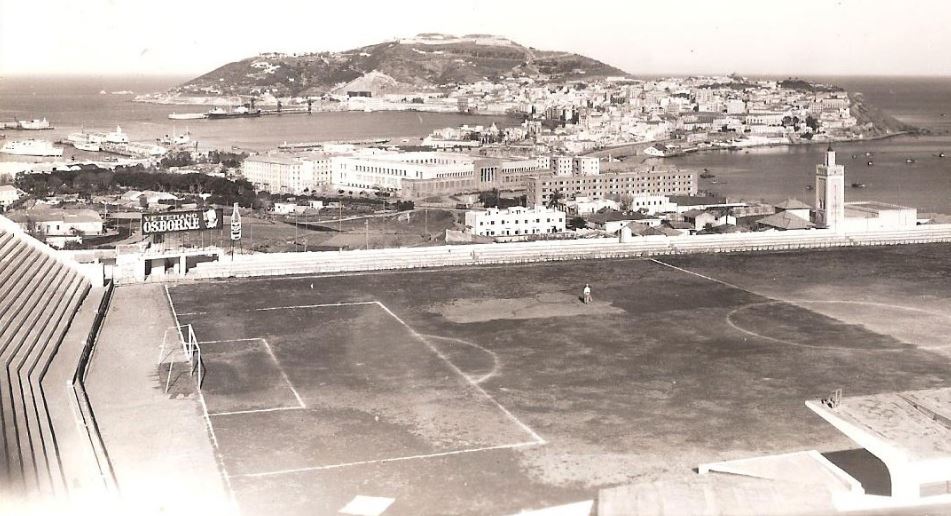
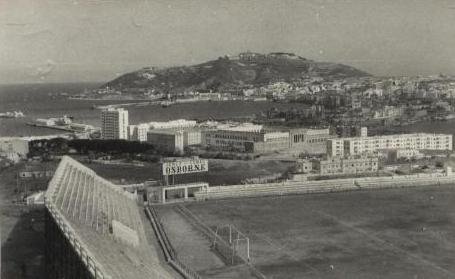
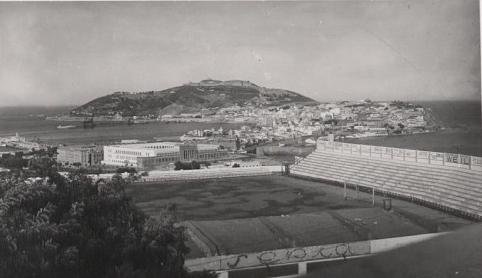
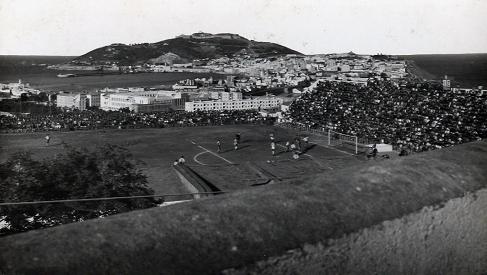
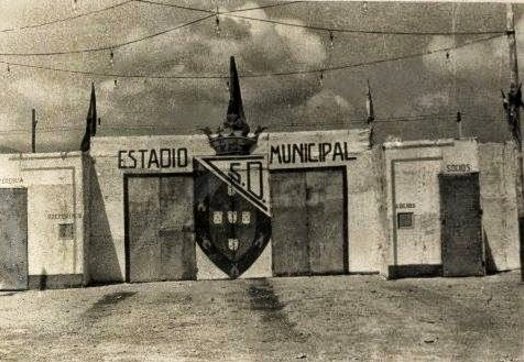
I need you to concentrate, as the history of football in Ceuta is a bit complicated. It’s not helped by several reincarnations of the leading team and the small matter of Moroccan independence. So, if you are ready, I’ll begin in 1933 when the city council built the Campo Municipal de Deporte. The stadium was nicknamed Docker due to its location close to the naval medical barracks and was home to Africa Sport Club and Ceuta Club Sport. It opened on 4 August 1933 with a match between Real Murcia & La Selección de Ceuta, before the two tenants played each other nine days later.
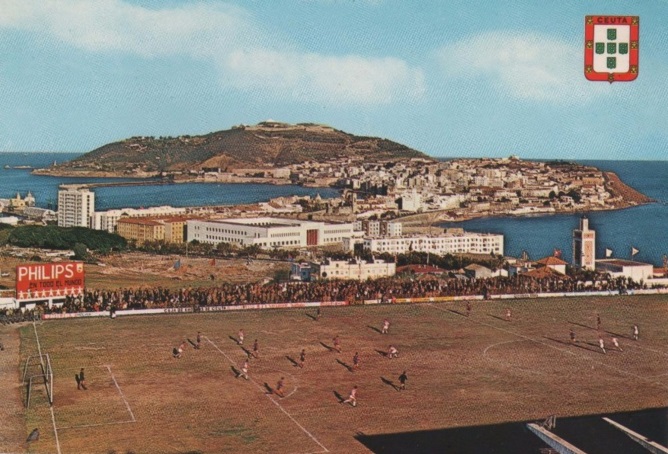
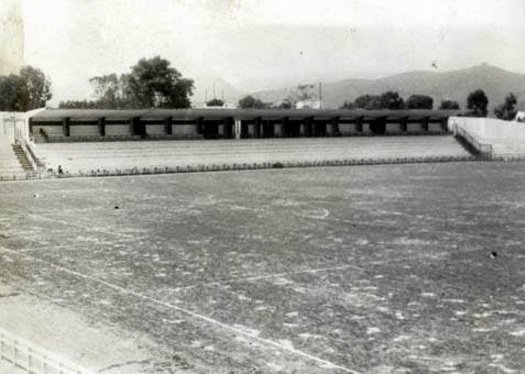
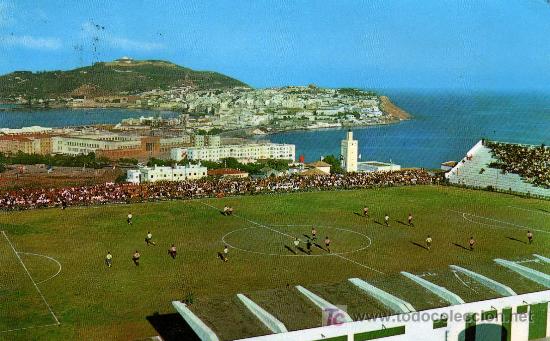
Ceuta Club Sport achieved early success when it won the Campeonato Hispano-Marroquí, a regional championship set up in the Spanish Protectorate of Northern Morocco. It changed its name to Sociedad Deportiva Ceuta in 1941, and the Directors renamed the stadium in honour of Alfonso Murube, a former player who died in April 1938 while fighting for the Nationalists in the Spanish Civil War on the Aranjuez Front. The ground was extended in the early 1950s to include more substantial terraces at either end of the enclosure, which raised the capacity to 6,500.
In 1956, Morocco gained independence from Spain, and among other things, it had implications for Atlético Tetuán, a team based 25 miles south of Ceuta. Formed in 1922, Atlético was a relatively successful outfit, winning La Segunda in 1950-51 and advancing to La Primera in 1951-52. After independence, the team was dissolved, with many of the Spanish players joining Club Atlético Ceuta, a new club formed by merging the remnants of Atlético Tetuan with Sociedad Deportiva Ceuta. Club Atlético Ceuta took on Atlético Tetuan’s place in La Segunda and remained there for 11 years, finishing second in 1960-61, before losing out to Elche CF in a promotion/relegation play-off. La Segunda was restructured in 1968, and Club Atlético Ceuta was relegated via a play-off with Jerez Industrial, which went to a third match. After six seasons at the Tercera level, they dropped to the regional leagues and suspended activity at the end of the 2006-07 season.
Agrupación Deportiva Ceuta was formed in 1969 after disenchanted members of Club Atlético Ceuta felt the club had lost its mojo. A wise move as Agrupación started to climb the leagues, reaching the newly formed Segunda B in 1977, before debuting in La Segunda in 1980. Their stay lasted just one season, but saw impressive victories against CD Málaga, Real Oviedo & Cádiz; however, they finished bottom of the league with just 29 points. Back in the Segunda B, Agrupación only threatened to gain promotion on one more occasion, finishing second in the 1988-89 season. At the end of the 1990-91 season, with the club experiencing financial problems and unable to pay its players, the federation demoted them to the Tercera. Despite registering for the new season, Agrupacion never fulfilled a fixture and was wound up.
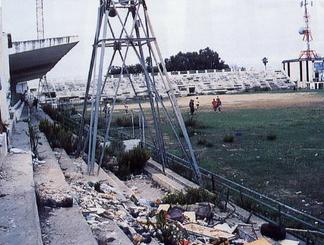
Football in Ceuta was in the doldrums. Without a club in any of the top four levels, matches were confined to the regional league, and to add insult to injury, the Estadio Alfonso Murube fell into disrepair. Such was the state of the stadium that when the next bright young thing appeared on the scene, Asociación Deportiva Ceuta in 1996, they had to play their matches at Campo José Benoliel, a basic ground with a few steps of terracing and a dirt pitch. The Estadio Alfonso Murube was essentially rebuilt in 1997 and reopened on 8 October that year, with a league match against the eternal rival from across the Straits of Gibraltar, Algeciras CF, which the home side won 4-2. It proved to be a lucky ground, with the club gaining promotion to the Segunda B at the end of the season. AD Ceuta played in Segunda B for the next 14 seasons, reaching the playoffs on five occasions but never progressing further.
AD Ceuta was demoted to the Tercera at the end of the 2011-12 season for failing to meet their players’ outstanding wages. Worse was to follow when, on the eve of the start of the Tercera season, AD Ceuta withdrew from the competition. This prompted Club Atlético Ceuta to leave its state of hibernation and regain the title of the city’s leading club. The club changed its name to Agrupación Deportiva Ceuta Fútbol Club at the start of the 2013-14 season. Following the restructuring of the Spanish league system in 2021, AD Ceuta FC earned a place in Group VI of Segunda División RFEF. A year later, AD Ceuta FC won promotion to the Primera Federación after beating CDA Navalcarnero & AD Unión Adarve in the playoffs. A year later, Club Atlético Ceuta won promotion to La Segunda following a remarkable 24-game unbeaten run, which saw the club claim the league title with two games to spare. In doing so, they became the first club from Ceuta to play in the second tier for 44 years.
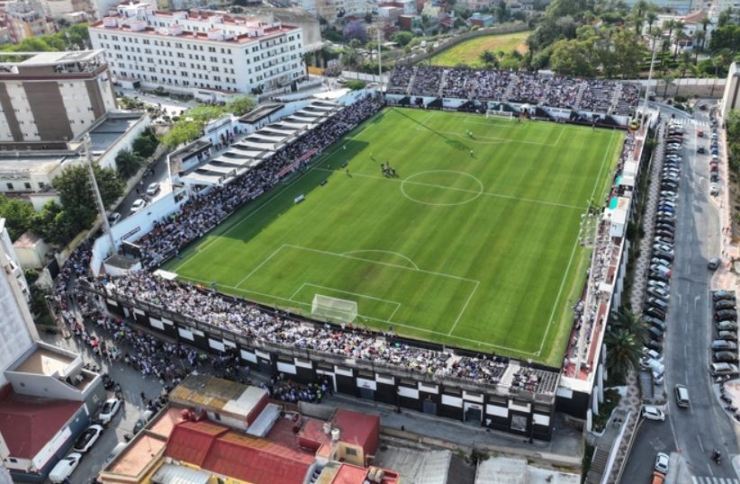
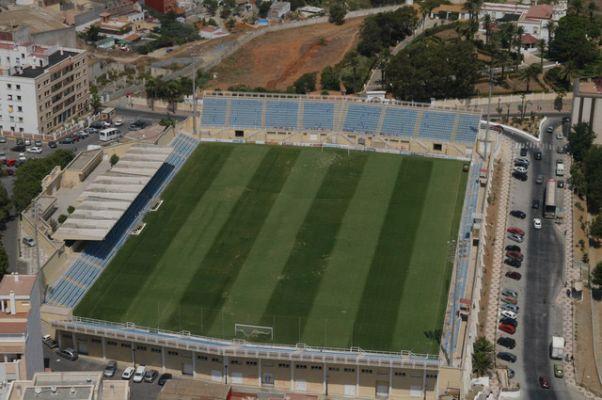
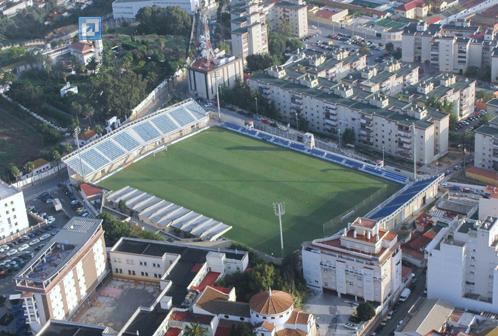
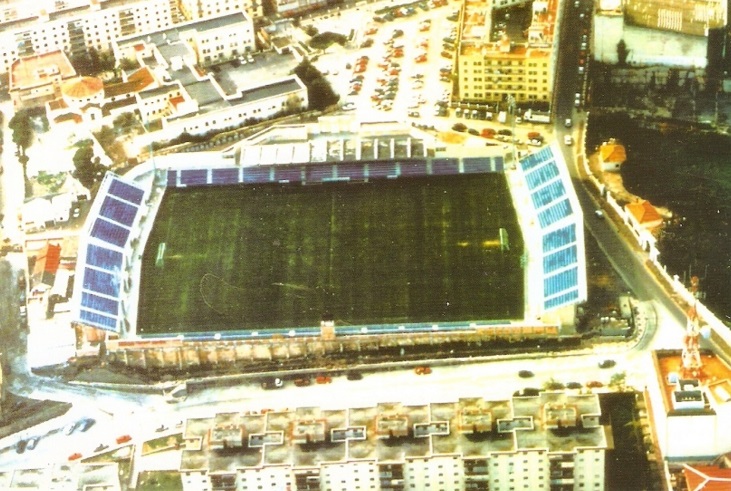
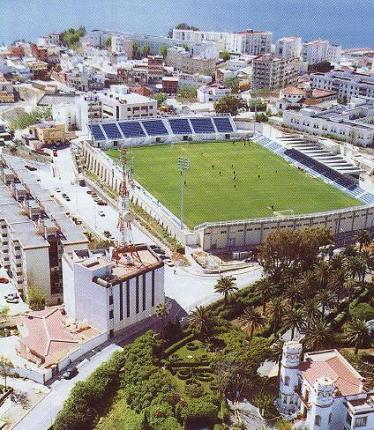
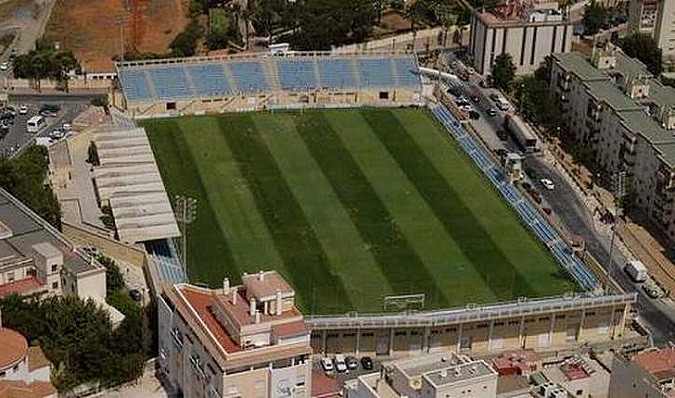
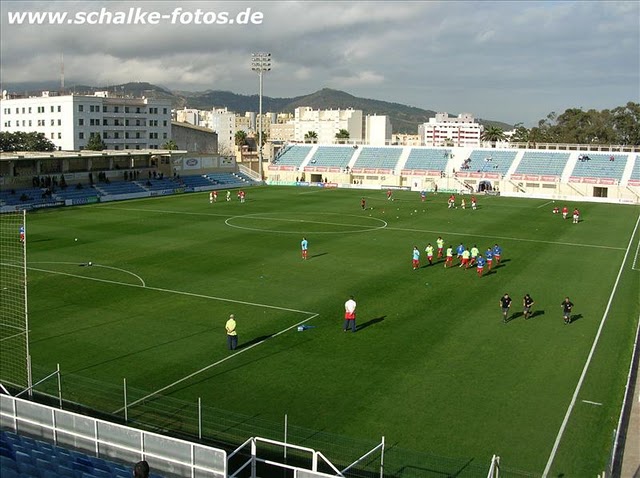
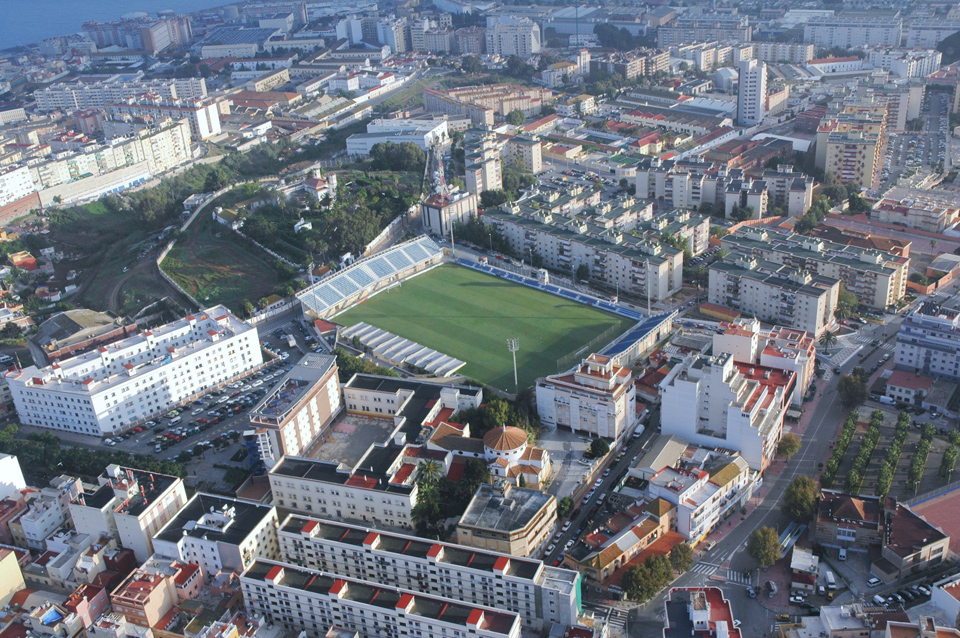
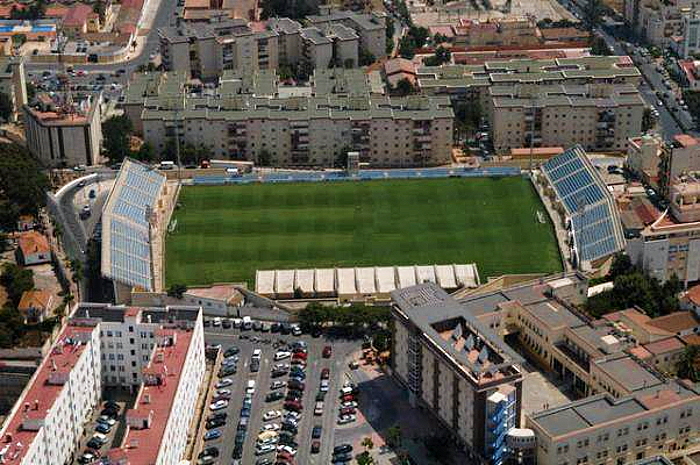
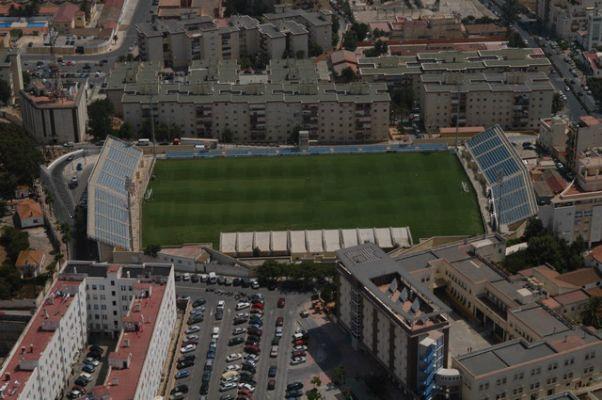
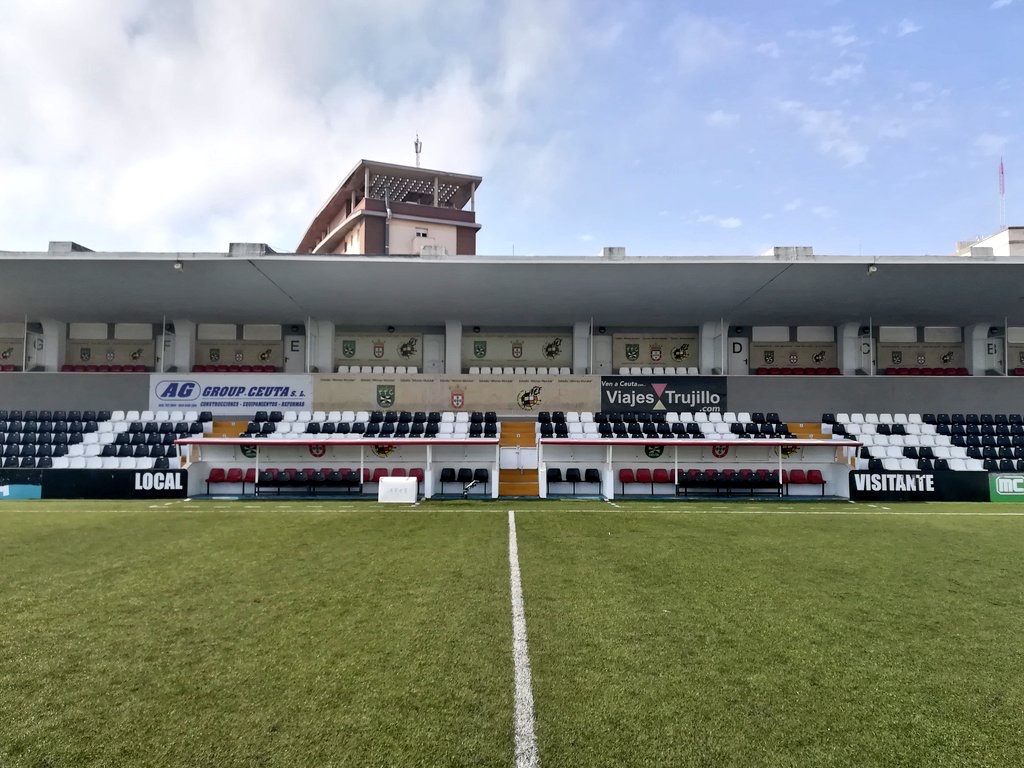
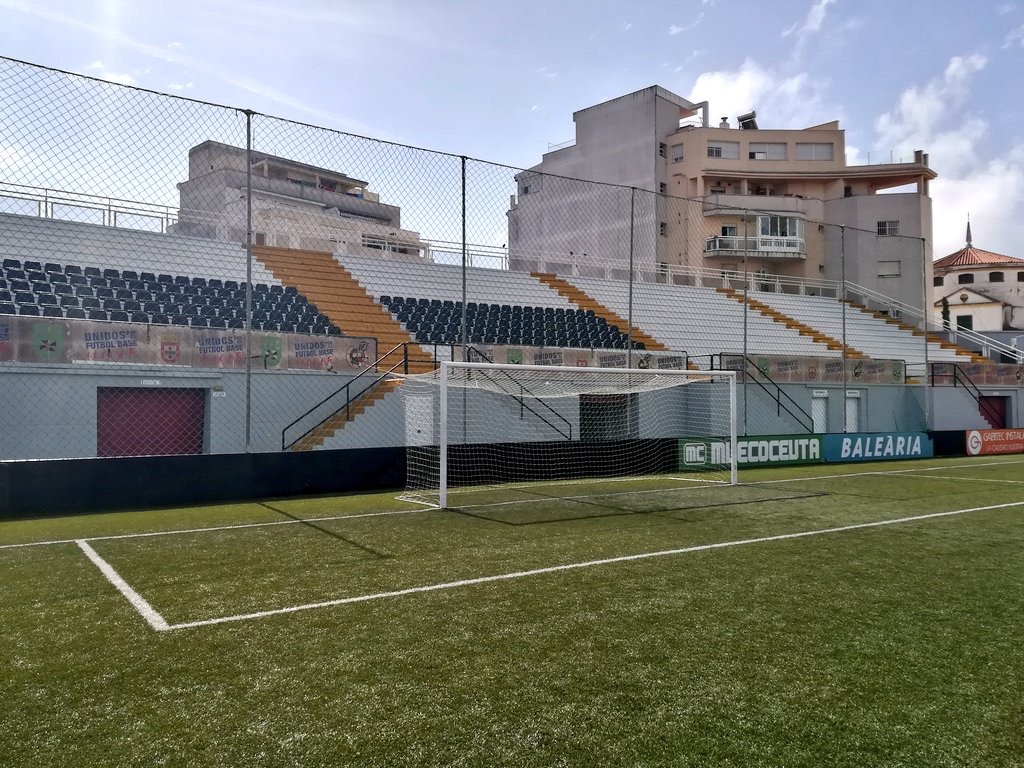
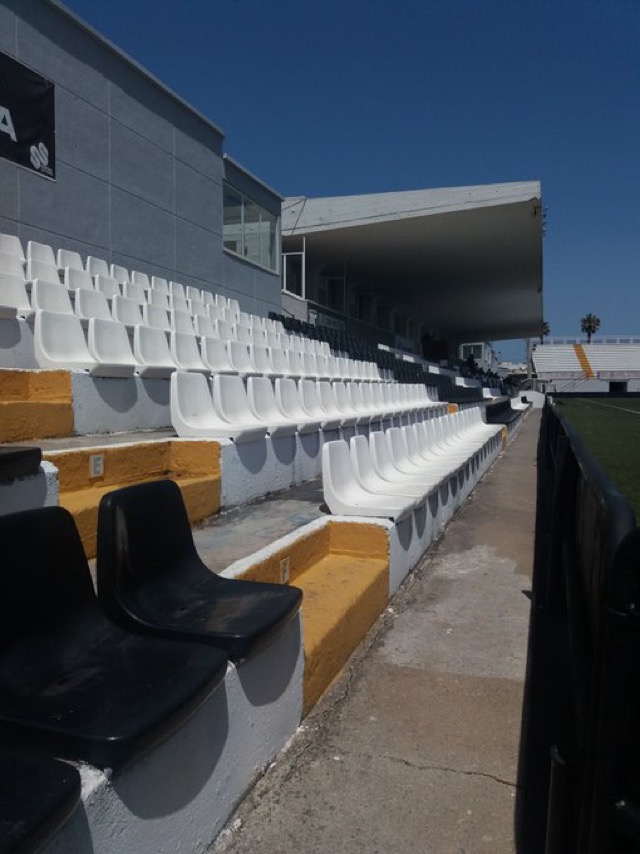
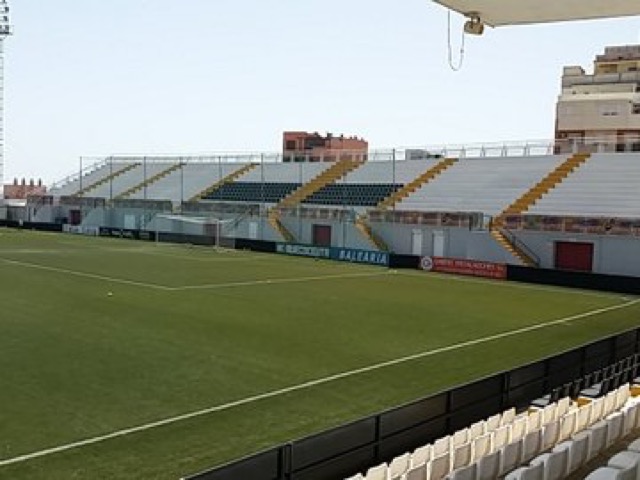
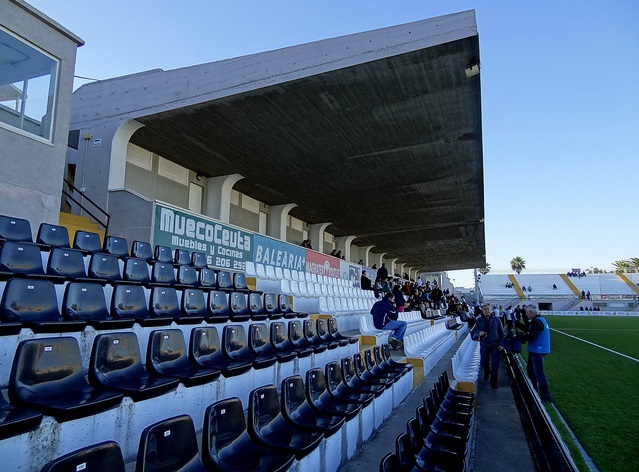
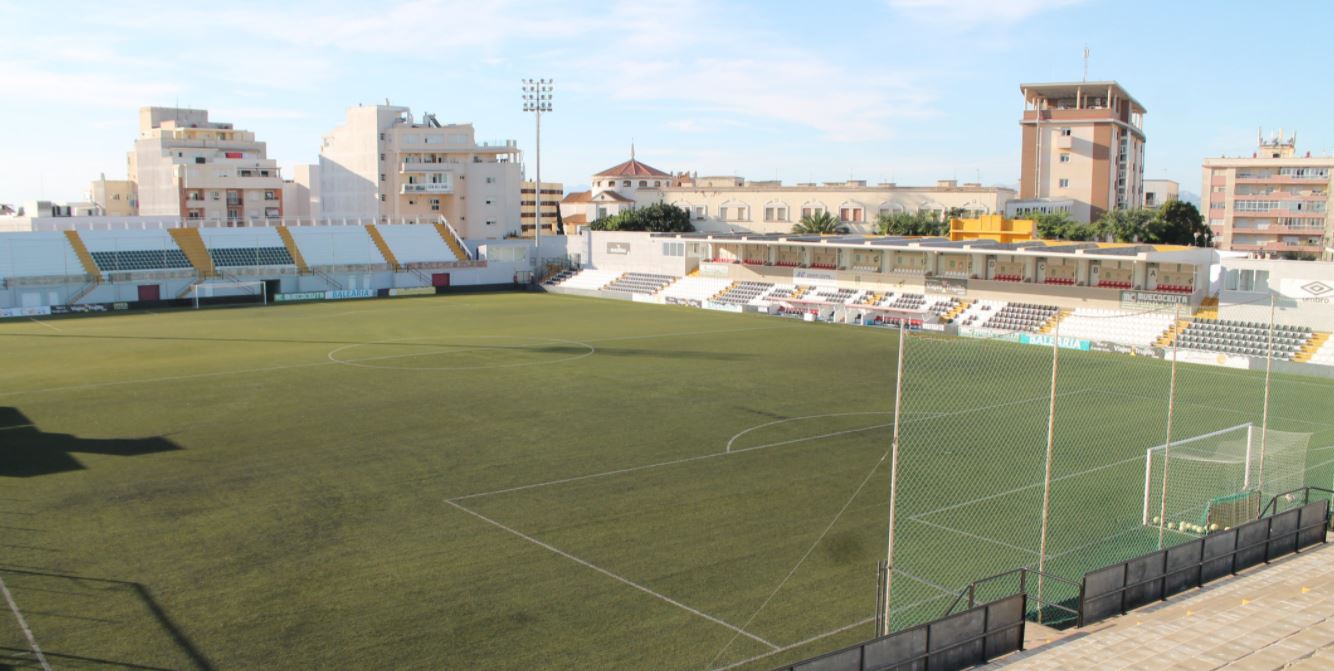
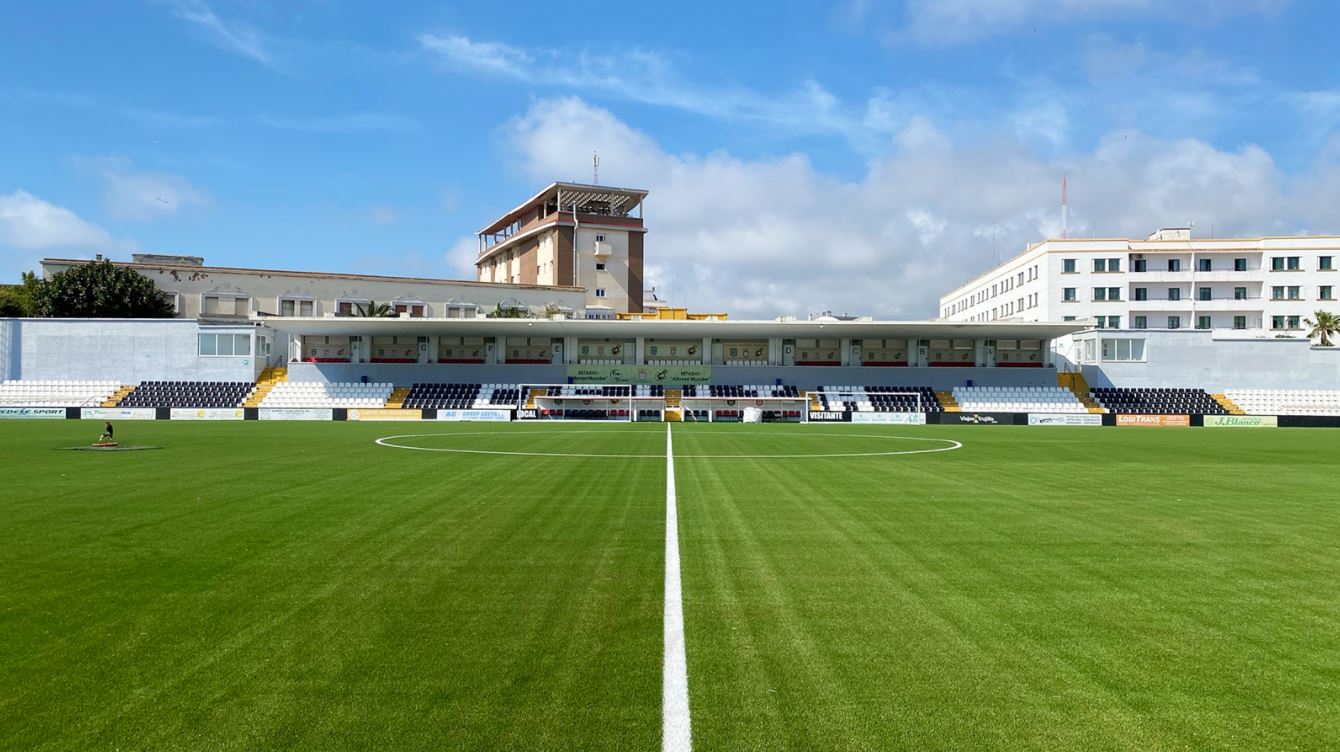
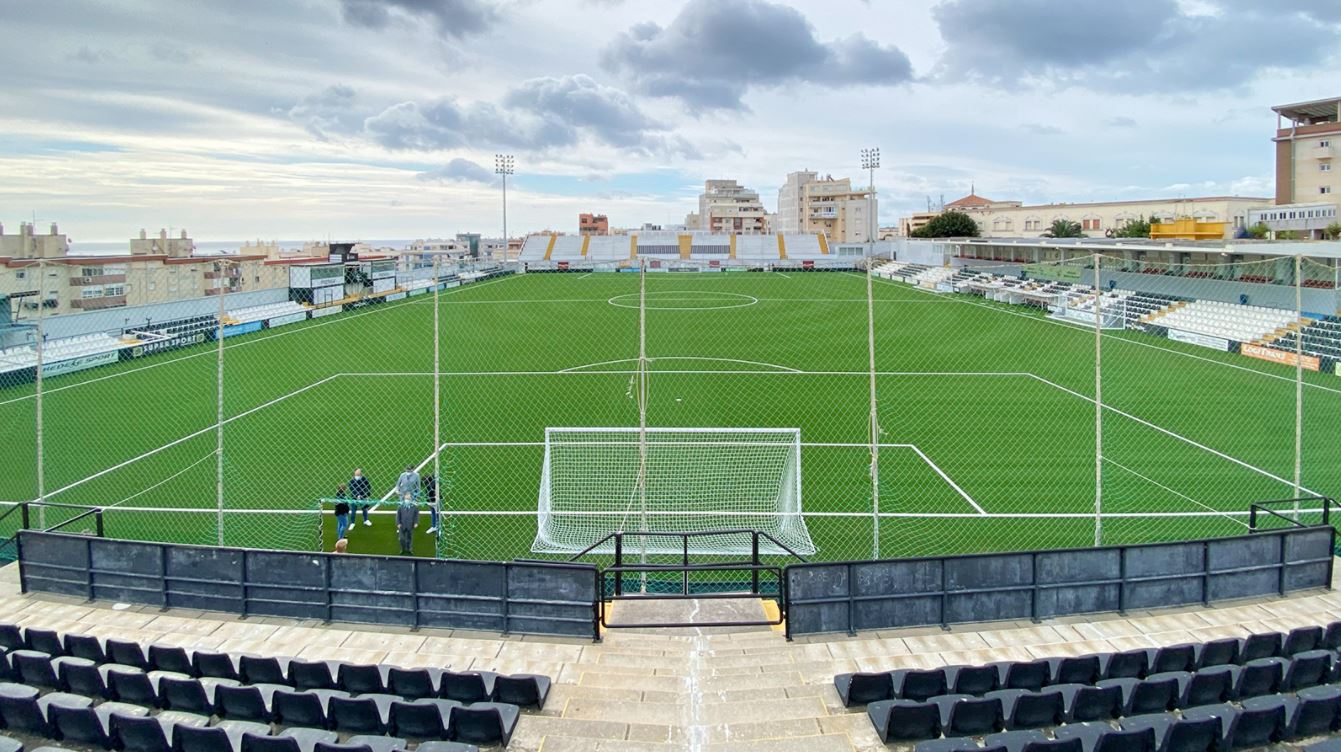
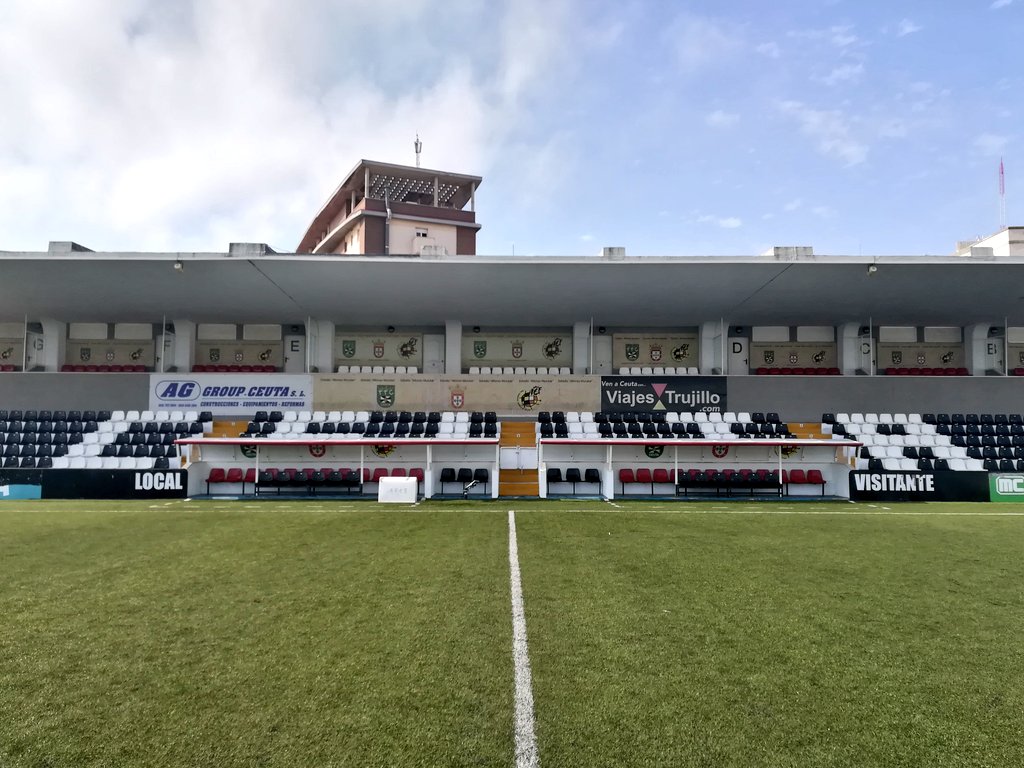
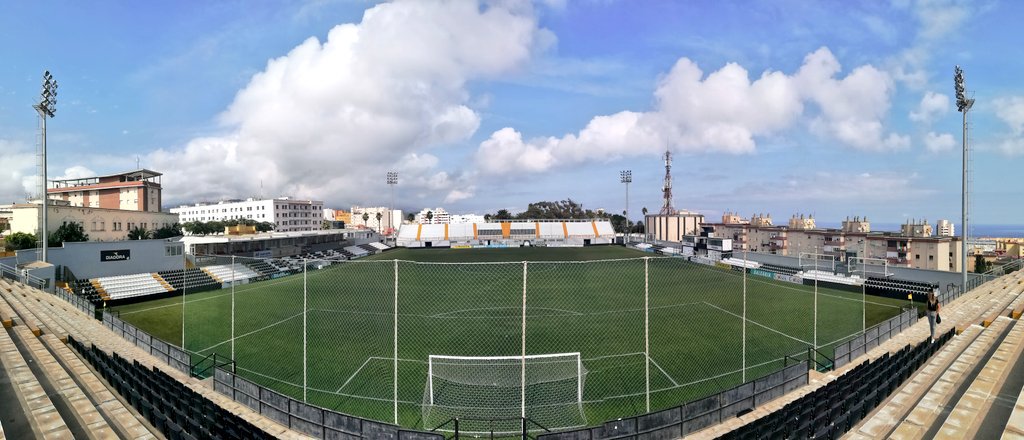
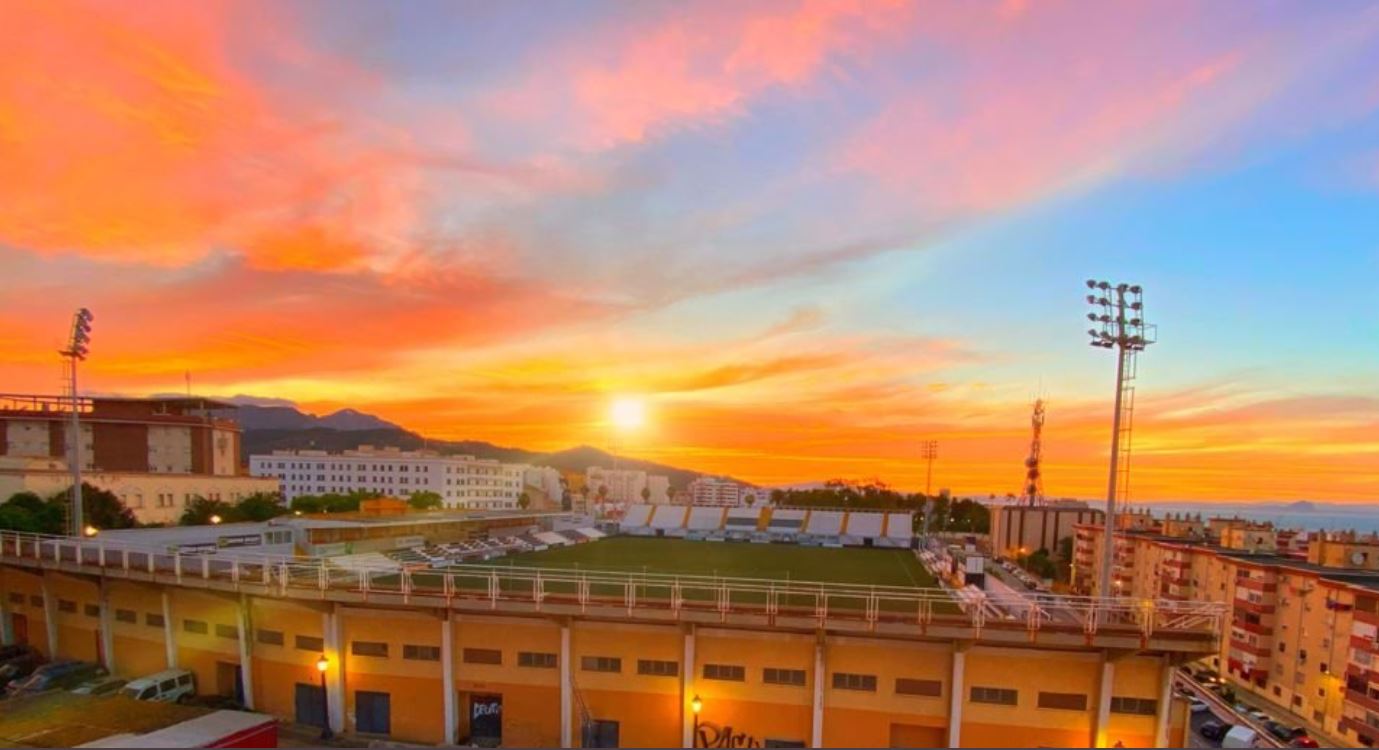
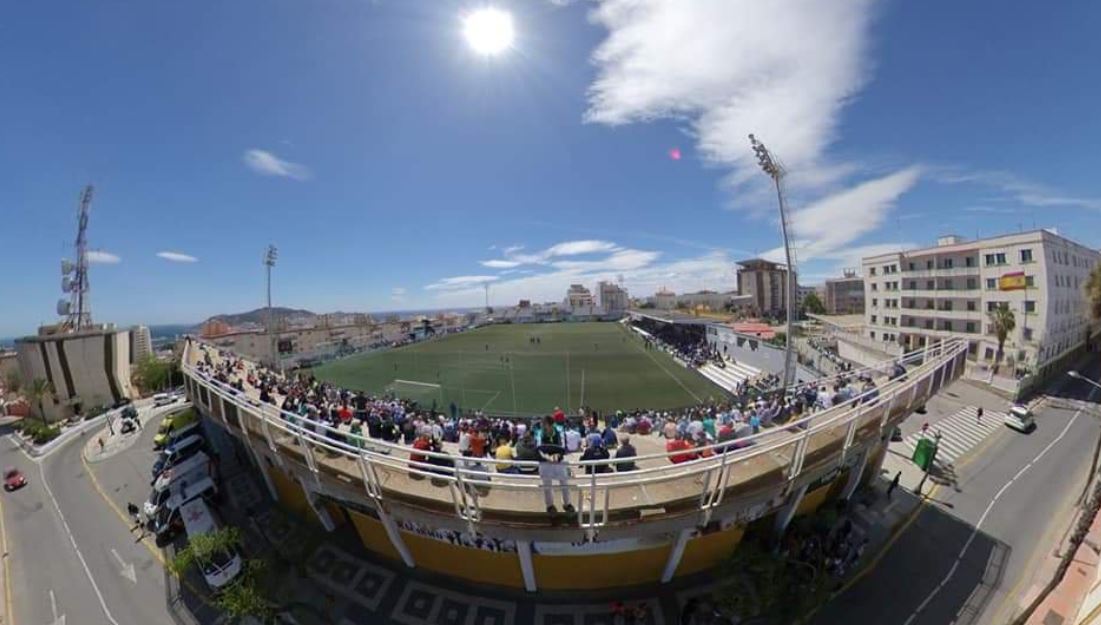
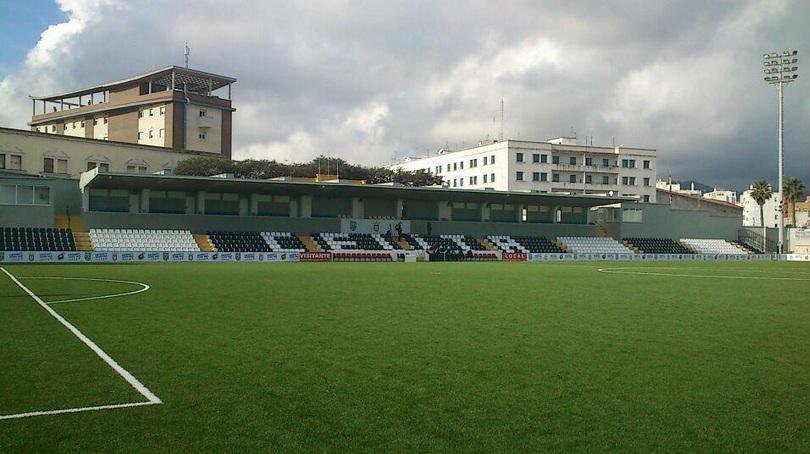
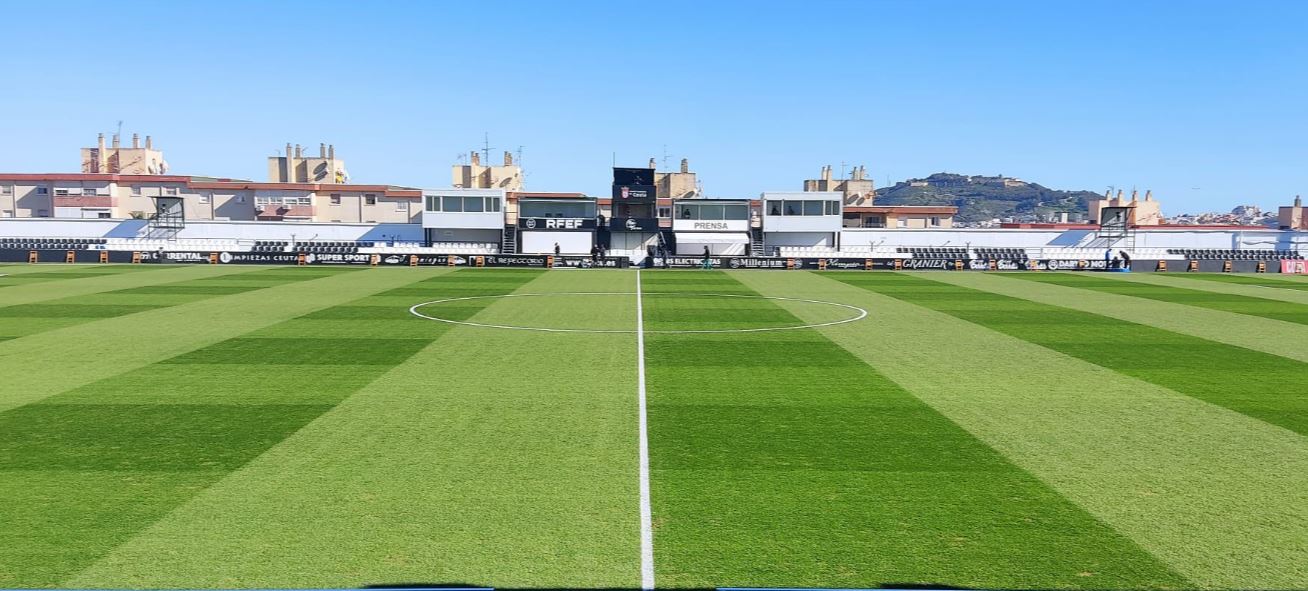
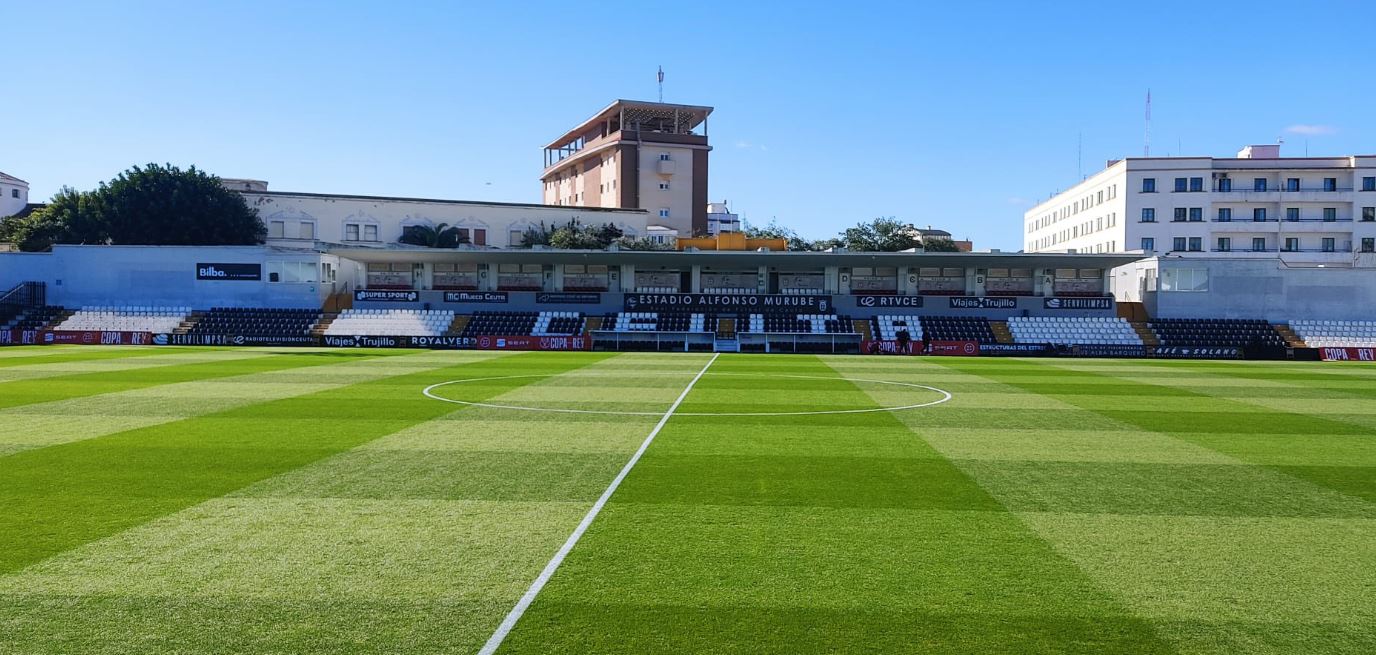
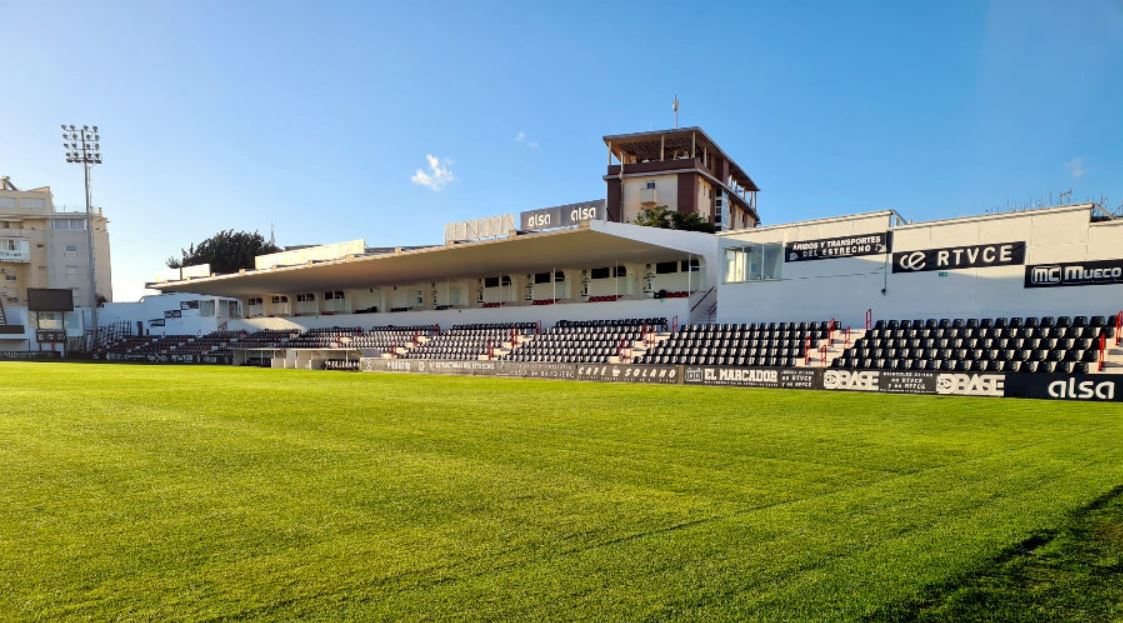
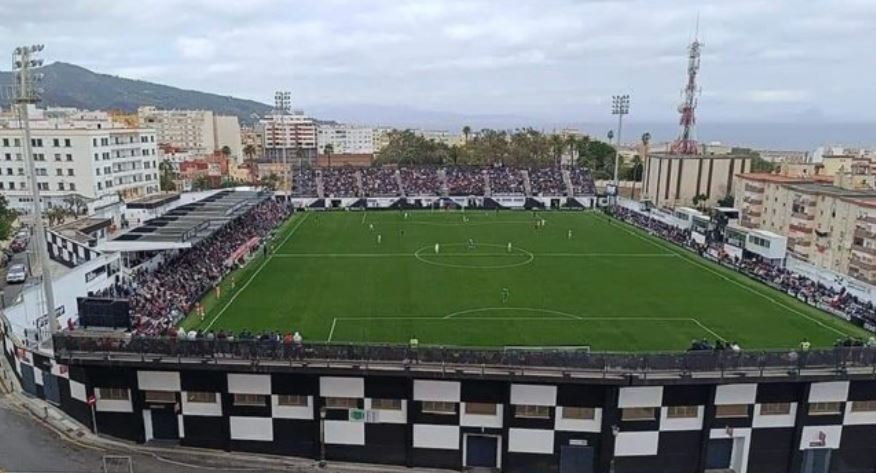
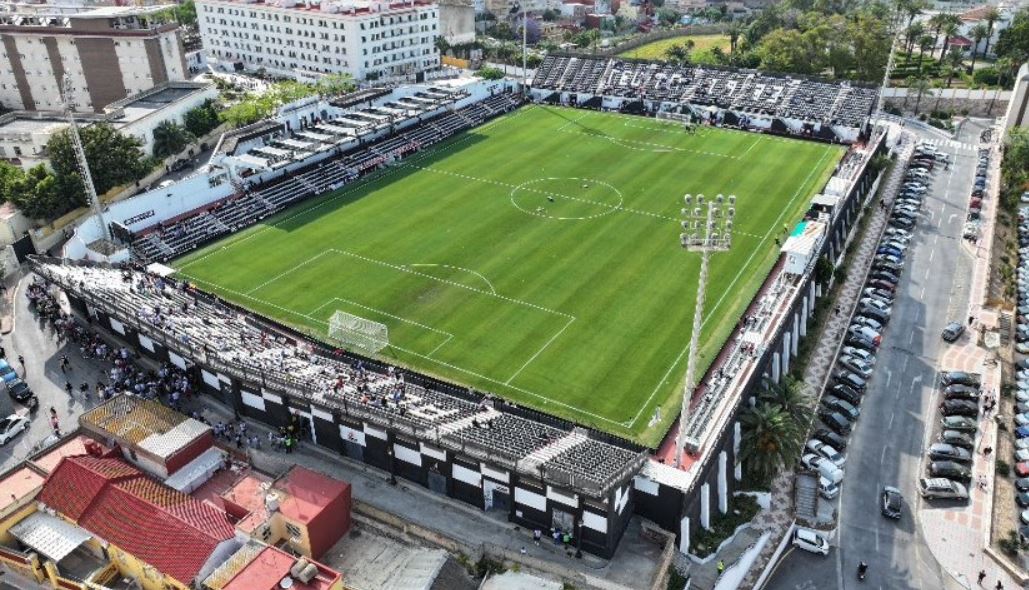
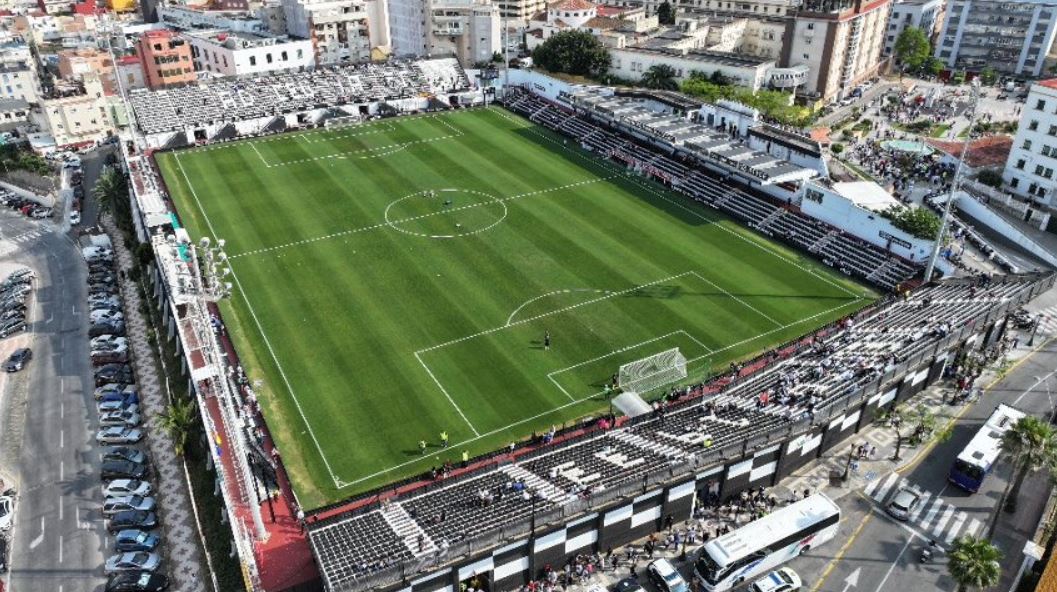
Looking around the peninsula, you appreciate that open space is at a premium, and that is very apparent when walking around the stadium. Shoehorned between housing and offices, the pitch is 4 metres higher than the street on the north & east sides, meaning that it is only possible to accommodate a thin strip of seating on the east side. The stands at either end of the pitch are very similar, both slightly cranked with their front rows about 8 feet above pitch level. The southern stand is marginally bigger, and as is the case in Merida and Almendralejo, these end stands hold most of the seating. The main stand is a curious, squat affair, with 5 rows of seats running the length of the pitch. The cantilever roof projects from the building at the rear, which houses the club’s office and covers the middle section of the stand. A series of palcos (private boxes) sit at the rear of the stand. The Spanish U-21 & U-19 teams have graced the stadium, and there have been some memorable nights in the Copa del Rey, none more so than when Barcelona visited in January 2001 & 2023, with both matches played before a sell-out crowd of 6,500.
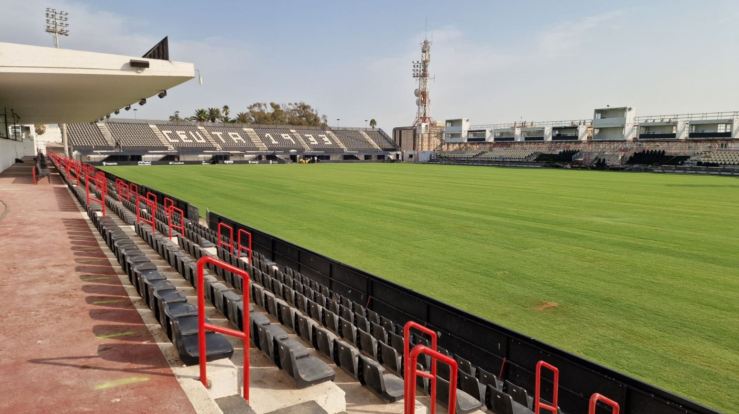
Promotion to La Segunda led to a €5m renovation of the stadium, which included larger locker rooms, press facilities, and an upgrade to the broadcast facilities to incorporate VAR. The pitch was slightly lowered to allow the addition of two further rows of seats on the east side of the stadium. The changes have resulted in a slightly reduced capacity of 6,000 and were completed in time for the stadium to stage its first home fixture of the 2025-26 season on 23 August 2025 versus Sporting Gijón.



 Estadios de España