Article updated: 01/11/2025
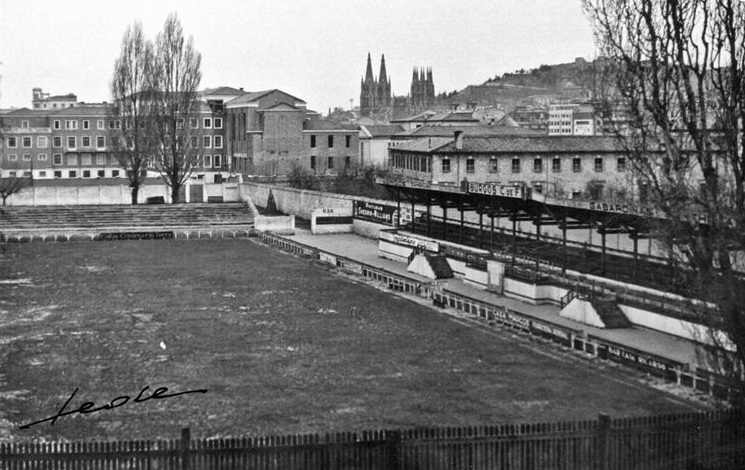
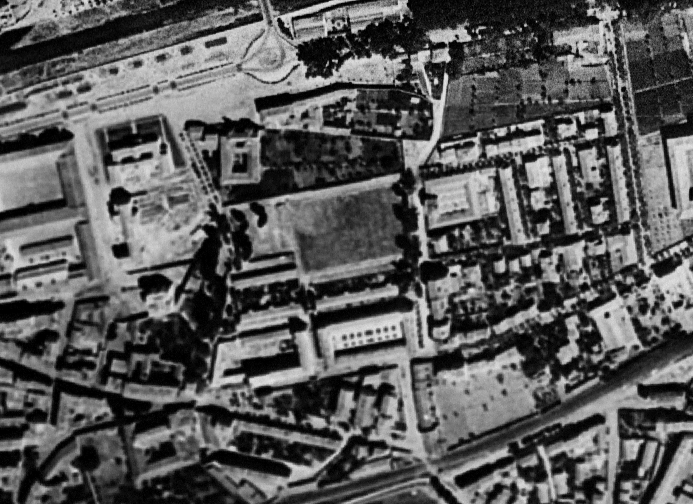
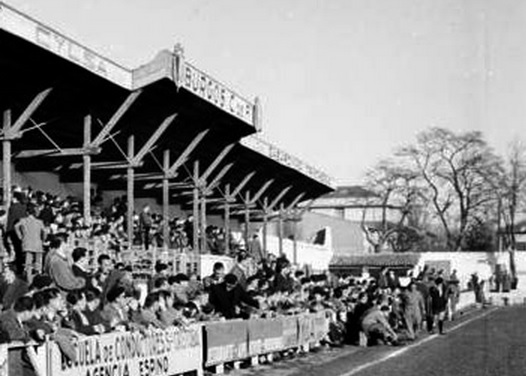
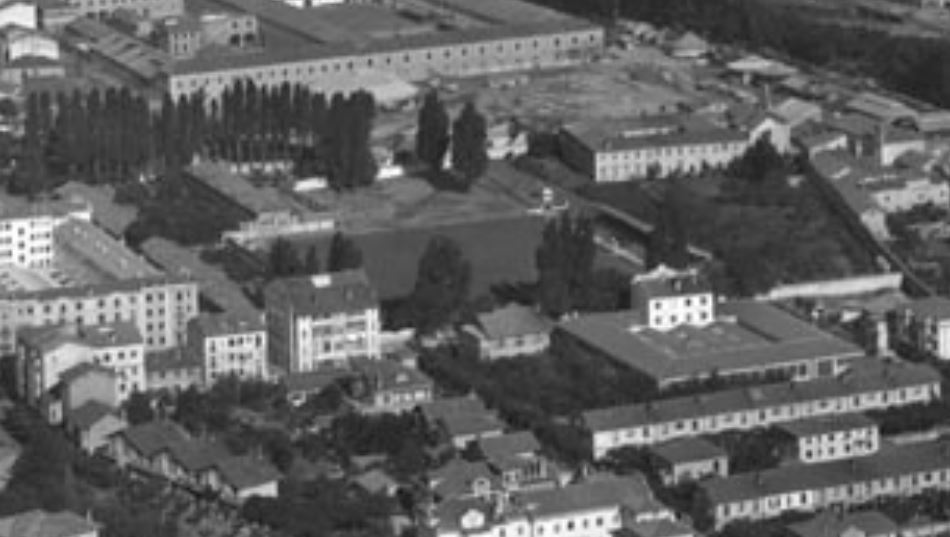
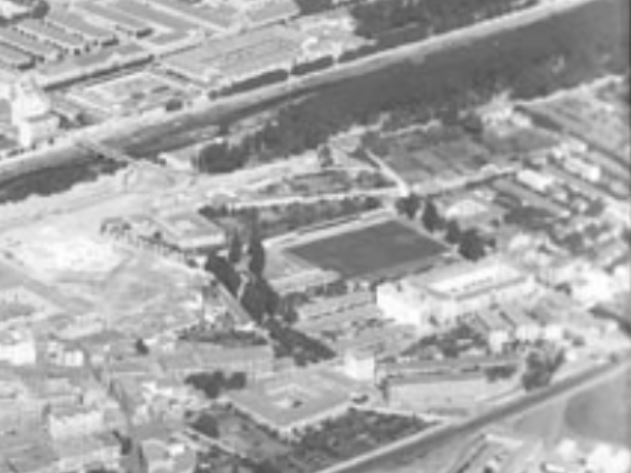
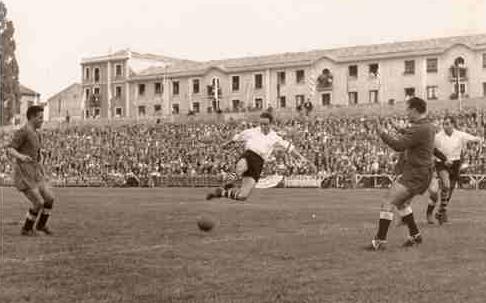
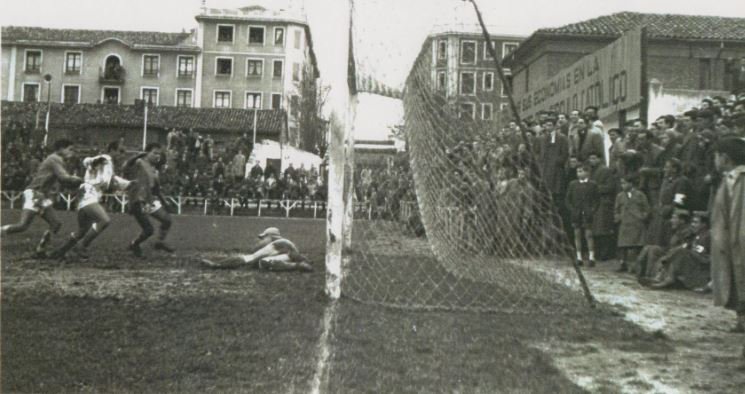
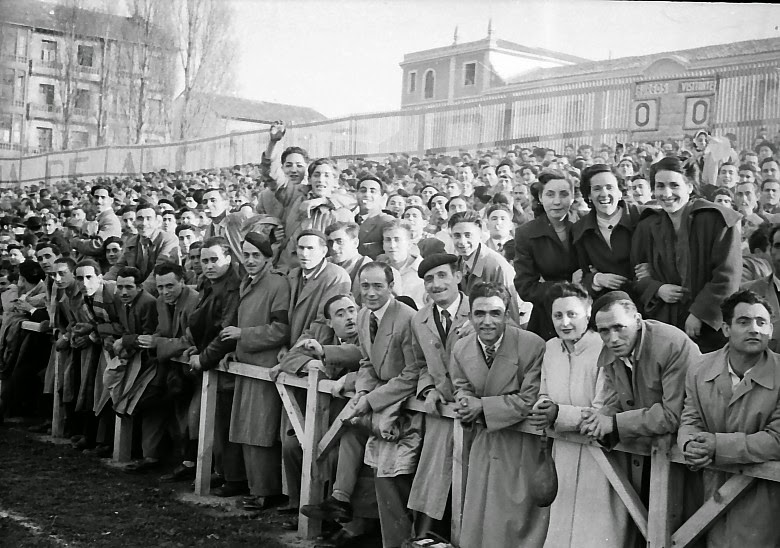
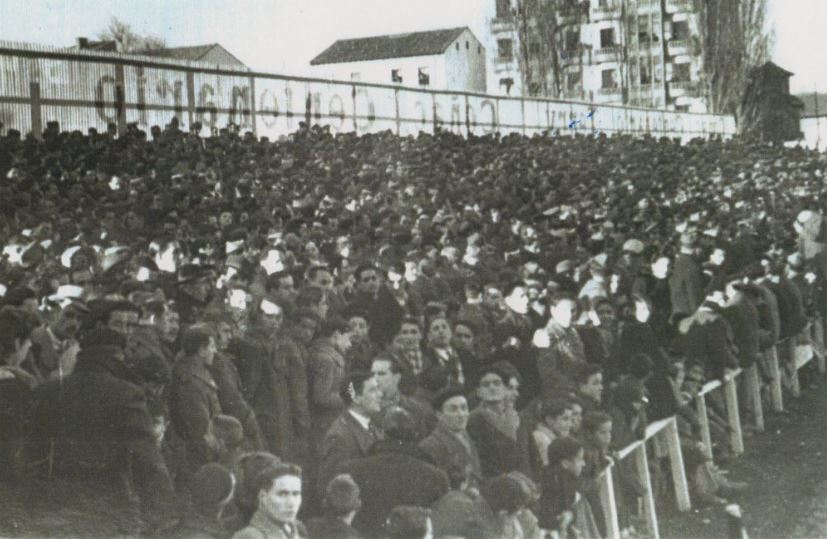
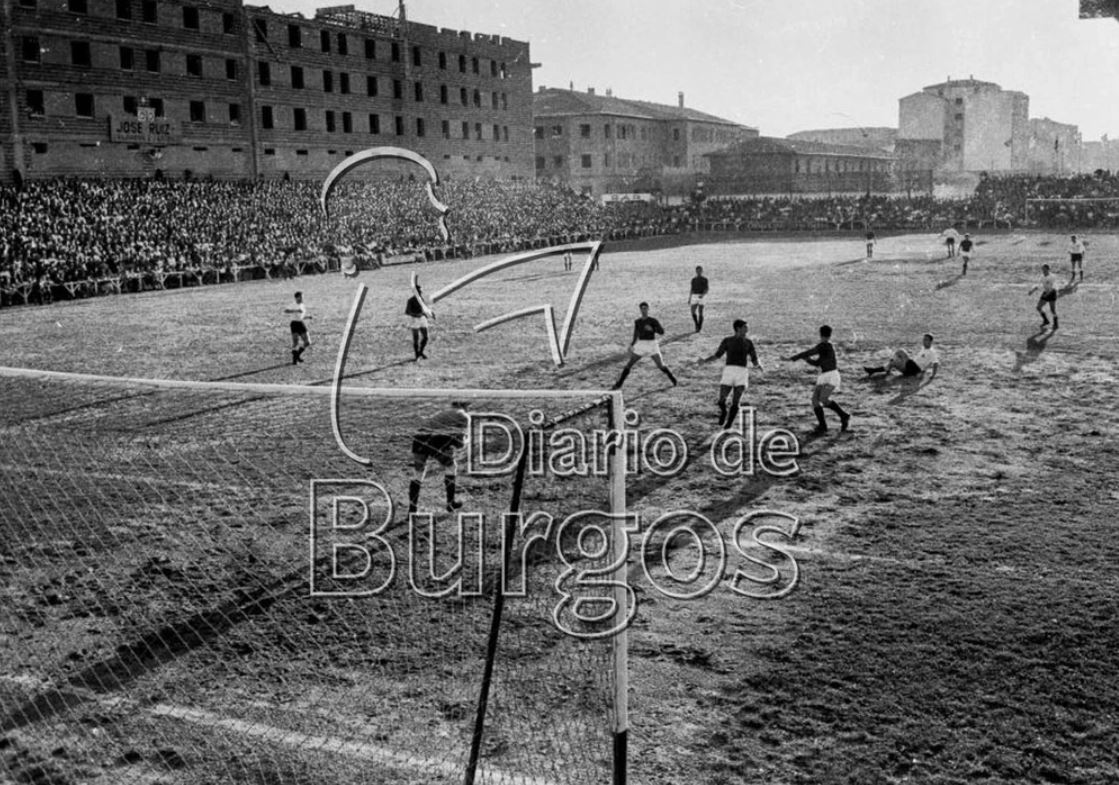
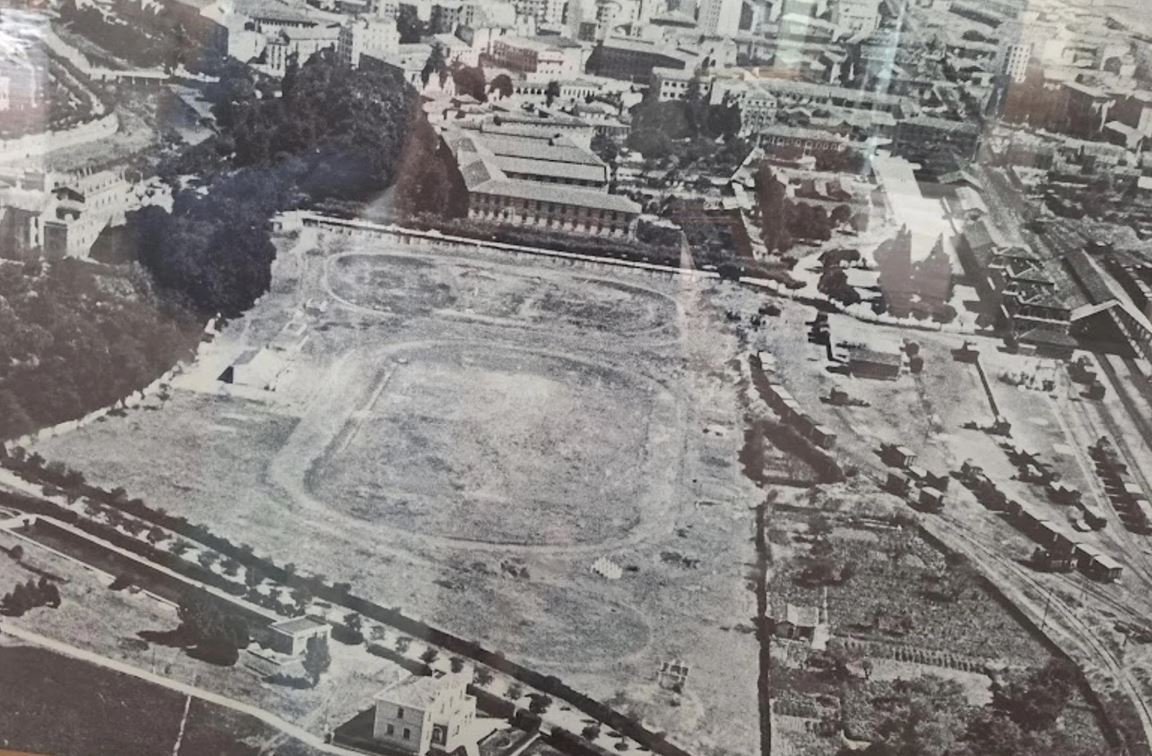
It is probably easier to discuss Burgos’ senior teams in three distinct phases. Gimnástica Burgalesa Club de Fútbol was the first club from the city to make an impression beyond the provincial capital. Founded in 1936, the team played at Campo de Laserna. This was a basic open field with a sand and lime pitch, just to the south of the Rio Arlanzón, and close to the city’s old railway station. Gimnástica reached the Tercera in 1943 and a year later, moved 1.5km to the east, to the new Estadio de Zatorre. The stadium was named in honour of Andrés Martínez Torres, a philanthropist and social welfare activist. It featured a covered seated tribuna on its northern side, whilst open terracing made up the rest of the enclosure, taking the overall capacity to 5,000. The club was renamed Burgos Club de Fútbol in 1948 and, four years later, reached La Segunda. Despite finishing last, Burgos CF gained valuable experience. Three seasons later, and with two Tercera championships in their name, Burgos CF returned to La Segunda. Once again, the stay lasted a season, but it was a much closer affair, finishing just three points from safety.
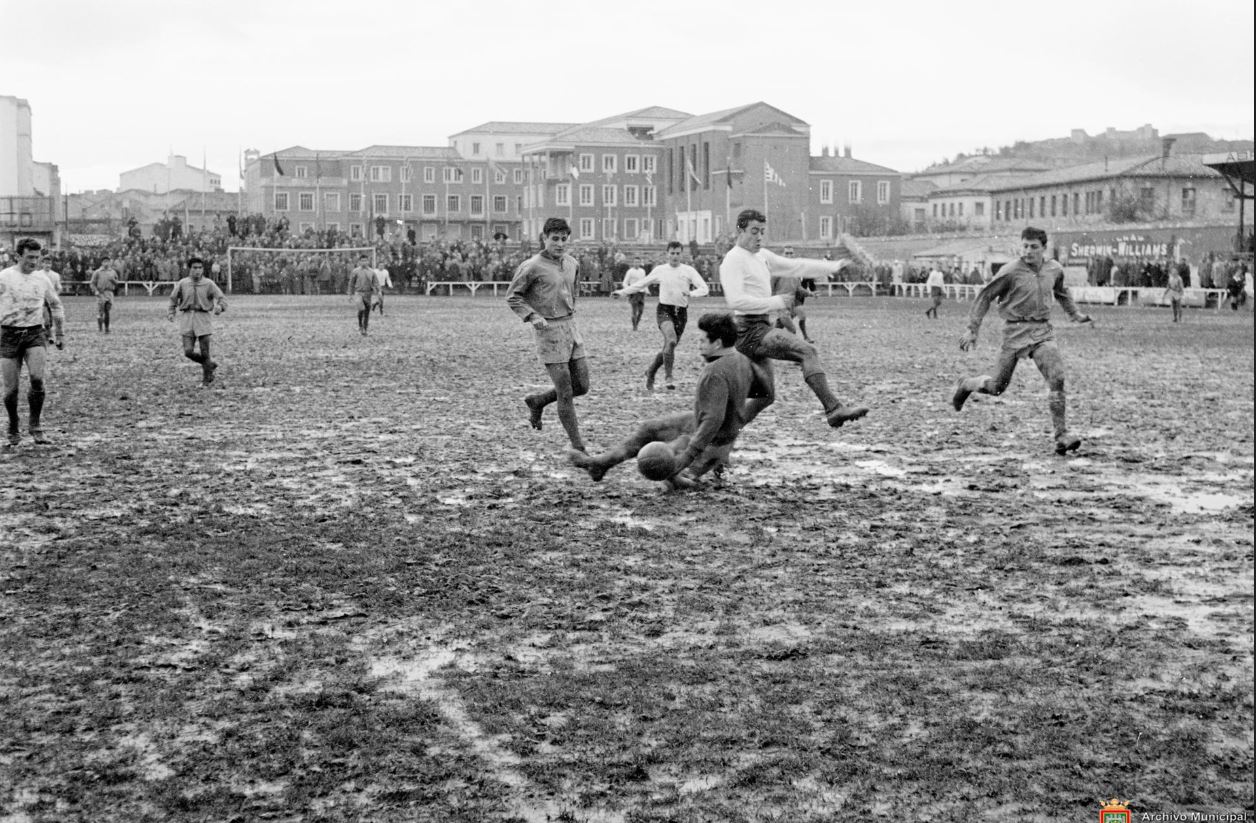
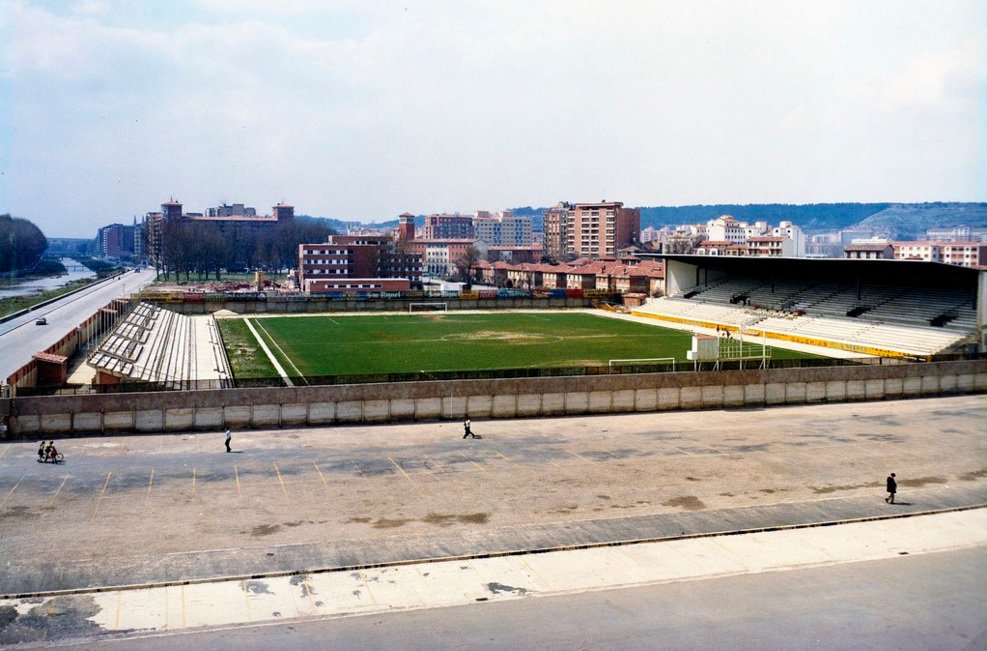
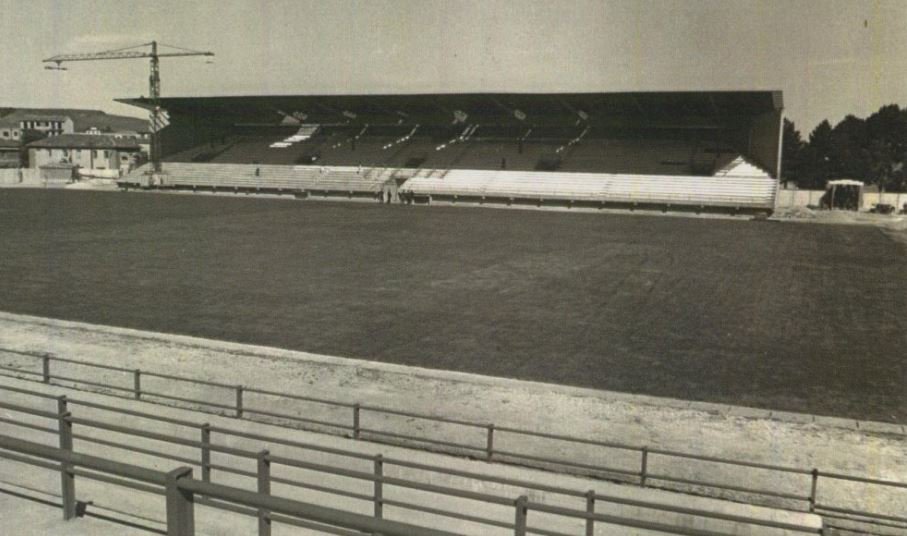
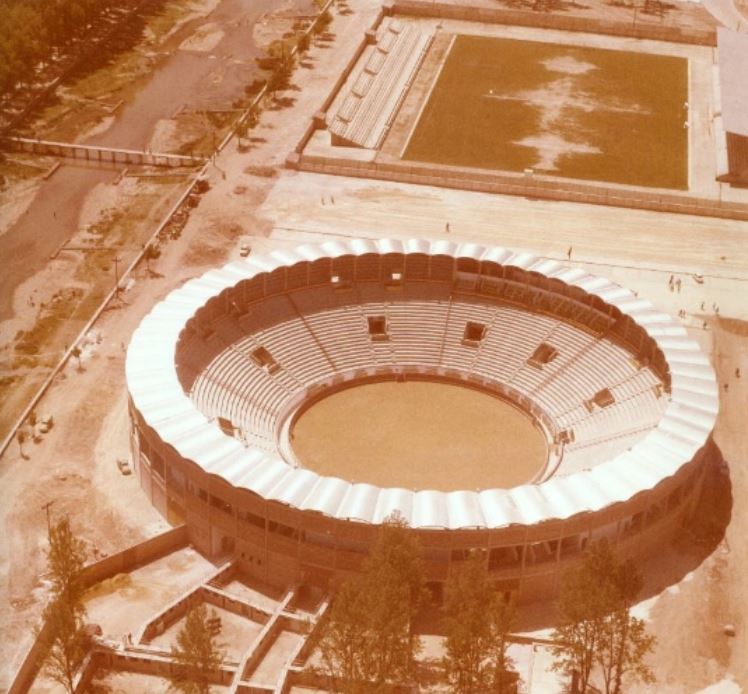
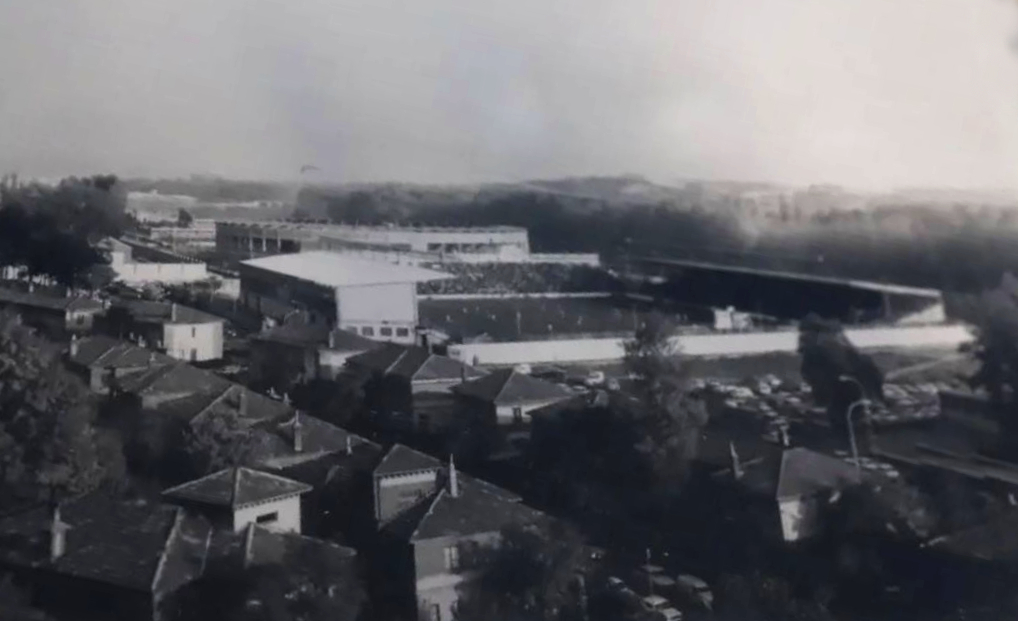
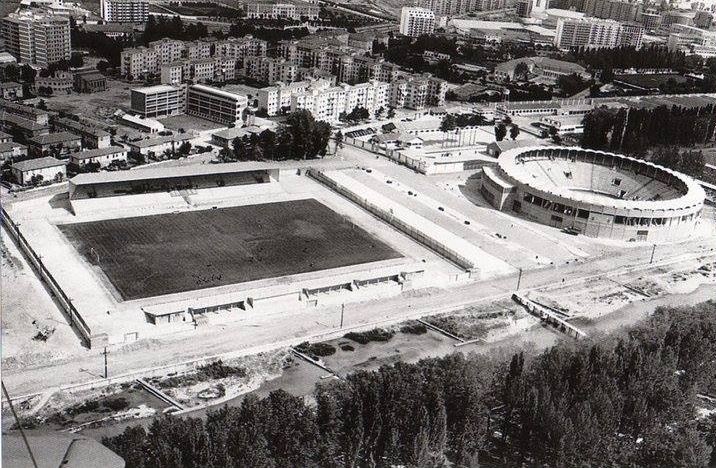
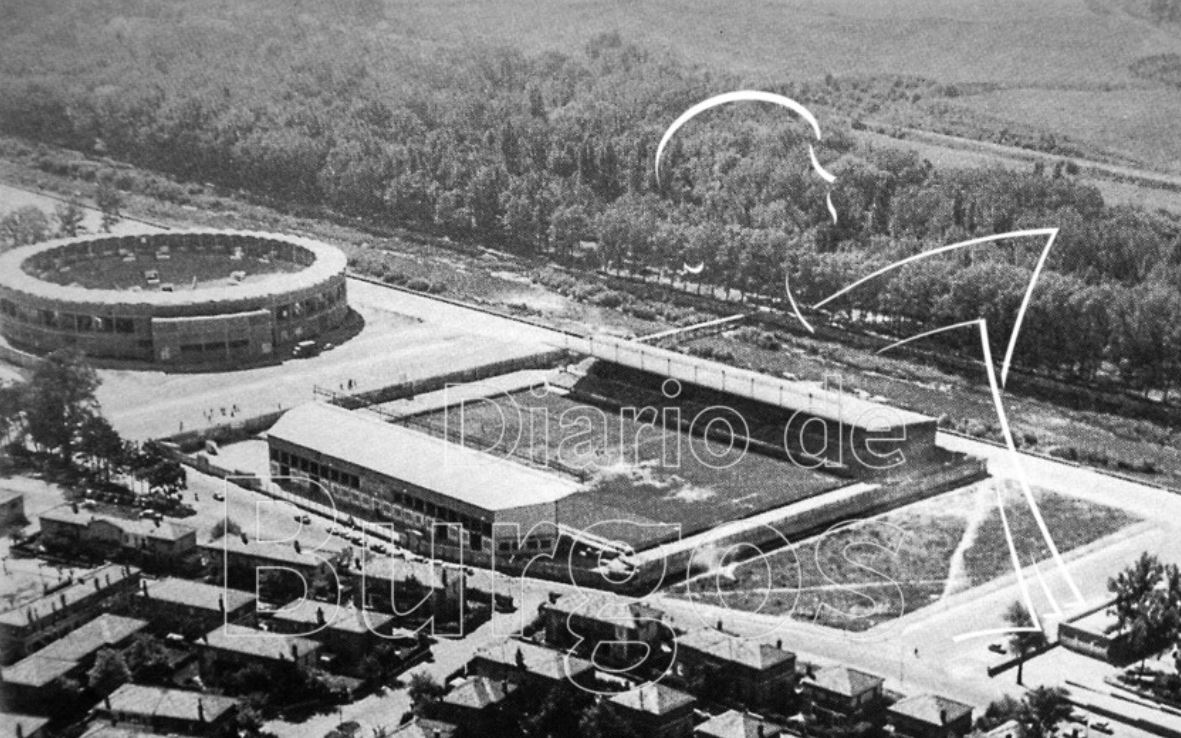
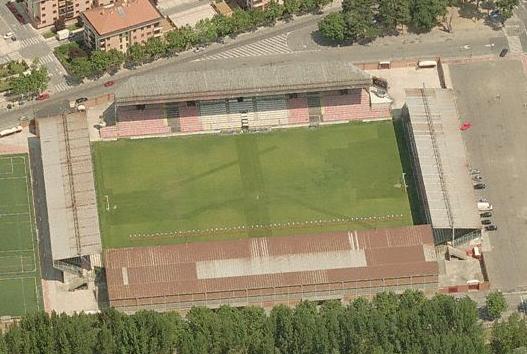
It would take another four seasons of graft in the Tercera before Burgos CF returned to La Segunda in the 1961-62 season. Stability was achieved with a series of mid-table finishes, and on 13 September 1964, Burgos officially opened the Estadio Municipal de El Plantío with a 2-0 victory over SD Indautxu. To start with, El Plantío was a two-sided stadium with open ends. It was built on the north bank of the Rio Arlanzón, a kilometre northeast of the Estadio de Zatorre and featured a covered, seated tribuna on its northern side. To the south and a stone’s throw from the river, stood an open terrace, which was eventually covered in 1971. Burgos CF continued to look comfortable throughout the sixties, neither troubled by relegation nor seriously pushing for promotion to La Primera. That changed, however, in the 1970-71 season. With a practically flawless home record of 16 wins and just 3 draws, El Plantío became the rock on which the club built promotion. In the end, 45 points and a superior record against its rivals, Deportivo La Coruna, Córdoba & Rayo Vallecano, all of whom also gained 45 points, secured promotion to La Primera for the first time.
Burgos CF maintained their excellent home form during the first season in the top flight, and whilst they failed to win on the road, they picked up important points, notably a 1-1 draw with Real Madrid at the Bernabeu. It came down to the final weekend of the season, and of the three teams who could be relegated, Deportivo La Coruna, Sevilla & Burgos CF, Sevilla had drawn the short straw by having to play away at Real Madrid. Sevilla needed to win, whilst Burgos CF travelled to La Coruna, knowing a point would keep them up if Sevilla failed to win. With Sevilla 0-2 down after 20 minutes, Depo and Burgos CF played out a tame 0-0 draw, which kept both teams up and saw Sevilla relegated. Their second season in La Primera was far more straightforward as they finished eighteenth and last in the league. Once again, form at home was good, with just three defeats, but on its travels, Burgos was dire. Sixteen of their seventeen matches ended in defeat, with their only success, a 2-1 win at Sporting Gijón, scant reward as they headed back to La Segunda.
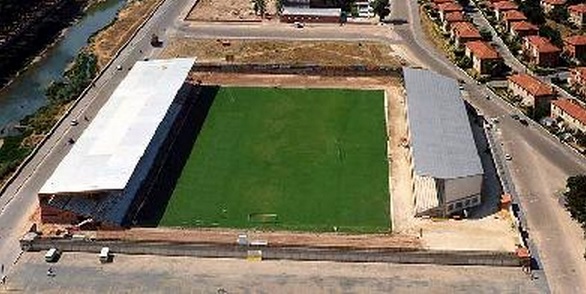
It took three years to get back to La Primera, but they did so in style, winning the league with 51 points. The following season in La Primera (1976-77) was a close affair, but 32 points secured fourteenth place. During the season, work started on extending El Plantío, with two end stands constructed, bringing the capacity to 16,500. The 1977-78 season brought fewer points (31), but a higher final place finish of twelfth. It was still an incredibly tight affair, and another convenient 0-0 draw on the final day ensured safety for both Burgos CF and their opponents, Hércules. 1978-79, Burgos CF’s third consecutive season in the top tier, was reasonably comfortable, and thirteenth place was achieved, but their stay in La Primera ended following a poor showing in 1979-80. Just 20 points were won, only three on their travels, and whilst they were unaware of it at the time, Burgos CF would never return to La Primera. Back in La Segunda, Burgos CF struggled to compete on the pitch, whilst debts were mounting up off the pitch. A ninth-place finish in 1981-82 was of little consequence as the club was demoted to Segunda B after failing to pay outstanding wages by the season’s end. The 1982-83 season was to be the club’s last, for although third place was achieved, the financial situation became unsustainable, and on 24 May 1983, the club was wound up. The club’s reserve side, Burgos Promesas, had just won promotion to the Tercera, so it was decided to make a complete break from the failed Burgos CF, and Real Burgos CF was formed, taking over the place of Burgos Promesas in the Tercera.
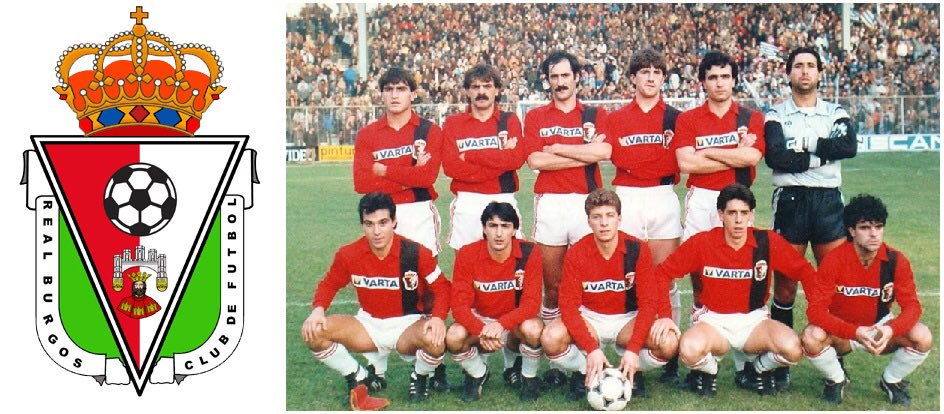
Now, a word of warning to the fashionistas among you. Real Burgos played in a combination of colours so awful that I feel duty-bound to caution you in advance of any reference. Red, brown, and white were the club’s colours, and not surprisingly, this has yet to resurface as a kit of choice in Spain or, for that matter, anywhere else. Real Burgos set about the Tercera at a furious pace and won the title in 1983-84, but lost out to Barcelona B in the playoffs. Another Tercera title was won in 84-85, and promotion was won with a playoff victory over SD Huesca. Despite finishing in second place in their first season in Segunda B, Real Burgos had to wait a season to progress further. 1986-87 saw the club finish fourth, but with the number of promotion places increased, Real Burgos was promoted to Segunda. The next two seasons saw Real Burgos finish in relatively lowly positions but with little threat of relegation. Then in 1989-90, Real Burgos took the next step, dominating the division from start to finish and securing promotion at San Mamés against Bilbao Athletic. In seven short seasons and a decade after their predecessors played there, Real Burgos had reached La Primera.
Possibly shocked by the sheer temerity of Real Burgos’s colour scheme, the great and good of La Primera did seem to be caught unawares by the newcomers. Real Madrid lost both league games to Real Burgos, and a creditable 0-0 draw was gained at Camp Nou, which was one of nine stalemates on the road that season. In fact, that first season in the top flight was built on a miserly defence, and by the end of the season, the total of 27 goals conceded was the lowest in the division. The following season saw the club finish in ninth place, just shy of a place in the UEFA Cup. The 92-93 season saw the club start with an impressive 4-0 victory over Real Sociedad. They also won the final game against Osasuna by a goal to nil. Unfortunately, there were only two other victories in the 36 matches between, and Real Burgos finished rock bottom with 22 points. The following season in La Segunda was once overshadowed by financial problems, triggered by relegation and the Federation’s insistence that the club become a public limited sports company or S.A.D. The club finished one from the bottom, but with outstanding debts, Real Burgos was also demoted an additional division. Such was the internal turmoil that Real Burgos didn’t compete in the Tercera in 1994-95, but did play in the league a year later, finishing a disappointing tenth. Real Burgos then did not play a game for 15 years, but technically still existed. Owned by the club President, Juan Antonio Gallego, they sat in a time warp, a footballing equivalent of Miss Havisham, until being dusted off in 2011 to play in the lower reaches of the regional leagues, before being dissolved in 2022.
With Real Burgos inactive, the decision was made to resurrect the name of Burgos Club de Fútbol. Starting at the lowest levels of the Castile-Leon regional leagues, the club won three successive promotions to earn a place in Segunda B for the 1997-98 season. The first season proved to be a difficult step up in class, and relegation was only just avoided. Over the next few years, however, Burgos CF finished in the top four places before eventually winning Segunda B and promotion to La Segunda in June 2001. Their stay in the second flight lasted just a season, demoted not on performance, but the club’s understandable refusal to become a S.A.D. Back in Segunda B, the club continued to pepper the top four spaces but missed out in the playoffs. In fact, Burgos CF only finished outside of the top four in Segunda B at the end of the 2007-08 season, but boy, were they outside of the top four. Just nine wins and forty points saw Burgos finish eighteenth, and relegation to the Tercera followed. Here they remained until June of 2011, when they won promotion back to Segunda B, only to return to the Tercera a year later. Promotion to the third tier was once again achieved in June 2013. Unusually for a senior team in Burgos, a period of relative stability ensued, with a series of mid-table finishes. Then, somewhat out of the blue, the Segunda B title was won in the foreshortened 2020-21 season, and victories over CD Calahorra & Athletic Club B in the playoffs saw Burgos CF return to La Segunda.
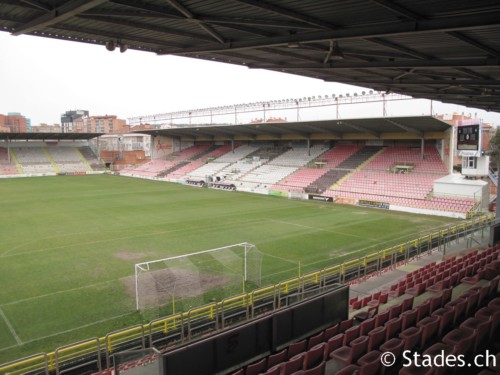
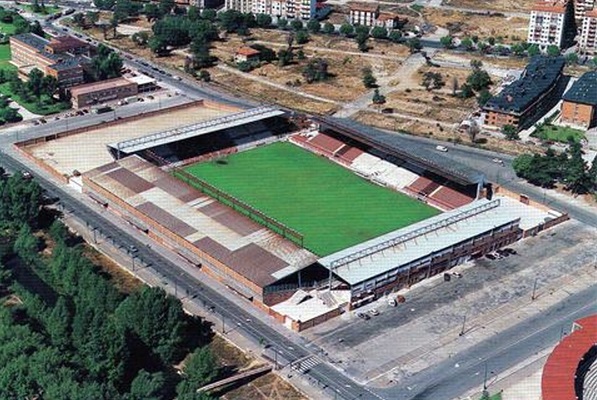
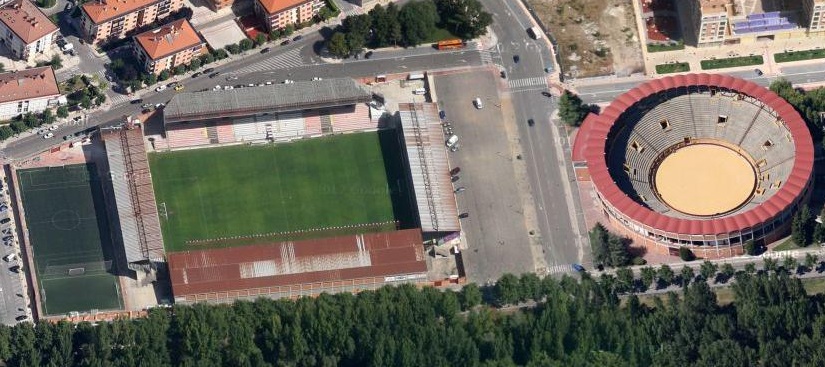
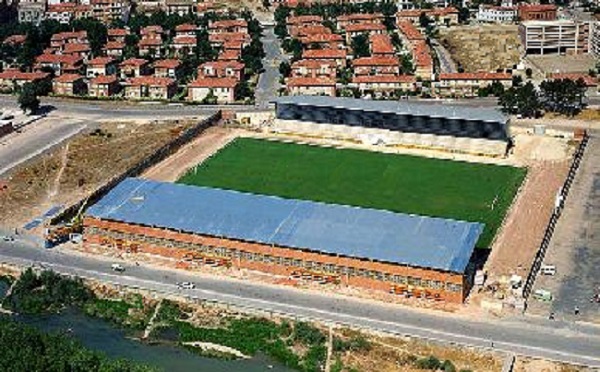
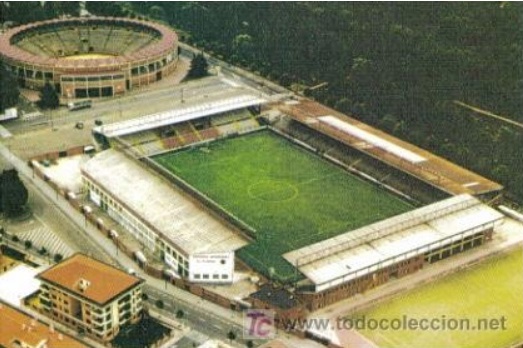
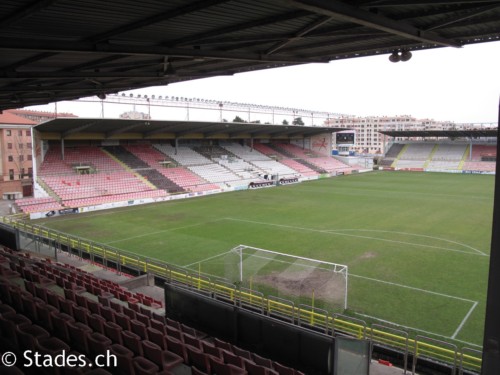
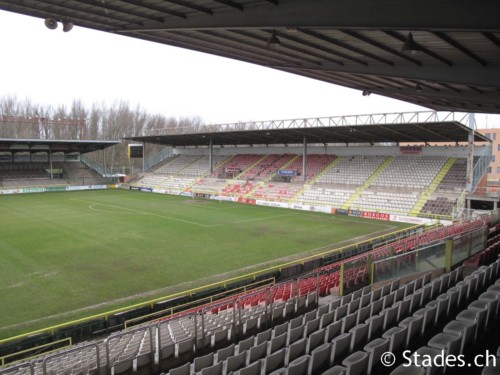
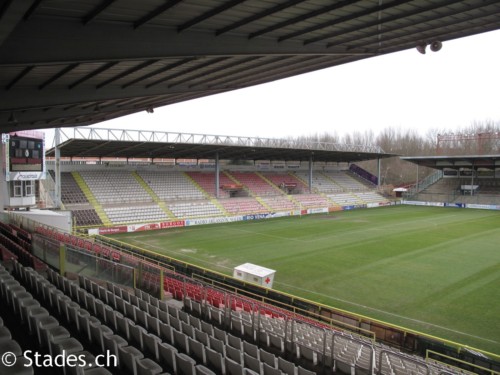
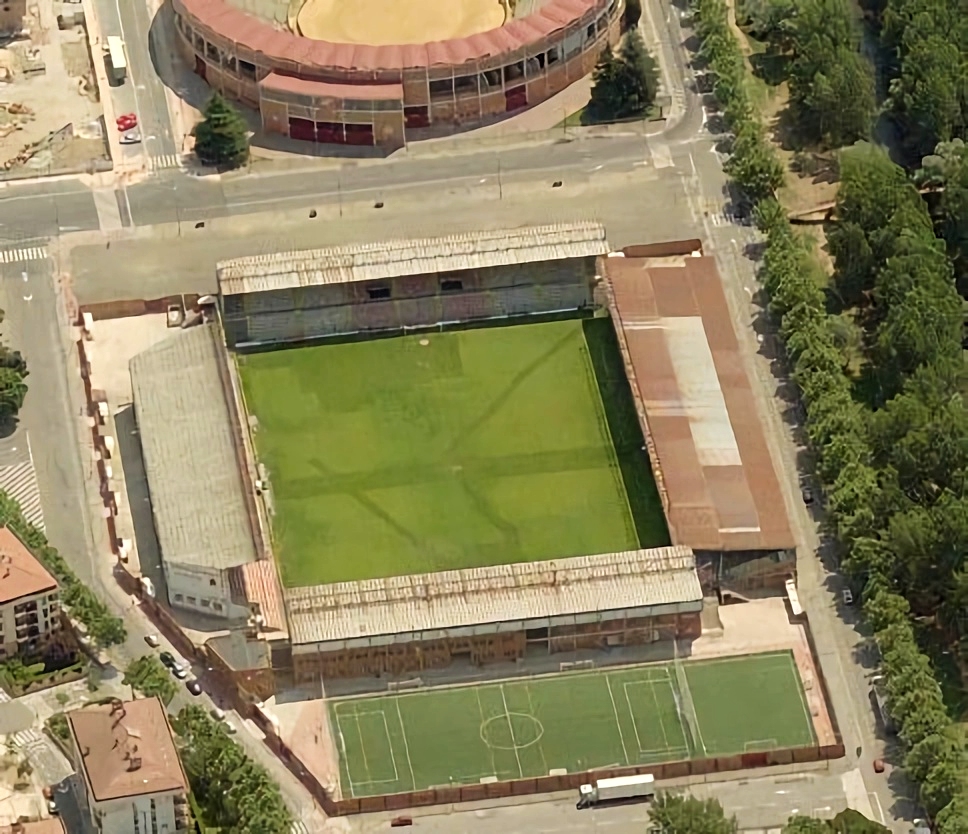
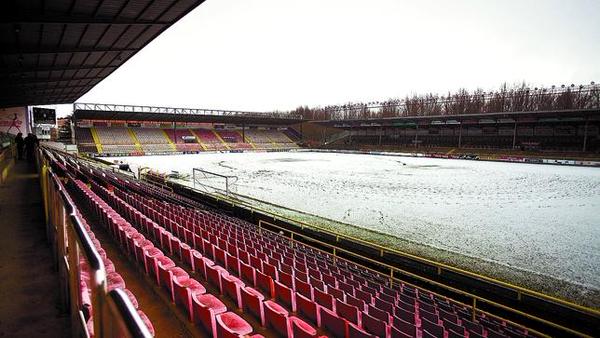
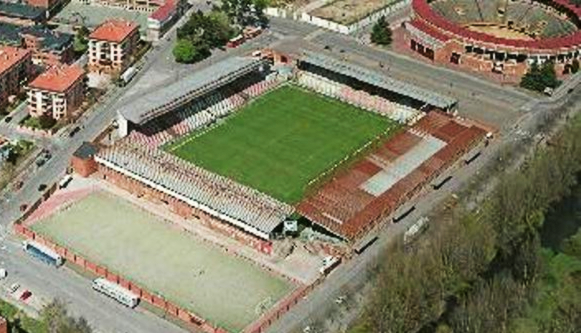
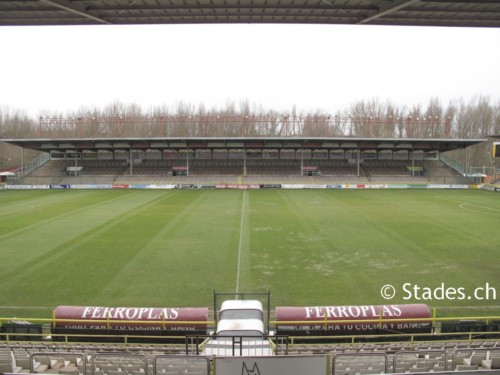
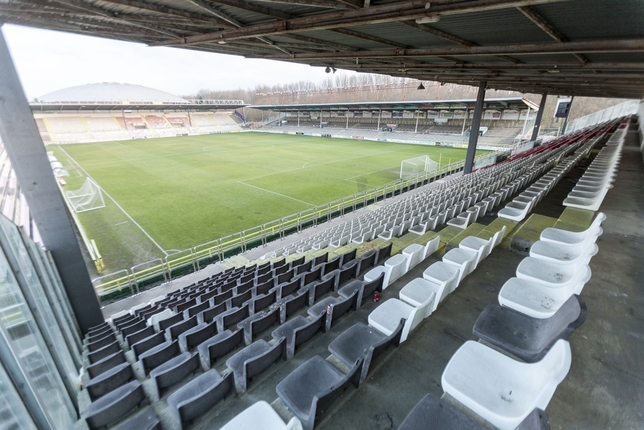
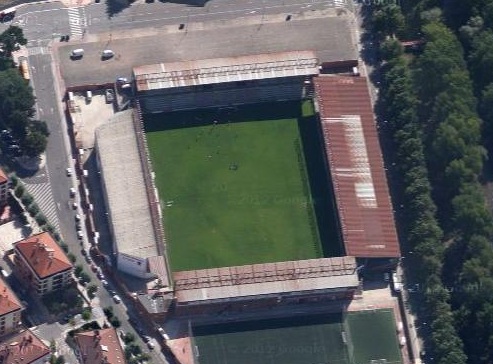
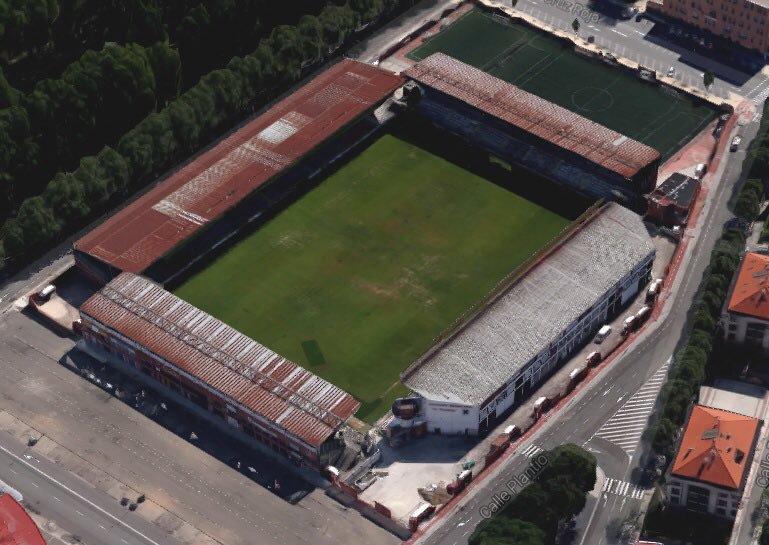
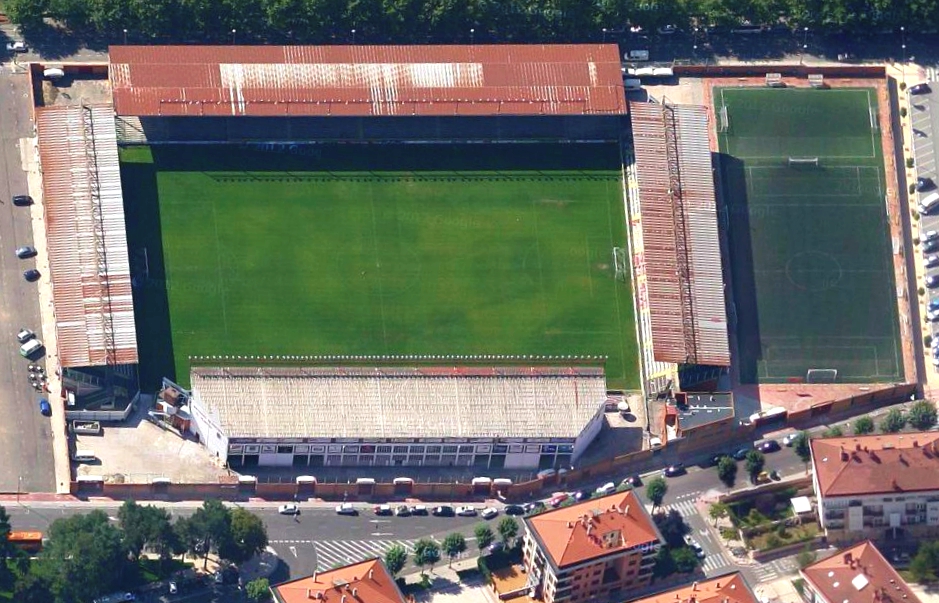
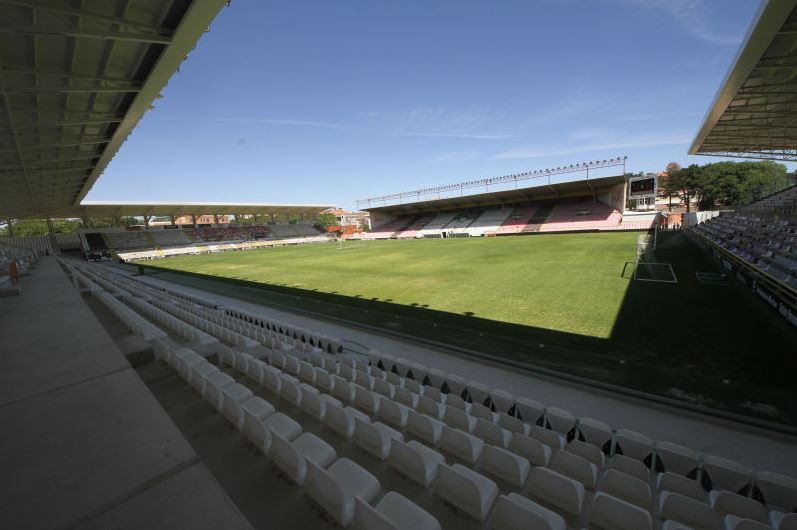
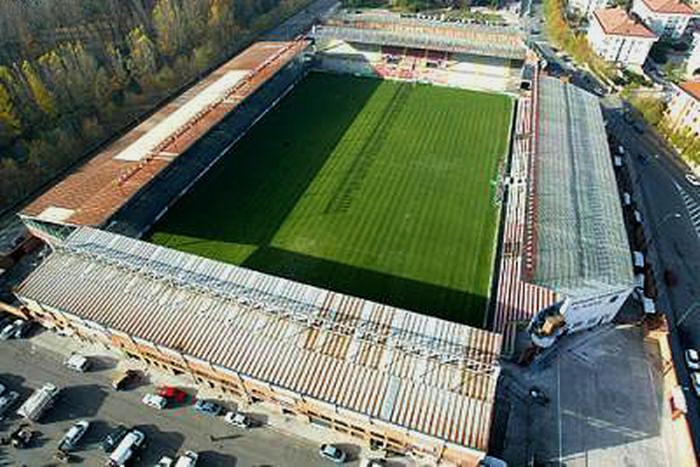
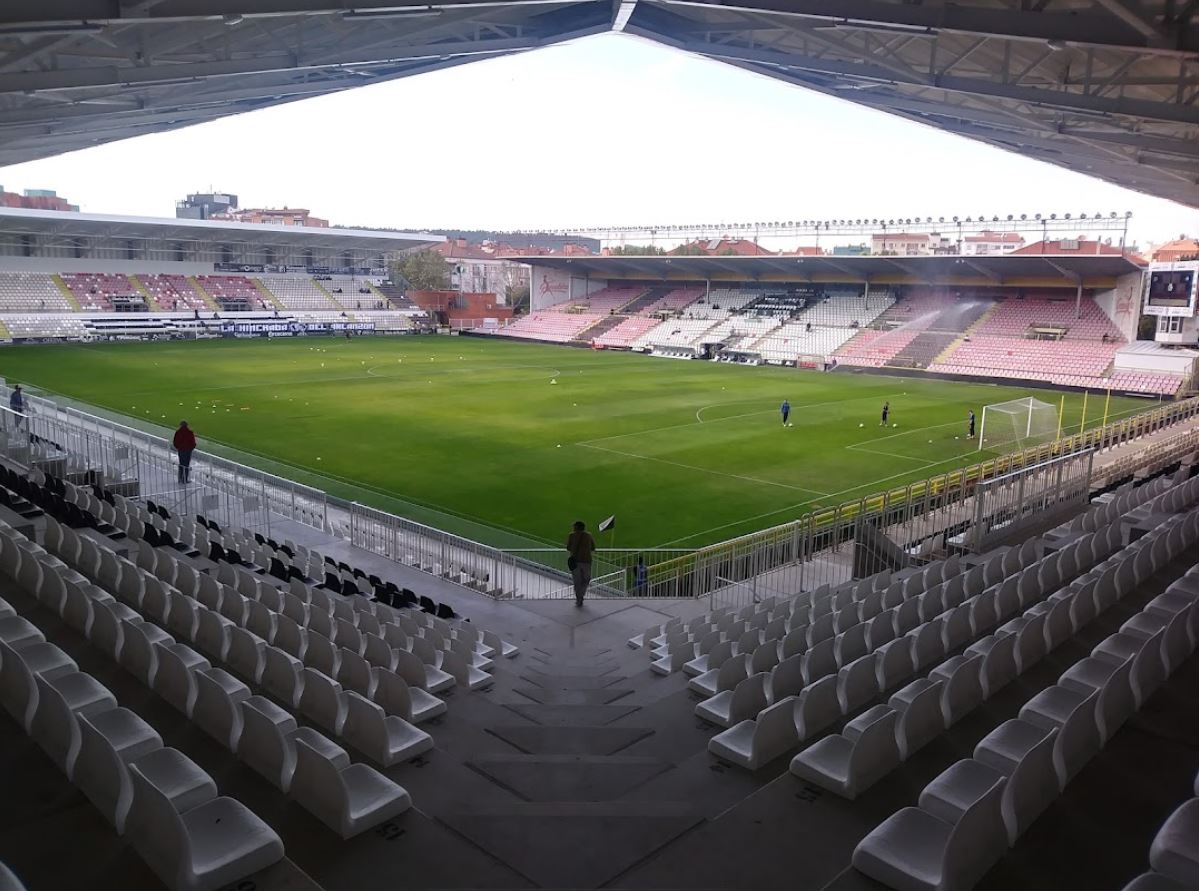
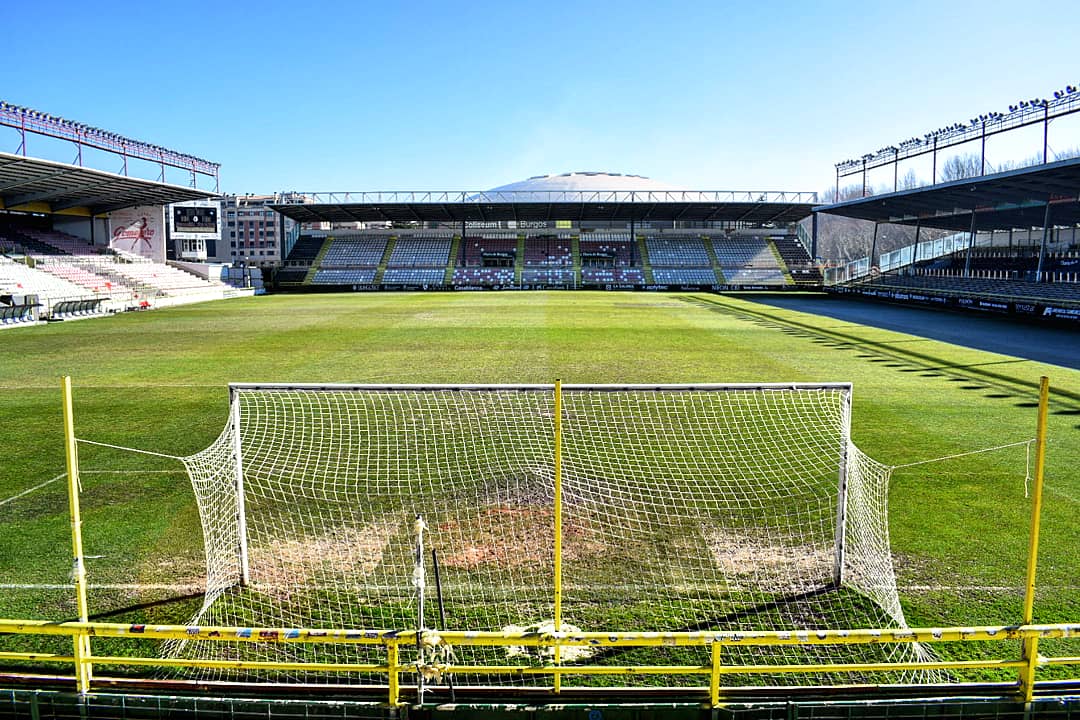
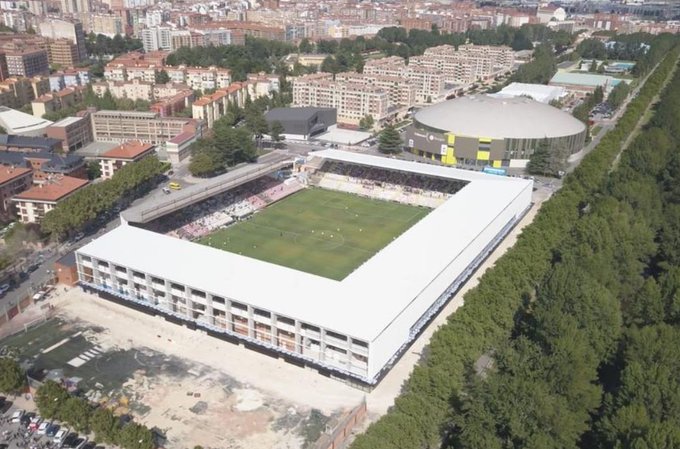
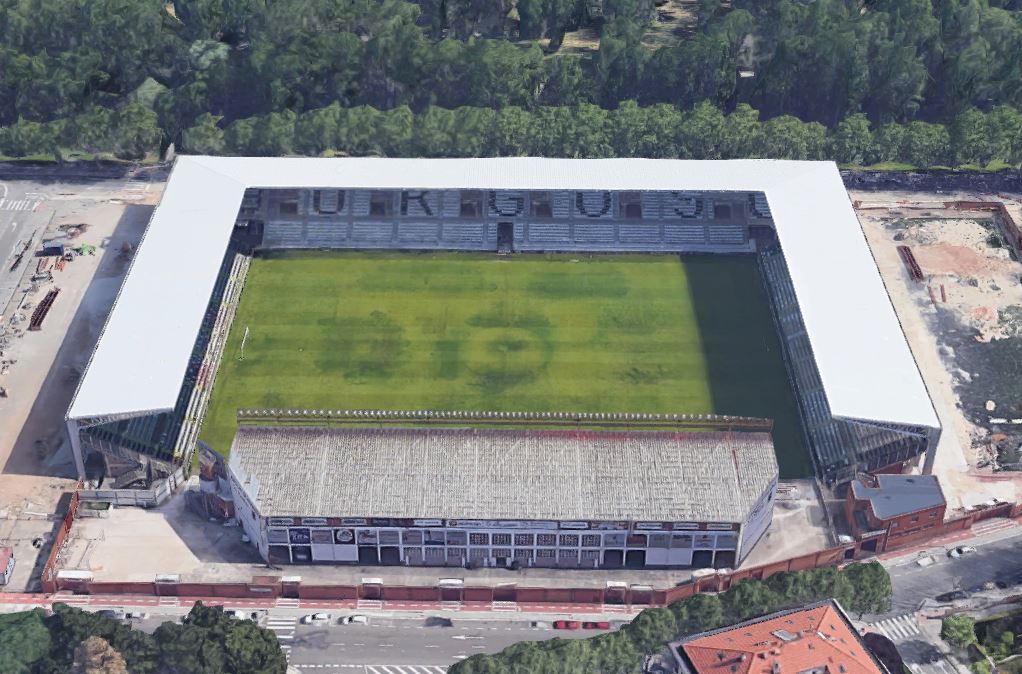
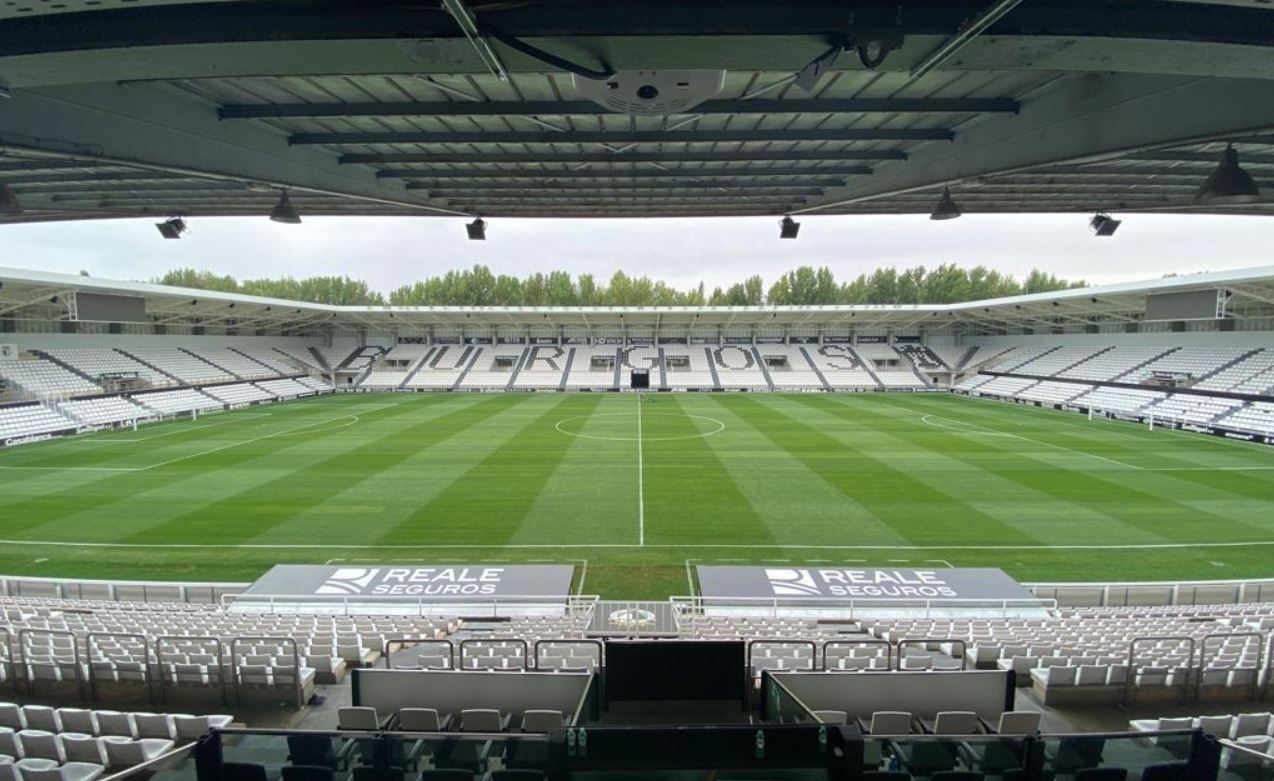
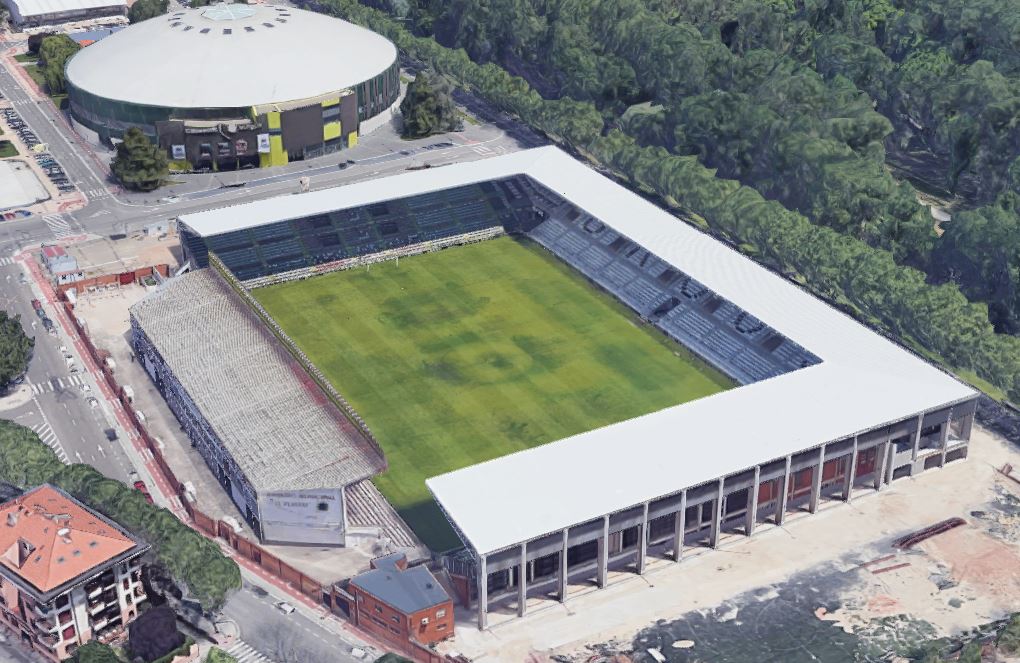
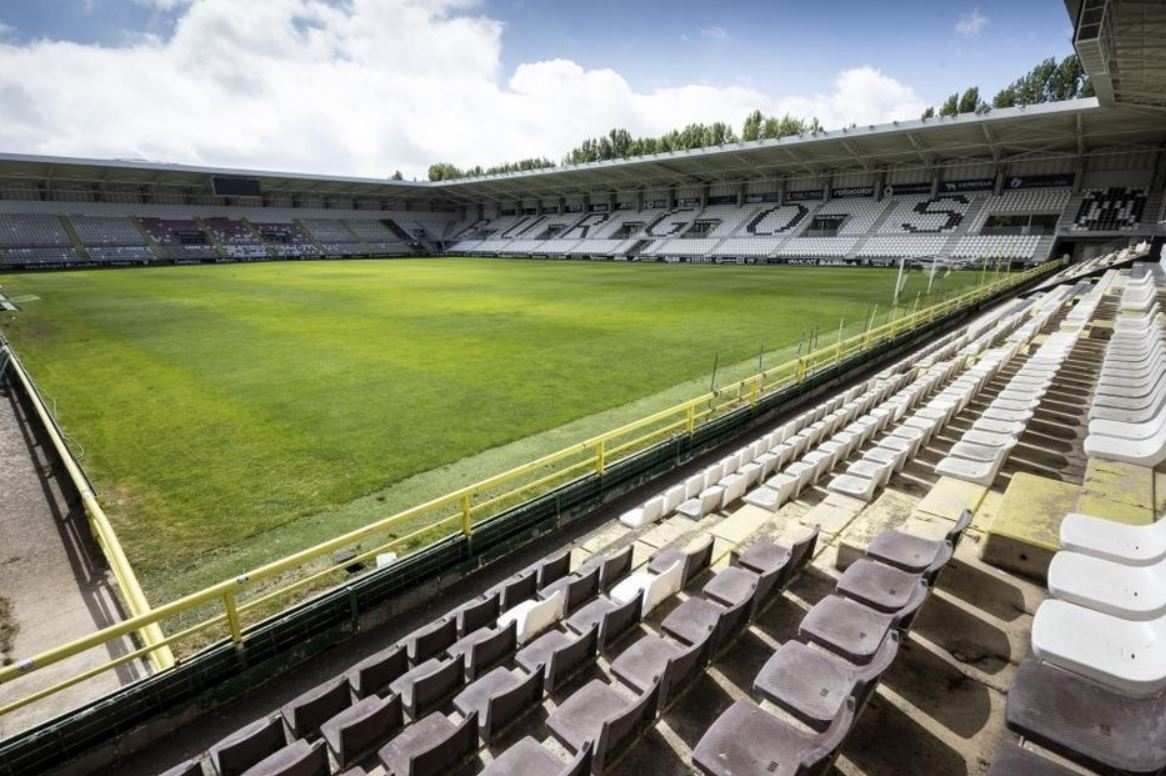
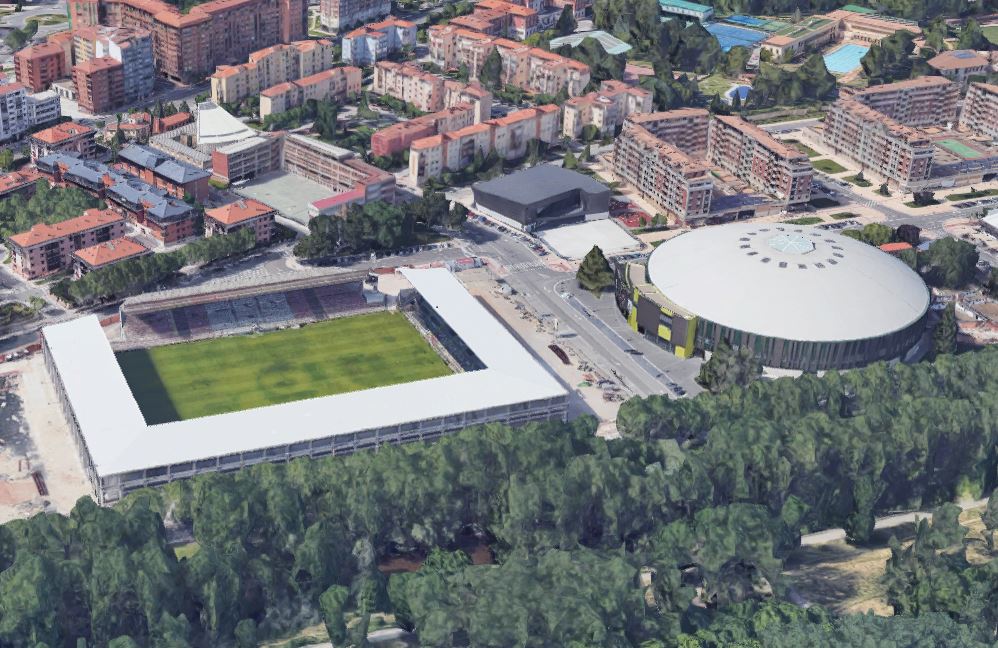
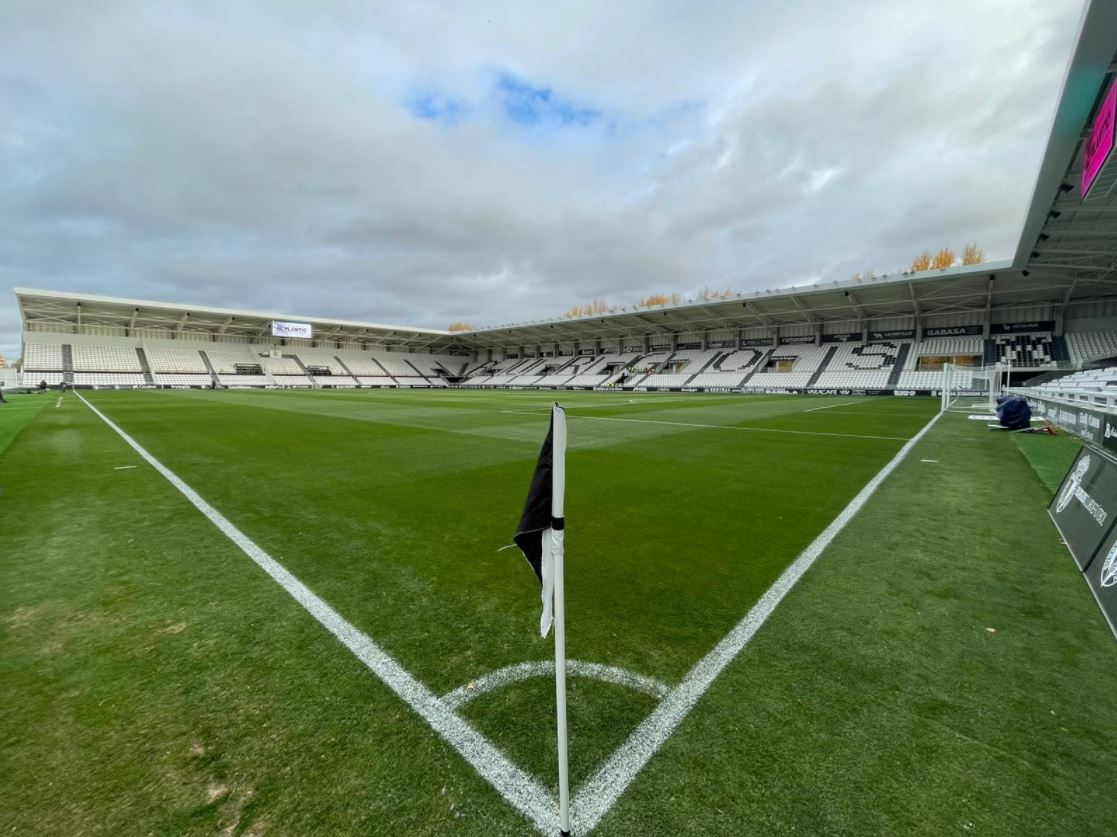
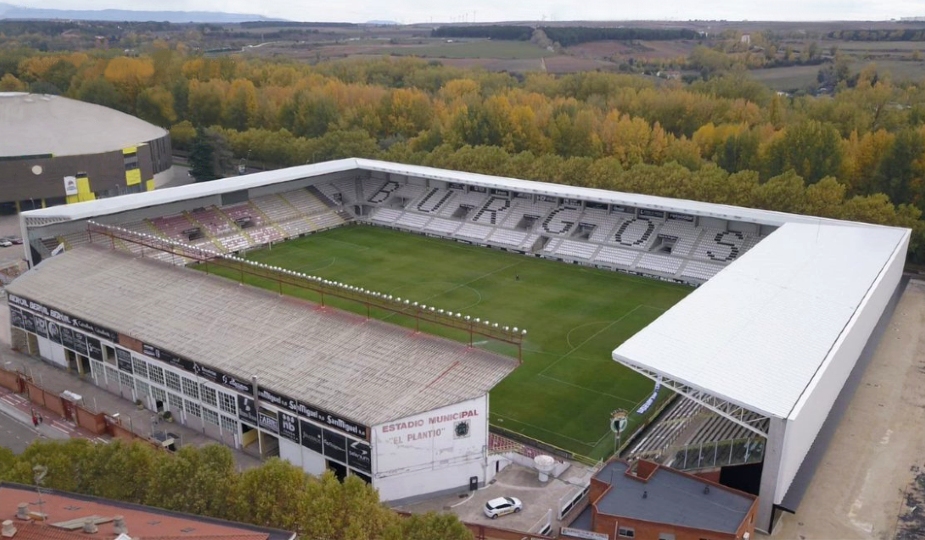
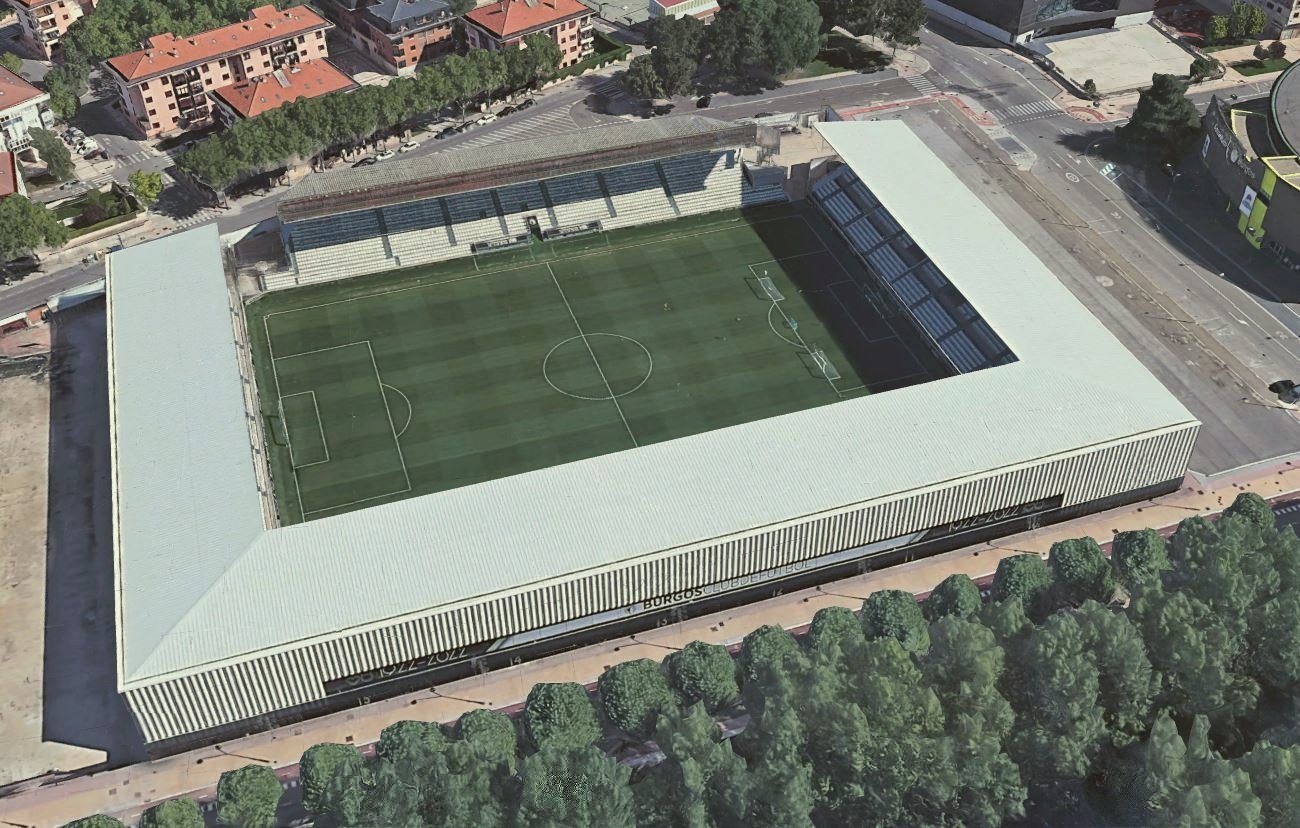
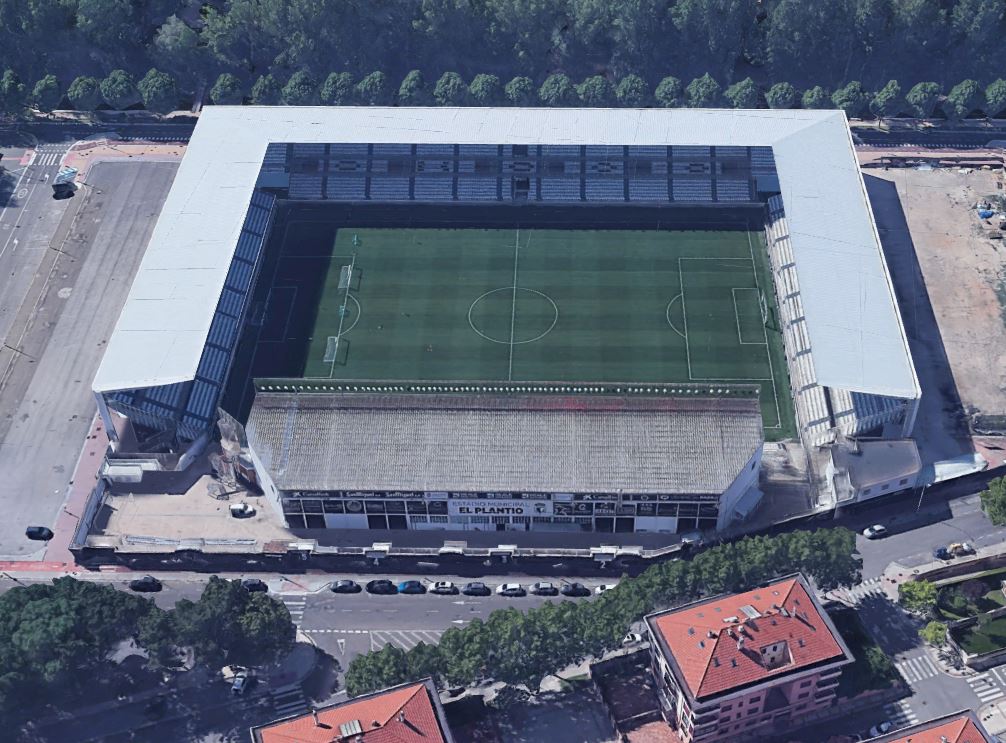
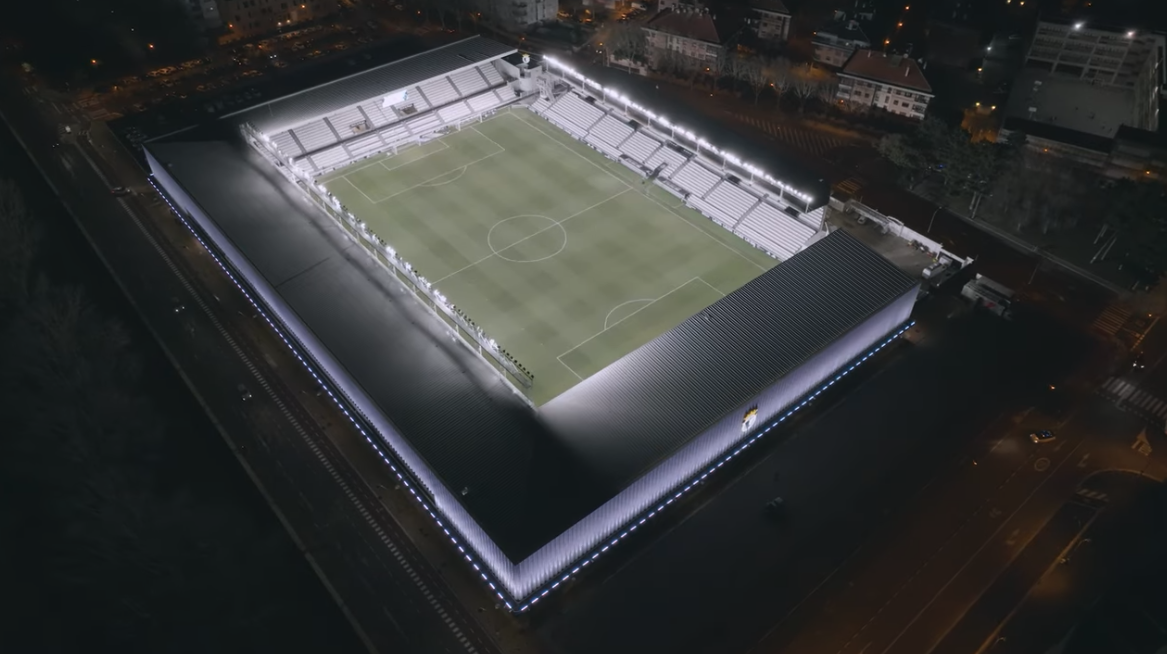
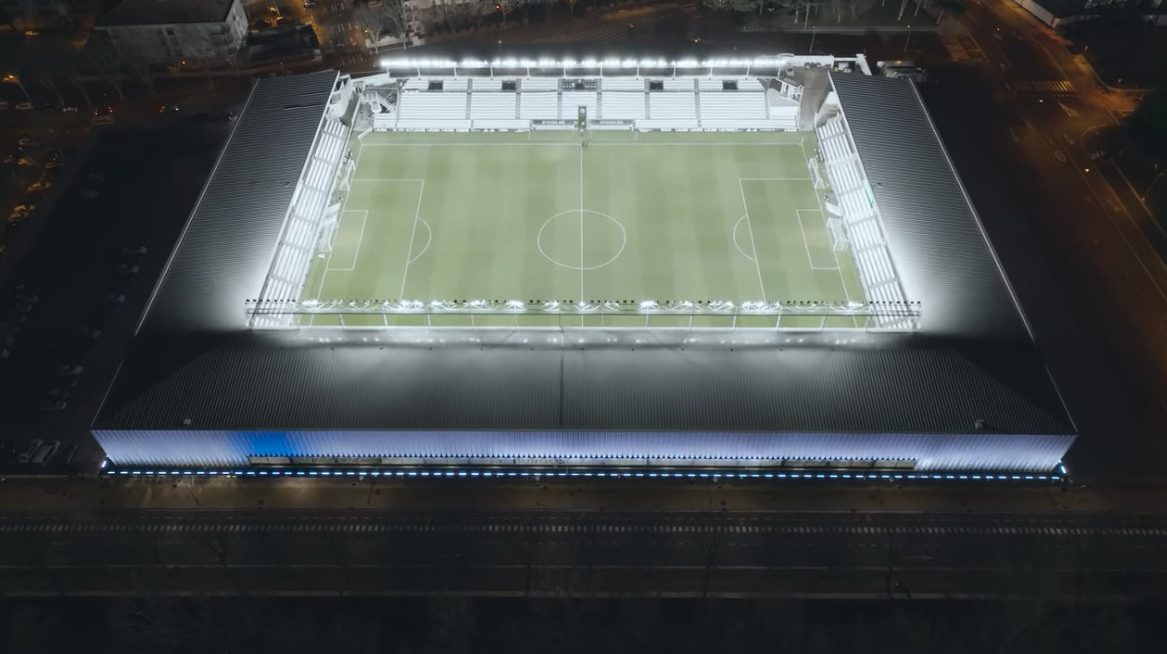
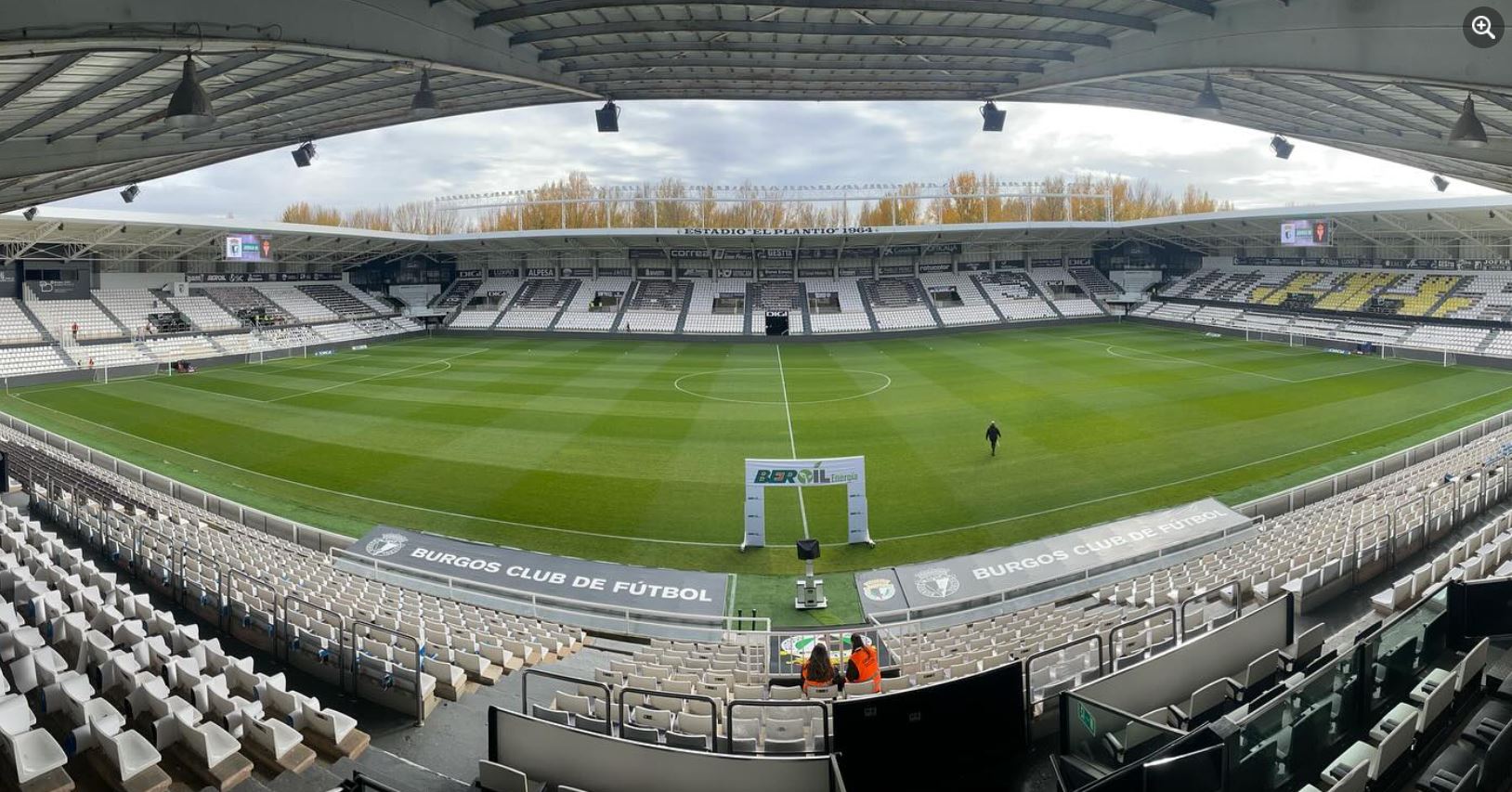
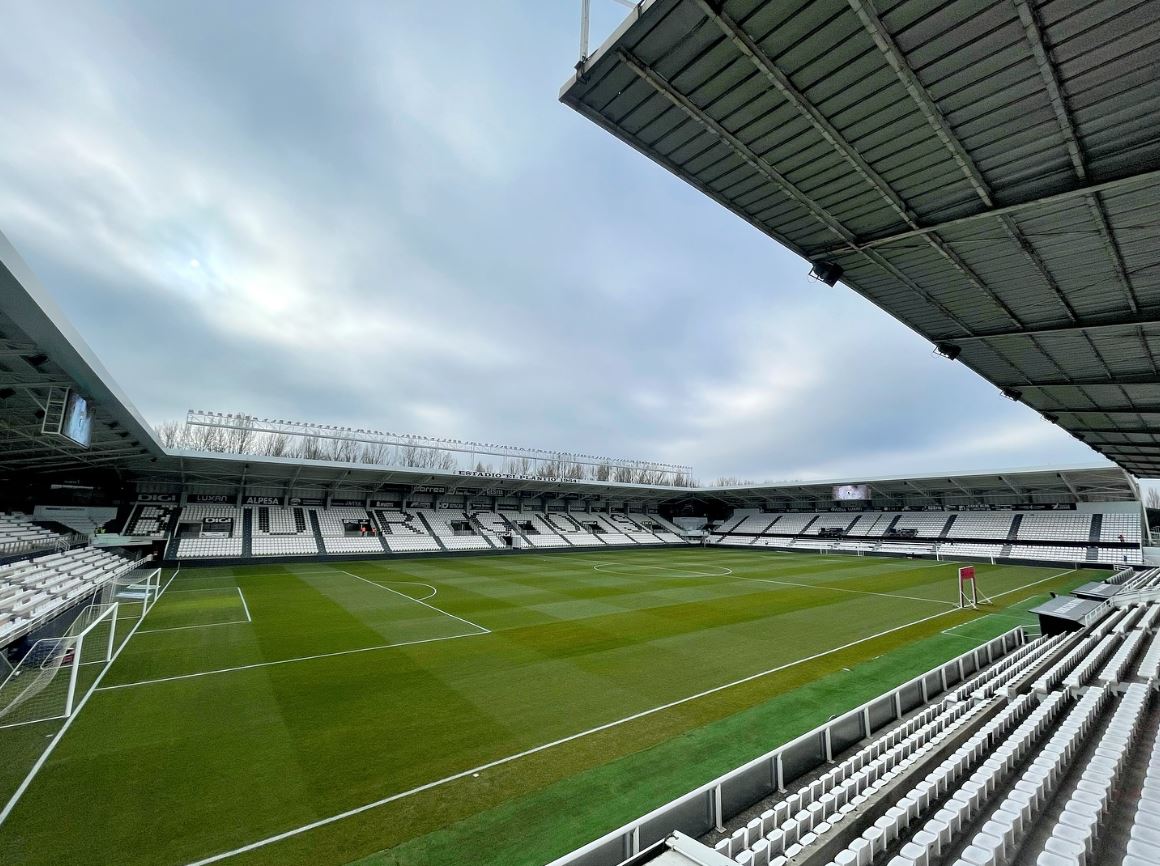
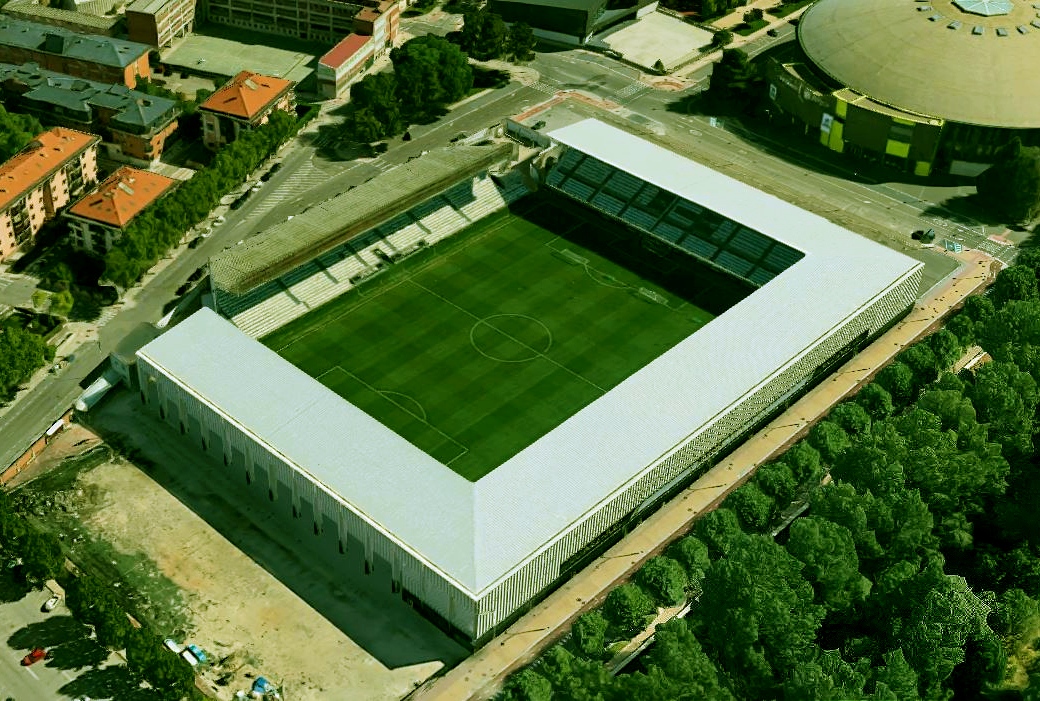
For many Spanish football fans, El Plantío is the epitome of an estadio Inglés or English-style stadium. Square, with four stands close to the pitch, El Plantío can have a fearsome atmosphere when full. It can also be one of Spain’s coldest stadiums, rivalling Valladolid’s Nuevo José Zorrilla and Soria’s Nuevo Los Pajaritos for the title. However, the stadium did look warm in 1991 when blocks of red, tan, and white seats were installed on three sides of the ground. Unfortunately, the Iberian sun got to them, and the red and tan seats faded, leaving the three stands to look like large blocks of Neapolitan ice cream. Despite having propped cantilevered stands, these stands offered excellent views, whilst the south stand was terraced except for a 60-metre stretch of benching on the lower tier. El Plantío is also an example of a stadium’s location being chosen over design. It’s squeezed between residential housing and the riverbank, so the pitch runs on an east-west axis. This means that the main tribuna faces the sun in the late afternoon or early evening.

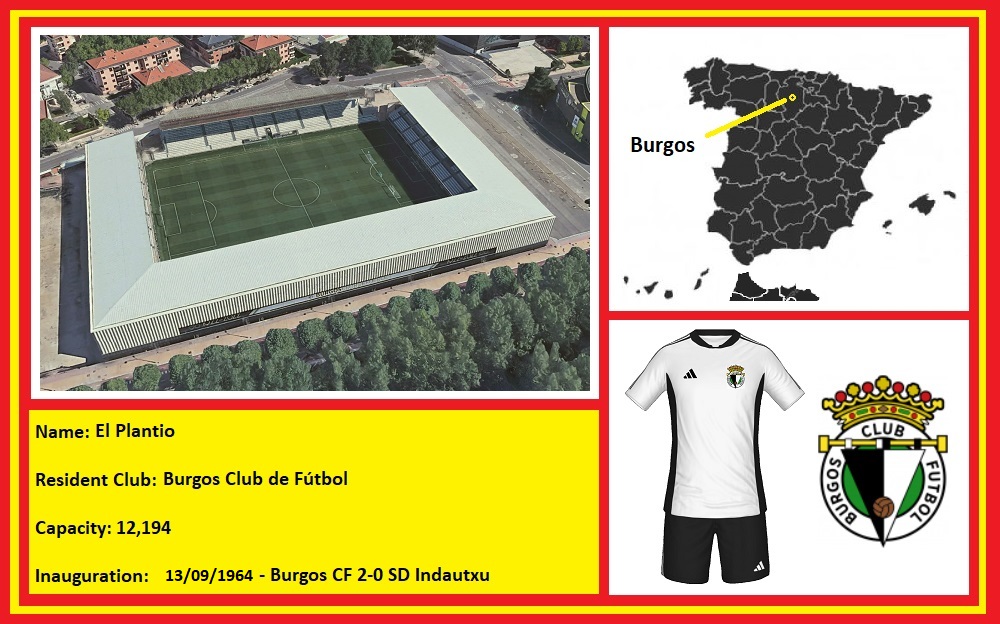
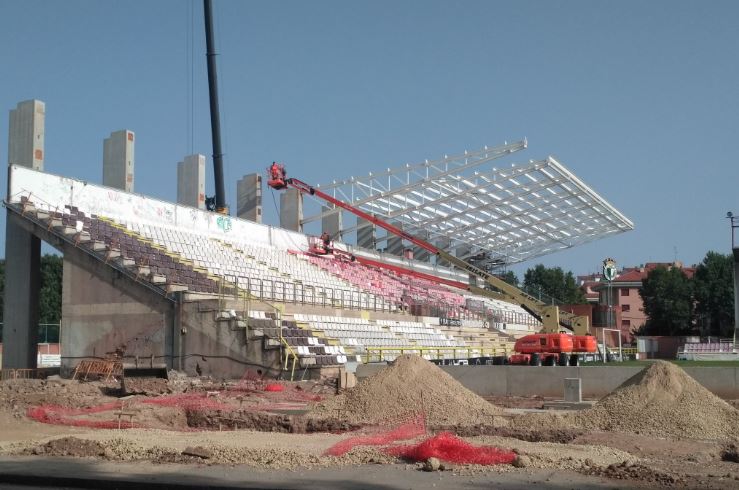
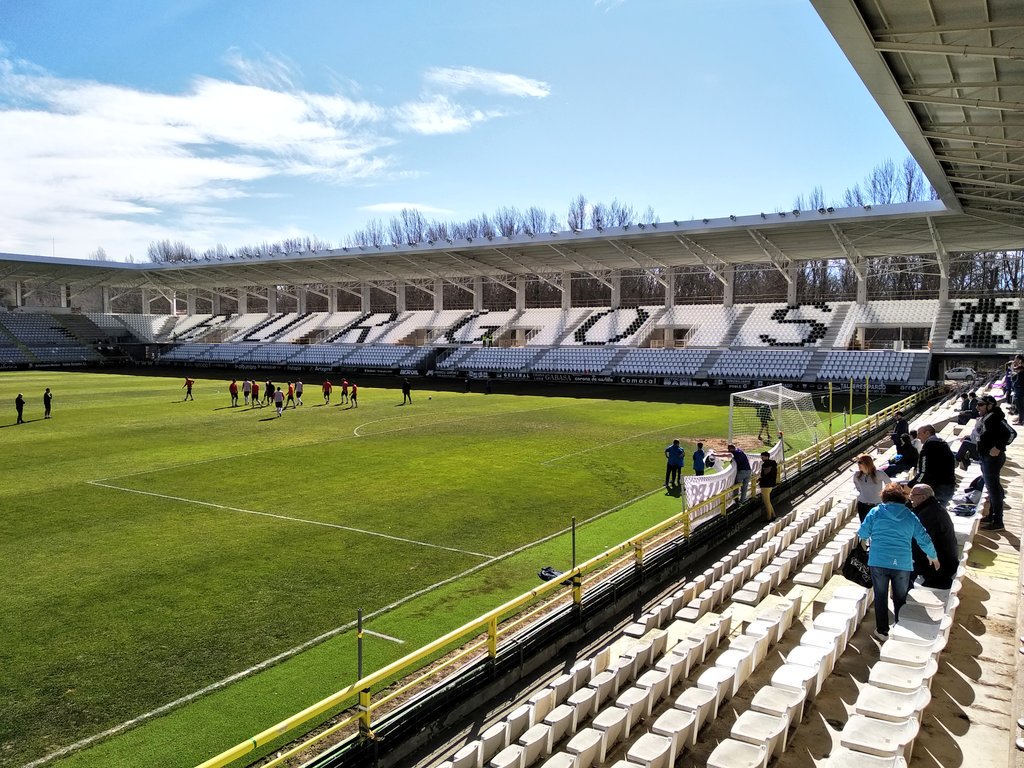
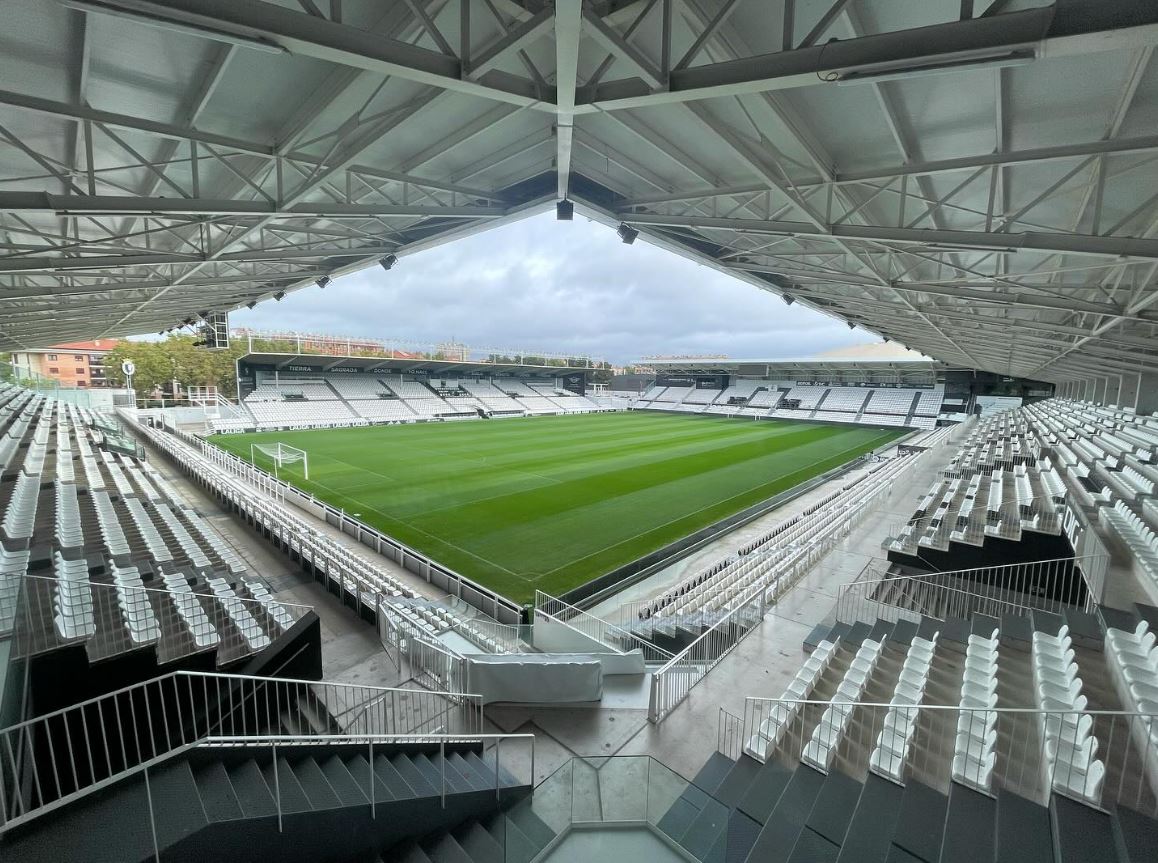
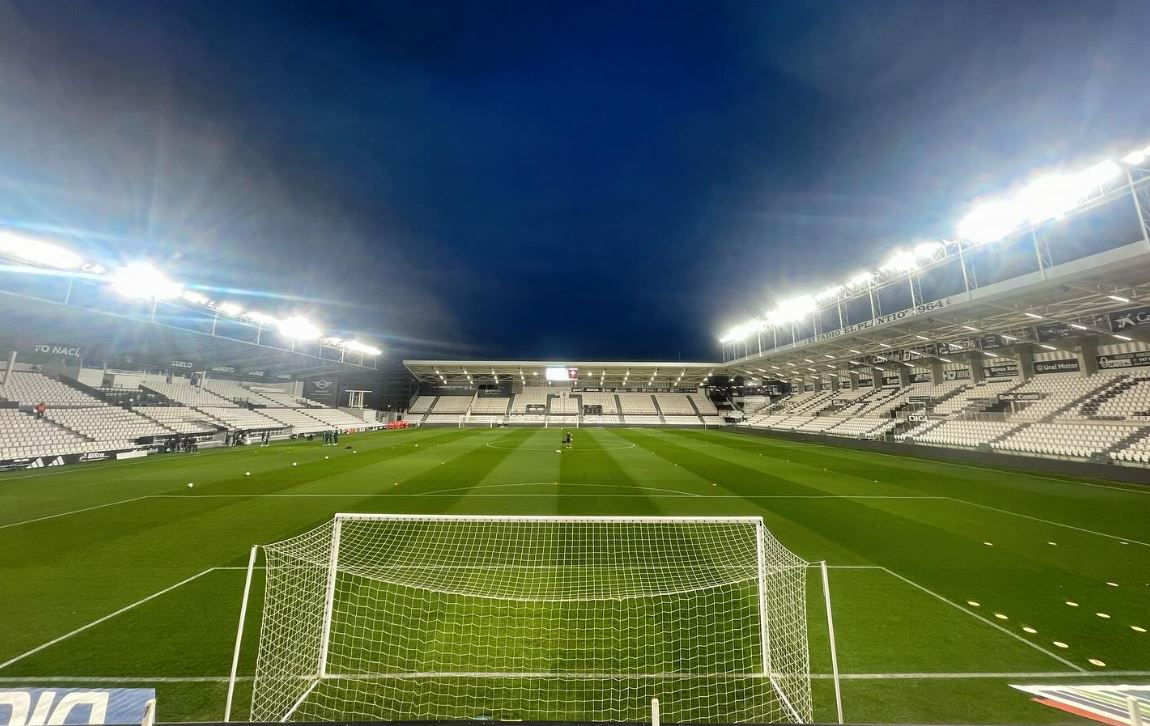
Plans for renovating El Plantío were under discussion for most of the 2010s. The main Tribuna, built in 1964, was still structurally sound, but the end fondos and lateral terrace had not aged well. In the summer of 2018, work commenced on a €5 million project to redevelop the other three sides of the stadium. The covers at each end of the stadium were replaced with fully cantilevered roofs, whilst the southern lateral stand was demolished. Its replacement is a single-tier seated stand, with corner sections that link to the end stands. A new cantilevered roof seamlessly links the new development. Work was finally completed in the autumn of 2019. The result is smart and functional, rather than exciting, but El Plantío’s design ensures that when it is full to its 12,194 capacity, it is an intimidating arena.
 Estadios de España