
Like many of Europe’s great cities, Madrid experienced a huge population growth in the 1920s, as migrant families from the provinces headed to the capital in search of work. The city had yet to spread south of the Rio Manzanares, but thanks in part to the cheap housing act of 1911, dictator Primo de Riviera’s directive, and later support from the Socialist Republican Government, an area of rural land south of the river had the honour of becoming Madrid’s first public housing project. Commencing in 1929 under the name Salud y Ahorro, the development stalled in 1936 due to the outbreak of the Civil War. After their victory, Franco’s regime completed the project and renamed the development in honour of General José Moscardó, Spain’s most decorated military man. As well as being Franco’s Chief of Military Household, Moscardó was Minister for Sport and took a hands-on approach to developing sport in the suburb that bore his name.

The main housing development in Moscardó was completed in 1943, and within a year, Club Deportivo Colonia Moscardó was formed. The club’s original colours were red & blue striped shirts & white shorts, whilst home was an open patch of land on the eastern edge of the barrio, between Calle Andrés Arteaga & Calle Mirasierra, which was named Campo de Gabino Jiménez. CDC Moscardó registered with the Castellana Football Federation on 23 July 1945 and joined Group 1 of the Tercera Regional Ordinaria, finishing sixth out of 14 teams in their debut season. Two seasons later, the club was crowned champions and promoted to Segunda Regional Ordinaria, whilst General José Moscardó took on the role of honorary president. The pitch at the Campo de Gabino Jiménez was now surrounded by a fence, but the ground was not enclosed, which led to the club’s demotion to the Cuarta Regional in 1954. It took a further three years to raise the funds to enclose the ground, which coincided with promotion back to the Tercera Regional, thanks to a vacancy in the higher tier. 1958 saw the arrival as president of José Román Valero, a man who would change the club beyond recognition. His first act was to switch CDC Moscardó’s club colours to the red & white striped shirts & blue shorts of the club he supported as a boy, Atlético Madrid.
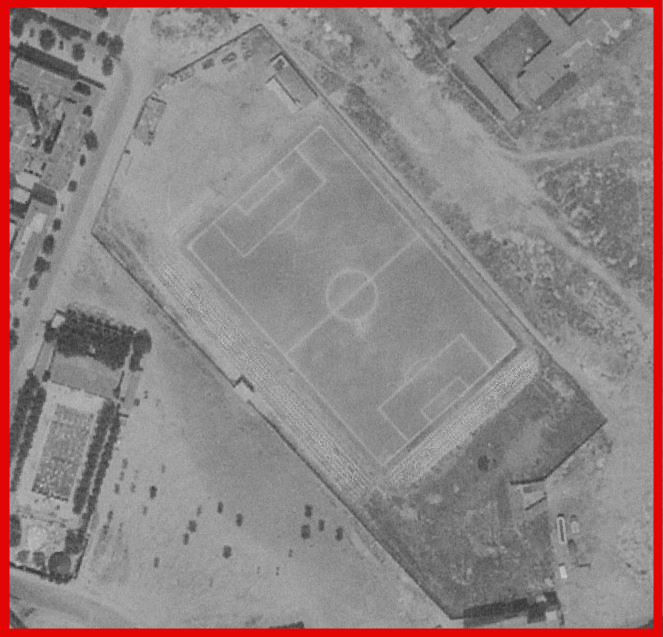
CDC Moscardó started the 1960s with promotion to the Primera Regional Ordinaria, and whilst there was a setback with relegation at the end of the 1962-63 season, two successive promotions saw the club reach the national Tercera division for the 1964-65 season. This necessitated the development of the first proper spectator facilities at the Campo de Gabino Jiménez, with the building of open terraces on the western side and southern end of the stadium. That first season in the third tier saw the club finish 12th of 16 teams, but Román Valero’s continued investment in the squad reaped dividends. For the remainder of the decade, CDC Moscardó did not finish outside of the top three in the Tercera. They first reached the play-offs for La Segunda in 65-66, but lost out to UD Diter Zafra, in a tie that required three games. The following season saw them reach the play-offs again, but this time they lost 3-4 on aggregate to SD Ibiza. Finally, in 1969-70, CDC Moscardó won the Tercera title, squeezing out CD Tenerife by three points, before beating Catalan Club Deportivo Tarrasa in the play-offs to earn promotion to the second tier. This tie also went to three matches, with the decider played at Rayo Vallecano’s Campo de Vallecas with CDC Moscardó prevailing 4-1.
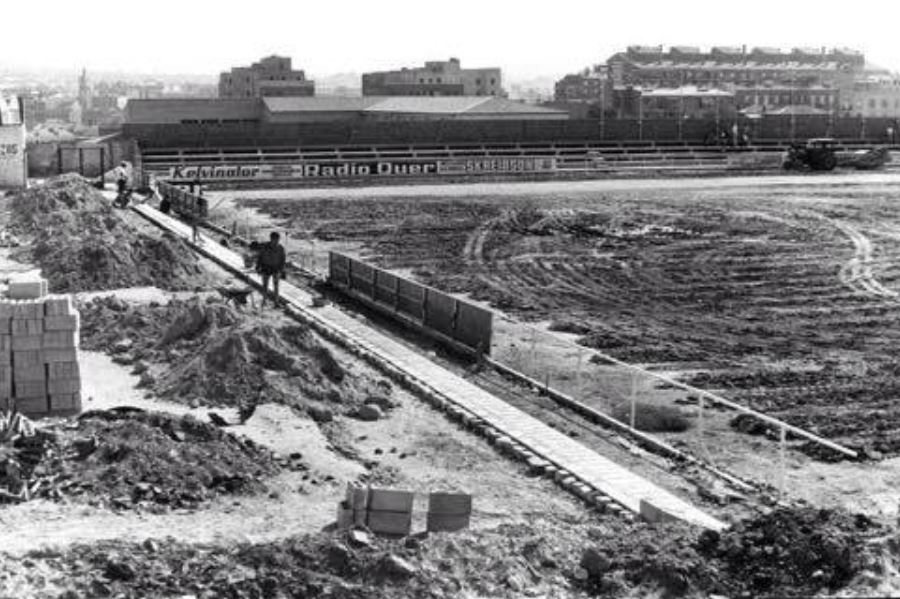
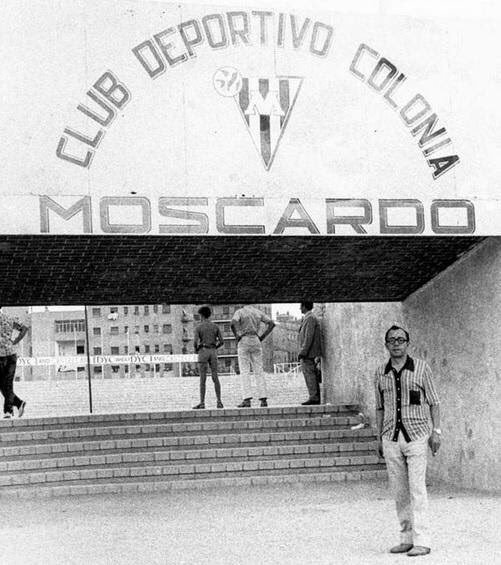
Before the start of the club’s first season in La Segunda, the Estadio de Gabino Jiménez need to be upgraded. Work centered on new offices, changing facilities and extending the capacity to 12,000. This was achieved by adding a narrow terrace to the eastern side of the enclosure and building a larger terrace at the northern end, which linked seamlessly to the southern side of the ground. Remarkably, the upgrade did not include the installation of a grass playing surface, with the dirt pitch remaining in place throughout the 1970-71 season. Unsurprisingly, this was the last season that such a surface featured in the top two flights in Spain. La Segunda’s Class of 1970-71 was full of high achievers. Unfortunately, CDC Moscardó was not one of them. From the opening fixture, a 0-3 defeat to cross-city rivals Rayo Vallecano, the writing was on the wall. Three changes of coach made little, if any impact, as the club failed to get out of the bottom four all season. They returned to the bottom of the league at the halfway point of the season, and remained there until the end. CDC Moscardó won just six matches, the highlight being a 2-0 victory at the Gabino Jiménez against Deportivo La Coruña, who would go on to win promotion to the top flight.
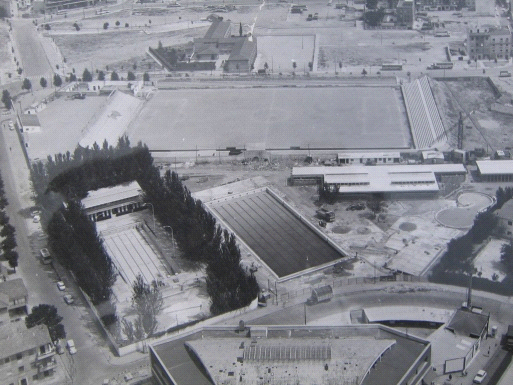
There followed twelve seasons in the Tercera División, mainly with mid-table finishes although the runners-up spot was achieved in the 1979/80 and 1980/81, when they lost to CD Antequerano in the play-offs. The 1982/83 season, however, proved to be a disaster, with an 18th place finish seeing the club fall out of the national divisions for the first time in nearly 20 years. The decline coincided with Ramón Valero relinquishing the presidential reigns at the club, by which time, the stadium had been renamed in his honour. CDC Moscardó returned to the Tercera (now the fourth tier) for the 1985/86 campaign but could only muster a poor 19th place and immediate relegation. The club bounced back from the Regional Preferente for the 1987/88 season and finished as runners-up to CD Pegaso. This was only a prelude to a title win the following season when they won their division of the Tercera on goal average from CD Móstoles. However, promotion to Segunda B once again proved to be too much of a step up in standard for CDC Moscardó and they were relegated with Racing Club Ferrol, CD Lalin and Arosa SC, having finished in 18th place of the 20 teams. The club did spend a further three seasons in Segunda B during the mid-1990s, but the arrival of the 21st Century saw CDC Moscardó spend most of its time in the Regional Preferente, whilst clubs from Madrid’s suburbs & satellite towns, such as Getafe, Leganés, Fuenlabrada & Alcorcón made regular appearances in the top two divisions. Former President Valero who had maintained an interest in the club he built, died in 2008.
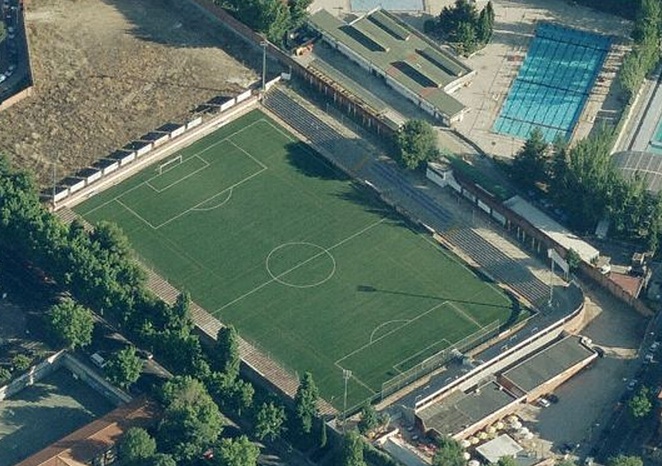
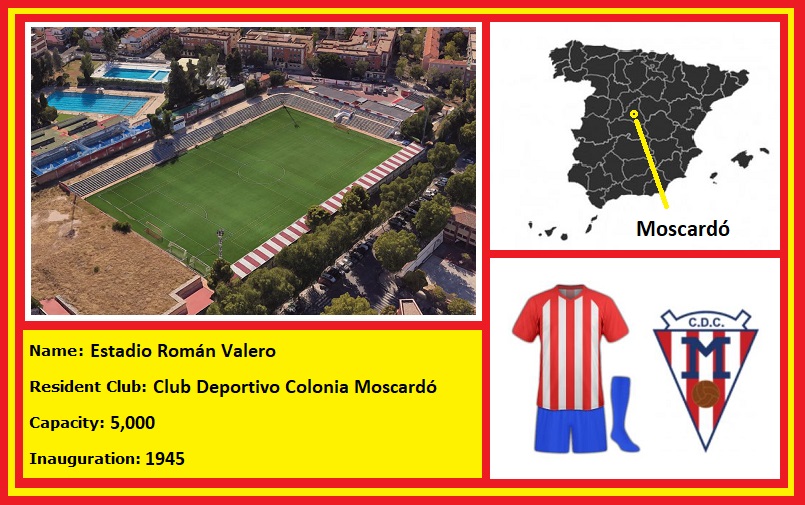
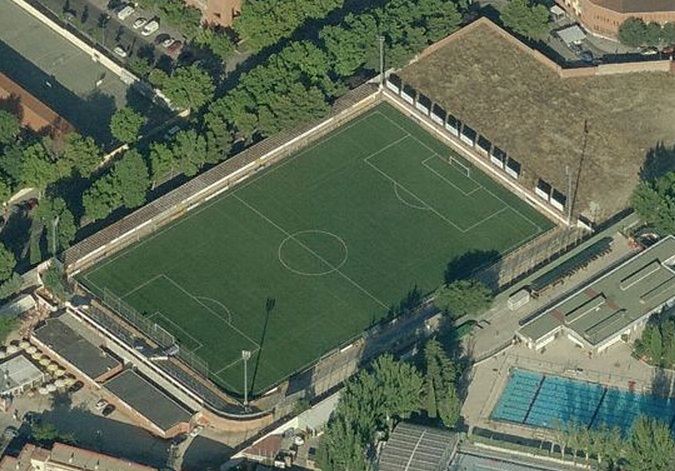
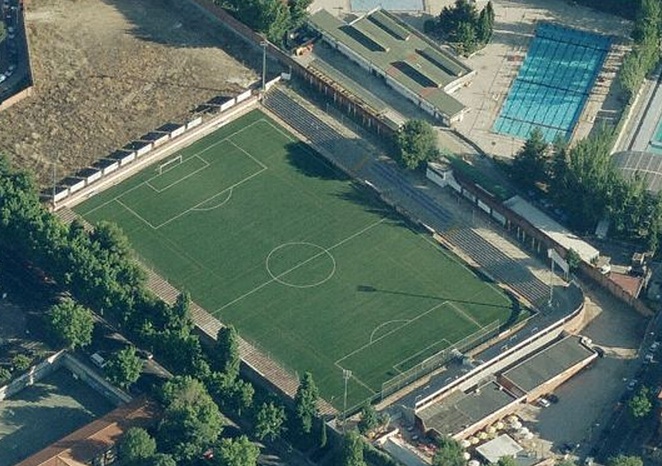
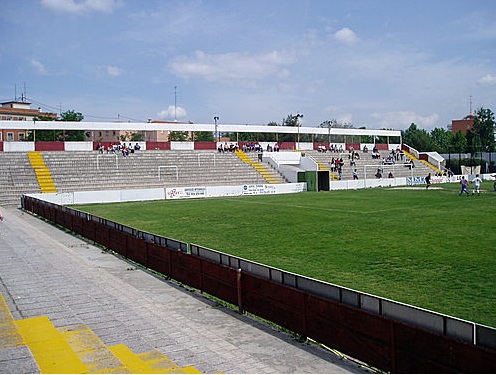
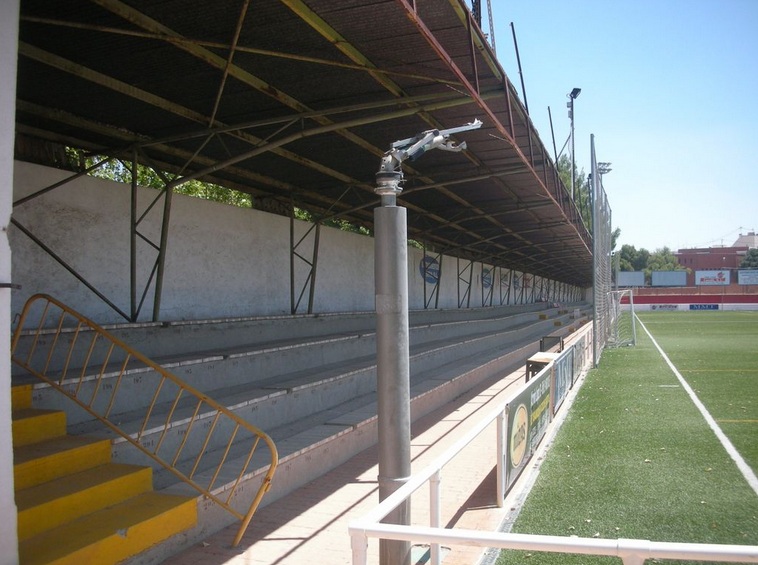
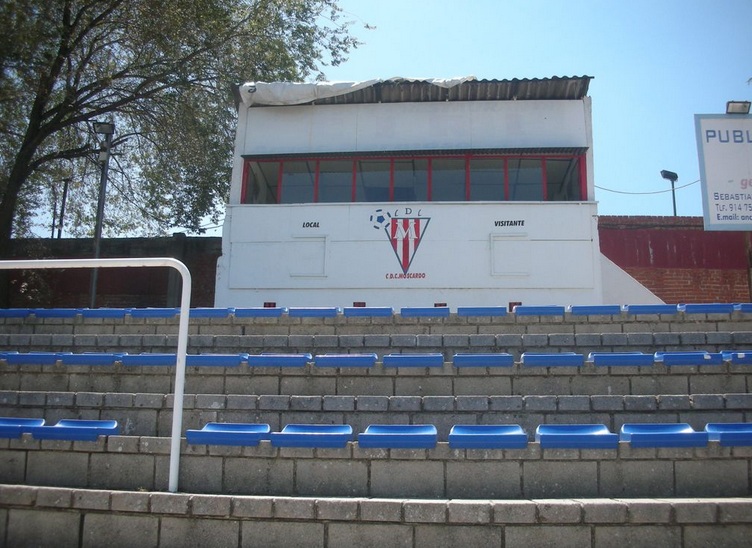
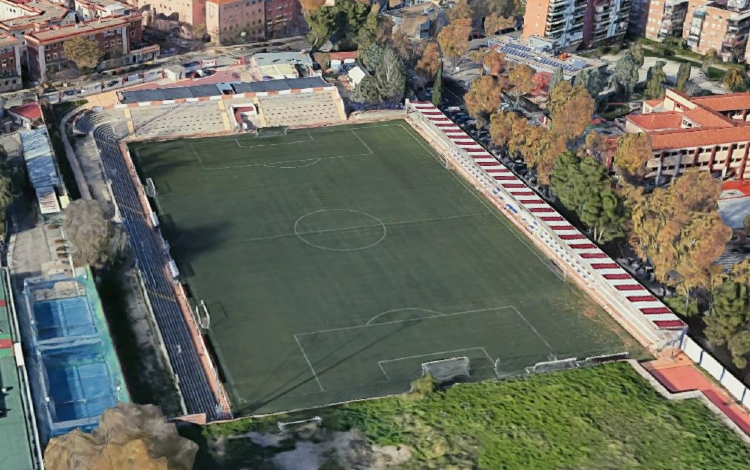
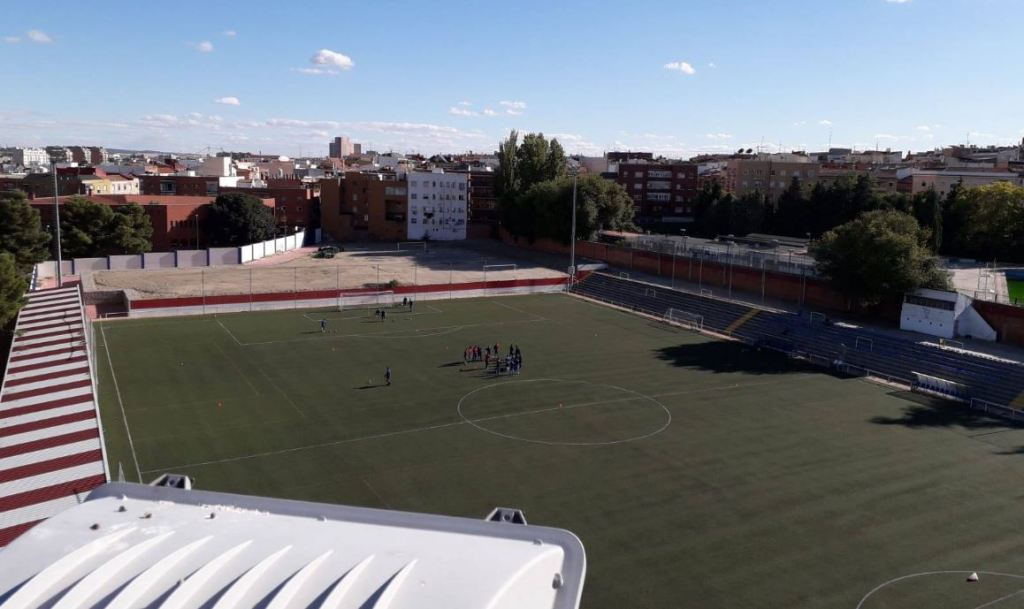
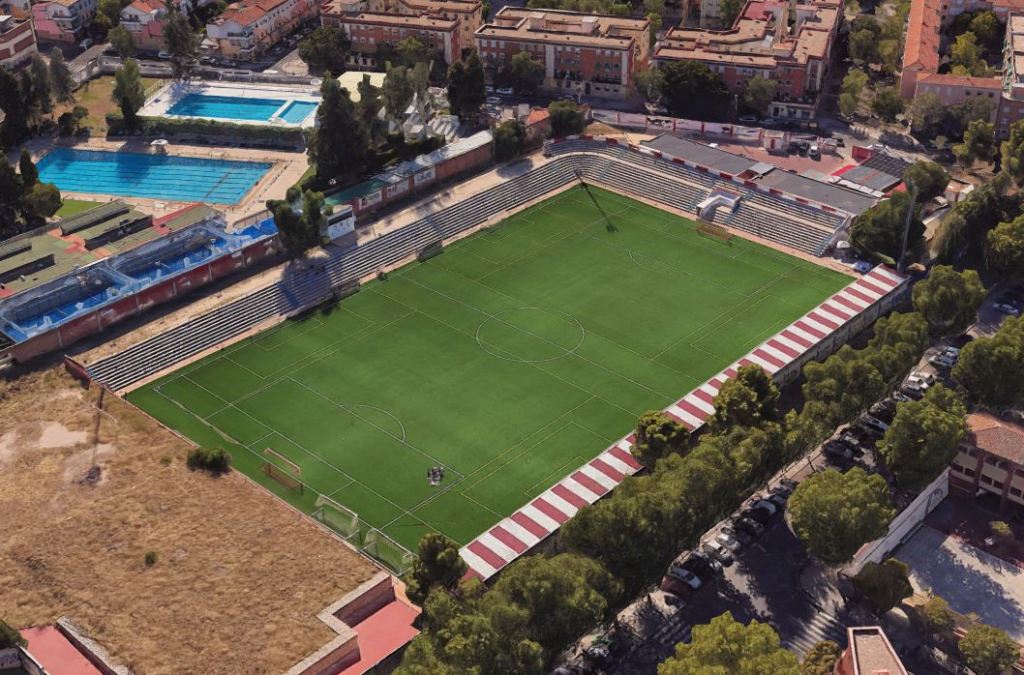
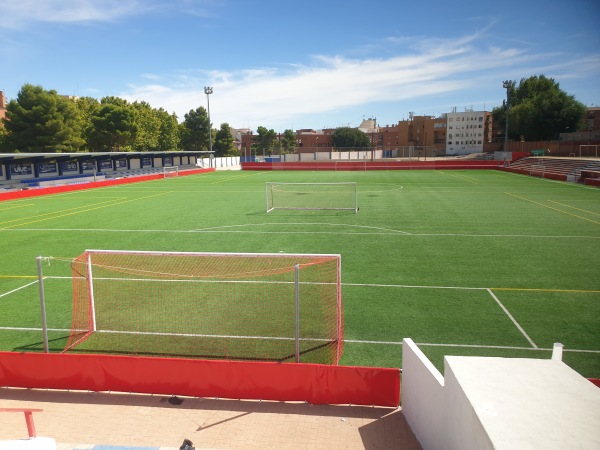
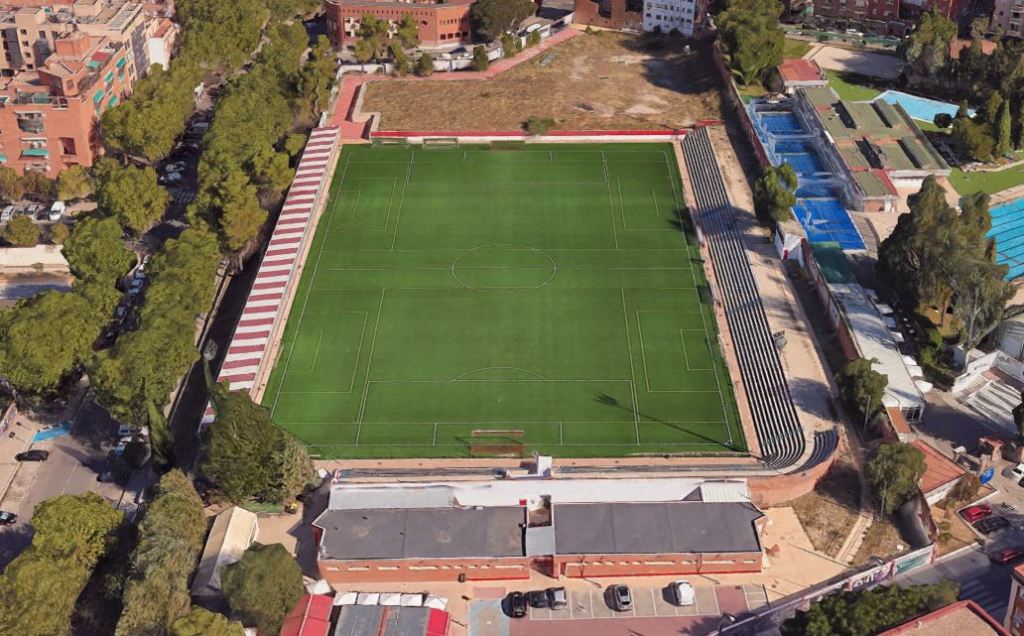
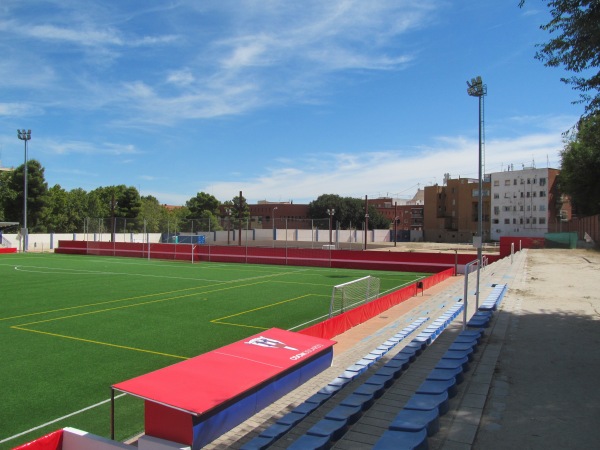
The Estadio Román Valero lies just south of the Rio Manzanarés and is adjacent to Usera metro station. The main gates lead into the ground from behind the northern goal which has sizeable terracing that sweeps round to the west side of the stadium. At the rear of the terracing on this open side stands the press box. Bolted to the terrace in front are a couple of hundred blue plastic bucket seats. The east side of the enclosure has shallower terracing, although this affords shelter from the Madrid heat in the shape of a pitch length cover. This is made up of cantilever struts bolted to the boundary wall, with some corrugated sheets slung over the top. This area was seated in 2018. The southern end is undeveloped, but this was not always the case. During the stadium’s development in the late 1960s, the open terrace extended around to the south side, taking the capacity to 12,000, but this area of the terrace fell into disrepair and was demolished in 2003. The first grass pitch was installed during the 1980s, but this was replaced in 2007 with a 3G artificial surface. CDC Moscardó played the 2016-17 season at the Estadio Ernesto Cotorruelo in Carabanchel, whilst the municipality refurbished the Román Valero and installed a new artificial surface. The current capacity stands at 5,000.
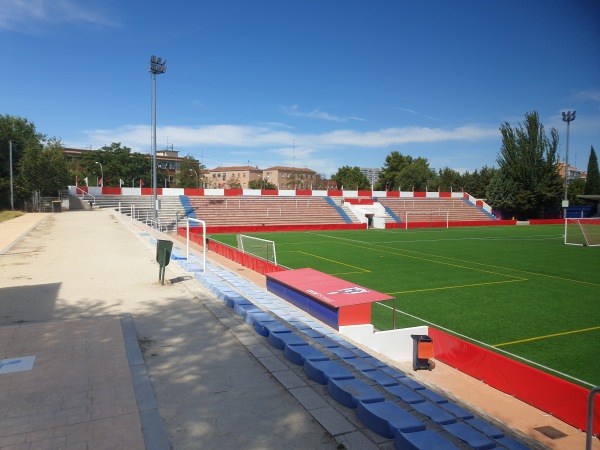
The arrival of the 2020s coincided with an upturn in CDC Moscardó’s fortunes. Two rapid promotions saw the club rise from the Regional Preferente to the Segunda Federación in the space of two seasons. As for the Estadio Román Valero, its 2017 refurbishment has certainly breathed life into this community enclosure. It’s shame that the big names of Spanish football rarely, if ever pay a visit. It’s not helped by the fact that CDC Moscardó haven’t qualified for the Copa Del Rey for nearly three decades. That’s not to say that big names haven’t graced the pitch at the stadium. During the 1980s the Román Valero regularly held concerts during the close season. The Police, Dire Straits, Iron Maiden, Black Sabbath, The Cure and Def Leppard all played live concerts. Bob Marley and Santana also played here, whilst Lou Reid’s set back in June 1980 lasted just 28 minutes, before he walked from the stage in protest at the rowdy crowd. Here’s hoping that today’s locals can recreate some of that passion when CDC Moscardó are the main act at the Román Valero.
Many thanks to Peter Miles for his photographs and his original article on the Estadio Román Valero, which appeared on an earlier version of this site in 2011.






 Estadios de España