
The city of Motril, located on the coastal plain in the province of Granada, has a rich history shaped by various civilizations. Originally inhabited during prehistoric times, it later flourished under Roman rule. However, Its most significant development came during the Moorish period, when it became a center for agriculture, particularly sugarcane cultivation. The city was captured in 1489 during the Reconquista, but retained its sugar industry, which would drive its economic growth over the next 450 years. The early 20th Century saw the decline of the city’s export of sugar, but an import from Britain was about to shape Motril’s sporting future.
As was the case with many Spanish ports, it was British sailors who introduced football to the citizens of Motril. In 1907, the unlikely named Sexi Foot-ball Club was formed, but more often than not, matches were informal, internal club affairs, rather than playing opposition from neighbouring towns. This arrangement continued with other local clubs until the formation of Athletic Club de Motril in 1923. The club was fortunate enough to have access to a basic field called the Campo de La Fundición and its presence in the city, along with friendly matches against more established clubs in the region, led to a brief surge in interest with around half a dozen clubs forming over the next couple of years. However, by 1931, the enthusiasm had evaporated and the clubs had disappeared. The void was filled by a new club, Sociedad Deportiva Athlétic Motril. Within a year, the club had joined the local federación and moved to a new municipal enclosure. The Campo del Majuelo was situated on the eastern edge of the city and staged its first match on 15 October 1932, which Córdoba Sporting Club won by two goals to nil. Regrettably, any momentum that SD Athlétic Motril managed to build in those early years evaporated with the arrival of the Civil War.

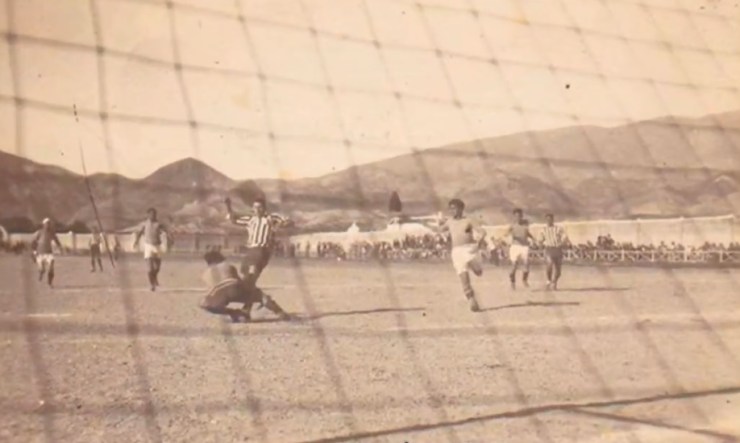
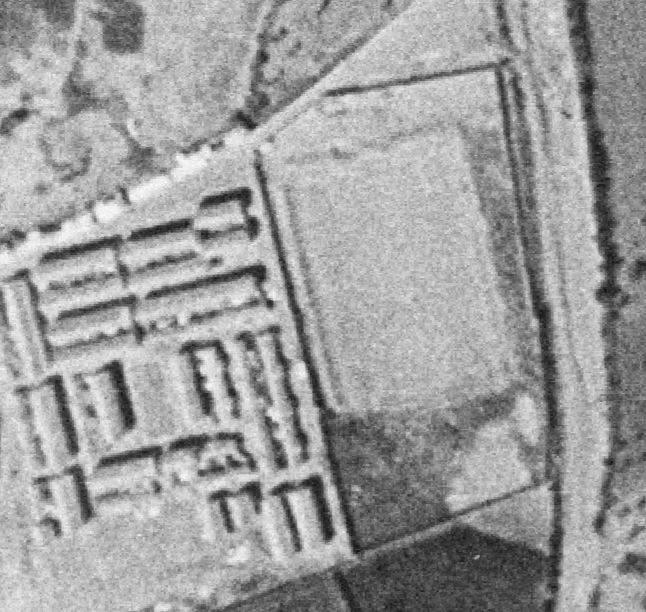
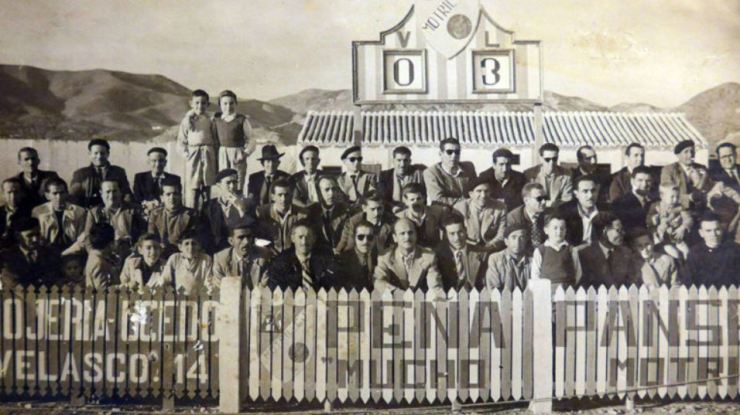

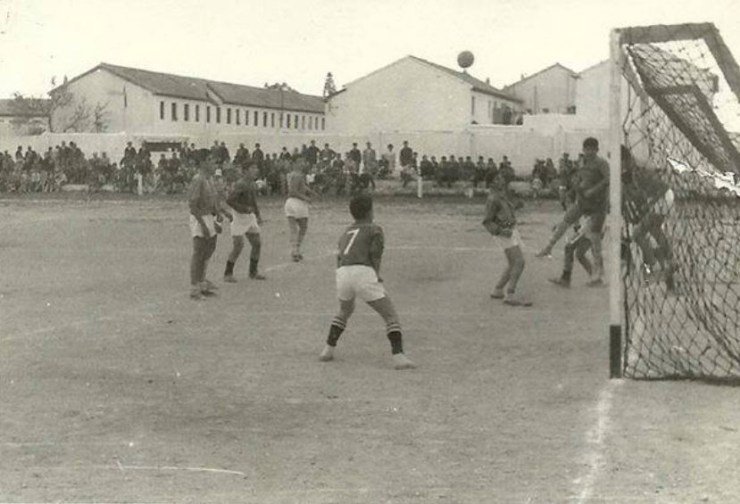
After the conflict, sporting activities were delayed, but in 1941 the Campo del Majuelo fell under the administration of the National Youth Front, who set up Frente de Juventudes Motril, an amateur youth team. With the availability of experienced players and the money to fund them scarce, it wasn’t until 1950 that the next serious attempt was made to form a senior team that could represent the city at a regional level. Step forward Motril Club de Fútbol, who took up residency at the Campo del Majuelo and joined the regional third division for the 1950-51 season. Motril CF seemed to adopt a “Live Fast – Die Young” approach, reaching the national Tercera by 1954, finishing a creditable sixth in their second season, but withdrawing from the competition halfway through the 1956-57 season and filing for bankruptcy in January 1957. The mantle of senior club fell on Club Deportivo Clarin, an amateur side founded in 1956, who over the course of the next eight seasons climbed the divisions to eventually compete in the play-offs for the Tercera in 1963, before folding a year later. It would take the building of a new stadium to get Motril’s footballing matters back on track.
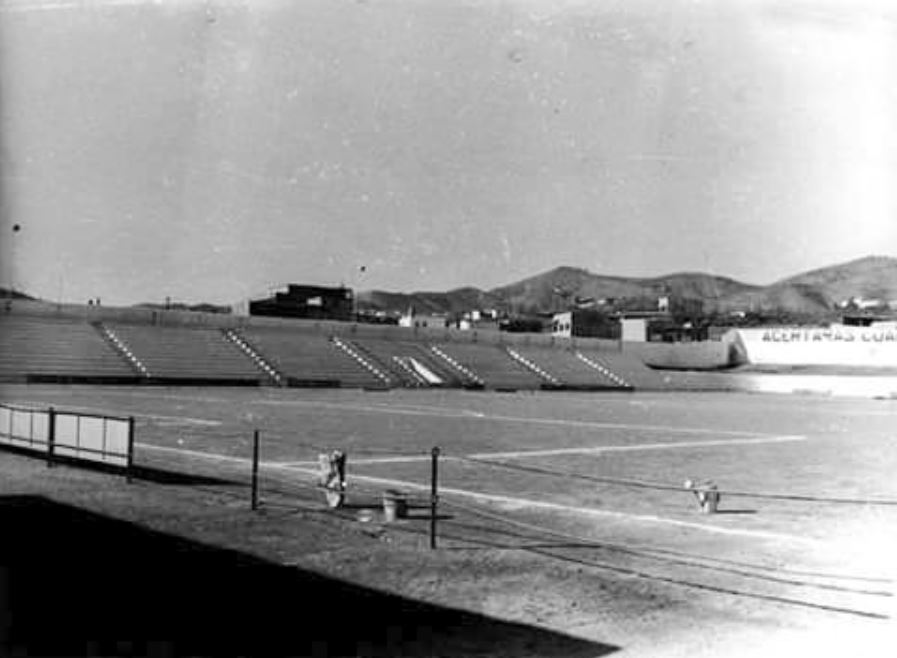
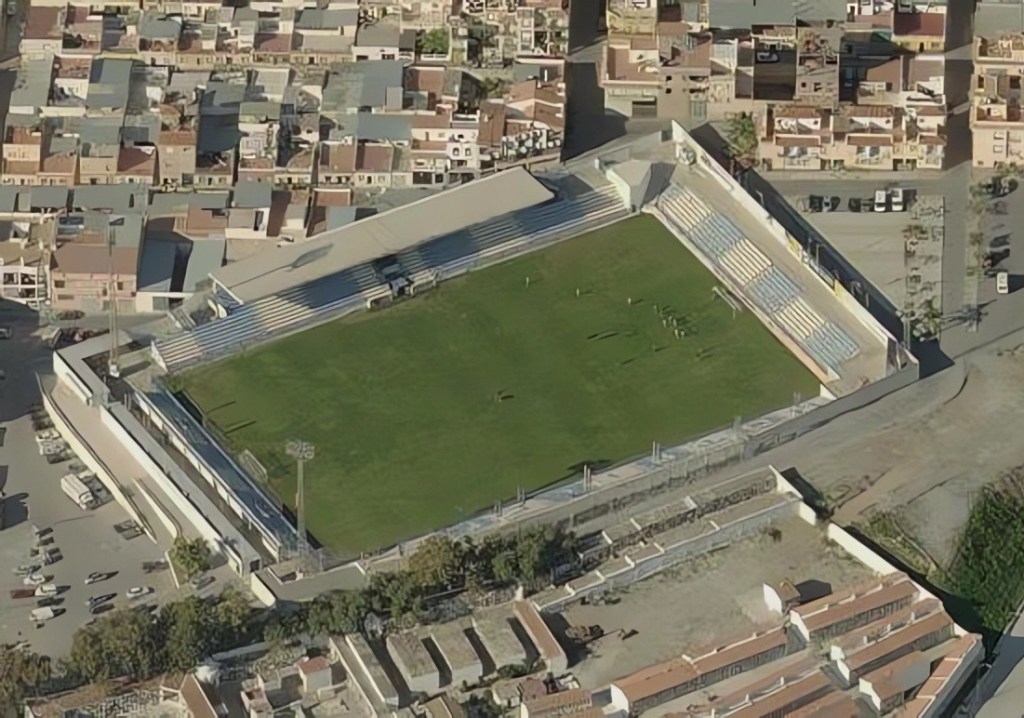
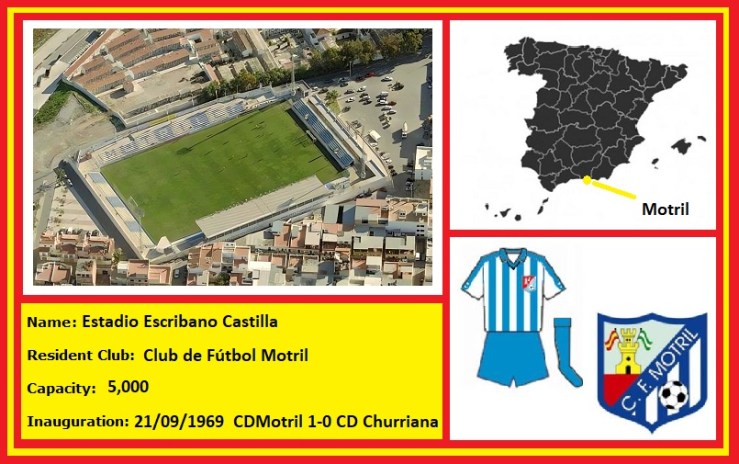
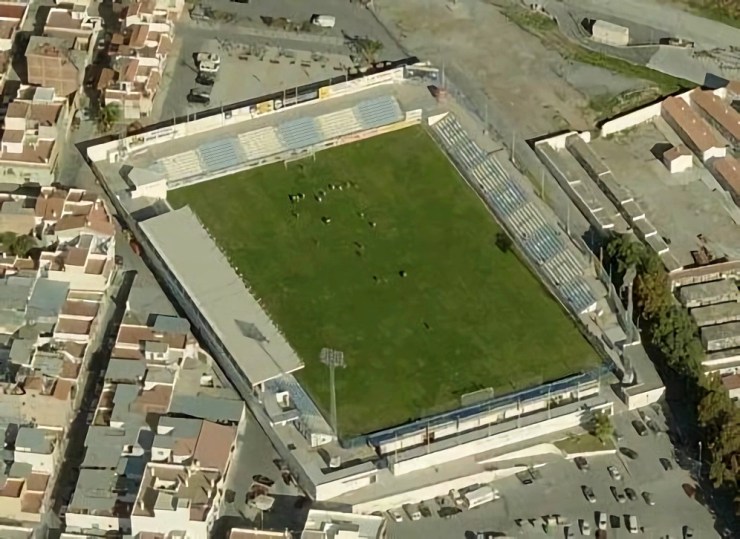
In the spring of 1969, the land on which the outdated Campo del Majuelo stood was earmarked for new housing. The local municipality began work on a new stadium on open land to the northeast of the city, next the the cemetery. The new enclosure bore the name of the city’s mayor, Juan Antonio Escribano Castilla, and whilst it was an improvement on its predecessor, it was still rather rudimentary. Upon opening, it featured a 70 metre long, open terrace on the west side of the ground, whilst the other three sides were raised, hard standing. Changing facilities were located in the southeastern corner of the ground, whilst four floodlight poles illuminated a dirt/sand pitch. The building of the stadium coincided with the formation of a new club, Club Deportivo Motril, who were immediately registered with the Federación Andaluza and played the inaugural match at their new stadium on 21 September 1969, earning a 1-0 victory over CD Churriana in a Regional Preferente league fixture. On 16 October 1969, CD Motril played Granada CF in a match to mark the official opening of the stadium.


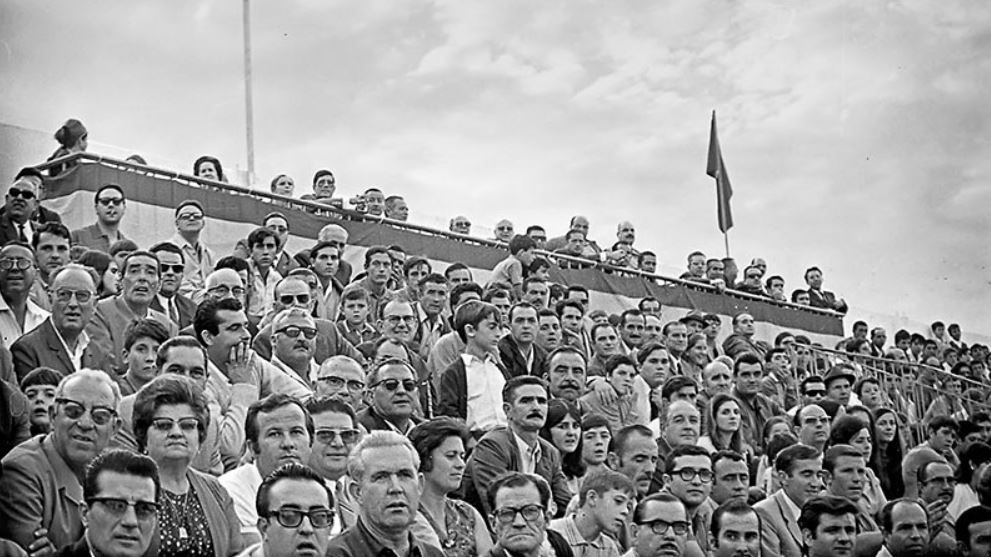
If CD Motril had hoped that their rise would be as meteoric as their 1950’s predecessor Motril CF, they were sadly mistaken. Their debut season saw the club finish in tenth, whilst the 1970-71 campaign resulted in a lowly 15th position. There followed three seasons as runners-up, which all culminated in play-off defeats, before a first title was achieved at the end of the 1974-75 season, before defeats to Jerez Industrial & Eibar ended their promotion hopes. In fact, CD Motril only gained promotion to the Tercera following the RFEF’s decision to introduce Segunda B as the new third tier at the end of the 1976-77 season. The knock on effect of multiple Andalucian clubs being elevated to the new division, allowed the club to gain promotion to the Tercera and avoid any further play-off heartache. CD Motril would spend a total of seven seasons in the Tercera, with a high-water mark of sixth achieved in 1979-80. There followed four seasons of diminishing returns and a rock-bottom finish of 18th in 1983-84, when only four matches ended in victory. On 1 July 1984, CD Motril was wound up with debts of 5 million pesetas.

The next club to emerge from the city was to prove to be the most successful. Founded on the very day that CD Motril was dissolved, Motril Club de Fútbol occupied the place in the Regional Preferente that its predecessor would have occupied if it had not folded. The club just missed out on promotion in its first three seasons, before earning a place in the Tercera in 1987-88. Life in the fourth tier started steadily, with four consecutive top ten finishes, before a disastrous 1993-94 campaign, where only 2 matches were won, saw Motril CF relegated back to the Regional Preferente. Rather than win promotion back to the Tercera, Motril CF benefited from some rejigging and resignations to gain a place back at the higher level for the 1995-96 campaign. An impressive fourth placed finish earned a spot in the play-off group for Segunda B, but they finished third, behind Ciudad Real and Moralo CP. A remodeled and reinforced squad tackled the 1996-97 campaign with aplomb, winning the title and in a tight play-off group, edged out CD Torrijos to gain promotion to Segunda B. The step up in quality would require investment in the squad and the very basic Estadio Escribano Castilla.
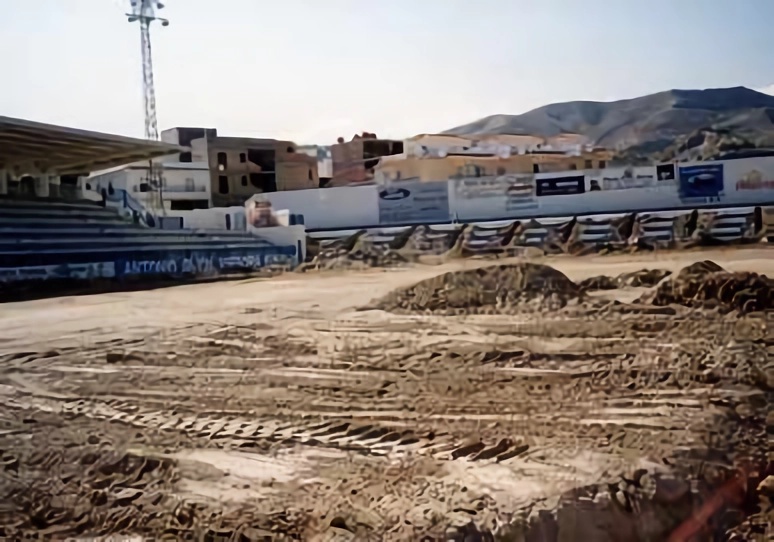
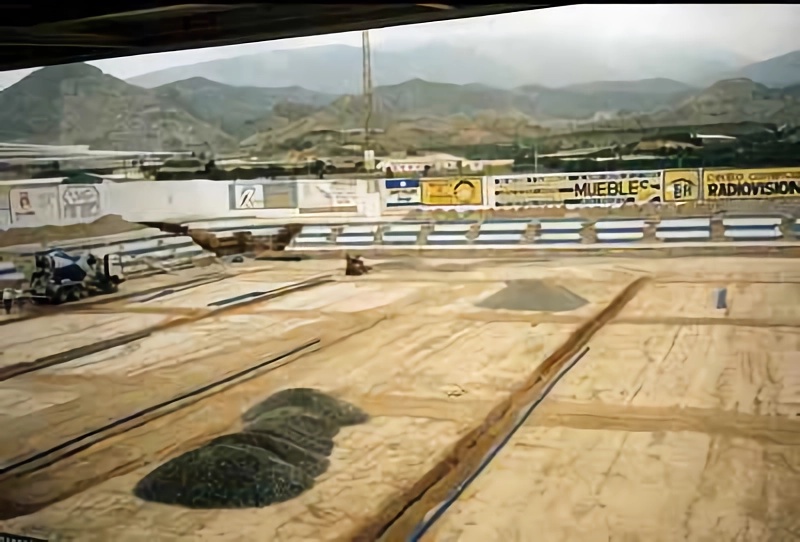
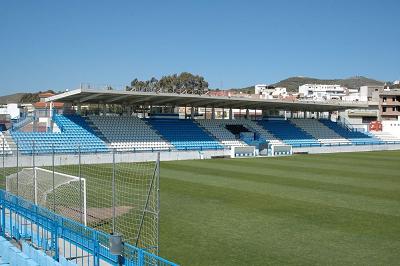
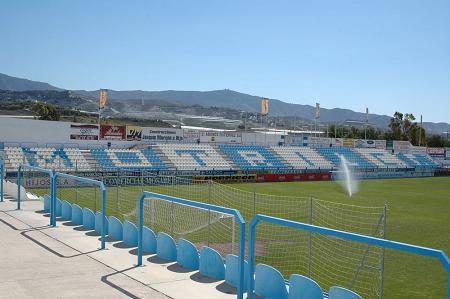
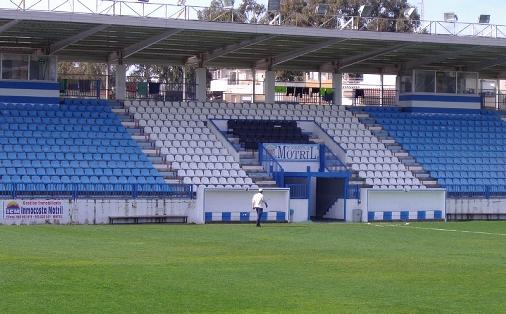
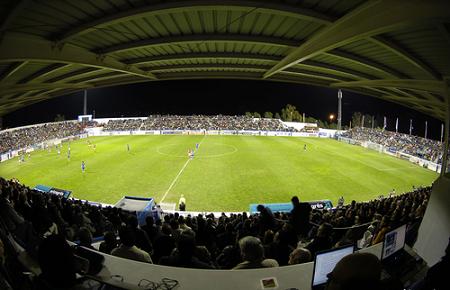
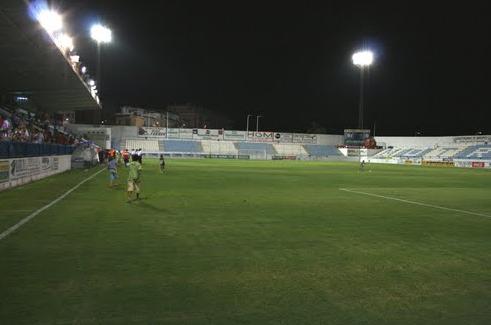
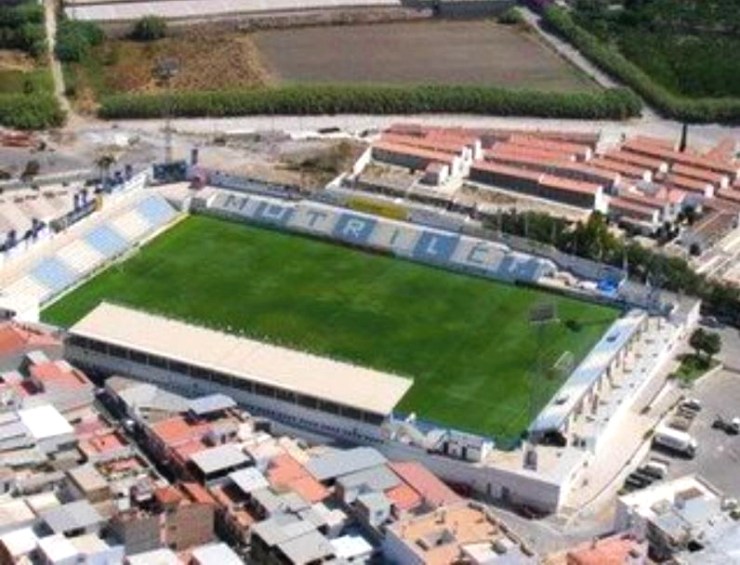
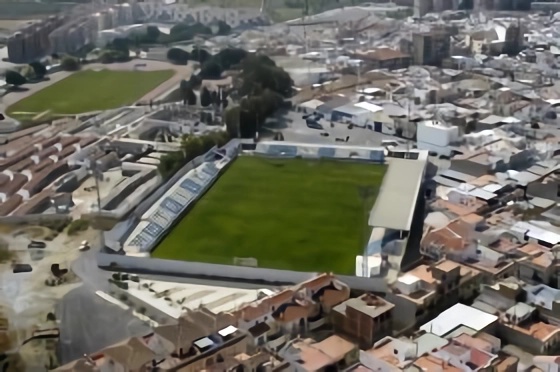
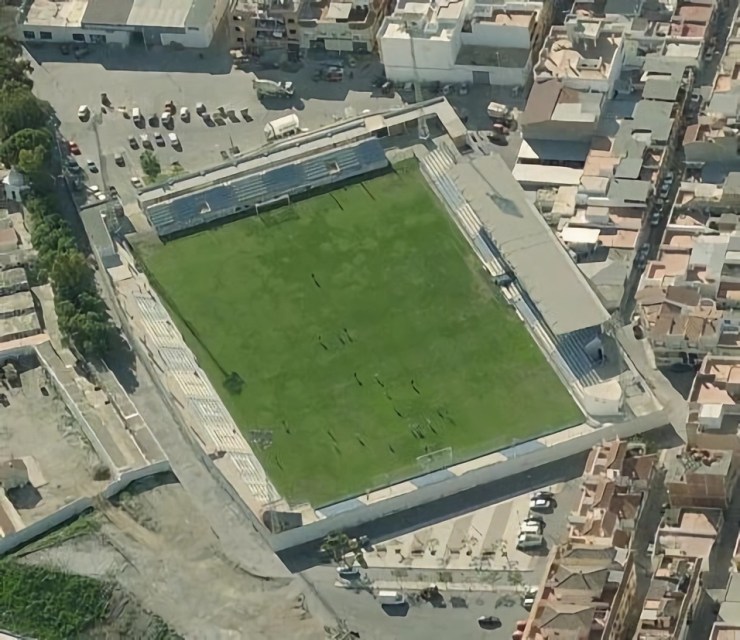
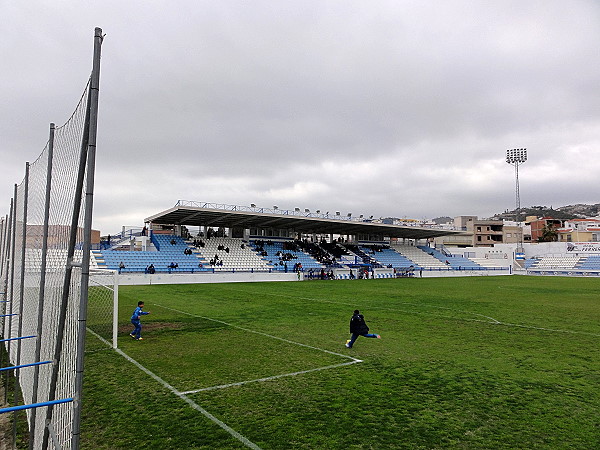
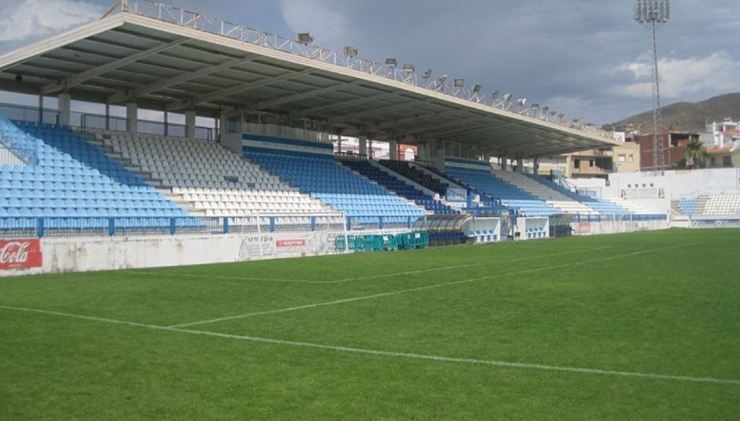
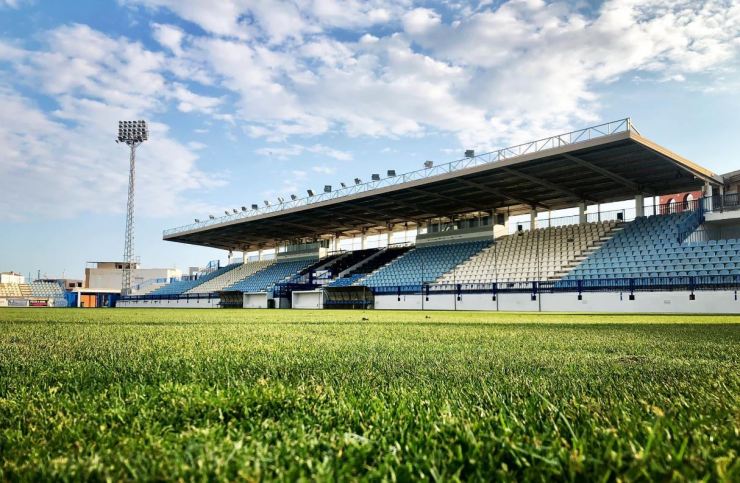
Work had already commenced on the complete rebuilding of the Estadio Escribano Castilla in 1996, when the open terrace on the west side of the ground was replaced with a single deck of seating along the length of the pitch. The central area of 65 metres was deeper than the wings and covered by a cantilevered roof. At the rear of the seating sat two media booths, whilst the directors/VIP seating was perched above the players tunnel. The stand had a capacity of 2000, and was bedecked in bands of blue and white seats. Open seated areas were added to the northern end and eastern side of the ground, making good use of the slightly sloping hard-standing that dated from when the enclosure opened in 1969. The promotion season of 1996-97 saw home matches placed on the original dirt/sand pitch, however new drainage was laid along with the city’s first grass surface in the summer of 1997. The old changing facilities were also replaced with more open seating built in its place at the southern end of the stadium. The rebuild gave the Estadio Escribano Castilla an all-seated capacity of 5,000. The official re-inauguration of the stadium took place on 9 October 1997, when Real Madrid were the opposition in a friendly that saw Alfredo Di Stéfano take the honorary kick-off.

Motril CF spent a total of six successive seasons in Segunda B, the first of which required a victory in the relegation play-offs against CD Mensajero to avoid an immediate return to the Tercera. There followed three seasons of mid-table finishes, before a stellar 2001-02 season saw the club win Group 4 of Segunda B and qualify for the play-offs for promotion to the second tier. Drawn in a tough play-off group that featured L’Hospitalet, Cultural Leonesa and Getafe CF, Motril finished second to the team from Madrid’s suburbs. The gamble of investing in the squad had fallen just short. To compound matters, the decision in October 1997 to make the switch to a Sports Limited Company, or S.A.D. was looking at best premature, and as time would prove, ultimately costly. Just as quickly as Motril CF’s star had risen, it fell to earth with a crash, just one short season later. A meager four wins and ten draws condemned the team to last place and it’s adventure in Segunda B was over. Over the next decade, the club made a number of valiant attempts to regain a place in Segunda B, reaching the promotion play-offs on no fewer than five occasions. The step up eluded them, and with ever increasing debts, time was called on the club on 31 July 2012.
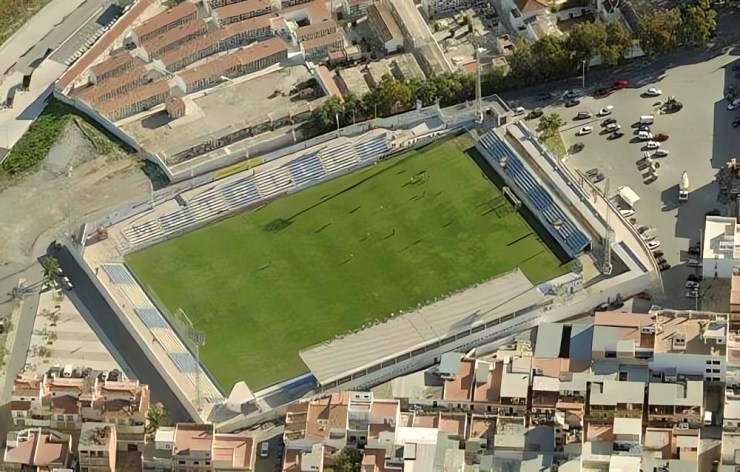
Whilst second division football had slipped from the grasp of Motril CF, the Estadio Escribano Castilla did get the chance to play host in La Segunda for a whole season in 2007-08. This bizarre story starts off some 330km east of Motril, in Murcia. Carlos Marsá Valdovinos, then president of CP Granada 74, bought the financially bereft La Segunda club Ciudad de Murcia, for €27m and moved it lock, stock and barrel to Granada. The club was renamed Granada 74 Club de Fútbol, and with the players that were still contracted to Ciudad de Murcia, Marsá Valdovinos had a ready-made second division team, the core of which had just finished fourth in La Segunda. The original first team of CP Granada 74 would become the reserve side and play in the Tercera. However, their scruffy little ground in the suburb of Biero was wholly inadequate to stage second tier football. Granada’s main stadium, the Estadio Nuevo Los Cármenes, already had 2 tenants, CF Granada and Granada Atletico CF, and the local municipality was not about to evict either. With time running out before the start of the season, Marsá Valdovinos struck a deal to play 40 miles south at the Estadio Escribano Castilla. As you can imagine, things did not go well for Granada 74 in Motril. The average home attendance was 2,700, 500 less than Ciudad de Murcia was getting in their final season in Murcia. The season ended in relegation to Segunda B, and when a second disastrous season followed in 2008-09, the club folded.
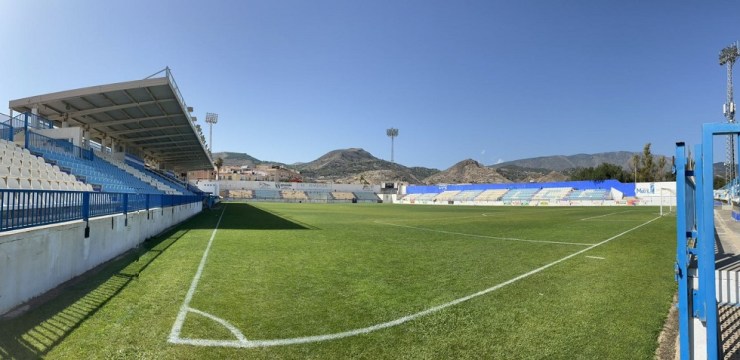
Unlike its immediate predecessor, the city of Motril’s current senior club, Club de Fútbol Motril, did not get the benefit of taking over the league place vacated by their recently departed ancestor. However, CF Motril made light of starting the 2012-13 season in the Segunda Provincial de Granada, earning four consecutive promotions to earn a place in the Tercera for the start of the 2016-17 season. Progress slowed a little, with three top six finishes, before gaining a tilt at promotion to Segunda B when reaching the play-offs in the COVID-curtailed season of 2019-20. The truncated format saw CF Motril paired with Club Polideportivo El Ejido in a one-off match at the Estadio Municipal de Marbella, which El Ejido won 3-2. Since the restructuring of the Spanish Football Pyramid in 2021, CF Motril have run up a series of top 10 finishes in the Tercera Federación. Since opening in 1969, the Estadio Escribano Castilla has staged all the dramas, the thrillers and even the farces that seem to have encircled motrileño football. It still looks remarkably fresh and well prepared to host the next club to make a tilt at the big time.




 Estadios de España