
Article updated on: 14/08/2025
Futbol Club Andorra was founded in 1940 in the Principality of Andorra, a small sovereign state sandwiched between France & Spain in the eastern Pyrenees. Matches were inter-club affairs and were played from the outset at the Camp d’Esports de les Valls, which was essentially an open field between Andorra la Vella and Les Escaldes. In 1942, Futbol Club Encamp was formed, and the two clubs met for the first time in September of that year. Restricted to friendlies against a small number of opponents and no credible league structure, FC Andorra joined the Catalan federation in 1948. However, in doing so, they fell under the regulations of the RFEF, which at the time banned non-Spanish club names; therefore, the club changed its name to Club de Fútbol Andorra and adopted its characteristic tricolour shirts.
For the next 15 seasons, FC Andorra played in the lowest reaches of the Catalan regional leagues, competing against clubs from small towns in the north of the Province of Lleida. In 1963, the club won promotion to the Regional Second division, and by the end of the decade, had reached the Regional Preferente, which at that point was the fourth tier. The club continued to hold its own at this level throughout the 1970s and at the turn of the decade, won its first league title, pipping CF Reus by a point and in doing so, earning promotion to Segunda B. FC Andorra would play 17 of the next 18 seasons in Segunda B, dropping back to the Tercera for a season-long spell in 1986-87. They had moved from their Camp d’Esports de les Valls home in 1983 to the Estadi Comunal d’Aixovall, which was around 4 miles south of the capital. The majority of FC Andorra’s 17 seasons in Segunda B were safe and unspectacular; however, the club came close to promotion to La Segunda in the late 1980s. The runners-up position (to Palamos) was achieved in the 1988-89 season, and a year later, the club finished fourth, behind eventual champions Lleida. Unfortunately, these were the last two seasons when only the champion of each regional division was promoted. The following season saw the play-offs introduced for the top four sides in each group; however, FC Andorra had peaked and never came close to making the end-of-season mix-up.
FC Andorra’s extended run in Segunda B came to an end 1998, when the club finished bottom of their division, some 20 points from safety. Relegation from the Tercera followed a year later and by the start of the 2004-05 season, the club was playing in the third division of the Catalan regional leagues, or tier 7. After a two-decade sabbatical in the Catalan regional leagues, FC Andorra started to rise again. This was primarily due to the investment of Gerard Piqué’s Kosmos Holding Group in December 2018. Busy transfer activity in January 2019 was followed by a 22-match unbeaten run that earned promotion back to Group V of the Tercera. However, following CF Reus Deportiu’s failure to meet the necessary financial requirements, the RFEF promoted FC Andorra to Segunda B in July 2019 after they paid a bond of €452,000, which was the equivalent of CF Reus’s debt.
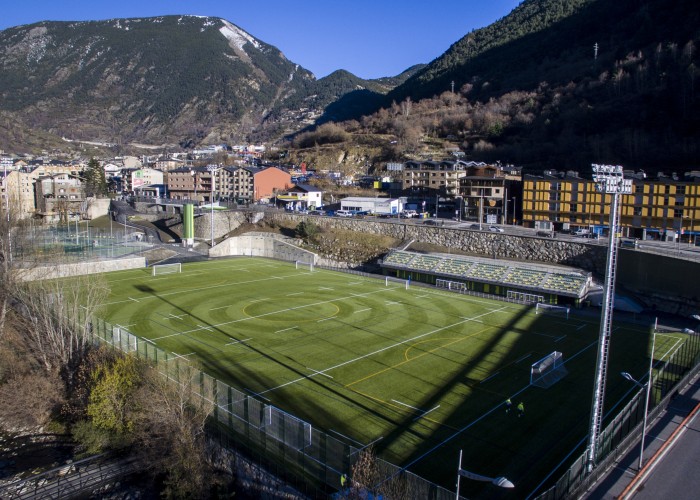
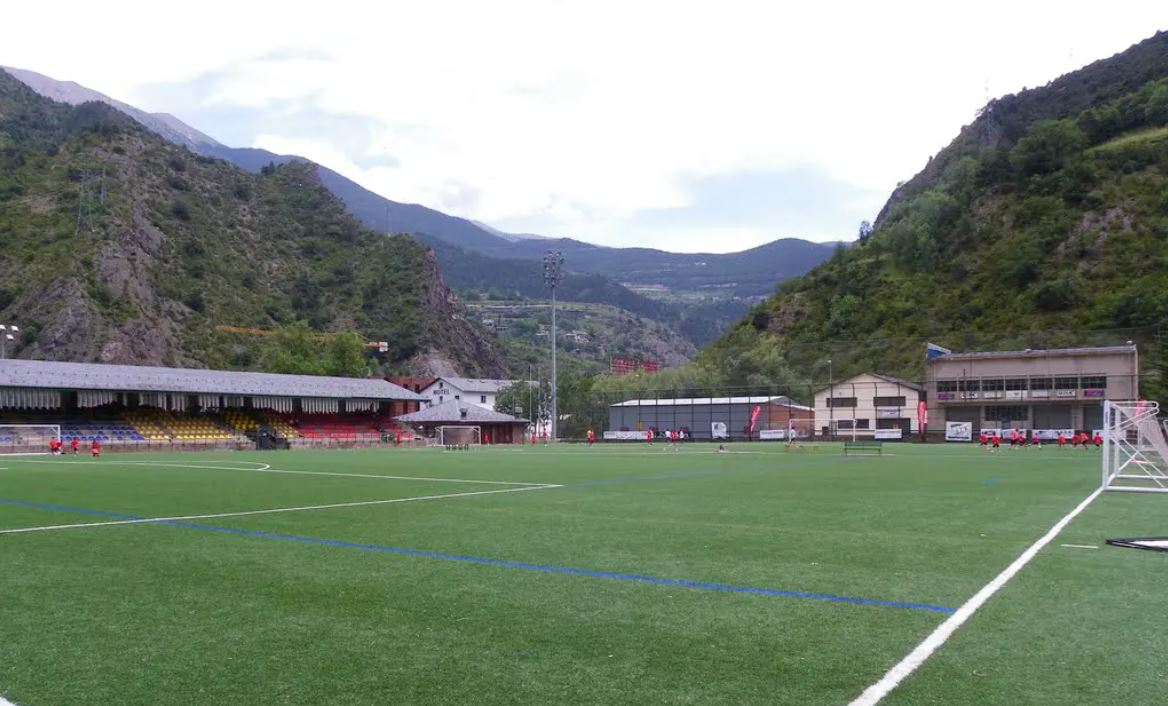
Despite its decline in status, FC Andorra continued to play at the Camp d’Esports d’Aixovall up until its closure in 2015. They then played for the first two months of the 2015-16 season at the recently developed Estadi Nacional, which had been built on the site of the old Camp d’Esports del M.I. Consell General and opened in September 2014. After two months at the Estadi Nacional. FC Andorra moved a kilometre south to the Camp d’Esports de la Borda Mateu, which is the Andorran FA’s training centre. Its covered spectator facilities consisted of 120 seats, a sad reflection of FC Andorra’s status at the time. Following investment from the Kosmos Holding Group, FC Andorra upped sticks in January 2019 to play at the Camp de Fútbol de Prada de Moles. Situated in the small village of Encamp, just to the east of Andorra la Vella, it has a seated capacity of 530.
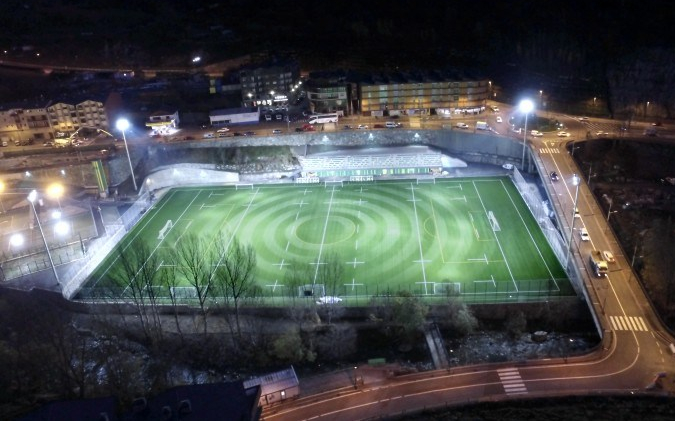
It was to prove to be a short stay at the Camp de Fútbol de Prada de Moles. As FC Andorra’s meteoric rise generated greater interest, the ground’s small capacity and numerous free vantage points meant that a move back to the Estadi Nacional was the only sensible option. However, that was not before promotion was gained in the 2020-21 season, the last under the old Segunda B format. Truncated by the COVID-19 pandemic, FC Andorra finished 3rd in their sub-league and qualified for the play-offs to La Segunda. Although they lost in a playoff with Real Sociedad B, their efforts in the (ir)regular season earned a place in the RFEF’s new Primera División (Third Tier).
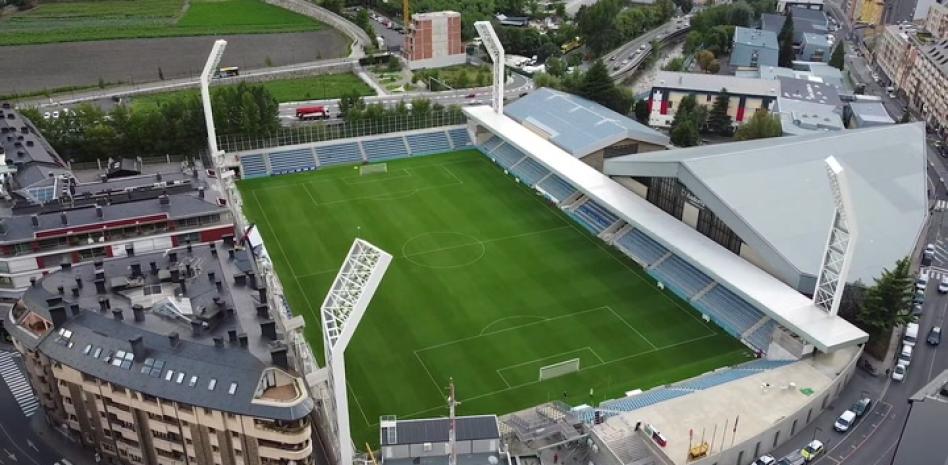
The move back to the Estadi Nacional, coupled with greater investment from the Kosmos Group, saw FC Andorra scale new heights. Playing in the newly formed third tier of professional football, the club won its first national title, capturing the league title in Group Two, losing just two games at the Estadi Nacional. Promotion to La Segunda meant that the artificial surface at the Estadi Nacional had to be replaced, which the club paid for, but it also ensured that they had exclusive use of the surface. This resulted in the national Rugby Team and numerous community activities having to find another venue. FC Andorra’s first season in La Segunda resulted in a seventh-place finish, one place, but 8 points off a play-off position. There was to be no kick-on from their promising start, as the club endured a difficult second season, dropping to the Primera Federación after finishing one off the bottom of the table.
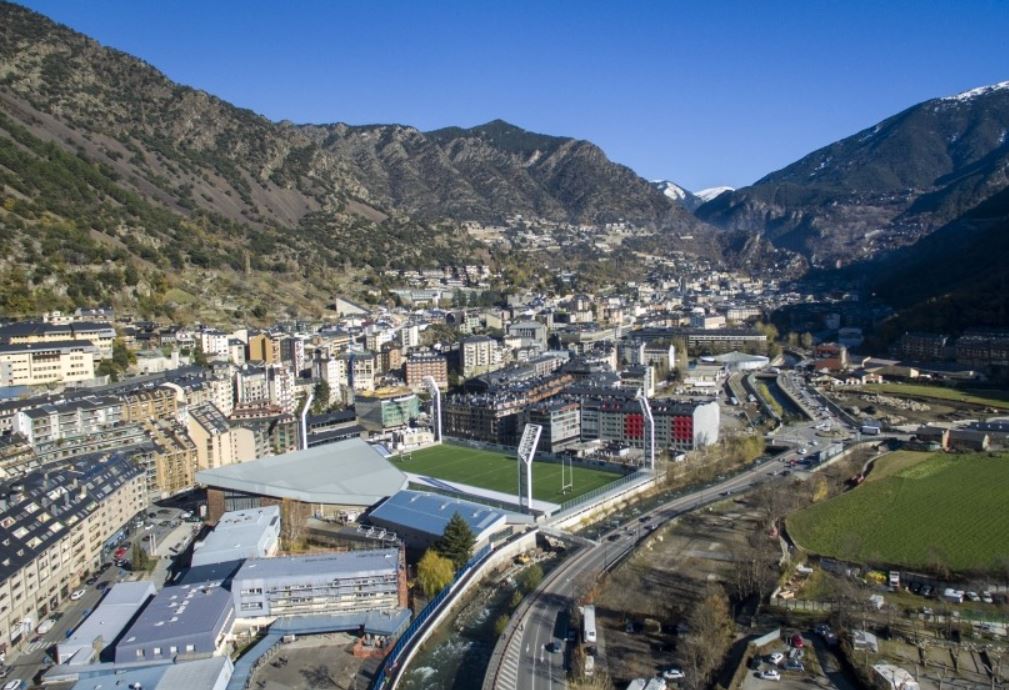
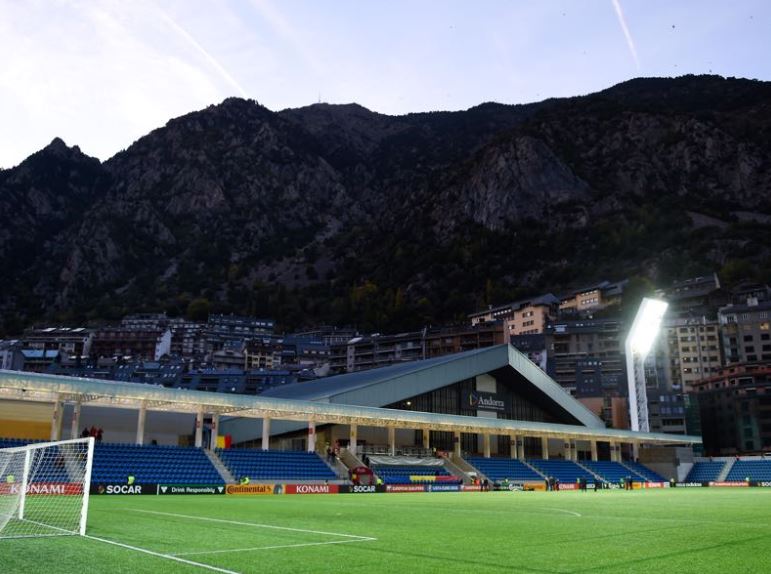
The Estadi Nacional is owned by the Andorran Government, which funded the €5.1m build with the help of a €2m grant from UEFA. Situated 1023m above sea level, Europe’s highest national stadium hosted its first match on 9 September 2014, when the Andorra national team lost 1-2 to Wales. Unlike its location, the stadium’s design is rather featureless. One full-length covered stand runs down the western side of the stadium; there are two uncovered, seated stands at each end and nothing on the eastern side of the ground, apart from a new television gantry (the first burnt down on the eve of Andorra’s match with England in October 2021) and some substitute benches. Whilst four oversized floodlight pylons break the monotony, the most interesting architectural feature on view doesn’t belong to the Estadi Nacional, but the Poliesportiu d’Andorra. The gabled roof of the indoor arena hangs high over the northern end of the main stand, and its 5,000 seats outrank the Estadi Nacional’s capacity of 3,347.

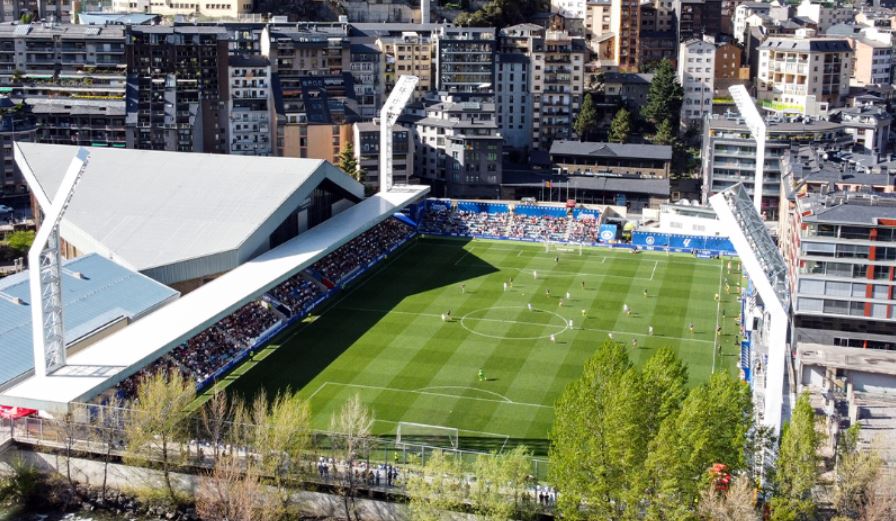
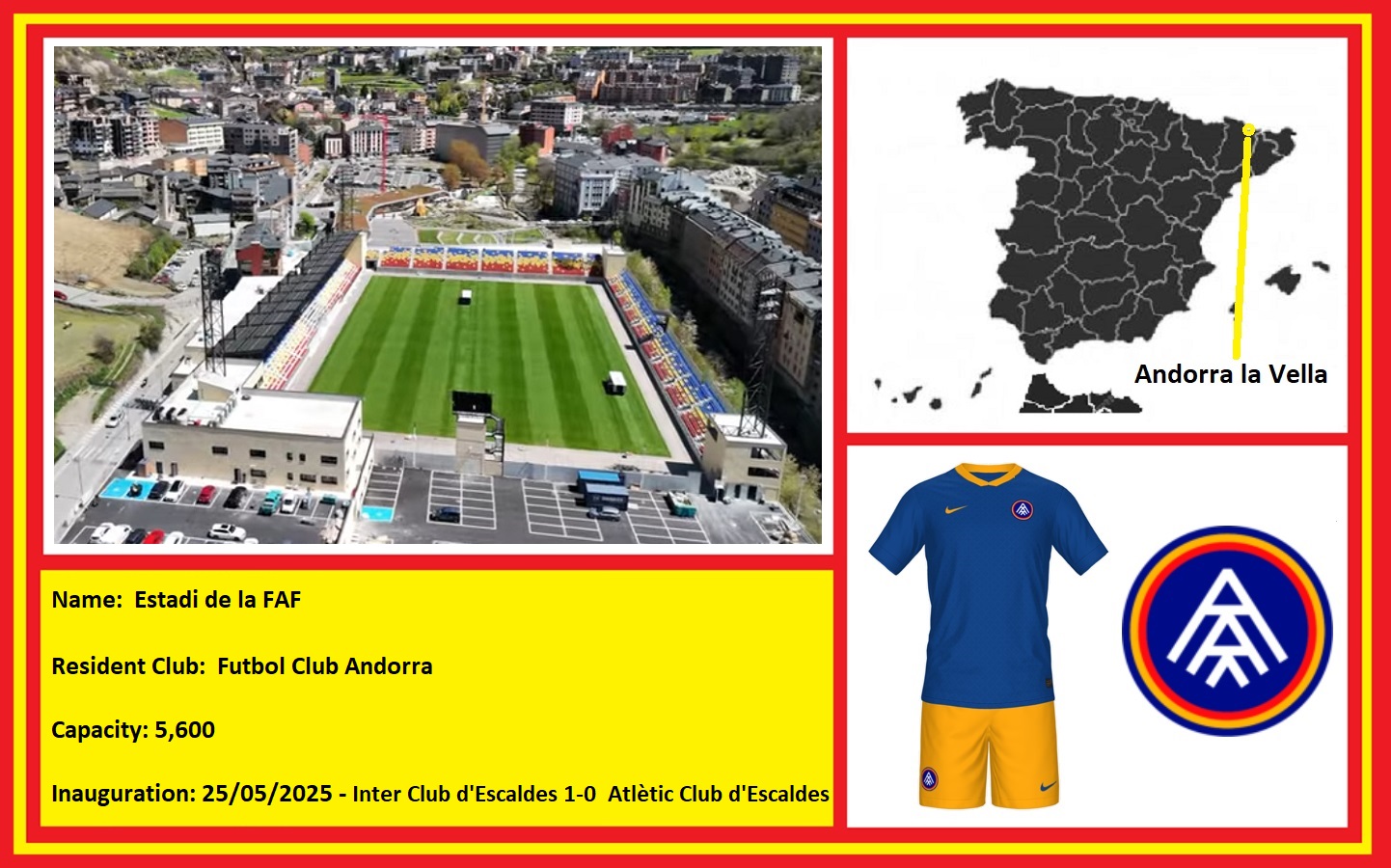
In 2022, plans were announced for a new national stadium, located approximately 400m northeast of FC Andorra’s previous home, the Camp de Fútbol de Prada de Moles. Progress on the €15m stadium was slow, and in the intervening years, despite some posturing from the Kosmos Holding Group, FC Andorra stayed at the Estadi Nacional. The new stadium, named the Estadi de la FAF, finally opened its doors on 25 May 2025, when the final of the Copa Constitució, the national cup competition, was held. Despite Gerard Piqué saying that the club would never play back in Encamp at the new stadium, on 1 June 2025, a crowd of 3,141 watched as FC Andorra beat UD Ibiza 2-0 in the first leg of the promotion playoffs. Promotion back to La Segunda was achieved following a two-legged victory over Ponferradina.
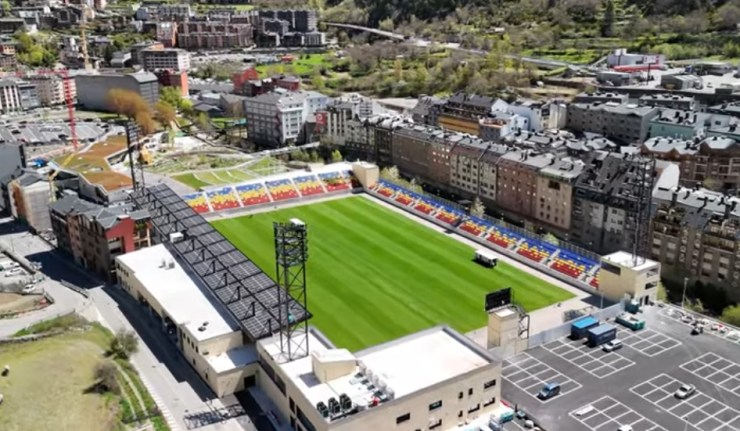
With level ground at a premium in Andorra, the stadium was built on a former campsite, which explains the pitch orientation of west to east. It has a capacity of 5,600, arranged on three banks of tricolour seats. The main stand is on the northern side of the enclosure, where the stadium’s only cover, a full-length cantilever roof, hangs over a narrow upper tier of seats and the larger seating deck below. Changing facilities and the Andorran FA offices are housed at the rear of the stand. Floodlight pylons sit atop four corner blocks, which also house additional office space. The western end of the ground is open, but there is room to allow additional temporary seating. Whether FC Andorra take up permanent residence at the Estadi de la FAF beyond the 2025-26 season remains to be seen, but it looks like the owner’s head has been turned.
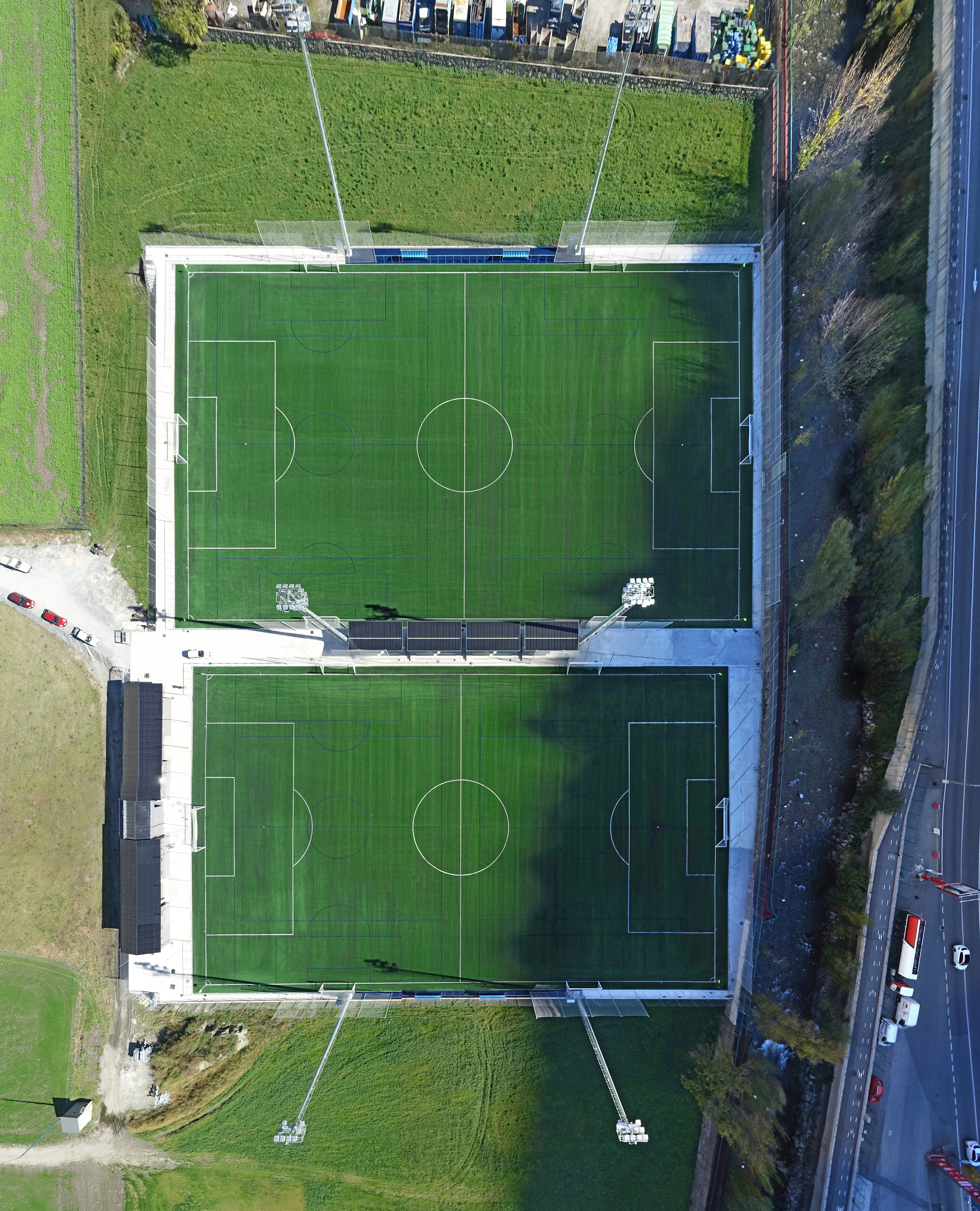
Camp d’Esports de la Borda Mateu 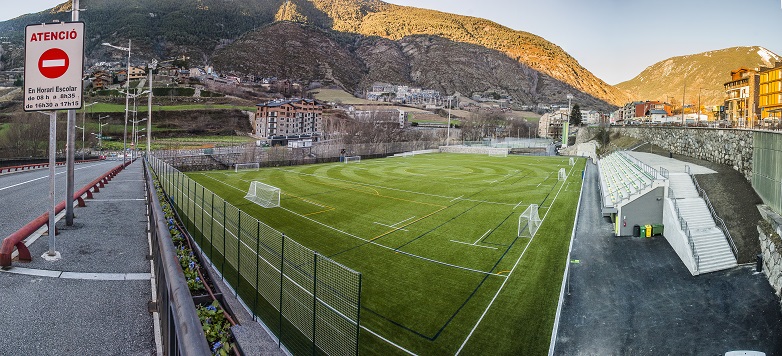
Camp de Fútbol de Prada de Moles 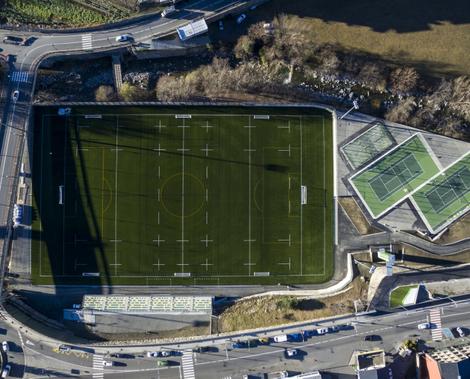
Camp de Fútbol de Prada de Moles 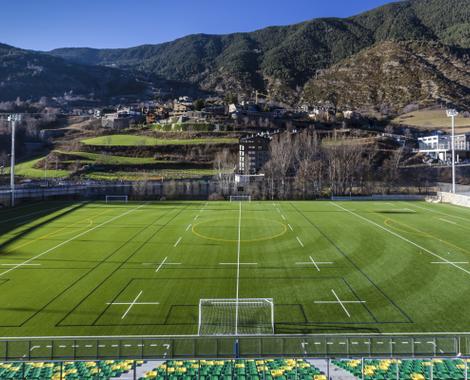
Camp de Fútbol de Prada de Moles 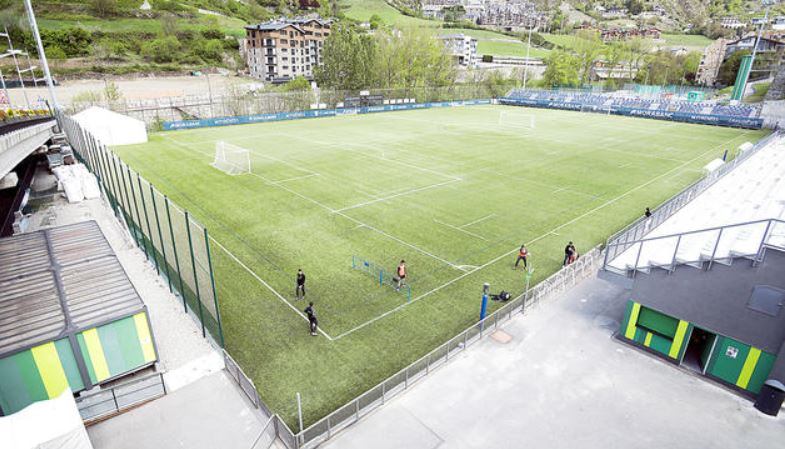
Camp de Fútbol de Prada de Moles 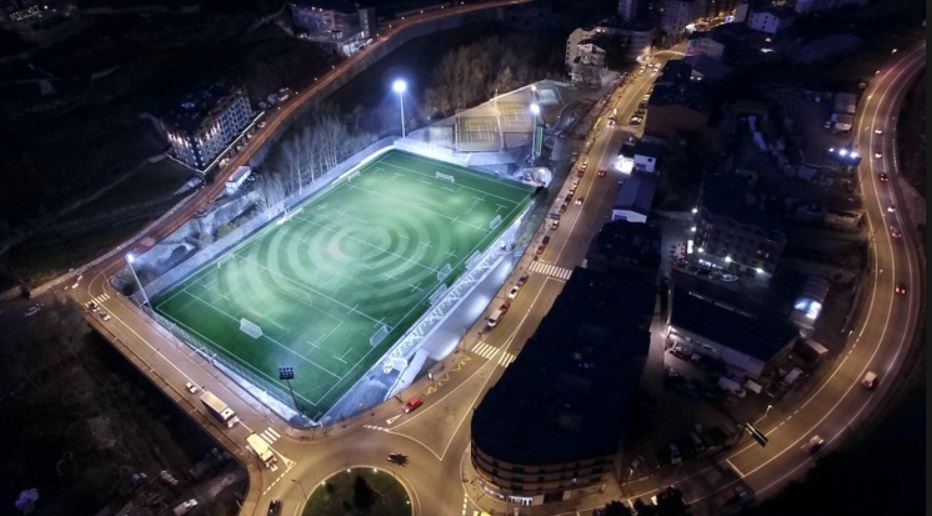
Camp de Fútbol de Prada de Moles 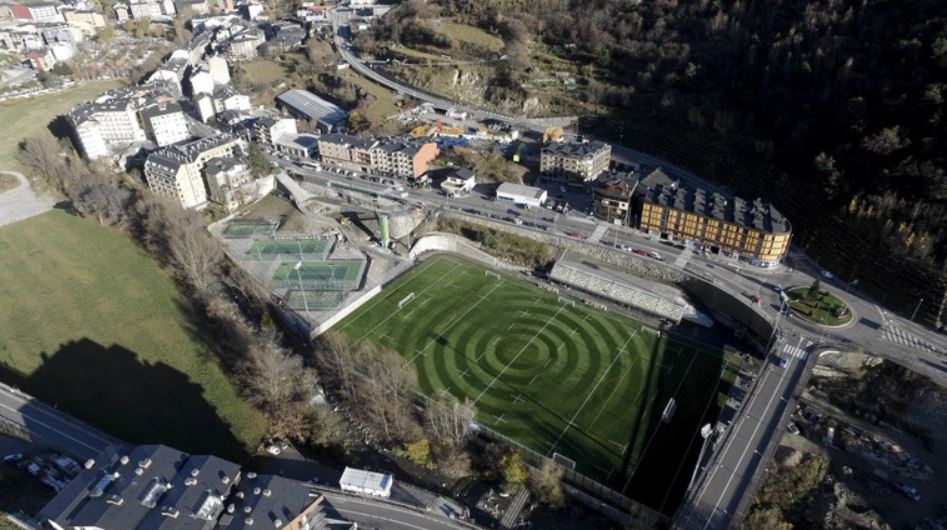
Camp de Fútbol de Prada de Moles FC Andorra had a short but very successful stay at the Camp de Fútbol de Prada de Moles 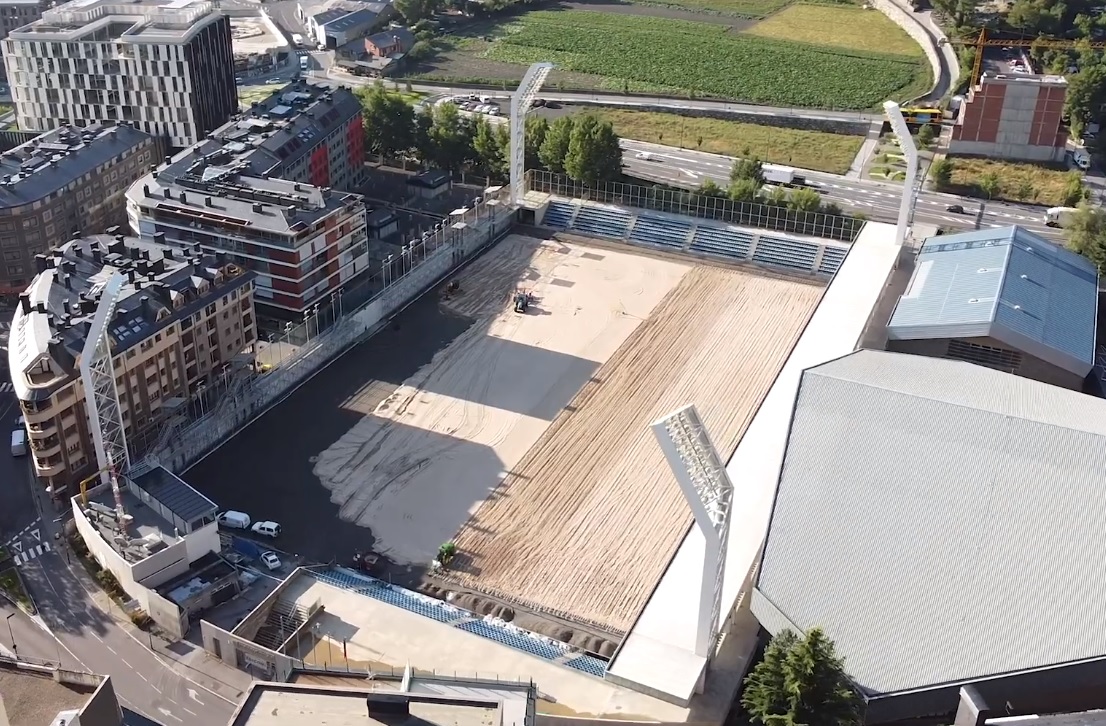
Estadi Nacional 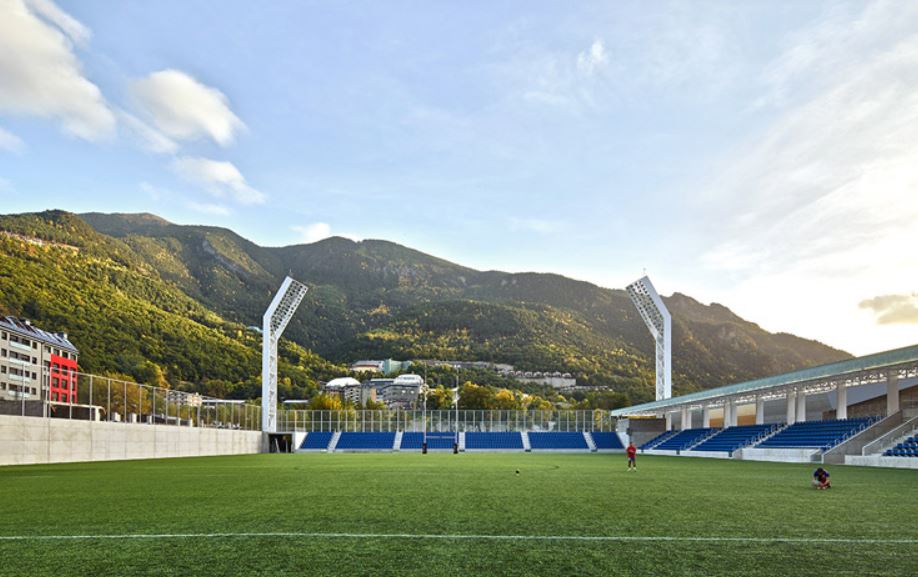
Estadi Nacional 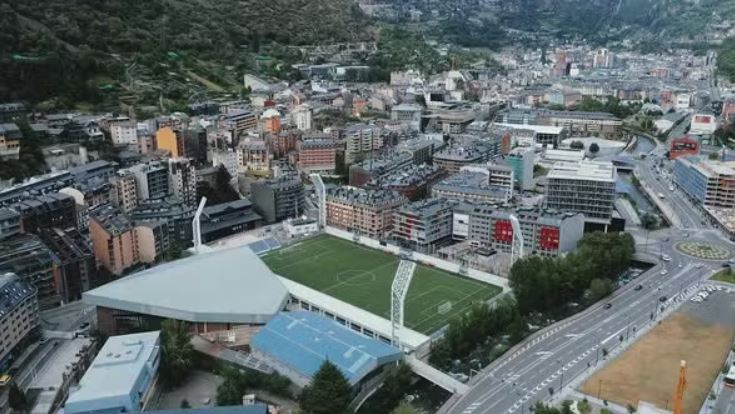
Estadi Nacional 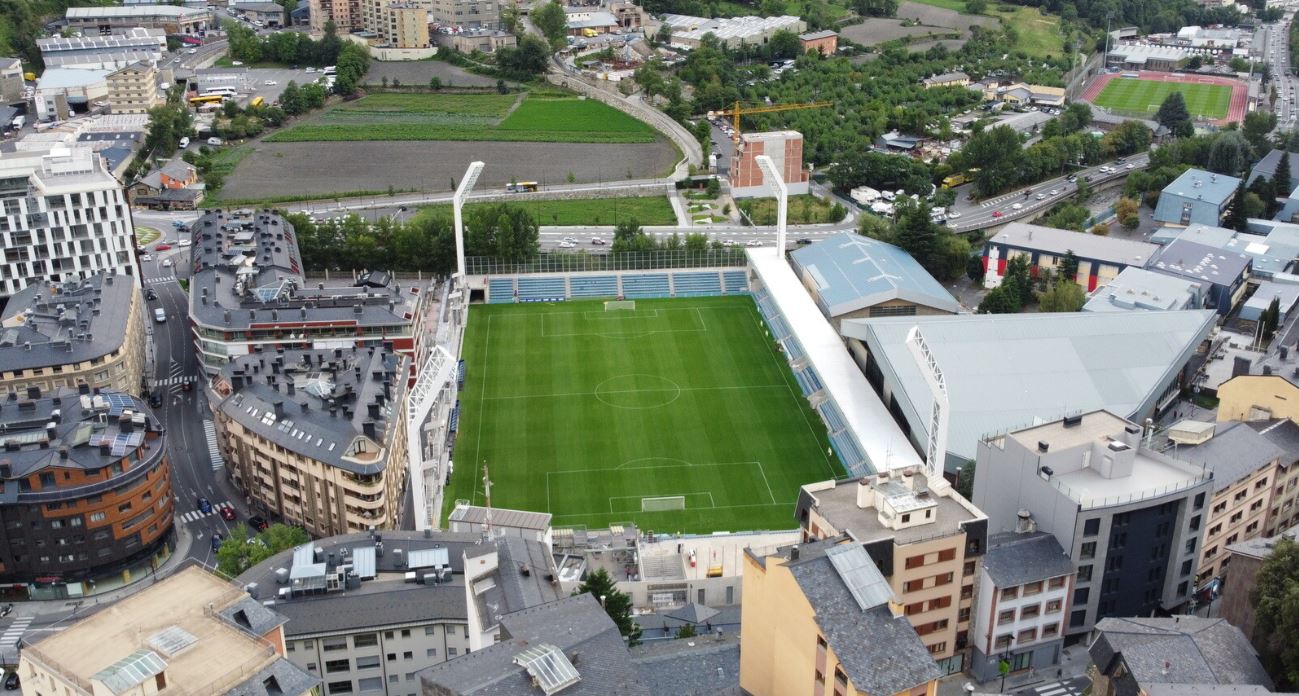
Estadi Nacional 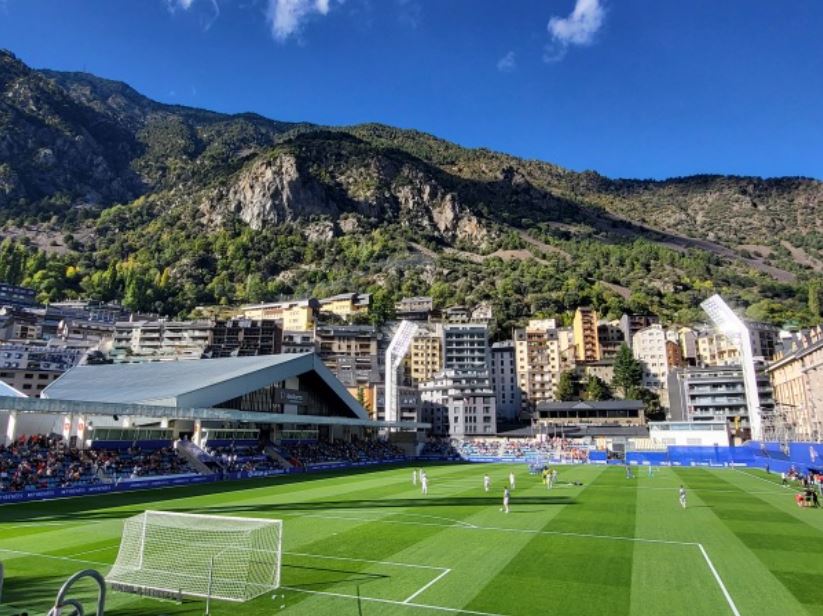
Estadi Nacional 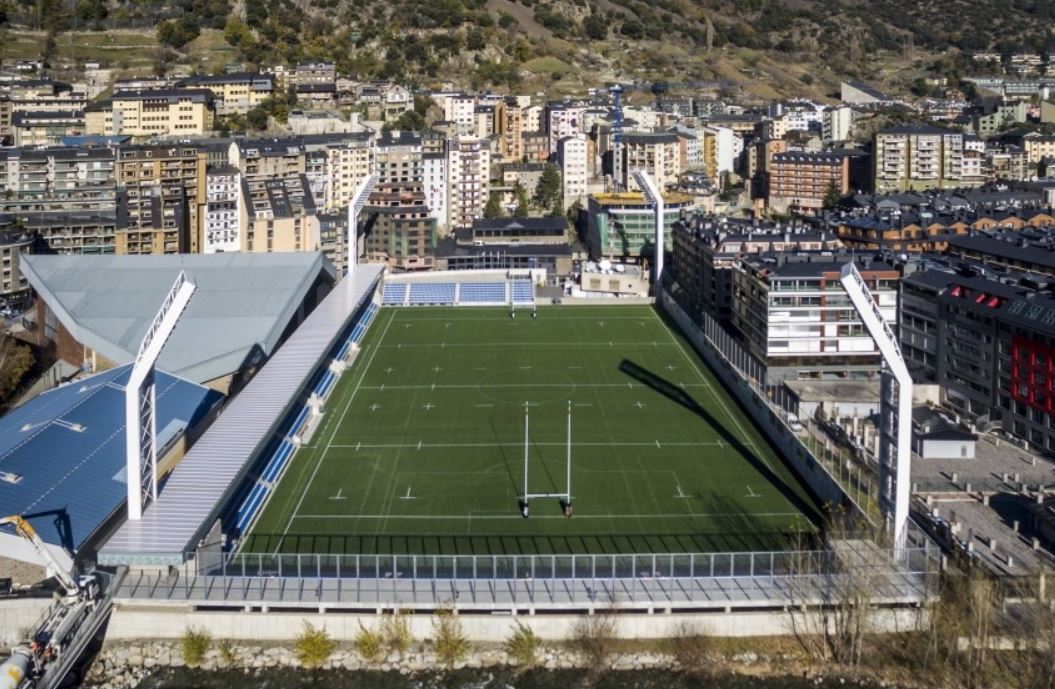
Estadi Nacional Back for good? FC Andorra could be on the move again. 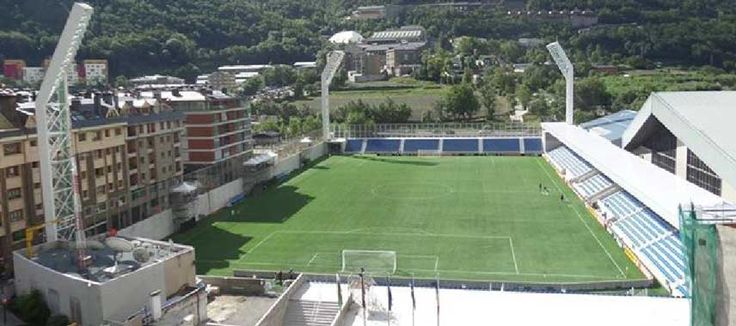
Estadi Nacional 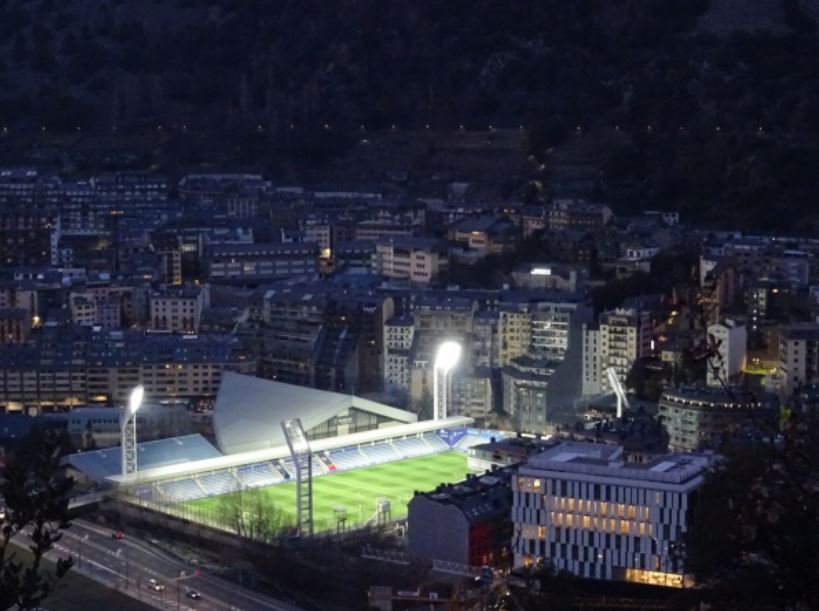
Estadi Nacional 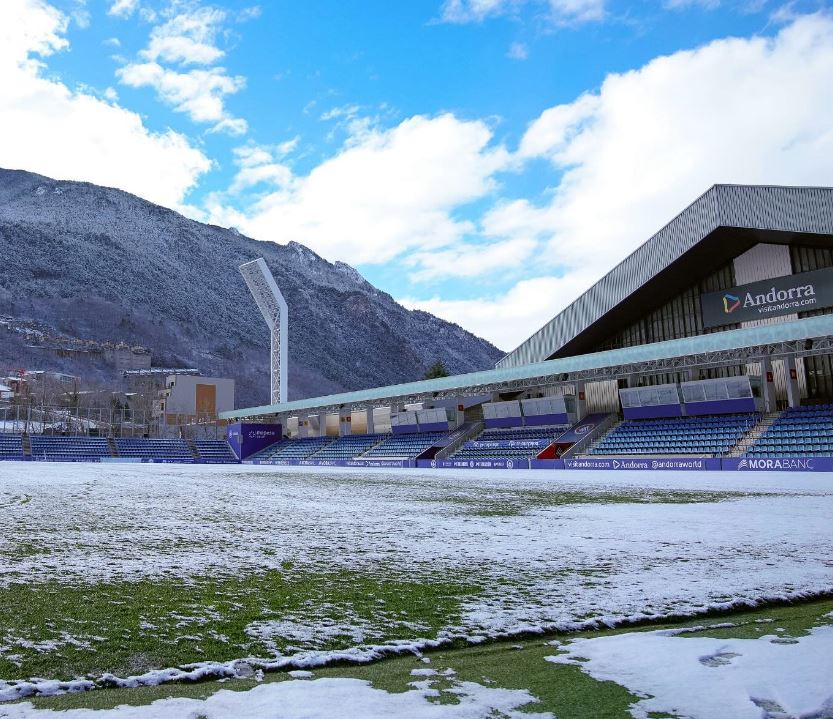
Estadi Nacional 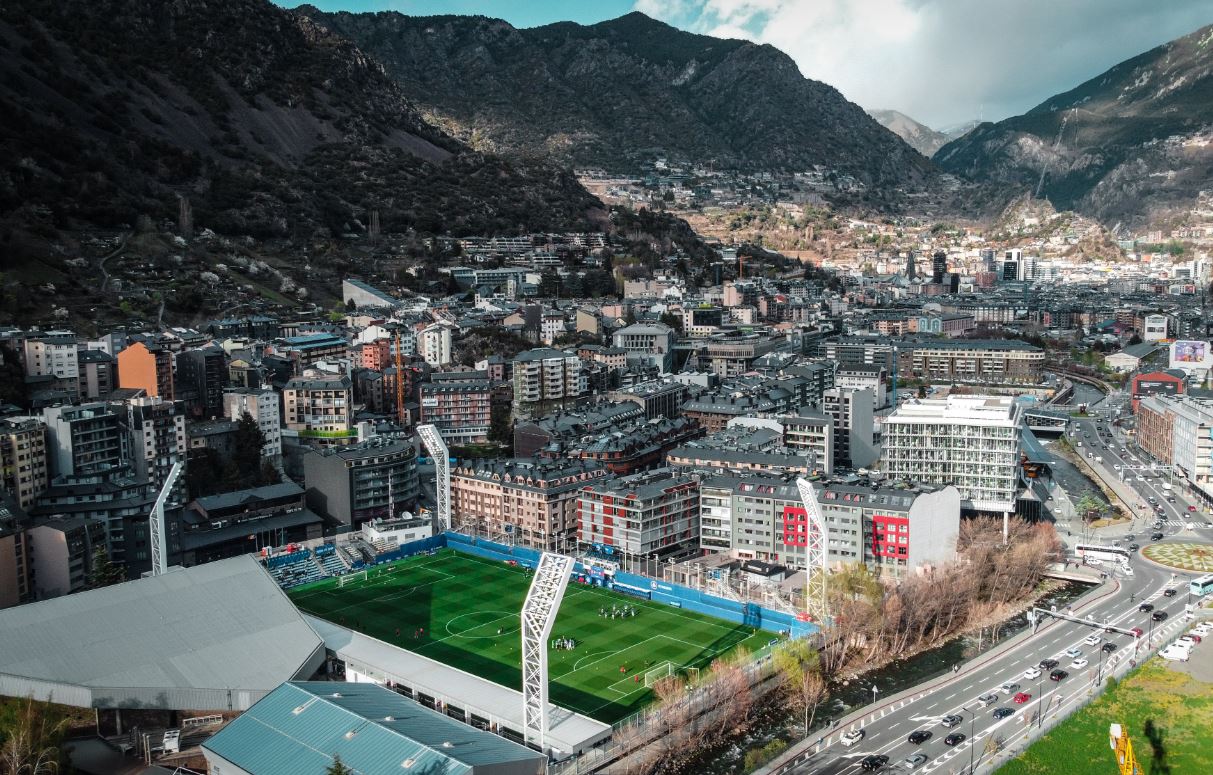
Estadi Nacional 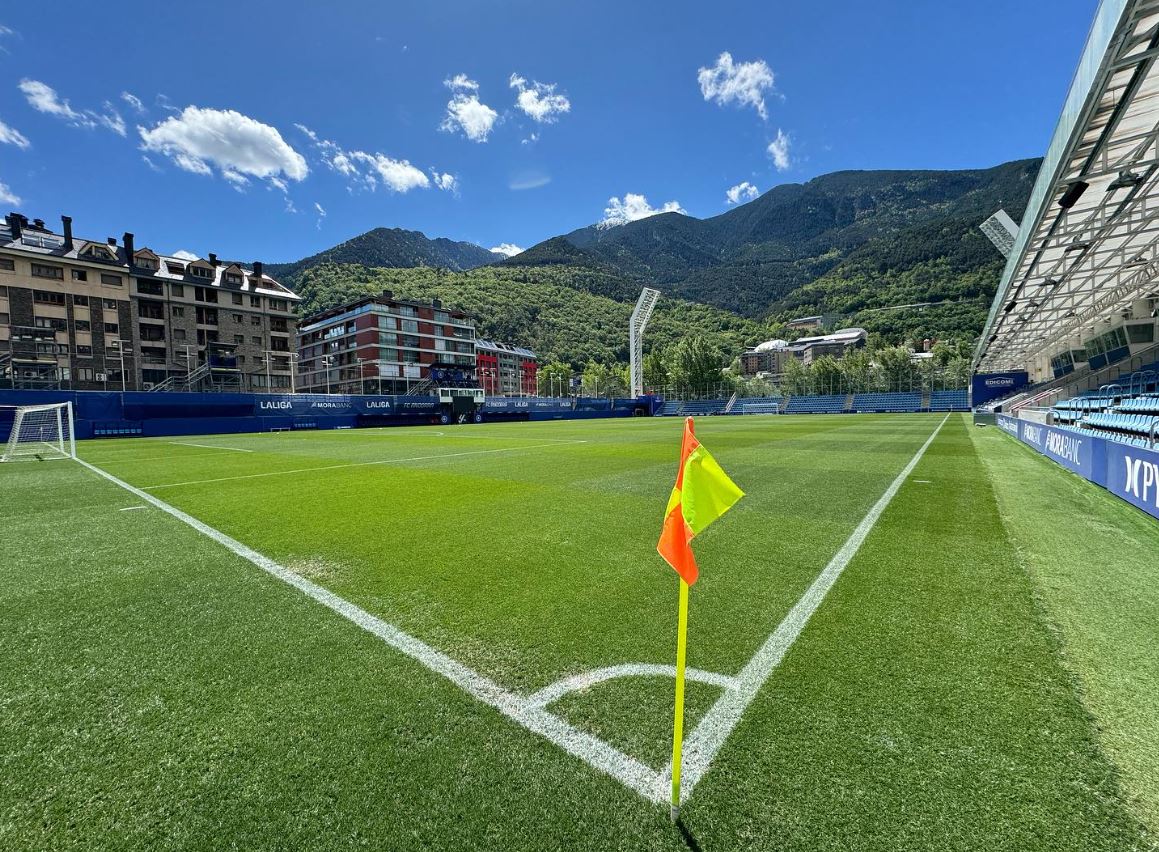
Estadi Nacional 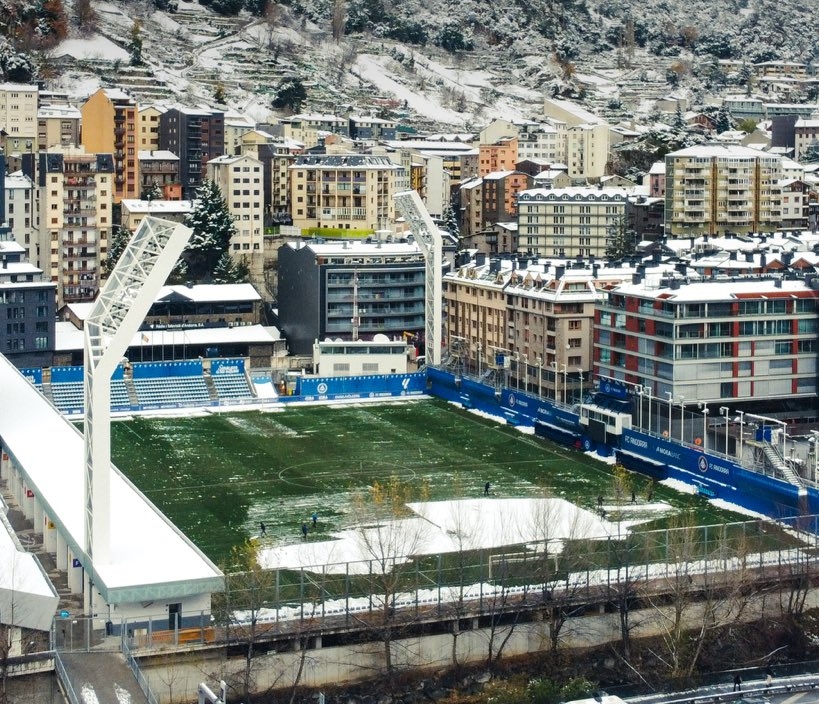
Estadi Nacional 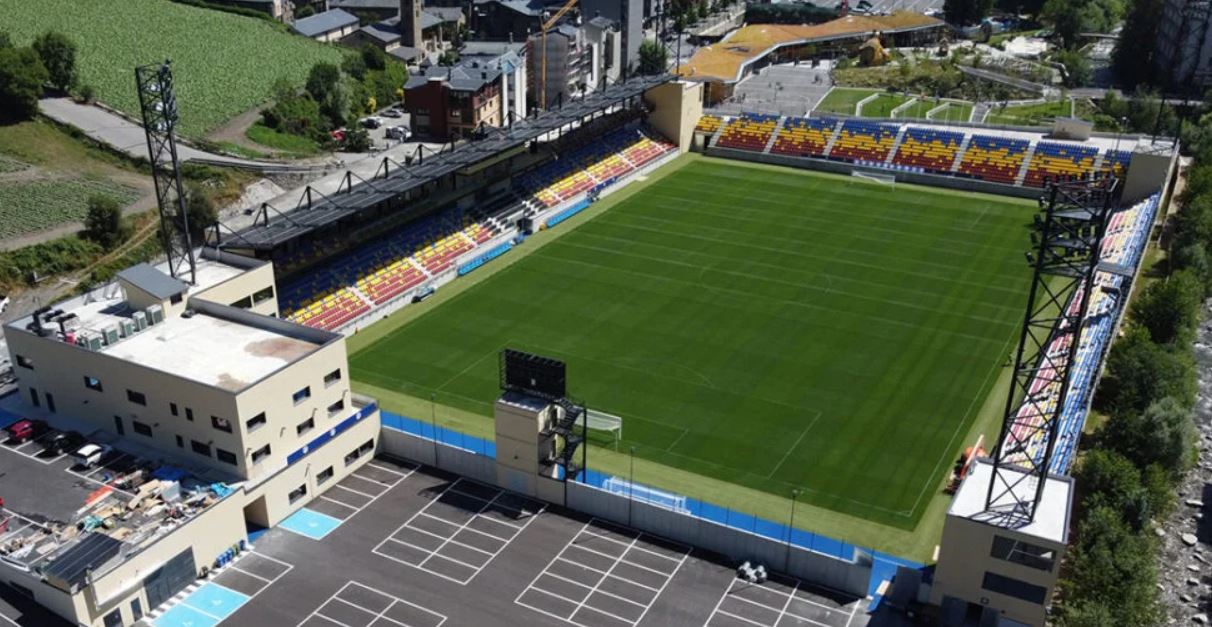
Estadi de la FAF 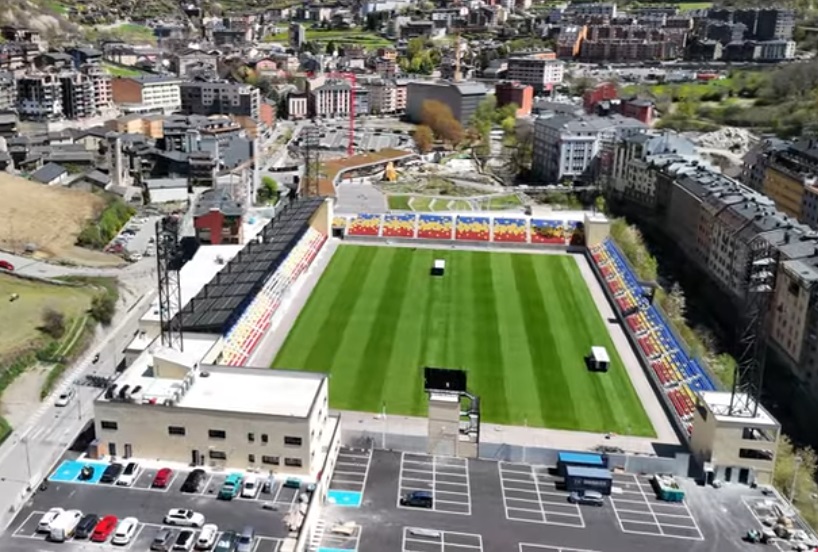
Estadi de la FAF 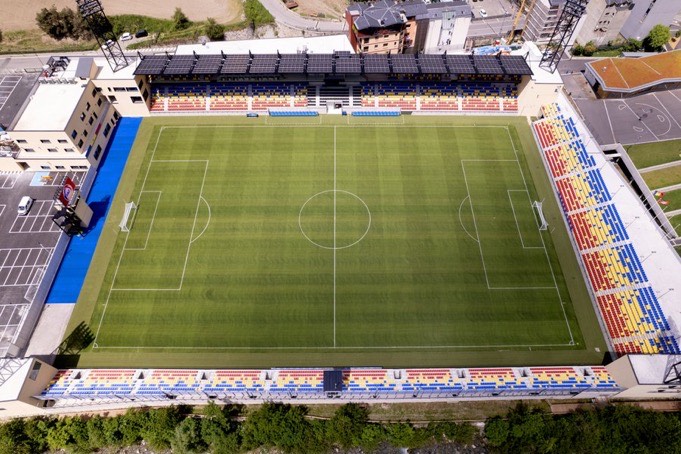
Estadi de la FAF
 Estadios de España