
Article Updated 13/12/2025
At the start of the 20th Century, when neighbouring regions were witnessing the formation of football clubs that would go on to become mainstays of the Spanish game, the region of Navarra, and specifically Pamplona, was left stranded on the starting blocks. It was not for the want of trying, as there are records of several clubs forming in the first two decades of the century, but failing to last more than a couple of years. In May 1919, a group of enthusiasts from the city’s military academy and the general civilian population formed Sportiva Foot-ball Club. Even then, it would take another 18 months of debate, fragmentation, and resolution before the squabbling entities settled their differences and formed Club Atlético Osasuna in October 1920.

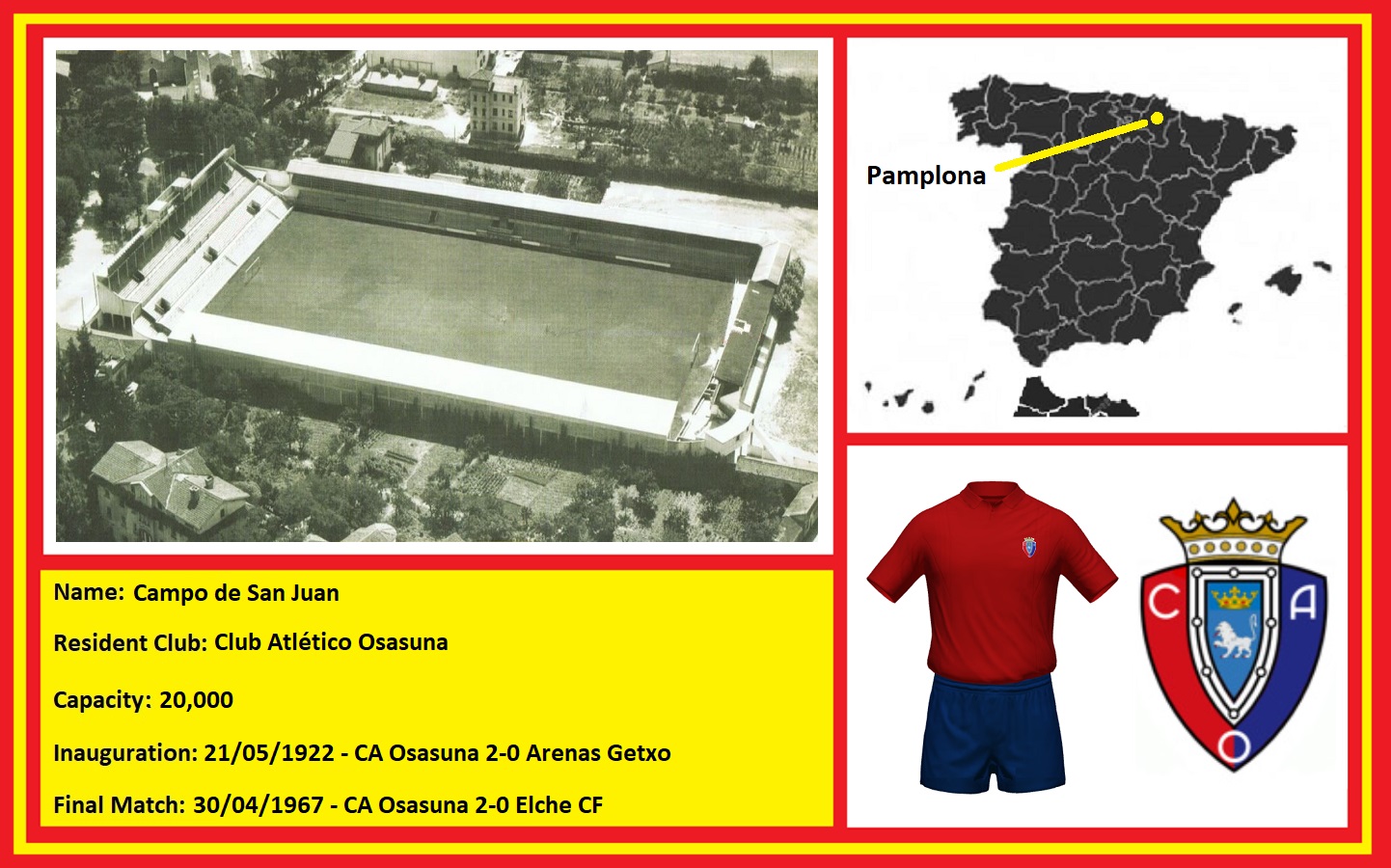
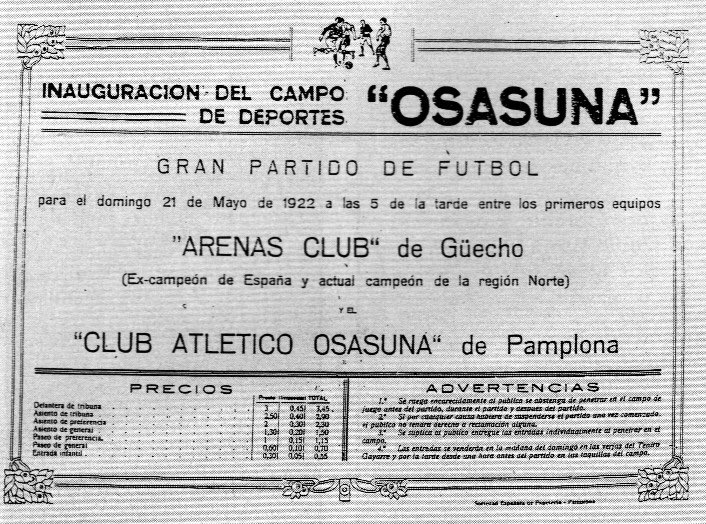
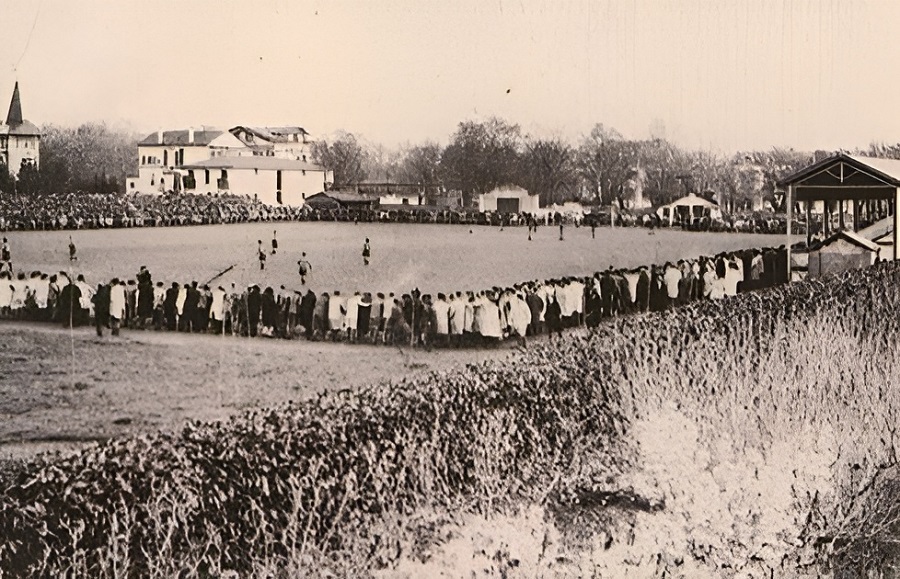
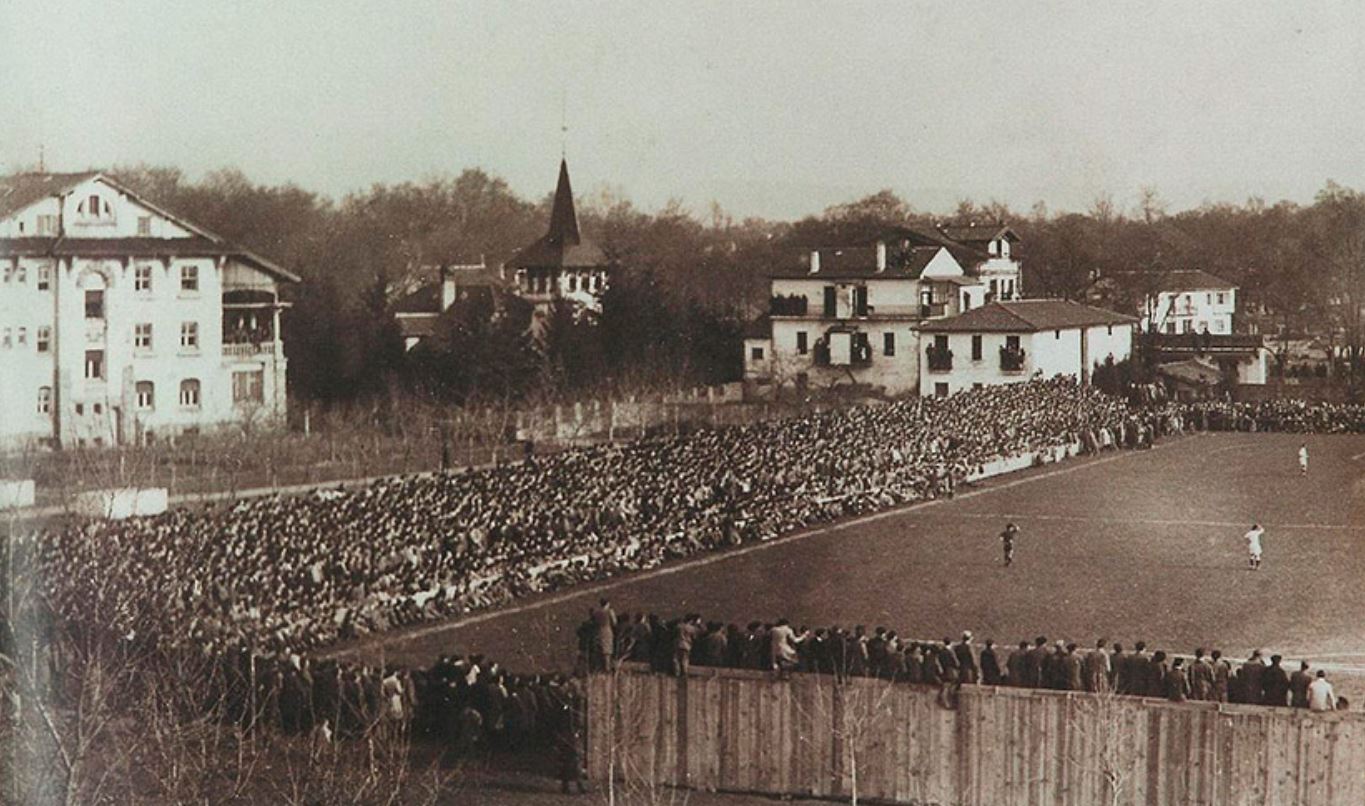
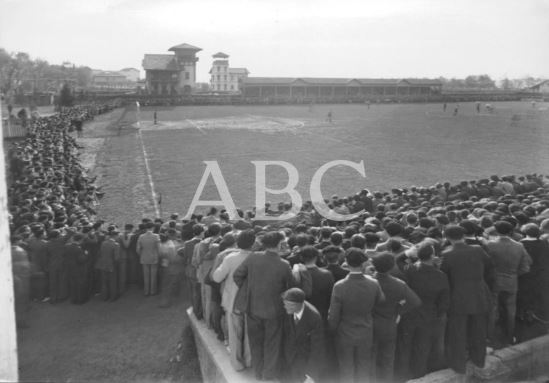
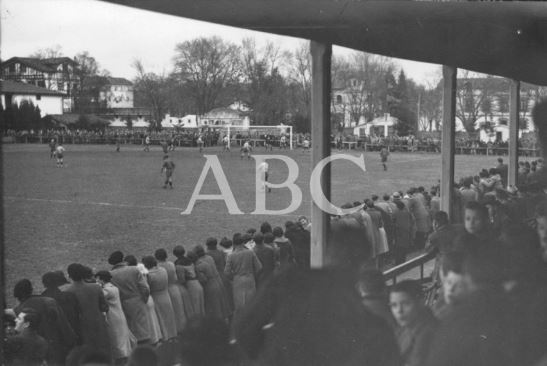
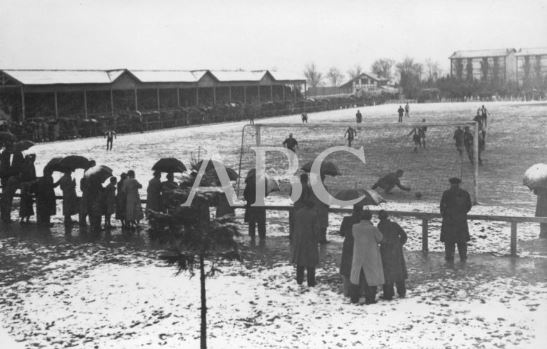
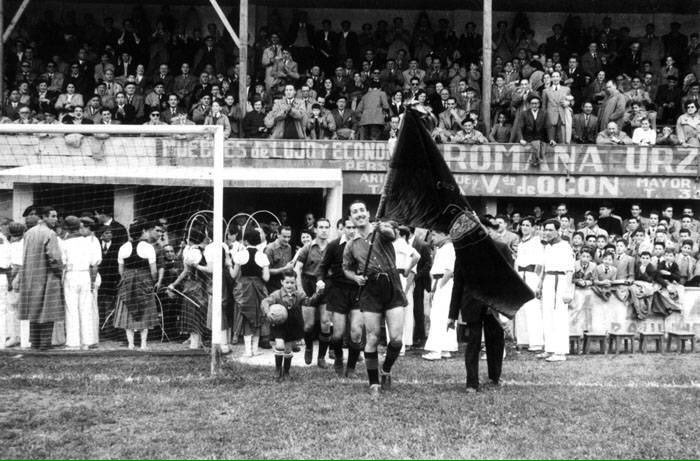
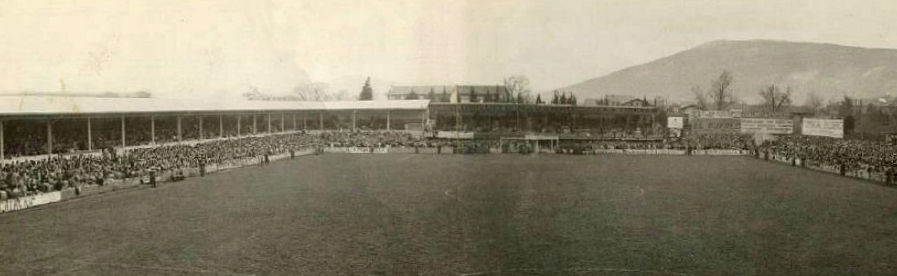
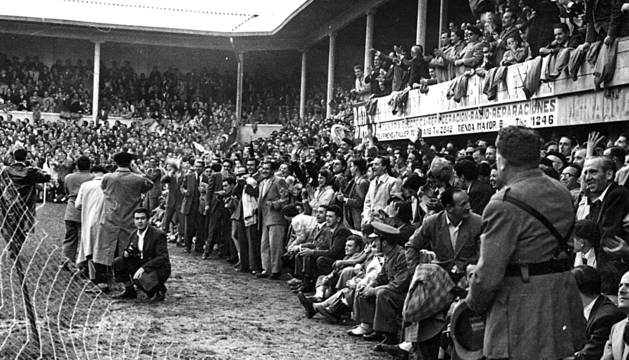
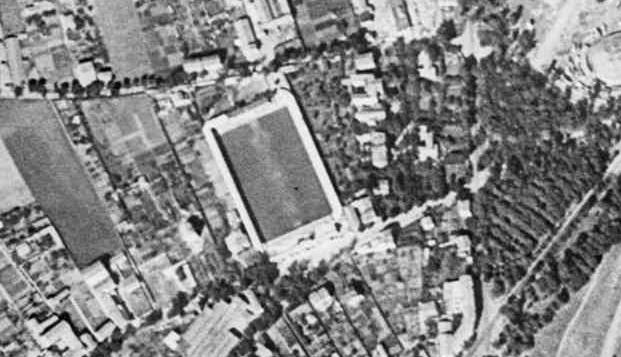
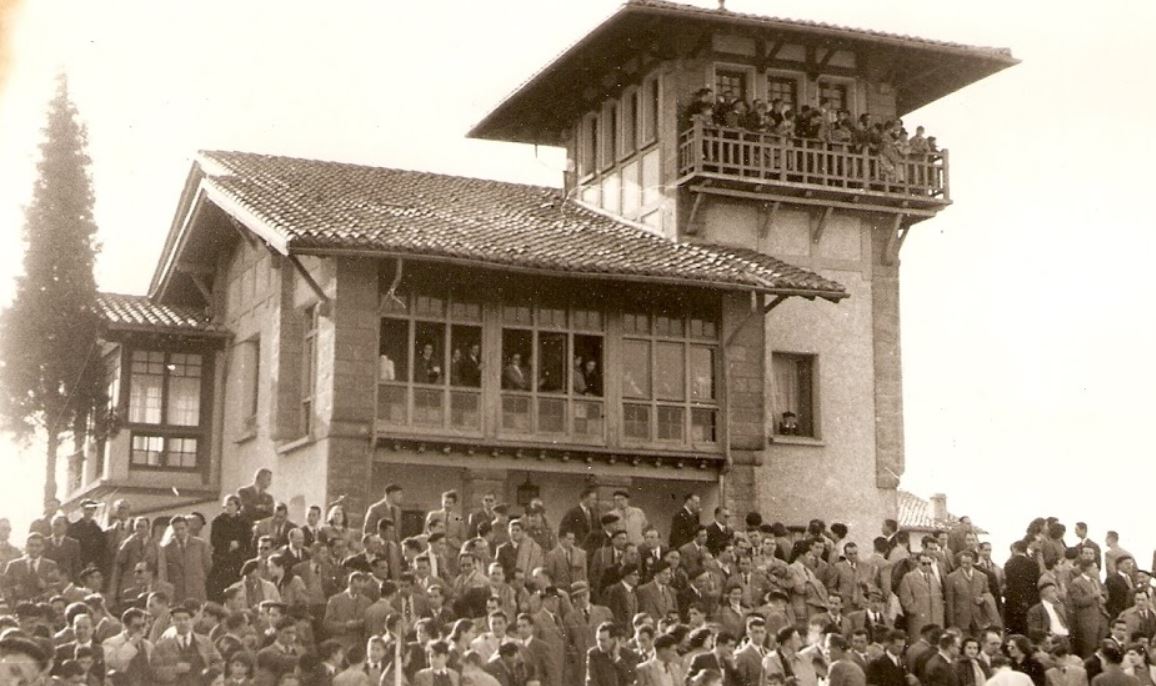
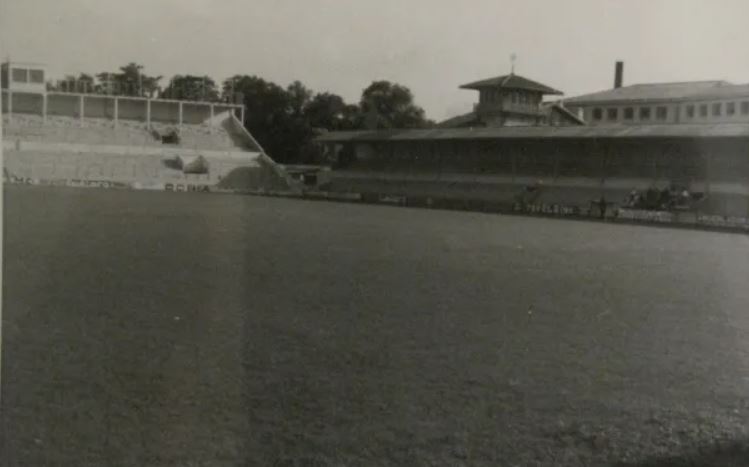
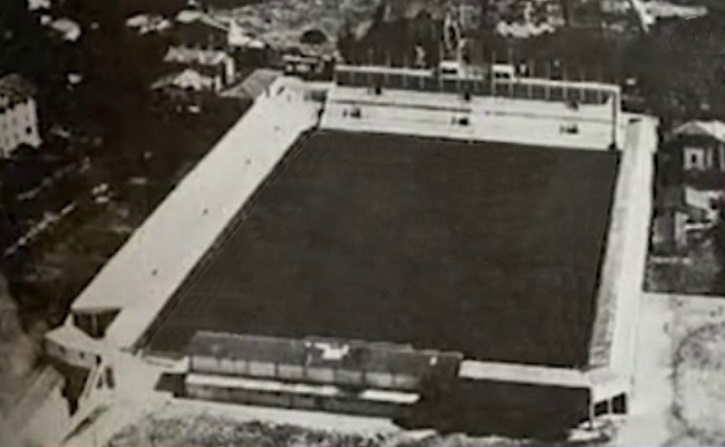
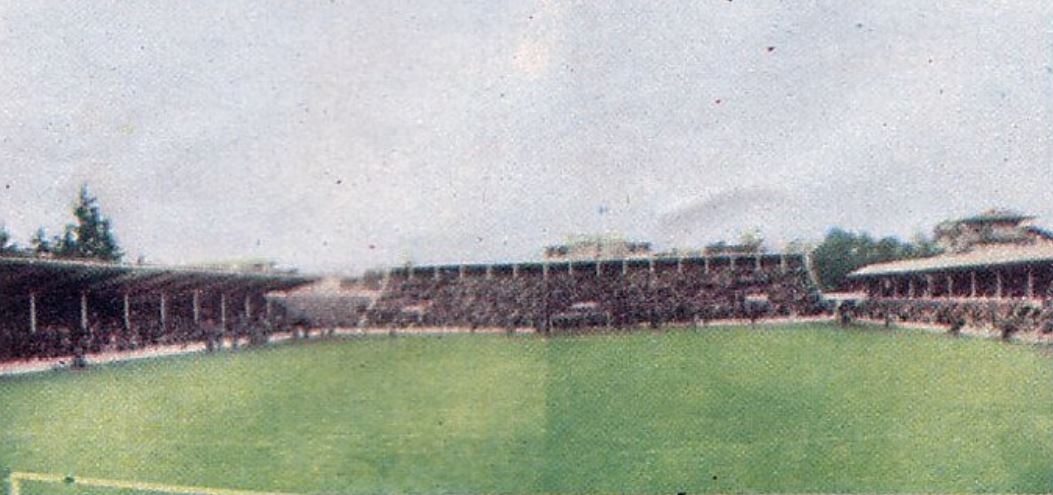
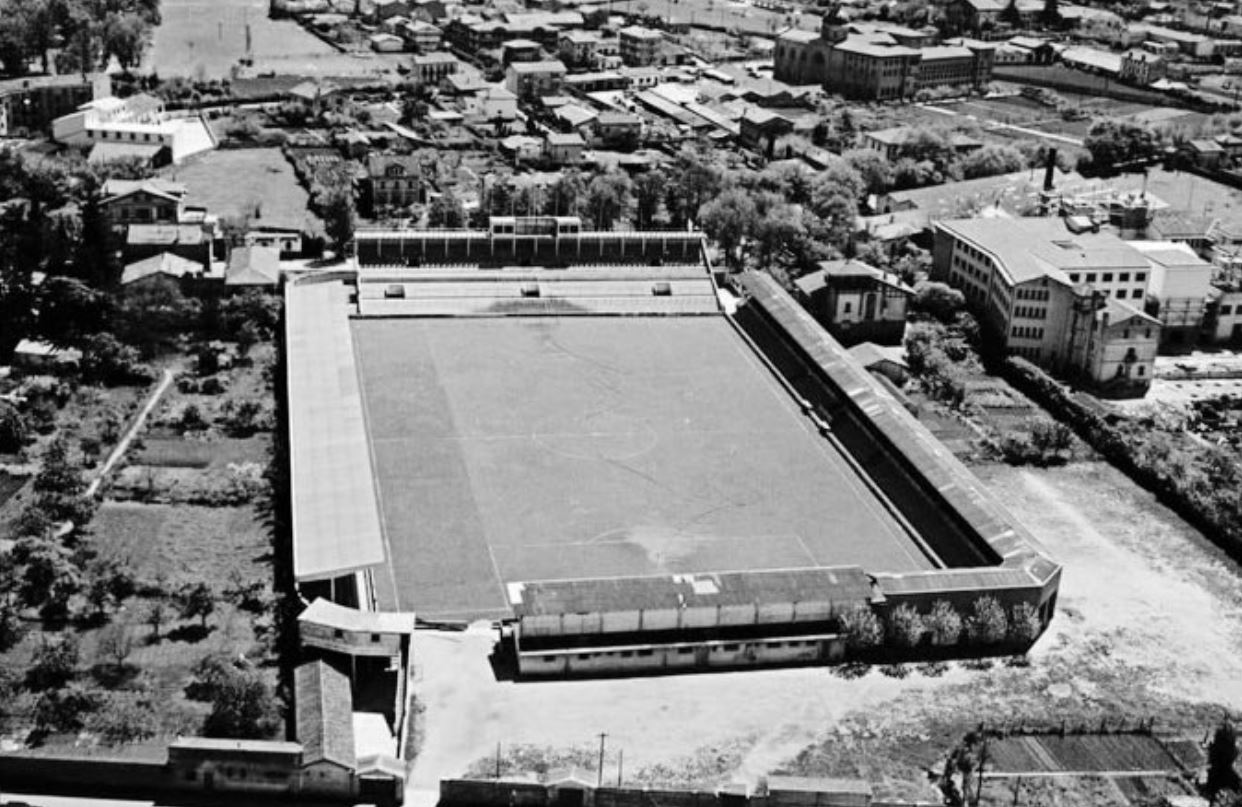
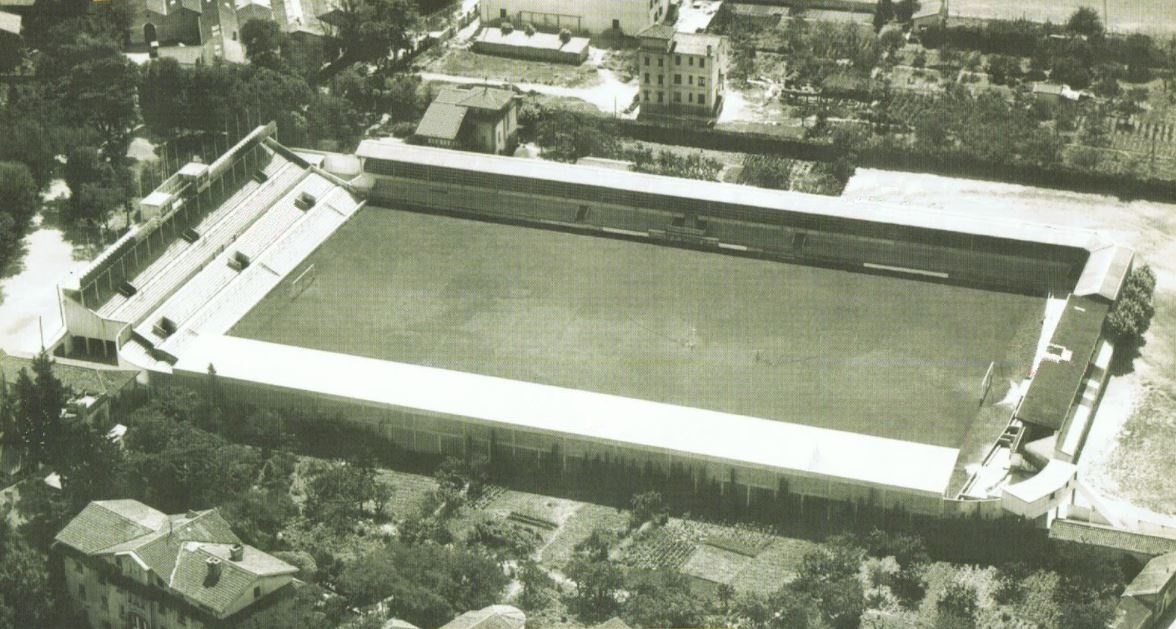
In the absence of a Navaresse federation, Osasuna joined the Federación Guipuzcoana and set up home at Campo del Ensanche, a patch of open land just to the north of the city’s Ciudadela. Within a year, the club had set up home at the Campo del Hipódromo, which was around 200 metres to the east of the Campo del Ensanche. On 21 May 1922, Osasuna inaugurated the Campo de San Juan, beating Arenas Getxo by 2 goals to nil. The ground was built on meadowland and was next to orchards just to the west of the Ciudadela. The pitch was enclosed, and to begin with, a small grandstand stood on the east side of the pitch. Players and officials changed in the Casa Larrea, an Inn that stood in the southeast corner of the ground. The club soon built a new grandstand on the west side of the ground. This was an altogether more impressive structure, running for 70 metres, with a paddock at the front, and a raised covered seated area at its rear. The stand was capped off with a pitched roof that featured three ornate gables. By the end of the decade, open terracing had been added to the other three sides of the ground.
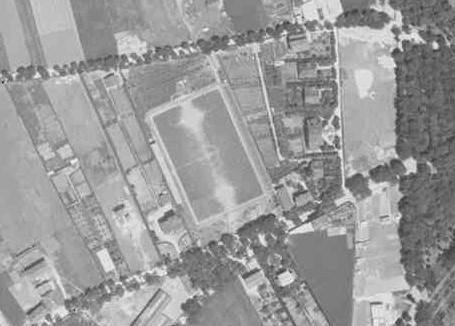
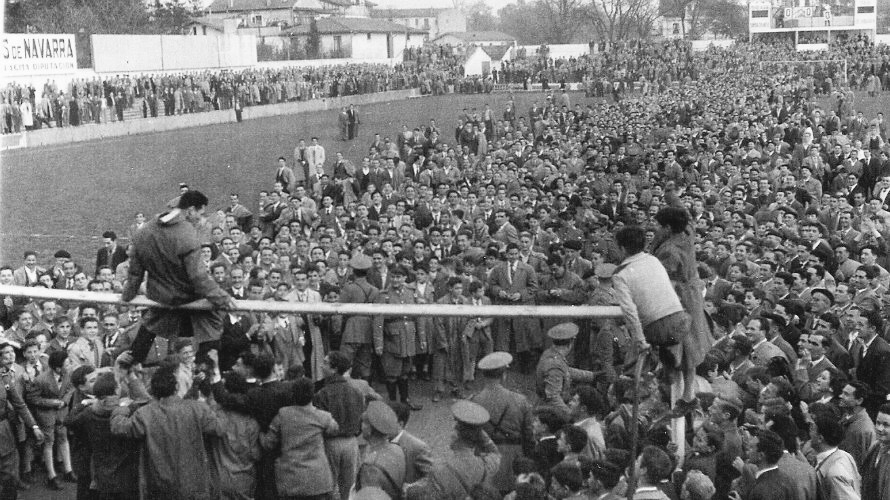
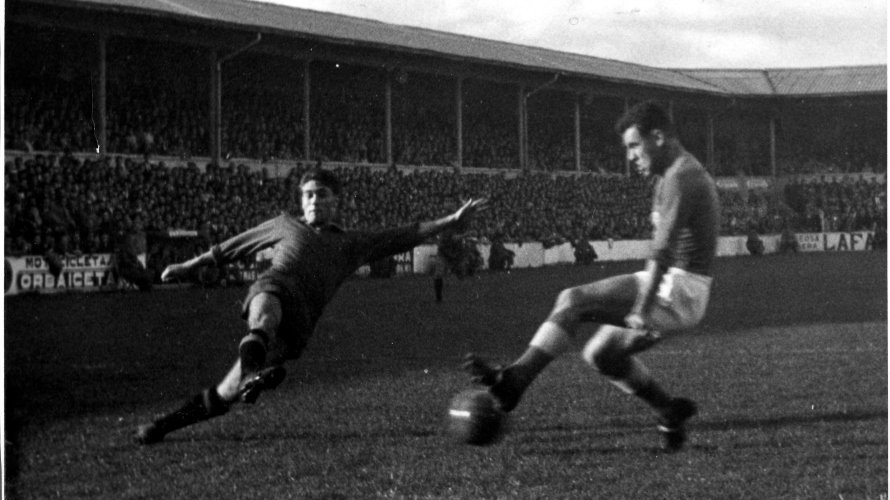
In 1928, the club was invited to join Segunda División Grupo B, effectively the third division, and competed in three of the first four seasons. In the 1931-32 season, Osasuna won the Group 2 title and progressed to the finals stage. Here, they defeated Sabadell 2-4 on aggregate, before running up a 4-0 aggregate win over Club Deportivo Nacional de Madrid, to earn promotion to La Segunda in 1932. Osasuna finished eighth and then fifth in its first two seasons in the second tier. The 1934-35 season saw the club win their regional division and progress to the playoffs for promotion to La Primera. Played over 10 matches, the playoffs went to the final set of fixtures, with Osasuna beating Murcia FC 3-0 to secure promotion. The club also reached the semi-finals of the Copa del Rey, where they lost over two legs to Sevilla. The second match at San Juan had to be abandoned after 70 minutes when the home crowd turned hostile, with Osasuna losing 1-5 on aggregate. As a result, San Juan was closed for two matches. The first season in the top tier was not a success, with the club finishing in twelfth and last place. Their form at home was, however, impressive, with all seven wins coming at the Campo de San Juan. A second appearance in the semi-finals of the Copa saw Osasuna lose out to Barcelona over two legs. Within a month of that fixture, the Civil War had broken out, and competition at a national level ceased.
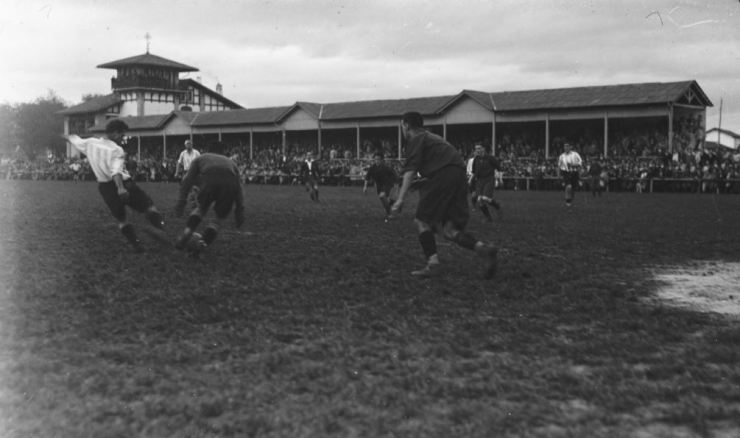
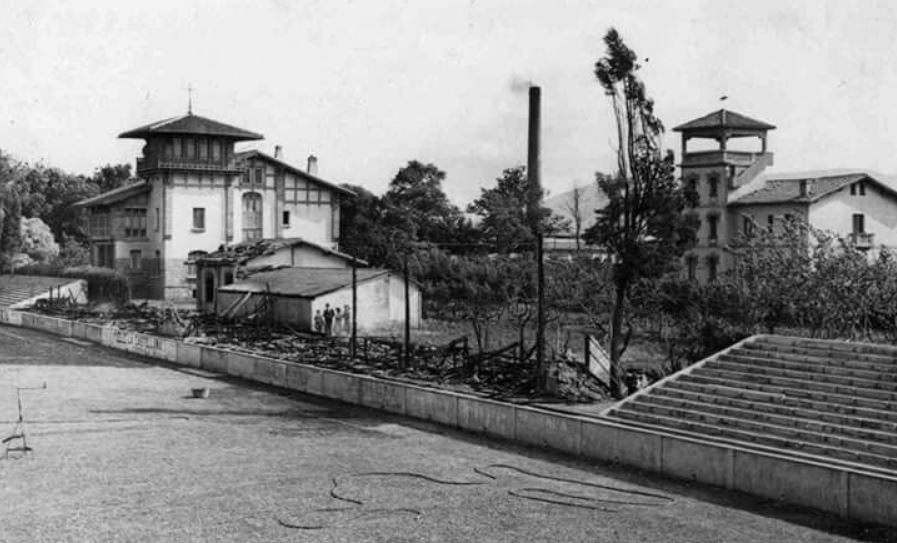
The club returned to La Segunda after the Civil War, and despite some valiant attempts to regain their position in La Primera, poor finances took a stranglehold on the club, and at the end of the 1943-44 season, the club was relegated to the Tercera. During this period, the club generated extra revenue by renting the stadium to the Frente de Juventudes, the youth section of Franco’s Falangist party. It took five seasons to get back to the second division, and this came about somewhat unexpectedly. After finishing bottom of the promotion playoff group, Osasuna thought they would be confined to another season in the Tercera, only for the RFEF to invite the club to an expanded second tier. Three seasons of steady if unspectacular finishes followed, before Osasuna won the 1952-53 Segunda title, ending an absence of 17 years from the top flight. The promotion was marred by a fire in May 1953 that destroyed the wooden Tribuna de Preferencia on the west side of the ground. A new stand was erected, and additional terracing was added to the southern end of the ground in time for the club’s return to the top flight. Once again, the stay lasted just the one season, finishing thirteenth and entering a mini-playoff league in a fight to stay up. After seemingly being well placed to retain their top-flight status, Osasuna lost their final two matches to CD Malaga and Hercules CF and dropped to the second tier.
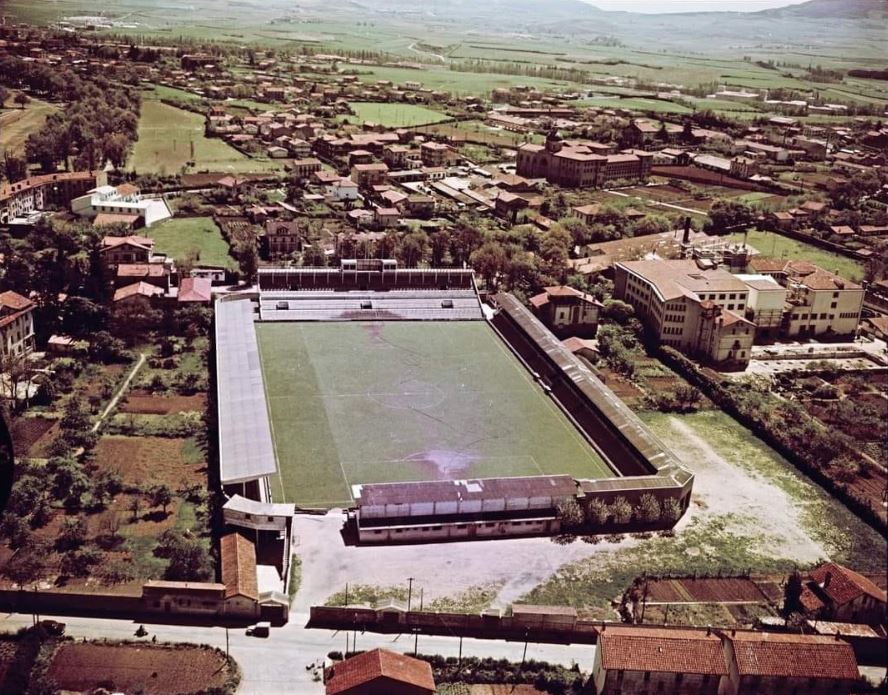
After a two-season stay in La Segunda, Osasuna won the title in the 1955-56 season and returned to La Primera. This particular visit to the top flight lasted for four seasons, with a highest placed finish of fifth in the 1957-58 campaign. Osasuna dropped a division in 1960 but immediately bounced back after securing their fourth Segunda title in April 1961. Financial problems were never far away, despite the sale of their best players, and these were exacerbated with relegation to La Segunda in 1963. Instead of competing for promotion, Osasuna recorded a succession of mid-table finishes. On 9 April 1966, the club sold its main asset, the land on which the Campo de San Juan stood, to the local authority for 40 million pesetas. With Pamplona rapidly expanding, the site was earmarked for housing, and Osasuna would pin their hopes on a new stadium to revive their fortunes.
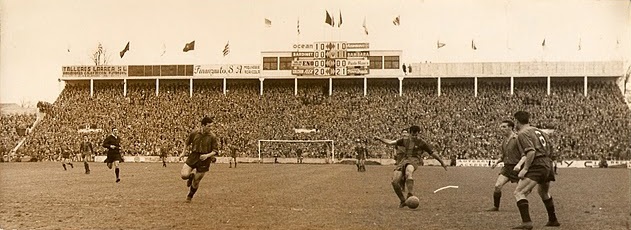
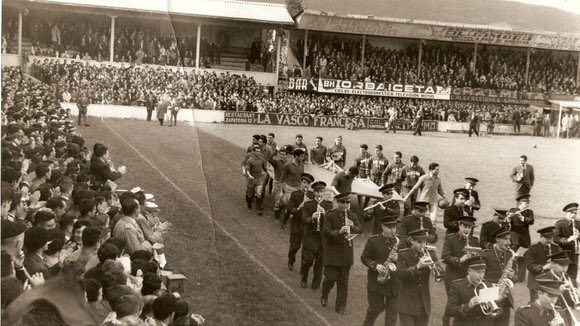
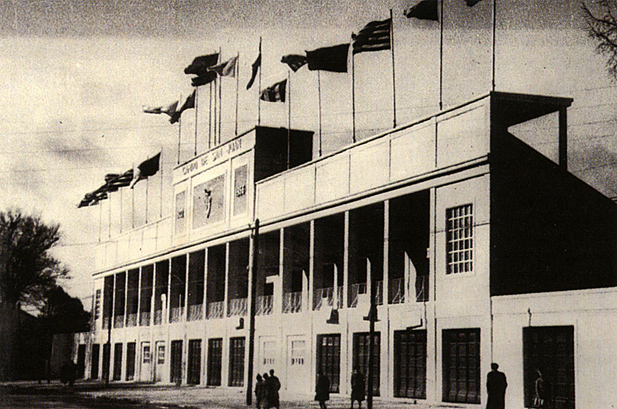
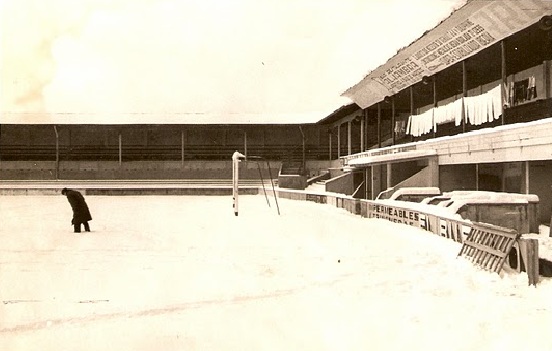
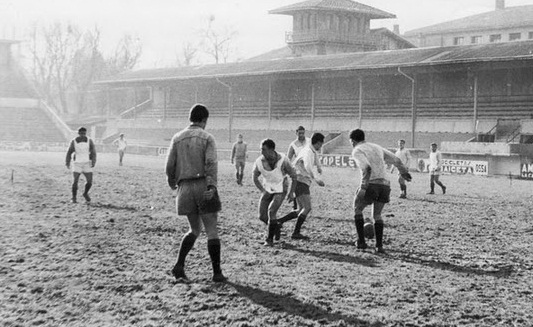
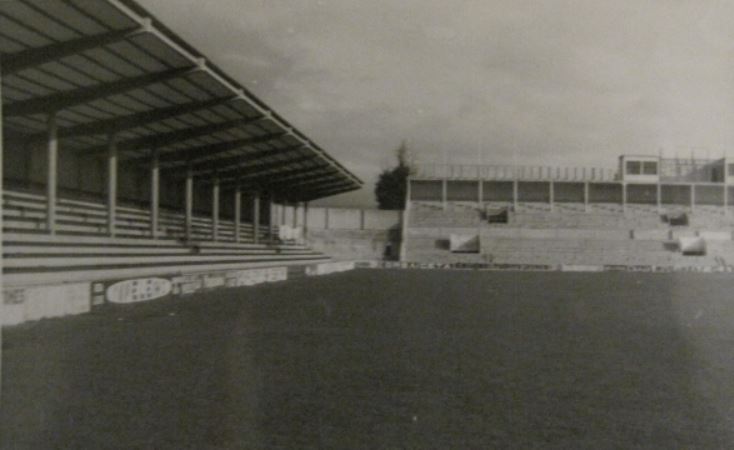
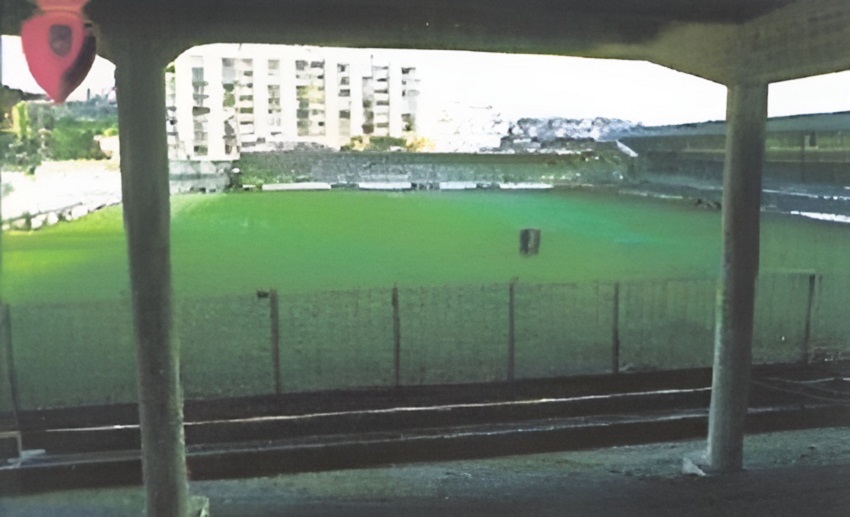
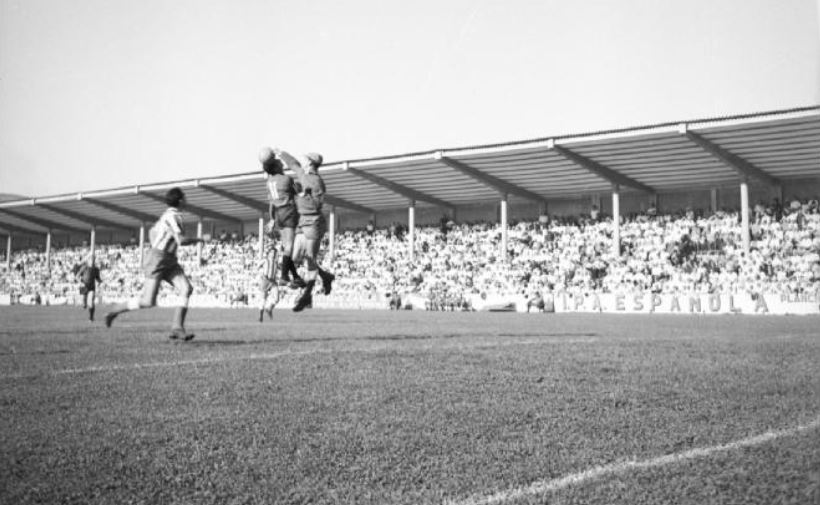
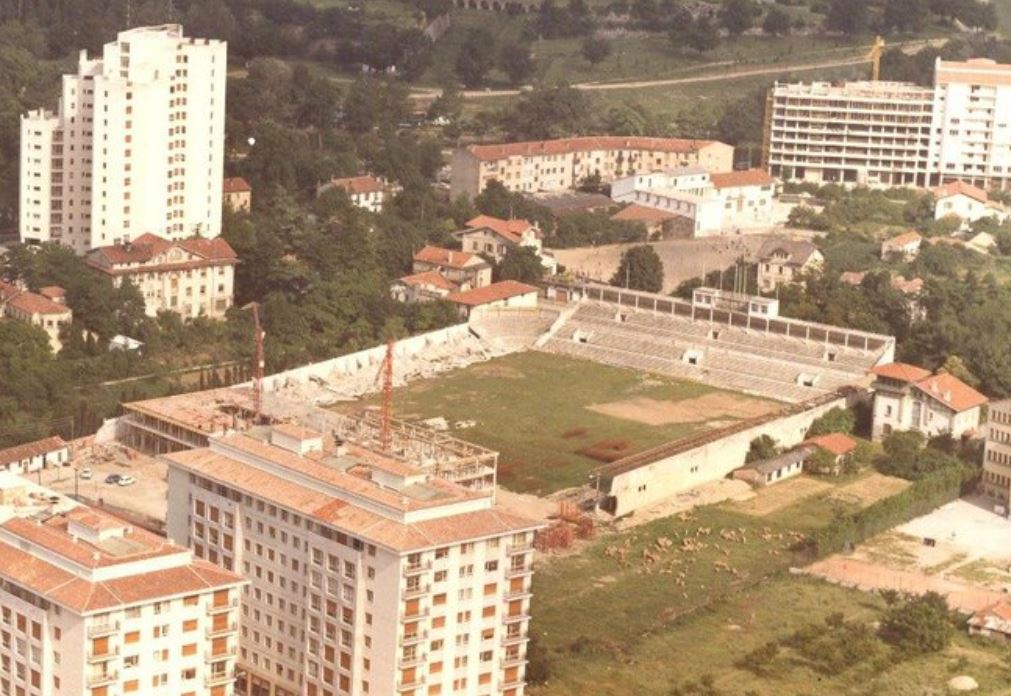
At its peak in the mid-sixties, the Campo de San Juan had a capacity of 20,000. It was a glorious mix of stands, arranged tightly around the pitch. The southern terrace, with its very shallow cover at the rear, held over 7,000 spectators and had an ornate exterior, which featured the club’s crest and 20 flag poles. The west stand had an upper seated tier, which extended around the corner for approximately 15 metres and joined the rather ramshackle north stand, known as the Tribuna de Gol. This short stand was also known as La Conocida Leonera, or the Lion’s Den. It was the oldest structure at the Campo de San Juan, having been built in 1935 and also featured the changing facilities for players and officials. The Tribuna Lateral on the east side of the ground replaced the open terrace when Osasuna returned to La Primera in 1961. It featured a seated single-tier under a propped cantilevered roof.

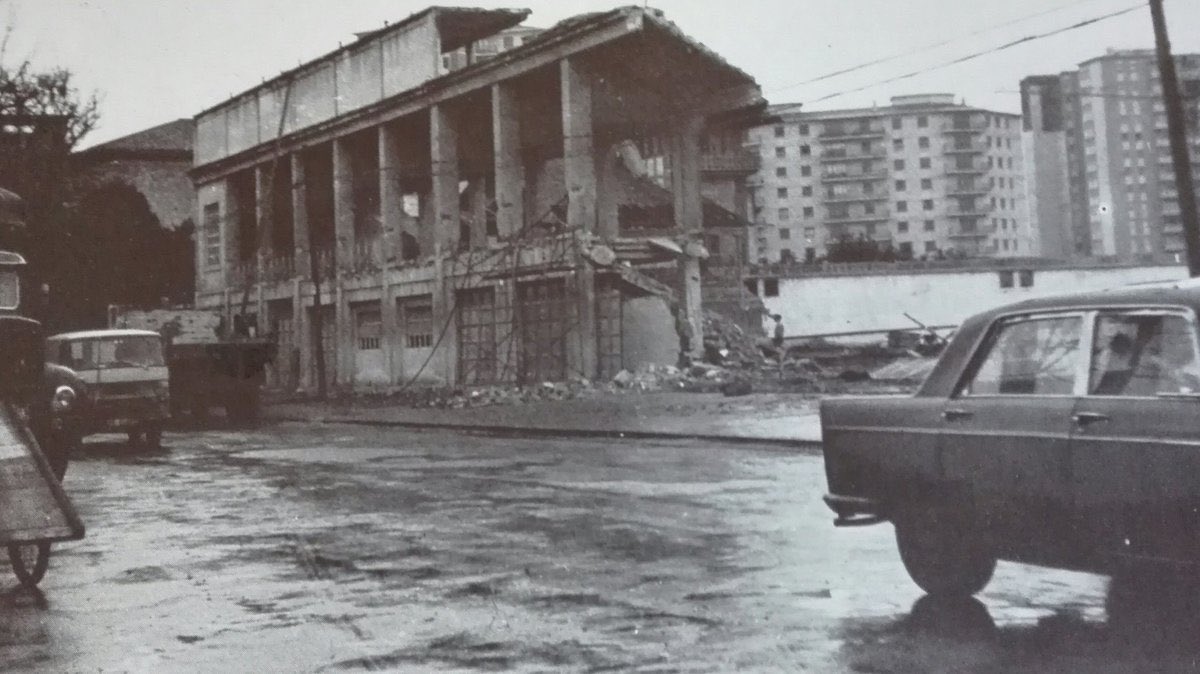
Osasuna played its last competitive fixture at the Campo de San Juan on 30 April 1967, beating Elche CF in the 1st leg of the Copa de Generalísimo. The club moved to their new Estadio El Sadar in the southeast of Pamplona in September 1967. The club’s reserve side, Club Atlético Osasuna B, also moved to El Sadar, but moved on again in 1982 to the club’s new Ciudad Deportiva at Tajonar. The site of Campo de San Juan was developed into housing, and its location can be found on the modern-day Calle del Monasterio de Urdax.


 Estadios de España