
Article updated: 20/09/2025
Jaén, the largest city in the province of Andalucia that shares its name, experienced a relatively early introduction to football compared to neighbouring Murcia and Albacete. British investment in the lead mining industry during the 1890s led to the game being played in Linares, soon spreading to the provincial capital of Jaén. In the early twentieth century, several teams were formed in the city, though organised, competitive football remained limited. The city’s first properly enclosed ground, the Campo de Peñamefécit, opened on 28 September 1924. On this occasion, the resident club Jaén Club de Fútbol defeated A.D. Ferroviaria de Málaga 5-2. Jaén CF disbanded in 1928, leaving the Campo de Peñamefécit unused until the formation of Sociedad Olímpica Jiennense on 12 June 1929.
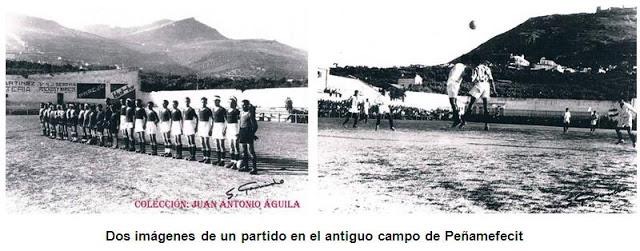
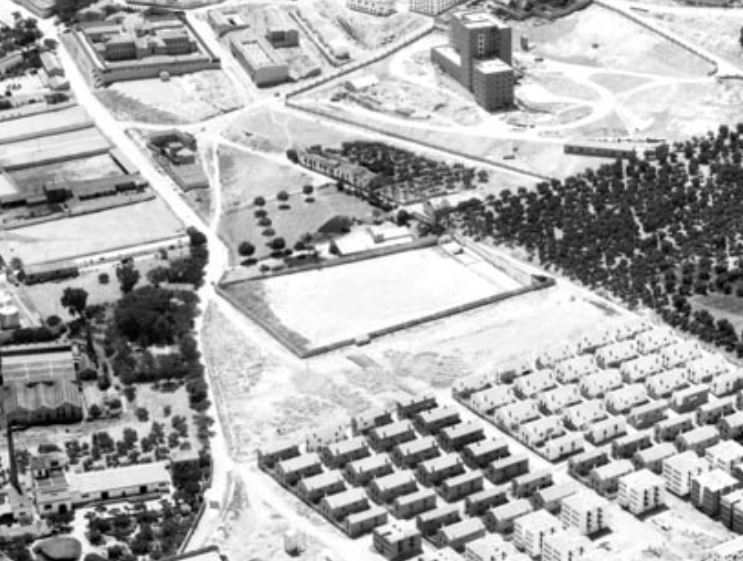
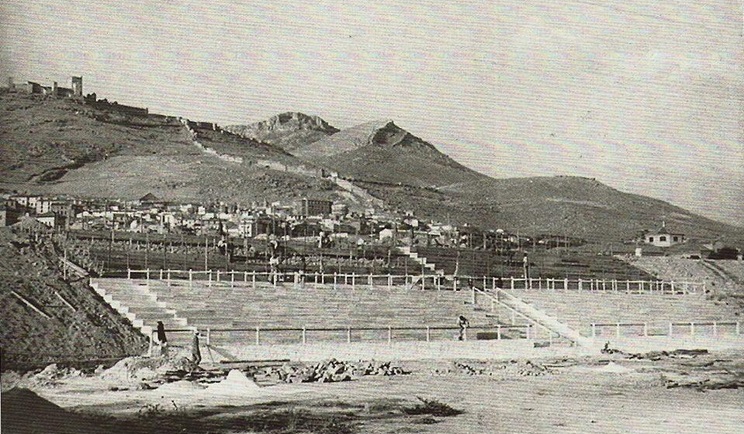
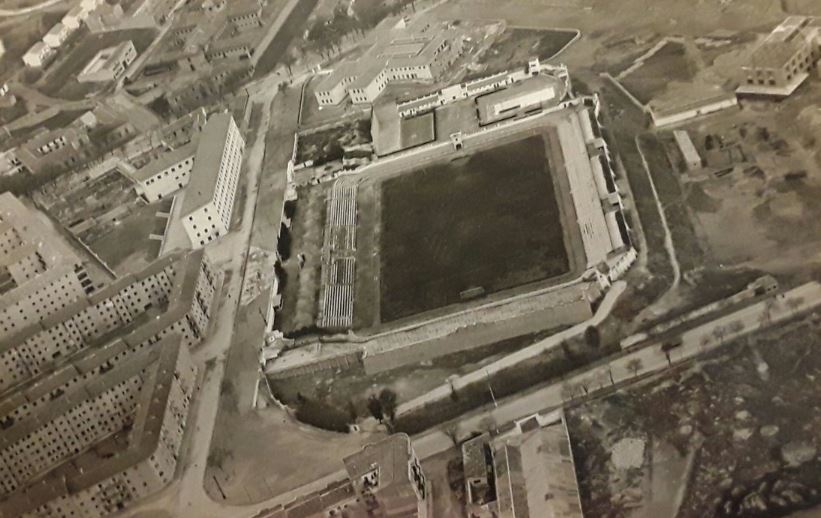
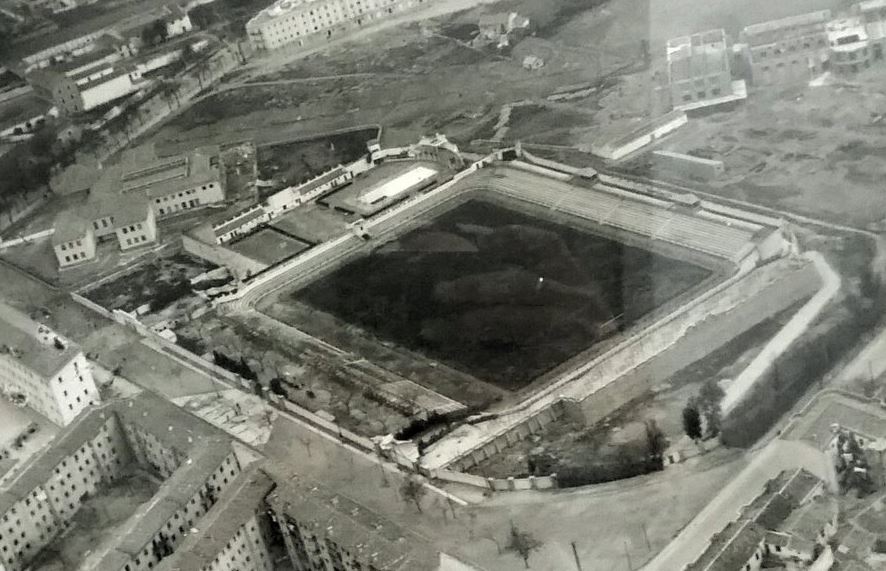
Olímpica Jiennense played their first match at a renovated and enlarged Campo de Peñamefécit on 29 October 1929, drawing 1-1 with the reserve side of Recreativo de Granada. The following season saw the club join the Regional third tier, and by 1934, Sociedad Olímpica Jiennense had reached the Primera Categoria, just one step below the Tercera; however, the Civil War curtailed any further progress. Steady improvement continued after the war, with high league placings and victory in the Copa Federación Sur in 1941, beating San Andrés of Málaga 4-1. The club finally reached the Tercera in 1943, thanks in part to the expansion of the third tier. Their debut season in the Tercera would be their last campaign at the Campo de Peñamefécit, and a creditable second-placed finish saw Olímpica Jiennense miss out on the playoffs to CD Málaga. Olímpica Jiennense started the 1944-45 season at the Campo de Peñamefécit whilst work continued on completing their new home. The final senior match played at the enclosure was on 15 October 1944, when the home side defeated Córdoba 3-2. The Campo de Peñamefécit continued to stage amateur football well into the 1950s, before the expanding barrio of Peñamefécit surrounded and eventually engulfed the old ground in 1956.
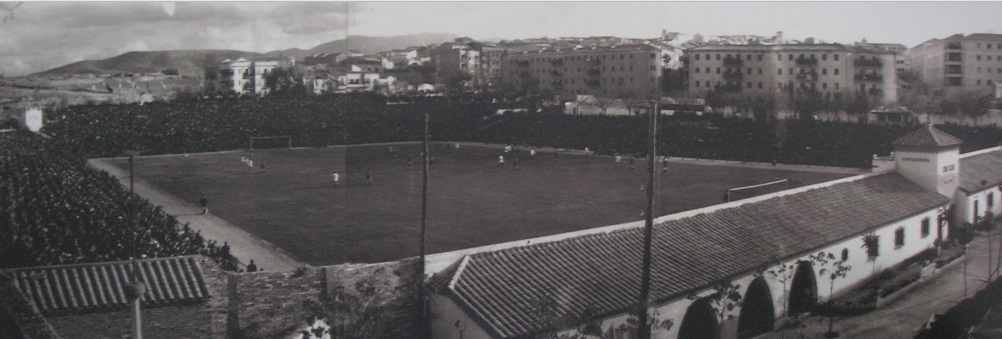
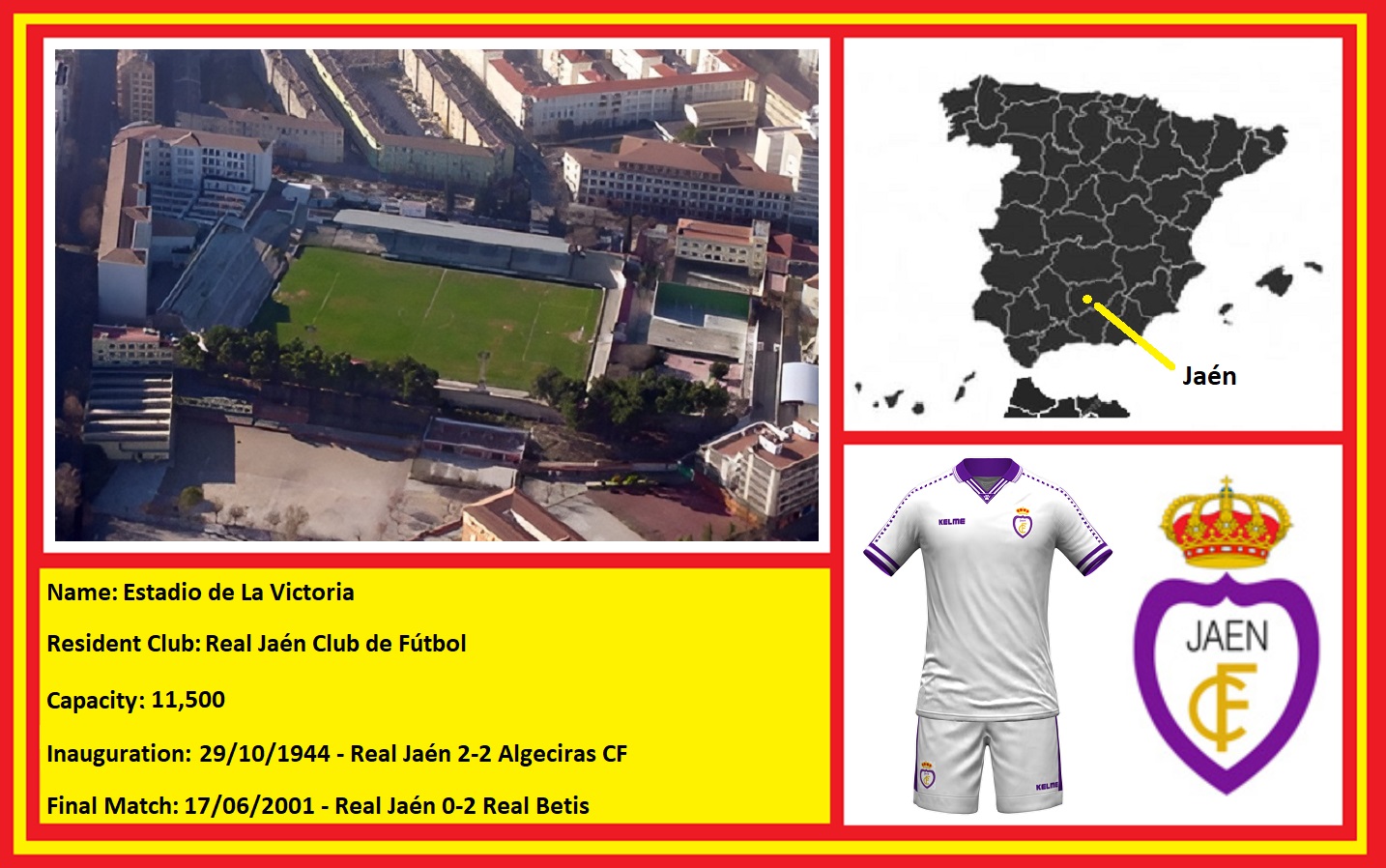
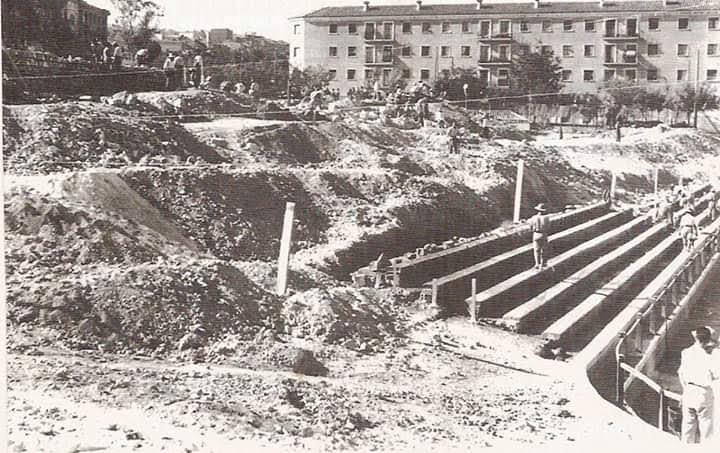
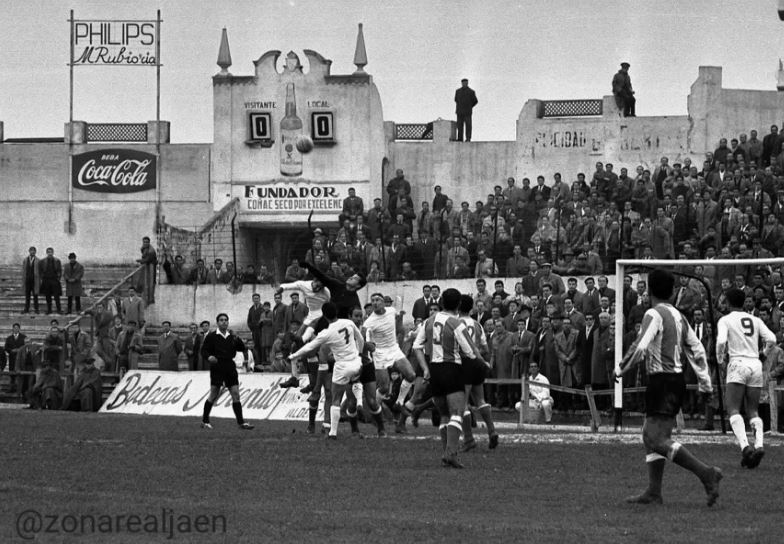
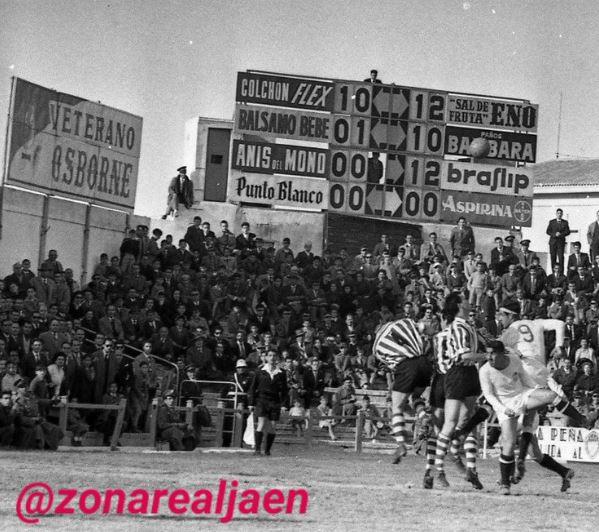
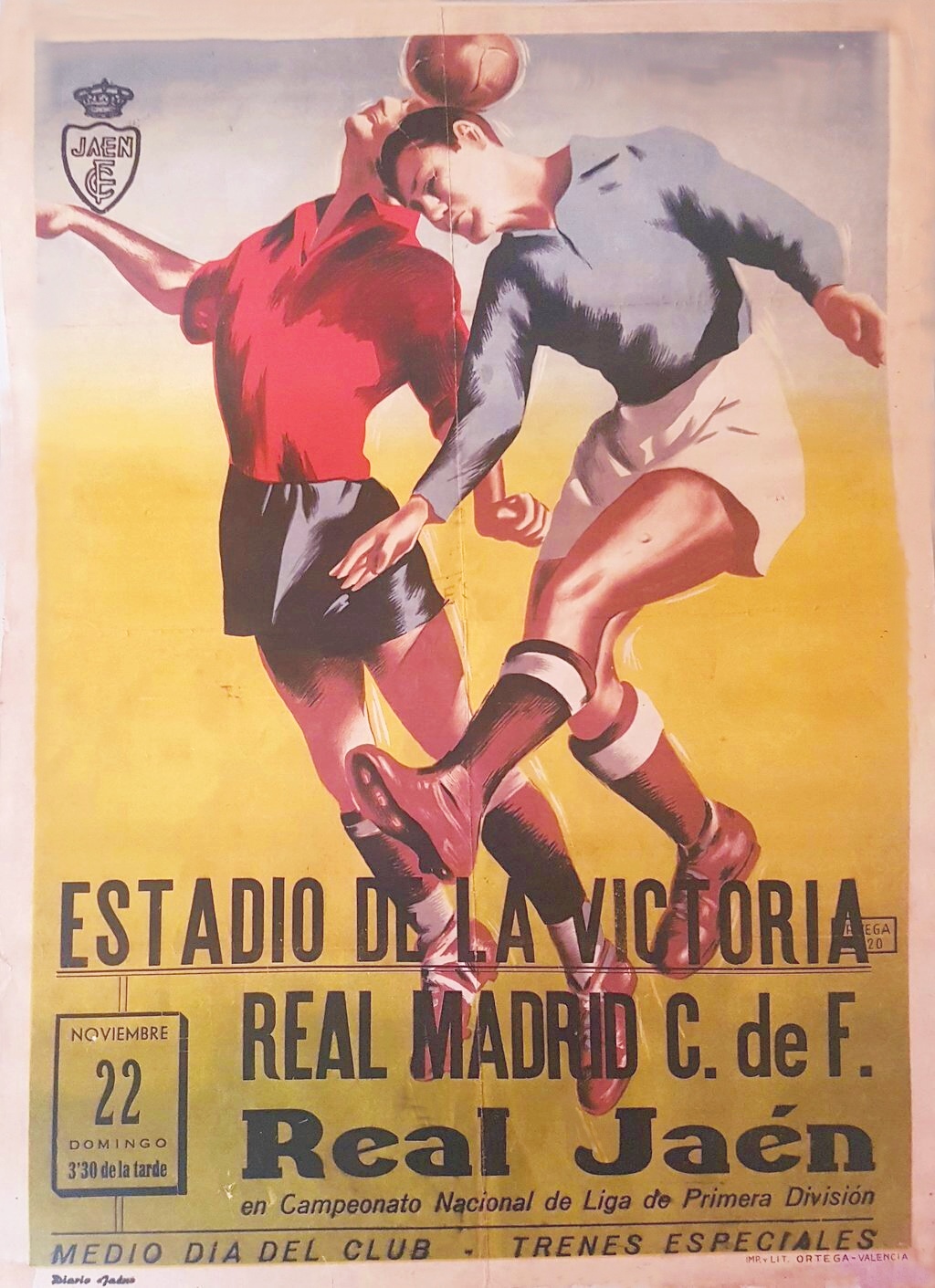
Olímpica Jiennense finally got to play at the new Campo de la Victoria on 29 October 1944, when they hosted a league fixture against Algeciras CF, which ended 2-2. Over the next ten years, the club and the stadium’s reputation grew. They finished runners-up to CD Málaga in the Tercera in 1945-46 and again in 1946-47, finishing second to Recreativo Huelva. The club changed its name to Real Jaén in September 1947 and, in June 1952, finally won promotion to La Segunda, clinching promotion in the penultimate round with a 3-0 victory at home to its closest rival, UD Almería. Real Jaén’s debut season in La Segunda was nothing short of astonishing, winning every match at La Victoria and scoring 63 goals in the process. Even a defeat to eventual runners-up Hércules in the final away match could not stop the formality of a second successive promotion, when Valencia Mestalla were beaten 4-2 at La Victoria on 3 May 1953.
Then, as is often the case today, the gulf between La Primera and La Segunda proved too great, and while Real Jaén did not disgrace themselves, amassing 28 points in finishing fourteenth, relegation followed after finishing bottom of the relegation/promotion play-off group. Two seasons later, and with another Segunda title in the bag, Real Jaén was back in the big time, and this time a fourteenth-place finish was enough for them to earn another season at the top. The 1957-58 season, their third in La Primera, proved to be their last, finishing bottom of the table with 20 points. Since the glory days of the 1950s, Real Jaén has spent much of its time in the third tier. There have been occasional, fleeting returns to La Segunda, the 1970s, and the turn of the century, for example, but regional football made up all but four of the last forty seasons at La Victoria.
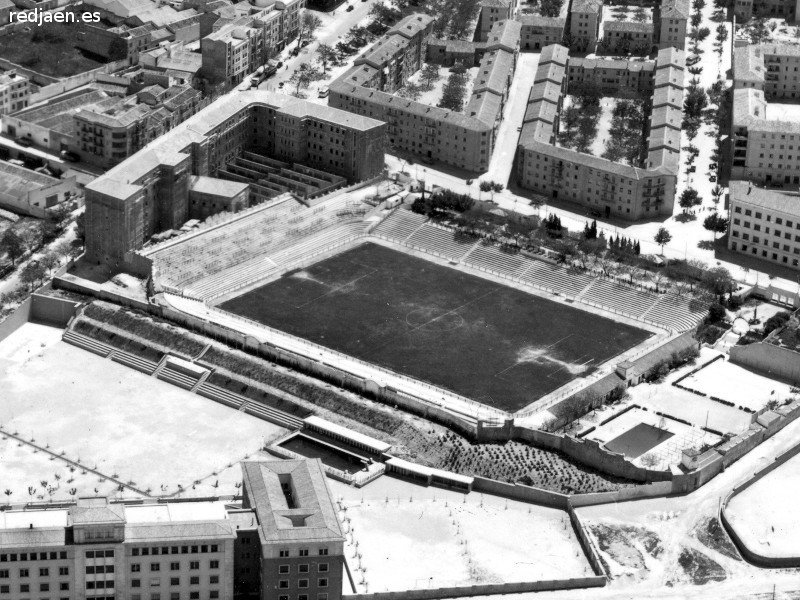
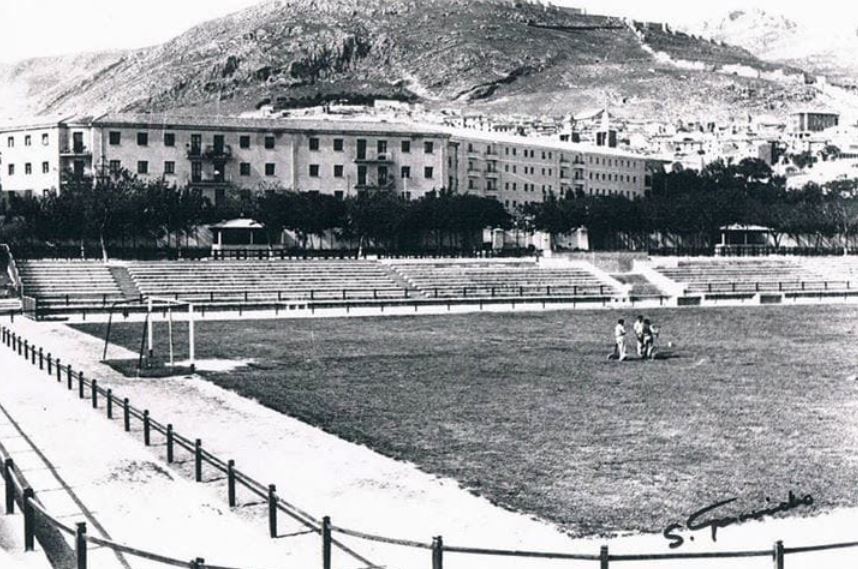
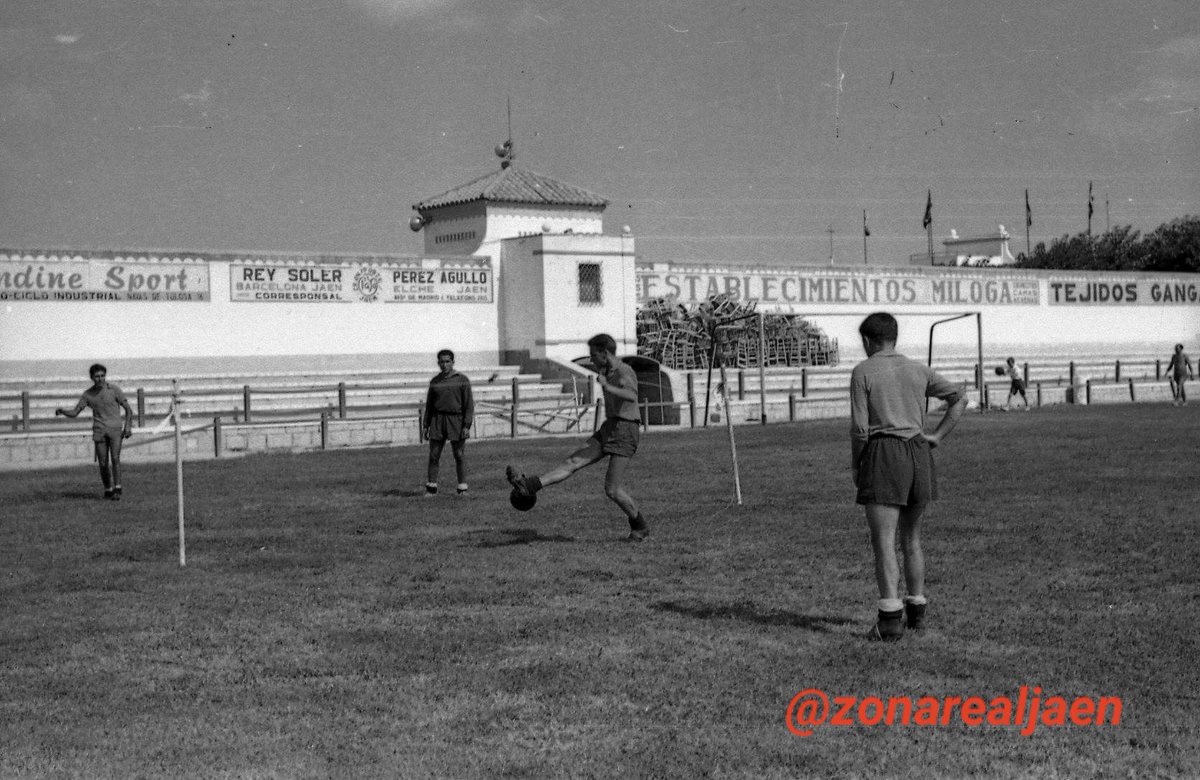
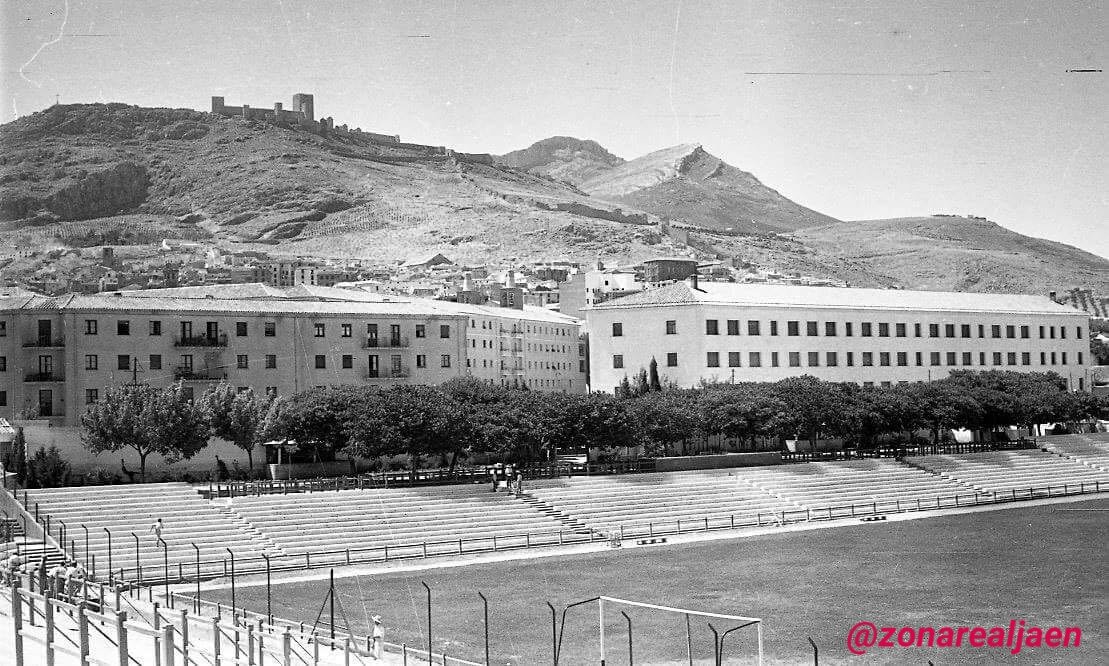
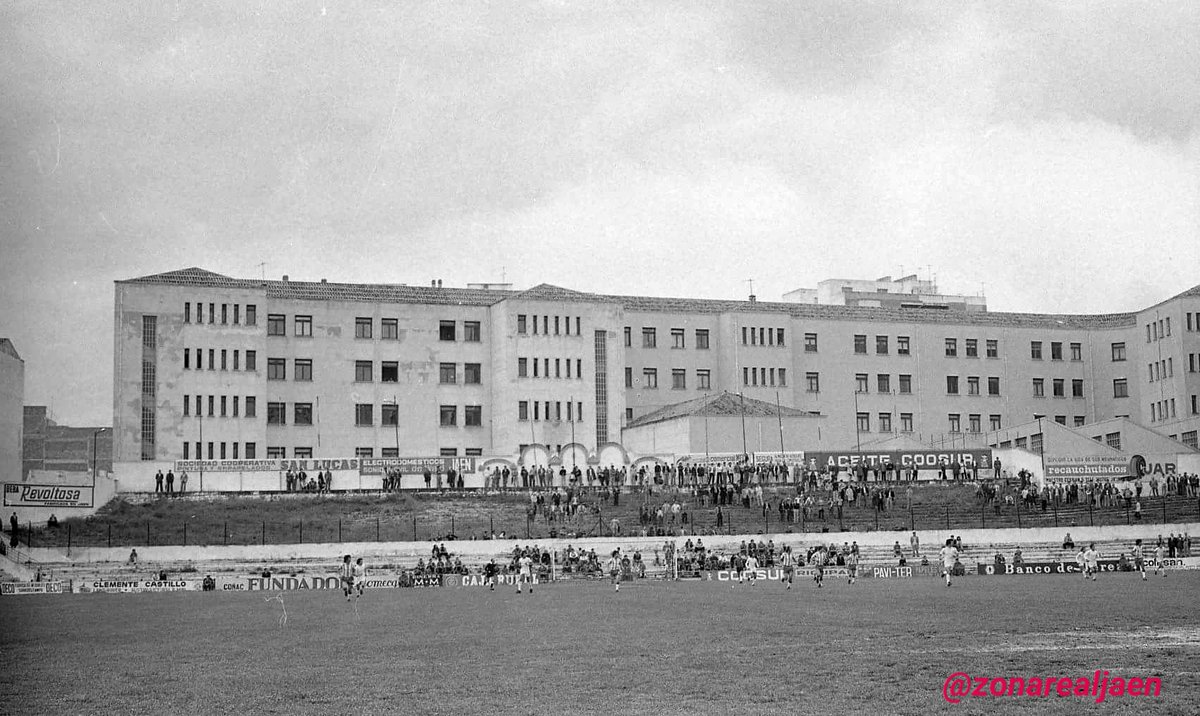
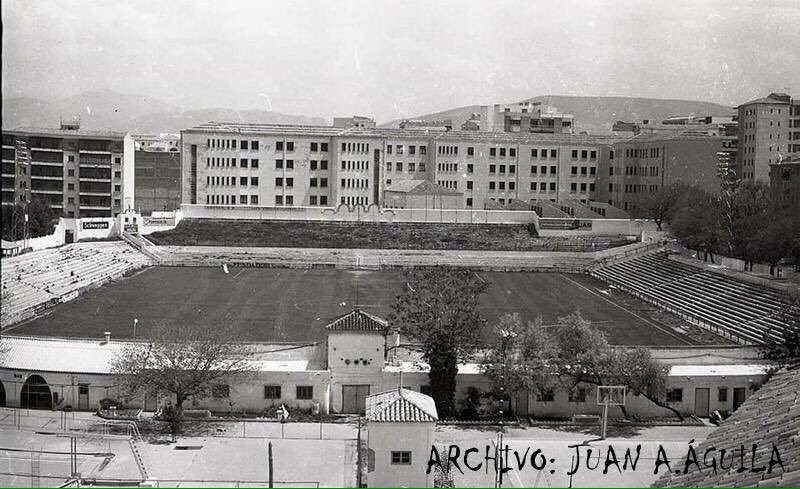
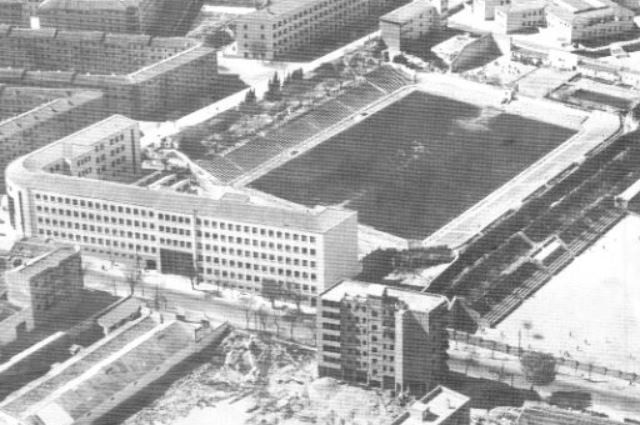
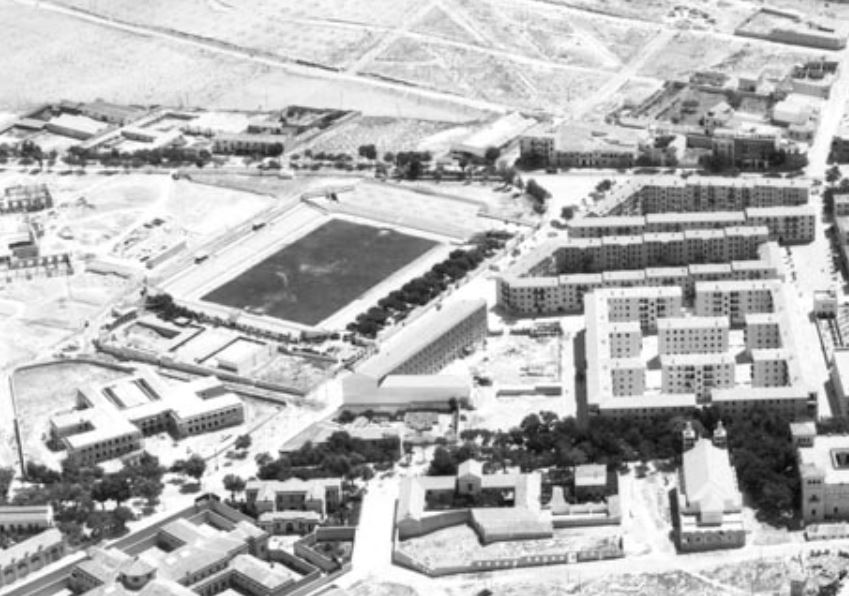
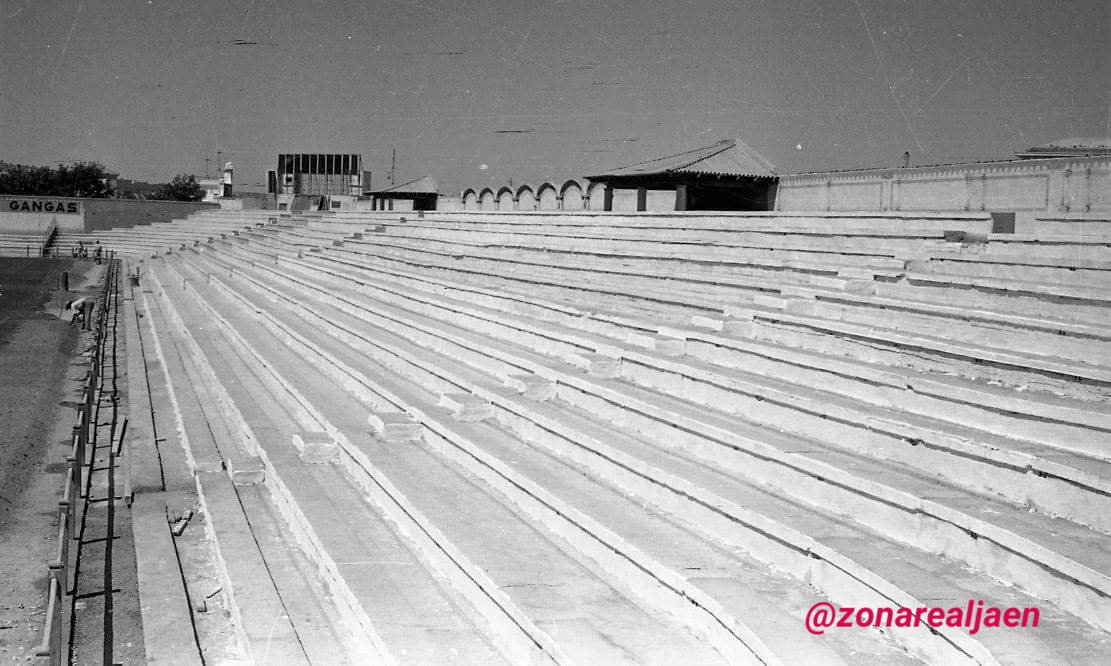
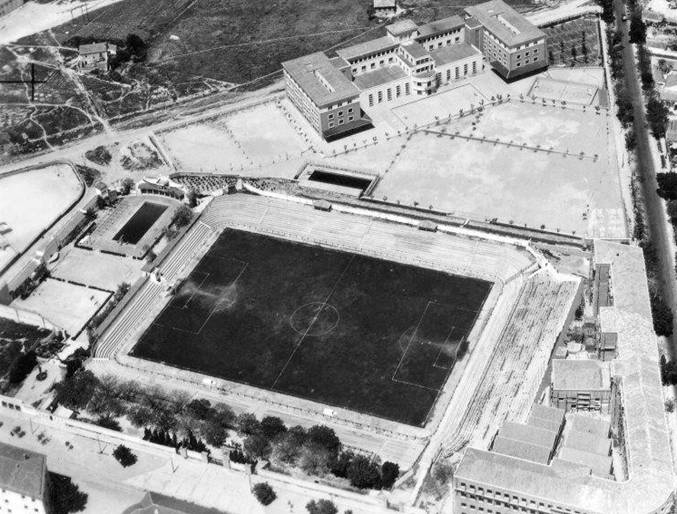
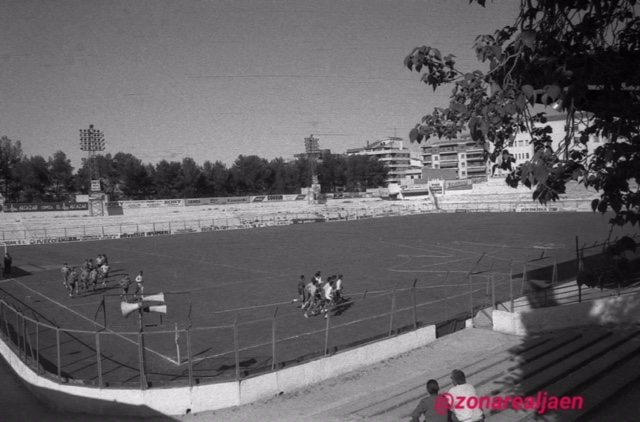
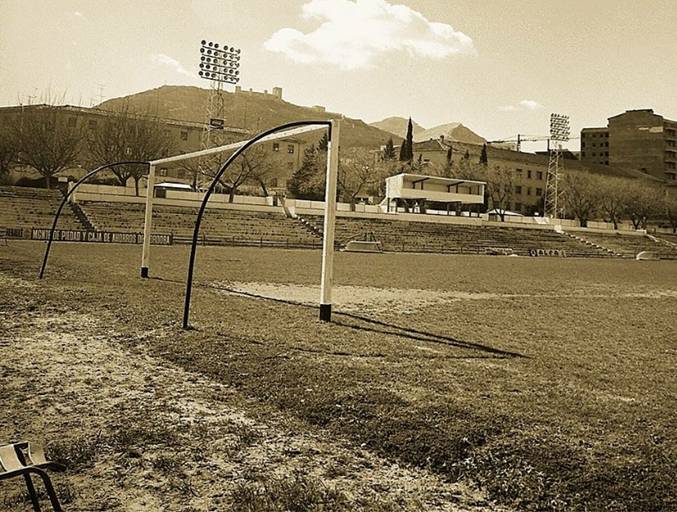
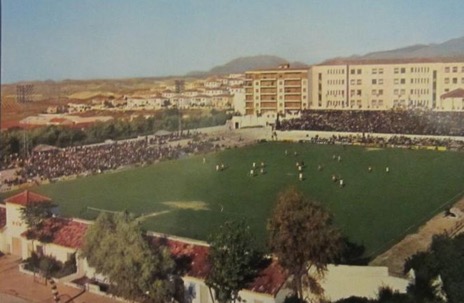
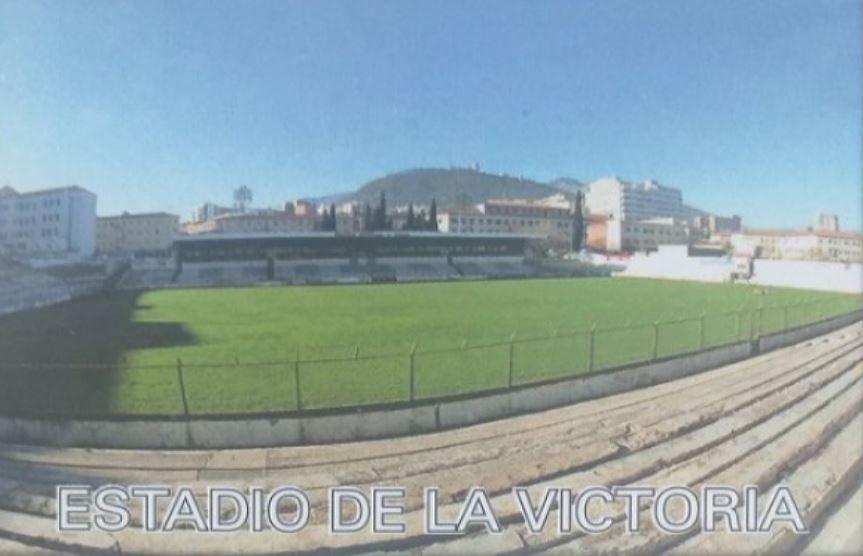
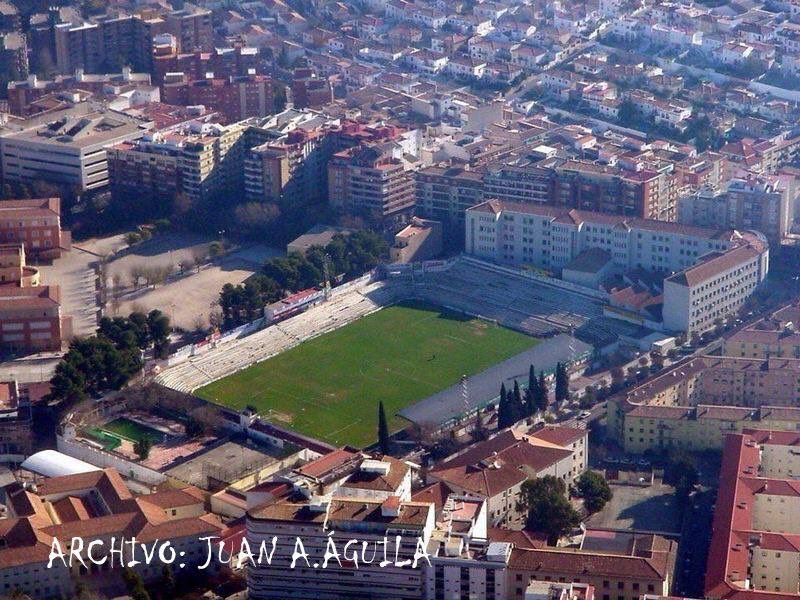
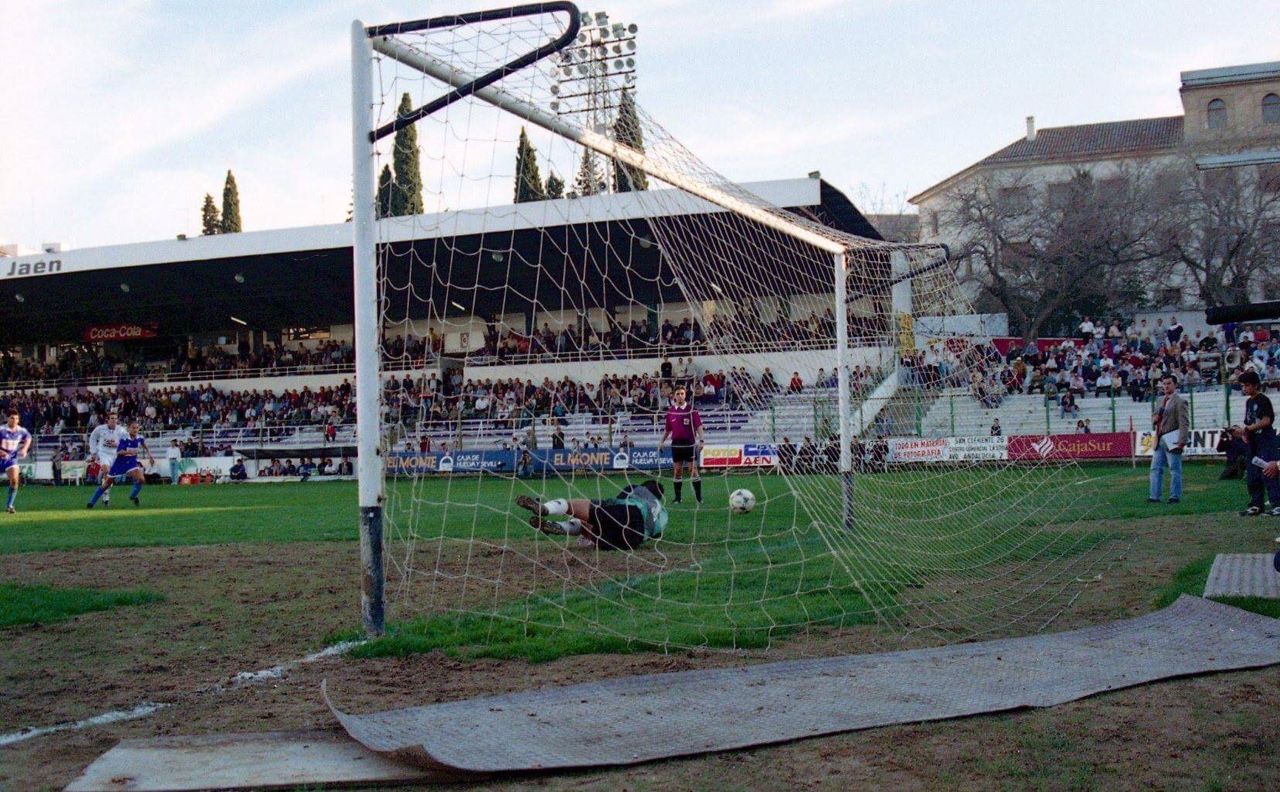
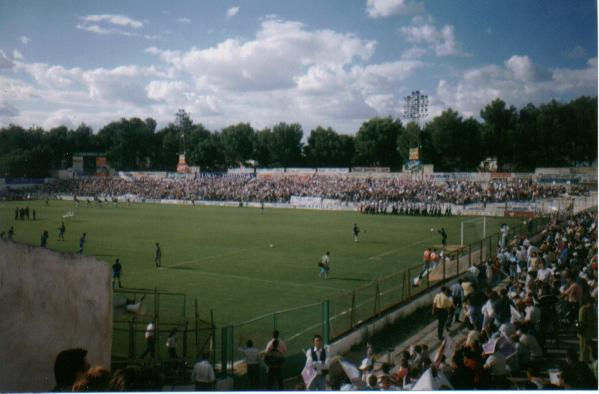
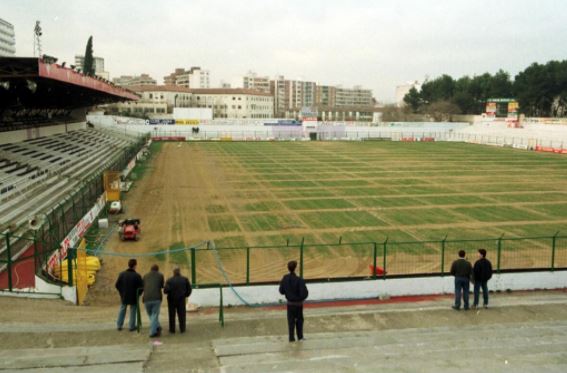
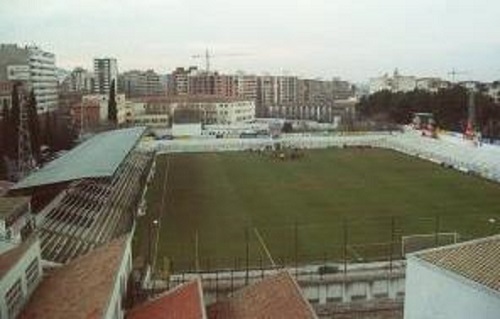
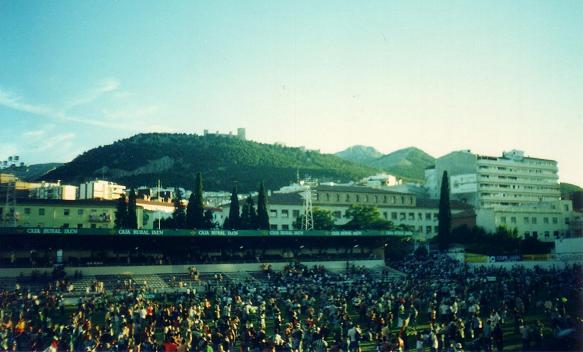
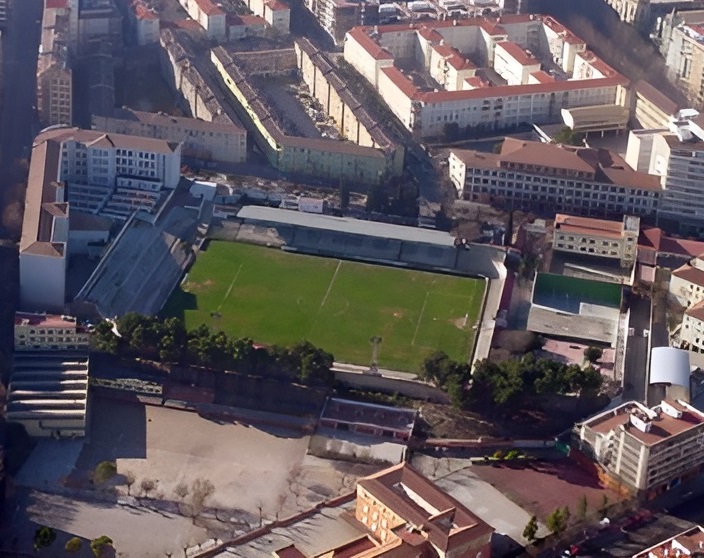
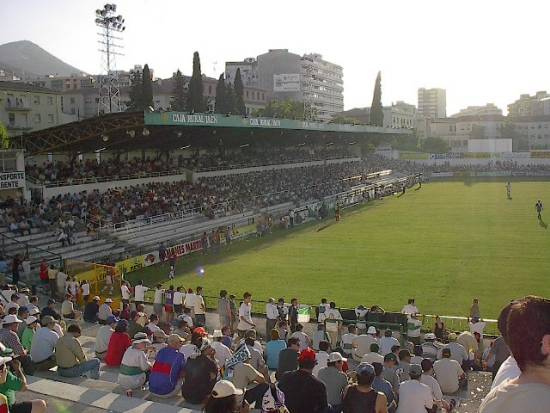
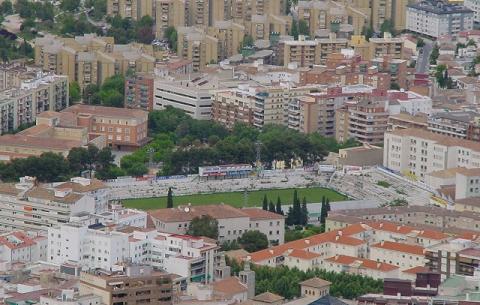
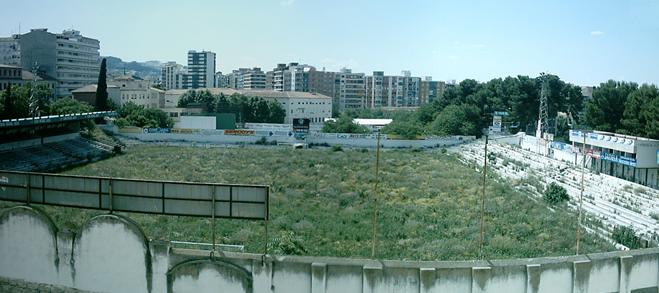
La Victoria was a particularly compact stadium in the heart of the city, surrounded on two sides by tenements, and the Colegio El Almadén and Escuela Politécnica Superior. The old stadium remained open to the elements until 1981, when an upper seated tier and a low cantilevered roof were added to the south terrace. The press facilities were also moved at this time, from a little box that sat atop the south terrace to a more substantial structure that stood on stilts above the north terrace. Bench seating was installed on the remaining areas of terracing when Jaén made it back to the second division for the 1997-98 season.
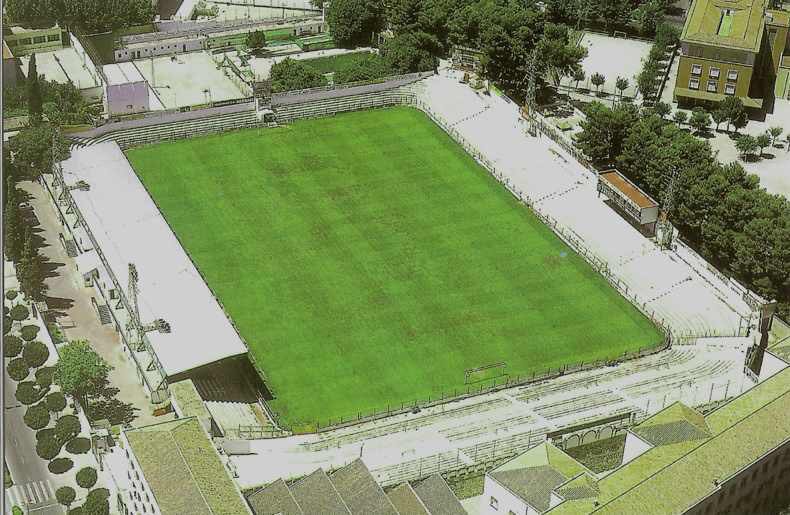
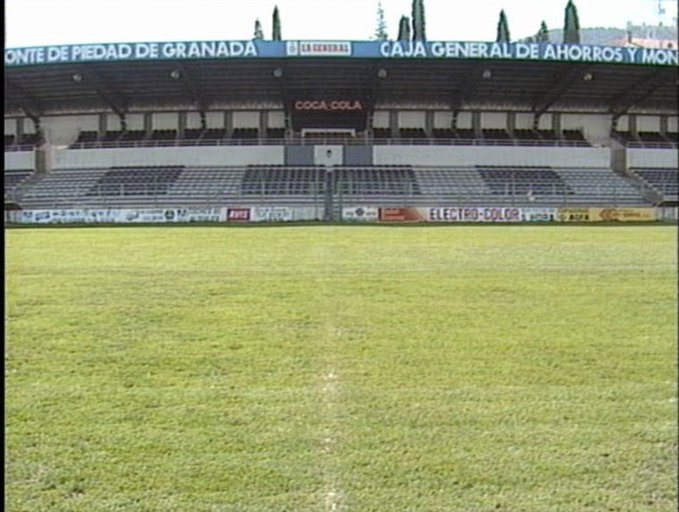
Over the years, La Victoria staged football in the top four levels of Spanish football. Even towards the end, it was still a tidy stadium that was regularly full. Its 11,500-capacity was tightly packed & evenly spread on all four sides of the ground, with the main stand housing bands of green and white seats under a low green cantilevered roof. The site was earmarked for development, and the municipality started work on a new stadium on the eastern edge of town at the start of 1999. The final match at La Victoria was played on 17 June 2001, when Real Betis celebrated promotion back to La Primera with a 0-2 win. The site was finally cleared in April 2005, and you will now find a branch of that perennial occupier of old stadium sites, El Corte Inglés.
 Estadios de España