
Article updated: 14/11/2025
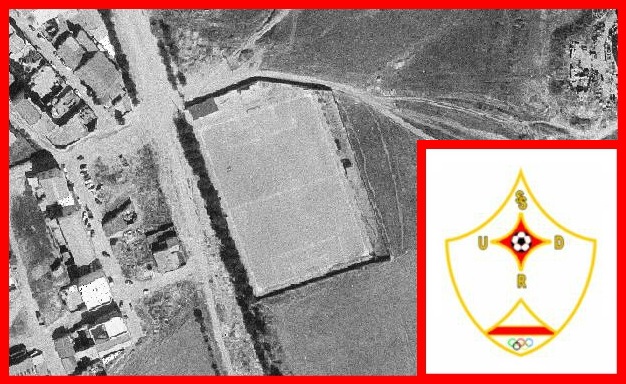
The town of San Sebastián de los Reyes was founded in 1492, and for the next 470 years, it remained a small agricultural village on the outskirts of Alcobendas. Then, in the early 1960s, Madrid’s metropolitan expansion transformed the area. Industrial estates and residential developments attracted workers from across Spain, rapidly increasing the population. The new settlers brought with them the desire to play and watch football, and in 1971, Grupo Empresa San Sebastián de Los Reyes Educación y Descanso was formed. Home matches were played at the recently opened Estadio Municipal de Matapiñonera, located on the southeastern outskirts of town. In 1977, the club adopted its current title, Unión Deportiva San Sebastián de los Reyes, which fans shortened to Sanse.

Sanse spent the first 15 years or so in the local leagues of Madrid. Their breakthrough came in 1985 when they won promotion to the Tercera, thanks to a late-season run that saw them squeeze past UD Pozuelo. Two years later, and thanks to the expansion of Segunda B, a seventh-place finish in the Tercera was enough to secure promotion to the third tier. That first season in Segunda B was a tight affair, but Sanse’s total of 35 points, just two clear of the relegation zone, secured them thirteenth place. The 1988-89 season saw Sanse battle at the bottom of the table throughout the campaign, but a run of poor results in the final few games saw Sanse eventually come up short, and they were relegated with a total of just 32 points.
Sanse then spent the next four seasons back in the Tercera. However, a fourth-place finish in the 1992-93 season saw the club return to Segunda B via the play-offs. A last-day win over Caudal secured top place in the playoff group and promotion. This time, the stay lasted three seasons, and in 1994-95 the club finished in sixth position. The following year was not a success, and they returned to the Tercera after finishing in seventeenth place. Two seasons later, and another fourth-place finish in the Tercera saw Sanse enter the play-offs. This time, they topped a group that featured Ponferradina, Universidad de Oviedo and Compostela B.
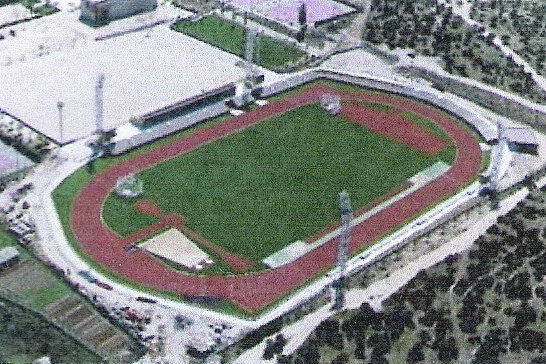
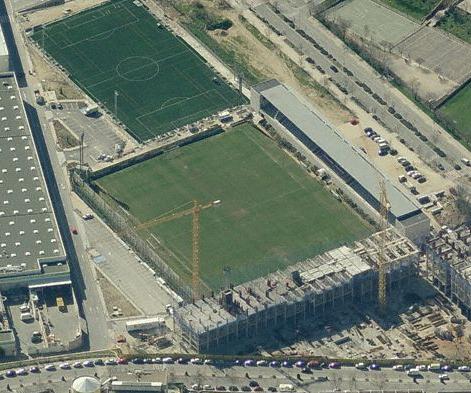
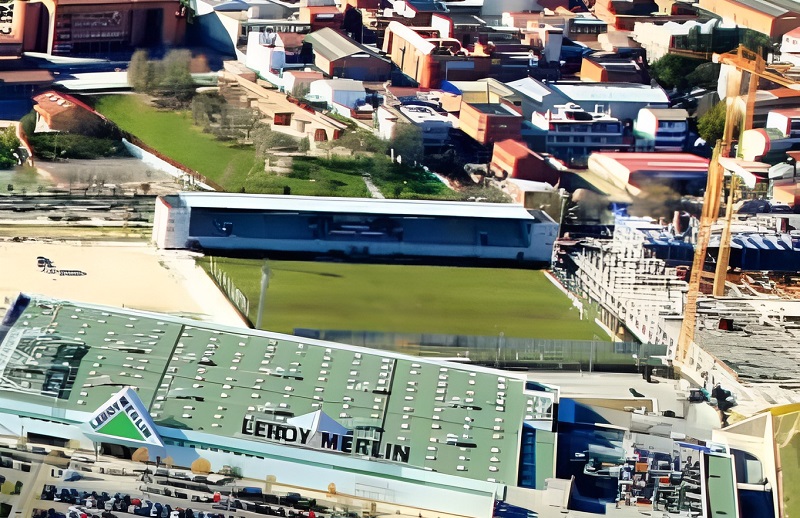
Their first season back in Segunda B ended with a fourteenth-place finish, and then in the 1999-00 season, Sanse equalled their best-ever position with another sixth-place finish. Some of this and the 2000-01 season was played at the Polideportivo Dehesa, as their old Estadio Matapiñonera stadium was demolished when a large retail park was built to the southeast of the town. The new development, however, included a new stadium, which was opened on 2 January 2001 when Sanse faced Athletic Club in a Copa del Rey tie. The new ground did not bring an immediate upturn in fortune, and the club was relegated back to the Tercera in June 2001. Back in the Tercera, Sanse won the first of two successive Tercera titles between 2001 and 2003, but fell short in the playoffs. A year later, with the second title under its belt, the club dominated its play-off group, winning five of the six matches and finishing ahead of Deportivo La Coruna B, Sporting Gijon B and Guijuelo.
For once, Sanse stuck around in Segunda B and in 2006-07 finished sixth, equalling their highest-ever placing. Relegation followed in 2007-08 in what was a dismal season, as the club finished nineteenth and scored only 23 goals in 38 matches. A downturn in form followed as life back in the Tercera proved difficult, with the club finishing in thirteenth position in 2009 and 2010. Sanse’s form returned in 2010-11, and after completing the regular season in fourth place, they reached the final phase of the playoffs, where they faced CD Tudelano. A narrow 2-1 win at home set up a tense second leg in Navarra, but an early goal settled Sanse’s nerves and earned them a 3-1 aggregate victory. It was to prove to be one of Sanse’s shorter stays in Segunda B, as after a late run of form in the 2011-12 season, the club narrowly avoided relegation, there was no escaping the drop back to the Tercera a year later.
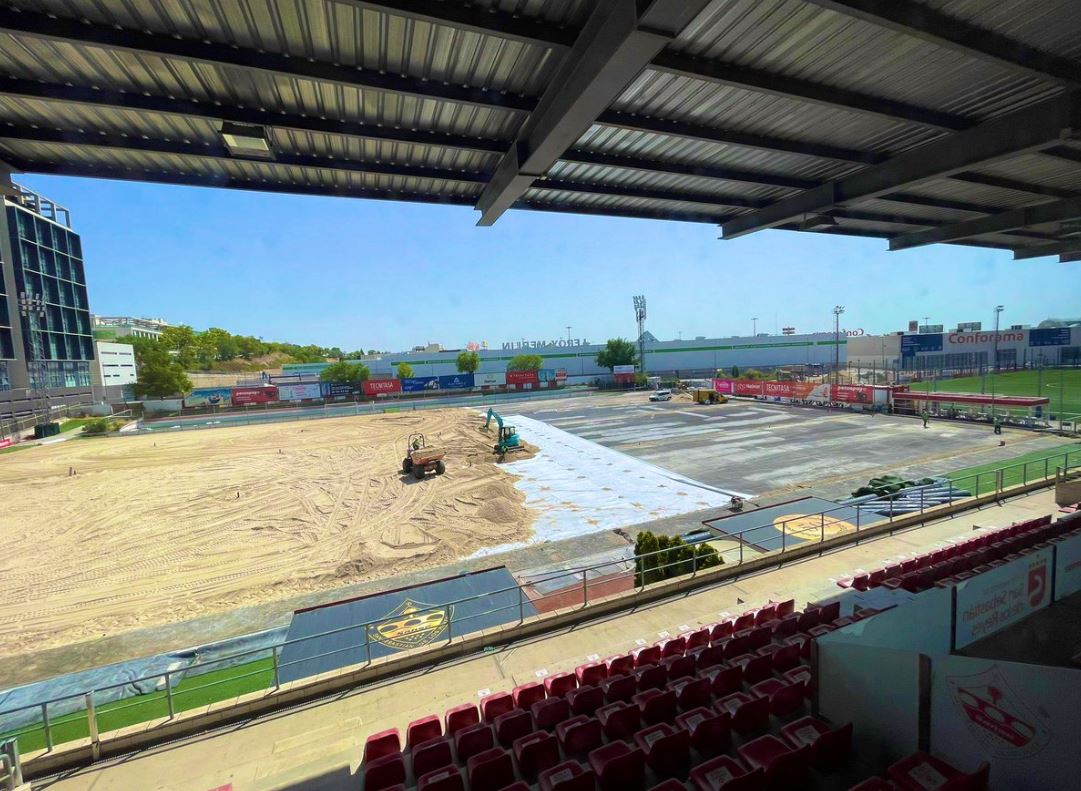
Sanse won their third Tercera title in May 2016, before dispatching Villa de Santa Brigída in the playoffs to earn a return to Segunda B. What followed was to prove to be the club’s longest stay in the third tier. There were some close calls, however. Relegation was avoided on the last day of the 2016-17 season with a 2-1 victory over Amorebieta, and the club was 15 points adrift at the bottom of the table when the competition was suspended in March 2020 due to the COVID-19 pandemic. Sanse made the most of their reprieve, and when the 2020-21 season eventually started, a vastly improved squad won their subgroup and finished runners-up in the promotion group to earn a place in the newly formed Primera Federación. RFEF rules outlawed the use of artificial turf in the third tier, and while Sanse were allowed a year to make the changes, in the summer of 2022, the plastic was ripped up and natural turf returned to Matapiñonera. Sanse’s seven-year jaunt in the third tier came to an end in May 2023 with relegation to the Segunda Federación.

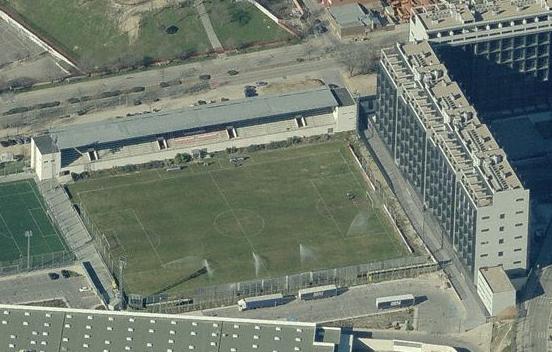
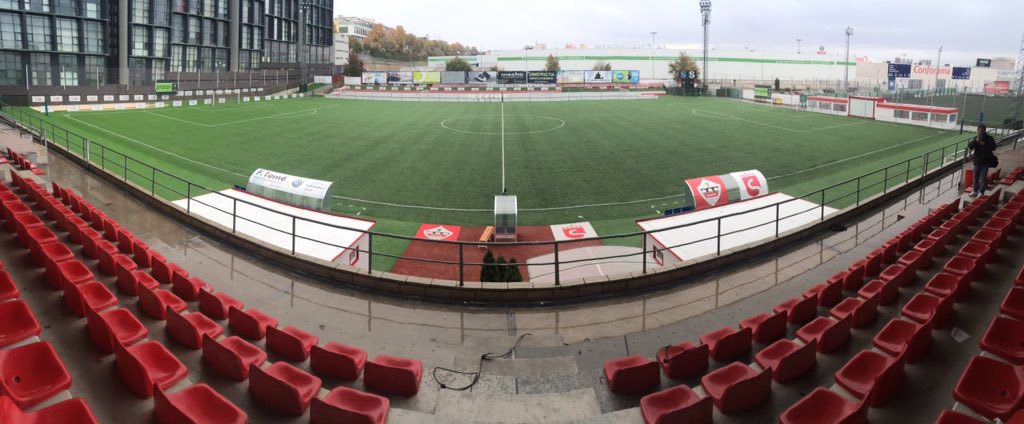
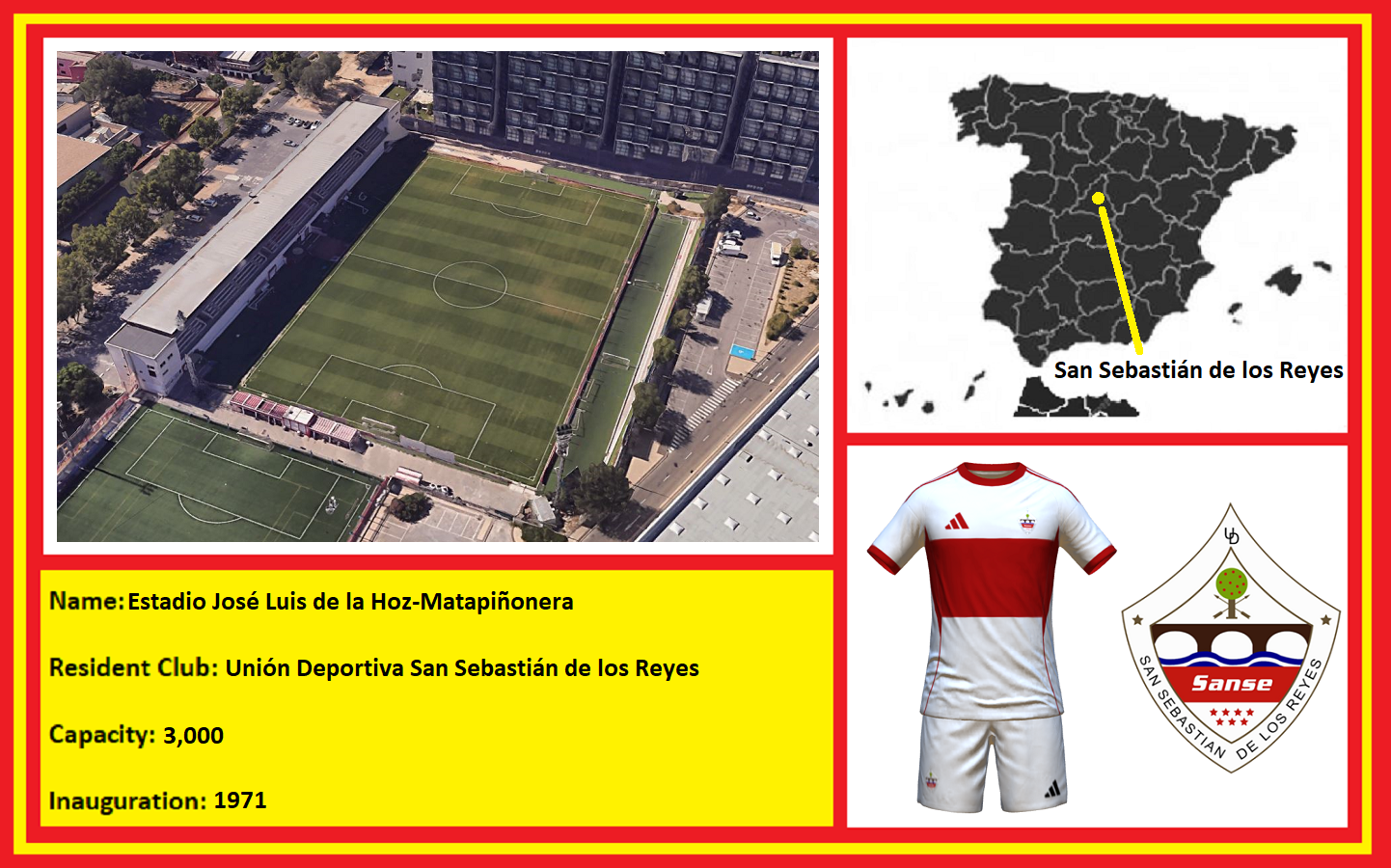
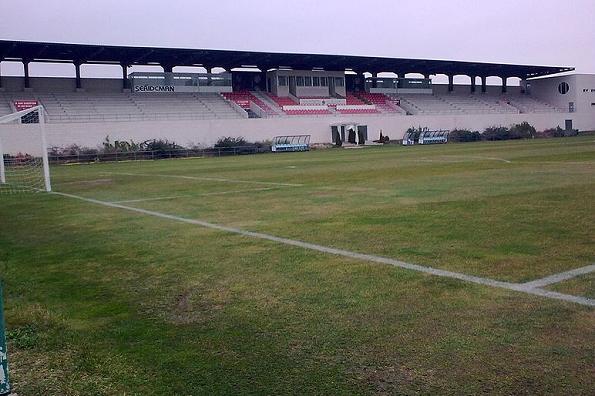
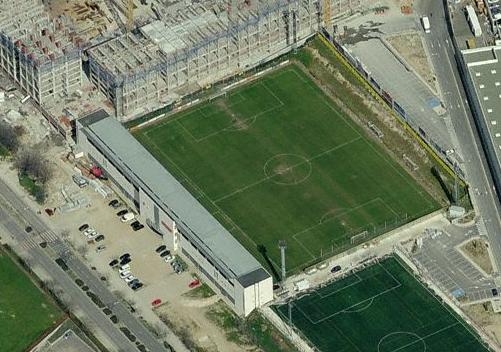
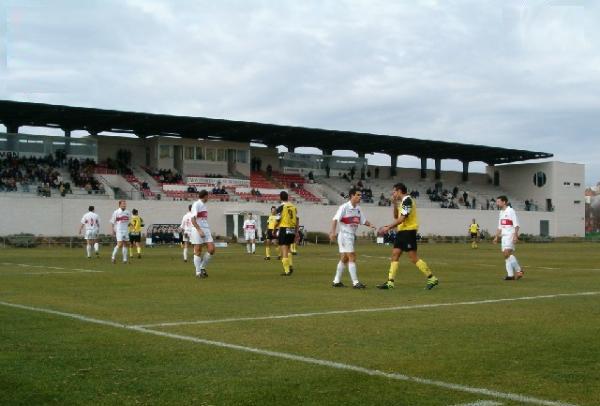
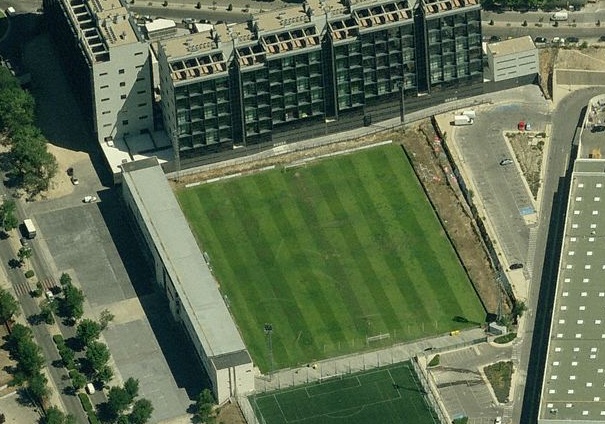
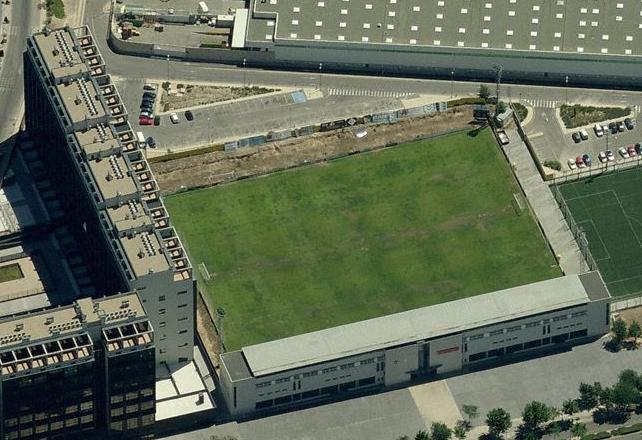
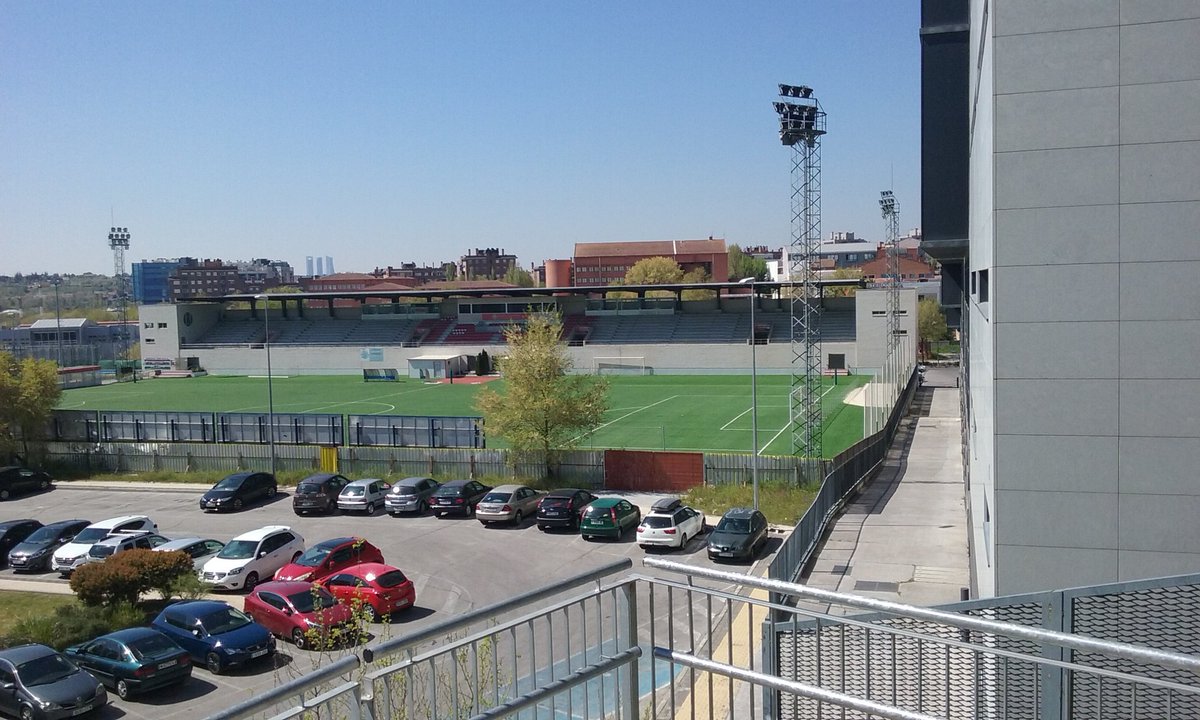
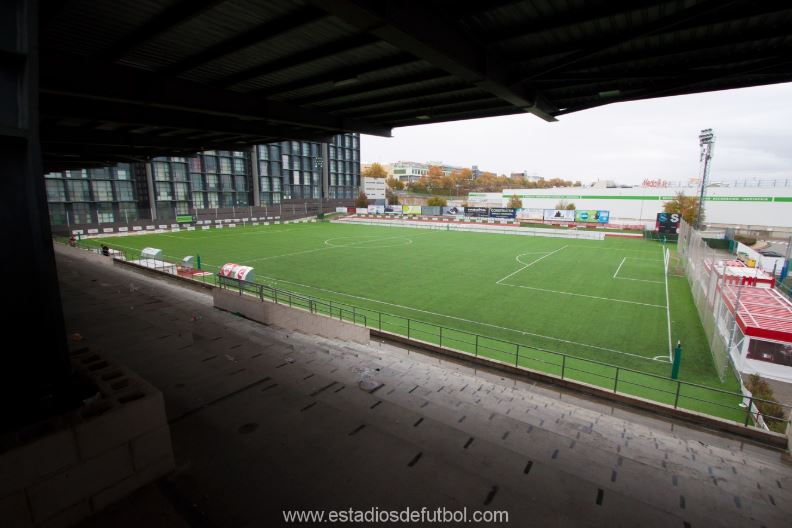
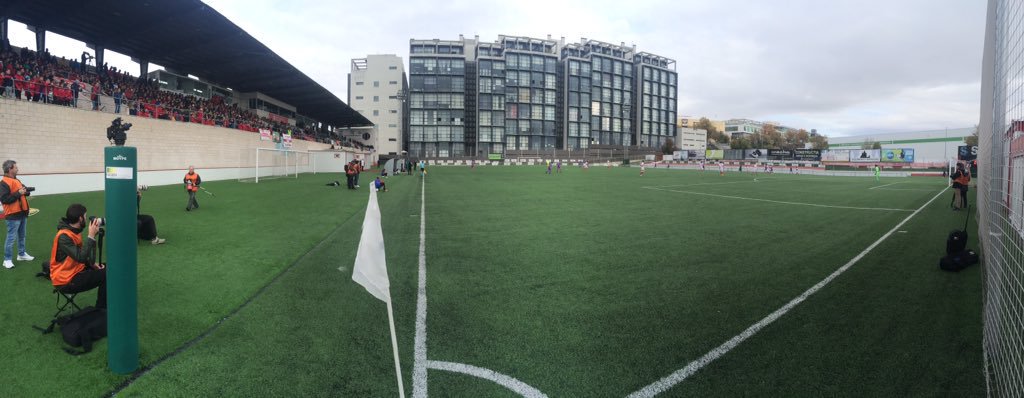
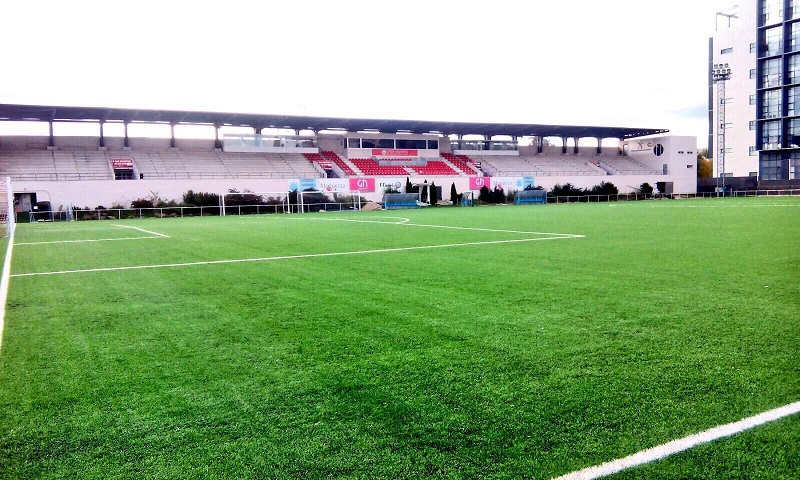
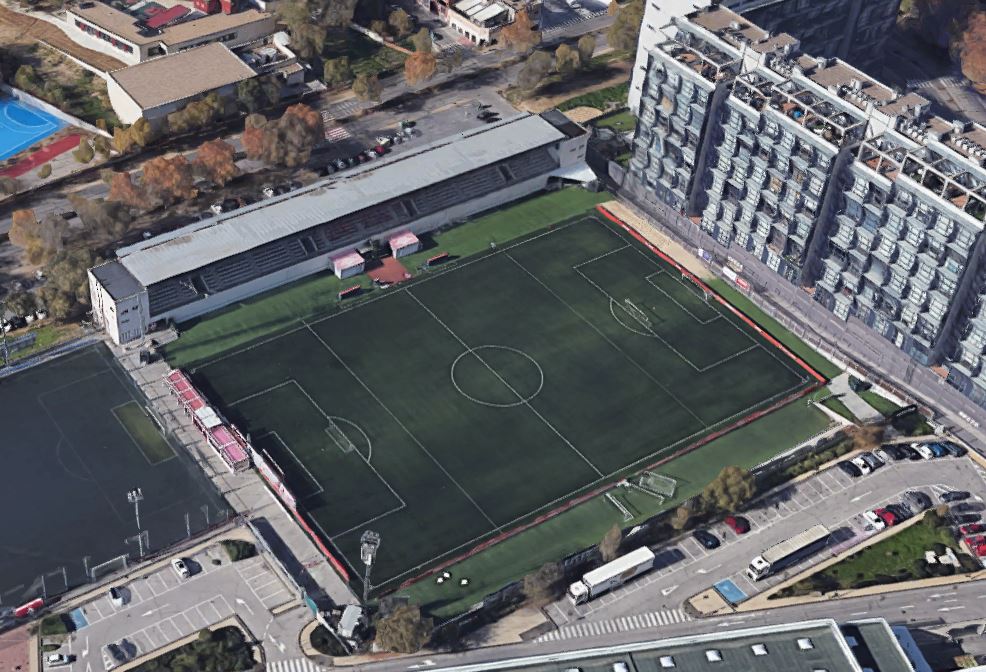
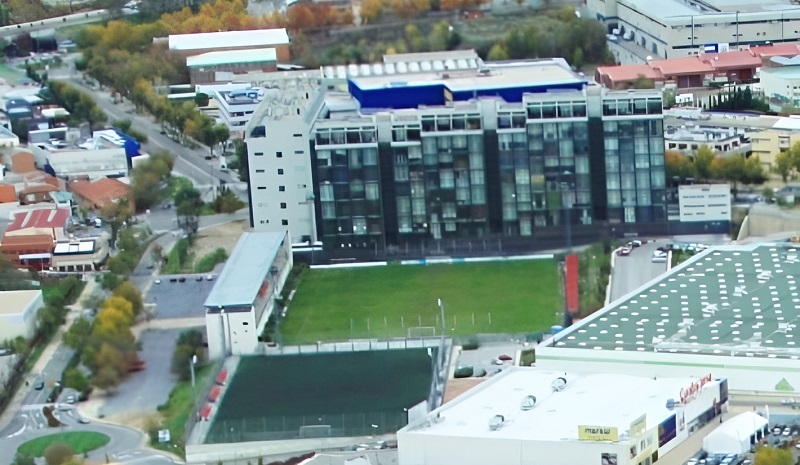
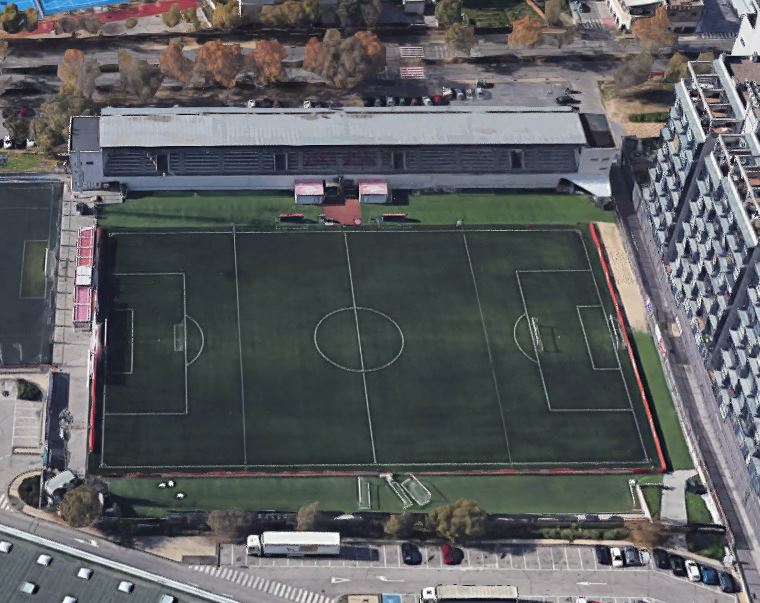
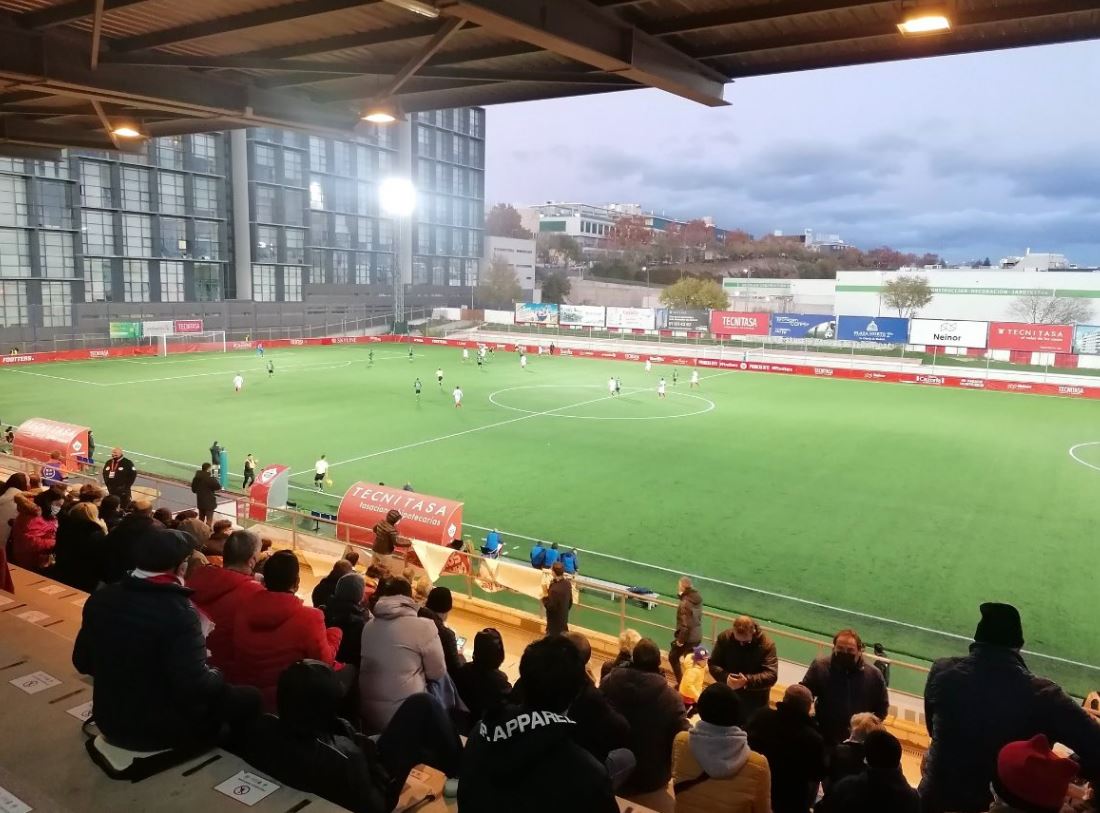
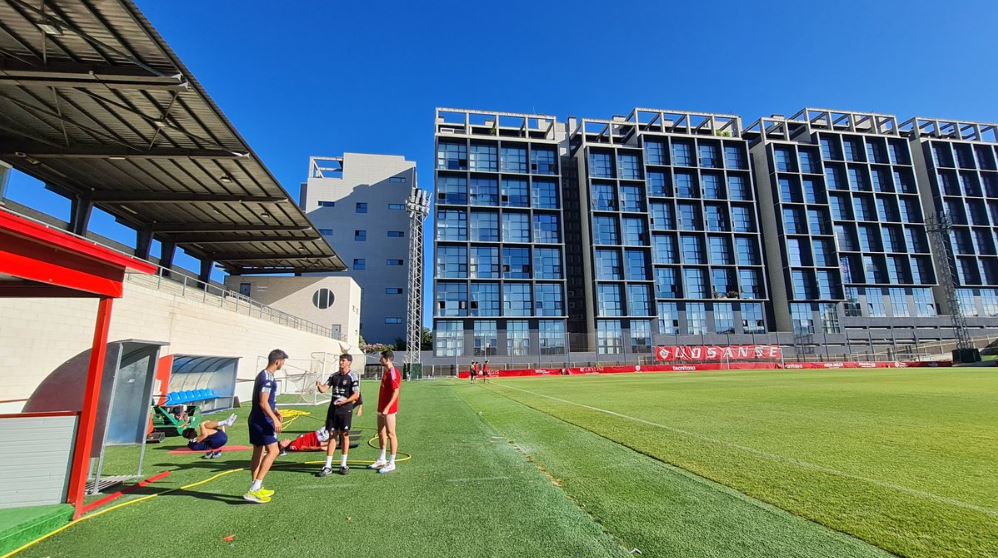
Estadio Nuevo Matapiñonera is essentially a one-stand stadium. When it was built in 2001, it initially appeared very open and barren. However, the development of retail stores to the east, housing to the north and a training ground to the south has given the arena a more enclosed feel. With limited space for hard standing, the bulk of the capacity is housed in the 3,000-seat raised main stand. It is not dissimilar to Alcorcón’s main stand, but the use of red seats in the central portion sets a nice contrast to the stark white of practically everything else. The central portion also houses a press/media box, whilst access to the seating is gained through four vomitories at the front of the stand. Each end of the stand features office/utility space, which receives light through circular windows adjacent to the seating. In July 2017, the municipally-owned stadium was renamed Estadio Municipal José Luis de la Hoz, in honour of the club’s former president, who oversaw their rise from the Regional League in Madrid to Segunda B.


 Estadios de España