
Article updated on: 15/09/2025
Let’s be frank, the phrase “Top-flight football club from Castile-La Mancha” is rarely used. With the notable exception of Albacete Balompié’s forays into La Primera, clubs from this historic region tend to spend their time in the lower reaches of the Spanish leagues. That’s not to say that there aren’t stories to tell and sights to see, which is certainly the case in Talavera de la Reina, a town of 90,000 inhabitants, some 120 kilometres south west of Madrid.

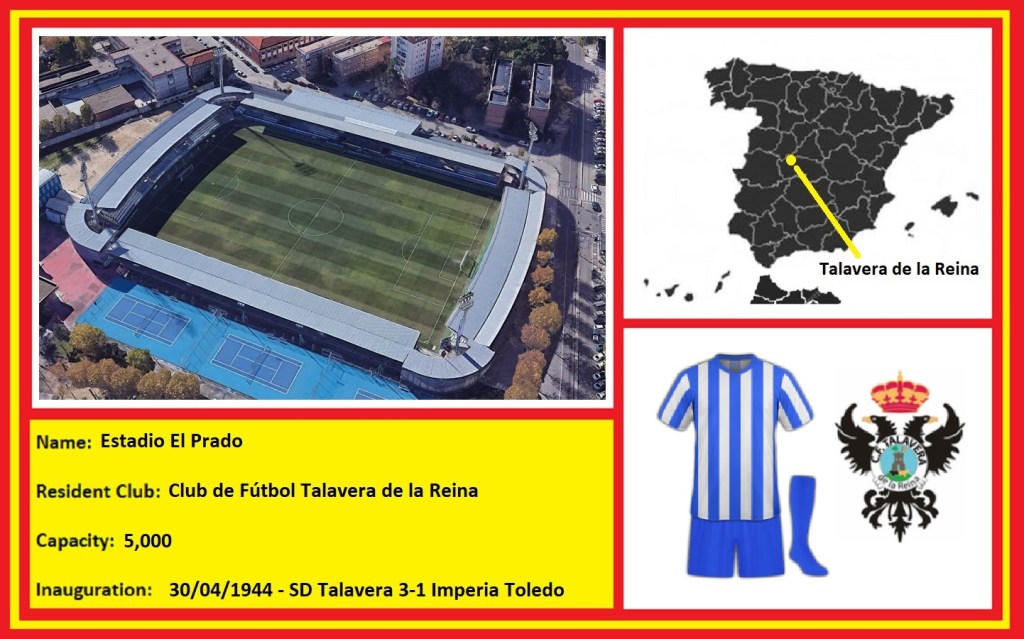
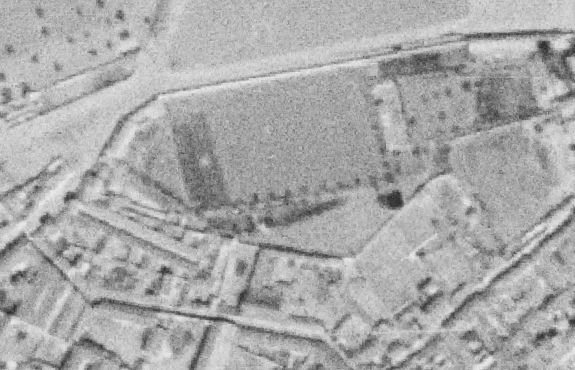
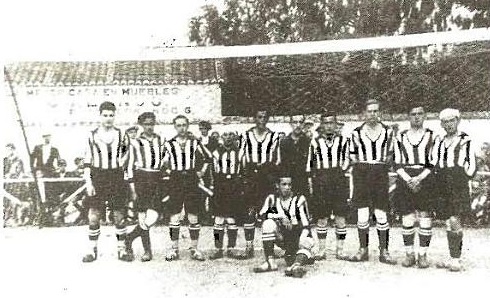
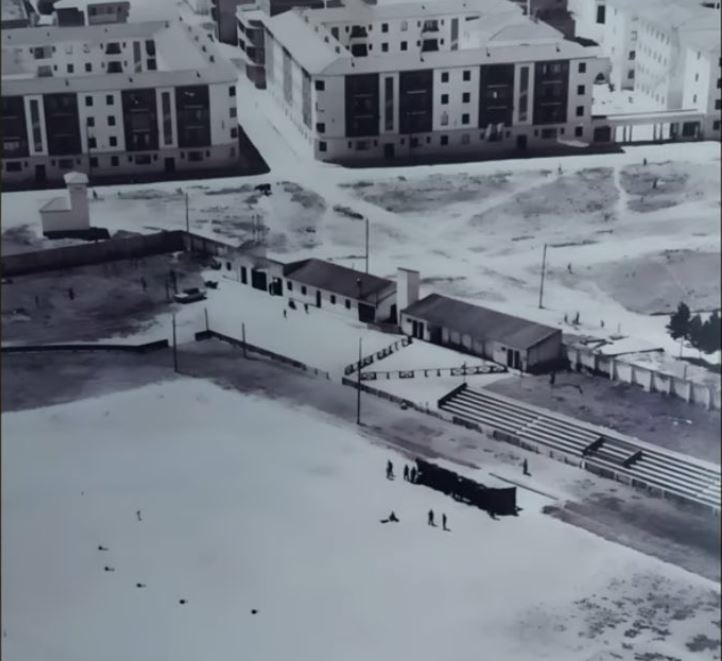
Senior teams started to emerge from the city in the early 1920s, the most prominent of which was Club Deportivo Ebora. which was formed in April 1924 and played at the Campo de Santa Clotilde. In 1929, several smaller clubs merged to form Club Deportivo Talavera, which continued to grow until the outbreak of the Civil War. After the war, CD Talavera remained the city’s senior team, but in 1948 a new name emerged, and quite a name it was. Club Deportivo San Prudencio de Educación y Descanso. The new club chose to play matches away to the east of the city on a pitch named El Prado, which was just to the north of the city’s bullring. This area had hosted football since the early 1930s, but was finally enclosed and opened on 30 April 1944. The facilities were basic, featuring a short strip of terracing on the west side and changing facilities located in the southwest corner. A cinder running track ran around the pitch. As Talavera expanded in the 1950s, Santa Clotilde was swallowed up by development, and El Prado became the focal point for football in the city.
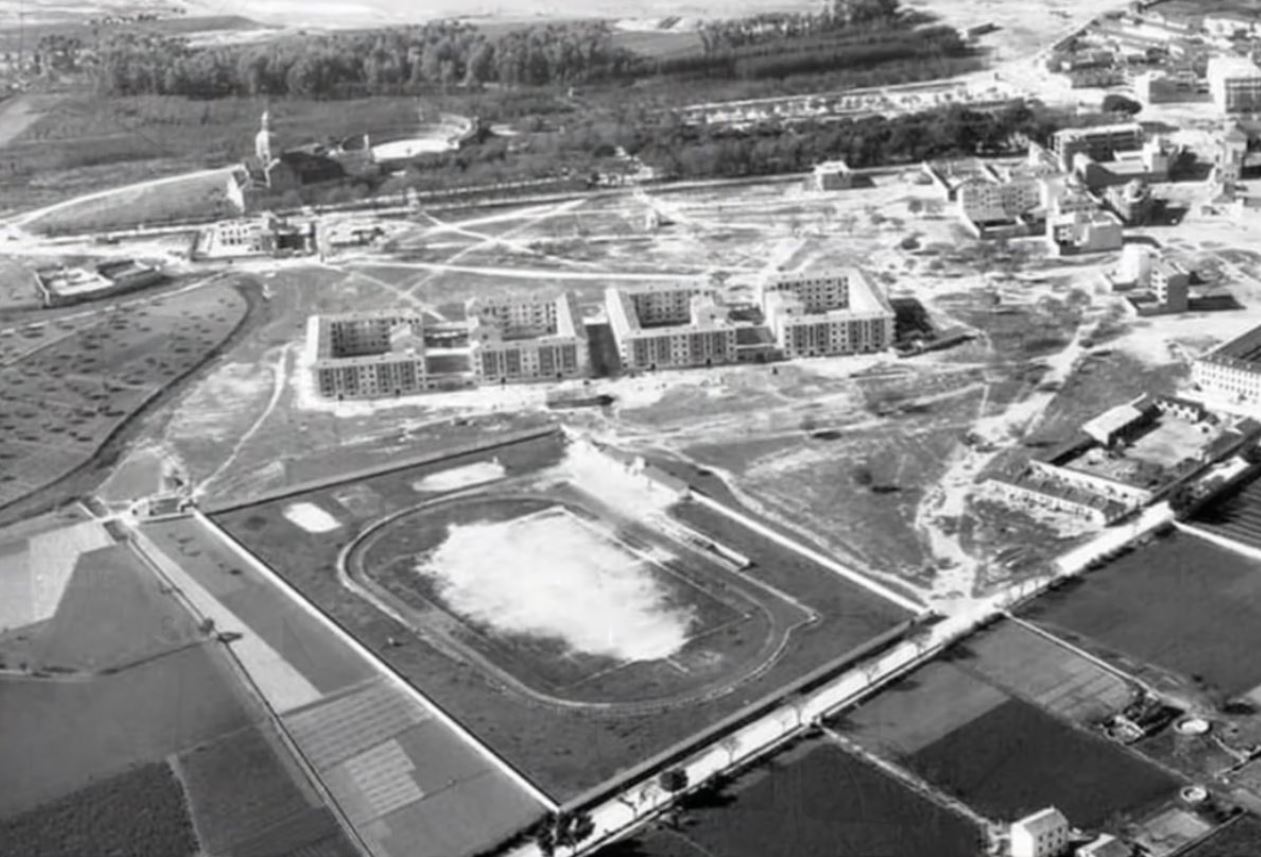
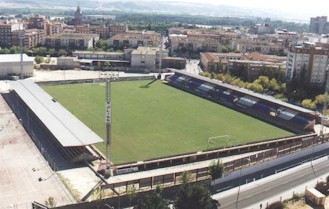
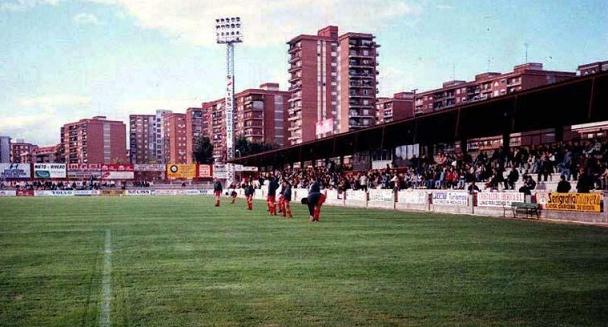
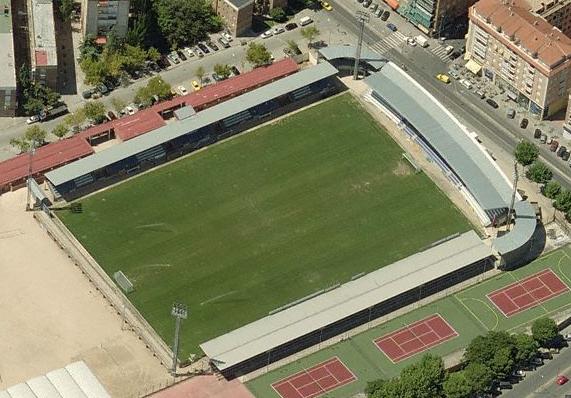
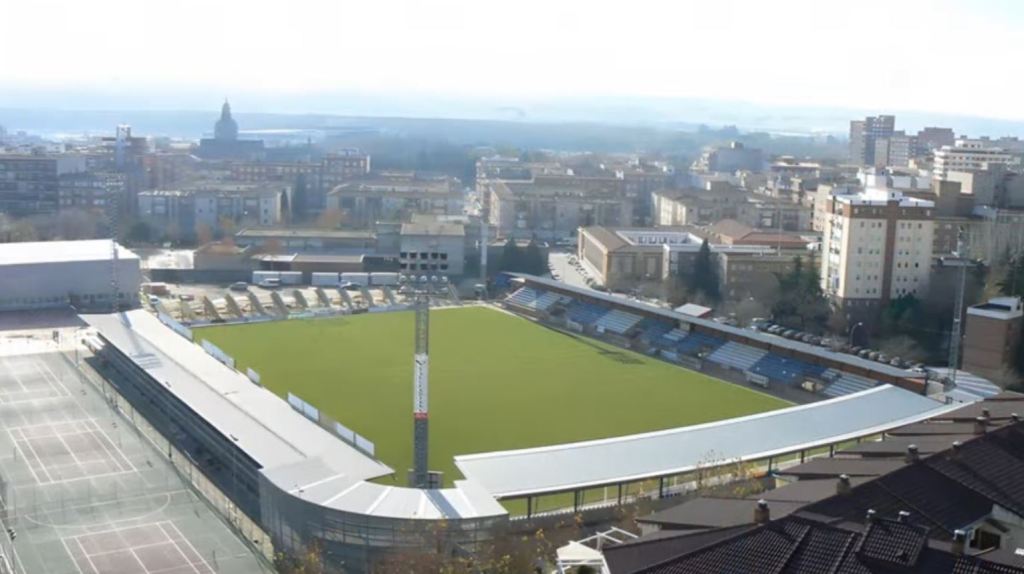
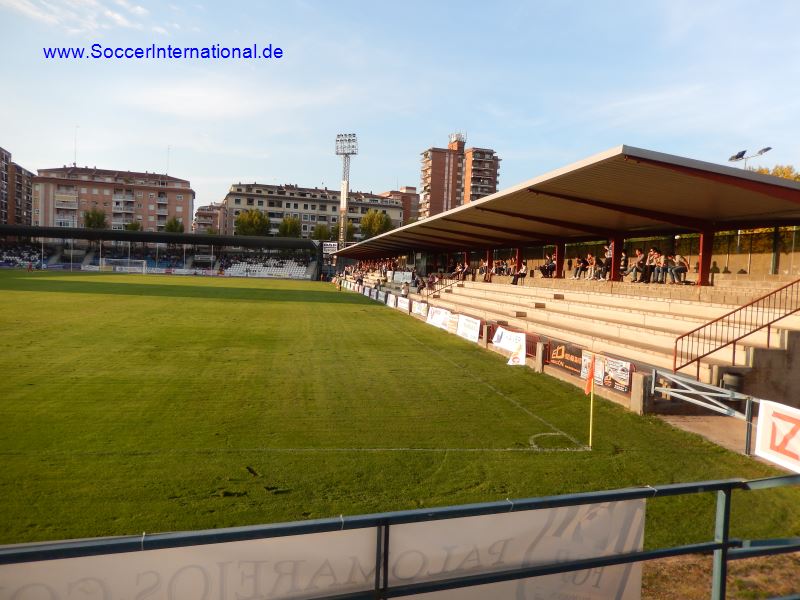
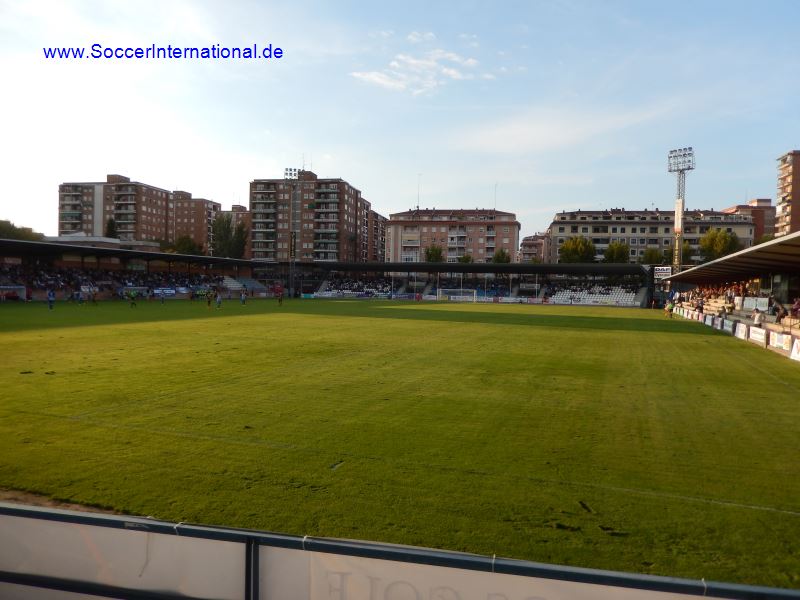
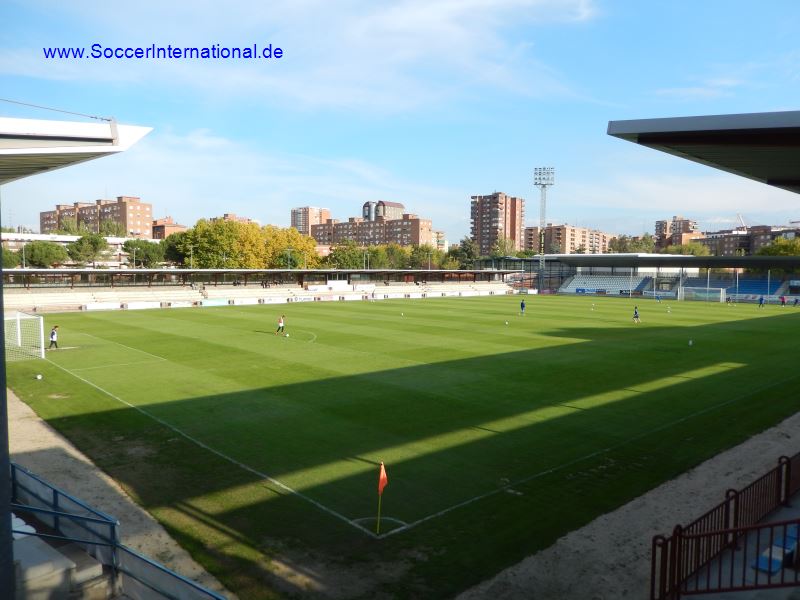
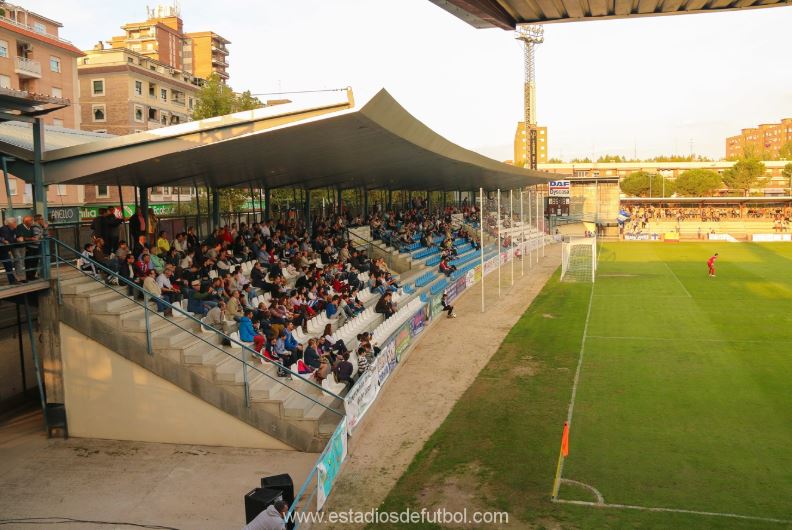
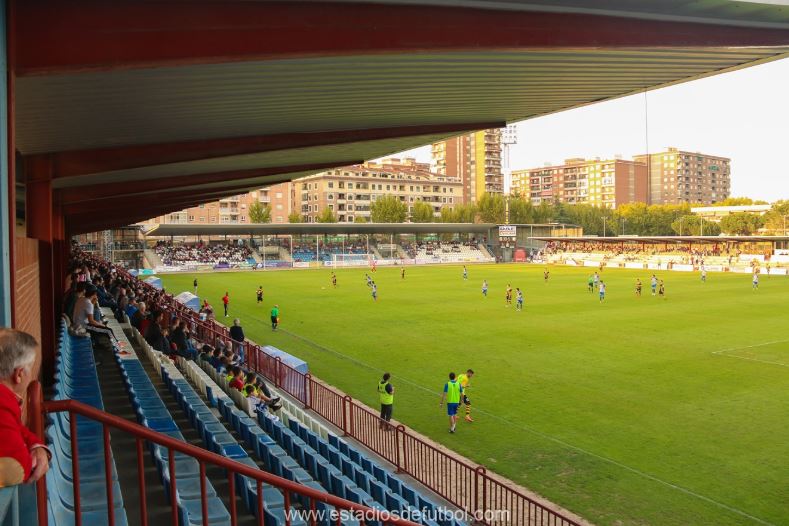
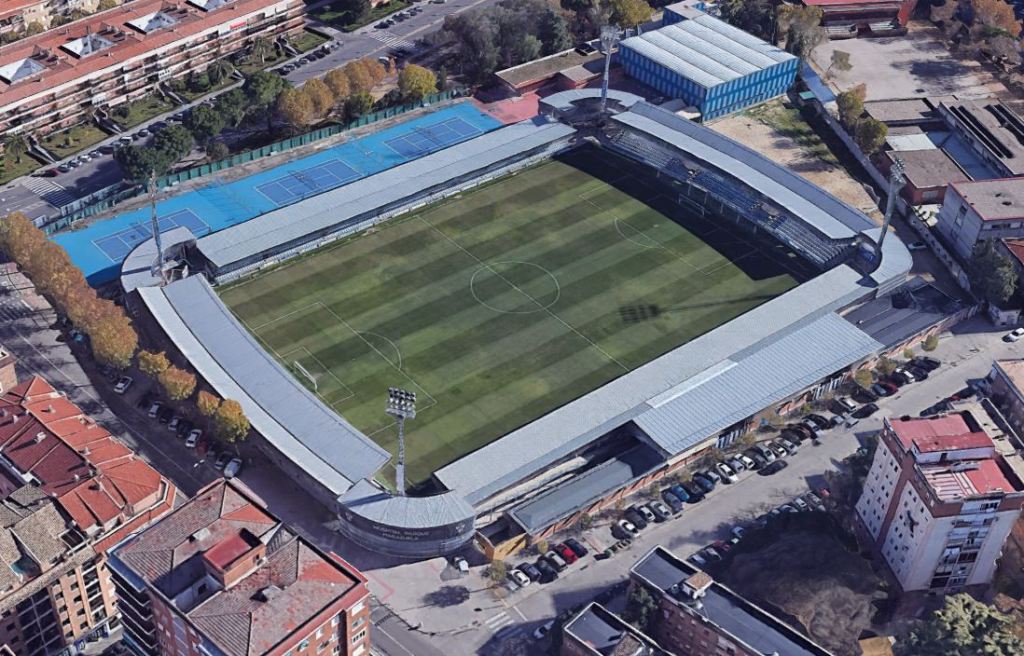
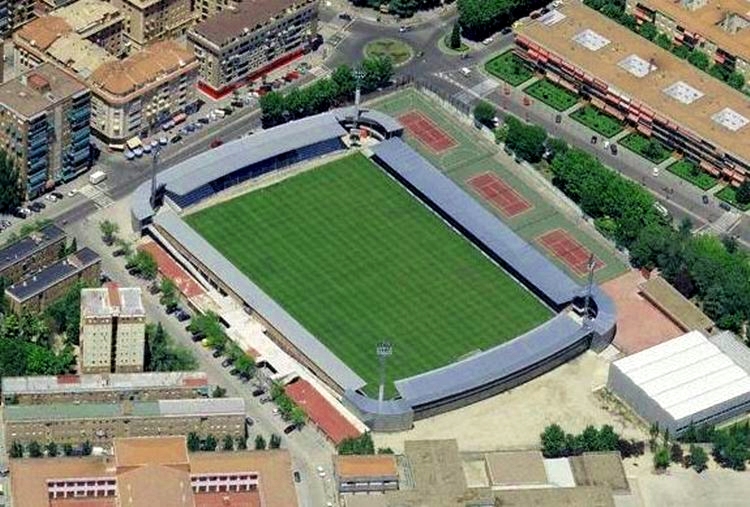
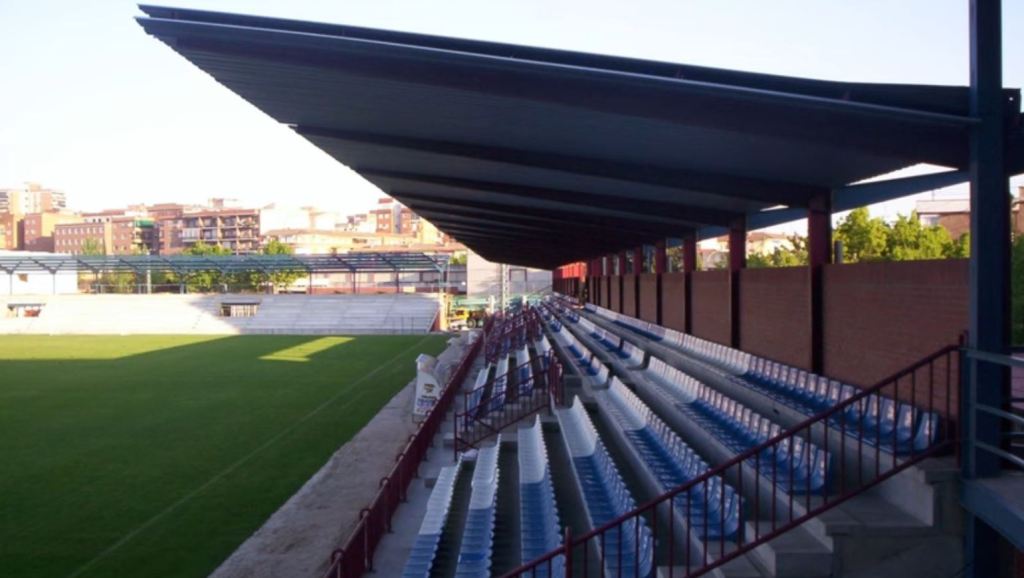
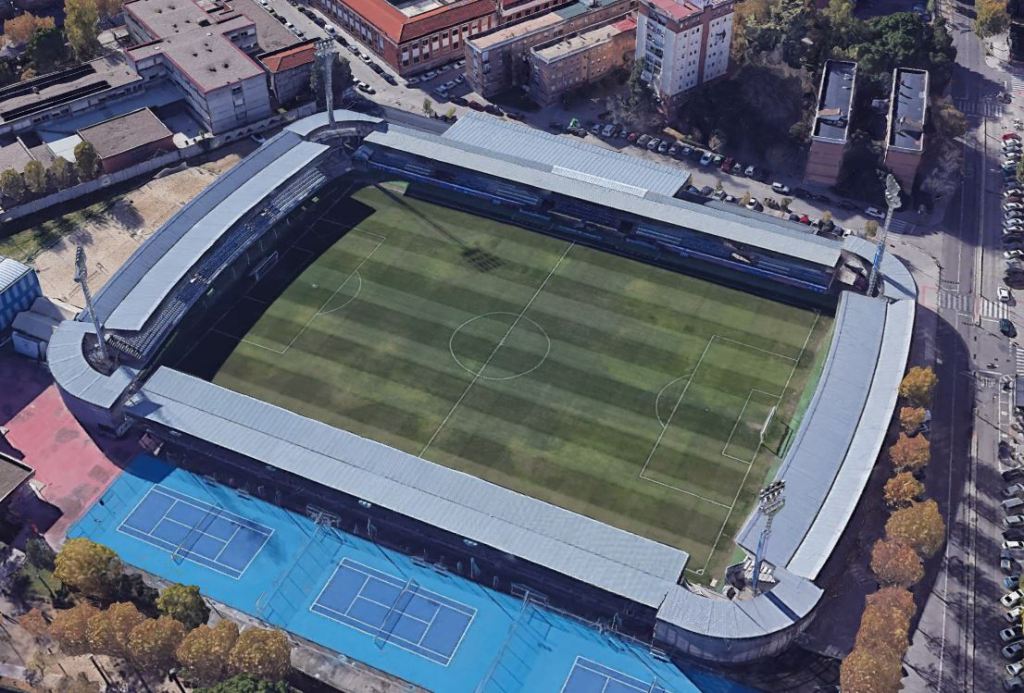
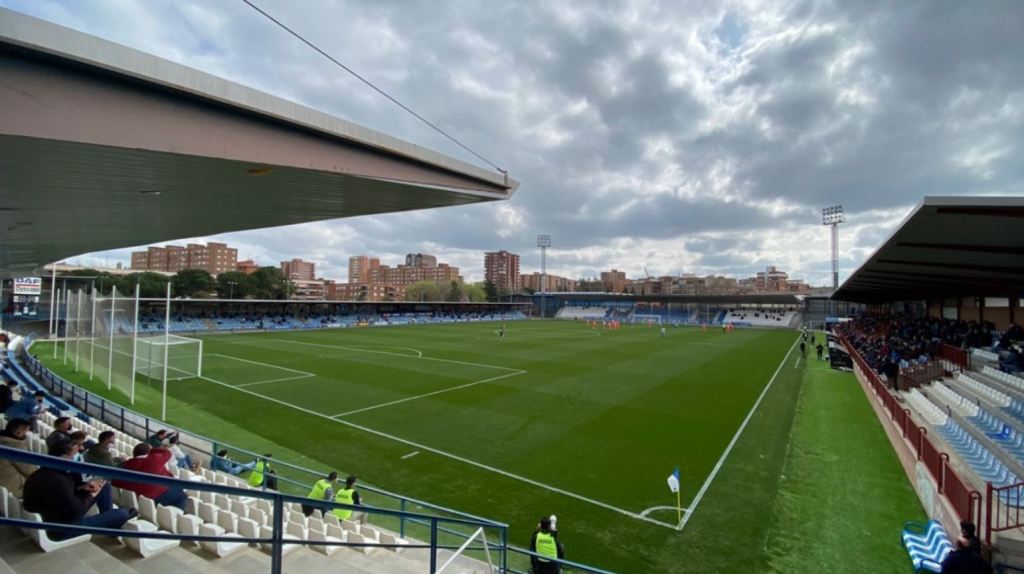
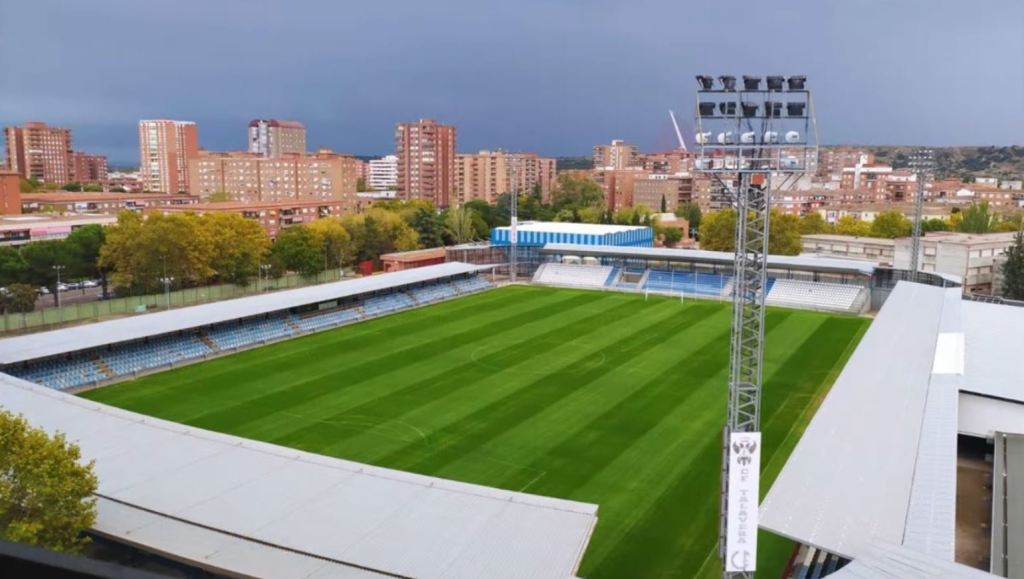
After 15 years at a regional level and a name change to Club Deportivo Talavera (the previous club of that name had folded in 1953), the club reached the Tercera for the first time in 1963. It acquitted itself very well, finishing runners-up in 1964-65 and again in 1967-68. This saw the team progress to the end-of-season play-offs for a place in La Segunda, but they fell to SD Eibar in 1965 and Jerez Industrial three years later. A further name change to Talavera Club de Fútbol didn’t do the trick, and as results tailed off, the club spent three seasons back in the Regional Preferente in the early 1970s. It returned to the Tercera in 1975 and finally earned promotion to Segunda B in 1982. This coincided with the redevelopment of El Prado. Two shallow, full-length seated stands were built on each side of the pitch, both featuring a narrow cantilevered roof. The stand on the east side of the ground was double-sided, for behind the seats that faced the football pitch, were another set of seats that faced the adjoining tennis courts. An uncovered open terrace was added to the north end of the ground, whilst the southern end was left open.
Talavera CF’s debut season in Segunda B saw an impressive sixth-place finish, but results faltered, and after four seasons in the third tier, the club was relegated. Two Tercera titles followed, but a return to Segunda B was not accomplished until the end of the 1992-93 season. What followed proved to be the club’s most sustained period of success, with 15 consecutive seasons in the third tier. The highlights were two appearances in the play-offs for a place in the second division. The first in 1997 saw the club finish in a well-beaten second to Real Jaén, but a year later it came desperately close to a place in La Segunda. Leading the play-off group going into the final round of matches, it only had to match CF Málaga‘s result to earn promotion. Whilst Málaga ran up a convincing 4-1 victory, Talavera could only manage a 1-1 draw away at Beasain. Talavera CF never quite reached those heights again, and although it clung onto its Segunda B status for another 10 seasons (thanks on 2 occasions to wins in the relegation play-offs), it was a story of diminishing returns.
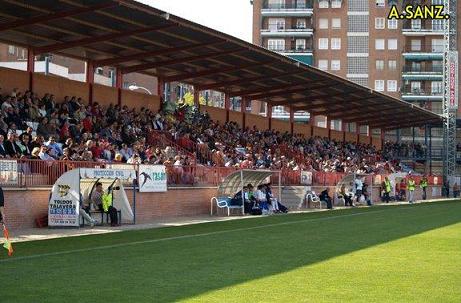
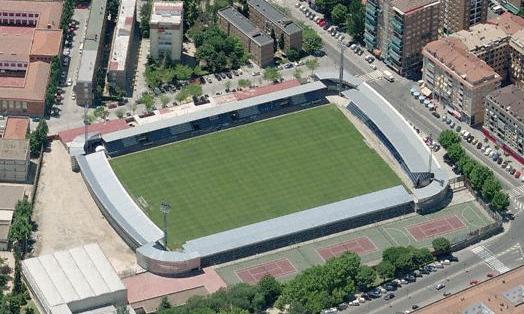
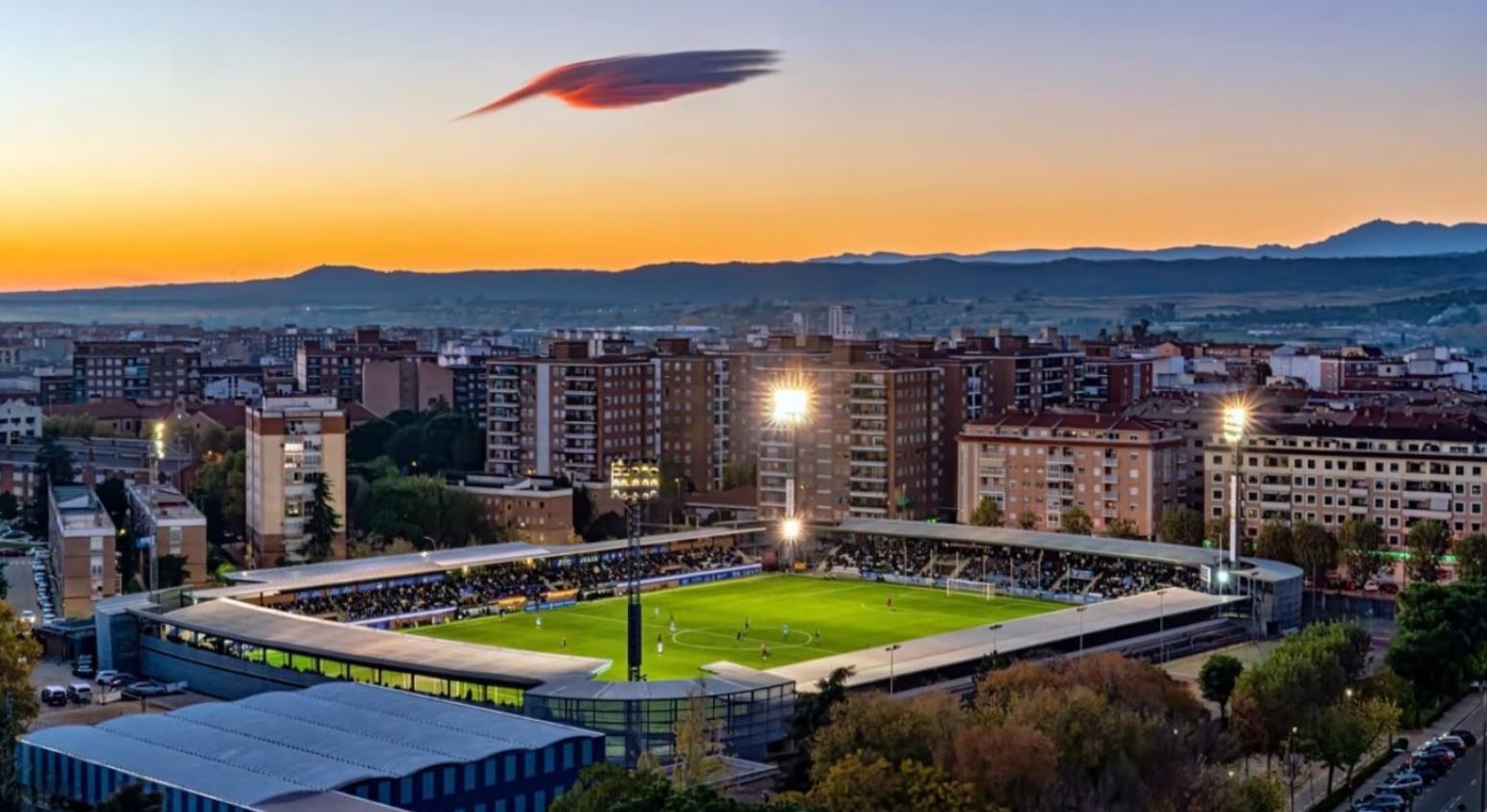
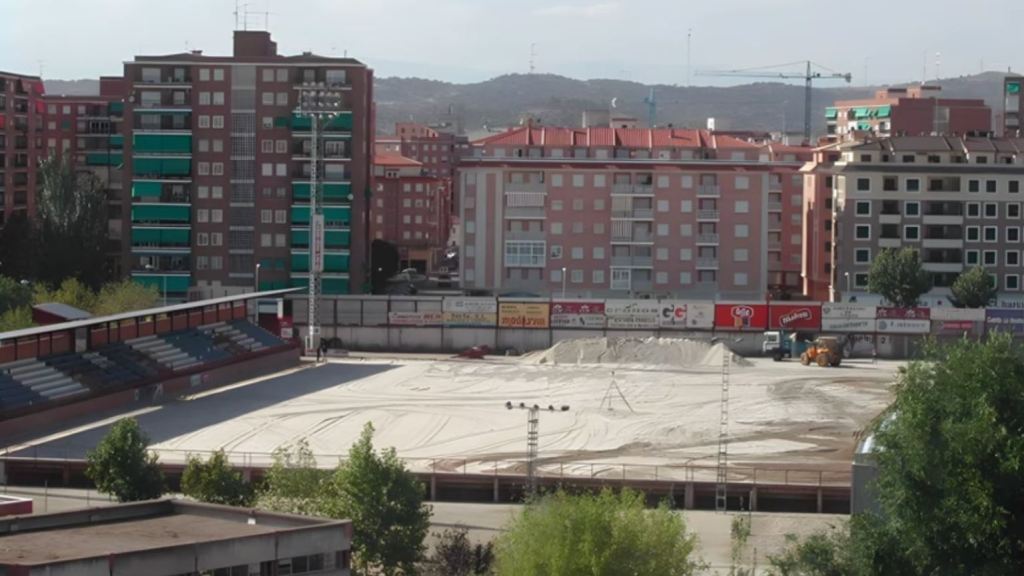
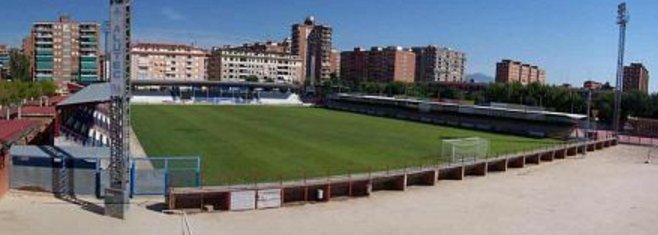
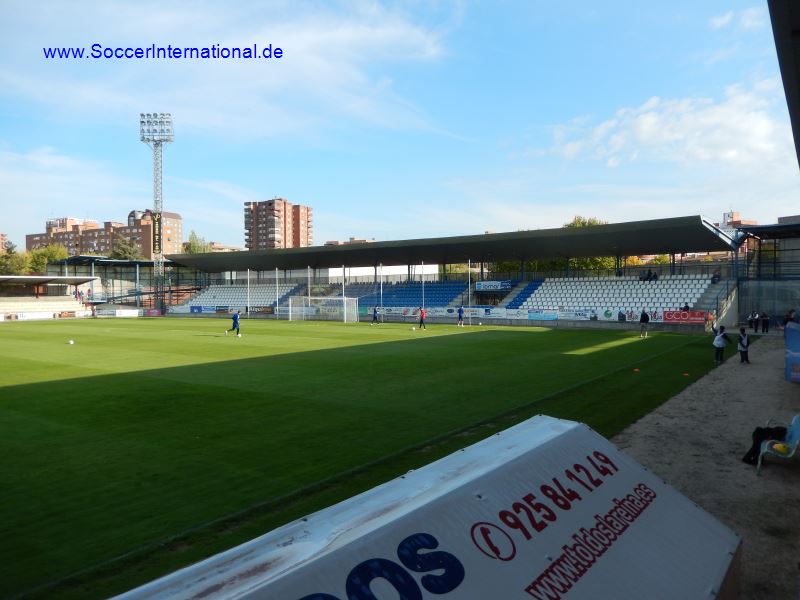
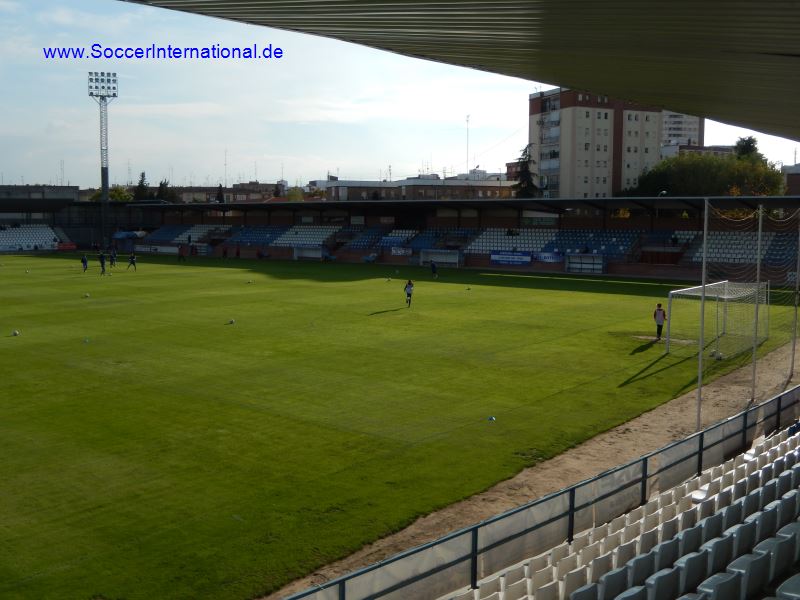
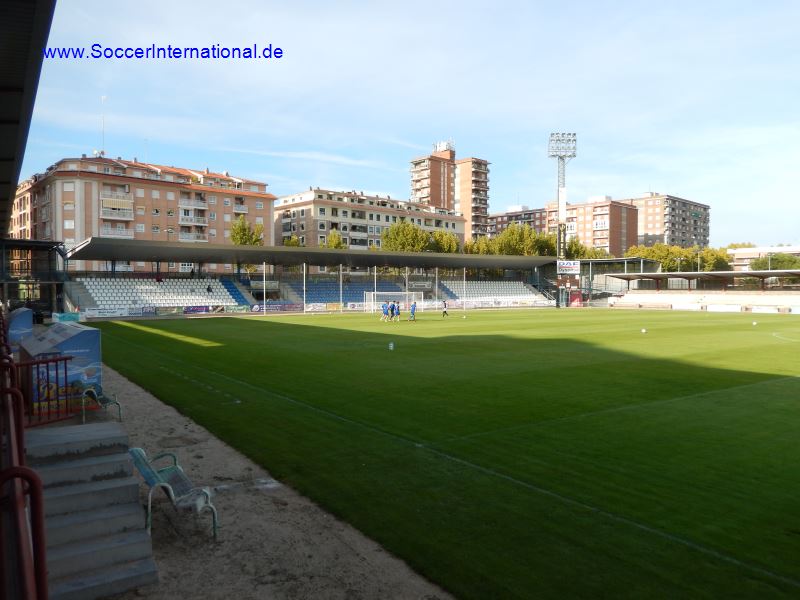
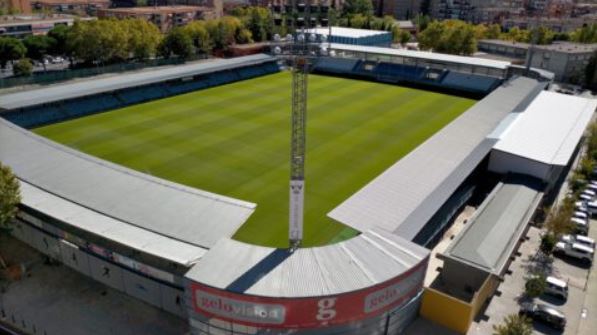
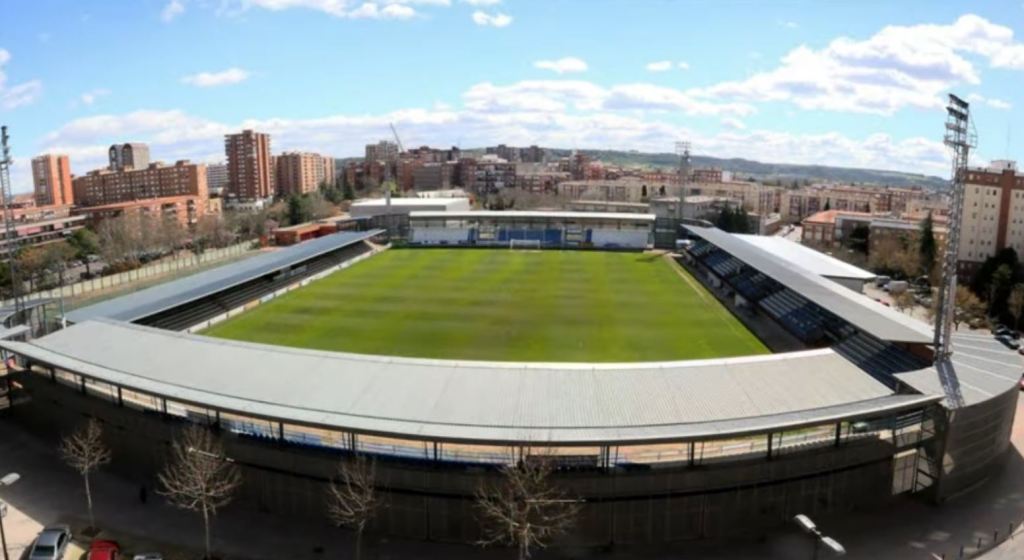
Whilst things were slowly deteriorating on the pitch, El Prado was about to witness a significant improvement. In 2004, the local municipality approved the funds that would see its conversion to a 5,000-seat stadium. This would see the addition of 2-seated stands at either end of the ground. Work started on the Fondo Norte in the summer of 2004 and featured 9 rows of blue & seats under a cantilevered roof. The building of the identical Fondo Sur was delayed, and even when the structure was completed in 2007, the stand remained unseated for another year. Both existing stands were re-roofed, and access ramps were built in each corner of the enclosure. These are housed in screened-off arcs that link the four structures together. New changing rooms, offices & media facilities were added to a new block at the rear of the main west stand. The result is a simple, effective and surprisingly stylish small stadium.
Regrettably, the rebirth of El Prado coincided with the demise of Talavera CF. After teetering on the edge in the season that saw relegation from Segunda B in 2008, the club plummeted into the abyss in August 2010, folding with debts in excess of €2m. El Prado now has new tenants in the shape of Club de Fútbol Talavera de la Reina, a club formed in 2011 following the merger of Real Talavera and the remnants of Talavera CF. Promotion to the Tercera was achieved in its first season, and a second successive promotion was only foiled in the playoffs, when they lost out to Arenas Club de Getxo. A first Tercera title followed in 2015, and Portugalete were beaten 0-2 on aggregate in the Play-offs, which secured a place in Segunda B, just five years after the disappearance of their predecessor.
Club de Fútbol Talavera de la Reina was relegated at the end of its first season in Segunda B, but secured a second Tecera title a year later and a return to Segunda B by beating Olimpic de Xátiva in the play-offs. Four seasons in the third tier followed, before the COVID-19 pandemic, coupled with the RFEF’s decision to restructure the regional leagues, threw up a rather convoluted structure for the 2020-21 season. The club was undaunted by the challenge and navigated its way through league and play-offs to earn a place in the newly formed Segunda RFEF for the 2021-22 season. The club finished in third place in Group IV of the Segunda Federación in 2024-25, then saw off the challenges of Utebo FC & Torrent CF in the playoffs to earn promotion to the Primera Federación.










 Estadios de España