Article updated: 05/06/2026
The town of Utebo lies 12km west of the Aragonese capital, Zaragoza. Due to its location on a fertile plain, irrigated by the Rio Ebro, Utebo grew into an important agricultural centre, providing essential food to the regional capital and far beyond. During the 20th Century, Zaragoza’s urban sprawl edged towards the town, bringing with it light industry and population growth, which in time led to Utebo becoming the second-largest metropolitan centre in the Province. The 20th Century also saw the development of football; however, Zaragoza and, for that matter, other parts of Aragon, took their time to fully come to terms with the game. Organised competitions did not truly get underway until 1915, a good decade or so later than neighbouring Catalunya. It would take another 8 years for the first club to emerge from Utebo, when Sociedad Deportiva Foot-ball Club Utebo was founded on 23 September 1923. The club inaugurated the town’s new Campo de Deportes in a friendly against Iberia Sport Club on 21 March 1924, and registered with the Federación Aragonesa on 22 July 1924. However, within a couple of years, the club had folded.

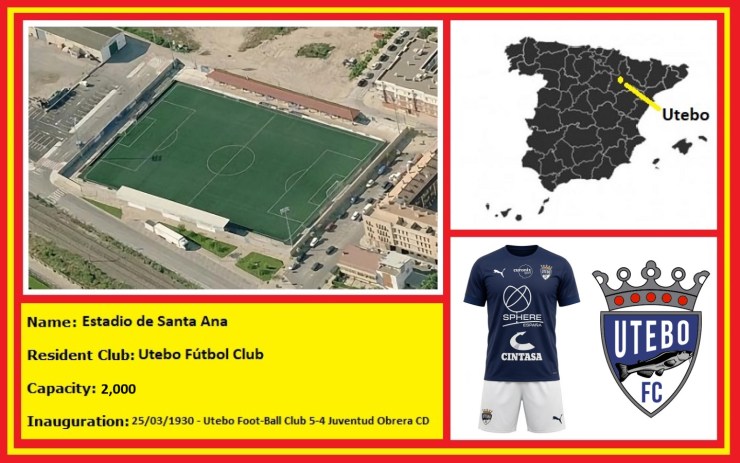
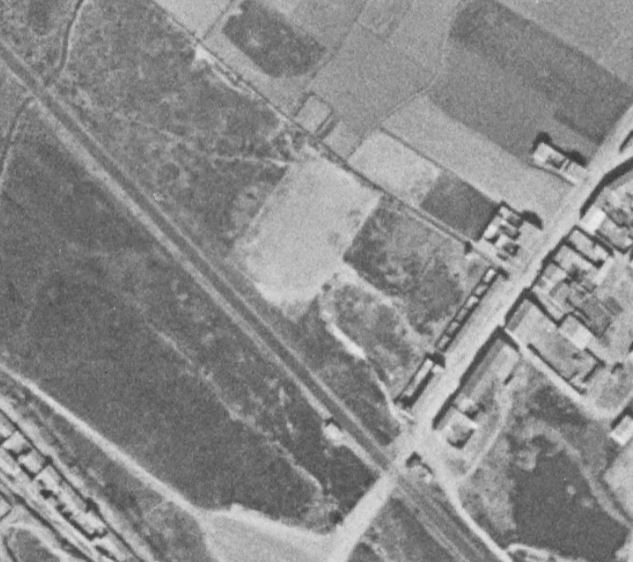
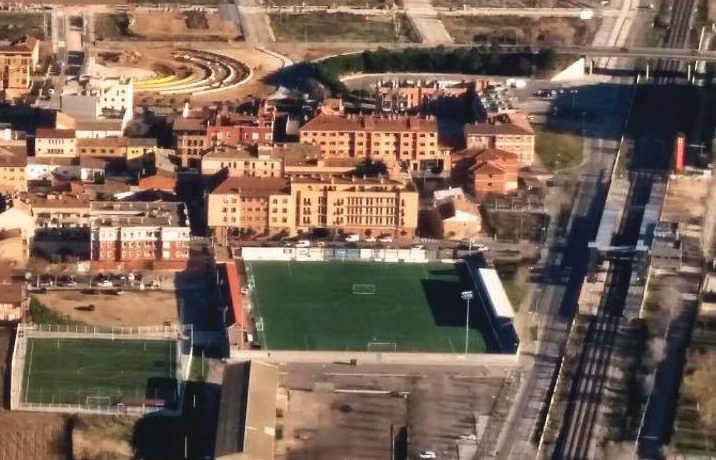
In April 1928, Utebo Foot-ball Club was established, but within a year, it had ceased to operate. At the end of 1929, Sociedad Deportiva Renacimiento Utebense was founded. Its primary goal was to have its own ground, and after obtaining land to the north of the town, just over the railway line to Zaragoza, it opened the Campo de Santa Ana on 30 March 1930. The first match at the new enclosure saw the local team beat Juventud Obrera CD 5-4. The club had remained outside of the Federación Aragonesa, but as competitive football became the norm, the decision was made in 1934 to form a new club. A new Utebo Foot-ball Club (no connection to the 1928 version) competed in the Segunda Categoría, winning the league in 1935-36. However, it was unable to claim its promotion to the higher category, as the Civil War brought an end to all football activity. The club continued in the Segunda Categoría after the war, winning the championship, but was again refused promotion. In 1940, the club changed its name to Club Deportivo Utebo, but that didn’t change its fortunes, and within a few years, it was struggling on and off the pitch. With finances stretched, CD Utebo withdrew from the league just three days before the start of the 1947-48 season. The club managed to return and complete the 1948-49 season, but after failing to raise a team for the first match of the following campaign, CD Utebo folded after match day five of the 1949-50 season.

Following the demise of CD Utebo, Español de Utebo CF, a youth team formed in 1949, became the basis of a new club that would represent the town. Founded on 7 October 1950, Utebo Club de Fútbol ditched the red & white striped shirts & black shorts worn by its predecessors, opting for a kit of light blue shirts & white shorts. Taking up residence at the Campo de Santa Ana, the club finished fifth in the Segunda Regiónal in its debut 1950/51 season. Progress was swift, with the club winning the Segunda title in its third season and adding promotion to Grupo 5 Tercera a year later. The 1954-55 season, the club’s first in the Tercera, saw a fifth-placed finish. A year later, Utebo CF finished bottom of the league and only escaped relegation following the demise of Unión Deportiva Huesca and SD Montañanesa. Grupo 5 of the Tercera was expanded to 18 teams for the 1956-57 season, covering the length & breadth of Aragon, with CD Numancia from Soria in Castile y León, also in the mix. It was always going to be a struggle, and after avoiding relegation by one place at the end of the 1956-57 & 1957-58 seasons, the club finally fell back to the Primera Regiónal a year later. Relegation had stripped the Utebo CF of its best players and damaged its finances, and after 8 matches of the 1959-60 season, the club withdrew from the league.
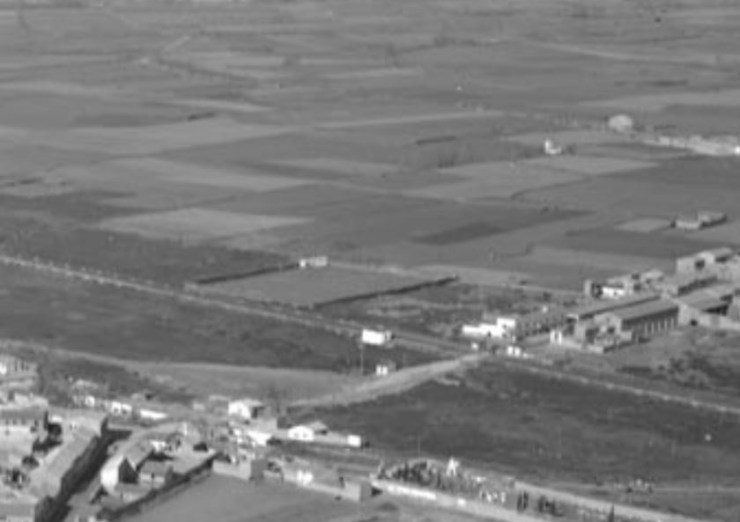
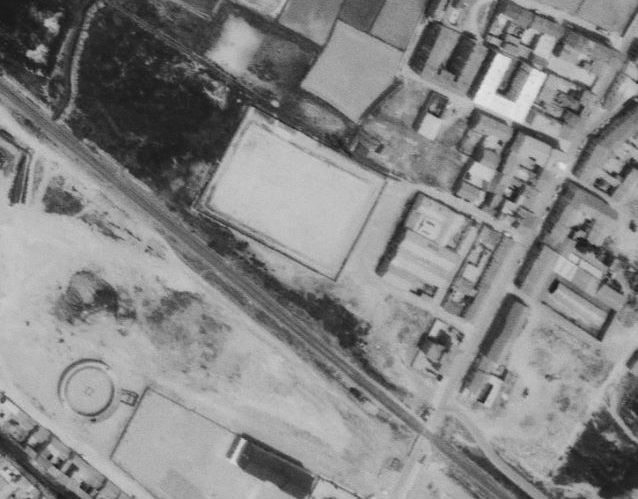
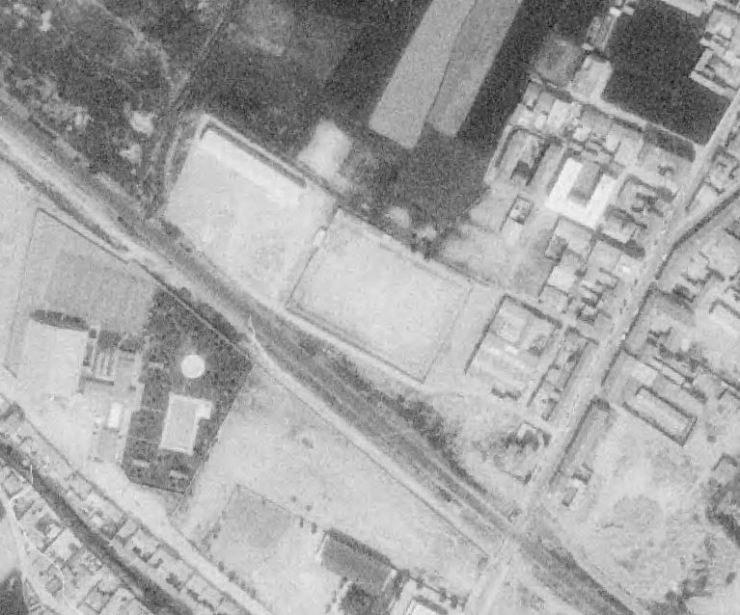
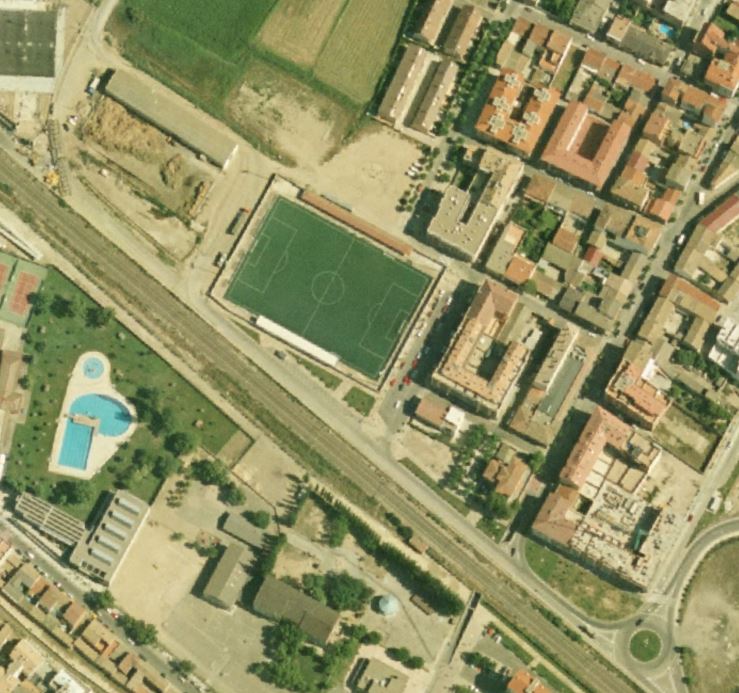
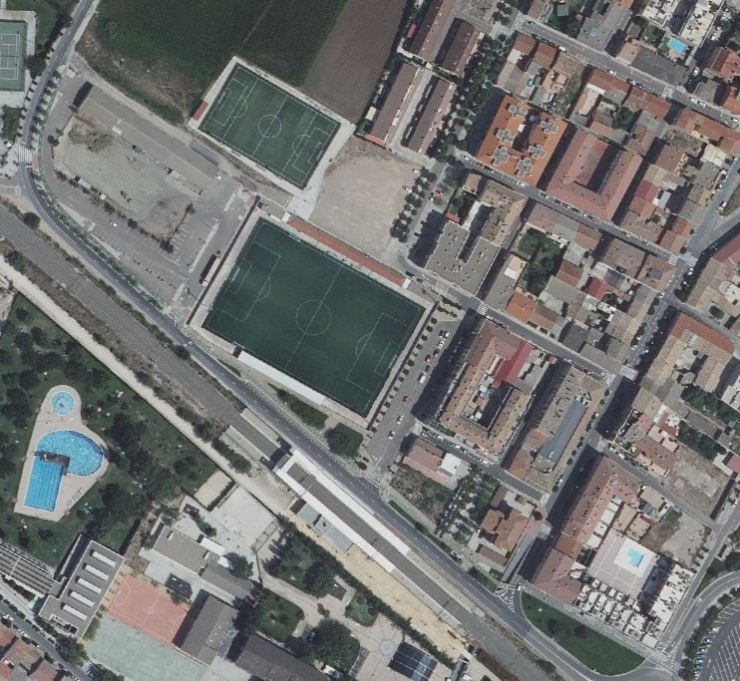
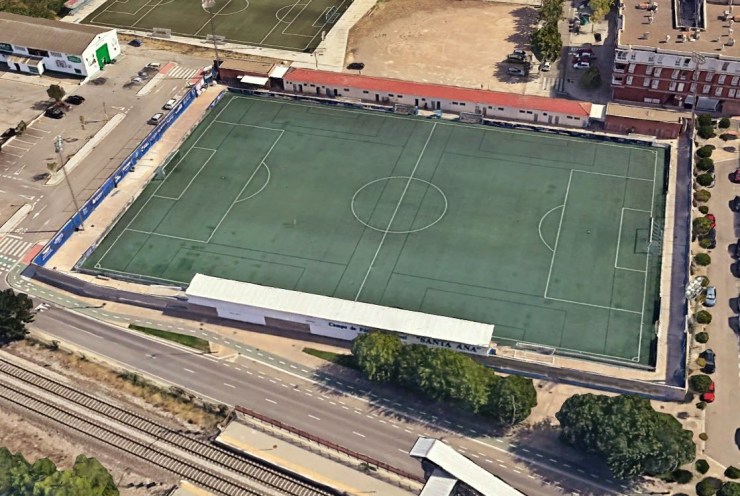
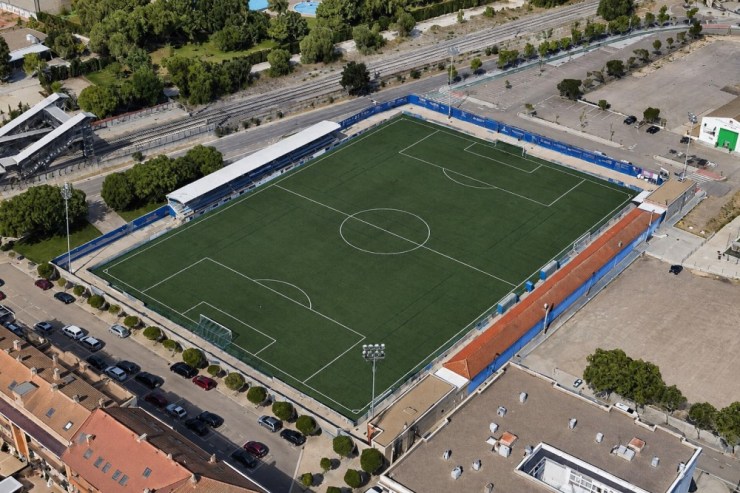
It would take three years to raise Utebo CF from its slumber, starting back in the Primera Regiónal for the start of the 1963-64 season. Once again, progress was rapid with the Primera Regiónal title won at the end of the 1964-65 season. The club would spend four of the next five seasons in the Tercera, sandwiching a second Primera Regional title in 1968-69, between some poor performances in the Tercera. There then followed two decades of mediocrity in the Aragonese Regional leagues, dropping as low as the third tier in the early 1980s. During the 1970s, the Campo de Santa Ana underwent a major makeover. The enclosure had remained pretty much unchanged since opening in 1930, a dirt pitch enclosed by a boundary wall with changing facilities in the northwest corner. The reshaping of Santa Ana saw the pitch rotated 90°, losing land to the north but extending westwards. The pitch was wider, and the new changing rooms on the northern side were larger, but it was still a basic enclosure. However, the renamed Utebo Fútbol Club was about to put together a run of impressive seasons that would necessitate a change at Santa Ana.
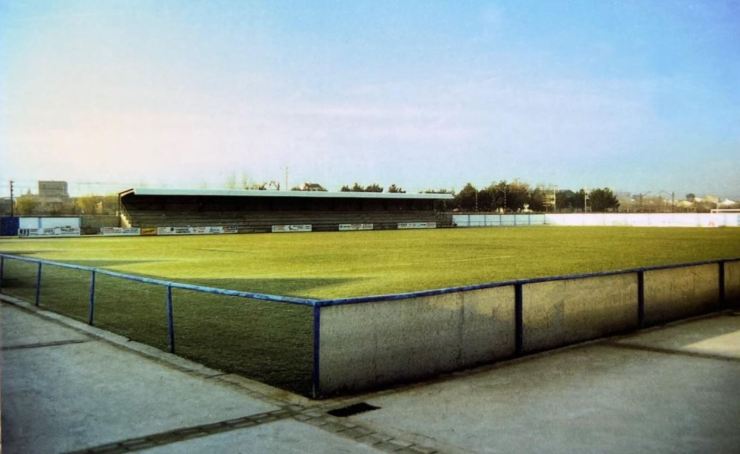
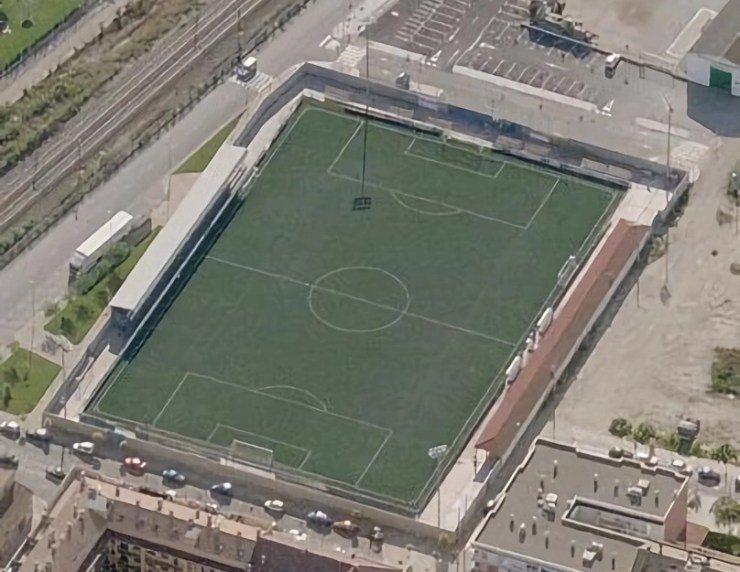
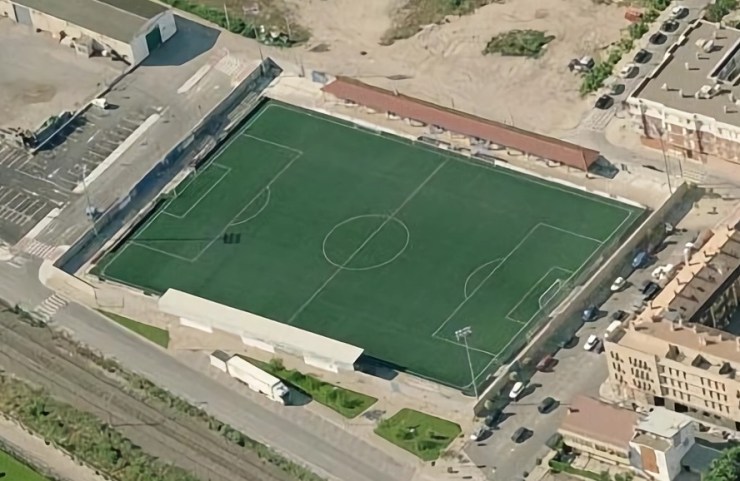
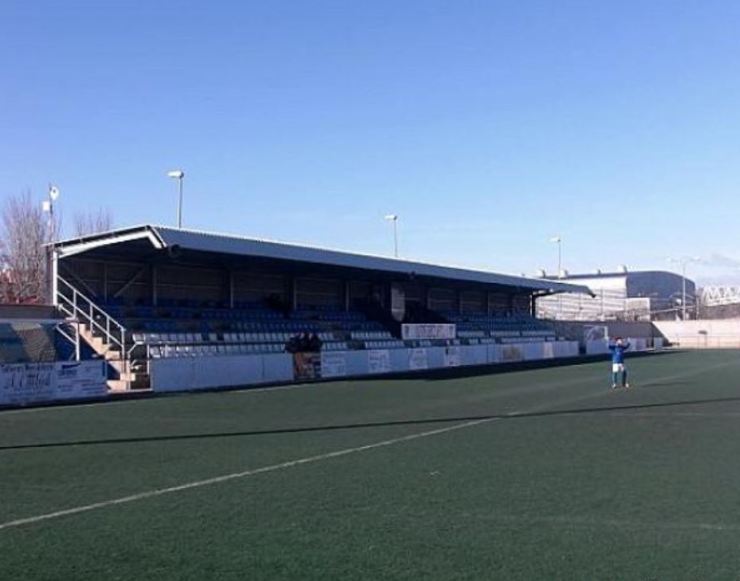
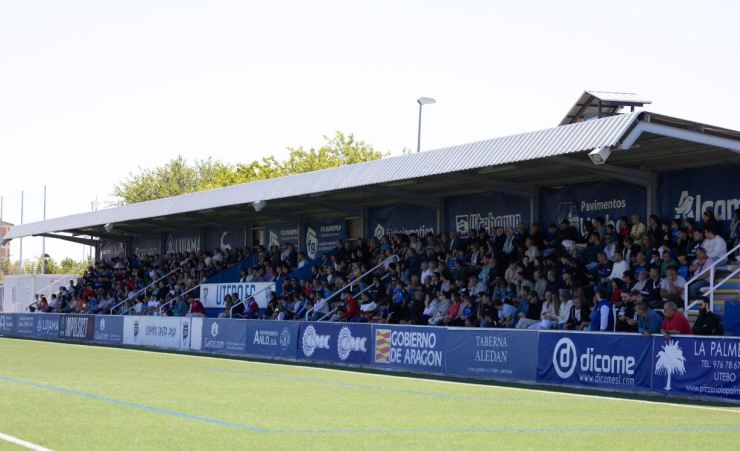
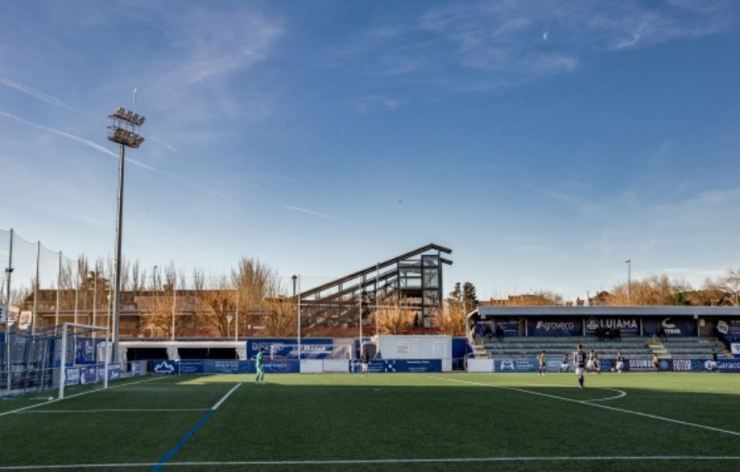
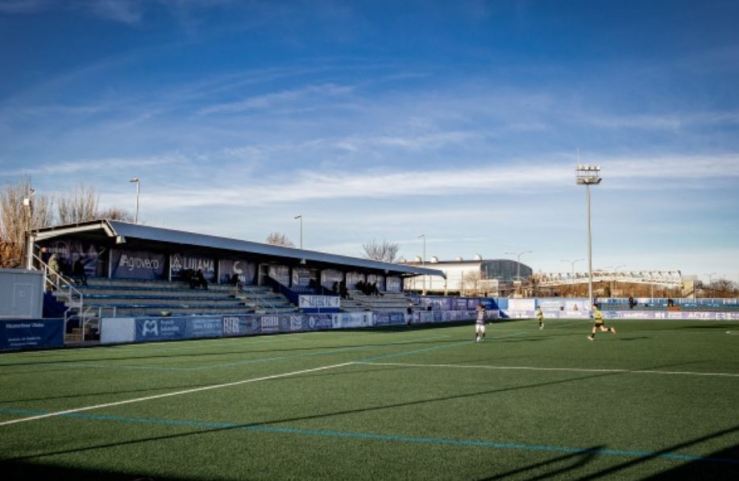
It would start with the club winning the Regional Preferente title in 1989-90, then securing their best-ever finish in the Tercera in 1991-92. Utebo FC lost out to SD Beasain in the playoff group, but a year later, they were back in the playoffs after securing their first-ever Tercera title. This time, Utebo FC comfortably won the playoff group and, with it, earned promotion to Segunda B. The Campo de Santa Ana also received an upgrade with the installation of an artificial surface and the addition of two significant structures. On the northern side of the enclosure, a 70-metre-long structure housing changing facilities, a gymnasium, offices and a bar was erected. An oversized pitched tiled roof provided some shelter for standing spectators. A better shelter was provided on the southern side of the enclosure, with a 50-metre-long stand that housed 5 steps of concrete bleachers under a cantilevered roof. The 1993-94 season in Segunda B proved to be a step too far for Utebo FC, dropping into the relegation places in Week 6 and never leaving them. A total of 6 wins and 8 draws saw the club finish 19th and 12 points from safety. Utebo FC made two valiant attempts to return to the third tier, finishing in the top three in 1994-94 & 1995-96, but failed to navigate the playoffs.

Utebo FC would spend the next 28 years in the Tercera, winning a second title in 2003-04 and reaching the playoffs on ten occasions. A model of consistency, the club finished in the top half of the division on all but three of the 28 campaigns, never remotely coming close to relegation. Following the RFEF’s restructuring of the Spanish league system for the 2021-22 season, Utebo FC won promotion to the Segunda Federación. A second-place finish in the league saw the club earn victories over fellow Aragonese teams CD Robres & CF Illueca, before a draw with Almeria B earned promotion. Utebo FC continued to show impressive form, with four consecutive fourth-place finishes in the Segunda Federación. However, there was no joy in the playoffs as Club Recreativo Granada, CD Numancia, CF Talavera de la Reina and Águilas FC had their number.
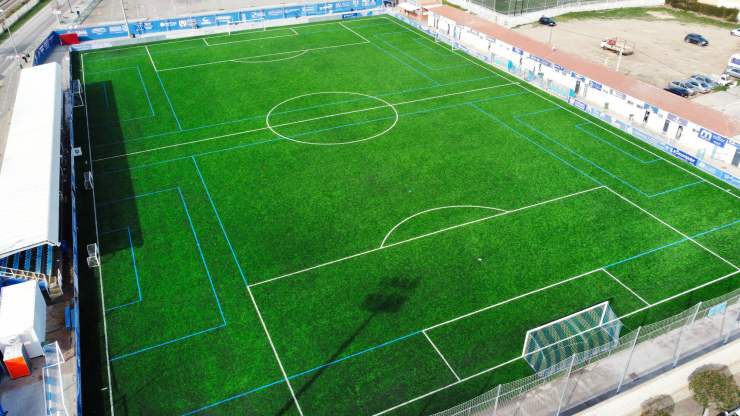
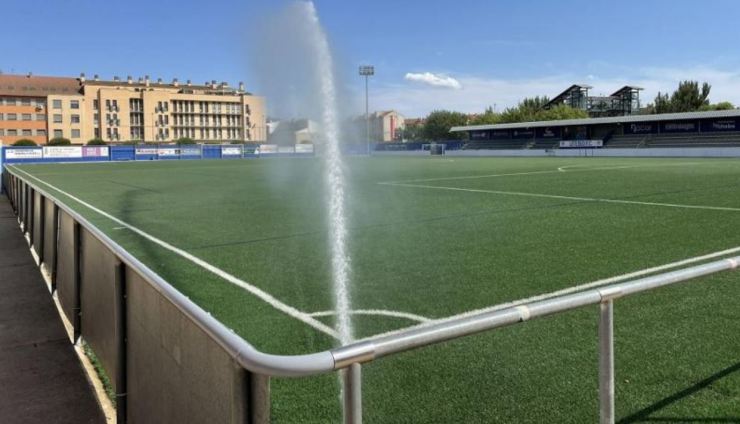
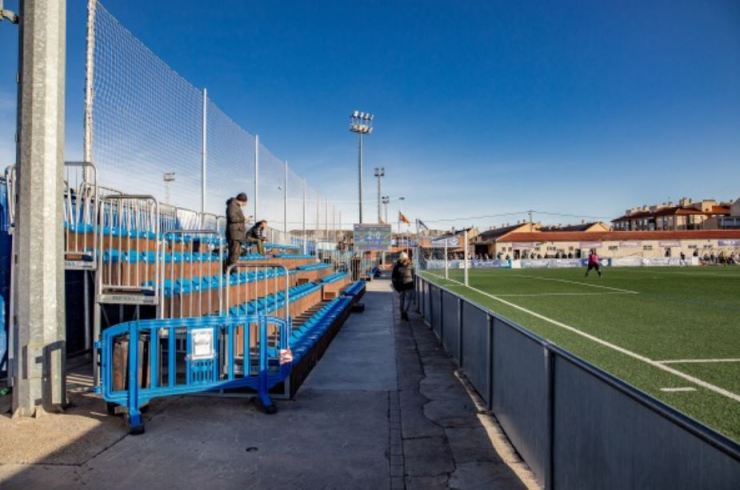
Following Utebo’s promotion to Segunda Federación, the local council funded €500k of improvements to the Campo de Santa Ana. This saw new floodlighting, upgrades to the changing facilities, a new public address system & scoreboard. In the winter break of the 2023-24 season, a new artificial playing surface was installed. Pre-fabricated bleachers were added at each end of the ground, raising the capacity to 2,000. All of which has enhanced the Campo de Santa Ana, making it a fantastic venue to wander around and enjoy the action. So next time you’re in Zaragoza, by all means take in the delights of the city, stop by and watch a game at the Estadio La Romareda, but don’t forget to hop on a train and visit the Campo de Santa Ana.




 Estadios de España