
Article updated: 26/11/2025
For every Real Madrid or FC Barcelona, there are one hundred clubs like Ontinyent Club de Fútbol in the Spanish leagues. They are consigned to spend the majority of their time in the semi-professional third and fourth tiers, holding on to the hope that they might just get a year or two in La Segunda. That, in essence, was an outline of Ontinyent CF’s history. Now let’s add some colour.
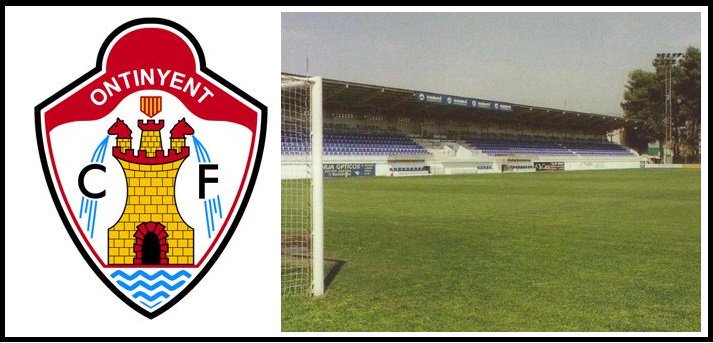
Ontinyent is a small town in the mountainous Serra Grossa region of the Comunidad Valenciana, famed more for its textile industry than any sporting achievements. Organised football had been played in the town since the early 1920s, and the first senior team, Club Deportivo Onteniente, was formed in 1923. The club played their matches at Camp de La Farinera, a privately owned field built on the site of an old flour mill on the banks of the Rio Clariano. On 30 March 1931, CD Onteniente merged with CD Ideal to form Onteniente Foot-ball Club. After the Civil War, the club made steady progress, and with the help of a squad of players from far & wide, reached the Tercera in 1943. The reorganisation of the league presented the club with the problem of increased expenses, and with debts already high, they withdrew from the competition. Sanctioned by the Valencian Federation, the club was banned from official competition until 1947, when, under the name of Peña Deportiva Ideal, it rejoined.
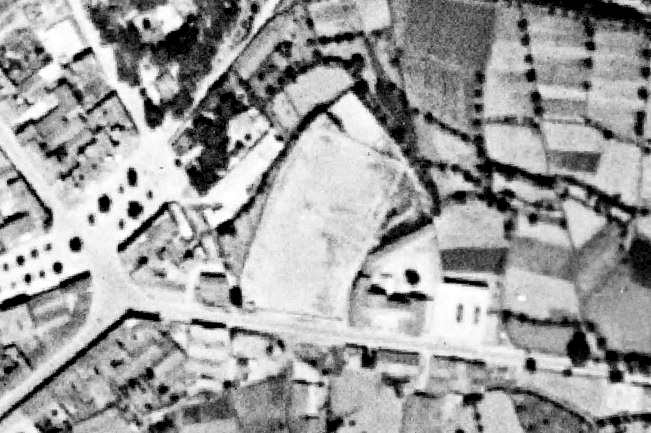
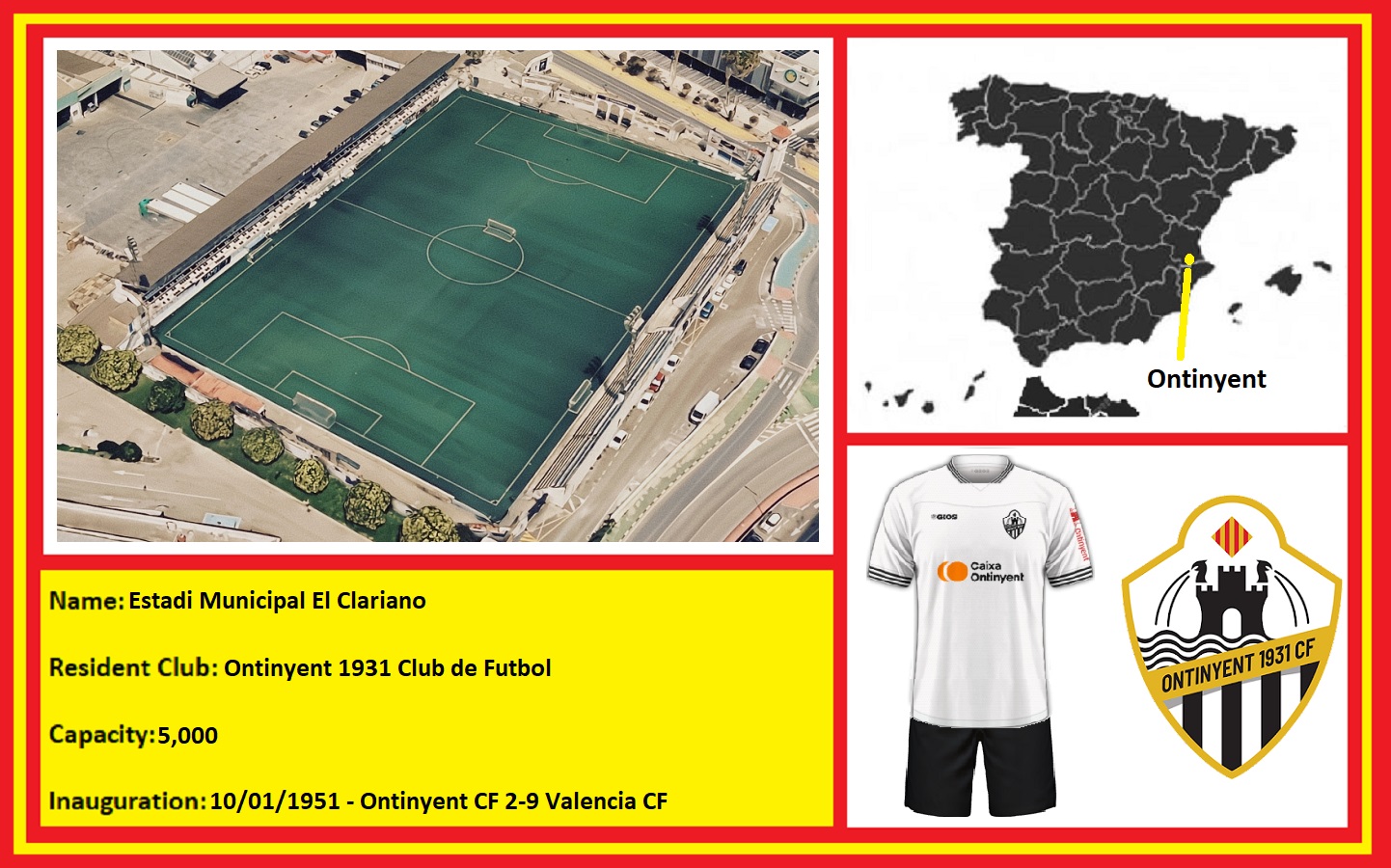
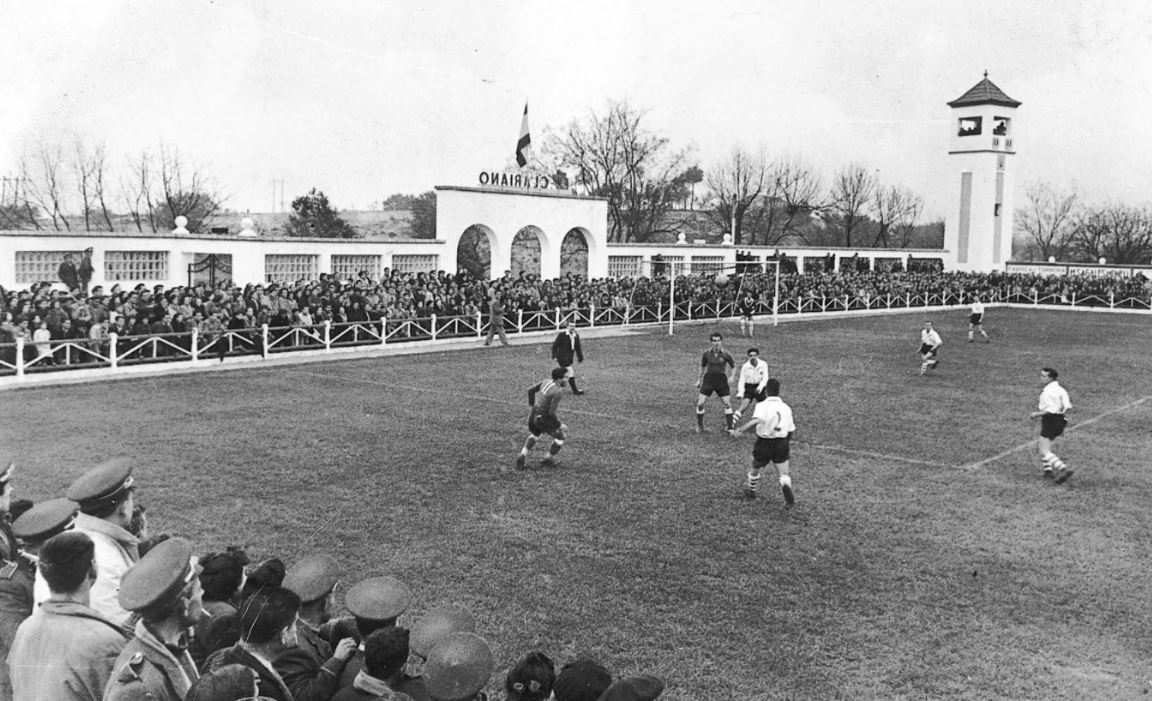
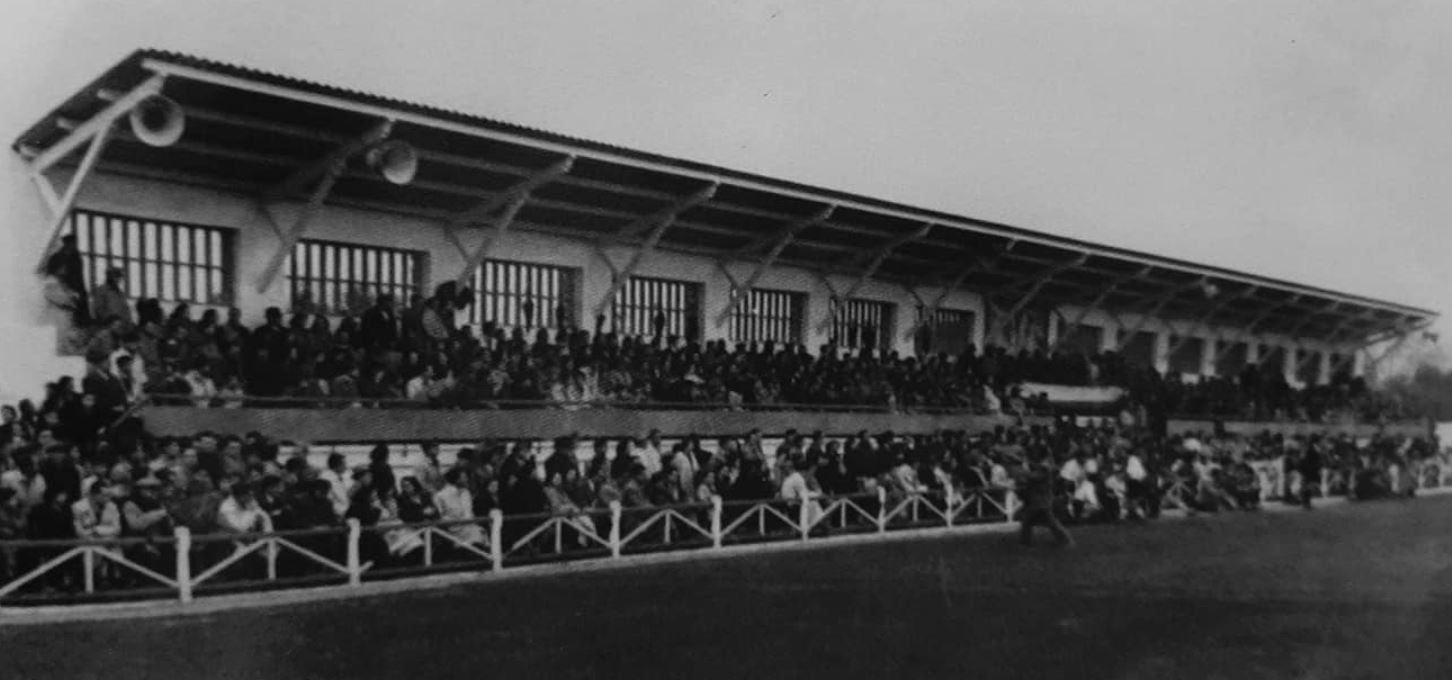
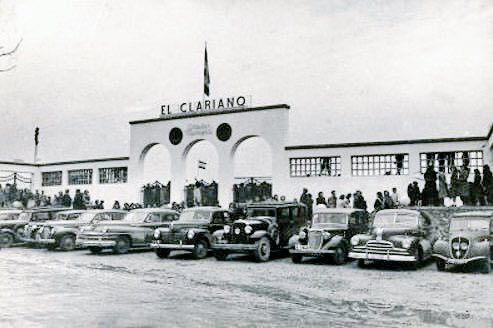
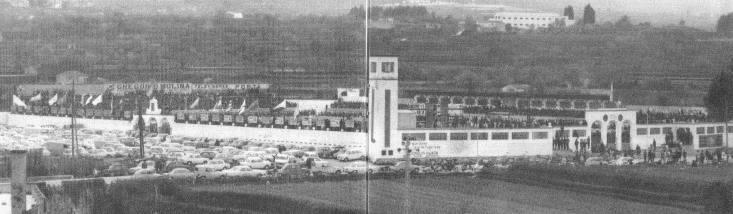
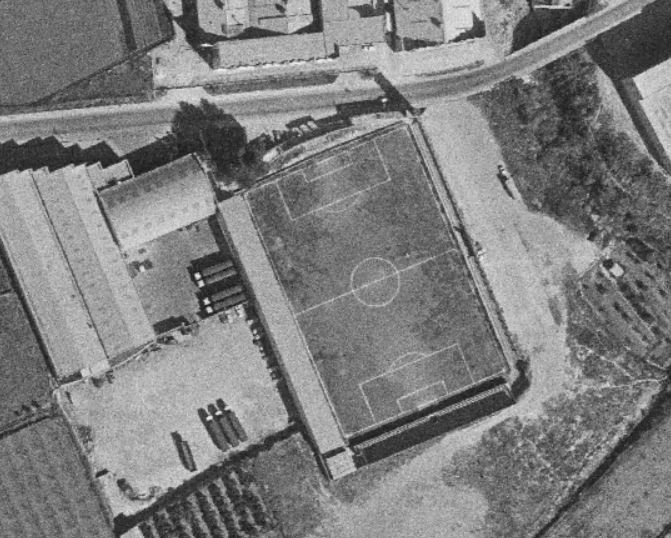
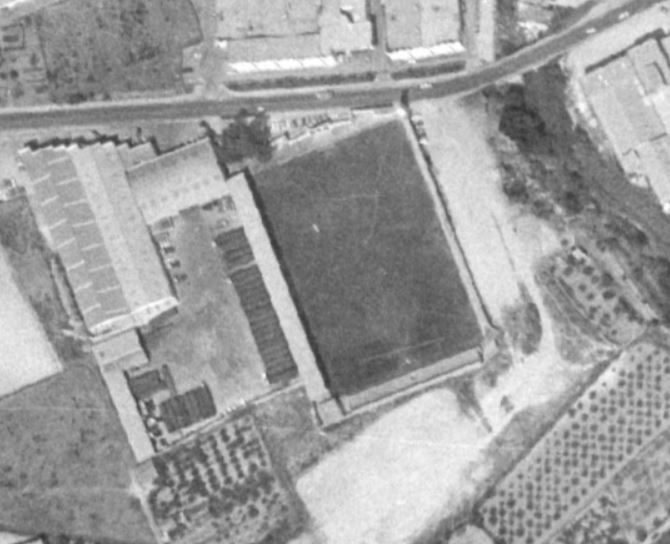
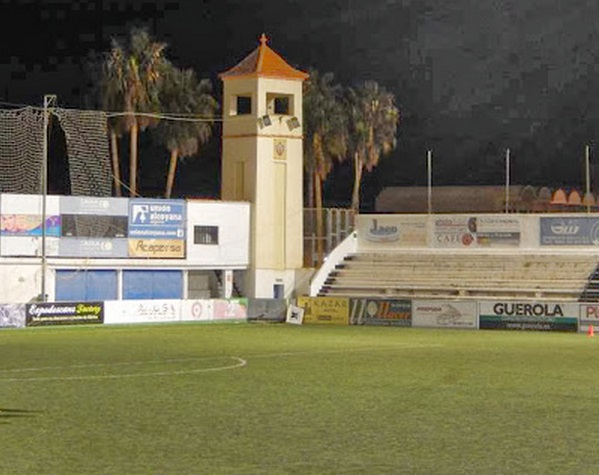
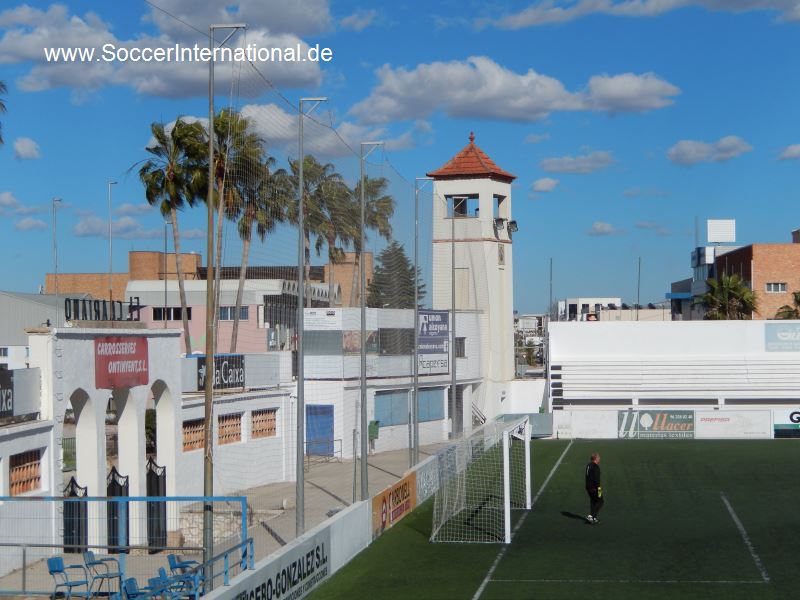
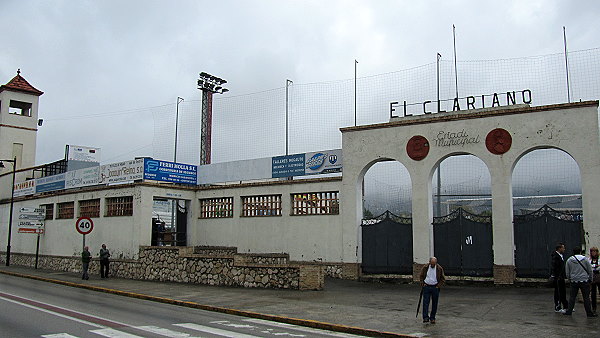
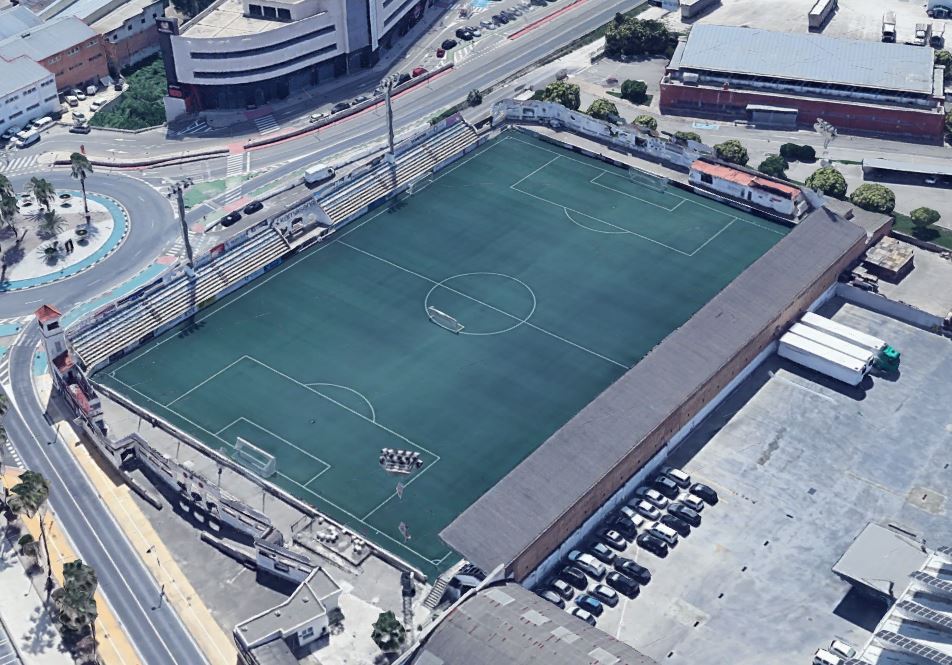
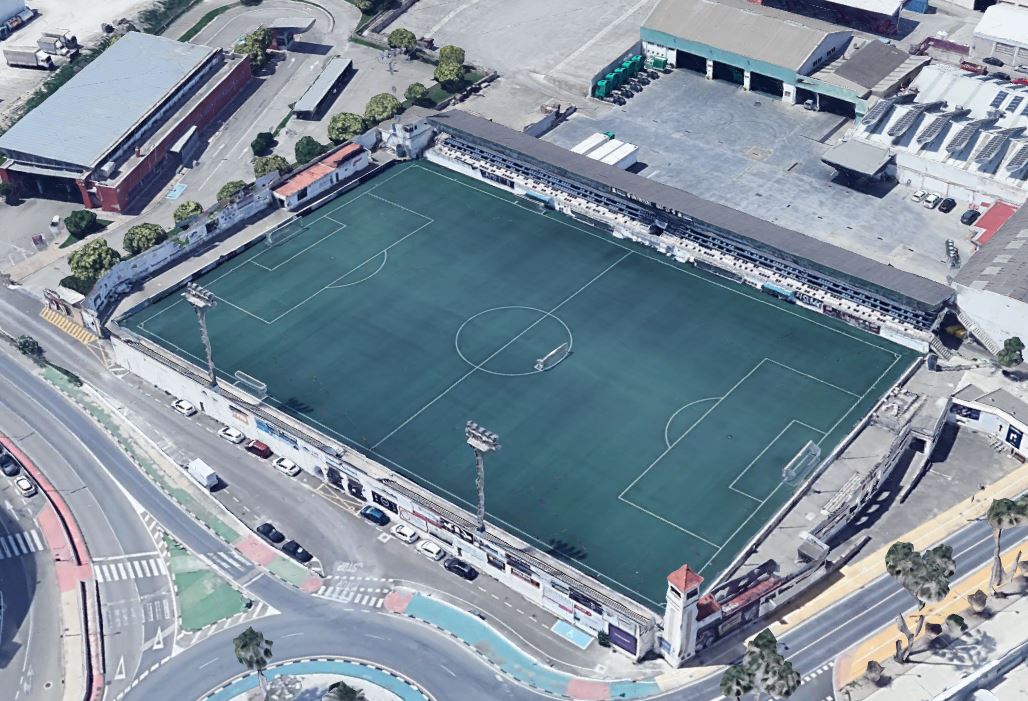
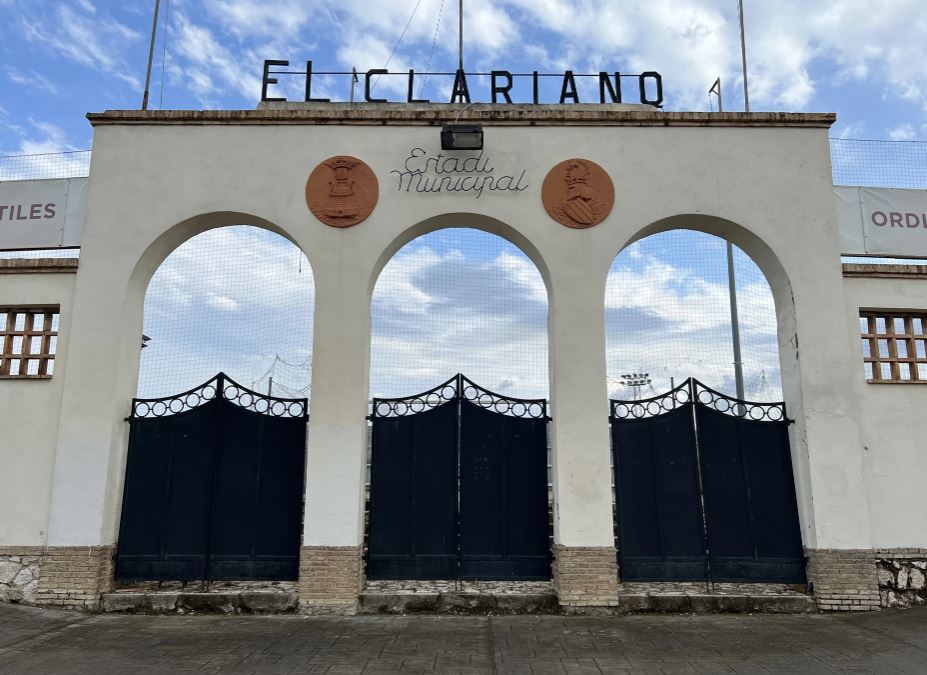
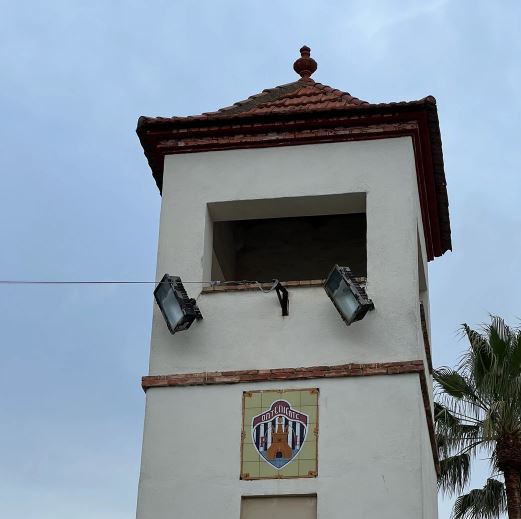
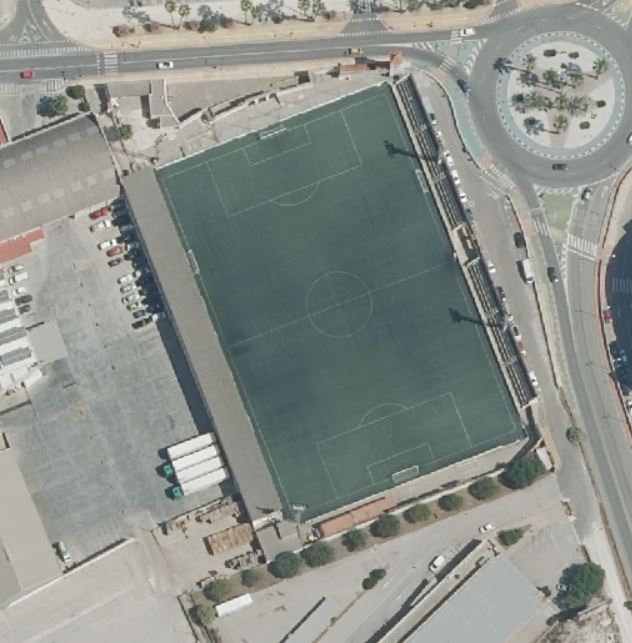
Throughout this time, the Camp de La Farinera (also known as the Campo de Deportes El Clariano) continued to serve as home. However, its rudimentary facilities led to a campaign to build a new, multi-sports facility. The municipality had originally considered refurbishing La Farinera, but was unable to reach an agreement with the landowners. In June 1950, following a donation of land and money from local businessmen, the municipality stumped up a further 320,000 pesetas to build a new stadium to the east of the town, on the road to neighbouring Albaida. The new stadium was named El Clariano and was opened by the Delegado Nacional de Deportes, General José Moscardó, on 10 January 1951 with a friendly match against Valencia CF, which the visitors won 2-9. The new stadium featured a half-length propped-roof grandstand on the west side of the enclosure and a narrow terrace opposite. Two ornate sets of gates were built at the north end and eastern side of the ground, whilst a bell tower stood in the northeast corner.
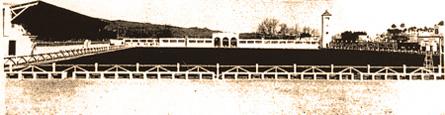
Pena Deportiva Ideal had changed its name to Onteniente Peña Ideal in 1950, and finally reached the Tercera in 1955, after comfortably winning the Primera Regional Valenciana Grupo Sur, losing just one game in the process. Under the new name of Onteniente Club de Fútbol, results gradually improved with the club finishing runners-up to Olimpic de Xativa in the 1960-61 season, before losing to Burgos CF in the playoffs. The Tercera championship was secured two years later, and after playoff victories over SD Eibar and CD Hispania, the club won promotion to La Segunda.
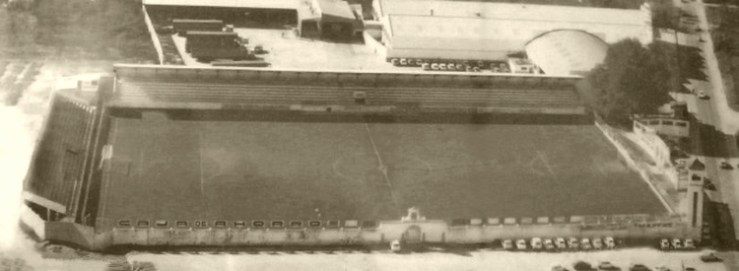
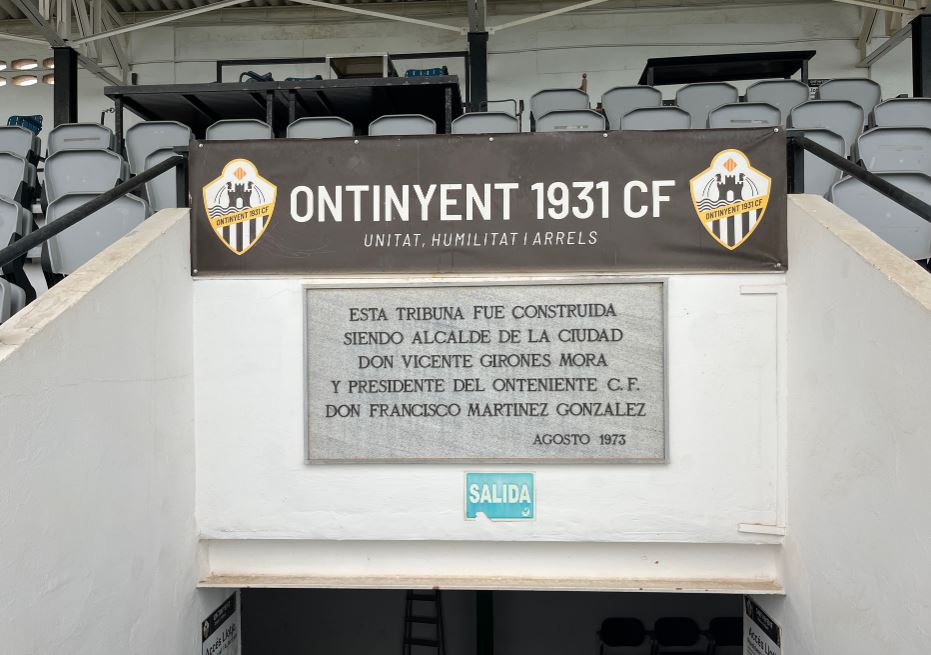
Before the club made its debut in the southern section of La Segunda, El Clariano was expanded when the municipality constructed an open terrace at the south end of the ground. The 1963-64 season saw the club finish a creditable tenth, losing just one match at El Clariano. The 1964-65 season proved much more difficult, and the club eventually finished 15th, resulting in relegation to the Tercera. Three years later, Onteniente was back in a nationwide La Segunda after claiming a second Tercera title and overcoming CP Cacereño and Cultural Leonesa in the playoffs. They managed to stay in the second tier for three seasons, finishing ninth in the 1969-70 season. Relegation followed a season later, and although the west side of the stadium was redeveloped in 1973 with the extension of the tribuna along the full length of the west side of the ground, the club never managed to return to the second tier.
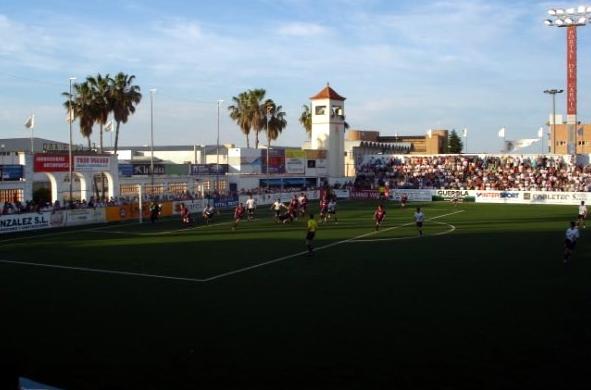
The club was to spend the majority of the next two decades in the Tercera. It changed its name in 1995 to the Valenciana version, Ontinyent Club de Fútbol and that decade also saw floodlights erected for the first time and the southern terrace removed. El Clariano was refurbished in 2000 with the main stand reseated. The club had three spells in Segunda B during the 1970s & 1990s and returned to this level for the 2007-08 season. The 2009-10 season saw the club have its most successful season in nearly forty years when finishing third in Group III of Segunda B. In the playoffs, Ontinyent eliminated CD Guadalajara and SD Eibar before losing in the final minute of their away tie with Alcorcón. Things began to unravel midway through the 2012-13 season, with the club only just managing to escape relegation. There would be no escape a year later, with Ontinyent finishing adrift at the foot of the table. The club’s financial difficulties continued, and whilst promotion back to Segunda B was achieved in 2017, it didn’t keep the wolf from the door for long. Eventually, Ontinyent CF was wound up on 29 March 2019, with debts exceeding €1 million.
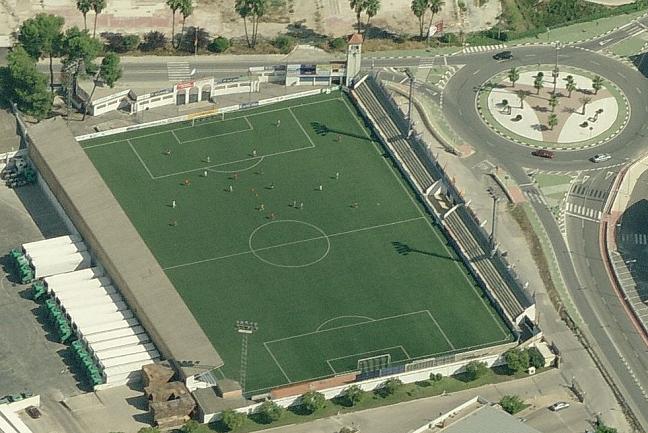
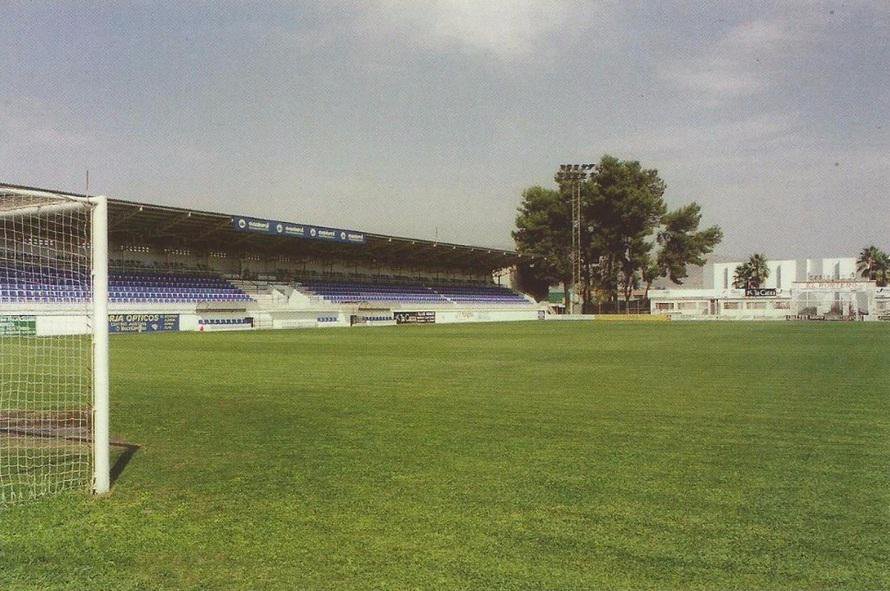
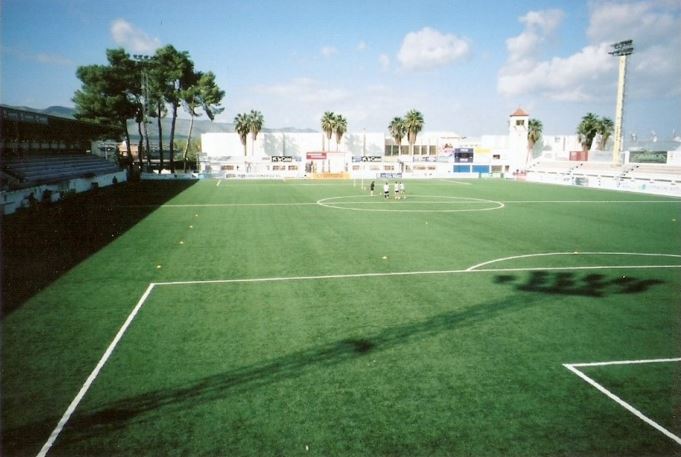
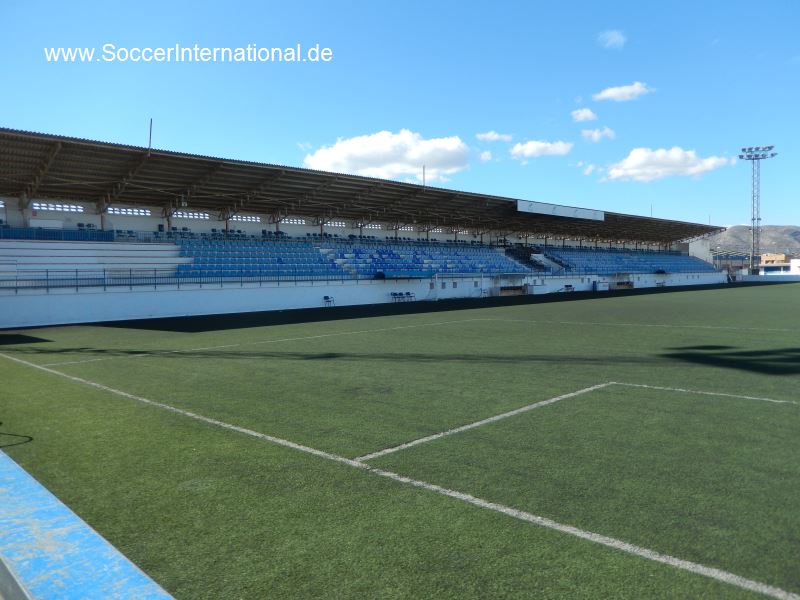
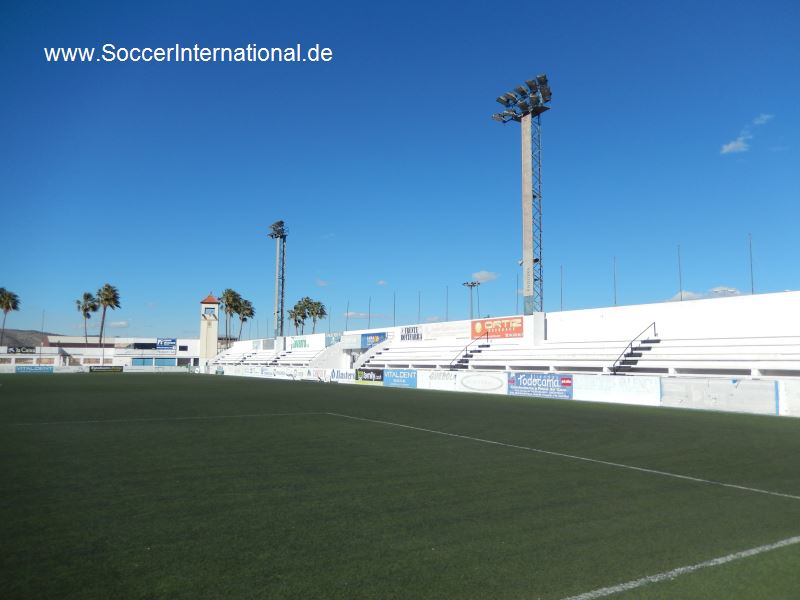
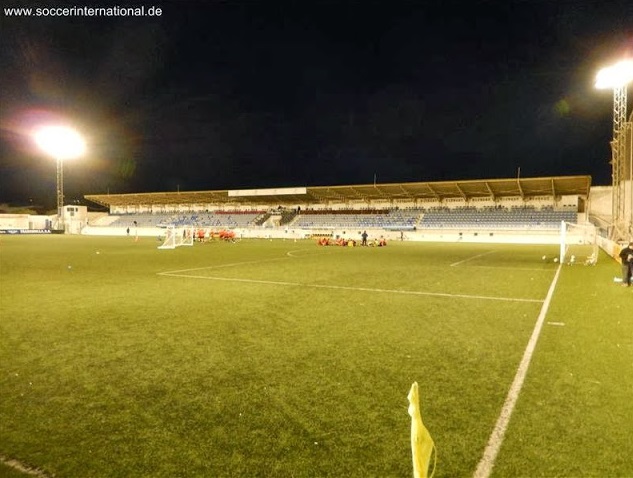
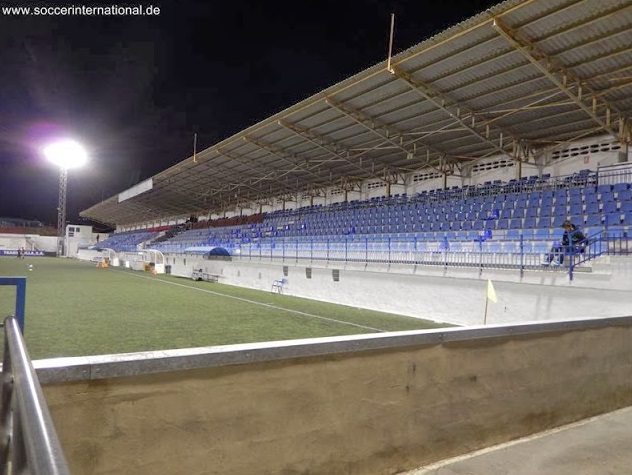
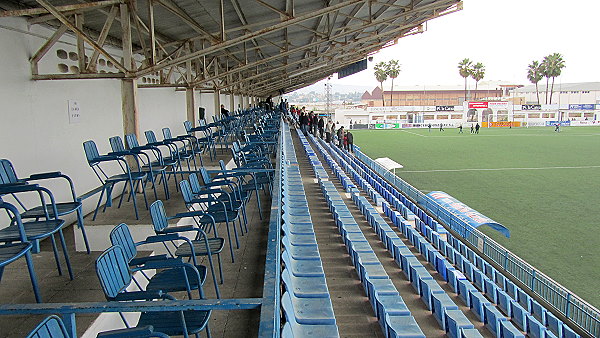
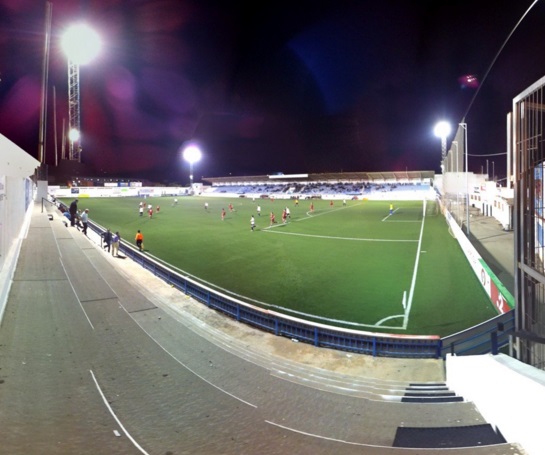
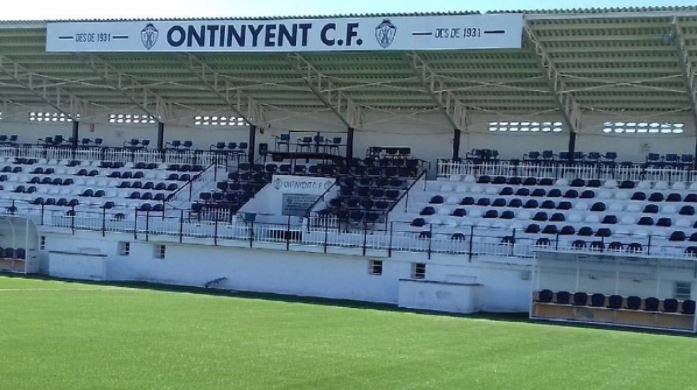
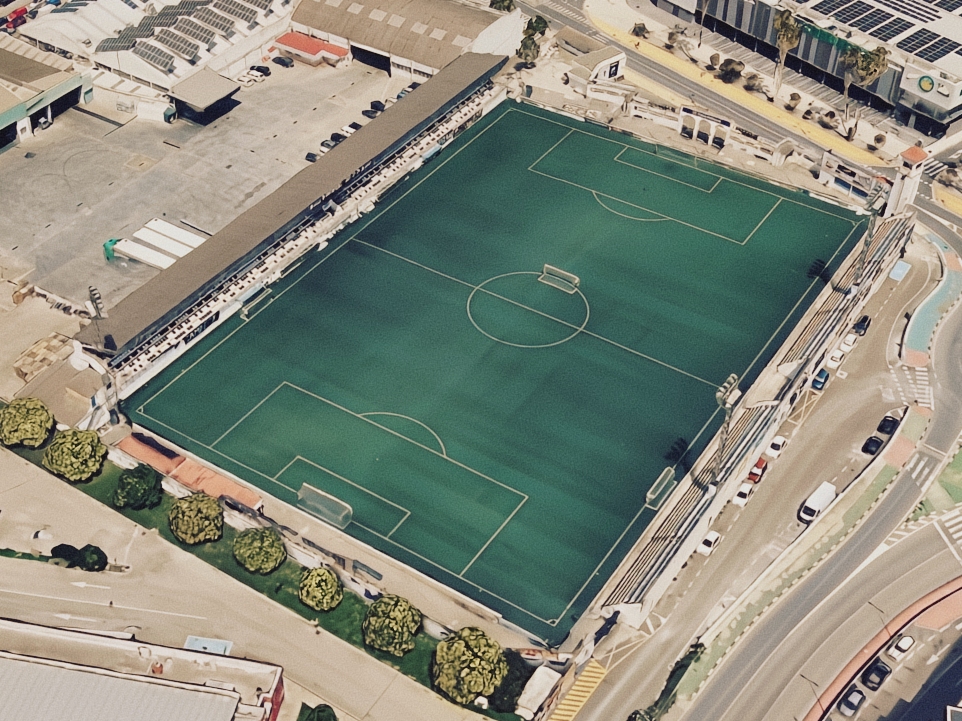
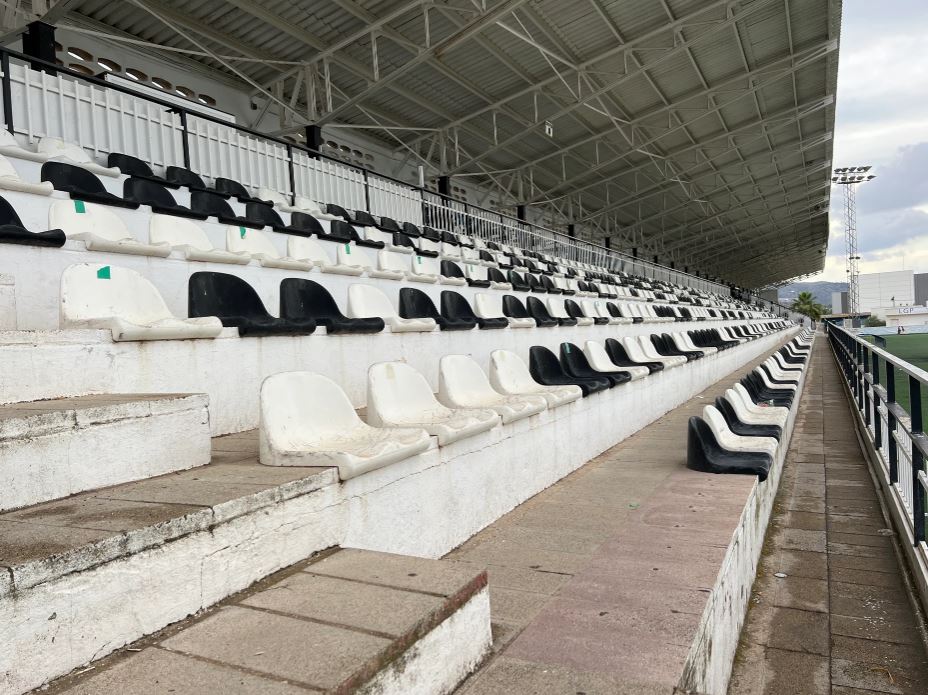
El Clariano is a delightful enclosure that is simple and pristine. The main feature, the west Tribuna, is bedecked with six rows of black and white seats that sit eight feet above pitch level. At the rear of the stand is a row of palcos, each featuring eight free-standing seats. Despite its smart appearance, it is an old design, with the tell-tell signs being just the one central access point for spectators and the low, narrow changing facilities beneath the stand. The northern end still features the bell tower and triple-arched gateway, whilst the east terrace is now divided into two sections, at the centre of which is the access point to the double-arched gateway. Artificial turf was installed in 2006 and upgraded in 2016. With an overall capacity of 5,000, El Clariano is an uncomplicated joy and stands out in an era where identikit stadiums have become the norm.

Following the demise of Ontinyent Club de Futbol in 2019, its successor, Ontinyent 1931 Club de Futbol, assumed the role of representing the city and made El Clariano its home. Starting in the seventh tier of the Spanish football pyramid, it reached the Tercera Federación (Tier Five) in 2023.
 Estadios de España