
Article updated: 16/11/20025
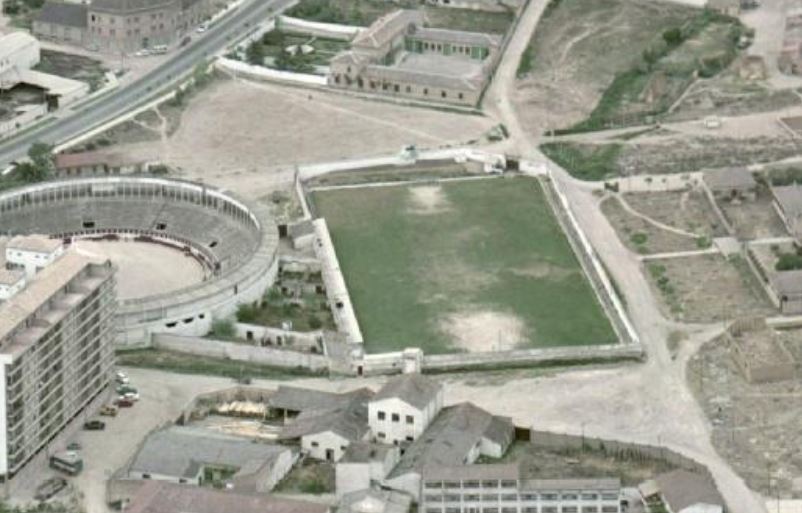
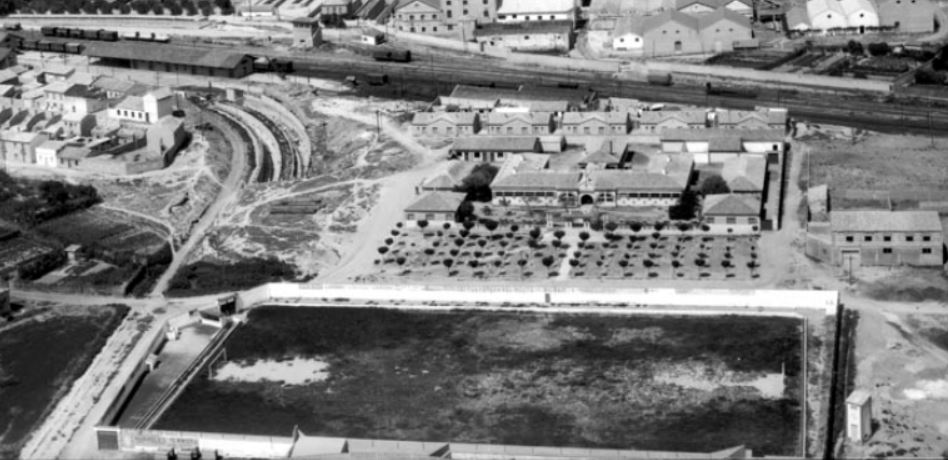
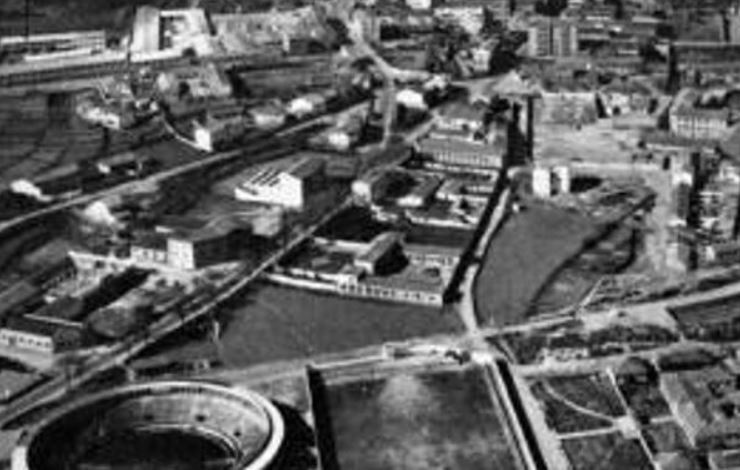
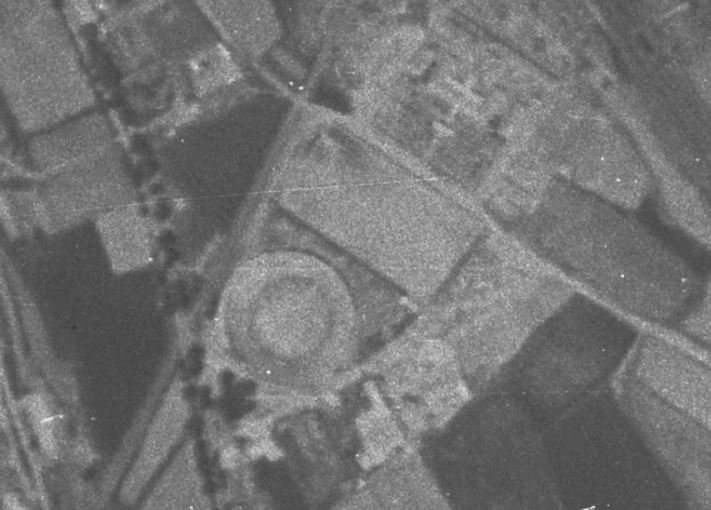
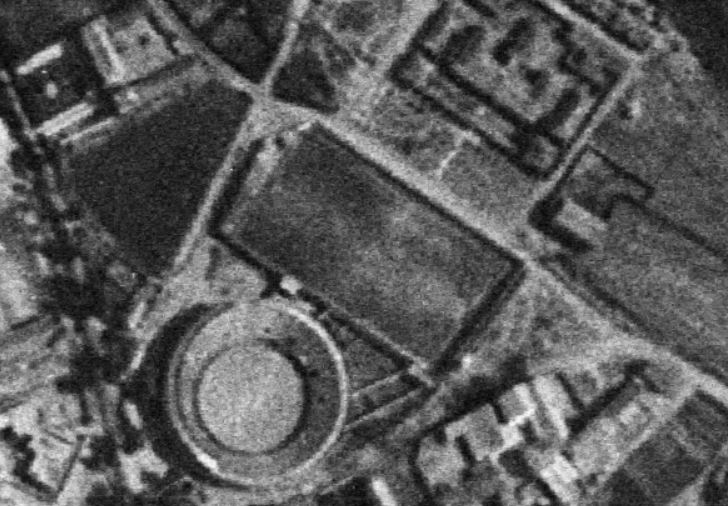
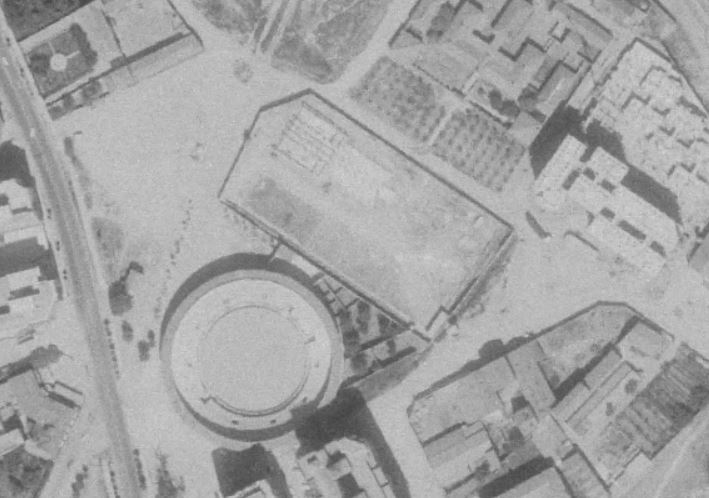
Tudela is the second-largest city in Navarra, but with a population of just 35,000, it’s not surprising that the senior club, Club Deportivo Tudelano, has returned relatively slim pickings. Formed in 1935 following the merger of Tudela CF, Arenas, Ancora Fordín, and the fantastically named CD Vegetarianaro, Tudelano played their first matches at Campo de Griseras. This was located to the south of the city centre, next to the Plaza del Toros and the city’s abattoir. The ground was originally owned by Azucarera de Tudela and became the principal football field in the city after its opening in 1921. Until Tudelano moved into the Campo de Griseras, teams had to change in the adjacent Plaza de Toros. However, with the local council now in charge of the field, Tudelano’s lease included the instruction to build changing rooms. Tudalano stayed at the somewhat spartan Campo de Griseras until 1969, when they moved to the southwest of Tudela and the purpose-built Estadio José Antonio Elola. The Campo de Griseras remained a municipal football field until 1977, when a primary school was built on the site.
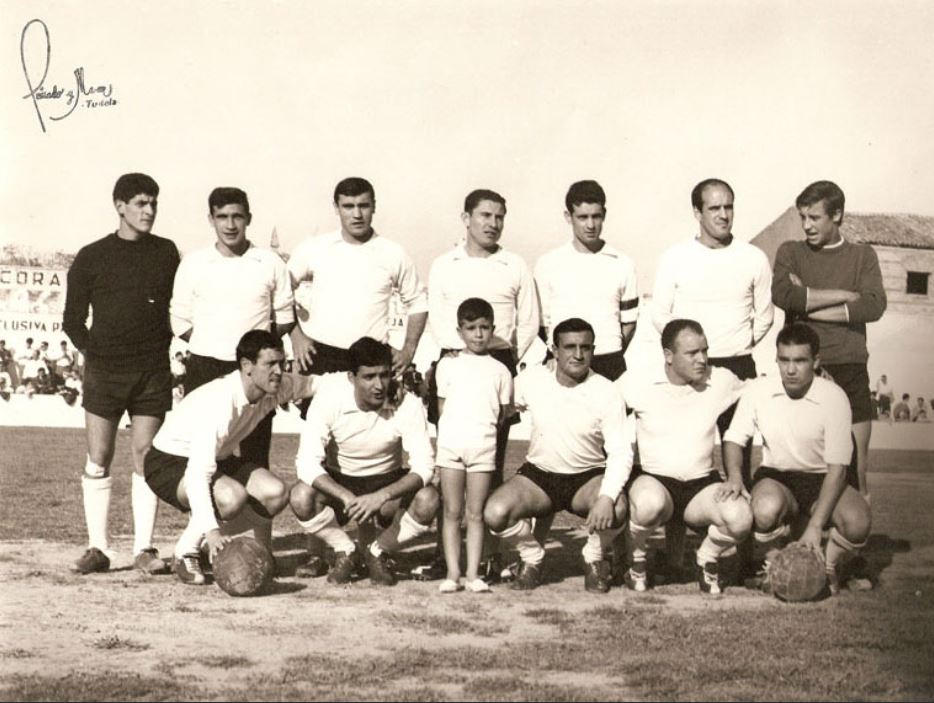
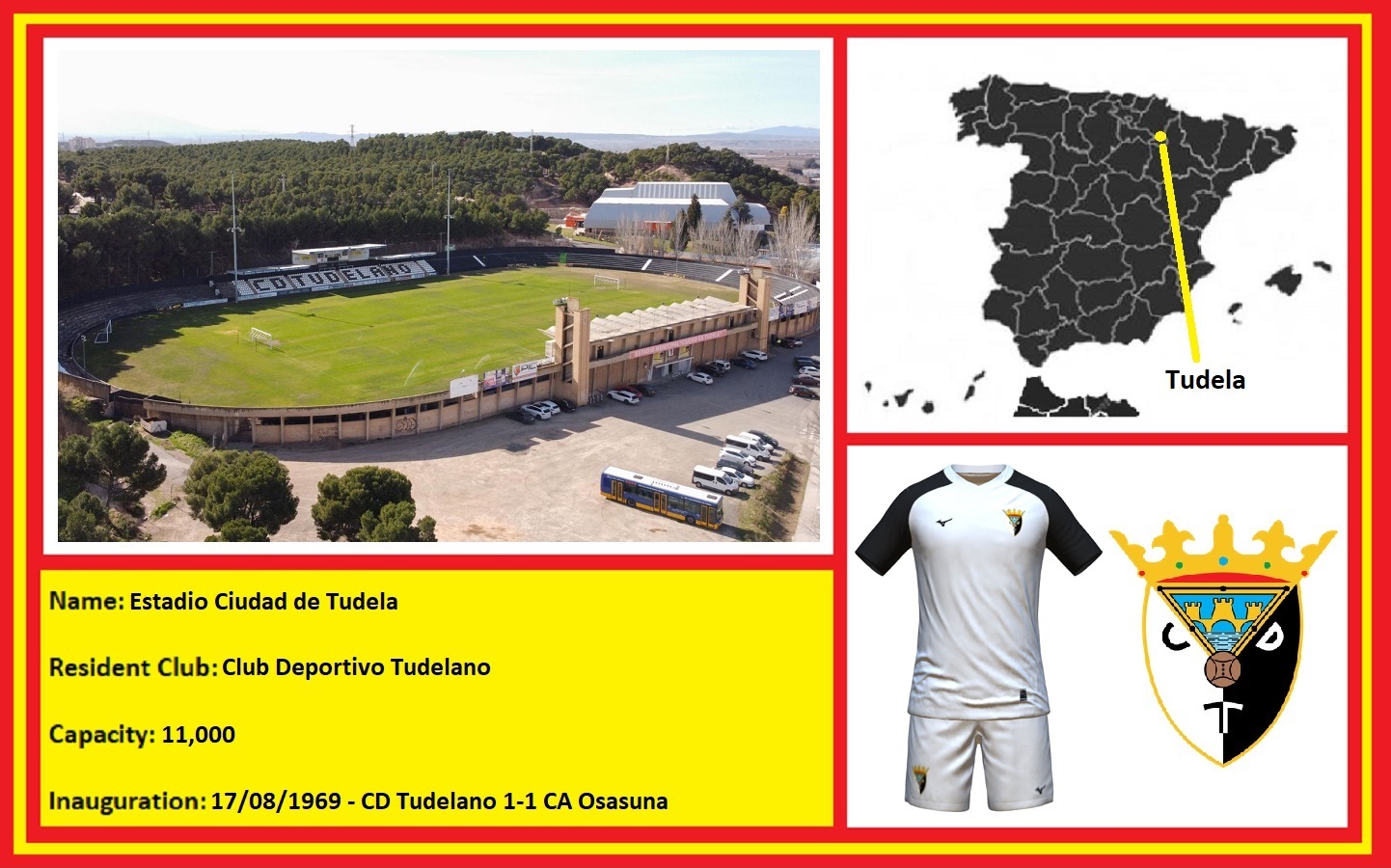
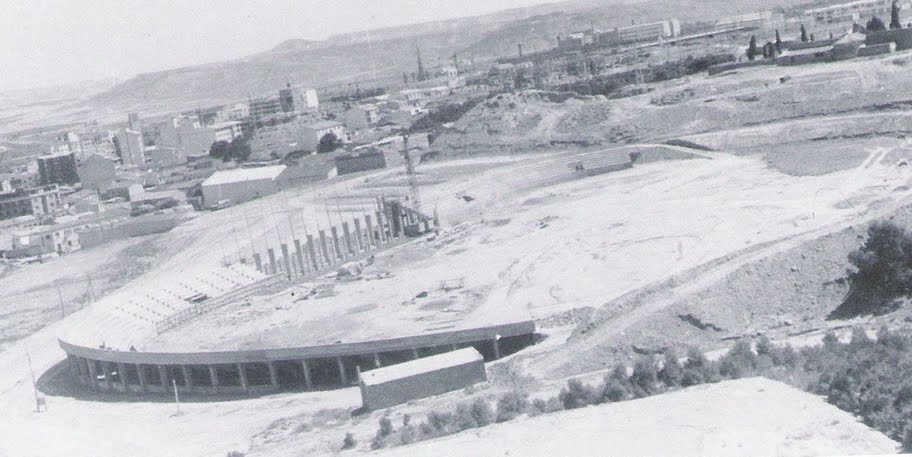
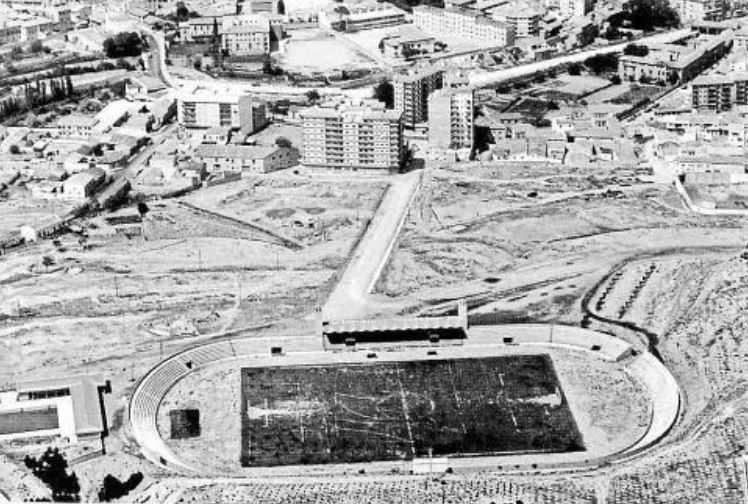
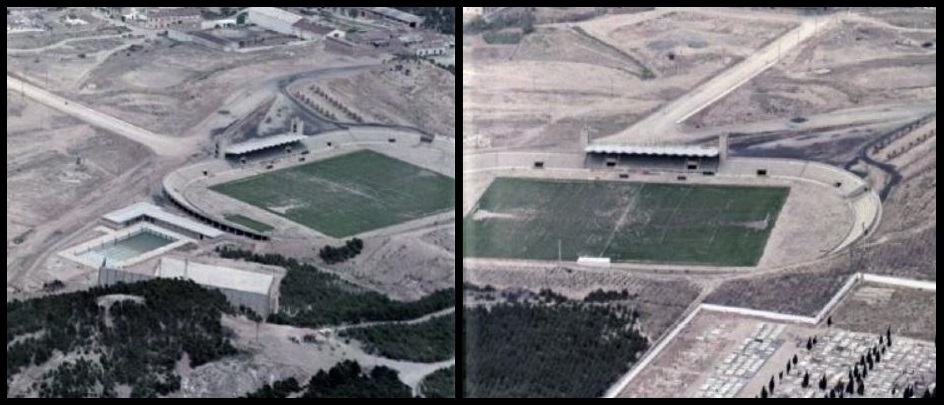
The new stadium was named after José Antonio Elola, the National Deputy of Physical Education and Sport. He had no obvious ties with Tudela, having been born in Argentina. However, he fought for the Nationalists in the Civil War with one of Tudelano’s main benefactors, General Julio Pérez Salas. The stadium was designed by Enrique Delso and had a budget of 14 million pesetas. It was inaugurated on 17 August 1969 with a friendly match against CA Osasuna. Tudelano opened the scoring in the second minute with a penalty from Maranhao, the club captain. Osasuna equalised in the second half, and the match finished one-all. The stadium was a huge improvement on the basic Campo de Griseras and was the centre-piece of the city’s sporting village, which also included a swimming pool and an indoor sports hall.
Any success Tudelano experienced in its first 75 years was at best mediocre. In 1942, the club reached the play-offs for promotion to La Segunda, but lost out to Terrassa. Thirteen years later, after winning the title in their section of the Tercera, Tudelano reached the playoffs for La Segunda again, but fared poorly in a group that featured Binéfar, Arenas Getxo, Plus Ultra, Rayo Vallecano, and Girona. The club had to wait until the 1977-78 season to sample football in Segunda B, although no playoff victory was required, as the league was restructured and a ninth-place finish in the Tercera was just high enough to secure a berth. The team was ill-equipped for the higher level, and the season ended in relegation back to the Tercera.
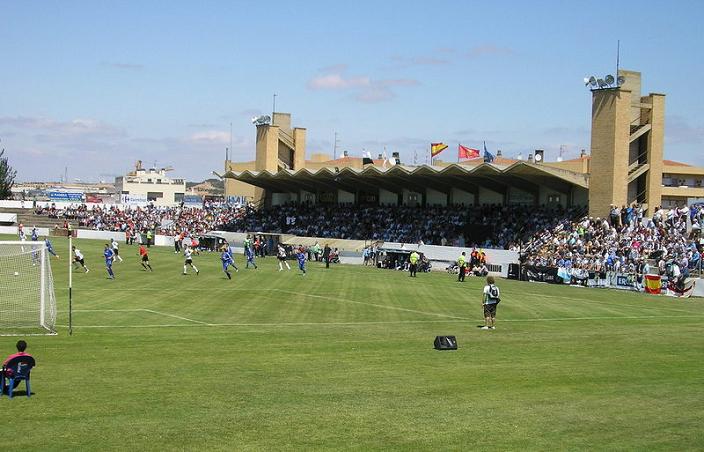
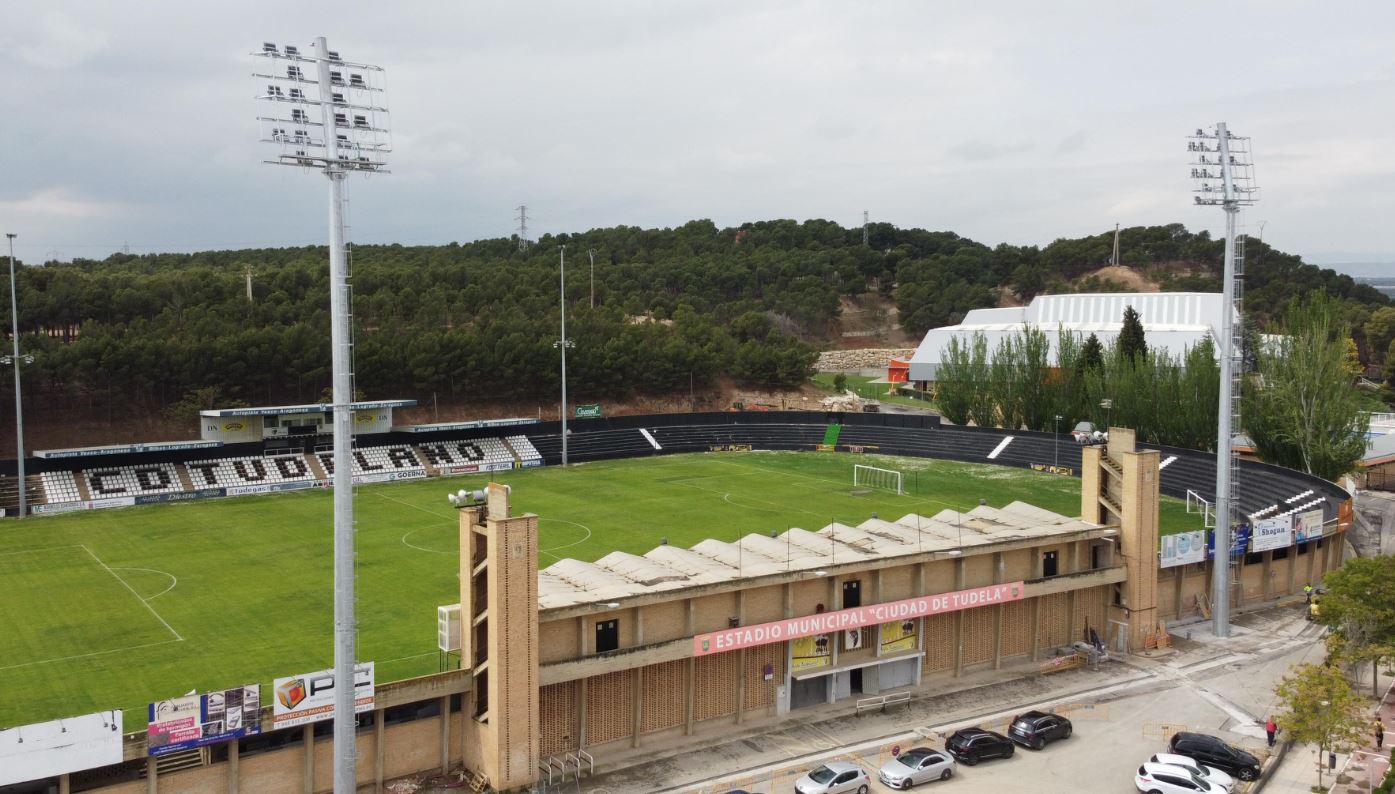
The club next won promotion to Segunda B in 1990-91, and this time it was on merit after winning their section of the Tercera, and topping the playoff group ahead of Sabiñánigo. The stay in Segunda B lasted five torturous years, with each season proving to be a battle against relegation. They finally succumbed at the end of the 1995-96 season. At this point, Tudelano entered something of a decline, failing to reach the end-of-season play-offs for ten consecutive seasons. This was finally rectified at the end of the 2007-08, but that and four subsequent visits to the end-of-season thrash proved fruitless. Finally, after 16 seasons away from the third tier, promotion to Segunda B was achieved in June 2012 following playoff victories over Azuqueca, Villarrobledo and Catarroja. In the summer of 2012, the municipal council of Tudela renamed the stadium Estadio Ciudad de Tudela.
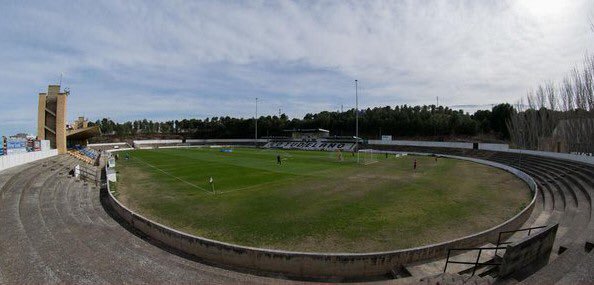
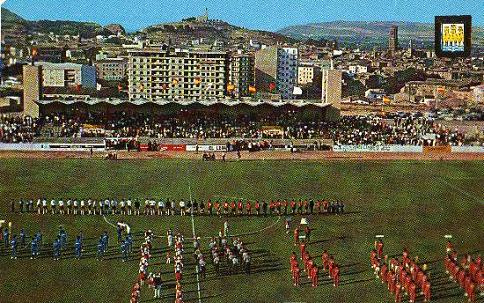
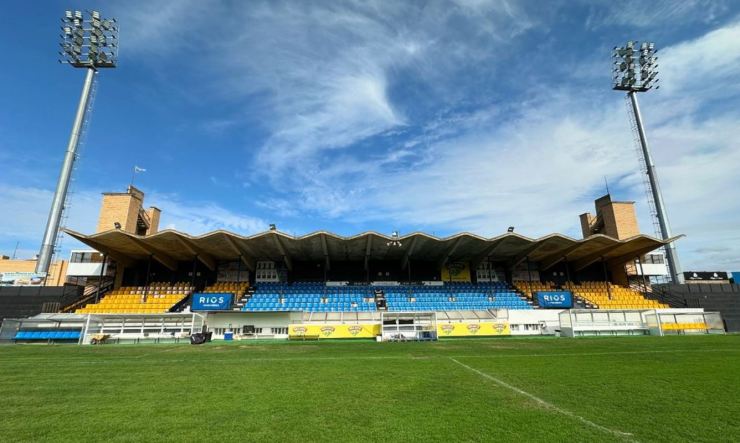
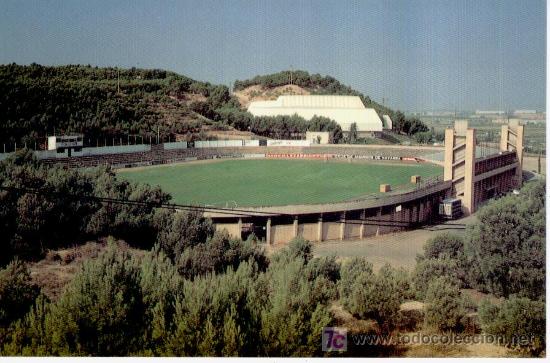
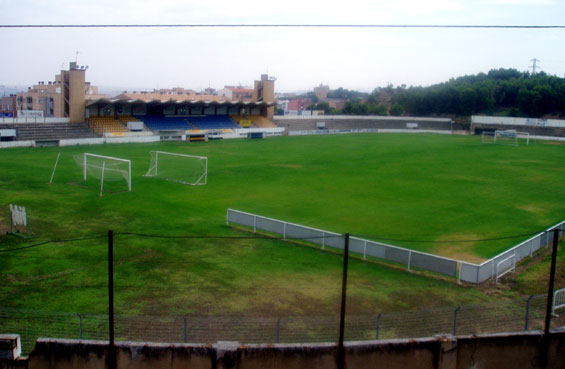
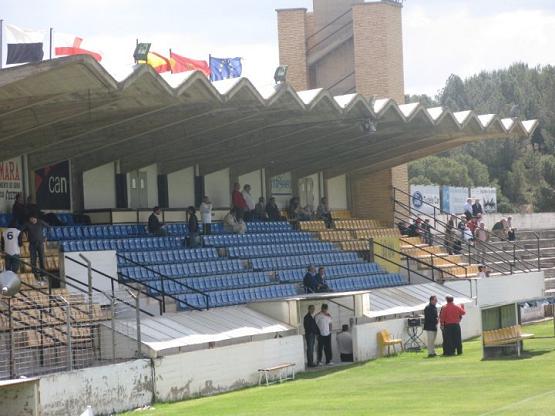
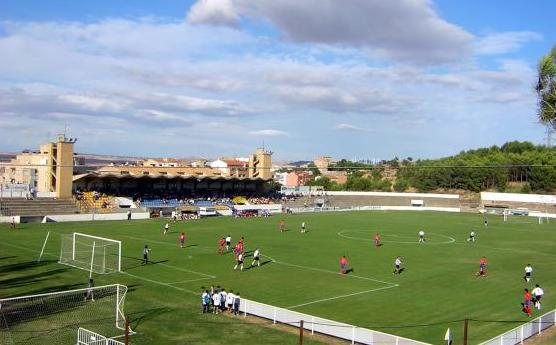
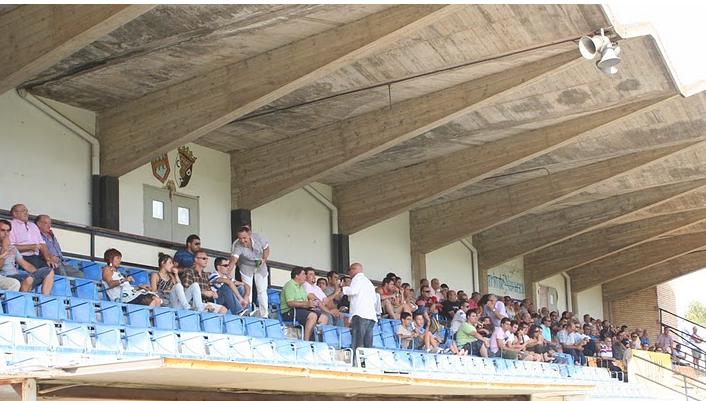
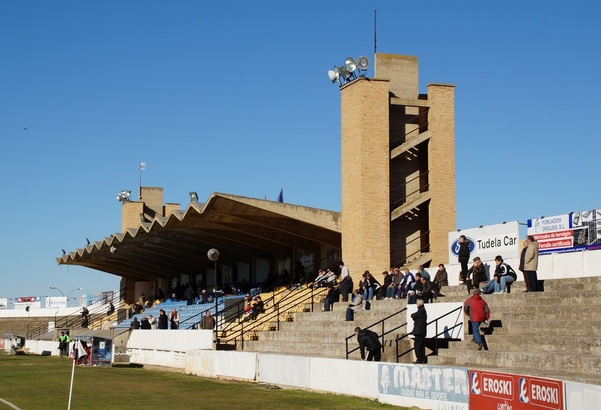
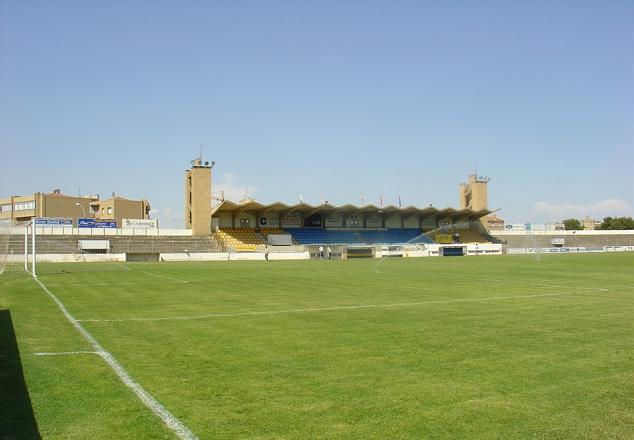
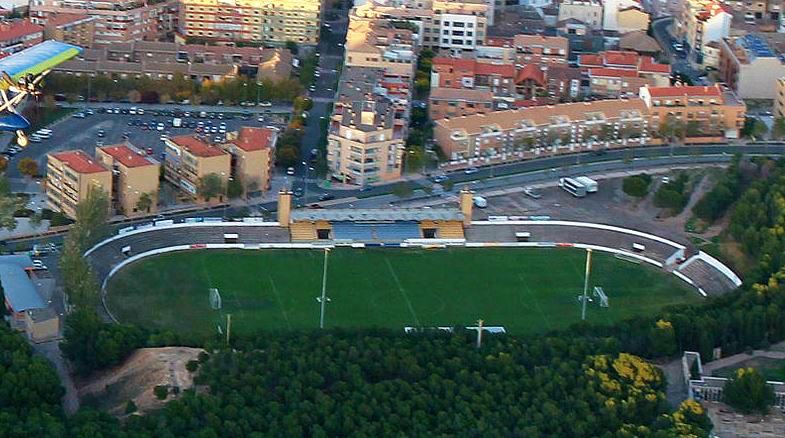
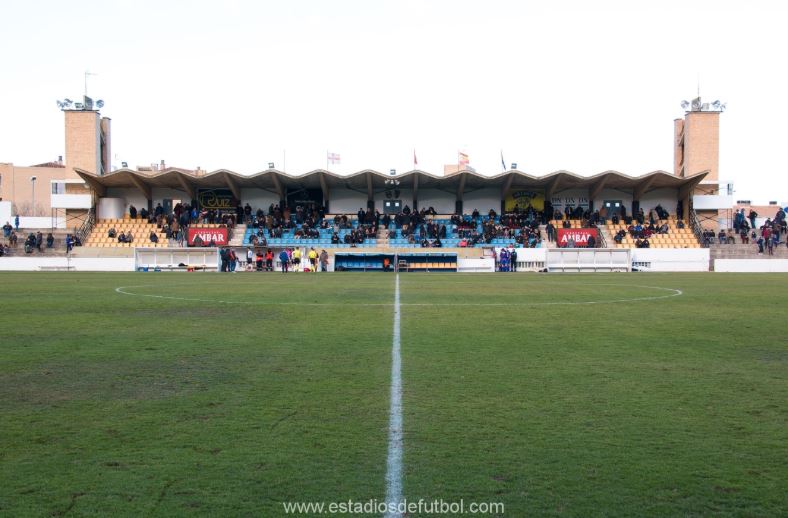
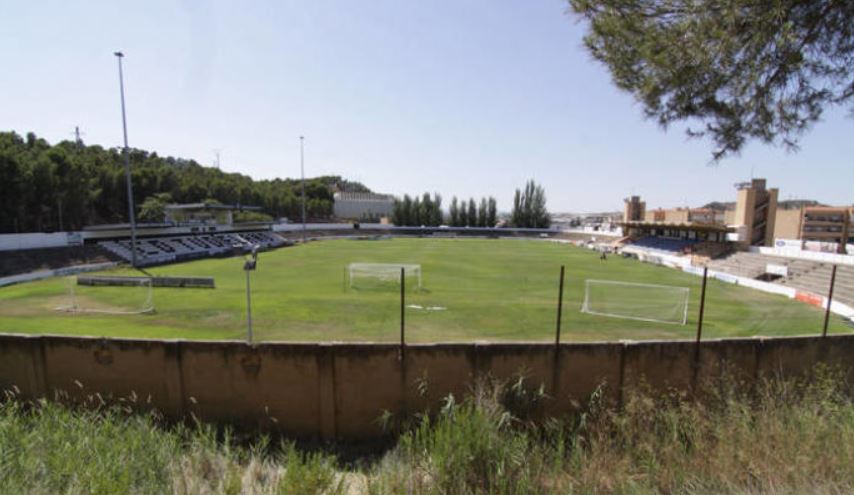
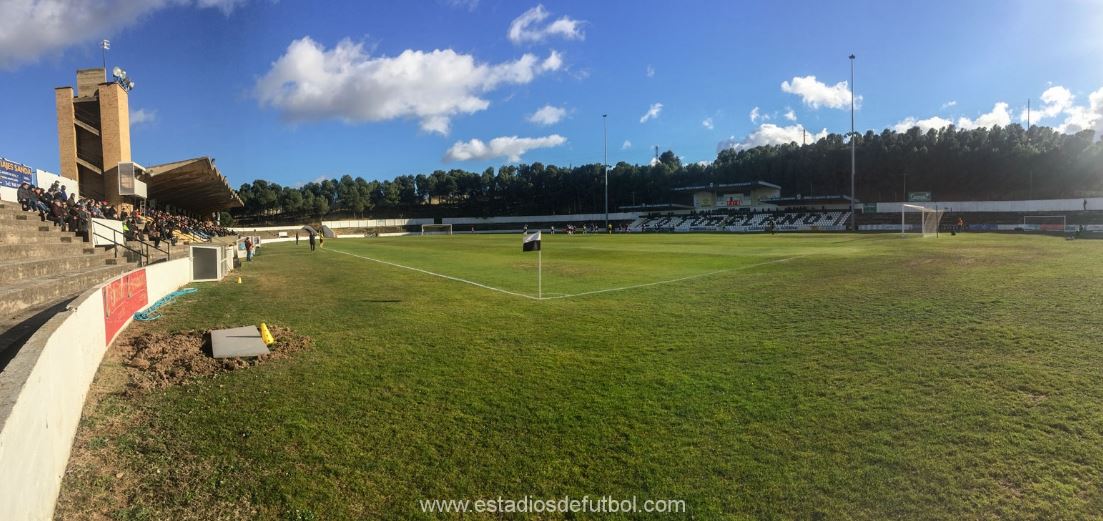
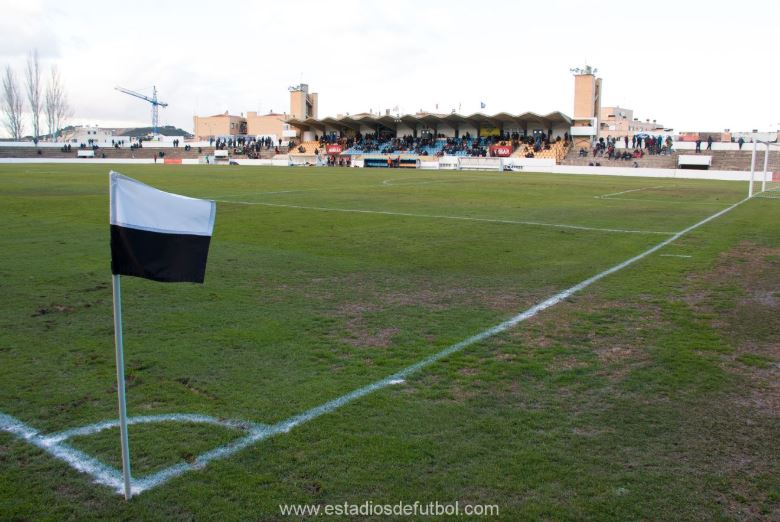
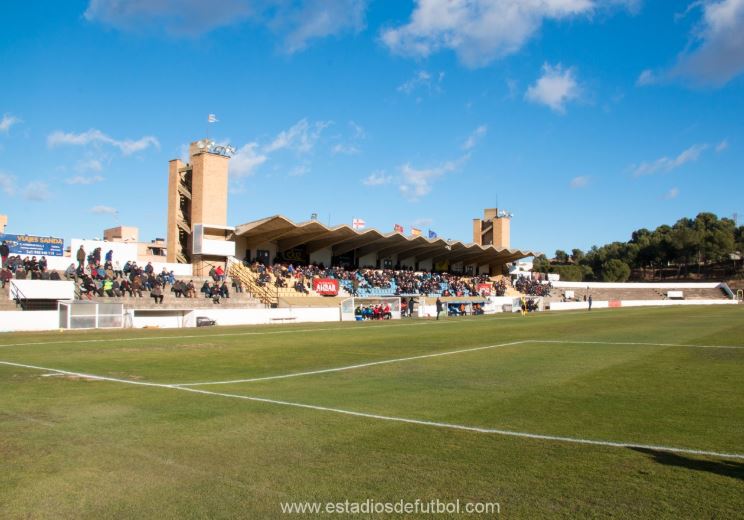
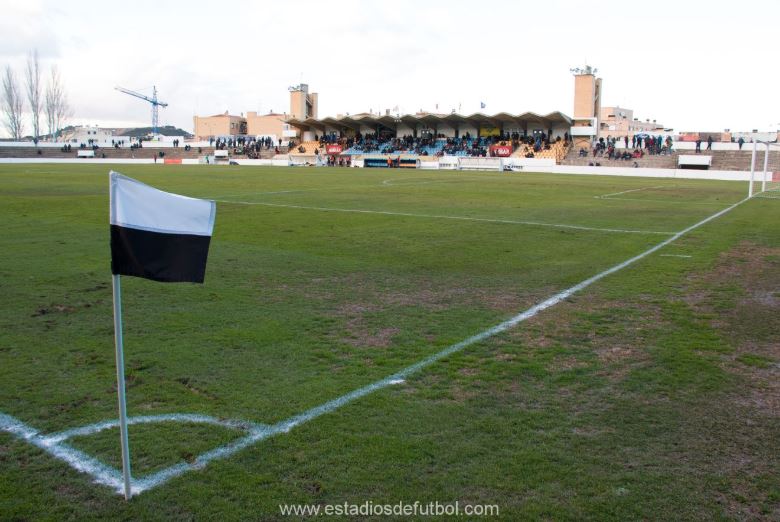
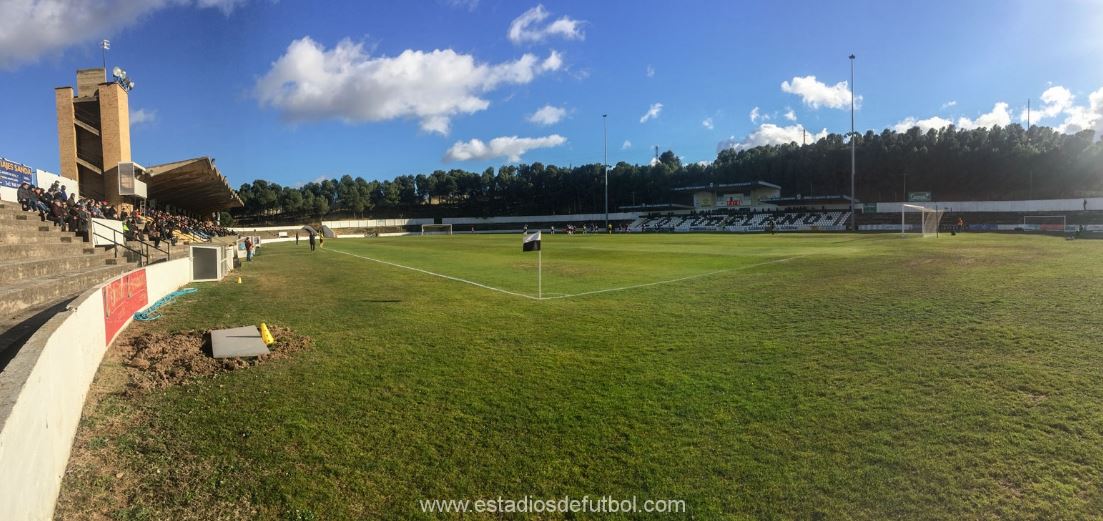
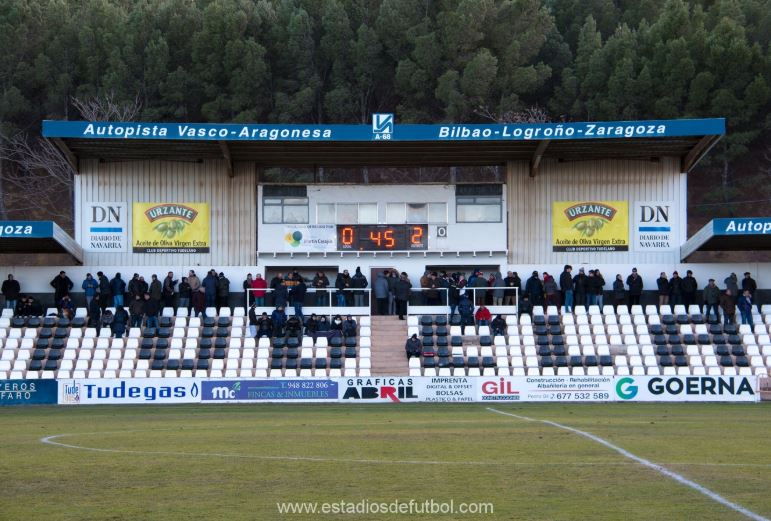
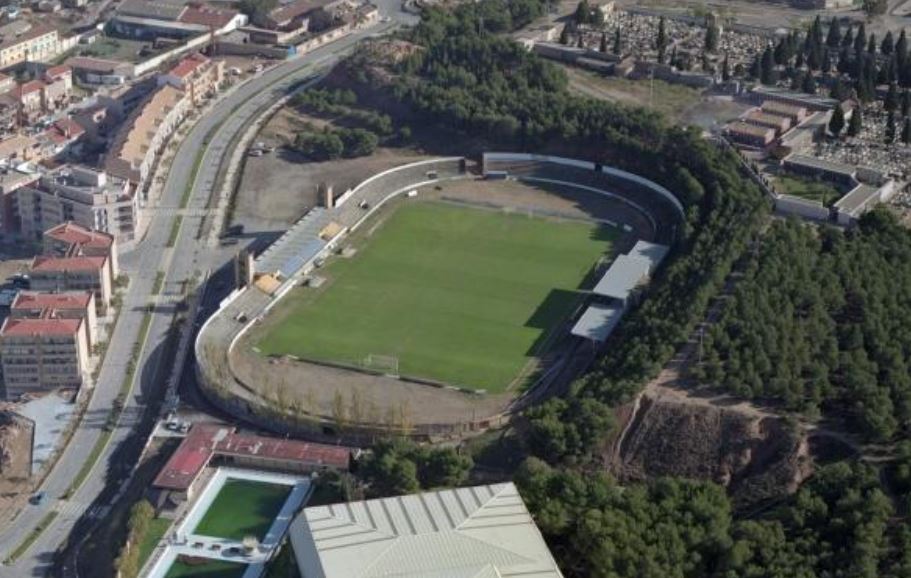
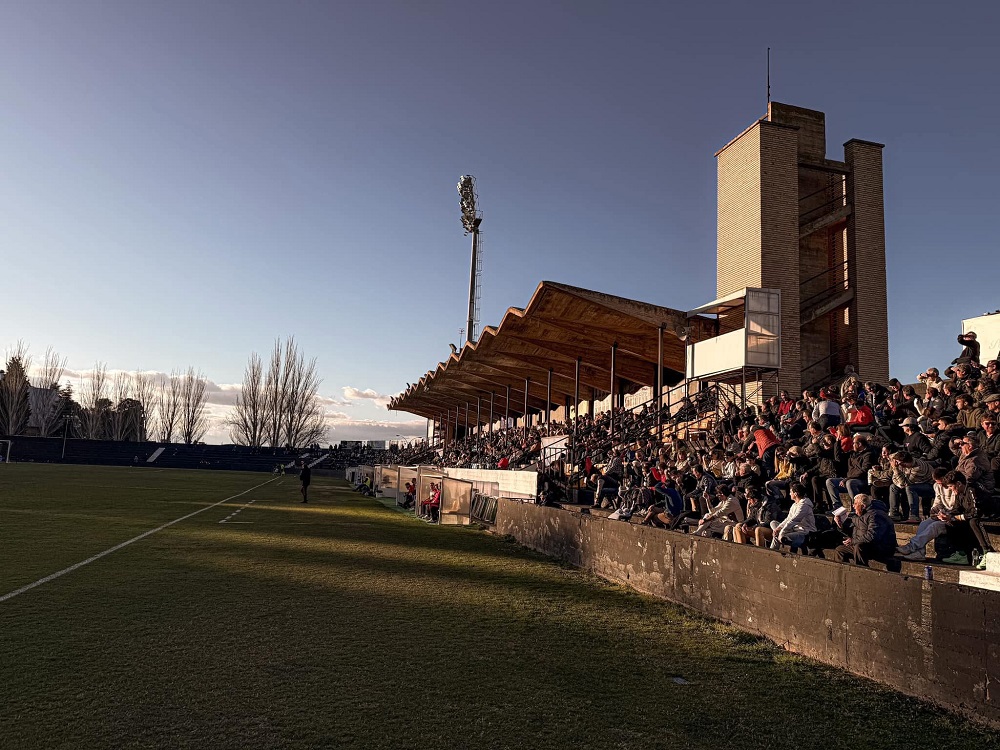
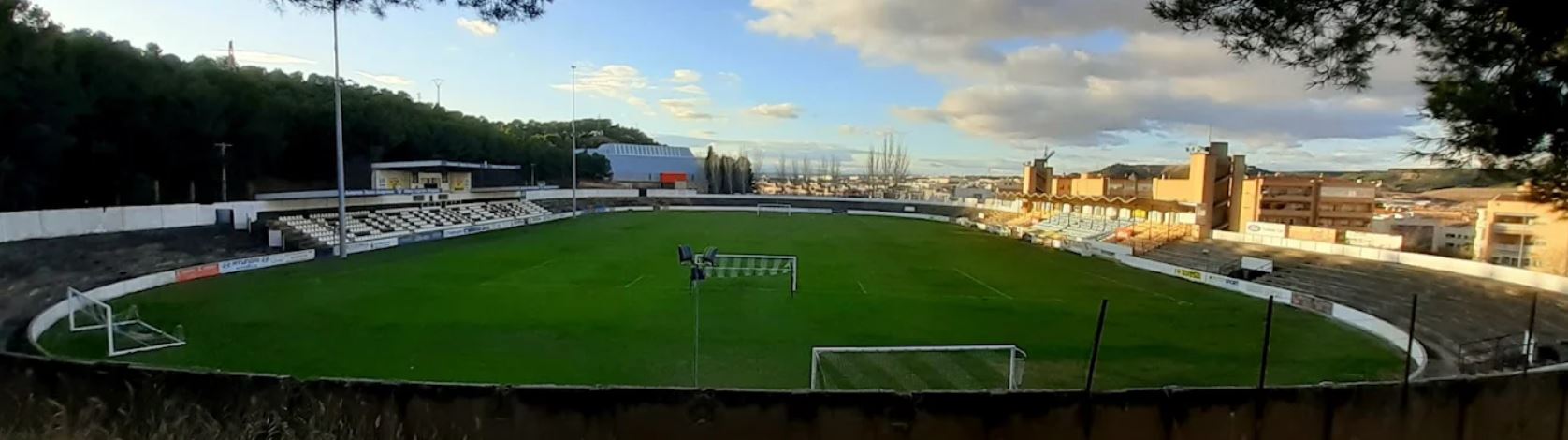
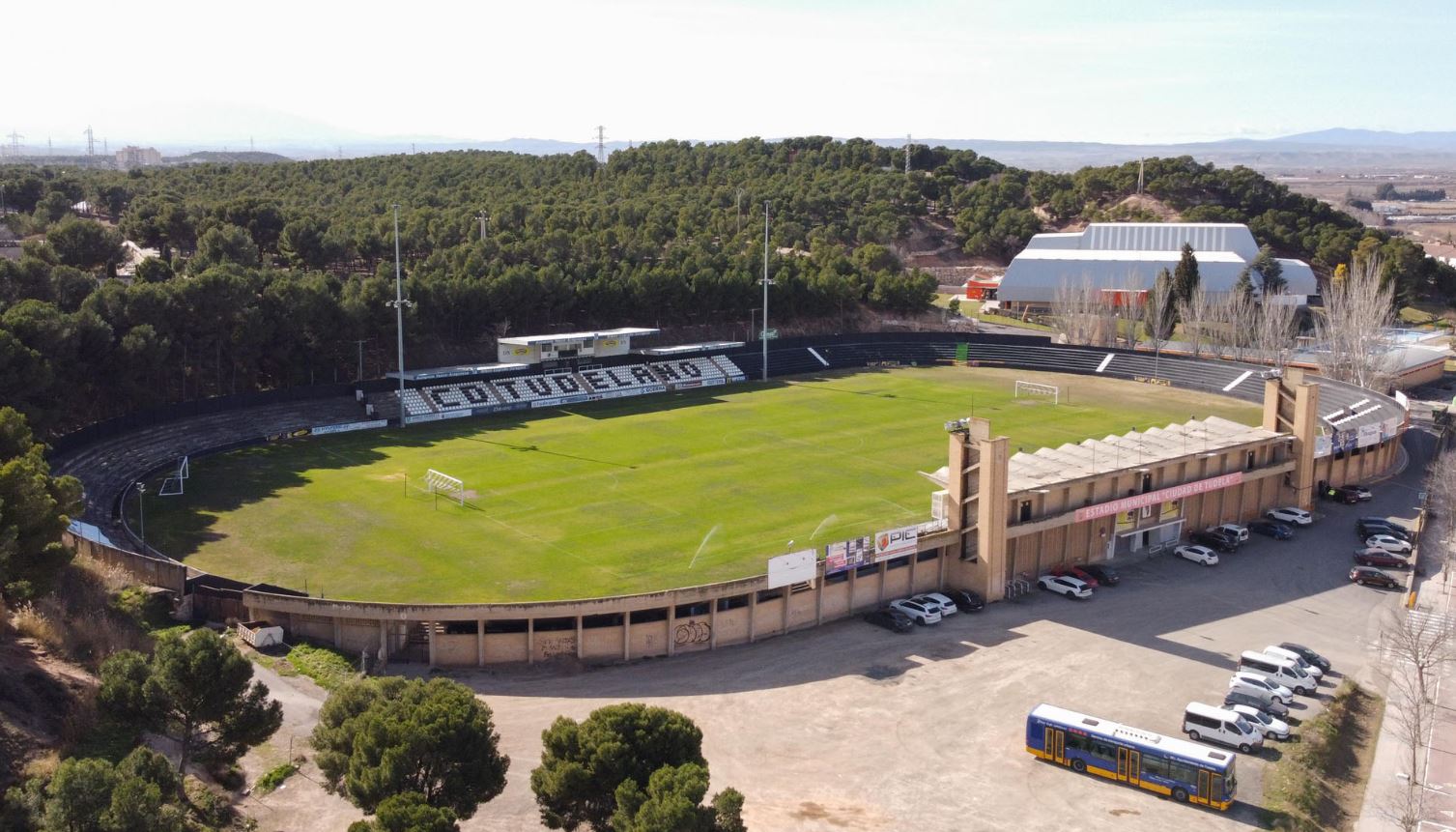
The Estadio Ciudad de Tudela is now over 55 years old, and it is starting to show its age. The main stand is still quite impressive, particularly if 1960s urban architecture is your thing. It has a pre-cast concrete cantilevered roof, which is now supported with acrow props under each concrete strut. The main stand is flanked at either end by two stark-looking towers. In the early days, each of these towers had a flagpole on top, but they are now cluttered with an assortment of aerials and loudspeakers. At some point, I’m sure they did look impressive, but now they resemble the training towers you find at your local fire station. The shape of the stadium is oval, and upon opening, a gravel athletics track surrounded the pitch. This fell into disrepair, and now the whole area is turfed. Eight steps of terrace curve around both ends to meet the south terrace, which was originally open, but now has three short cantilevered covers, the middle of which is higher than the other two. This is to allow the media booths and a bar that sit at the back of the terrace on the halfway line. The area under the covers was seated following Tudelano’s promotion to Segunda B in 2012.
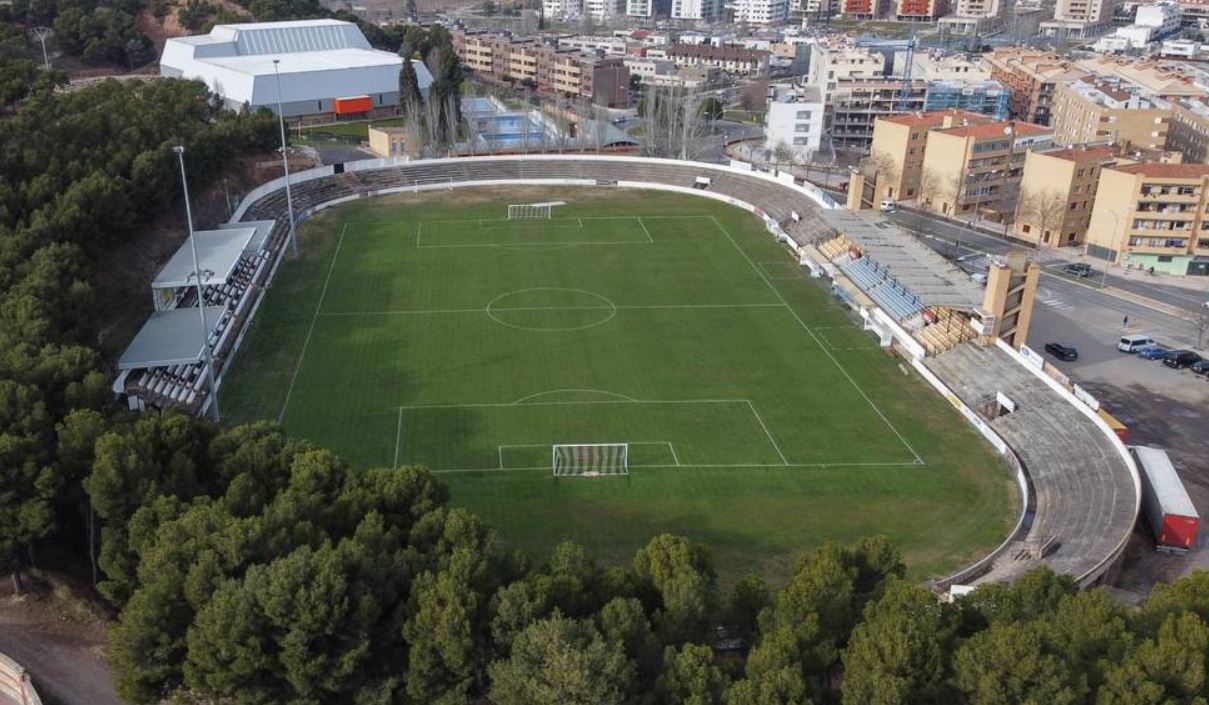
The layout of the stadium is similar to that of the original design of Real Balompédica Linense‘s stadium, which also opened in 1969. There has been talk for some years about moving to a new ground, but the local municipality did not have the appetite or the funds to proceed. In 2021, plans were announced for a €3m renovation of the stadium. This would see the end of the oval layout, with new terraces added at either end of the pitch. However, as of the summer of 2025, the only aspects of the plan to be completed are the addition of new floodlights and the installation of a new playing surface.
As for Tudelano, they have enjoyed their longest period of consistency in the third tier, with nine consecutive seasons in Segunda B. A best place finish of third in the 2015-16 season earned a place in the playoffs, but Tudelano lost in the first round to Hércules. The club did have a close call with relegation a few years later, when they were 7 points adrift at the bottom of the table when the competition was suspended in March 2020 due to the COVID-19 pandemic. Tudelano made the most of their reprieve, and when the 2020-21 season eventually started, a vastly improved squad won their subgroup and finished 5th in the promotion group to earn a place in the newly formed Primera Federación. After a decade of playing in Spain’s third tier, Tudelano dropped to the Segunda Federación in May 2022.
 Estadios de España