
Article updated: 30/11/2025
Football was brought to the city of Castellón de la Plana at the turn of the 20th century by local citrus traders who had watched the game in the UK. Within ten years, several clubs had sprung into life, but it was the success of Cervantes Football Club that gave rise to the city’s current senior club. Founded in 1916, within two years, Cervantes had become the city’s leading club and was a serious rival to Valencia CF & Gimnástico FC, so much so that they won the Campeonato Regional de Valencia in 1921. The desire to have a club named after and representing the city led to Cervantes effectively dissolving, and the formation of Club Deportivo Castellón at a special meeting on 20 July 1922.
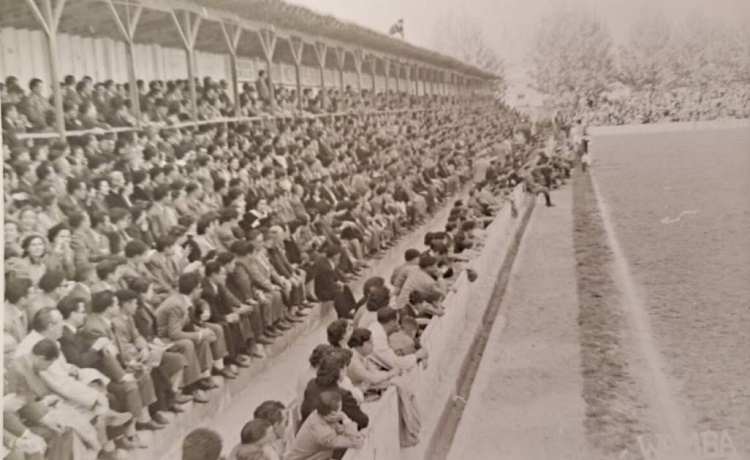
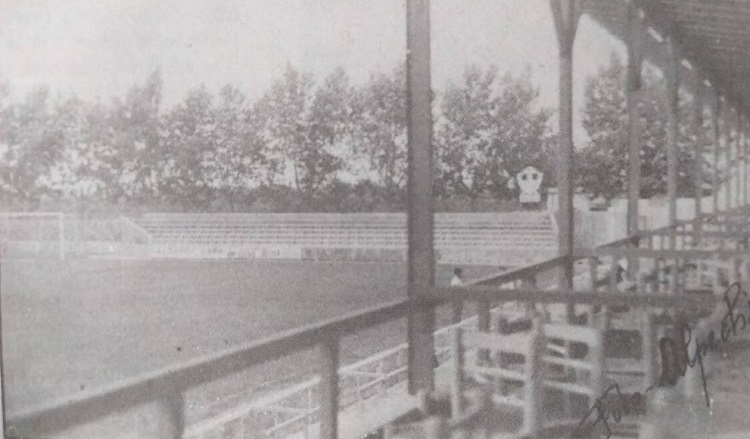
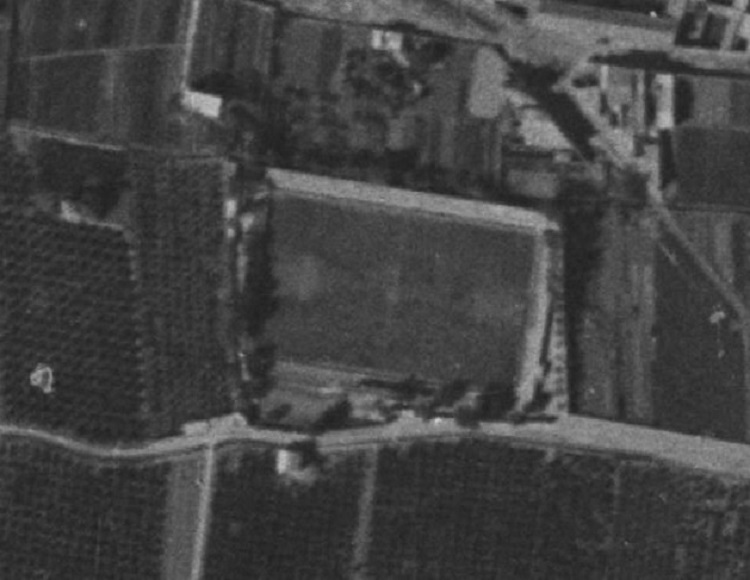
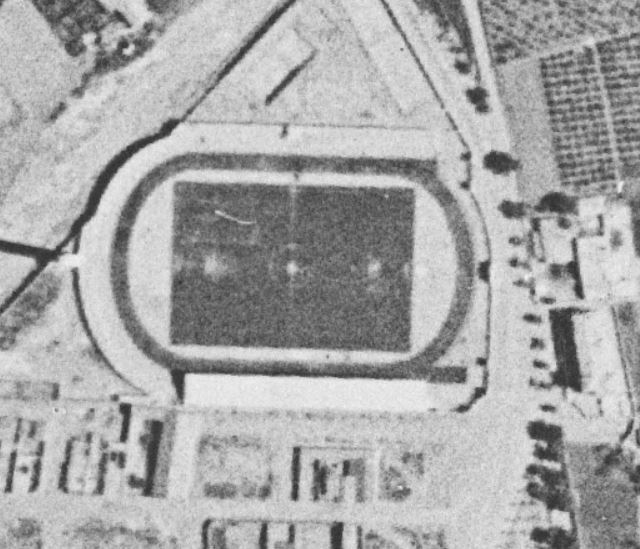
Initially, home matches were played at Campo de la Carretera de Valencia, before the club moved to its first purpose-built enclosure in November 1923. The Campo de Sequiol was located to the south of the city, on Calle de Herrero, around 200 metres from the San Francisco military barracks. Taking its name from a nearby irrigation channel, it opened on 3 November 1923, when Castellón lost 2-3 to Real Club Español in a friendly match. Sequiol had an initial capacity of 6,000, comprising mostly simple terracing. However, on the west side, a narrow, propped seated stand ran the length of the pitch, in front of which were six rows of open seating and a narrow paddock, tightly up against the pitch. Changing facilities were located in the southwest corner of the enclosure. Castellón continued to make progress, although club president Mallach’s decision to ‘sell’ a match to Valencia CF in 1925 led to his resignation and Castellón’s decision to break with the past and change from white shirts to their now familiar black & white stripes.

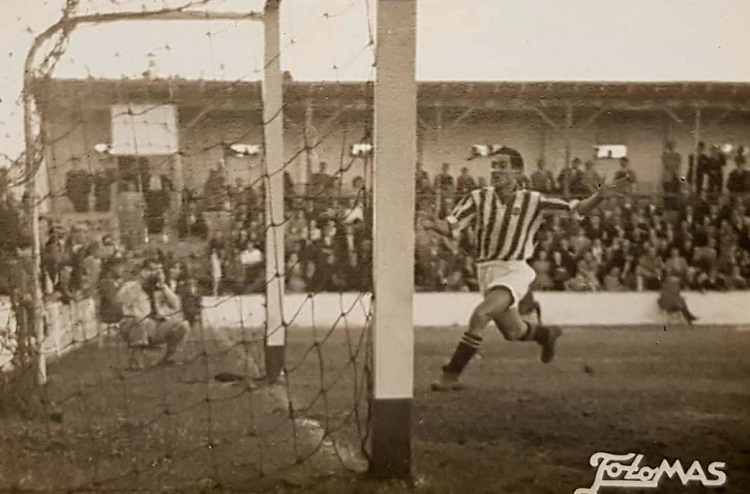
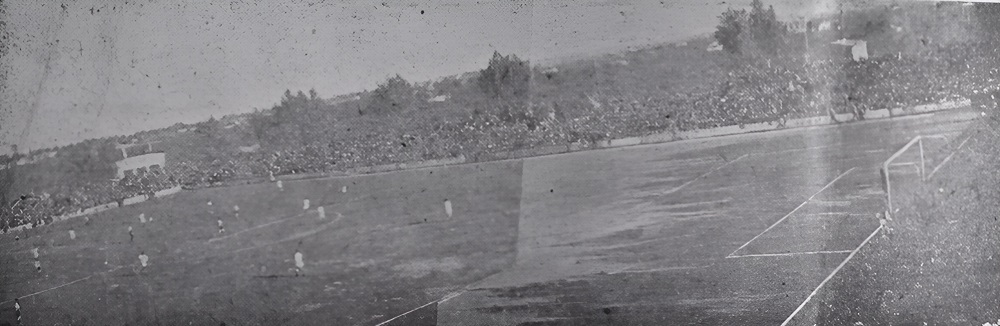
The club was invited by the RFEF to compete in the inaugural Segunda B championship of 1929, finishing third and missing out on promotion to the second tier by a point. A year later, and with its first Campeonato Regional de Valencia under its belt, Castellón competed in and won the re-jigged Tercera division, beating Barakaldo in the playoff final. The club debuted in La Segunda in the 1930-31 season and made a steady start with an even 18 points. Another steady season followed in 1931-32, before Castellón hit the headlines for all the wrong reasons during the 1932-33 season. Struggling at the bottom of La Segunda, Castellón entertained CF Oviedo at The Campo de Sequiol on 29 January 1933. The home crowd, unhappy with referee Julio Ostalé officiating, attacked him, causing the match to be abandoned with Oviedo two goals to the good. The RFEF suspended the use of the ground, forcing Castellón to play their remaining four home matches at Valencia’s Mestalla. Given the bad blood between the two sides, Castellón refused to honour their remaining home matches and was suspended by the federation. The club subsequently resigned from the RFEF, and a period of inactivity ensued, partly due to the resignation and then the outbreak of the Civil War.
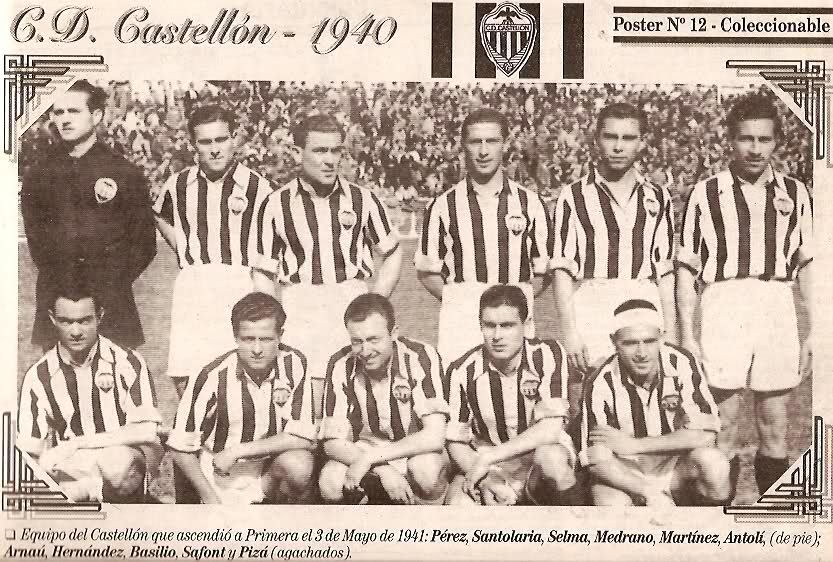
After the war, CD Castellón was reformed by the former president and now mayor of Castellón, Vicent Traver Tomás. With the RFEF now very much under the influence of General Moscardó, La Segunda was realigned along geographical lines, with representatives from Spain’s largest cities invited to participate. Castellón jumped at the opportunity, and after over six years of inactivity, the club returned to the second tier on 3 December 1939, with a 1-3 win at Granollers. They finished fourth in their first season back, and a year later, against all odds, Castellón finished top of the southern section of La Segunda. Although they only finished fourth in the play-off group, Castellón were given a final chance to ascend when they faced Zaragoza at Real Madrid’s Estadio Chamartin. A 3-2 victory saw the club reach La Primera, a mere 19 months after reforming. That first season saw the club finish in a comfortable eighth place, some seven points clear of the relegation playoff places. If Castellón was ready for la Primera, the Campo de Sequiol was not. Although the club extended the capacity to 8,000, the old enclosure was on borrowed time, as the club and the city needed a new ground. The old stadium had a memorable final couple of seasons, however, with Castellón achieving its best-ever top-flight finish of fourth in 1942-43, followed by fifth place the following season.
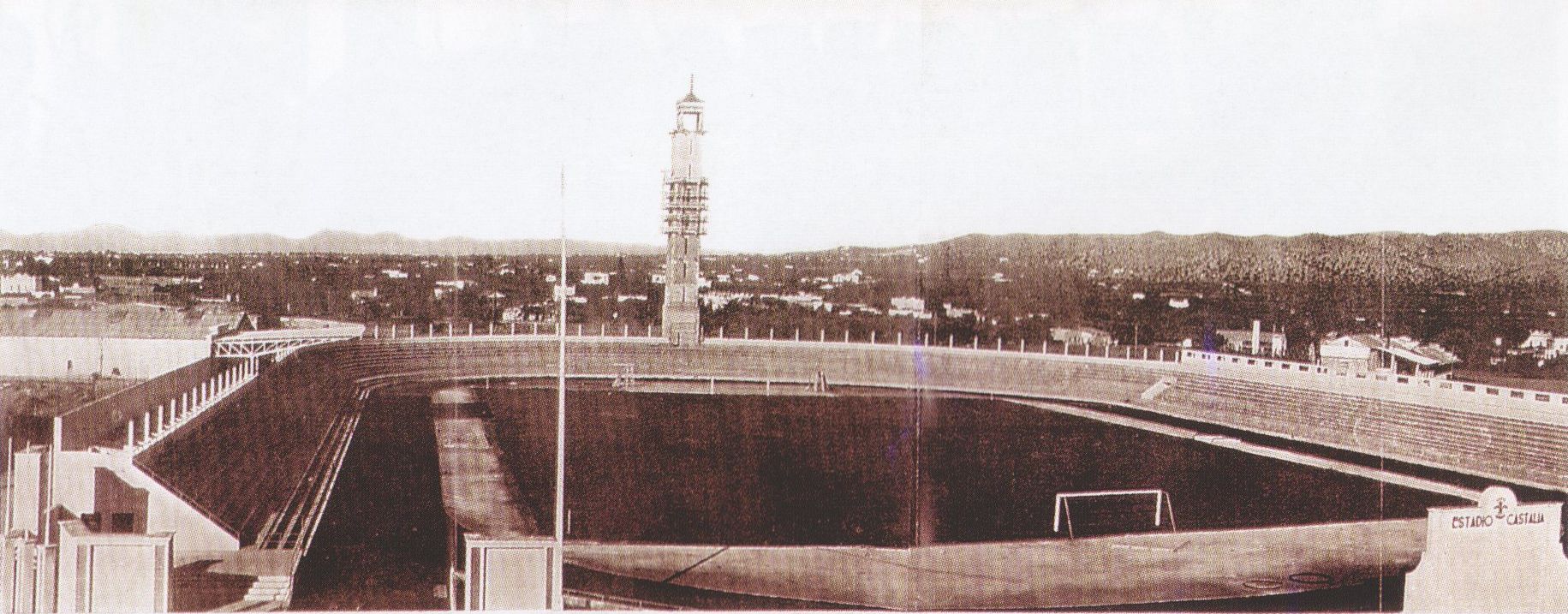
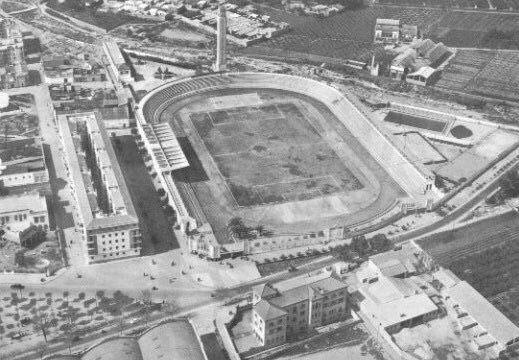
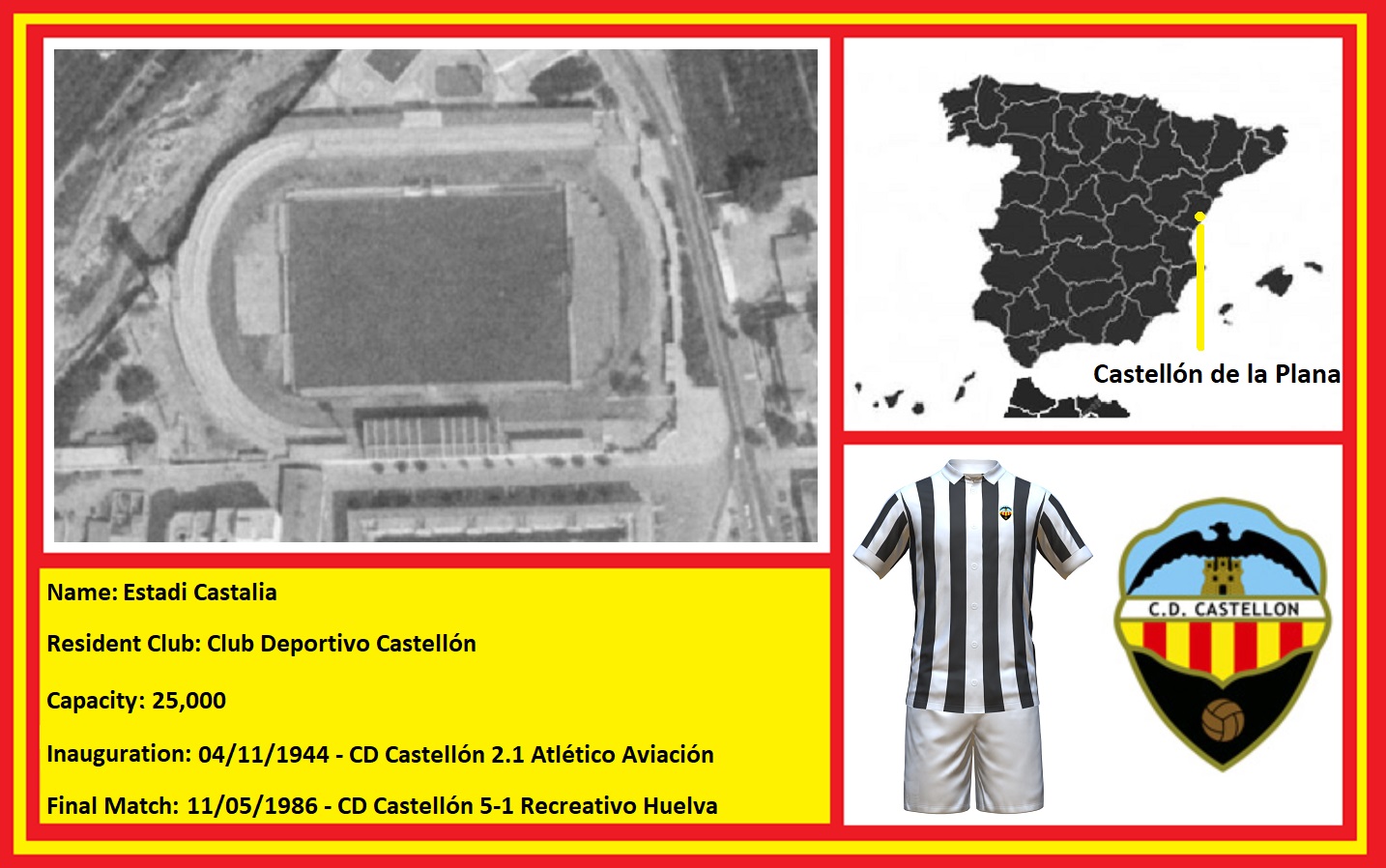
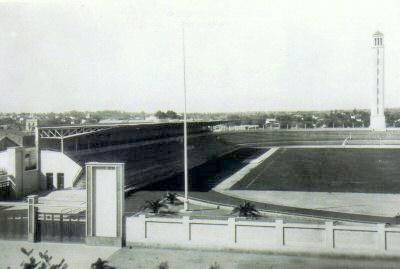
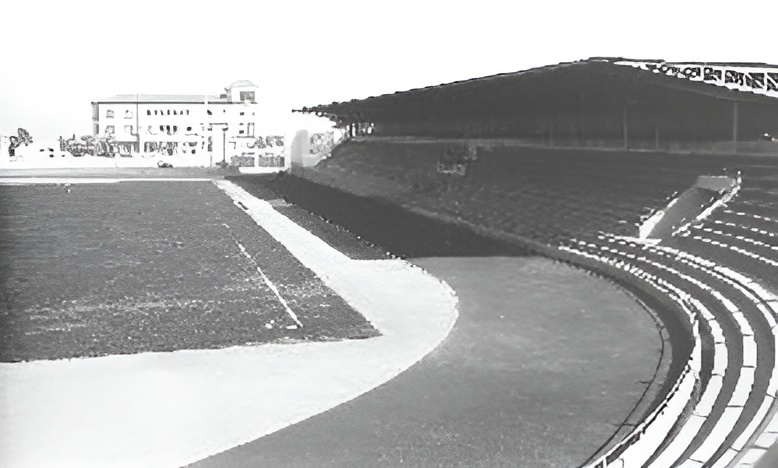
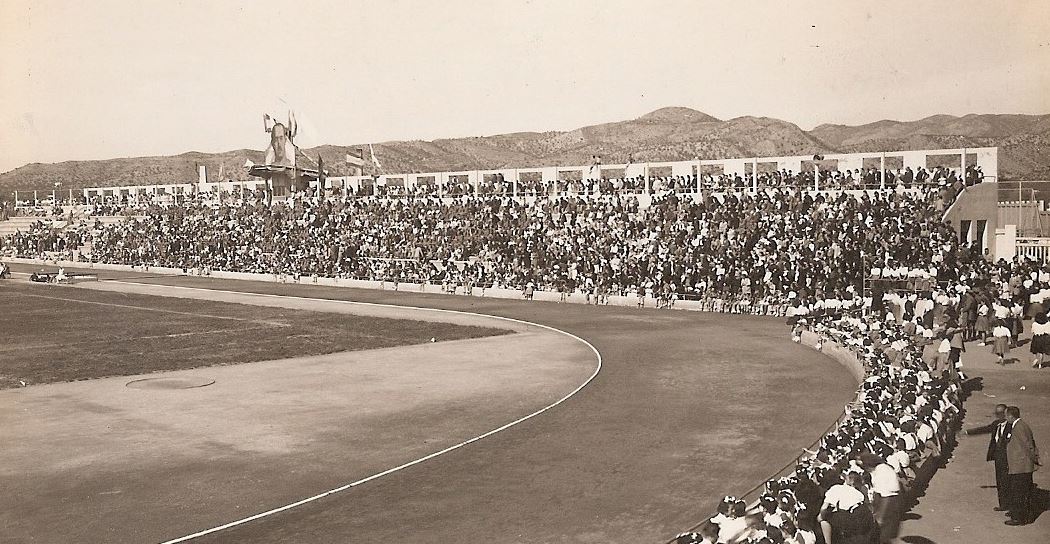
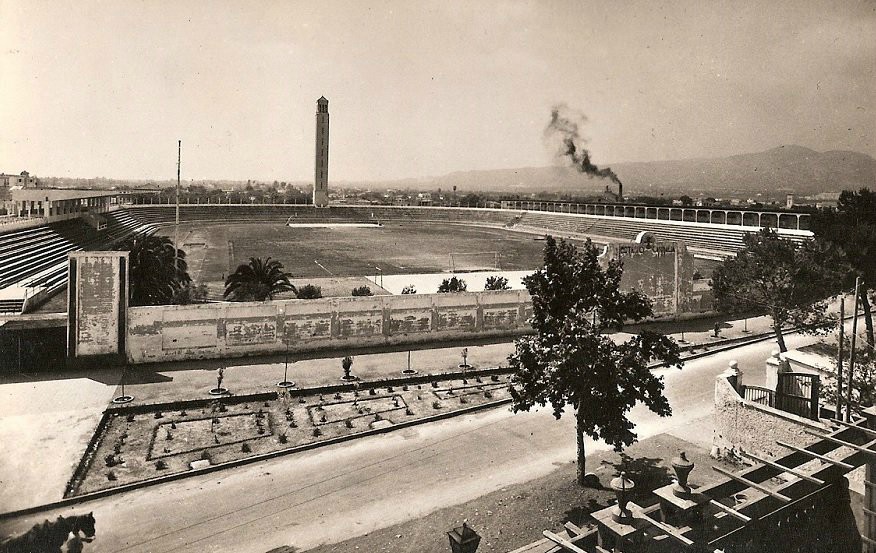
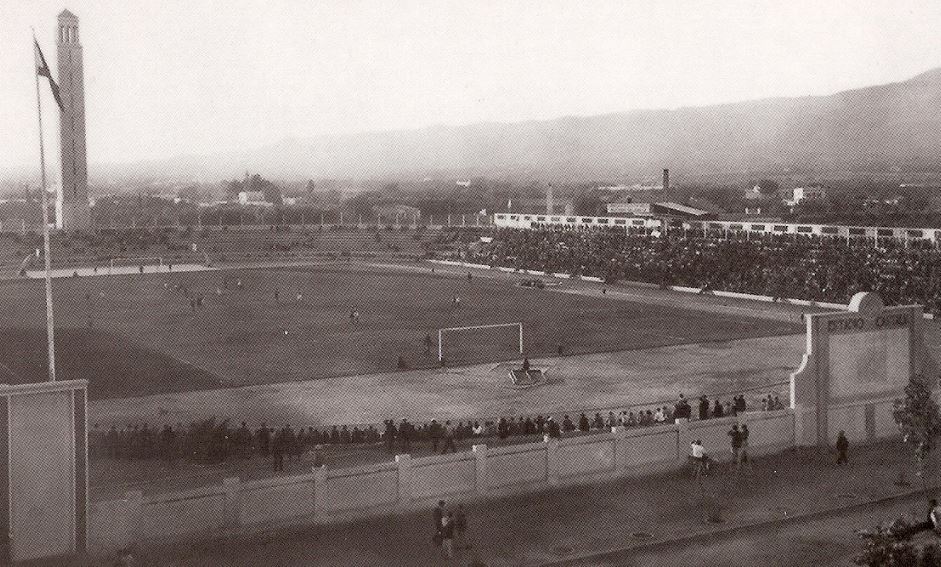
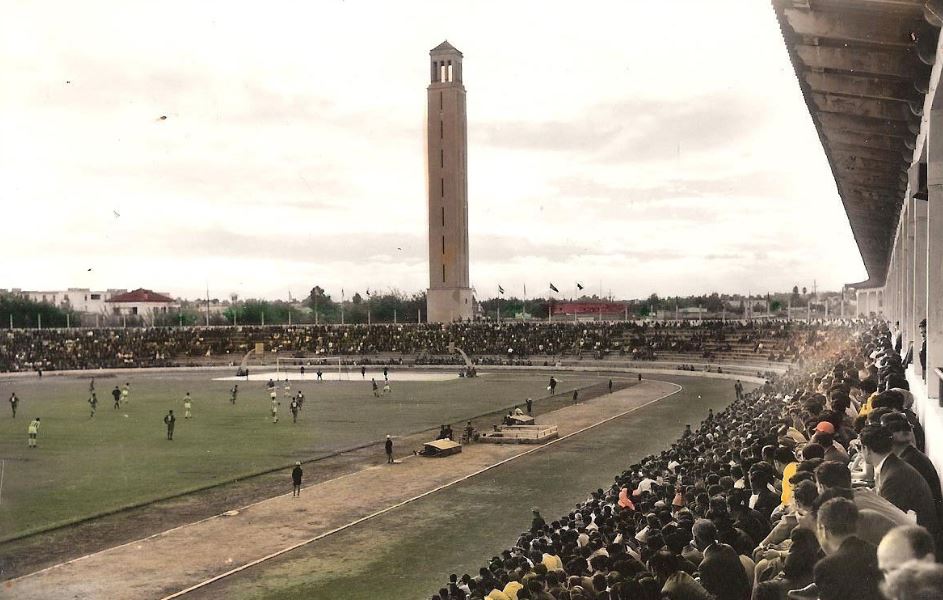
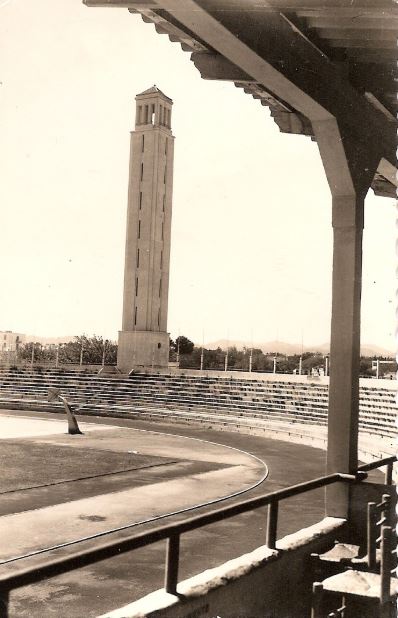
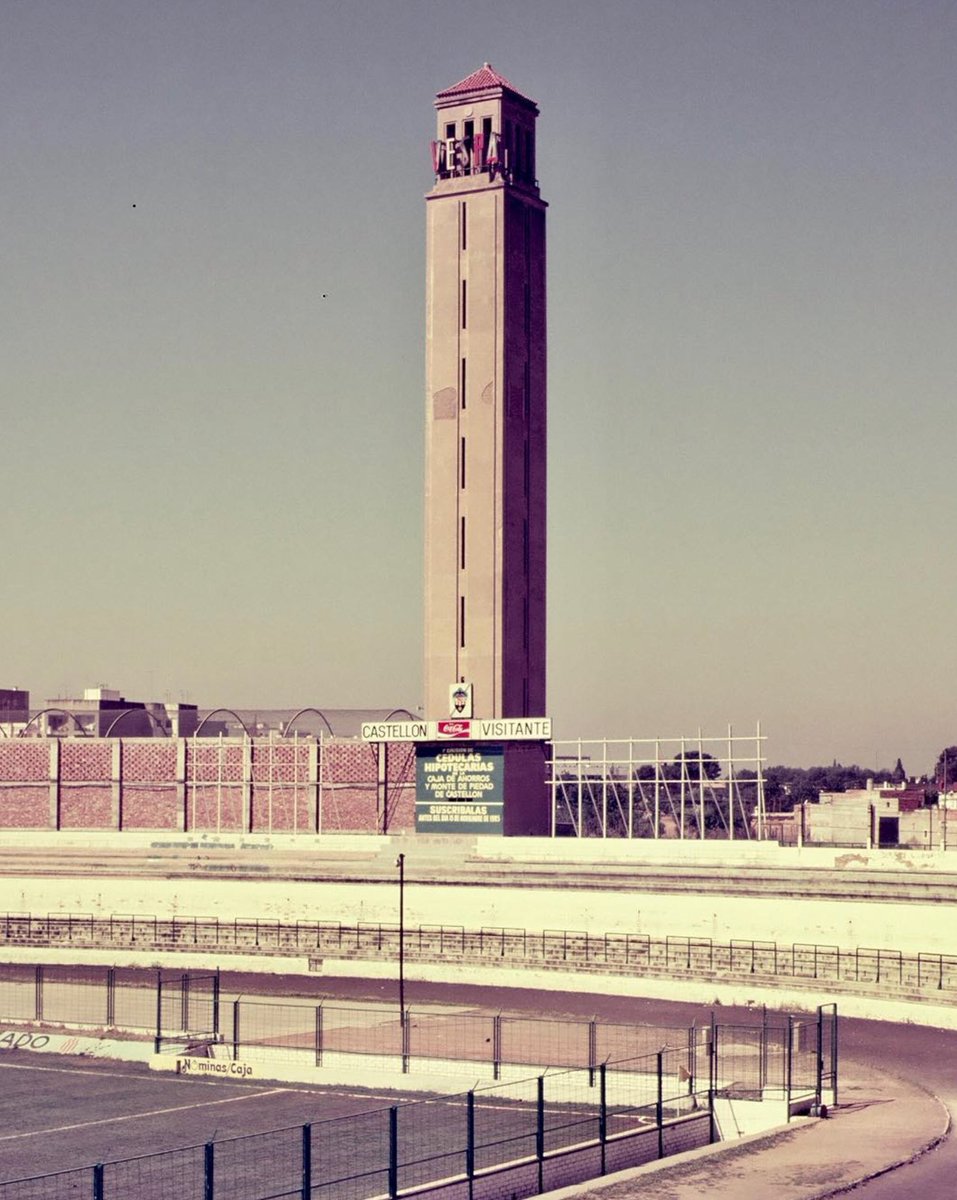
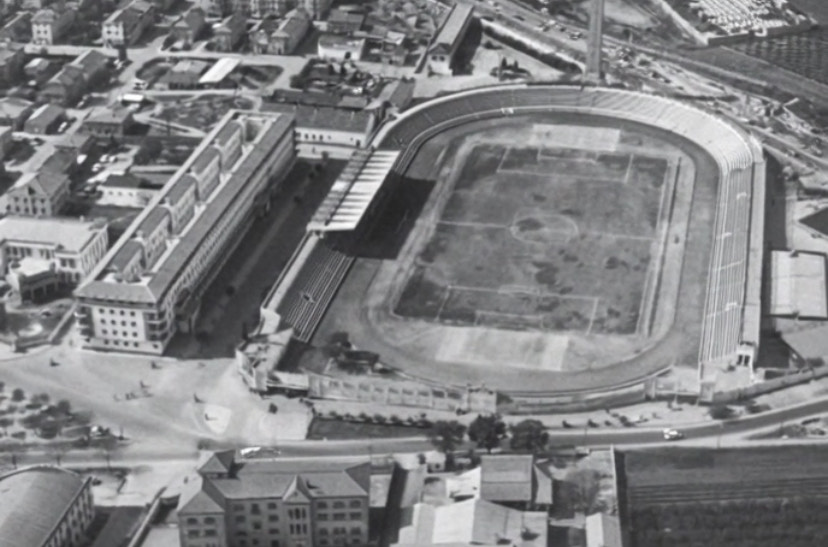
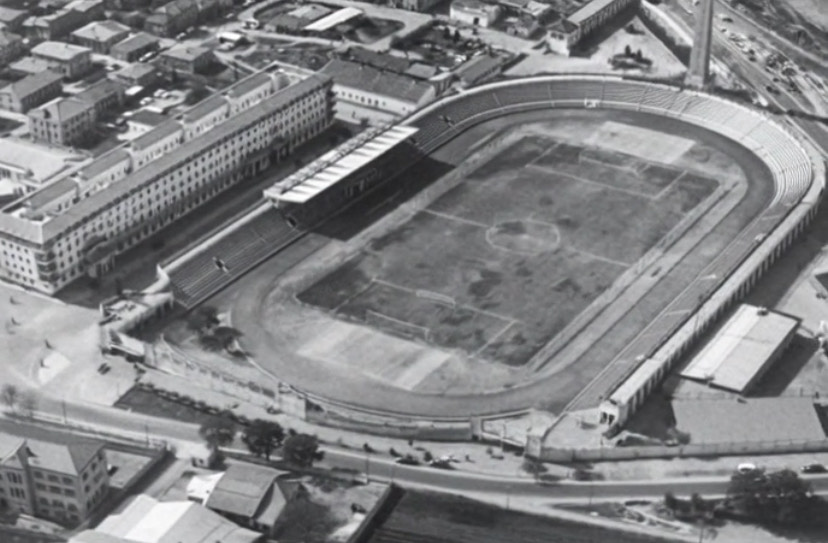
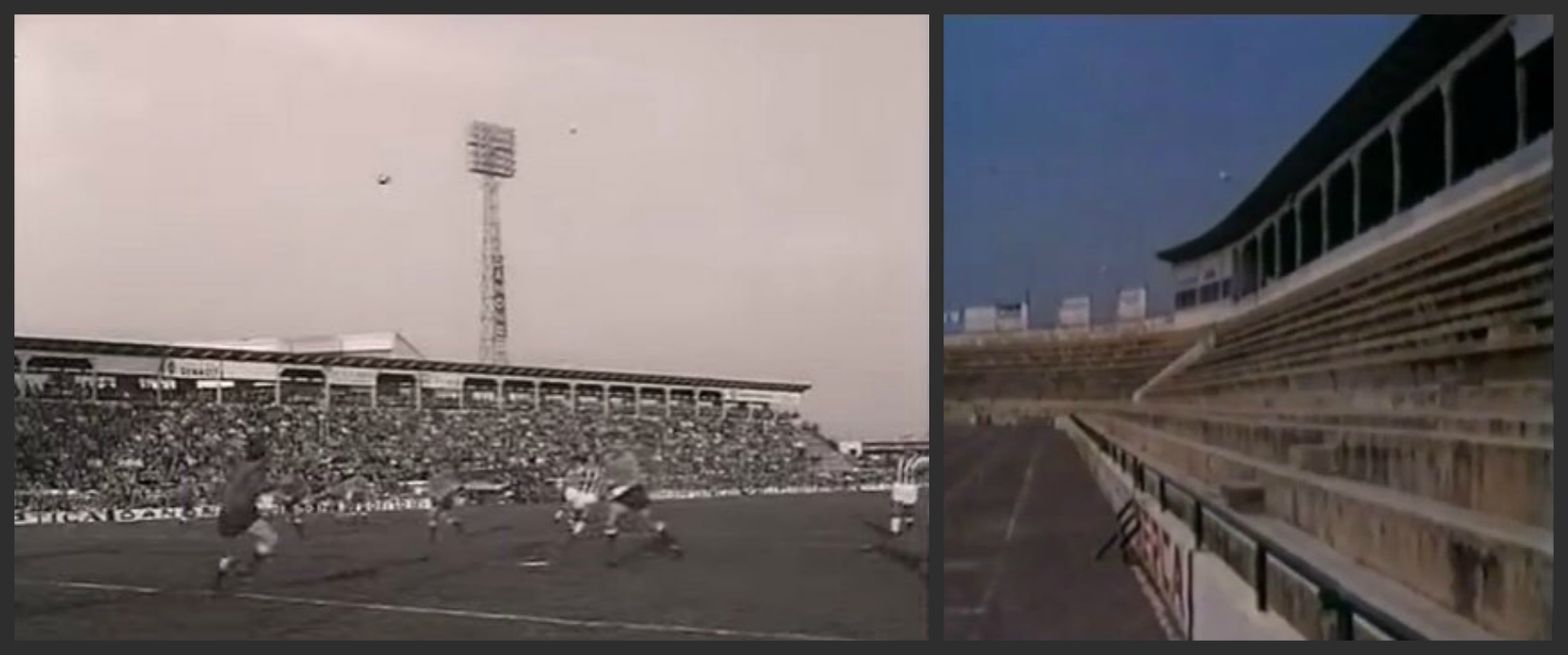
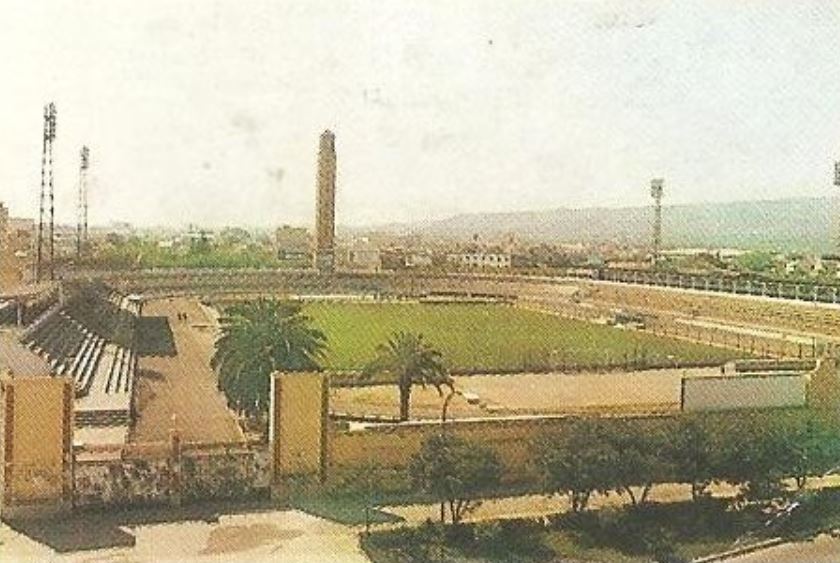
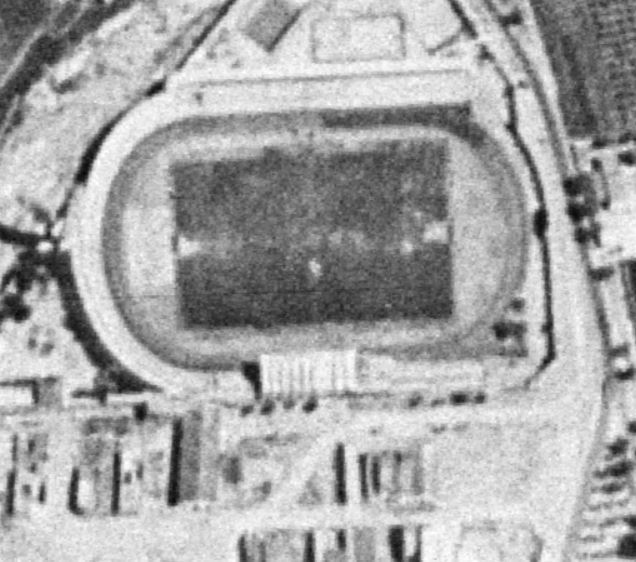
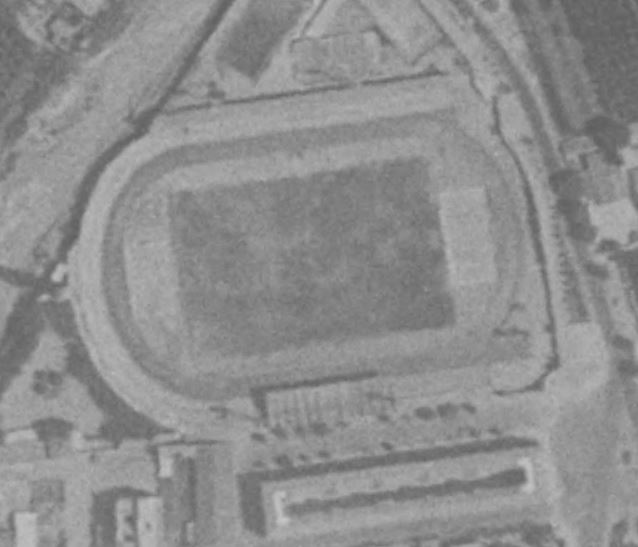
The city chose a site for the new stadium near the Rio Seco, approximately a kilometre north of the city centre. Work started in March 1943, but was hindered by the fact that so much work was required to level the site. The 25,000-capacity stadium was built in a horseshoe configuration and featured an athletics track as well as basketball and handball courts behind the goals. A single tier of terracing swept from the north to the south side of the stadium, where a cantilevered cover was erected over the stadium’s only significant bank of seats. There was a very narrow line of seats under an equally narrow propped cover on the north side, but blink, and you would miss them. A smaller curved terrace stood at the east end of the ground. However, the stadium’s standout feature was the Marathon Tower that stood over 40 metres in height at the west end of the ground. The Stadium was named Estadio Castalia, after the mythical Greek nymph, which was rather appropriate as it was handed over to the Frente de Juventudes, or youth movement, upon completion. It was inaugurated on 4 November 1944 when Castellón played Atlético Madrid (Neé Aviación) under the watchful eye of General Moscardó.
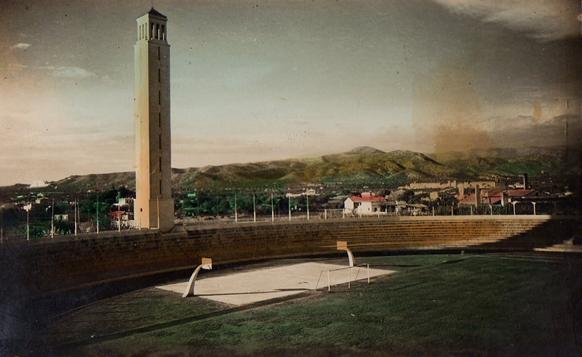
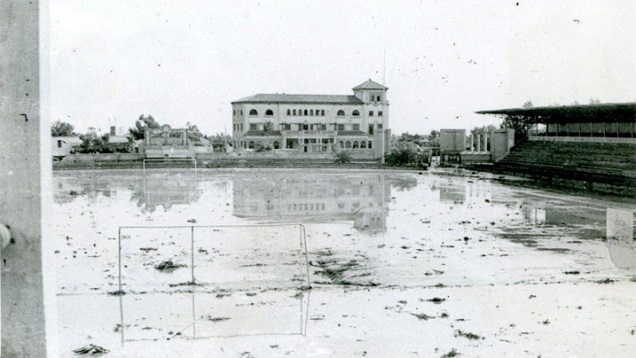
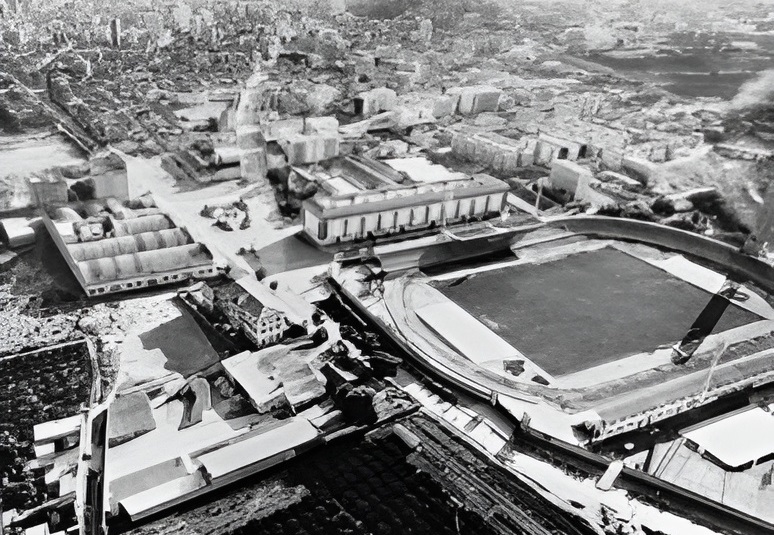
As tenants of the municipality, Castellón chose to continue playing at Sequiol for a few more years, using the new stadium only when a big team came to town. What was going to be Castellón’s last match at the old Campo de Sequiol took place on 2 November 1947, when the home side lost 0-2 to Málaga. However, the devastating floods of 1949 severely damaged the new stadium, and Castellón returned to the Campo de Sequiol. The club continued to train and occasionally play matches at the Campo de Sequiol, but finally, on 23 April 1953, Castellón drew 1-1 with Levante in the final fixture at the old stadium.

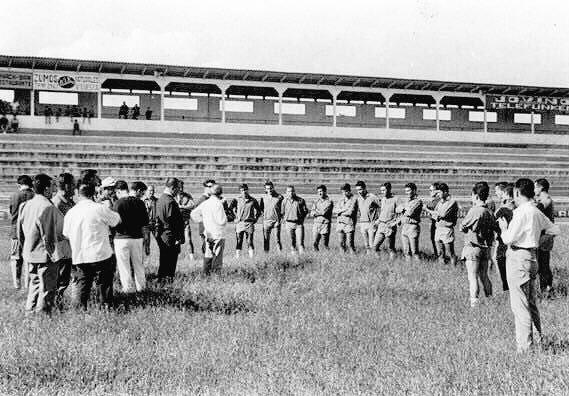
Regrettably, by the time Castalia became the club’s regular venue, it was confined to the second division. To add to the sense of decline, Castalia was already beginning to show signs of deminishment when the full-length cantilevered roof on the southern side of the ground was pared back to around a third of its original size. It would take another 25 years of toil to get back to the top flight, some of which time was spent in the Tercera. Finally, at the end of the 1971-72 season, Castellón and Castalia were back in La Primera, thanks to a last-day win over Racing Santander. The following 1972-73 season will go down in the club’s annals as probably its greatest. Not only did they manage to finish fifth in the league, but the club also reached its first, and let’s be frank, likely its only Copa del Rey final. Guided by Real Madrid loanee Vicente Del Bosque, Castellón dispatched Real Valladolid, Valencia, Real Betis, and Sporting Gijón on the way to the final, where they put up a creditable performance, but eventually lost 0-2 to Athletic Club at the Bernabéu.

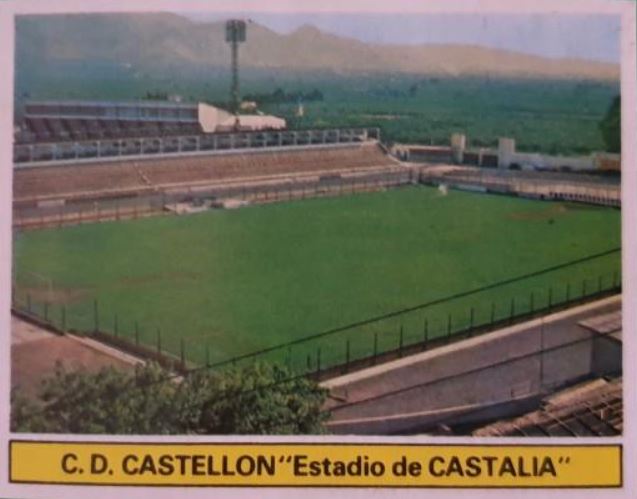
With Del Bosque back at his parent club, Castellón struggled during the 1973-74 season, finishing 16th in a tight division, and was relegated back to La Segunda. A period of mid-table finishes followed, before La Segunda title was won for a second time in 1981. Once again, it was a short stay and 12 months later, Castellón returned to the second division. By now, the Estadio Castalia was showing its age. The municipality had taken over ownership, and the once full-length cover had been shorn of its wings. In dire need of a new stadium, the city council decided to rebuild Castalia, drawing inspiration from Barcelona’s Mini Estadi. The old stadium was given a grand send-off when Castellón beat Recreativo Huelva 5-1 on 11 May 1986. The new stadium would not be complete for another year, so the club spent a season by the sea. Grao de Castellón, to be precise and the minuscule Campo de San Pedro.





 Estadios de España