
This article updated: 18/08/2025
Over the years, whilst Valencia Club de Futbol has taken the starring role in the city’s footballing productions, Levante Unión Deportiva has had to make do with a place in the chorus line. There has been the occasional cameo appearance during its 115-year history, but most of the time, Levante has scratched a living in the lower leagues. So few (maybe Los Ches?), would begrudge Los Granotes occasional moments in the spotlight.
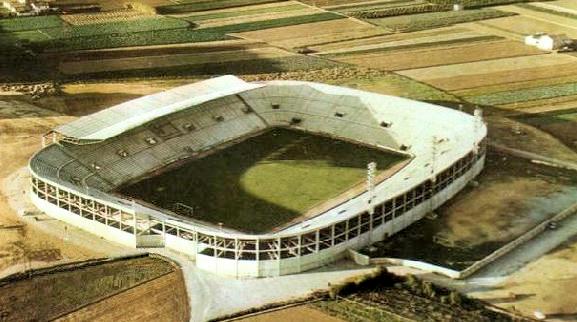
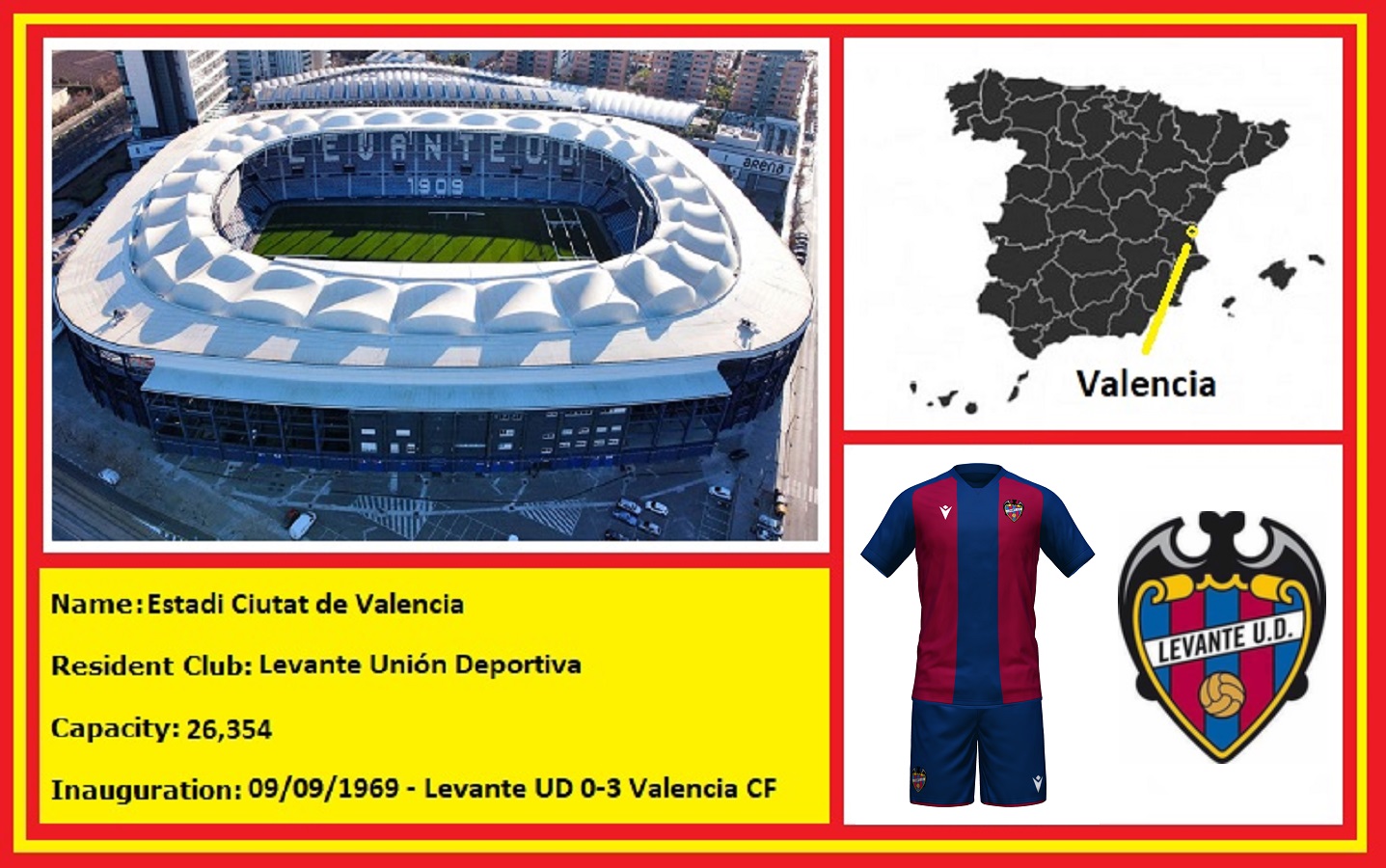
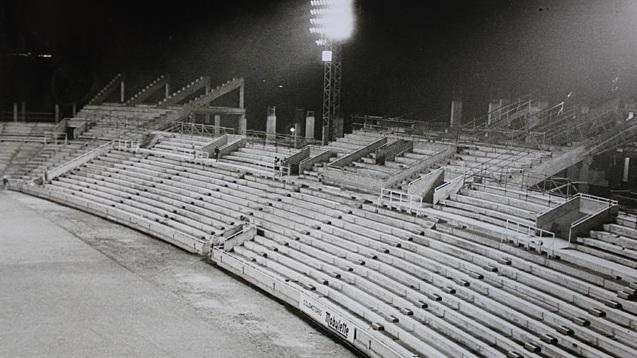
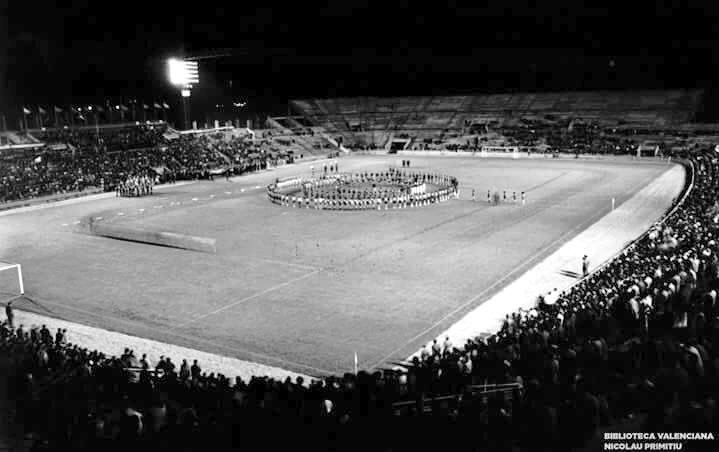
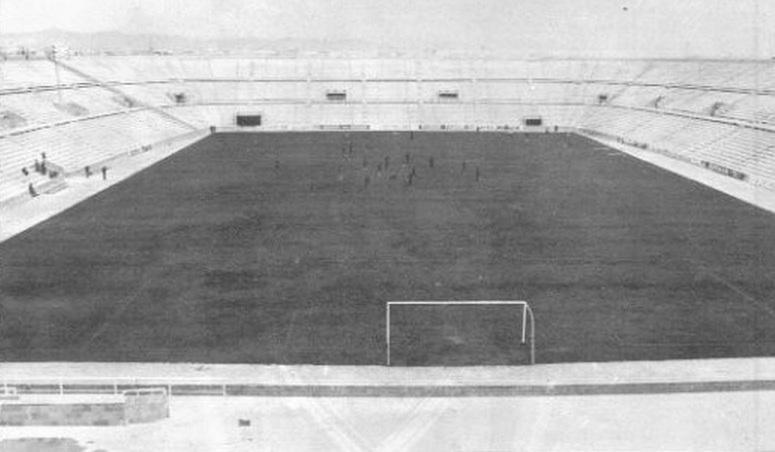
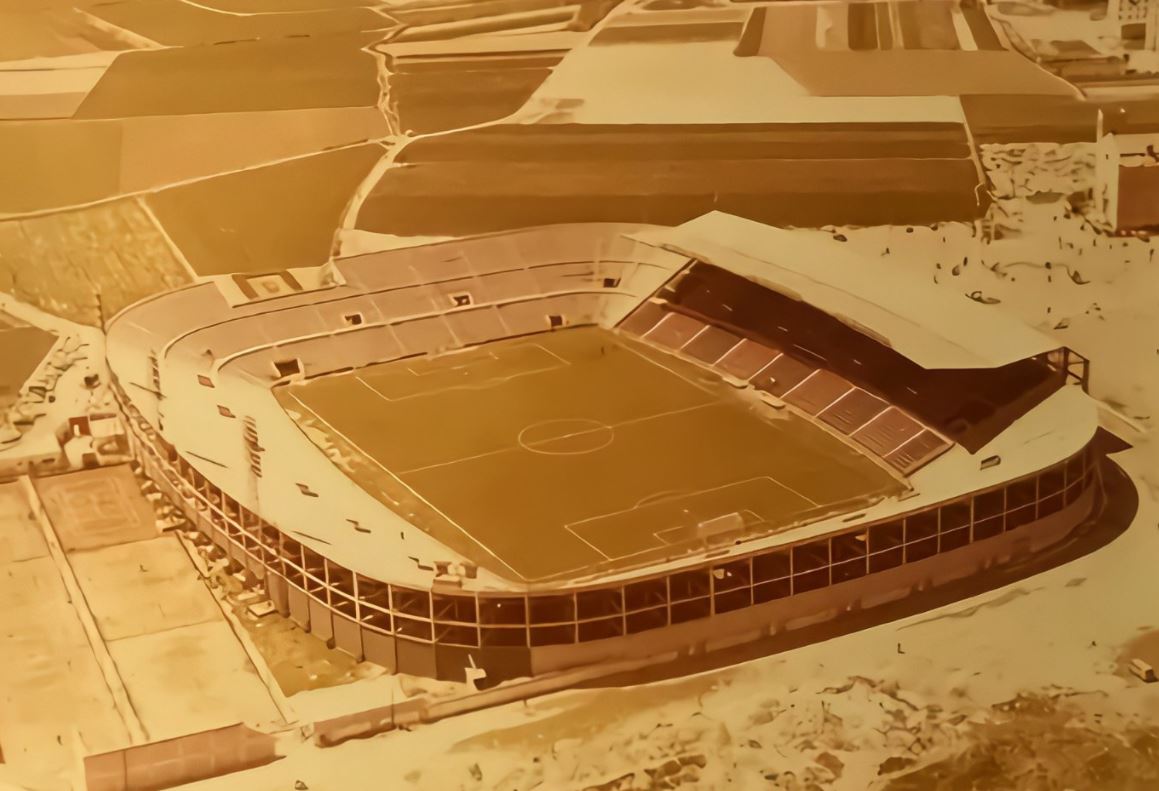
Founded as Levante Foot-Ball Club on 6 September 1909, the club originally drew support from the tough working-class district of Cabanyal and took its name from the nearby beach. We have detailed Levante’s early years and their former homes here. This article jumps forward to 1968 when the site of Levante’s Camp de Vallejo was sold for housing, and work started on a new stadium on the city’s northern edge. Levante moved in with rivals Valencia for the 1968-69 season, but couldn’t escape the grips of the Tercera and was firmly entrenched in the third division when the new stadium opened on 9 September 1969 with a friendly against their cross-city rivals. Named the Estadio Antonio Román after the club’s president, who brokered the move, the stadium was far from complete on its opening night, with no roof and the corner stands incomplete. Work progressed over the next couple of years to complete the bowl and add a strange, cranked, cantilevered roof over the west side. The stadium was renamed the Nou Estadi del Levante U.D. in 197,2 and Levante celebrated the completion of the stadium with promotion back to La Segunda. With a capacity of around 38,000 and Levante attracting four-figure crowds, it could be argued that the new ground was an unnecessary extravagance.
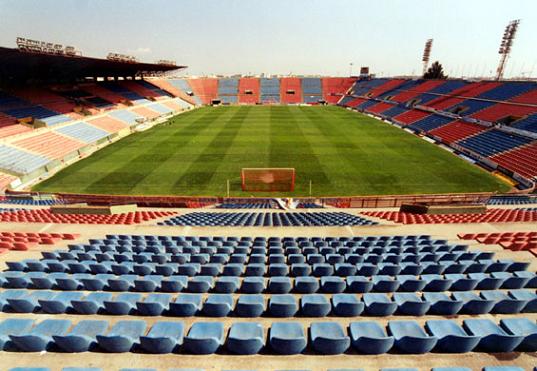
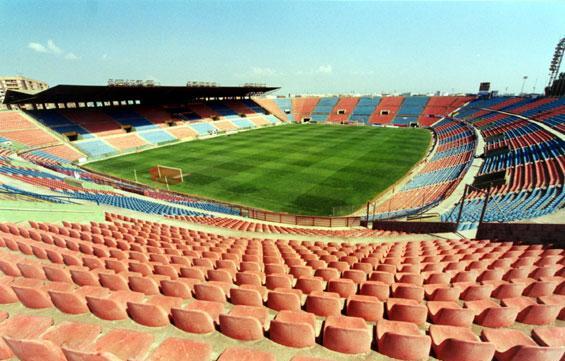
Extravagance is not a word one would associate with Levante’s on-pitch activity during their first 30 years in the new stadium. Designed to build on the club’s Primera exploits of the mid-sixties, Levante spent three decades switching between the second, third and fourth levels, never once coming close to a return to the top flight. The best finish during this period came in 1980-81 when Dutch great Johan Cruyff helped the club to a ninth-place finish in La Segunda. The stadium at this juncture was devoid of colour and, except for the handful of matches that featured Cruyff, rarely saw crowds over 10,000. The stadium was renamed the Estadi Ciutat de Valencia in 1999 following a deal with the local municipality. This saw the stadium bedecked in bands of red and blue seats, and other facilities such as floodlights and the media centre were upgraded. Levante also won Promotion back to the second division in 1999, and the process of returning to the top tier began.
Two seasons of steady progress in La Segunda almost came undone in 2001-02 when Levante finished nineteenth and in the relegation zone. Luckily, Burgos CF’s failure to pay its players resulted in their demotion and a reprieve for Levante. A fourth-place finish was achieved a year later, and then in 2003-04, Levante won the Segunda title for a second time. With German Coach Bernd Schuster at the helm, Levante made an impressive start to their first La Primera season in forty years. The results dried up in the second half of the campaign, and Schuster was shown the door with five matches to go. Still five points clear of the relegation zone, Levante did not win again and was relegated. Promotion back to the top flight was won just a year later, and this time Levante managed to avoid relegation with a fifteenth-place finish. The club invested heavily in playing staff, but this plan backfired, and relegation and financial meltdown followed. The remaining players went unpaid for nearly a year and staged a series of sit-ins to highlight their plight. Despite this turmoil, Levante finished eighth in La Segunda, and in the summer of 2009, Quico Catalán took over as President. With the lowest budget in the division, coach Luis Garcia Plaza steered the club towards its third, and most improbable, promotion in six seasons. Eighteen months later and Levante were the darlings of La Liga, defying the odds and sitting near the top of La Liga with the oldest and lowest-paid squad in La Primera. It seemed appropriate, therefore, that the club play in one of the oldest and least sophisticated stadiums in the top two divisions.
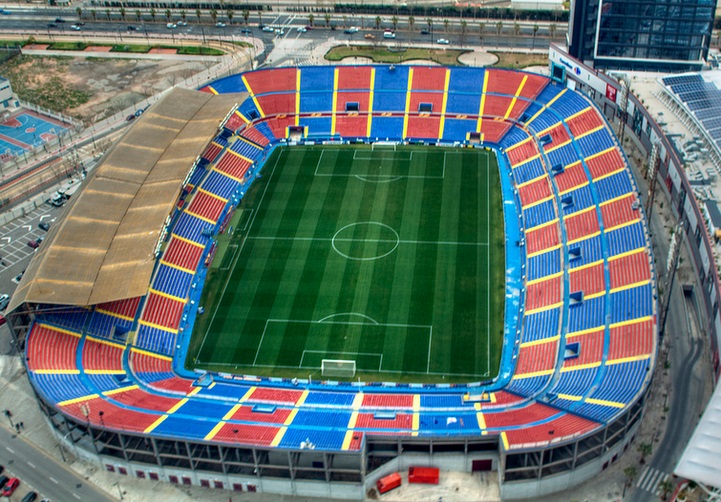
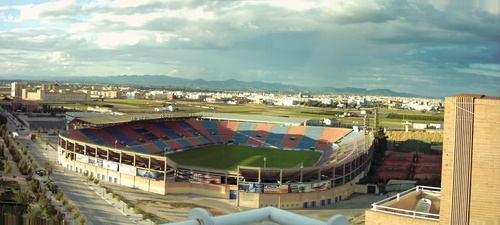
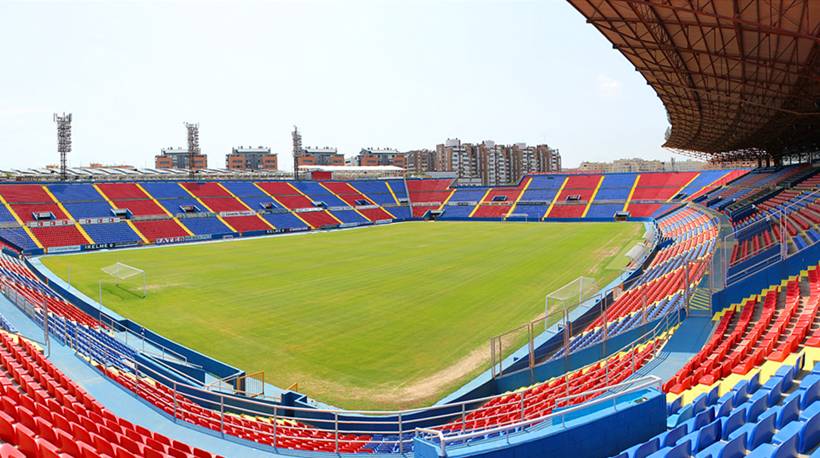
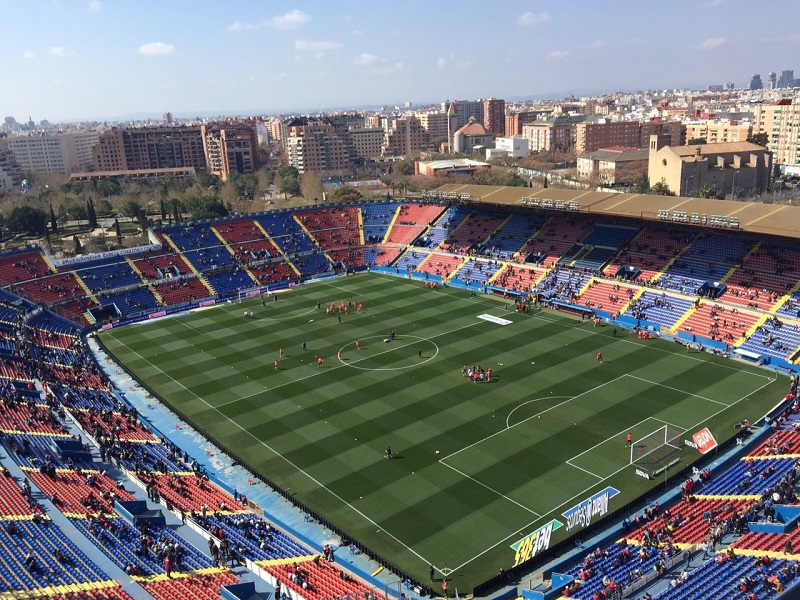
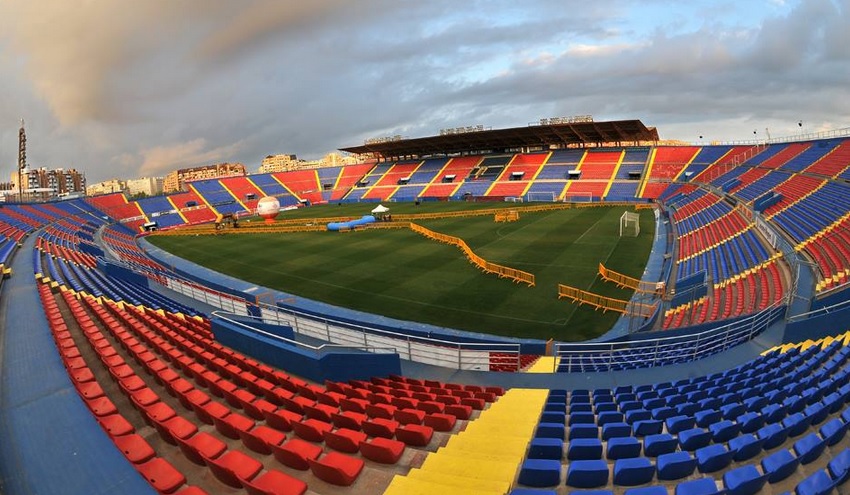
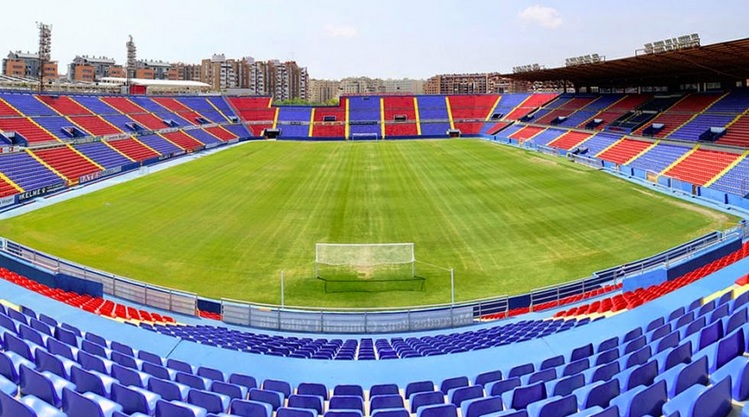
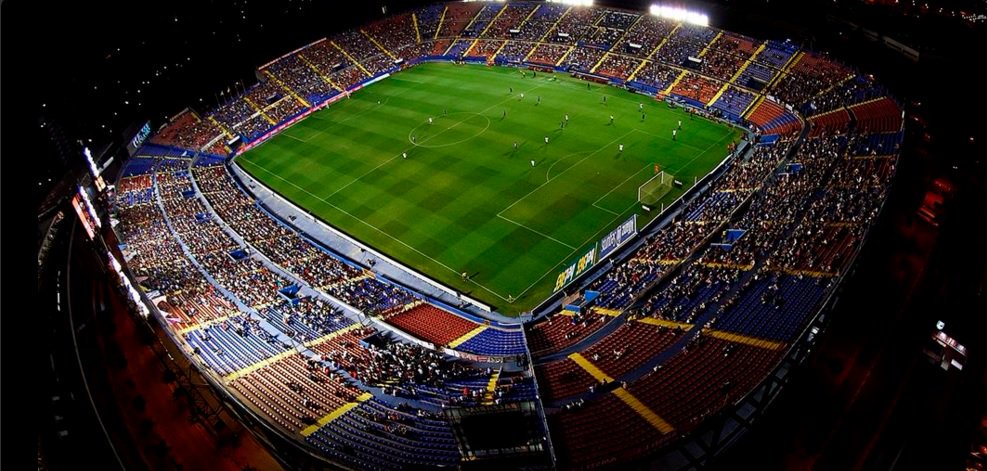
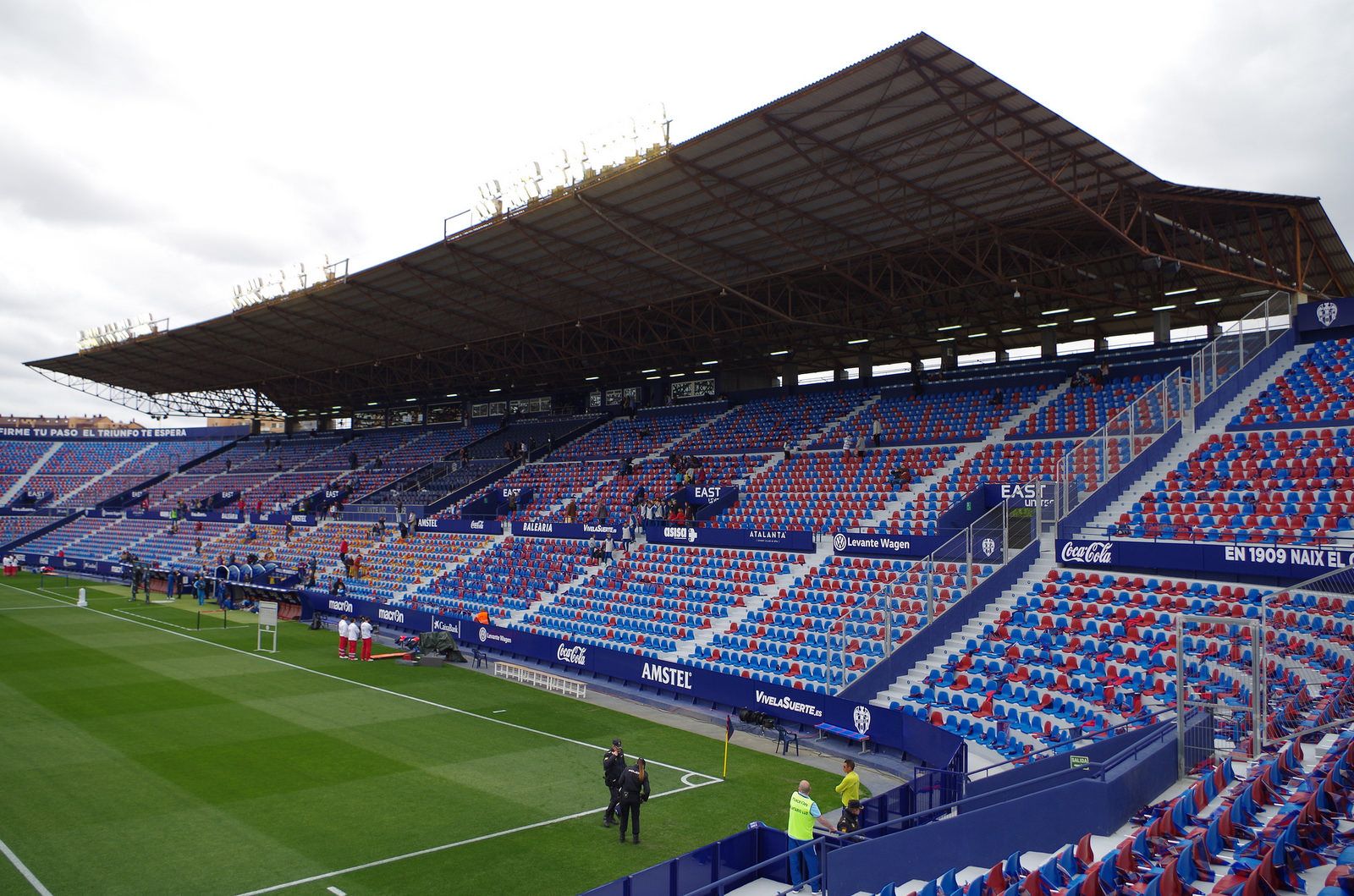
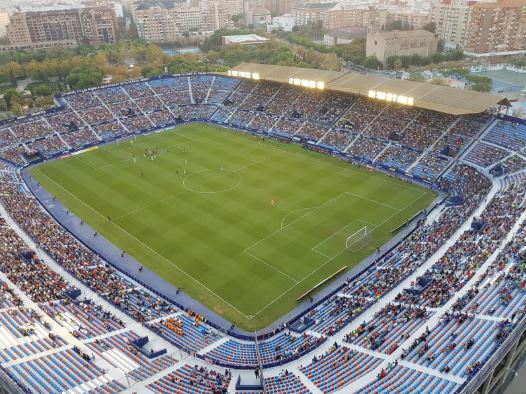
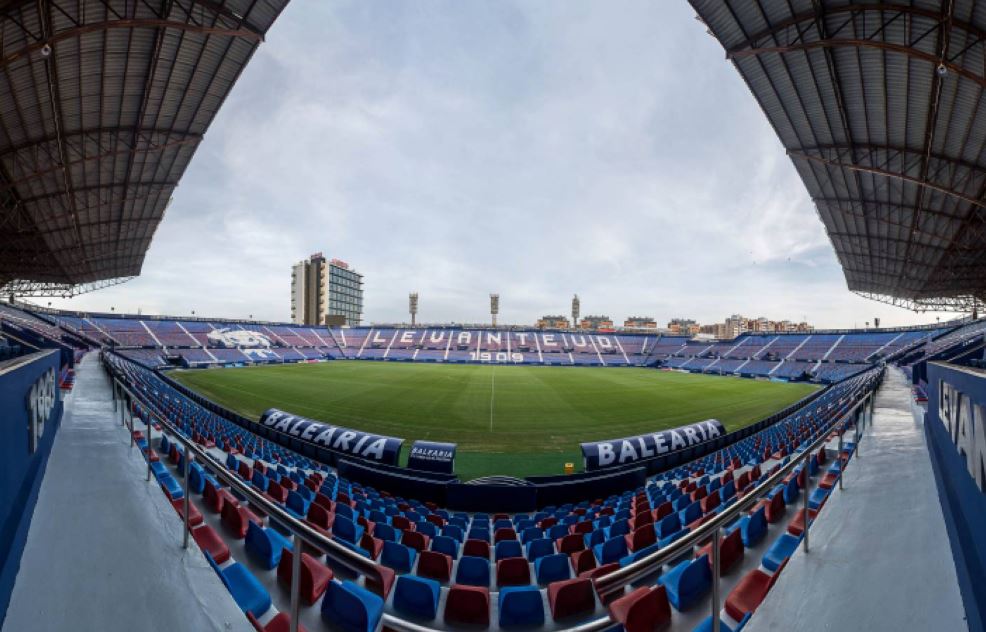
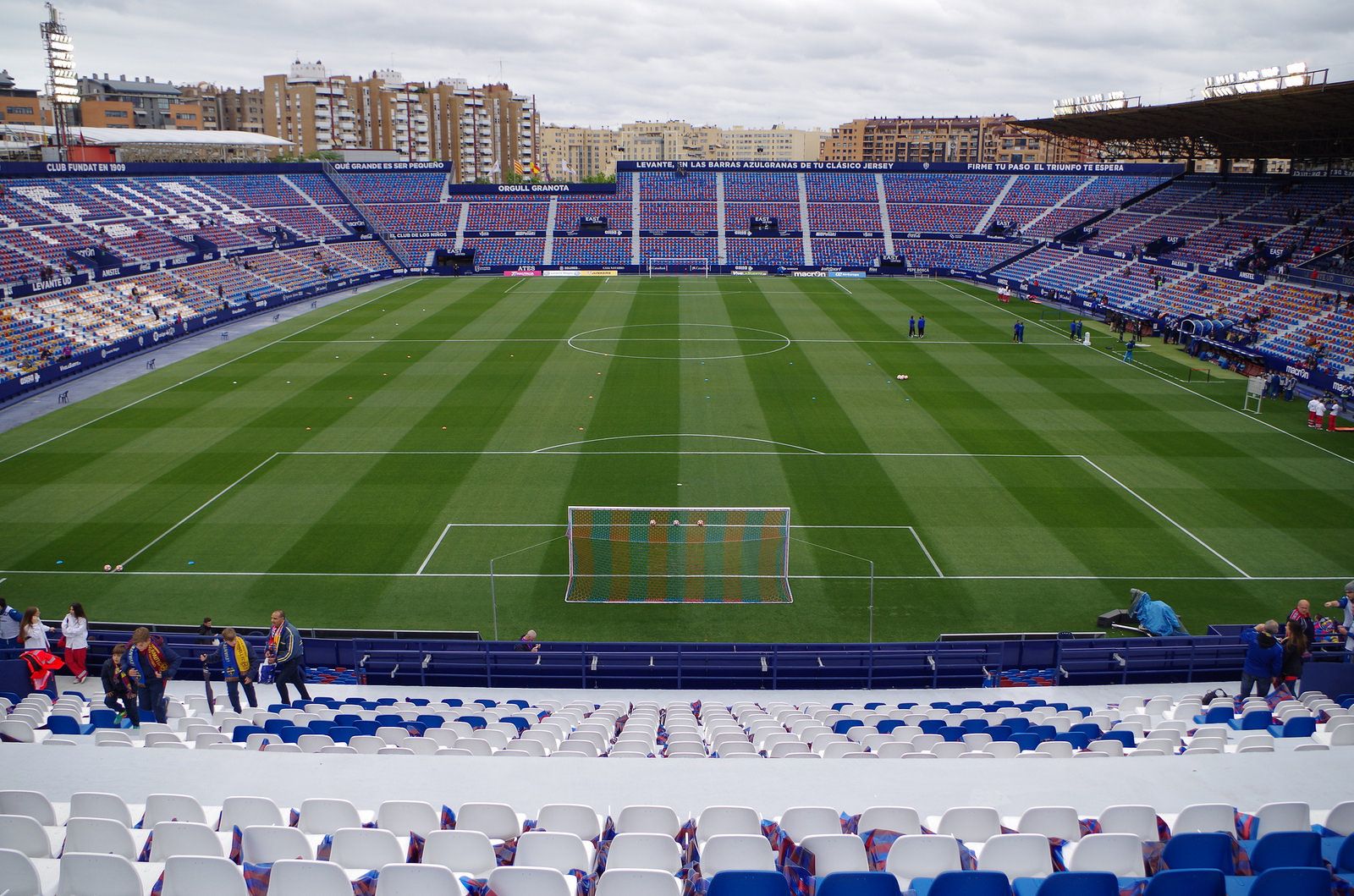
Unchanged since the early 1970s apart from new seating and some superficial adornments, the Estadi Ciutat de Valencia is a relic of a time when stadiums were built big and basic. Before the redevelopment, the main feature was the roof over the west side. The curious design seemed to defy gravity and logic. At the rear of the stand. It looked like a conventional pitched roof, but there were no props. Then, after 30 feet, the roof turned upwards and spread wing-like over the seats in the lower tier. The rest was fairly formulaic fare, just an open bowl of seats and three floodlight towers behind the east side. Also, on the east side were 20 flag poles displaying the current league positions of the clubs in the top tier. The bowl’s symmetry was broken at the south end of the ground, where a section of the upper tier was, and still is, missing. Is this a section that has been removed amid safety fears? Quite simply, the club did not own the field adjacent to the stadium and built around that wedge of land.
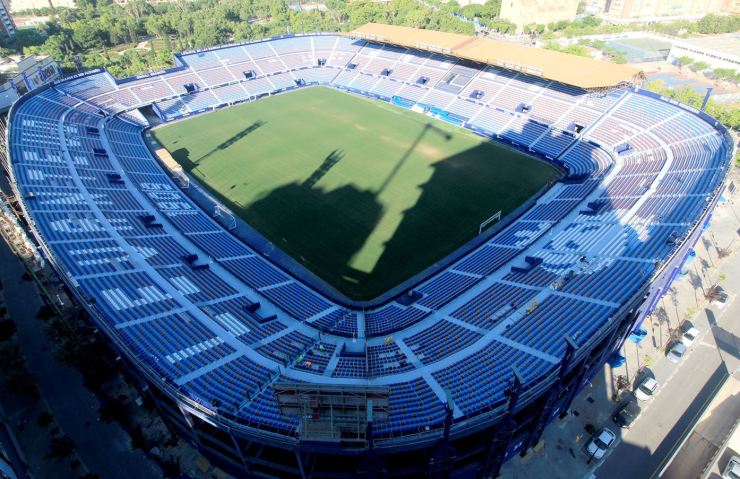
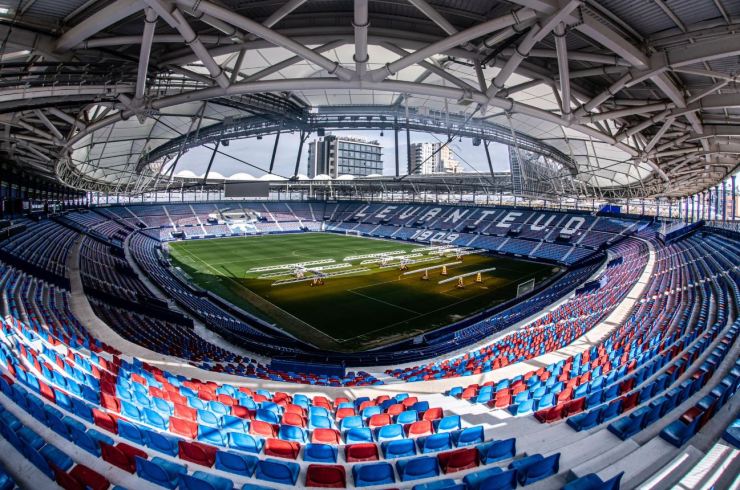
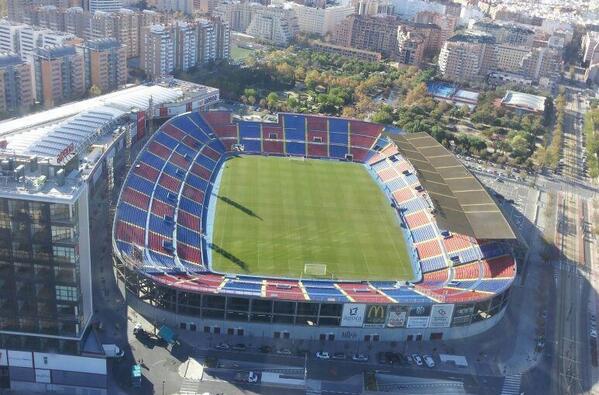
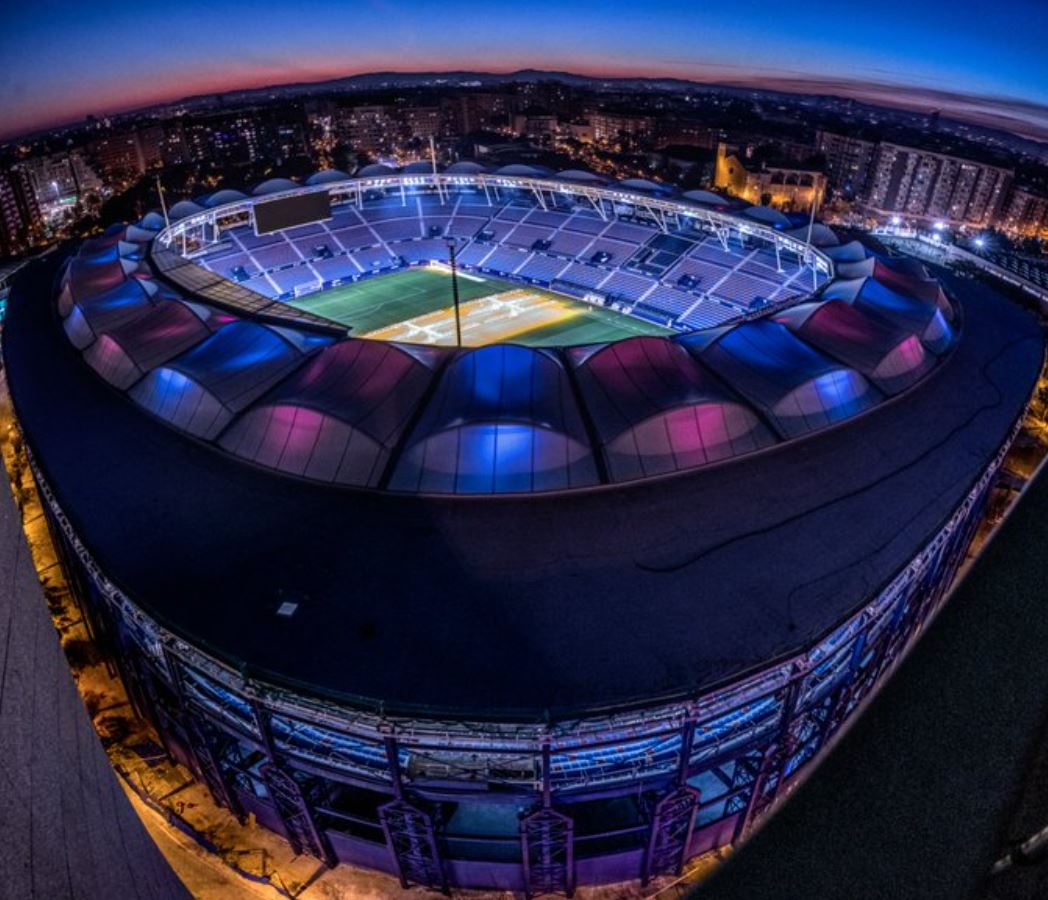
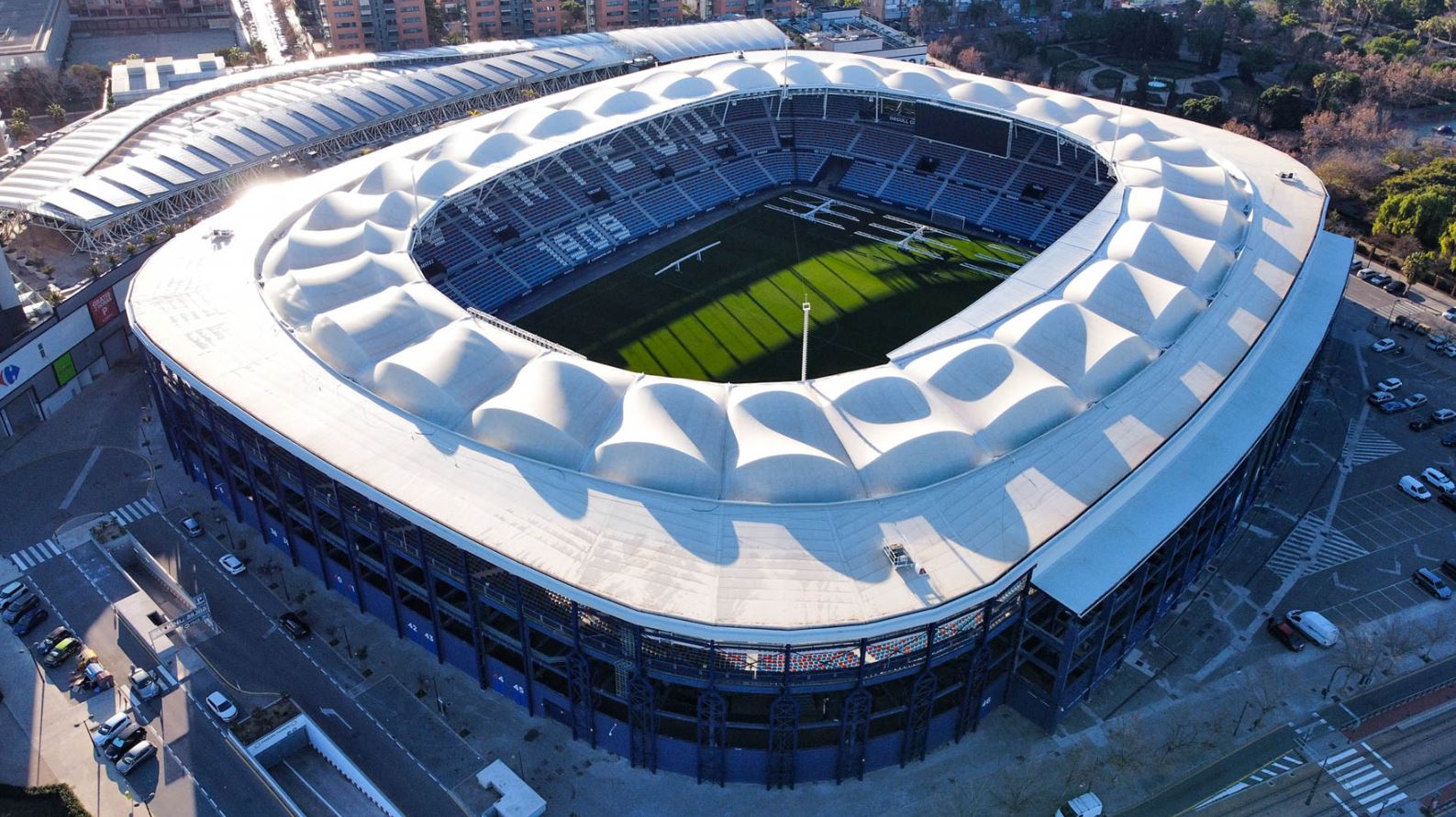
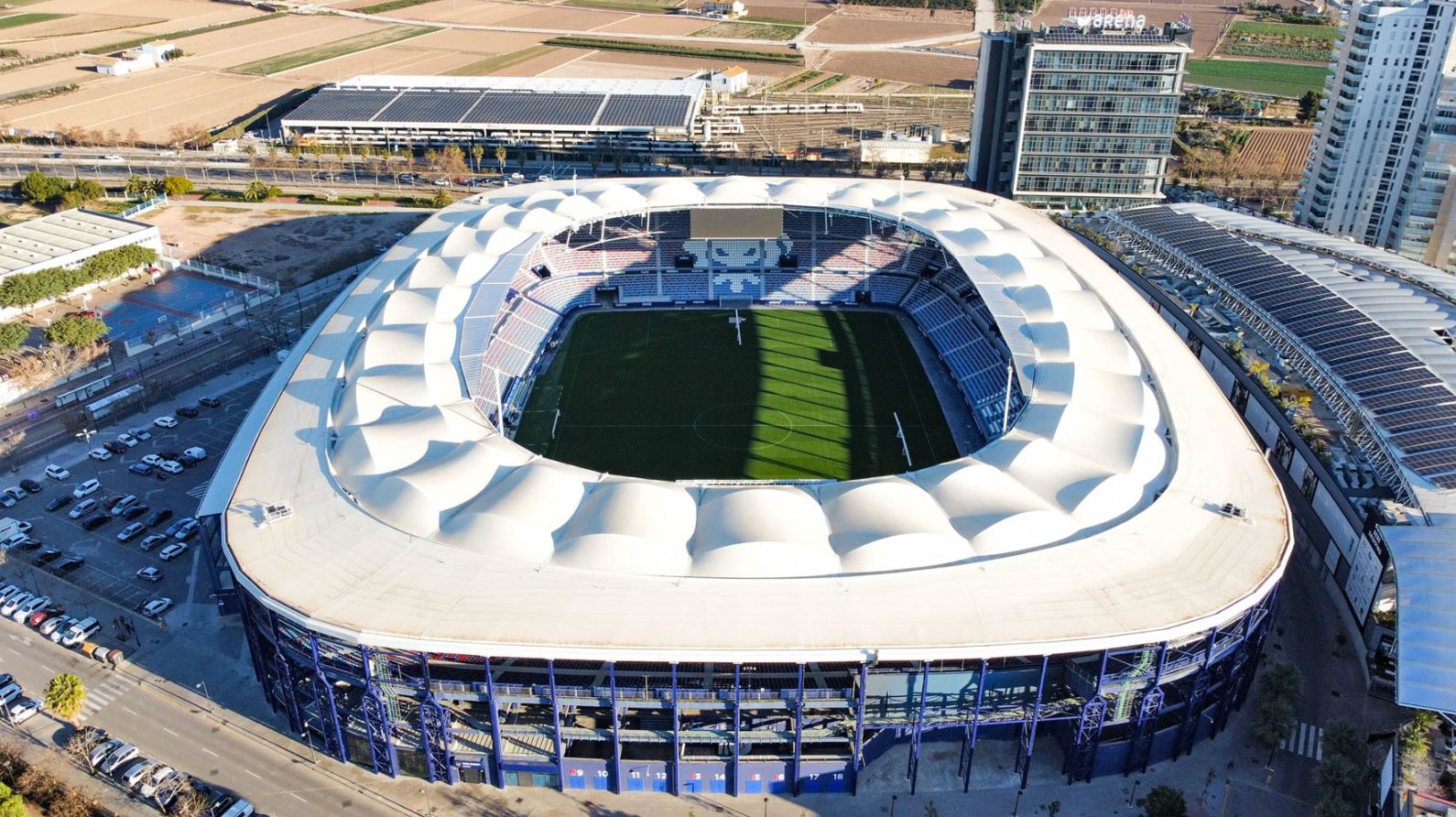
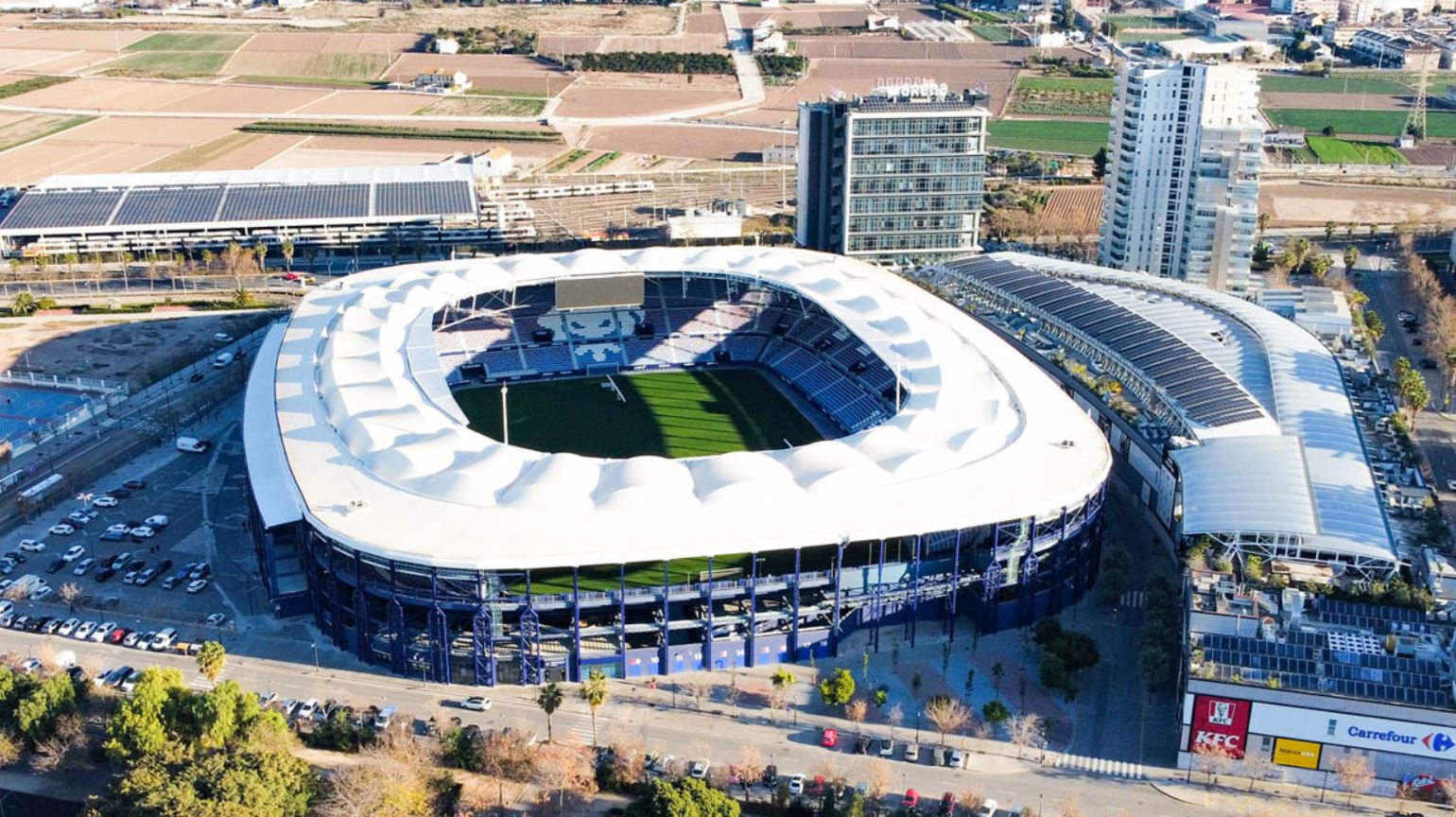
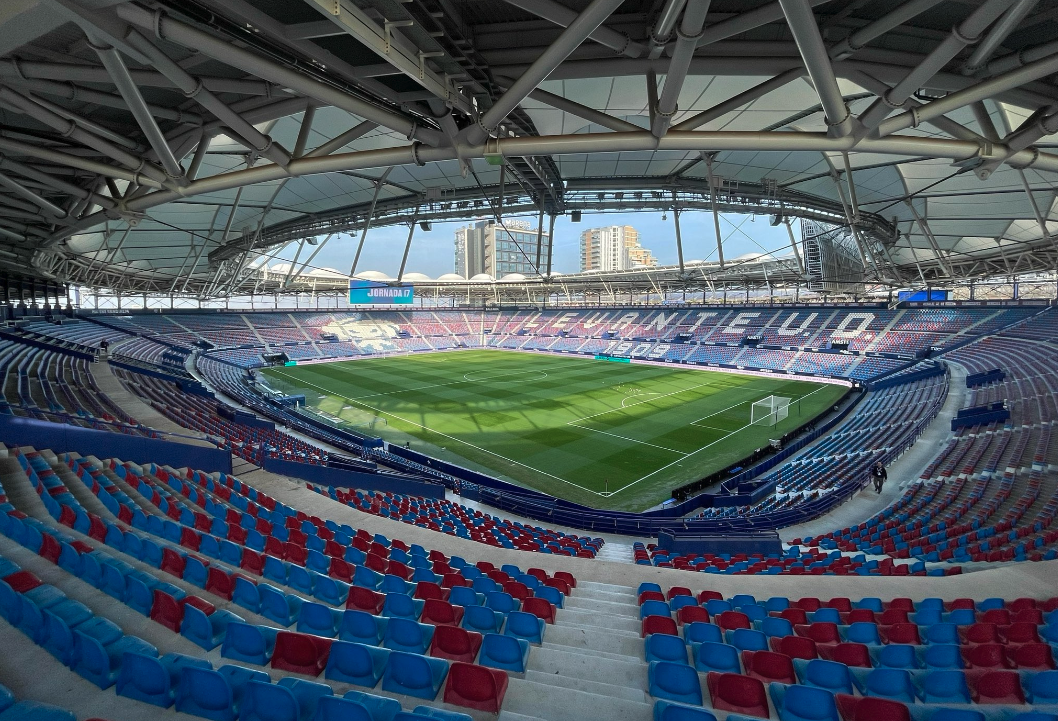
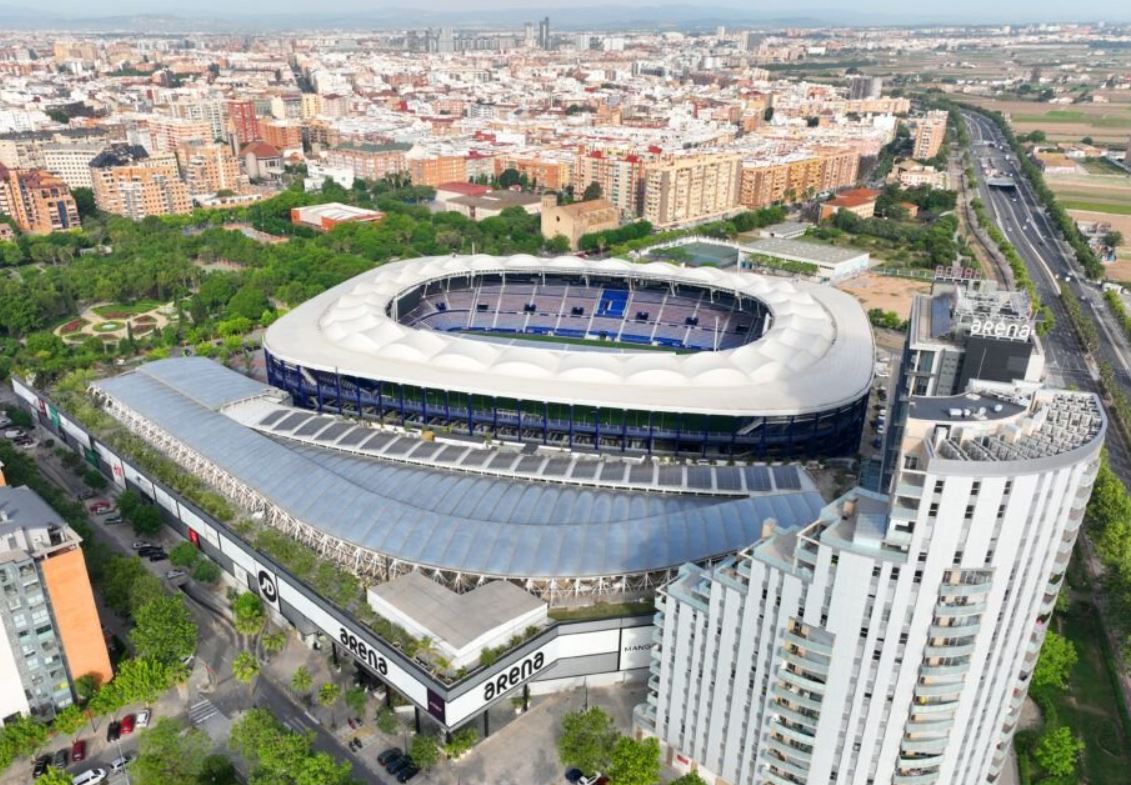
La Selección has played at the stadium on two occasions, both quite eventful. Playing Scotland in September 2004, the floodlights failed after 57 minutes, and the match was abandoned. Then in September 2014, Macedonia was beaten 5-1. In July 2017, the Estadi de Ciutat de Valencia underwent a further refit. Mimicking the remodelling seen at Valencia’s Mestalla, seating was replaced with contemporary colours & designs. The outside of the stadium was given a new look, with a new mesh skin added, wrapping the arena in Levante’s club colours for the first time.
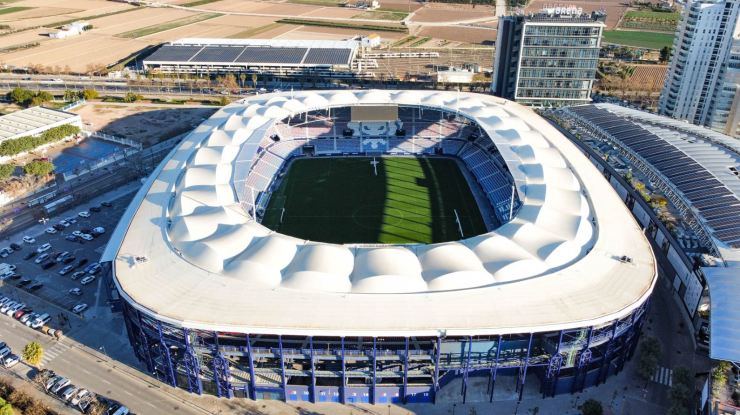
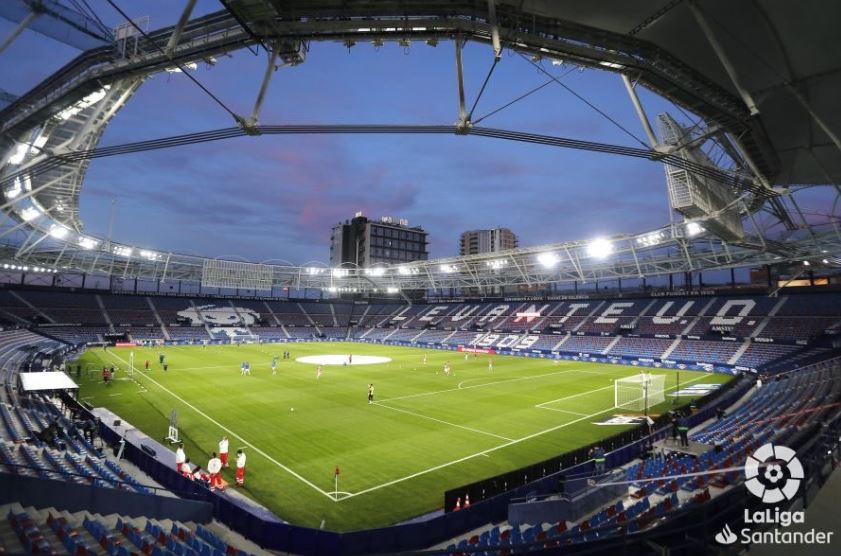
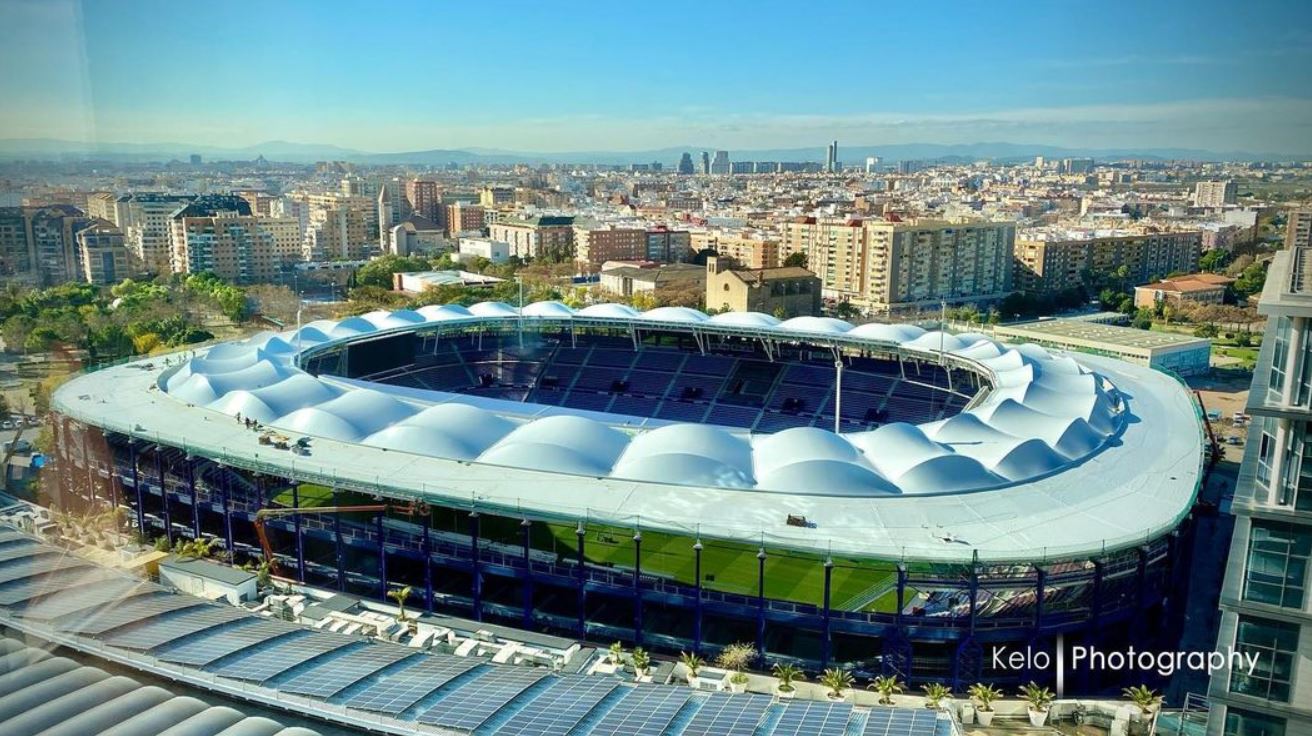
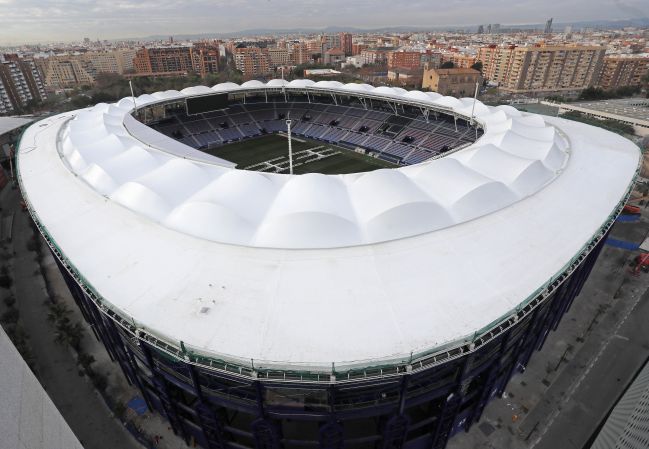
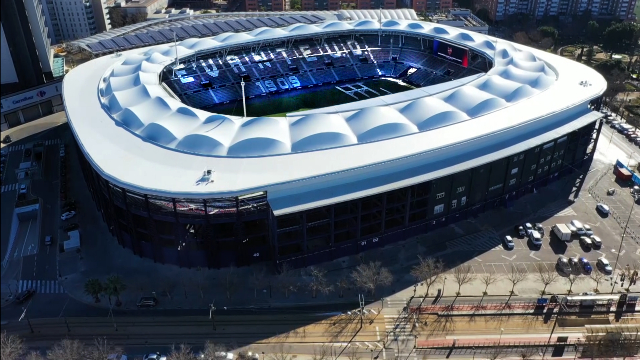
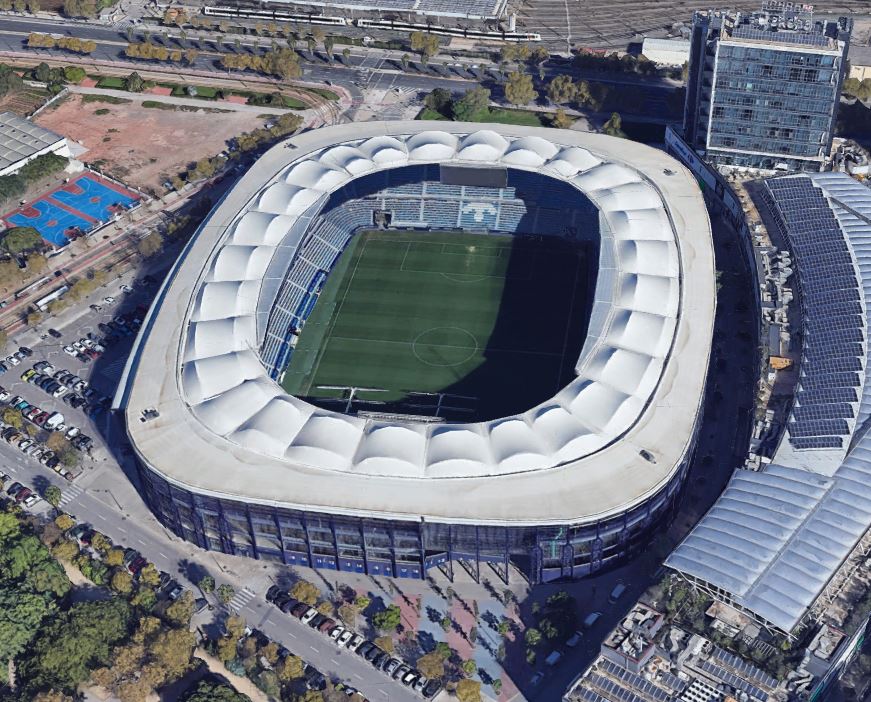
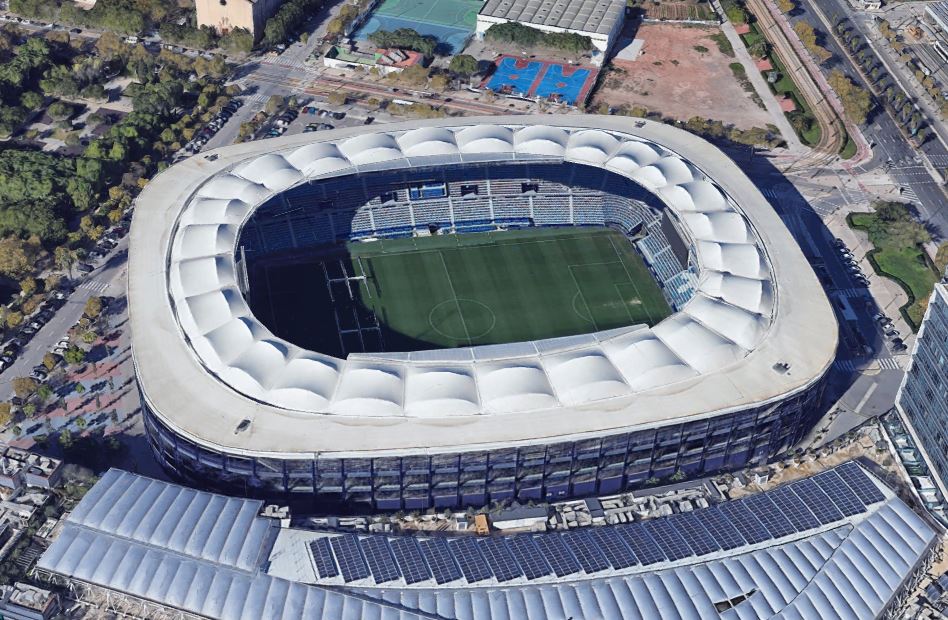
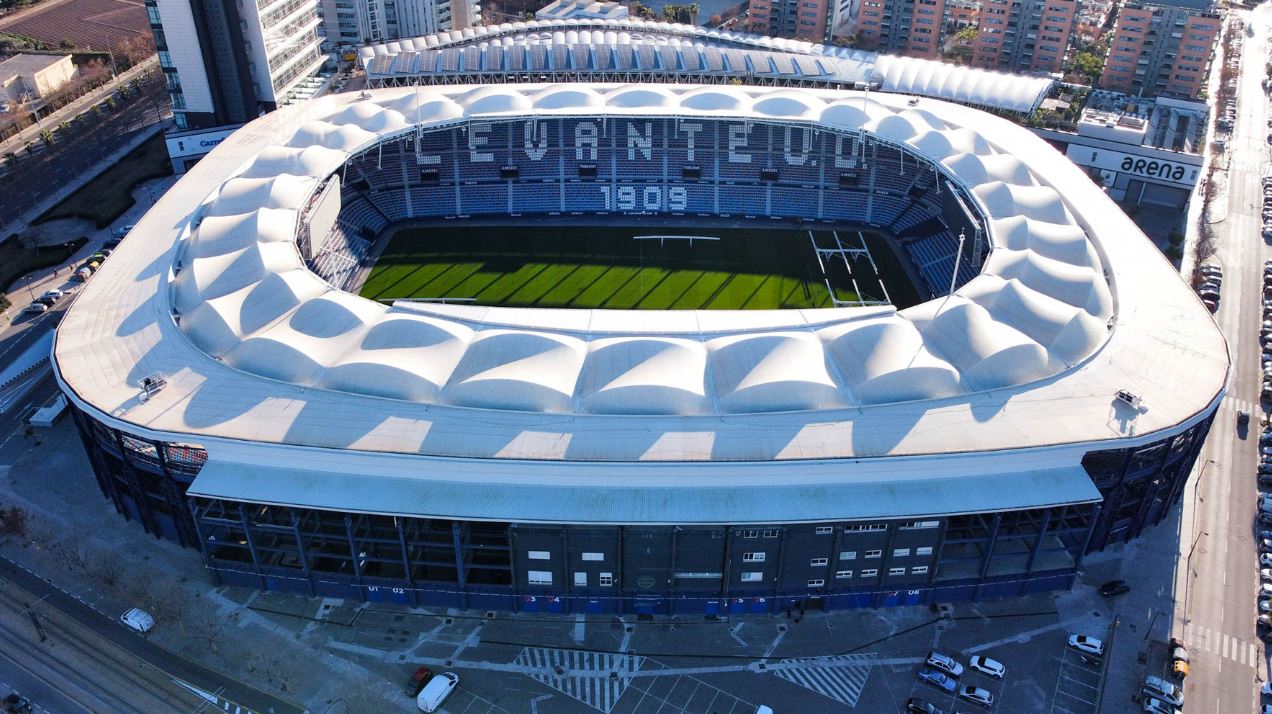
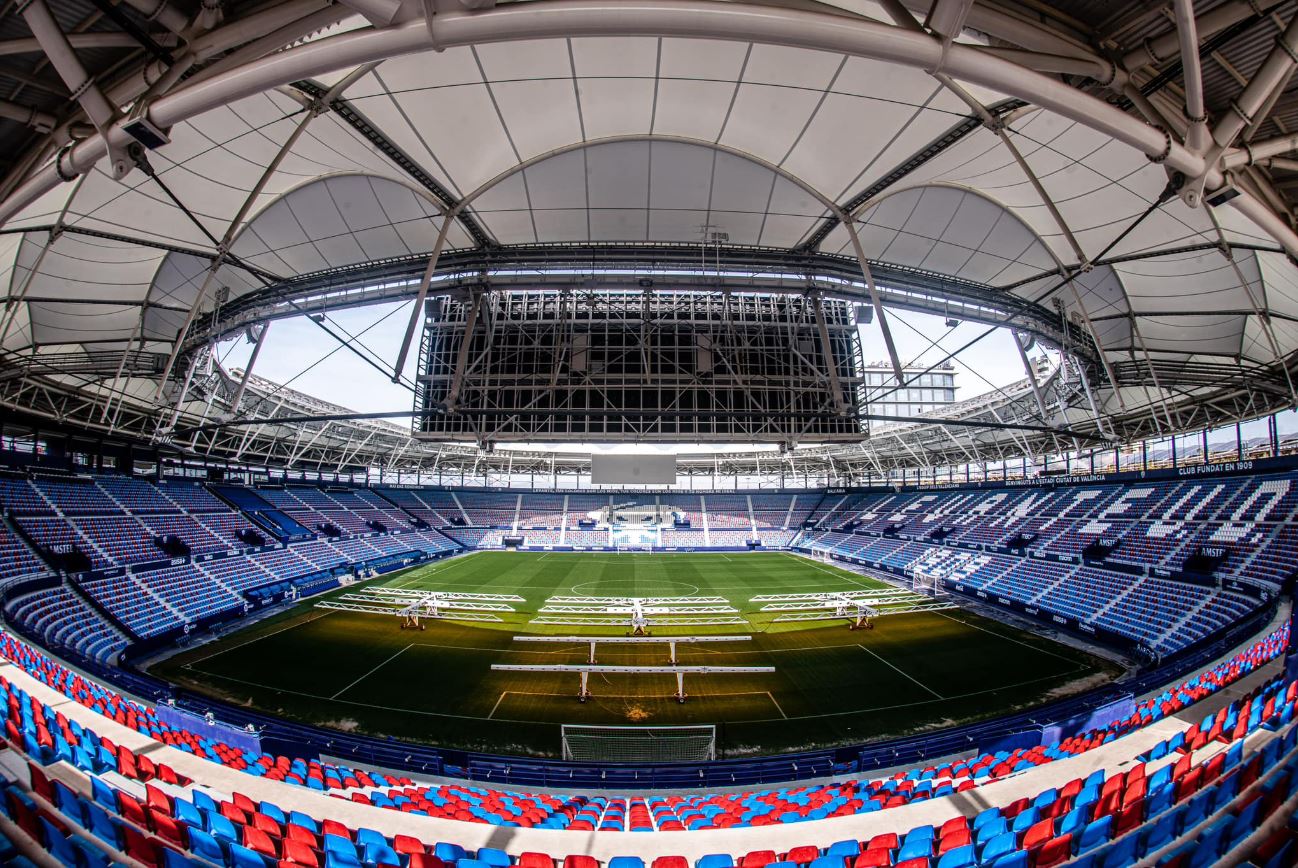
The renovation of the Estadi Ciutat de Valencia continued in 2019 when work began on adding a new roof that would cover the entire seating deck. A new perimeter wall was added to the outside of the stadium, and the lightweight roof, similar to that at Atlético Madrid’s Estadio Metropolitano, was anchored using a twin-ring cantilevered system. New lighting, electronic scoreboards and a new playing surface completed the upgrade for €17m. On 8 November 2020, after an 8-month exile at the Estadi Olimpico Camillo Cano, Levante returned home and played Deportivo Alavés at the newly renovated stadium. Regrettably, Levante UD dropped to La Segunda at the end of the 2021-22 season. However, top-tier football continued at the stadium, albeit for four months, as Villarreal CF moved in as tenants when their own Estadio de la Ceramica was redeveloped.















 Estadios de España
1 thought on “Valencia – Estadi Ciutat de Valencia”
Comments are closed.