
Article updated: 16/01/2026
The summer of 2018 saw Sociedad Deportiva Huesca achieve what many thought was unthinkable. Not only did they finish above regional bigwigs, Real Zaragoza, but they also won promotion to La Primera for the first time. In fairness, Real Zaragoza has dominated all things football in Aragón for many years, and the next best has often been a distant runner-up. Andorra CF, CD Binefar and even Zaragoza B have held the mantle, and for a few years in the early 1950s, Unión Deportiva Huesca reached La Segunda. Alas, UD Huesca folded in 1956 but their successor, SD Huesca, embarked on quite a journey.
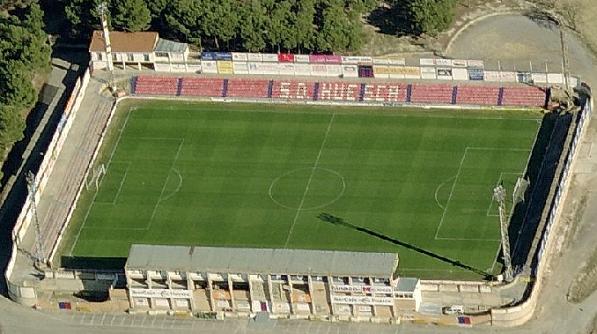
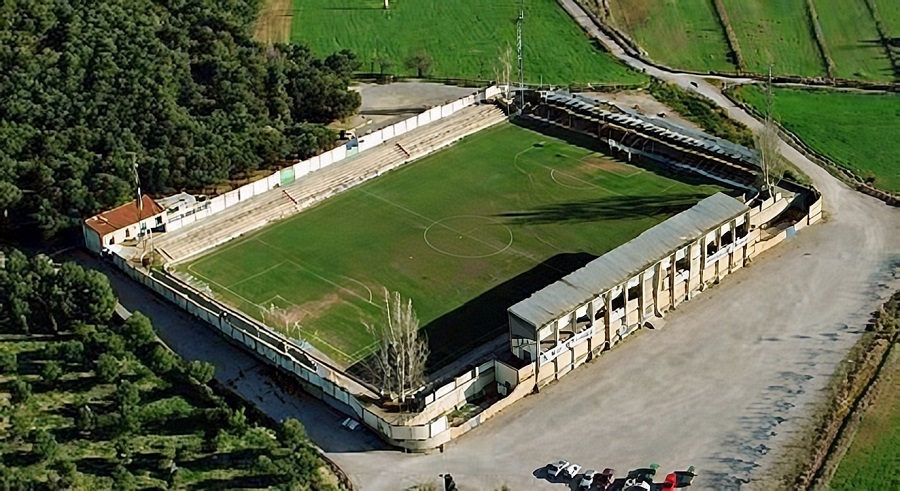
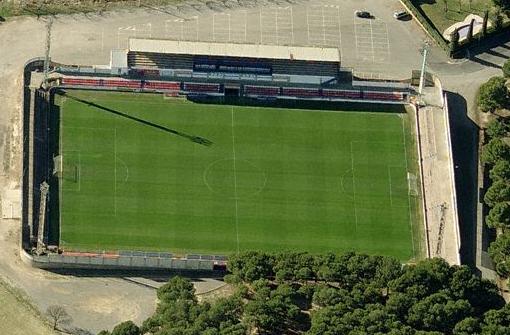
First, a quick history lesson. Football has been played in Huesca since 1909, and twenty years later the forerunner of UD Huesca, CD Oscense, was formed. They changed their name to CD Huesca in 1931 and reached the Tercera for two seasons before the start of the Civil War. The club was reformed in 1940 and merged with CD Español to form UD Huesca. They played their matches at Campo de Villa Isabel, which had a capacity of 6,000. They reached the Tercera in 1943 and two years later moved to Campo de San Jorge, a better-appointed, but initially smaller ground. UD Huesca won the Tercera title in 1949-50 and entered La Segunda.

Their first season was a remarkable success, finishing in fifth place and 3 points shy of a play-off place. Results at Campo de San Jorge were impressive, with 13 victories, including a 2-0 win over Real Zaragoza and just one defeat. UD Huesca finished in eleventh place in the 1951-52 season and in fifteenth place the following year. This meant relegation back to the Tercera. The playoffs for La Segunda were reached in the 1953-54 season, and a return looked likely in the 1955-56 season. That was before the Spanish Federation overturned a 2-0 victory against SD Montanesa for fielding an ineligible player. They also slapped on a 2-point penalty that ultimately cost them the title. UD Huesca did not have the heart and, more importantly, the money to continue, and they folded in the summer of 1956.
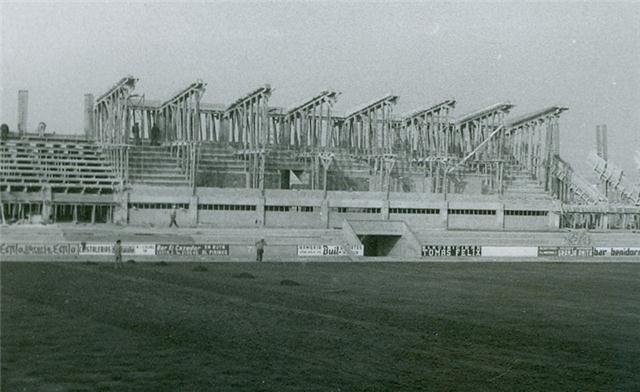
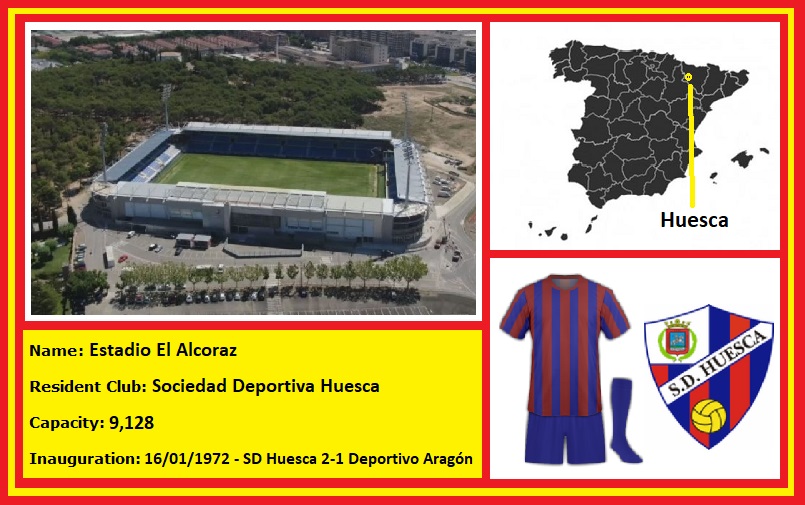
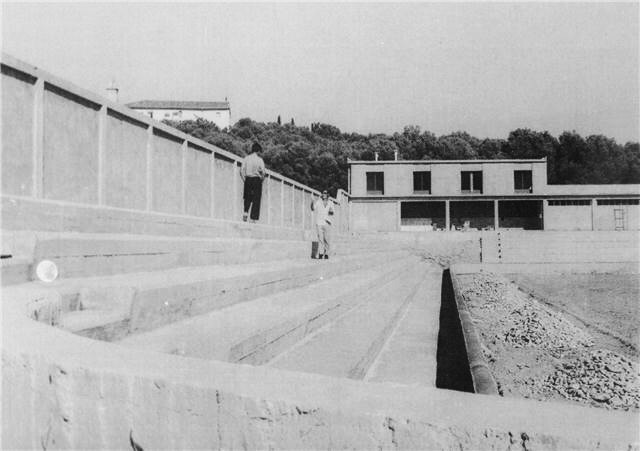
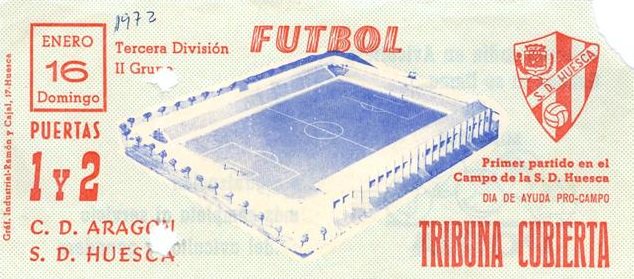
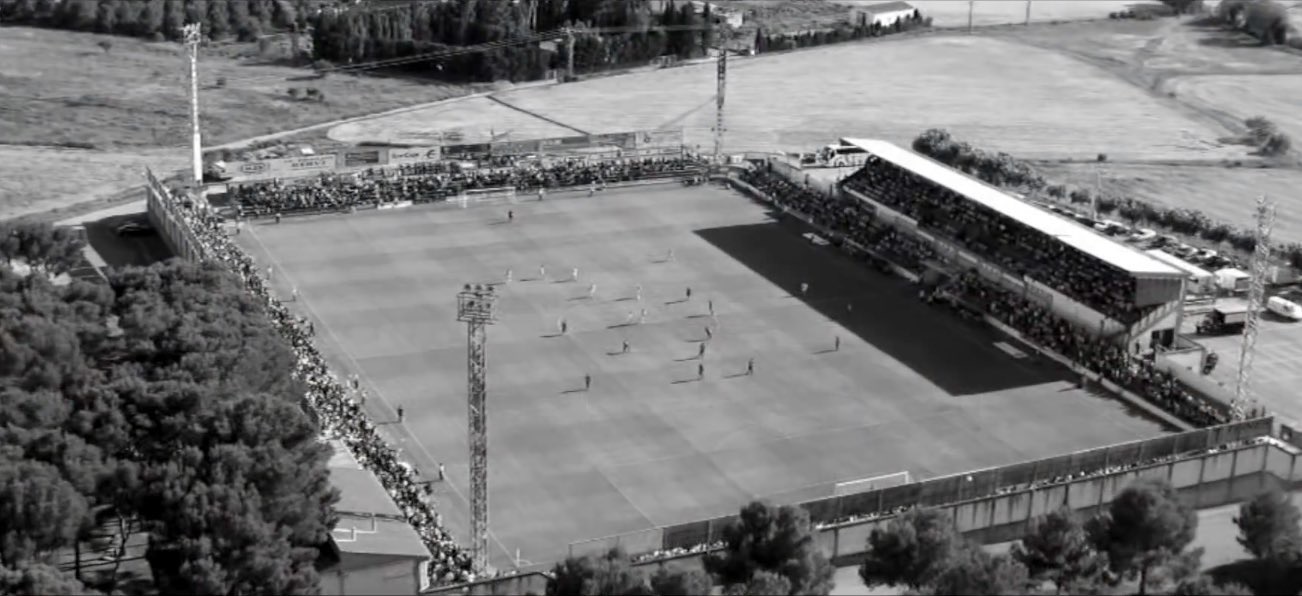
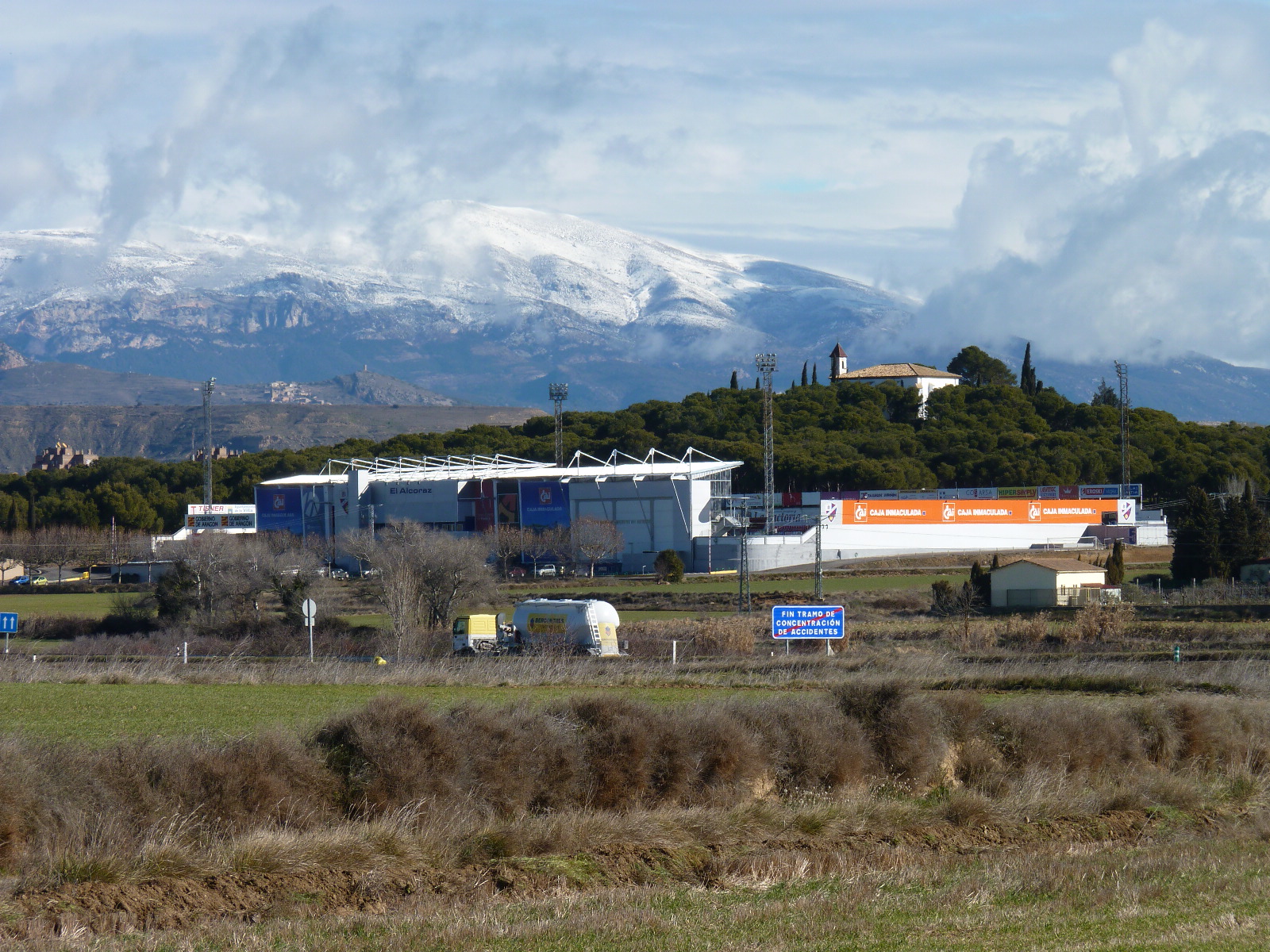
On 31 March 1960, Sociedad Deportiva Huesca was formed and took on Campo de San Jorge as their home. They found immediate success, winning the Regional Preferente and then, well, not a great deal happened. A couple of Tercera titles in the late sixties failed to secure promotion, and the club even dropped back into the Regional Preferente for the 1973-74 season. By then, the club had moved a few hundred yards to the south-west to a new ground, the Estadio El Alcoraz. The stadium takes its name from the Battle of El Alcora,z which took place in the vicinity. The club had a fight of its very own, taking nearly 4 years and spending 15 million pesetas to complete the project. El Alcoraz finally opened on 16 January 1972 with a match against Deportivo Aragón (Zaragoza B), which SD Huesca won 2-1. SD Huesca regained its place in the Tercera after just one season away, but a series of modest finishes followed before the league was restructured at the end of the 1976-77 season. An eighth place was enough to secure a place in the newly formed Segunda B, the new third tier of Spanish football. The seven seasons that followed did not see SD Huesca trouble too many teams at the top of the league, and the additional expense of playing at this higher level saw the club’s debt rise to 40 million pesetas. Relegation arrived at the end of the 1983-84 season, and SD Huesca would spend 15 of the next 20 seasons in the Tercera, with two short two-season spells back in Segunda B in the early and mid-1990s and a season-long visit in 2001-02, breaking the tedium.
The start of SD Huesca’s renaissance was not particularly striking. A second-place finish in the Aragón division of the Tercera in 2003-04 saw the club face SD Noja, whom they beat 2-1 on aggregate and Eibar B, who lost 3-1 on aggregate. Season 2004-05 saw a safe if unspectacular return to Segunda B with a tenth-place finish, and the following season nearly saw SD Huesca drop back to the Tercera. The club finished sixteenth in Group III and faced Castillo CF in the relegation play-offs. A 0-0 draw at El Alcoraz in the first leg did not bode well, but a 1-1 draw in the Canary Isles saw SD Huesca stay in Segunda B by the skin of their teeth. The team was rebuilt for the 2006-07 season, and the results were immediate. The runners-up position was attained before CF Palencia were dispatched in the play-off semi-finals. Cordoba CF were the opponents in the final, and a 0-2 deficit from the first leg could not be overturned at Alcoraz. Undeterred, SD Huesca finished in second place again in 2007-0,8 and this time they prevailed with victories over CF Gava and Écija Balompié. If playing in La Segunda was reward enough, facing Real Zaragoza was a bonus. The region’s big-boys had just been relegated from La Primera, and a 2-2 draw at La Romerada was one of the season’s highlights. At the end of the season, SD Huesca had achieved the eleventh position, a remarkable turnaround from facing a drop to the Tercera three seasons earlier.
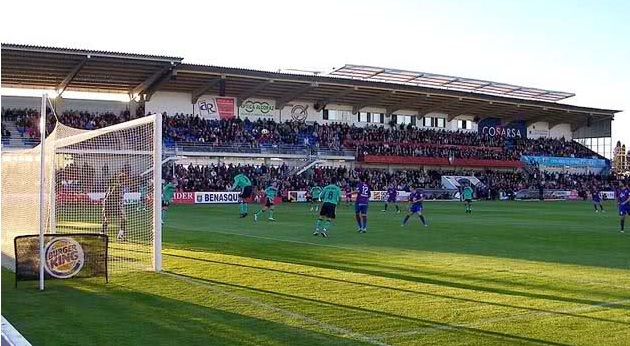
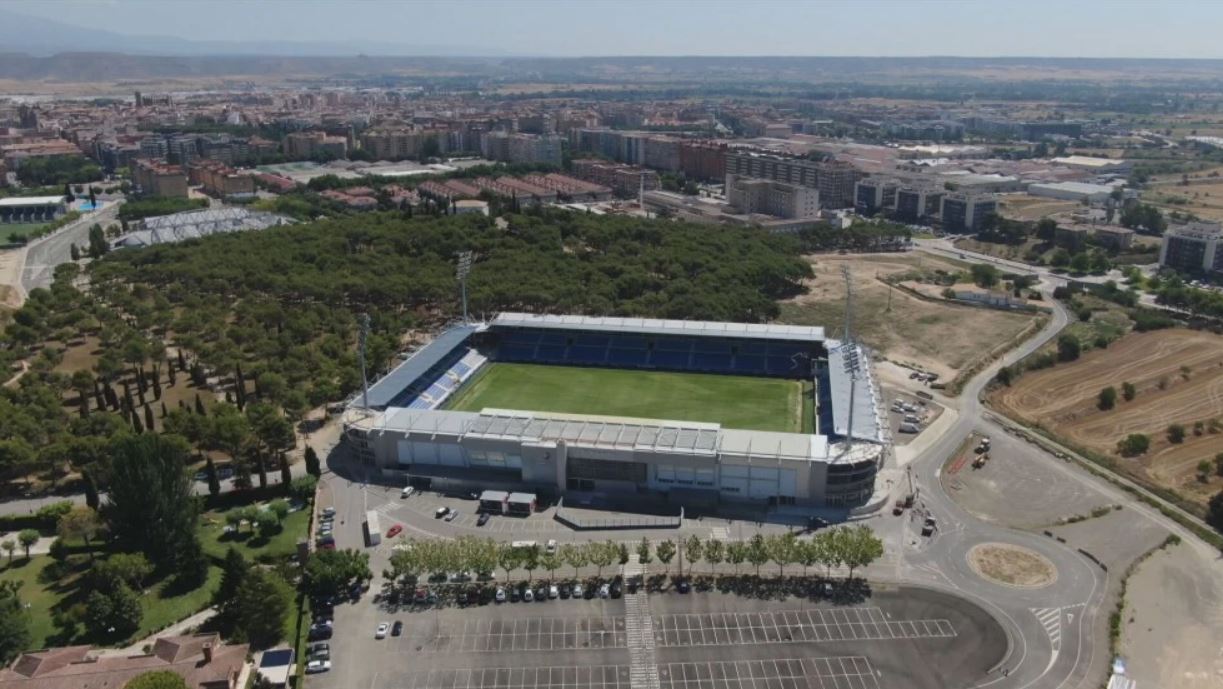
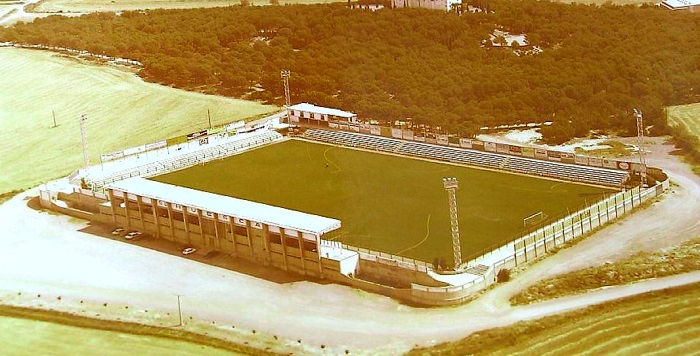
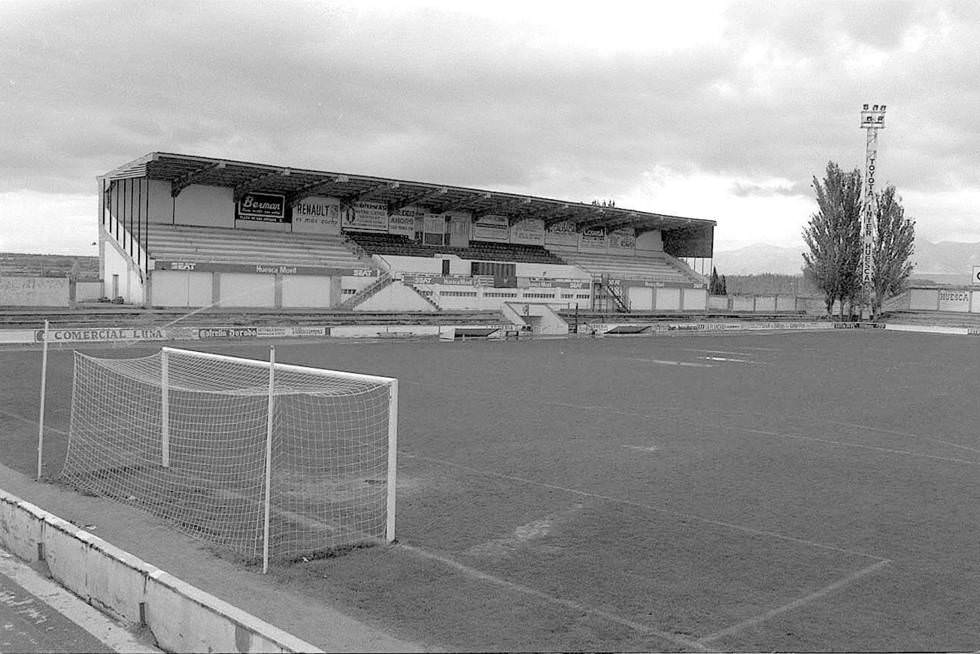
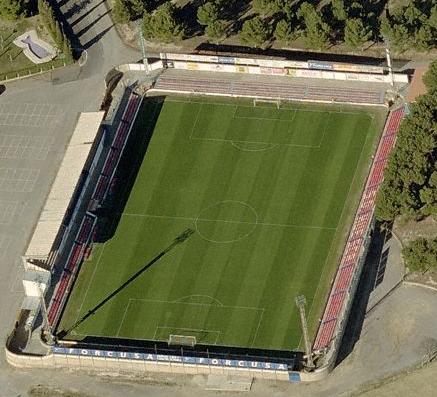
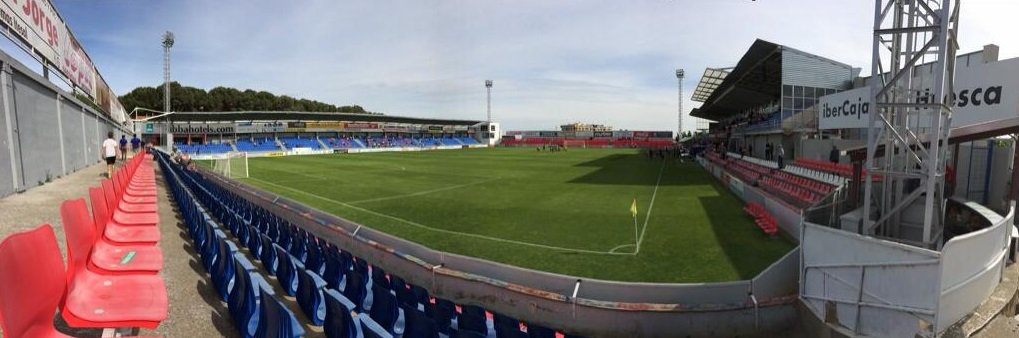
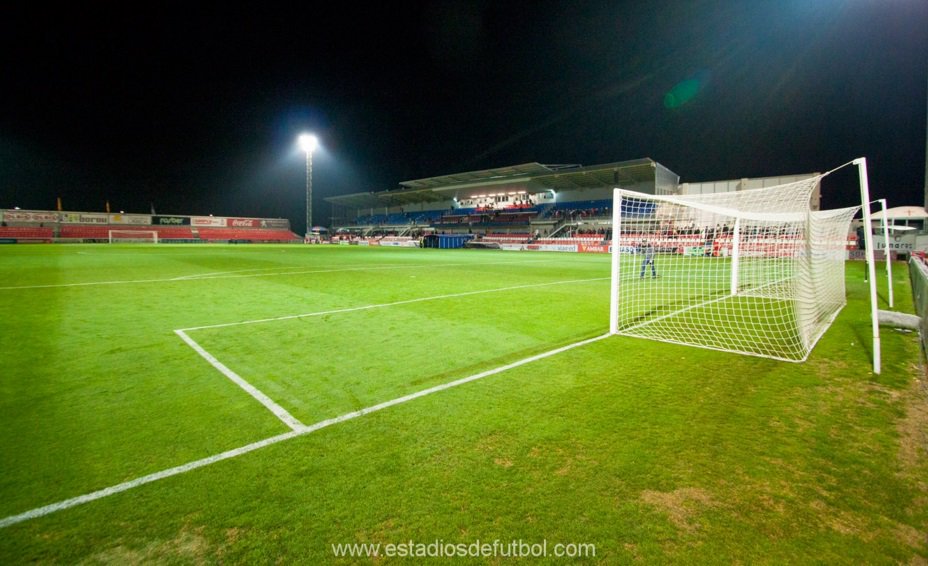
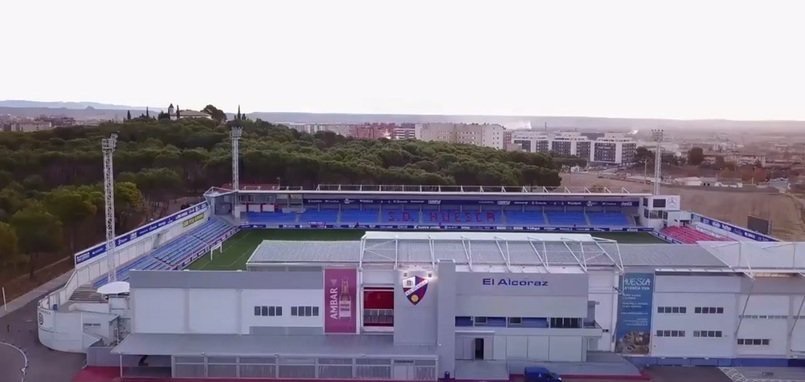
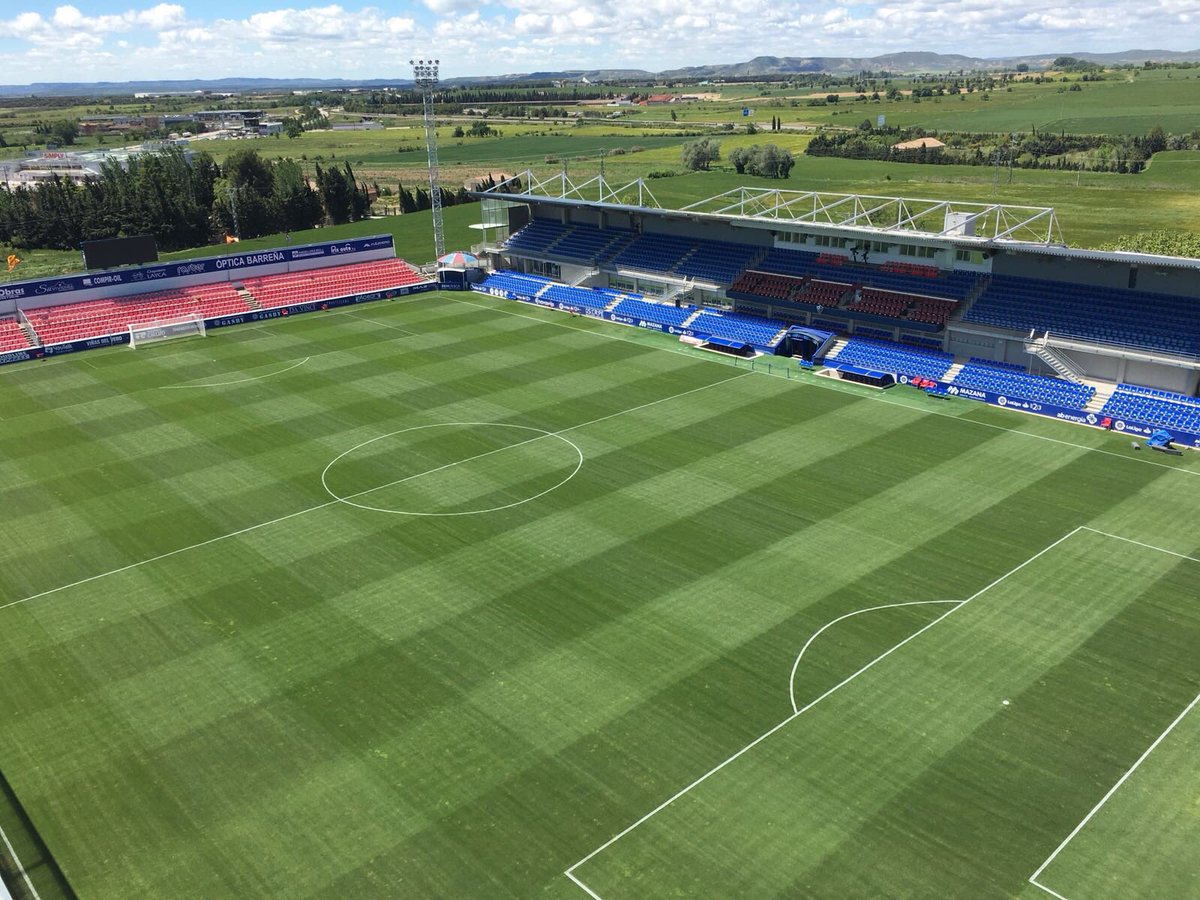
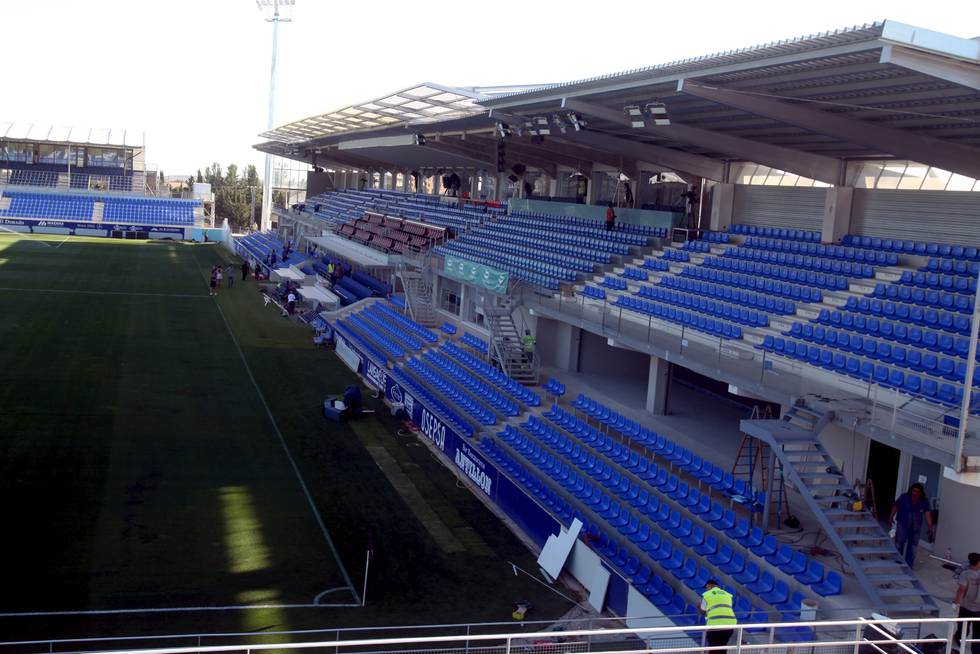
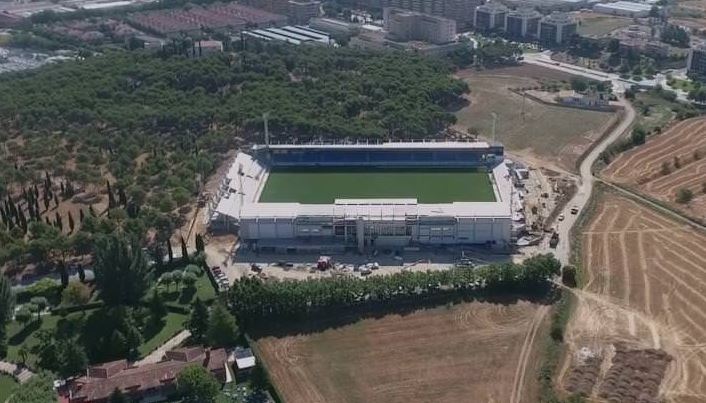
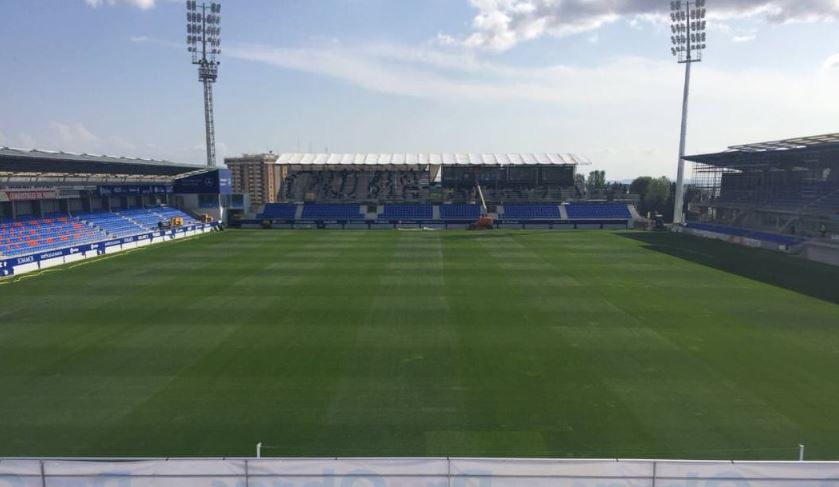
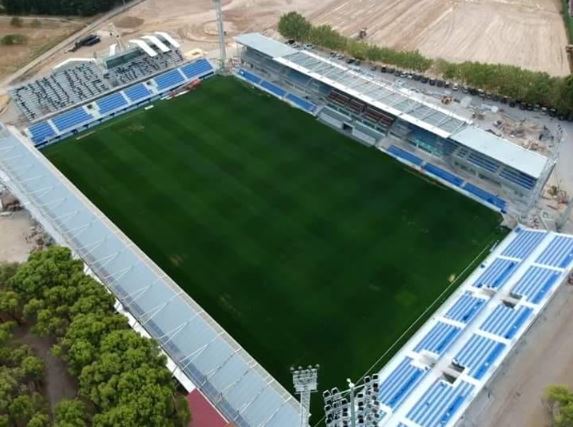
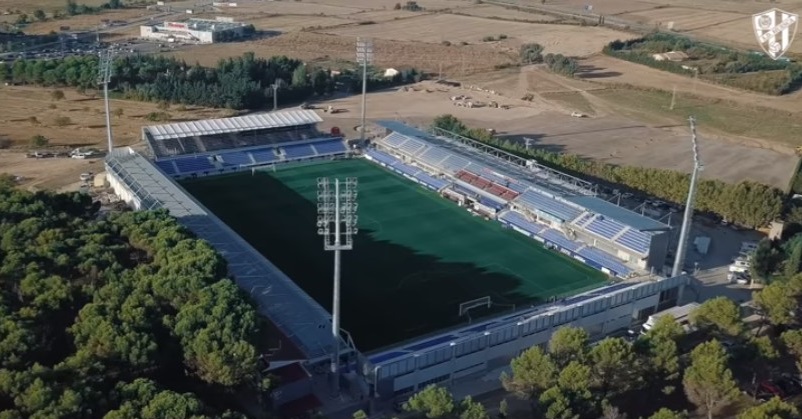
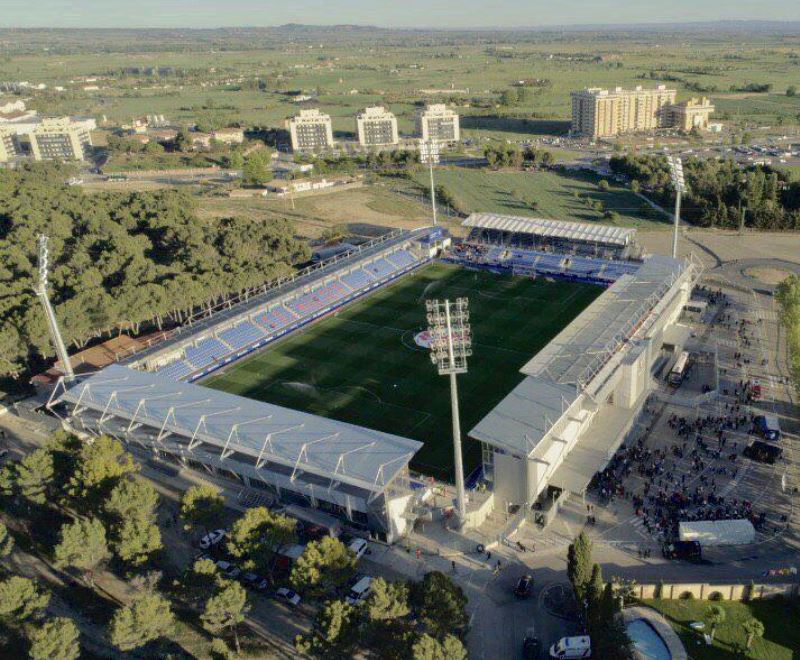
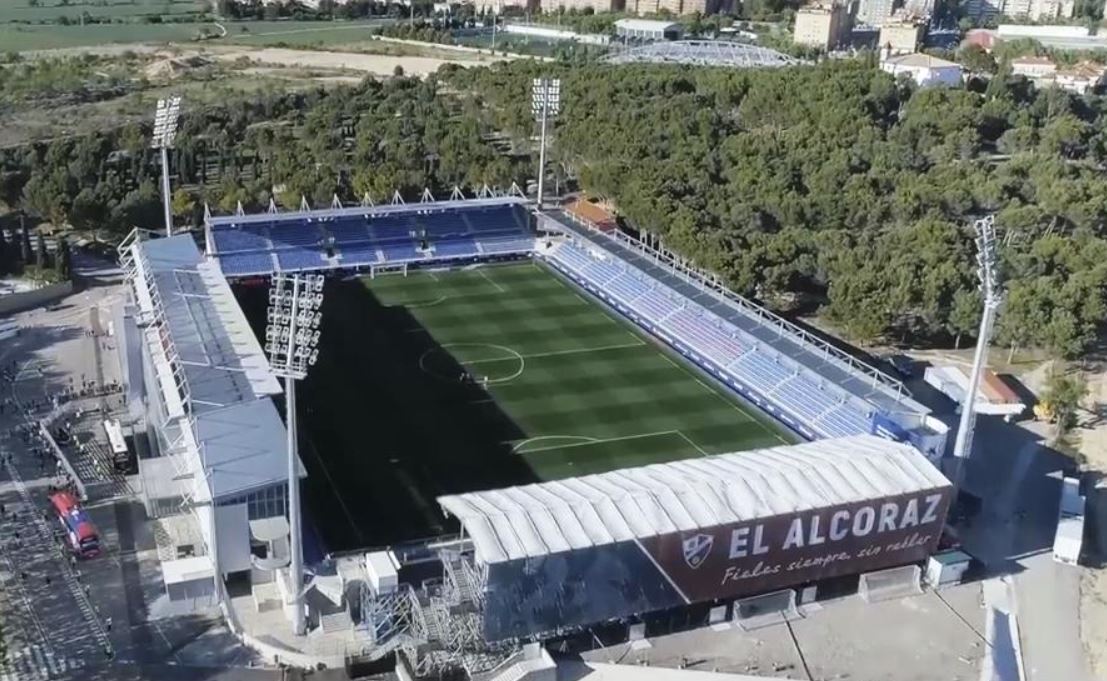
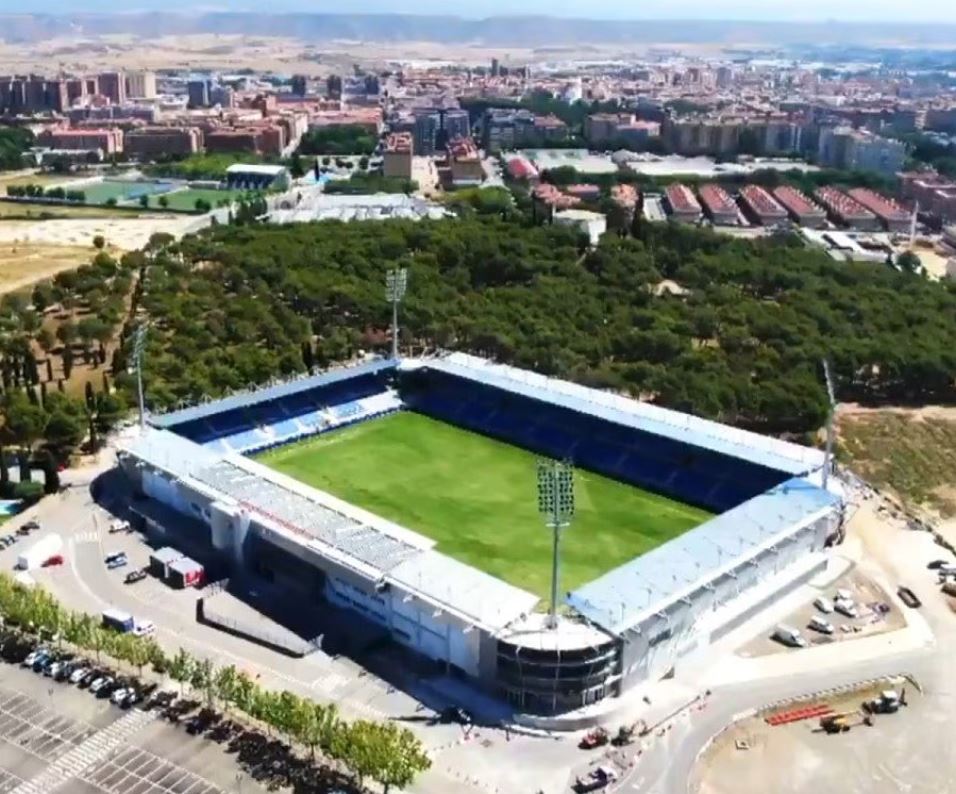
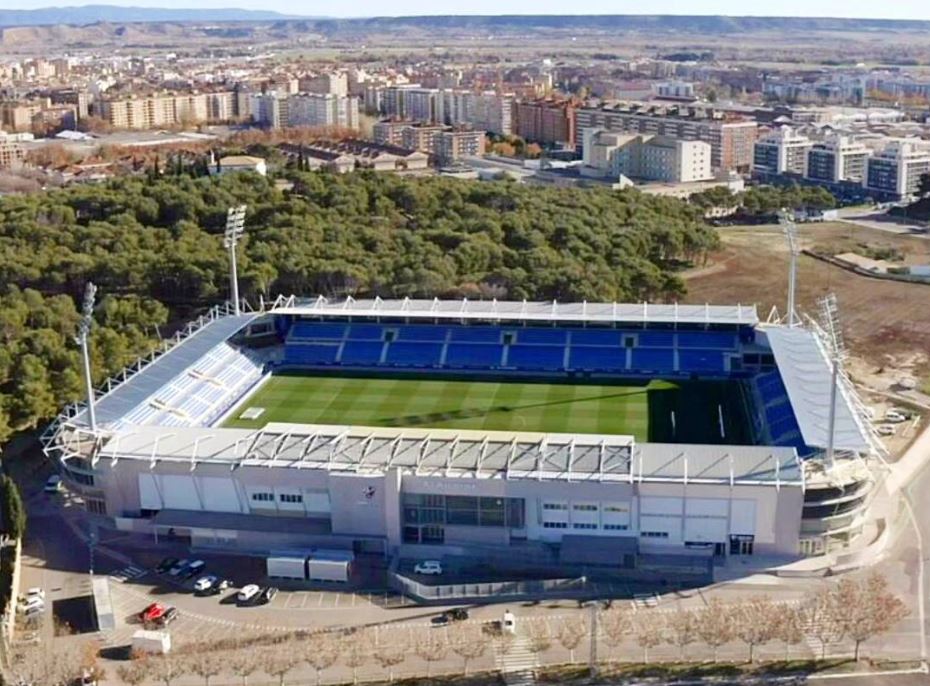
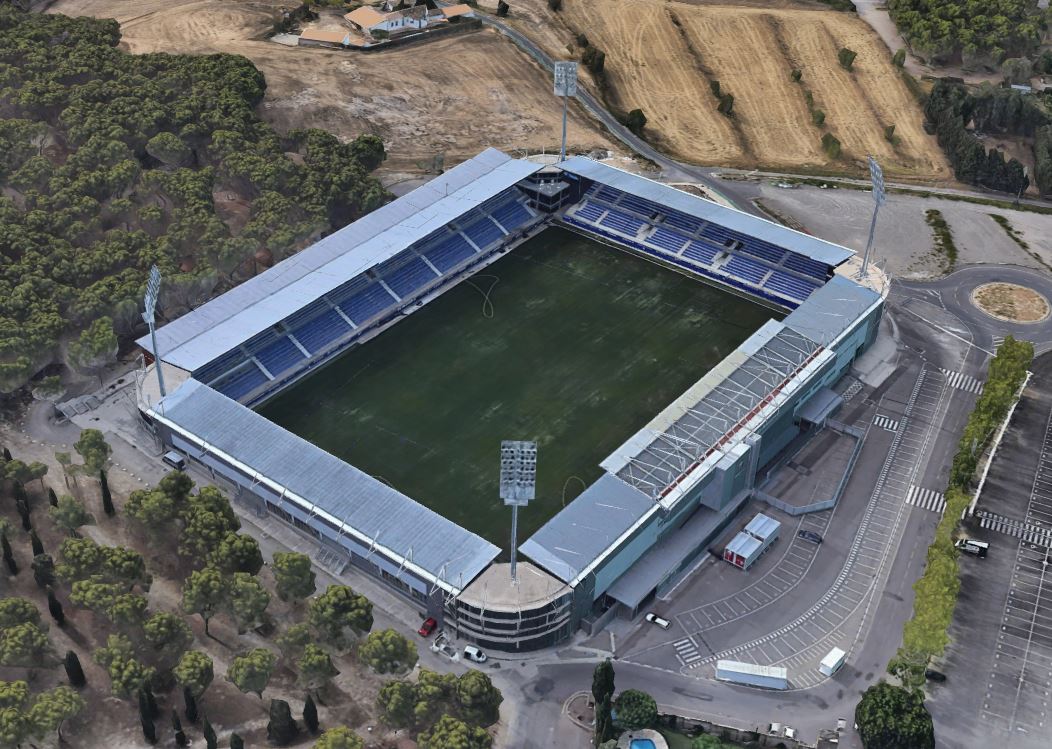
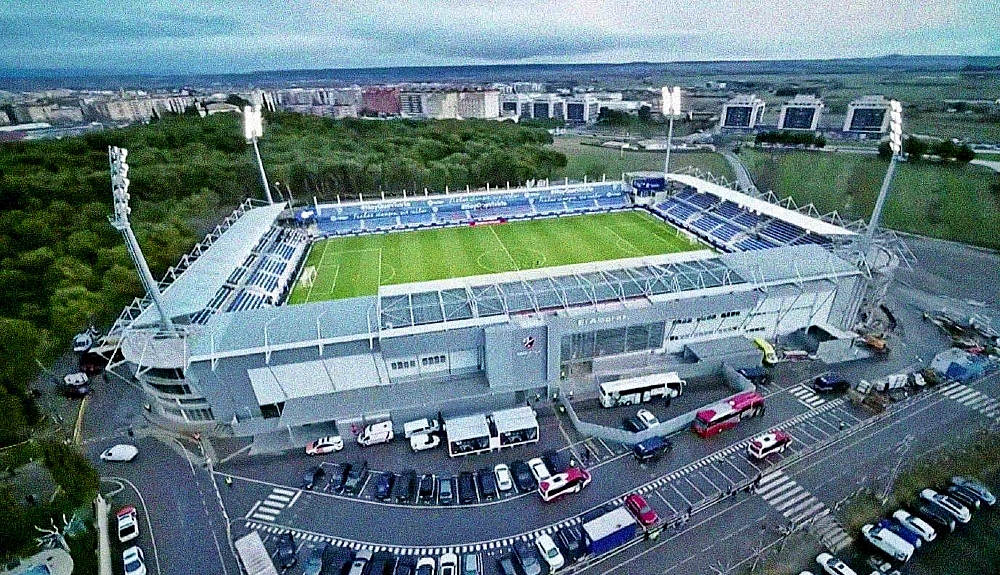
El Alcoraz was built at the foot of the hills of San Jorge, and San Jorge and his flag feature prominently around the club. He’s there on the badge, the main entrance to the stadium and even the second strip has featured a red cross on a white background. In 2009, the stadium looked like every part of the early seventies stadium that it was. However, the West Tribuna was extended with the addition of a southern wing in the summer of 2009. The back of the stand was also extended to feature a new entrance, hospitality suites and improved media facilities. The roof over the new section offered slightly more coverage than its 1970s neighbour, so to compensate, an additional screen was added to the older portion of the roof. The northern end of the Tribuna was extended in early 2018 with the addition of a matching wing.
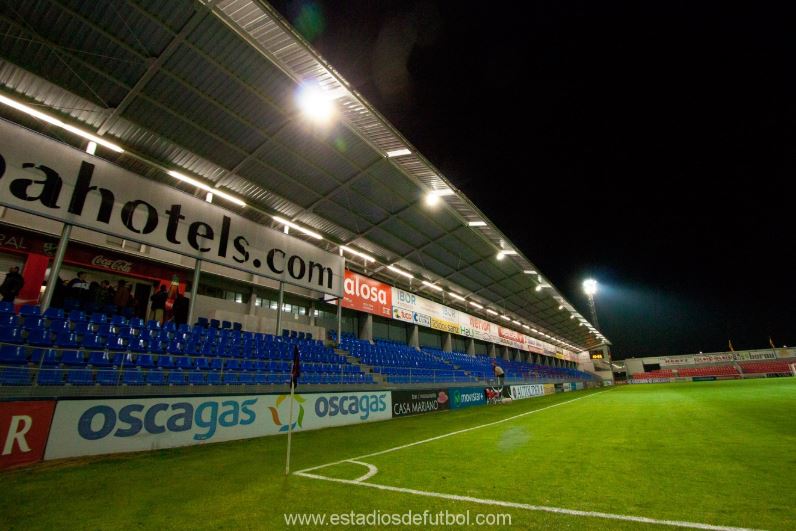
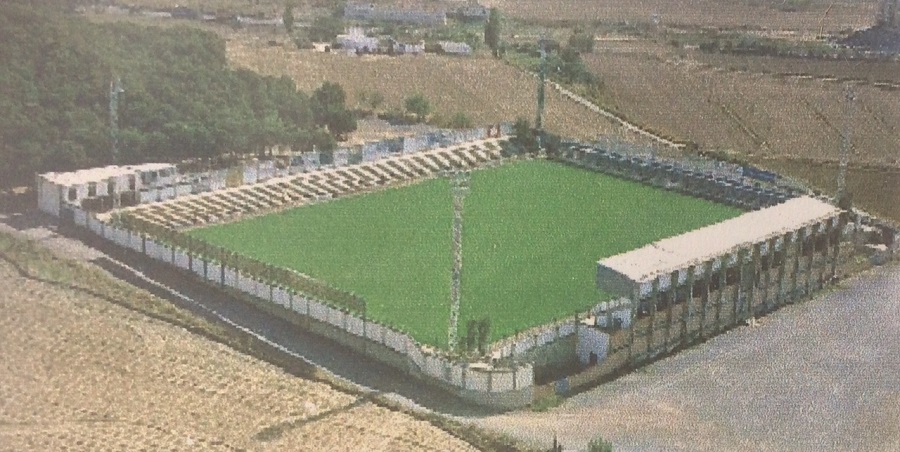
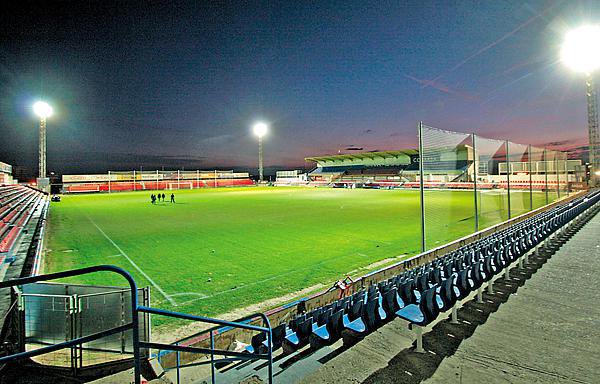
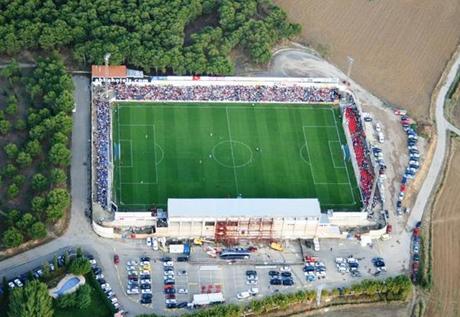
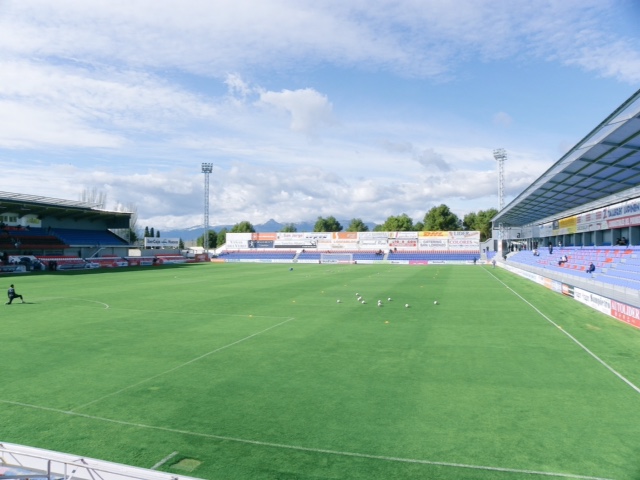
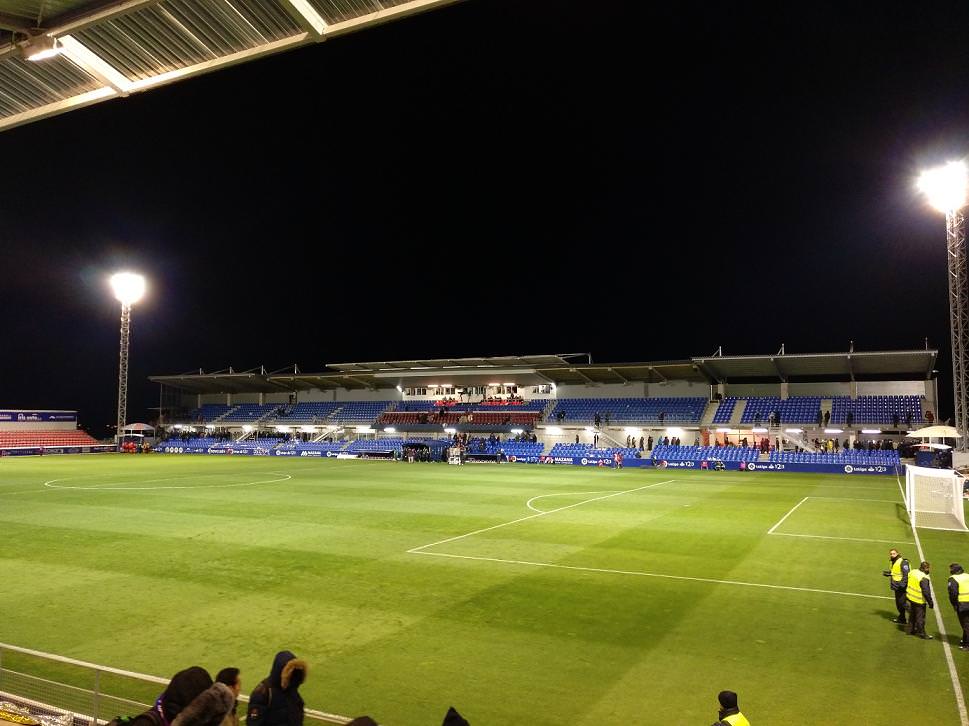
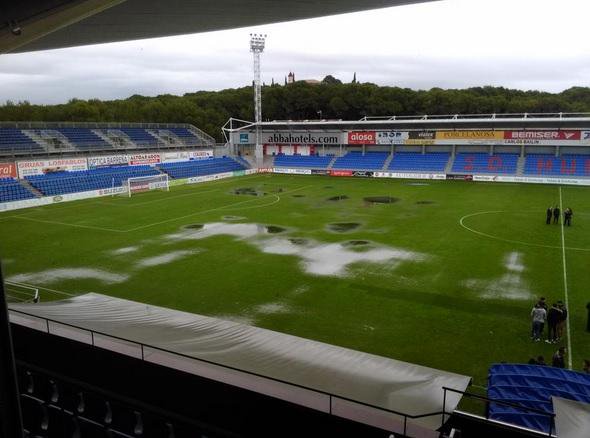
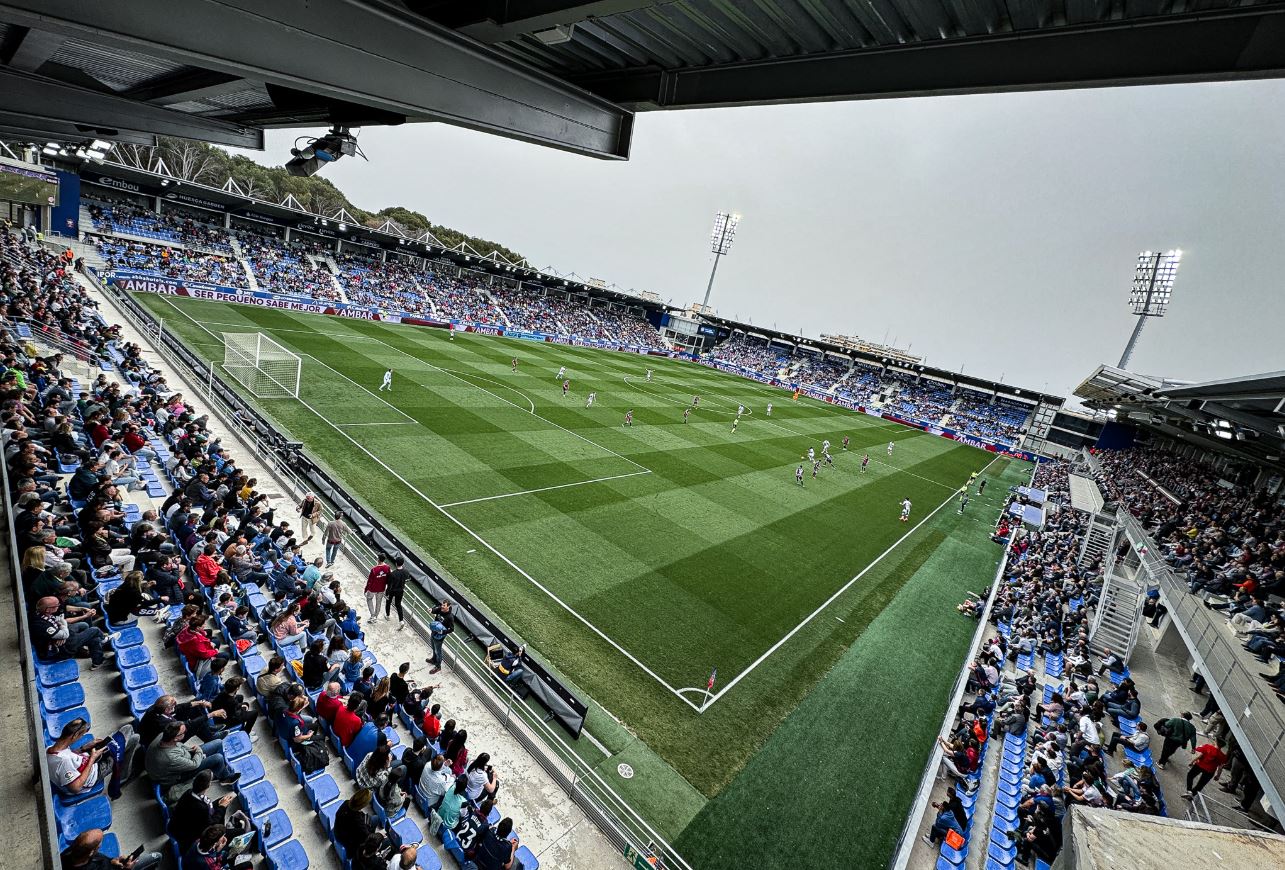
There was talk about SD Huesca moving to a new ground, with a site next to their old Campo de San Jorge being discussed. However, in the end, the focus turned to redeveloping El Alcoraz. In 2011, the Grada Lateral was built. Sitting opposite the main stand, it consisted of eight rows of blue seats with the club’s name picked out in red. It has a straightforward, if somewhat high, cantilevered roof, which did not offer much in the way of cover, but plenty in the way of advertising space. Plans to redevelop the areas behind each goal were shelved following a two-season stay in Segunda B in 2013. SD Huesca’s return to La Segunda and subsequent promotion to the top tier led to further change. By 2021, both the Fondo Norte & Sur had been extended and featured cantilevered roofs. The Grada Lateral also saw an extension, with an additional six rows of seating and private hospitality at the rear. Finally, New floodlights and larger media facilities were added, whilst access to the stadium was also improved.
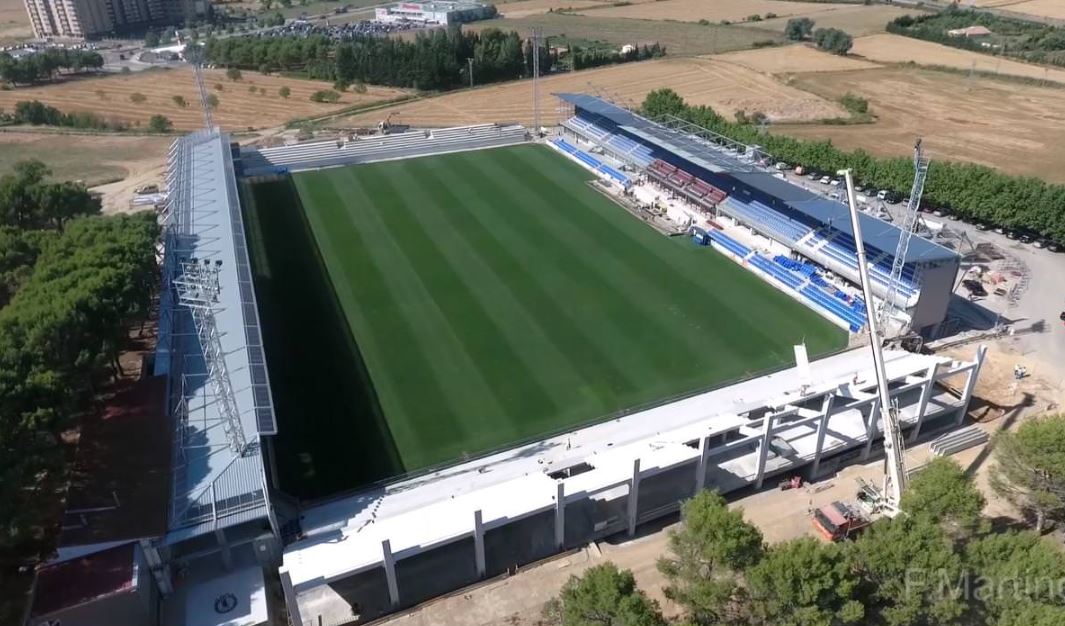
The remodelling came in at a provisional cost of €15m, which was partly funded by the club & regional council, and led to the capacity increasing to 9,128. All rather prudent, and if it allows the club to remain focused on football and emulate both Eibar & Girona, small clubs who have reached La Primera and managed to hold their own, then all the better for it.






 Estadios de España