
The summer of 2025 brought with it two significant changes to the reserve side of Atlético Madrid. The first saw the team reclaim the name it took on when it first became the club’s official reserve side in 1970, Atlético Madrileño. The second saw it move from its home of 28 years, the Campo Municipal Cerro del Espino, to the Centro Deportivo Alcalá de Henares, the club’s main training facility, some 25km east of Madrid. This may have been a bit of an upheaval, but Atlético Madrileño should be used to change, as the training facility is the club’s eighth home.
In the early years, Atléti, like many of the big teams in Spain, had a series of affiliated clubs rather than a specific reserve team. The first, Imperio FC, reached an agreement with the club that ran from the end of the Civil War until 1947. Following Atlético’s league championship success in 1951, the club established a relationship with Agrupación Deportiva Rayo Vallecano, then competing in the Tercera, which lasted until 1955. Informal arrangements continued with several clubs in the Madrid area, but it was not until 1970 that Atléti acquired the federation rights to form a reserve side. Reyfra Atlético de OJE started out in 1961 as Club Atlético Getafe and reached an agreement in 1966 with Rayo Vallecano to become an allied club. Reyfra made solid progress and reached the Tercera in 1967, but with finances tight and the gap between Reyfra and Rayo diminishing, Atléti arrived on the scene and bought the club. Reyfra started out at the Campo de San Isidro in Getafe before sharing the old Campo de Vallecas & Vallehermoso with Rayo Vallecano. Atleti moved the club to the recently completed Vicente Calderón Stadium in 1970, changing its name to Atlético Madileño in the process.
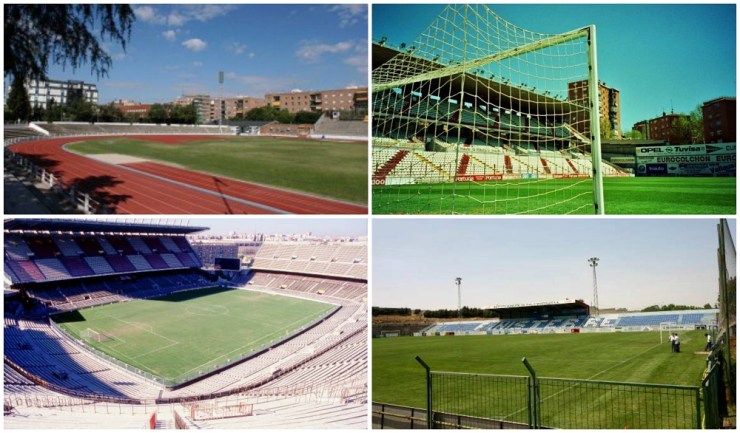
Madrileño plodded along in the Tercera, with the highlight being a second-place finish in the 1972-73 season, which saw the club qualify for the playoffs to La Segunda. Here, they met Gimnàstic de Tarragona but lost 4-1 on aggregate. At the end of the 1976-77 season, the club’s fifth-place finish saw them elevated to the newly formed Segunda B. After a hesitant start, they earned direct promotion to La Segunda with a runners-up finish in 1979-80. There followed six seasons in the second tier, with mostly modest mid-table finishes, before dropping back to Segunda B in 1986. Thanks to a first Segunda B title in 1990, Madrileño made a brief return to the second tier in 1989-90. At which point it became an official dependent of the parent club, changing its name to Club Atlético de Madrid, S.A.D. B. The club’s most successful period started with its elevation back to La Segunda in 1996. The home campaign for the 1995-96 season was played at Rayo Vallecano’s Campo de Vallecas, and having just squeezed into the end-of-season playoffs, they topped their group that featured UE Figueres, Atlético Osasuna B & Real Jaén.
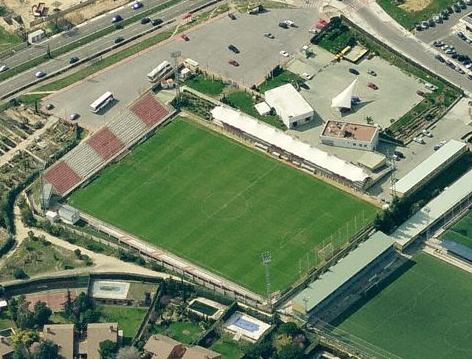
Atlético B played their home matches in the 1996-97 season at the Estadio Municipal El Soto in Móstoles. In 1997, the club moved its academy to the western satellite town of Majadahonda and the Campo Municipal Cerro del Espino. With an exciting group of young players, Atlético B’s results quickly improved until they achieved runners-up position in La Segunda in 1998-99. With the first team in La Primera, Atlético B could not be promoted due to the senior team’s first division status, but a cruel twist was just around the corner. Just three seasons after securing a league & cup double, the first team and the club as a whole were in turmoil, thanks in no small part to the presidency of Jesús Gil. Atléti was relegated to La Segunda in 2000, forcing the B team to be demoted to Segunda B. It’s a drop that the B Team has yet to recover from, and despite a couple of league titles, promotion via the playoffs has eluded them.
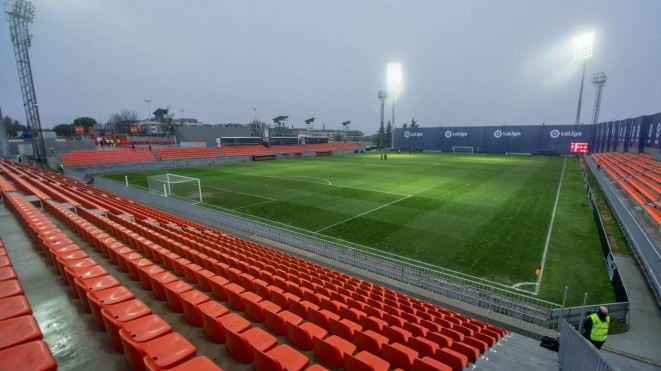
The Miniestadio Cerro del Espino was at the centre of the club’s academy and training facilities. It is also home to Club de Fútbol Rayo Majadahonda, who inaugurated the new stadium on 13 September 1995 with a friendly against Atléti. Two years later, Rayo signed an alliance with Atléti. The main arena underwent substantial improvements in 1996, when Atlético B moved up to La Segunda, and then further changes ahead of Rayo Majadahonda’s season-long stay in the second tier in 2018-19. You can read more about the Miniestadio Cerro del Espino here.
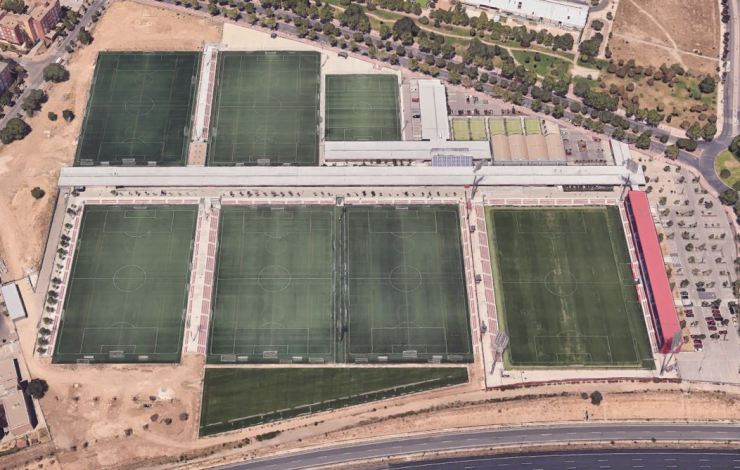
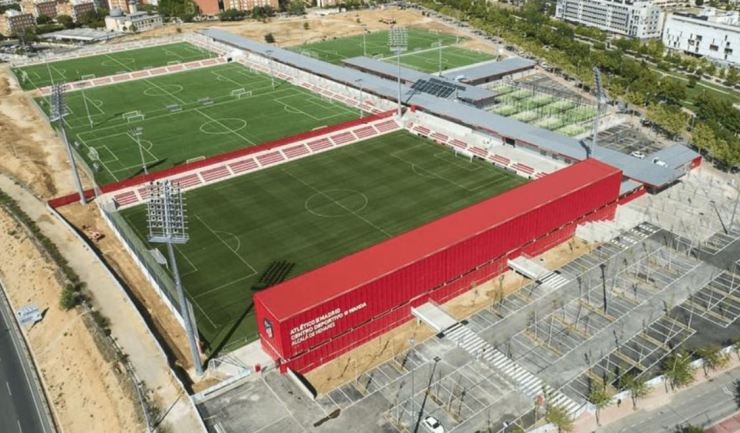
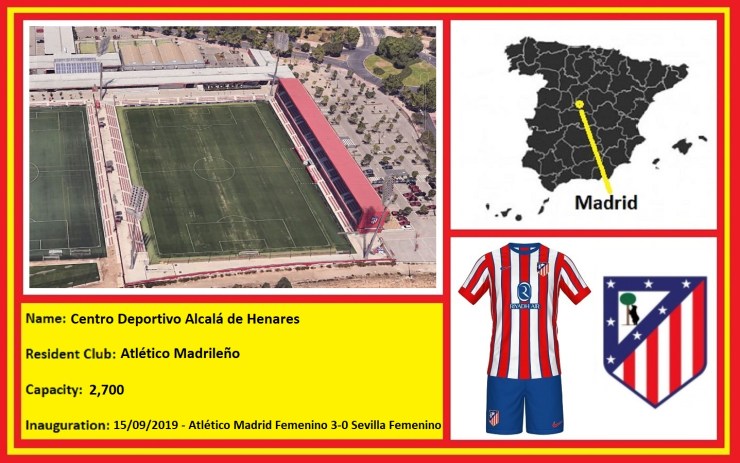
Atlético Madrid conceived the idea for the Centro Deportivo Alcalá de Henares in the mid-2010s, after identifying the need to expand its catchment area beyond its traditional heartlands and into the Comunidad de Madrid. In February 2017, the Alcalá de Henares City Council approved plans for the sports city to be built in the northern barrio of Espartales. The deal would see Atléti pay the council an annual rent of €126,000 and allow RSD Alcalá to use the facilities for training. Work began a year later and took just over 18 months to complete. Initially, the facilities would be used by all Atleti’s teams for training, whilst the Women’s teams would also play their fixtures here. It was Club Atlético de Madrid Femenino who played the first competitive fixture at the main stadium, when they defeated Sevilla Fútbol Club Femenino 3-0 on 15 September 2019, before a crowd of 2,304. The centre covers an area of 69,960 square meters, with the main stadium having a capacity of 2,700 spectators. It also has five other 11-a-side football pitches and one 7-a-side football pitch with artificial grass. Other facilities include a goalkeeping training area, changing rooms, a gymnasium, an official shop, a cafeteria, storage rooms, a classroom, and medical services. Finally, six years after opening, Atlético Madrileño moved in, playing their first competitive match at the stadium on 1 September 2025, drawing 0-0 with Atlético Sanluqueno.
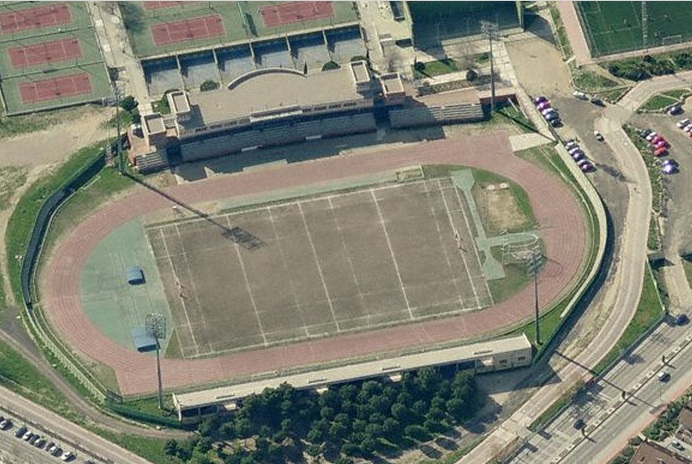
Atlético Madrileño Former Home – San Isidro – Getafe – 1963-68 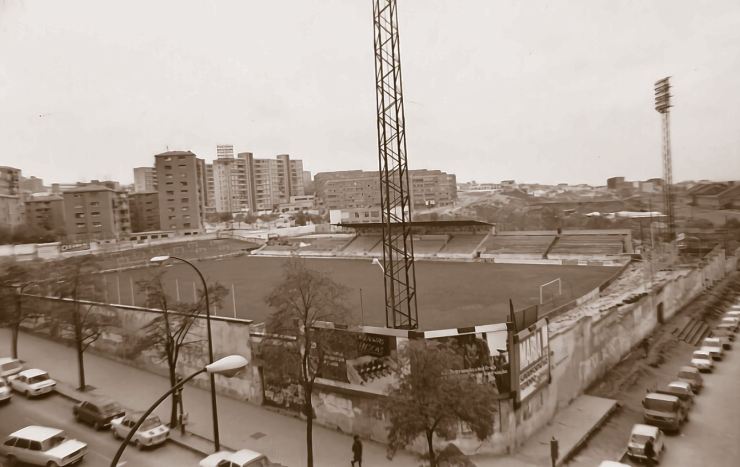
Atlético Madrileño Former Home -Campo de Vallecas – 1968-69 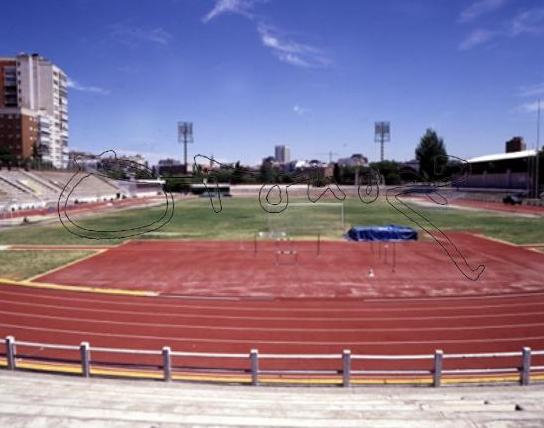
Atlético Madrileño Former Home – Campo de Vallehermoso – 1969-70 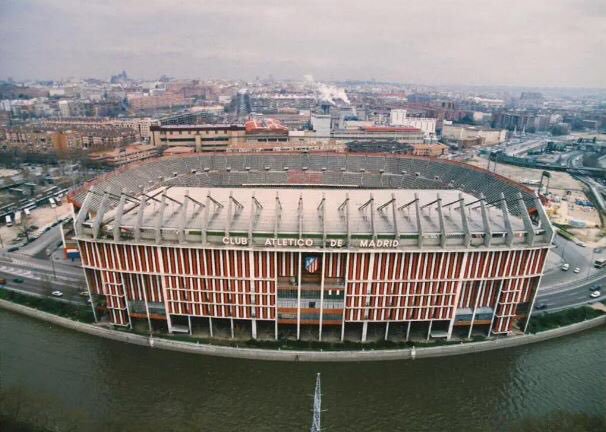
Atlético Madrileño Former Home – Estadio Vicente Calderón – 1970-95 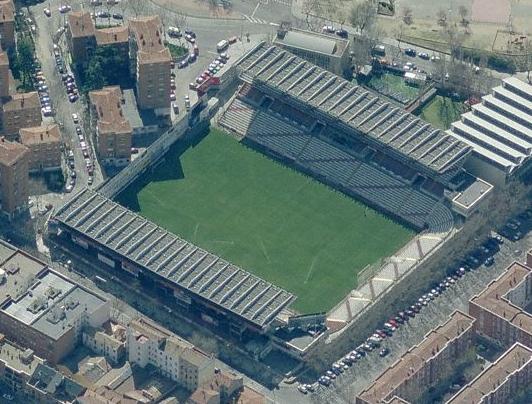
Atlético Madrileño Former Home -Estadio de Vallecas – 1995-96 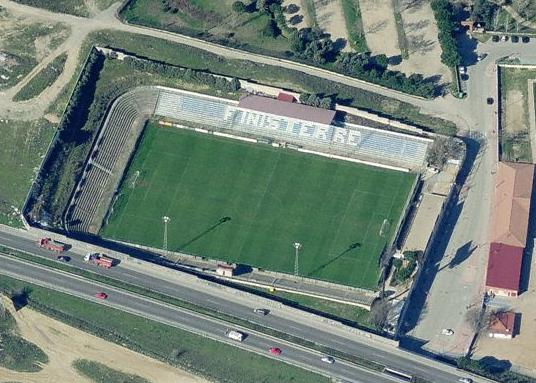
Atléti B Former Home – Estadio Municipal El Soto, Móstoles 1996-97 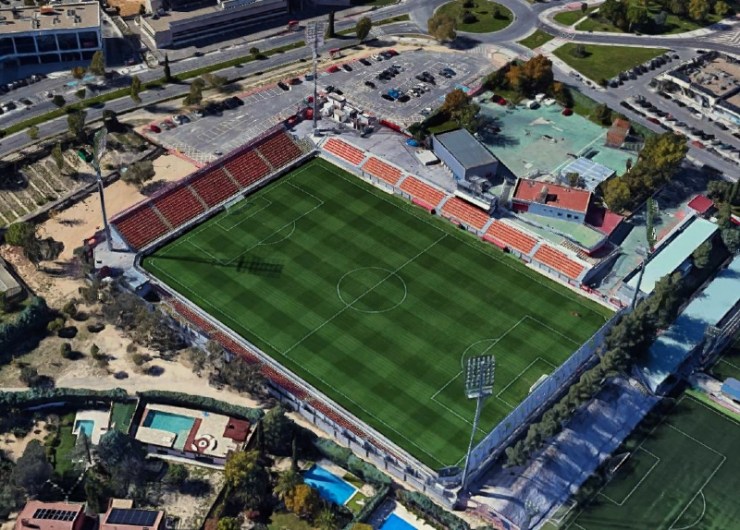
Atlético Madrileño Former Home -Miniestadio Cerro del Espino 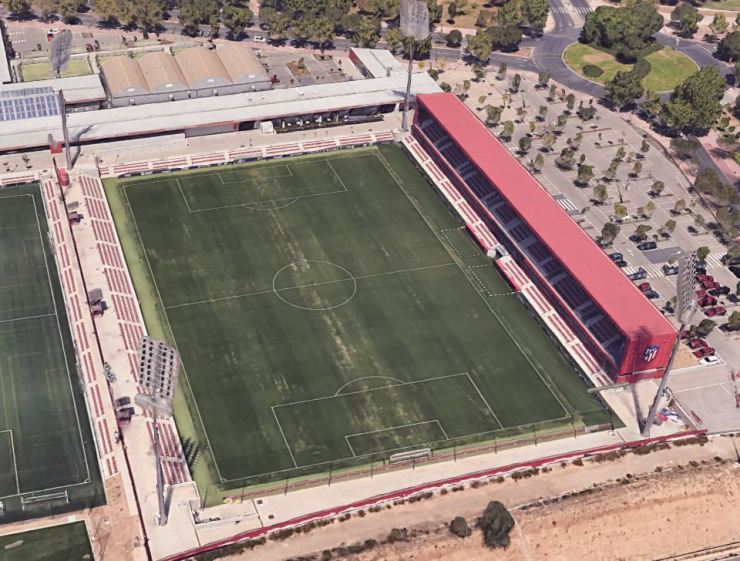
Centro Deportivo Alcalá de Henares 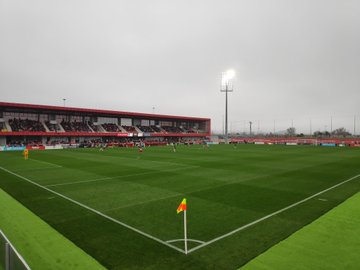
Centro Deportivo Alcalá de Henares 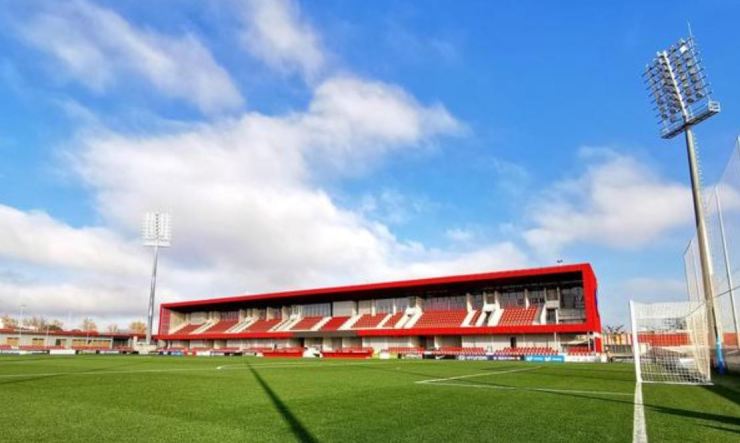
Centro Deportivo Alcalá de Henares
 Estadios de España
2 thoughts on “Alcalá de Henares – Centro Deportivo Alcalá de Henares”
Comments are closed.