
Located just 10 km from Valencia, the historic town of Torrent has long been an important agricultural and trade centre. The town’s origins date back to the Moorish period, with remnants of medieval structures, such as the Torre de Torrent, still standing today. The construction of new residential areas and improved infrastructure in the mid-20th Century led to a population boom. From around 15,000 inhabitants in the 1950s, the town is now home to over 85,000 people, the second largest metropolitan centre in the Provincia de Valencia. One constant over the past 100 years has been the presence of Torrent Club de Fútbol. The club has represented the town since its formation in 1922, predominantly in the Valencian regional leagues but occasionally further afield.
Football was introduced to the town by the Capuchin Tertiary Friars in the early 1920s, who promoted the sport among local youth. As a result of these actions and the sport’s popularity in the provincial capital, Torrente Foot-ball Club was founded in July 1922. Wearing a kit of orange shirts & white shorts, the club played its first matches at the Camp de les Figueres del Caxet. On 2 April 1923, the club inaugurated the Campo del Cuartel with a friendly match against Valencia CF‘s second XI. Later that year, Torrente FC joined the Federación Regional Levantina and began playing in Primera B. In 1927, the club was on the move again, opening the Camp de la Garrofera on 11 September with a match against the first XI of Valencia CF. Despite an increase in activity, Torrente FC’s financial position was dire. After repeated failures to pay fees due to the Valencian Federation, the club was expelled from the league in 1931 and did not reemerge until after the Civil War.

Following the end of hostilities, there was a desire to restore some degree of normality, one of which was the restoration of footballing activities. Despite having outstanding debts and laying dormant for nearly a decade, the Valencian Federación approved the reforming of Torrente FC, with the anglicised name changed in favour of Torrente Club de Fútbol. The club adopted the familiar orange shirt and paired it with blue shorts. It returned to the Camp de la Garrofera, but before its first season in the Segunda Regional, the ground was renamed the Campo de Victoria. The 40/41 season ended with Torrente CF finishing top. However, promotion was not achieved until the following 41/42 season, when they topped the table and ascended to the Primera Regional. The club’s first season in the Primera was a relative success, finishing fourth, but the following campaign saw the Primera Regional become Grupo 5 of the Tercera. It proved a struggle for the club and they finished bottom of the table. With finances in a perilous position, it withdrew from the league. Four years on and once again, local fans and the municipality revived Torrente CF. A new enclosure, the Campo del Xenillet, was constructed on the southern bank of the Barranc de Torrent, and the club resumed activities in the Segunda Regional, finishing fourth in the 48/49 season. They earned promotion to Primera Regional in 1951 but continued to face financial difficulties, leading to their resignation from the league after the 54-55 season. The club spent the next two campaigns in Segunda Sur under the name of E. y. D. Torrente CF, having received funding from the local board to compete.
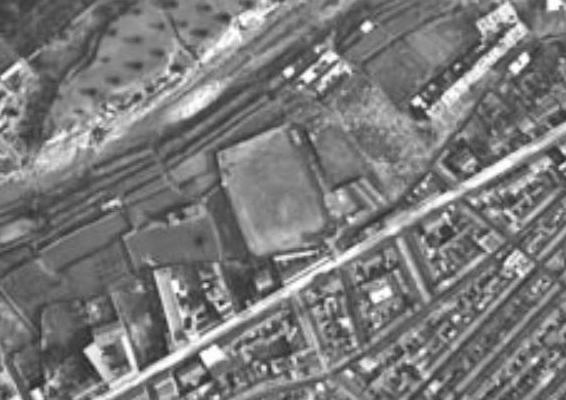
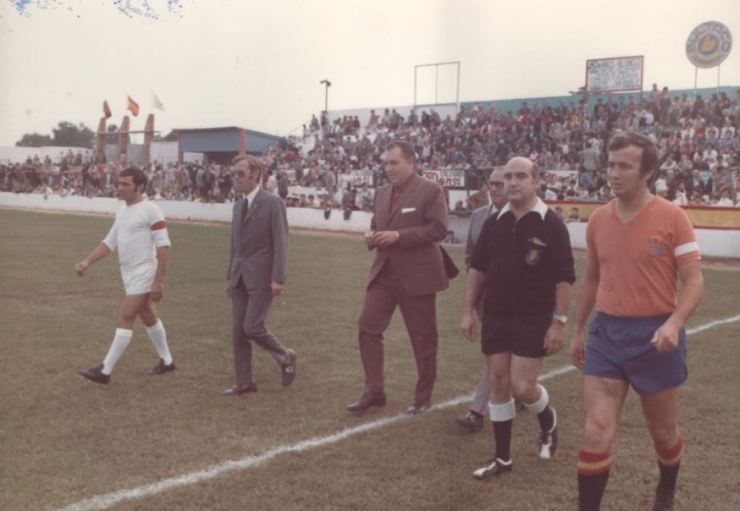
You can see a pattern developing, for a year later, Torrente CF returned to competition in the Segunda Regional. As the population of Torrent grew, so the club’s finances began to stabilise. Torrente CF was promoted to the Primera Regional after winning the title in 1960-61. On 18 March 1962, the club played its first match at the Estadio Municipal San Gregorio, beating CF Nules 6-0. The new surroundings emboldened the club, and they became more competitive. Torrente CF won the Primera Regional title in the 1964/65 season, earning promotion to the national Tercera. They faced challenges in the higher category and avoided relegation over the next four seasons, even finishing seventh in the 1968/69 campaign. However, increased competition and a less competitive squad led to a challenging 69/70 season, where the team finished sixteenth and after five seasons in the Tercera, the club dropped back to the Primera Regional. The less said about Torrente CF in the 1970s, the better. Suffice to say that by the end of the decade, a further relegation combined with the introduction of Segunda B, found the club playing in the sixth tier of Spanish football.
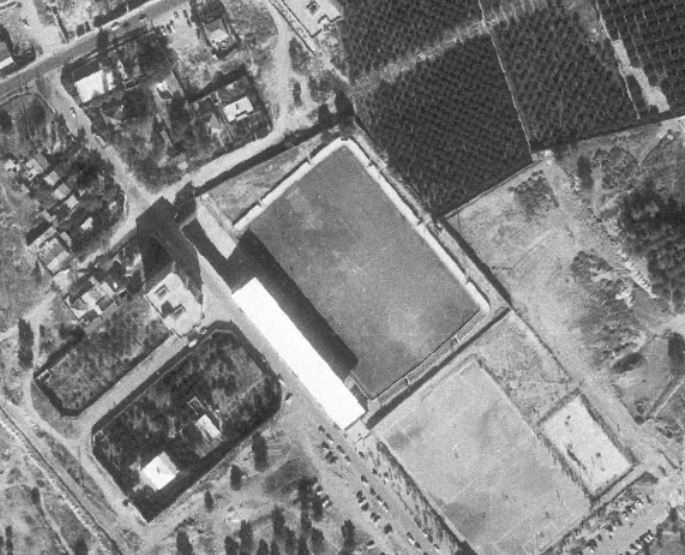
The 1980s proved to be a decade of constant change for Torrente CF. It started with two successive promotions that saw the club return to the Tercera, albeit it was now the fourth tier. Two mid-table finishes were earned before the club changed its name to Torrent Club de Fútbol in 1984. The club’s new title did not have the desired effect, as poor results brought about relegation to Regional Preferente. The 1985-86 campaign was tense, as they narrowly avoided further relegation by finishing sixteenth. With new management and a strong squad, Torrent CF achieved promotion back to the Tercera at the end of the 86/87, which was followed by an impressive campaign where they missed promotion to the third tier by one point. The following season saw a drop to seventh place, but with key signings in 1989-90, they won their first Tercera title and secured historic promotion to Segunda B. What proved to be the pinnacle of the club’s achievements to date, was all too brief. Torrent CF started brightly enough and was well-placed coming into the season’s final third. However, just one win in the final 14 matches saw the club finish 14th. With the budget and squad stripped, the following season saw just three wins as the club finished 19th and was relegated. A second successive relegation followed in 92-93 and with the club’s finances in tatters, the board decided to wind up the first team and continue with the youth team in the División de Honor.
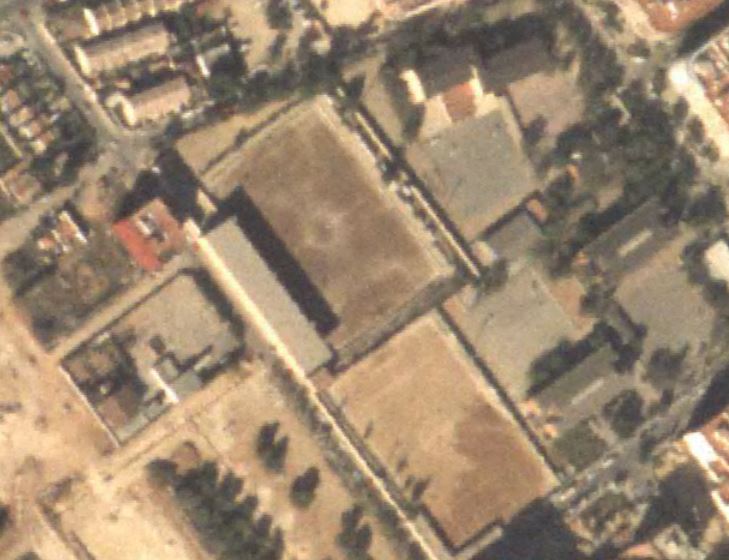
After starting in Group V of the División de Honor, Torrent CF made steady progress and reached the Primera Regional in 1999. Playing under the name of Torrent Escuela de Fútbol, the club racked up a series of top-ten finishes before ascending to the Regional Preferente in 2005. After seven seasons on mid to low-table finishes, the club which had now reverted to Torrent Club de Fútbol, dropped back to the Primera Regional. It was the briefest of stays, but when they returned to the Regional Preferente, it was soon joined at the Estadio San Gregorio by Huracán Valencia Club de Fútbol. Huracán Valencia CF was founded in the summer of 2011 and was funded by the family behind Stoke City. After buying a place in Segunda B, the club spent the next three seasons playing in Maises, near Valencia’s airport. The move to Torrent was ill-fated, and after failing to pay match fees, the club was expelled from the league in December 2015. Maybe buoyed by Huracán’s demise, Torrent CF won the Regional Preferente title but missed out on promotion in the playoffs. After a series of near misses, Torrent CF won promotion to the Tercera in the foreshortened 2019-20 season. Promotion to Segunda Federación was secured in June 2023 with a victory over CD Azuaga in the playoffs.

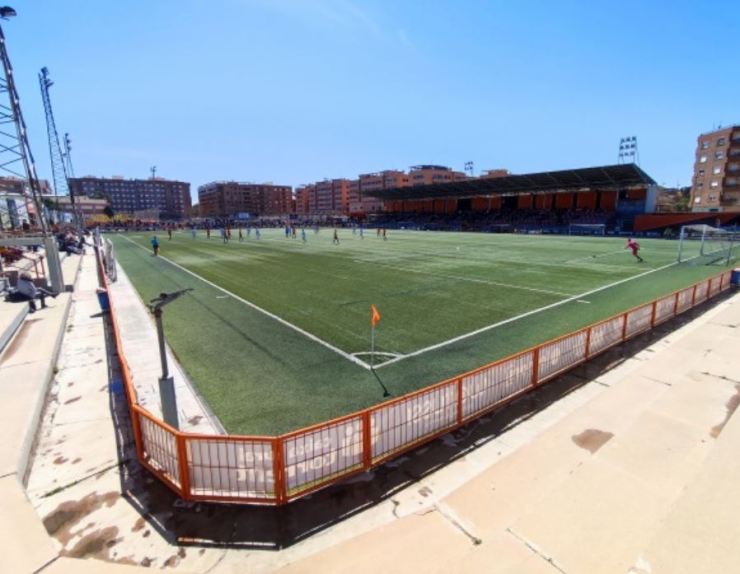
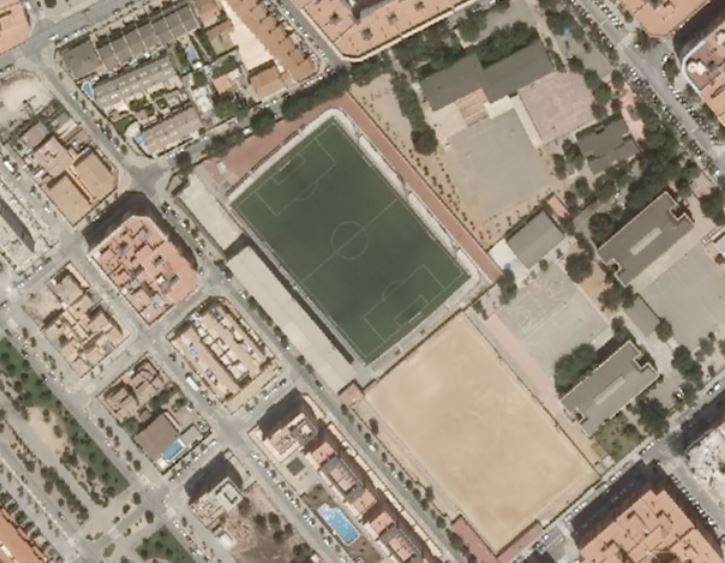
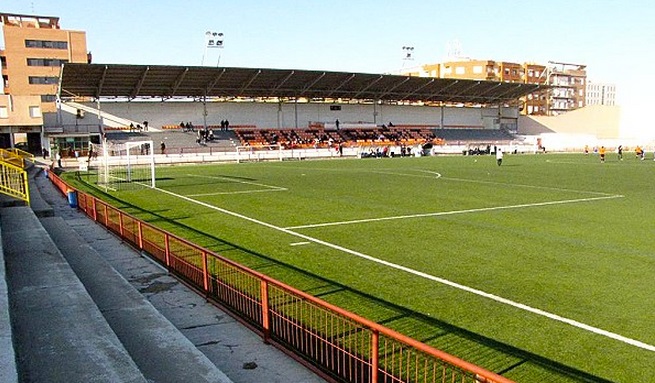
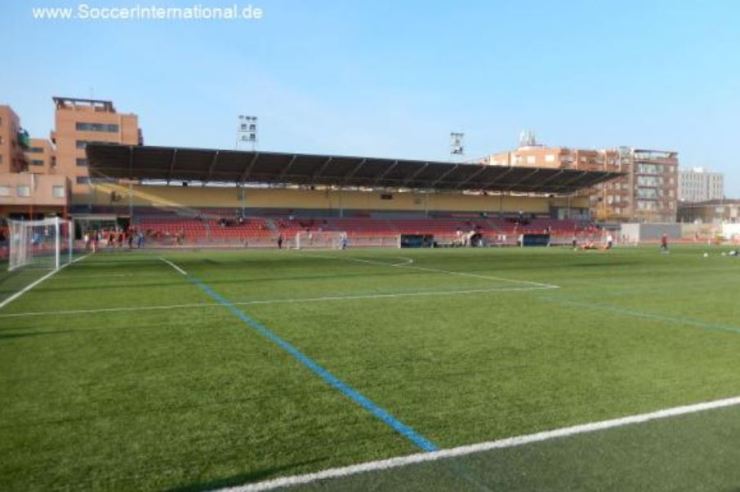
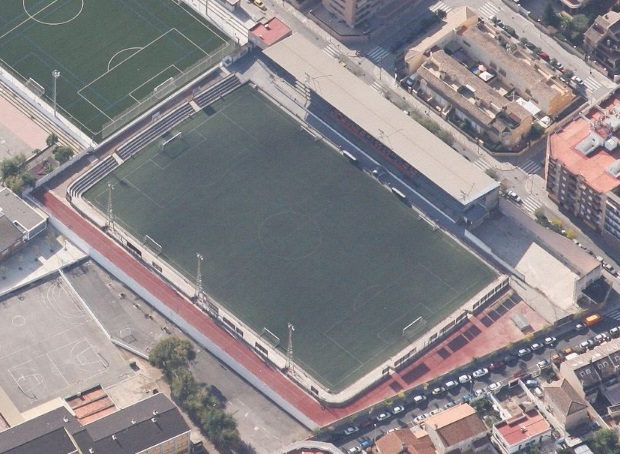
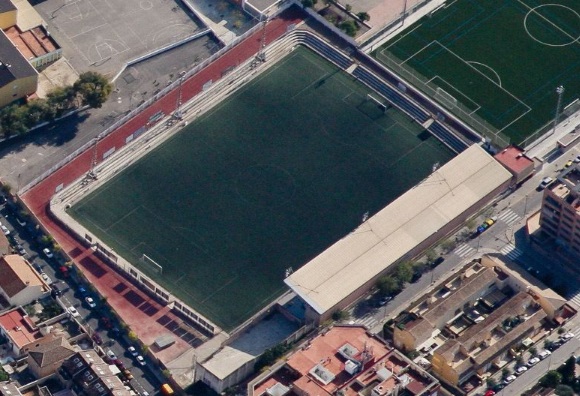
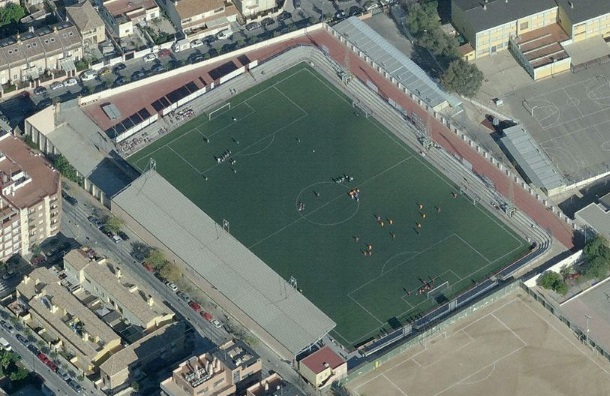
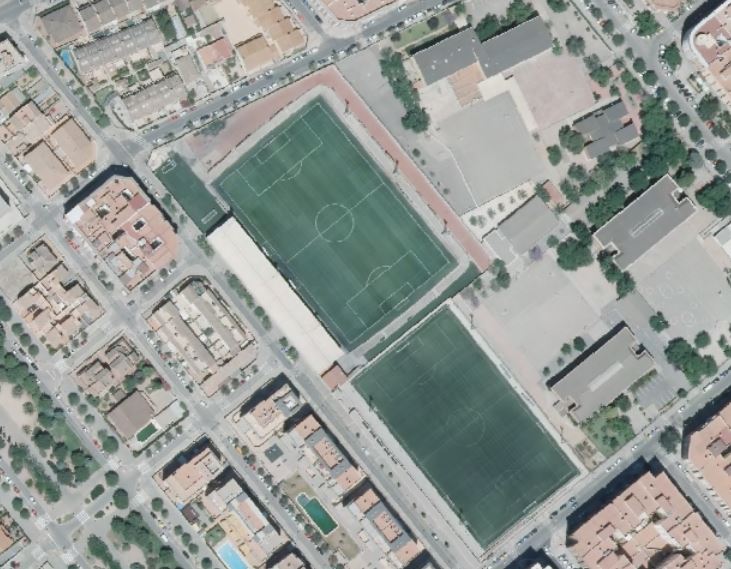
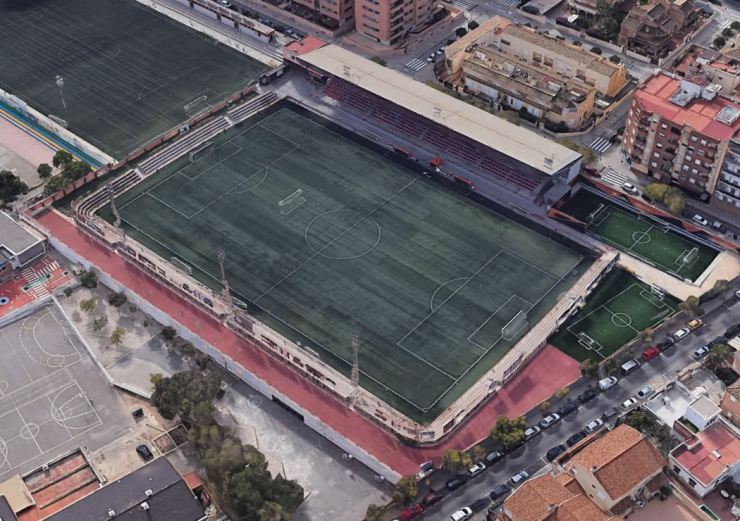
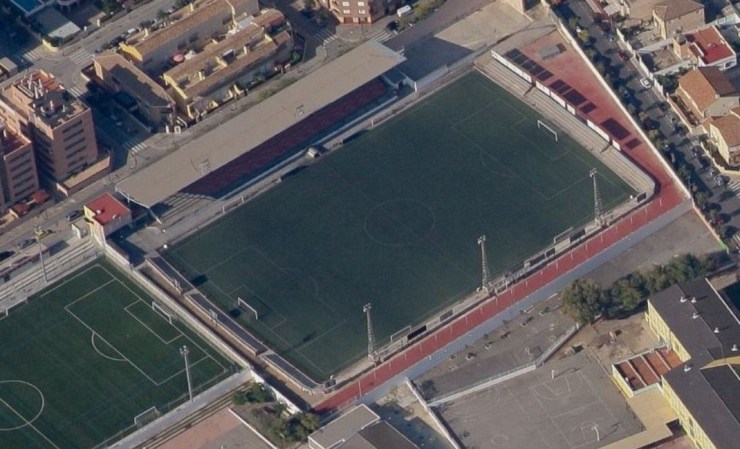
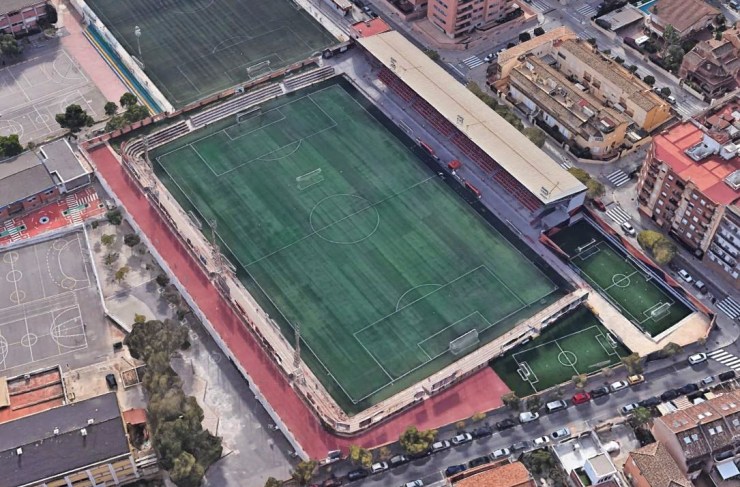
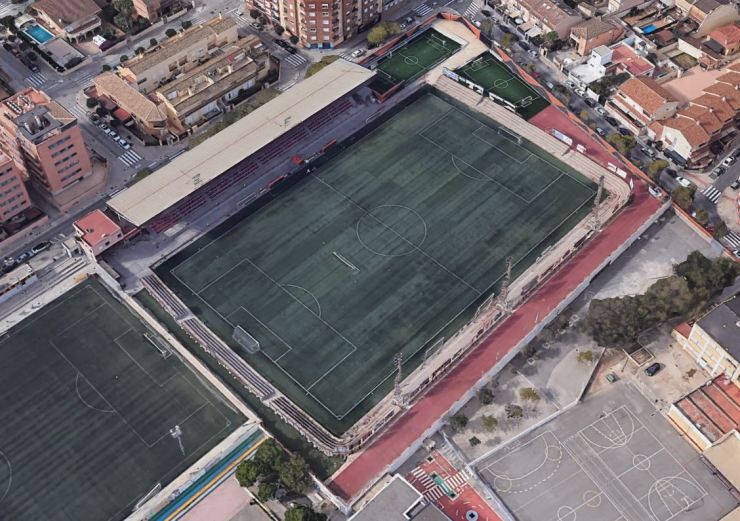
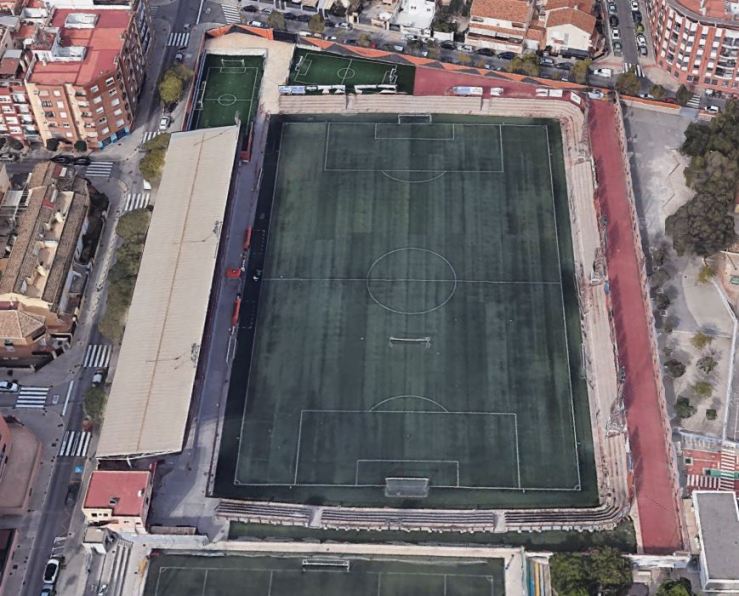
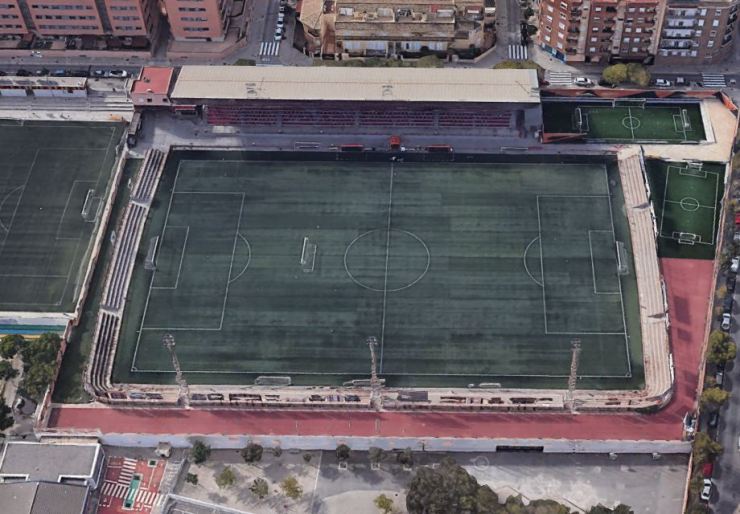
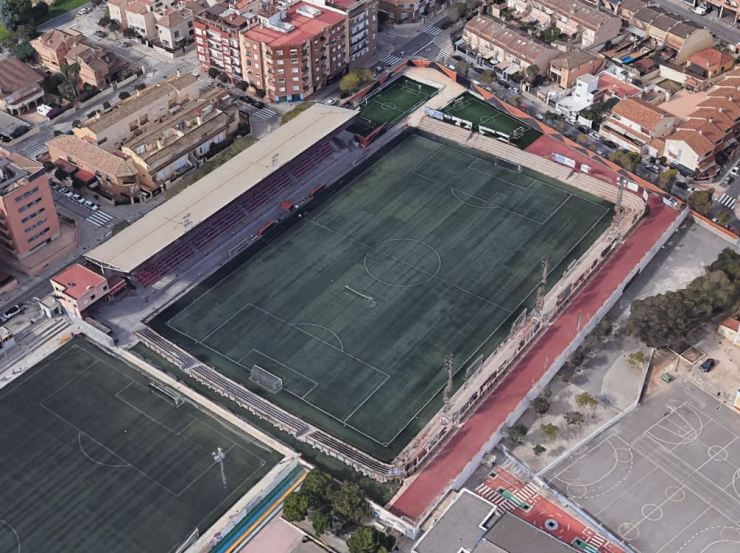
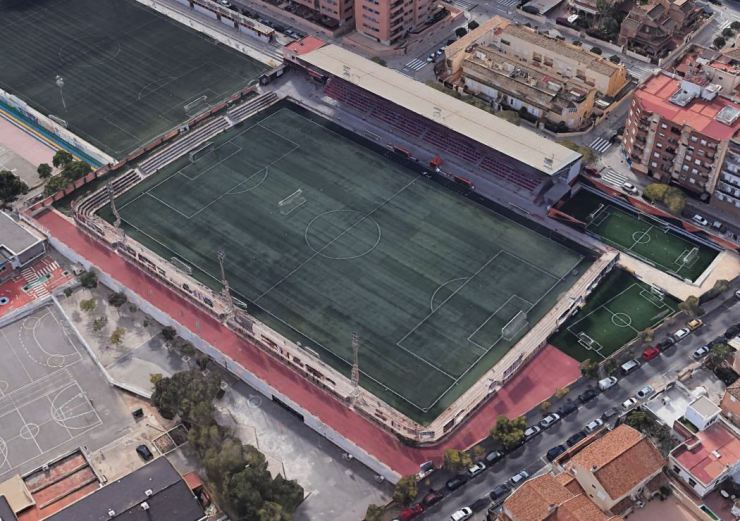
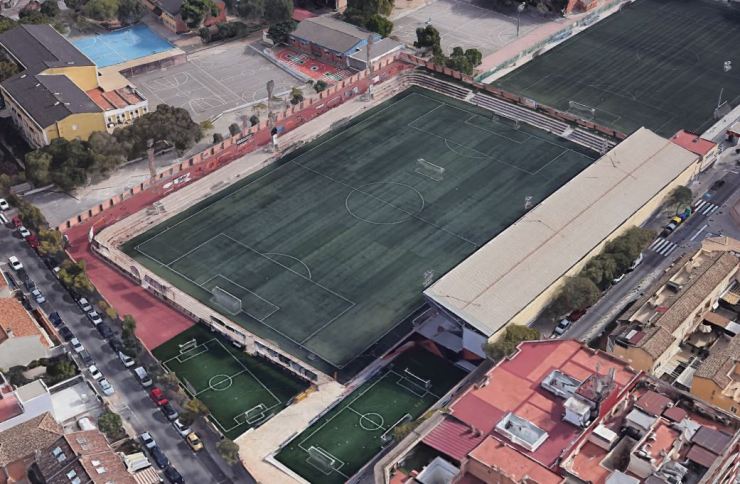
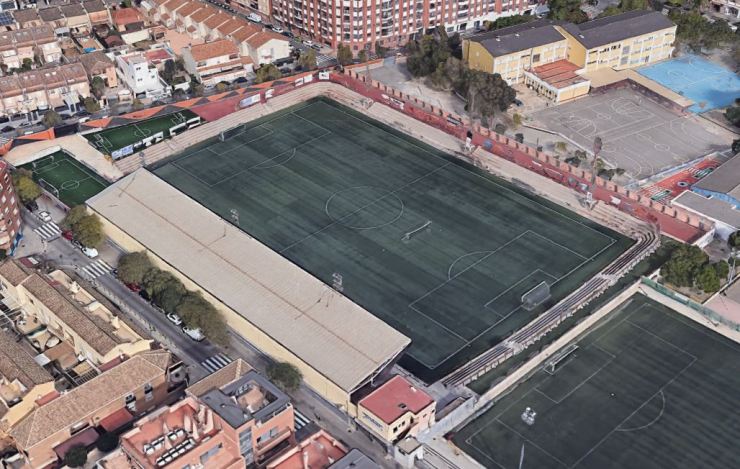
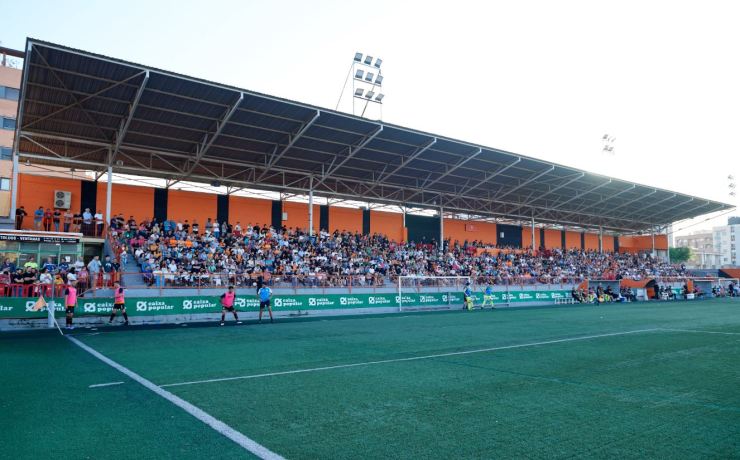
The Estadio San Gregorio has not changed a great deal since its opening in 1962. That’s not necessarily a bad thing. Its basic shape and structures remain in place, but they’ve been embellished with a splash of orange here or refaced with a new panel there. The pitch is surrounded on three sides by the four steps of terracing that were in place when the stadium opened in 1962. On the west side is the enclosure’s only stand. Off-centre, it runs 80m from the southern touchline, before ending abruptly just before the 18-yard box at the north of the ground. Upon opening, the stand did not have a cover, but this was added along with floodlight gantries in the 1970s. The seating deck is raised around 2m above pitch level and comprises six rows of orange bucket seats, behind which is a concourse and two further rows of seats. The central rear of the stand has a cordoned-off area for VIP seating and media. Changing facilities are beneath the seating deck, with pitch access on the halfway line. San Gregorio has had an artificial surface since the turn of the millennium, with the latest installed in 2022. With a capacity of 5,000, the Estadio San Gregorio is simple, welcoming and perfectly adequate should the current group of players emulate their predecessors from the early 1990s, and make the step up to the third tier of Spanish football.






 Estadios de España