
Now here is a great looking stadium that shows you that all 21st century builds don’t have to look like your local retail park. The Estadio Nueva Balastera has played host to a number of teams from the city of Palencia, but before we delve into its vital statistics, let’s have a look at the many senior clubs that have emerged from the city and their former homes.
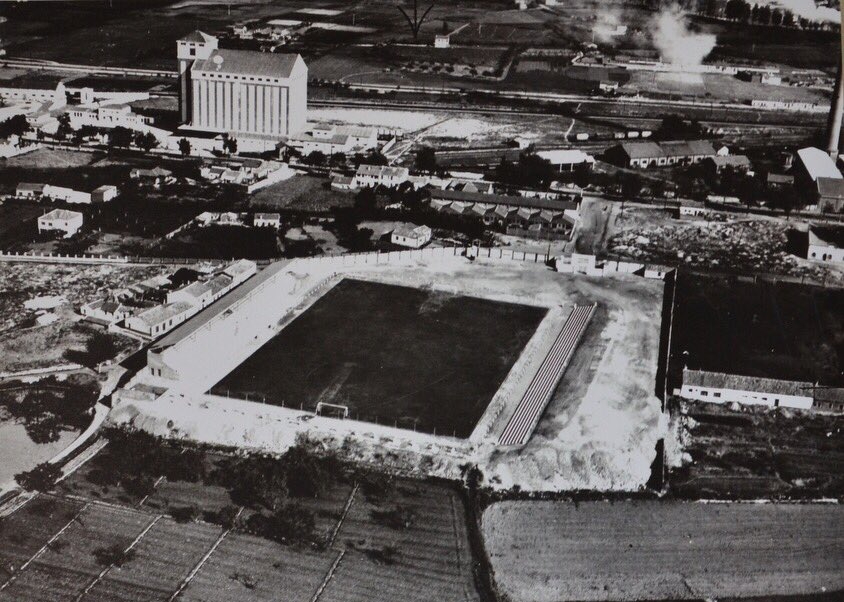
One of the first recorded senior teams in Palencia was Club Deportivo Palencia, who was founded in 1929. After playing its formative years in the Regional Castellana leagues, the club switched to the Real Federación de Asturias on the eve of the Civil War. They would not compete until the end of hostilities, and despite being severely weakened, CD Palencia topped the Primera Regional featuring Cultural Leonesa, SD Ponferradina & CF Zamora in 1939-40 & 40-41. In the summer of 1941, CD Palencia merged with CD Fábrica Nacional de Armas to form Club Deportivo Fábrica Nacional de Palencia. The new club finished second in the Federación Astur-Montañesa Primera Regional in 1941-42 & 42-43, earning promotion to the restructured Tercera at the end of the season. Up to this point, matches had been played at the Campo de las Eras del Monedero, but at the beginning of September 1943, the club opened a new ground to the north of the city, on the banks of the Rio Carrión. The new ground was called La Balastera, as the site had been previously used to extract ballast and stone for the construction of railways. To say the club milked the opening is a bit of an understatement. The first unofficial match was a friendly played on 1st September against Cultural Leonesa, which resulted in a 5-2 victory. Three days later and league & cup holders Athletic Club were visitors and then finally, on 12th September, the ground was officially inaugurated with a match against Atlético Aviación.
Club Deportivo Fábrica Nacional de Palencia spent a total of eight seasons in the Tercera, winning the title in 1945-46, only to lose out on promotion to Real Valladolid in the playoff group. The club folded at the end of a disappointing 1951-52 campaign that saw the club finish 15th and enter a relegation playoff group. They only played one match in the playoffs, away at Club Santiago, then were wound-up due to an unpaid tax bill. In its place rose Club Atlético Palentino, who won promotion to the Tercera in 1954 via a playoff win over CD Villanovense. The club changed its name in 1955 to Club Atlético de Palencia and in 1960, merged with SD Unión Castilla de Palencia to form Palencia Club de Fútbol. The union got off to a decent start and in 1962-63, the club finished second in the league and entered the playoffs. A 3-1 aggregate defeat to CF Badalona was marred by accusations of the club throwing the game. At the end of a disastrous 1963-64 campaign, the club failed to raise a team for the final fixture away at CD Peñaranda de Bracamonte and folded shortly afterwards. This paved the way for Otero Club de Fútbol, a club founded in 1963, to take on the mantle of the city’s senior team and become the most successful club to emerge from Palencia.

Under the presidency of Bonifacio Aguayo, Otero CF worked its way through the regional leagues and reached the Tercera in 1969. The club was then renamed Palencia Club de Fútbol and came close to promotion to La Segunda when losing out to Real Oviedo in a play-off at the end of the 70-71 season. Decent finishes in the Tercera throughout the 1970s, saw the club elevated to the newly formed Segunda B in 1977-78 and a year later, under the guidance of Real Madrid great Paco Gento, the club earned promotion to La Segunda for the first time. The club spent four of the next five seasons in the second division, finishing fifth in 1982-83. Relegation to Segunda B followed a year later and deeply in debt, the club folded in August 1986. From the ashes emerged CD Cristo Olímpico, an affiliated feeder club to Palencia CF, that was founded in 1975. It had already reached the Tercera by the time of the collapse of its parent club and took up the reins of the city’s leading team. Progress over the next twenty years was somewhat unspectacular, with the club eventually reaching Segunda B in the 1990-91 season, by which time, they had changed their name to Club de Fútbol Palencia. There followed six seasons in the third tier, with a best finish of fourth in 92-93. Seven seasons in the Tercera ended with promotion back to Segunda B in 2003.
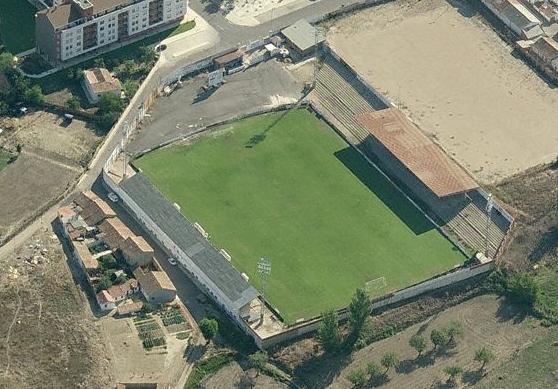
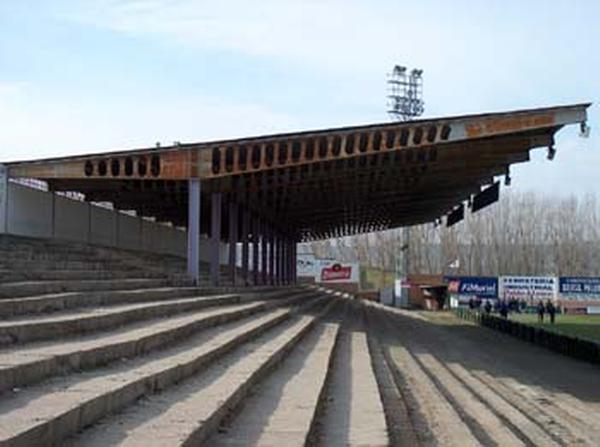
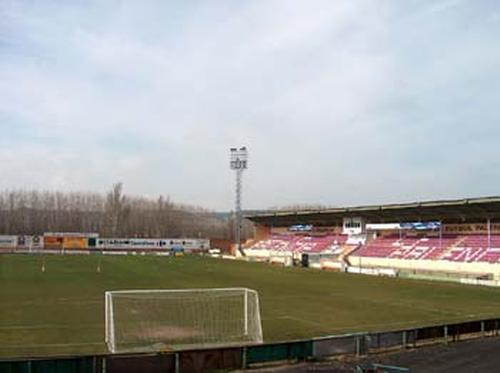
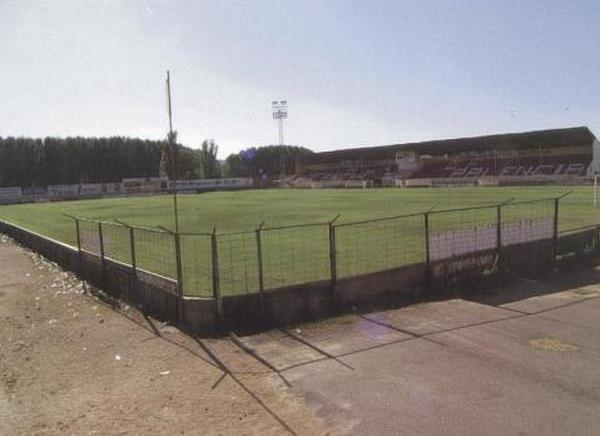
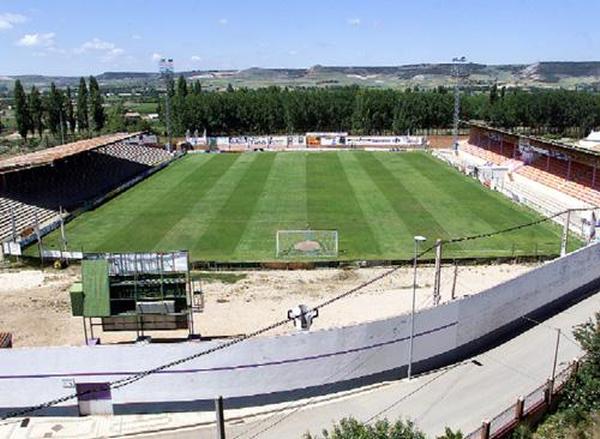
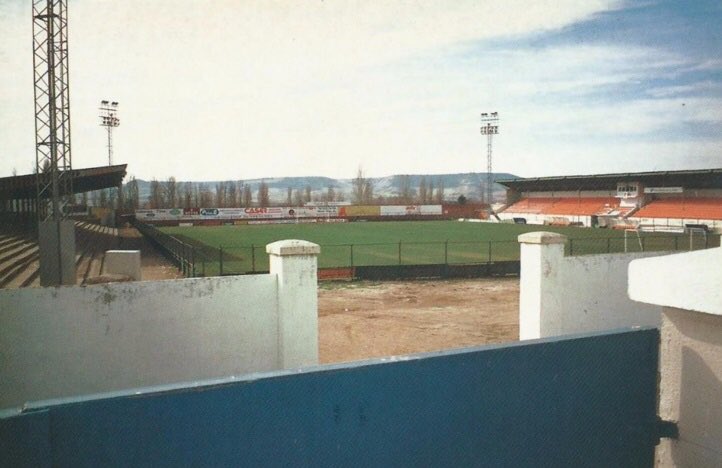
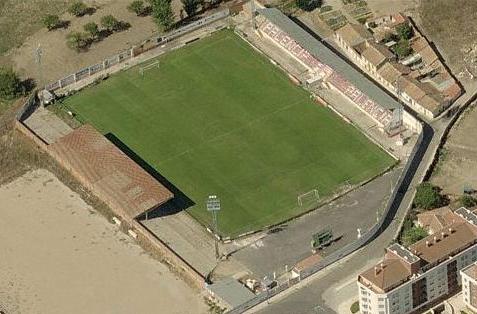

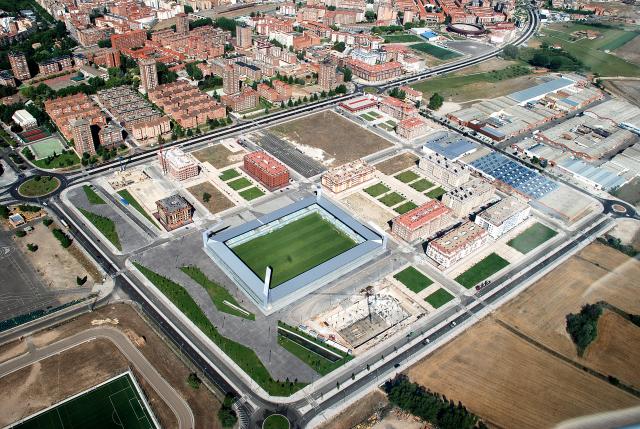
By now, La Balastera was beginning to look its age. The stadium had seen a couple of upgrades since opening, such as the addition of a cover to the southern terrace in the 1977 and the main stand gaining purple and white seats in 1995. It had an official capacity of 12,000, but only came close to filling it on a few occasions, including a visit from the Vuelta a España. The main stand was unusually on the northern side of the ground and was 80 metres in length and slightly off-centre. Around 1800 purple and white seats sat beneath a shallow propped roof, whilst a paddock area separated the stand from the pitch. Opposite stood a large terrace, at the centre of which was a large propped cover. This was 50 metres in length and was constructed using huge iron girders that could have supported something considerably heavier than the rusty corrugated sheeting that provided the cover. The final match at La Balastera took place on 1 October 2006, when CF Palencia beat CD Guijuelo 2-0. The ground was demolished in 2008 to make way for a housing development, but as of 2024, only the area behind the southern terrace has been developed.
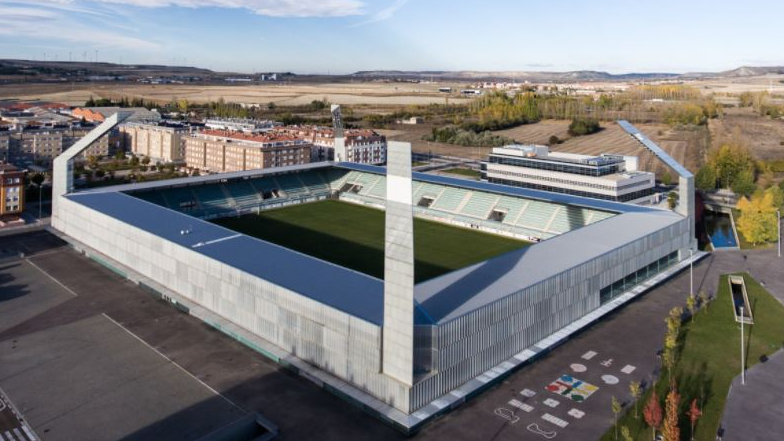
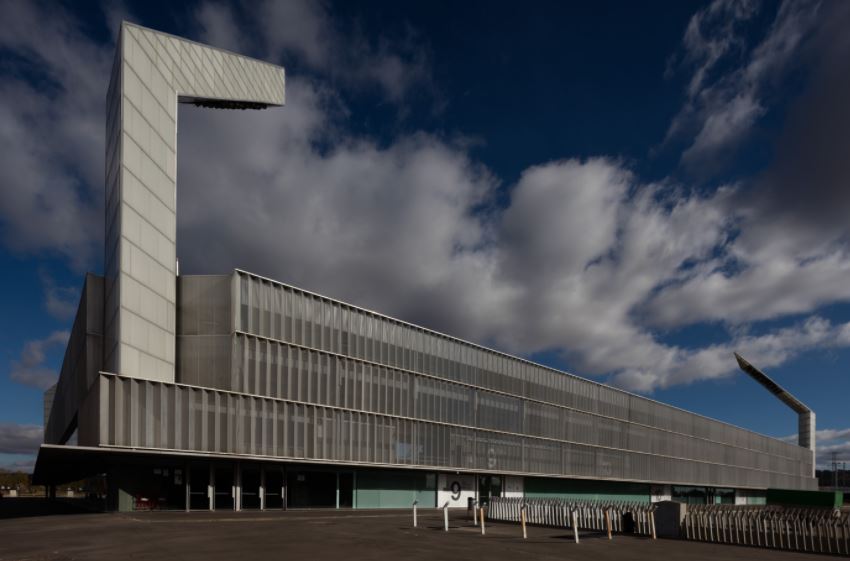
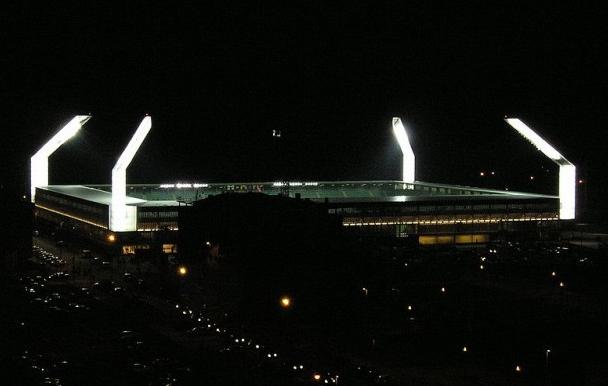
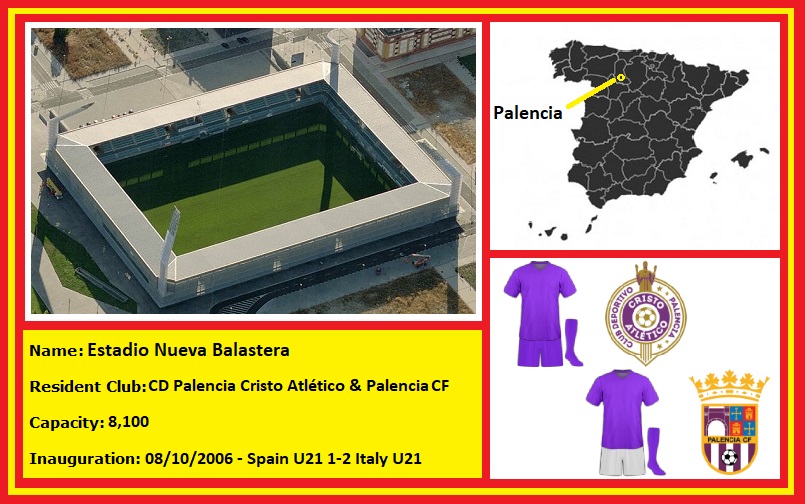
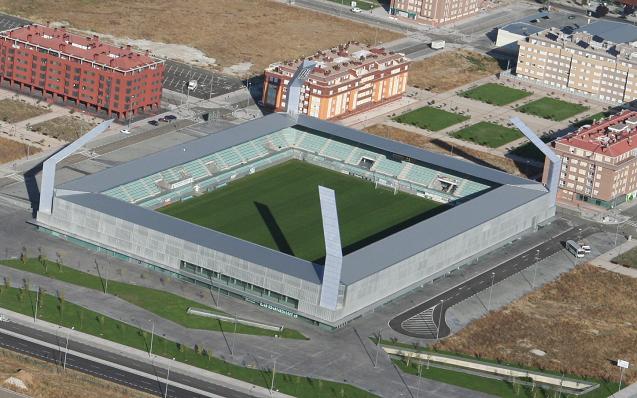
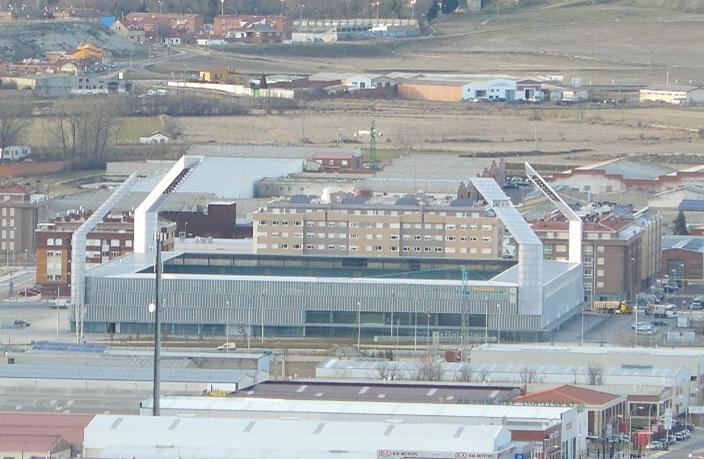
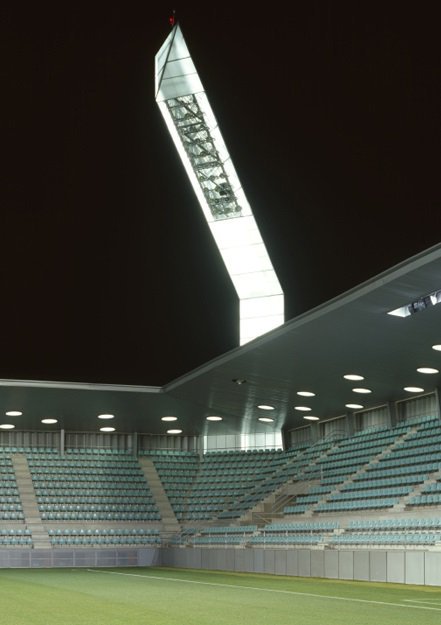
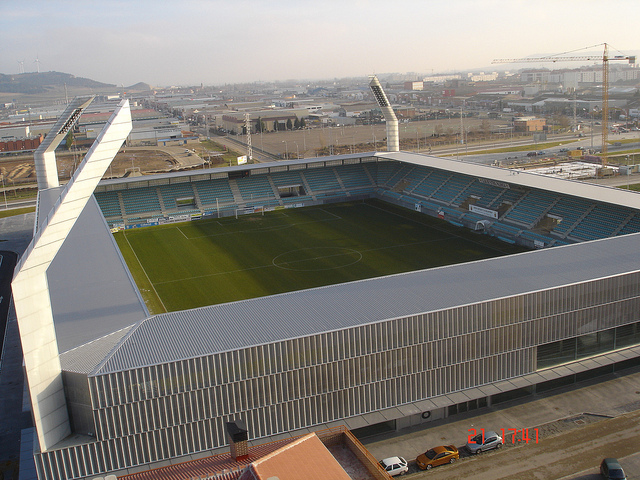
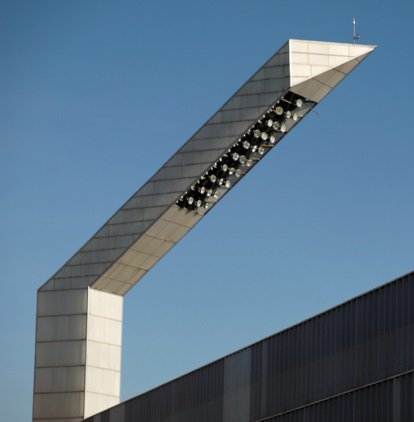
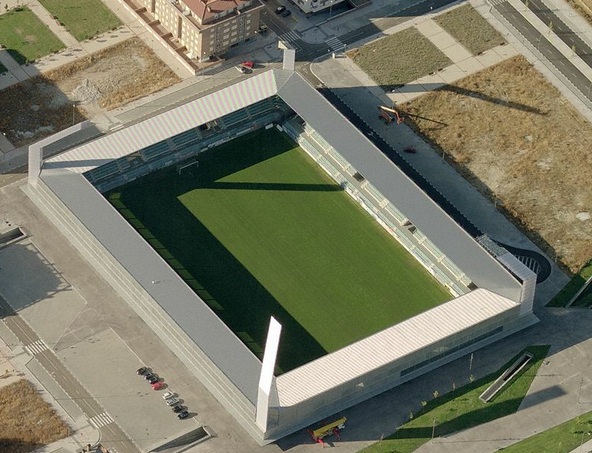
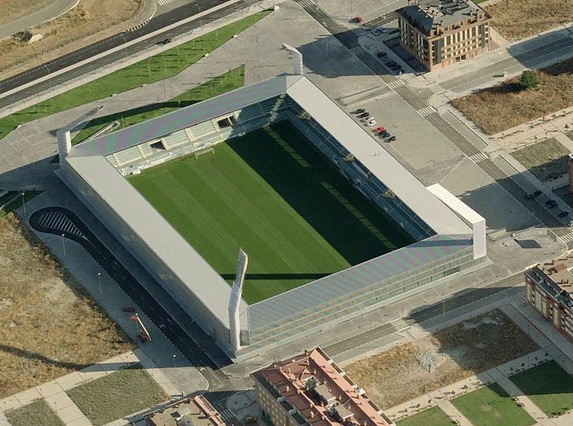
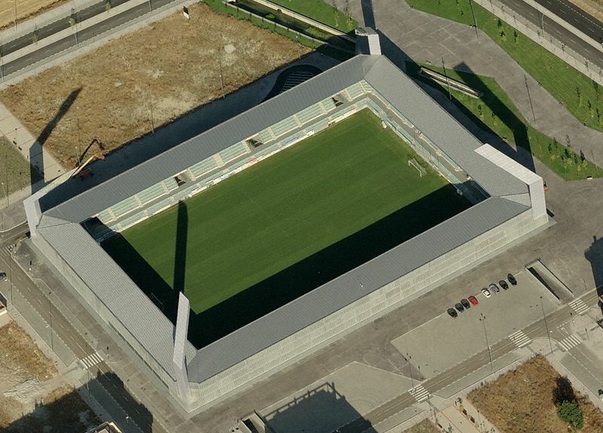
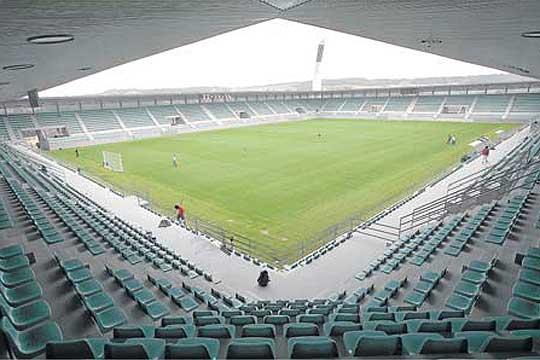
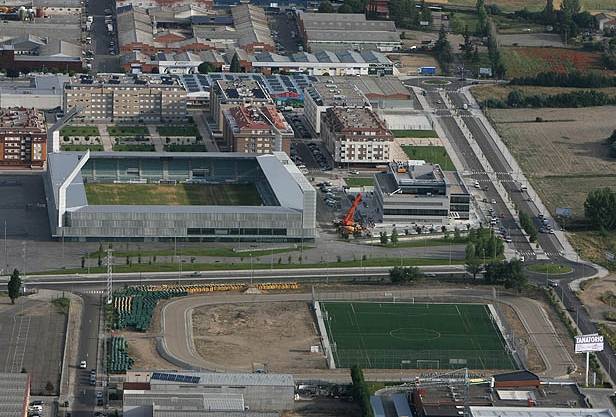
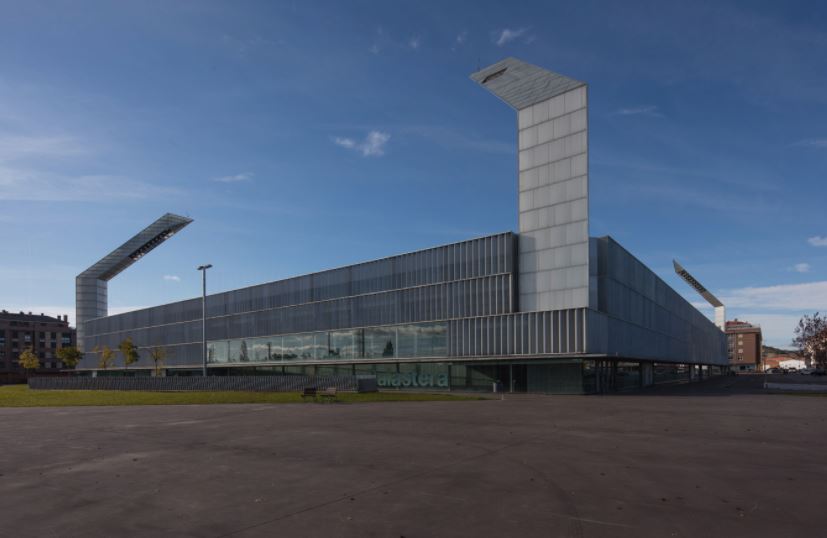
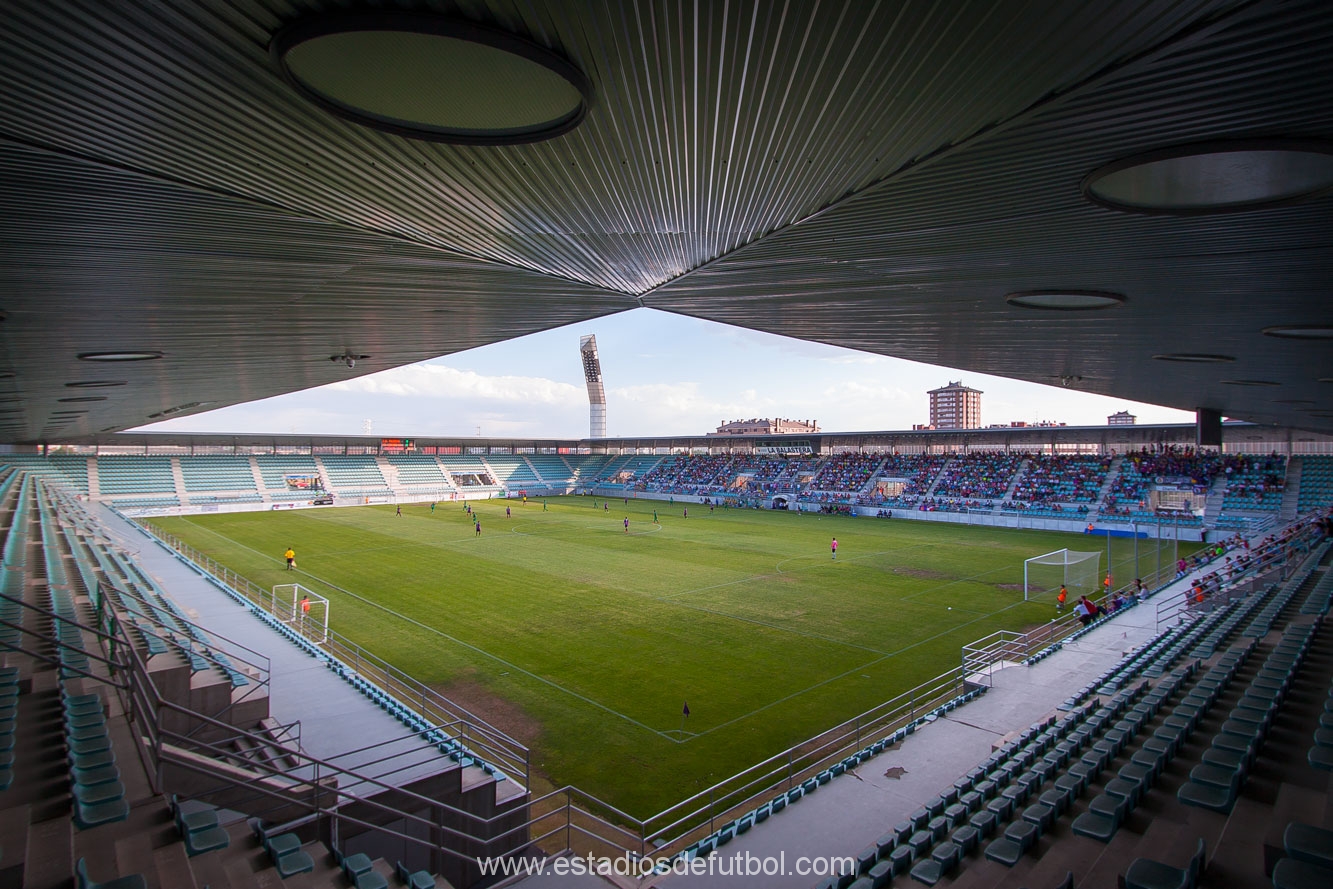
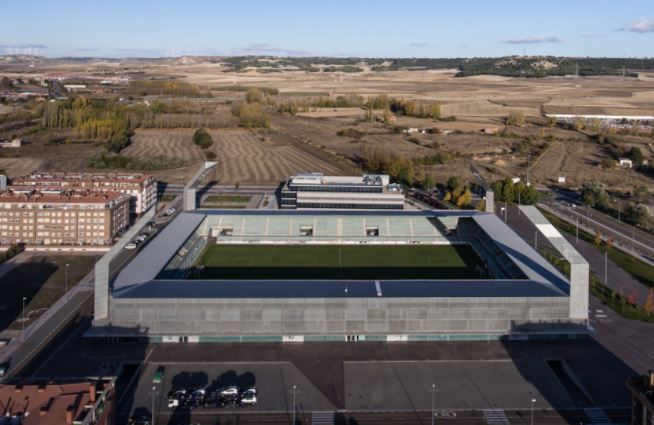
On 10th October 2006, the Spanish Under-21 side played Italy U-21’s in the first match at the Estadio Nueva Balastera. Regrettably, the chief driving force behind the new development, former director Alberto de la Corte López had died in 2002, but I am sure he would have been impressed with what was unveiled. Designed by Navarrese architect Patxi Mangado, the Nueva Balastera is minimalist in design, with the principle focus being one of light. From its use of translucent sheeting on the exterior, to the recessed lighting and brilliant white finish on the underside of the roof, the stadium positively radiates. However, the stand out feature is undoubtedly the floodlights. Clad in the same pale grey translucent material as the body of the stadium, these four towers lean towards the pitch at an alarming angle. However, it is at night that the stadium comes into its own. Within the body of the floodlights translucent exterior are rows of bulbs that illuminate the entire pylon with a bright white light. Resembling four cranked lightsabers, this lifts the stadium above the ordinary and into the realms of functional art.
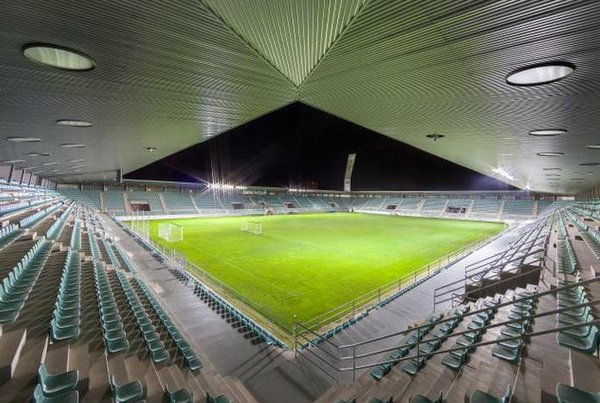
Let’s bring some balance to the argument, as the stadium does have its detractors. One architect’s minimalist design can be another person’s bland & anodyne. You will struggle to find much reference to a football club on the exterior of the stadium, even though it has housed club offices. In addition, the interior, in keeping with the grey-green theme, is bedecked in pale green seats. Add a liberal amount of concrete and you have about as neutral a colour scheme as one can possibly conceive. There is not one club crest or splash of Palencia-purple in sight. It should be added that high end design does not come cheap. The total build came in at 18 million euros or 2,250 euros for each of its 8,100 seats. Whilst the majority of the cost was privately funded on land donated by the municipality, it is half the size of Estadio Nuevo Las Gaunas in Logroño, a comparable stadium built for the same amount of money as the Nueva Balastera. It is also five times the cost of Lorca’s Estadio Francisco Artés Carrasco, a stadium with the same capacity built two years earlier. Nearly two decades on from the inauguration, and Mangado’s design still looks impressive. There are 12 rows of seats spread over a single tier, behind the front two of which is wide concourse which has 12 access wide vomitories. On the inside, everything is symmetrical and to be honest, a little repetitive. Yes, Palencia has a stadium that is aesthetically very pleasing, but whilst it has won many plaudits, it hasn’t helped its resident clubs win too many games.
It is a pity that CF Palencia’s form did not match its impressive surroundings. Initial signs were promising as a third place finish in 2006-07 saw the club enter the play-offs, but a defeat to unfavoured SD Huesca put an end to hopes of promotion. Relegation to the Tercera and financial woes followed, ultimately leading to the club’s bankruptcy in 2012. A year before this, disenfranchised fans formed a breakaway club, Club Deportivo Palencia Balompié. However, despite progressing to Segunda B in 2016, it all ended acrimoniously when the directors tried to convert the club to a Sociedad Anónima Deportiva. The fans rebelled, and the club was relegated and folded in 2018. It leaves Club Deportivo Palencia Cristo Atlético, a club formed in 1985 and the latest iteration of Palencia Club de Fútbol (founded in 2013), to share the Estadio Nueva Balestera. Whether a city with a population of 77,000 can support two football clubs remains to be seen.




 Estadios de España