Article updated: 13/04/2026
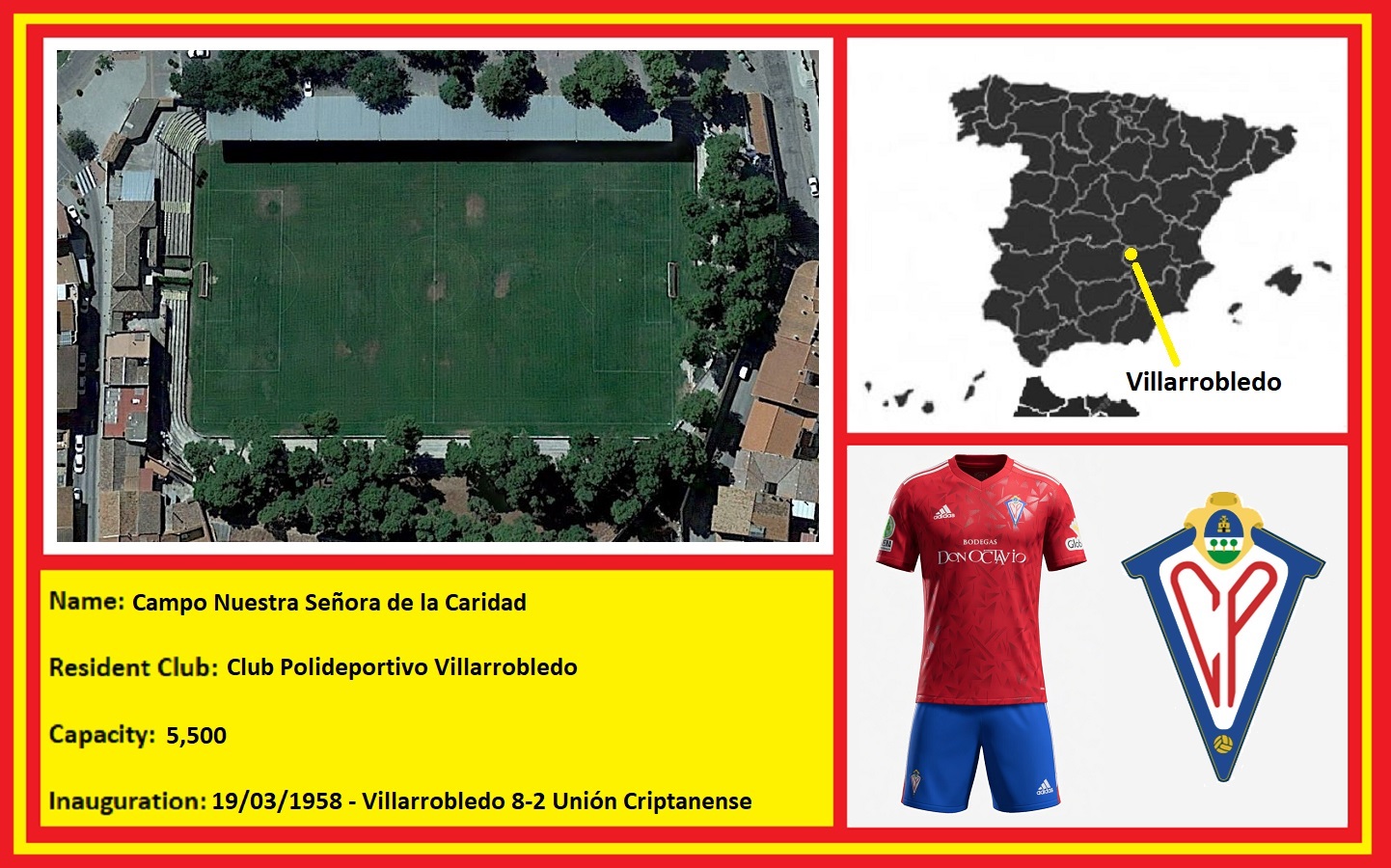
Any stadium that has the unofficial title of Wolf Ravine (Barranco del Lobo) has immediately won me over. When you learn that the official name is magnificently grandiose (Campo Nuestra Señora de la Caridad or Virgin of the Charity) and that the enclosure is easily as quirky as either of its names, then I’m like a randy tom that’s fallen into a barrel of catnip. However, before I prematurely articulate about this fantastic little stadium, let’s have a look at its occupants, Club Polideportivo Villarrobledo.
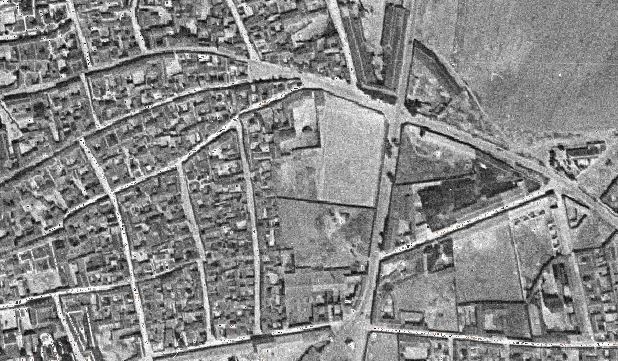
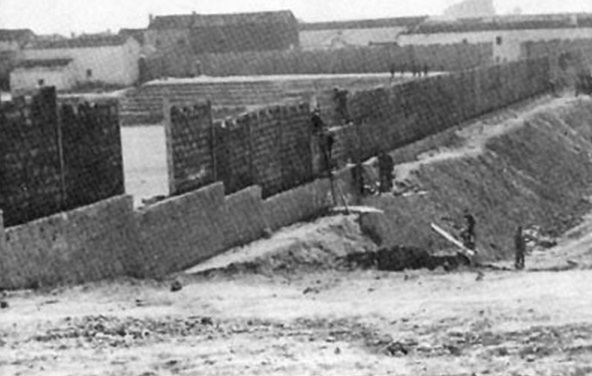
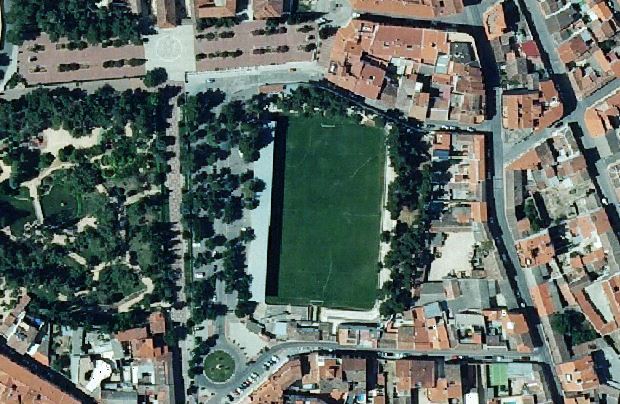
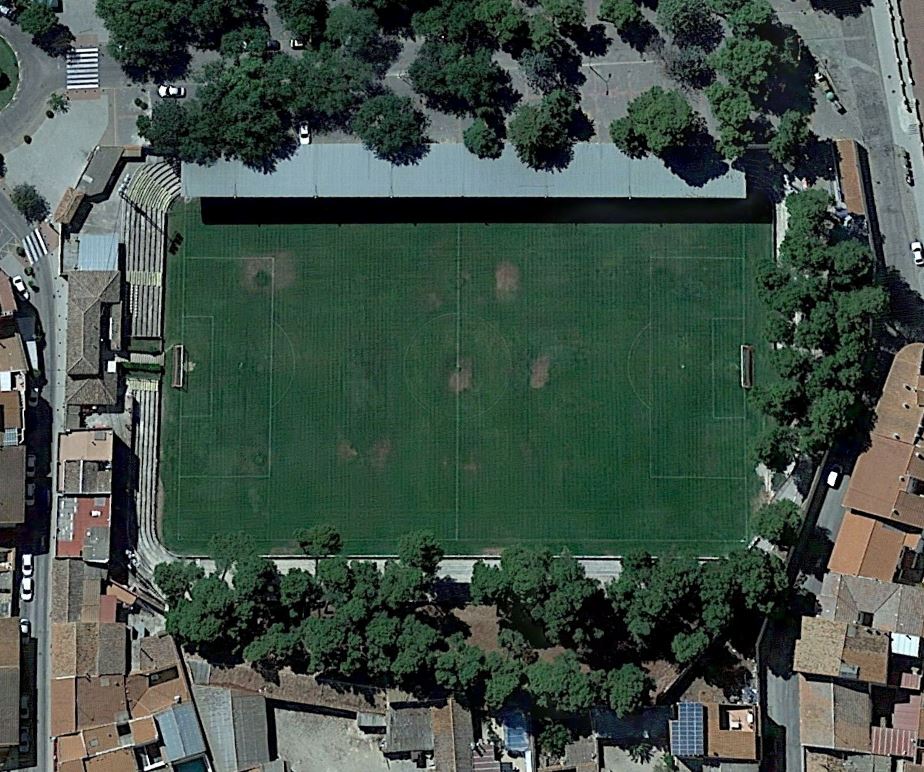
Football had been played in this town on the La Mancha plain since the 1920s, with the focal points being the Campo de Sedano and the Campo de San Antón. By the mid-1950s, the town’s main club, Villarobledo Fútbol Jugadores, had established itself in the Primera Regional Castellana. San Antón was extremely basic, and so the town council agreed to fund the building of a new stadium. They chose the site of the aforementioned Barranco del Lobo, a makeshift quarry just to the north of the town centre, and work commenced in the spring of 1957.
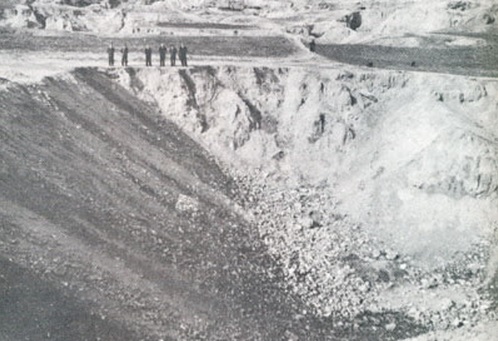
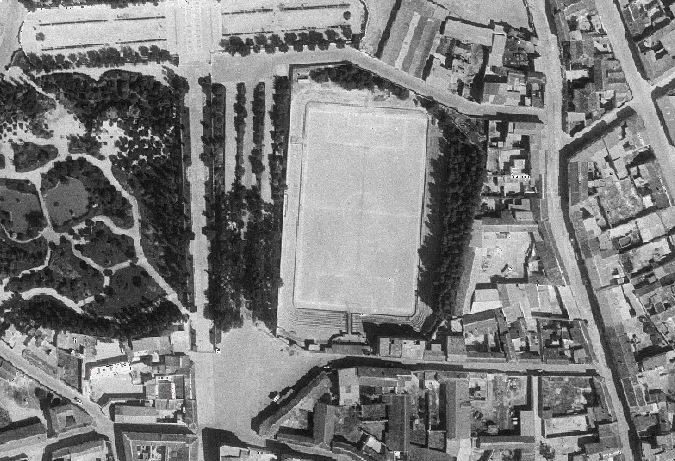
The driving force behind the new build was Emiliano Rubio Sevilla, a building contractor and councillor for public works. Over the course of the next year, work continued to fill in the quarry, construct a level field, and build terraces up to the level of the surrounding streets. The stadium officially opened on 19 March 1958 and cost the local municipality 375,000 pesetas. The first match saw Villarrobledo Fútbol Jugadores beat Unión Criptanense 8-2. On 15 June 1958, Villarrobledo Fútbol Jugadores was promoted to the national Tercera. It would be their last act, as in the summer the club was wound up, and a new team and constitution were drawn up in the name of Club Deportivo Villarrobledo. The new club took the place in the Tercera that its predecessor had earned and continued its good work.
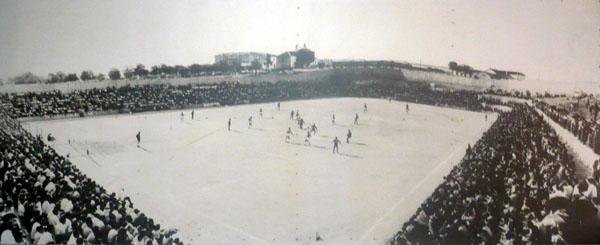
CD Villarrobledo’s first-ever season saw them finish runners-up to Calvo Sotelo in the Tercera, and enter the playoffs for a place in La Segunda. Linares CF was disposed of 3-2 on aggregate, and hopes were high when Jerez CD was beaten 2-0 at the Nuestra Señora de la Caridad. Unfortunately, an 8-1 reverse in the second leg temporarily halted their Segunda ambitions. Villarrobledo finished third the following season, but returned to the playoffs a year later, after finishing runners-up to Calvo Sotelo once again. Real Avilés was disposed of and, in an act of revenge, so were Jerez CD, before CD Castellón were beaten 3-1 on Aggregate. Just three years after formation, Villarrobledo had reached La Segunda
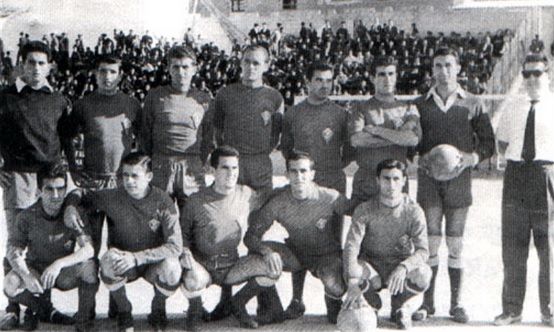
The 1961-62 season saw the second division split into North & South divisions, with Villarobledo joining 15 other clubs in the southern section. There is little point in dressing-up their debut and to date, only season in the second tier. Villarrobledo endured a torrid time, winning just four matches and gaining a paltry 12 points. Every away fixture was lost, and the club was relegated with three games to play. With their spirit well and truly broken, Villarrobledo lost those final three fixtures, conceding 20 goals in the process. Six seasons in the Tercera followed before the club was relegated to the Regional Preferente in 1968. The club lay dormant for a couple of seasons before reforming as Club Polideportivo Villarrobledo in 1971. Starting from scratch, CP Villarrobledo joined the Murcian Federation and made steady progress through the regional leagues before earning promotion to the Tercera in 1980. And there they have remained for the better part of 4 decades. Never troubled by relegation, often pushing for promotion, and occasionally reaching the playoffs for Segunda B.
Villarrobledo won its first Tercera title in 2012 but fell in the playoffs to a 95th-minute goal away to CE Constancia. In total, the club had clocked up 39 consecutive seasons in the Tercera before finally breaking their play-off hoodoo in 2019 at the thirteenth attempt. The season did not look particularly promising at one point, with the club overcoming the threat of closure over debts approaching €300,000. A third-placed finish saw the club enter the playoffs and beat Olímpic de Xàtiva (4-1), Gimnástica Segoviana (3-1) and finally CD Lealtad (2-2 on away goals). The COVID-19 shortened season of 2019-20 saw Villarrobledo firmly anchored to the foot of the table, when the RFEF called an end to proceedings in March 2020. Given a further chance in the third tier when football resumed in October 2020, things did not get any better, with Villarrobledo finishing bottom of the pile once again. The restructuring of the Spanish leagues saw the club drop to the fifth tier, the Tercera Federación, where they have remained.
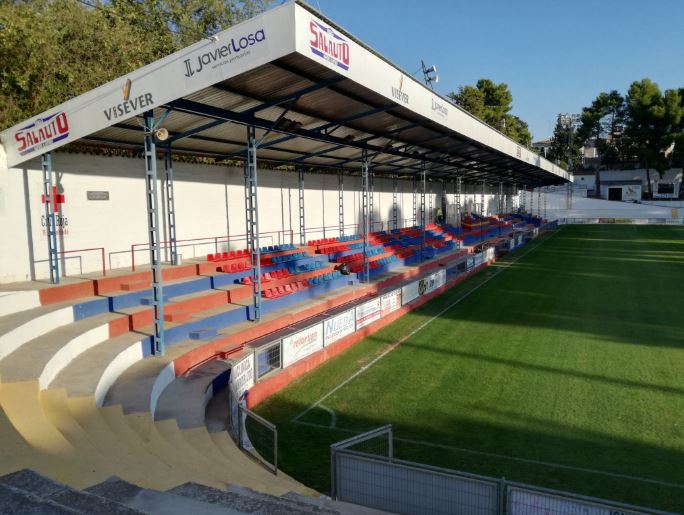
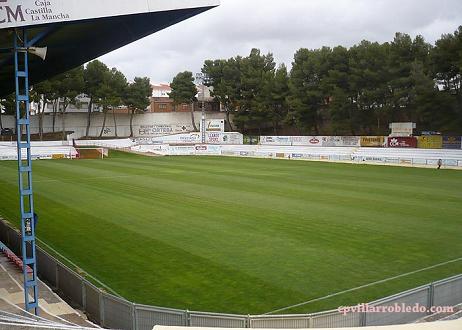
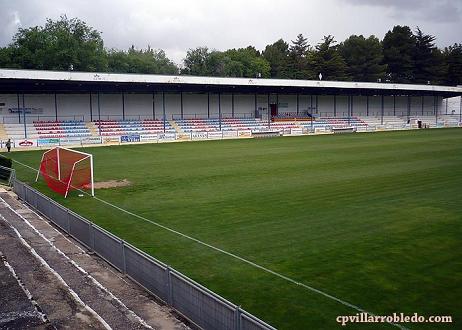
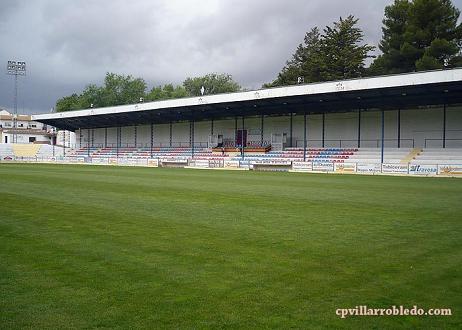
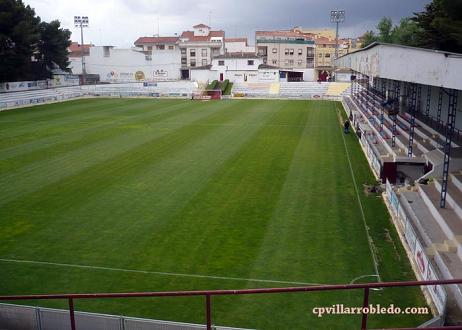
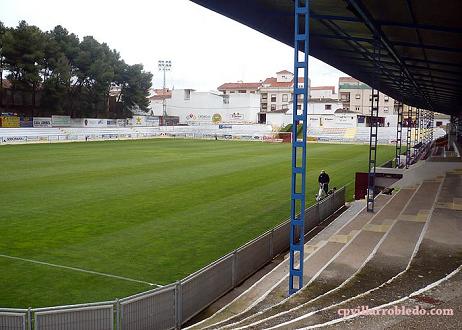
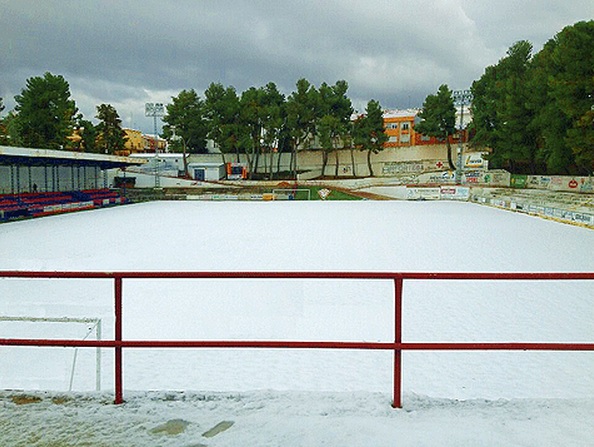
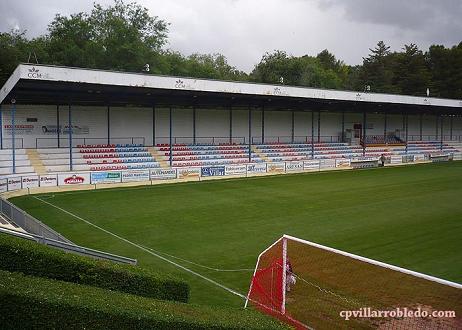
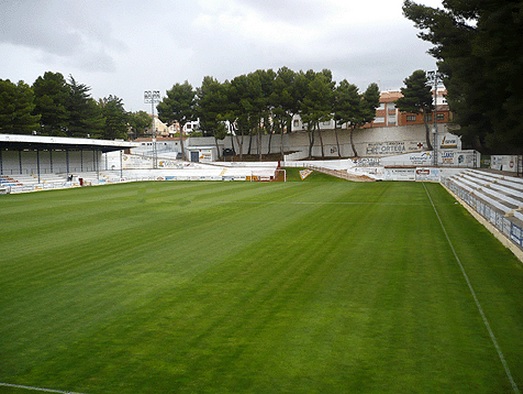
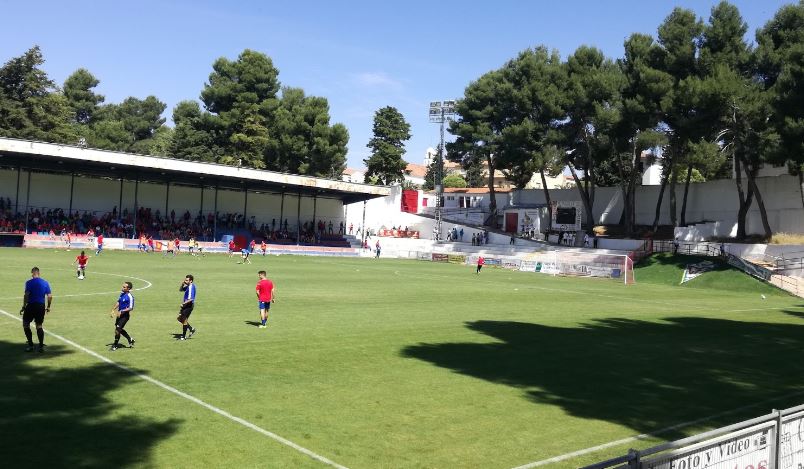
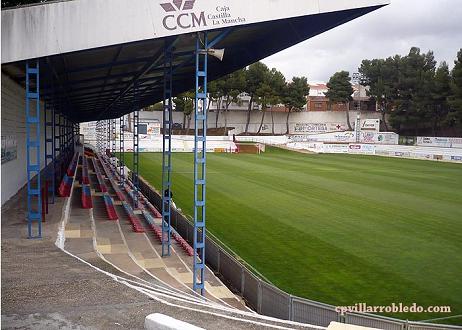
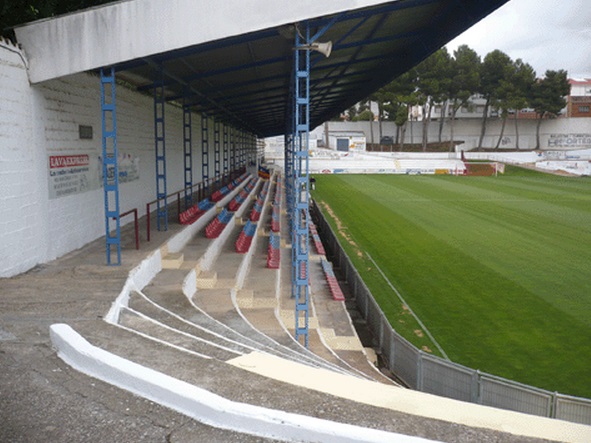
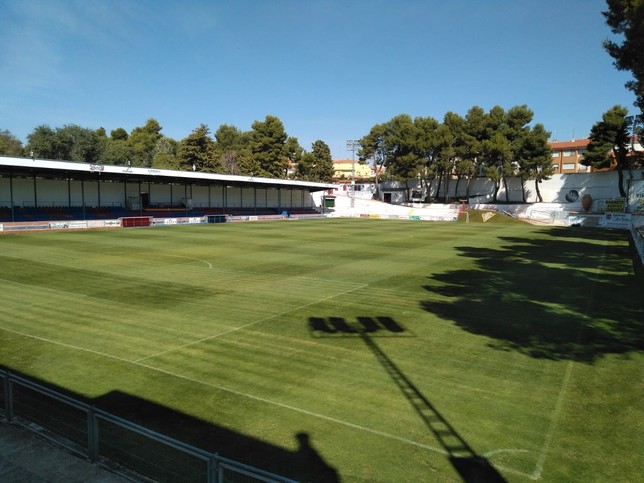
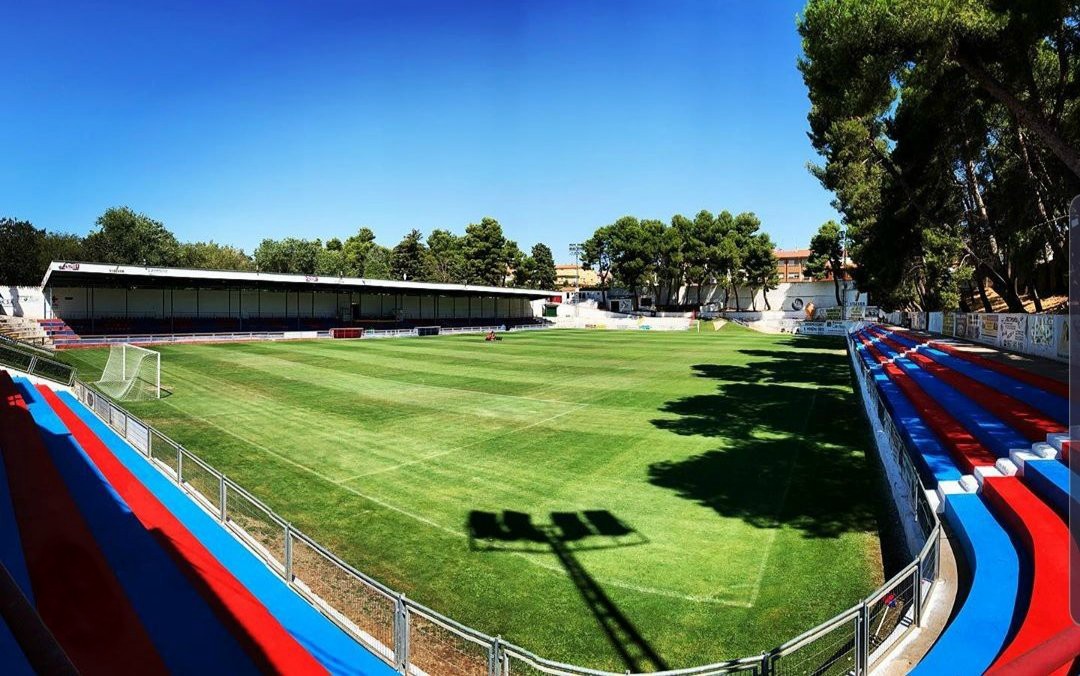
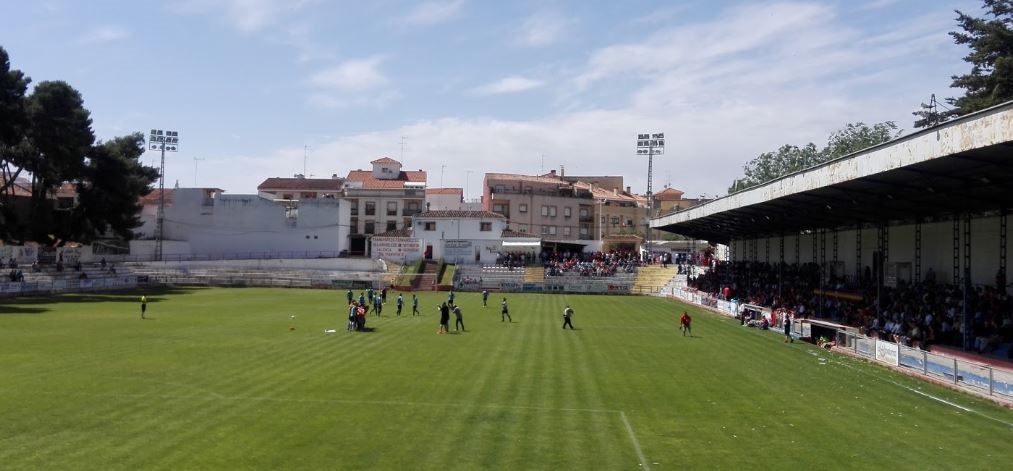
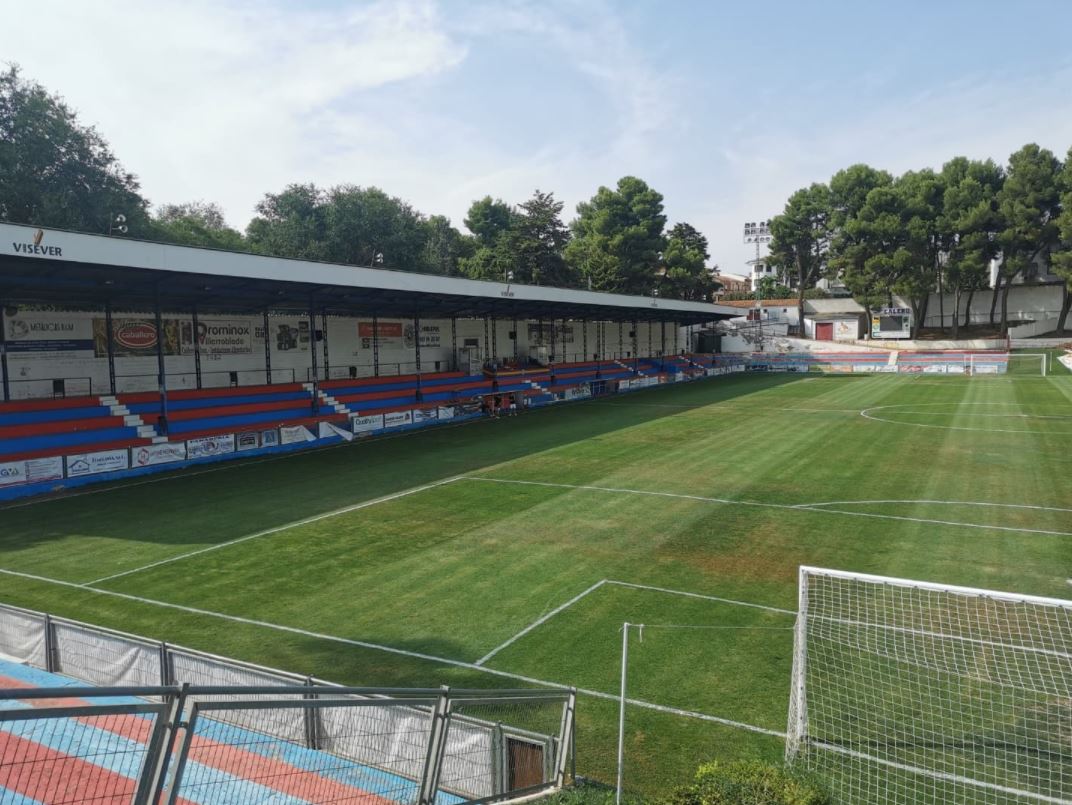
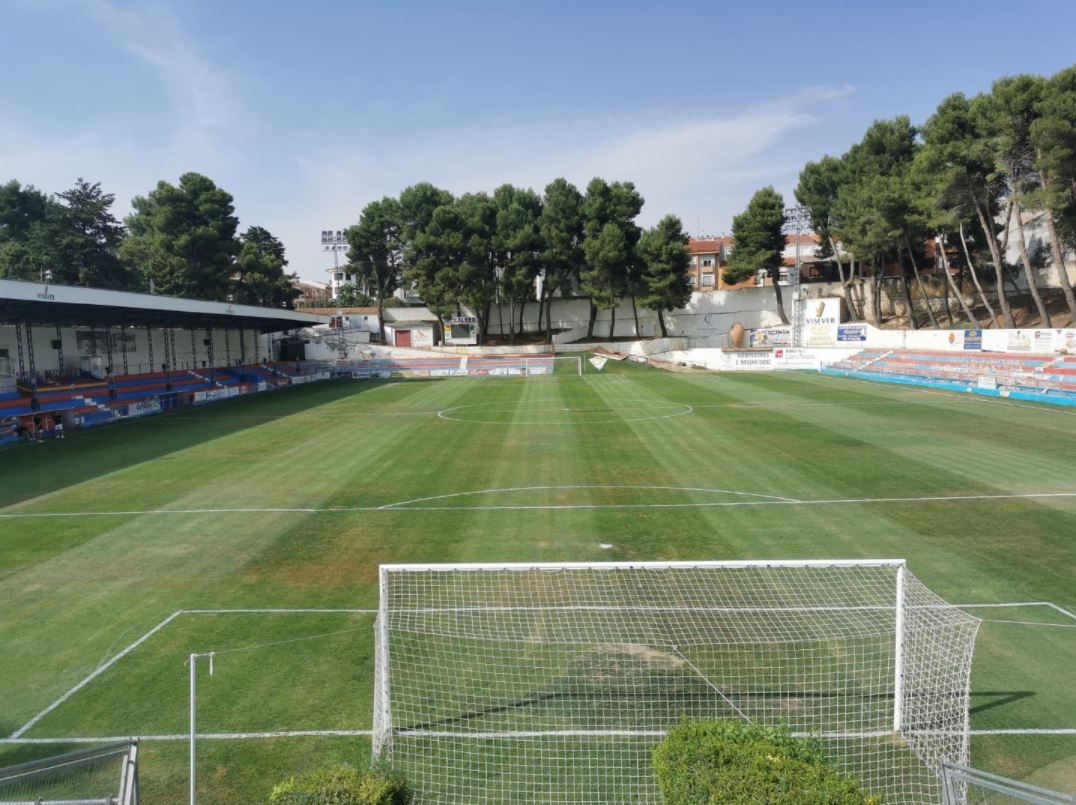
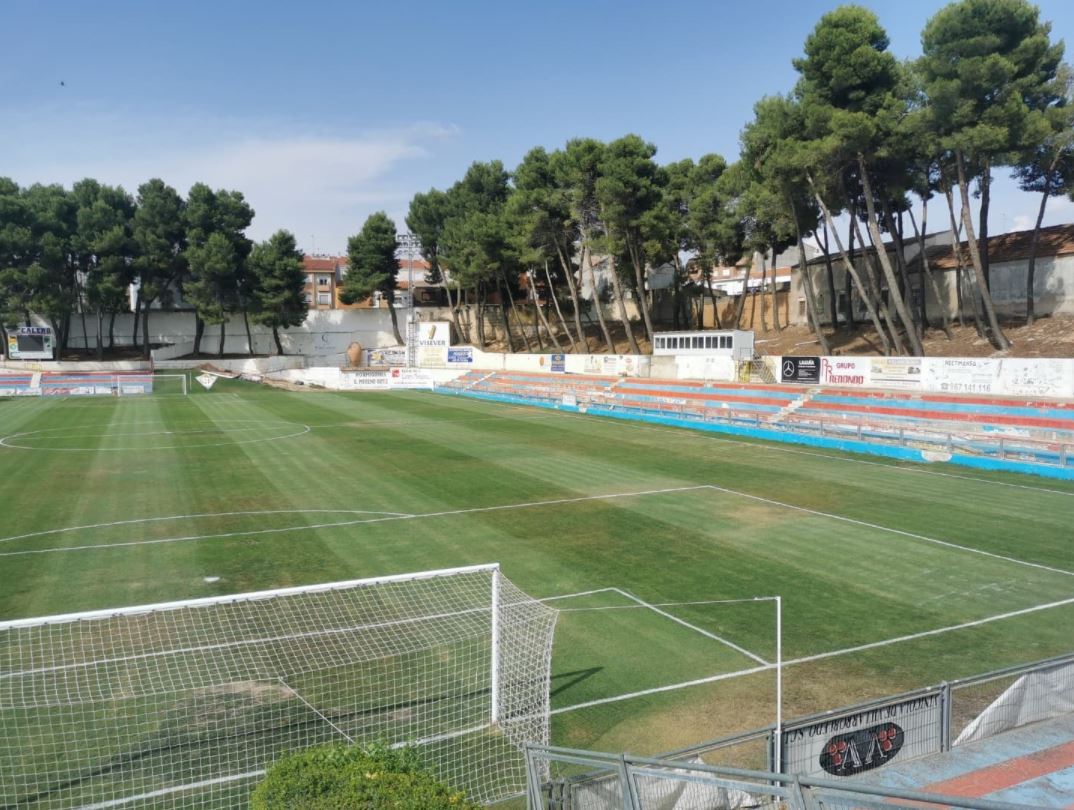
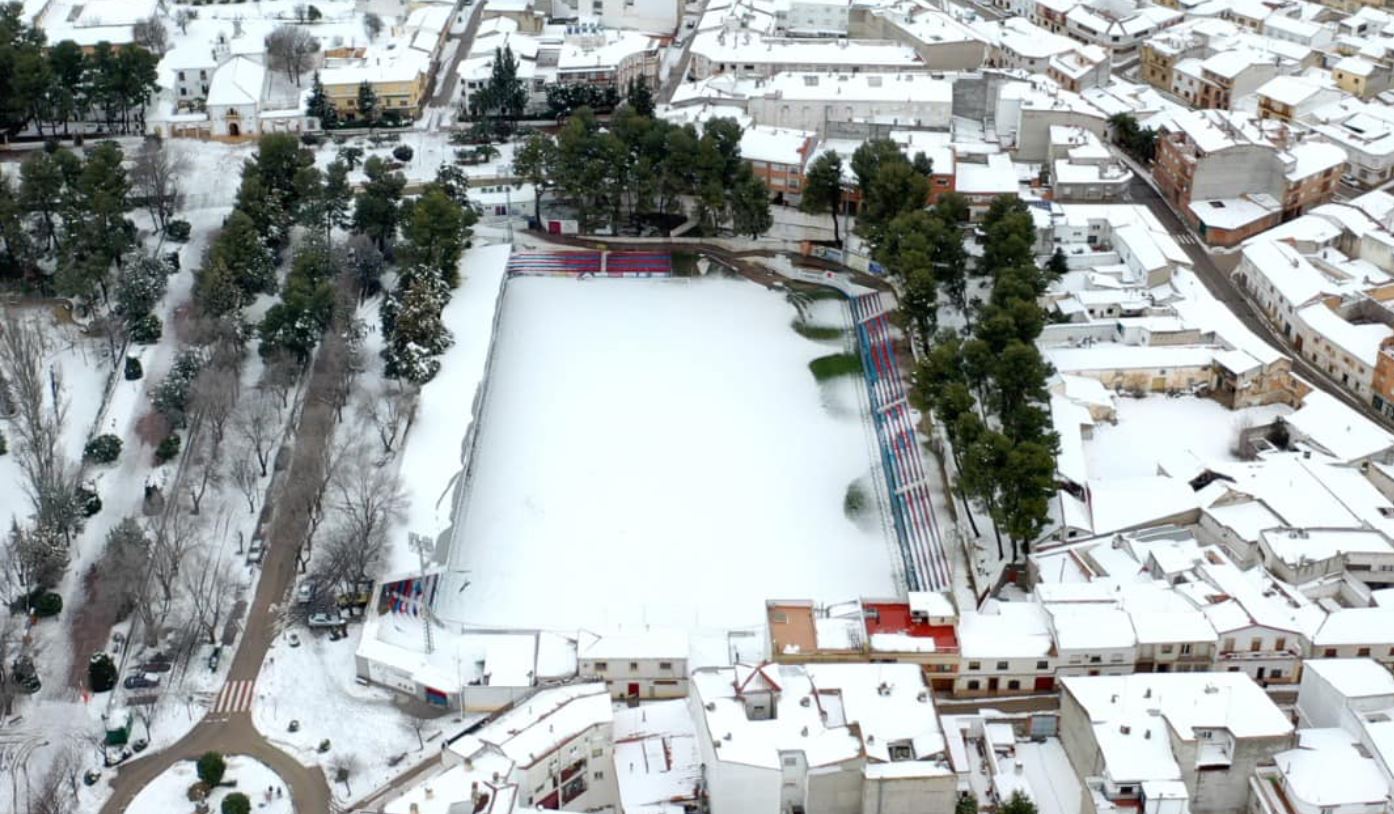
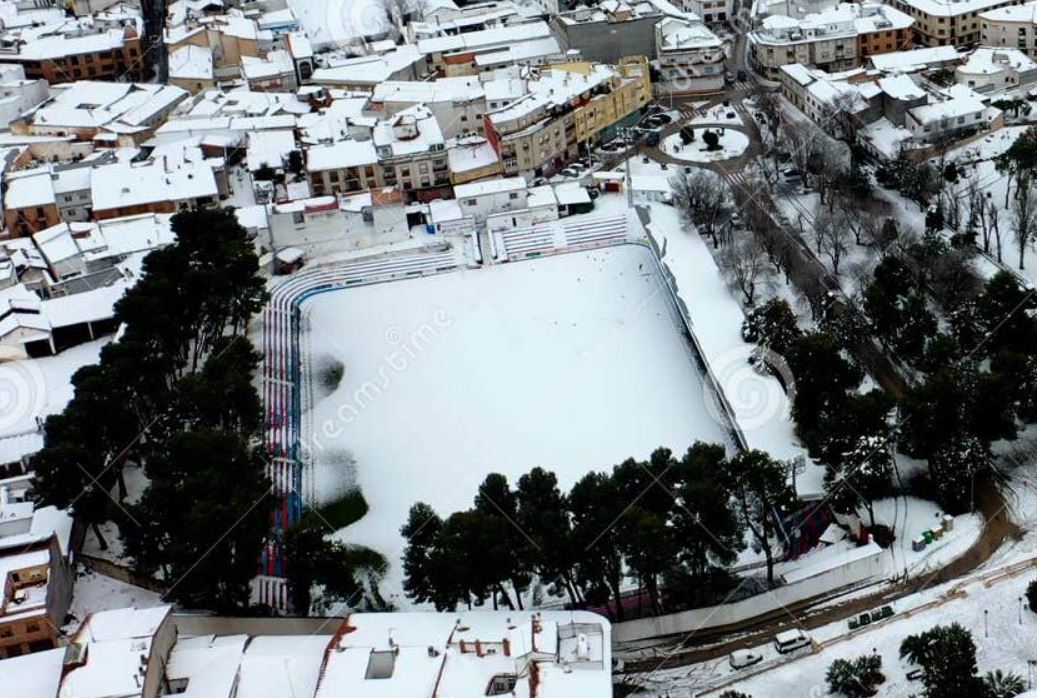
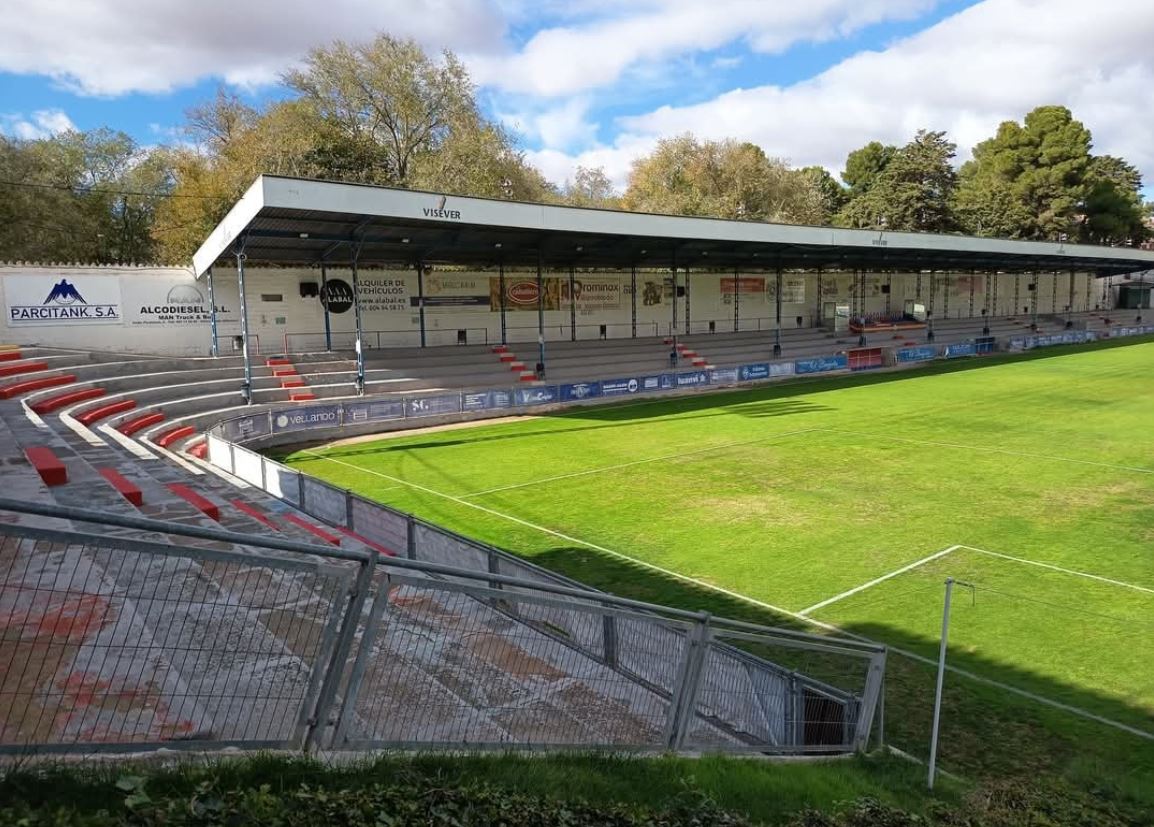
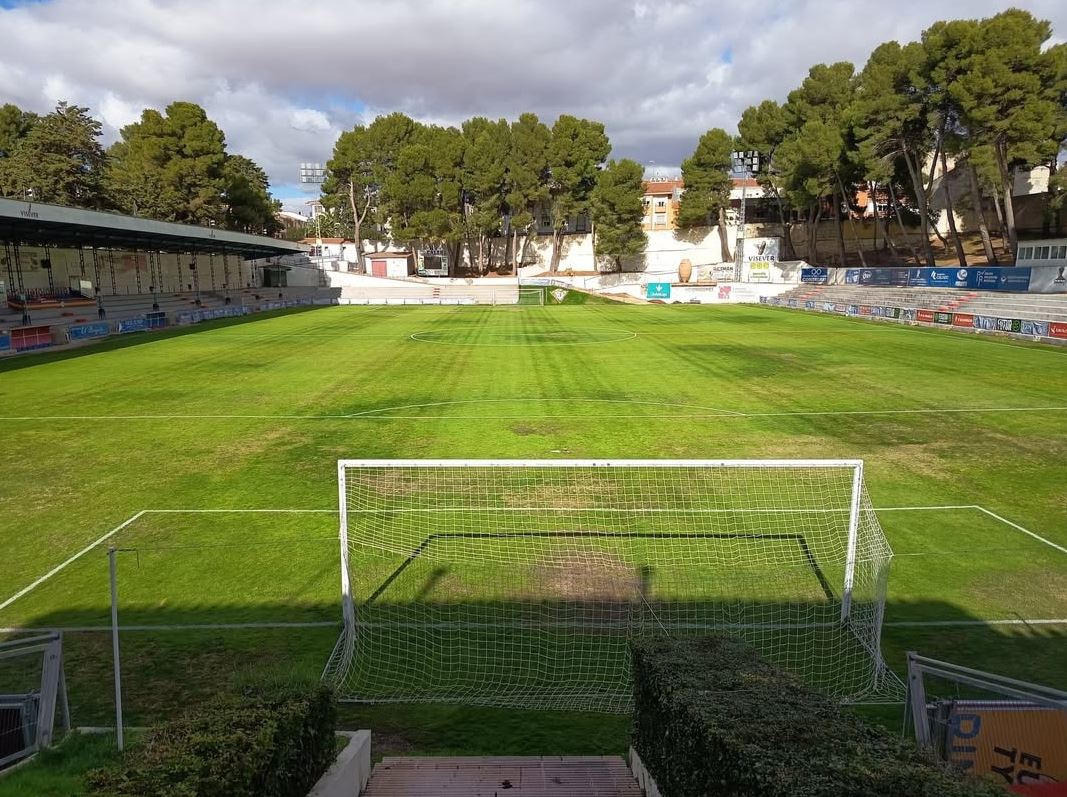
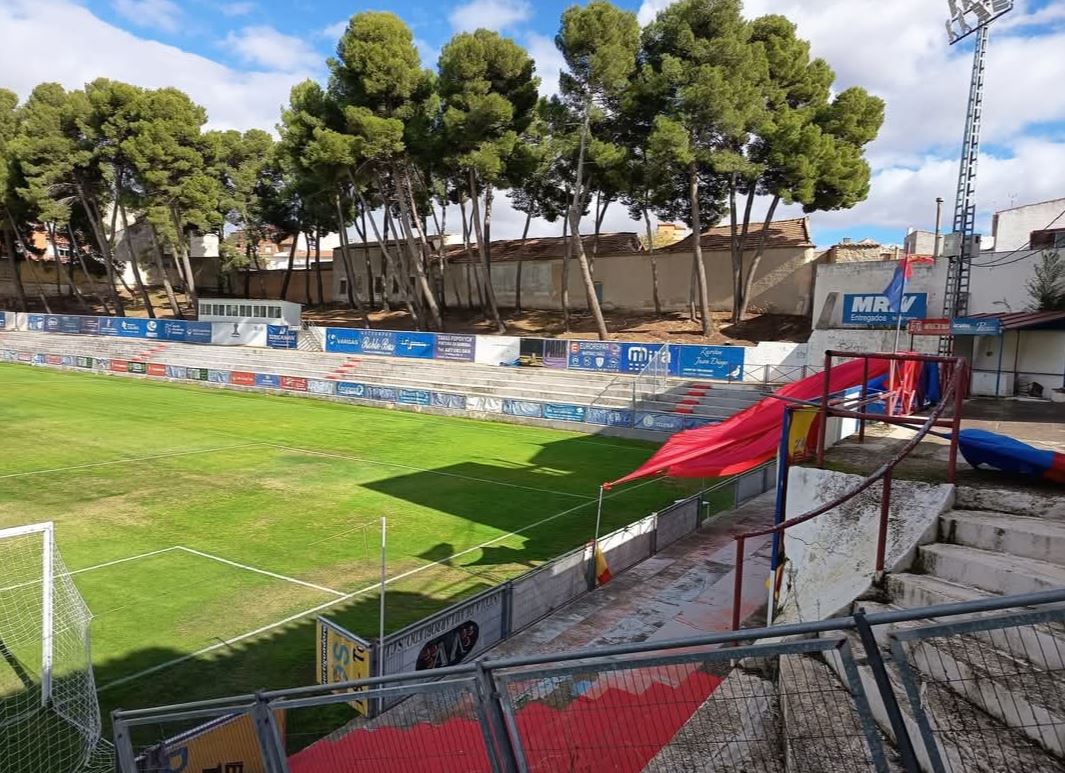
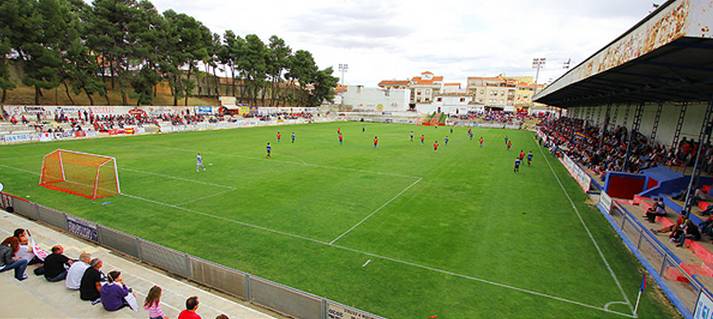
So let us venture into Wolf Ravine, or Campo Nuestra Señora de la Caridad if you prefer. The streets around the ground offer up very few clues that there is a football ground on the other side of the whitewashed walls. Sure, you can see the floodlights, but only the very top of the masts, such is the depth of this practically subterranean wonder. Once inside Villarrobledo’s home, you are presented with a series of idiosyncratic treats. Let’s start with the only cover, a full-length stand on the west side of the enclosure. There used to be six rows of red & blue bucket seats, bolted to the original wide terracing. They ran from the south-west corner to the edge of the northern penalty box, but were removed in 2021, and never replaced. The stand’s cover is held up by dozens of thin Meccano-like props and was erected when the club reached the Tercera in 1980, but it looks much older.
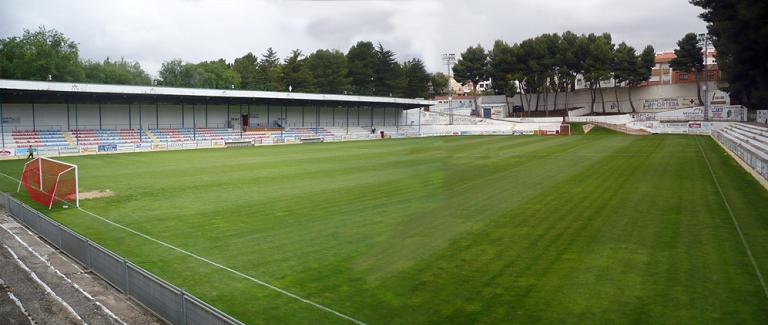
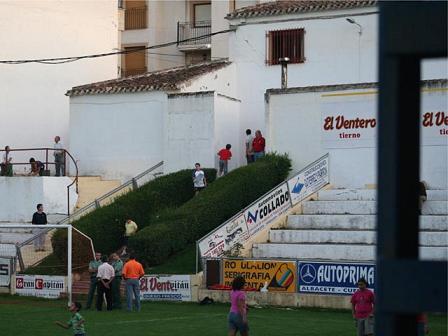
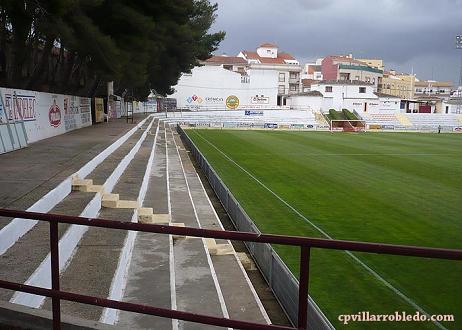
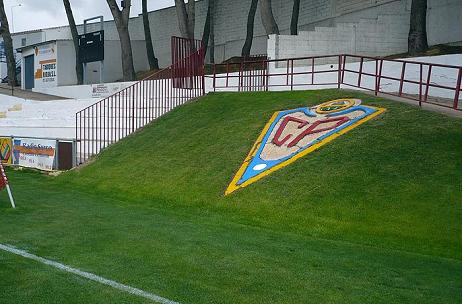
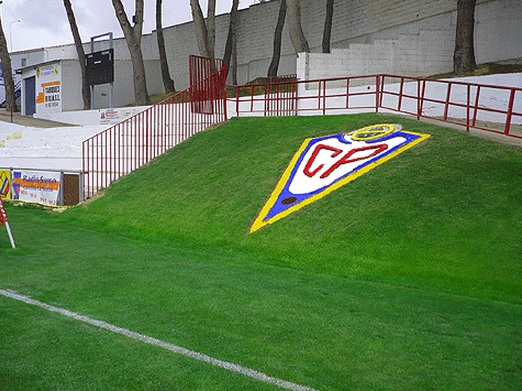
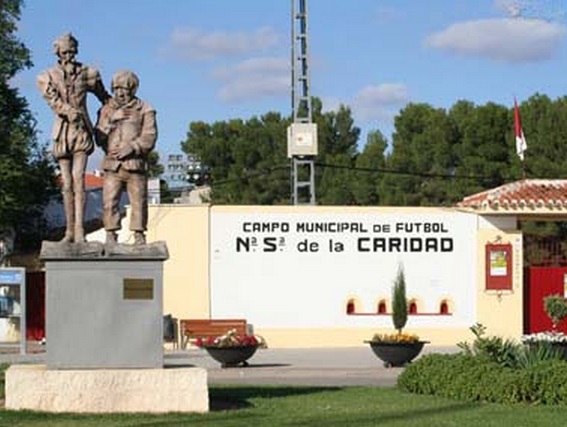
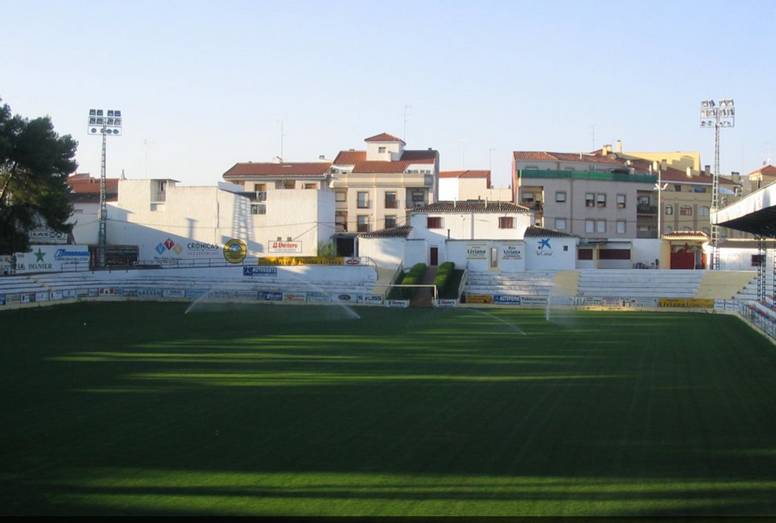
The northern end of the ground is an amazing mix of steps and greenery that looks more like the terraces of a steep garden than those of a football ground. Behind the northern goal is a beautifully manicured grass bank, at the centre of which is the club crest. The eastern terrace is the most uniform section of the ground, with six wide steps of open terracing. These steps run around the south-east corner and link up with the southern terrace. The club’s offices and changing rooms sit atop this terrace, and pitch access is gained through two rows of privet hedges. Finally, as if to emphasise the fact that you are pretty much in the middle of La Mancha, just opposite the southern entrance is a statue of Don Quixote and Sancho Panza. The stadium hosted international football when the Spanish U-21 side visited on 9 October 1999, beating Israel 2-1 in a UEFA qualifier. All in all, the 5,500-capacity Campo Nuestra Señora de la Caridad is the complete antithesis of everything that you will find in a modern stadium, and I love it!