Article updated: 11/09/2025
Over the years, the north-western city of Ferrol has had a lot going for it. It has a long history as a naval port, and is still home to Spain’s North Atlantic Fleet. The financial trappings associated with the military also led to the development of a renowned shipbuilding industry, and it was the site of one of Europe’s biggest arsenals. It was also the birthplace of General Francisco Franco, and as any right-minded megalomaniac would do, he renamed the city in his honour. From 1938 until 1982, the city’s full title was El Ferrol del Caudillo or Ferrol of the Leader. Franco’s ties with Ferrol once led to suspicious finger-pointing on the only occasion Racing Club de Ferrol made it to the national stage, but more of that later.
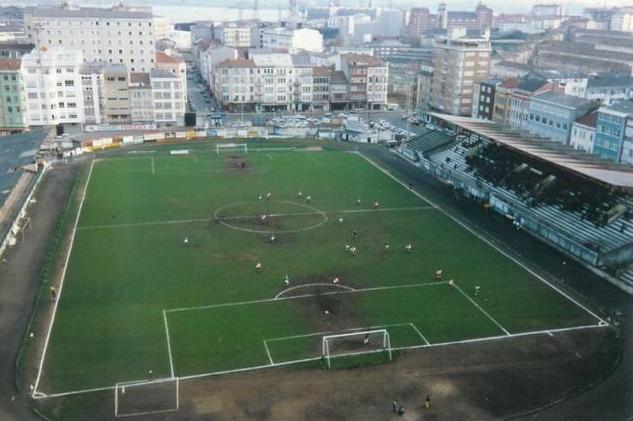
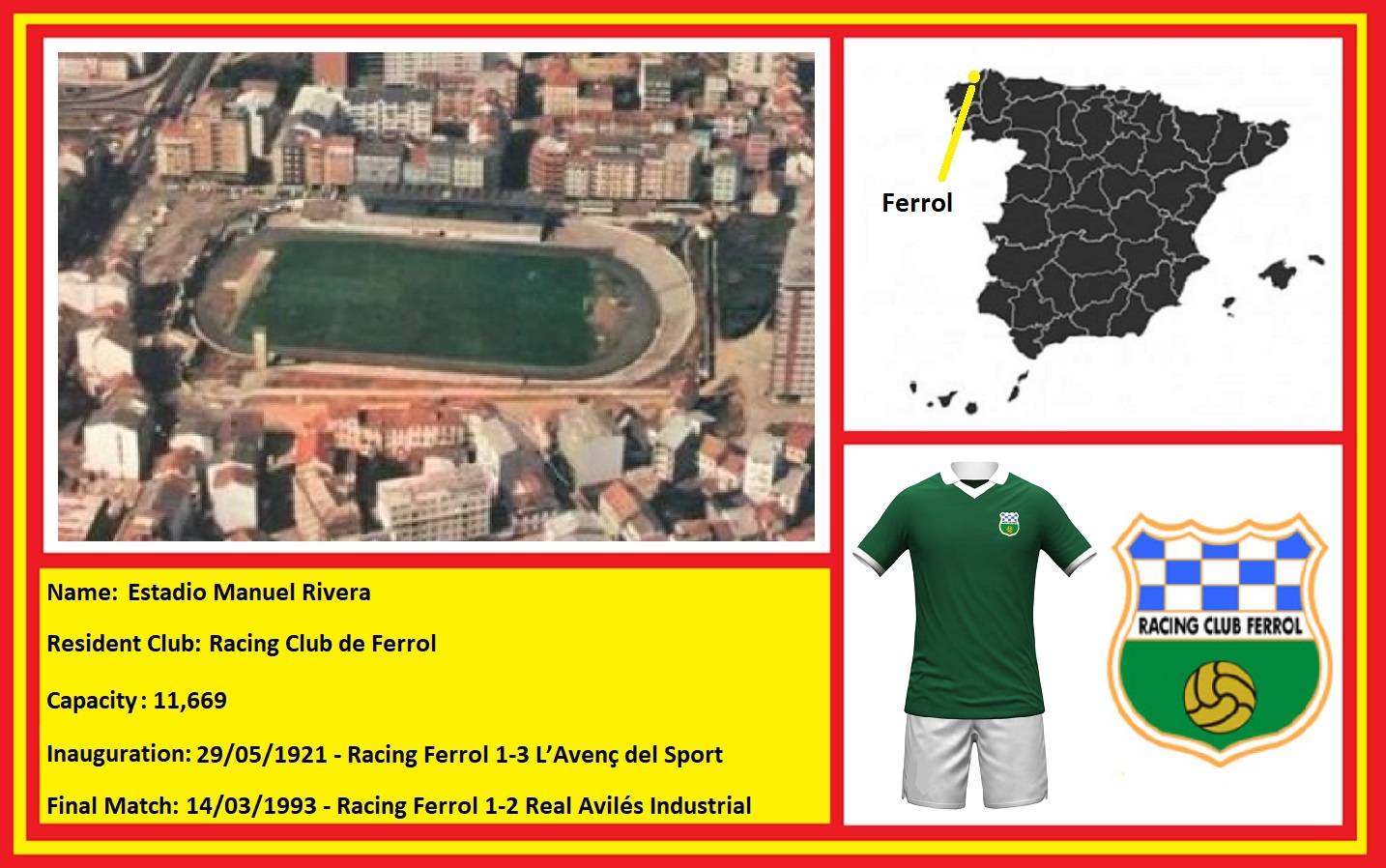
Racing was formed in 1919 when the town’s first enclosed football ground, Campo de Caranza, was opened, and the best players from the top teams in Ferrol were chosen to play against Deportivo La Coruña in the stadium’s opening match. Such was the team’s popularity that it was registered with the Spanish Federation and started to compete at a local level in 1920. Racing soon had its own ground, when on 29 May 1921, they lost 1-3 to L’Avenç del Sport, of Barcelona, at the site that would be their home for the next 72 years. Initially called Campo de Inferniño, it was a basic enclosure a few hundred yards northeast of the city centre. The club first reached the second division in 1934, but finished in eighth and last place and were promptly relegated back to the Galician regional league. The Civil War put pay to any national competition until the summer of 1939, when out of the blue, Racing appeared in the final of a severely truncated version of the Copa del Generalísimo.
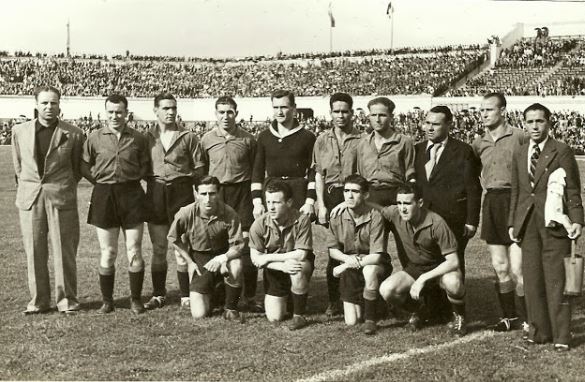
To add some context, the 1939 addition of the national cup competition consisted of just 14 teams. The draw was missing some notable names, such as Barcelona, Real Madrid & Valencia. Racing was helped by a walkover in the first round when an Asturias XI failed to show, then a favourable draw saw them dispose of a scratch Real Sociedad XI in the quarter-finals. Baracaldo Oriamendi was beaten 3-2 on aggregate in the semi-final, which meant that Racing had a date in the final with probably the competition’s one quality side, Sevilla. Their luck ran out in the final, however, when Sevilla handed out a 6-2 beating at Barcelona’s Estadi Montjuic. When the league resumed, Racing found themselves elevated back to the regionalised second division and achieved their highest ever final placing of second, albeit behind perennial rivals Deportivo La Coruña. Is it too much to suggest that Racing achieved this without any intervention from on high? Probably not. After all, Ferrol was a Nationalist stronghold during the Civil War, and the city and therefore, the club escaped any major damage. Add to that an influx of military personnel to potentially swell the coffers & playing staff, it is possible.
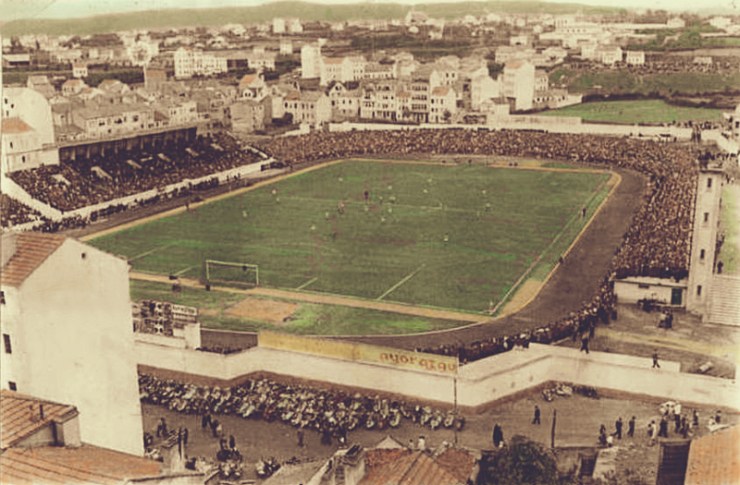
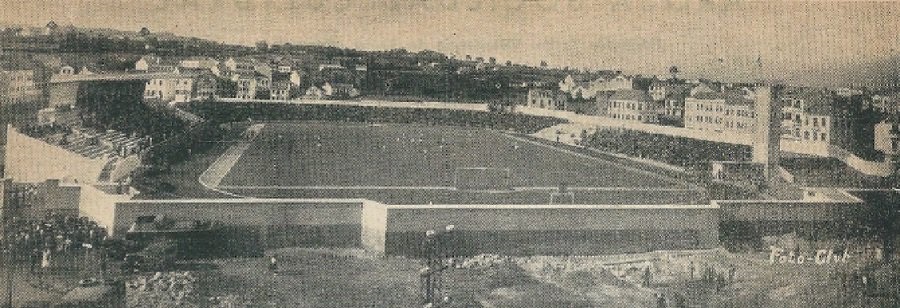
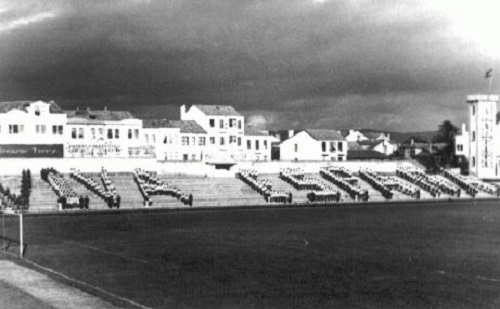
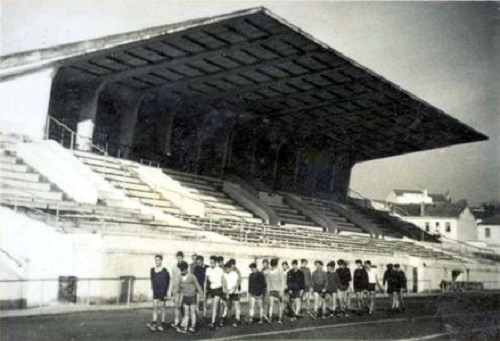
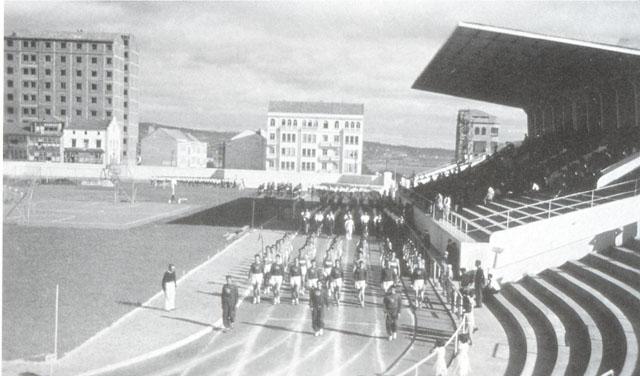
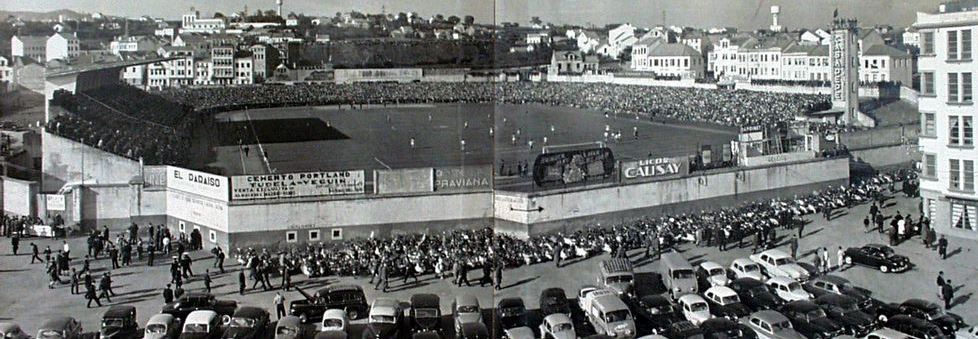
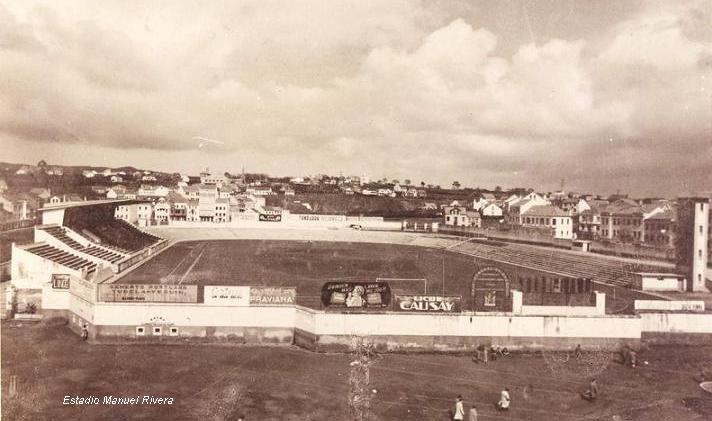
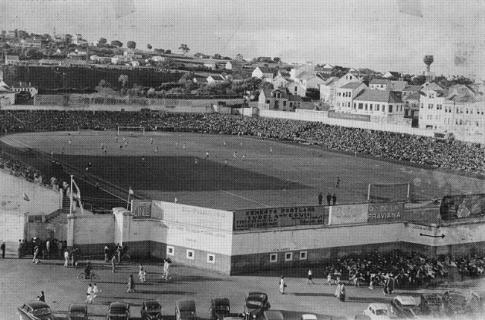
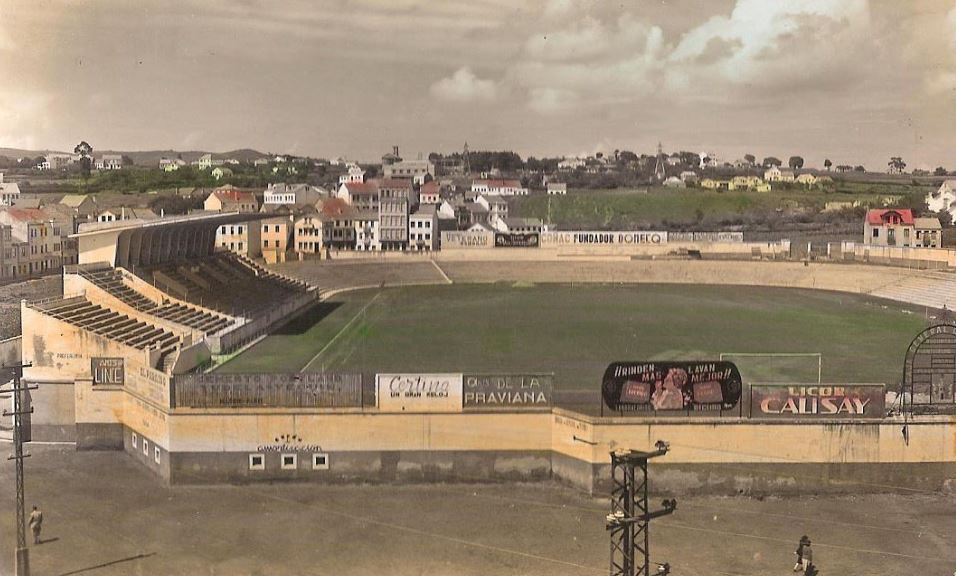
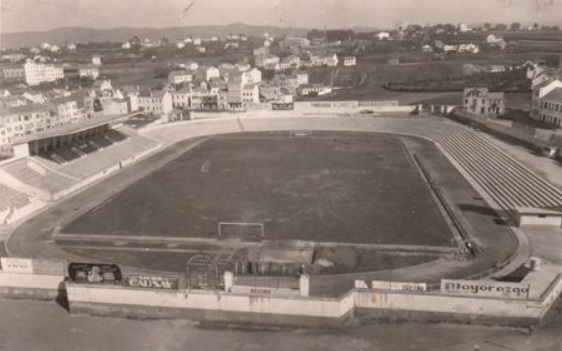
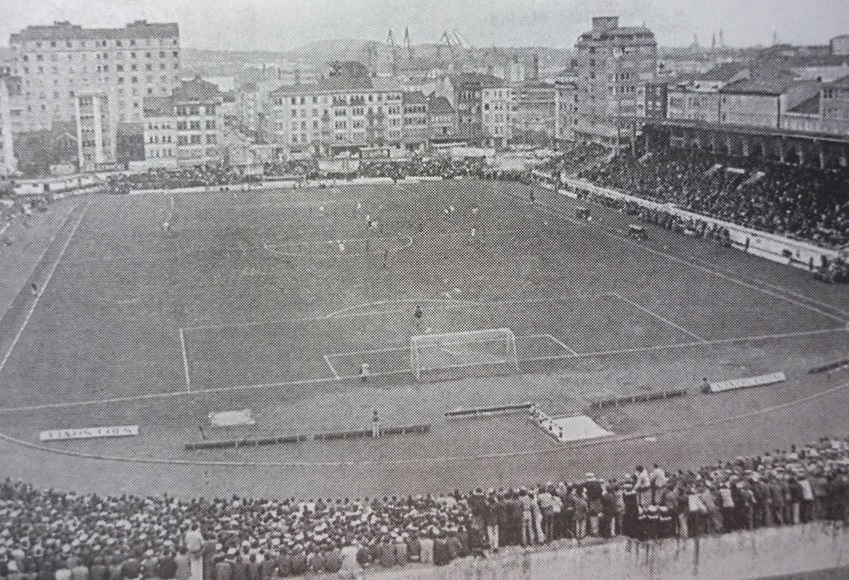
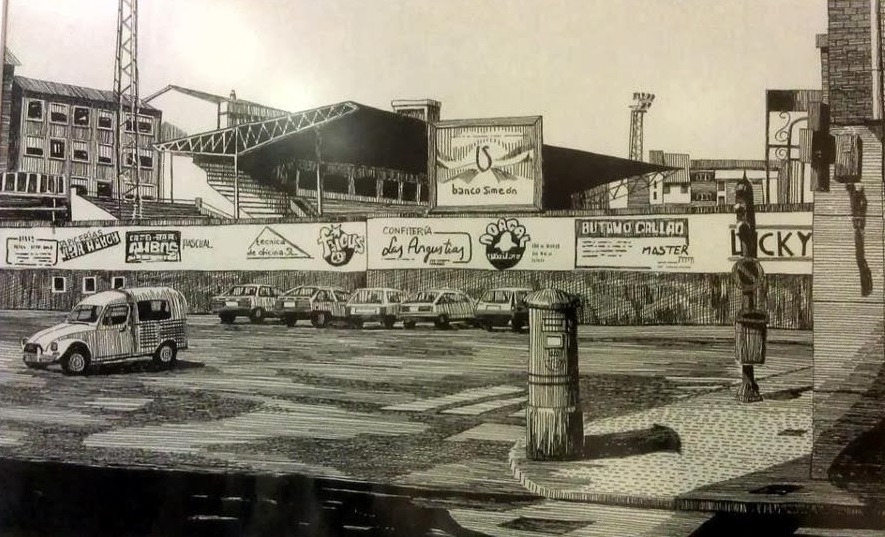
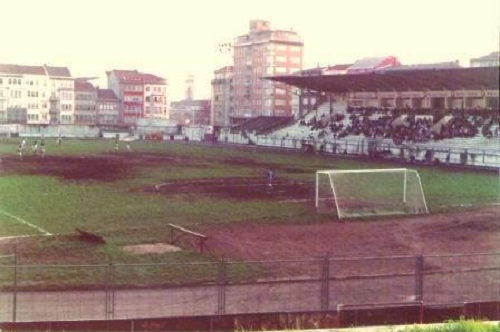
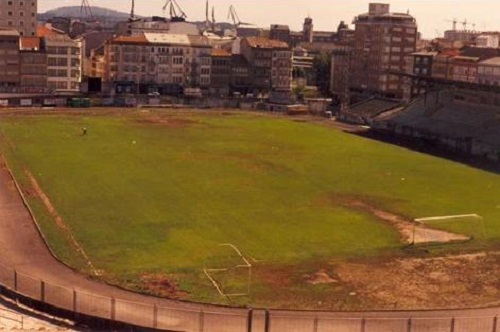
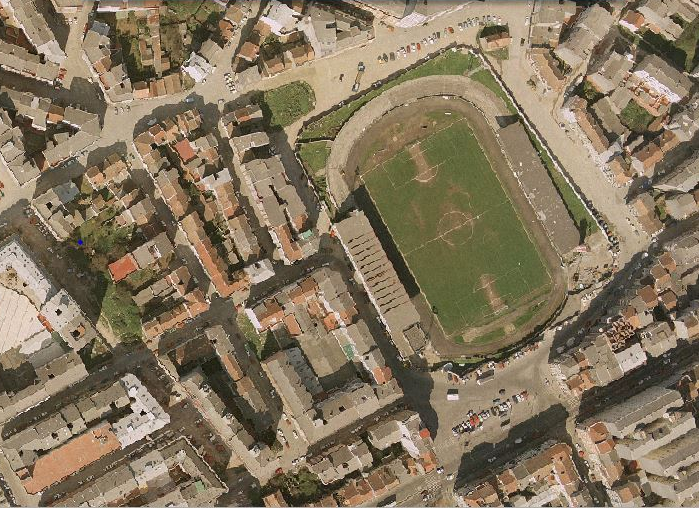
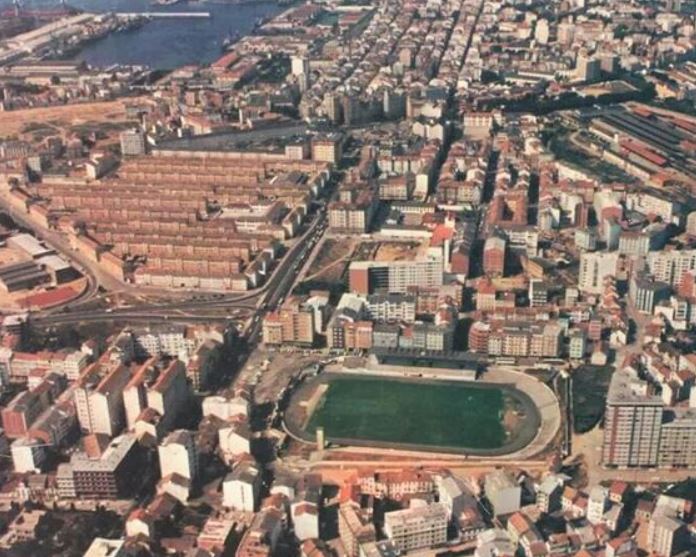
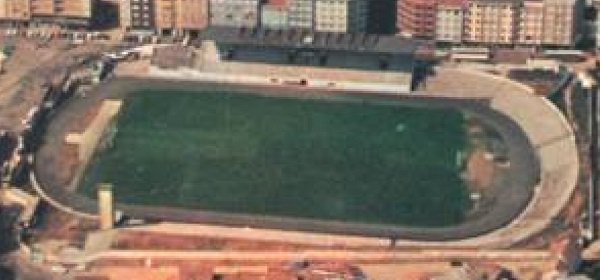
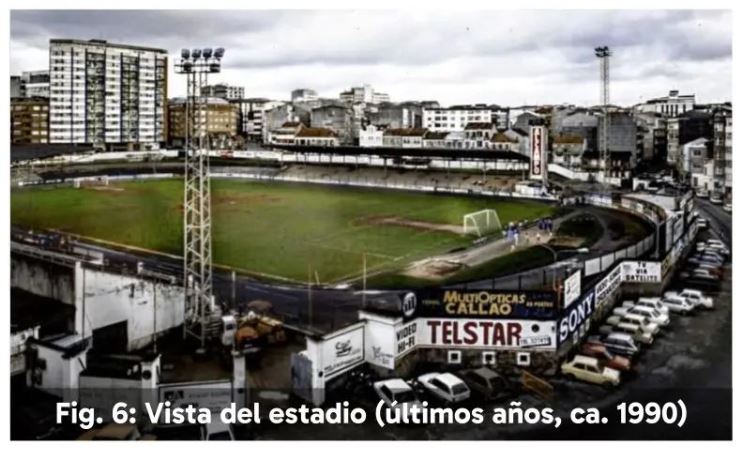
The next two decades saw Racing establish itself in the regionalised second division, and although they only reached the playoffs once (a disappointing last place in the 1951-52 playoff group), the confidence within the club was such that in 1950, it embarked on a major redevelopment of Campo Inferniño. Up to that point, the enclosure had followed traditional lines of four narrow terraces close to the pitch, and a narrow covered stand on the west side. The new stadium was laid out in an oval, with a new main stand on the west side. The roof was cantilevered but straddled the halfway line for only 50 metres. A curved terrace ran around the northern end, whilst the southern end featured hard standing. The east side had a substantial open terrace, whilst in the south-east corner of the ground, a tower was built. Not as big or as grandiose as the one at the Riazor, but it was a tower all the same.
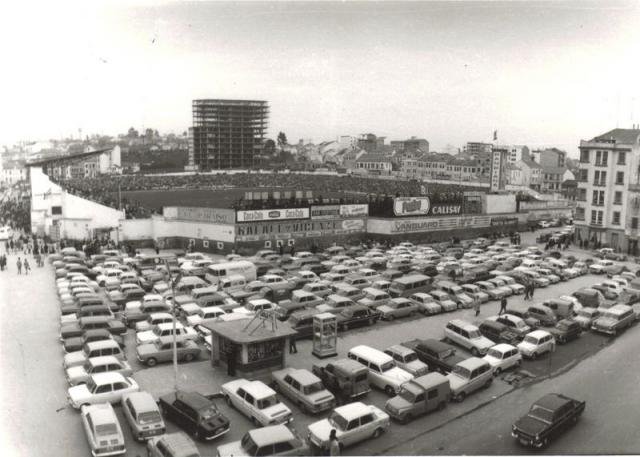
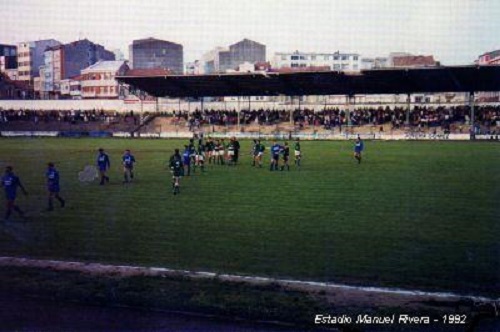
In 1954, the stadium was renamed the Estadio Manuel Rivera, after the loyal player, coach and club physiotherapist who had to retire from playing in 1938 due to a heart problem and died in 1953. In the mid-1960s, a cover was added to the east side, and the roof of the main stand was extended, running from one penalty box to the next. Racing’s impressive run of 16 consecutive seasons in La Segunda came to an end with relegation at the end of the 1959-60 season. They returned to the second tier in 1966, finishing fourth in 1968-69 and only losing out on automatic promotion on the final day of the season. Racing dropped back to the Tercera in 1972, and apart from a disastrous return to La Segunda in 1978-79, where Racing finished bottom and won only 4 matches, that was it for second-tier football at the Estadio Manuel Rivera. The stadium’s record attendance was achieved on 11 February 1976, when a crowd of 20,000 watched Racing lose a 4th Round Copa del Rey tie 1-2 to Real Madrid.
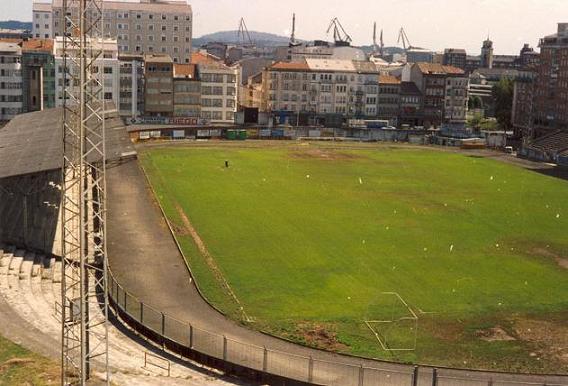
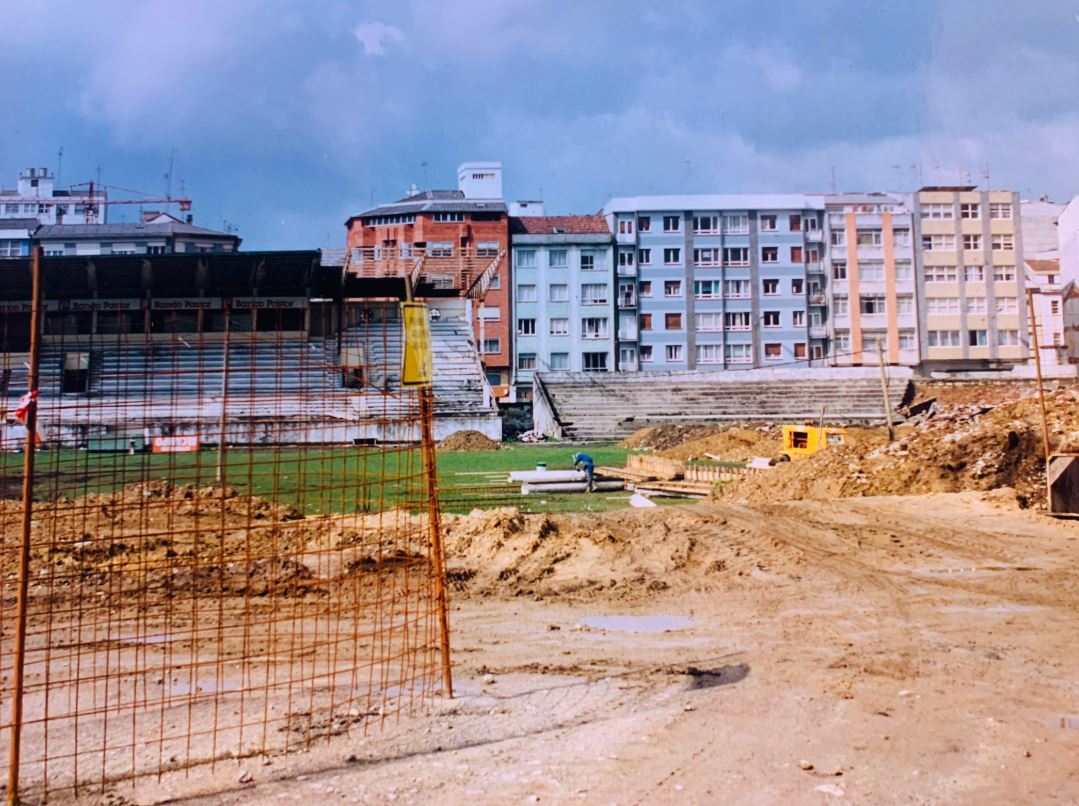
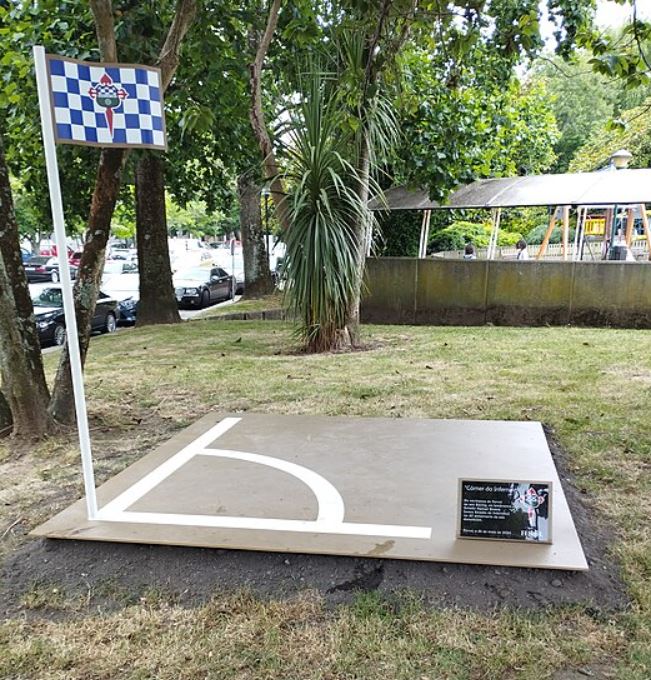
Time was called on Estadio Manuel Rivera in 1993. Originally, the final match was due to take place on 28 February 1993, when the club entertained UD Salamanca, and 200 former players were guests of honour. However, delays with the new stadium meant that Racing played their last fixture at the stadium on 14 March 1993, when Real Avilés Industrial won 1-2. The club had to wait to use their new stadium, playing the home match vs Toledo on 4 April 1993, 10 miles to the north of Ferrol, at the Campo Misael Prieto, the home of Meirás CF. Two weeks later, the club pitched up at A Malata, the new municipal stadium, a mile north-west of the town centre. Demolition of the old stadium commenced on 25 May 1993. Today, you will find an ageing shopping centre and a pleasant square on the site of the old stadium. The square is named the Praza do Inferniño, and on its southern edge, you will find a marble replica of a corner segment of the pitch. Inspired by a similar tribute on the site of Racing Santander’s old Campos de Sport de El Sardinero, it’s a simple but effective reminder of the thousands of matches played at El Inferniño.
 Estadios de España