Article updated on: 11/08/2025
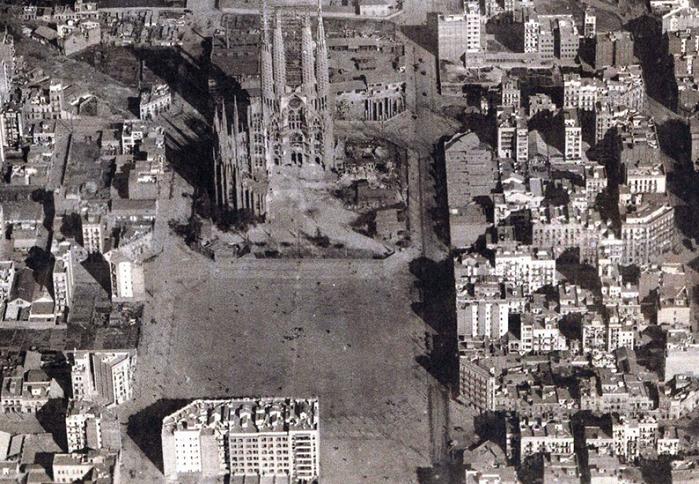
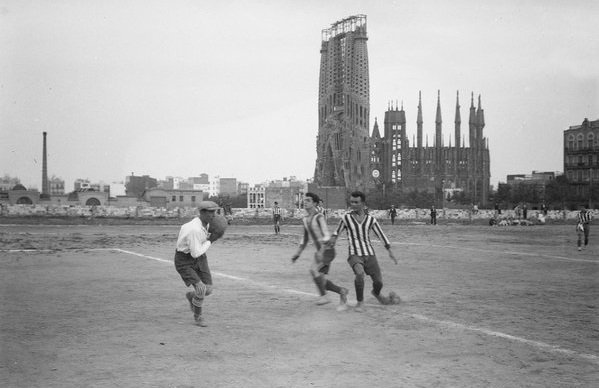
Barcelona’s northern district of Gràcia is home to one of the country’s most historic but often overlooked clubs, Club Esportiu Europa. Founded as Club Deportivo Europa in 1907 following the merger of Madrid de Barcelona and Provençal, the club played at a number of grounds during its first 15 years, including one at Carrer Marina, in the shadows of the Sagrada Familia. Club legend has it that Antoni Gaudí would watch the team train whilst working on his masterpiece.
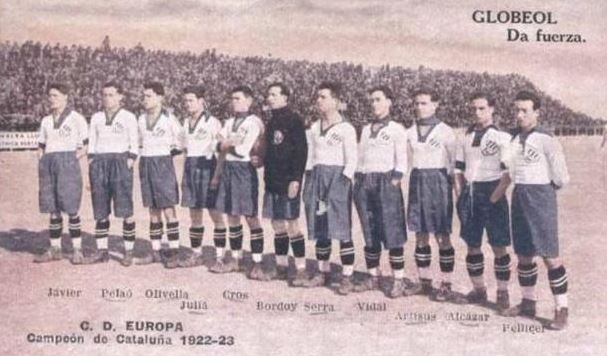
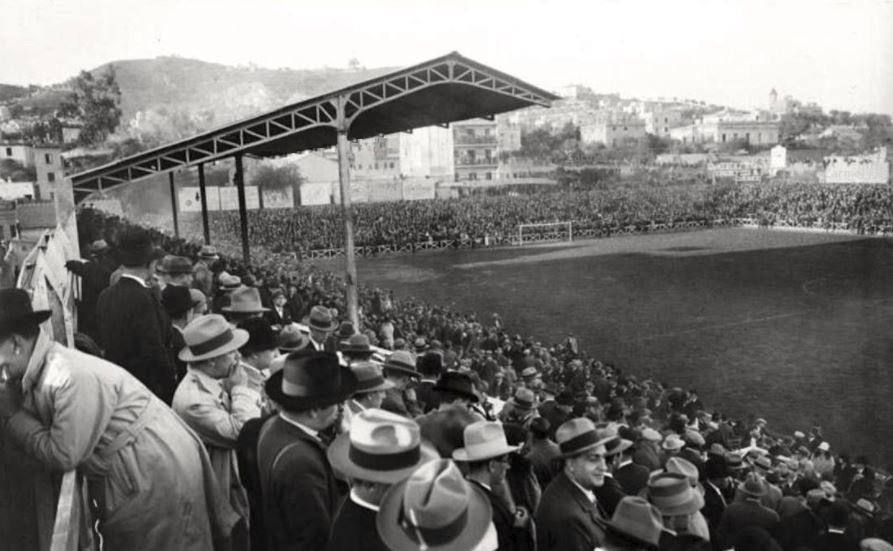
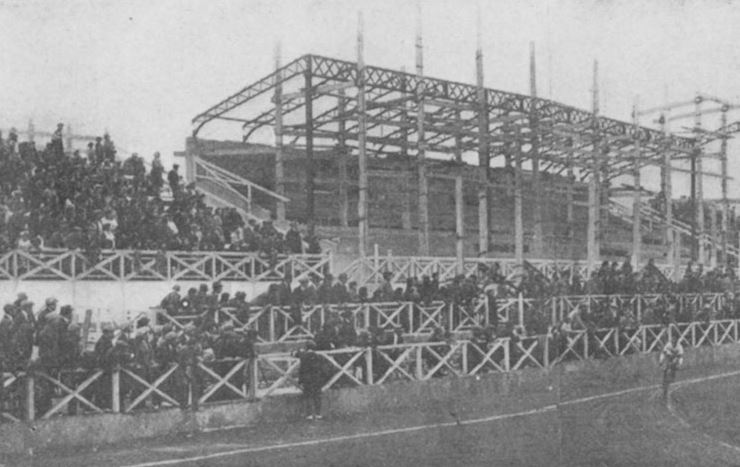
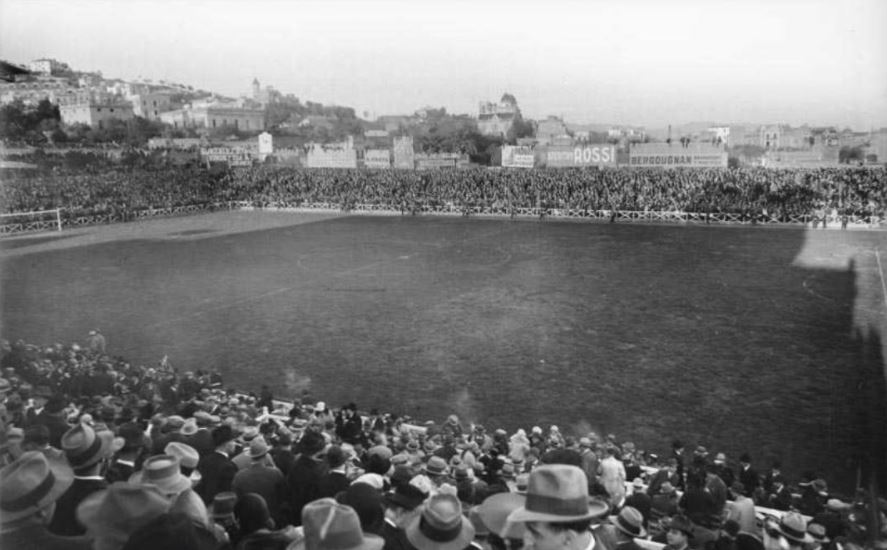
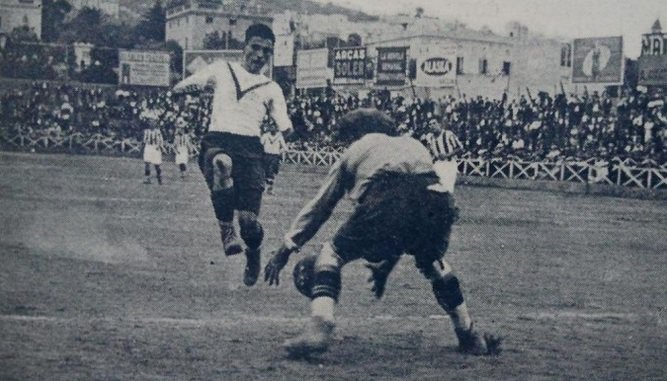
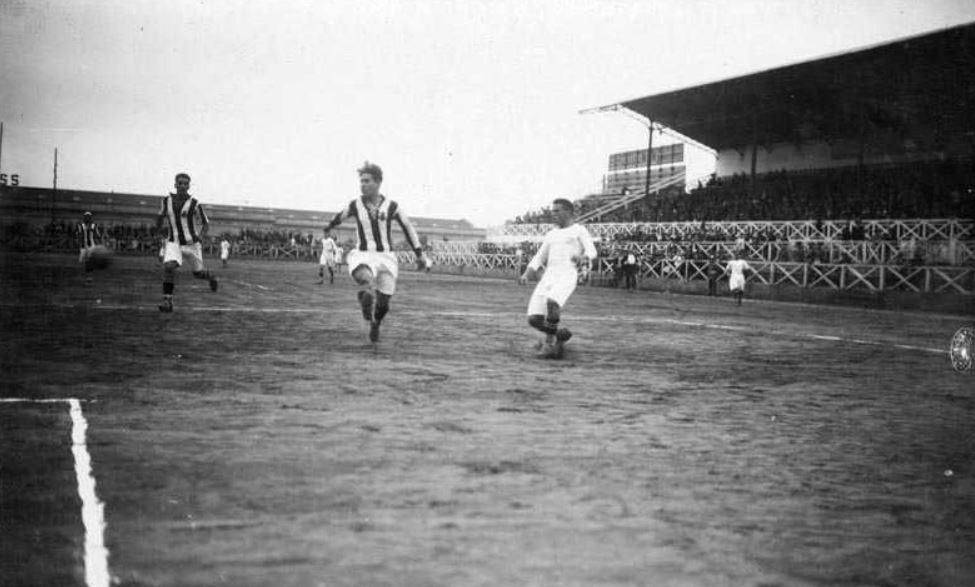
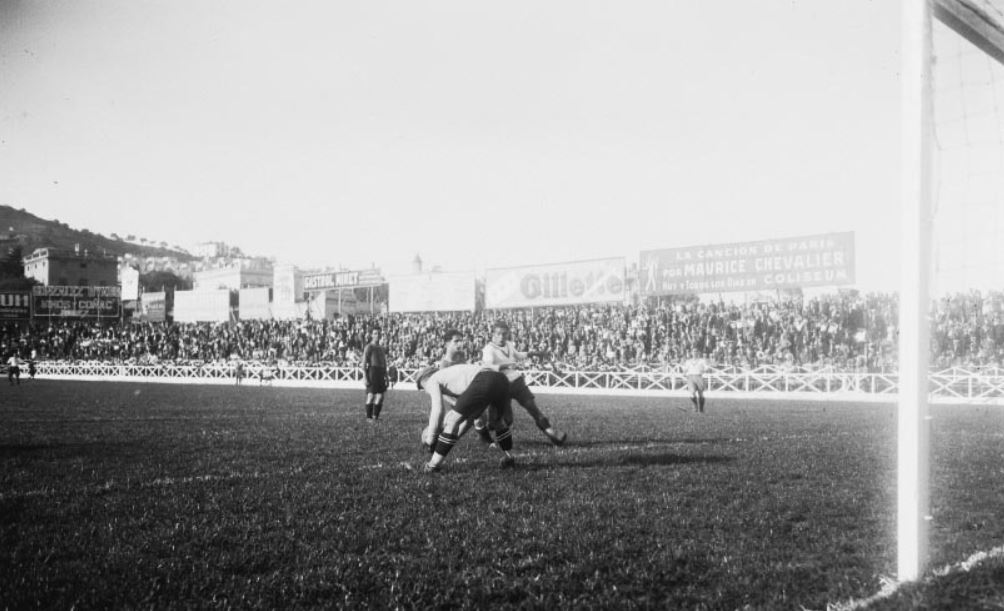
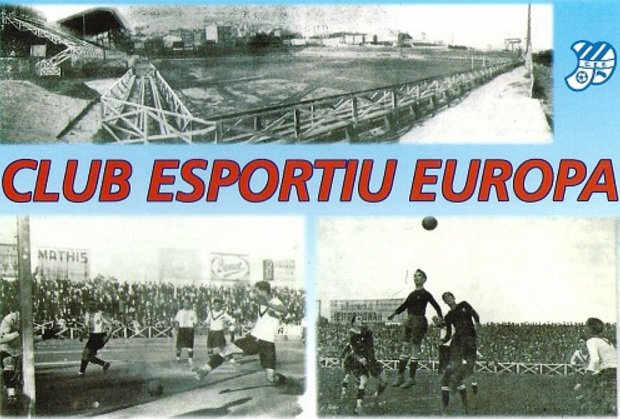
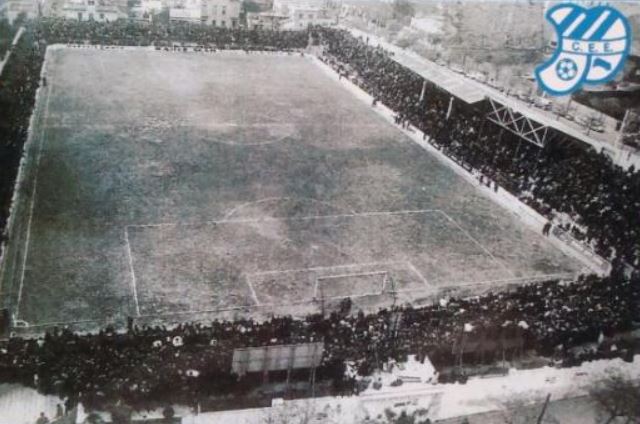
In 1923, the club bought a strip of land between Carrer Marina & Carrer Encarnacion and set about building its first ground. The Campo del Guinardó, as it would become known due to its proximity to the barracks in the neighbouring district, would be the home of the club during its most successful period. Guinardó had a capacity of 19,000, including 2,000 seats. It was inaugurated on 8 December 1923 when Europa entertained Hungarian side Szombathelyi Haladás in a friendly. Europa, along with FC Barcelona, were the dominant force in Catalan football in the 1920s. Europa’s golden season occurred in 1922-23 when the club won the Championat de Catalunya and reached the final of the Copa del Rey, only to lose 0-1 to Athletic Club at Barcelona’s Camp de Les Corts. Under the tutelage of Englishman Ralph Kirby, the club also finished second in the Campionat de Catalunya on three occasions (1920-21, 21-22 & 23-24). Three further second-place finishes followed between 1926-29 and based on this success, the club was invited to take part in the inaugural season of the Spanish Football League.
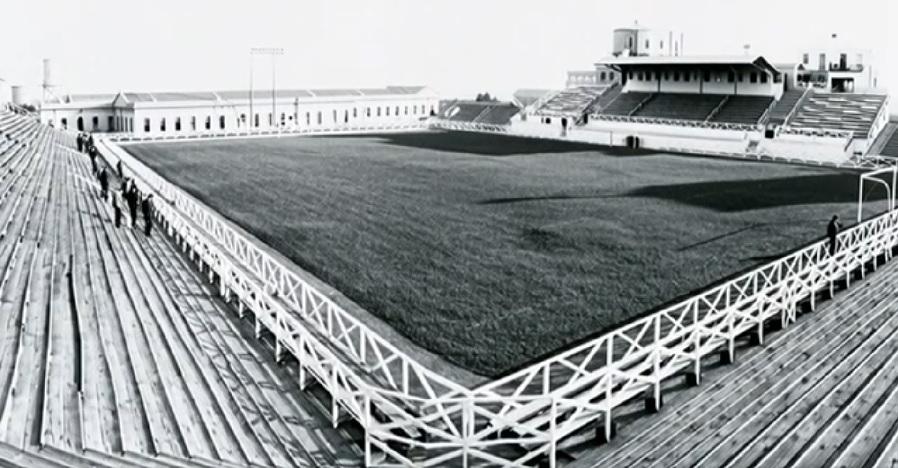
Europa’s La Liga adventure began on 1 December 1929 with a 5-3 defeat away to Atlético Madrid. Home matches were played at three venues: their Guinardó home, but also Barcelona’s Camp de Les Corts & the new stadium at Montjuic. Europa’s first two seasons in La Liga saw them finish in 8th & 9th position respectively, but they eventually fell to La Segunda in 1930-31. This coincided with a financial crisis, which saw the club merge with Gràcia FC to form Catalunya FC for the 1931-32 season. It was not a marriage made in heaven, and the club folded before the end of the season, failing to play their away matches at CD Castellon, Celta de Vigo and Sevilla FC. Europa went to the amateur leagues and played on a plot of land at the top of Carrer Sardenya. Gràcia FC kept playing at the Campo de Guinardó and continued in the Catalan youth leagues for a few more seasons. Guinardó was converted into a velodrome in 1942, before closing in 1964.
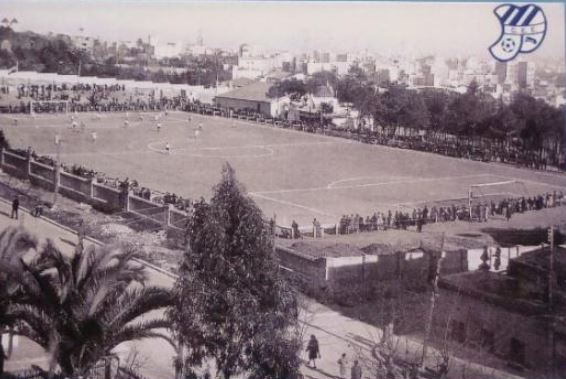
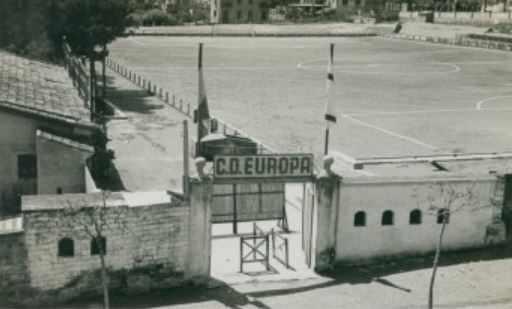
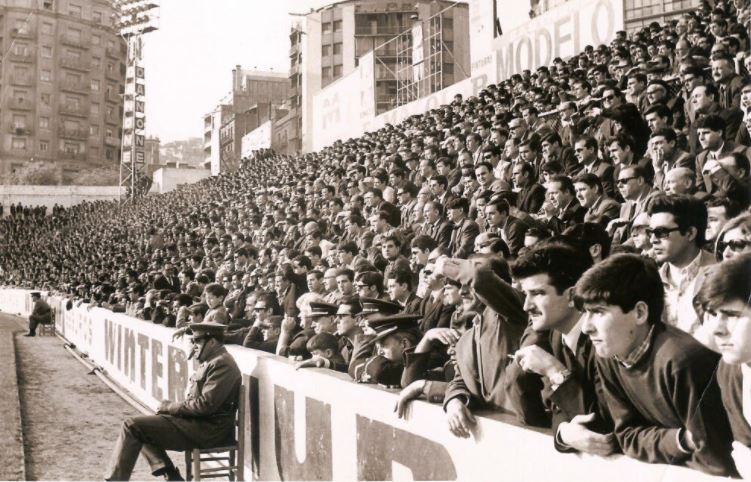
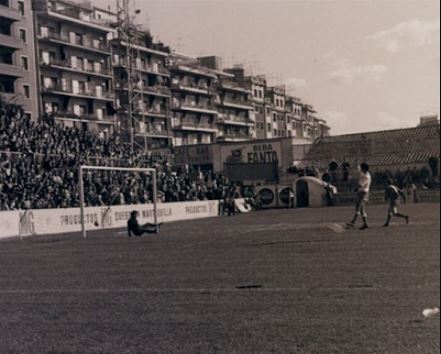
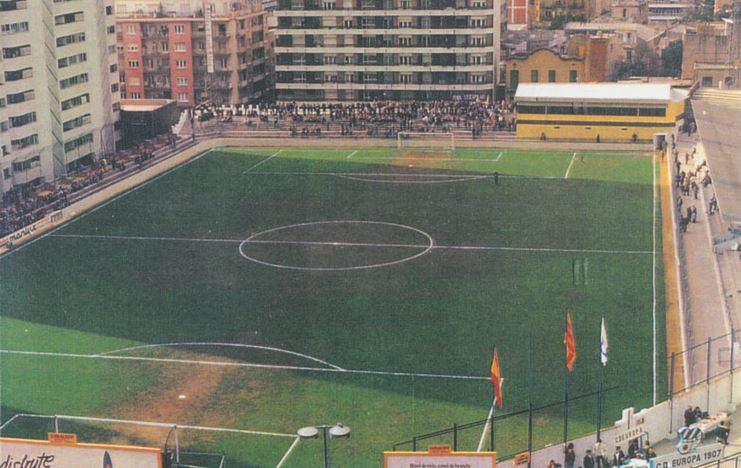
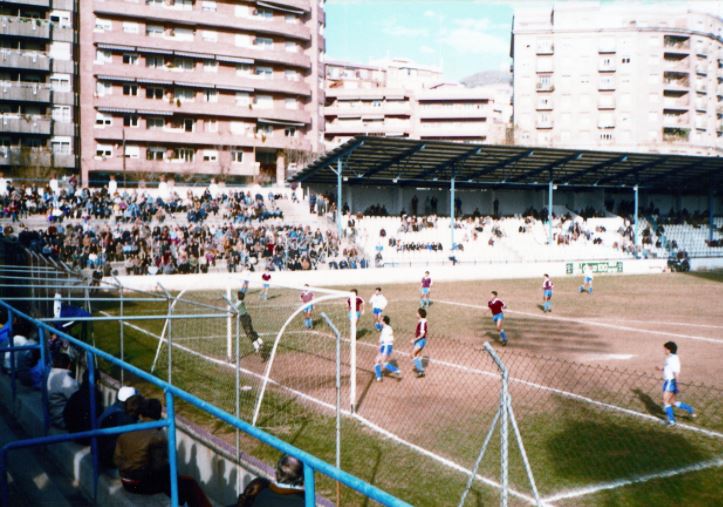
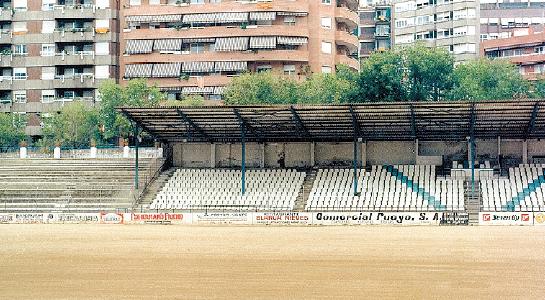
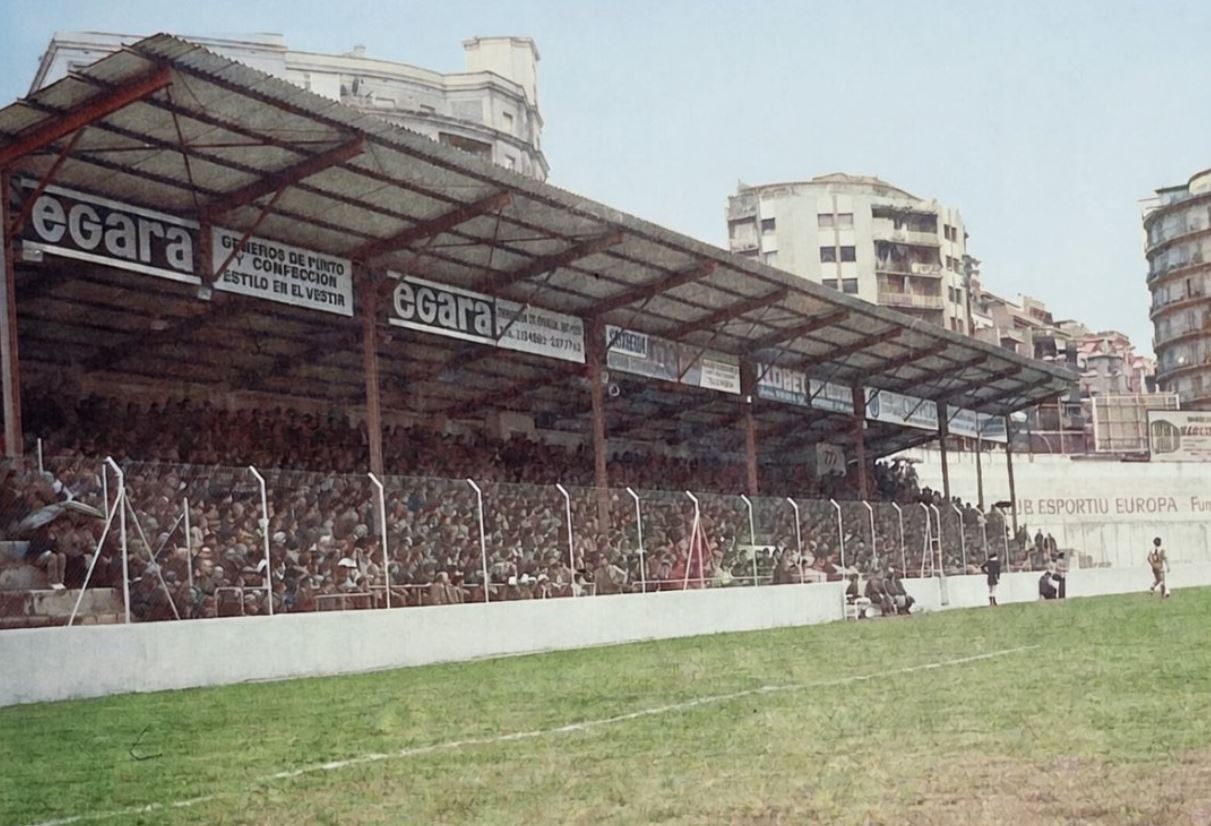
After the Civil War, the pitch on Carrer Sardenya was unusable, so the club moved around for a year or so, playing home matches mainly, but not exclusively, at the ground of FC Martinenc. Finally, on 1 December 1940, the club opened a new ground back in the district of Gràcia. The ground was called the Camp de Sardenya and was a basic enclosure of terracing with a dirt pitch. Three years later, the club built a 1,000-seat grandstand from the proceeds of the transfer of Antoni Ramallets to FC Barcelona, and it was Barça who were the guests on 26 January 1944 when the new stand was officially opened. 1960 saw the installation of a grass pitch (later removed), whilst floodlights were installed in 1963.
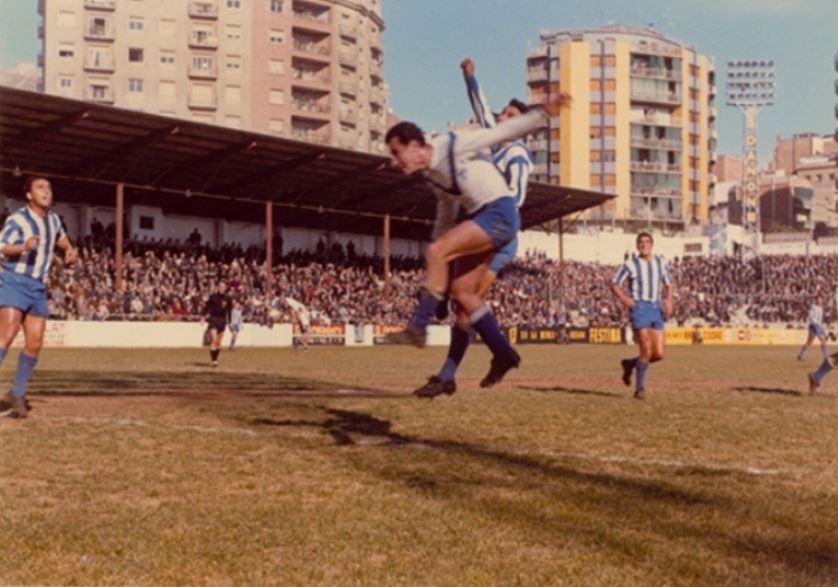
The Sixties also saw the club win promotion to La Segunda and their first season back in the second tier in 1963-64, which almost saw the club win promotion back to La Primera. They finished in third position, one place and two points off a playoff berth. Europa survived for four further seasons until the reorganisation of La Segunda in 1968, from two regional to one national league, saw the club return to the Tercera. Apart from a rather sorry performance in Segunda B in 1994-95 when the club finished 19th, and two visits to the Catalan Regional League, Europa has spent the majority of the next 50 years in the Tercera.
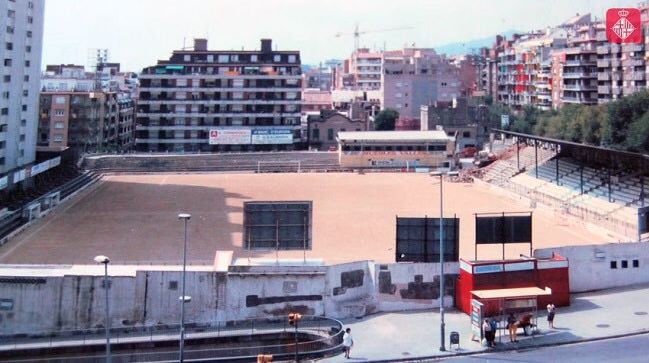
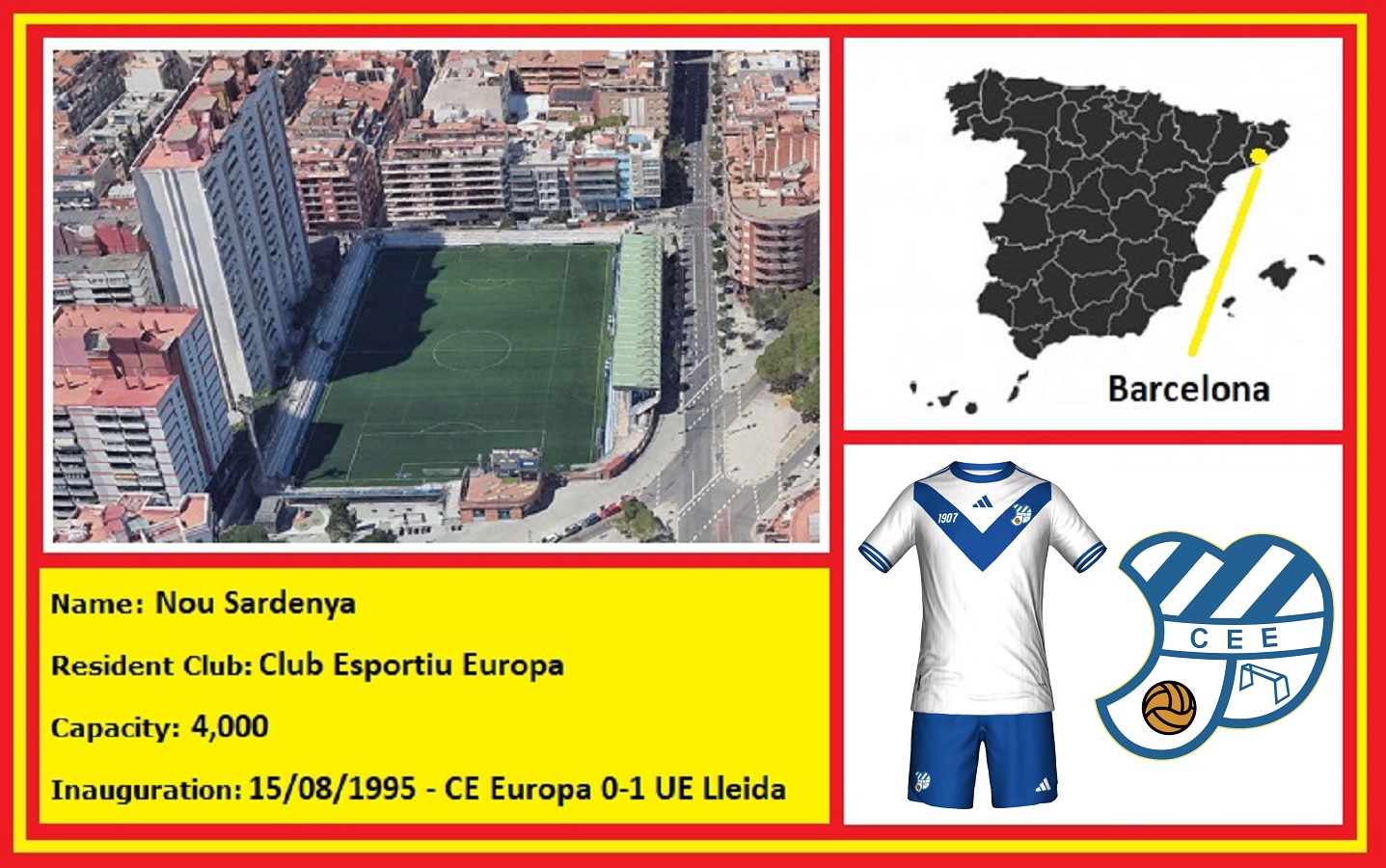
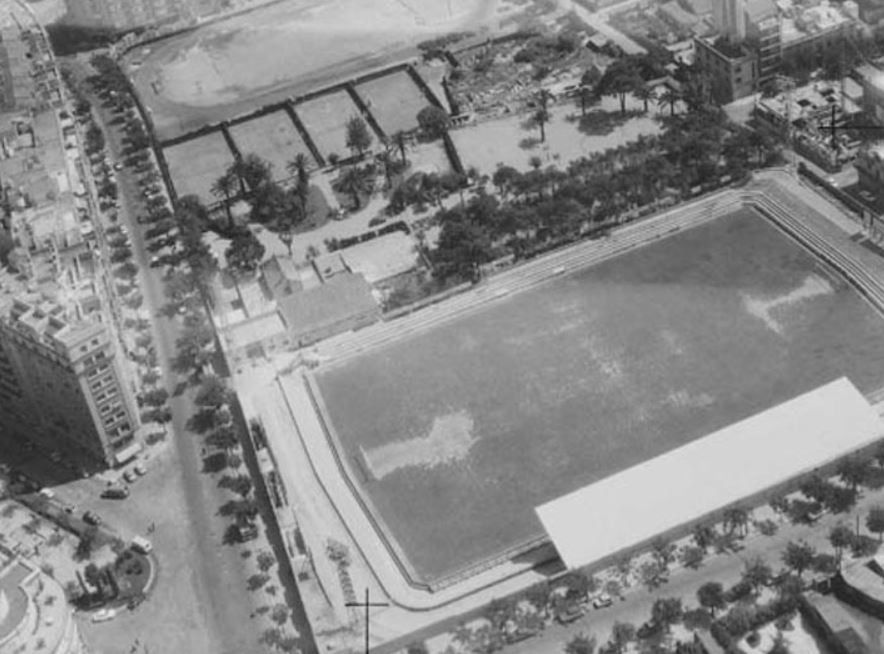
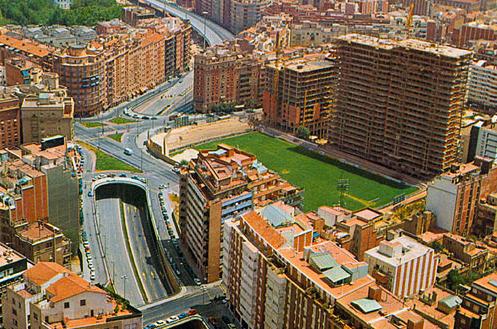
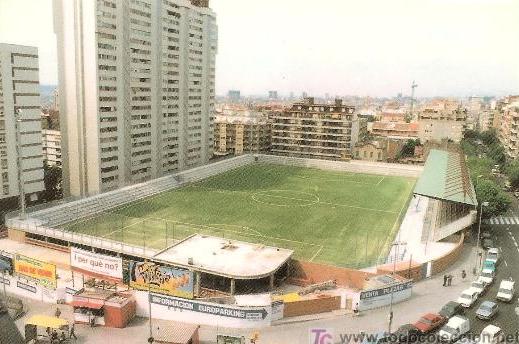
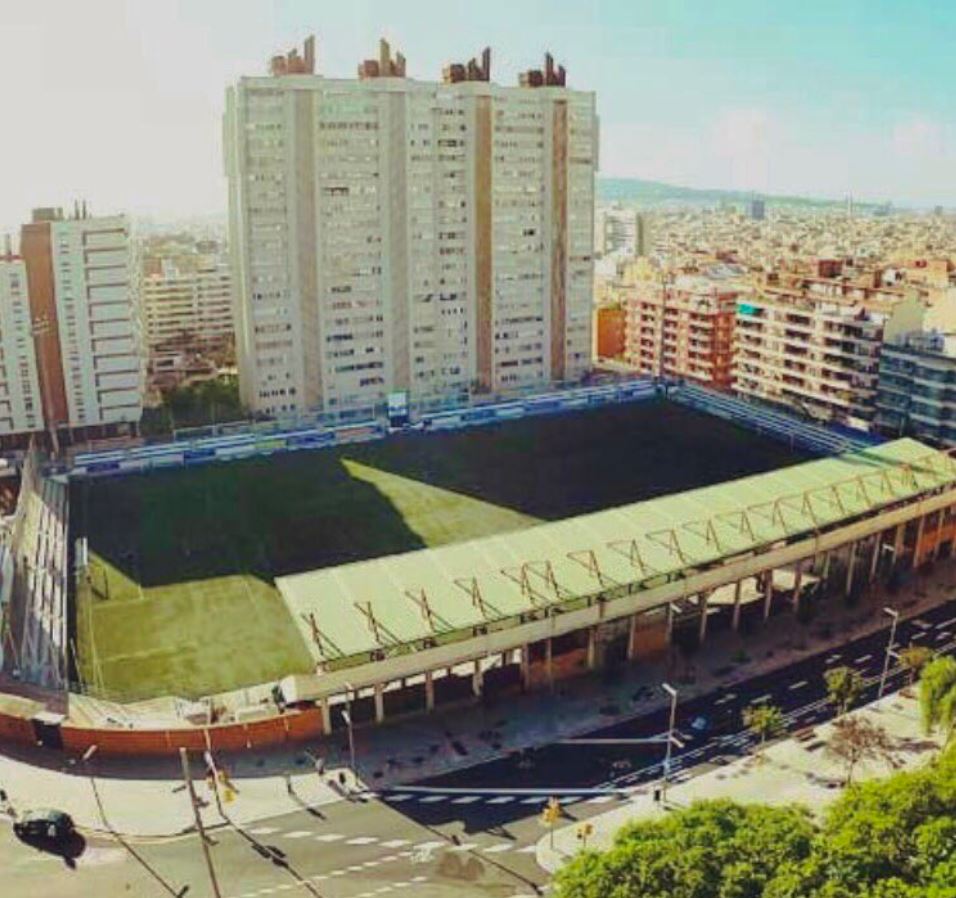
By the beginning of the 1980s, the urban sprawl of Barcelona began to strangle the Camp Sardenya, and with the construction of the northern ring road, the club saw some of its offices and terracing reduced. Finally, in 1992, the municipality decided to completely redevelop the site, and Camp Sandenya was demolished. For two seasons, the club shared its home matches between the Camp del Carrer Feliu i Codina (Home to UA Horta) & the Camp Municipal del Guinardó (Home to FC Martinenc and not to be confused with the original Campo del Guinardó). However, what the club returned to was a vast improvement on Camp Sardenya and an ingenious piece of urban architecture.
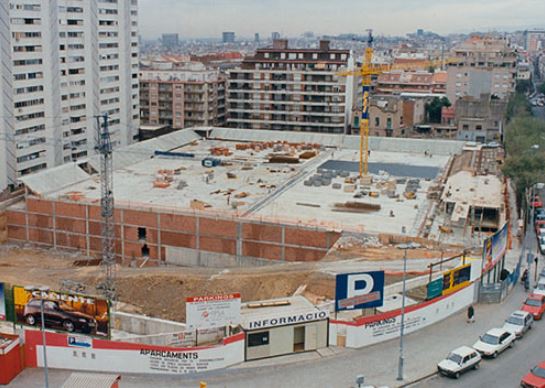
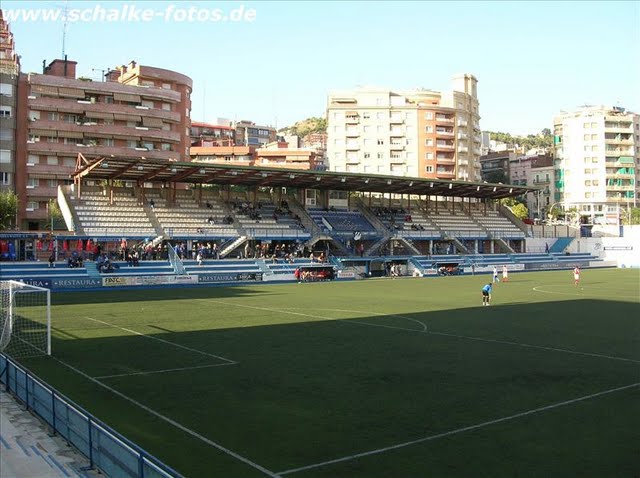
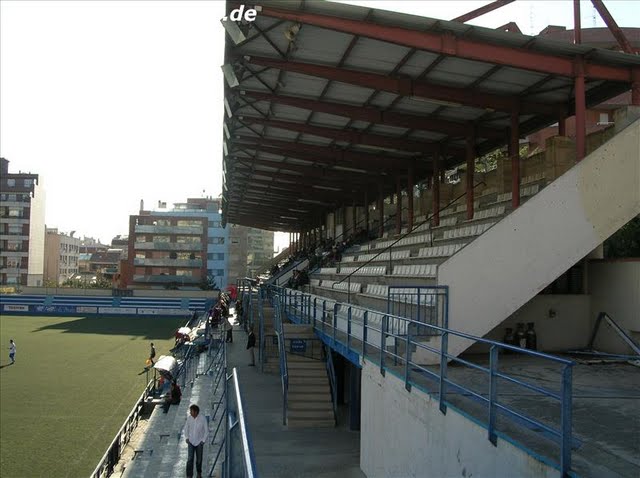
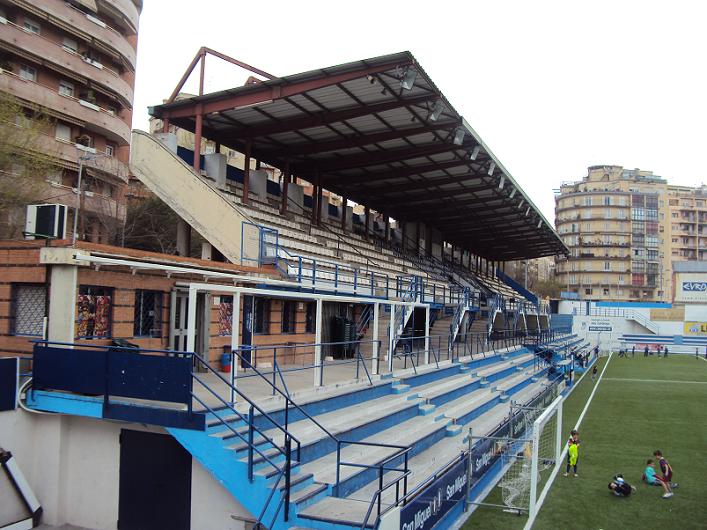
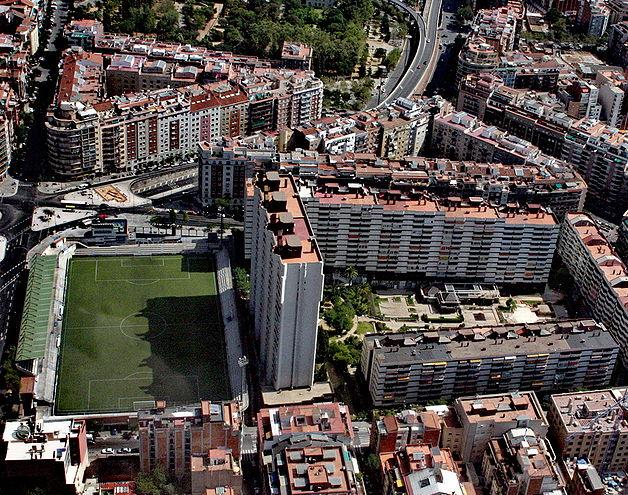
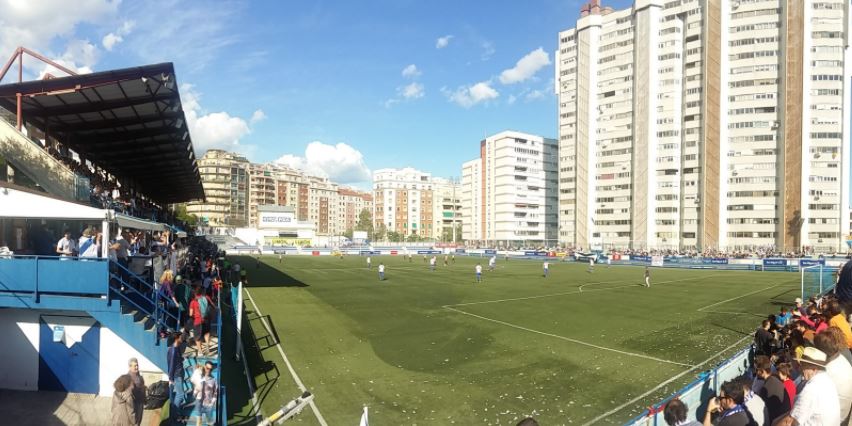
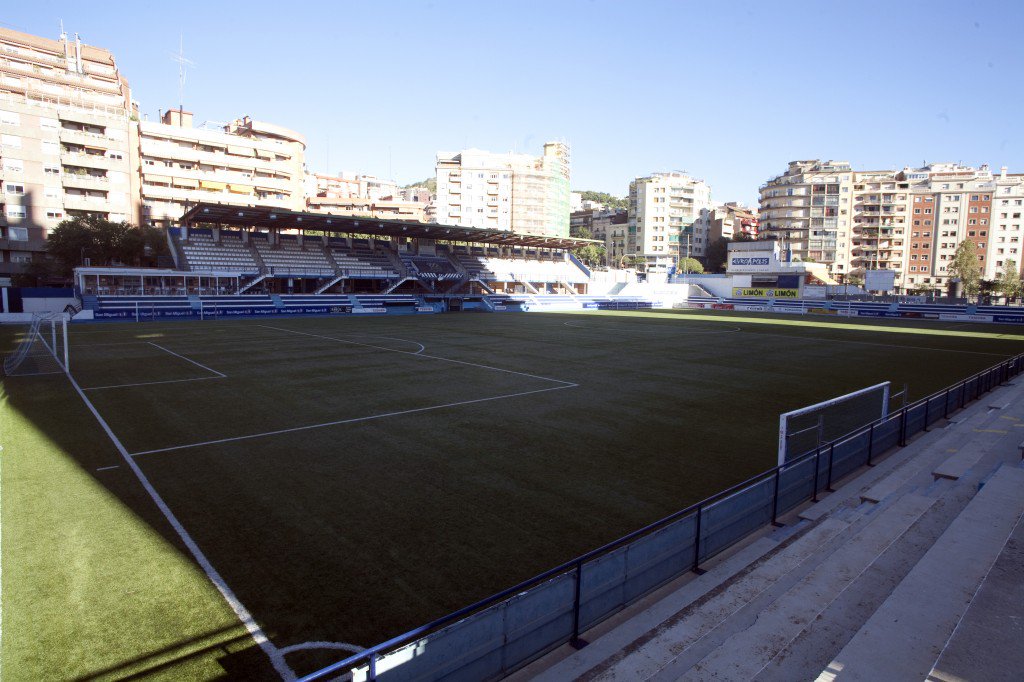
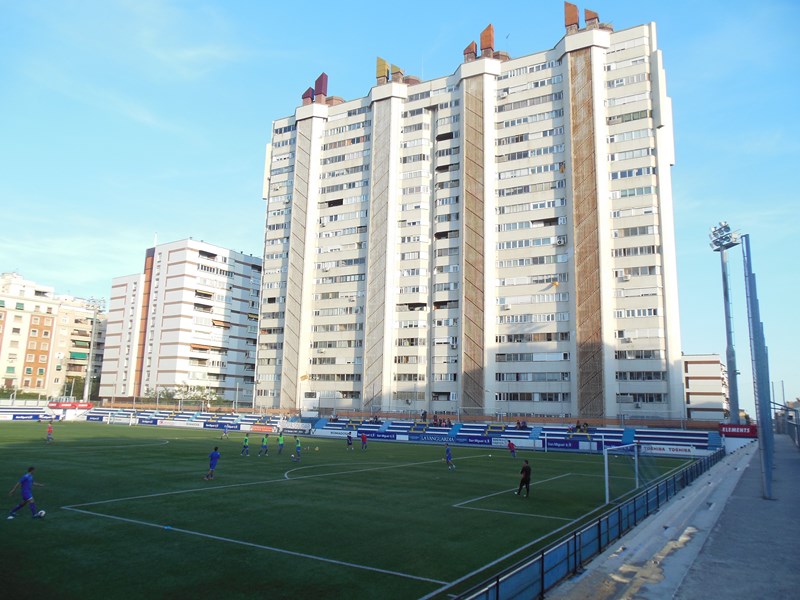
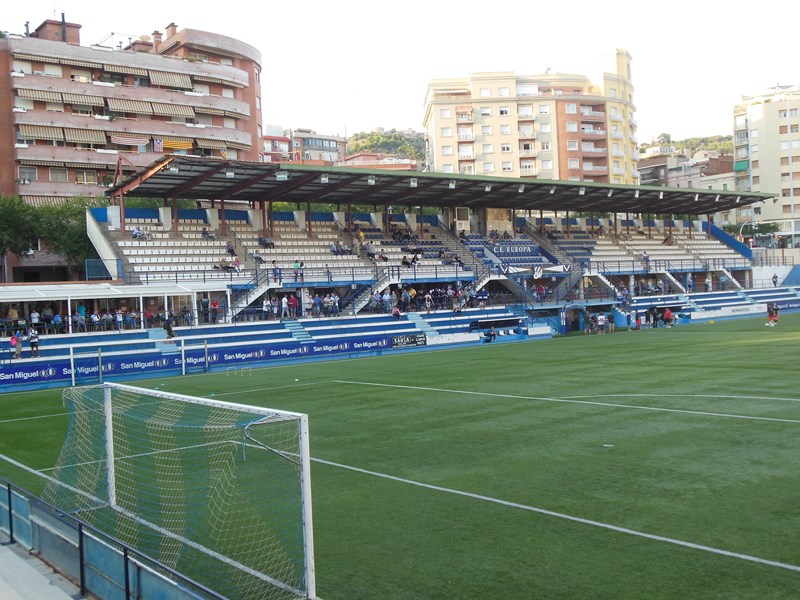
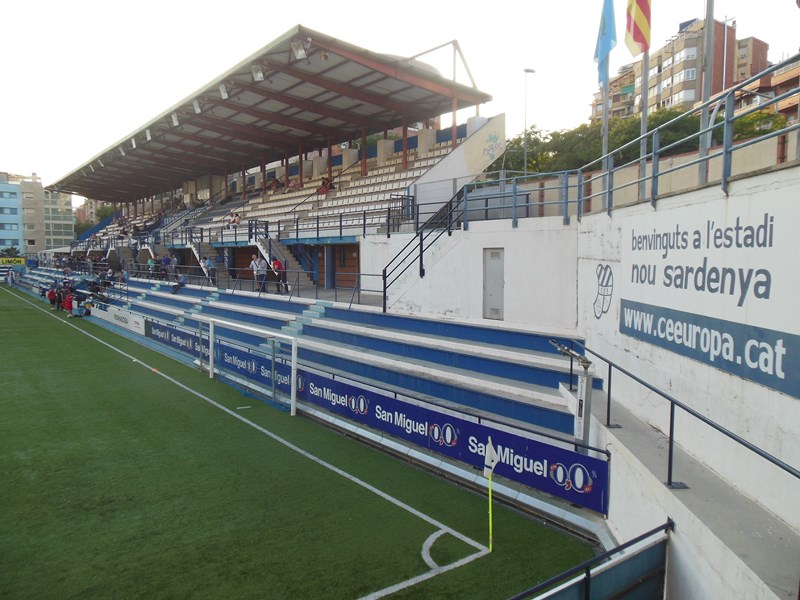
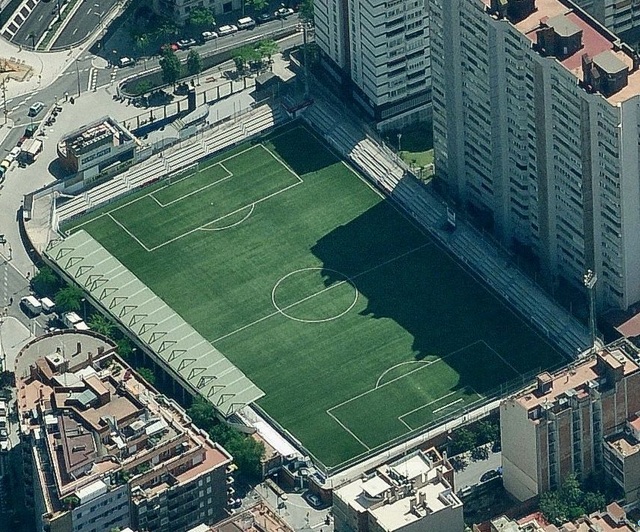
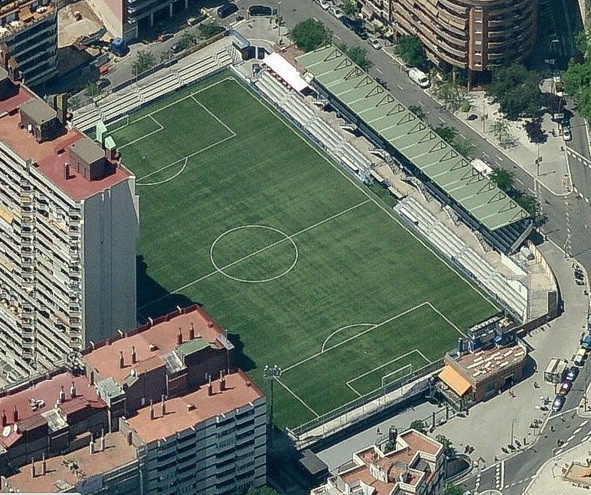
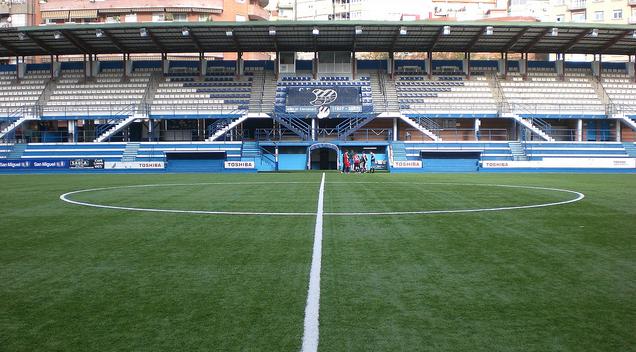
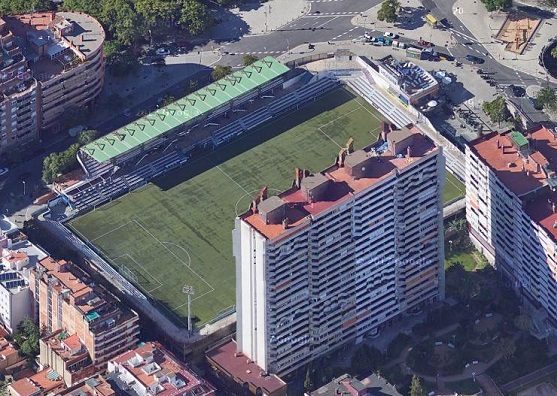
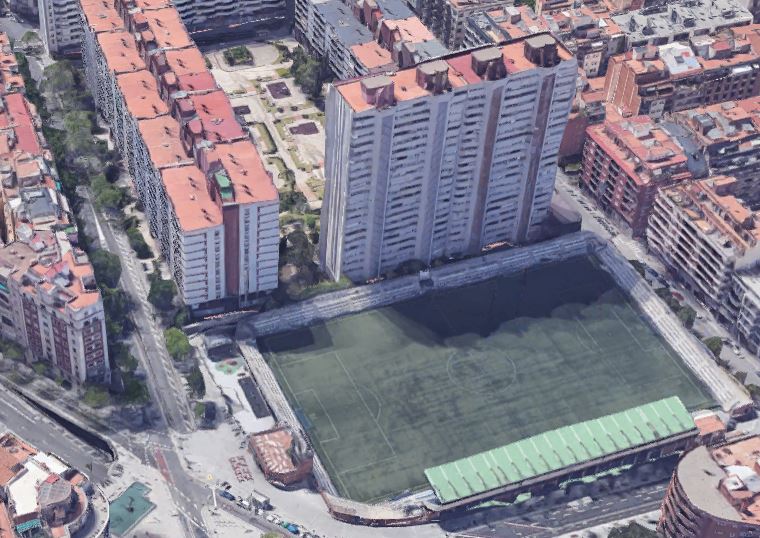
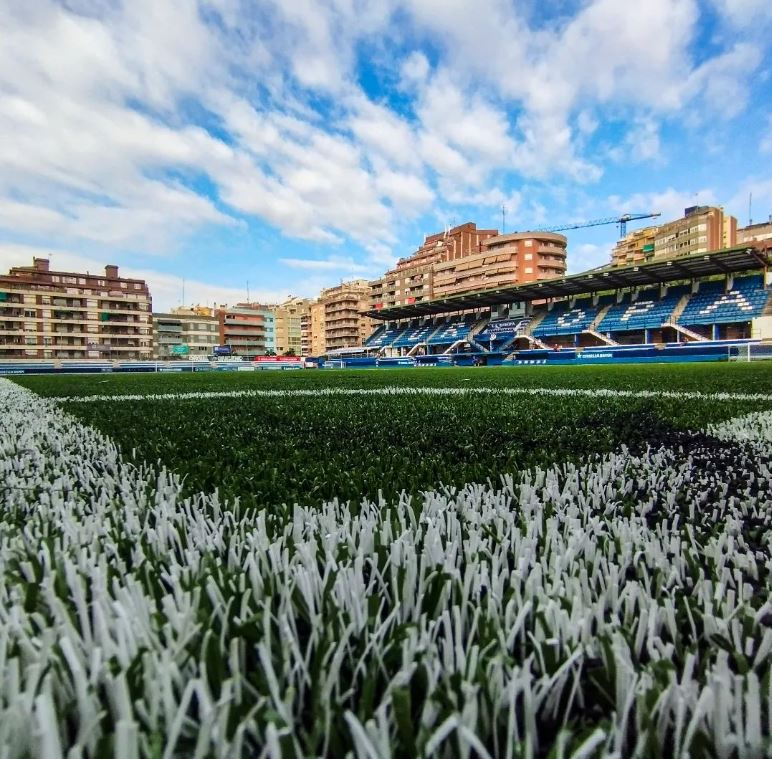
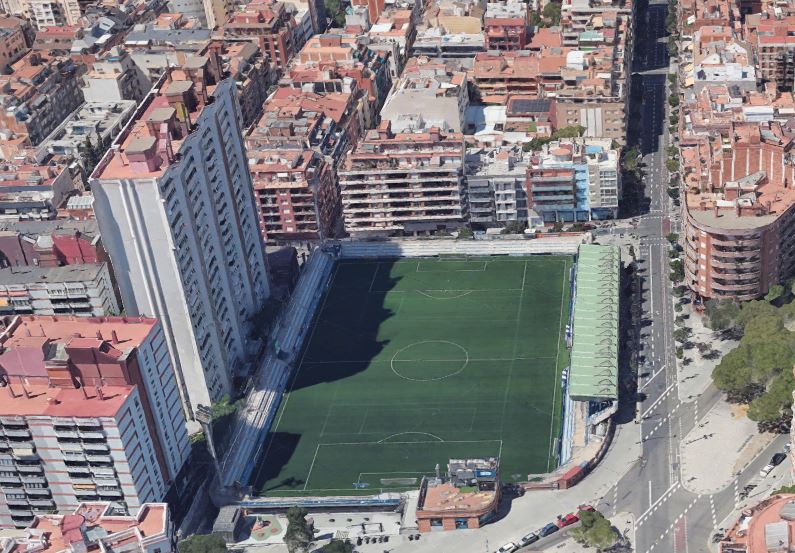
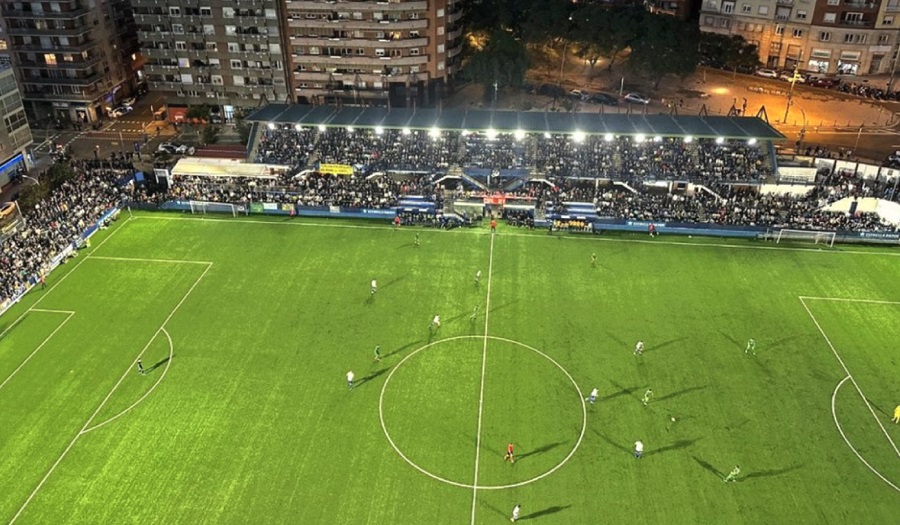
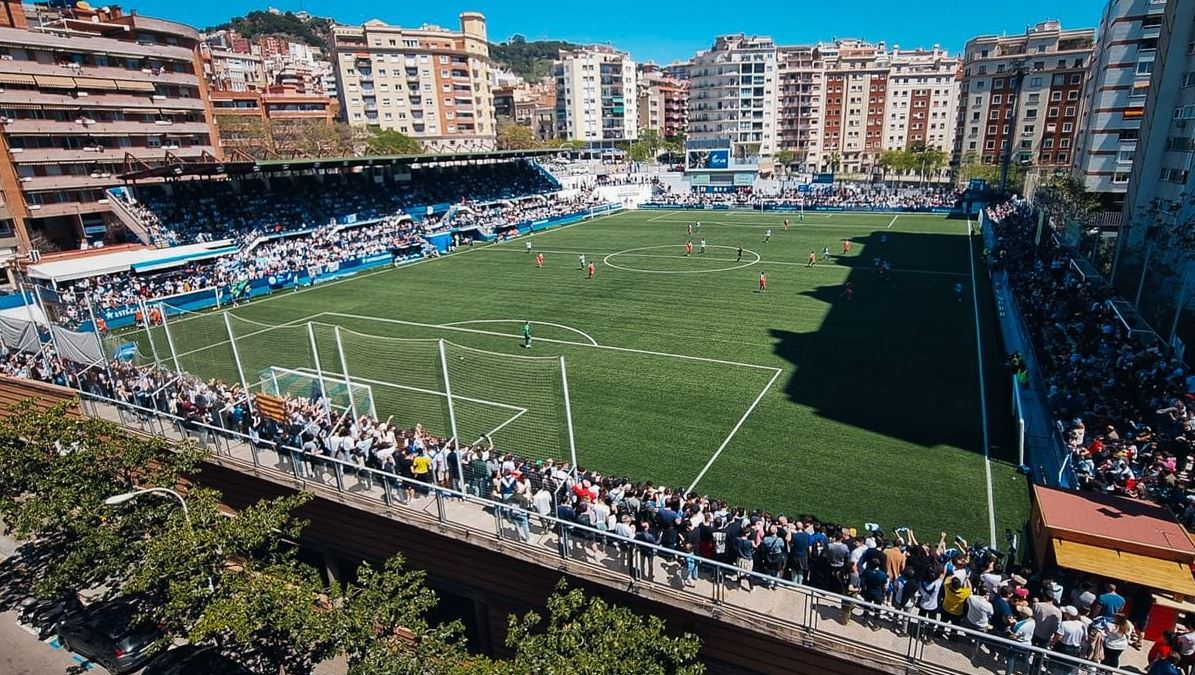
Officially opened on 4 May 1995, Nou Sardenya occupies the site of the former ground, only it is approximately 4 metres higher. That is down to the fact that the stadium sits on top of a municipal sports centre and underground car park. Along the north side of the ground is a modern 1,144-seat cantilevered stand, whilst five steps of blue and white terracing continue around the remainder of the enclosure. Not an inch of space is wasted, as the club offices sit in the vaults under the west terrace. Completed at 360 million pesetas (€2.2m), the Nou Sardenya has a capacity of 4,000. The whole complex still looks spruce, and when I visited it in March 2011, it was being utilised by every conceivable age group, from local school kids on the artificial turf to pensioners doing aqua-aerobics in the sports centre’s pool.

Europa is a genuine community club that is proud of its history, but still wants to make its mark as a football club. Just as they did in 1997 & 1998 when they beat FC Barcelona, containing the likes of Stoichkov, de la Pena, Couto, Sergi & Reiziger, to win the Copa Catalunya. A third Copa Catalunya was won in 2015, when Europa beat Girona 2-1 in the final, which heralded a new energy around the club. A series of top-three finishes in the Tercera went unrewarded with defeats in the playoffs. Finally, in 2020-21, the Tercera title was claimed and with it, automatic promotion to the Segunda Federación. Despite dropping back to the Tercera a year later, Europa won the Tercera title again and made an immediate impact back in Segunda Federación, finishing runners-up in the league, but lost to Betis Deportivo Balompié in the playoffs. Promotion to the Primera was earned when the club won the Group III title in the Segunda at the end of the 2024-25 season, ending a 30-year wait to return to the third tier.
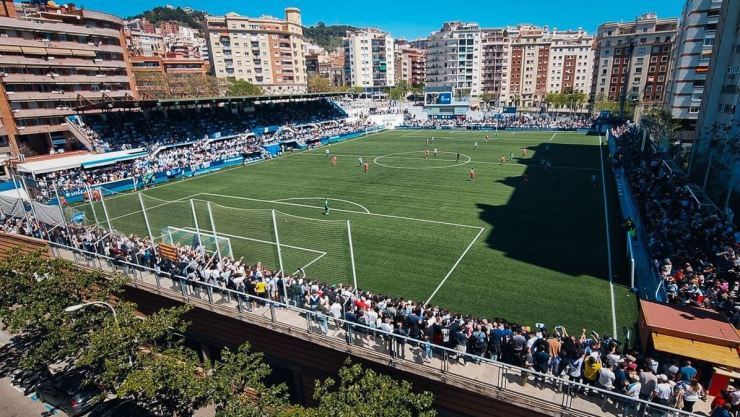
Promotion to the third tier brought with it the headache of where to play home matches. The RFEF’s competition rules state that Primera matches must be played on a natural surface. This would require a major feat of engineering, given the fact that the pitch sits on top of a car park & sports centre, not to mention the fact that the owners, Barcelona City Council, do not have the funds in their budget. The league gave the club until the halfway point in the 2025-26 season to come up with an alternative venue, with the club choosing the municipal athletics stadium at Can Dragó, some 3.5km northeast of the Nou Sardenya, in the Nou Barris district of Barcelona. This move is not without expense, as Can Dragó will need enhancements to the pitch, lighting, and the addition of temporary stands to meet the RFEF’s requirements.

 Estadios de España