
Is there a Spanish equivalent of Rovers or Wanderers? El Vagabundo? El Viajero? Maybe not, but over the past 100 years, Cultural Leonesa has had six permanent homes, not to mention a couple of temporary solutions as well. Cultural y Deportiva Leonesa, to give them their full title, was founded in 1922 and chose a site known as El Parque, 50 metres or so from the east bank of the Rio Bernesga. The site was levelled and enclosed and named the Campo de Guzmán due to its close proximity to the Plaza de Guzmán el Bueno. It had a short 40-metre cover on the west side of the enclosure and a decent bank of terracing on the east side.
Cultural reached La Segunda in the 1929-30 season. Although they finished bottom of the division and were relegated, they did pick up 5 wins & 4 draws during the 18-match campaign. Worse was to follow, when the club finished sixth in the Tercera and following an exodus of players, the board resigned and the club folded. Several clubs picked up the baton for football in the city, but the Civil War put an end to them and all footballing activity. After the war, with the military running the football federation, large cities were “invited” to participate in the new league structure. The local authorities struck upon the idea of resurrecting the old Cultural y Deportiva Leonesa club and an amateur club, SEU de León, provided the bulk of the squad when it was officially registered on 12 November 1939. The area around the Campo de Guzmán had been redeveloped, so the club used the ground at El Seu or San Mamés as it was also known, for the 1939-40 season. Then in 1940, Cultural moved to the southern edge of León, setting up home at La Corredera. It was here that the club reached La Segunda for a second time in 1942, after squeezing past Valladolid & Racing Santander in a tight playoff group. Cultural was relegated to the Tercera at the end of the 1944-45 campaign, following three mediocre finishes. Due to the club’s poor finances, they sold La Corredera and moved to the smaller Campo El Ejido in 1945.

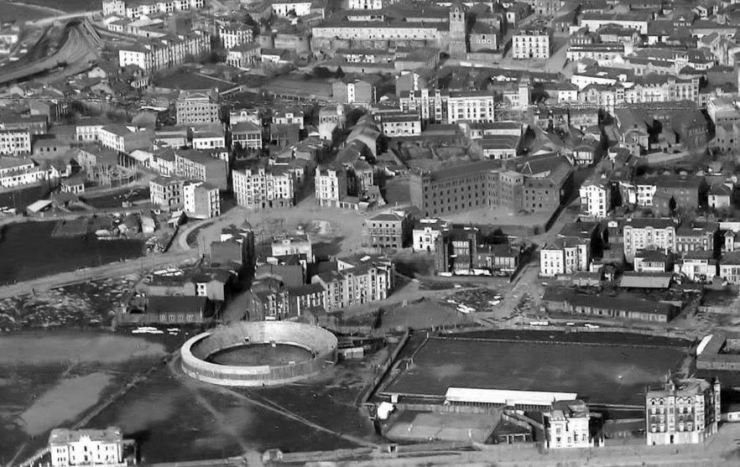
The Campo de El Ejido was situated on the eastern edge of the city, around 600m southeast of the city’s cathedral. Owned by the local municipality, the ground was shared with Deportivo Maestranza de León. It featured a low-covered terrace on the western side, hard standing on the east side and a cinder athletics track. Back in the Tercera, Cultural struggled to make progress until Antonio Amilivia arrived as president in June 1951. The club returned to La Segunda in 1953-54 and secured their highest final placing of fourth, In the following season, Cultural achieved promotion to La Primera when they finished first in Group 1 of the regionalised La Segunda. This presented a massive problem for the club, as even by 1950s standards, El Ejido was simply not up to hosting top-flight football. Terraces had been added to the arcs behind each goal, but the capacity and facilities were well below top-flight standards.

The club & the Municipality had been planning a new stadium, but Cultural’s rapid ascent meant that their original plans had to be scaled back if the new stadium was to be used in the Primera. In what must have seemed like a scene from an Amish chapel build, the new ground at La Puentecilla was constructed in little over three months. The league allowed Cultural to play its first three home fixtures of the 1955-56 campaign at El Ejido, and they saw the ground off in style with a 3-0 victory over Valencia on 9 October 1955. Two weeks later, on 23 October 1955, 27,427 spectators watched Cultural play Athletic Bilbao in the first match at La Puentecilla, and although Athletic won 1-3, the club collected over 1 million pesetas at the gate, thanks to what was, and still remains the club’s record attendance. Regrettably, the stay in La Primera was a short one, one season to be precise. Cultural’s record of 5 wins, 4 draws and 21 defeats has secured the club’s place at the foot of the Clasificación Histórica de Primera División.

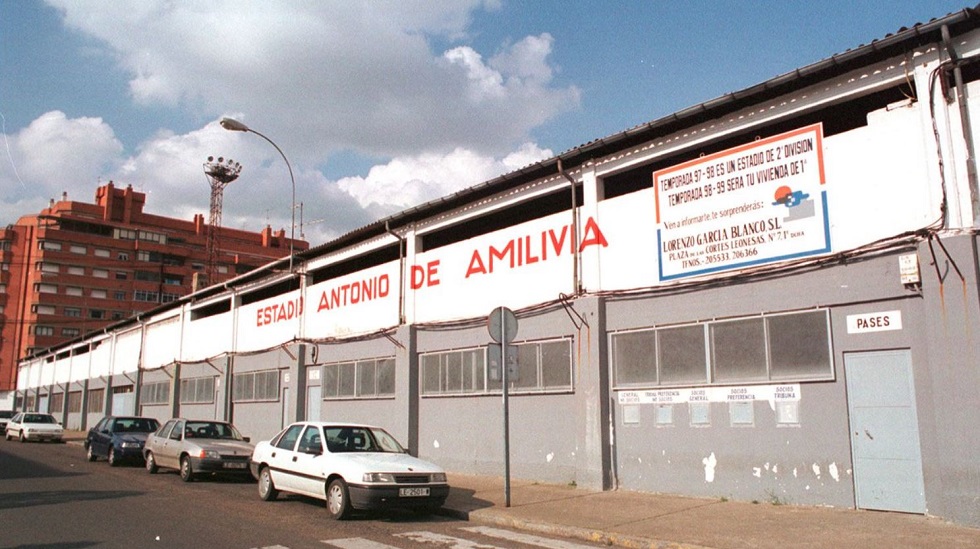
The club remained in La Segunda until 1962, before dropping back to the Tercera. At the turn of the new decade, the stadium was renamed in honour of their former president, Antonio Amilivia. Cultural won the Group 1 Tercera title in 1970-71, squeezing ahead of Ourense by a point, to secure a place back in La Segunda. The club finished a very creditable fifth in the second tier in 1971-72, however, they were relegated at the end of the following season. Despite bouncing back to La Segunda immediately, they dropped back to the Tercera in 1975, and La Puentecilla would see out its remaining two decades in the third & fourth tiers, by which time its capacity had been capped at 12,844.

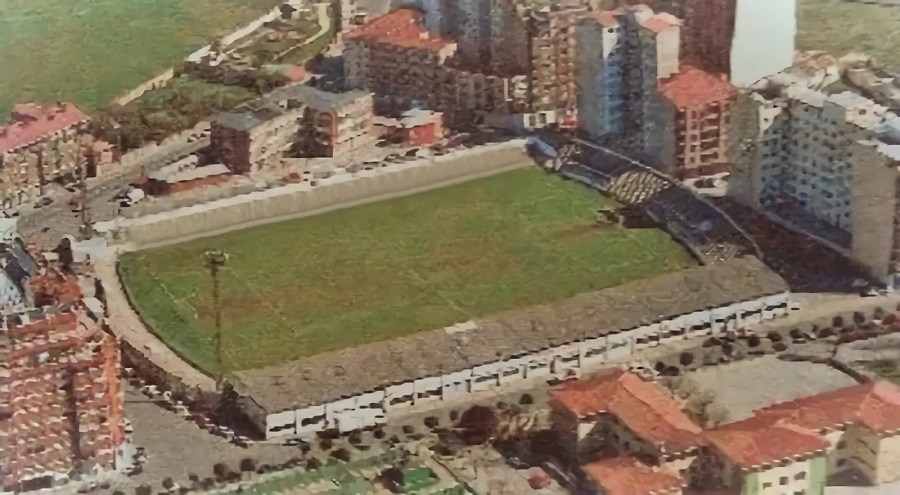
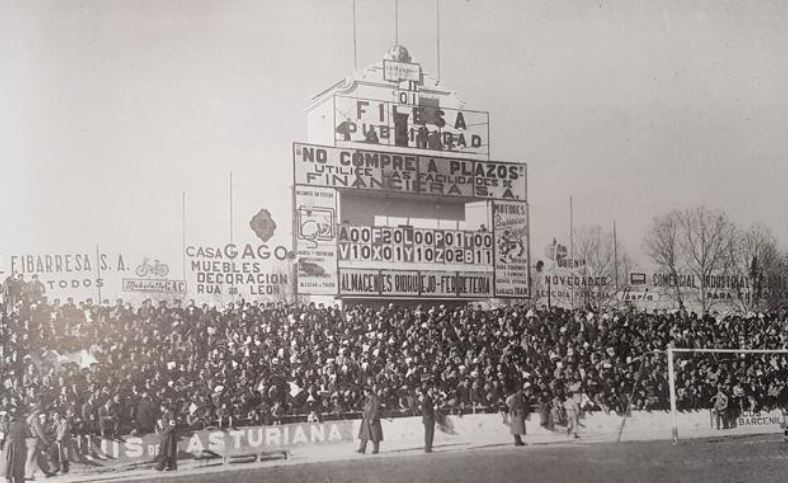
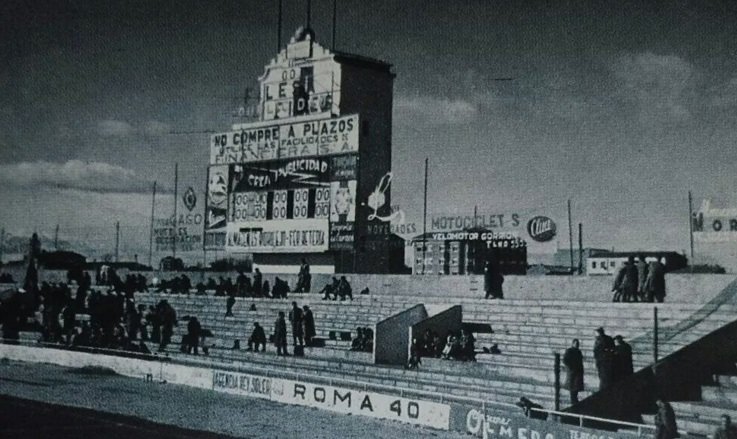
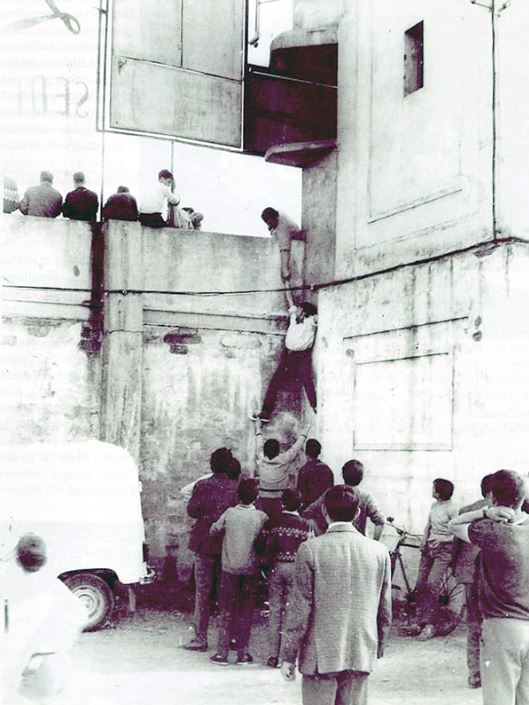
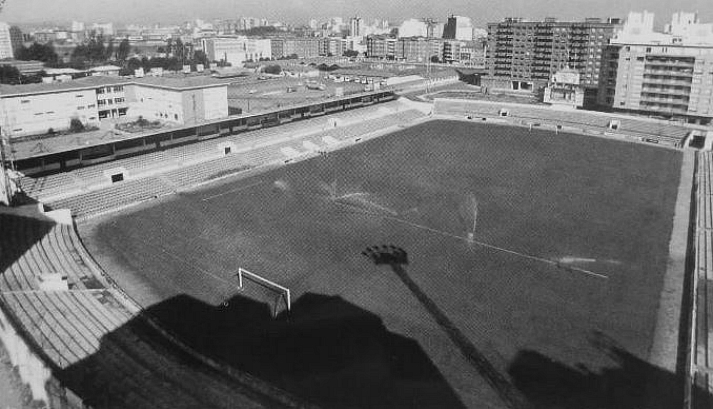
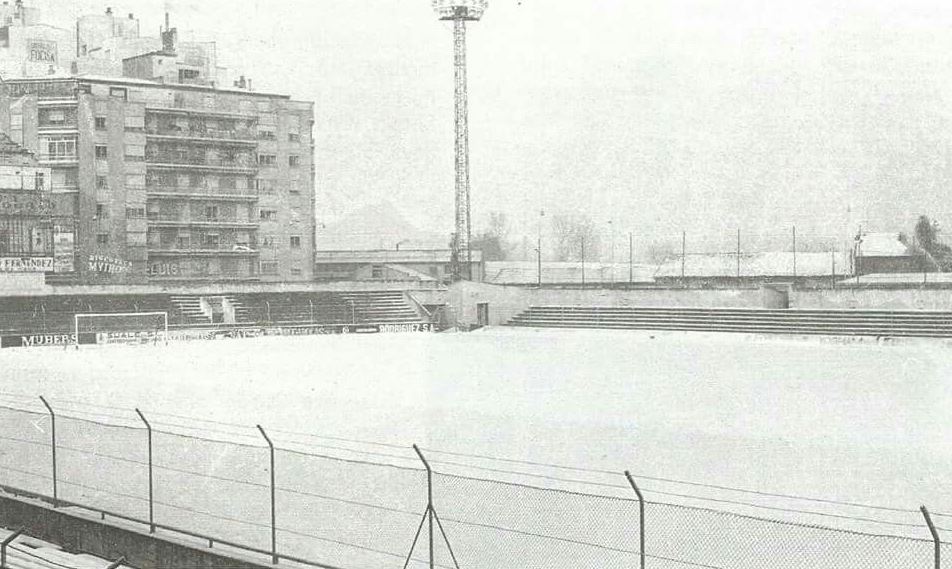
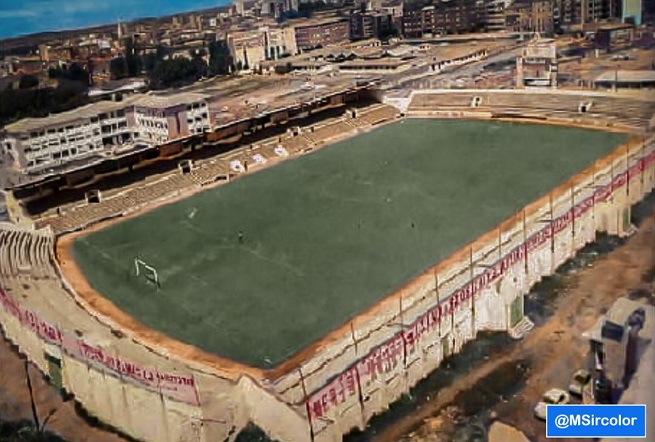
La Puentecilla was built on open land to the southeast of the city. By the time of its closure, León’s urban sprawl had surrounded it. The main stand featured a single tier of seating with a low propped cantilevered roof. The remaining three sides were made up of decently sized terraces, and behind the north terrace stood a tower which also incorporated a fantastically ornate scoreboard. On 31 October 1998, Barakaldo was defeated 4-1 in the last match at the ground. La Puentecilla and its surrounding tenements were soon demolished, but all memories of the old stadium have not been erased. The Calle La Puentecilla, a nondescript suburban street, follows the line of the north terrace and its grand old tower.
The municipality had plans for a new stadium a mile or so west of La Puentecilla, close to the west bank of the Rio Bernesga, but this was still at the planning stage, so for the better part of 3 seasons, the club played at Deportiva de Puente Castro. This was far from ideal as it offered basic facilities for fans and even less in the way of cover in what can be the coldest region in Spain. The Deportiva de Puente Castro had a maximum capacity of 4,600 and Cultural played its final first-team fixture at the ground on 13 May 2001, beating Real Unión 2-0. Victory confirmed Cultural’s position at the end-of-season playoffs and a week later they hosted CD Xerez at the brand-new Estadio Reino de León.
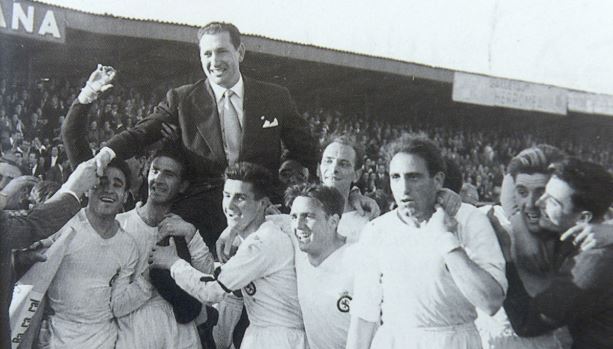
Cultural win promotion at the Campo El Ejido (10/04/55 vs Avilés 3-2) 
The last match at El Ejido – Cultural beat Valencia 3-0 
The first match at La Puentecilla (23/10/55 vs Athletic Club 1-3) 






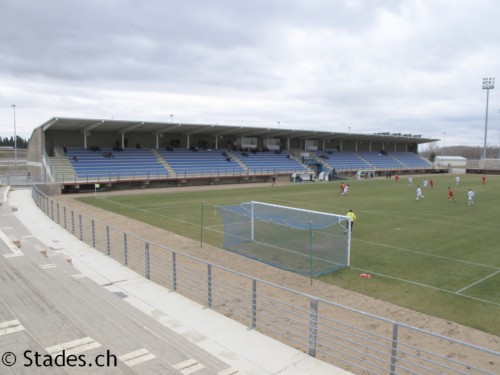
Deportiva de Puente Castro 
Deportiva de Puente Castro 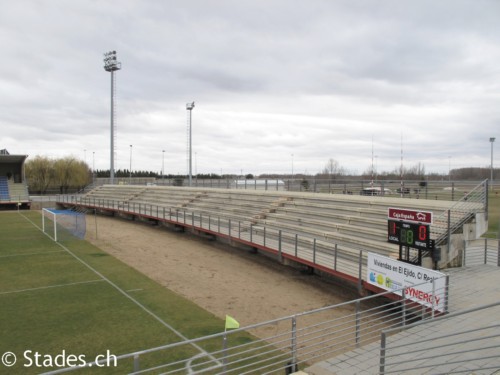
Deportiva de Puente Castro 
Deportiva de Puente Castro 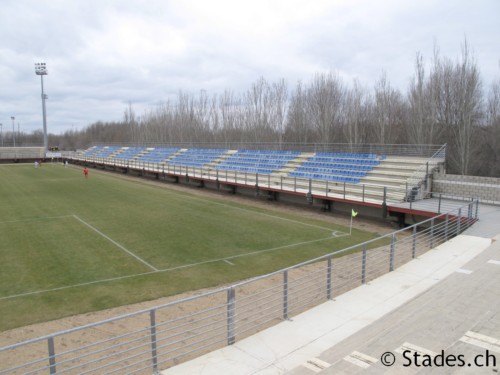
Deportiva de Puente Castro
 Estadios de España