
Article updated on: 15/09/2025
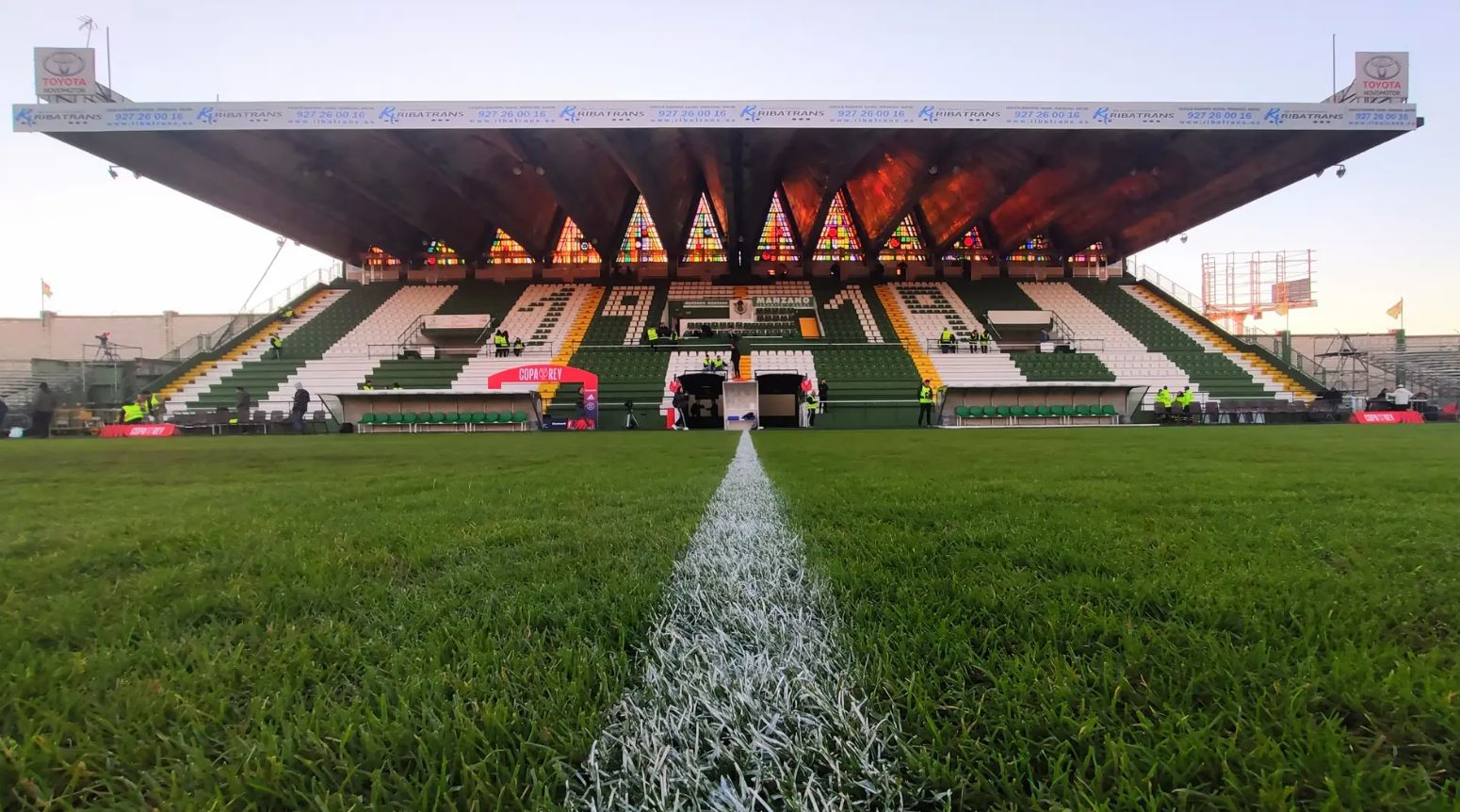
Since its formation in 1919, Club Polideportivo Cacereño has played in four stadiums, but none have been quite as striking as the Estadio Príncipe Felipe. To be honest, it is only the main stand that warrants that description, but this truly unique structure simply takes one’s breath away. Good things come to those who wait, so more on their current stadium later. In the meantime, let’s have a potted history of the club’s first six decades.
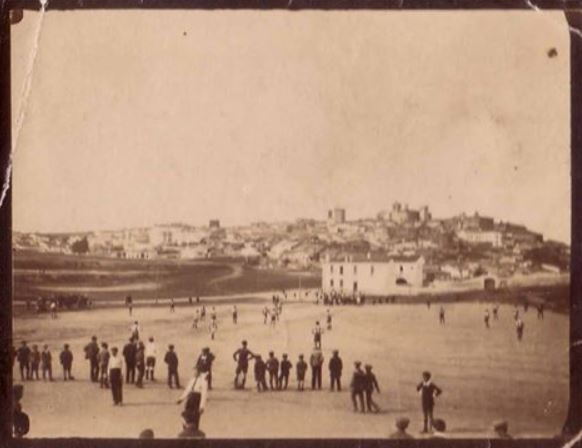
On 16 January 1918, Señores Alcoraz, Cuesta & Boaciña founded Club Deportivo Cacereño, a general sports club for the city of Cáceres. Just over a year later, the footballing section of the club was formed, and matches were played at the Campo del Rodeo in the La Charca area of the city. Back then, games were fairly sporadic as the region of Extremadura did not have a formal football federation. On 8 April 1923, the club inaugurated the new Campo de Cabezarrubia on the main road to Merida, but as the decade advanced, interest in the club waned and other clubs from Cáceres grew in strength whilst Cacereño became more and more marginalised.
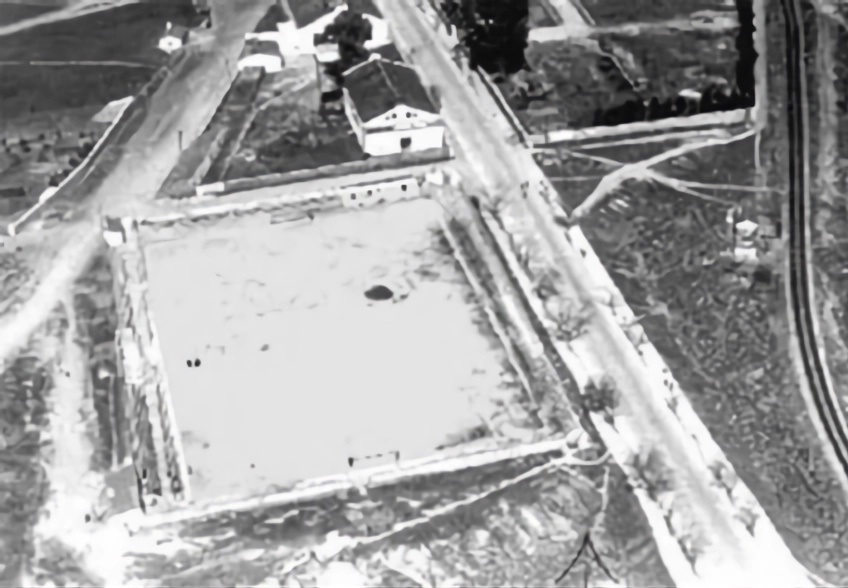
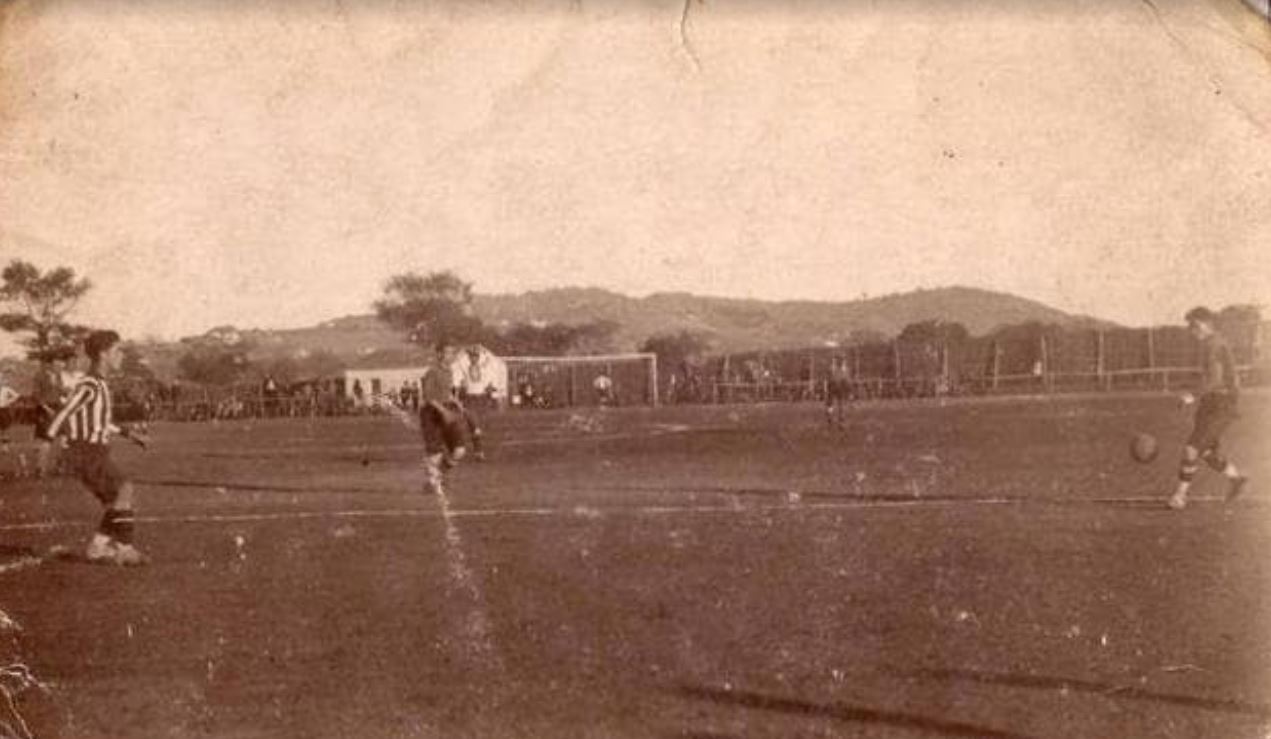
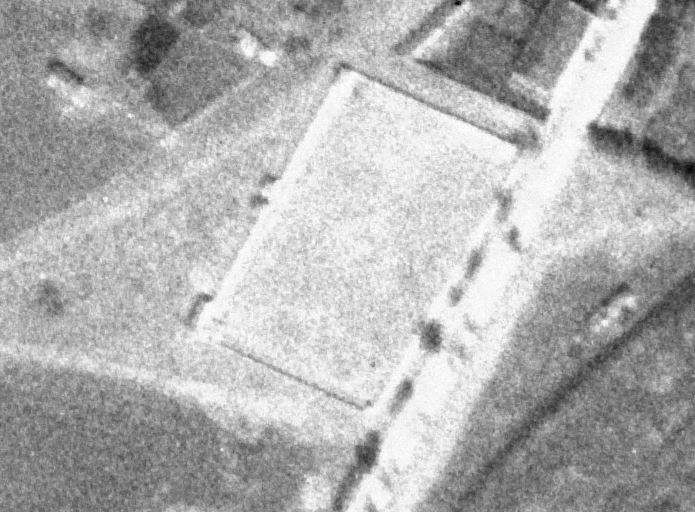
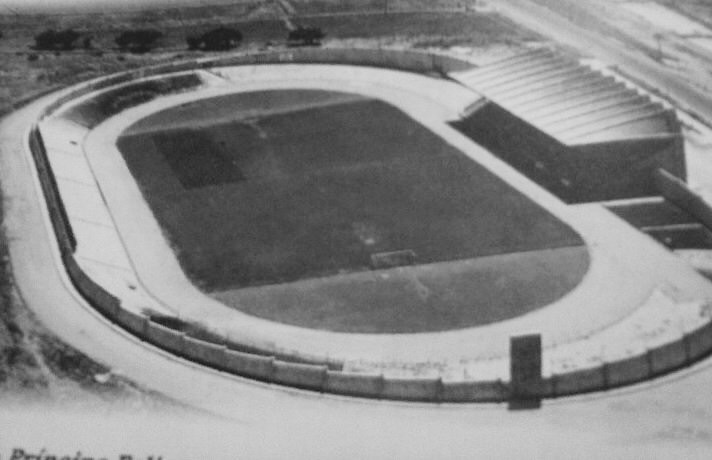
Ironically, the disruption brought about by the Civil War proved to be the salvation of Cacereño, as many of the better-established teams from the city did not re-emerge after the conflict. With its own ground, Cacereño attracted many of the city’s top players, took on new colours of green and black and ultimately the mantle of the province’s top club. Organised football followed, and Cacereño joined the southern federation of clubs and won its first Tercera title in 1943-44. Results continued to improve, and as interest grew, the Campo de Cabezarrubia became obsolete. So in 1949, the club moved to the new Municipal Ciudad Deportiva.
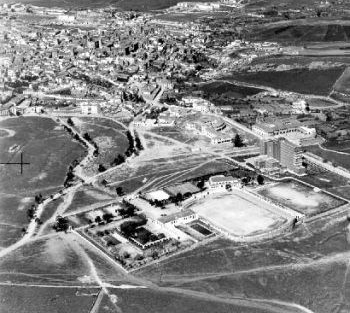
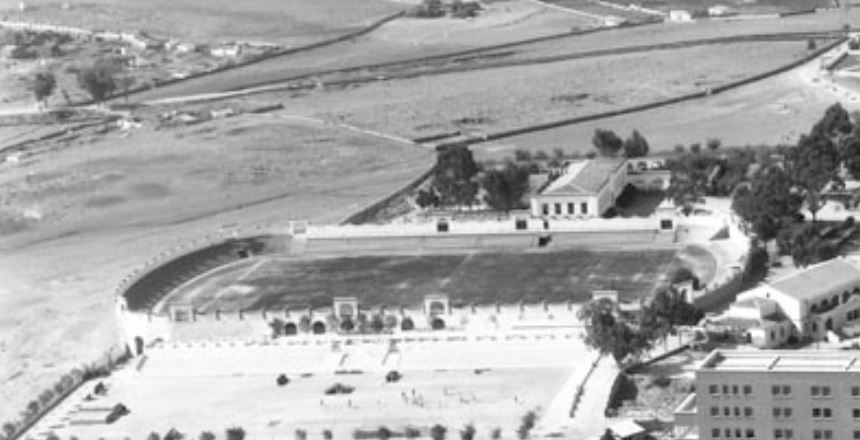
As is often the case, the new stadium saw an improvement on the pitch with consecutive Tercera titles won in 1950-51 & 51-52, the latter earning promotion to La Segunda. During the summer, improvements were made to the Ciudad Deportiva, raising the capacity to 10,000 and a grass pitch was laid. In truth, it was a step too far as Cacereño struggled from day one, losing 0-3 in UD Las Palmas. There were some impressive results, notably a 2-1 victory at home over eventual champions Real Jaén, but results on the road were poor and included a club record defeat of 1-9 at Plus Ultra, Real Madrid’s reserve side. Relegation back to the Tercera was inevitable, but the club did better in the Copa Federación Española, the secondary knock-out competition, eventually losing t 0-1 Rto eal Valladolid in the final at the Estadio Metropolitano, Madrid.
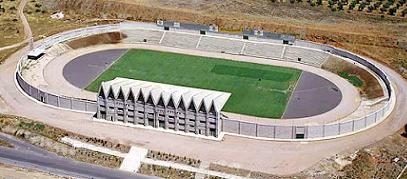
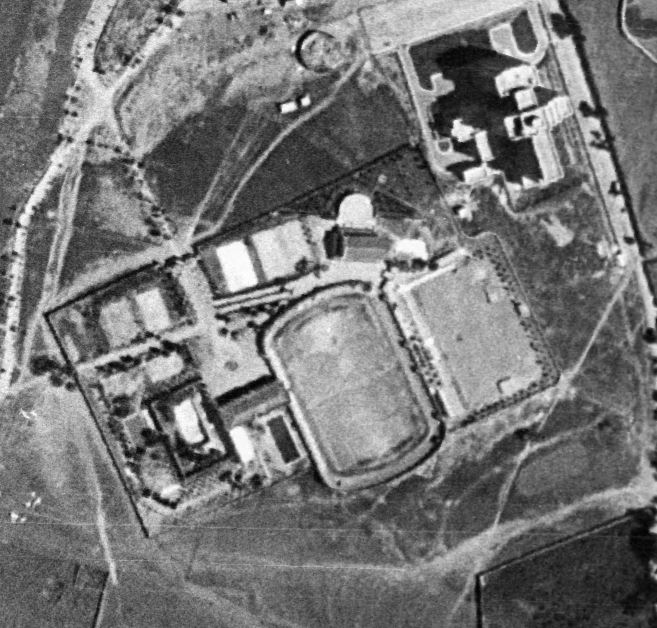
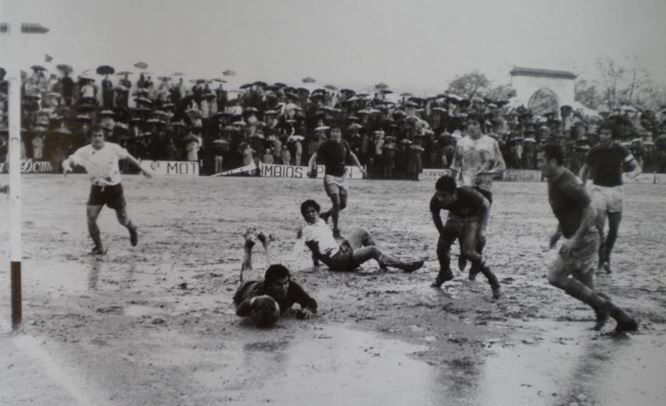
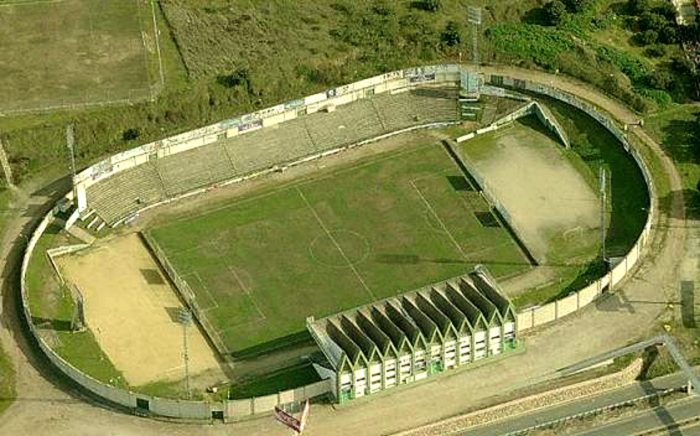
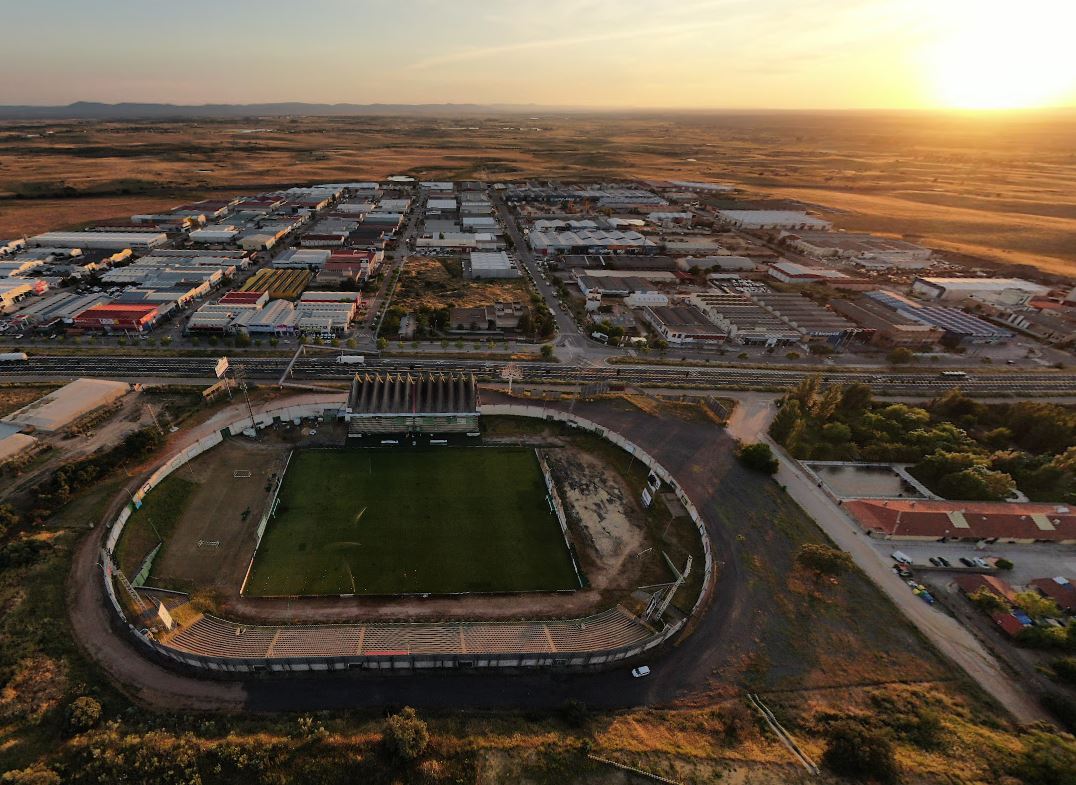
Over the next 15 seasons, Cacereño won two further Tercera titles and qualified for the end-of-season playoffs on six occasions. Alas, knock-out football was not the club’s forte, and promotion remained elusive. The early 1970s saw a decline in fortunes, and the club was relegated to the Regional Preferente on three occasions. In 1976, the municipality decided to reconfigure the Ciudad Deportiva as well as build a new football stadium to the northwest of the city on the Carretera de Salamanca. Opened on 26 March 1977, the Estadio Príncipe Felipe ushered in a new dawn for the club. The magic of a new stadium worked again, as Cacereño won the Tercera in 1977-78 and entered Segunda B for the first time. Regrettably, like their previous promotion, the stay lasted one season, with the club finishing eighteenth, one point from safety.
Cacereño returned to Segunda B in 1987-88 but was again relegated after one season. The 1990s saw a run of seven seasons in Segunda B, including winning the league title in 1997-98. The post-season form returned to haunt the club when they finished bottom of a relatively easy group, featuring Mallorca B, Athletic Club B and Granada CF. Three seasons later, Cacereño was back in the Tercera, but what followed was a record-breaking season. The 2001-02 season saw the club break all sorts of records, winning 33 of its 38 matches, scoring 131 goals and amassing 101 points. The playoffs were successfully navigated, and hopes were high that the club would finally establish itself in Segunda B and beyond. The club became a limited company in January 2003, but an economic downturn resulted in the sale of players and by September 2004, the club had dropped back into the Tercera. Promotion back to Segunda B was won in June 2009 at the expense of Yeclano Deportivo, Club Haro Deportivo and SD Tenisca.
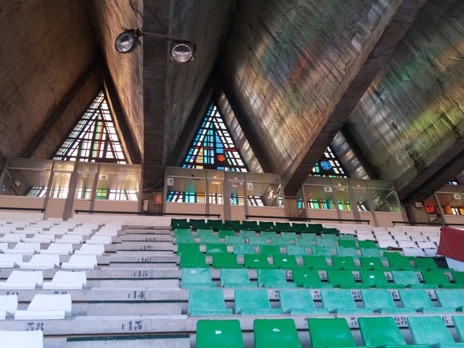
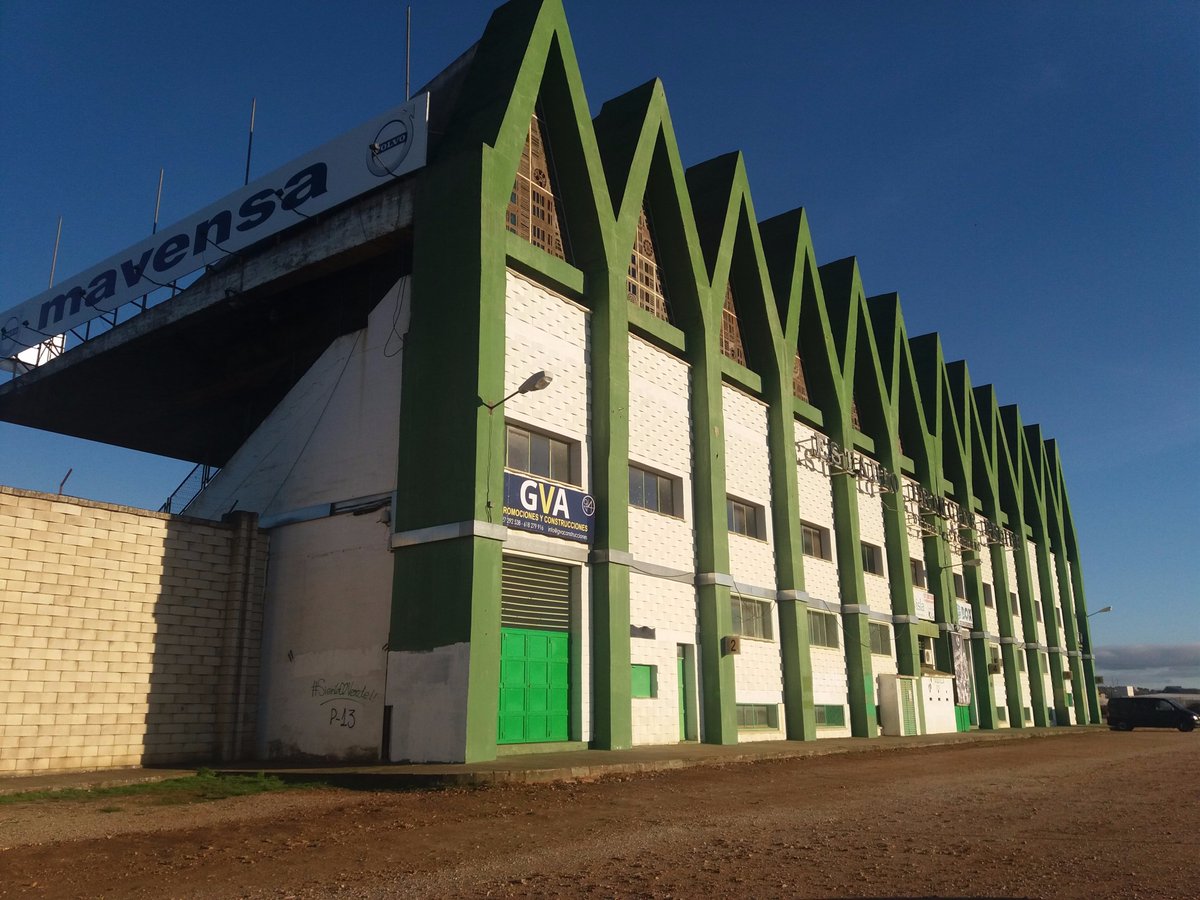
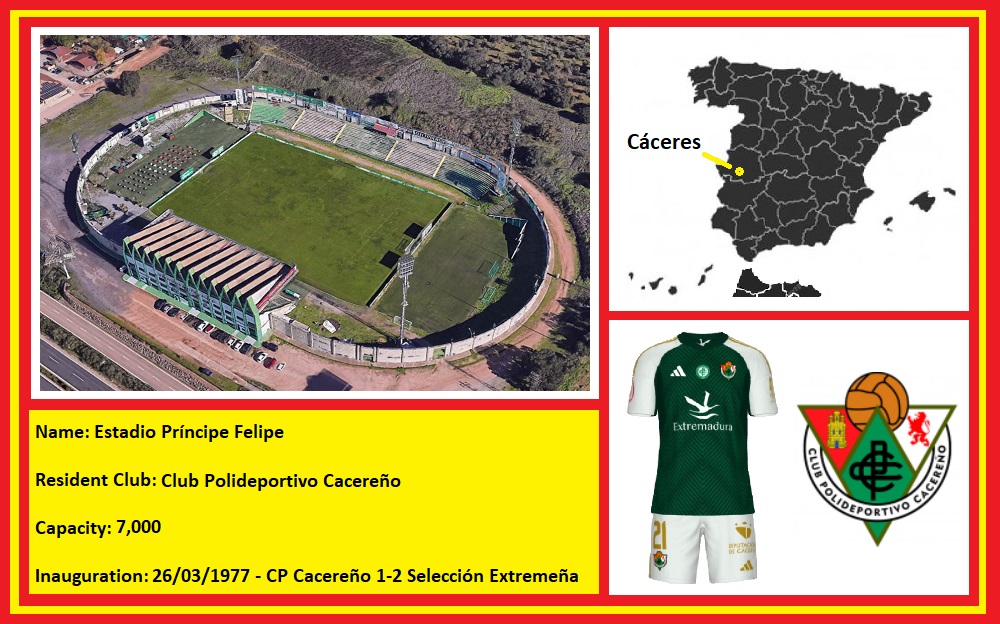
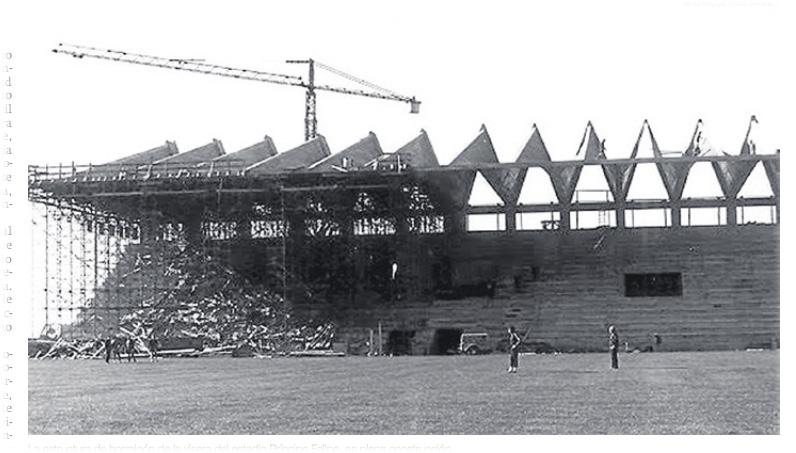
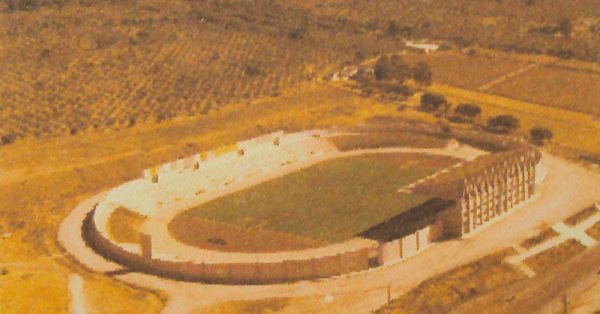
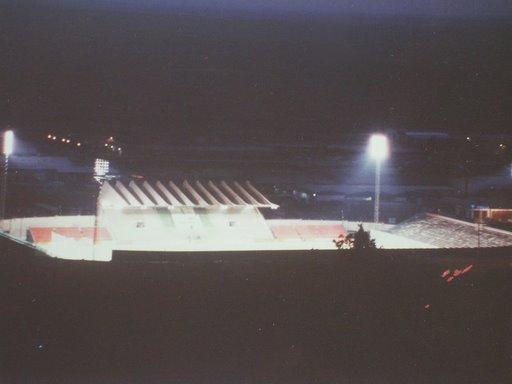
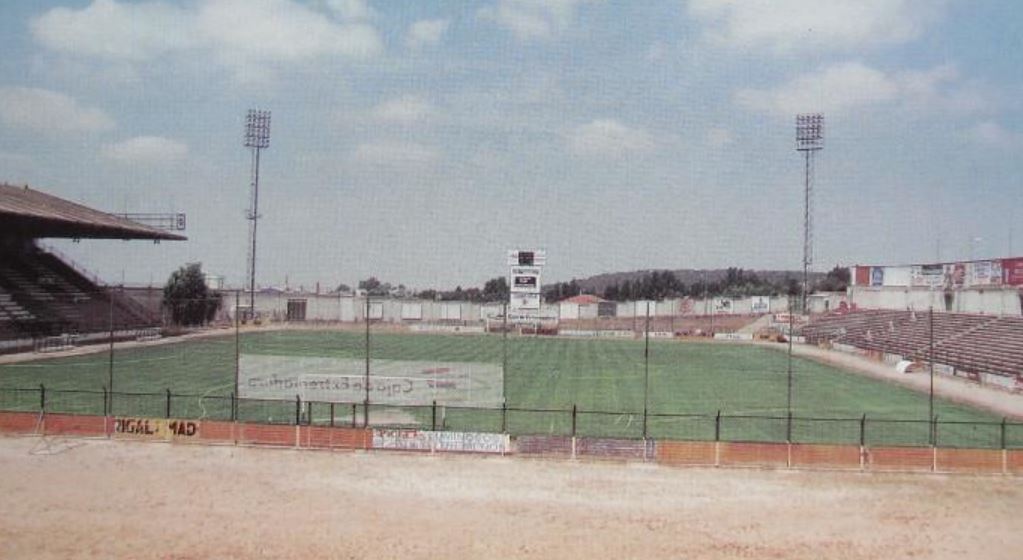
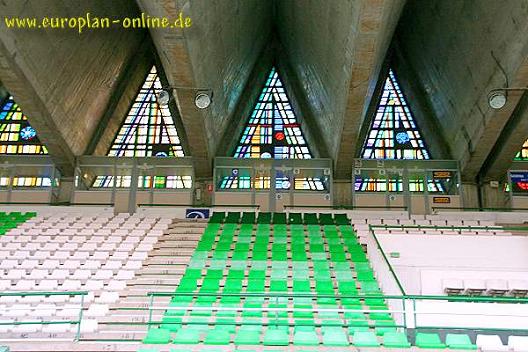
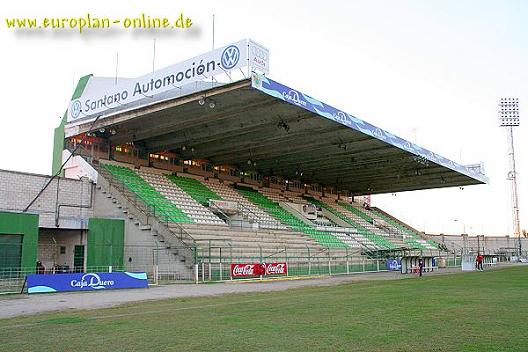
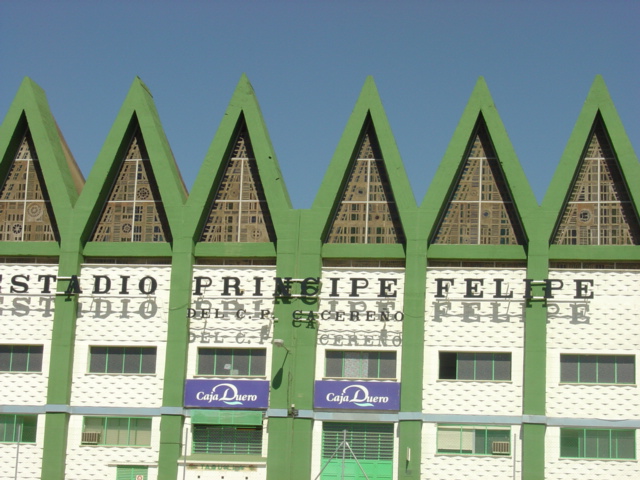
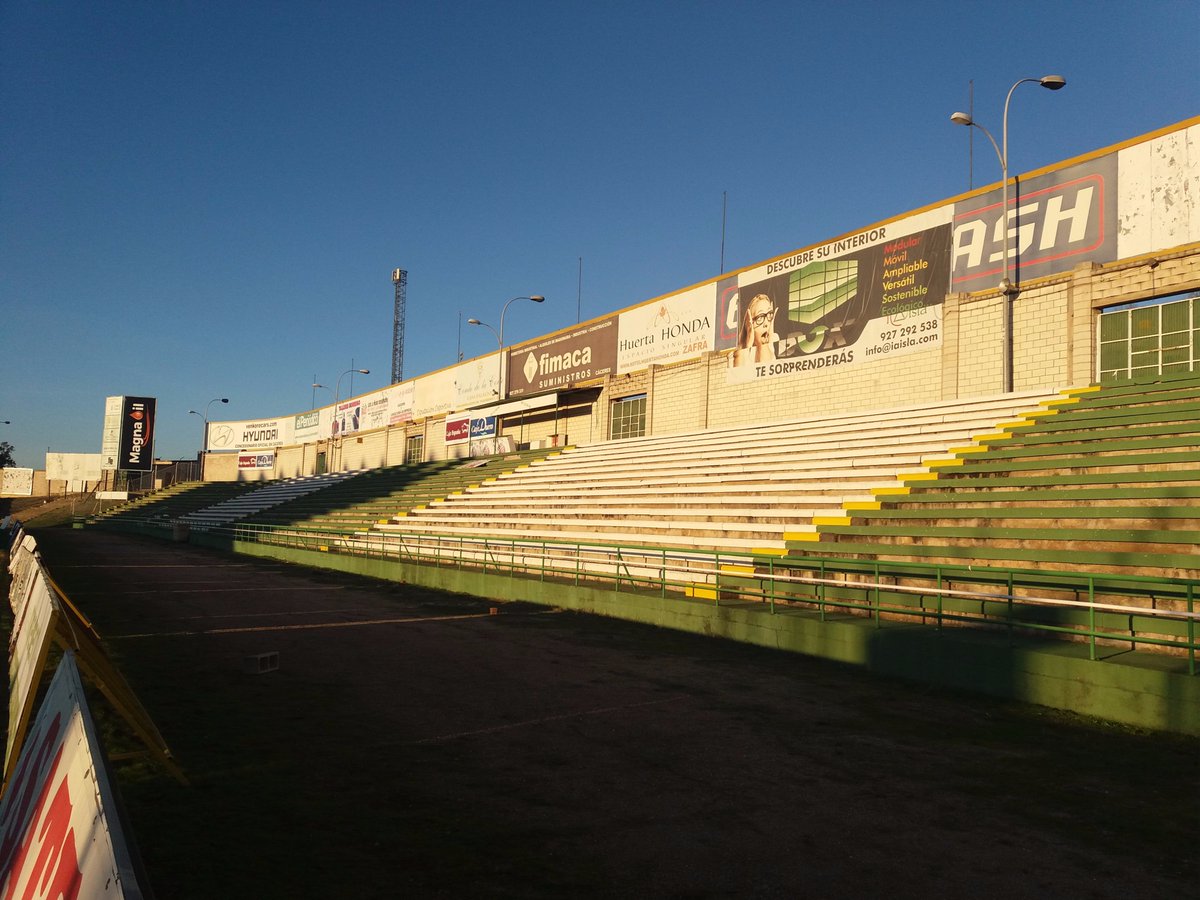
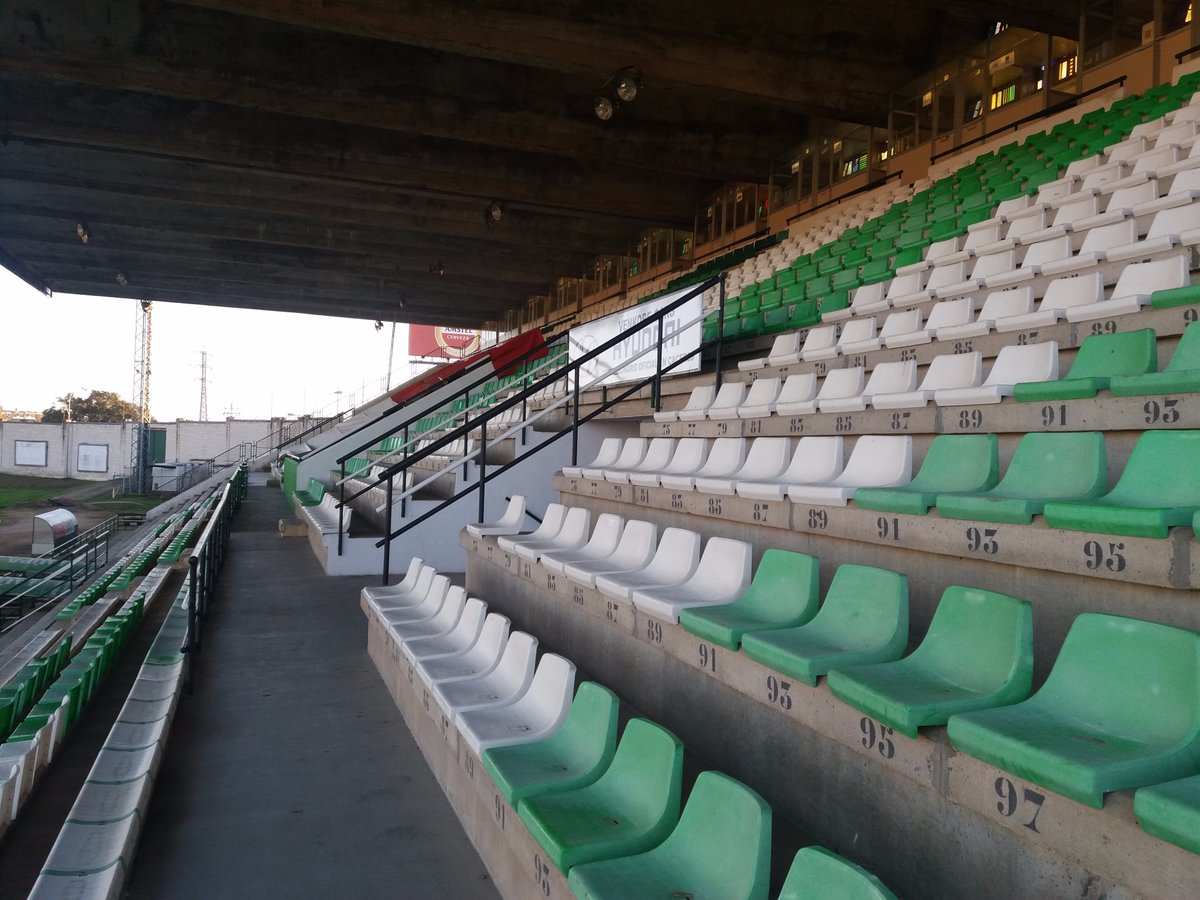
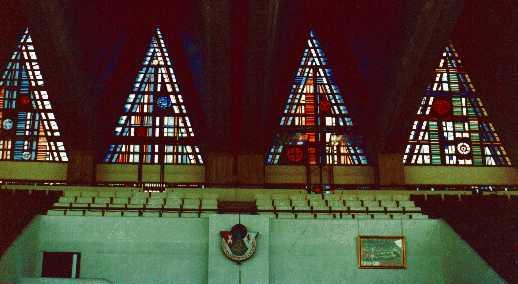
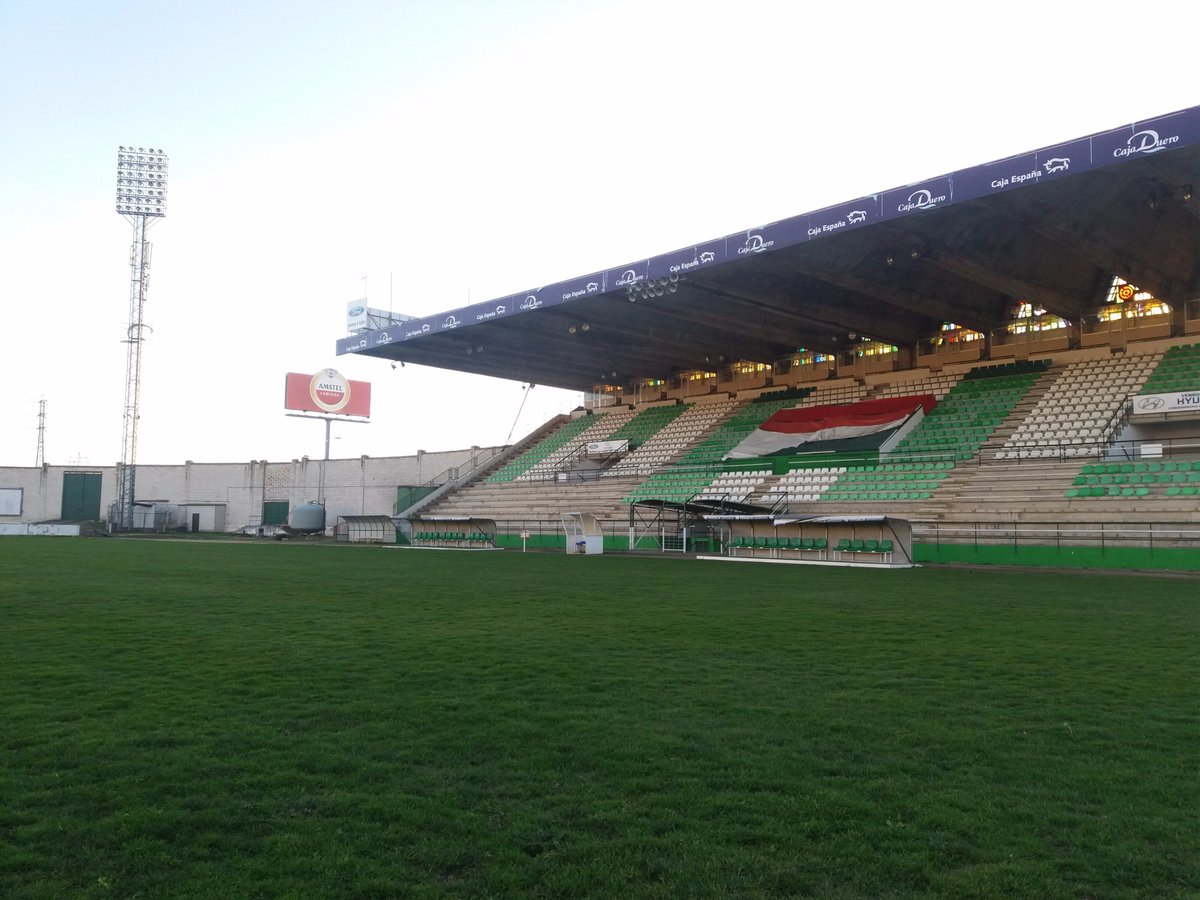
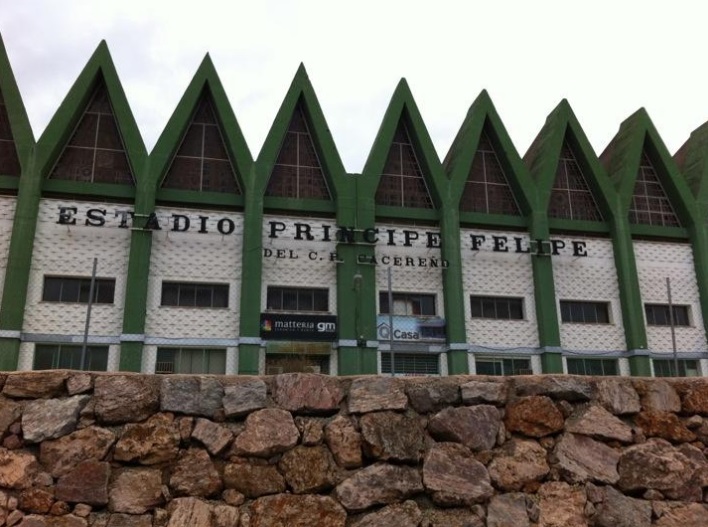
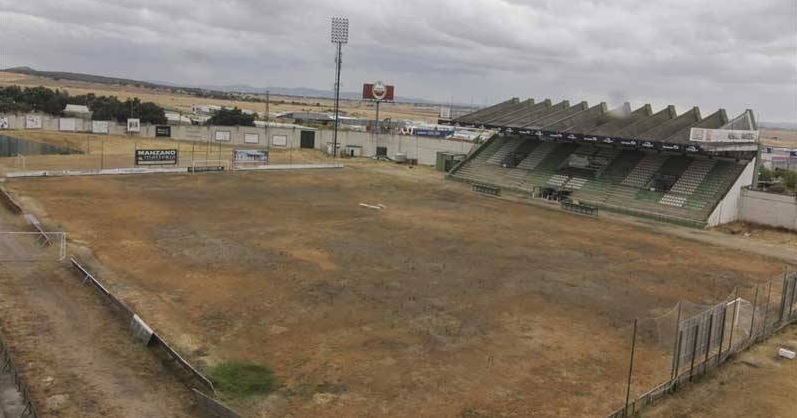
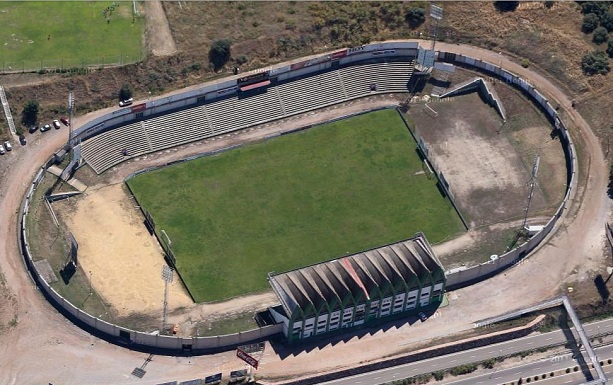
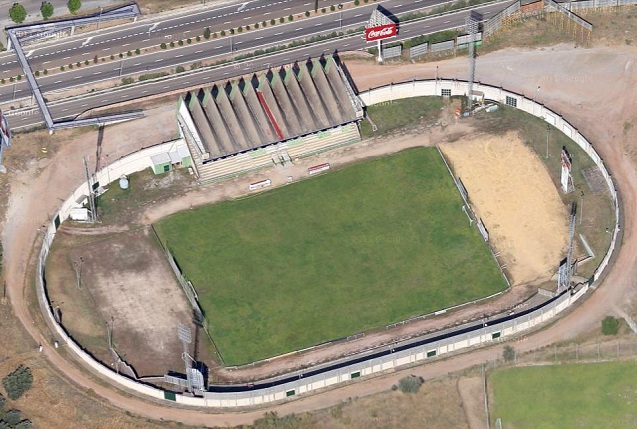
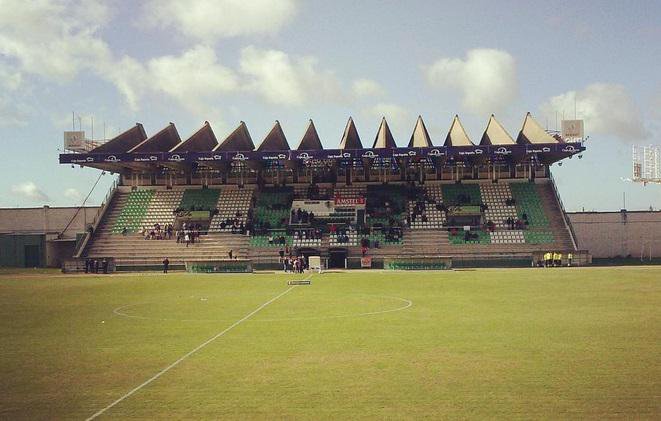
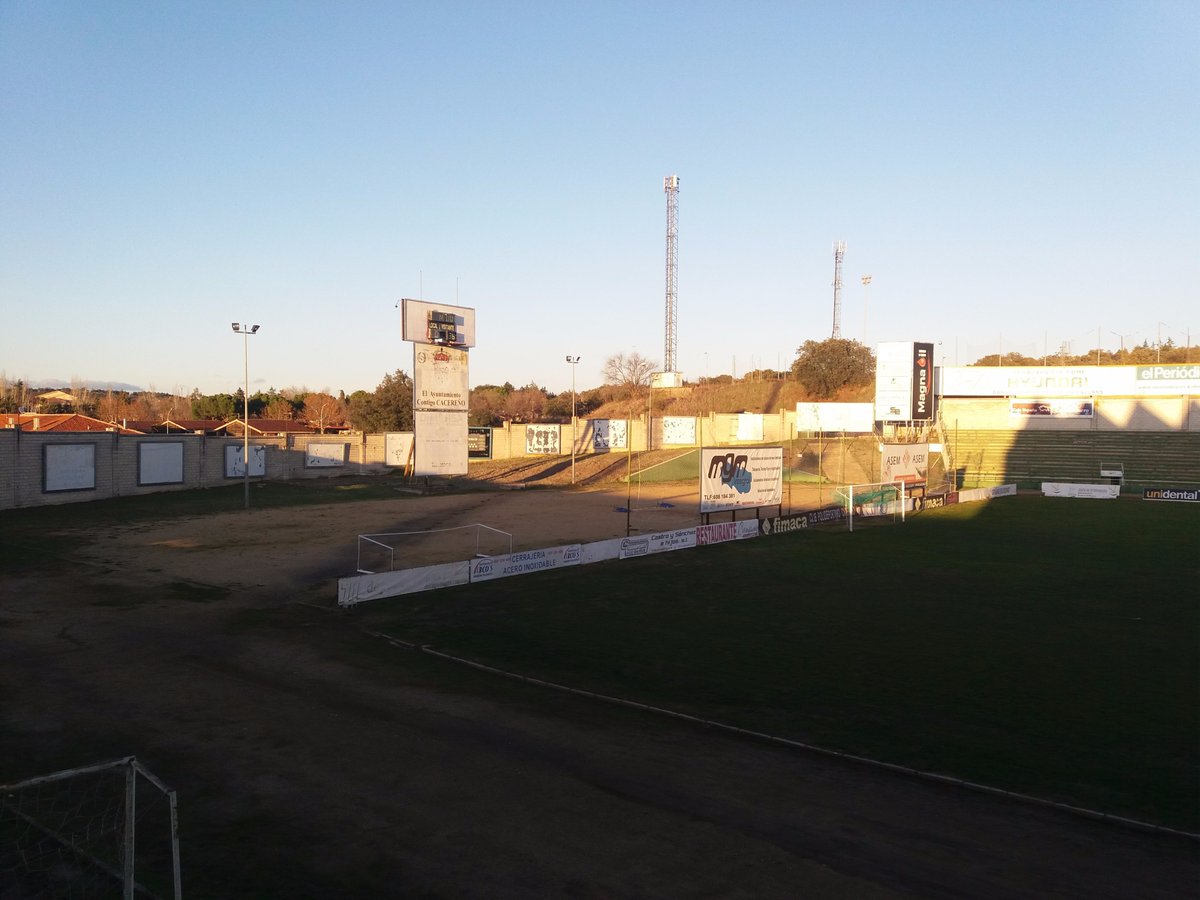
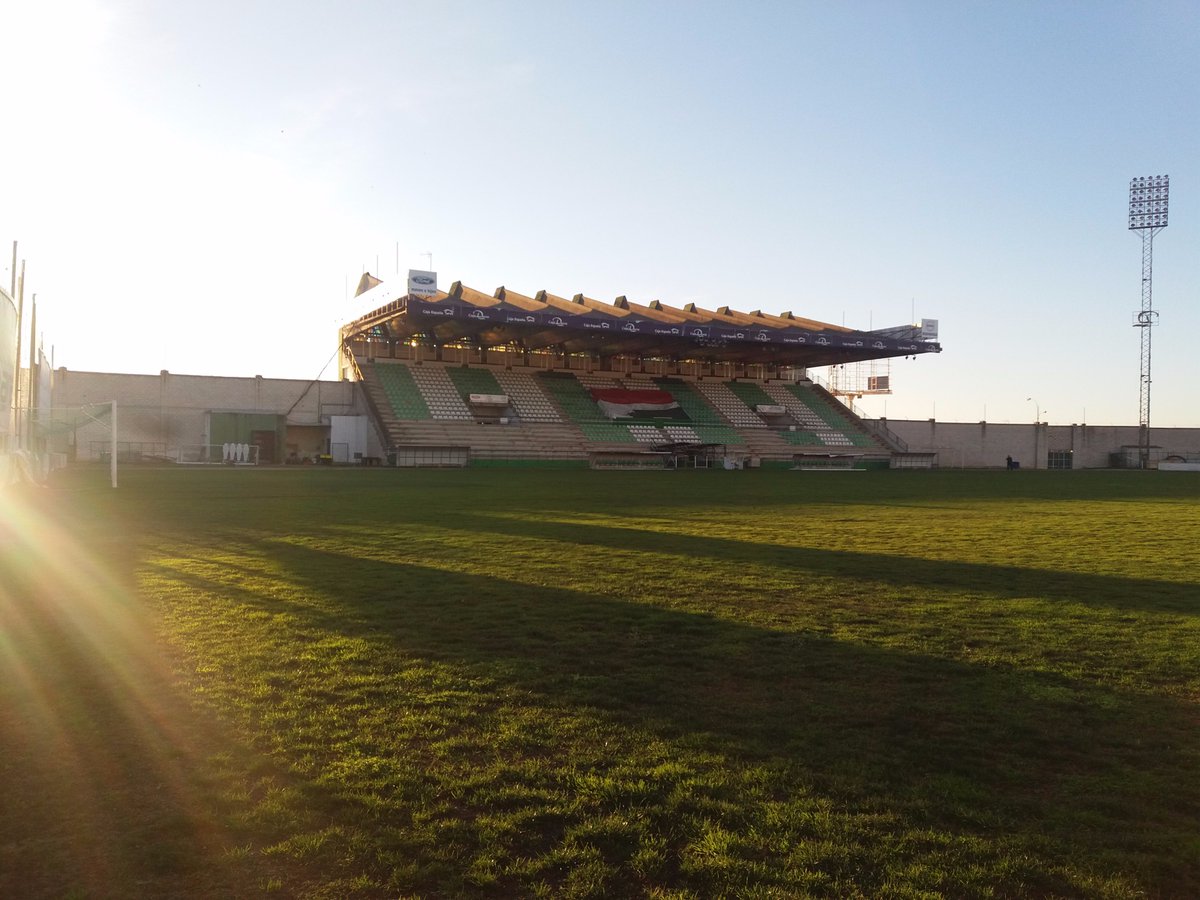
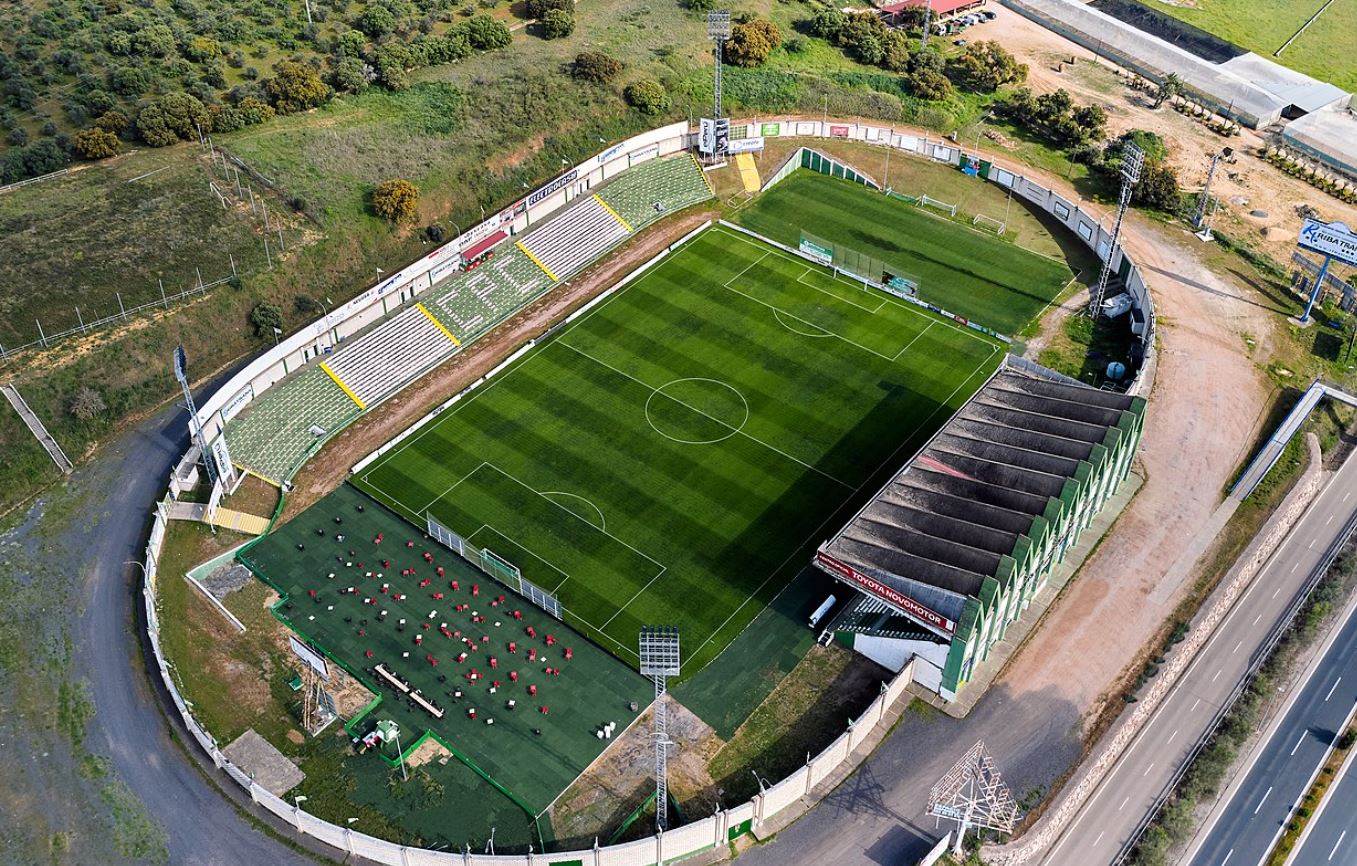
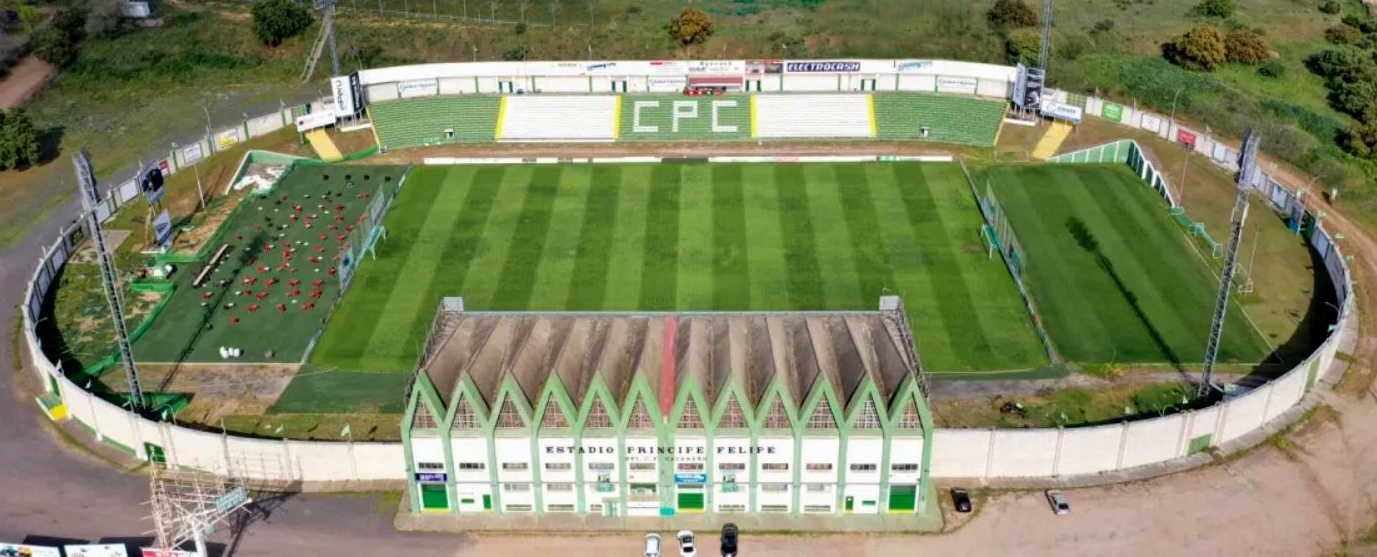
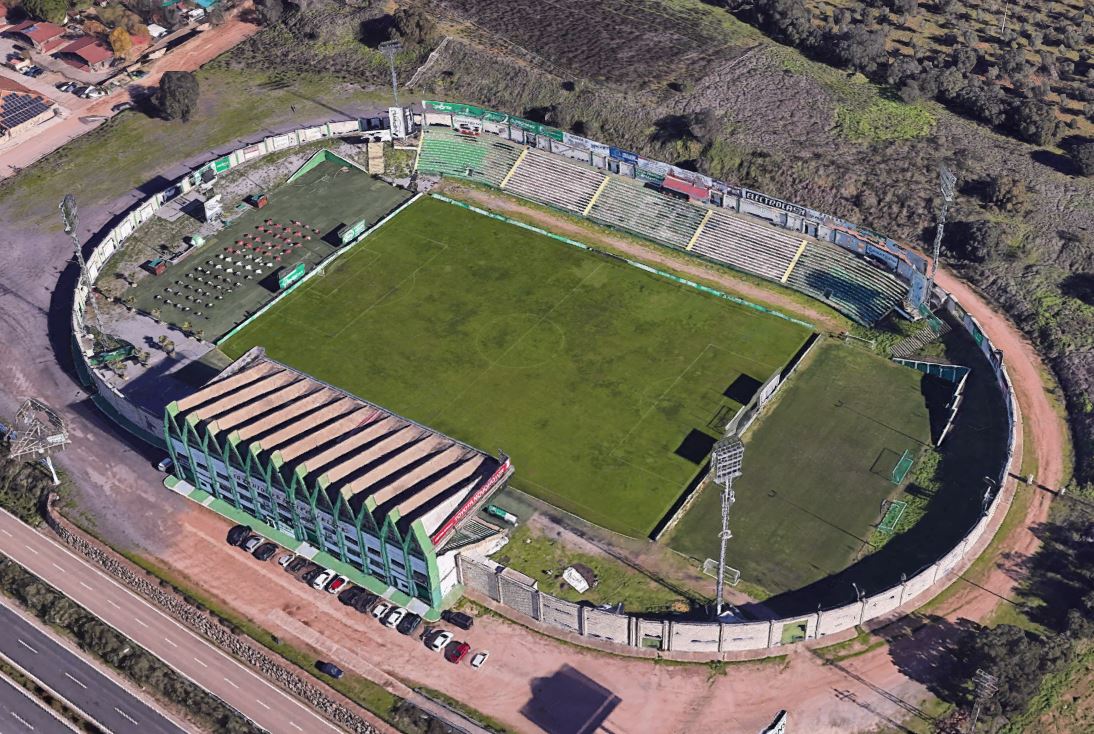
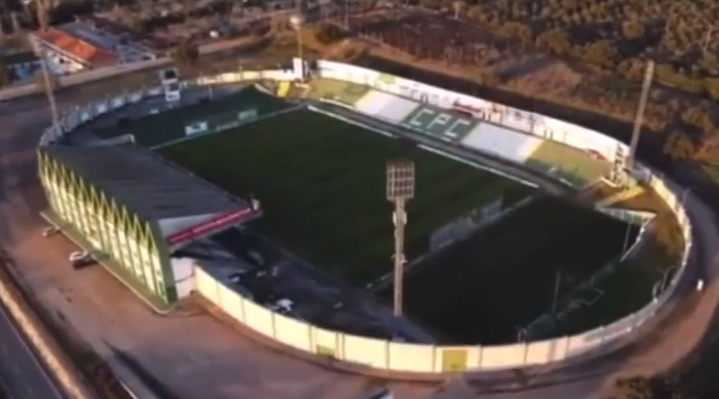
Oval in shape, but with fans only accommodated on either side, the Estadio Príncipe Felipe has a smaller standard capacity than the Ciudad Deportiva, at 7,000. The open preferencia holds 3,656 in bands of green & white seats, but it is the main Tribuna that draws the eye. Seating 1,861 on a single tier, the structure resembles a modernist cathedral in more ways than one. For starters, from the back of the stand, one observes twelve spires, each with its own stained glass window. These spires are the vaults of the cantilevered roof, which hangs deep over the seated area, folded like the bellows of a concertina. Bands of green and white seats surround a central director’s box, which, almost altar-like, is slightly raised. Overhead hangs the club crest. The mundane returns with vast open arcs of land behind each goal, but this allows for temporary stands to be erected when called for.
Such an occasion was on 14 April 1991 when the Spanish national team played a friendly against Romania. A capacity crowd of 16,000 watched La Selección fall to a 0-2 defeat. Smaller temporary stands were erected on 19 January 1992, when the stadium witnessed its only top-flight match. With their own stadium closed following crowd trouble, Atlético Madrid chose the Estadio Príncipe Felipe to host its “home” fixture with Deportivo La Coruna. You can watch Depor’s 1-2 victory here. With the gap between big and small clubs ever increasing, this is almost certainly the first and last La Primera match to be staged at the stadium. However, the Copa del Rey brings hope of drawing one of La Primera’s giants, and the temporary stands returned in January 2023, when Cacereño hosted Real Madrid in front of a crowd of 15,000.
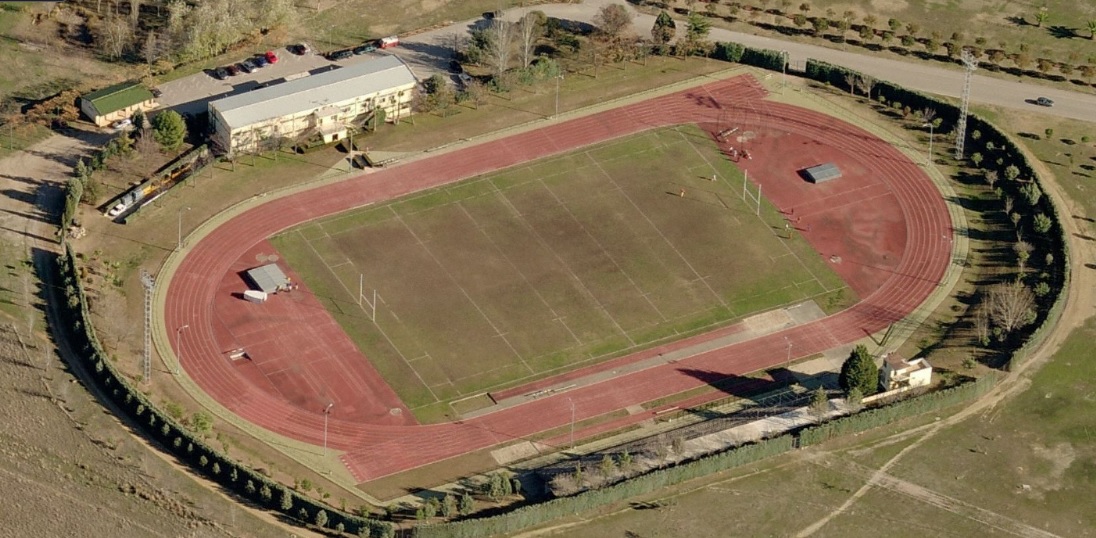
In the summer of 2013, Cacereño failed to reach an agreement with the local municipality over the rent for Estadio Príncipe Felipe. Citing financial difficulties, the club left its home of 36 years and set up a base for the 2013-14 season at El Cuartillo. This is not the first time the club has played at this athletics/rugby arena to the north of the city, as they decamped here for 3 months in 1991 whilst the Estadio Príncipe Felipe was readied for its one and only international. The only spectator accommodation is an open bank of terracing on the west side, with space enough for 500 spectators. Cacereño played Algeciras at El Cuartillo on 25 August, but within a couple of months, an agreement was reached with the Municipality, and Cacereño returned to the Príncipe Felipe.
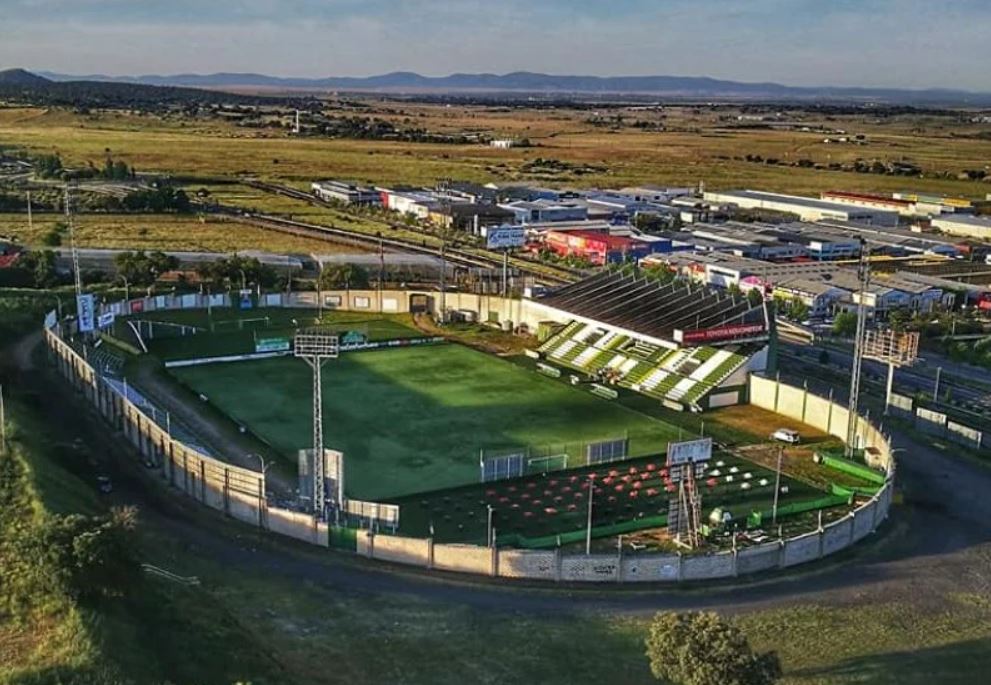
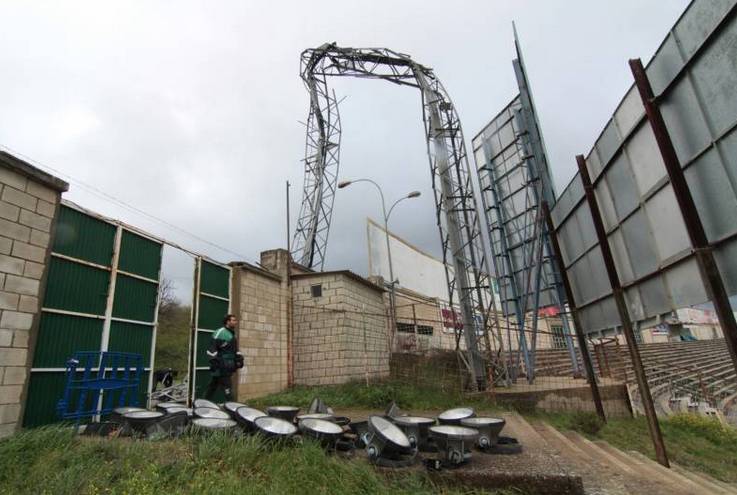
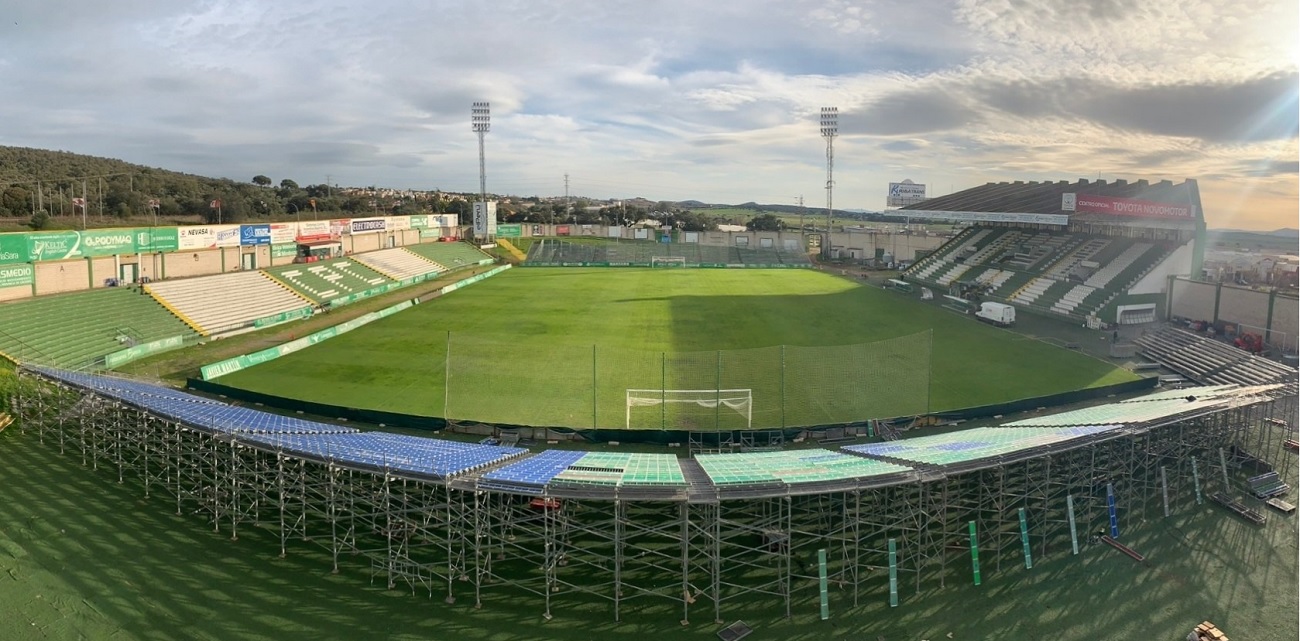
By the turn of the 2020-21 season, the Príncipe Felipe had started to look tired and more than a little frayed around the edges. Bands of new green and white seats were installed on both sides of the stadium, while the arcs behind each goal were tidied up with artificial turf. Finally, the much-needed relaying of the pitch followed, which was rewarded with a promotion to the Segunda Federación. Heartache in the playoffs followed at the end of the 2022-23 season, when Recreativo Huelva pipped them to a place in the Primera Federación. Promotion to the Primera Federacion was achieved in June 2025, when Cacereño earned two comeback victories against Real Ávila & Estepona in the end-of-season playoffs. Promotion saw extensive work on the stadium during the summer break, with a 1,200-capacity stand built at the northern end of the enclosure (with reclaimed seats from Real Betis’ Estadio Benito Villamarín) and new drainage and irrigation systems installed beneath a new turf playing surface. Delays with the build and playing surface saw Cacereño play their first home match of the 2025-26 season at the Estadio Francisco de la Hera. Modest when compared to the stadium’s namesake, but that is no bad thing.


 Estadios de España