
Article updated: 22/09/2025
Today, Santiago de Compostela is the capital of the Region of Galicia. It is also the ecclesiastical centre of Spain and has been a university city since the sixteenth century. At the turn of the twentieth century, it boasted a population of 25,000, and there are contemporary accounts of students at the university playing football. It is surprising, then, that a representative of the city was absent in the formative years of the Spanish League. A couple of teams, namely Club Deportivo Santiago and Club Arenal, did play in the Tercera in the 1940s & ’50s but achieved very little. The demise of CD Santiago at the end of the 1961-62 season left the city without a senior team at a national level.
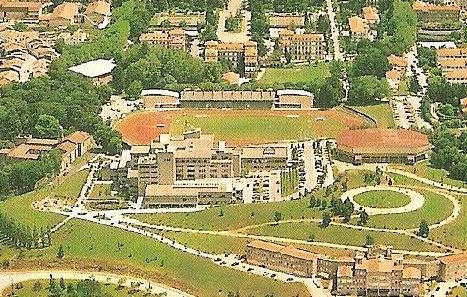
After much debate, Sociedad Deportiva Compostela was formed in June 1962, and in September merged with Club Arenal. The fledgling club took on Arenal’s place in the Primera Regional and won the league. Home matches in that first season were played at the University’s sports facilities; however, in September 1963, SD Compostela moved to the Campo de Santa Isabel, which had been purchased by the municipality and renovated following the closure of CD Santiago. The club spent much of the 1960s and 1970s playing in the regional divisions and the Tercera. Its first promotion to Segunda B came in 1977, but the stay lasted just the one season. They regained their place in 1980, and although this time they hung around for six seasons, it ended in relegation and controversy.
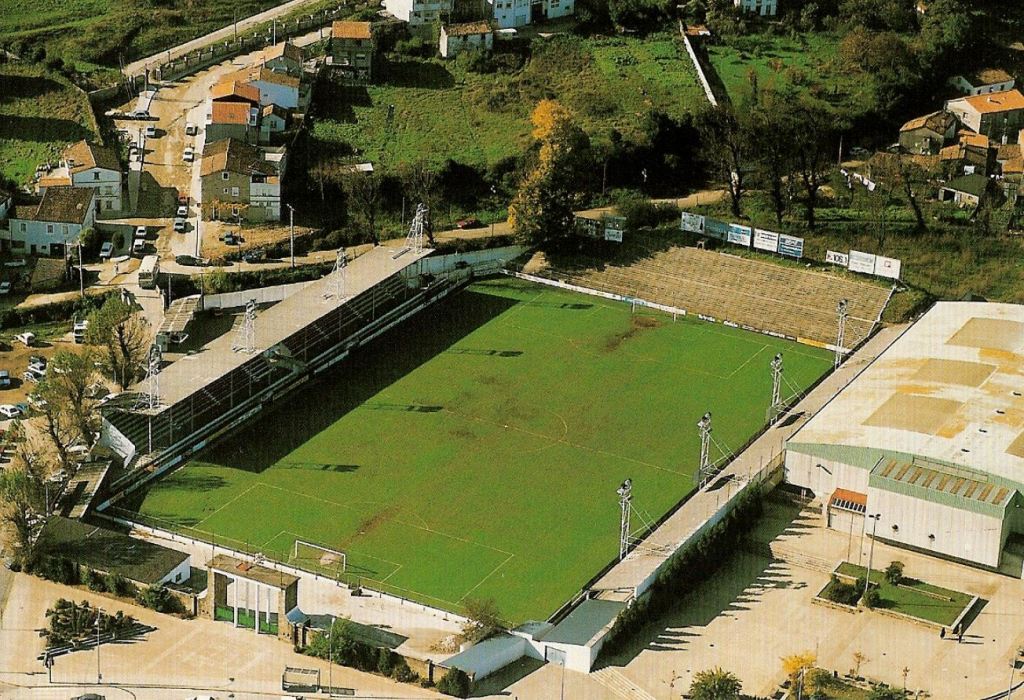
In 1986, the poor season on the pitch was compounded by an off-field controversy surrounding the actions of then-president Francisco Steppe. He resigned amid allegations of receiving payments to throw a game against Pontevedra CF, which would have improved their rivals’ chances of maintaining their status in the Segunda B. The late 1980s witnessed a significant restructuring of the club, both at board and management levels, and in 1990, Compostela returned to Segunda B. The following season was to prove the club’s most successful to date. A third-place finish ensured entry to the playoffs, and on 23 June 1991, a capacity crowd of 8,000 gathered at the Estadio Municipal Santa Isabel. They witnessed goals from Juanito and Ochoa (two), which clinched a 3–1 victory in the final playoff match against CD Badajoz and, with it, promotion to La Segunda.

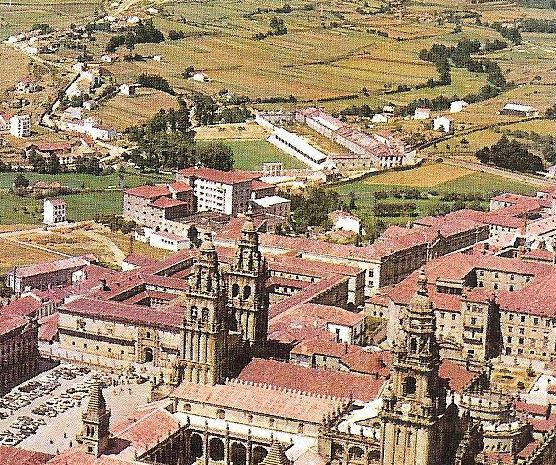
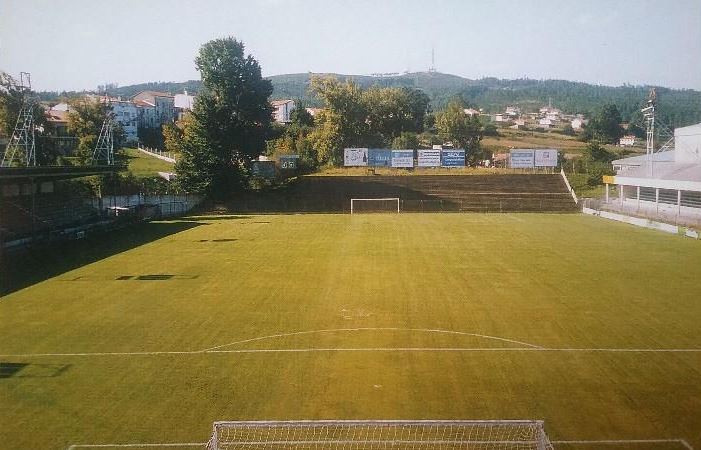
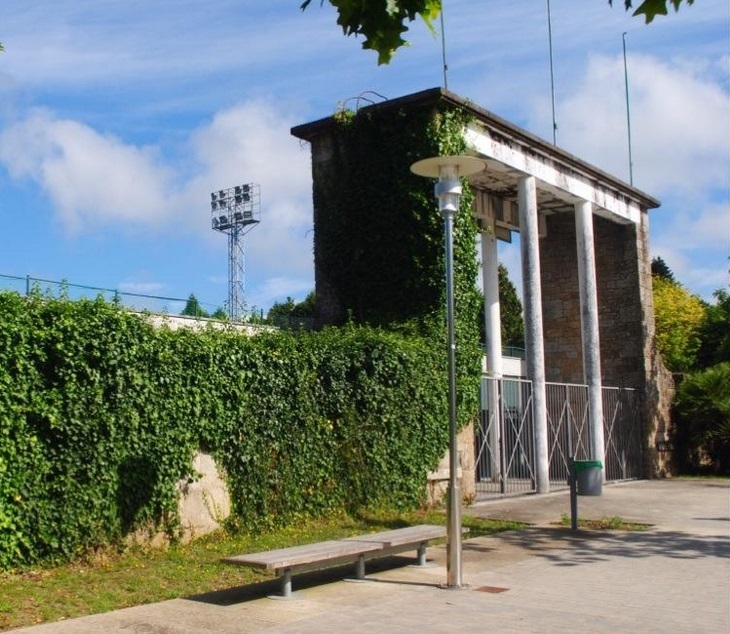
Santa Isabel hosted two seasons in La Segunda, but it was proving to be too small and outdated for football in the second tier. The club played its last match at the ground on 12 June 1993, losing 0-3 to champions UE Lleida. Santa Isabel was a simple ground with a propped covered stand on the west side, a terrace with a covered seated section at the rear on the east side, and an open terrace behind the north goal. It was situated about half a mile north of the city’s historic centre, and the all-weather pitch now adjoins the site of a Municipal Sports Centre. The main stand is still in use, as are the original entrance gates, which date back to CD Santiago’s time at Santa Isabel.
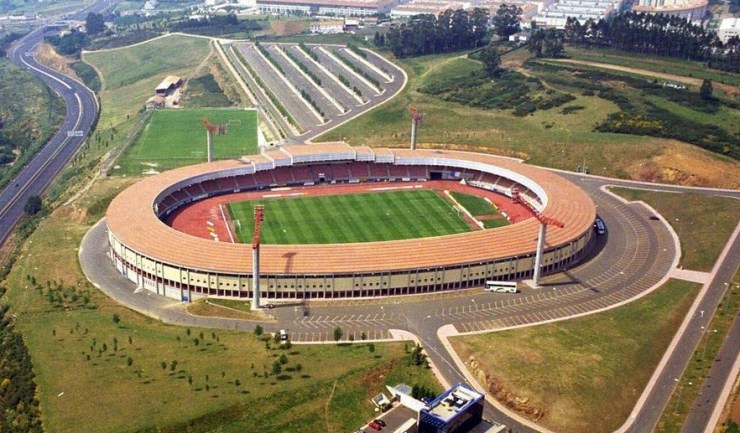
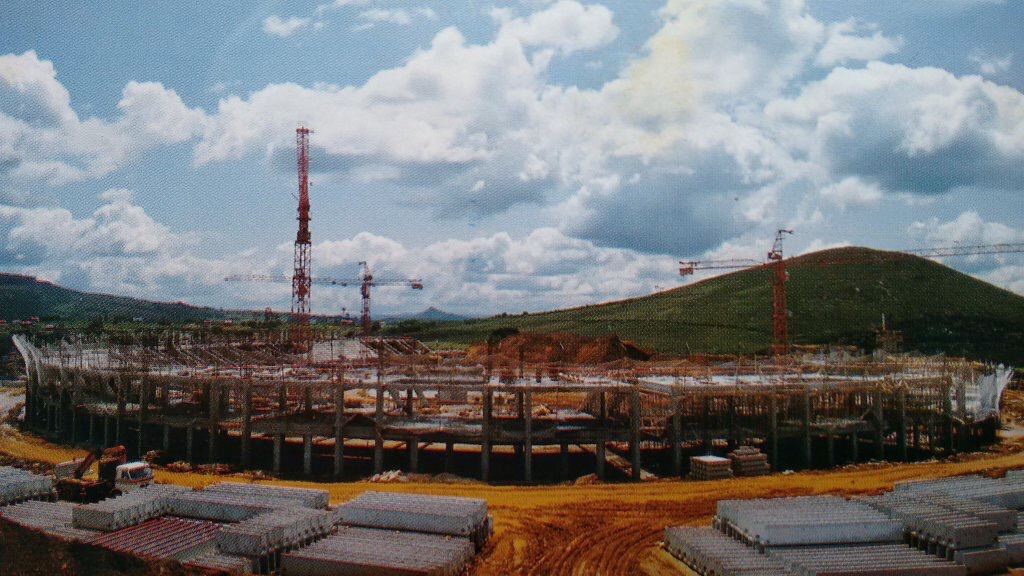
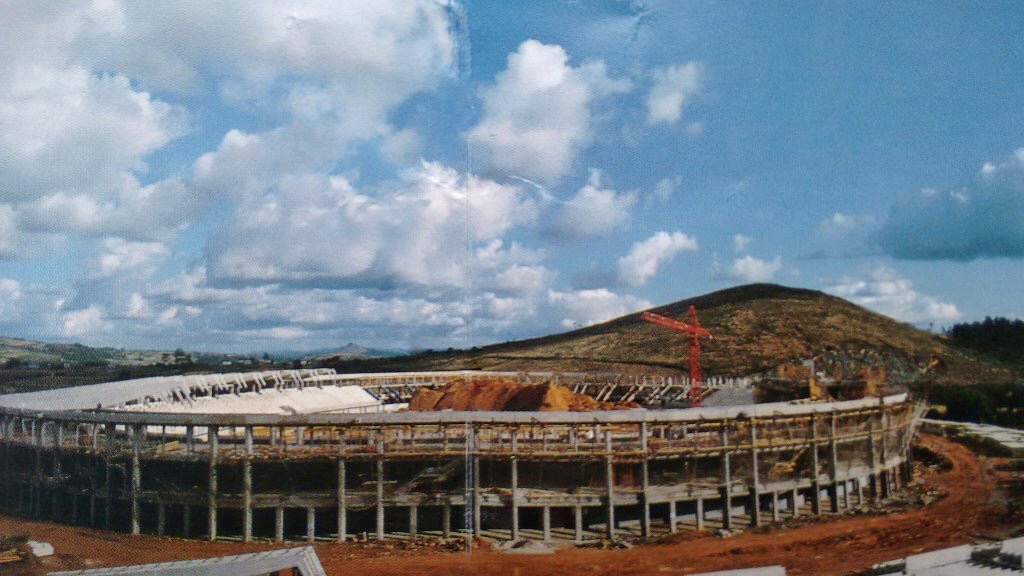
In the summer of 1993, SD Compostela moved to the Estadio Multiusos de San Lazaro. Buoyed by their new surroundings, the club lost just one home fixture all season, finishing third in the regular season. In the playoffs, SD Compostela was pitched against Rayo Vallecano. After two drawn matches, the tie went to a third deciding leg at the Estadio Carlos Tartiere, which the Galicians won 1-3, earning promotion to La Primera. For a small regional club, SD Compostela did remarkably well in the top flight, achieving a best finish of 10th in the 1995–96 season. After four seasons in the top tier, SD Compostela was relegated following a playoff defeat to Villarreal CF. Club President José María Caneda, who had overseen the good times of promotion to the top flight and the move to the new stadium, was not the man for a crisis. The club’s financial mismanagement led to three seasons of diminishing returns in La Segunda before Compostela’s relegation back to Segunda B in 2001. The club returned to La Segunda for the 2002-03 season, but this was played against a backdrop of off-field distractions. With the players and staff going unpaid for months, a final 9th place was not enough to prevent relegation, as Caneda failed to meet the 31 July deadline to settle all wage debts and the club was demoted by the Federation.
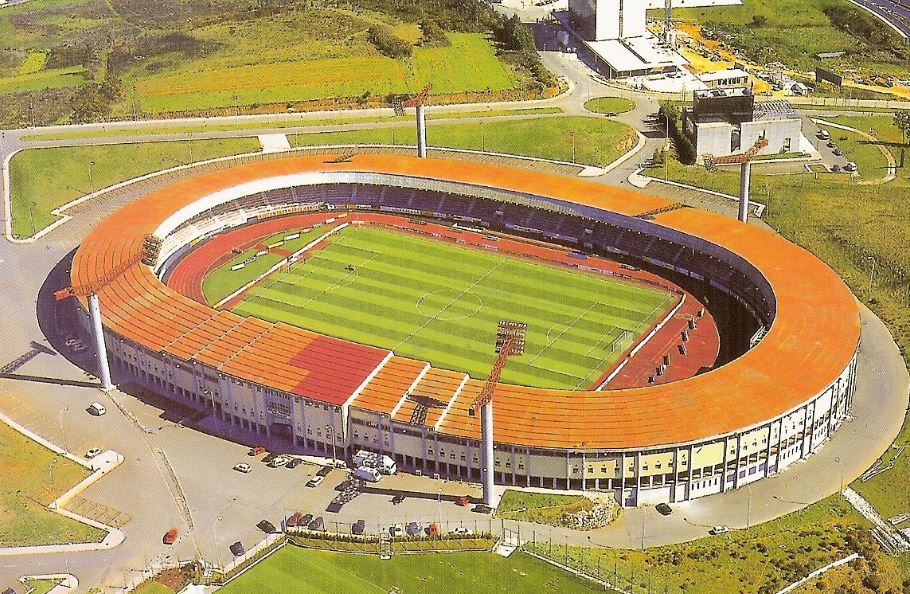
The off-field problems continued in 2003–04, with the peak being a strike by the players. After not receiving a wage for several months, they refused to appear for a fixture at UB Conquense. At the season’s close, which saw on-pitch relegation to the Tercera, SD Compostela dropped further to the Galician Regional Preferente (North) after failing again to meet another financial deadline. The SD Compostela was liquidated in the summer of 2006, which saw a number of clubs vie for the position of the city’s top team. First out of the blocks was Ciudad de Santiago, who won promotion to Segunda B in 2008-09. A creditable 13th place finish counted for nothing as you guessed it, they were demoted for not paying the players. They struggled on until December 2009, before being expelled by the league for failing to meet a fixture at Coruxo FC.
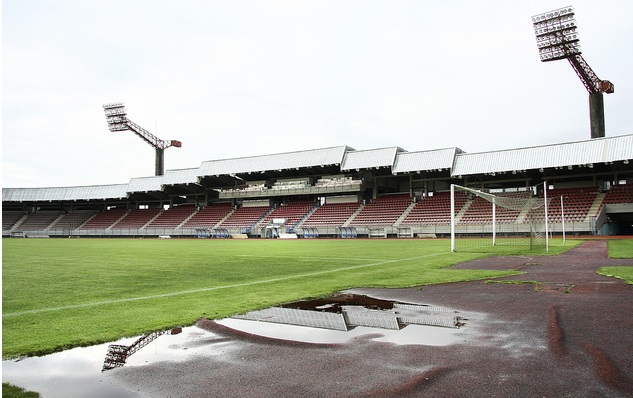
Then there is SD Campus Stellae, which moved into San Lazaro in 2006. After four seasons of languishing in the regional league, the Campus Stallae reached the Tercera for the 2008-09 season. In the following campaign, after finishing first in its group, they beat Atlético Monzón in the playoffs and won a second consecutive promotion. Now in Segunda B for the 2009-10 season, it was almost inevitable that this would be a short-lived return. Campus Stallae finished in last place, and relegation was followed by the now ubiquitous demotion due to financial irregularities. After a couple of seasons in the Regional Preferente North (Level 5), the club obtained permission to use the SD Compostela title and returned to the Tercera in the summer of 2012. This was followed a year later by a return to Segunda B. Thankfully, there has been a degree of stability since taking on the SD Compostela title, achieving four seasons in Segunda B, and is now resident in the Tercera Federación.

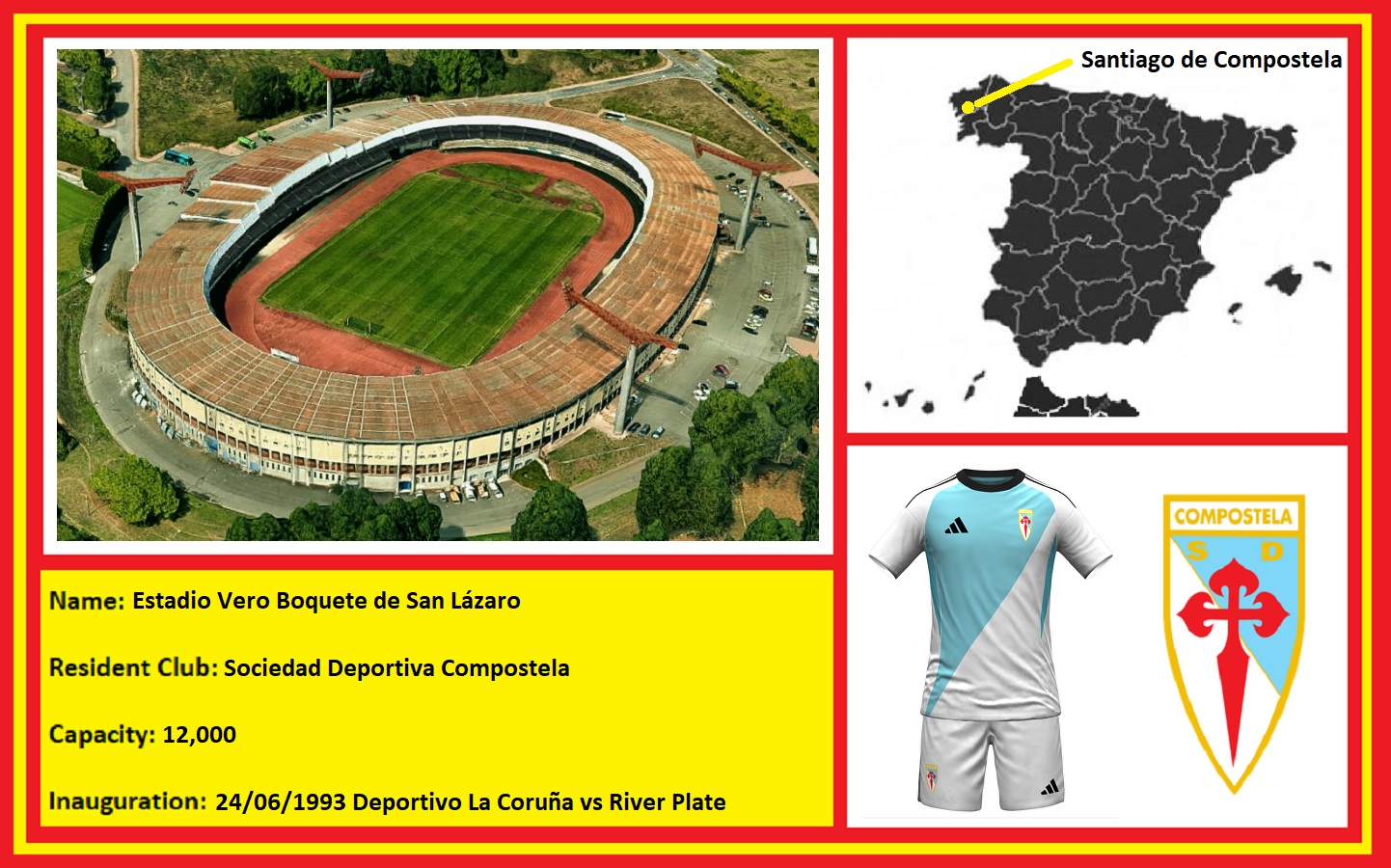
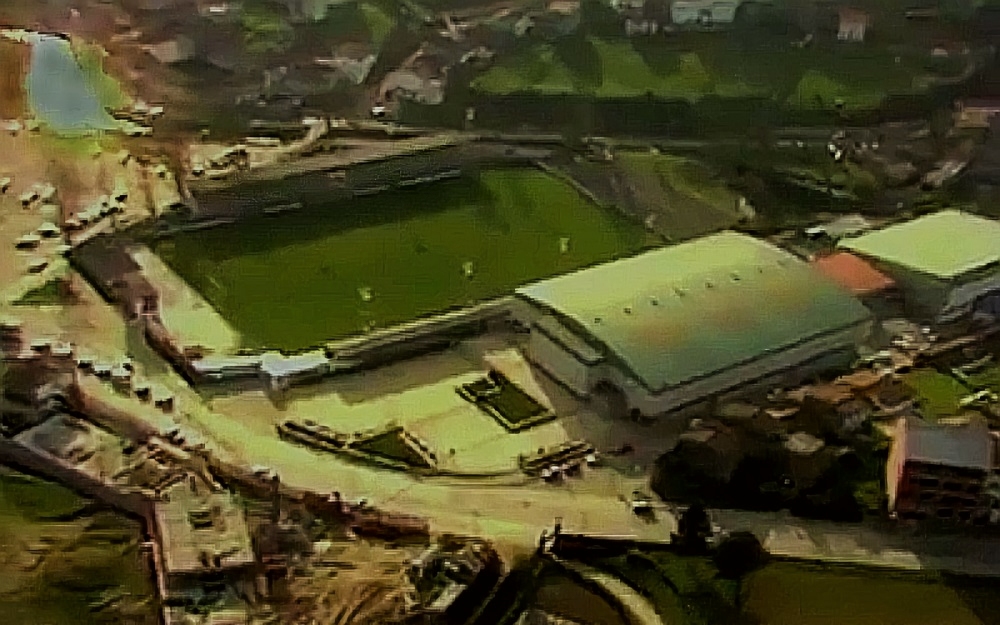
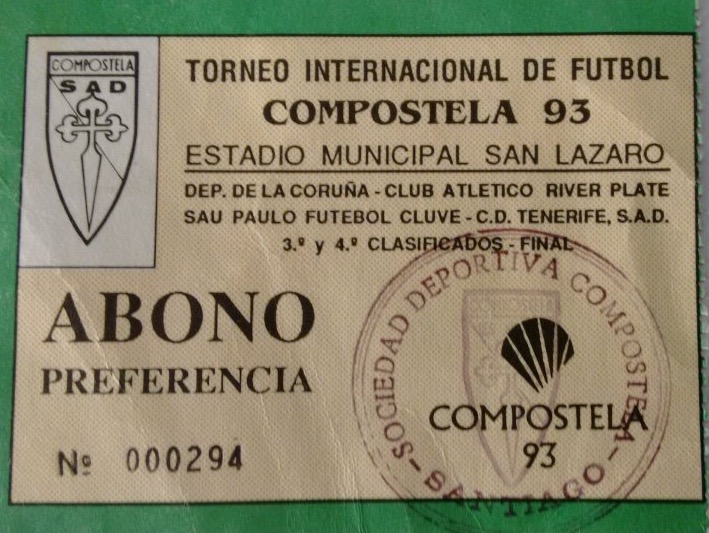
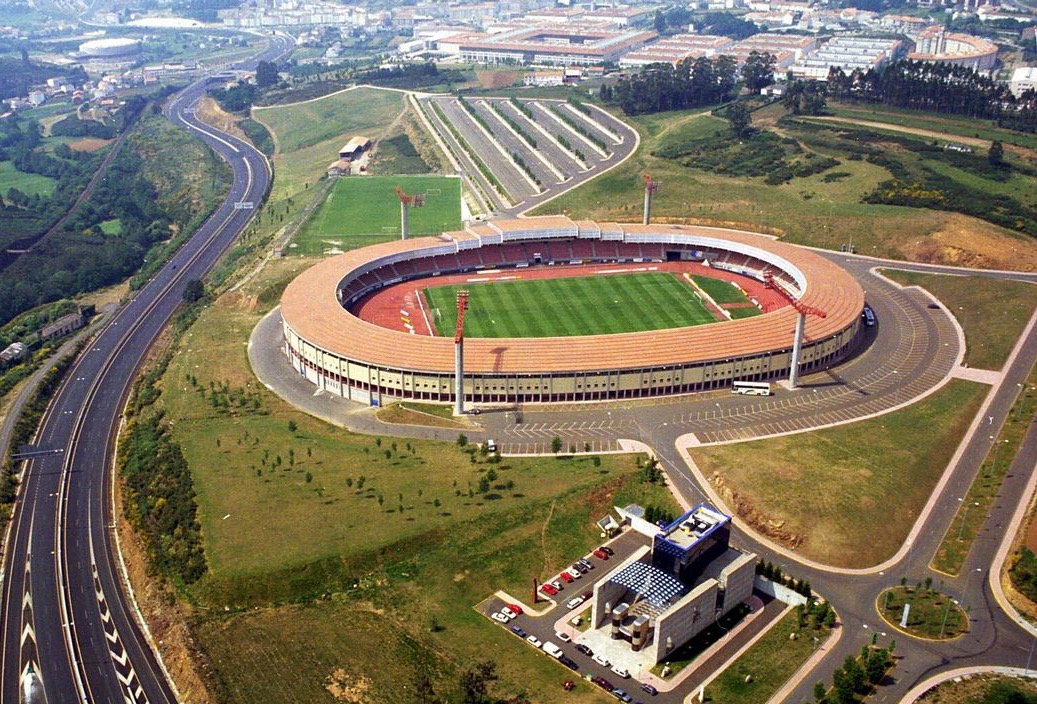
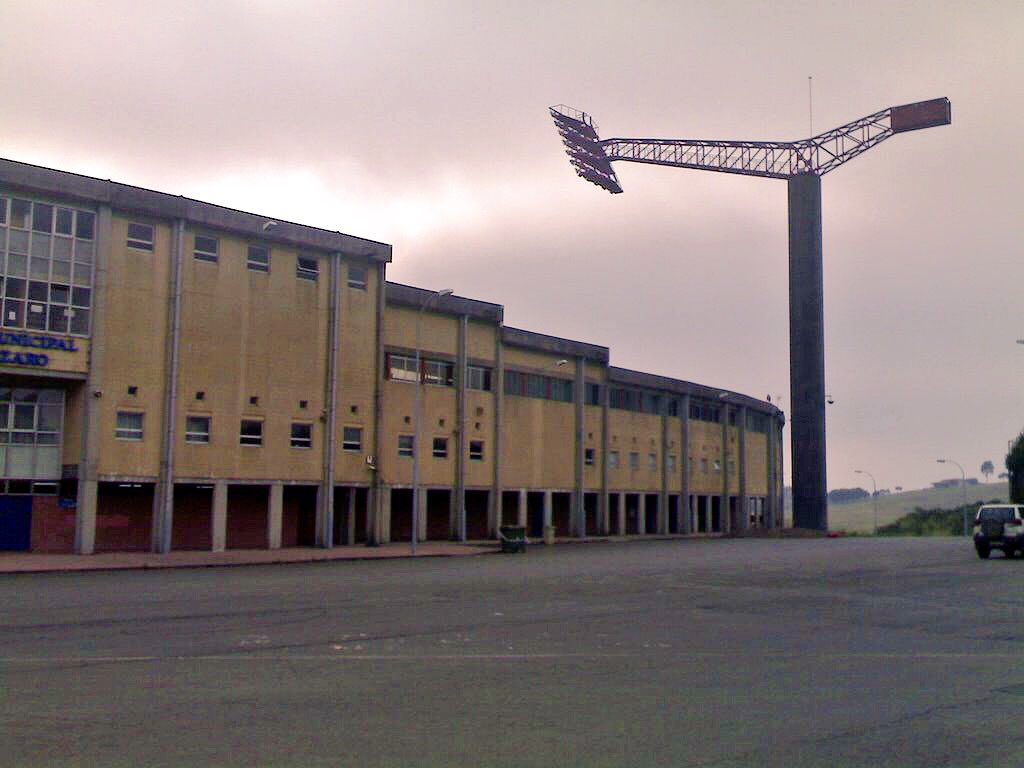
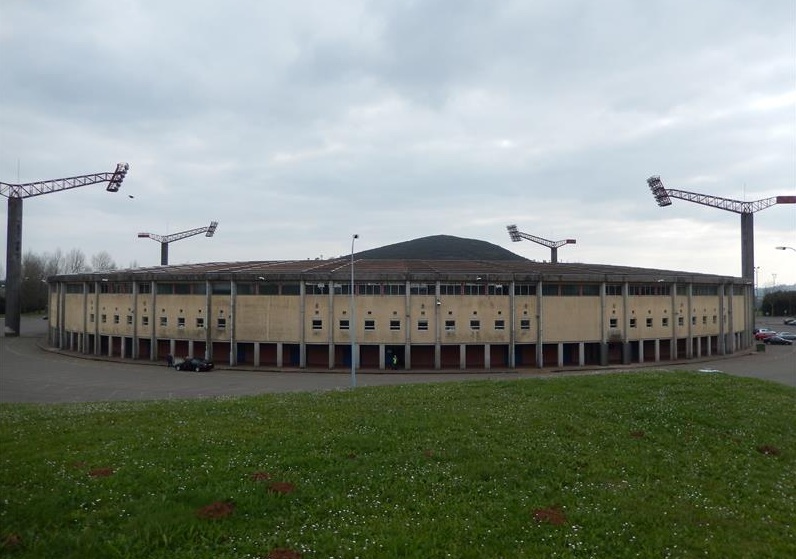
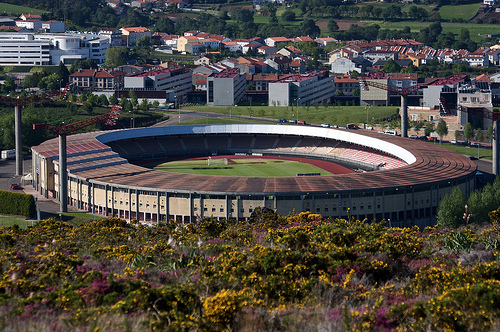
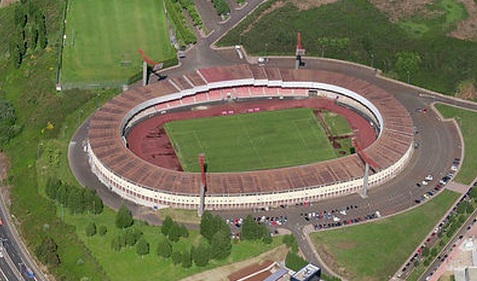
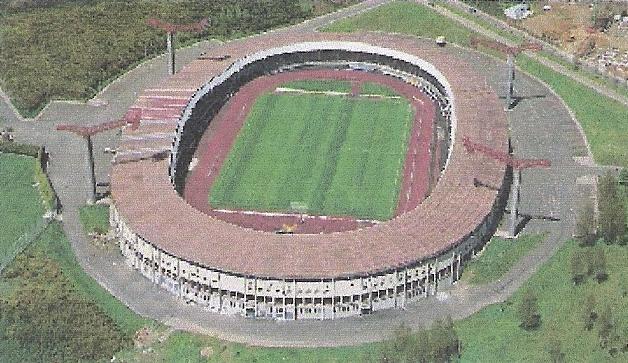
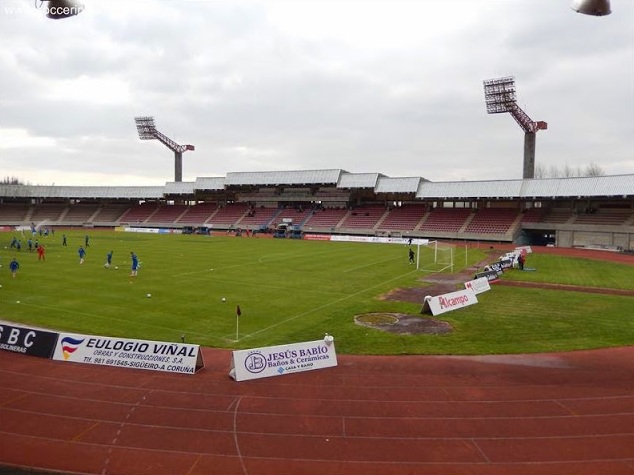
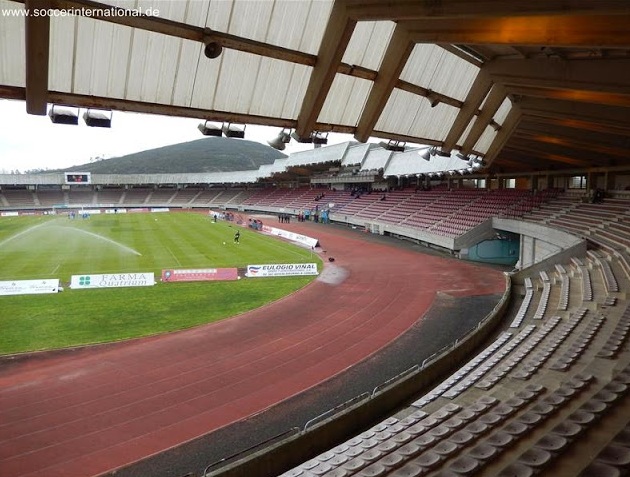
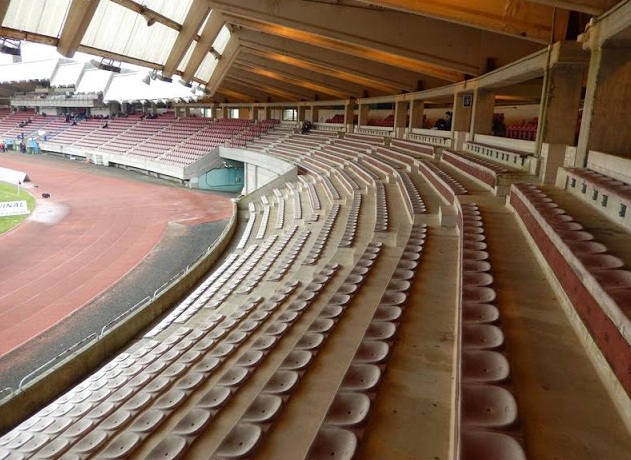
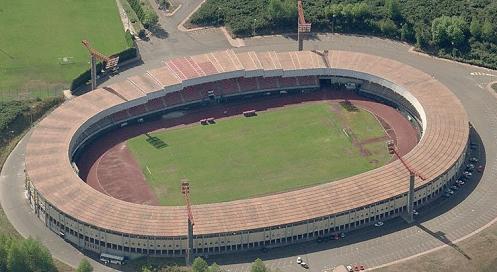
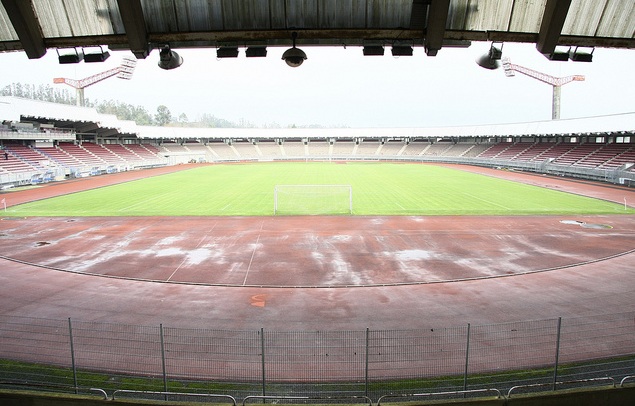
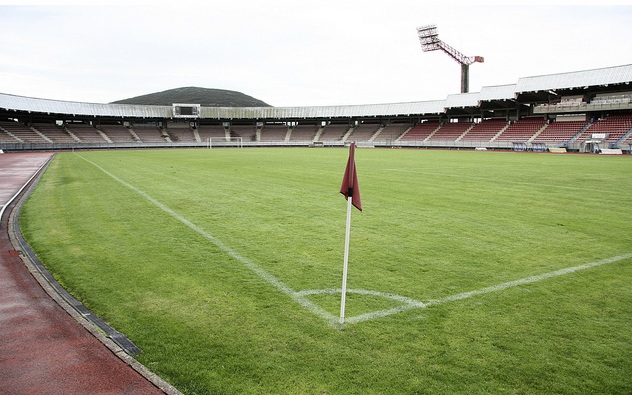
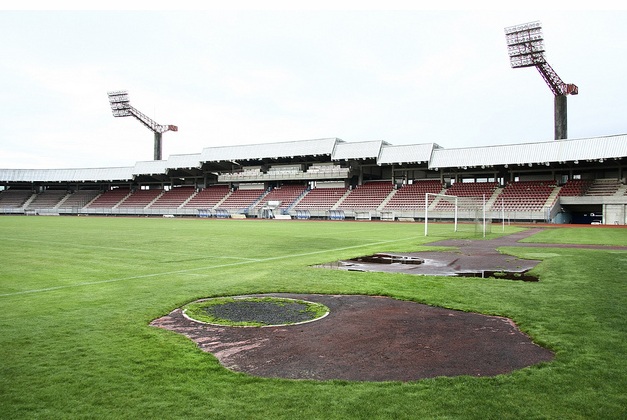
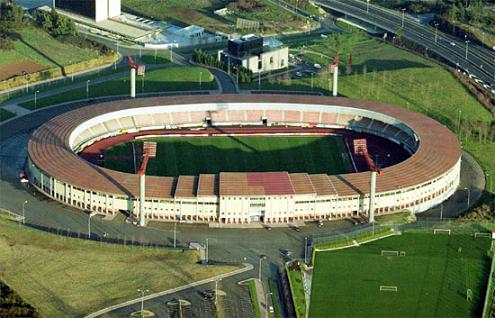
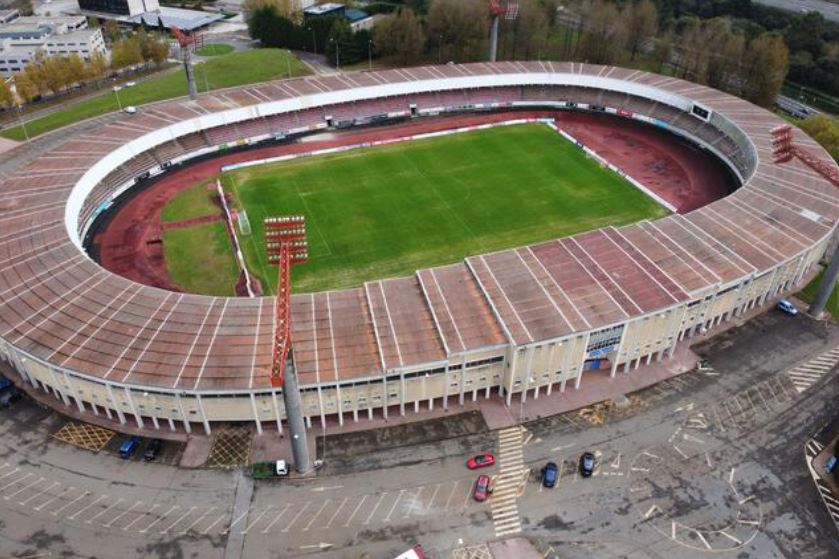
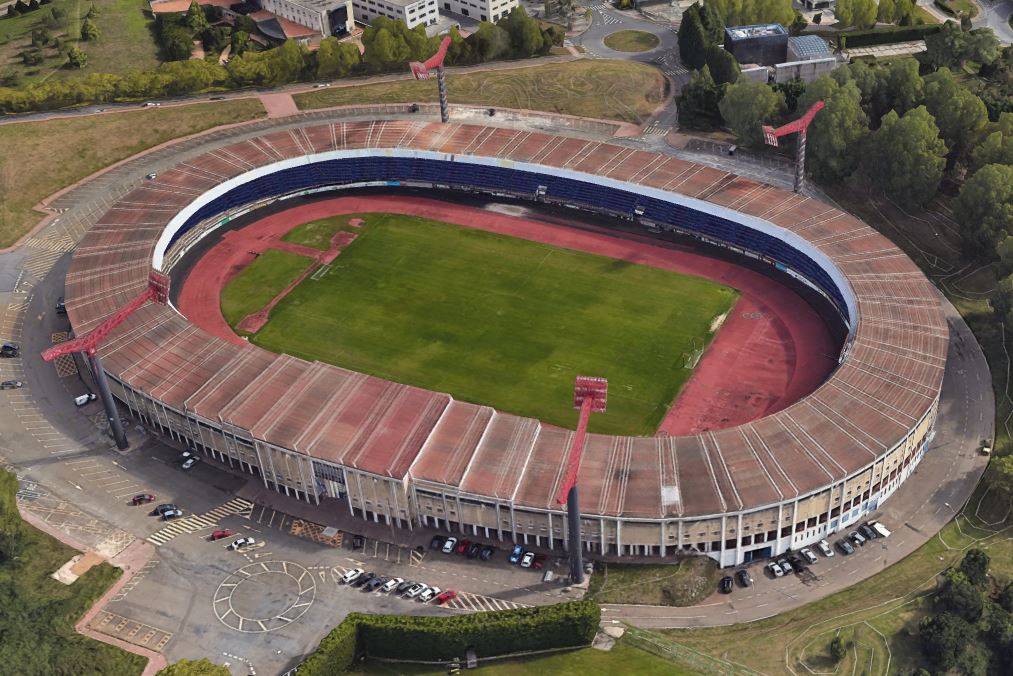
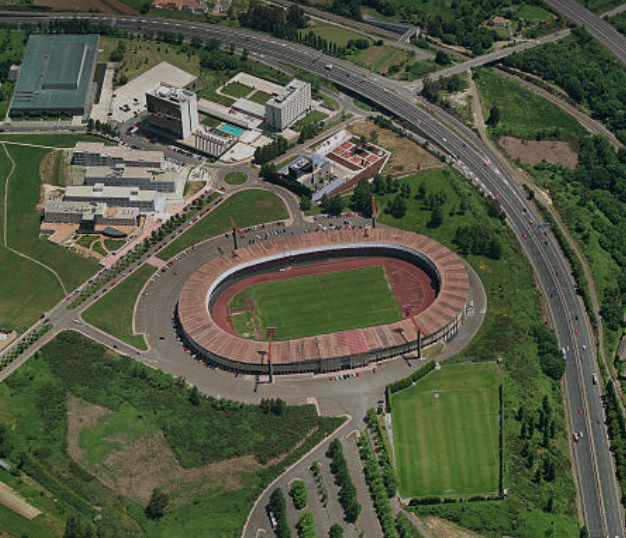
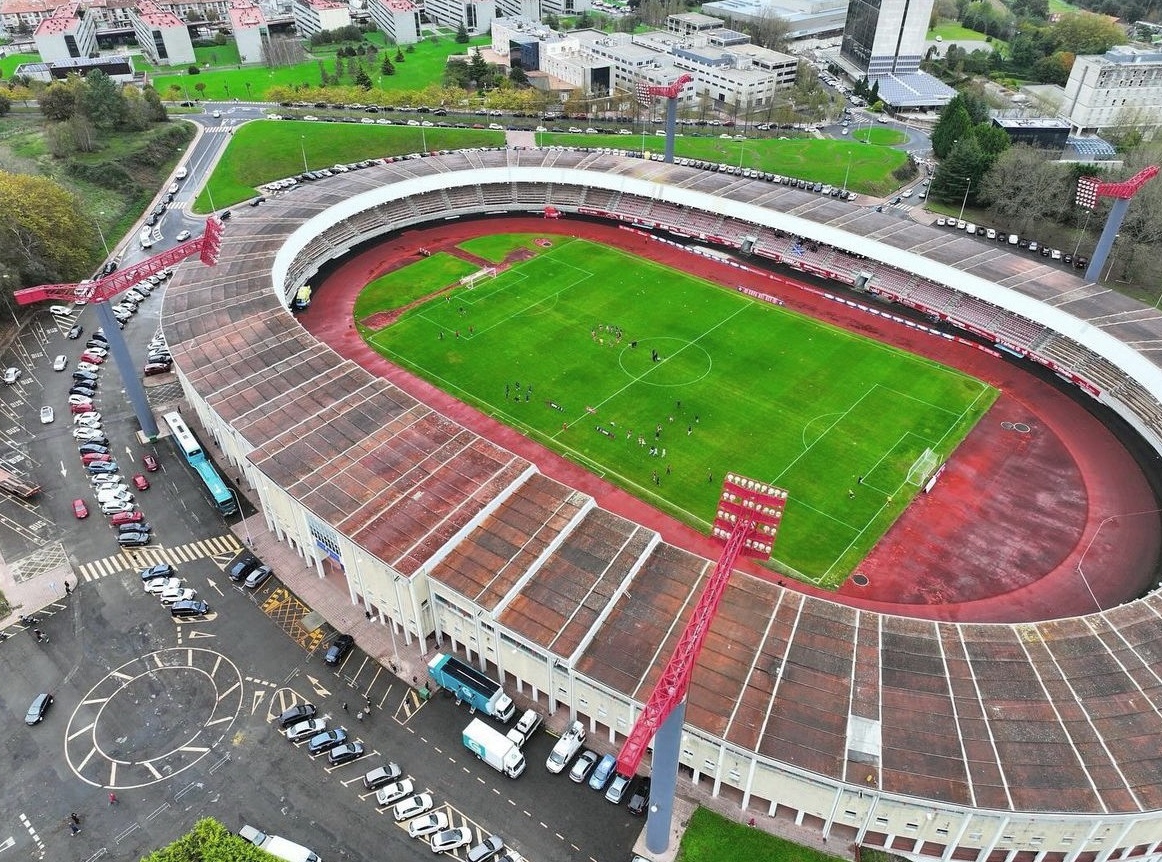
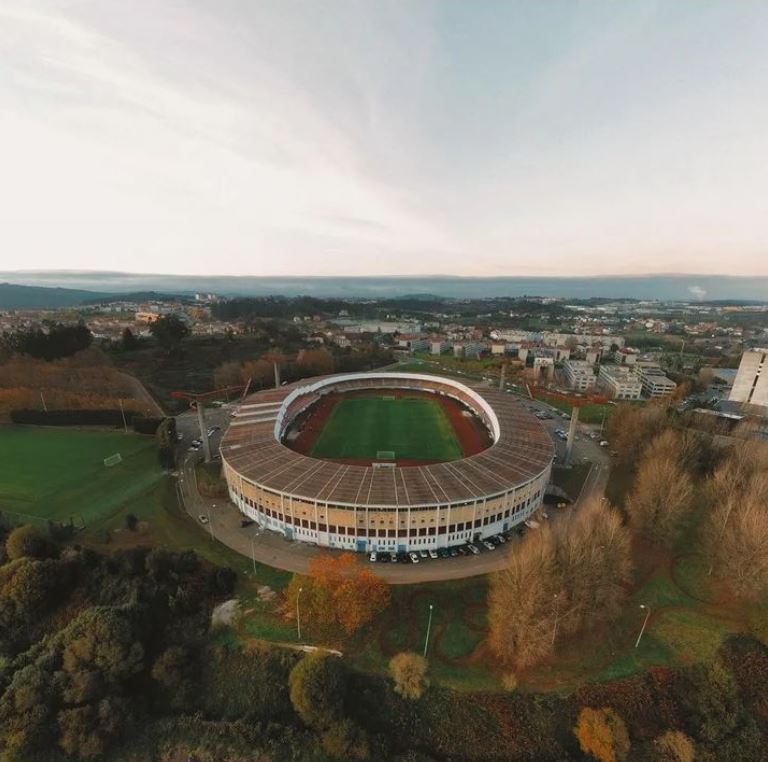
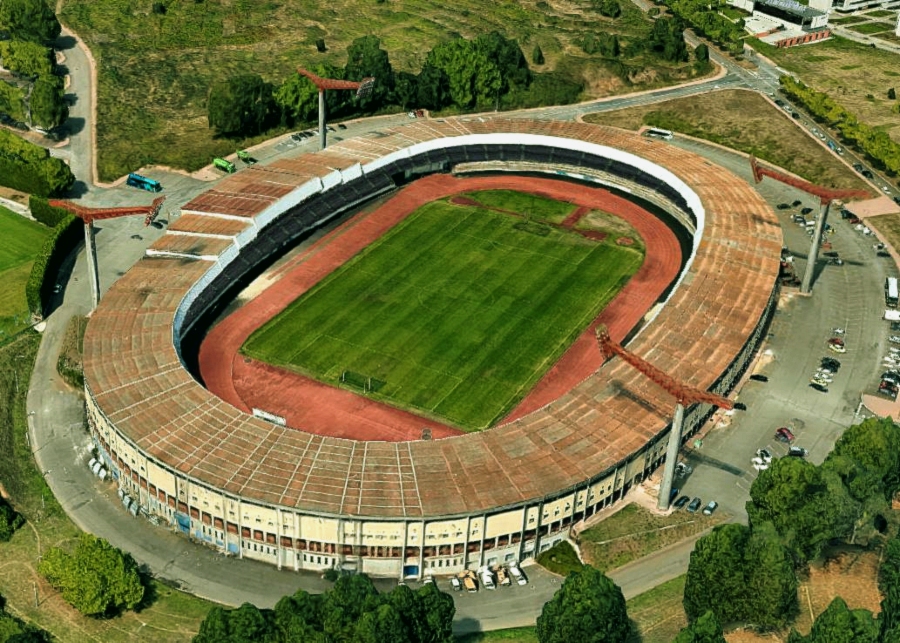
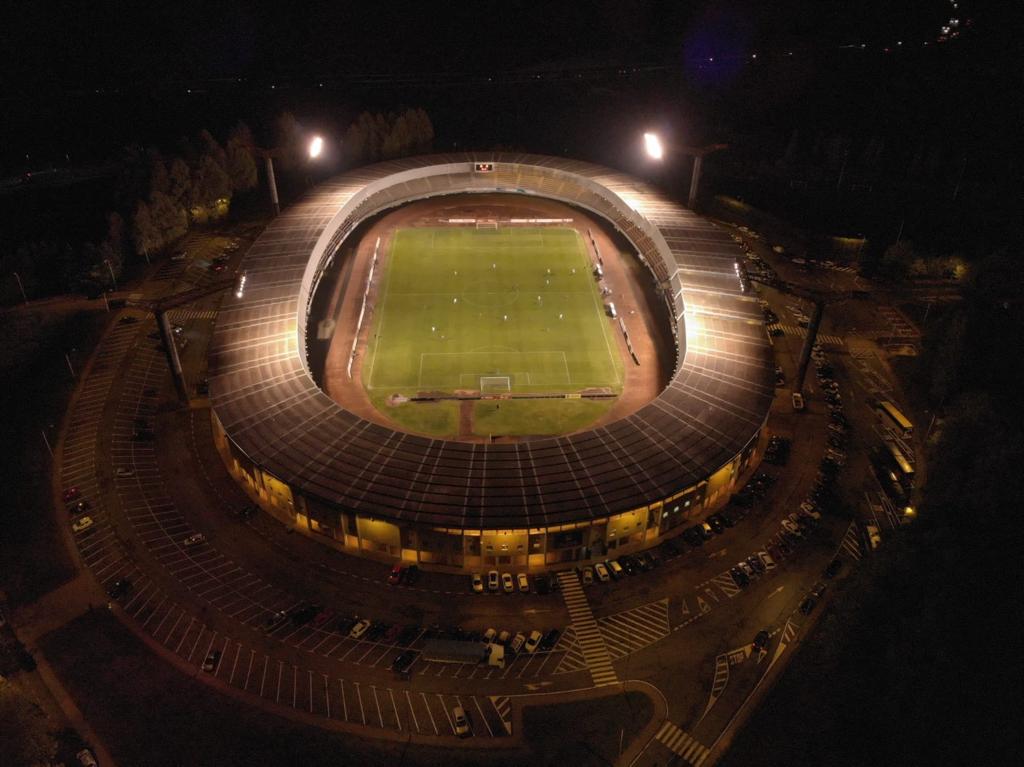
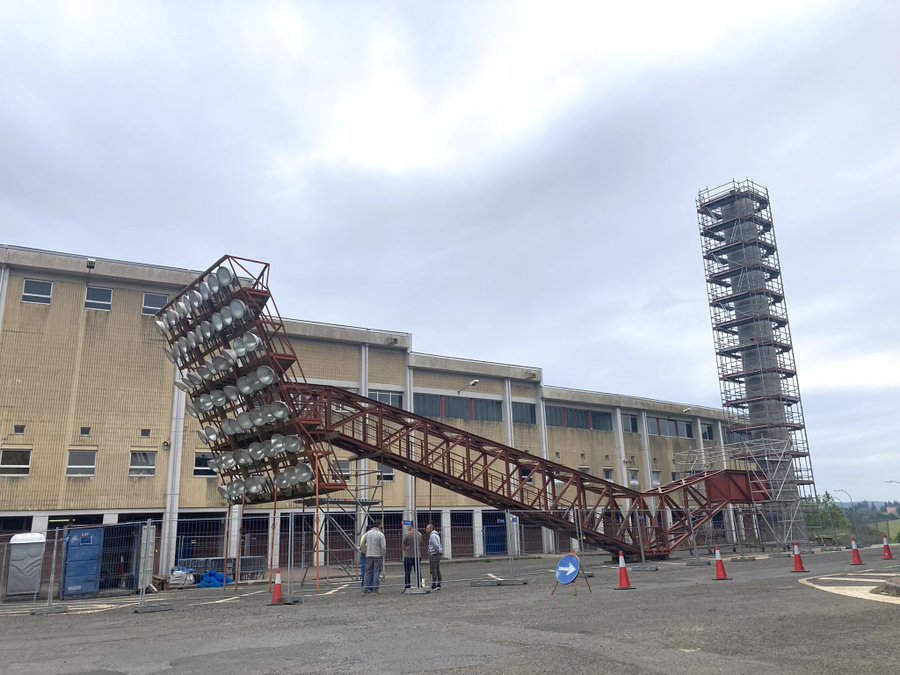
With financial mismanagement that would make the UK banking system appear competent, it comes as a relief to talk about the stadium. It is also a pleasant change to discuss a stadium with an athletics track that actually works. The Estadio Multiusos San Lazaro was opened on 24 June 1993 with a match between Deportivo La Coruña and River Plate. Its distinctive terracotta-tiled roof provides excellent cover from the elements, pretty essential in a Galician winter. It sweeps over a single tier of seats until it reaches the west side, where it slopes gently upwards to accommodate a second tier, which includes the director’s box and media gantry. Also, get a load of the floodlights! They resemble construction cranes as they lean over the roof to illuminate the pitch below. I’ve never seen the design repeated, not because it doesn’t work, but because there isn’t another stadium quite like San Lazaro. On 8 November 2018, the stadium was renamed in honour of the Spanish Women’s International Vero Boquete, who was born in the city. However, most people’s abiding memory of the San Lazaro is that it was the location where Ronaldo Nazário scored “that” goal for Barcelona in a league game on 12 October 1996.
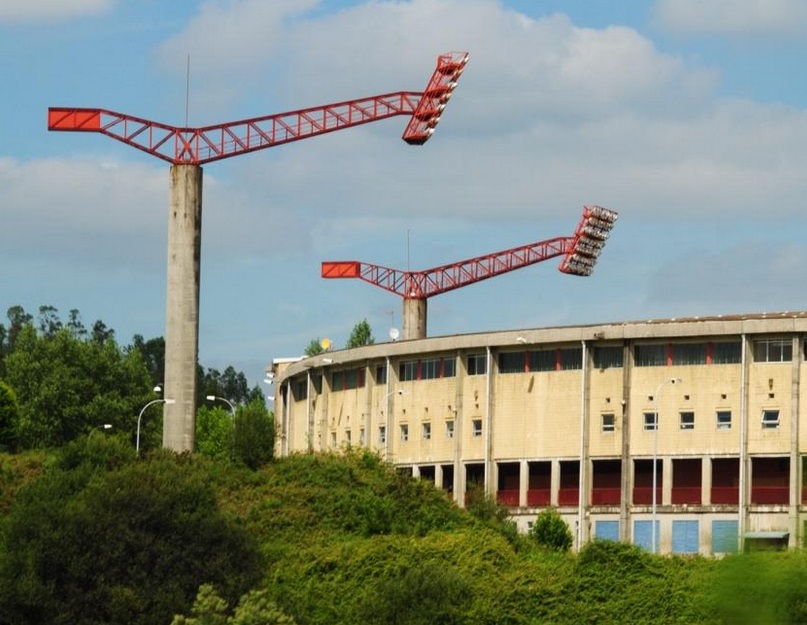
San Lazaro’s perennial problem, however, is that over the years, too few of its 12,000 seats have been filled on match days. Is it apathy on the part of the population, or disenchantment with the management of the clubs that have represented the city? Either way, the fact remains that the city of Santiago de Compostela seems as far away from having a top-flight team today as at any point in the past 60 years.


 Estadios de España