
Fuenlabrada lies around 14 miles southwest of the Spanish capital, and over the past 35 years, it has witnessed an astonishing growth from a rural backwater of 18,000 inhabitants to the region’s fourth largest town, with a population of over 200,000. Formed in 1975, Club de Fútbol Fuenlabrada has not experienced anything like the growth of the municipality, but that’s not to say that it has sat on its haunches for the past few decades. No, the club has pedigree, rising from the ninth tier of the Spanish football pyramid to La Segunda.
The club has the town’s mayor to thank for its formation. Back in 1975, Regino Beneitez suggested that the two leading football clubs, CD San Esteban and AD Fuenlabrada, merge. Over the next 10 years, CF Fuenlabrada made solid progress through the regional leagues. The club reached the Tercera in 1986, and although it flirted with relegation in the first season at this level, it soon settled into a routine of top-five finishes, even winning their first Tercera title in 1992-93. The club lost out to UP Langreo in the play-offs that year, but 12 months later, a 2-0 victory over Bergantiños in the final match of the play-offs sealed promotion to Segunda B. Over the next 8 seasons, the club became a permanent fixture in Segunda B, achieving a high of sixth place in 1997-98, missing the playoffs to La Segunda by just two points. CF Fuenlabrada dropped back to the Tercera in 2001 but made a return to Segunda B two years later. Another sixth place was achieved in 2005-06, before the club returned to the Tercera in 2008, where it remained until winning a second Tercera title in 2012.
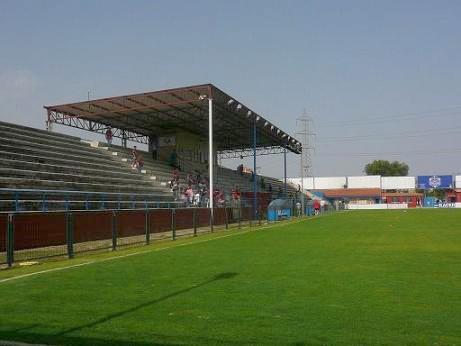
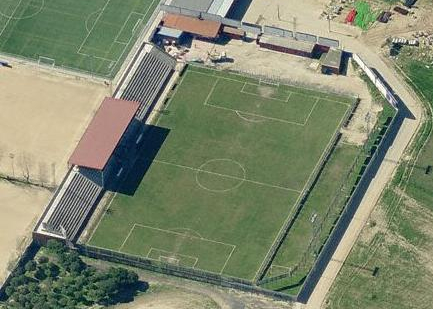
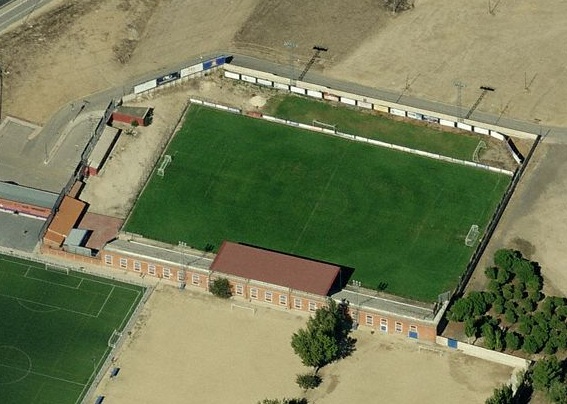
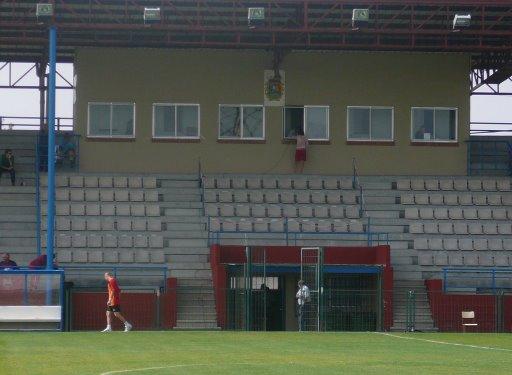
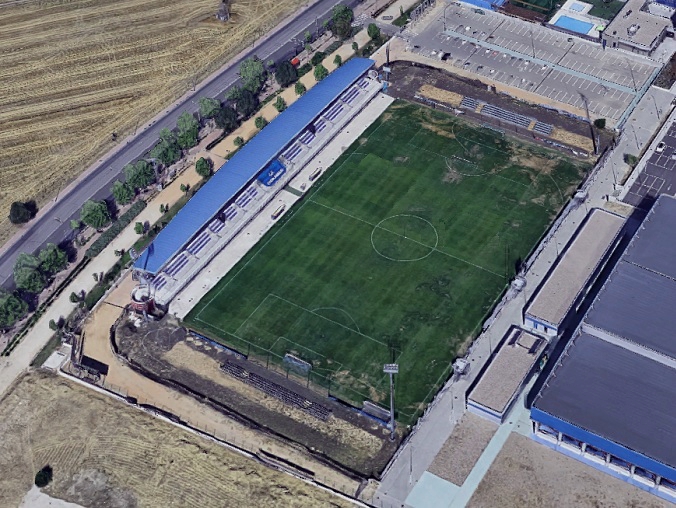
Home until the end of the 2010-11 season was La Aldehuela, a collection of pitches with a basic one-sided enclosure to the southeast of the town, close to the municipal cemetery. The first team played on the barely enclosed ground to the north of the complex, which featured a single terrace of a dozen steps along the southern side. Straddling the half-way line for 40 metres was a propped corrugated aluminium roof, under which was the stadium’s only concession to comfort, a few hundred bucket seats. The stadium’s changing facilities were housed within the bowels of the terrace. During the summer of 2011, the club moved a few miles to the west and a new stadium that had been built to honour the town’s most famous son. CF Fuenlabrada played its last match at La Aldehuela on 8 May 2011, drawing 1-1 with Colmenar Viejo, but the complex is still used by the club’s youth teams.

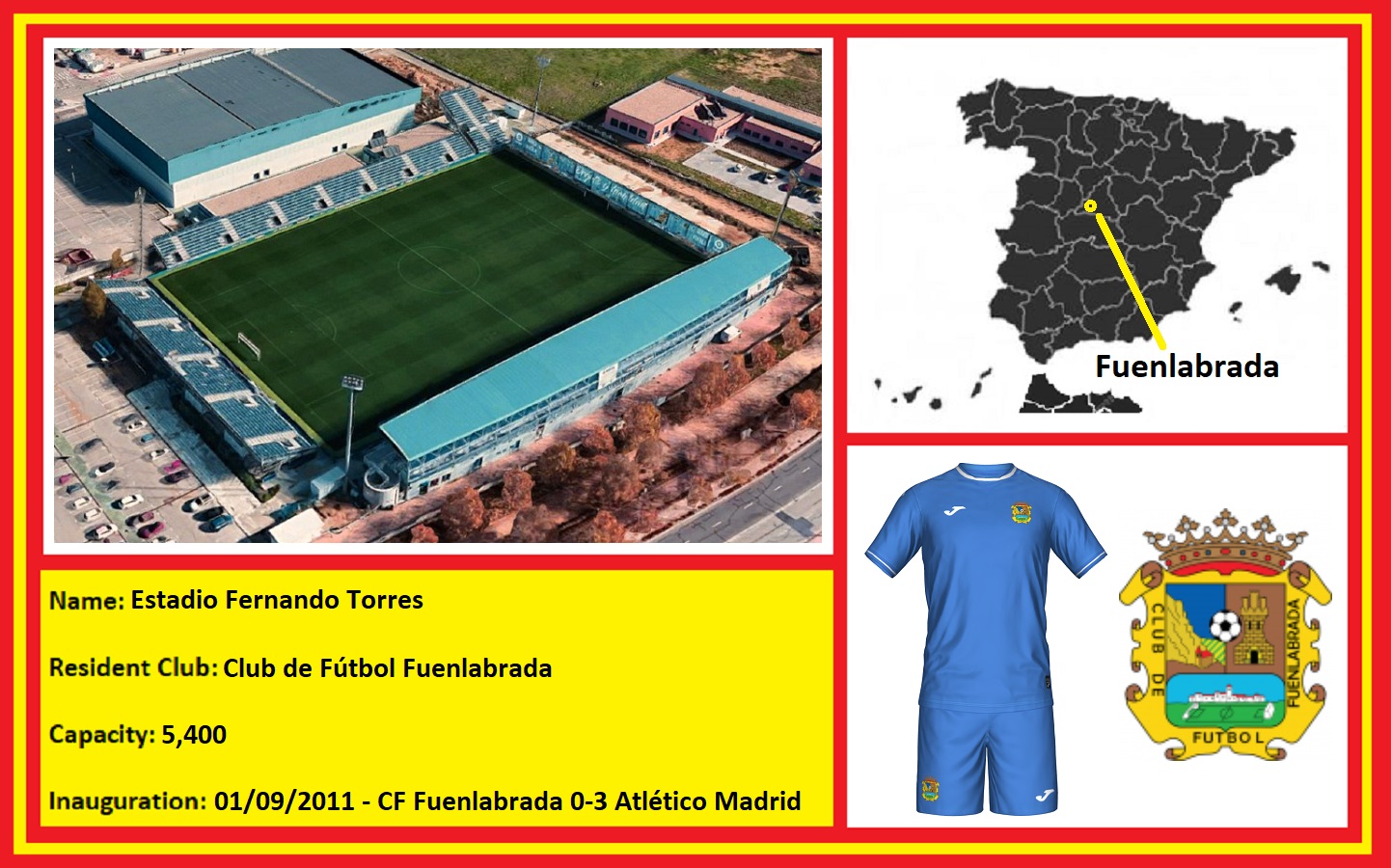
So who is the most famous person to come from the municipality of Fuenlabrada? One Fernando José Torres Sanz, or El Niño if you’re feeling over-familiar. Although born in the town, Torres never played for CF Fuenlabrada, having been snapped up by Atlético Madrid at the age of 11. In 2010, the local municipality drew up plans for a sports city to the west of the town, close to the existing athletics stadium. Built at a cost of €4m, three-quarters of which was funded by government grants, the Estadio Fernando Torres is the centrepiece of an impressive Ciudad Deportiva. Torres visited the complex in March 2011, receiving the town’s top civic honour in the process. Unfortunately, he was away on international duty when the stadium officially opened on 1 September 2011, when CF Fuenlabrada entertained his old beau, Atlético Madrid.

After winning promotion back to Segunda B in 2012, Fuenlabrada settled into a routing of mid-table finishes. That changed with a third-place finish at the end of the 2016-17 season, but in the playoffs, they lost to Extremaduran’s CF Villanovense 0-2 on aggregate. A year later, Fuenlabrada were back in the playoffs after another third-place finish in the league. Once again, the playoffs trip them up, losing in the semi-finals to Villarreal B. Not to be deterred, Fuenlabrada won direct promotion to La Segunda when claiming the Group 1 Segunda B title at the end of the 2018-19 season. Their first season in the second tier was disrupted by the COVID-19 pandemic and took 11 months to complete. Fuenlabrada finished in an impressive eighth place, missing out on the playoffs by a single point. The following campaign saw the club finish 11th before ending their Segunda odyssey a year later when they were relegated to the Primera Federación after finishing 21st and 12 points from safety.
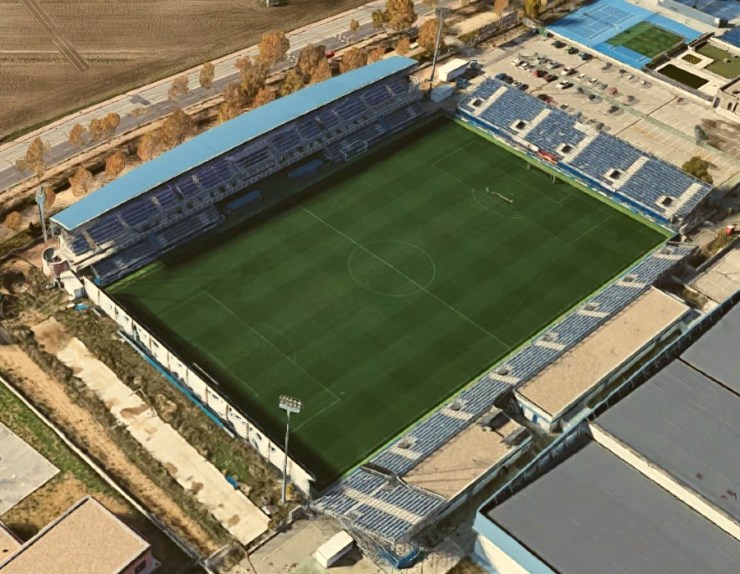
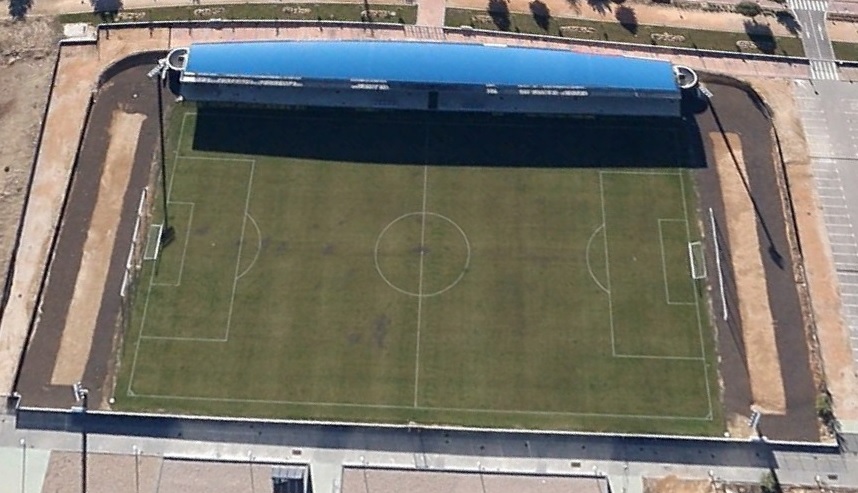
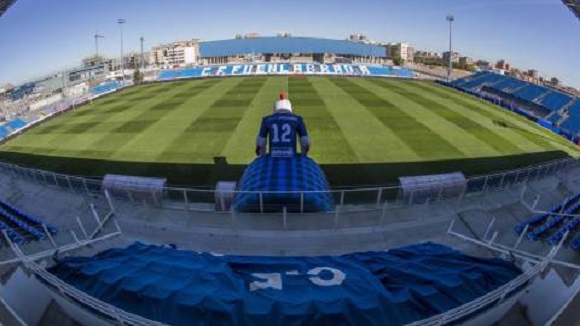
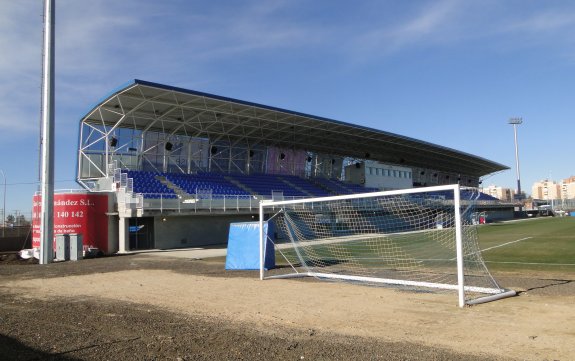
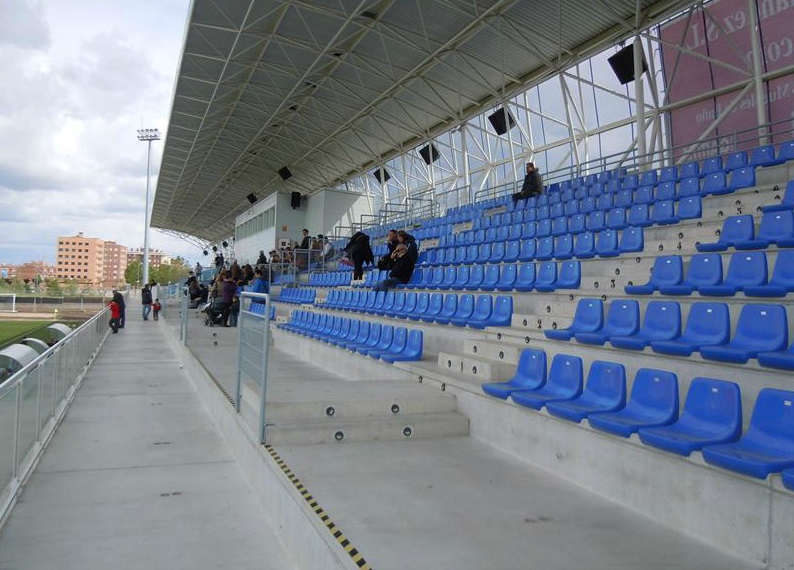
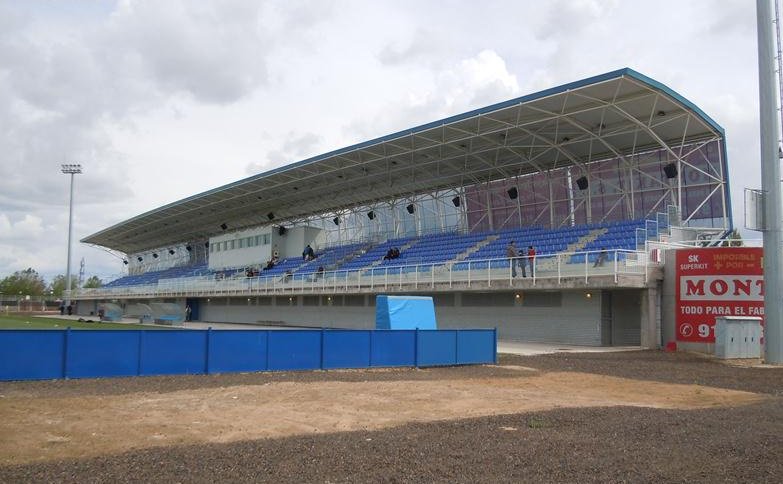
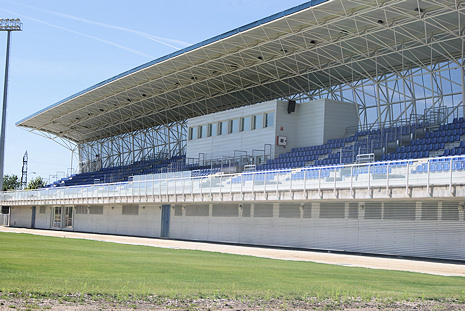
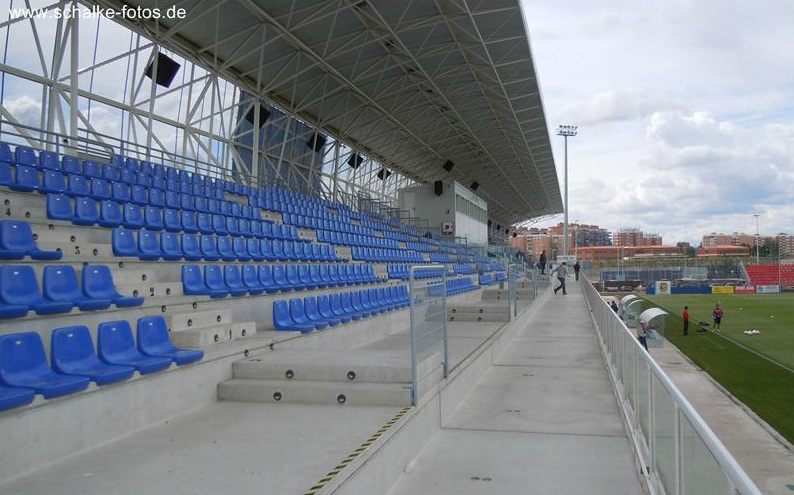
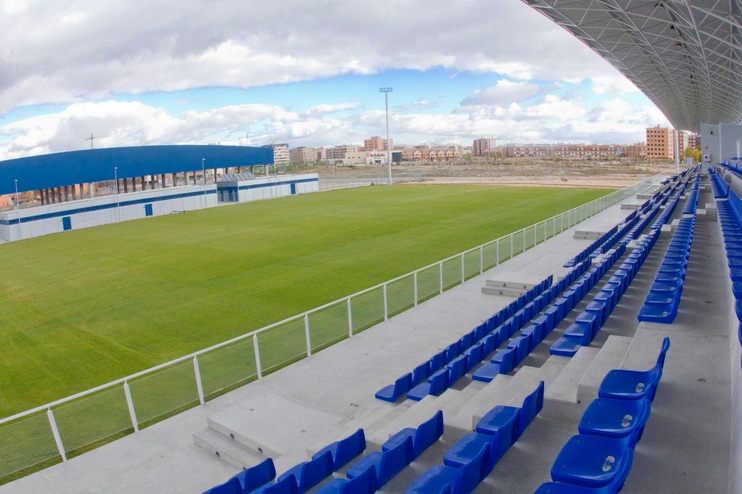
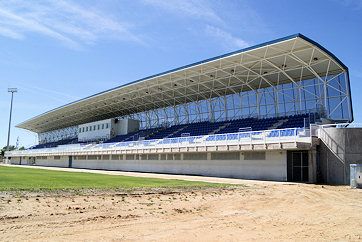
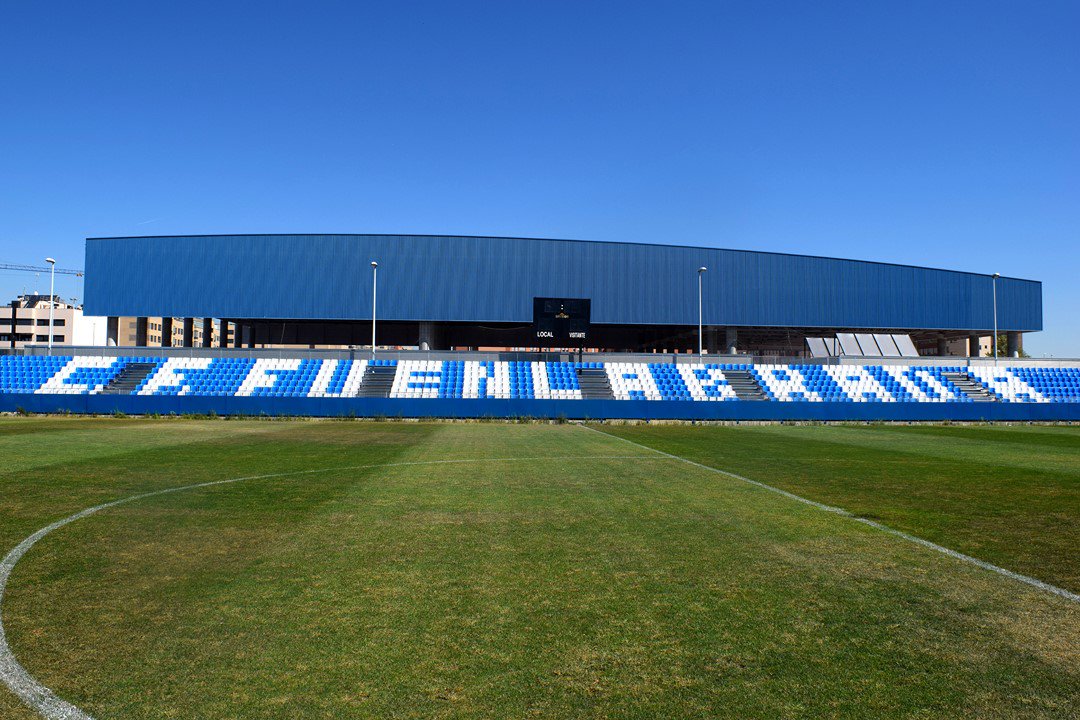
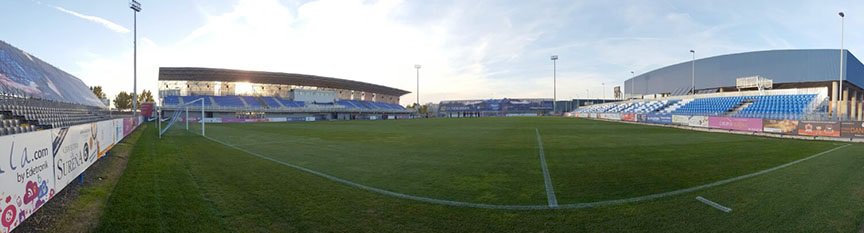
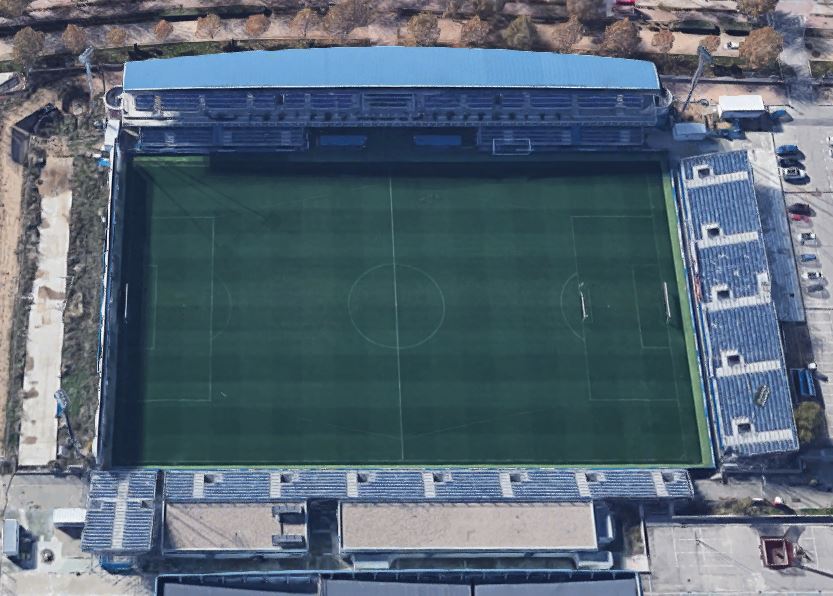
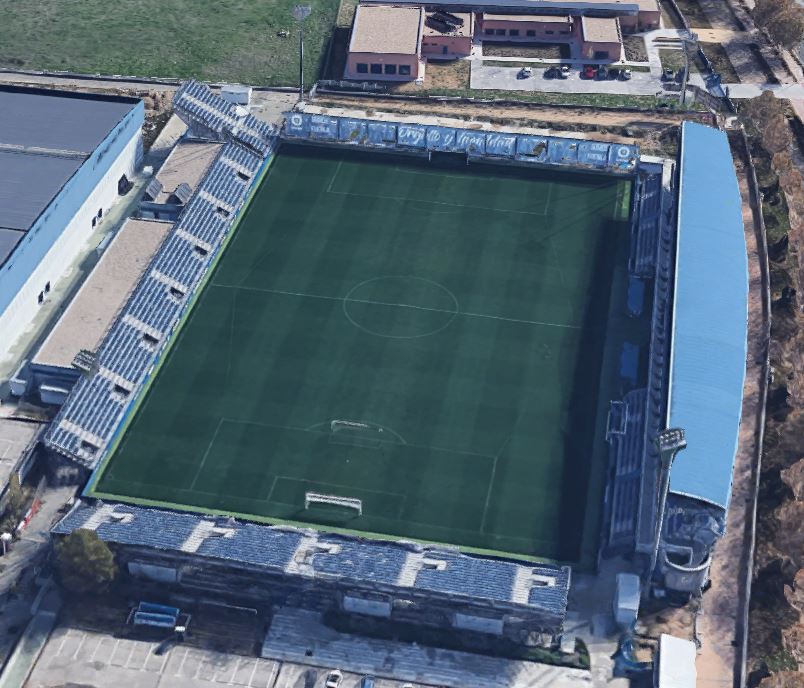
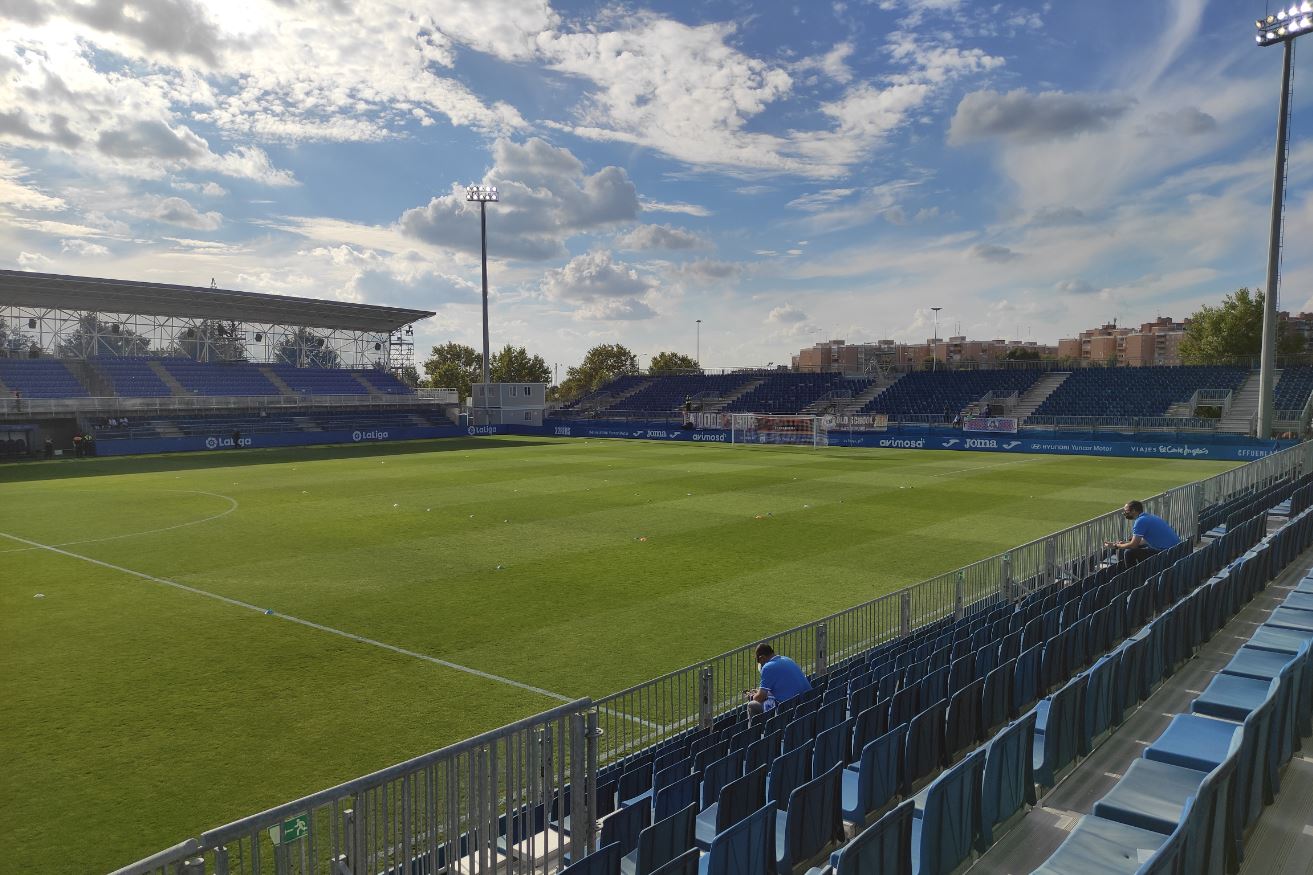
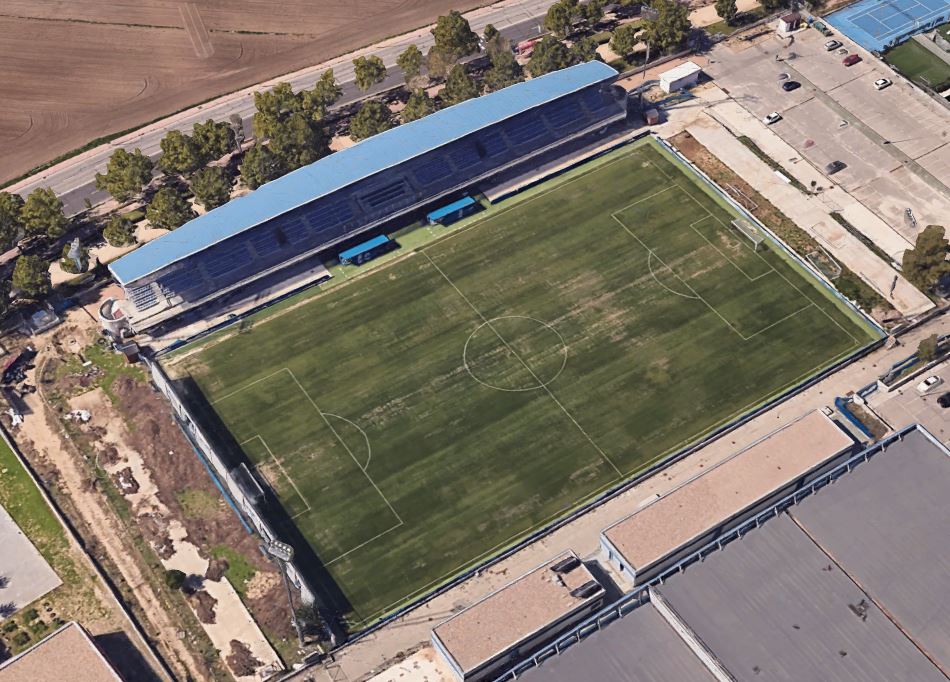
At present, the stadium comprises of a full-length raised stand on the west side of the arena, with a single tier of 1800 blue seats. All of this is housed under a blue cantilevered roof that hangs high over the seating to accommodate the media facilities at the rear of the stand. Temporary seating did occupy the areas behind the north goal and the east side of the stadium during the club’s three-season stay in La Segunda, taking the capacity of the stadium to a peak of 6,000. However, following CF Fuenlabrada’s relegation back to the third tier in 2022, the additional seating was removed from the north end and the small upper tier on the east side. The main stand and its paddock are often the only areas accessible to spectators on match days. Practical, adaptable and ready to change again should CF Fuenlabrada rise again.






 Estadios de España