Article updated: 18/04/2026
Set in the foothills of the Pyrenees and in the middle of La Garrotxa Volcanic Park, Olot is not your stereotypical location for Spanish regional football. This small town of 32,000 inhabitants has been home to Unió Esportiva Olot since 1921, and for much of its history, the club has lain dormant like the surrounding volcanoes. However, in 2013, the locals witnessed a seismic upturn in UE Olot’s fortunes, culminating in an eruption of local pride after the club secured promotion to Segunda B for the first time in its history.
The first recorded instance of football being played in Olot was in 1902, when Joaquim Peris Vargas, commander of a battalion stationed in the town, set up a series of matches against locals and tourists. Move on a decade, and two clubs, Olot Deportivo & Sport Club Olot were vying for the local supporters’ attention, with the former staging a friendly match with FC Barcelona at their new enclosure on 15 September 1912. By the middle of the decade, both clubs had disappeared, but were replaced by Sporting Club and Renaixement Sportiu. These clubs merged in 1919 to form Olot Foot-ball Club, and from October 1922, they used a new ground on the Avinguda de l’Estació, which, unsurprisingly, was called the Camp de l’Estació. This was an incredibly narrow enclosure, no more than 55 metres wide, that stood just to the southeast of the town’s station. During the 1920’s, UE Olot formed an alliance with RCD Espanyol, which would last until the 1960’s. The final game of the 1939-40 season saw the renamed Union Deportiva Olot beat Figueres to seal the regional championship. Unfortunately, defeat to FC Prat de Llobregat in the playoffs meant the club remained in the regionalised second division.
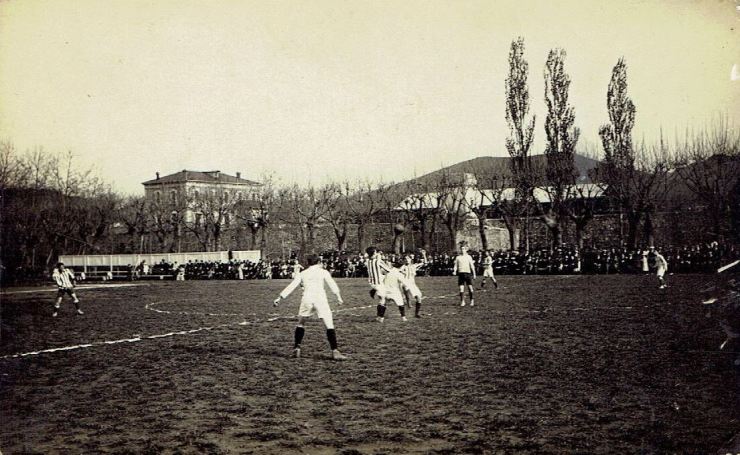
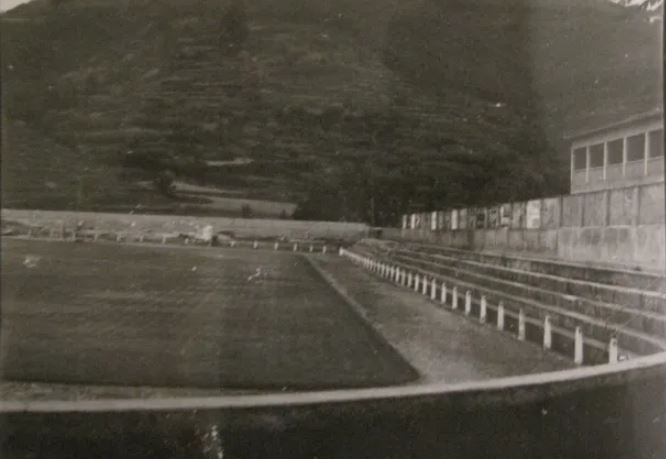
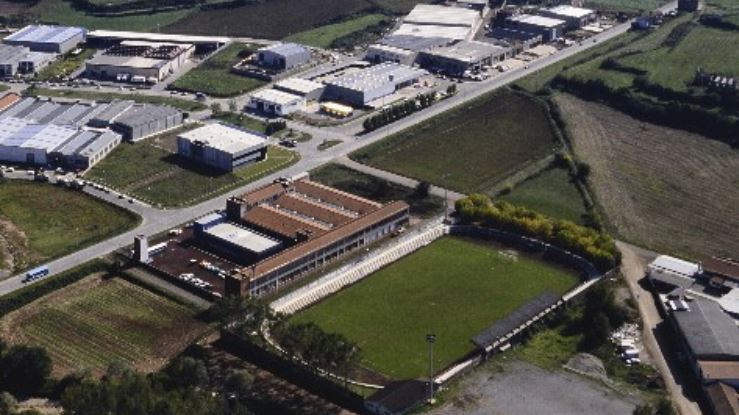
Camp de l’Estació in the 1930s 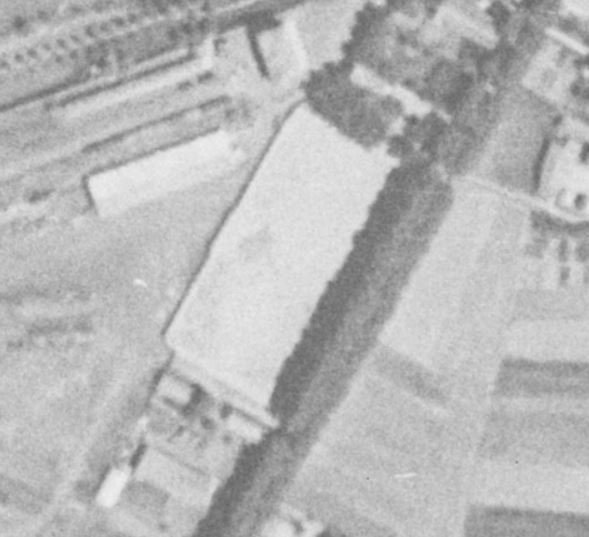
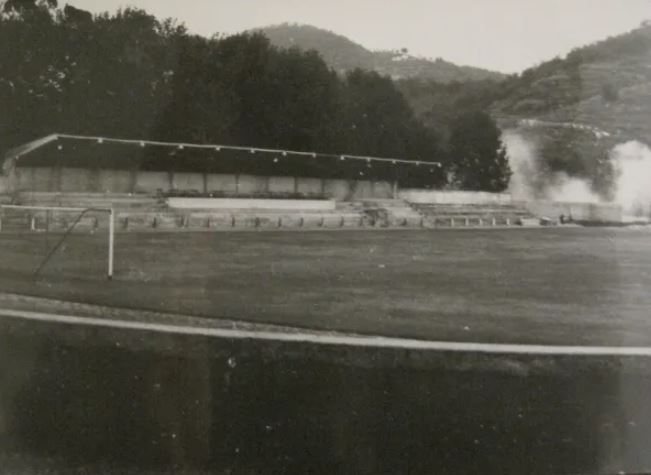
Camp de l’Estació in 1946 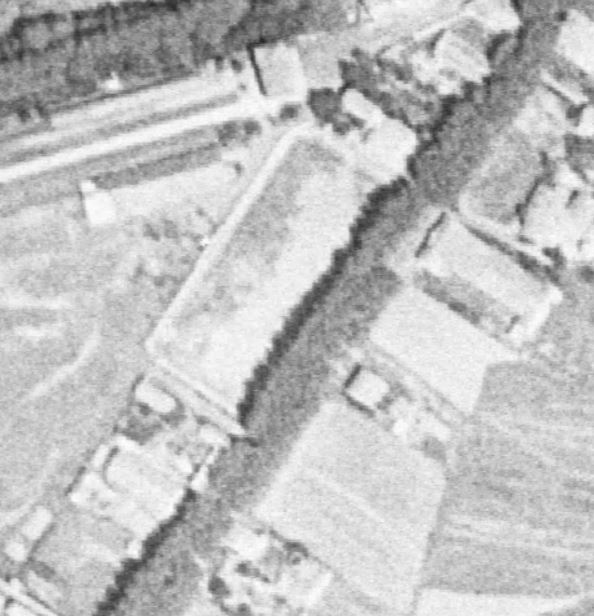
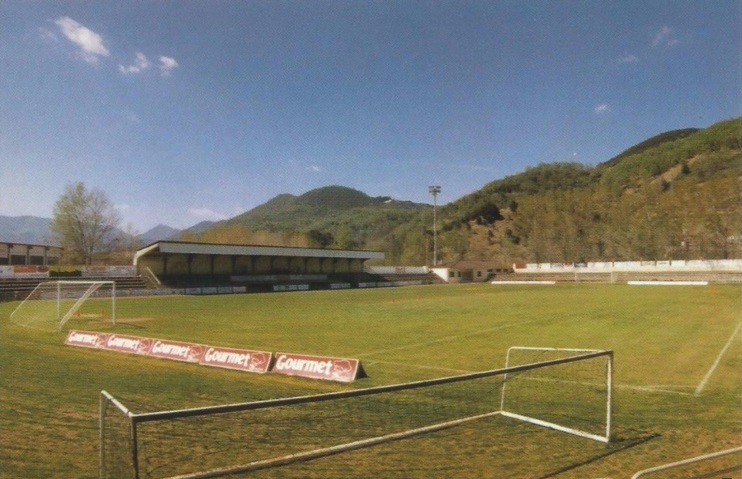
Camp de l’Estació in 1956 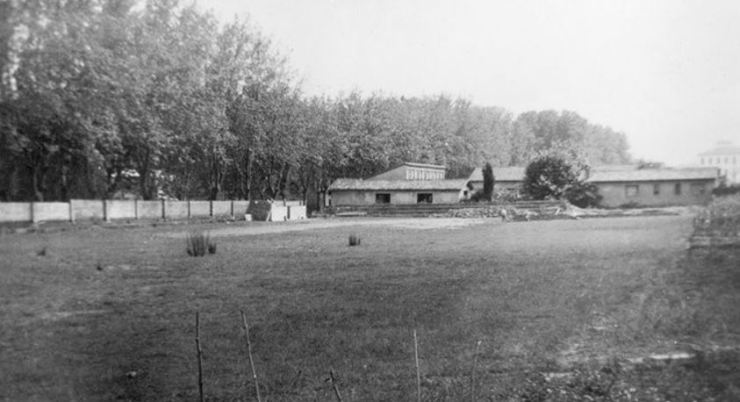
Camp de l’Estació in the early 1960s 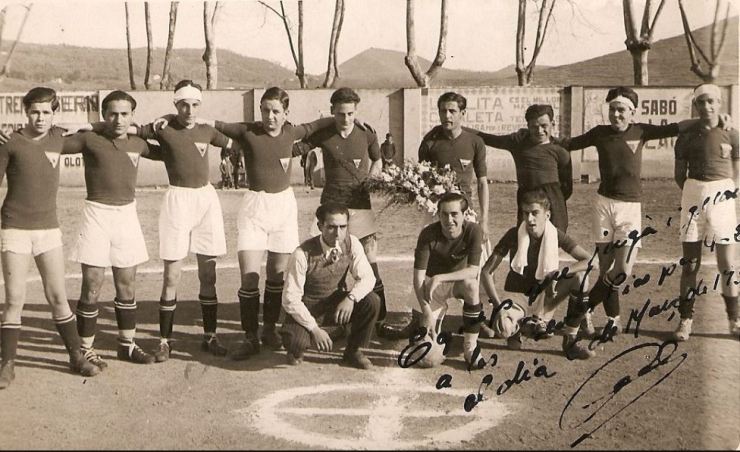
Olot Foot-ball Club at the Camp de l’Estació in 1935 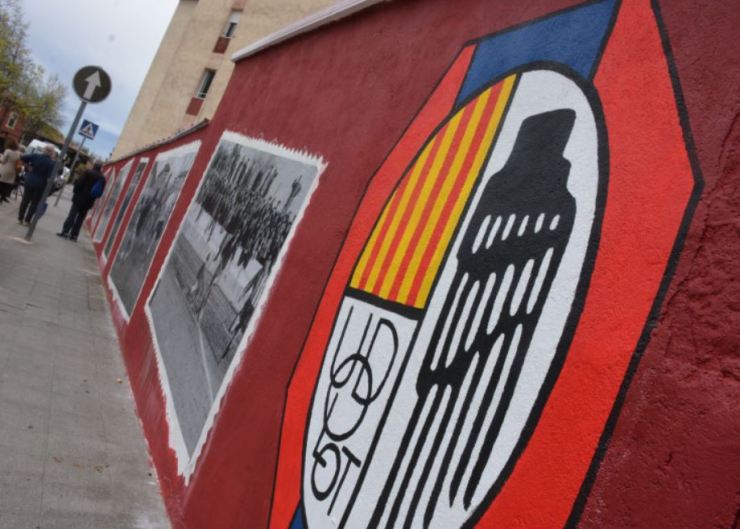
The commemorative mural on Carrer Tren d’Olot- April 2026 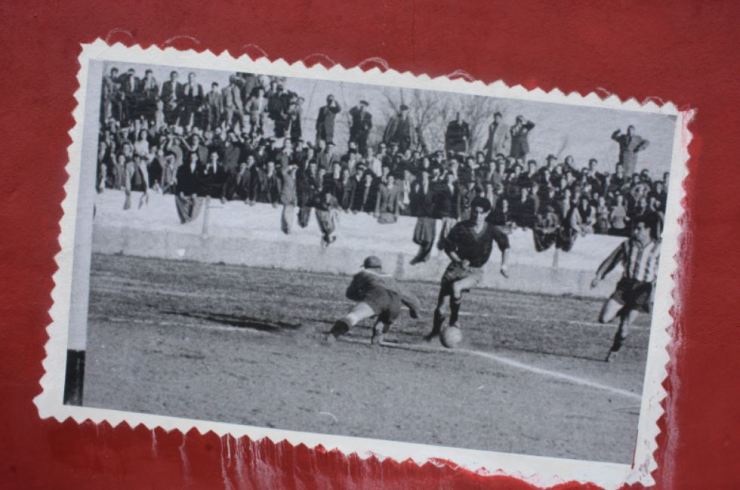
The commemorative mural on Carrer Tren d’Olot- April 2026 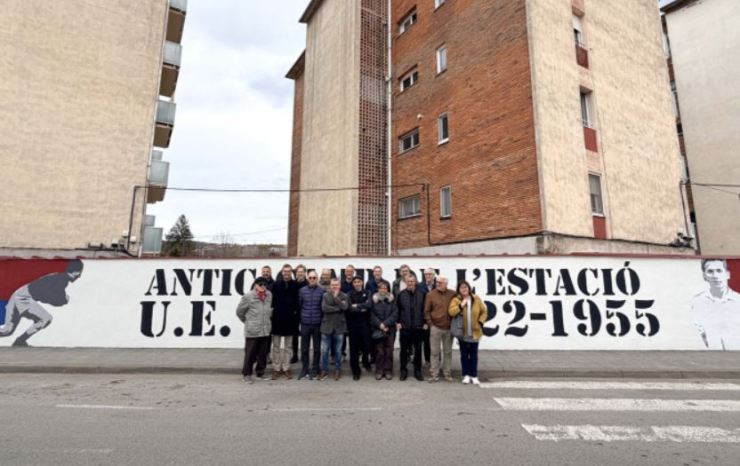
The commemorative mural on Carrer Tren d’Olot- April 2026 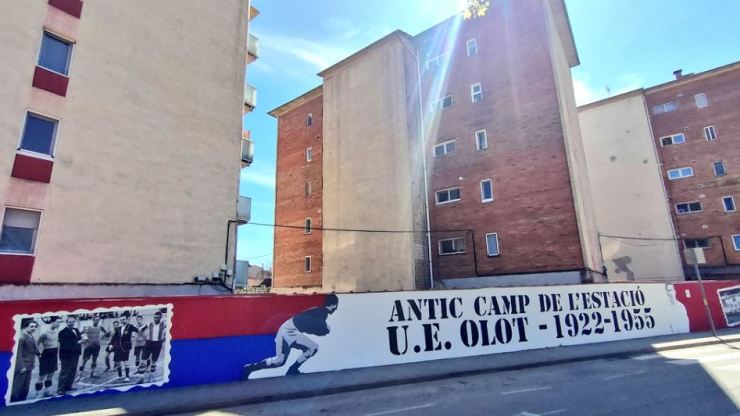
The commemorative mural on Carrer Tren d’Olot- April 2026
Some accounts have the championship decider against Figueres as the last game played at the Camp l’Estació, with the club moving to its current home at the start of the 1940-41 season. This is unlikely, as the Estadi Municipal was not built until 1954. Other accounts have the UD Olot playing at several unnamed locations around the town, before settling at the Camp del Morrot on the northwestern edge of the Volcà del Montascopa, but aerial photographs from 1946 show no such development in that location. What the 1946 aerial photos do show is that the Camp de l’Estació is still standing, and the pitch is still clearly being used for football. Therefore, it is feasible that the club continued to use the enclosure up until their move to the Estadi Municipal in 1954. Aerial photographs from the mid-1950s still show the Camp l’Estació being used for football, but by the early 1960s, the ground had fallen into disrepair. Following the closure of the Barcelona-Olot line in 1969, the site was developed for housing. Finally, the puzzle was solved in April 2026, when the club and its supporters unveiled a mural commemorating UE Olot’s years at the old ground. The mural runs along the line of the old perimeter wall on Carrer Tren d’Olot, stating in bold black letters that the club played at the Campo de l’Estació from 1922-55.
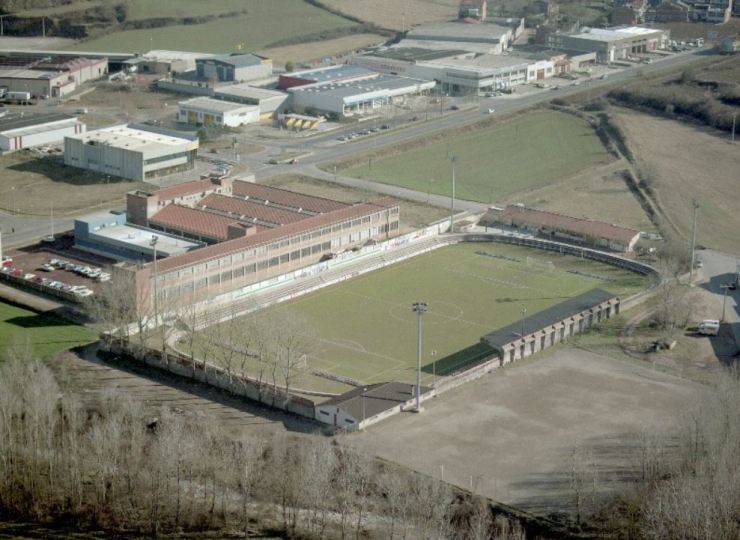
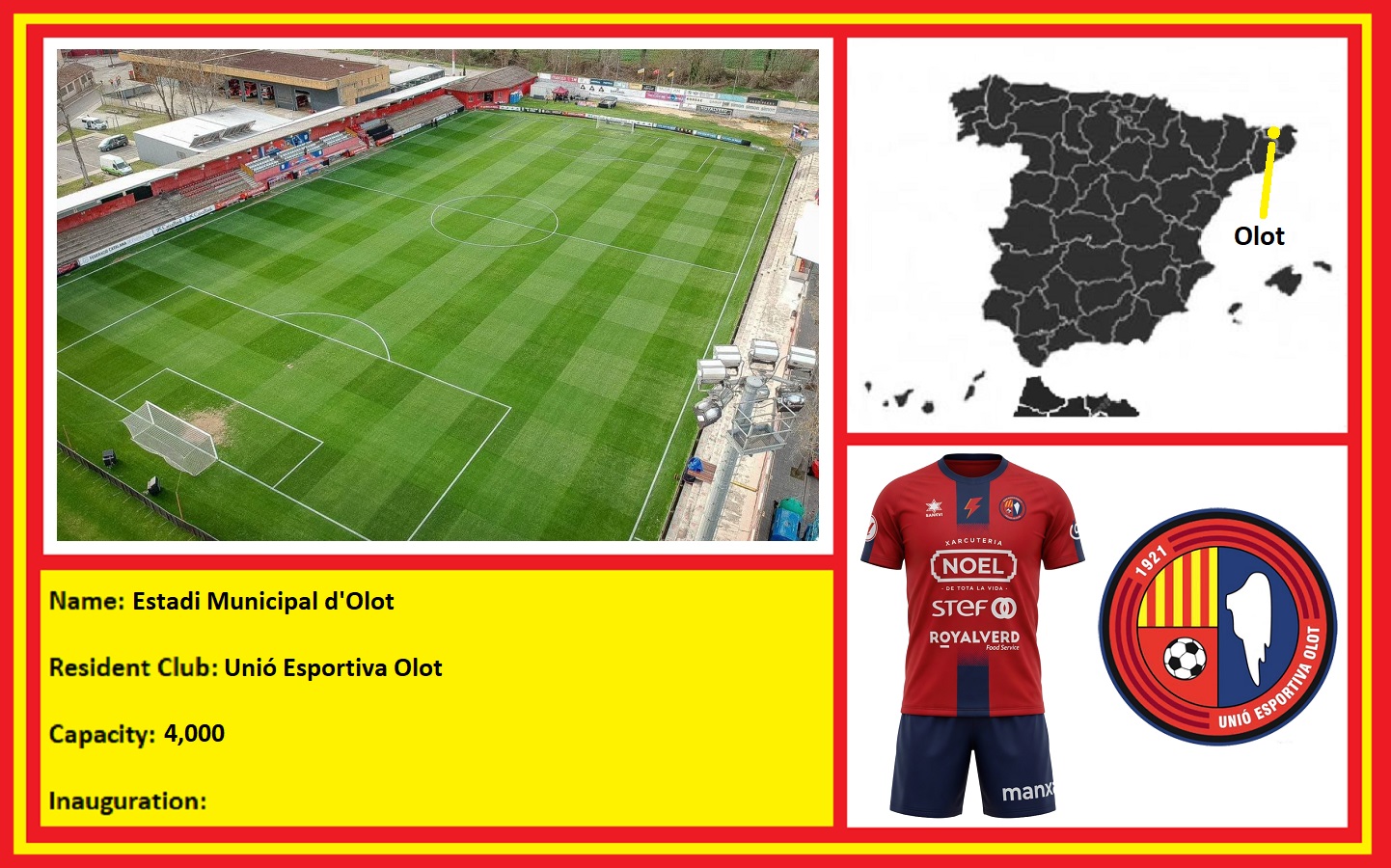
The move to the Estadi Municipal came in the summer of 1954; however, the official inauguration had to wait until 4 September 1995, when UD Olot welcomed Barcelona’s youth team. The move did prompt an upturn in form, with the club eventually reaching the Tercera division following reorganisation of the leagues in advance of the 1956-57 season. They were a regular feature of the Tercera for much of the 1960s, and also enjoyed prolonged stays in the 1980s & 1990s. The club adopted the Catalan version of their name, Unió Esportiva Olot, in 1980. There followed a period of decline, during which time the club spent many seasons in the Primera Territorial, or seventh tier. The successive promotions from 2009-11 saw the club return to the Tercera and then build a team fit for promotion. The Catalan Tercera title was won in May 2013, but the first champions phase of the playoffs saw UE Olot lose to Elche Ilicitano. With the defeated champions given another chance, UE Olot took their opportunity and disposed of Mairena & Arandina to earn promotion to Segunda B for the first time in the club’s history. The club played in the third tier for seven of the next eight seasons, before being relegated to the Tercera Federación in 2022 following the restructuring of the Spanish football pyramid. As of 2026, UE Olot plays in the Segunda Federación.
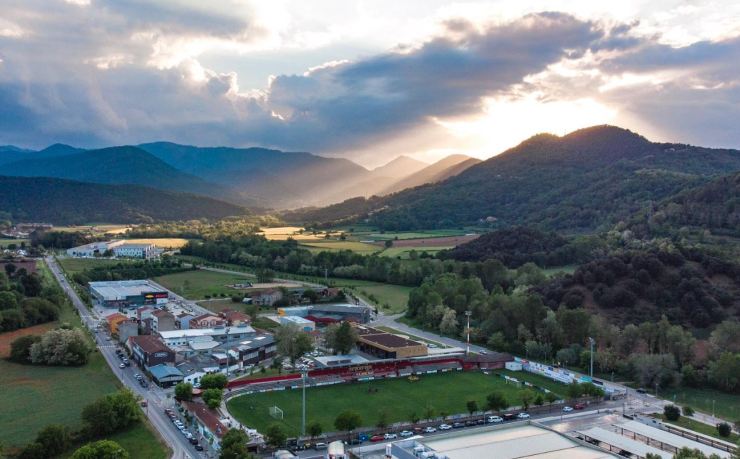
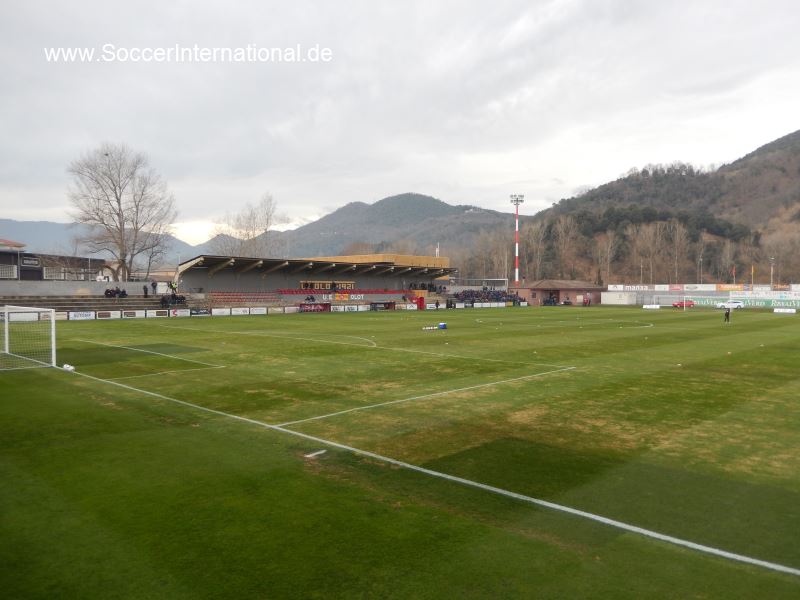
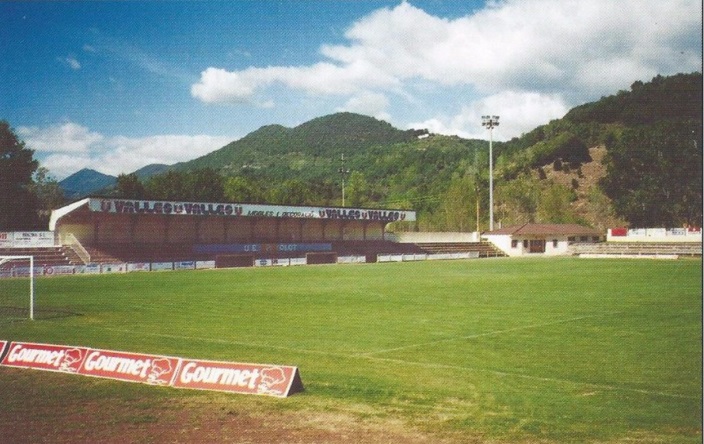
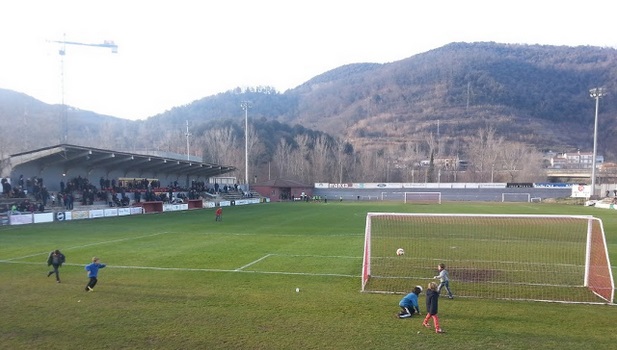
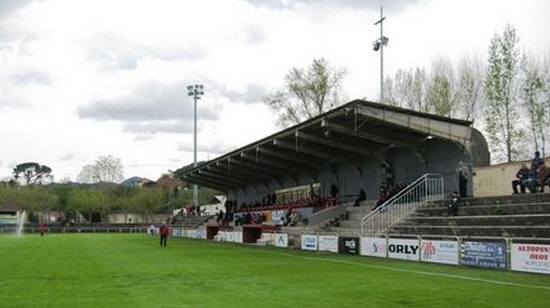
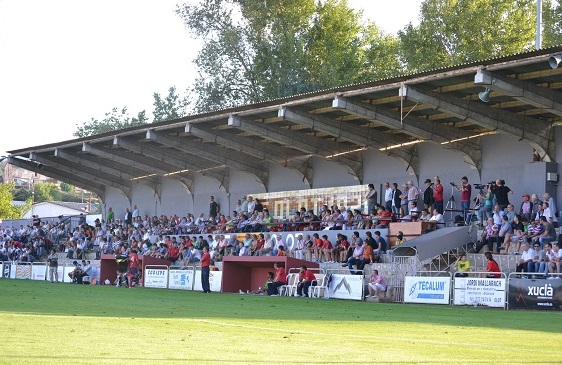
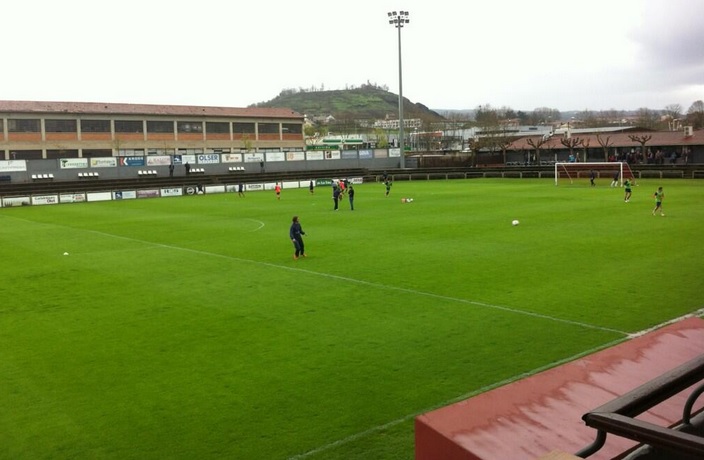
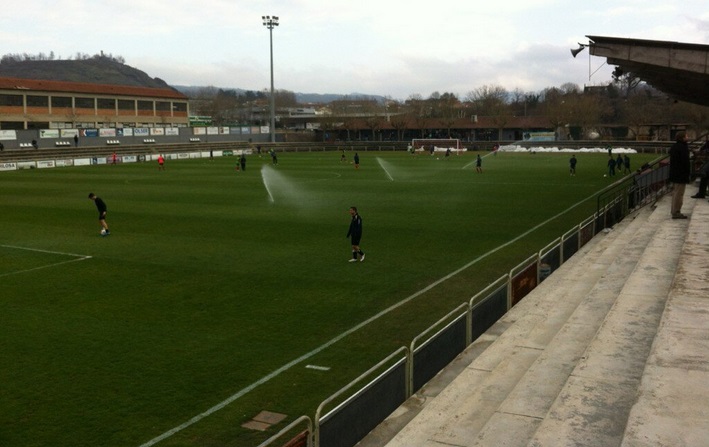
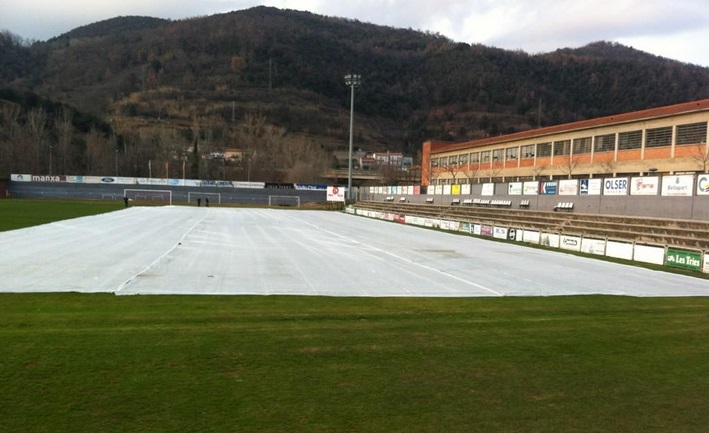
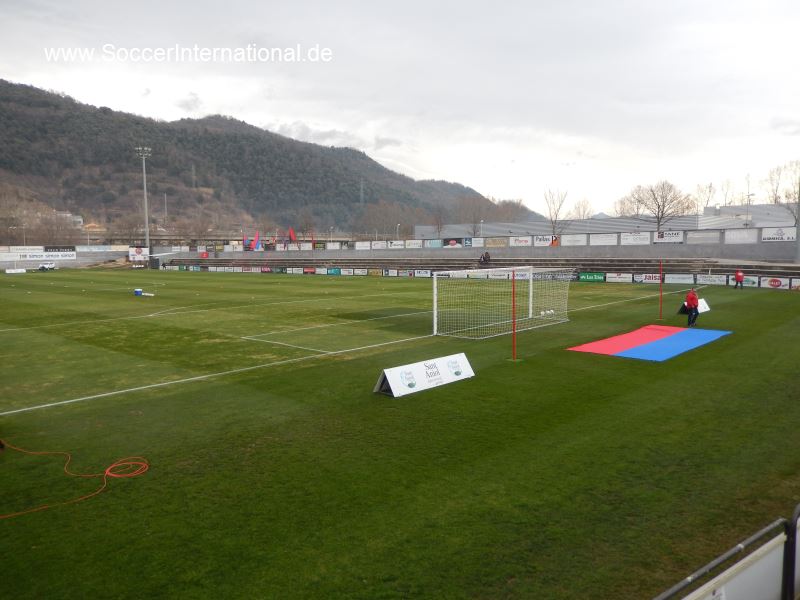
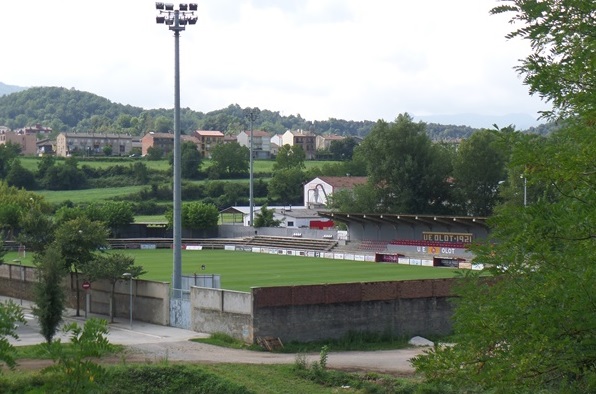
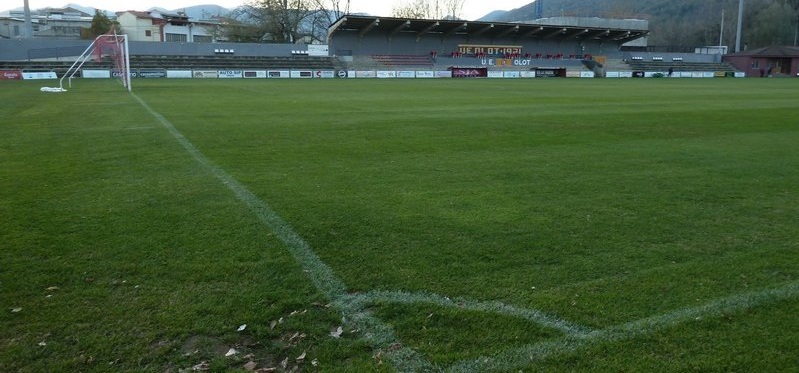
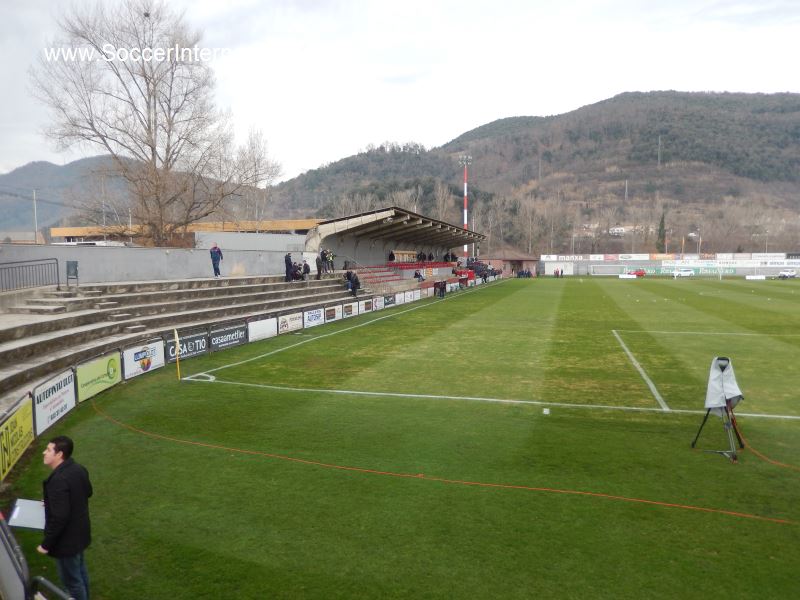
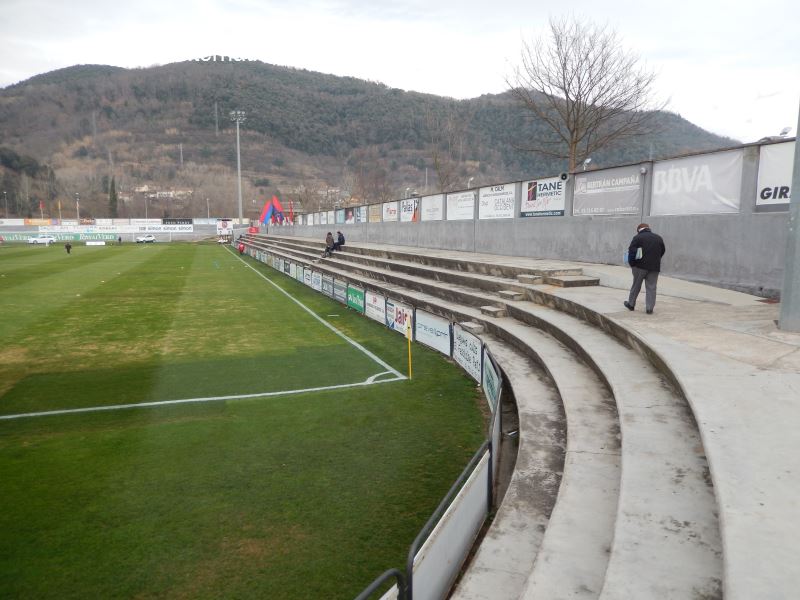
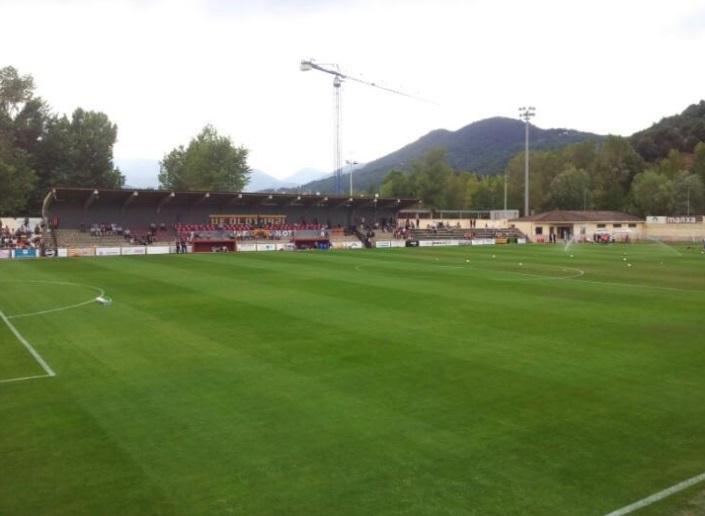
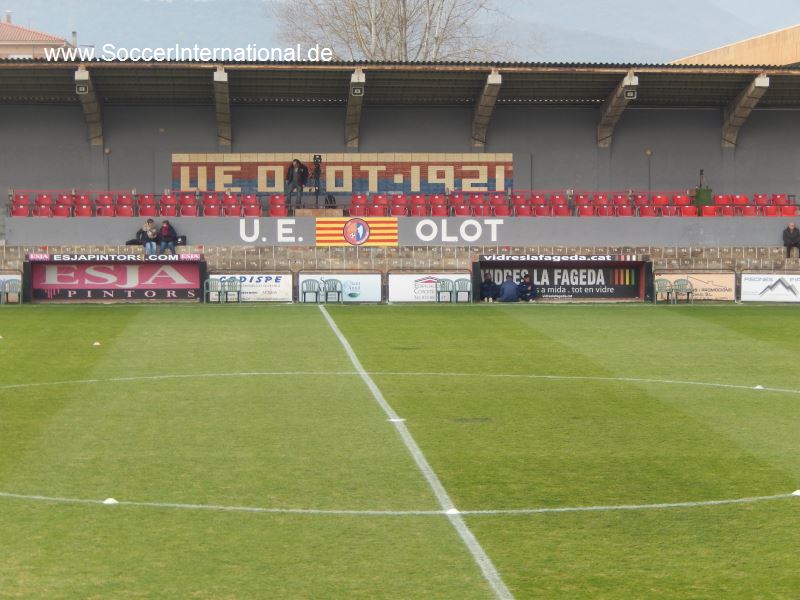
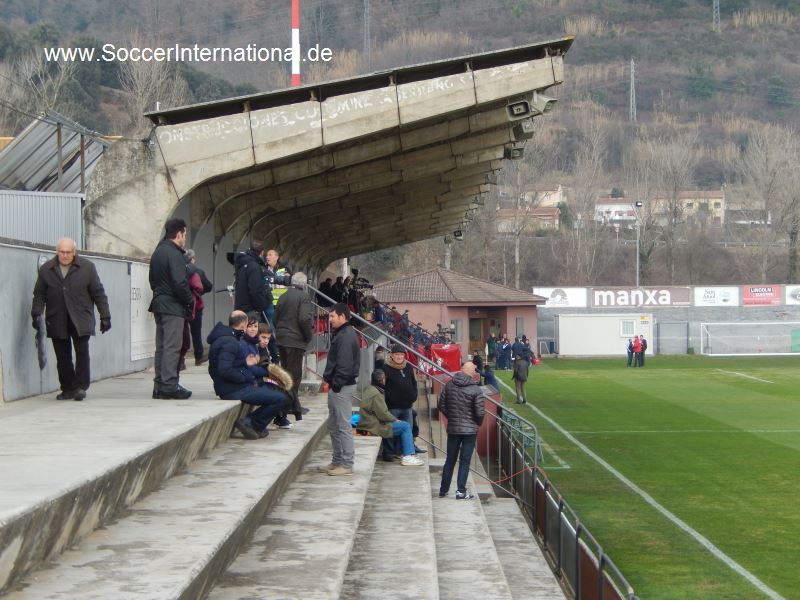
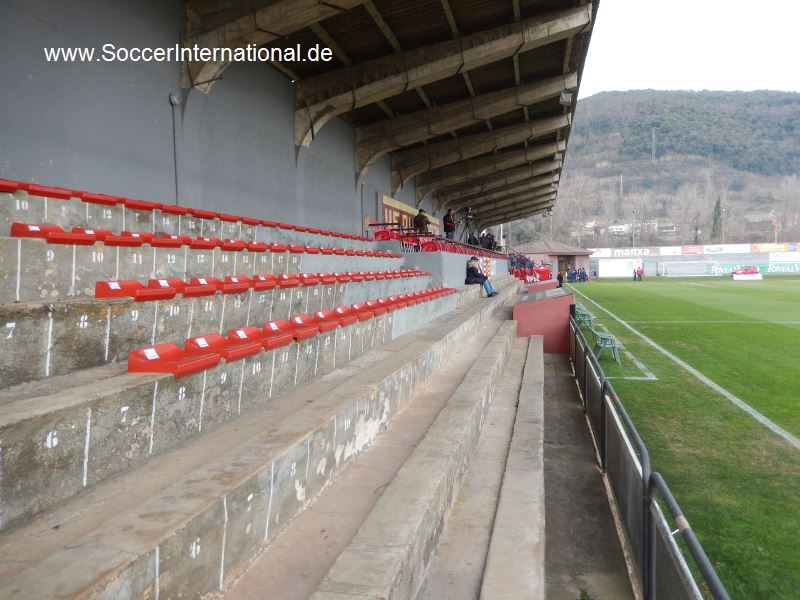
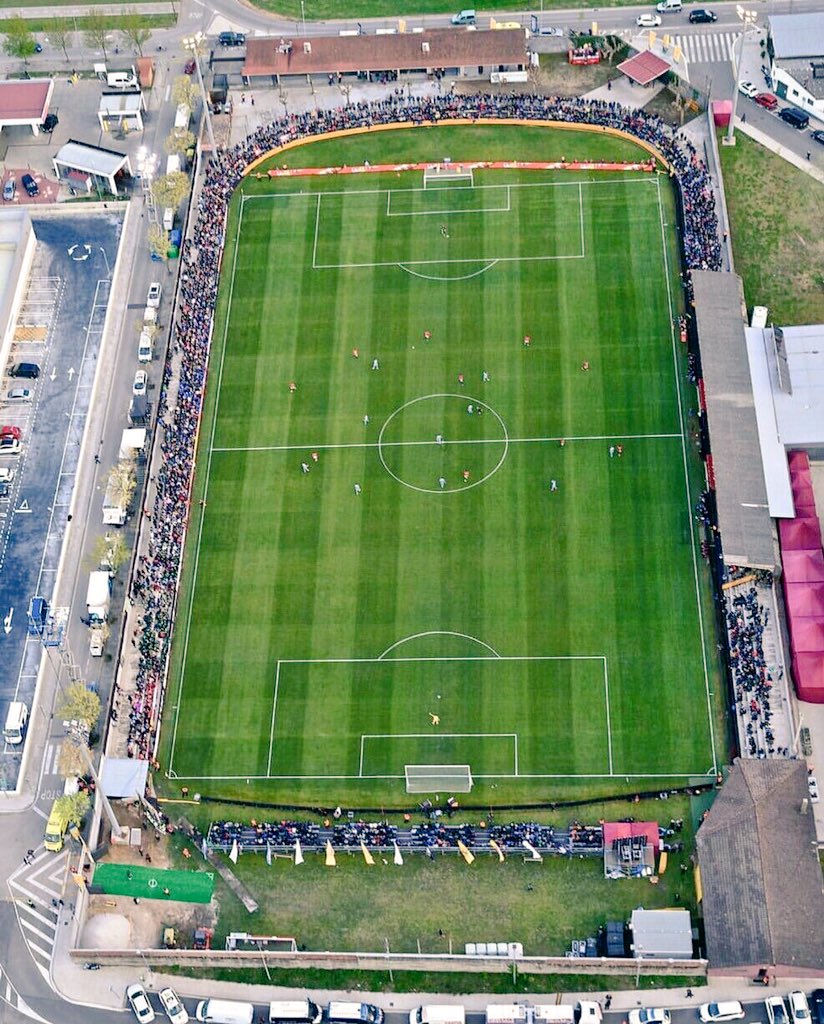
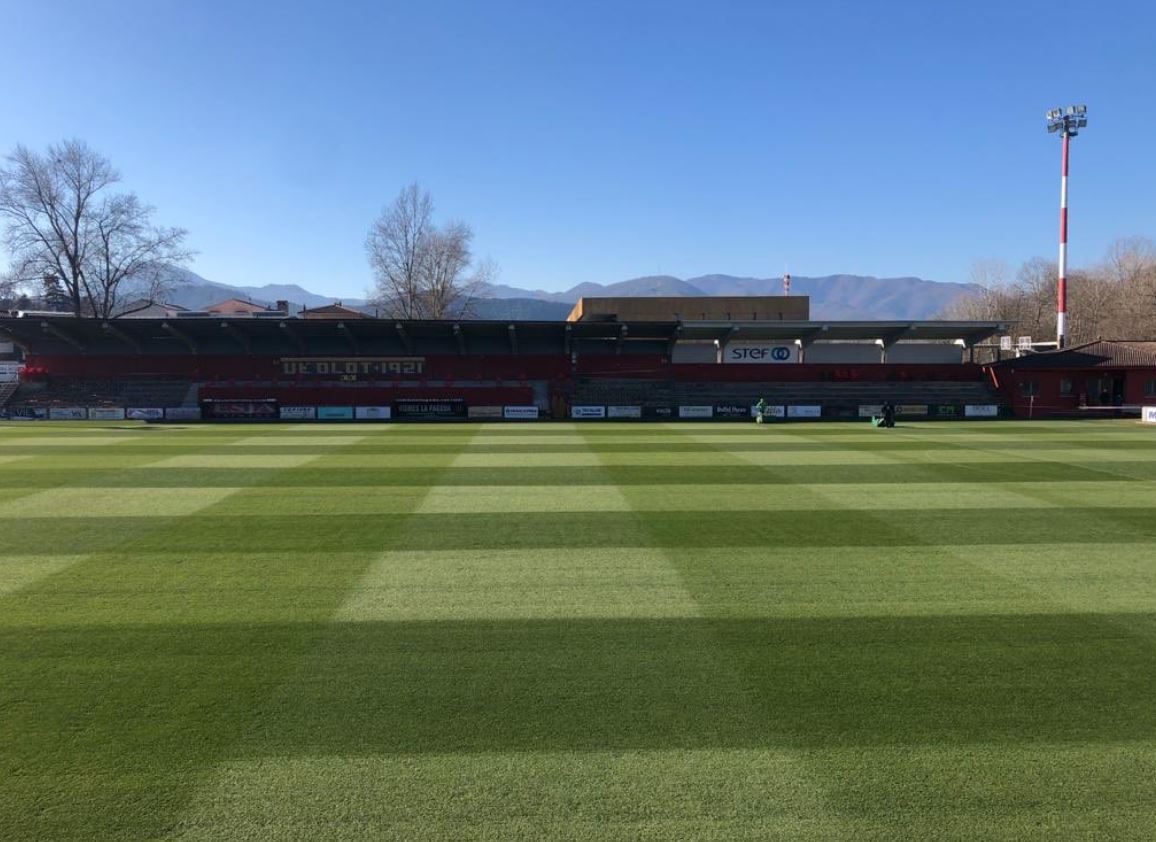
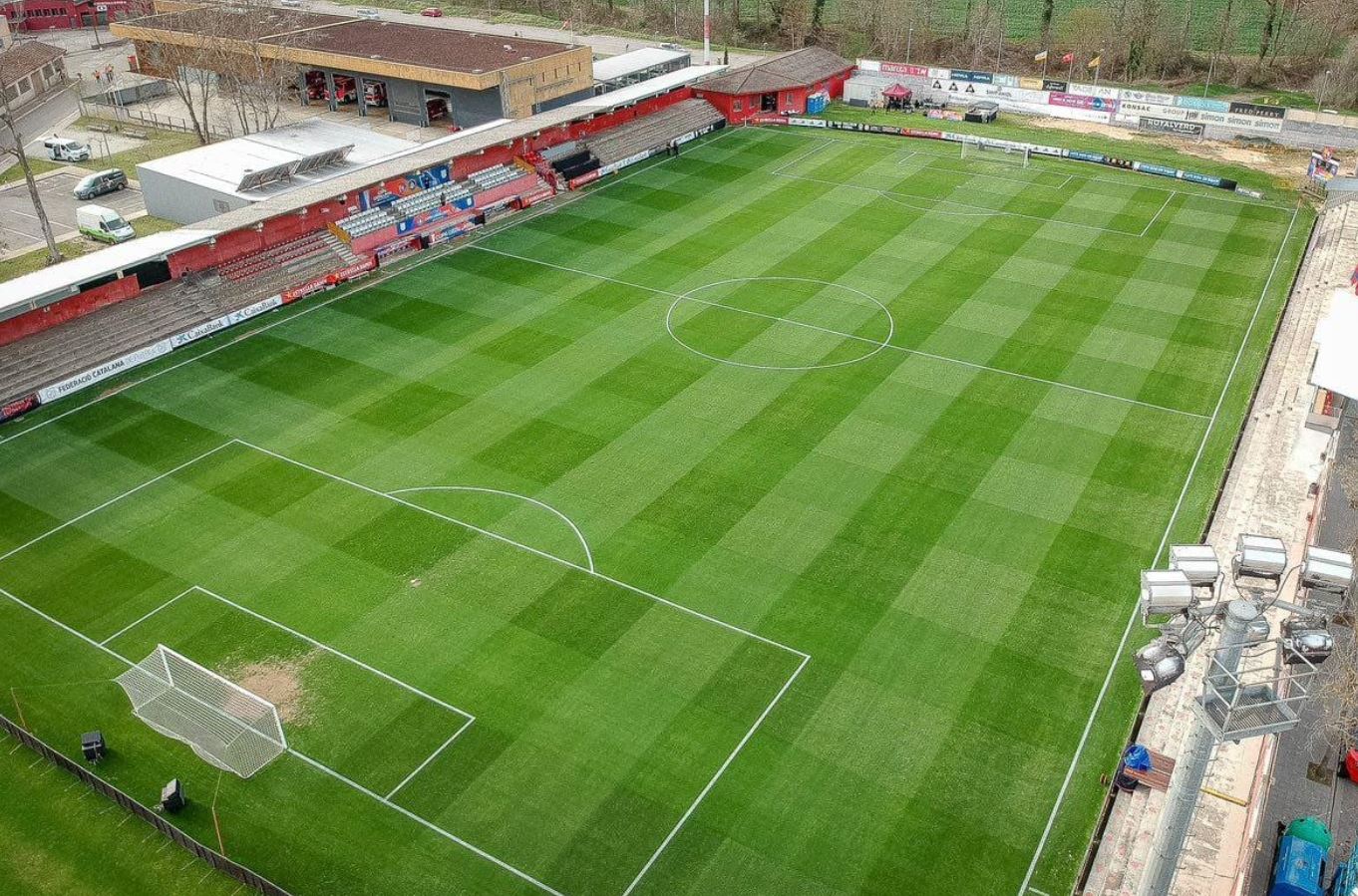
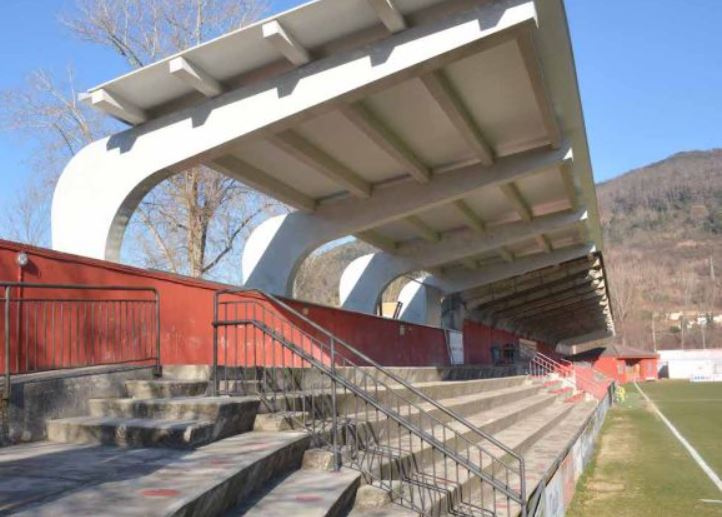
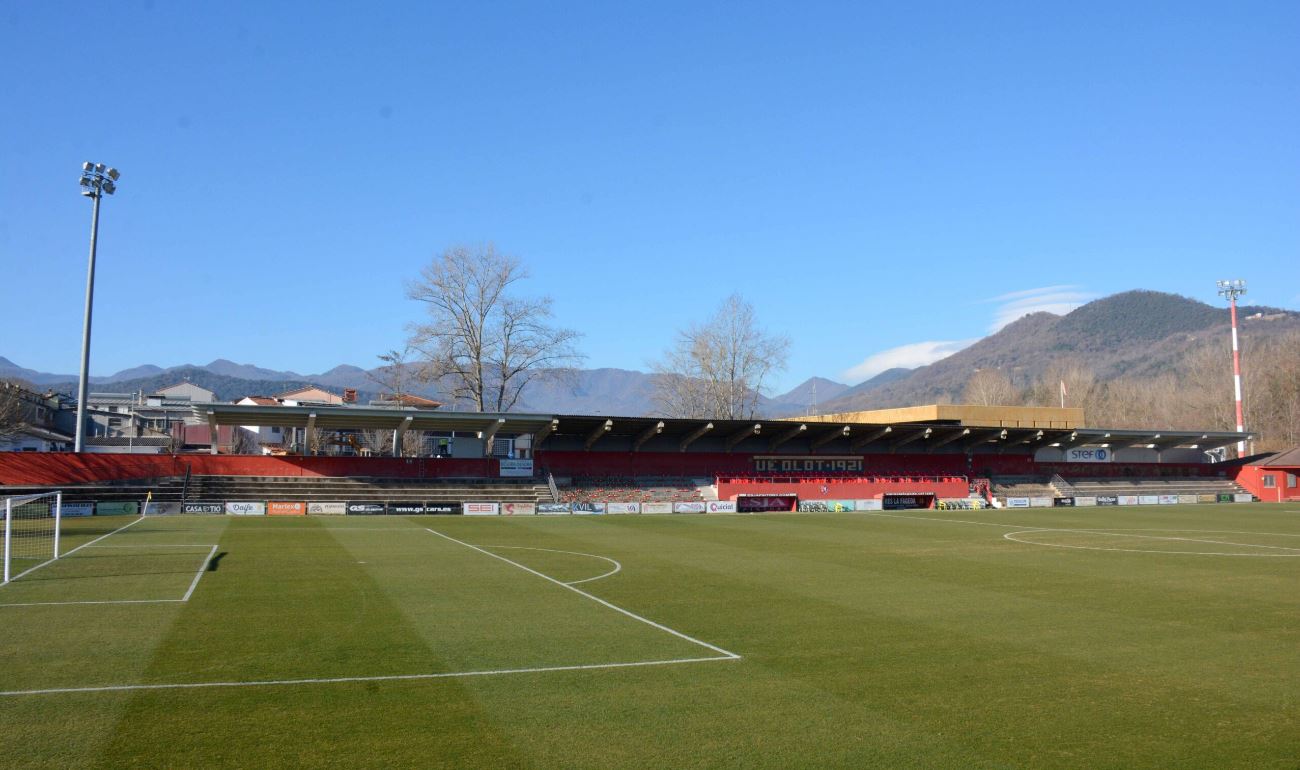
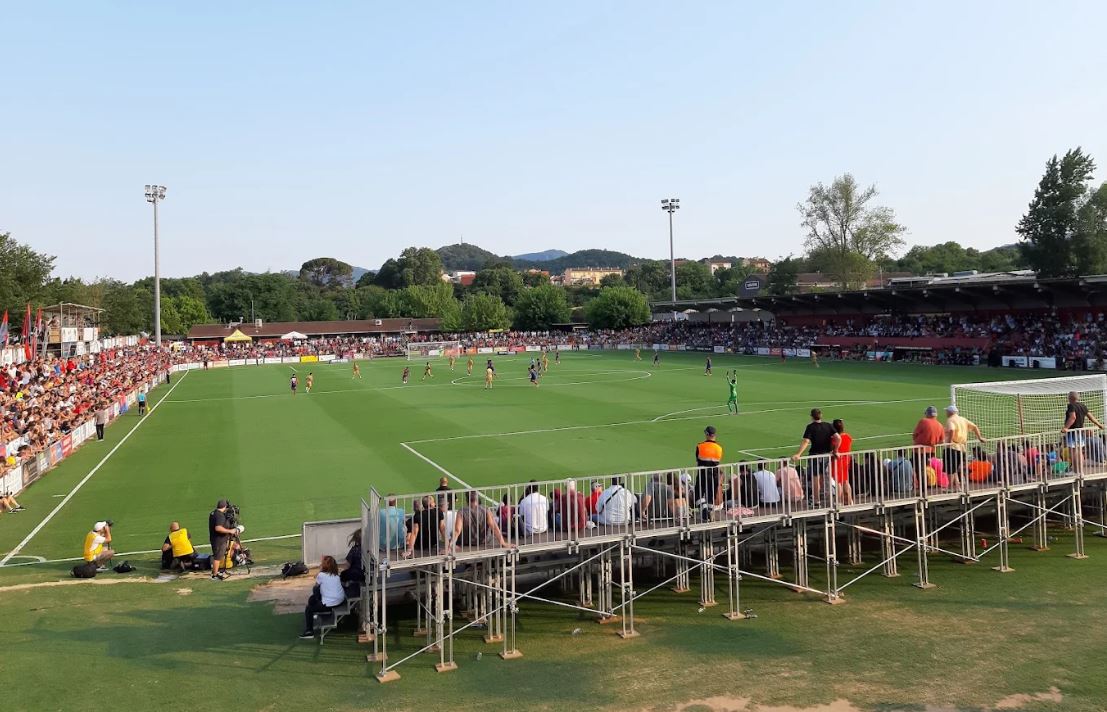
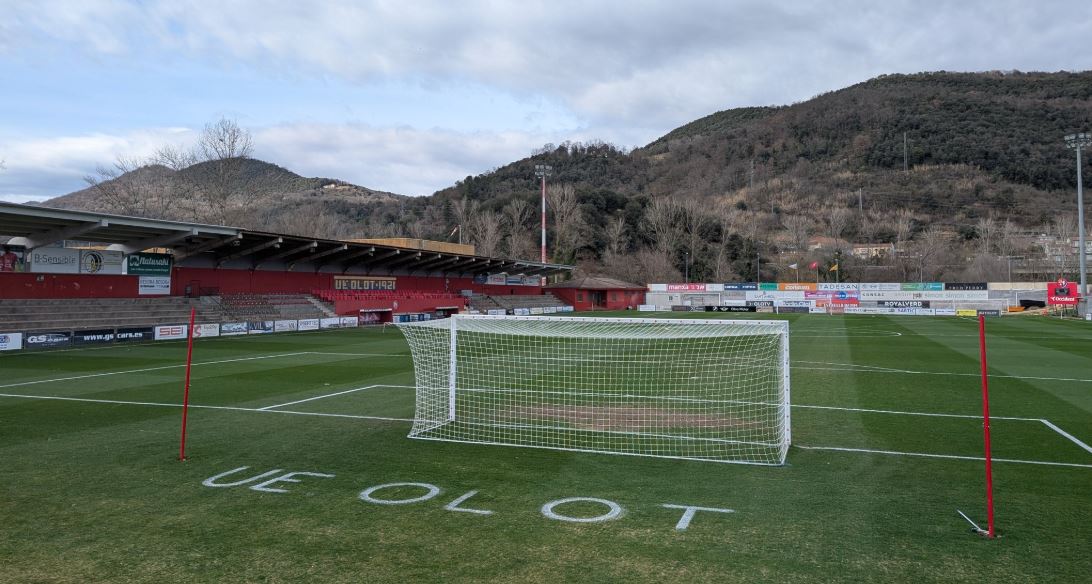
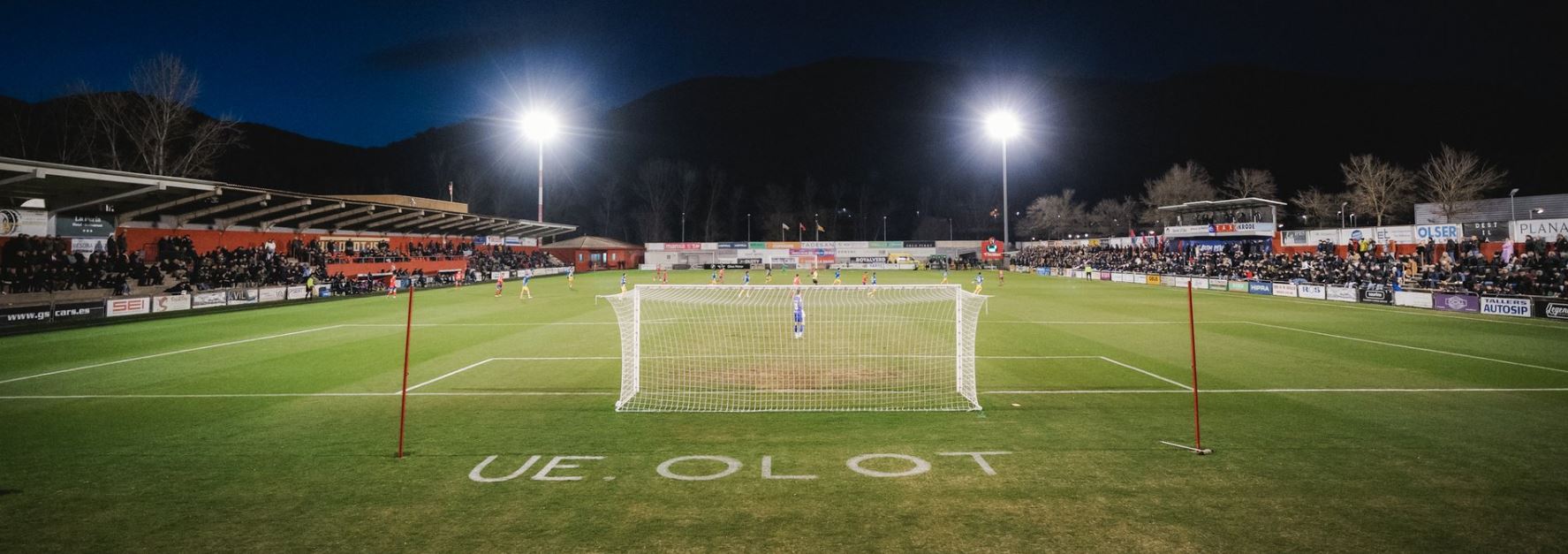
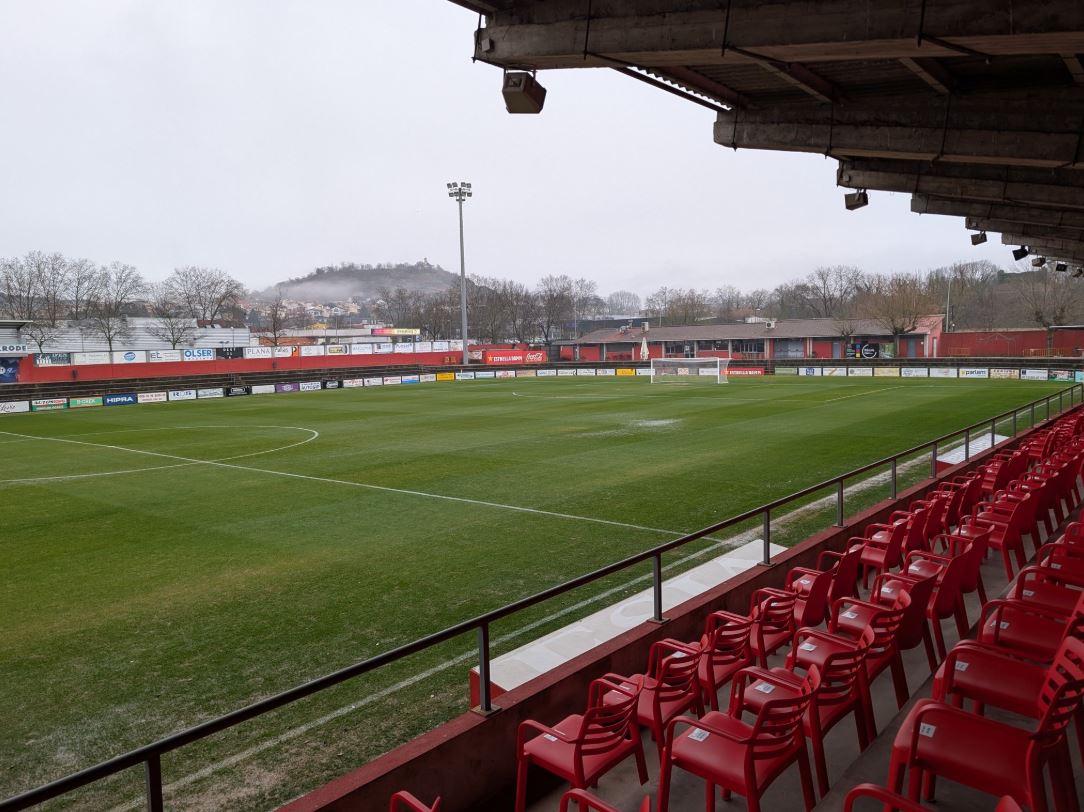
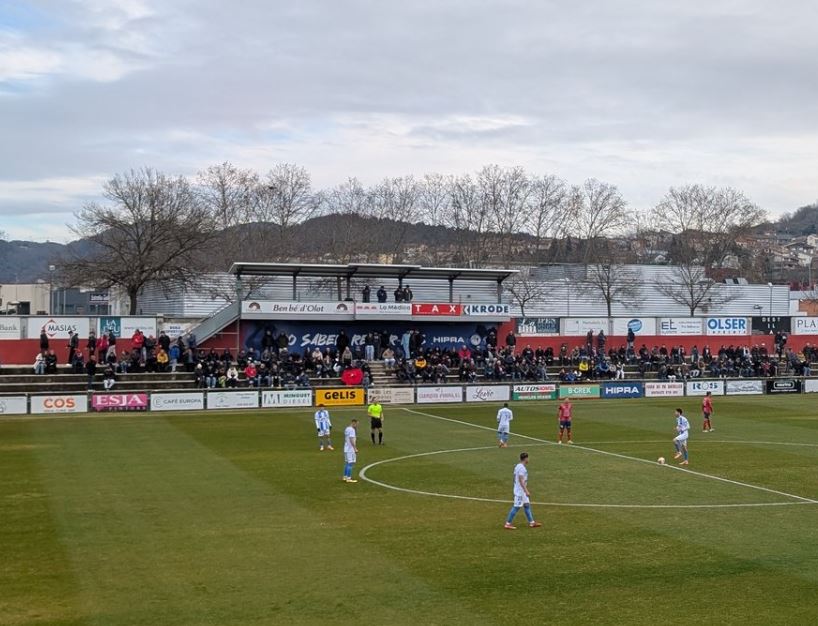
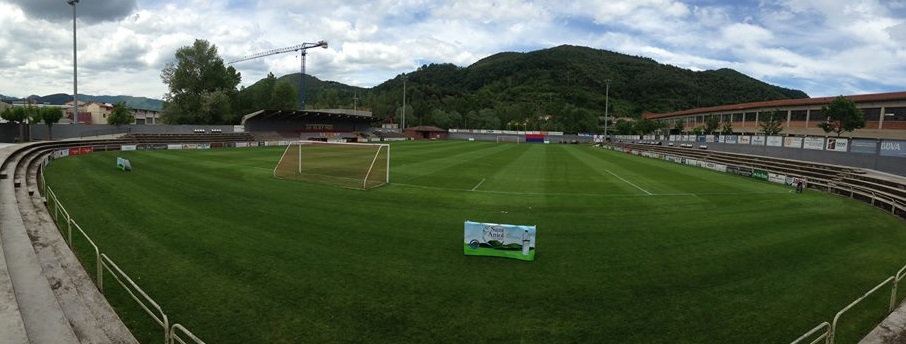
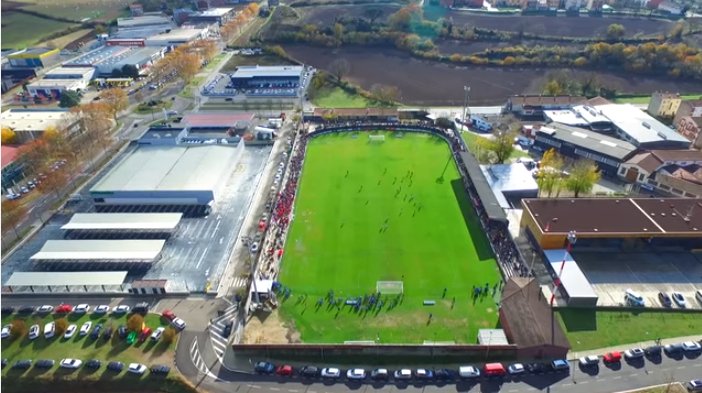
Unlike the surrounding countryside, the Estadi Municipal d’Olot does not take one’s breath away, but maintains a certain charm. It is a simple enclosure, with a 100-metre-long cantilevered cover on the west terrace. The central 50-metre section dates from 1958, with two 25-metre sections added to either side of the original structure in 2021, at a cost of €103k. Beneath this cover is the stadium’s only seating, a raised section of around 50 seats for club officials. Four steps of terracing continue around the southern end, which has a simple, narrow propped cover at its rear. The east side is made up of four steps of open terrace, at the centre of which is a raised media gantry. The northern end remains free from spectators, although temporary seating has been installed in the arc behind the goal on several occasions. In the northwest corner is the stadium’s only modern building, a clubhouse and players’ changing rooms which date from 2014. With a capacity of just 4,000, the Estadi Municipal d’Olot may be dwarfed by the likes of the Camp Nou and RCDE Stadium, but because of its relatively low-rise, you can enjoy the surrounding countryside, if the action on the pitch doesn’t come up to scratch.