
Article updated: 02/11/2025
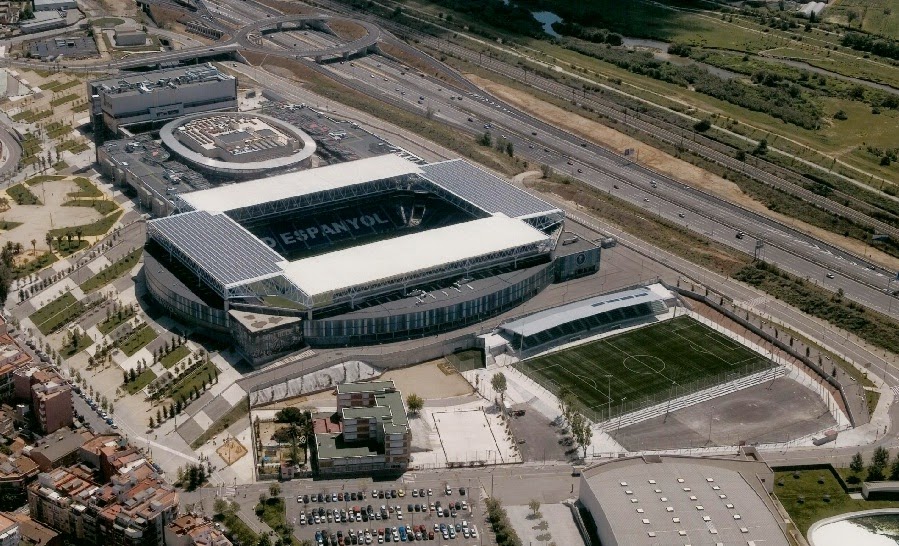
Barcelona and its satellite towns are arguably the number one destination in Europe to feed your stadium addiction. In addition to major attractions such as Camp Nou, Estadi Olímpic Lluís Companys, and RCDE Stadium, there are numerous smaller stadiums scattered throughout the suburbs. Of course, there was an added bonus of visiting Barcelona’s “Big Three” stadiums, which was the addition of a smaller stadium next door. You will no doubt be aware that the Mini Estadi used to be but a drop-kick away from the Camp Nou, and you may even have heard of the Camp de Foixarda, some 500m from the Estadi Olímpic Lluís Companys. The latest addition to the list is UE Cornellà’s Nou Camp Municipal, which stands in the shadow of Espanyol’s multi-million-euro home.
Before we cast our eyes over their new stadium, here is a potted history of the resident club. Unió Esportiva Cornellà was founded in 1951 following the merger of Fútbol Club Cornellà, Atlètic Padró, and Acadèmia Junyent. For the next 45 years, the club played in the lower reaches of the Catalan regional leagues, never getting above the sixth tier of the national pyramid. UE Cornellà finally reached the Regional Preferente in 1996, earning promotion to the Tercera three years later. That first season in the Tercera saw the club finish fourth and enter the playoffs, and although the club earned a creditable third-place finish in its group, it was not enough to earn promotion. Over the next decade, UE Cornellá was unable to match the success of that initial season, returning to the Regional Preferente on two occasions. Results improved following their promotion back to the Tercera in 2008, with the club reaching the playoffs for a second time in 2013, but lost to Deportivo La Coruña’s B team in the first knockout stage. Undeterred, UE Cornellà secured its first Tercera title in May 2014. They then went on to win promotion to Segunda B with a victory over CD Izarra in the playoffs.
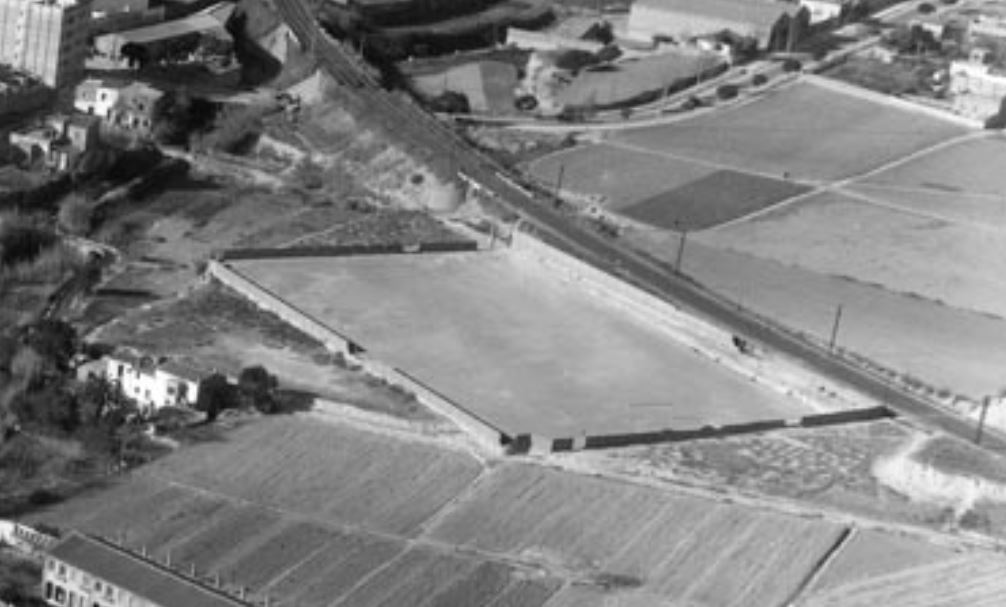
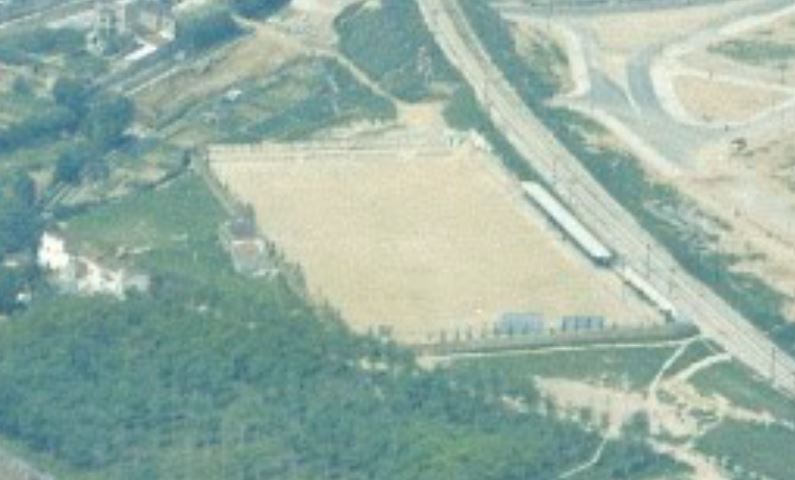
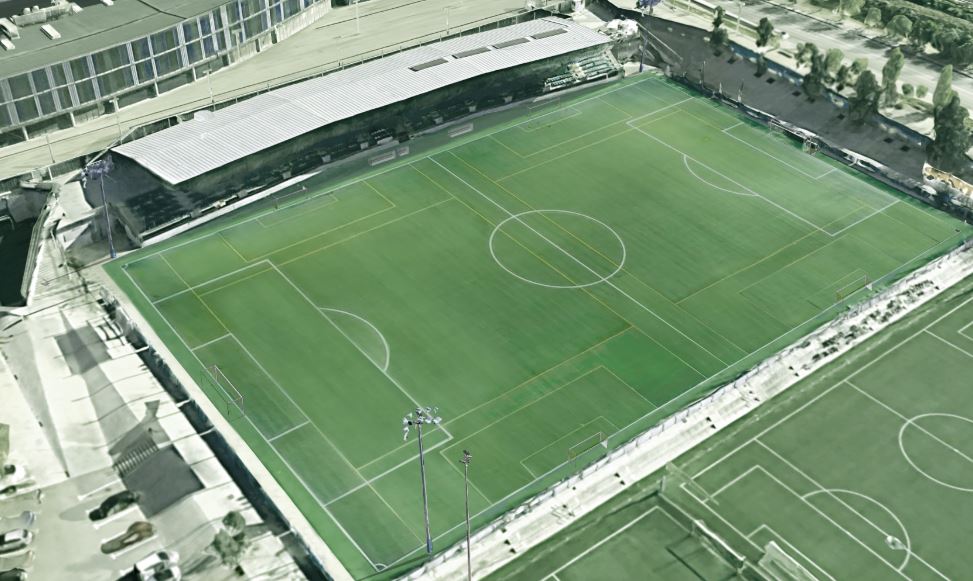
Before their move to the new stadium, UE Cornellà played matches at the Camp Municipal de la Vía Férrea. The ground was opened in 1941 and was the home ground of Atlètic Padró until UE Cornellà was formed in 1951. The ground was situated around 750m north of their current home. Via Férrea hosted the club’s successful football school, a system that has seen Jordi Alba come through its ranks. The only spectator accommodation was a single Tribuna on the northern side of the enclosure, which stood tight to the railway lines from which the ground takes its name. A simple cantilevered cover was bolted to the back wall and hung over five rows of seats and a rear viewing gallery. The stand had a capacity of 1000. On the southern side of the ground was the club’s football school, a smart semi-circular building which ran from the west corner to the halfway line. The western end had a small area of hard standing, whilst a grass terrace occupied the eastern end. The First XI played their final match at Vía Férrea on 13 May 2012, beating CF Pobla de Mafumet by a goal to nil. Within two years of their departure, the ground was demolished.

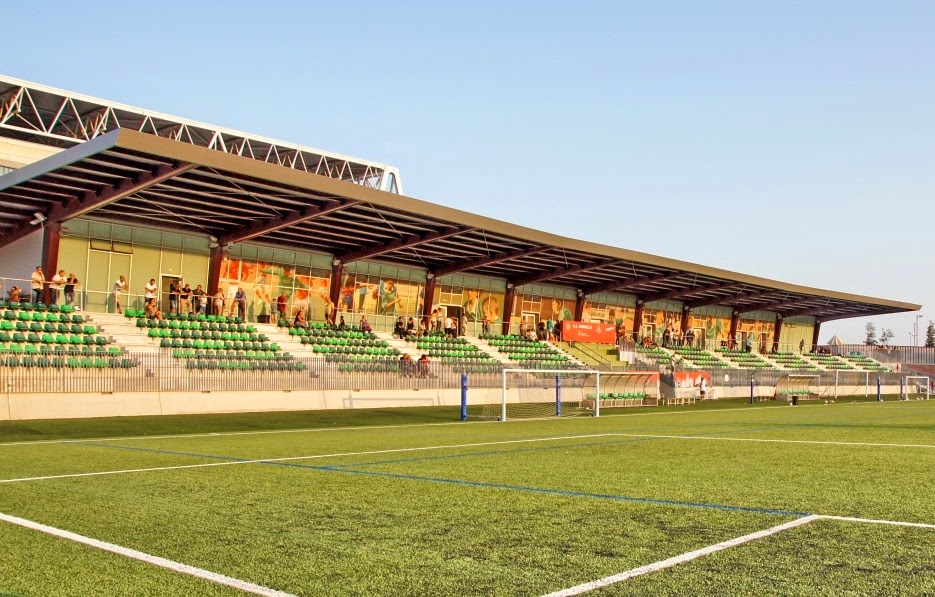
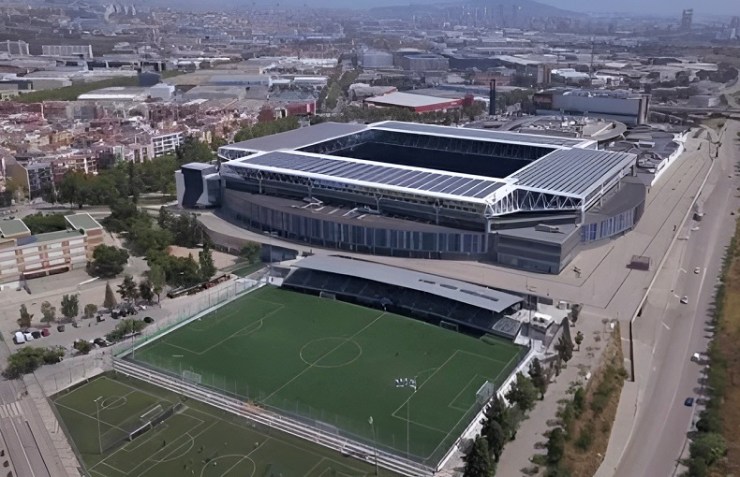
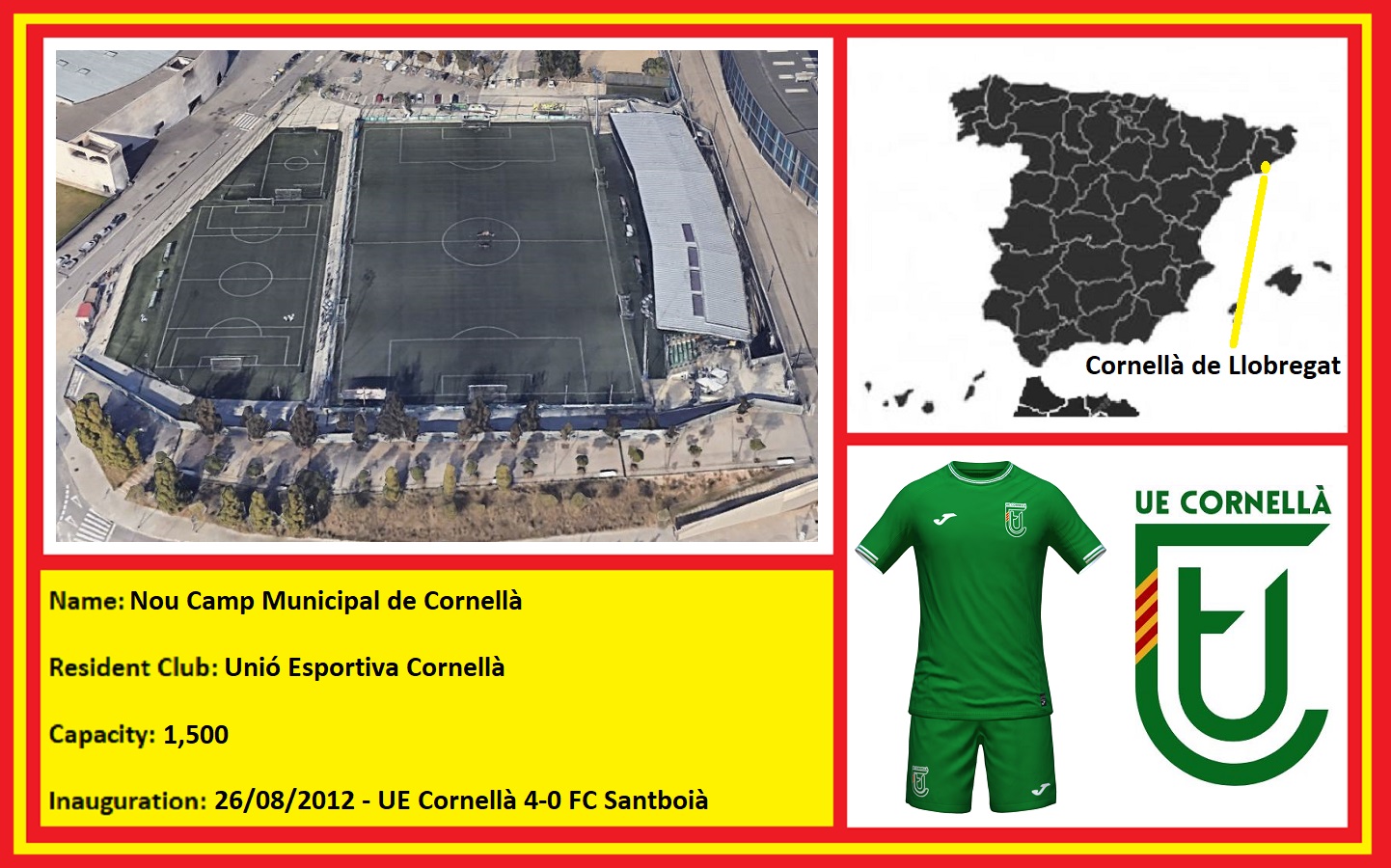
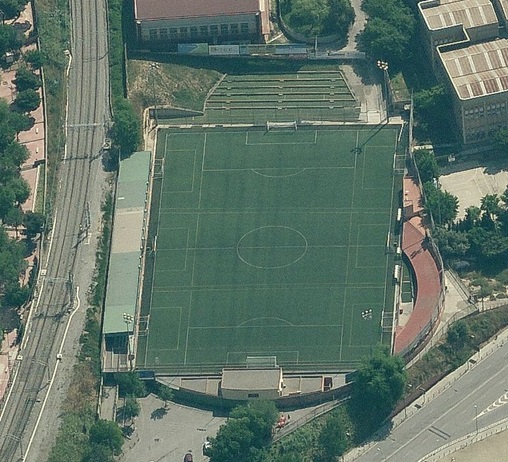
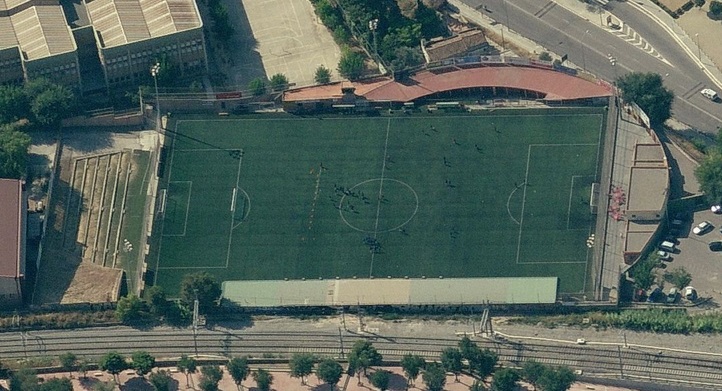
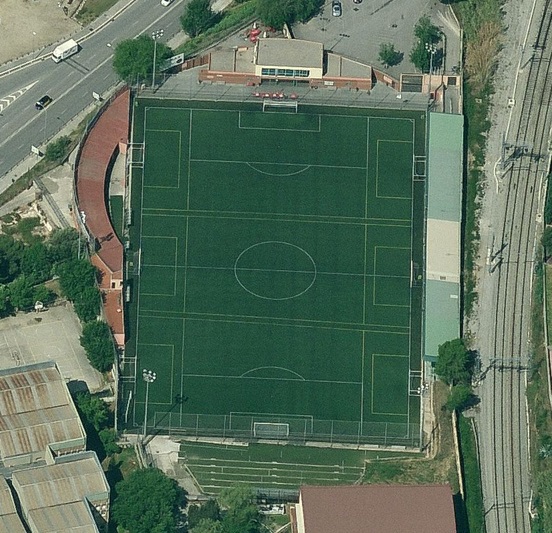
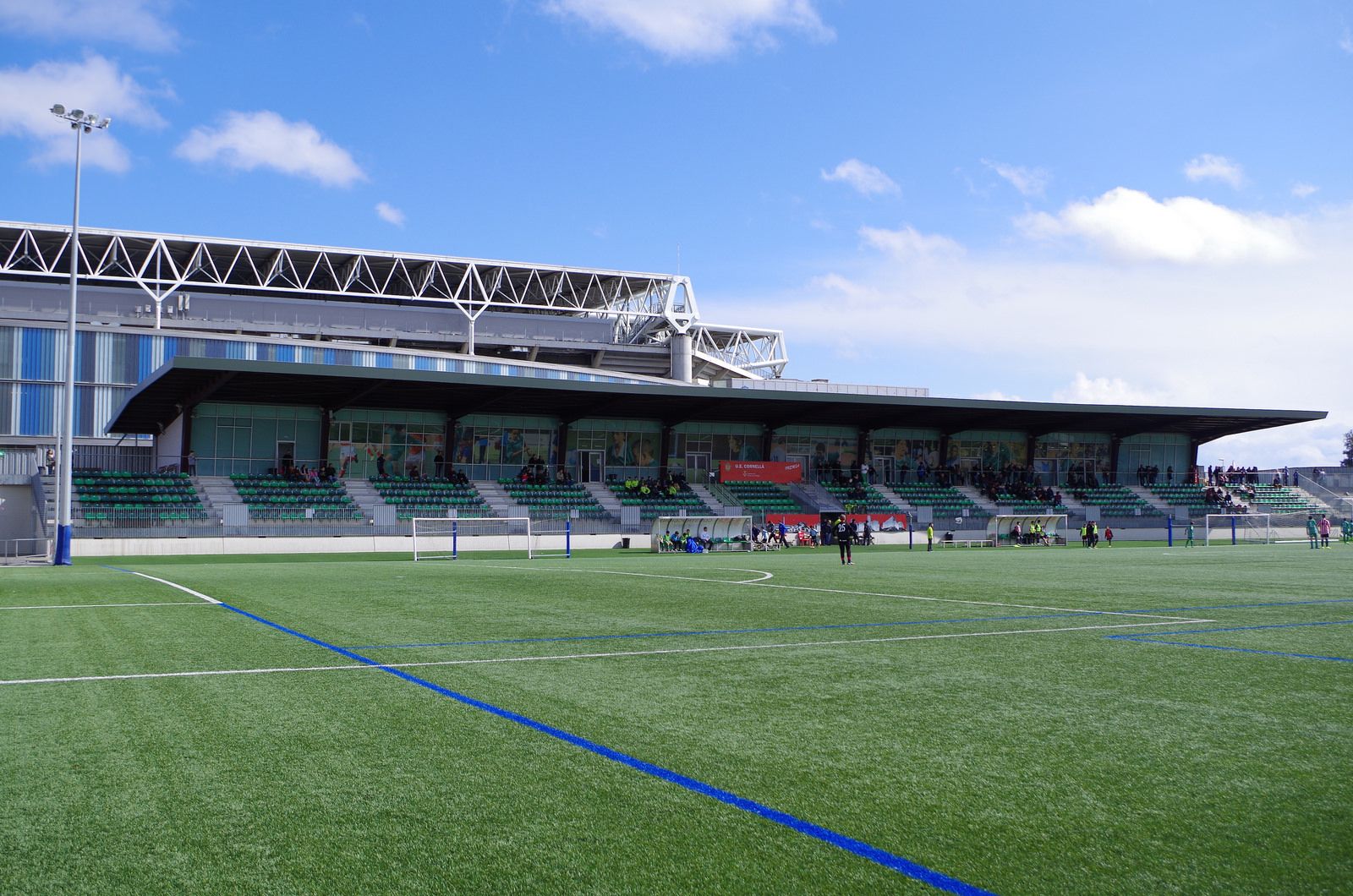
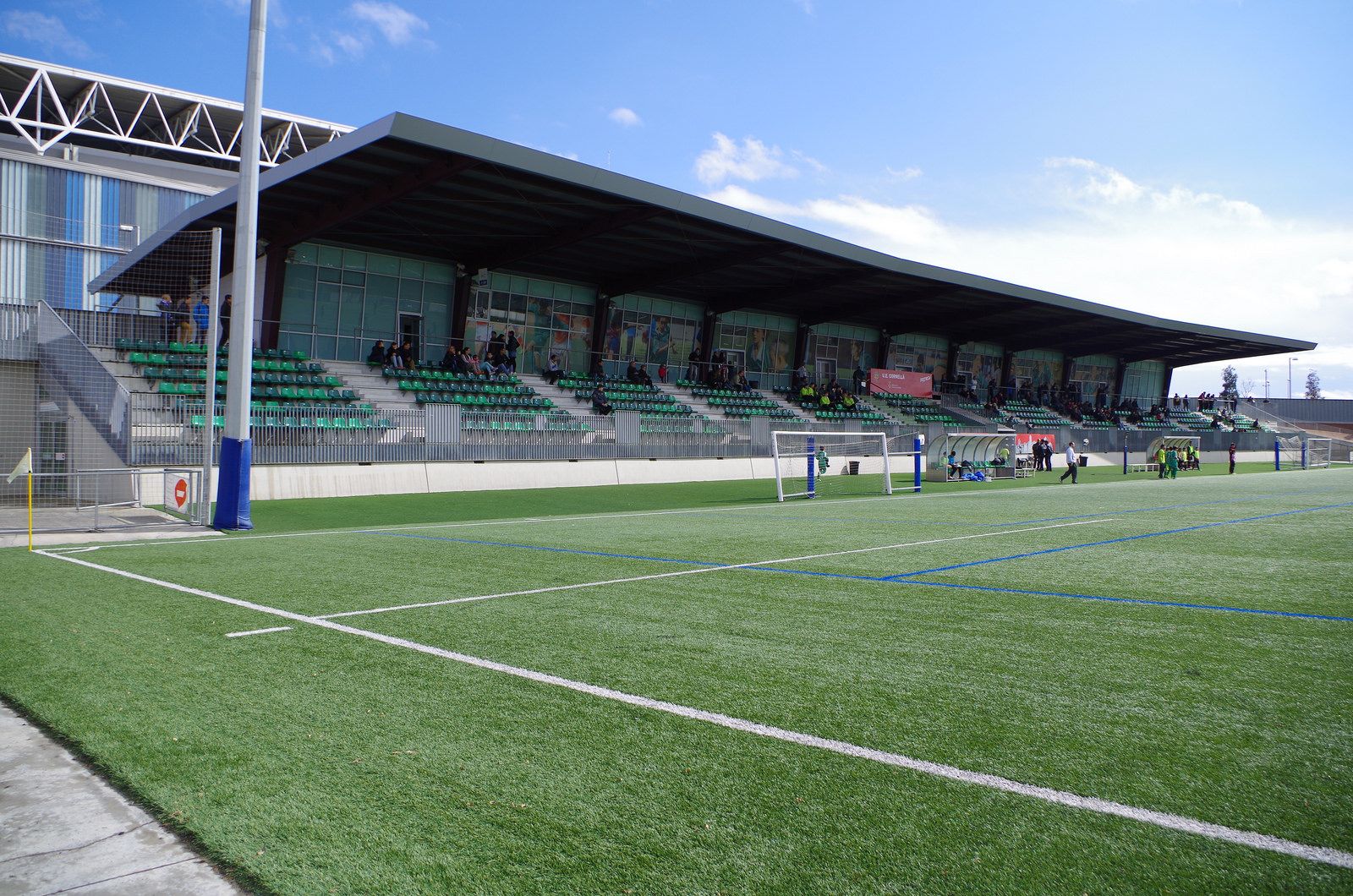
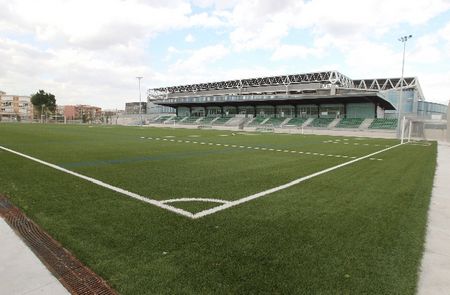
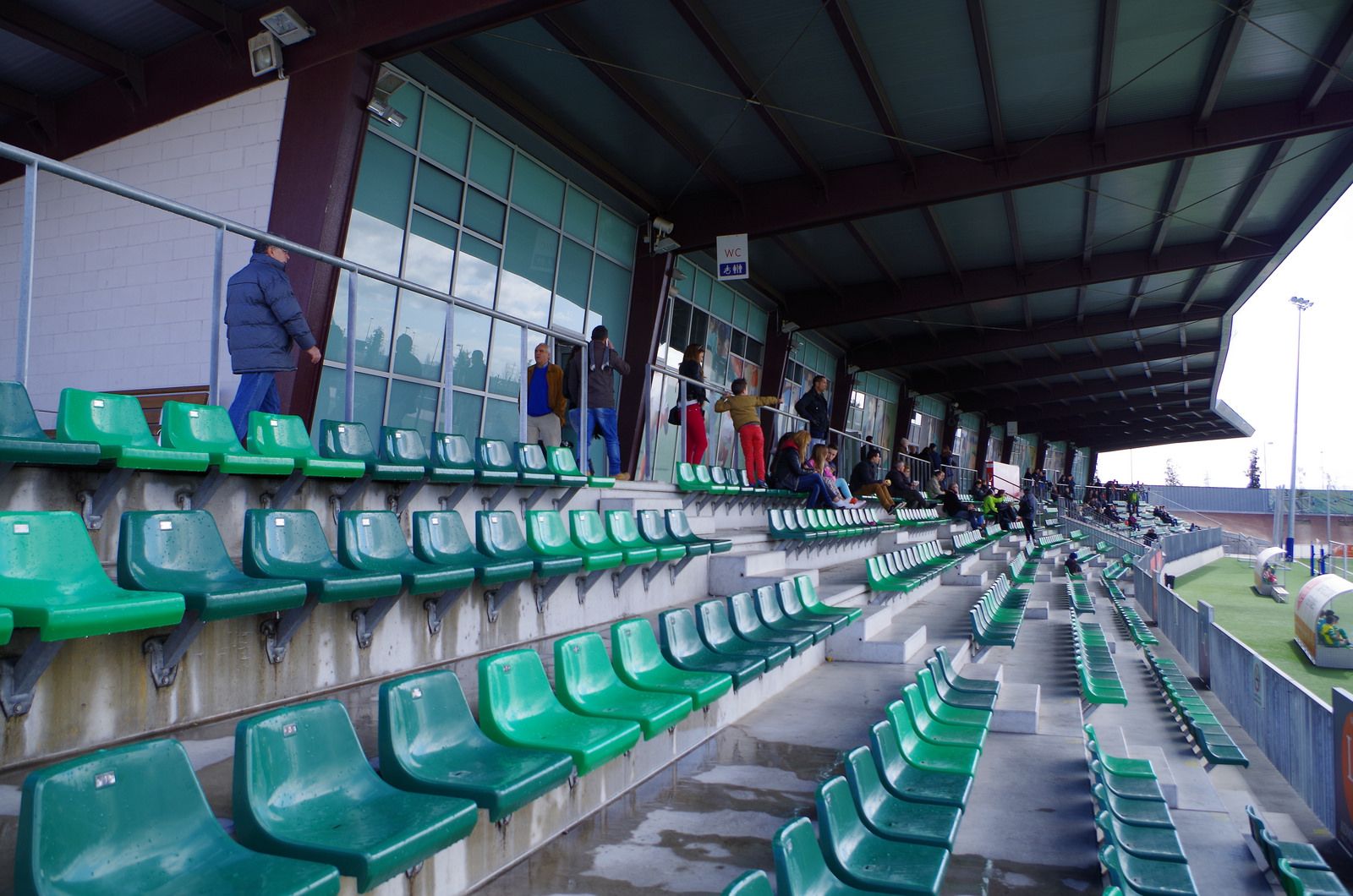
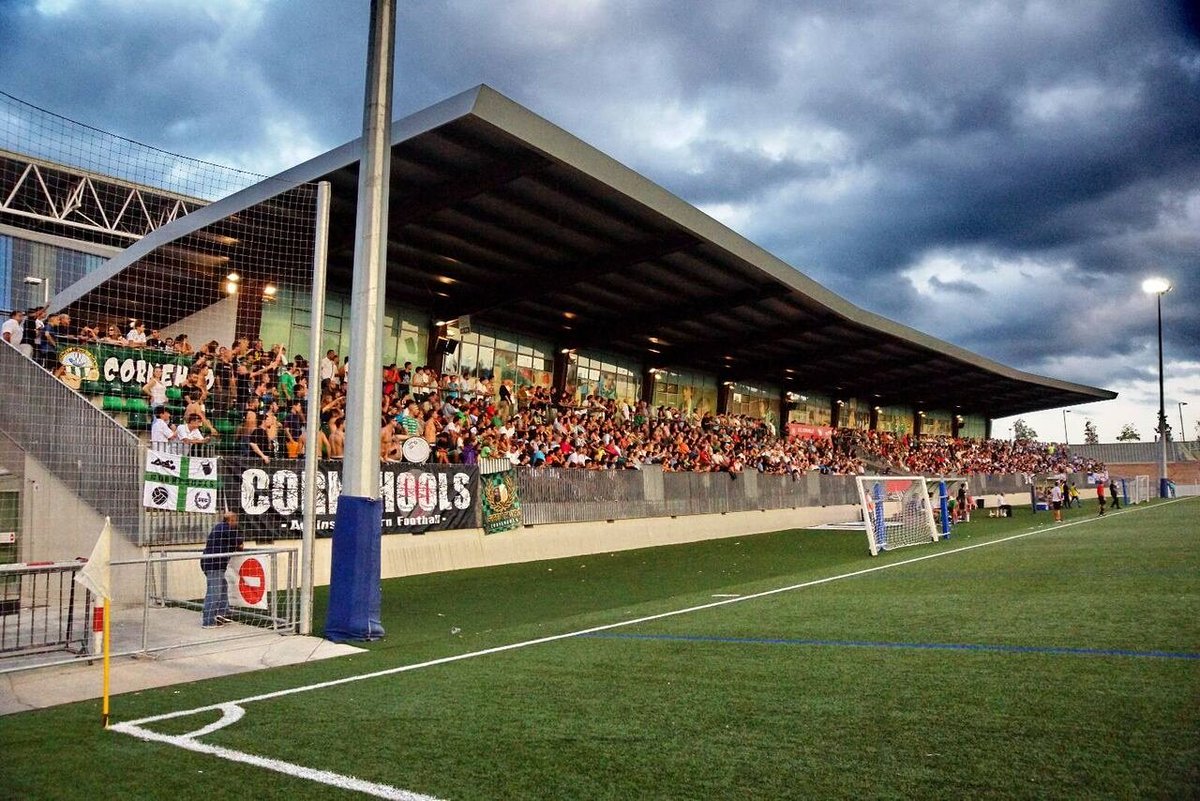
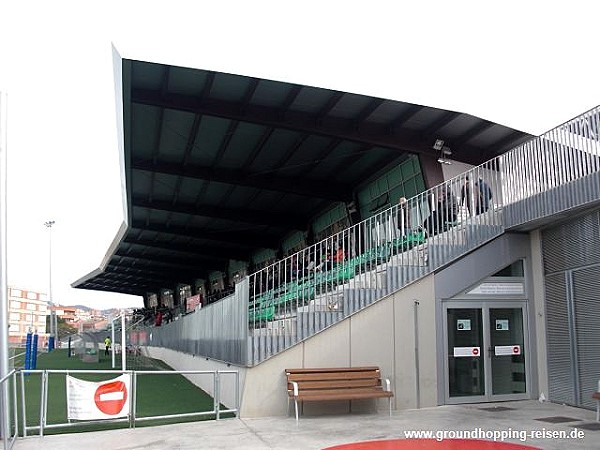
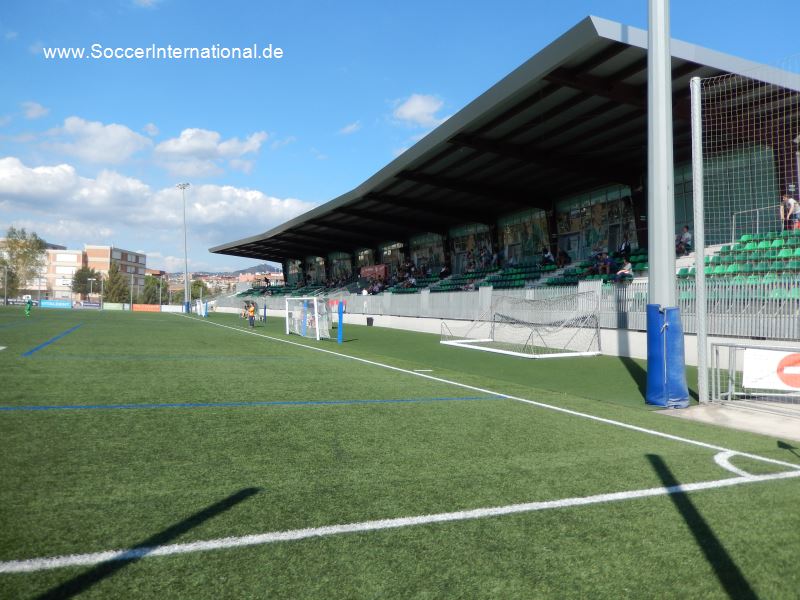
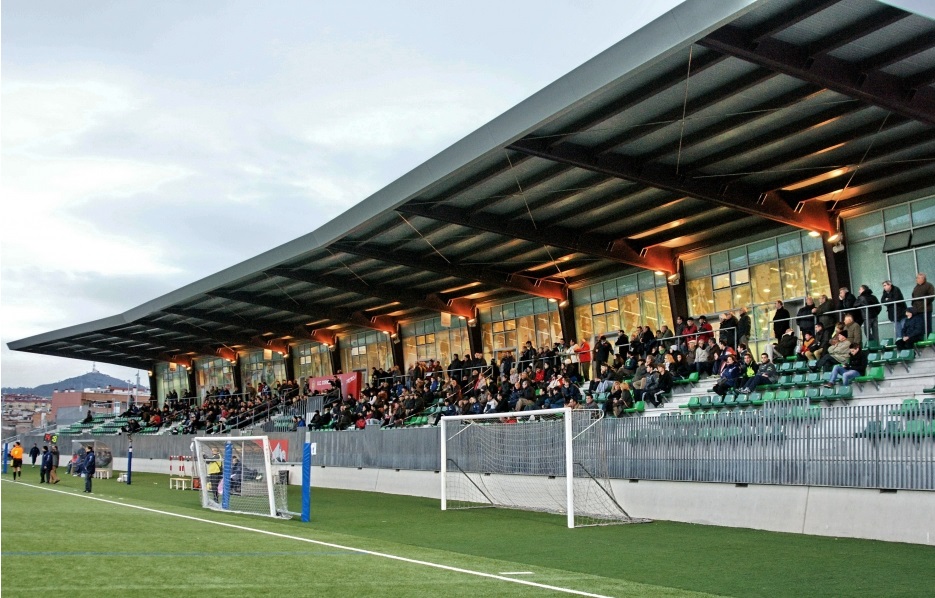
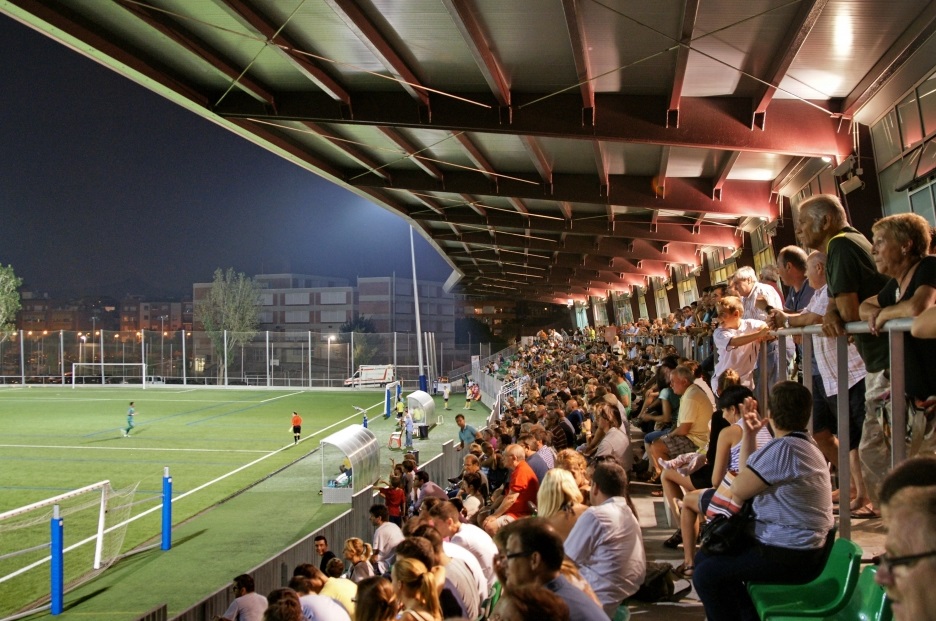
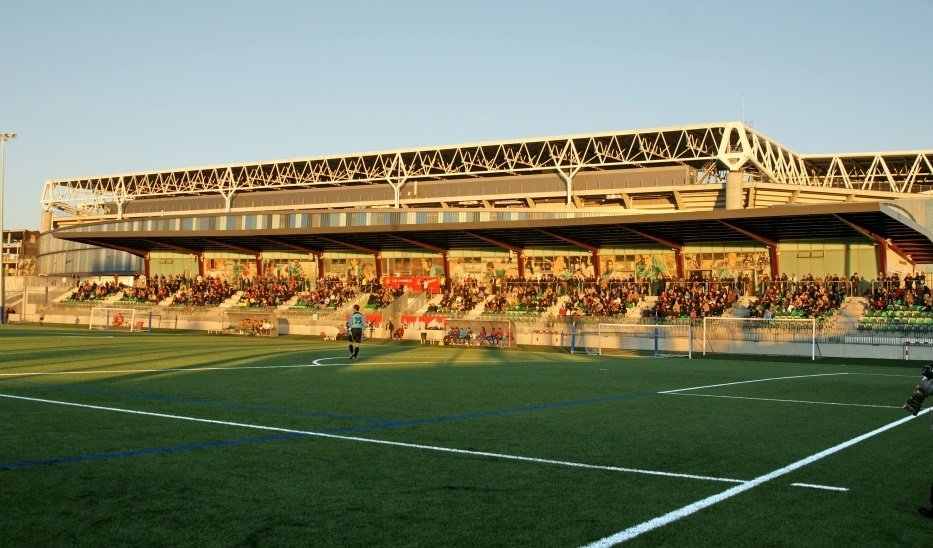
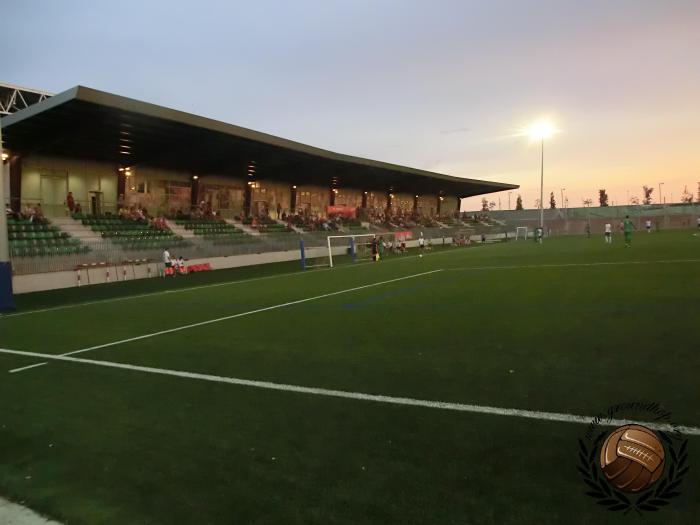
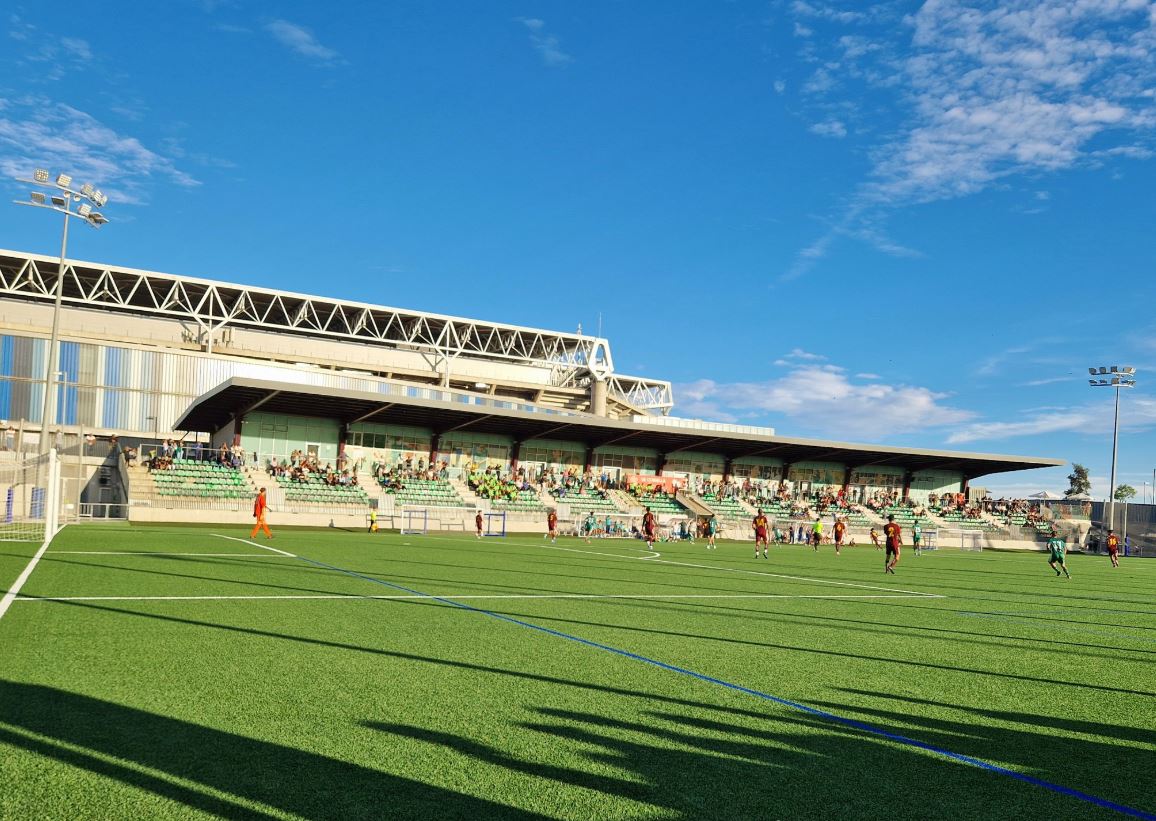
On 26 August 2012, UE Cornellà hosted FC Santboià in the first official match at the Nou Camp Municipal. Midfielder Luis had the honour of scoring the first goal at the new stadium, as the hosts romped to a 4-0 victory. The new stadium was built for €7m and stands less than 20m from the western edge of Espanyol’s RCDE Stadium. It is a single-stand enclosure, with the only tribuna seating 1500 over six rows of green seats on the eastern side. The cover is just over 80 metres long and features a propped cantilevered roof, with the space behind the props housing offices, bars & catering facilities. This ensures that all the seating and the rear balcony have an unimpeded view of the playing area. A new generation artificial surface has been installed (a de rigueur requirement for the majority of new small stadium builds) along with 2 Fútbol 7 pitches along the western edge of the enclosure. All very practical, tidy and financially sensible, but it doesn’t get the pulse racing like its sexier and more buxom neighbour. However, there is a sense of home, emphasised by the fact that the new stadium practically overlaps the site of the old Estadi Les Aigües, the home of one of their ancestors, Athletic Cornellà Foot-ball Club.
Following promotion to Segunda B in 2014, UE Cornellà recorded six top-ten finishes in the seven seasons up to the restructuring of the Spanish football pyramid. This included three successive fourth-place finishes, which earned the club a place in the end-of-season playoffs for promotion to La Segunda. Unfortunately, defeats to Sporting Gijón B (2017-18), SD Ponferradina (2018-19), and CD Castellón (2019-20) ended those hopes. However, in the delayed and restructured 2020-21 season, UE Cornellà’s fifth-place finish and subsequent topping of the playoff group earned a place in the new third-tier, the Primera Federación. There was a problem, as their ground did not meet the required standard for capacity and quality of floodlights, and artificial surfaces were outlawed. A deal was struck with their bigger neighbour, which saw UE Cornellà play at the RCDE Stadium for the 2021-22 season. After two seasons with the neighbours, UE Cornellà moved out, playing matches at the Estadi Palamós Costa Brava, and Espanyol’s training ground, the Ciutat Esportiva Dani Jarque. After effectively playing all their matches away from “home”, it came as no surprise when the club was relegated to the Segunda Federación in May 2024. UE Cornellà returned home to the Nou Camp Municipal de Cornellá for the start of the 2024-25 season, but could not prevent a further relegation to the Tercera Federación in May 2025.

 Estadios de España