
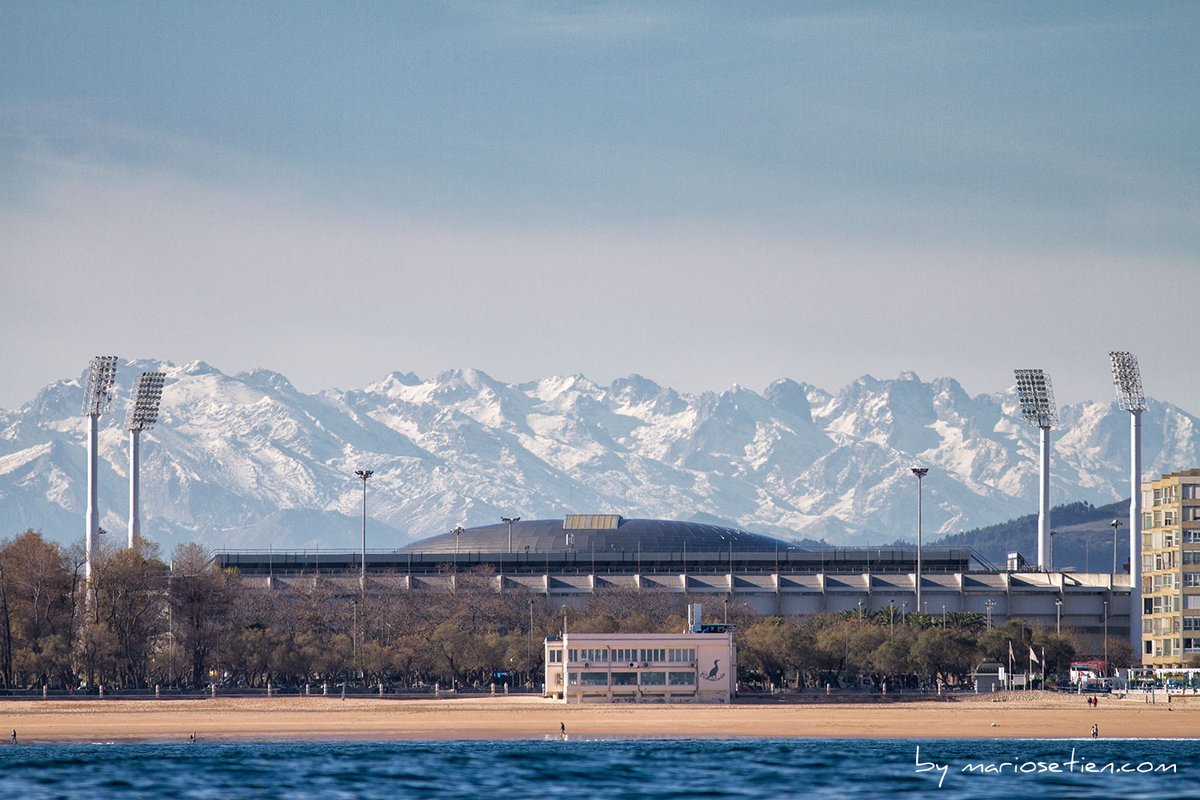
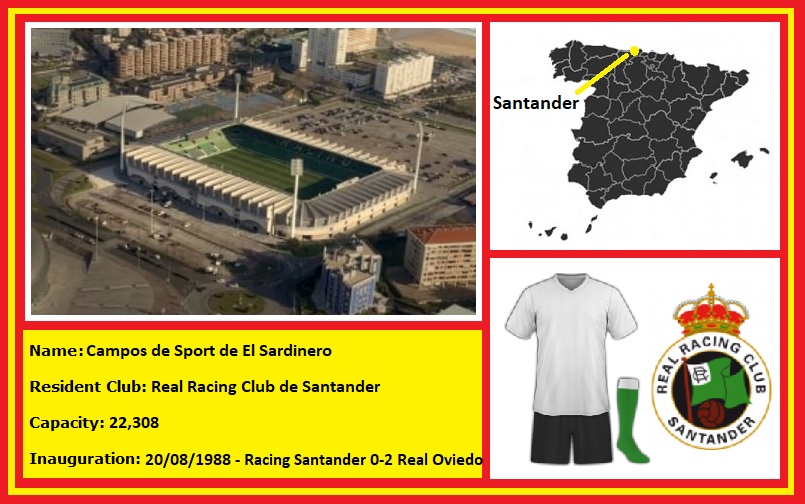
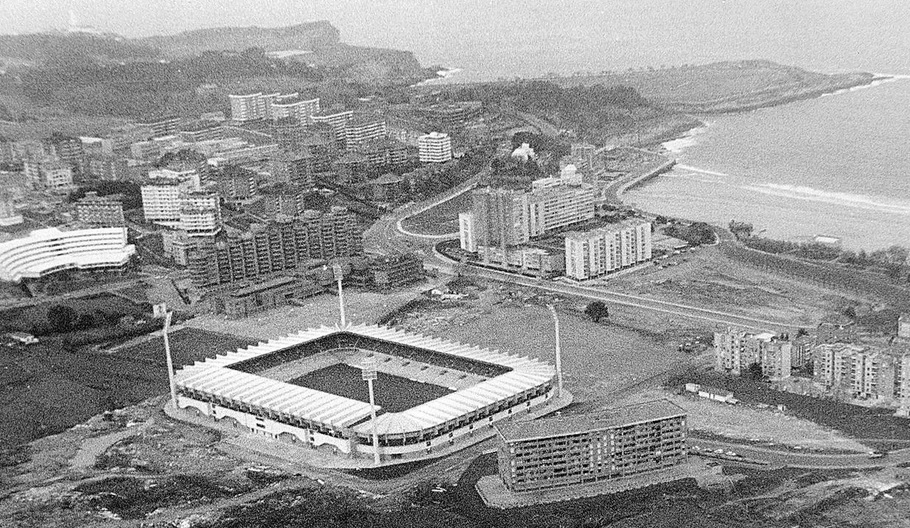
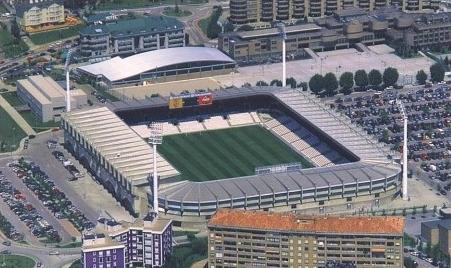
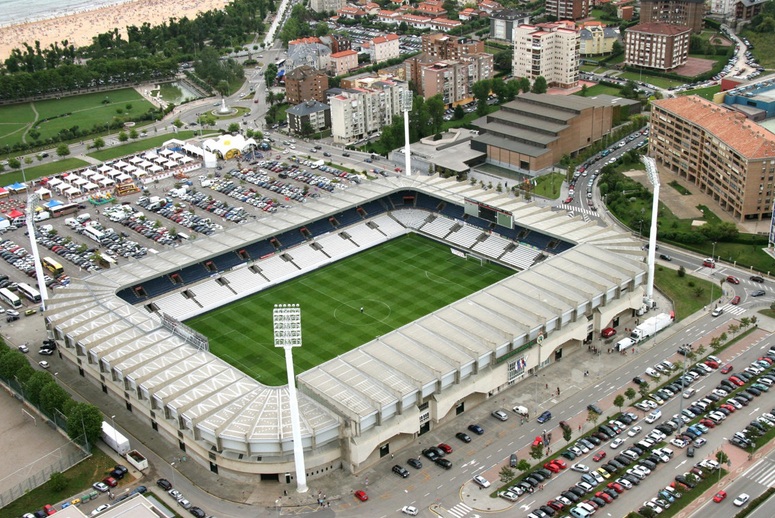
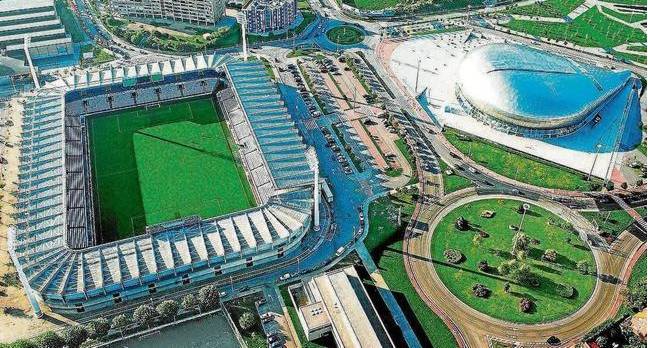
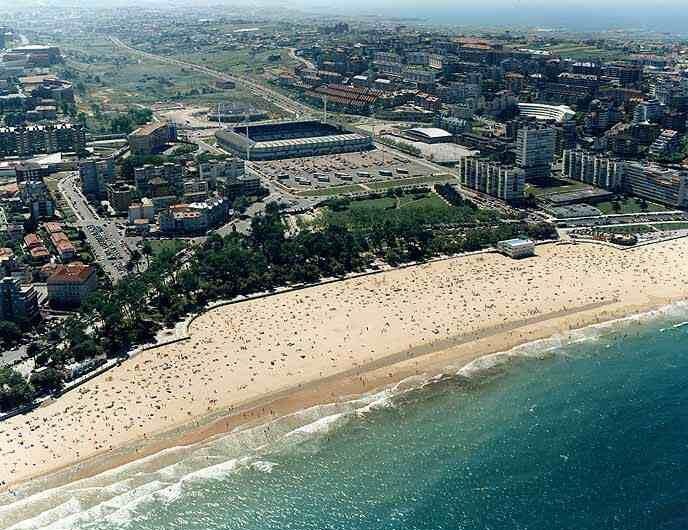
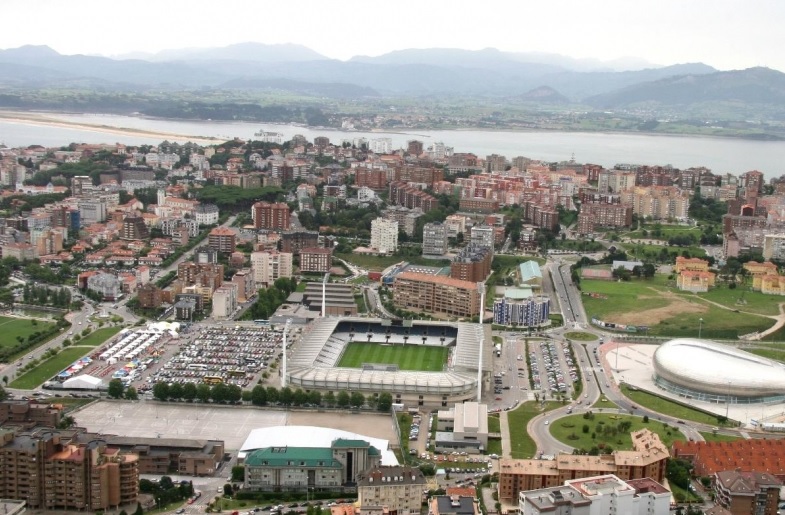
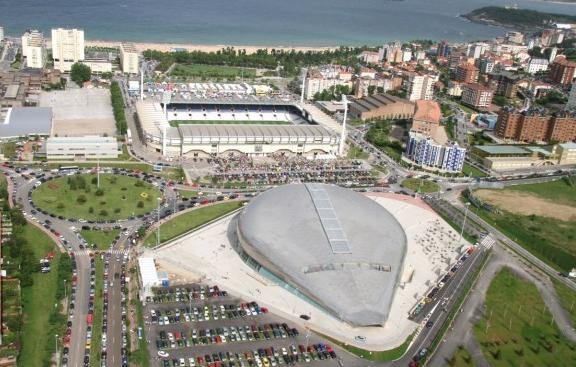
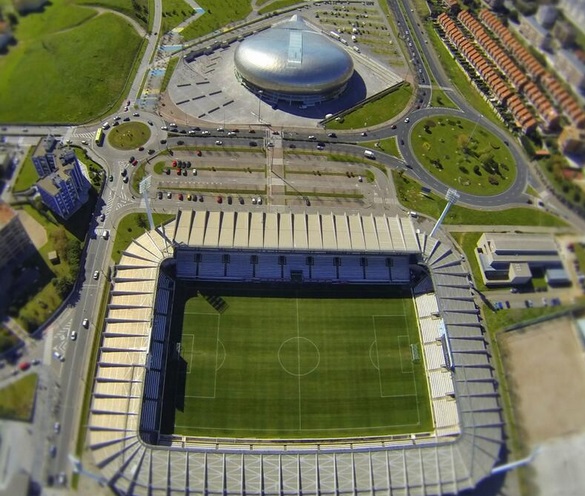
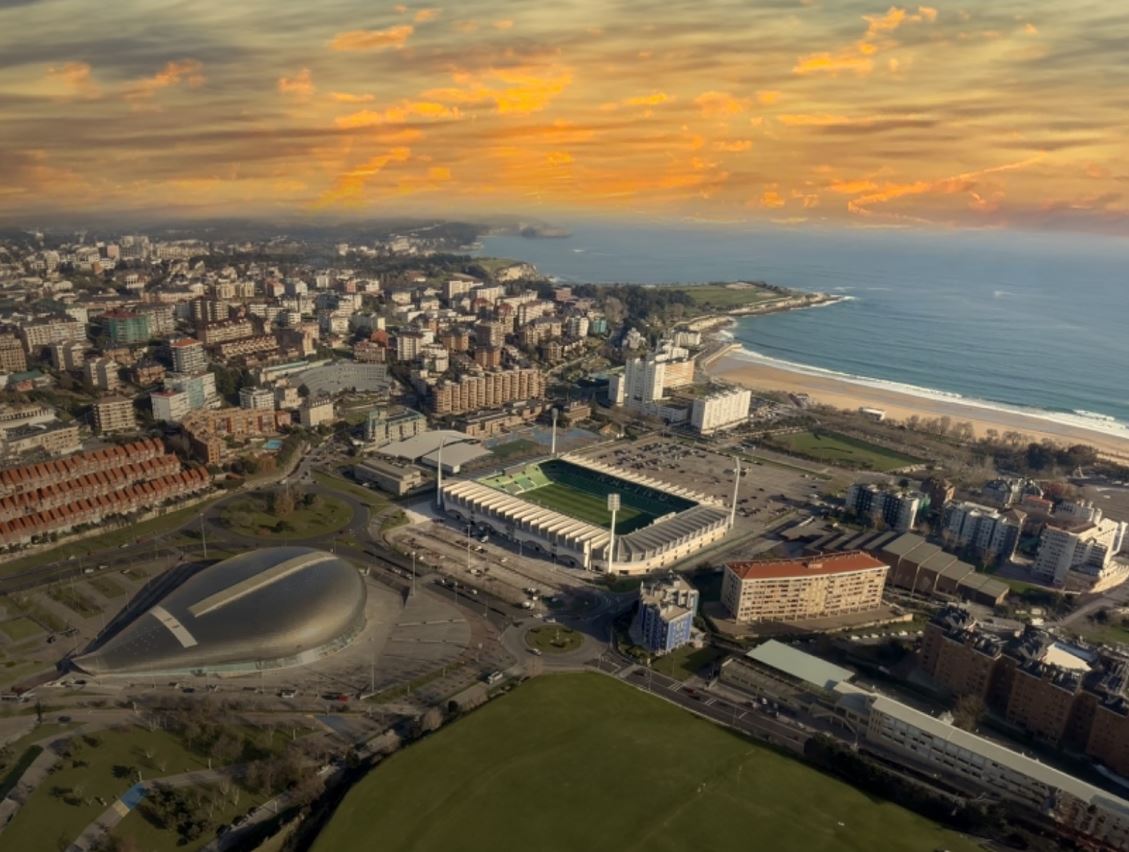
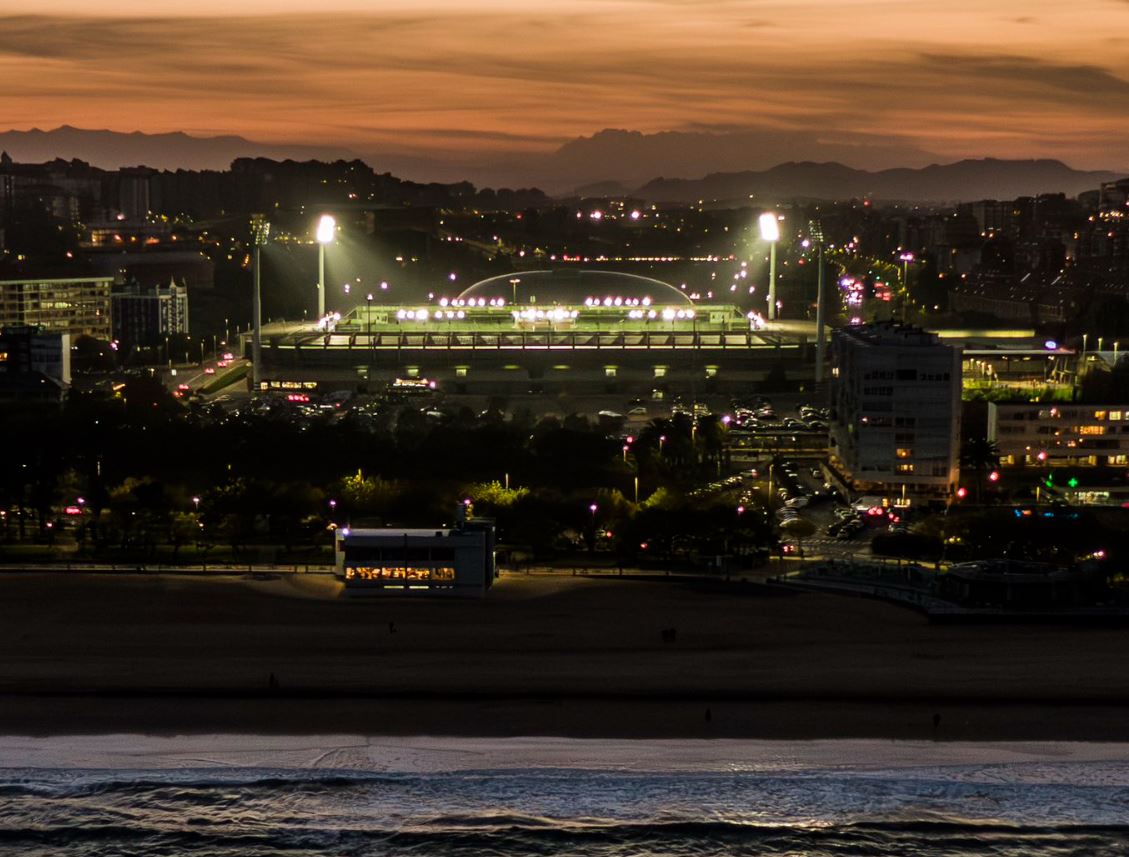
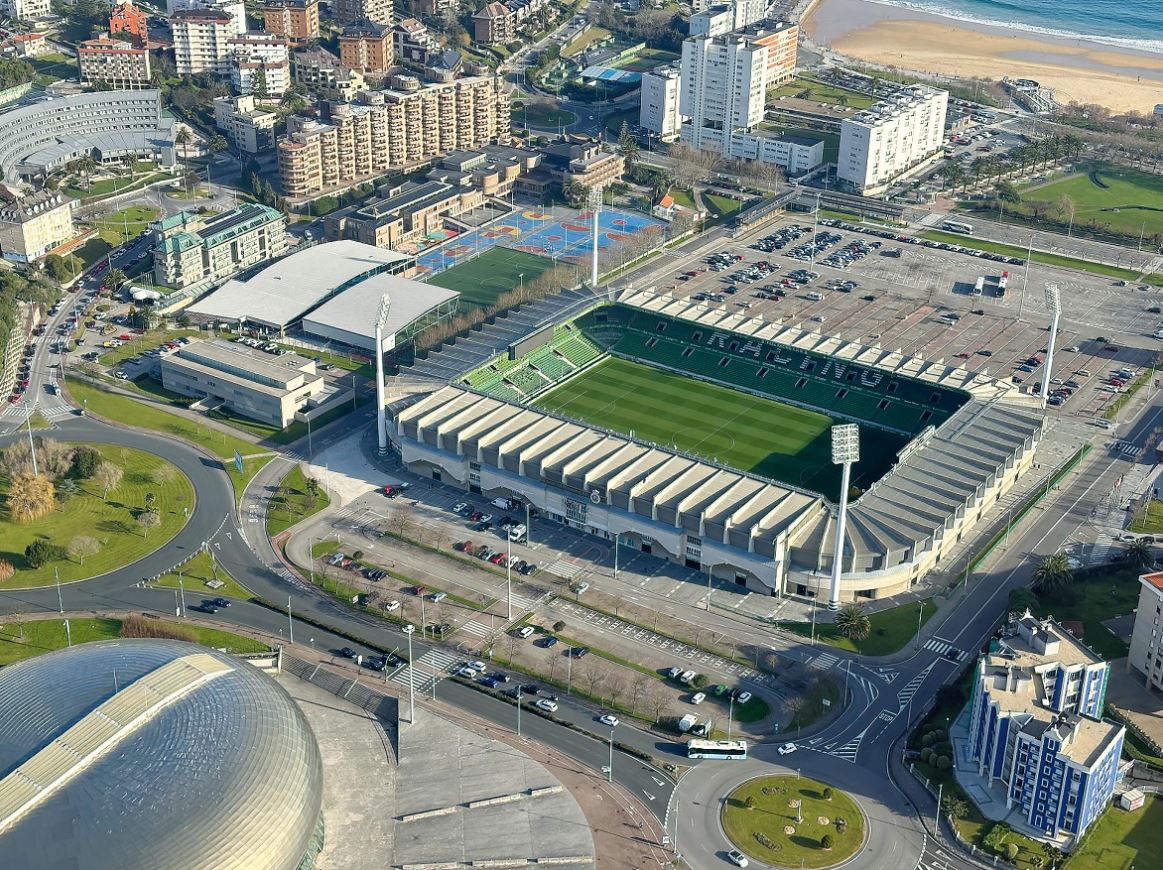
I can’t help but feel that Real Racing Club de Santander’s El Sardinero has been getting away with it for too long. You see whenever this slightly stodgy, but functional stadium is photographed from the air, it can’t help but look spectacular. Alas, it has nothing to do with the formulaic 1980’s architecture. No, it’s all down to the wonderful backdrop of the Playa El Sardinero and the lush Cantabrian coastline.

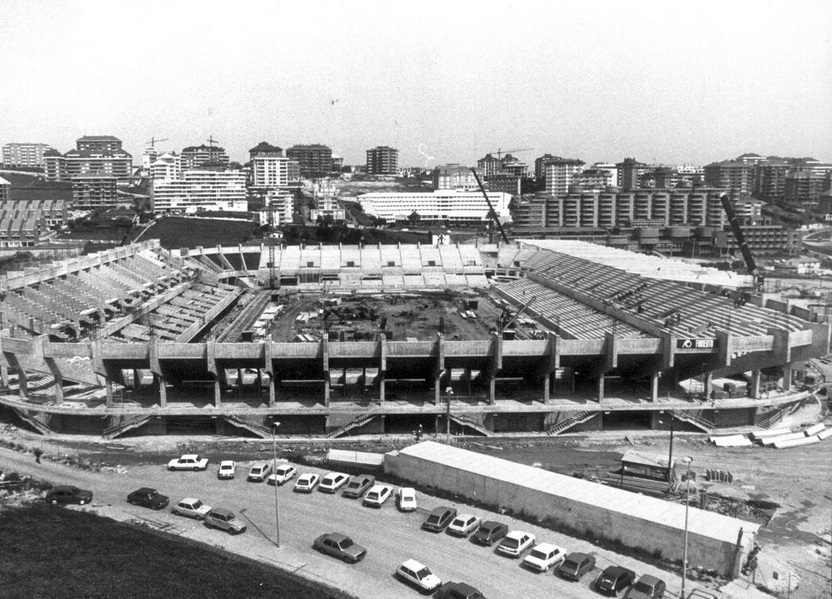
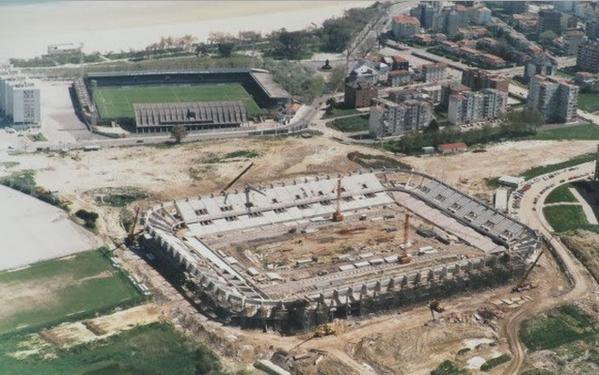
Racing sold their ageing, but delightful old Campos de Sport de El Sardinero to the municipality in 1983. In return, they received 175 million pesetas and the use of the new stadium for a nominal annual fee. Work began in early 1987 on a piece of scrub-land 150 metres to the west of the old stadium. The new stadium was designed by architect Juan Jose Arenas and opened on 20 August 1988 with two friendly matches. The first featured Racing versus Real Oviedo, which was followed by Real Madrid against Everton. That first season at the new stadium saw Racing finish a creditable fifth, but a year later the club finished 17th in the division and dropped to Segunda B. At the time, El Sardinero was the most modern and advanced stadium to have staged football at this level, a point emphasised in March 1991, when the Spanish National team used the stadium for the first time when they played Hungary. It was the first match La Seleccion had played in Santander for 64 years. Despite losing 2-4 to Hungary, the National side was back in Santander little over a year later to record a 1-0 victory over England. El Sardinero has staged four further matches featuring La Selección, the most recent being a 1-0 victory over the USA in June 2008.
Racing made short work of their first appearance in Segunda B, winning Group II and then topping their play-off group that featured Cartagena FC, Getafe CF & Cordoba CF. The club made a steady start to life back in La Segunda with a tenth place finish in 1991-92, before third place a year later secured a promotion/relegation play-off with Espanyol. A 0-1 victory in the first leg at the Estadi Sarria was enough to see Racing return to La Primera after a six-season absence. That first season back in the top flight saw Racing finish eighth, their best league placing for forty years, however, the remainder of the decade was often a long, but successful battle against relegation. The drop finally came in May 2001 when Racing finished 19th, but this time the club bounced back into La Primera at the first time of asking. The return to La Primera brought about problems on and off the field as the club, struggling at the bottom of the division, was on the verge of bankruptcy when a certain Dmitry Piterman appeared and so unraveled one of the more bizarre episodes in the club’s history.
Piterman acquired 24% of the club’s shares and saved the team from folding. Not content with a “knight in shining armour” role, Piterman then decided to appoint himself as first-team coach. The Spanish FA refused to allow him access to the field of play, as he did not have any coaching qualifications. So Piterman appointed a friend who had the minimum level required, installed himself as club photographer and “coached” the team via his puppet. The club scraped through and avoided relegation on the final day of the season, but tiring of Piterman’s antics, the other directors upped their share capital and Piterman was eventually ousted. With the notable exception of the 2007-08 season, Racing populated the lower reaches of the league. The sixth-place finish in 07-08 did earn them a place the UEFA Cup for the first time, where they progressed to the group stage. With more financial problems in the offing, venture capitalist Syed Ahsan Ali bought the club, only to renege on practically all of his pledges. Tired of his empty promises, the rest of the club’s board resigned in October 2011, just as Interpol launched an investigation into Ashan Ali assets. The inevitable relegation to La Segunda followed in April 2012. More disruption on and off the field led to another desperate season, and just over two decades after Racing’s last appearance in the regionalised third tier, they returned to Segunda B.
The 2013-14 season started with a widely publicised dispute when players & staff went unpaid from the start of the 2013-14 season. This came to a head in January 2014, when Racing refused to start the second leg of the Copa del Rey quarter-final with Real Sociedad. Despite all of the off-field distractions, Racing topped their division, then beat UE Llagostera in the playoffs to bounce back to La Segunda. This proved to be the briefest of respites, as Racing was relegated on the last day of the 2014-15 season, and was about to embark on their longest stay in Spain’s third tier. Between 2015-19, Racing spent four seasons in Segunda B, losing out in the playoffs in the first two seasons, throwing away a place in the playoffs with two games to go in 2017-18, before winning their league again and overcoming Atlético Baleares in the playoffs. Another one-season visit to La Segunda saw Racing drop again to the third tier, but two seasons later, a dominant league campaign earned automatic promotion back to the second tier, and the club crowned overall champions after beating FC Andorra in the Campeonato final.
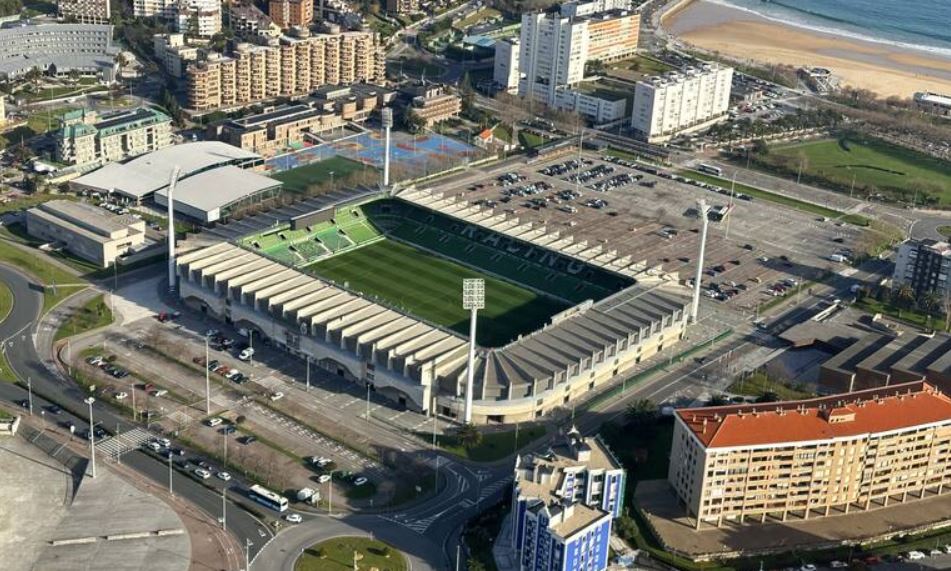
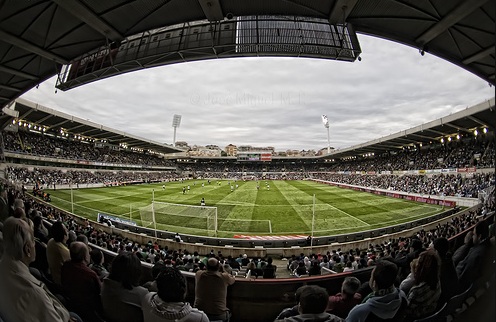
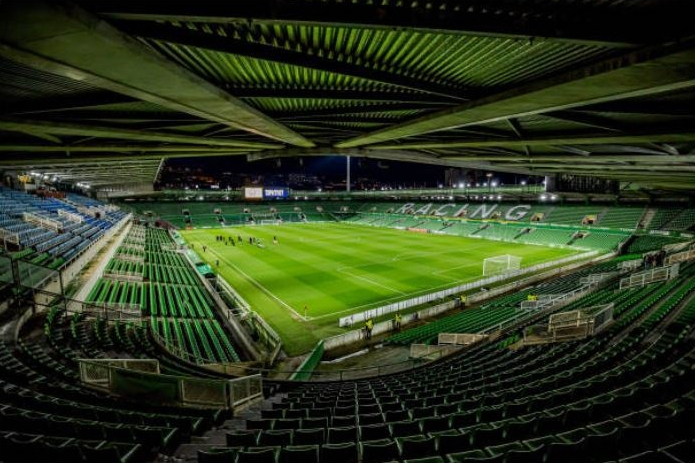
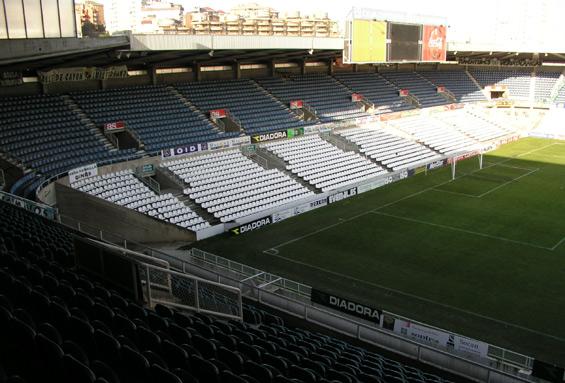
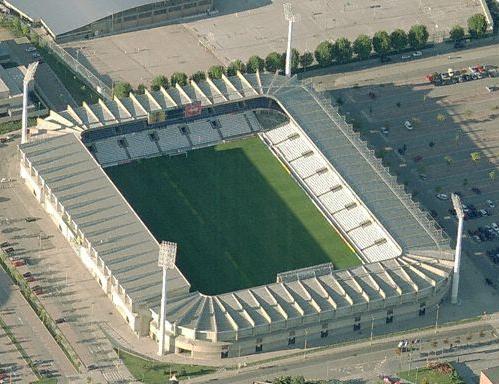
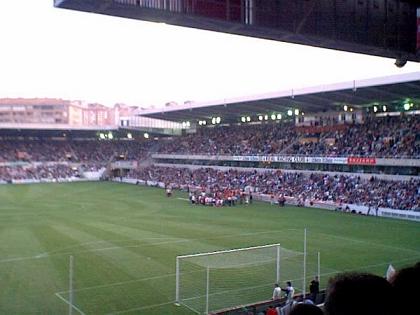
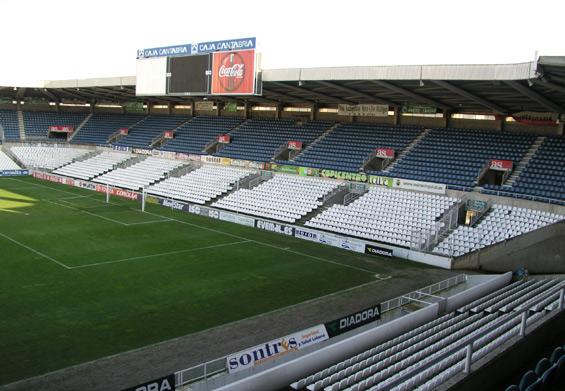
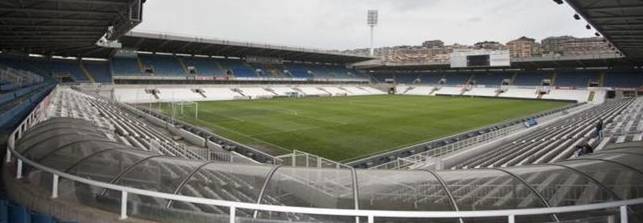
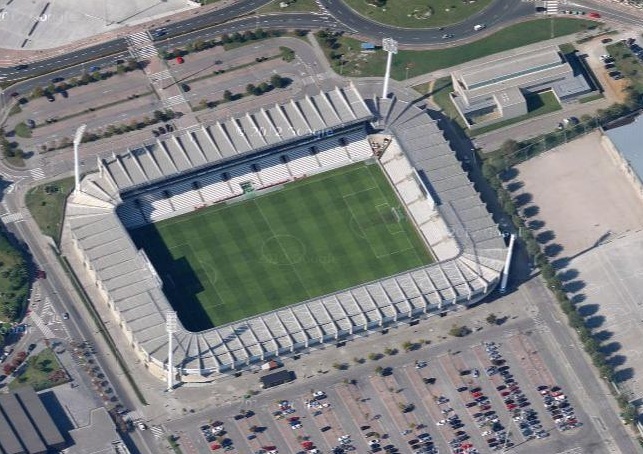
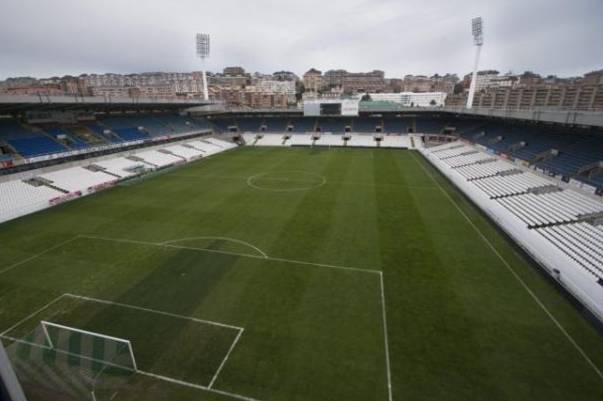
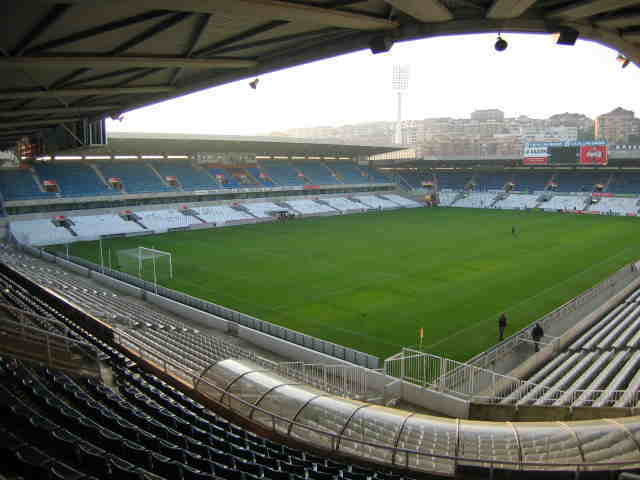
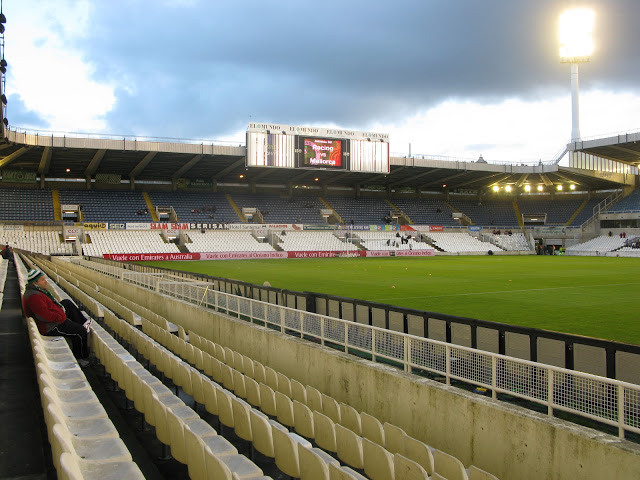
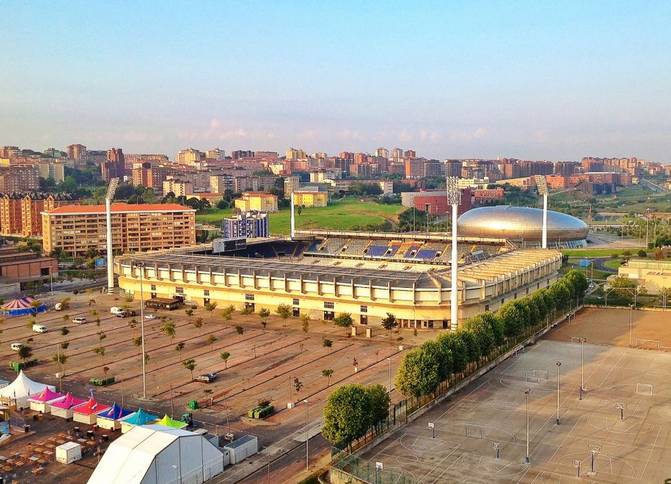
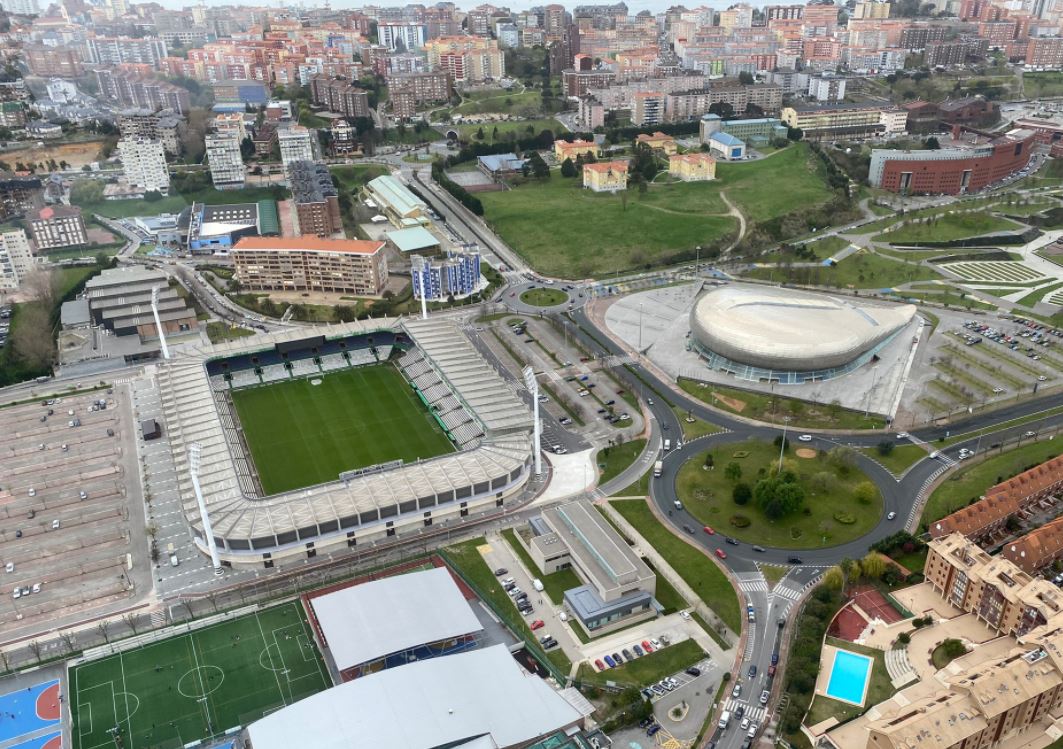
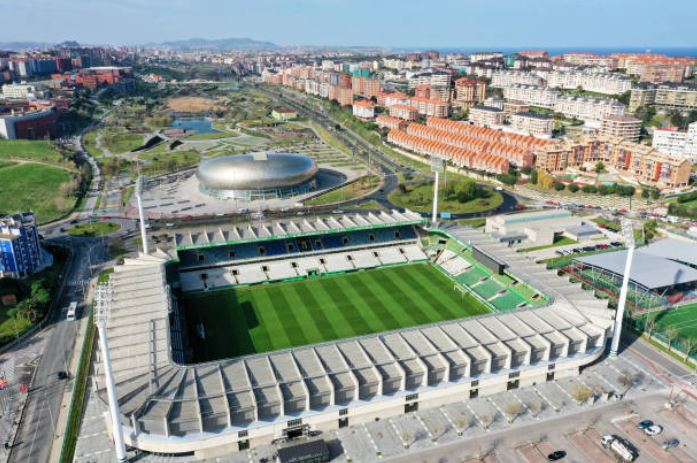
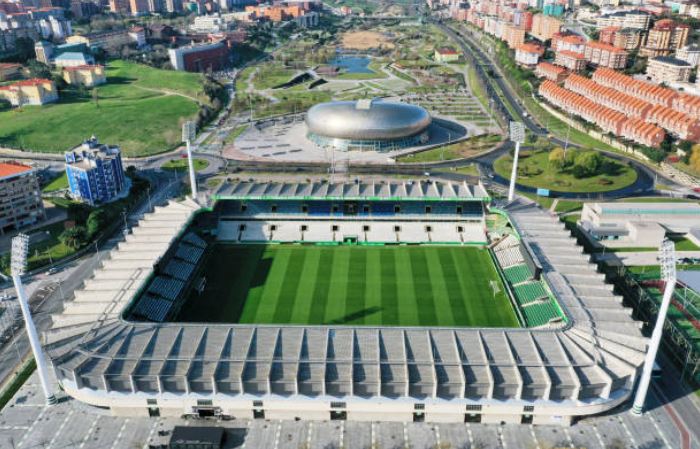
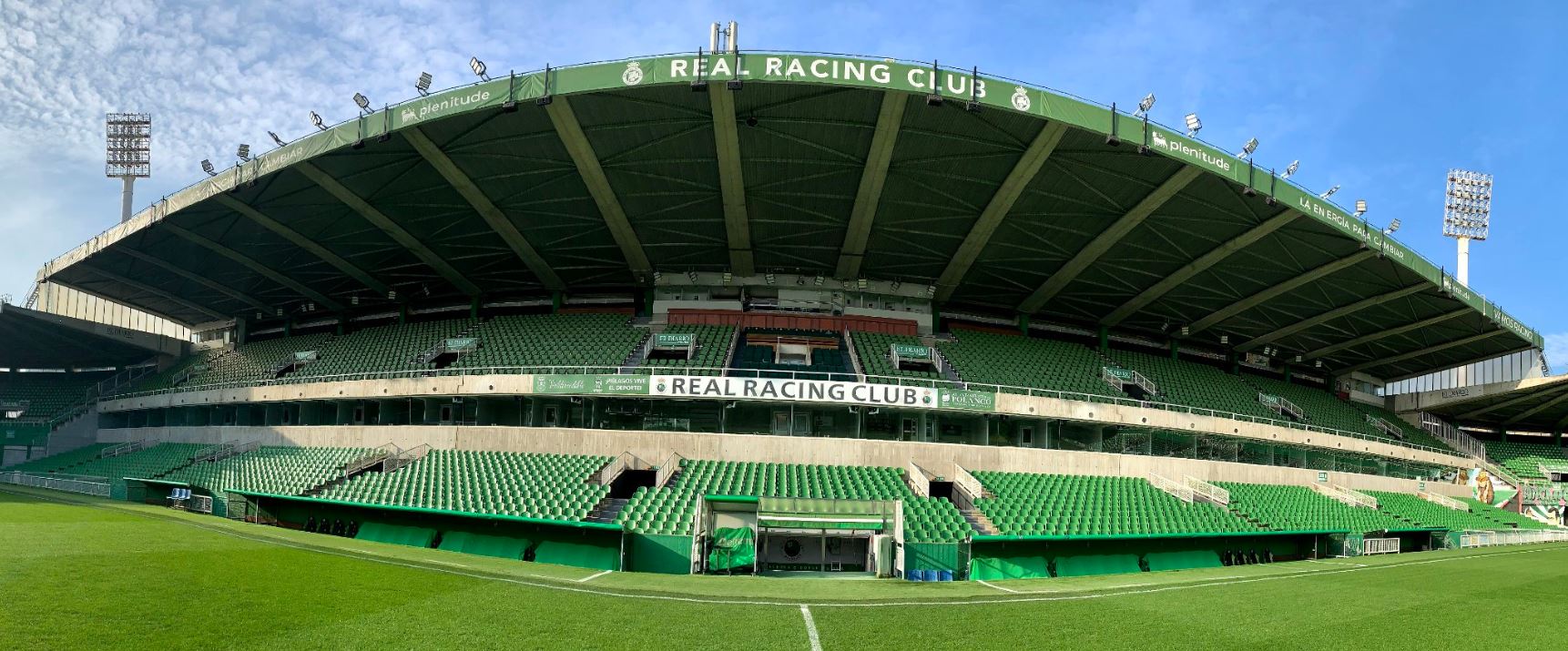
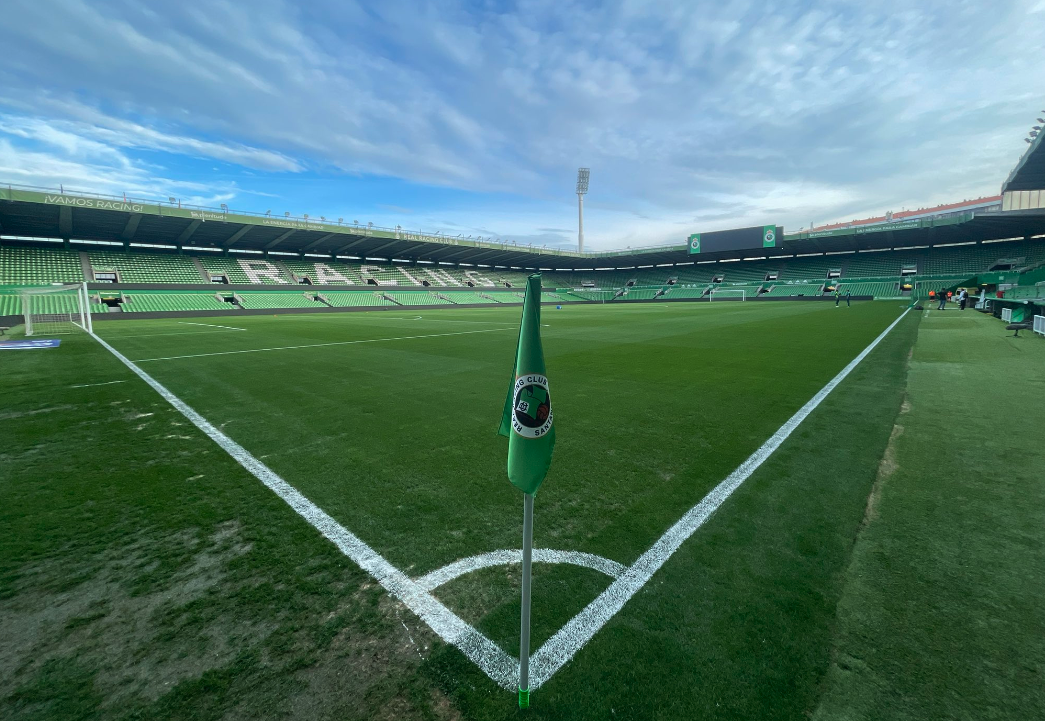
Let’s get back to talking about the stadium, as I do feel I’ve been a little unfair. I’m sure the people at the municipality and the club feel they have done a sterling job and there’s no denying the fact that El Sardinero is as tidy a medium sized stadium you can find in Europe. My point is that you will find a number of stadiums of this ilk and era around Europe. There is no denying they are all perfectly functional and it has to be said the El Sardinero in particular, looks fresh for a stadium nearing the end of its third decade. Juan Jose Arenas’ design is clearly influenced by the stadiums that went up in Germany and Holland in the mid-eighties. No problem with that, because the design works and all 22,308 seats have an unimpeded view of the pitch. Three sides of the stadium are made up of a two decks of green seats. The main west stand is slightly larger thanks to a row of corporate boxes sandwiched between the two decks. Four corner stands neatly link it all together. The roof is raised on the west side to take account of the additional height of the stand below and provides excellent shelter to all four stands. Which is just as well, for Santander in the winter months gets rain from all sides as it heads in from the Bay of Biscay and the nearby Picos de Europa. Whilst Santander will provide a warm welcome during the winter months, if you visit in early autumn or spring, El Sardinero and its environs will look a picture.






 Estadios de España