This article updated: 23/08/2025
There have been many examples in the past few decades of a club’s move to a new stadium bringing about an upturn in its fortunes. More often than not, the more comfortable surroundings and improved income are matched by a renewed vigour on the pitch. Now and then you see an example that goes spectacularly wrong. Real Oviedo’s move to the new Estadio Carlos Tartiere is one such case that led to two decades of heartache.
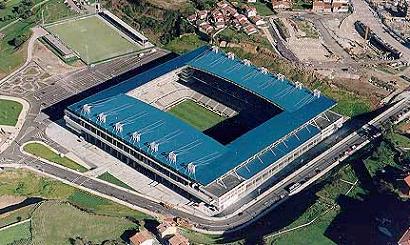
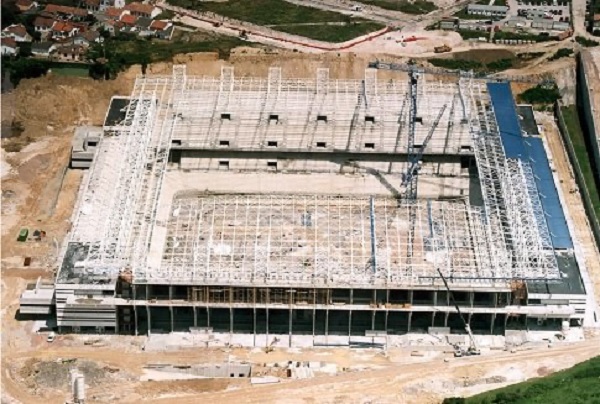
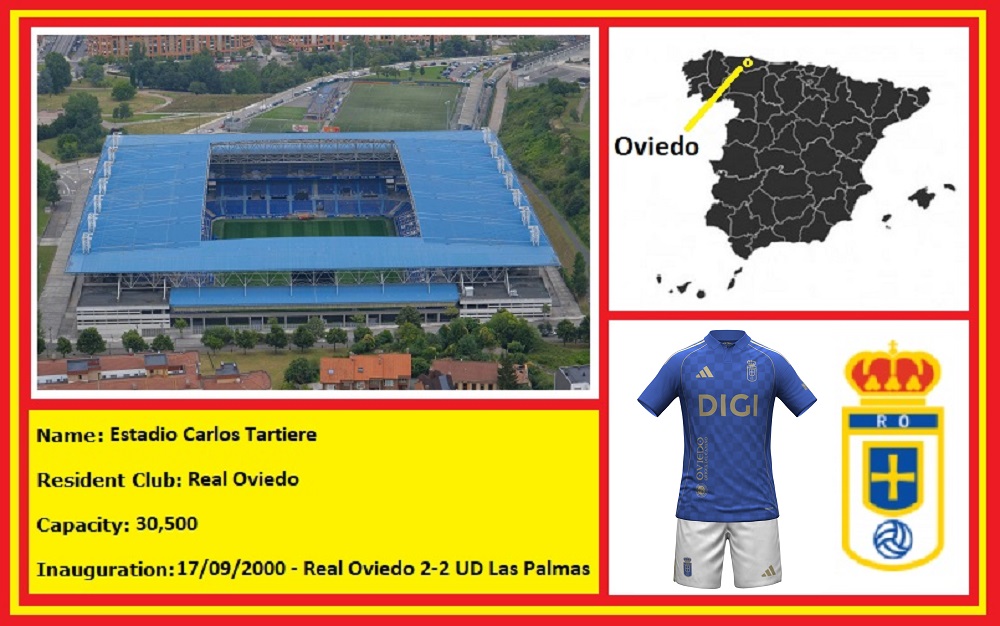
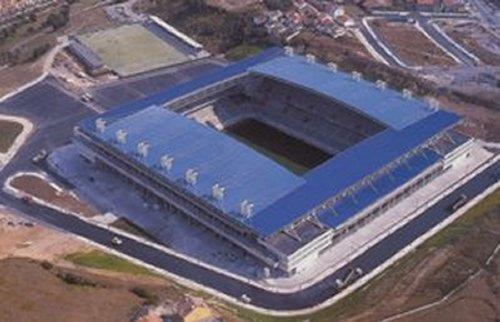
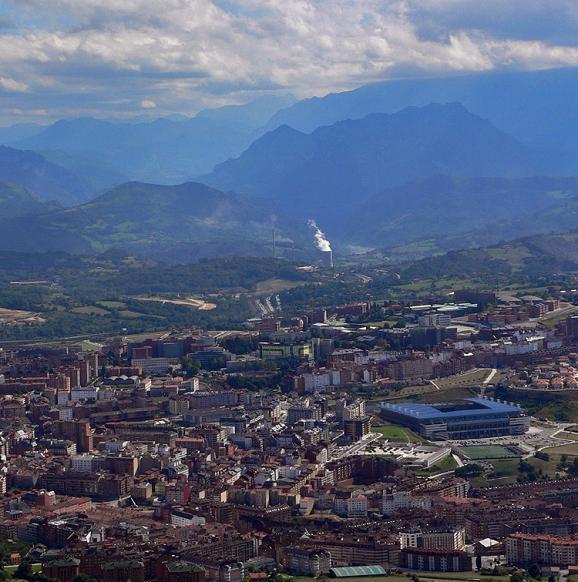
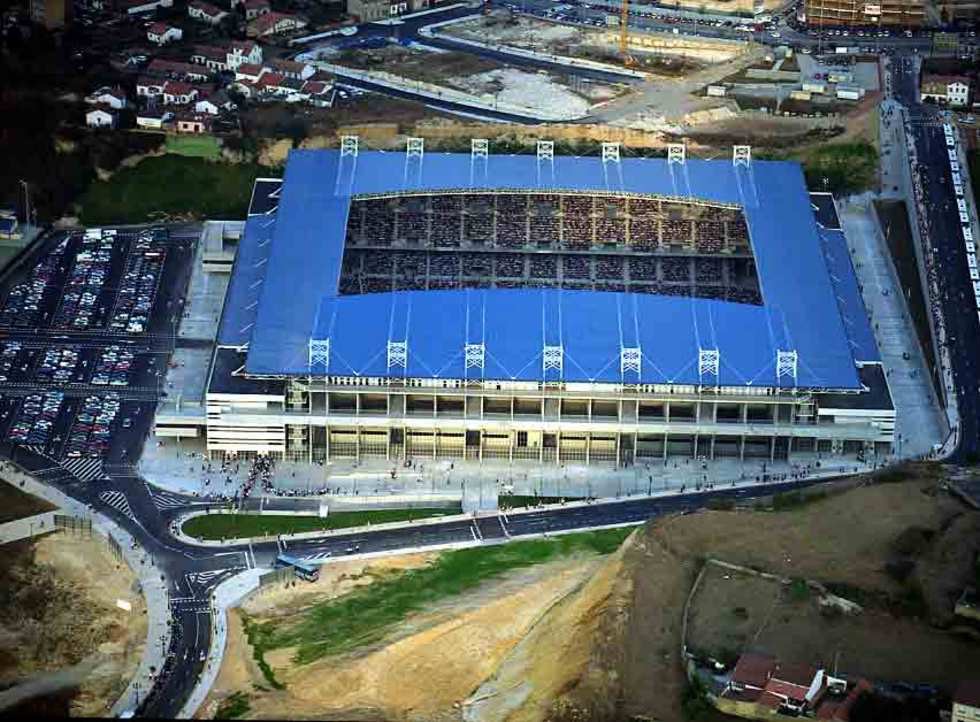
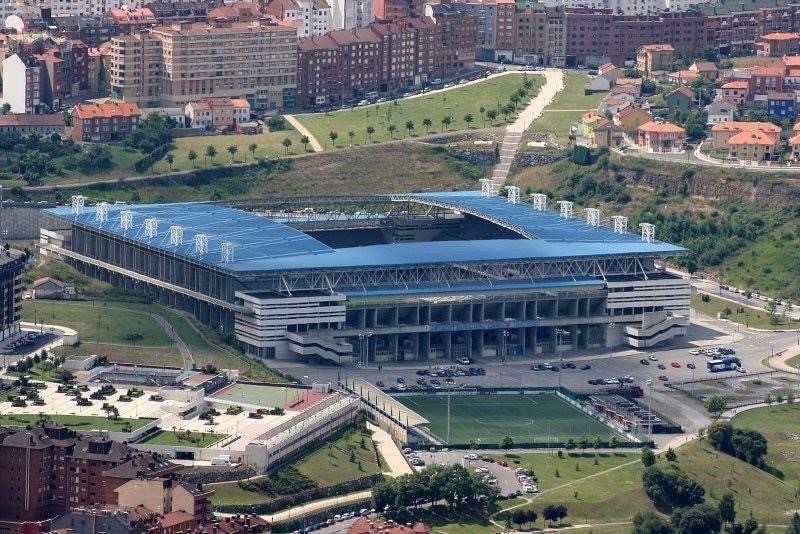
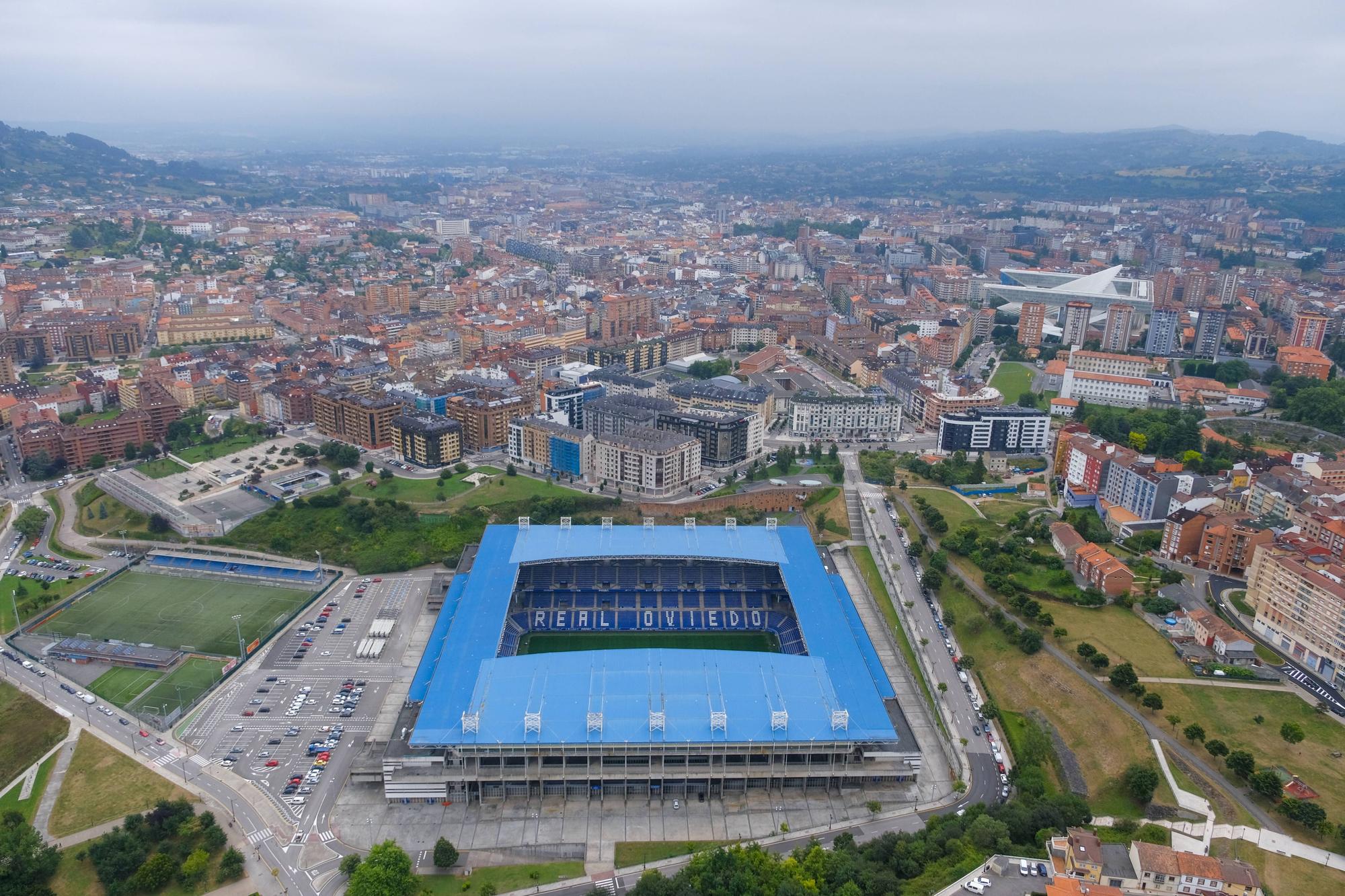
The old Carlos Tartiere, with its 16,500 capacity, was too small for life in La Primera. Therefore, the club, the municipality, and the Asturian Government agreed to build a new stadium. A site 600m west of the old stadium was identified, and a design competition was held. Architects Carlos Buxadé Ribot, Joan Margarit Consarnau, and Emilio Llano were successful with their proposal of a 30,000-seat, covered arena. The design took into account the need for more seating, suitable cover, corporate and match day income, and the use of the facility on non-match days. Unfortunately, due to the height of the stands and the location being set up 30m lower than much of the surrounding land, it didn’t consider the fact that it would prove to be very difficult to maintain a quality playing surface. The build began in late 1998 with an initial budget of €35m. Problems were immediately encountered with the poor subsoil, which meant that the original plans for the foundations had to be revised. The land had also been contaminated by the former ceramic tile factories that had occupied the site. As a result, costs escalated and the final build came in just short of €47m.
On 17 September 2000, the stadium hosted its first match when Real Oviedo drew 2-2 with UD Las Palmas. The problems with the pitch became apparent from day one, as the surface tore up alarmingly. Three days later, the stadium was officially inaugurated with a friendly match with Partizan Belgrade. Whilst home form in the 2000-01 season was at best average, it was Oviedo’s away form that led to their downfall. A lamentable 9 goals were scored on the road and 15 defeats were incurred. The fight for survival went to the last match, in part, thanks to a rare away win at the Camp Nou, but a 4-2 defeat away to Real Mallorca condemned the club to relegation to La Segunda for the first time in 13 seasons. Two weeks before the club’s fall, La Selección played a World Cup qualifier against Bosnia Herzegovina at the new stadium on a newly laid pitch and won 4-1. Oviedo made a strong start to the 2001-02 season and occupied the promotion spots at the halfway point, but a poor second half to the season saw the club finish seventh. With no immediate return, Oviedo slipped into a sharp decline, finishing 21st in La Segunda in the 2002-03 season. If relegation was not bad enough, the players and staff had gone unpaid for much of the season. With debts still outstanding on the July 31st deadline, Oviedo was demoted to the Tercera.
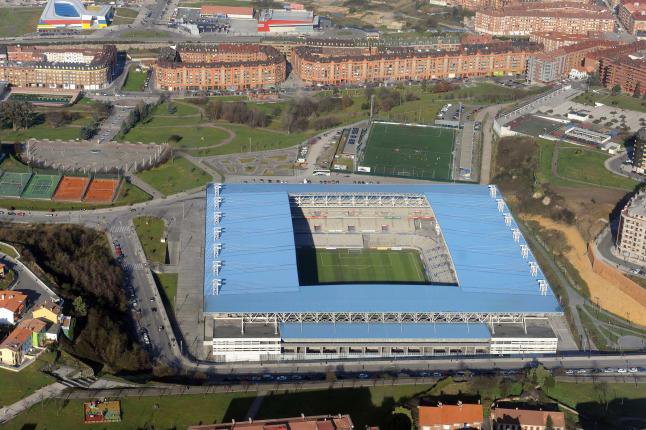
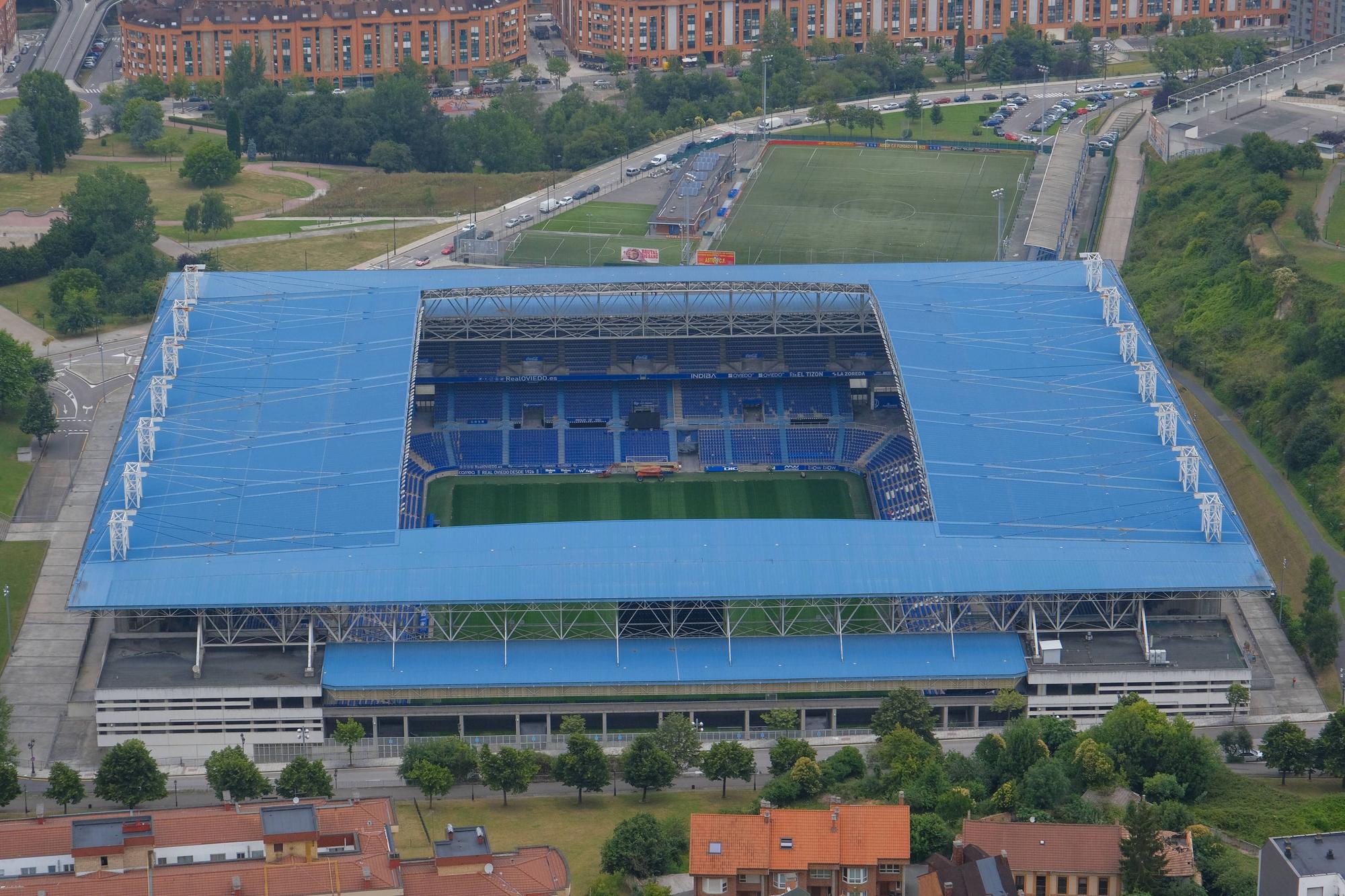
The club’s future was thrown into doubt following the relegation, with the municipality refusing to back up an earlier election promise to help bail the club out. Their preferred option would see Real Oviedo fold and another club, Futbol Club Astur, take on the mantle of the city’s senior team. FC Astur had also benefited from council funds, albeit substantially less when it moved to the Campo Hermanos Llana, which had been built across the parking lot from the Estadio Carlos Tartiere. With the backing of then-mayor Gabino de Lorenzo, FC Astur changed its name to Oviedo Astur Futbol Club, or the intentionally foreshortened Oviedo AFC, and adopted the same colours as the elder club. The council tried to evict Real Oviedo from the Estadio Carlos Tartiere and launched a campaign to drum up support for the newly monikered Oviedo AFC. The politicisation of the issue backfired and fans rallied to support the ailing club, even though it had been shorn of most of its professional staff and was playing in the regional Tercera. Despite starting the season with a six-point penalty, Real Oviedo won the 2003-04 Tercera title and attracted an average home attendance of over 10,000. A crowd of 16,573 attended the home match against its new nemesis, Oviedo AFC. There was to be no fairy-tale ending, however, as Real Oviedo fell to Galician minnows Atletico Arteixo in the final of the playoffs.
Oviedo won the Tercera title again in 2004-05, and this time the playoffs were successfully navigated with wins over Coruxo and Real Ávila. The following season was the club’s first in Segunda B for over 25 years, and a respectable seventh-place finish was earned. However, the 2006-07 season was a disaster, with instability in the boardroom, manager’s office and on the pitch. The club recorded its lowest-ever win ratio and was relegated to the Tercera. Any momentum gained in the past couple of years appeared to have evaporated. Bances Damaso Alvarez was appointed president in June 2007, and he hired former Barcelona player and TV pundit Carrasco as coach. Results were good enough to earn another Tercera title in 07-08, but the relationship between the coach and club was strained. These came to a head when Oviedo lost 1-4 at Caravaca in the first leg of the playoffs, with Carrasco insulting the travelling support. He was sacked before the second leg, and Oviedo nearly turned the tie around before losing 5-6 on aggregate. The club dominated the Tercera in 2008-09, earning 103 points and scoring 100 goals. In the playoffs, Oviedo was matched with Real Mallorca B, and after a pair of 1-0 victories for the home sides, the match went to penalties. Oviedo triumphed 5-6 on penalties and was back in Segunda B. There followed a few seasons where Oviedo challenged at the top end of Segunda B but lost out in the playoffs to Pontevedra CF in 2009-10 and SD Eibar in 2012-13.
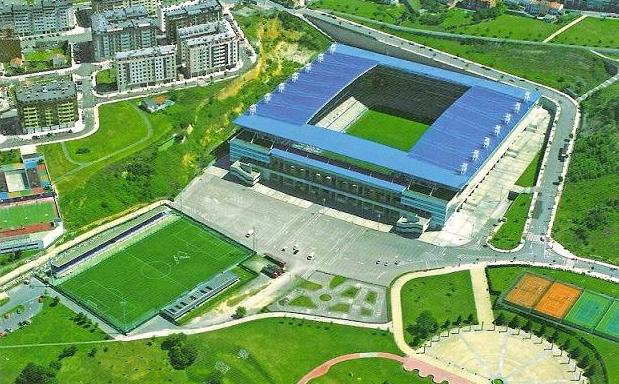
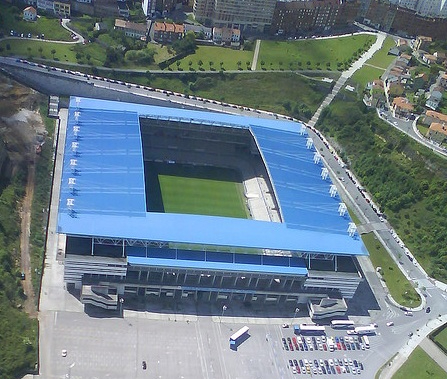
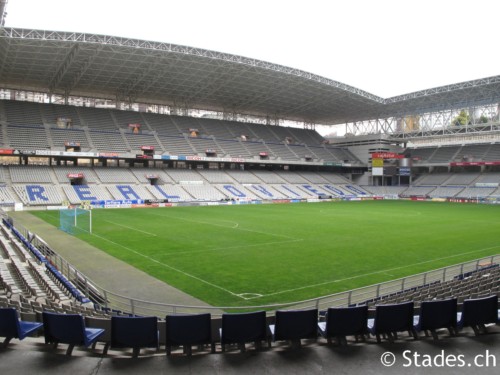
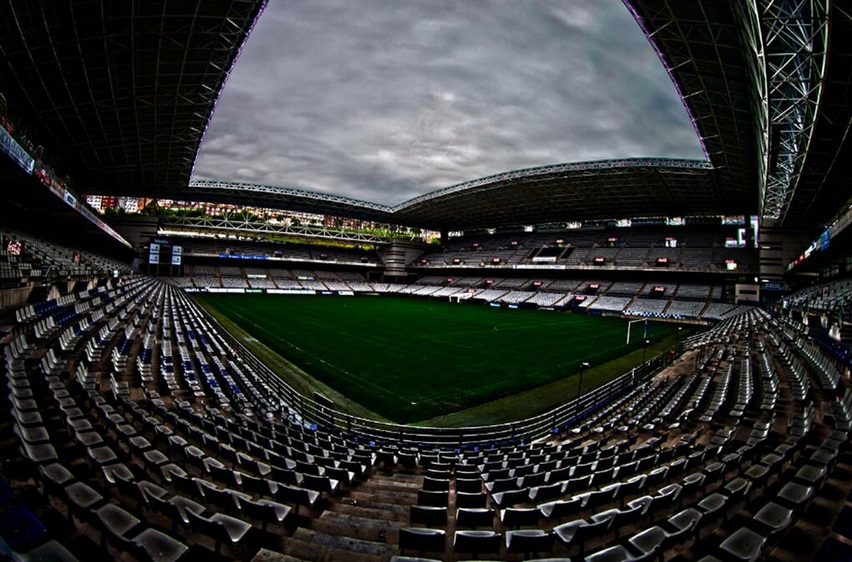
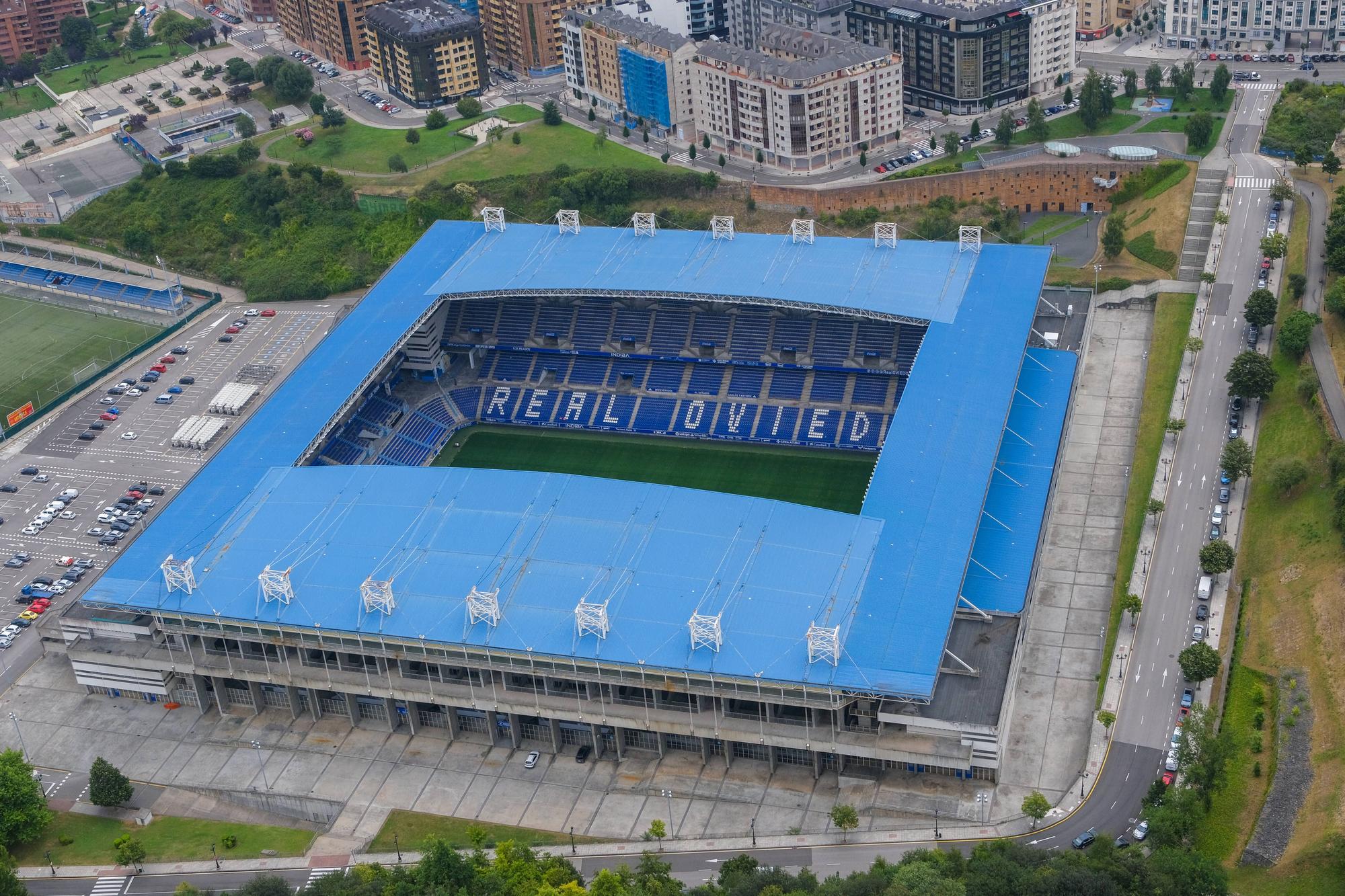
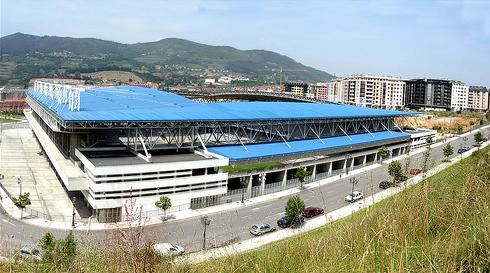
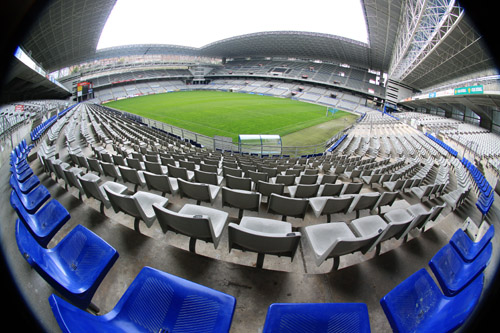
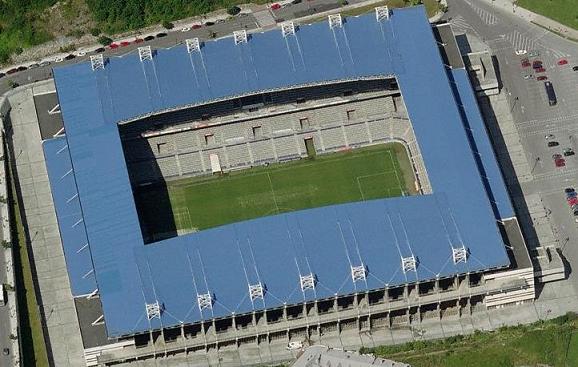
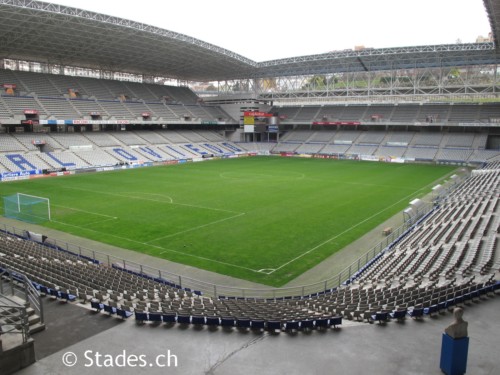
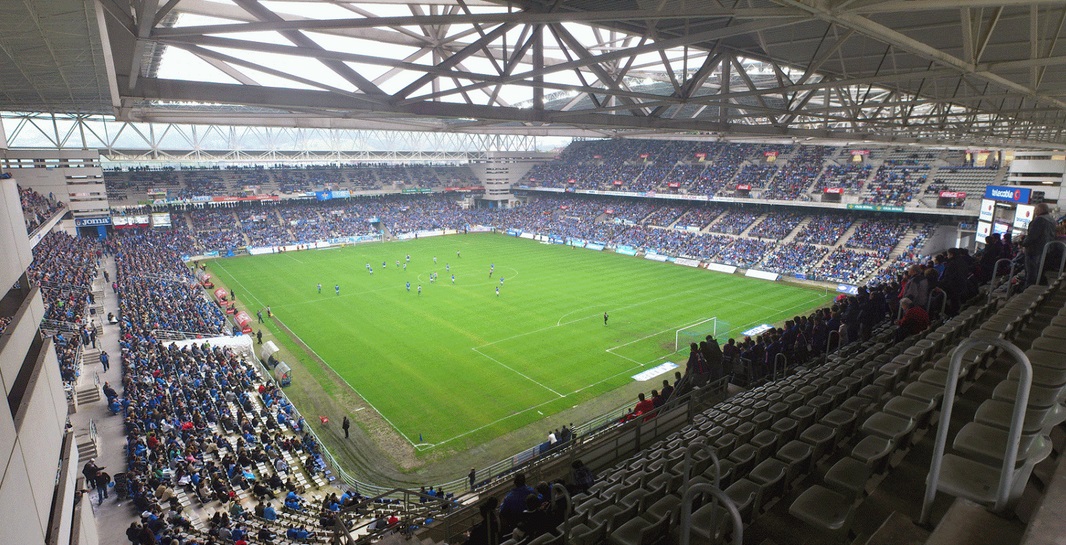
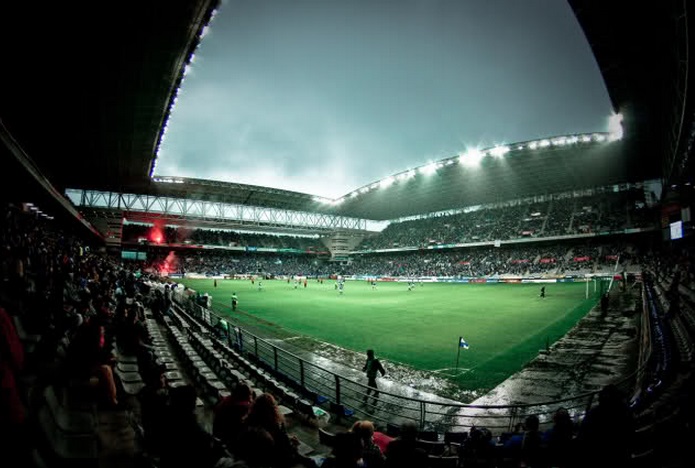
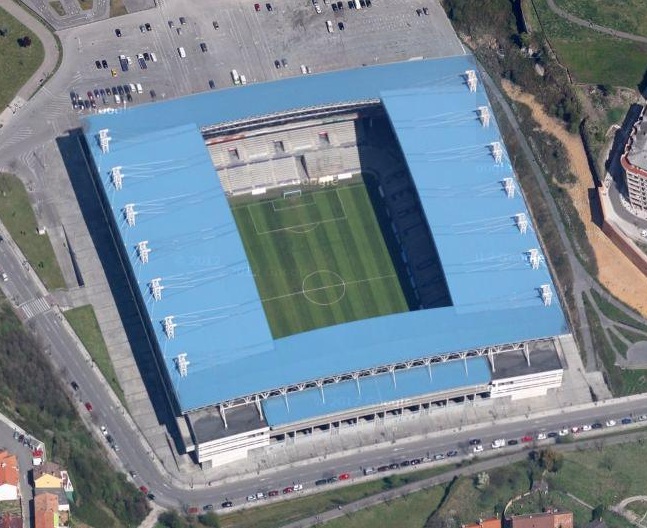
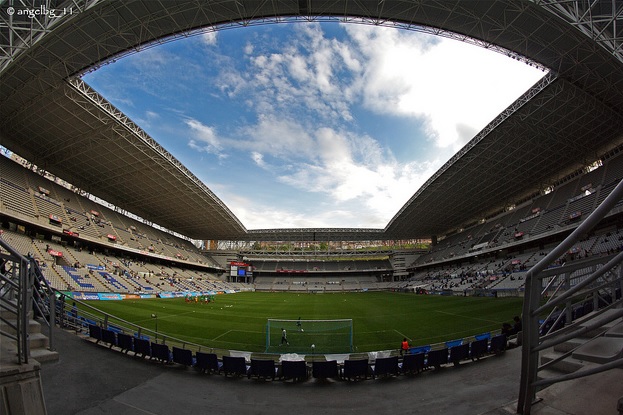
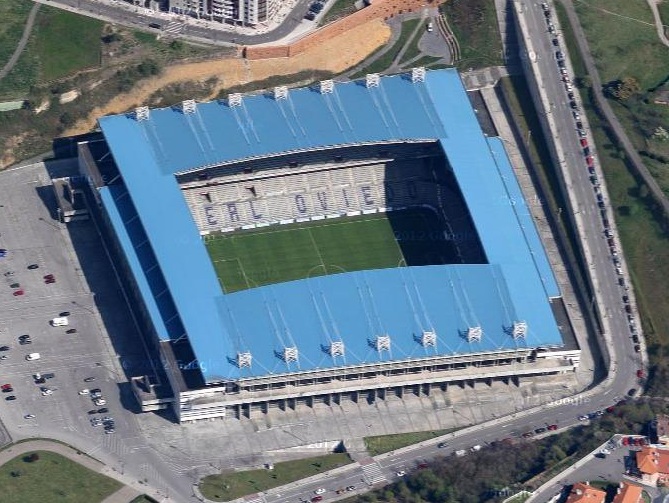
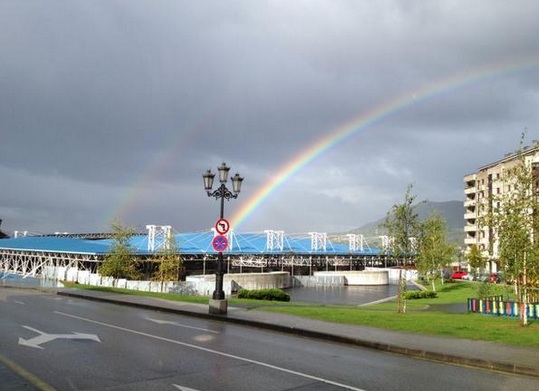
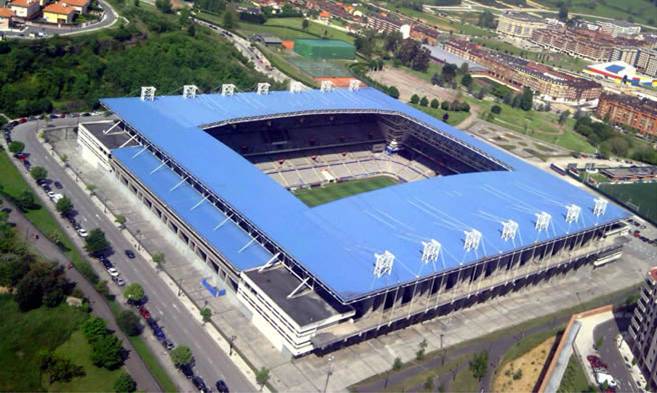
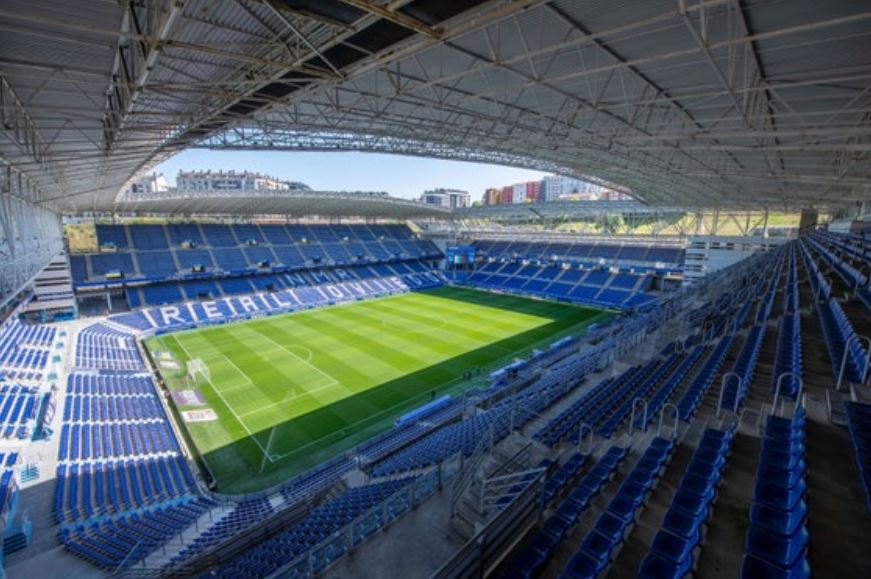
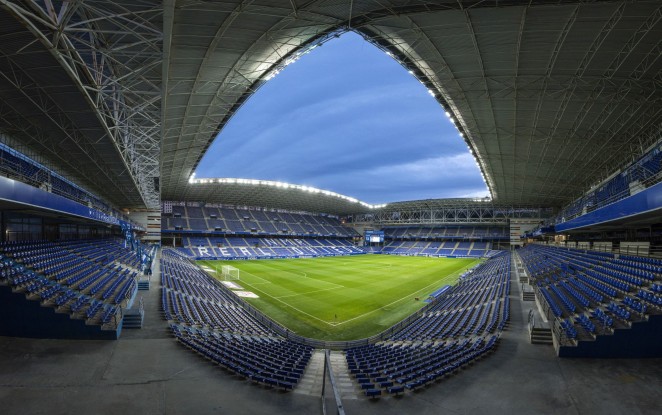
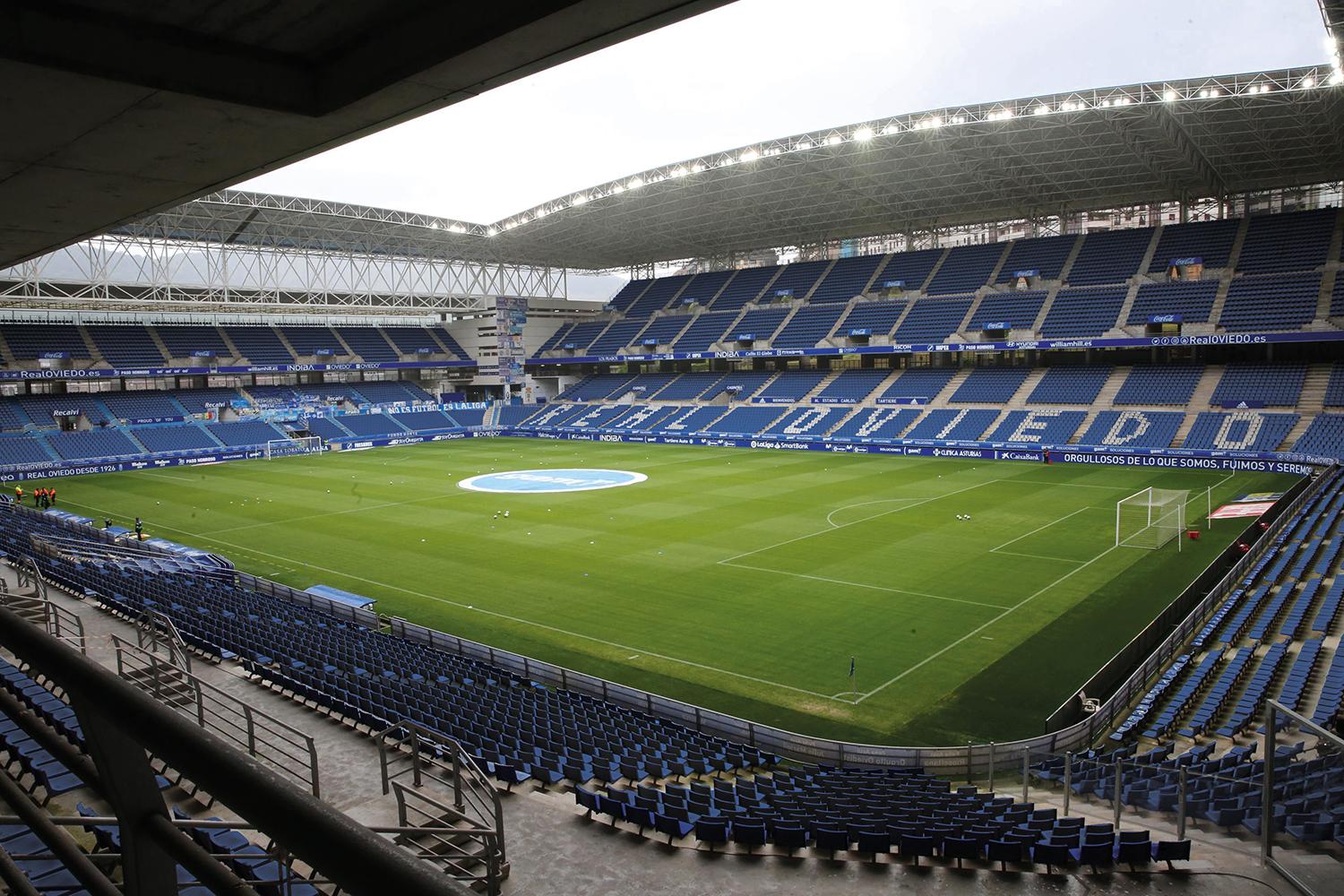
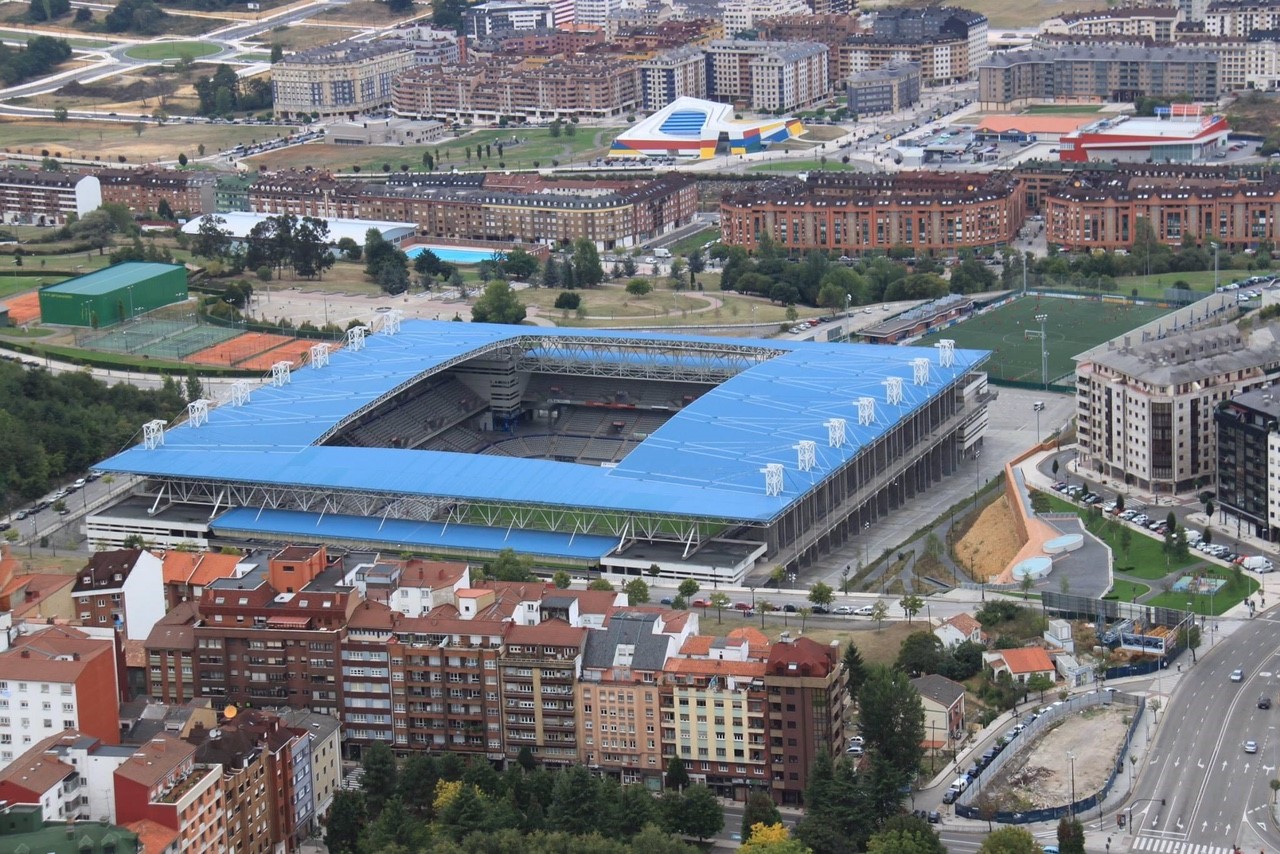
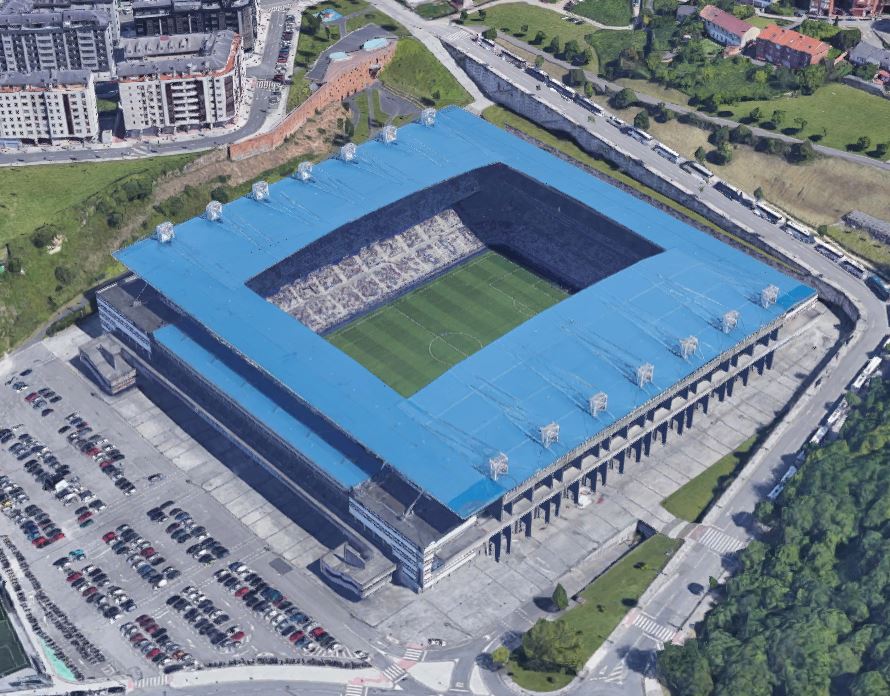
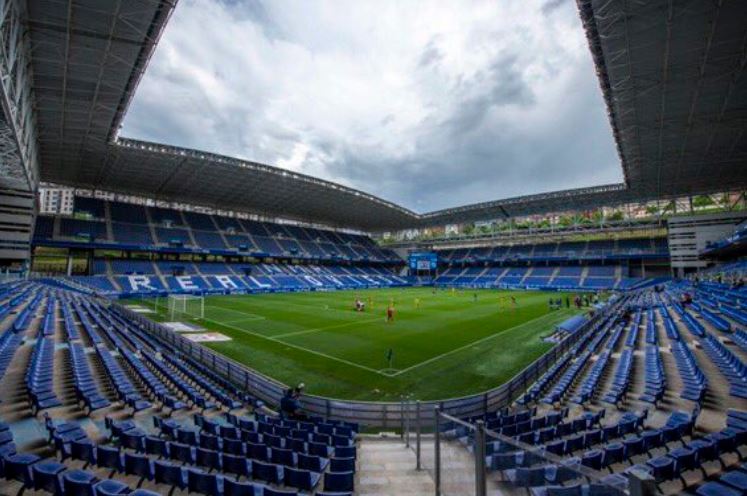
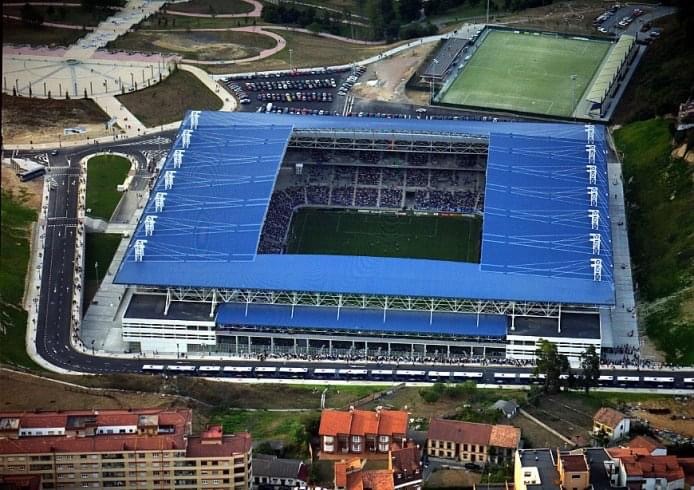
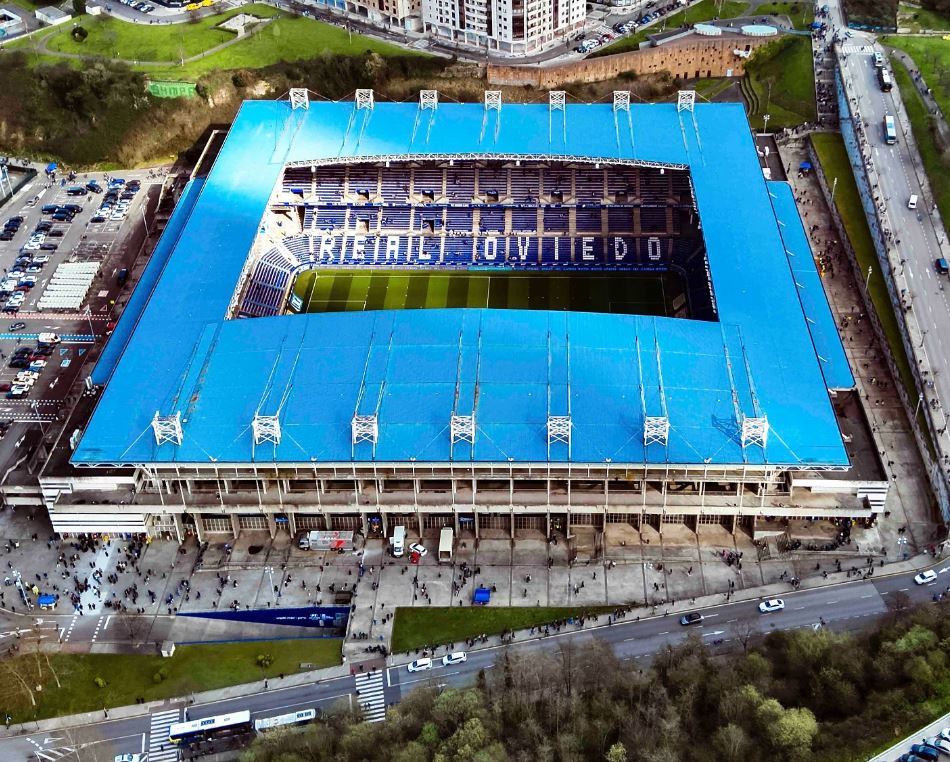
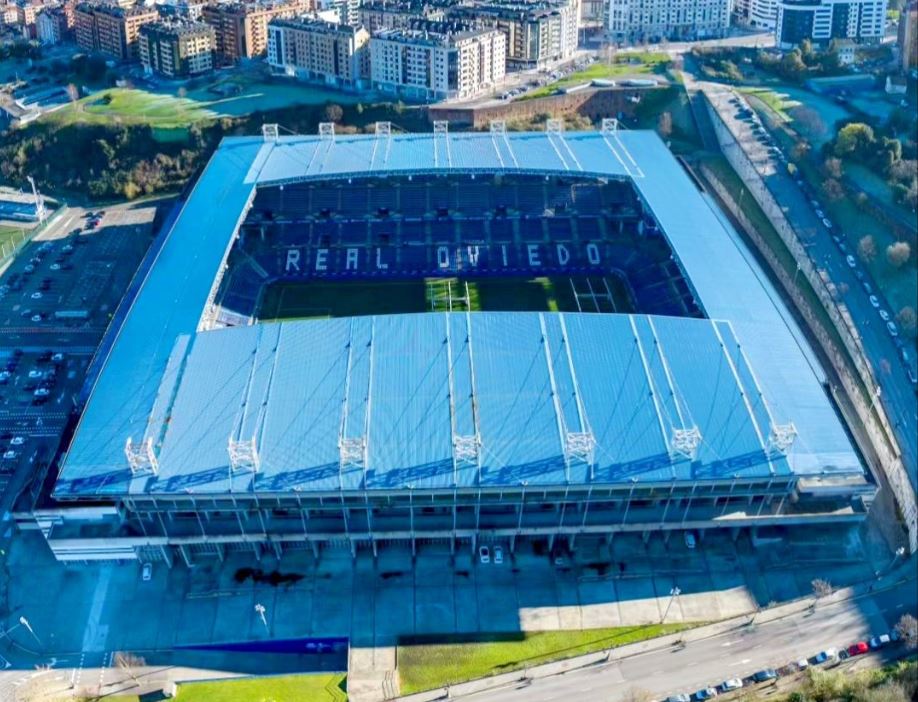
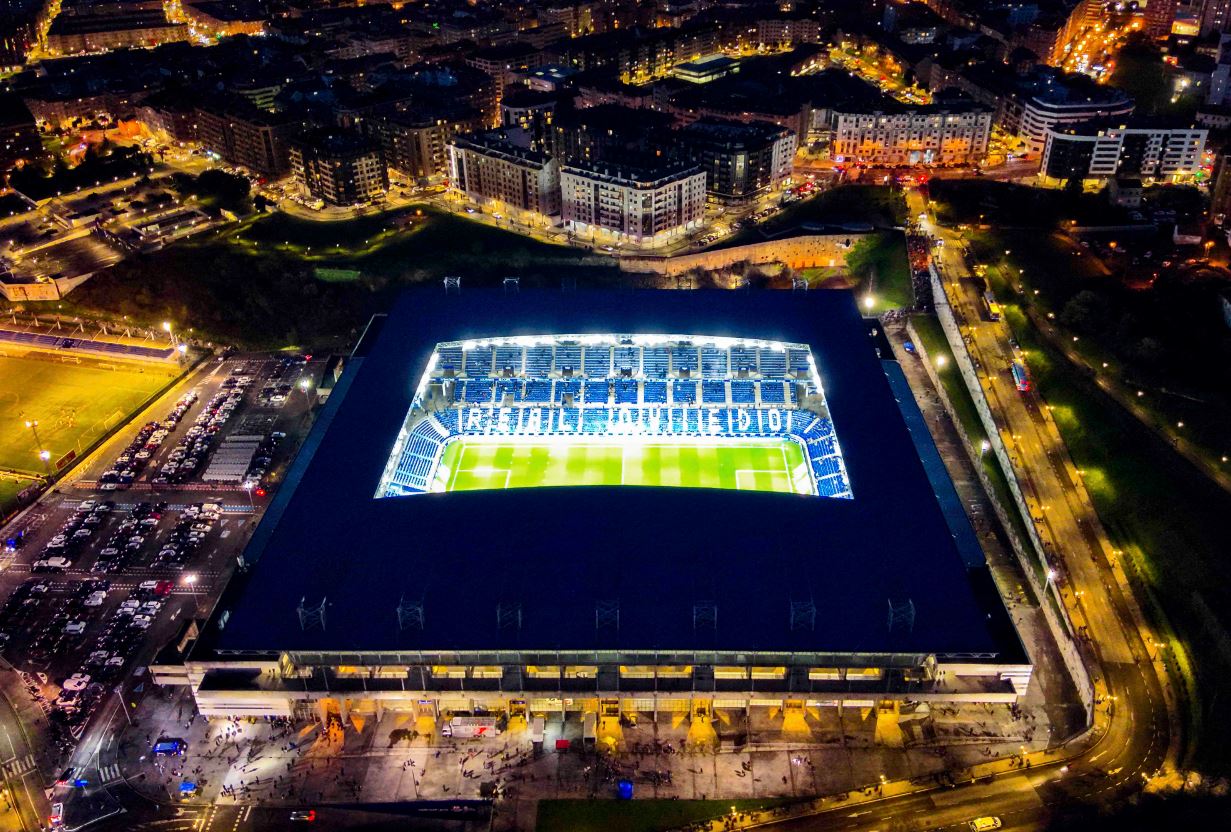
Right, let’s have a look at the stadium. Walking from the city centre towards Parc Oeste, you almost creep up on the stadium as it’s sunken into a hollow. From here, you gaze upon the roof, an expanse of blue sheet metal, only broken by fourteen white cable supports that puncture the canopy they support. In each corner, still under the blue roof, sit grey corner blocks that house a variety of municipal services as well as the club offices. This ensures that the building is used practically every day of the year. To the north and across the car park is a small municipal football ground. This is the Campo Hermanos Llana, home to Astur CF, who ditched their Oviedo AFC title in 2007 and returned to their original name. Once inside the stadium, the first thing that strikes you is the height of the stands. The next thing is how much better the interior looks now that the grey seats have been replaced with blue. It was a job that was crying out to be done for two decades, but was finally completed in 2021. The two side stands consist of two large tiers of seats with a wide concourse between the upper and lower tiers. The end stands also feature two tiers, the lower on a scale with the side stands, but the upper tiers are much smaller. In the northwest corner, on the concourse between the lower tier and one of the office units, stands a bust of former president and club icon Carlos Tartiere. Having commissioned Juan Junquera to design the daring main stand at the old stadium, I’m sure Carlos Tartiere would have been impressed by the scale of the new arena. It is a remarkable structure, combining style, comfort and that rare thing in a modern all-seater arena, atmosphere.
As for Real Oviedo, their decade of misery finally drew to an end in 2015 with promotion back to La Segunda. However, they very nearly didn’t make it at all. With new owners and supporter presence on the board, the club made a desperate appeal in October 2012 to raise €1.9m just to keep the club afloat. The response was overwhelming, as football fans from around the globe bought shares in this historically important outfit. This was a touching gesture from the wider football community towards a club that has given us the likes of Isidro Lángara, Santi Cazorla, Michu and Juan Mata. (Cazorla, Michu & Mata all bought shares in the club). In recognition of the global response to save Real Oviedo, the club has dedicated Gate 19 at the Carlos Tartiere to its worldwide fan base, which features a banner with the words “Proud of You” in English. Further investment from Carlos Slim, the Mexican Telecom billionaire, appears to have secured the club’s medium-term future and set up a platform for growth.
Finally, in June 2025, Real Oviedo returned to the top flight. Following a third-place finish in the league, they overcame challenges from UD Almería and CD Mirandés in the playoffs and returned to La Primera after a 24-year absence. The last two decades have proved that Spanish football needs historic, regional clubs like Real Oviedo. La Primera is all the better when they and this wonderful stadium have returned.
 Estadios de España