Article updated on: 15/09/2025
Maybe it’s because I don’t support a big club, but I look at SD Eibar and like what I see. It’s small, well-run, and part of the community, yet it is still prepared to mix it with the larger clubs and bruise a few egos along the way.

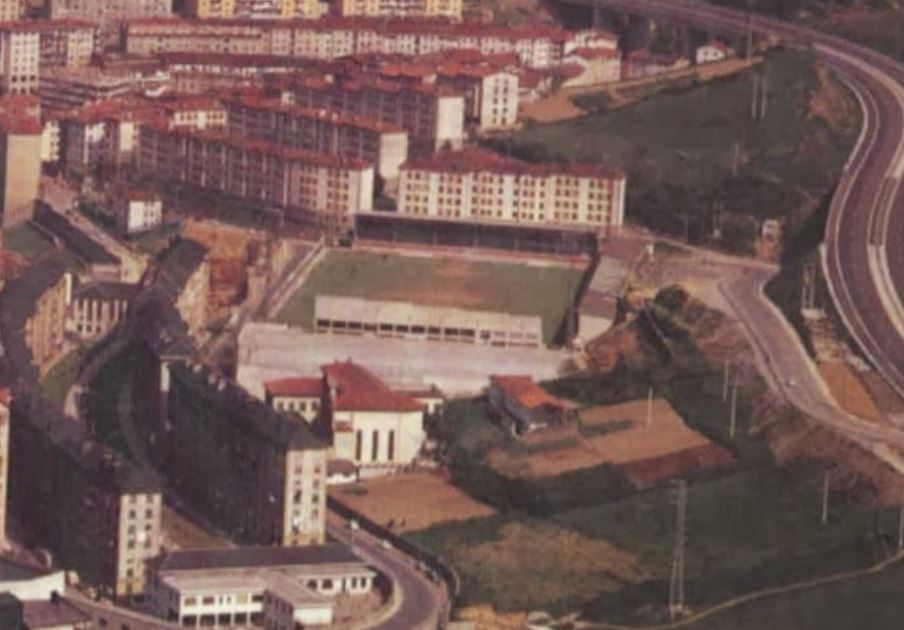
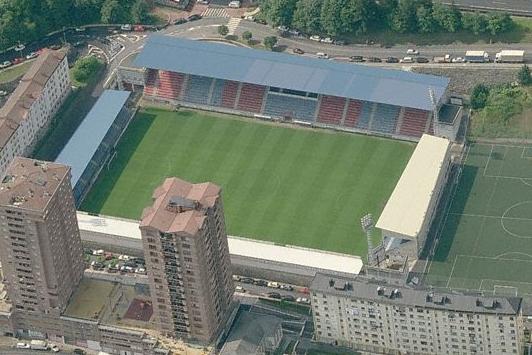
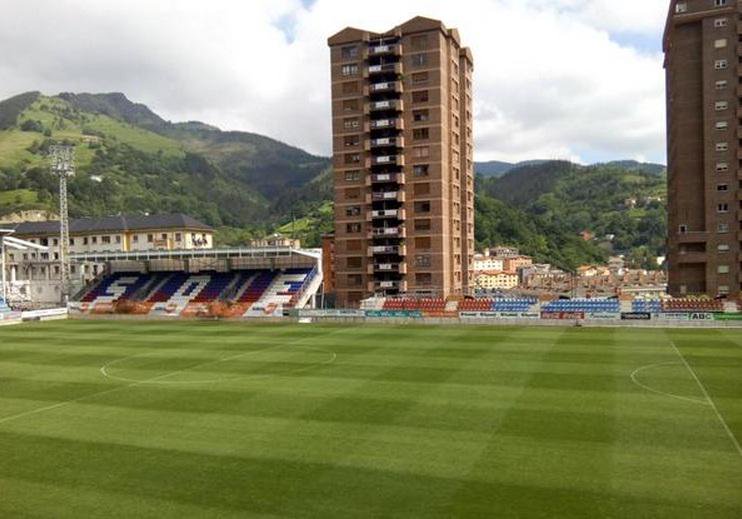
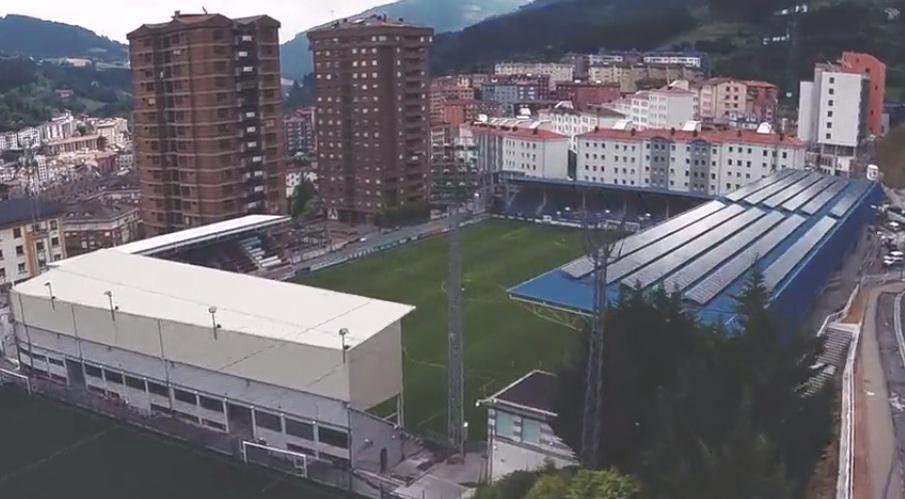
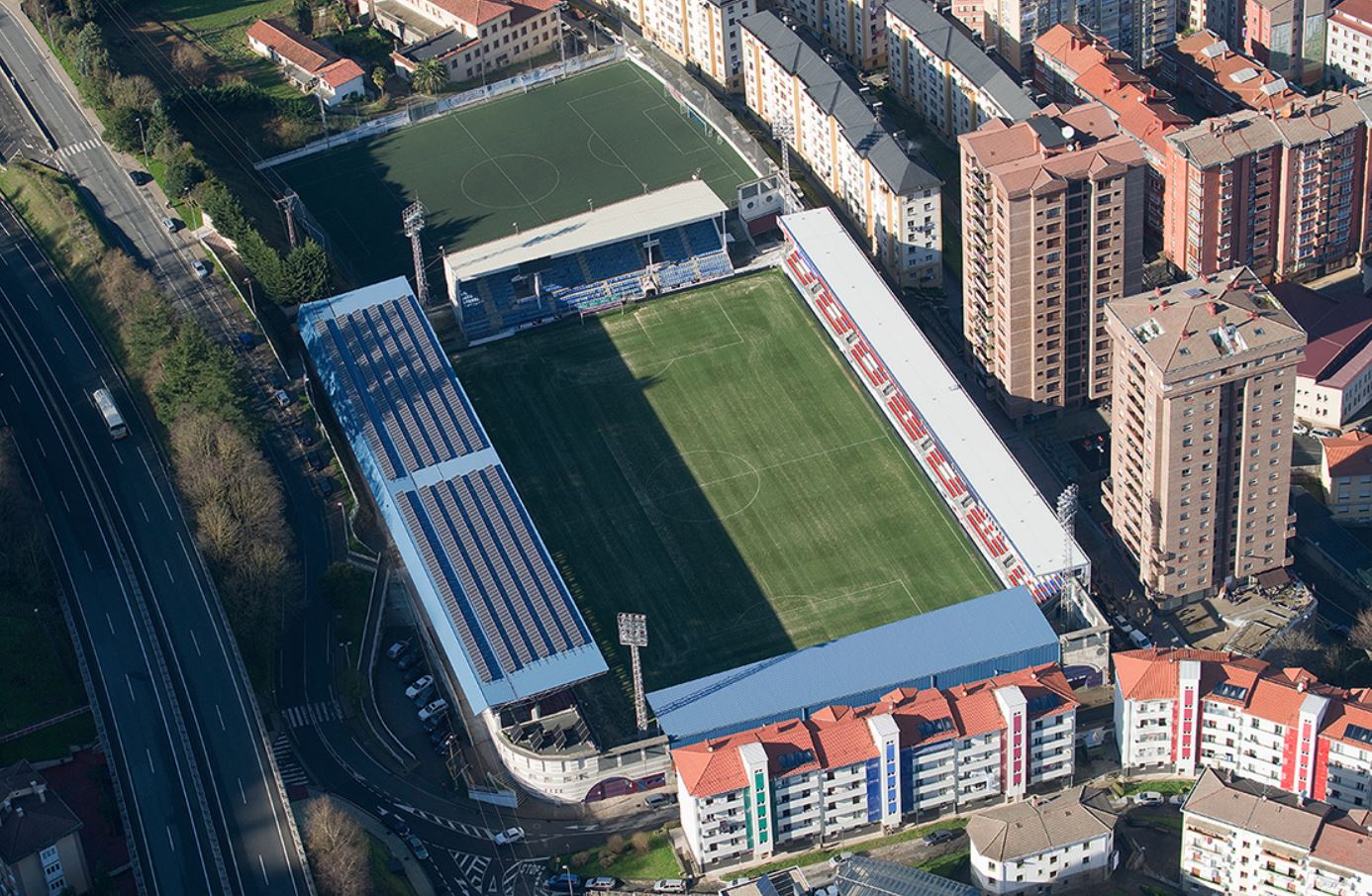
Eibar is in the west of Guipuzcoa, on the border with Vizcaya and equidistant (25 miles) from Bilbao and San Sebastián. It used to be a player in the Spanish steel industry and was renowned for the quality of its handguns & bicycles. However, the furnaces & the firearms have long been silent, whilst the wheels fell off the local bicycle trade many moons ago. At its peak in the 1970s, Eibar had a population of nearly 40,000. Today, that figure is nearer 27,000. All of which would normally indicate that today, the town would host a club in the regional leagues, whose golden era was decades ago. Nothing could be further from the truth.
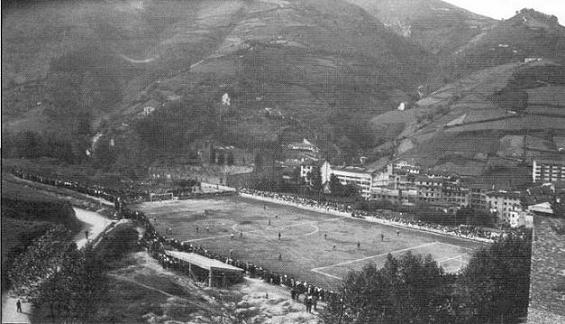
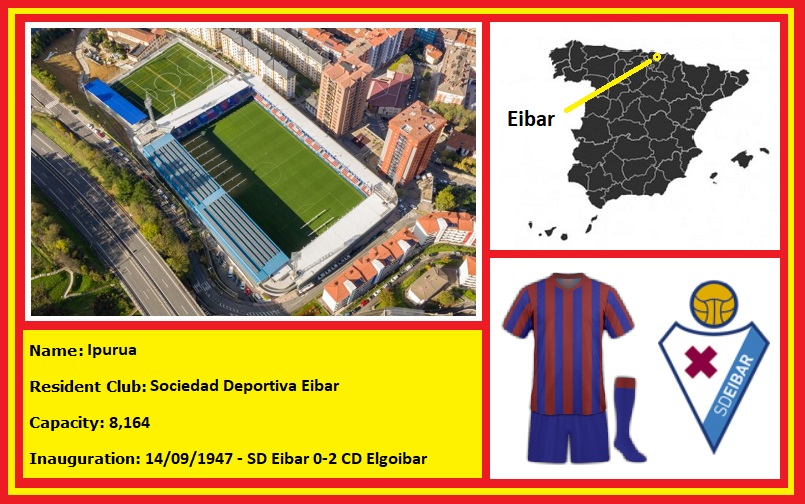
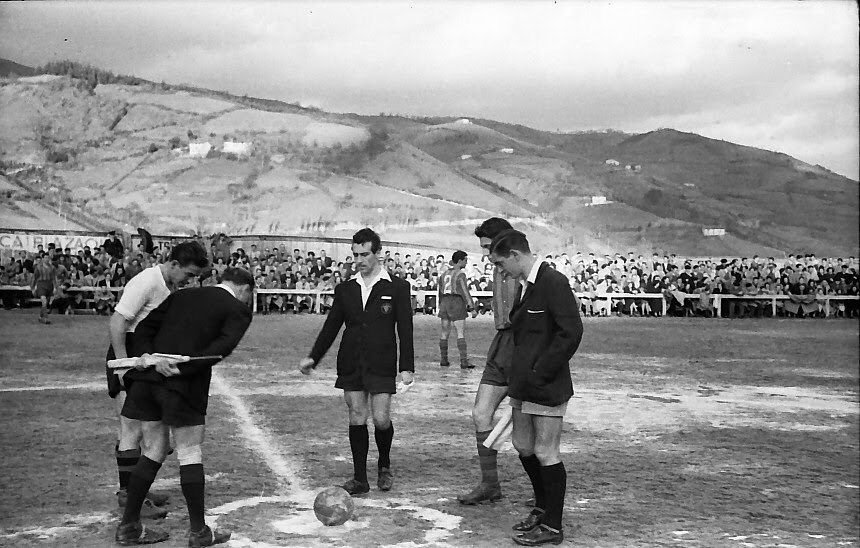
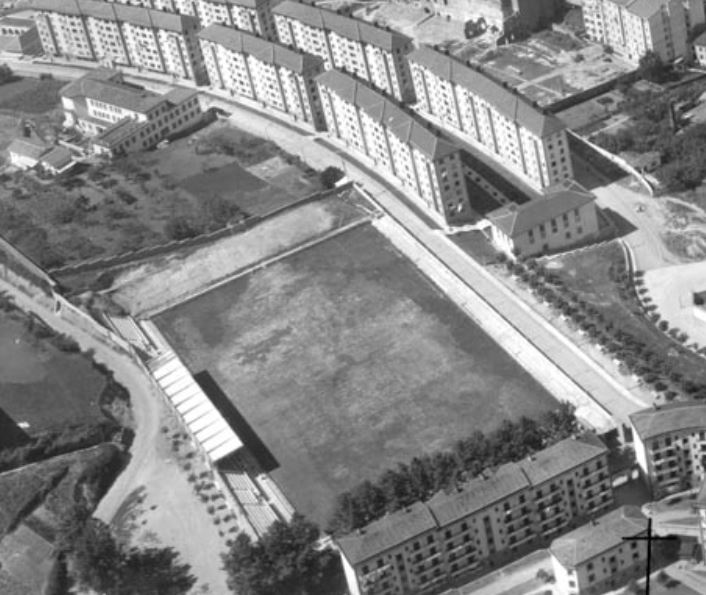
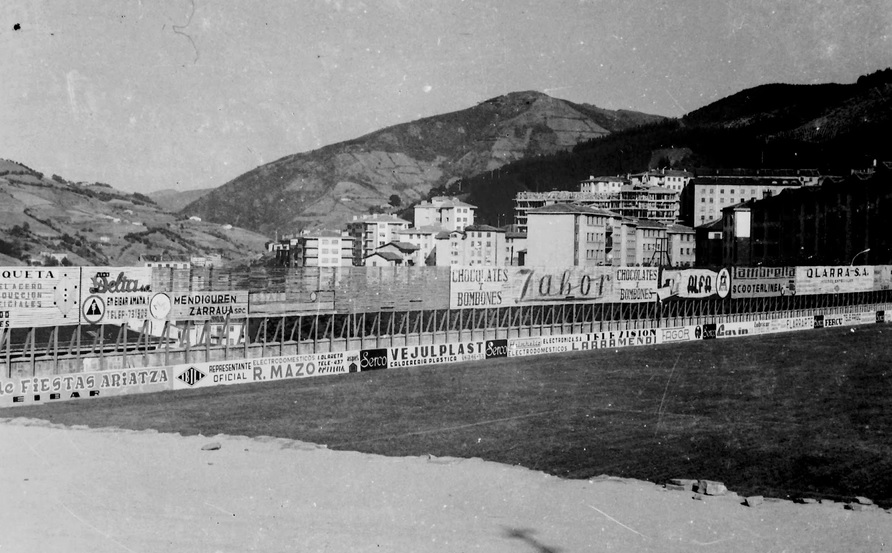
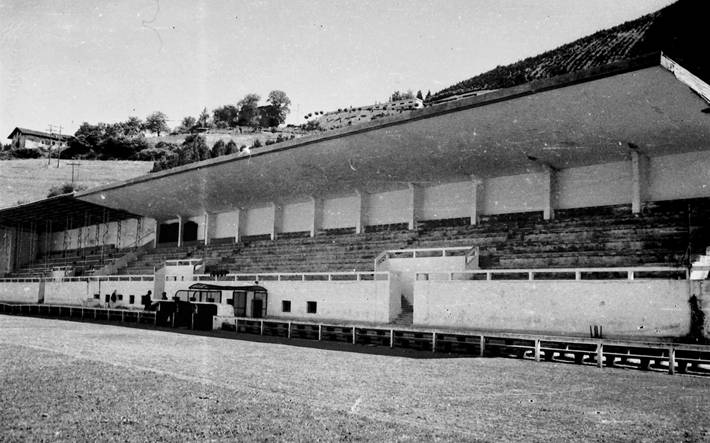
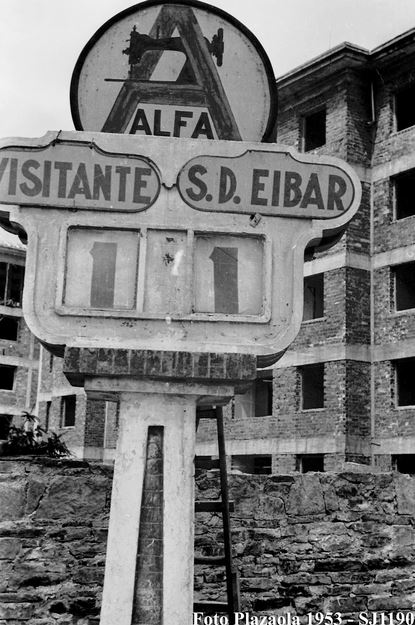
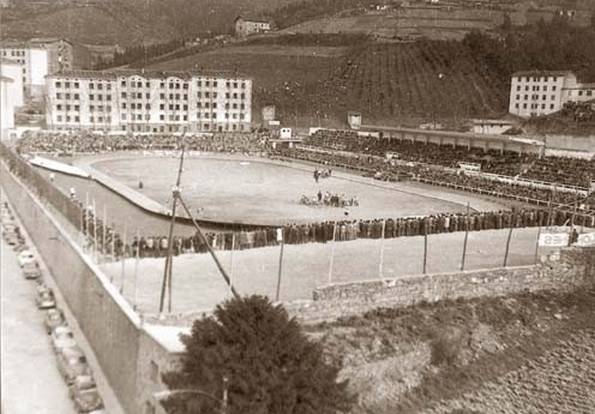
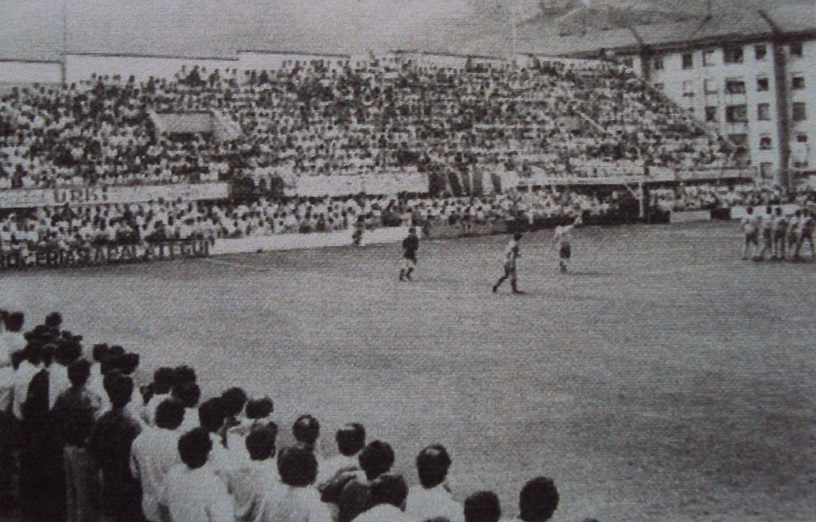
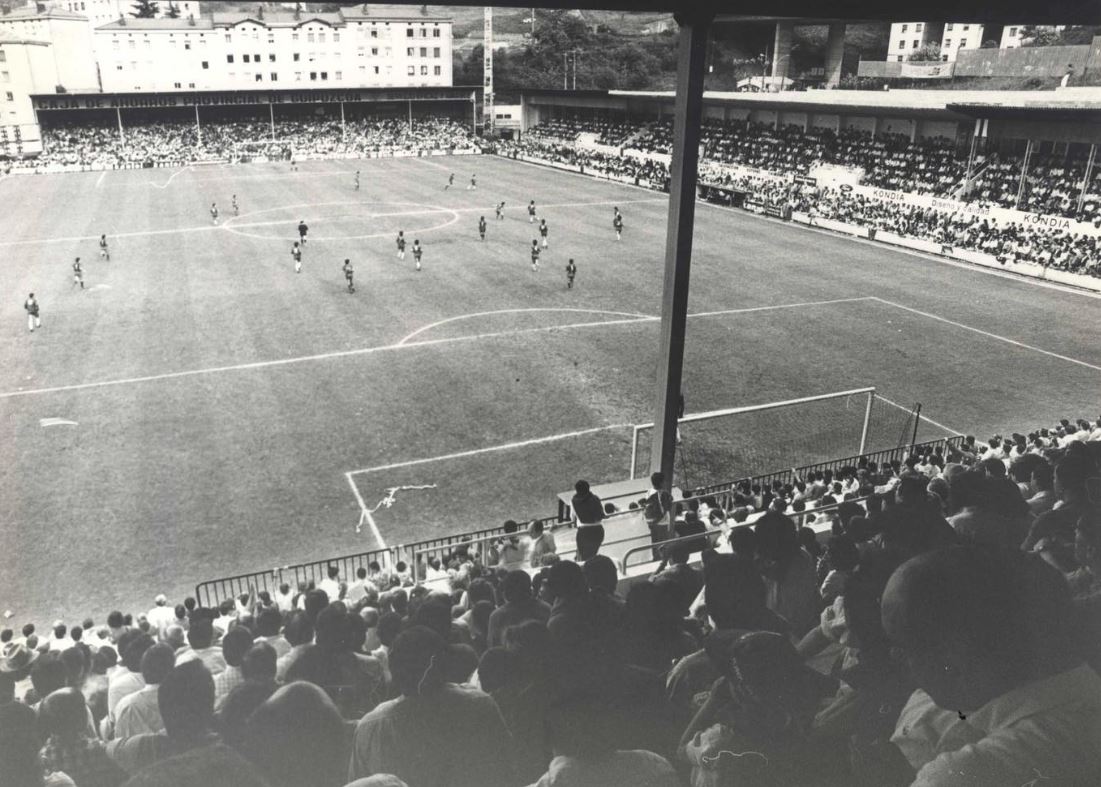
On 30 November 1940, Deportivo Gallo and Unión Deportiva Eibarresa joined forces to form Sociedad Deportiva Eibar. Their first home was the Campo de Lerum, 5 miles northwest in Elgoibar, before moving to the Campo de Erdikua in 1943. Eibar moved to the present site of Ipurua in 1947, hosting the first match on 14 September. However, local rivals CD Elgoibar spoiled the party with a 0-2 victory. Work began on the central main stand in 1948, which was finally completed in 1951. Two Tercera titles were won in the early 1950s before promotion to La Segunda was earned in 1953. The second division was a regional competition back then, and Eibar hung around the northern section for the next five seasons, finishing as high as 7th in 1954. The club dropped back to the Tercera in 1958, and it would take another 30 years before the club returned to the second tier.
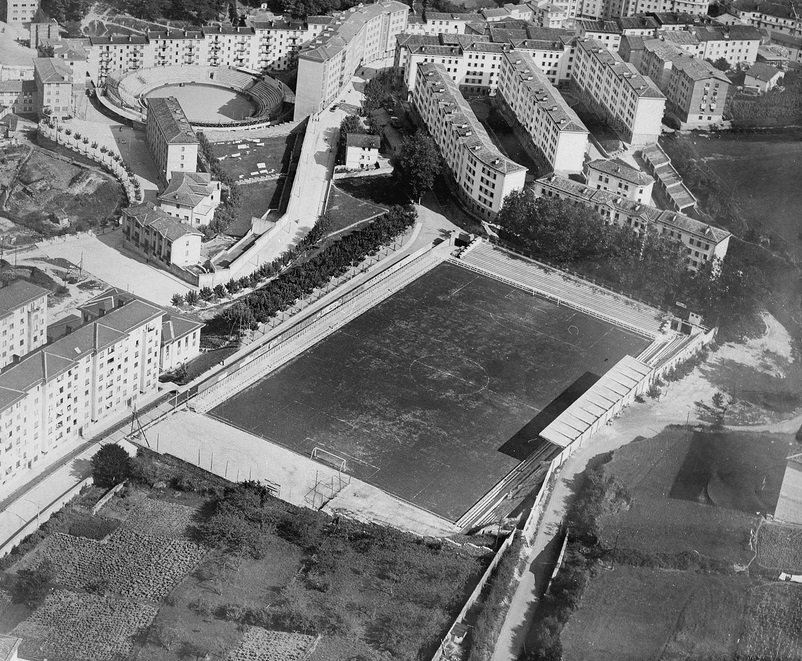
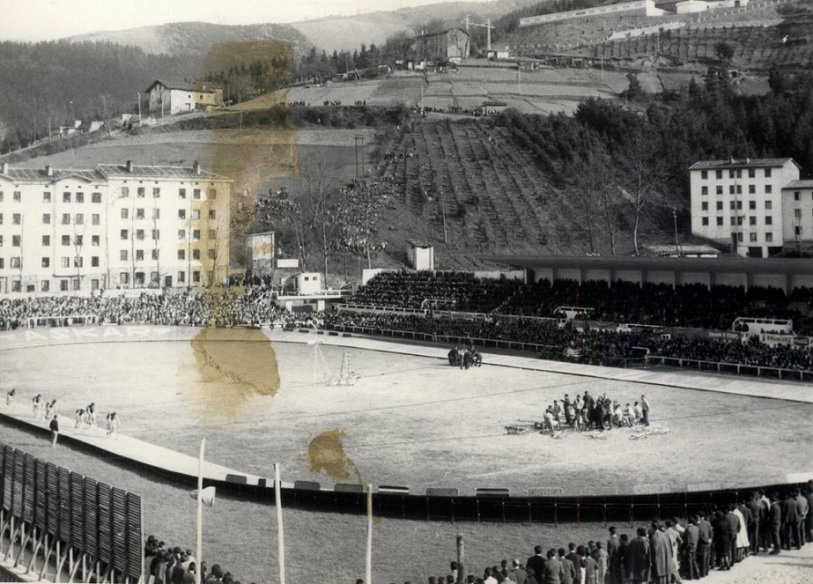
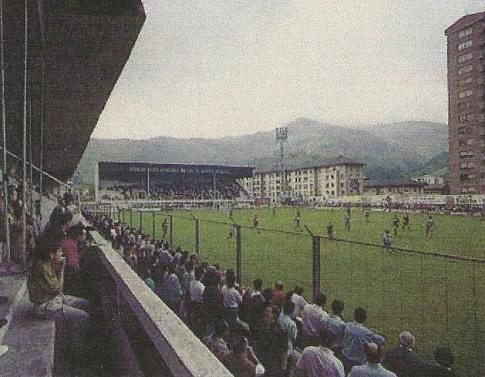
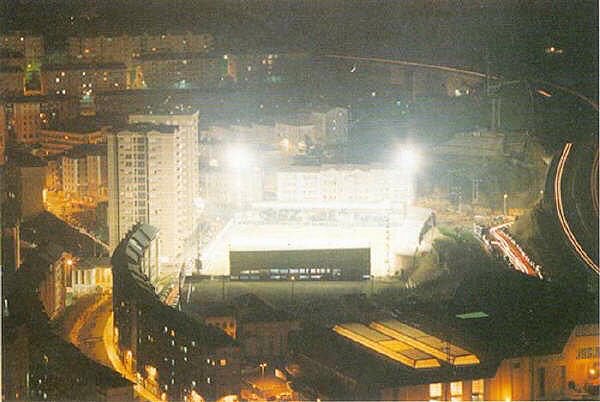
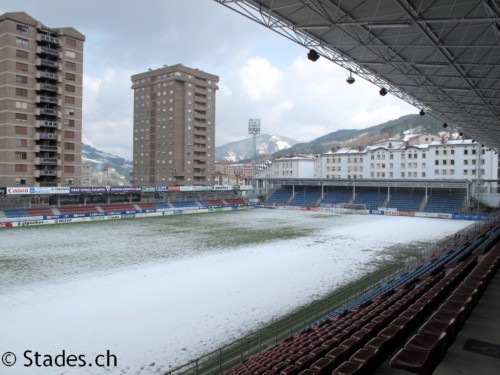
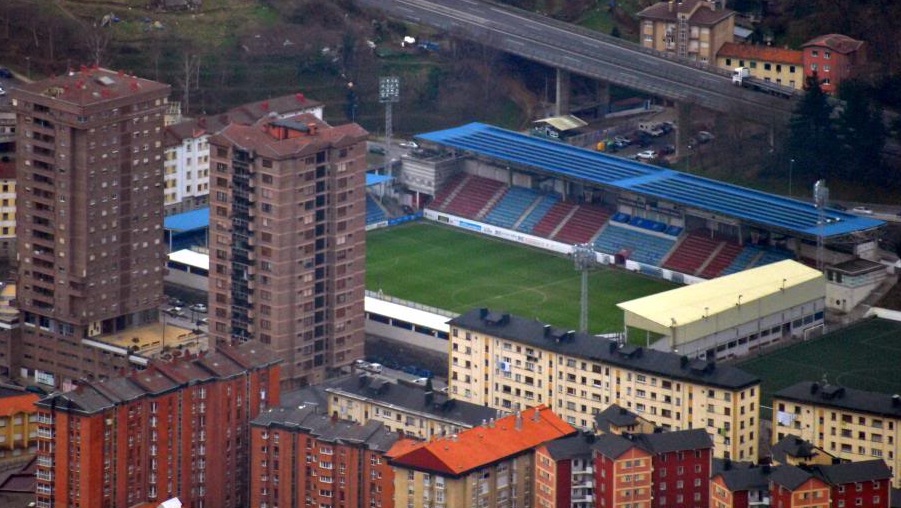
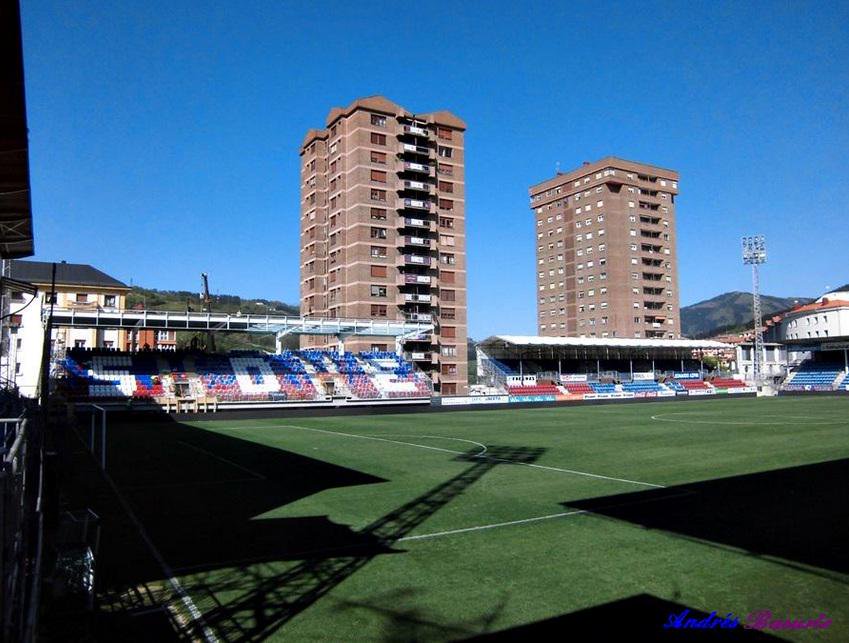
Because their Ipurua home lies at the bottom of a steep valley, the pitch was prone to flooding and poor drainage. Steps were taken to address this, and a new drainage system and pitch levelling were completed in 1959. The ground remained relatively basic throughout the 1960s, although it did sport a temporary cycle track when a stage of the Vuelta a España finished in the town in 1963. In 1970, the popular East End was covered, and the roof on the main stand was extended. This coincided with the installation of the stadium’s first floodlights, which were officially inaugurated on 14 October with a match between Eibar’s equidistant rivals, Real Sociedad and Athletic Club.
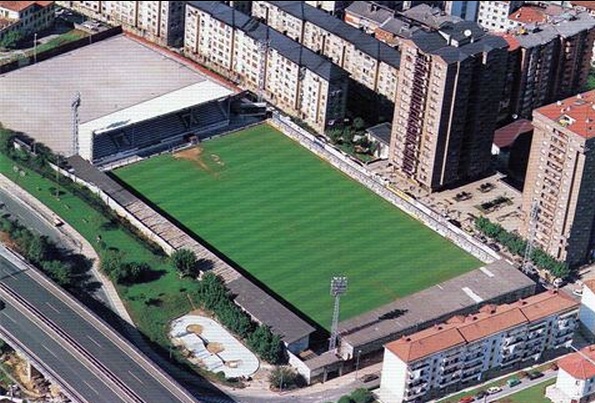
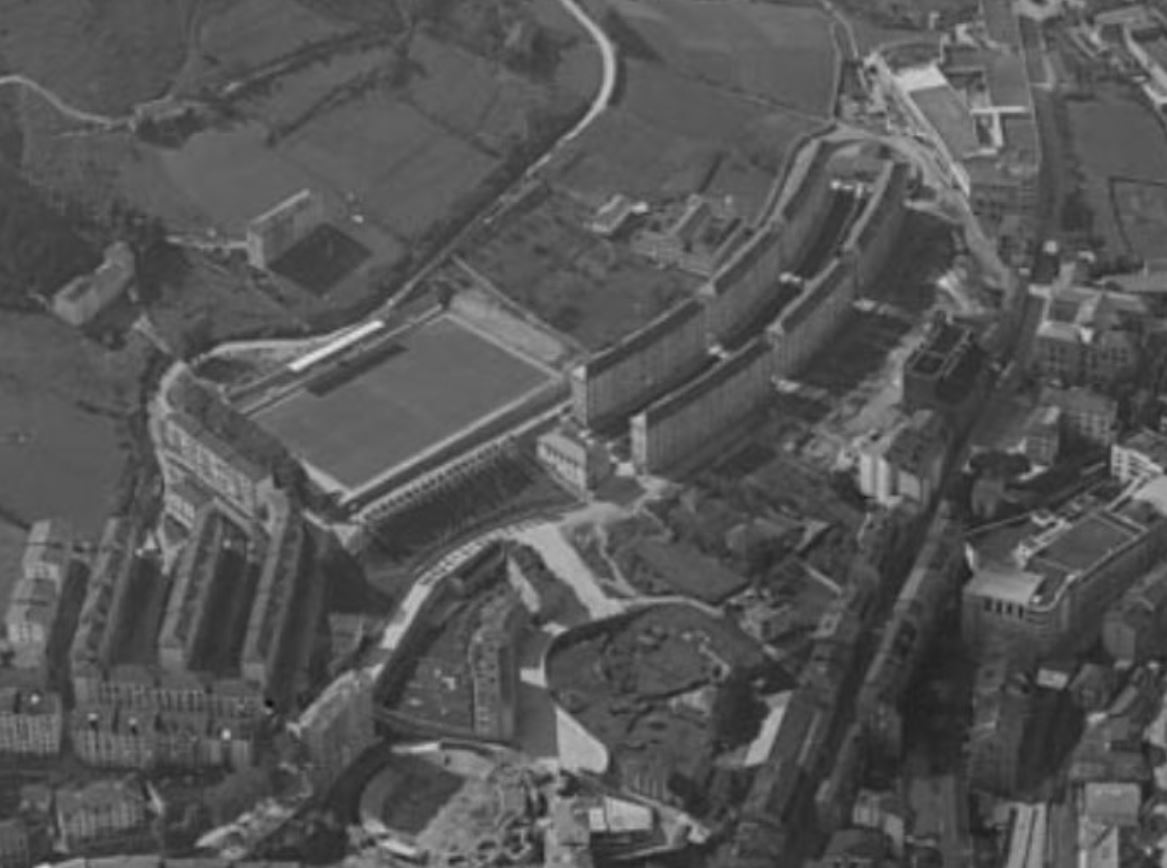
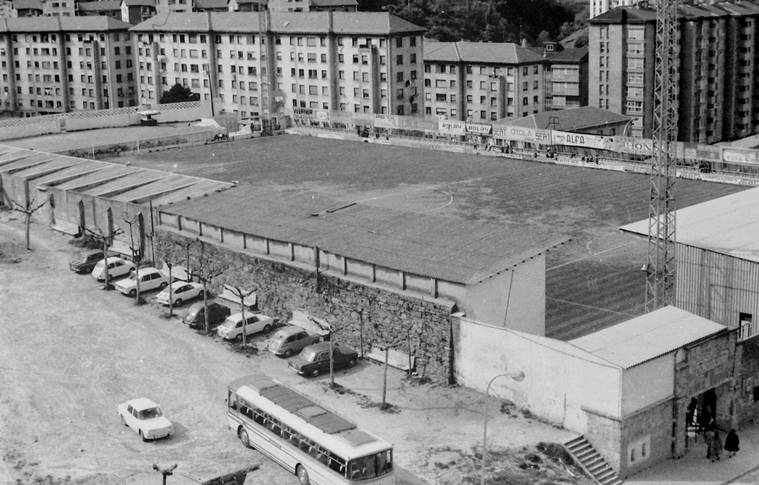
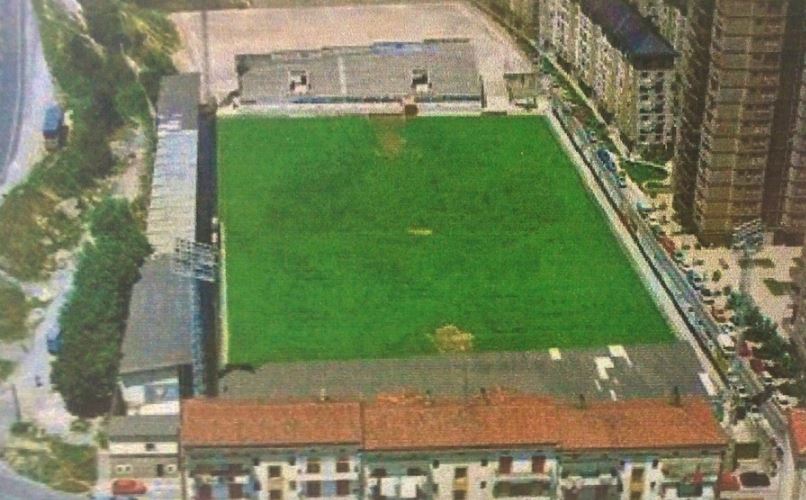
During the 1980s, Eibar’s fortunes improved on the field, and basic improvements were made to the ground. This included the building of a basic cover over the western end of the ground. In 1988, Eibar returned to La Segunda, but Ipurua was probably the most basic stadium in the division. Matters were complicated by the fact that the urban area of the town had spread westwards, severely restricting space around the ground. Eibar’s efforts in La Segunda during the nineties were impressive, finishing as high as fifth in 1994/95 & 1996/97. Even when struggling, Eibar did not give up the fight. With five games to go in the 1998-99 season, the club was adrift at the foot of the table, eleven points behind 18th-placed Mallorca B. Incredibly, Eibar won its final five games and finished a point ahead of Mallorca, and retained its place in the second division.
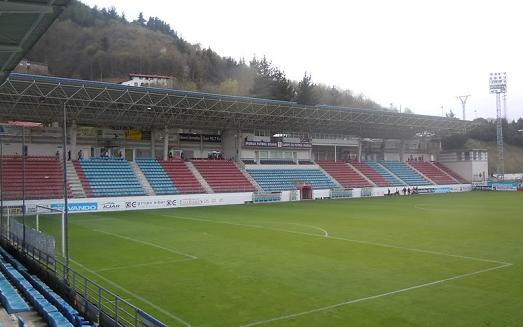
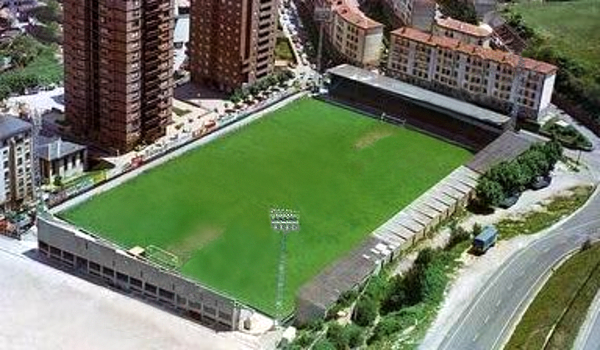
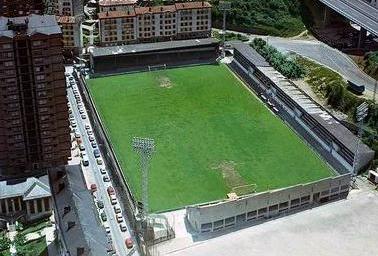
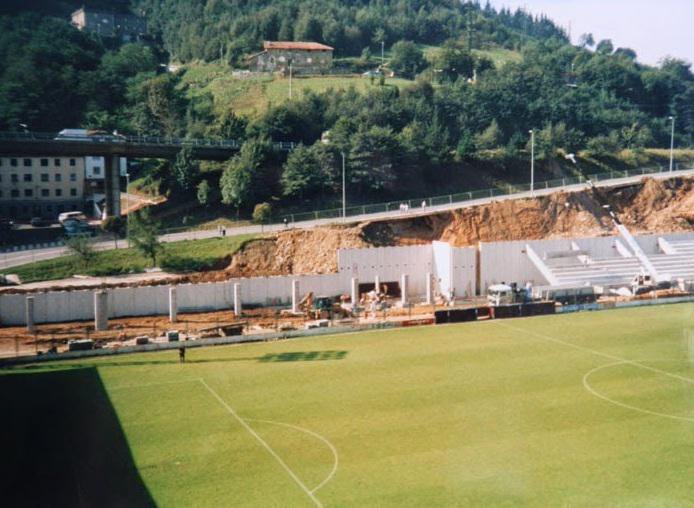
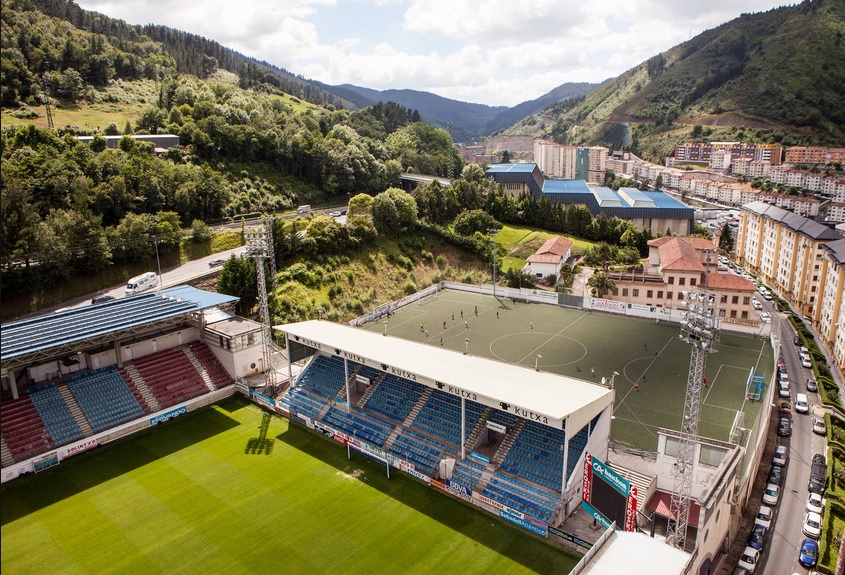
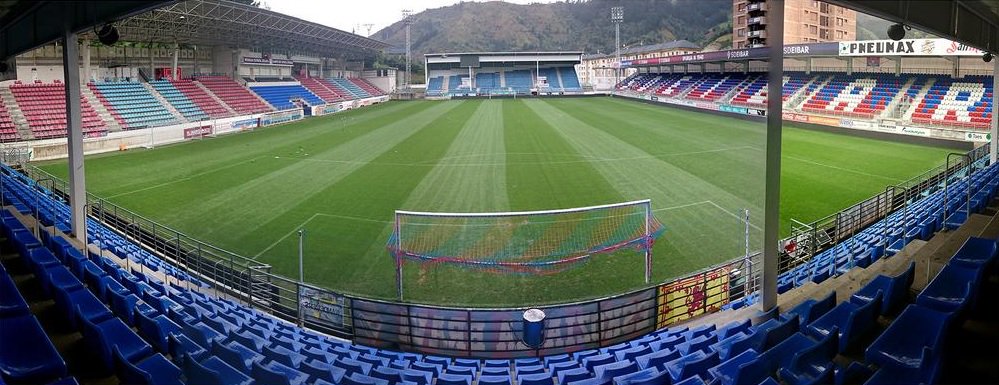
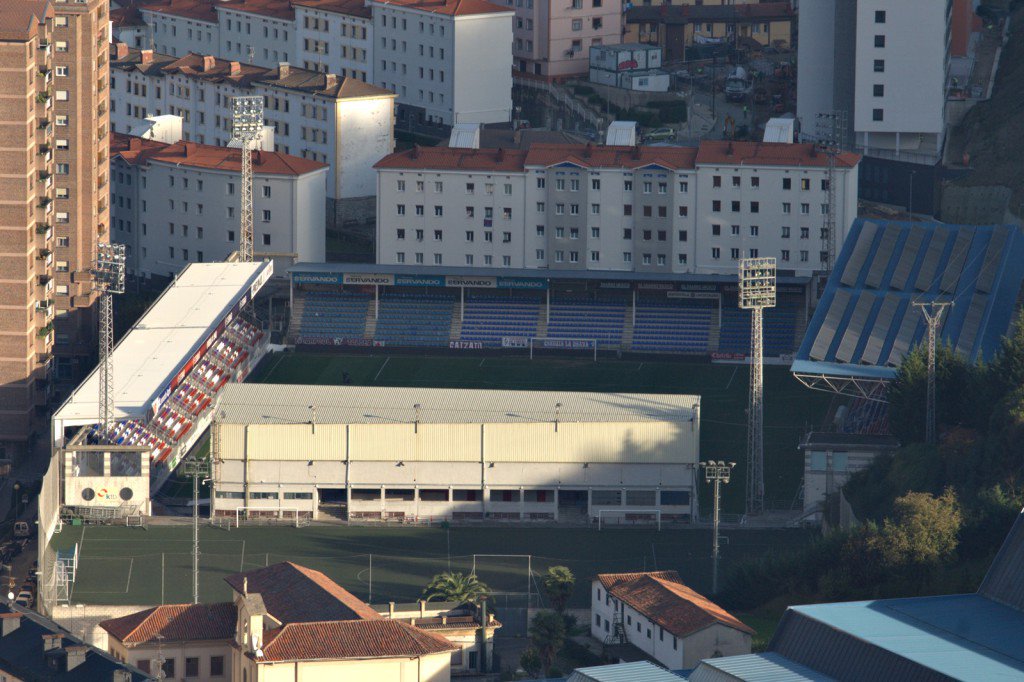
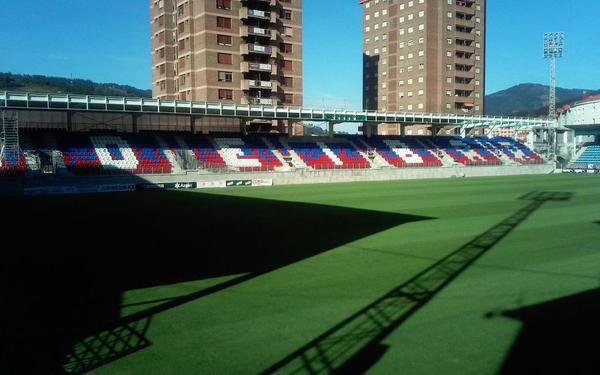
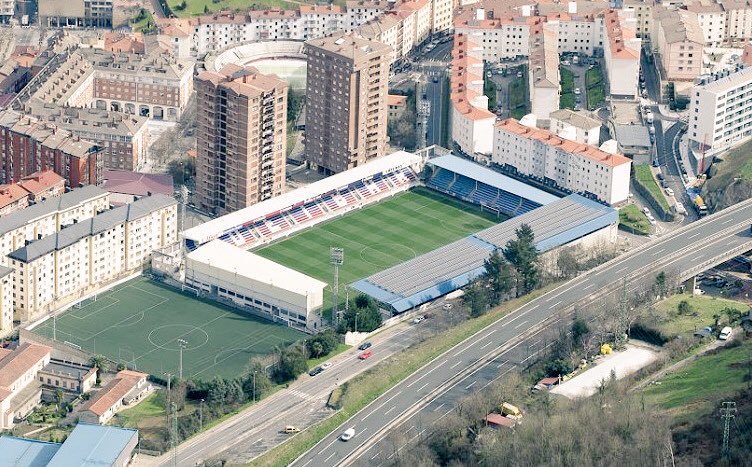
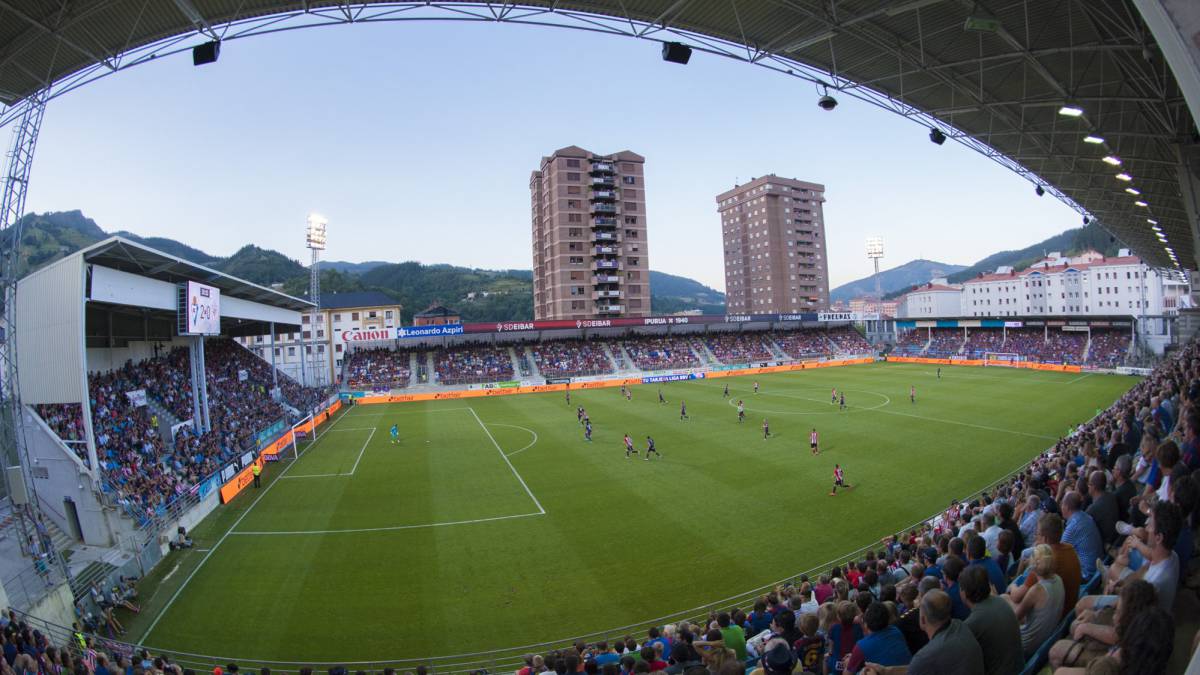
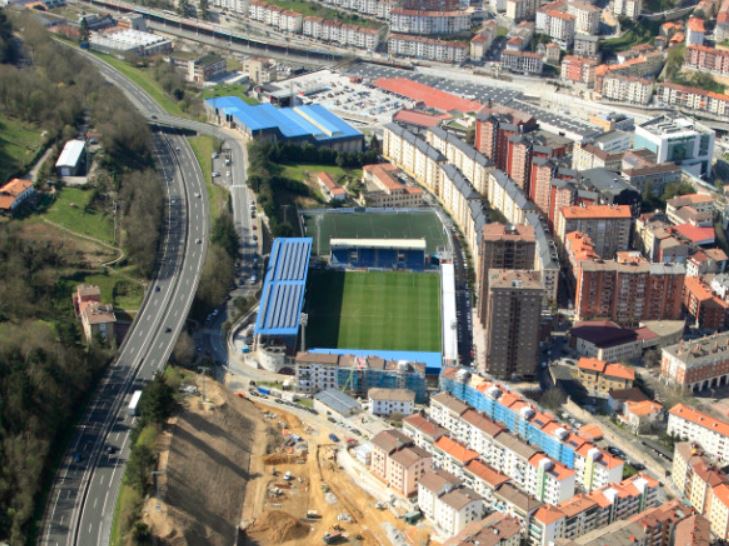
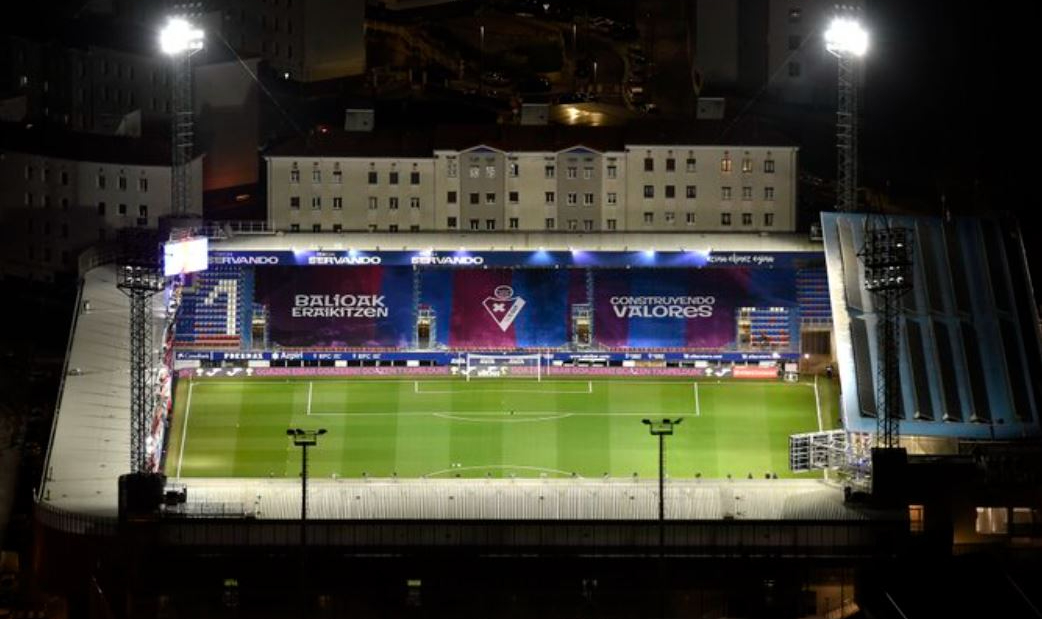
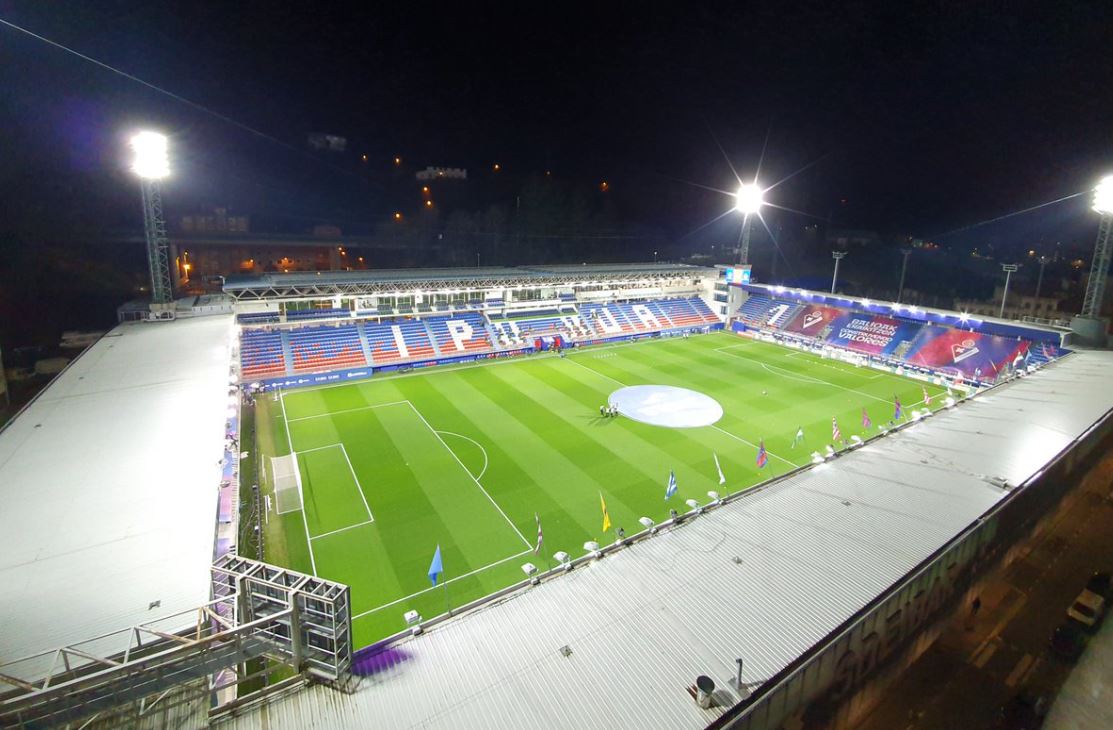
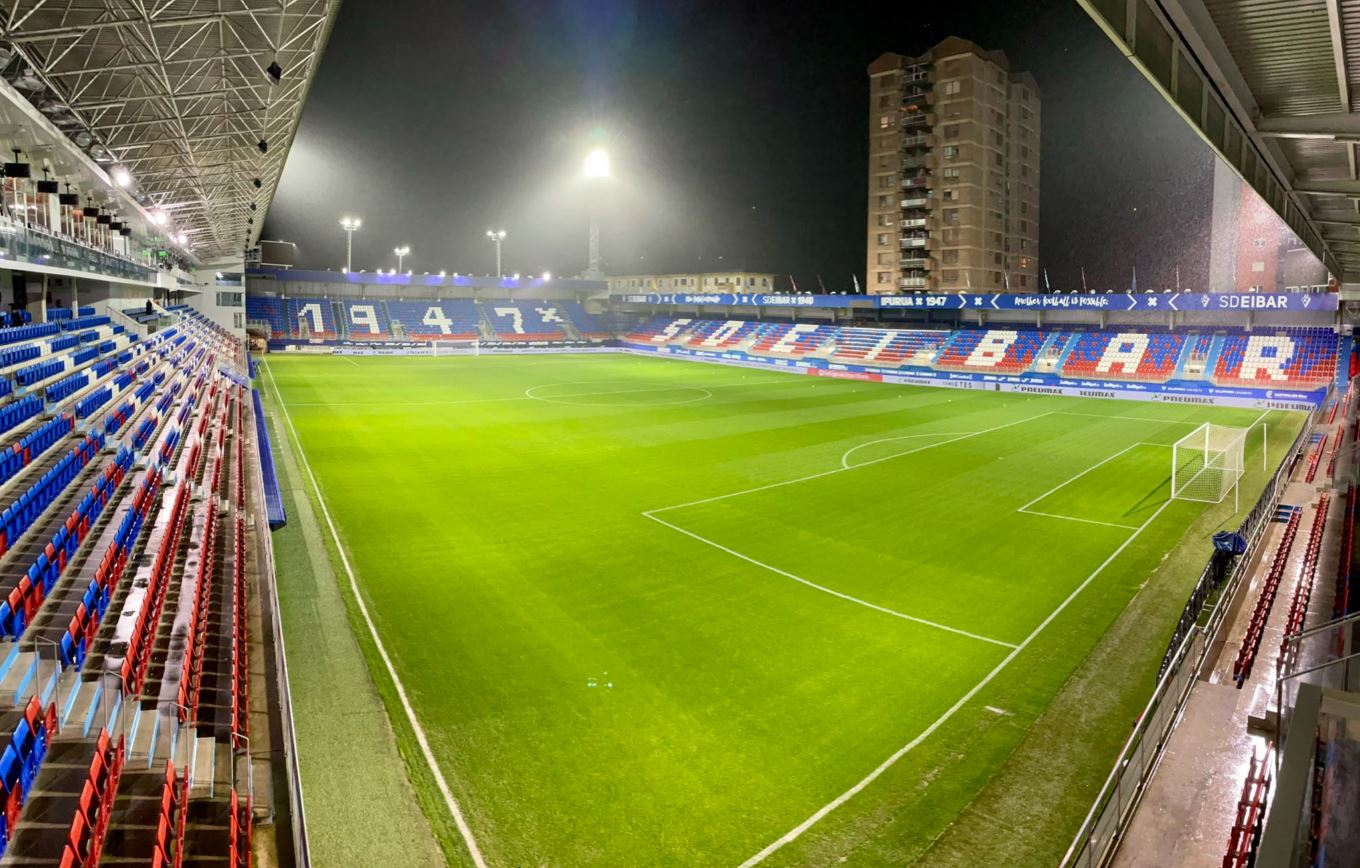
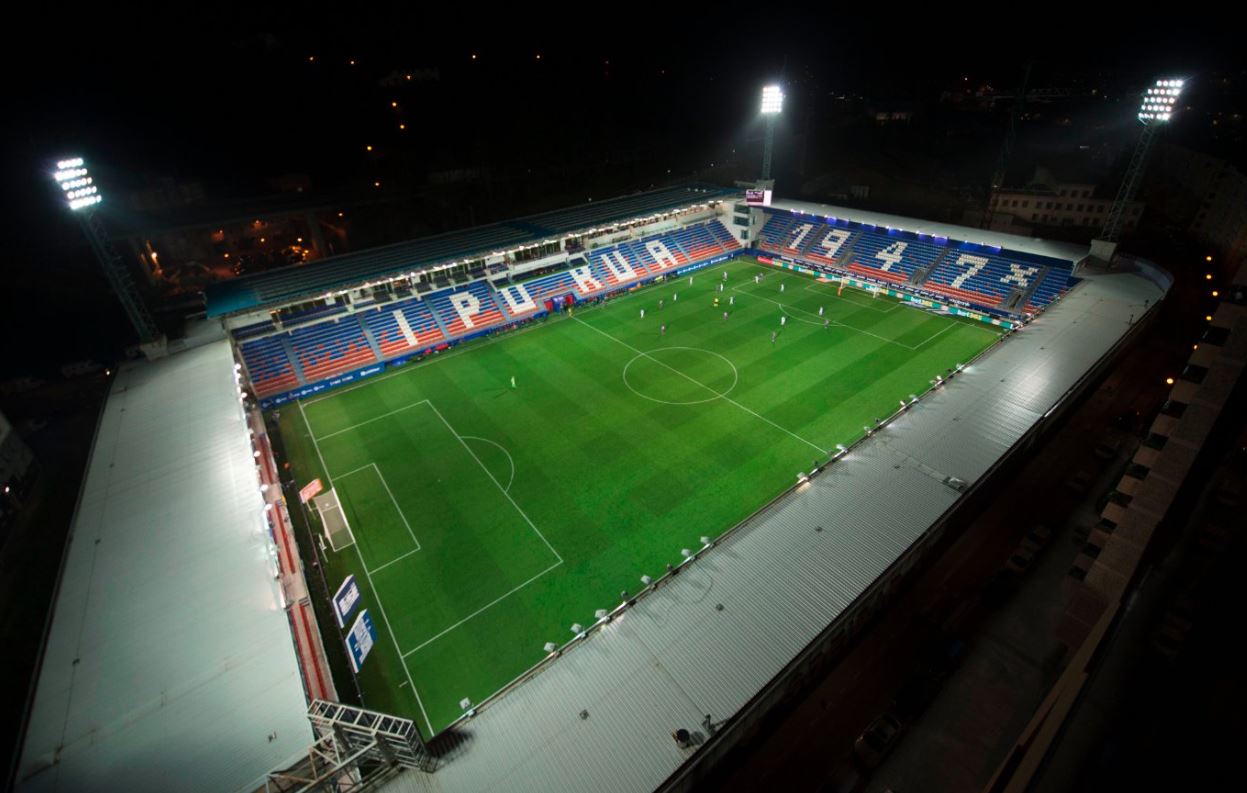
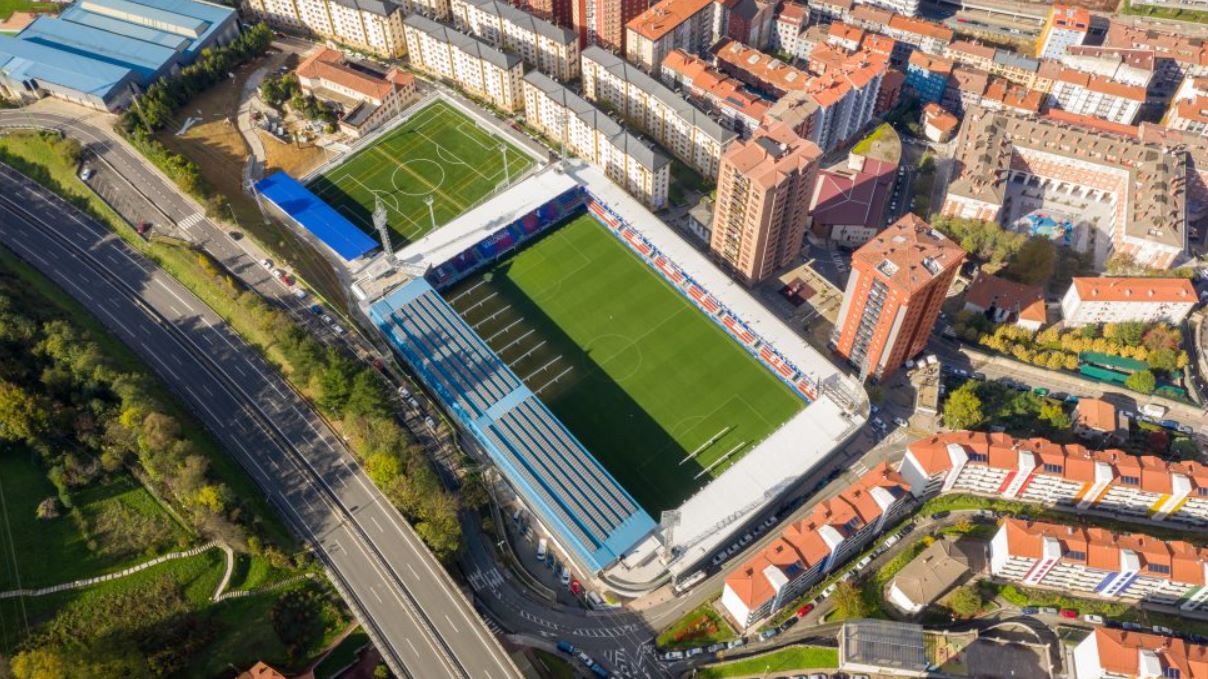
In 1998, the club received funding from the local council and Liga de Fútbol Profesional and started a project to completely remodel Ipurua. The original main stand was demolished, and a new, full-length covered stand was constructed. This had a capacity of approximately 2,800, which would be over half of the remodelled ground’s capacity. In 1999, work started on refurbishing the end stands, and finally in 2001, the narrow north terrace was roofed and 4 rows of seats were installed. Work was completed with the installation of a new drainage system and pitch. All of this left Ipurua as a modern, if somewhat compact, stadium with a fully seated capacity of 5,250.
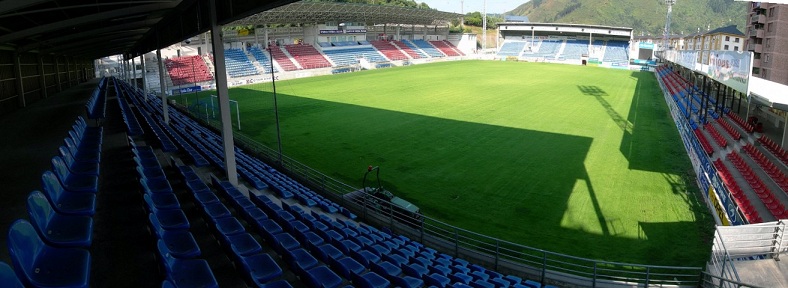
Between 1988 and 2009, Eibar spent all but one season in La Segunda, achieving a high of fourth place in 2004-05. They returned to Segunda B in 2009, clocking up a series of top 3 finishes. Unfortunately, the playoffs proved to be their Achilles Heel, losing in three successive seasons to Ontinyent (2010), Alcoyano (2011) & Lugo (2012). The club finally won promotion back to the second tier in June 2013, taking the long route through the playoffs, before eventually overcoming CE Hospitalet. Despite having the smallest budget in La Segunda, Eibar confounded the experts by holding a top-three position throughout the 2013-14 season. Then, with two games of the season remaining, the club achieved the unthinkable, earning promotion to La Primera with a 1-0 victory over fellow Basque side, Deportivo Alavés. Two weeks later, a 1-1 draw at Numancia was enough to earn Eibar the title.
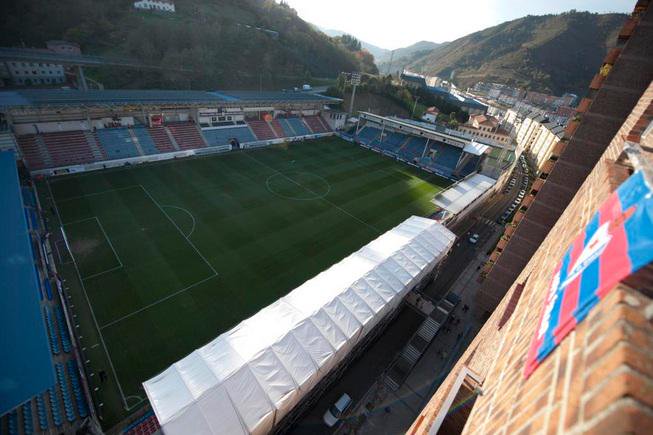
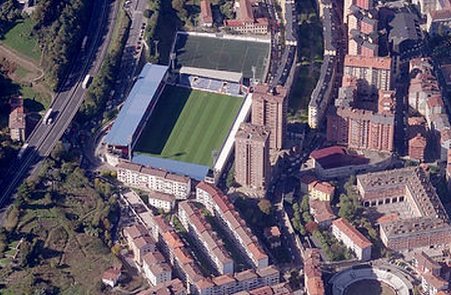
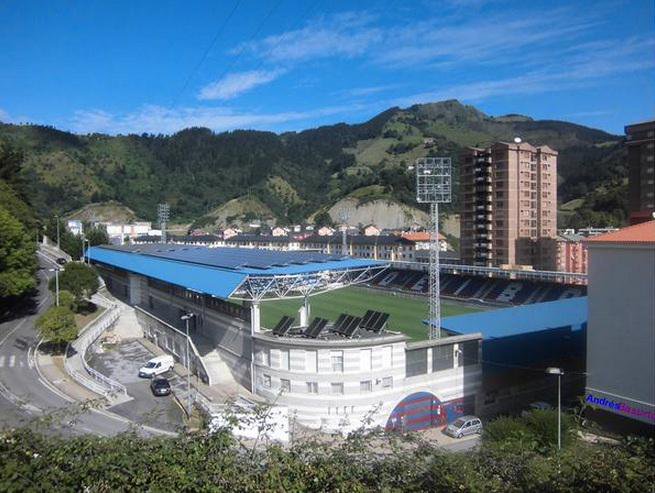
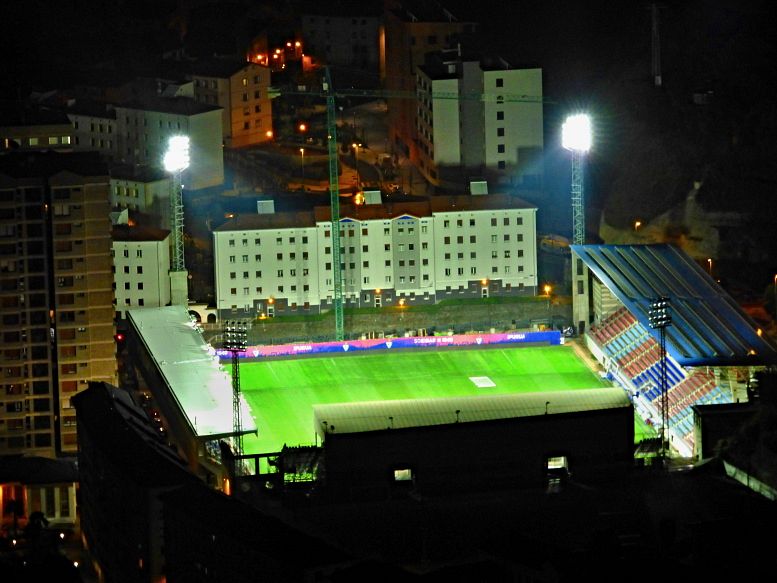
There was the small matter of the LFP’s ludicrous financial requirements, which required debt-free Eibar to raise extra capital to meet La Liga’s thresholds. With the wider football family wanting a fairy-tale ending, Eibar raised the necessary capital with time to spare. The club was informed that it would be given two seasons to meet the top tier’s minimum stadium capacity requirement of 12,000. To be honest, financial ability aside, Ipurua offers little scope for redevelopment due to its enclosed environs. Under the project name Ipurua Tallara, work started in December 2014 on redeveloping the stadium. The northern side of the stadium saw the existing narrow stand demolished, and half of the new stand was erected before the end of the 2014-15 season. The structure was completed during the summer, and its eleven rows of covered seating raised Ipurua’s capacity to 6,300.
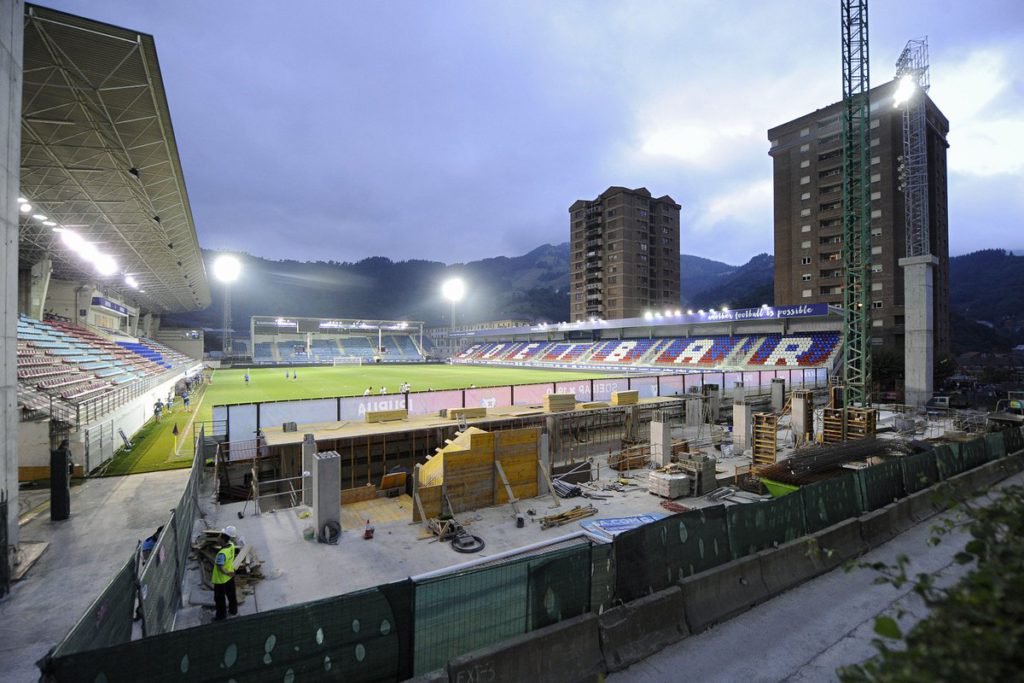
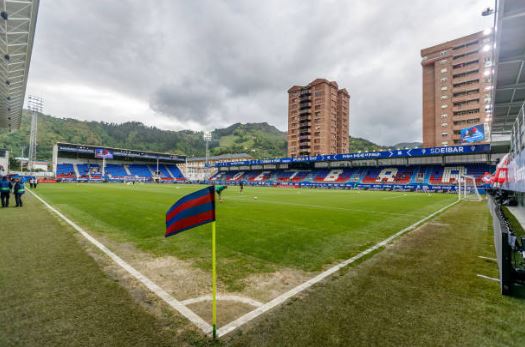
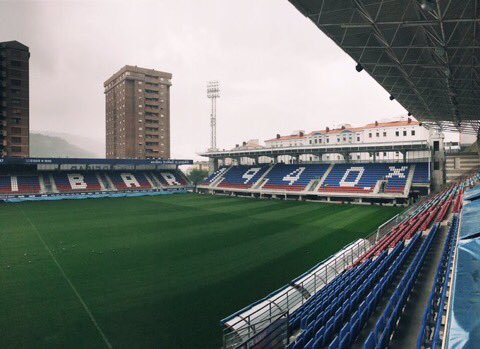
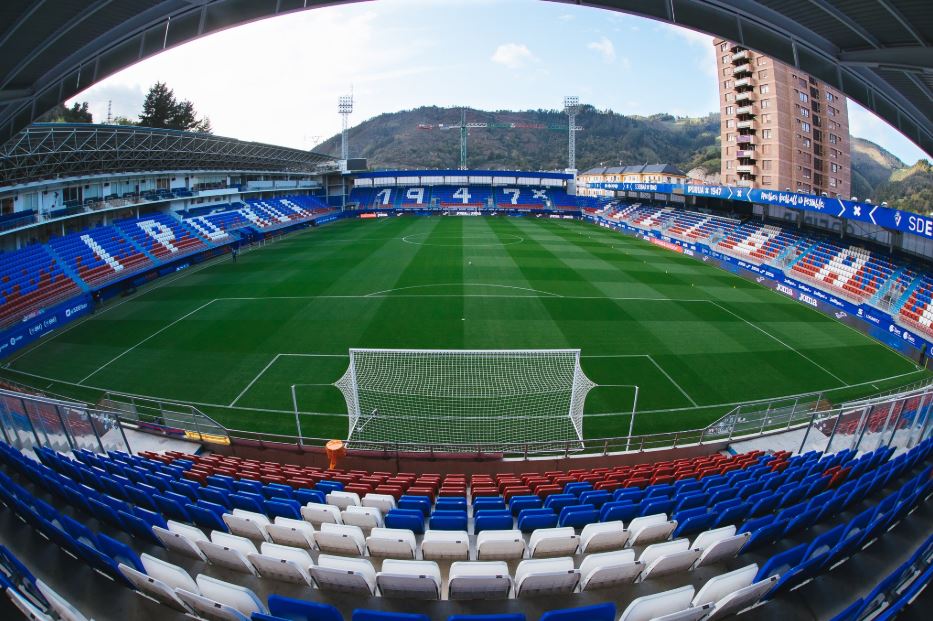
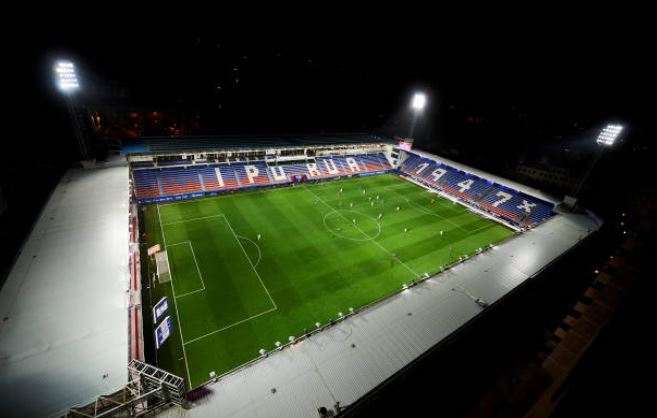
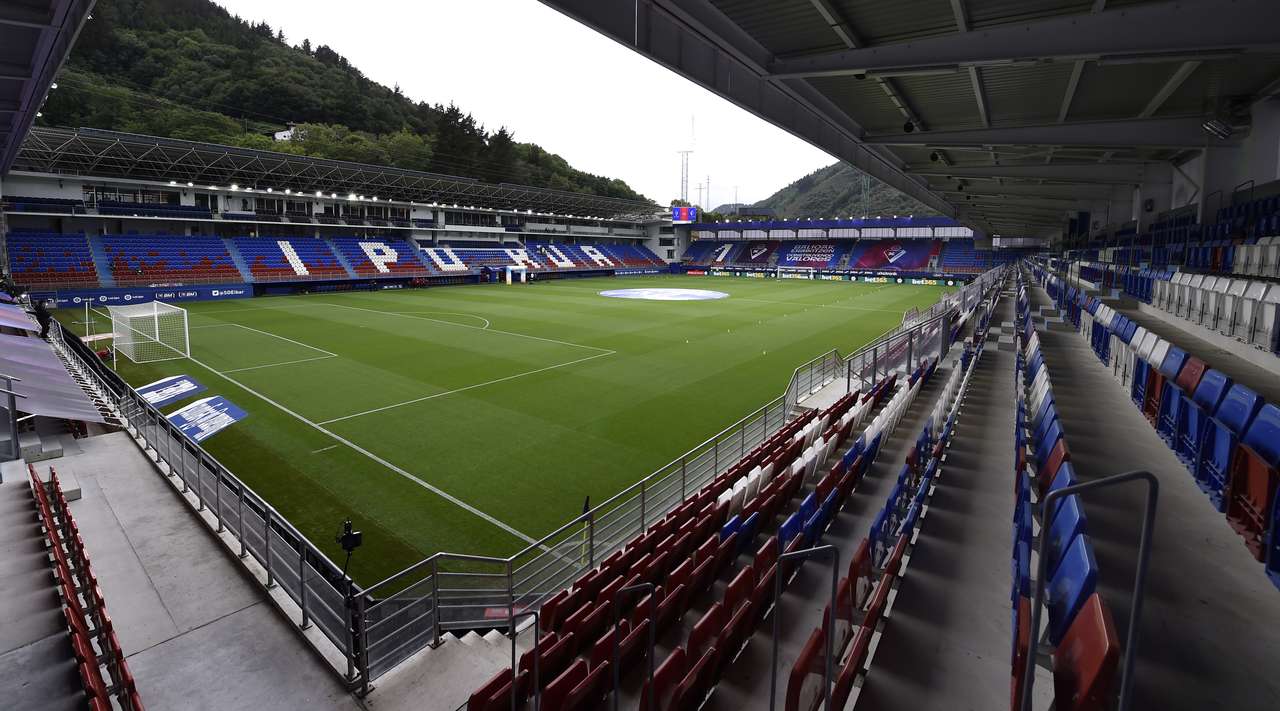
In May 2016, the old East End stand was demolished and work began on its replacement. This aspect of the project also provided underground parking, space for the club’s museum and official store. As a result, the stadium’s capacity was brought up to 7,083 seats. At this point, Eibar advised that it had no plans to meet the LFP’s minimum stadium requirement, stating “it cannot feasibly reach a capacity of 12,000, but we have faith that the league will accept a capacity of 9,000 seats”. Eibar began a fifth season of top-flight football in August 2018, and with it came the start of the next phase of Ipurua’s redevelopment. The stand at the west end of the ground was replaced and effectively mirrored the stand at the east end. Further underground parking was provided, and the training area behind the west stand was rebuilt. The revised capacity of 8,164 is much lower than the LFP’s official requirement, but neither the League nor Eibar seemed to be too concerned about that, as COVID-19 sent the country into lockdown, and Eibar, like all the professional clubs, played before empty stands.
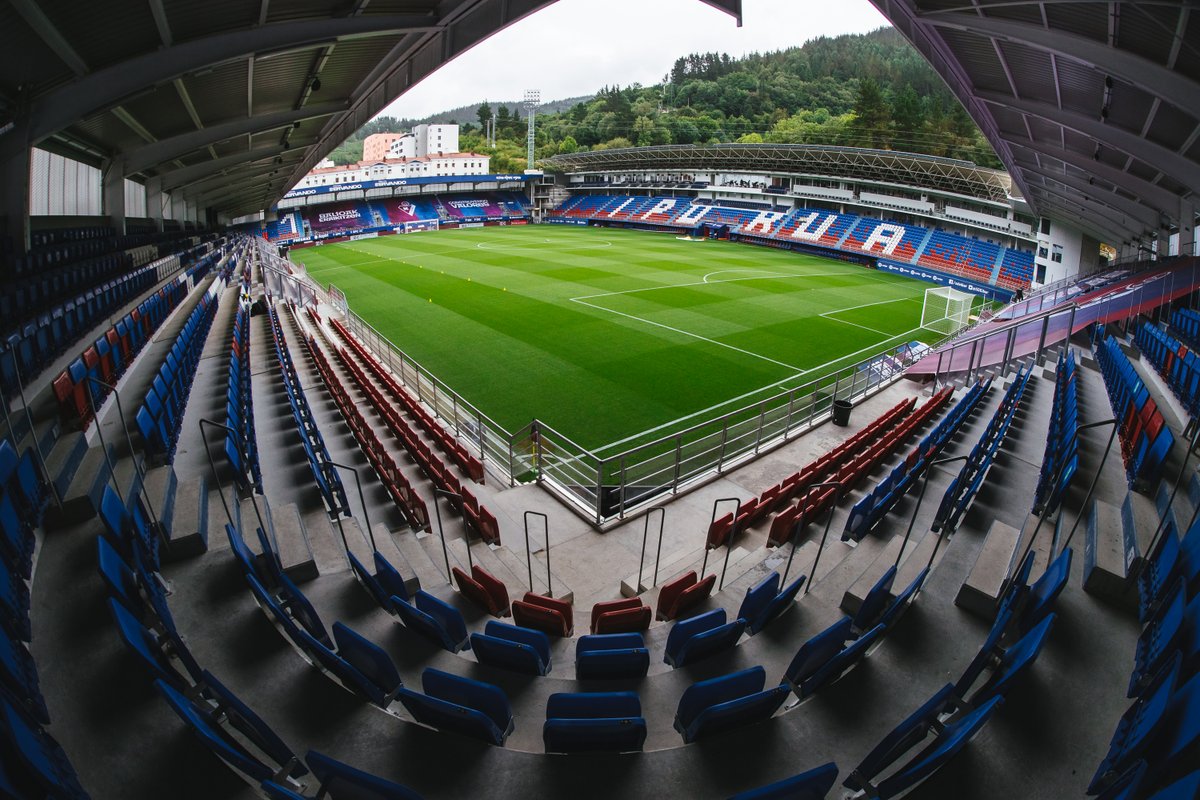
Eibar’s Primera odyssey ended after 7 seasons, and before their fans had a chance to savour top-flight football at the fully redeveloped Ipurua. After defying the odds for so long, Eibar was expected to make a swift return to the top, but their playoff hoodoo returned and denied the club promotion over three successive seasons. Will Ipurua host La Primera again? Considering Eibar’s determination to deliver against the odds, you would be a fool to bet against them.

 Estadios de España