
Stick a pin in the middle of a map of Andalucía and you won’t be far from the city of Lucena. Halfway between Córdoba and Málaga, Lucena is located on an important crossroads that dates back to Moorish times. Quite why there is no record of a senior federated football club from the city prior to the Civil War is a mystery, as the game was certainly played in the city from the turn of the 20th Century. In 1940, Lucena Club de Fútbol became the first team from the town to register with the Spanish Federation. They played at the Campo de la Fuensanta and reached the Tercera for a season in 1946-47, before economic problems saw the club call it a day in 1951.
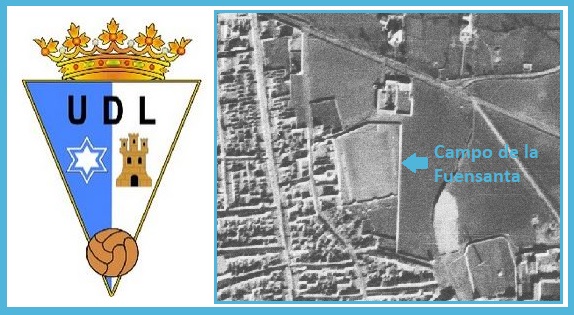
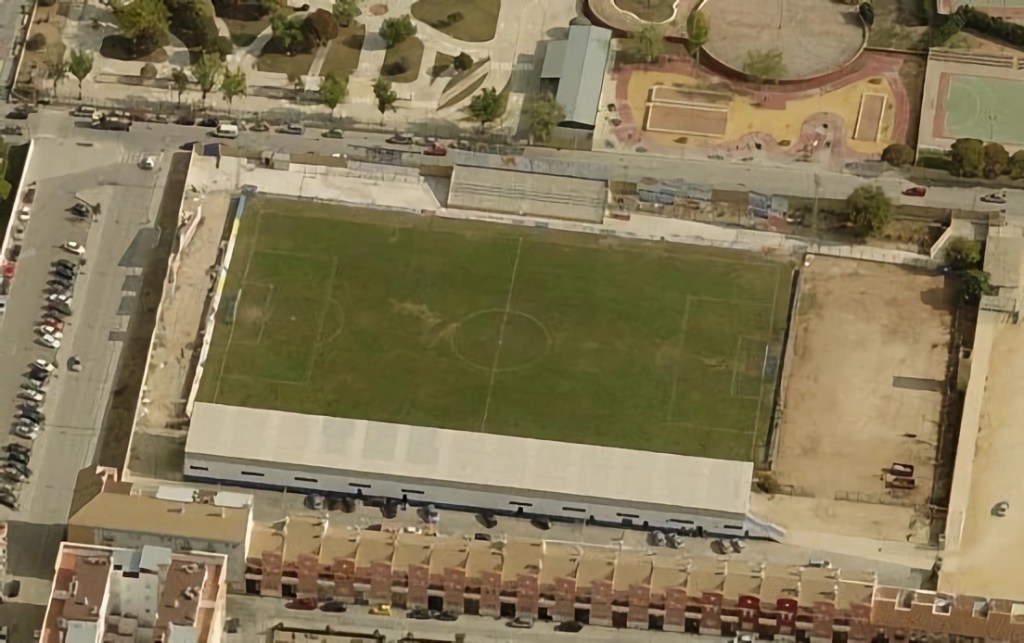
Following the demise of Lucena CF, Unión Deportiva Lucentina was formed and within five years had reached the Tercera. They managed to stay for three seasons at this level, before returning to the regional leagues. Here they remained until 1967, when due to severe financial difficulties, they failed to raise a team for the 67-68 season and subsequently folded a year later. During the summer of 1967, Atletico Lucentino Club de Fútbol was formed and hung around the regional leagues for the next 16 years. They did move from the Campo de la Fuensanta, which was just to the north of the current Plaza de la Fuensanta, to a new municipal stadium in 1972. The Estadio Municipal de Lucena was situated on the eastern side of the city and on opening consisted of two terraces, with a short propped cover on the east side. Both ends were open and a small training pitch was located behind the southern goal. Half way along the southern perimeter wall stood a rather plain tower.
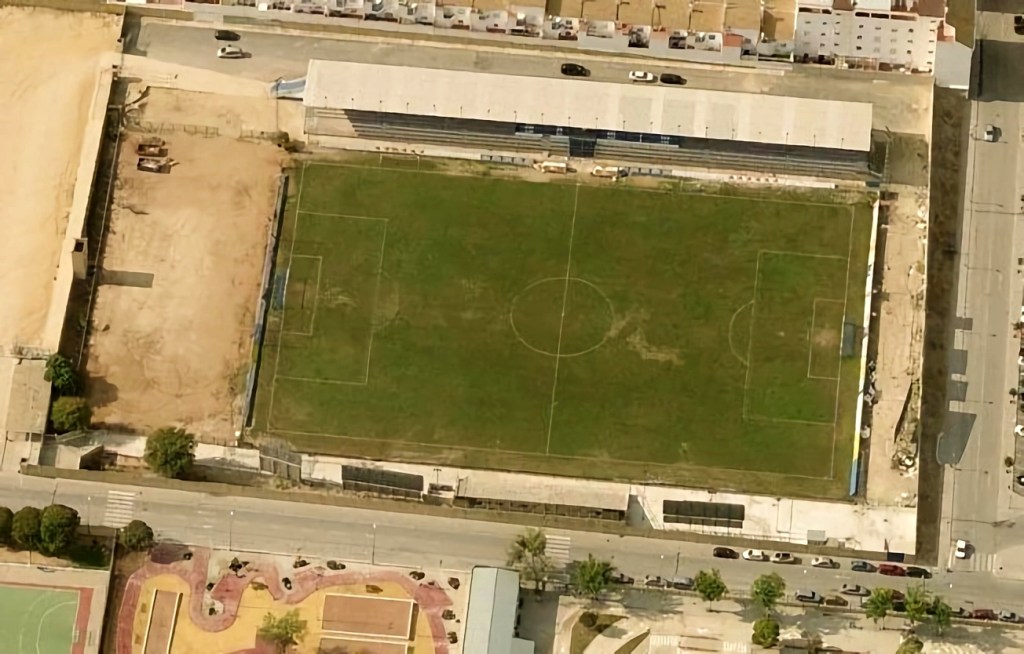
Atletico Lucentino finally reached the Tercera in 1983-84, but their debut season at this level was calamitous, winning just twice and conceding 82 goals in their 38 games. It would take a further six season for the club to return to the Tercera, by which time they had changed their name to the rather lengthy Atletico Lucentino Industrial Club de Fútbol. Tight economic conditions at the club saw it struggle and they dropped back to the regional leagues for a season in 1995. Their immediate return for the 96-97 season, led to eleven seasons of top half finishes, before finally securing a place in Segunda B in 2007. The previous summer had seen a new president appointed and a new name for the club, Lucena Club de Fútbol. A steady third place finish in the Tercera saw the club qualify for the play-offs, where it recorded victories over AD Fundación Logroñés and SD Noja. Whilst the club had waited forty years for the promotion and the town considerably longer, it was in one sense , a little too early. The Municipality had recently drawn up plans for a new stadium to the north west of the town and the basic Estadio Municipal was now showing its age.
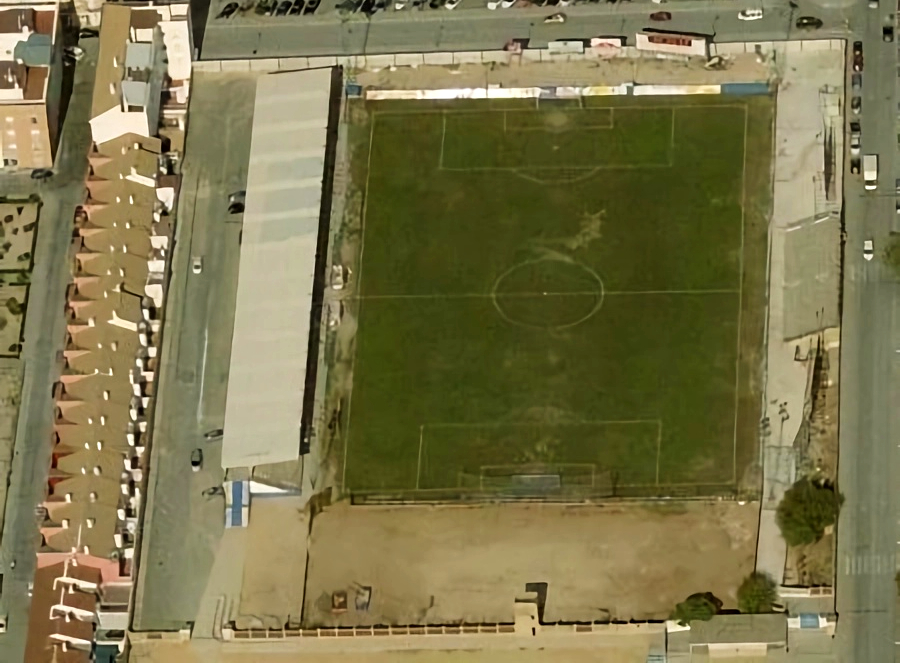
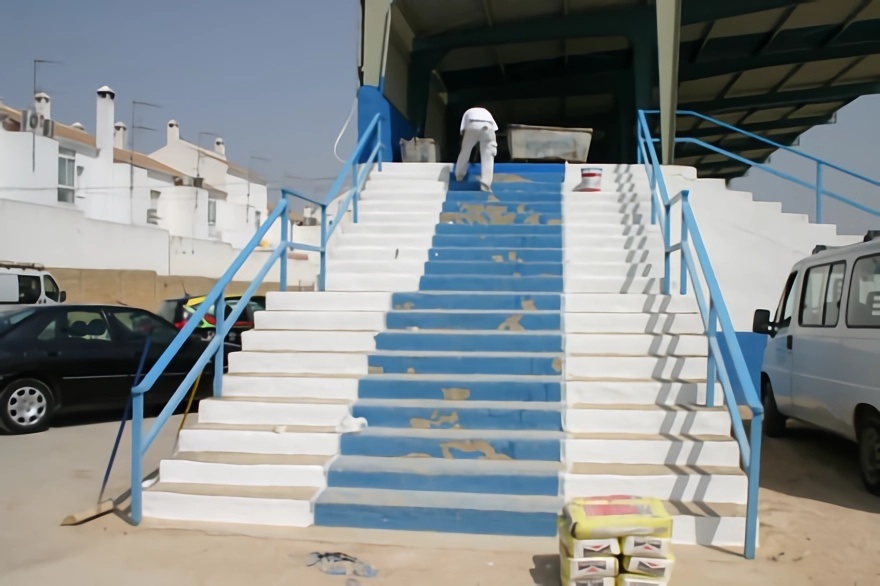
Little had been done to the stadium since a cantilevered roof was added to the east side in the mid-1980’s and it was among the most basic in Group IV of Segunda B. The full length main stand was accessed by sets of steps at either end and the steps/seats were painted blue & white. A couple of hundred blue & white bucket seats were cordoned-off in the central area and two media booths were situated at the rear of the stand. Opposite stood a 30 metre strip of open terrace and that was it. The Municipality had already sold the land on which the Estadio Municipal stood, and on 9 March 2008, the old stadium held its final game. 2,200 spectators watched Lucena CF beat Talavera CF by 2-0. A temporary stadium had been built 200 metres to the east of the Estadio Municipal, next to the town’s new sports centre. On 30 March 2008, Lucena played their first match at the temporary Ciudad Deportiva, drawing 1-1 with Lorca Deportiva. Given the upheaval and uncertainty that surrounded their debut season, Lucena CF finished a creditable tenth in the league. The Ciudad Deportiva which remained home for nearly three years, was made up of essentially a series of temporary stands, with blue and white bucket seats. The south side had a tarpaulin cover and thin floodlights stood in each corner of the ground. Players & officials changed in the new sports centre. Results at the Ciudad Deportiva were reasonably good and were the main reason Lucena CF stayed in Segunda B during this unsettling period. Work started on the new stadium in January 2010 and it was designed by Mark Fenwick and Javier Iribarren of Reid Fenwick Asociados, who were responsible for the design of Espanyol’s marvellous new stadium. As work progressed on the 3.2 million euro project, Lucena CF started the 2010-11 season at the Ciudad Deportiva, wrapping up their time at the stadium on 19 December 2010 with a 1-0 win over Unión Estepona.
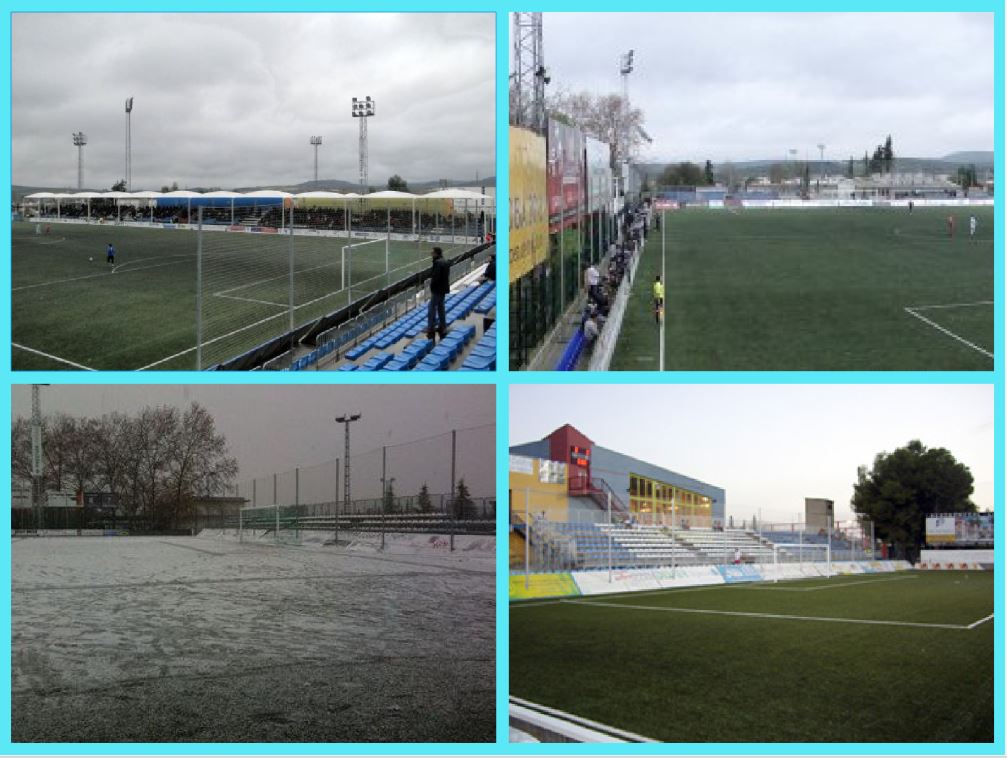
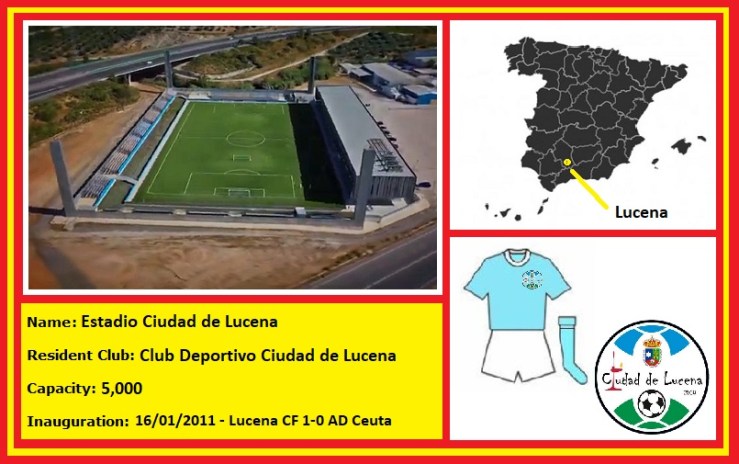
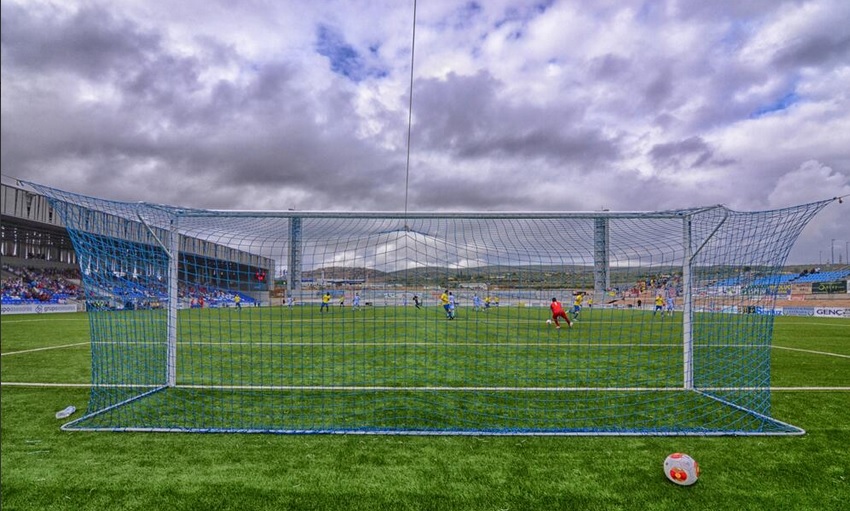
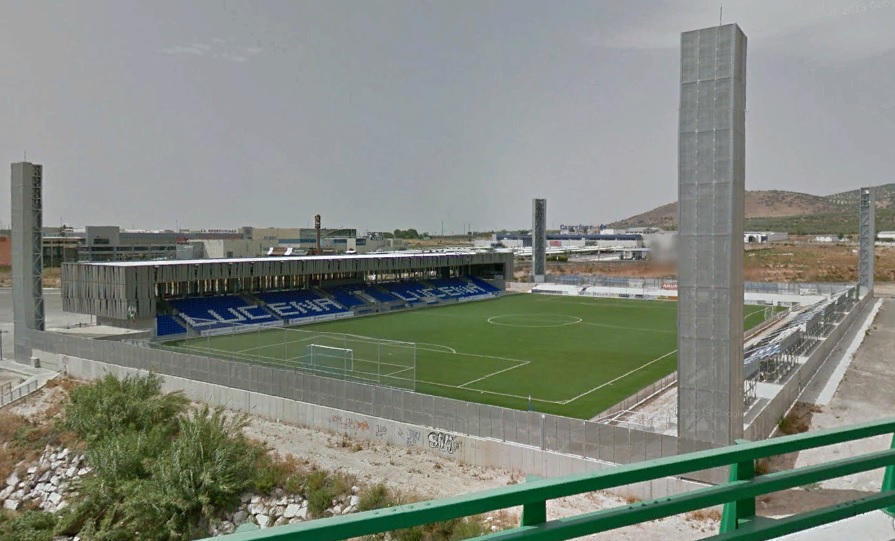
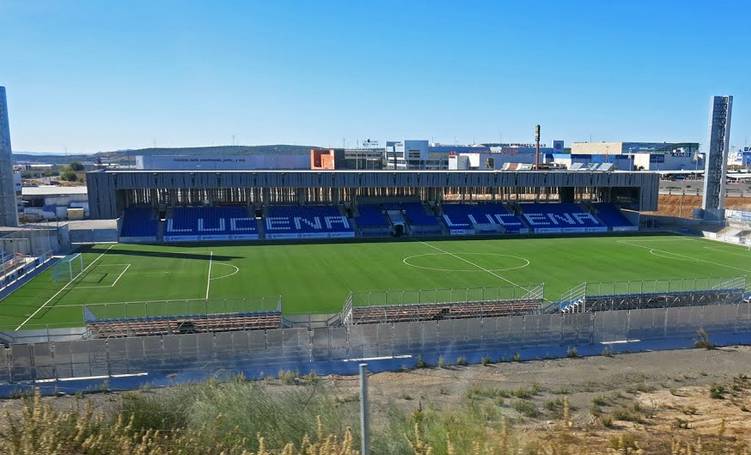
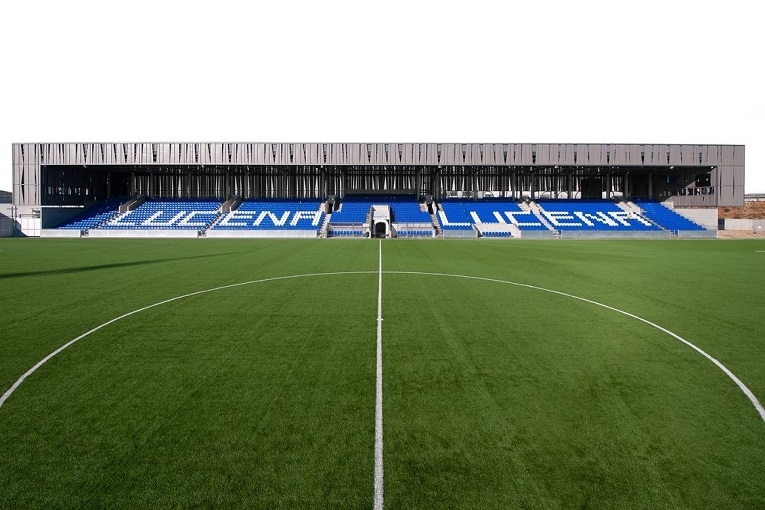
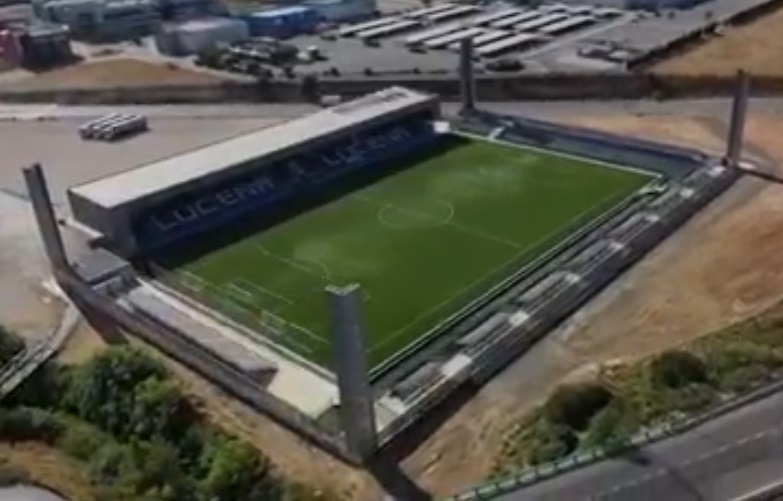
Following the winter break and two away fixtures, Lucena CF finally got to play in their new stadium on 16 January 2011, when AD Ceuta were defeated by a goal to nil. The first phase of the stadium development consisted of a single seated stand on the west of the arena and the installation of an artificial playing surface. Single stand stadiums are increasingly popular with smaller clubs in Spain, due to the reduced costs in construction and maintenance. Many are bland, characterless affairs that have all the atmosphere of a lunar morgue. Not so the Estadio Ciudad de Lucena. Fenwick & Iribarren have continued a couple of the themes found in their successful Espanyol project. First up, and the floating roof concept is repeated. That’s not so easy to pull off with a single stand, but this is achieved by building an over-sized frame that is attached to the cantilevered supports and clad in aluminium. This vast box appears to hover over the 2,500 seats and the thin end walls below. The next trick is the cladding itself. The stadium at Cornella El-Prat is surrounded by a blue and white curtain and this theme is given a new twist here, where the sheets of cladding have segments missing to create the effect of a gathered curtain. The remaining three sides of the ground are empty and awaiting further development, however temporary seating has been installed on the east side and behind both goals, giving the stadium a capacity of 5,000.

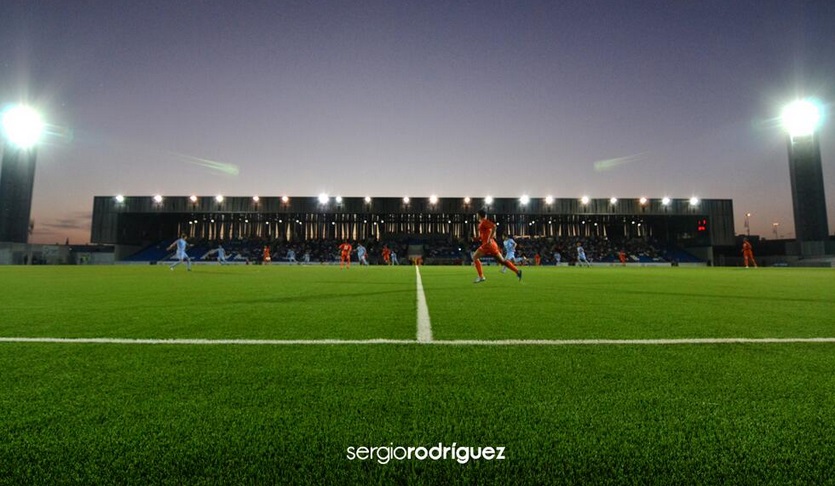
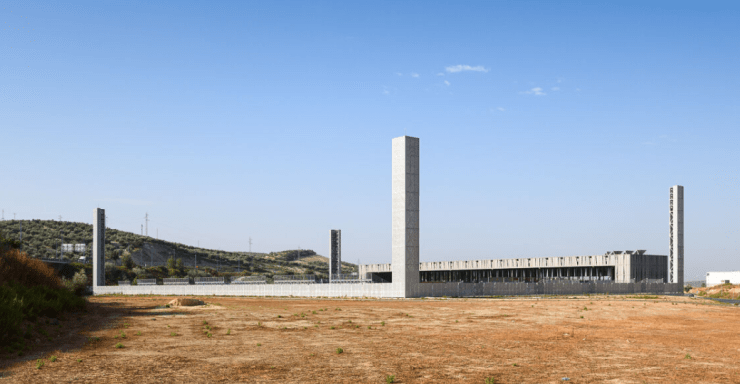
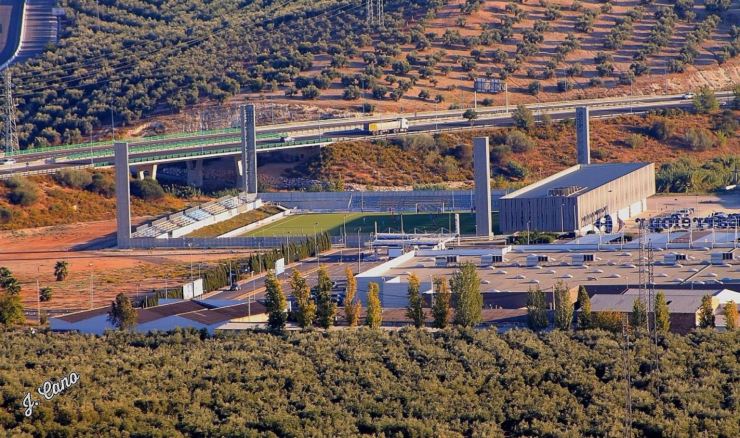
The ground did not have any floodlights on opening, but this was remedied when work commenced on installing them in October 2011. No ordinary slimline pylons here though. No, the municipality has built four towers in each corner of the stadium, which are clad in a style identical to that of the main stand. This does not come cheap however, as the cost for the 4 towers was 480,000 euros. Plans to add a permanent bank of 2,500 seats to the east side are on hold, as the phase one of the project was 800,000 over budget, due in part to the upgrade of the artificial surface. As is often the case, playing at the new stadium provided the club with a lift. Following four seasons of safe, if unspectacular finishes, Lucena CF hit new heights in the 2011-12 season, finishing third and qualifying to the end of season play-offs. Here, Lucena CF dispatched Huracán Valencia 4-2 on penalties, after two 0-0 draws, but lost out in the next round to Ponferradina. The 2012-13 season saw Lucena CF finish 4th and the play-offs saw them paired with Huracán Valencia again, however this time the Valencianos won the tie 3-0 on aggregate.

It was to prove to be a mini-lift in the club’s fortunes, as Lucena CF recorded a 9th-placed finish in 2013-14, but worse was to follow. In the summer of 2014, the club was bought by a Madrid-based investment group. Eduardo Bouzón and Javier Martí proved to be owners in absence, who had left a trail of malpractice with previous projects, including one at Real Mallorca. Unsurprisingly, the 2014-15 season proved to be a disaster, with the club’s bottom-placed finish confirming relegation back to the Tercera. Bouzón & Marti’s mis-management continued with no investment in the squad, and wages unpaid during the first month of the 2015-16 season. On 20 December 2015, Lucena CF played its final fixture in front of a crowd of just 300 spectators, drawing 1-1 with Coria CF. Nine days later, the Real Federación Andaluza de Fútbol received withdrawal documentation from the club. Sadly, no official statement was ever released, and just like that, 48 years of club history was undone by 18 months of negligence.
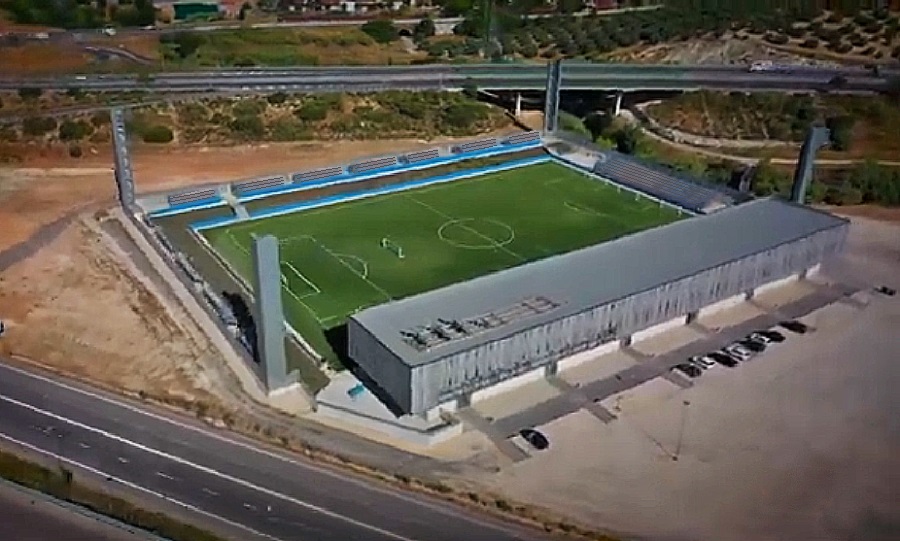
Back in the summer of 2008, just as Lucena CF was getting used to their new (temporary-ish) surroundings at the Ciudad Deportiva, five young men set about forming a club whose principle focus would be on youth. The club took on the name Club Deportivo Ciudad de Lucena and played its first match on 28 September 2008, beating Club Deportiva San Sebastián de Córdoba 5-1. That first season saw the club finish in third position in Group I of the Primera Provincial Córdoba, and gain promotion to the Regional Preferente due to administrative relegations. Playing home matches at the aforementioned Ciudad Deportiva, CD Ciudad de Lucena made gradual progress, earning a first league title when they won the Regional Preferente in 2012-13. Four seasons in the Primera Andaluza followed, before the club reached the Tercera in 2017. This coincided with a move to the Estadio Ciudad de Lucena, where impressive form has earned a series of top ten finishes, including finishing runners-up on four occasions.






 Estadios de España