
This article updated: 01/09/2025
One of the great things about the regionalised format of the Spanish Football structure is that every so often, a small team from the back of beyond earns promotion and finds itself playing against a club that, just a few seasons ago, was tackling the likes of Barcelona & Real Madrid. Villarrubia Club de Fútbol was one such example. They hail from a town of fewer than 10,000 people on the Castilla-La Mancha plain. Thanks to the fixture list, their first-ever home match in the third tier pitched them against Córdoba CF, who, little over four years previously, were playing in the top flight.

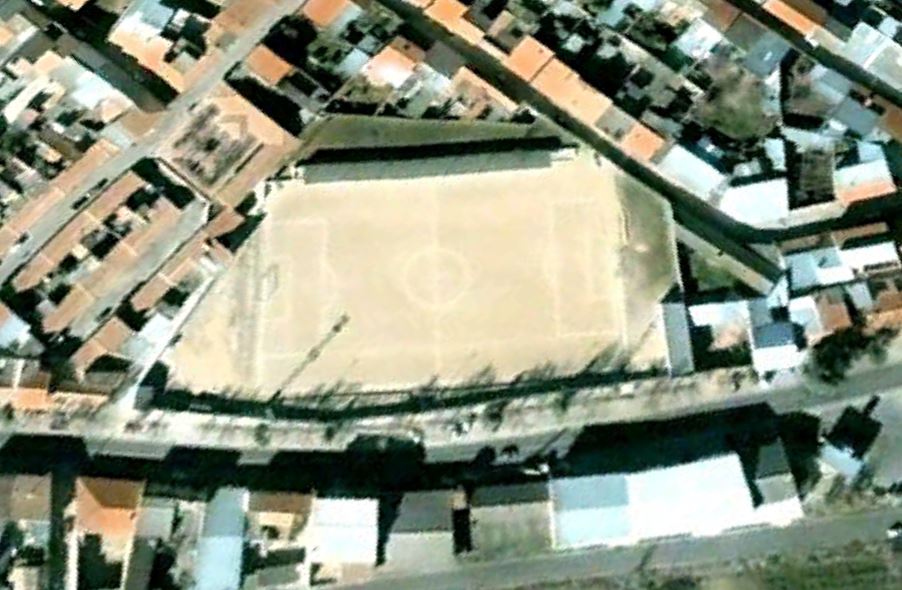
It won’t come as a surprise to learn that the game of football was slow to catch on with the folk of Villarrubia de los Ojos. It was the arrival of a Galician doctor and former athlete, José Carruana Gálvez, that kicked things off. He founded the first club in the town, Villarrubia Foot-ball Club, in 1925. This was a very casual arrangement, and within 2 years, the club had folded. Over the next three decades, several clubs formed by the usual suspects (The Falange and the local catholic church), came and went. It wasn’t until 1959 that the present club was formed, following the fusion of two teams, Hispania & Castilla. The catalyst for the formation was the local council’s decision to build a new football ground on the northeastern edge of town. The Campo Municipal de Deportes El Cordón stood on a wedge of land between the Paseo El Cordón & Calle Gran Capitán between 1959 & 2008. A municipal park and gardens now stand on the site of the old stadium.
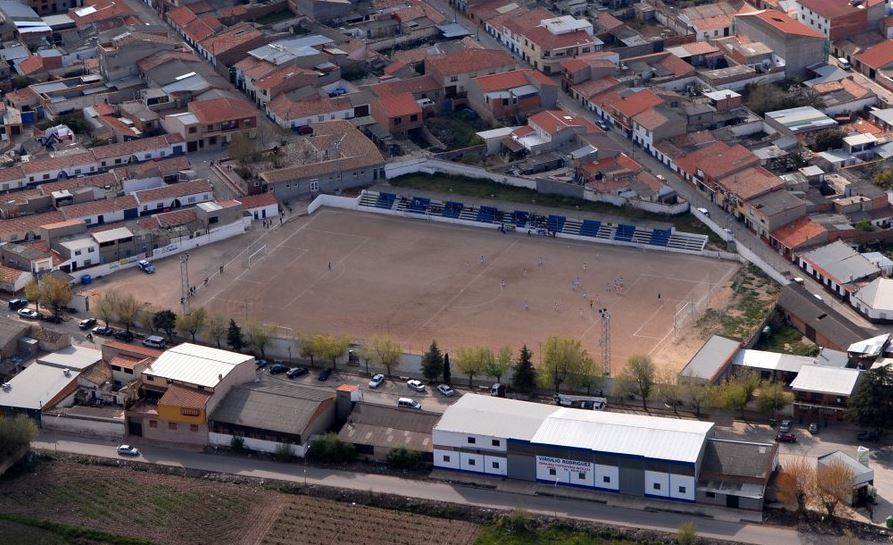
Villarrubia CF played its first competitive match on 11 September 1959 (vs. C.D. Ciudadrealeño) and joined the Federación Castellana a year later. The club was playing at one of the lowest levels of organised football, and not surprisingly, when results were poor, interest waned. There were periods of inactivity in the first decade, and stability did not arrive until 1971, when, under the presidency of Florencio Palomino Peinado, the club re-registered with the Federación Castellana. The club played the majority of its football over the next four decades in the third and fourth categories of the regional leagues. Things started to stir at the turn of the millennium, with several decent finishes in the Segunda Autonómica, before promotion to the Primera Autonómica was won in 2005-06. That first season in the fifth tier ended in relegation; however, Villarrubia regrouped and won the Segunda title in 2007-08 and promotion back to the Primera.
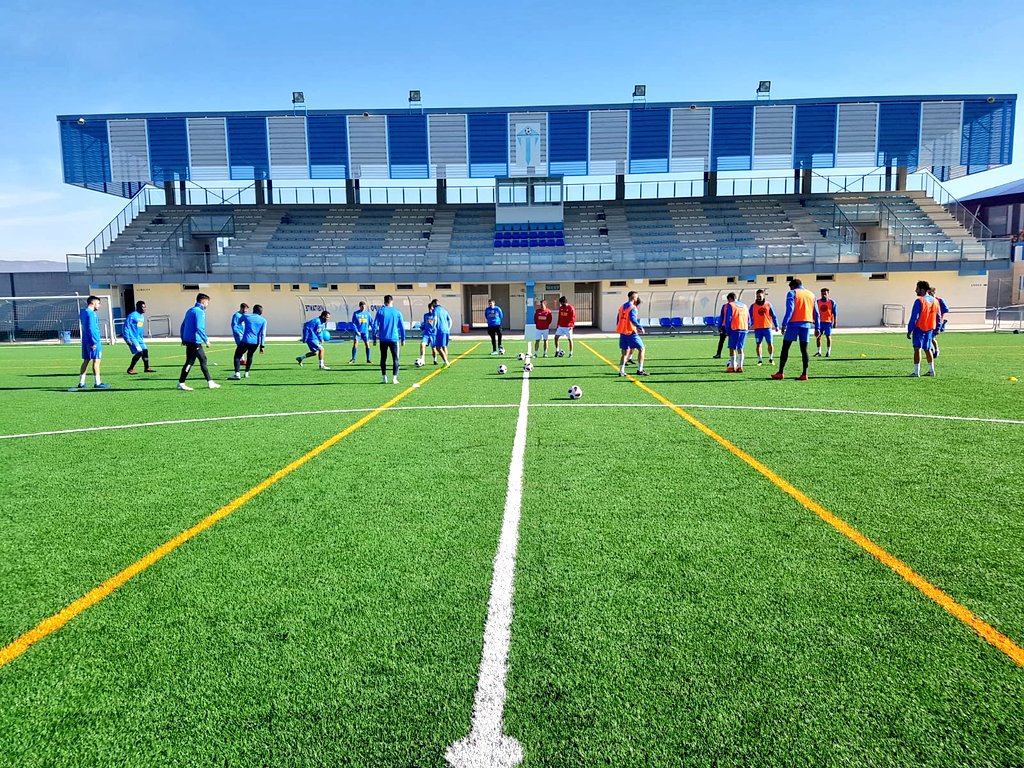
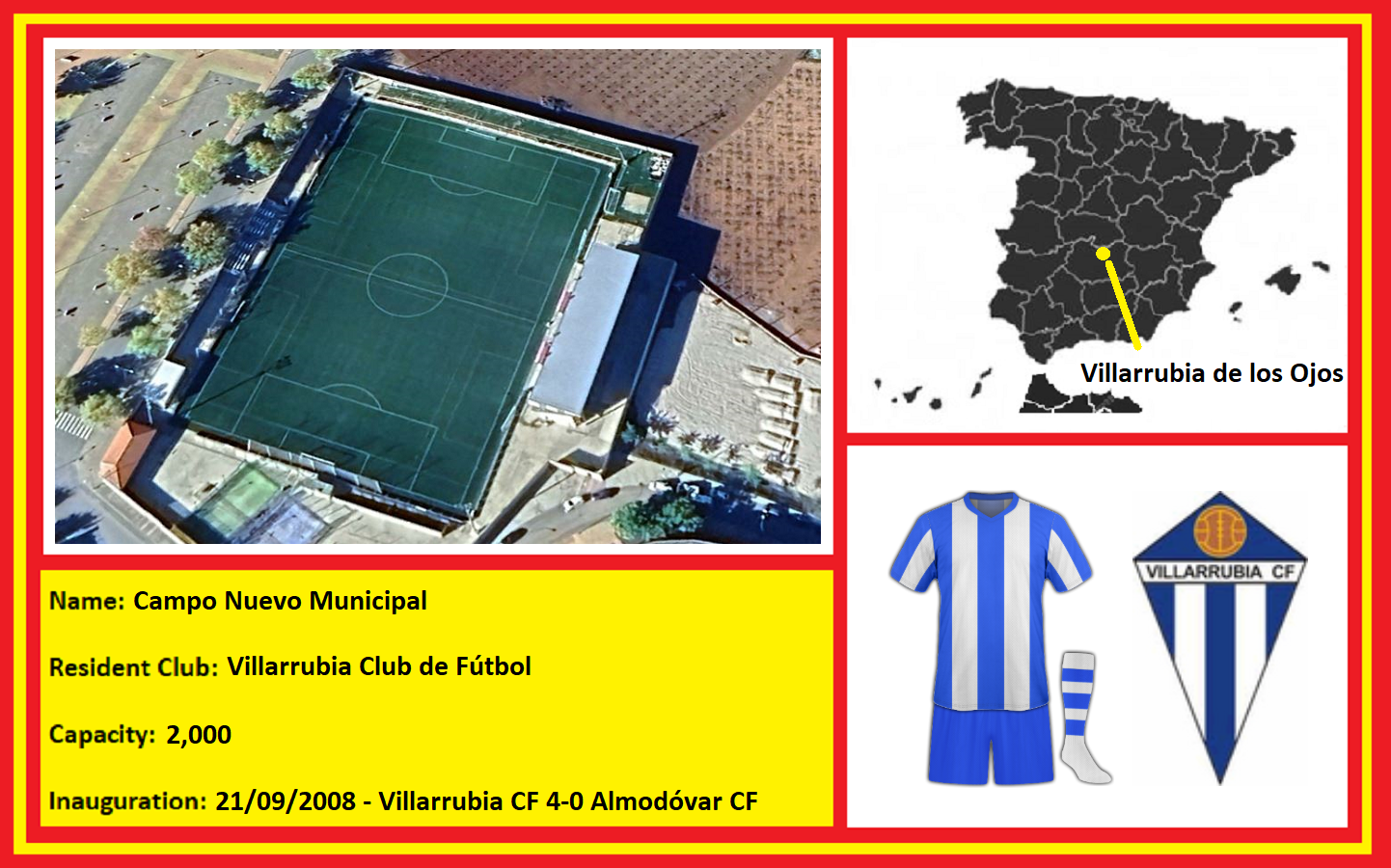
The start of the 2008-09 season saw the club depart the Campo Municipal de Deportes El Cordón and move around 500m southeast to a new stadium on the eastern edge of town. The Campo Nuevo Municipal opened its doors on 21 September 2008, and Villarrubia capped off the opening in style, beating Almodóvar CF 4-0. As is often the case, the new home brought further success and a second successive promotion was earned to the Preferente. The stadium had been built by Formac, a local firm specialising in pre-fabricated concrete & steel construction. At the beginning of the 2009-10 season, the club entered into an agreement to incorporate the firm’s title into its official name. With a new name and bigger budget, Formac Villarrubia Club de Fútbol made light work of the Preferente and reached the national Tercera, following a third promotion in as many years in June 2010. The first season in the Tercera saw the club finish in an impressive fifth position, whilst the next six seasons saw four top-six finishes. The playoffs were reached in 2017-18, but a heavy 2-7 aggregate defeat to Almería B ended any hopes of promotion. The 2018-19 season saw Villarrubia finish in runners-up position in the Tercera and, with the lessons learned from the previous season’s playoffs, promotion to Segunda B was earned with victories over Coria CF, Begantiños & Alcobendas Sport.
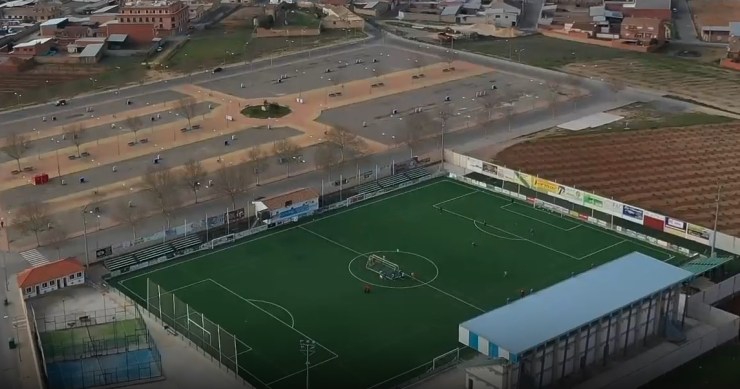
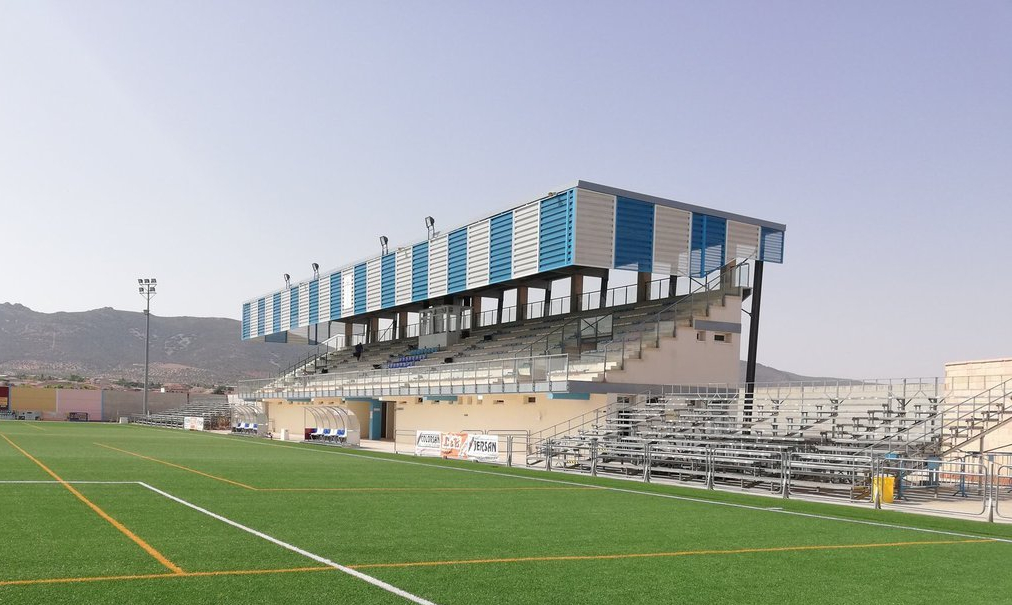
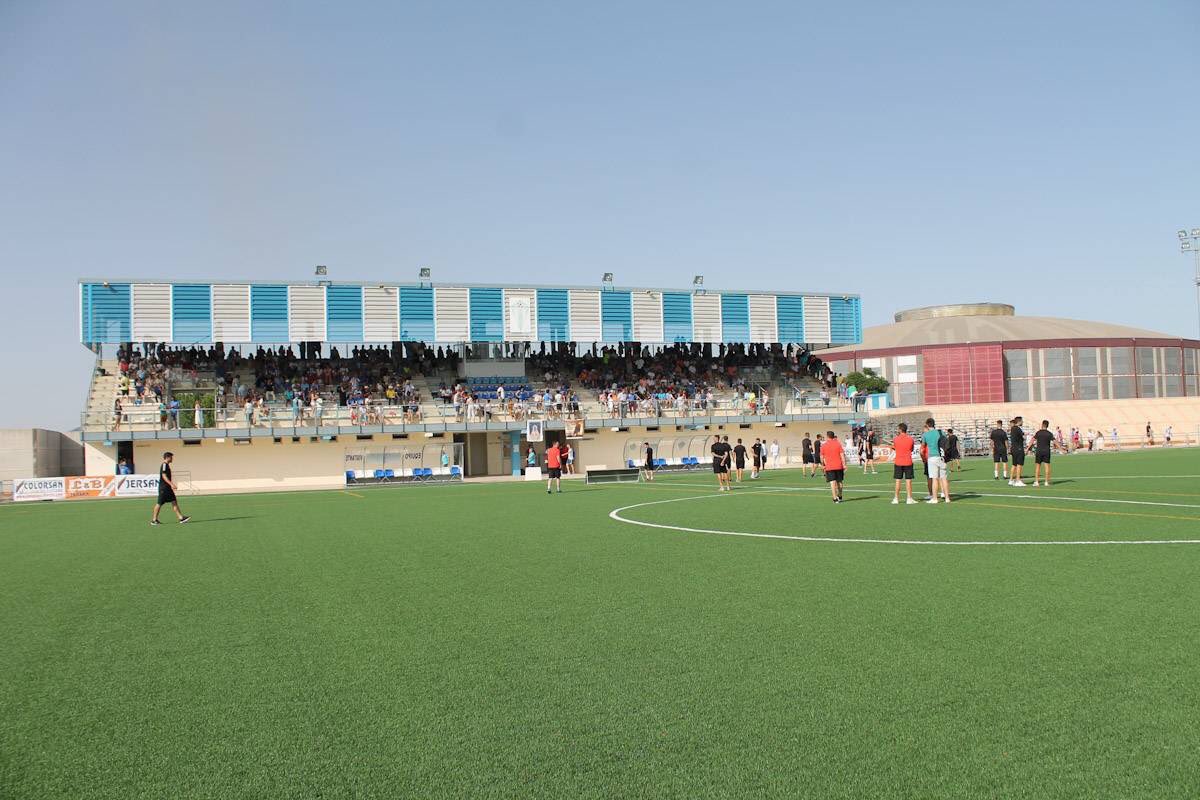
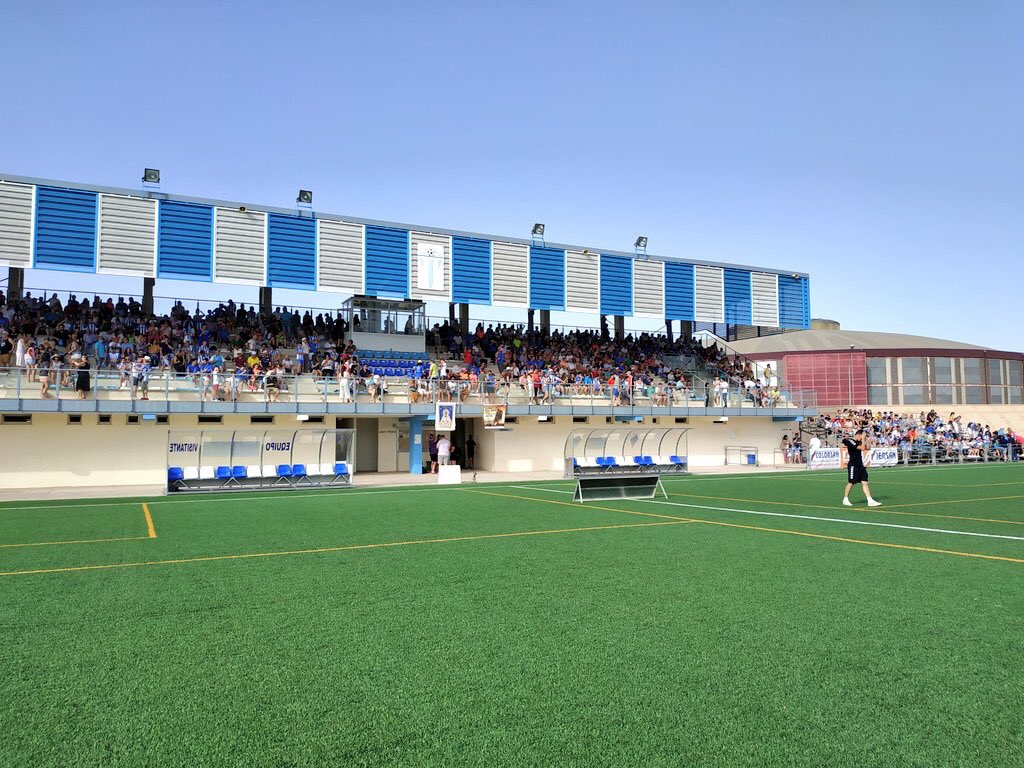
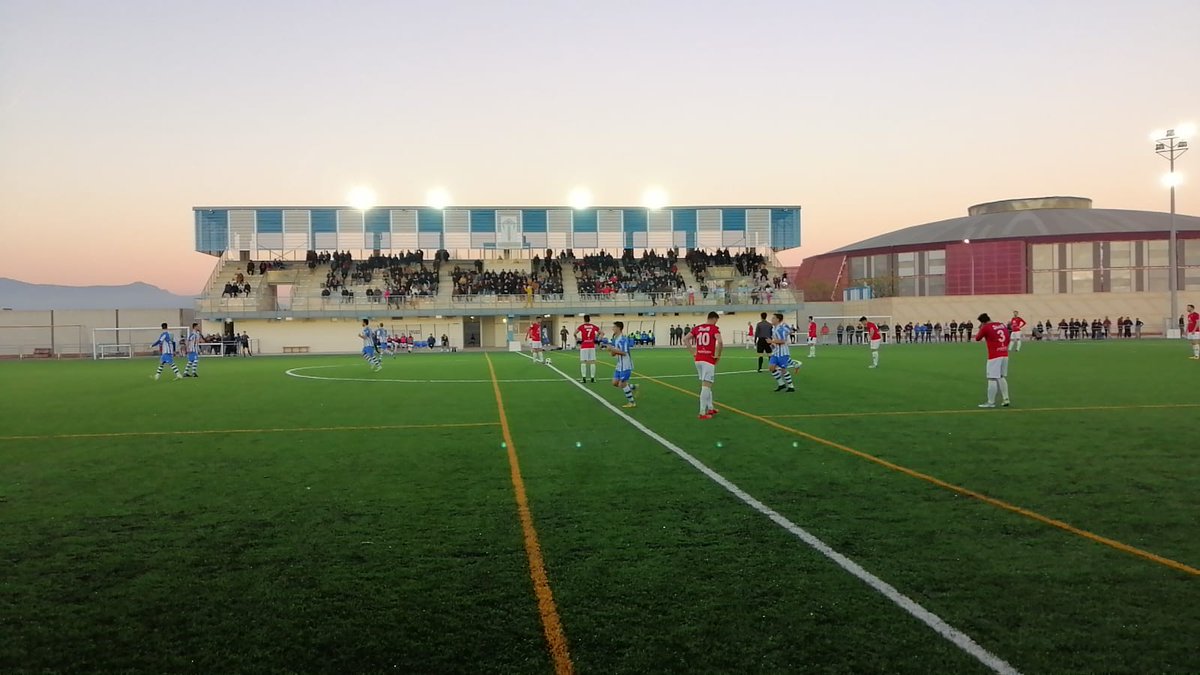
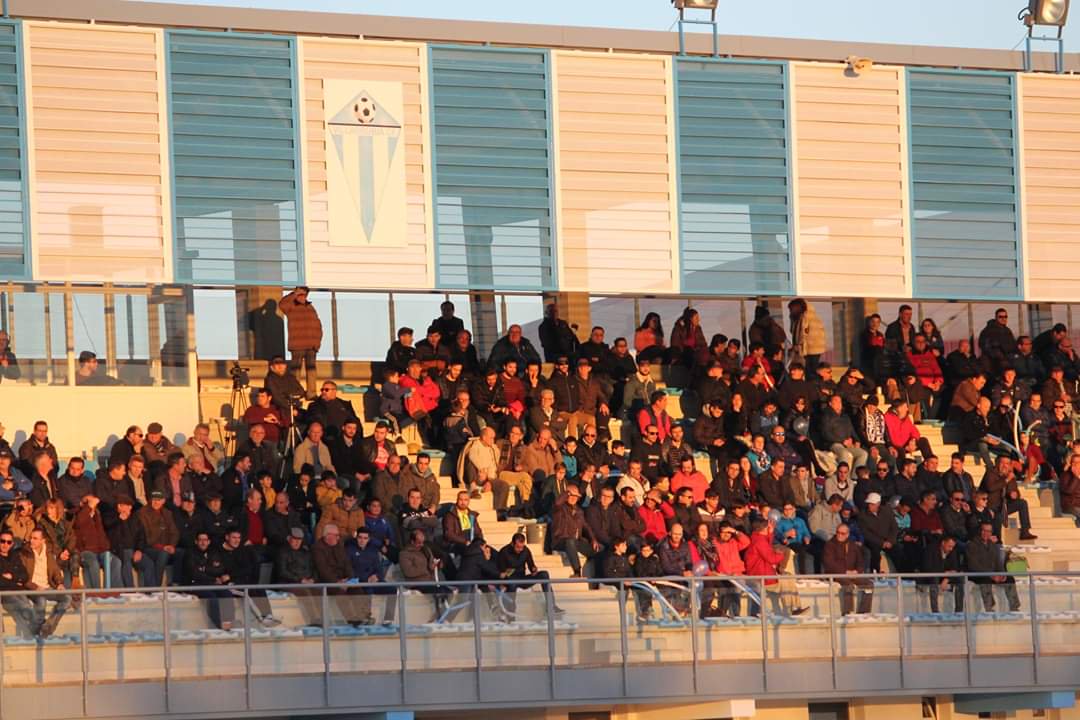
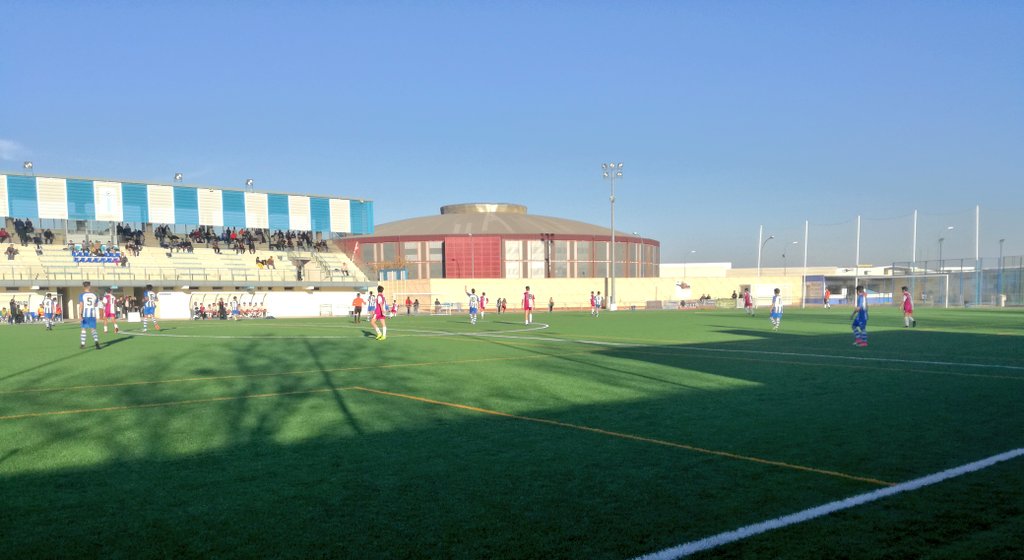
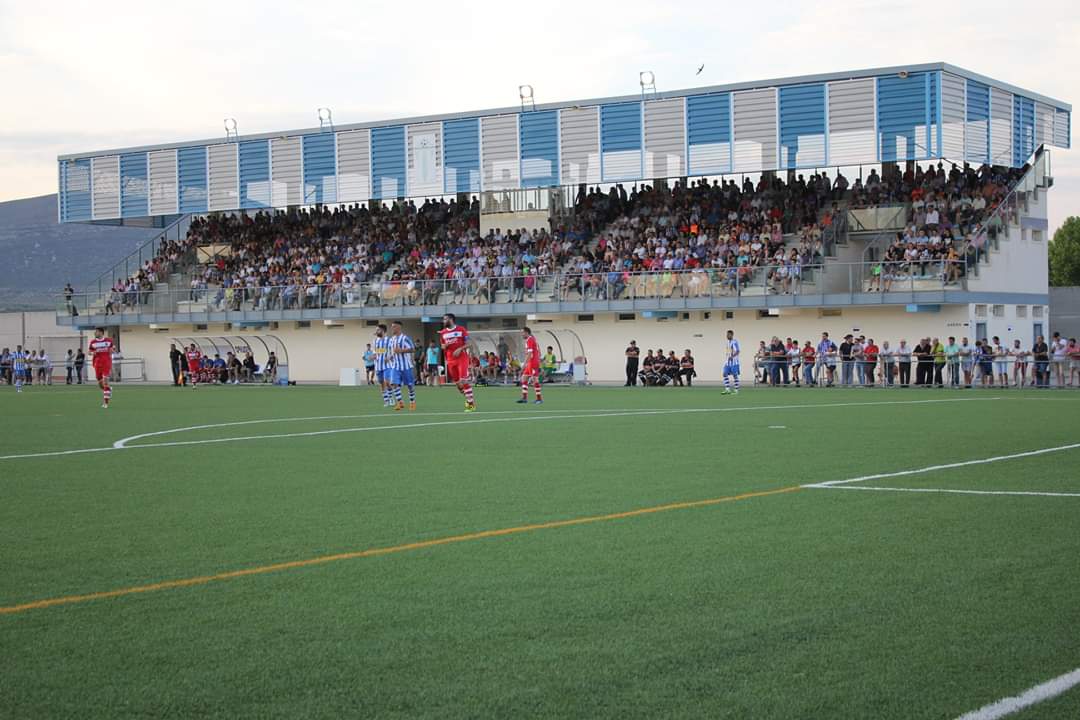
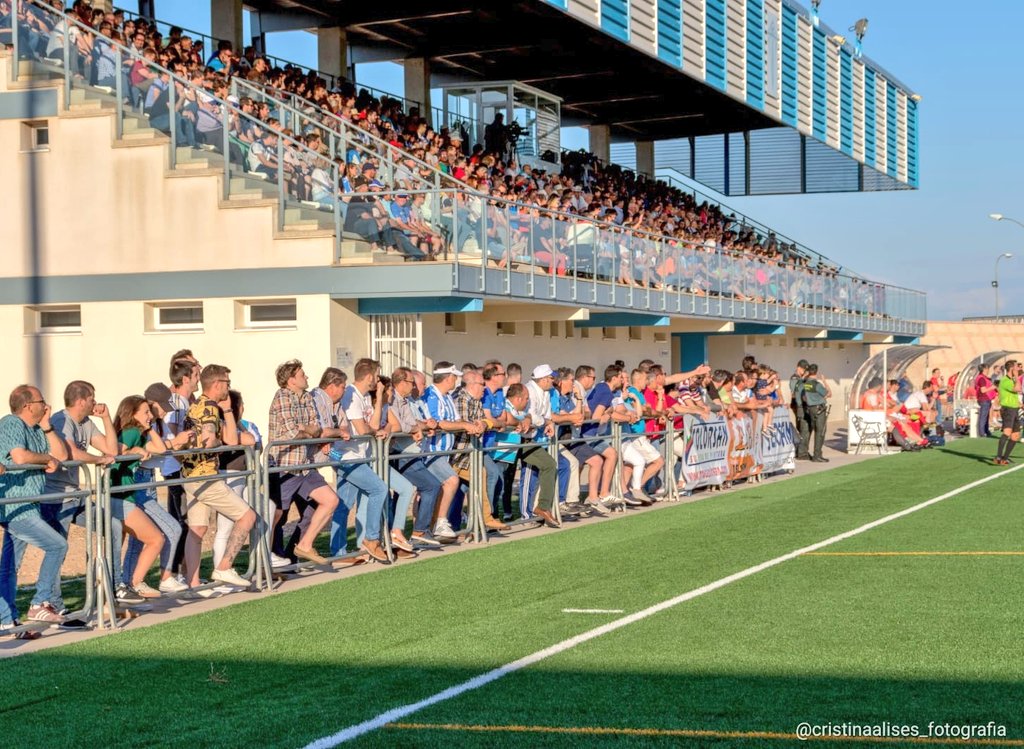
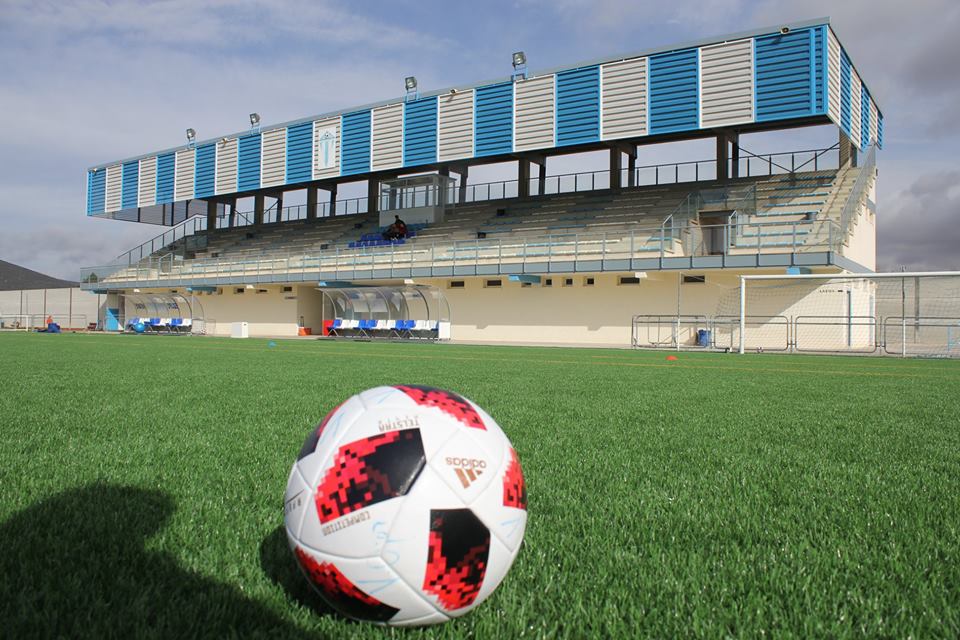
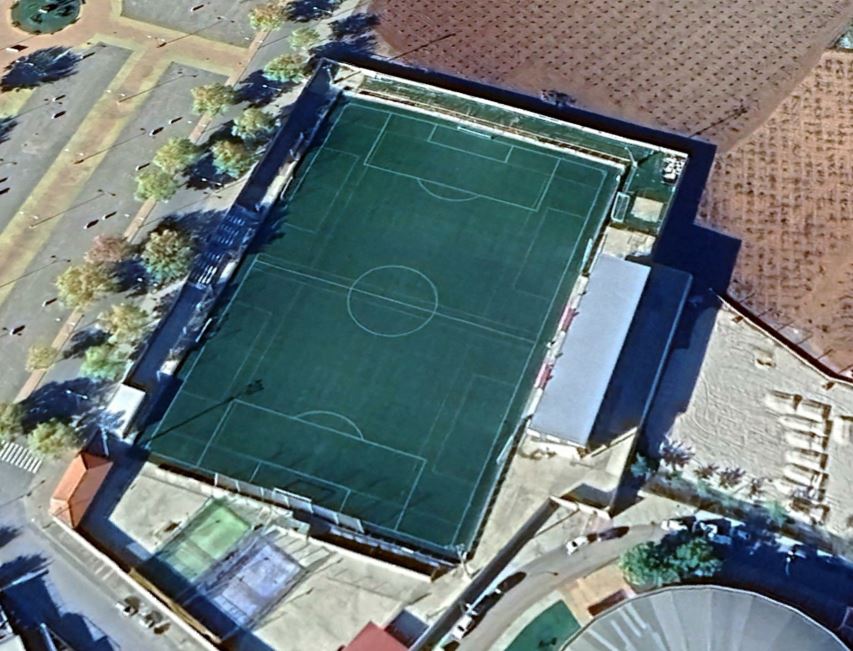
The Campo Nuevo Municipal can be found on the eastern edge of town. The development does have the air of being caught somewhat by surprise by the club’s rapid improvement, and to be honest, you can hardly blame the municipality. For example, the only covered stand is situated on the eastern side of the stadium, meaning the spectators squint into the sunshine when watching their local heroes. The stand holds 700 on a single-tier located above the stadium’s changing facilities. A natty blue & white visor was fitted to the front roof fascia in 2010 to shield some of the spectators from the troublesome rays. Another example of a lack of foresight was the decision to build public toilets for the neighbouring plaza into the fabric of the enclosure, effectively cutting the western side of the ground in half. Finally, a new synthetic pitch was added in 2018, but the dimensions of the enclosure are so tight that the playing surface was the narrowest in the top four tiers, measuring just 61 metres. Additional temporary stands were added to each side of the western side of the ground following promotion to Segunda B. The municipality also spent money improving the hard-standing and retaining walls around the pitch. The revised capacity for the Campo Nuevo is 2,000. It’s a relatively routine small provincial ground, some might say, but one where the quirks and eccentricities have added to its character.

Formac Villarrubia Club de Fútbol were to spend just two seasons in Segunda B, both truncated and blighted by the impact of the COVID-19 pandemic. The first season ended in March 2020, following a 1-0 win over Atlético Sanluqueño, when the RFEF called a halt to the season after 28 games, with Villarrubia in 12th place. The 2020-21 season did not begin until mid-October, and the restructured competition saw the club travelling to Extremadura and Melilla. After 18 matches, Villarrubia had finished 8th out of 10 teams and entered a relegation playoff league that required further trips to Mallorca & Madrid. In the end, after many miles and much expense, the club was relegated back to the Tercera. To the credit of the local municipality, work to improve some of the stadium’s pinch-points was carried out in 2022. The public toilets that divided the western side of the ground in half were demolished, and a 25-metre terrace and scoreboard were added on the halfway line. Access around the pitch was improved with more hard-standing areas, which, should the club climb the leagues or draw a Primera team in the Copa del Rey, will allow easy installation of temporary seating.
References
La Futbolteca’s page on Villarrubia CF
Fútbol Regional España complete result history for Villarubia CF
 Estadios de España