This article updated: 08/09/2025
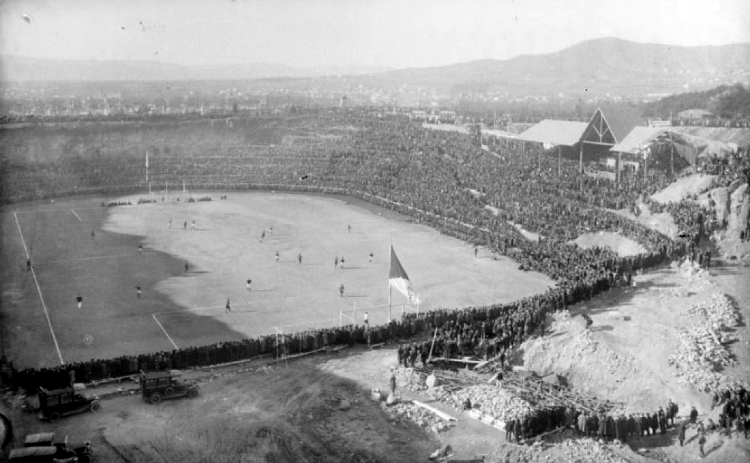
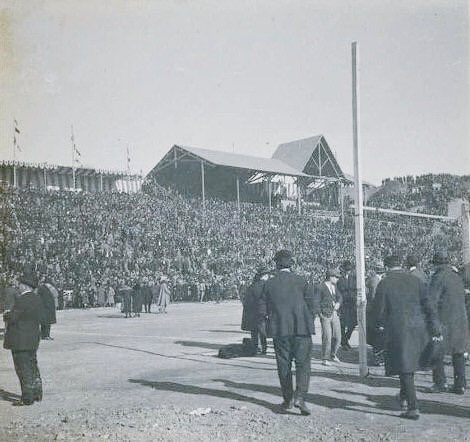
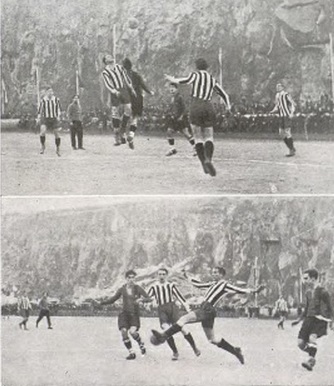
From time to time, social media can be, well, how can I put it… a bit shit. Don’t get me wrong, I quite like Twitter. It can be beneficial and enjoyable, and it has also proven extremely useful in promoting this website. It has put me in touch with thousands of people who share my passion for Spanish stadiums. However, you can’t believe everything you read. A point in case is the regular tweeting of the photograph pictured below.
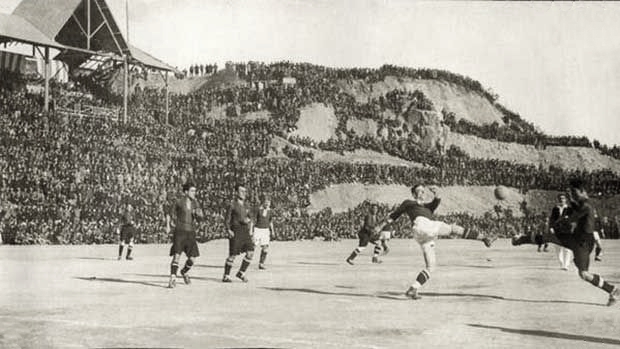
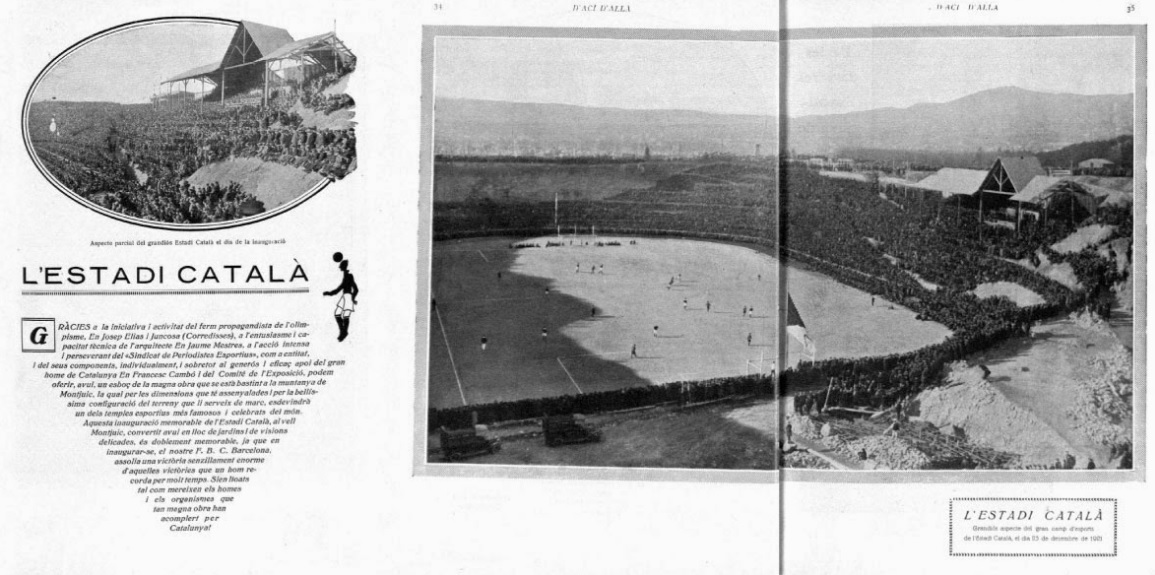
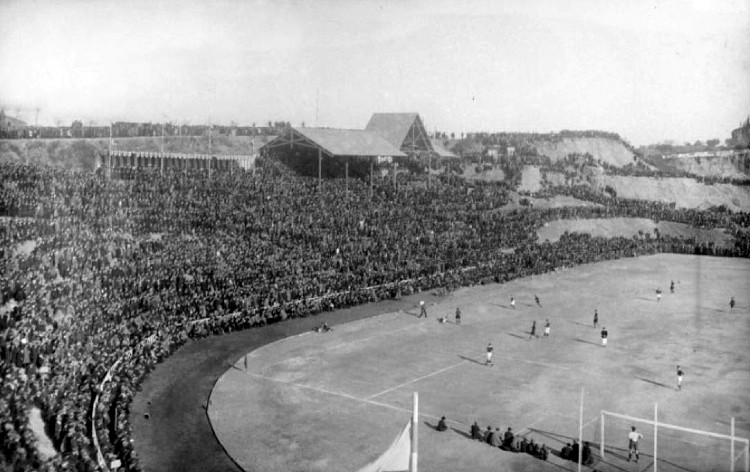
A couple of well-established accounts with hundreds of thousands of followers published this picture, saying that it was Barcelona at the Camp Nou in 1909. As you can imagine, this prompted an incredulous cry of “Rubbish!”. As we all know, the Camp Nou did not even open until 1957, and to pass this picture off as the Camp Nou was just lazy. So if it isn’t the Camp Nou, where is it and when was the photograph taken? Well, the picture does feature Barcelona, but it is not one of their former homes. It is, in fact, the Estadi Catalá, later renamed the Camp de Foixarda, which was built on the site of an old quarry on Montjuic. The picture is from the official opening, which took place on 25 December 1921 between Barcelona & Sparta Prague. Now that we have cleared that up, let me tell you a little more about the Estadi Catalá.
As Barcelona expanded rapidly at the start of the twentieth century, the city’s elders soon realised the need for an open area of parkland which would feature a stadium at its heart. A number of sites were proposed, including one on the Diagonal. Eventually, it was the Mayor of Barcelona, Manel Rius, and the President of the Catalan Athletics Federation, Àlvar Presta, who formed a committee with the principal purpose of building the city’s first sports park. Indeed, it was Manel Rius who sent a letter in May 1917 to Pierre de Coubertin, the President of the International Olympic Committee, requesting that Barcelona be considered as a host city for the 1924 Olympiad. Barcelona’s Olympic bid was presented to the IOC in September 1920, but back home, plans for the development on the Diagonal hit a snag. However, the quest for a new stadium continued, and on 15 January 1921, Architect Jaume Mestres presented plans for a stadium on the site of a disused quarry on Montjuic.
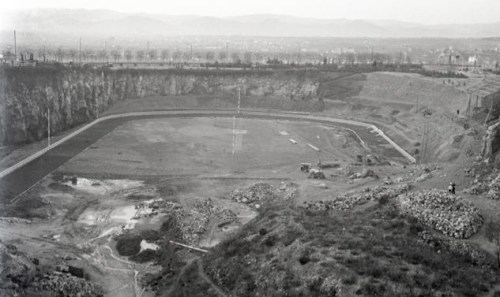
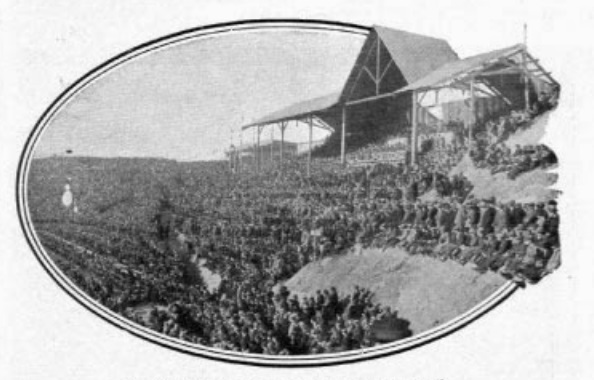
Mestre’s plans were certainly grandiose. The stadium would hold 50,000 using banking on the landscaped sides of the quarry. The northern side would feature a main grandstand with a large central gable. Seating, private palcos (booths), bars and offices would sit under the propped roof, whilst the stadium’s entrance would feature an “Arc de Triomphe”. 14,000 tonnes of earth and rubble needed to be excavated, and by 10 April 1921, work had progressed enough to allow the first unofficial match at the site. A team of architects met another formed by journalists, with the architects prevailing by 6 goals to 3. There was a problem, however. Two weeks earlier, the IOC had informally decided to choose de Coubertin’s home city of Paris to stage the 1924 Olympics, a decision officially confirmed on 2 June 1921.

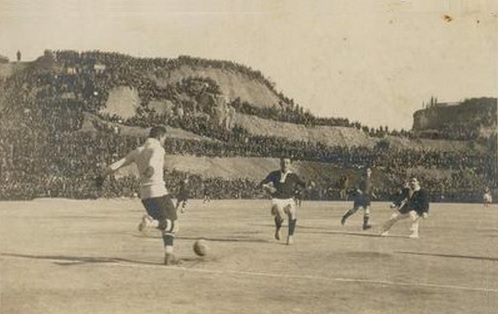
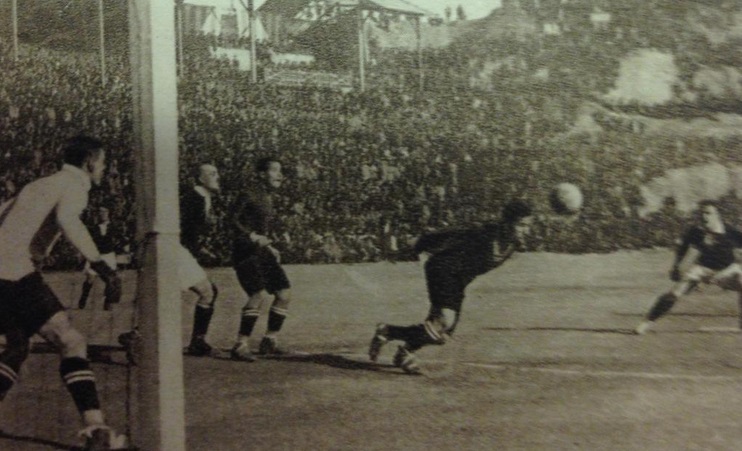
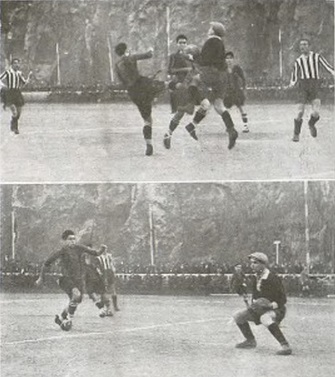
Unsurprisingly, momentum on the build was lost, but work had progressed enough to stage an official opening at the partially completed and newly named Estadi Catalá on Christmas Day 1921. 32,000 spectators crowded into the arena, many clinging to the unfinished sides of the quarry. They watched Barcelona and Sparta Prague stage two matches over two days, with Sparta winning the first 3-2, and Barça were victors of the second, by 2 goals to nil on 26 December 1921. That was as good as it got for the Estadi Catalá. Espanyol negotiated a short-term lease to use the stadium in October 1924, after work on the new grandstand at Sarriá was delayed, but never actually played a game there. The city of Barcelona did not allocate any more funds, and the unfinished stadium soon fell into disrepair.
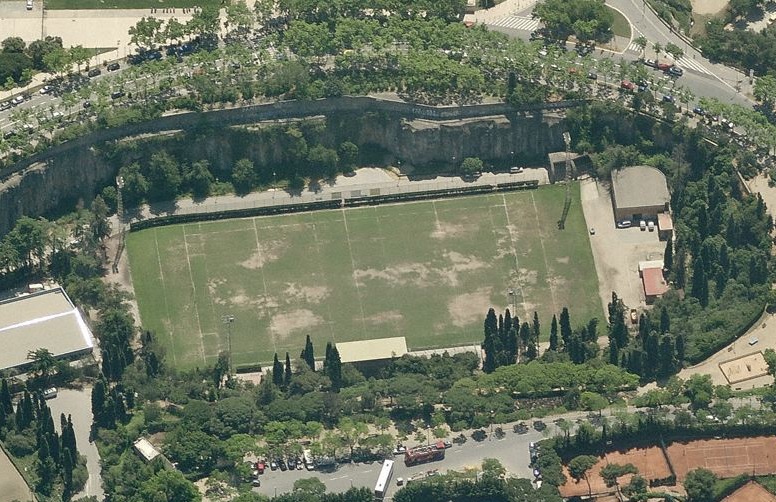
In 1929, the Estadi Olimpic de Montjuic opened just 500 metres to the east and took on the mantle of Barcelona’s sporting white elephant. After the Civil War, the Estadi Catalá was (not unsurprisingly) renamed the Estadio Fiuxarda and in 1951, the site was converted into a small stadium to host rugby union. The stadium still hosts rugby and is now known as the Camp Municipal de Rugby La Foixarda.
You can read a more detailed account of the trials & tribulations of Foixarda/Estadi Catalá here.



 Estadios de España