
Article updated: 16/12/2025
On 26 March 1926, Real Stadium Club Ovetense & Real Club Deportivo Oviedo joined forces to form Real Oviedo Foot-ball Club. The directors of each club had voted unanimously for the union and chose a certain Carlos Tartiere as the new club’s first president. Whilst the merger had passed relatively smoothly at board level, there was a pocket of resistance. A small group of disenfranchised supporters did not want to let go of the past and, within a matter of weeks, had formed their own club. On 26 April 1926, Sportiva Ovetense was founded, choosing to play in Real Stadium Club Ovetense’s colours of yellow & blue striped shirts, and even set up home at the Campo de Llamaquique, which had served as Real Stadium Club Ovetense’s home until 1919.

Within a couple of seasons, Sportiva Ovetense had moved to another former home of Real Stadium Club Ovetense, the Campo de Vetusta. This was situated in the eastern fringe of the city, in the neighbourhood of Fozaneldi. The club had ambitions to become the city of Oviedo’s second club and reached the Tercera in 1933. The restructuring of the leagues in 1934 saw Sportiva Ovetense drop back to the regional level and play in a combined league for Asturian and Cantabrian teams, before the Civil War put a stop to football for the next three years. Oviedo was at the forefront of the hostilities and witnessed a great deal of destruction. Real Oviedo’s Campo de Buenavista was all but destroyed, leading to the club sitting out the 1939-40 season. Sportiva Ovetense, however, emerged from the hostilities and started the 1939-40 season at the Campo de Teatinos. This had been the home of Real Oviedo from 1926 to 1932 and was situated around a kilometre northeast of the old town centre, close to the current Calle Chile.
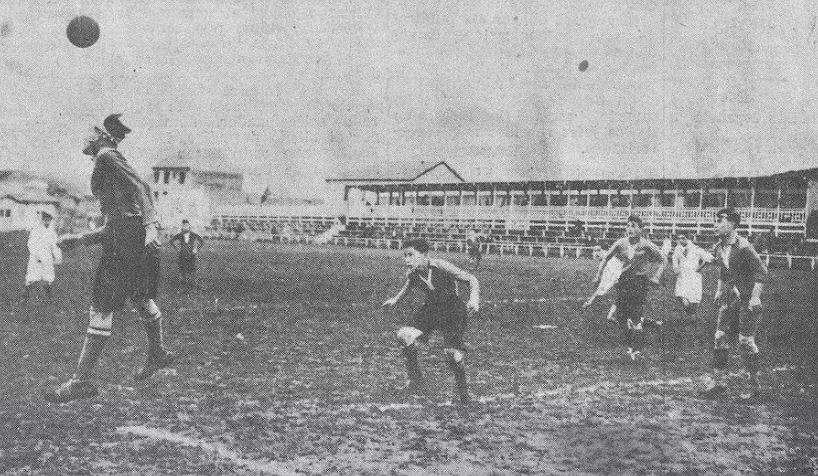
Real Oviedo re-joined La Primera for the 1940-41 season, and over the next decade, ran up a series of top 10 finishes. With the Campo de Buenavista rebuilt, and the first team more than holding its own in the top flight, thoughts turned to developing the next generation of players. In 1943, Real Oviedo reached an agreement with the now-renamed Sociedad Deportiva Vetusta. This would see SD Vetusta become an associate club, with Real Oviedo having first selection of the best players. In return, SD Vetusta would play home matches at the Campo de Buenavista/Estadio Carlos Tartiere. Over the next few decades, the relationship between the two clubs blew hot & cold. Strong in the 1960s when SD Vetusta spent a decade in the Tercera, not so strong when they dropped to the Regional Preferente in the 1970s.
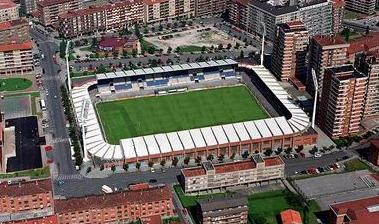
In 1977, SD Vetusta changed its name to Real Oviedo Aficionados. Promotion back to the Tercera followed in 1979, and eventually, promotion to Segunda B was attained in 1988. Their days as an associate club were numbered, and in 1991, the RFEF ruled that affiliated clubs must become assimilated with the parent club. In the summer of 1991, Real Oviedo Aficionados became Real Oviedo Football Club B. They spent all but one season of the 1990s in Segunda B, usually in the bottom half of their division, but rarely troubled with relegation. The turn of the millennium brought about significant changes to Real Oviedo, and nearly all of them were bad. The reserve side moved their home fixtures to the Ciudad Deportiva in 2000, after the demolition of the old Estadio Carlos Tartiere, and the First Team moved into the shiny new Estadio Carlos Tartiere. Relegation of the reserves to the Tercera followed in 2001, then, with the club facing financial meltdown in 2003, Real Oviedo B ceased to play any matches for the following three seasons.
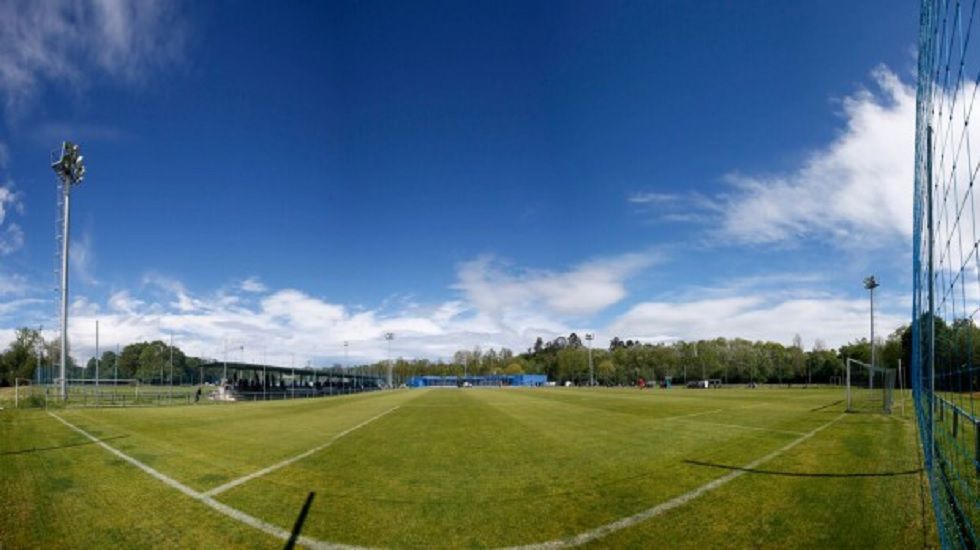
Real Oviedo B returned to activity for the 2006-07 season, playing in the Asturian Regional 2nd Division, or the 7th tier of Spanish football. They slowly climbed their way back up the ladder, spending eight seasons in the Tercera, before finally getting back to Segunda B in 2018, thanks to a third Tercera title and a 5-1 victory over Mutilvera in the playoffs. From 2017, the club adopted the title Real Oviedo Vetusta.
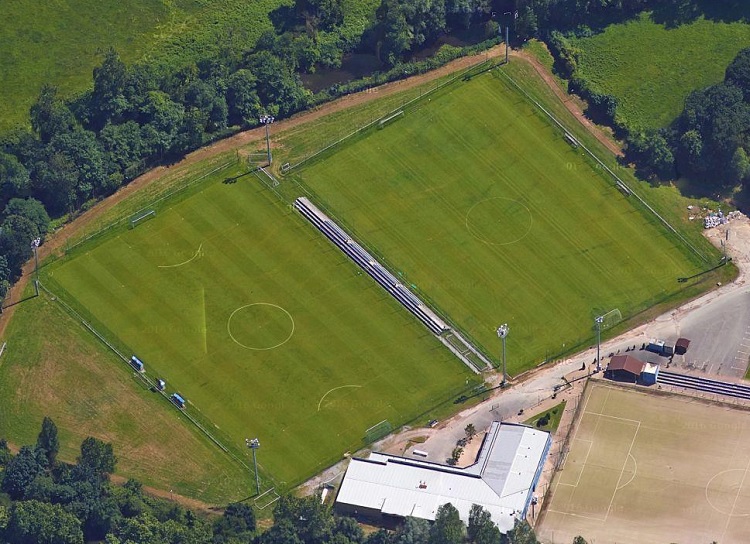
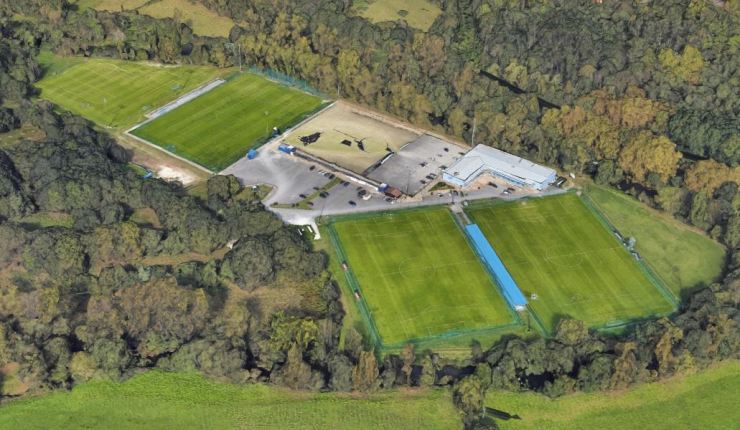
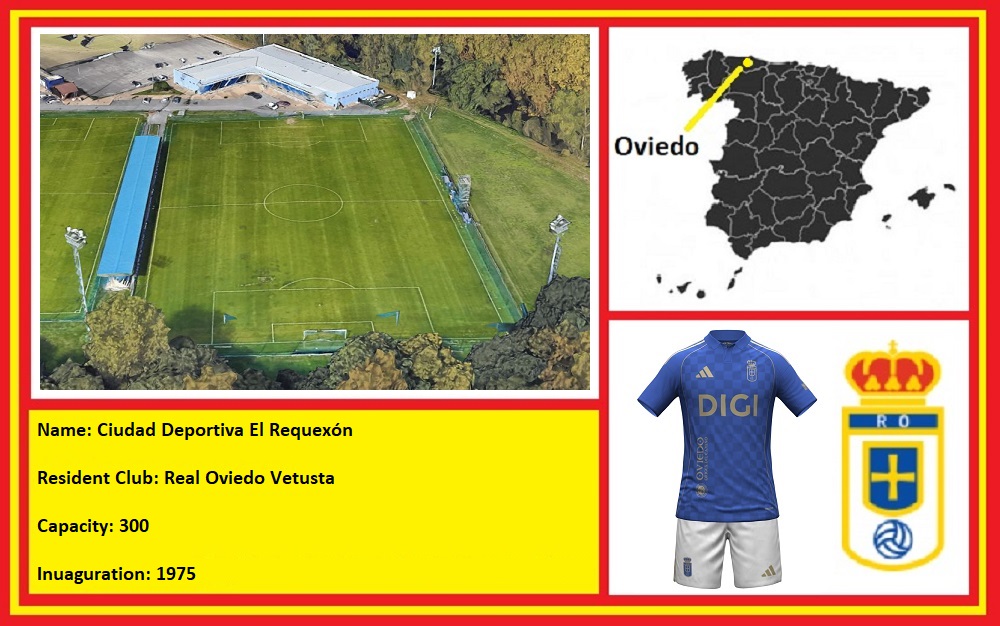
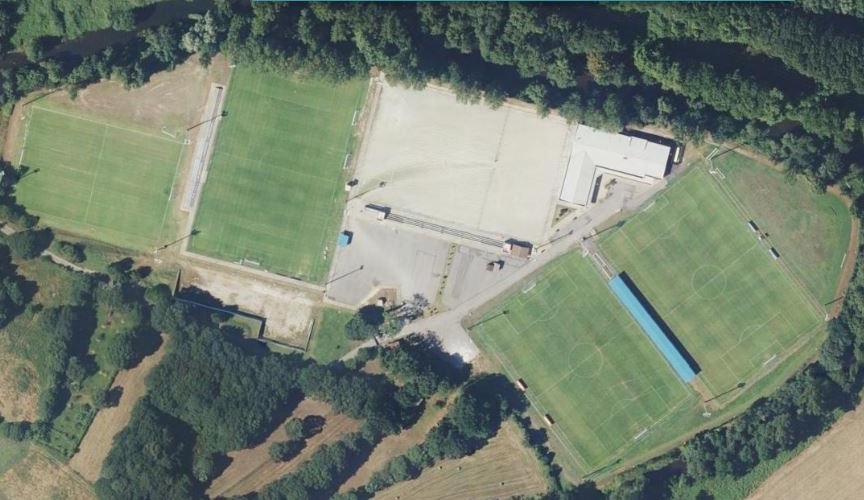
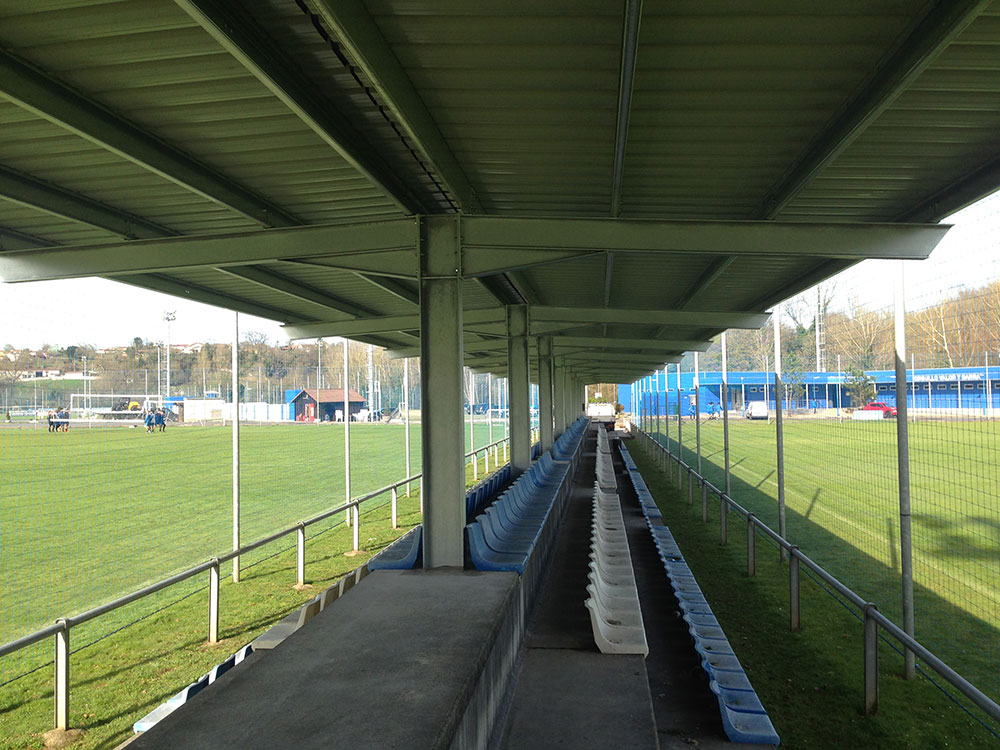
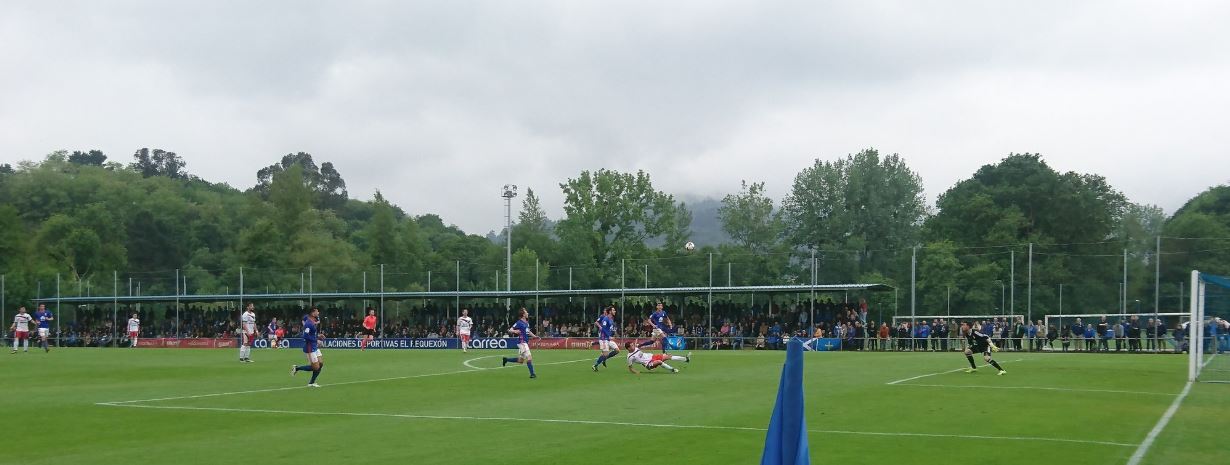
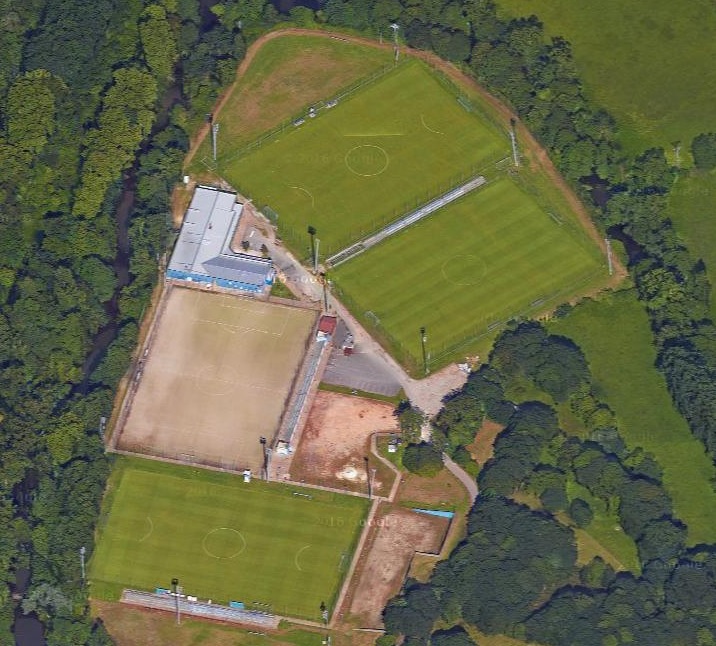
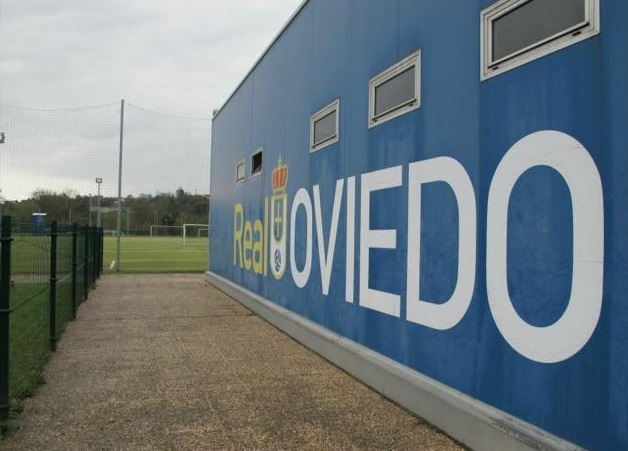
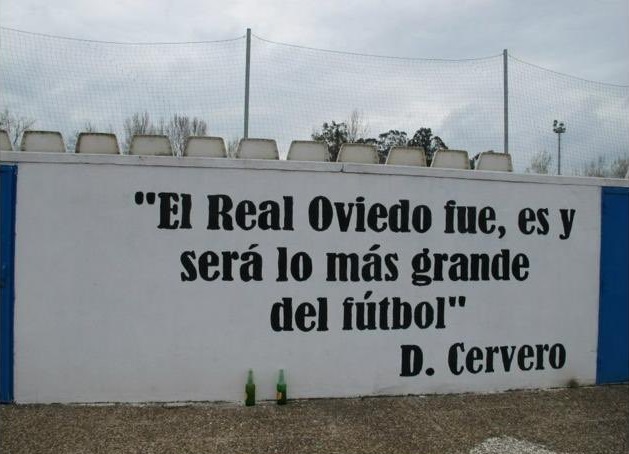
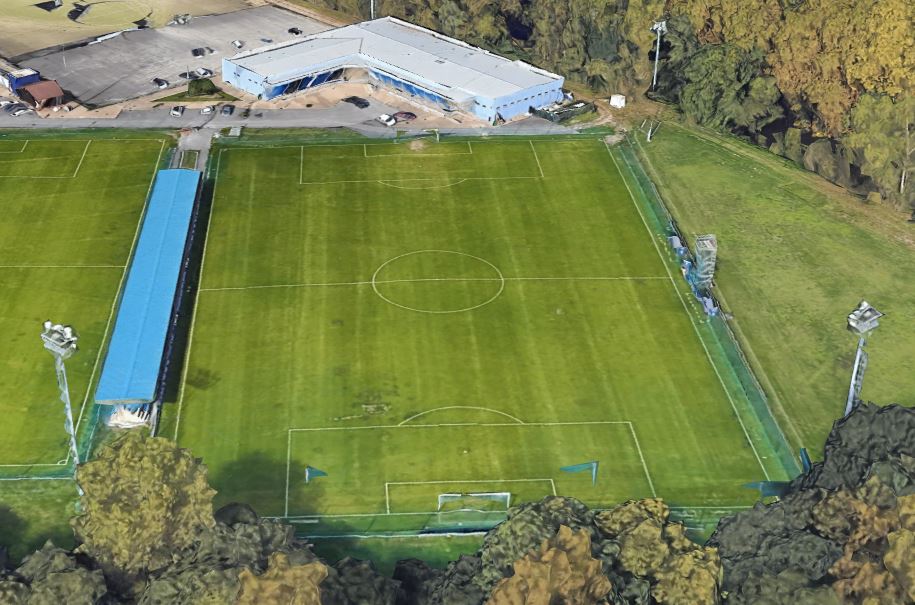
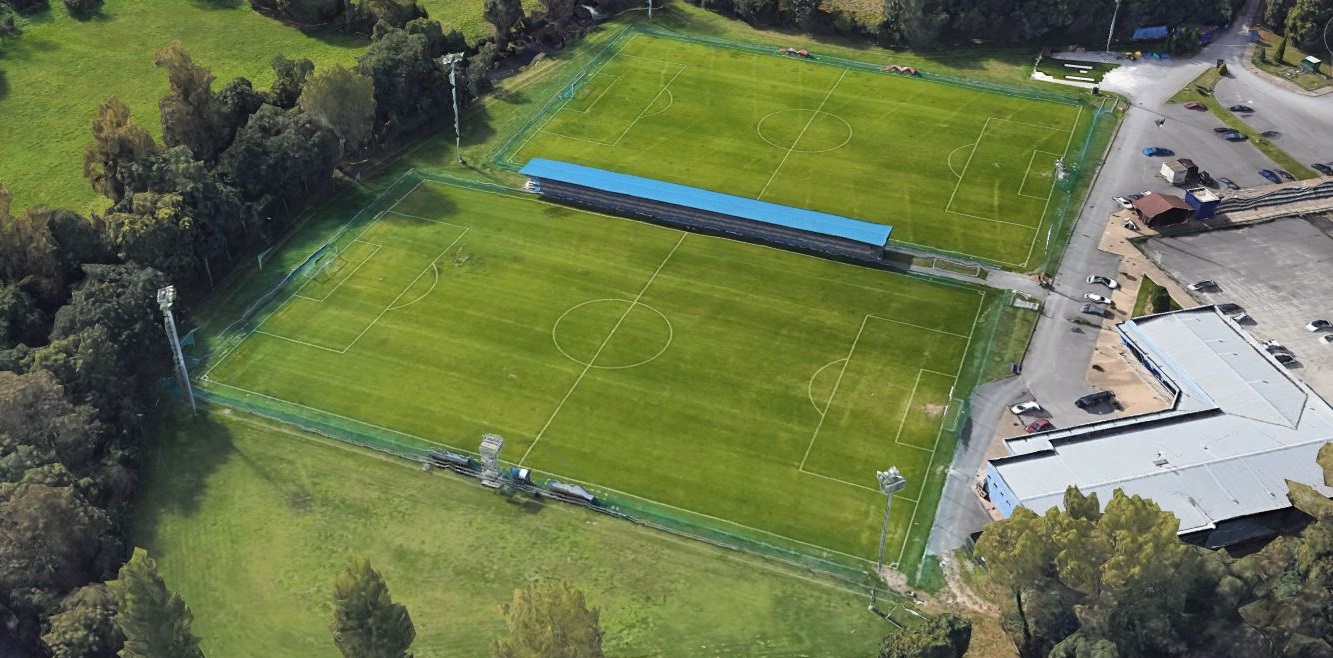
The Ciudad Deportiva, or El Requexón, as it is commonly known, opened in 1975, and during its first 25 years, served as the training centre and academy. The site was extended in the early 1990s and again at the turn of the century, and now covers over 80,000 square metres. It’s located 8km north of the city on land practically encircled by the Rio Nora and features four natural grass pitches and one synthetic surface. The main building’s facilities include changing rooms, a gym, medical facilities, and a press room. The main “arena” (I use the term loosely) is located to the west of the main building and features a basic, 60-metre-long covered stand, with three rows of seats. Real Oviedo did have plans to extend to the site again, with land earmarked to the north of the present site, but to date, these plans remain on hold.
Upon their return to Segunda B, Real Oviedo Vetusta acquitted themselves well, finishing 5th in the 2018-19 season, and 12th and fourth during the COVID-19 disrupted seasons that followed. After the restructuring of the Spanish football pyramid in 2021, Real Oviedo Vetusta was placed in the Tercera Federación. They won the Group II title by one point, ahead of local rivals Sporting Gijón B, and with it, direct promotion to the Segunda Federación. Such is the turbulent nature of reserve team football that Vetusta managed to finish seventh, get relegated and then win a second Tercera Federación title, returning to the fourth tier, within the space of three seasons.
 Estadios de España