The town Ejea de los Caballeros boasts a history dating back over two millennia, when as a Celtiberian settlement, it became part of the Roman Empire. It was under Muslim control during the early Middle Ages until reconquered by Christian forces in the 11th century, earning the name “de los Caballeros” in honour of the knights involved in the battle for the town. In the 12th century, it emerged as a fortified town and an essential centre for agriculture and trade, and it has continued to benefit from its strategic location, 75km equidistant from Huesca to the east and Zaragoza to the south. In recent times, the town has bucked the trend of diminishing population, witnessing a continued growth, making it the fourth largest town in the Province of Zaragoza. The town’s football club, Sociedad Deportiva Ejea has also witnessed an upturn in the past decade as it looks to gain a foothold in the national leagues.
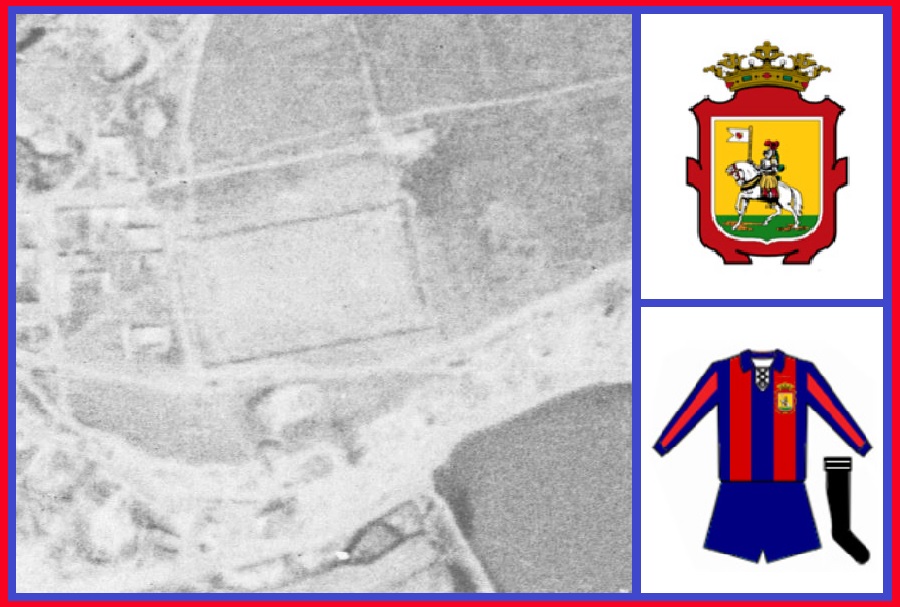
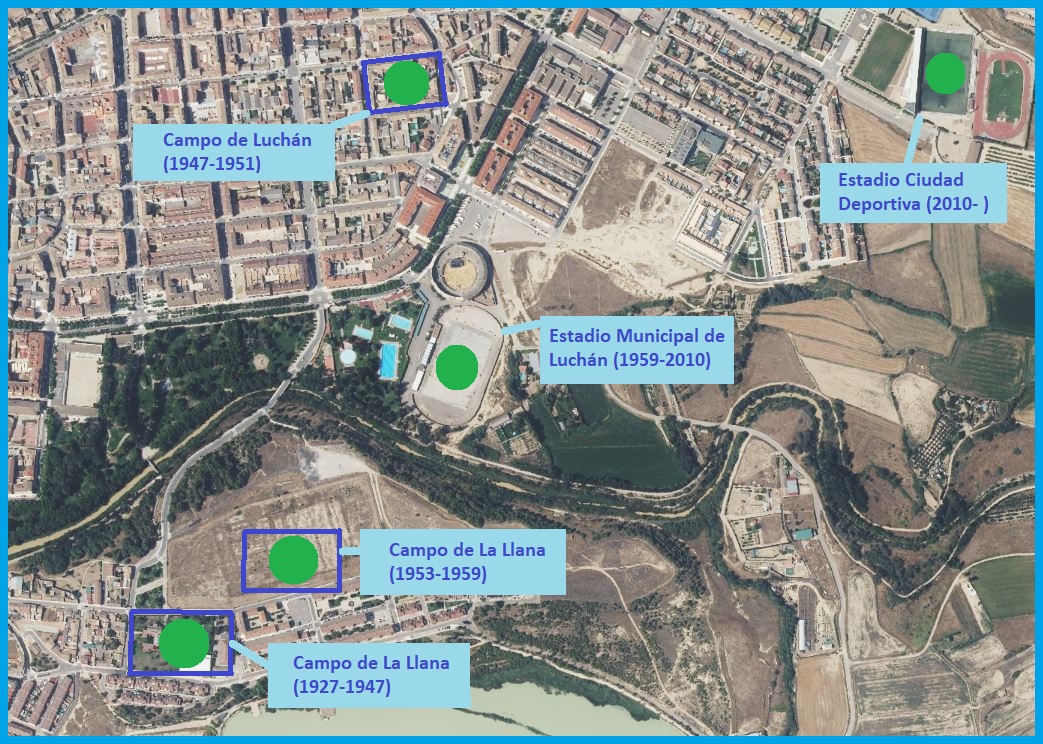
The first record of football being played in Ejea can be traced to 1917 and the formation of Setia Foot-ball Club. The early 1920s saw a split in the club that led to the formation of Numancia Foot-ball Club & Sporting Foot-ball Club. In 1923, all three clubs moved to a new enclosure on the northern side of the Estanca del Gancho. The Campo La Llana was maintained by the three clubs, but growing dissatisfaction with results led to their merger and the formation of Club Deportivo Ejea on 3 October 1927. To be honest, the merger did little to improve performance, and by 1930, the club had ceased to play. After a three-year hiatus, the club reformed, and after a couple of years of playing friendlies, it joined the Aragonese federation in 1935. The Civil War ended all sporting activity in Ejea, and it would take until 1944 for CD Ejea to reemerge, in Grupo II of the Aragonesa Segunda Regional. Restructuring of the leagues saw CD Ejea play in the Regional Primera in the 1945-46 season, and a year later, the club adopted its familiar blue & white striped shirts and moved away from the Campo La Llana to the original Campo de Luchán in 1947. This was located back in the centre of town, between the modern-day Calle San Jorge & Calle Reconquista. It was not a happy stay, as the club withdrew from the Primera Regional in its second season at the ground. The original Campo de Luchán was sold for housing in 1951, and once again, CD Ejea entered a period of inactivity.
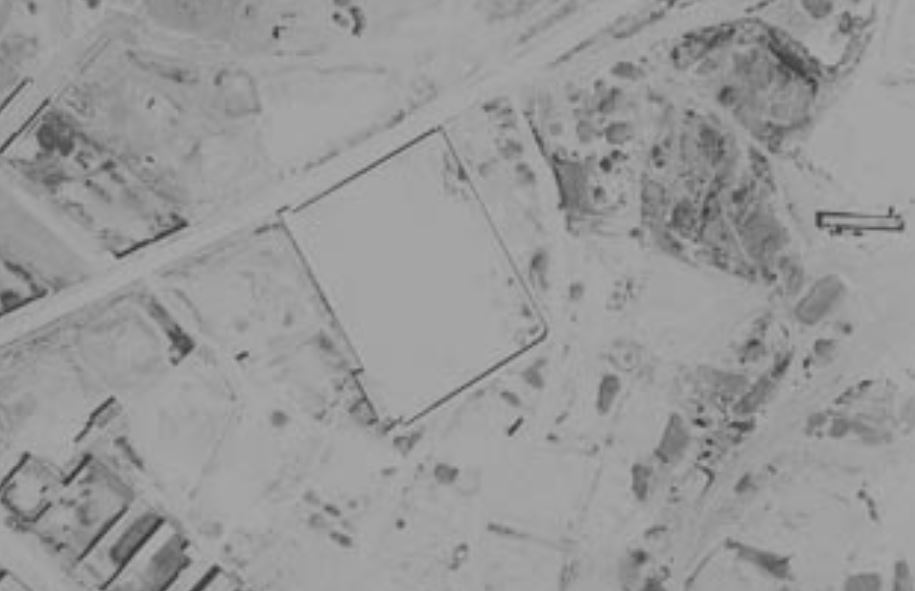
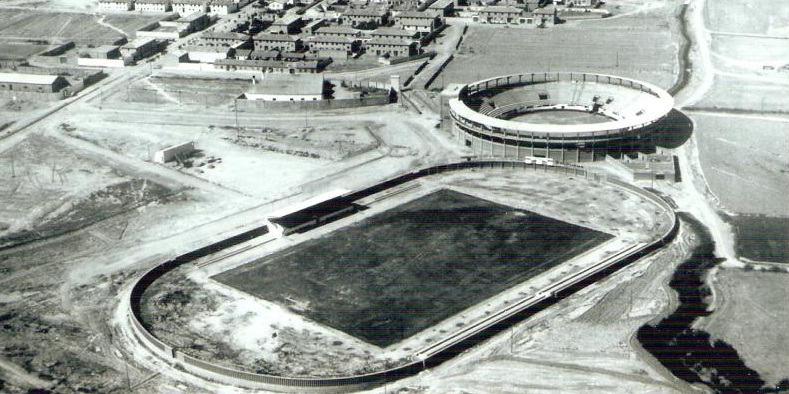
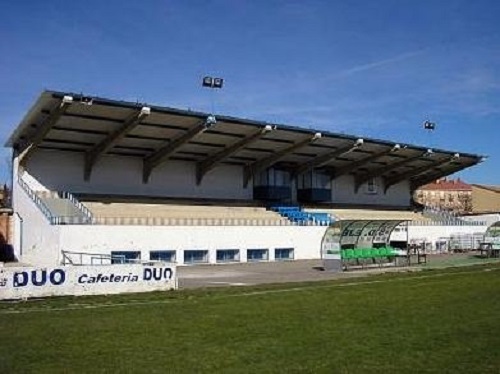
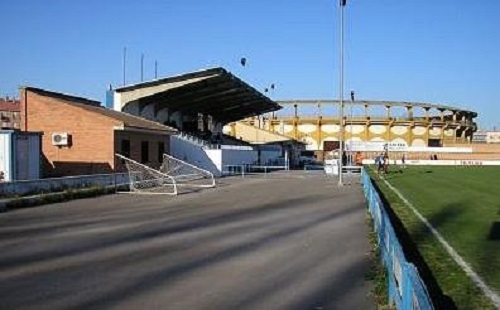
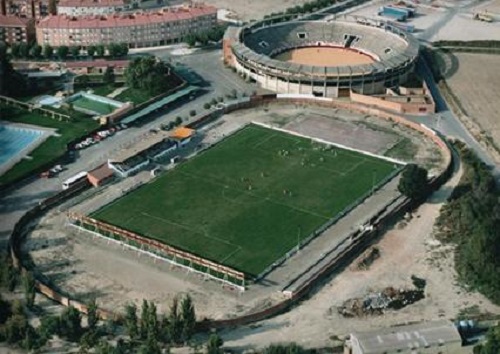
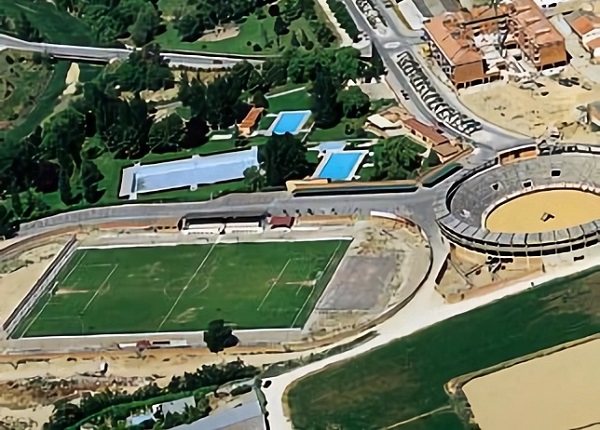
In 1953, a group of supporters opened a basic ground 50m from the former Campo La Llana site, just south of the Rio Arba. Also named the Campo La Llana, CD Ejea returned to action at the enclosure, finishing tenth in the Segunda Primera 1953-54 season. CD Ejea was included in an expanded Primera Regional in 1956, and won their first Tercera title in 1957-58. In the playoffs, they were paired with Real Unión, however, the Basque side proved too strong, winning the tie 7-1 on aggregate. During the mid-1950’s the Sindical de Educación y Decanso drew up plans to develop a stadium a little to the east of the new Campo La Llana, but these were rejected, and a new site for a more substantial stadium was identified just to the south of the former Campo de Luchán. The new Estadio Municipal de Luchán featured a 25m long main stand on the west side of the enclosure. A cantilevered roof covered the raised seating deck, which sat above the changing facilities. Two narrow areas of hardstanding stood on either side of the stand, whilst the east side featured a narrow terrace that ran the length of the pitch. The Estadio Municipal de Luchán opened on 8 December 1959 with a friendly against Real Zaragoza, which the visitors won 1-6.
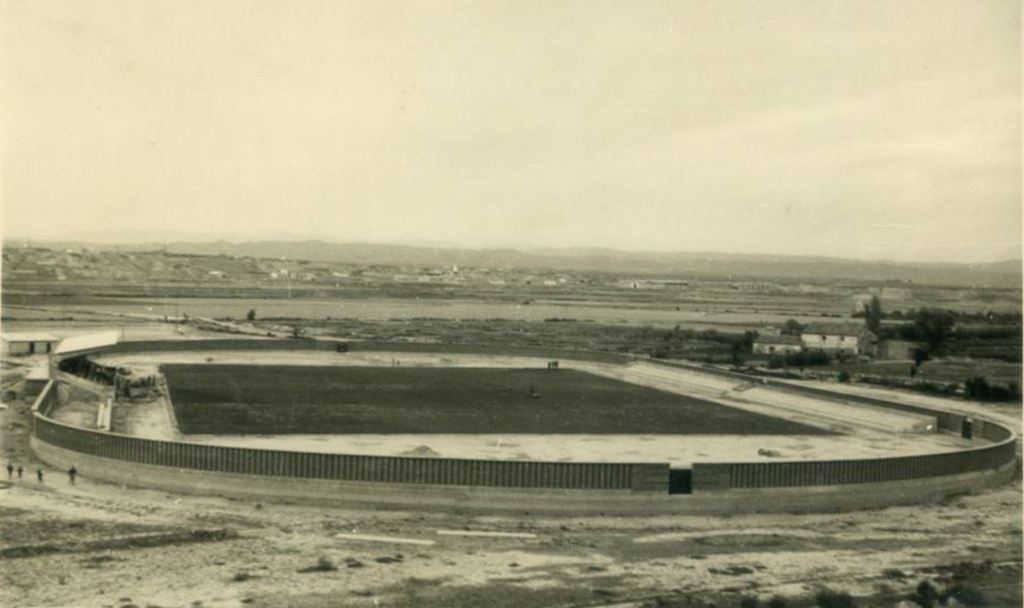
CD Ejea could not repeat their championship success of 1957-58 in their first decade at the Estadio de Luchán, but performed consistently, with top-ten finishes throughout most of the 1960s. The RFEF restructured the Tercera ahead of the 1968-69 season, with Aragonese clubs joining those from the Basque Country, Navarra and beyond. The step up in competition saw CD Ejea struggle and drop to the Primera Regional. Apart from two season-long visits to the Tercera, both of which saw the renamed Sociedad Deportiva Ejea finish bottom, the 1970s were spent in the Primera Regional. However the next 25 years, SD Ejea was to etablish itself as a regular in the Tercera, clocking up 16 seasons, but never coming close to seriously challenging the upper echelons for promotion to Segunda B. Thankfully, their visits back down in the Regional Preferente were brief, and it was one such visit in the 2005-06 season that proved to be the catalyst for SD Ejea’s upward trajectory. The title-winning season of 05-06 was emphatic, with the club losing just 2 matches, scoring 99 goals and finishing 19 points clear of runners-up CF Figueruelas. SD Ejea finished fifth in their first season back in the Tercera, before claiming the league title in 2007-08. They lost to Arandina CF in the playoffs, but were about to establish themselves as a regular competitor for the Tercera title. The final season at the Estadio de Luchán saw the club finish fourth in the league, before losing on away goals to UD Alzira in the playoffs. The last match at the stadium was the home leg against UD Alzira on 15 May 2010.
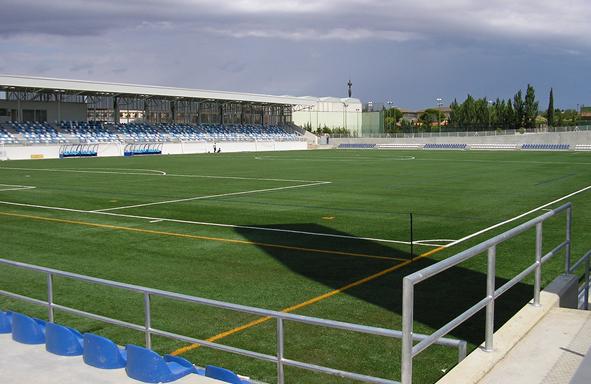
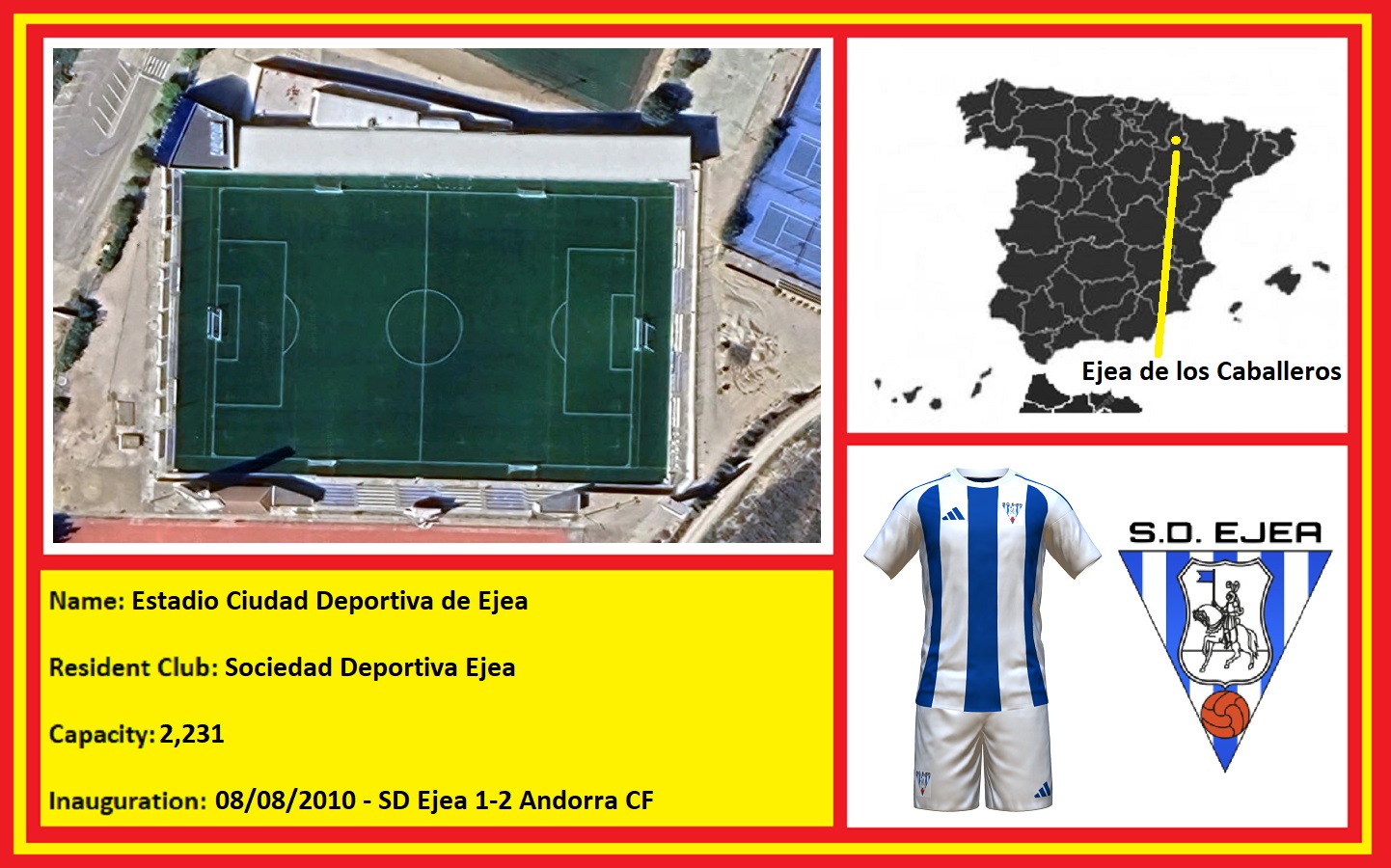
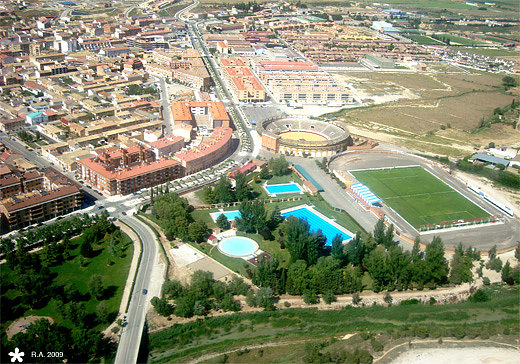
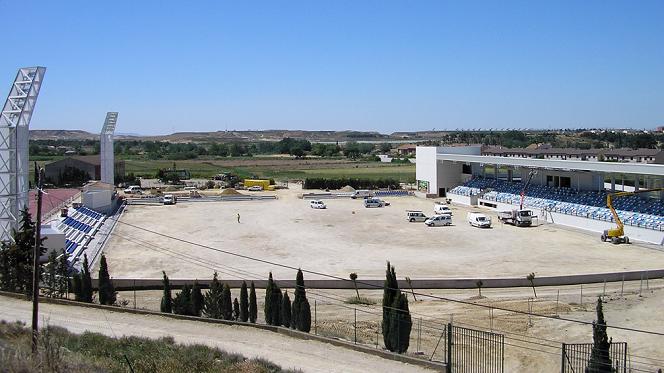
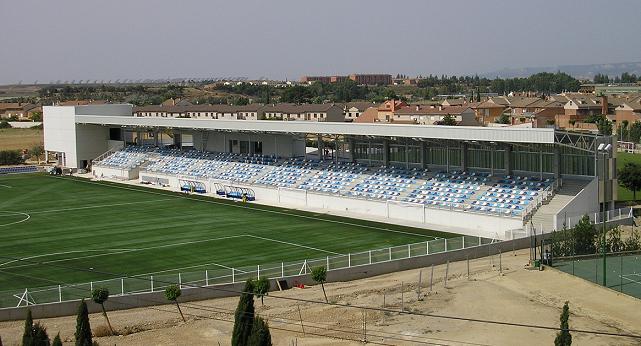
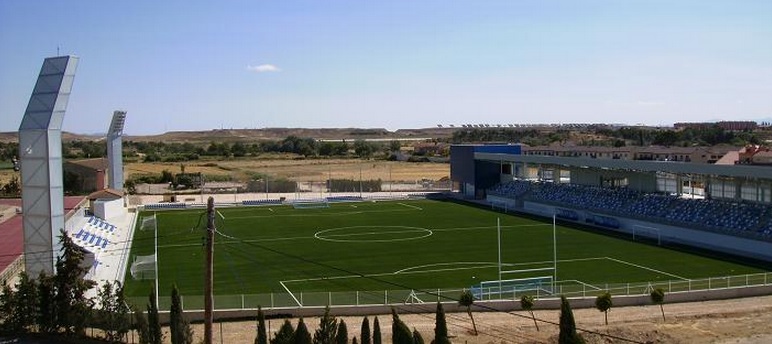
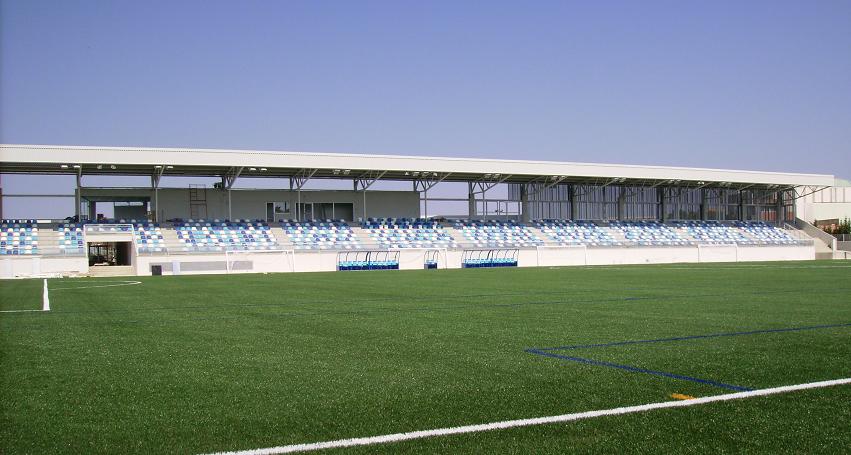
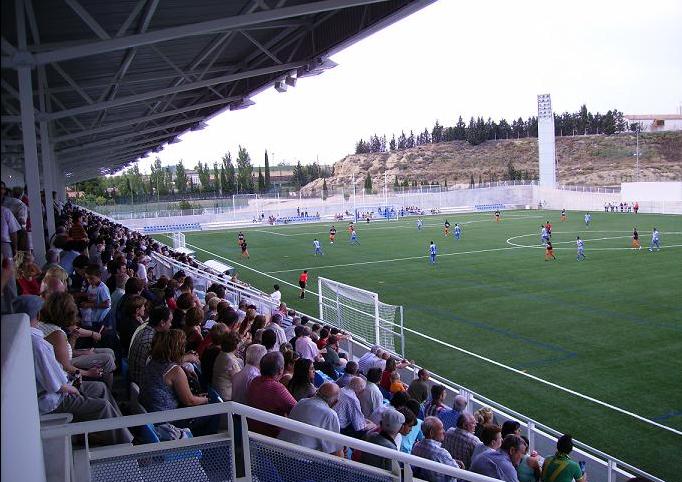
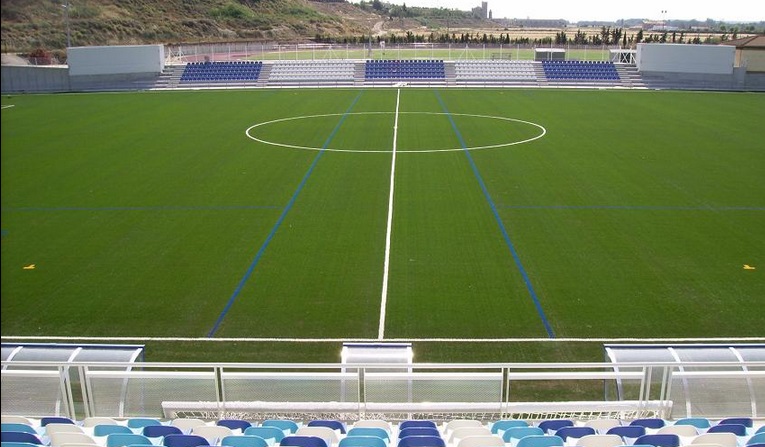
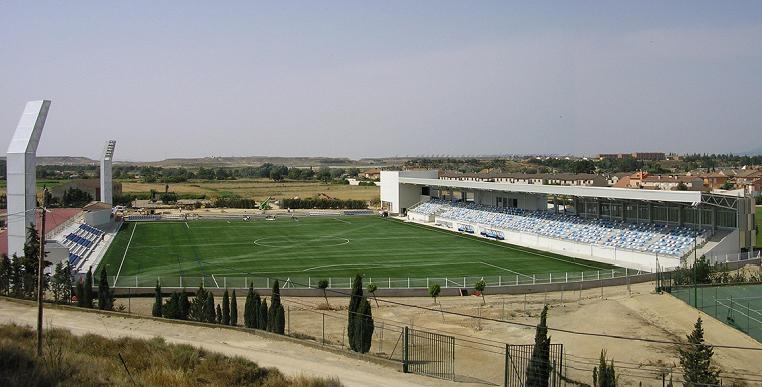
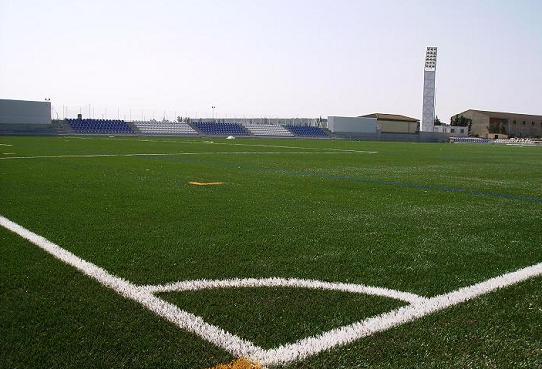
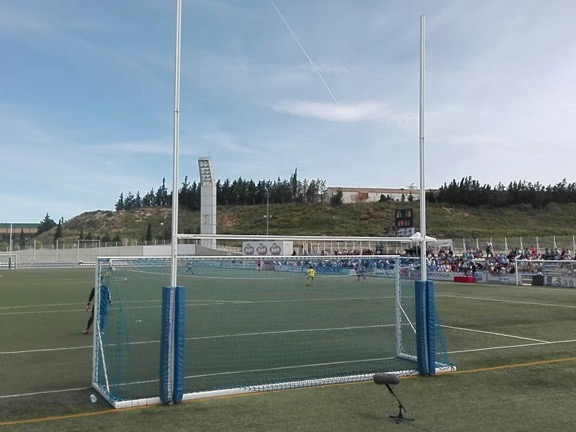
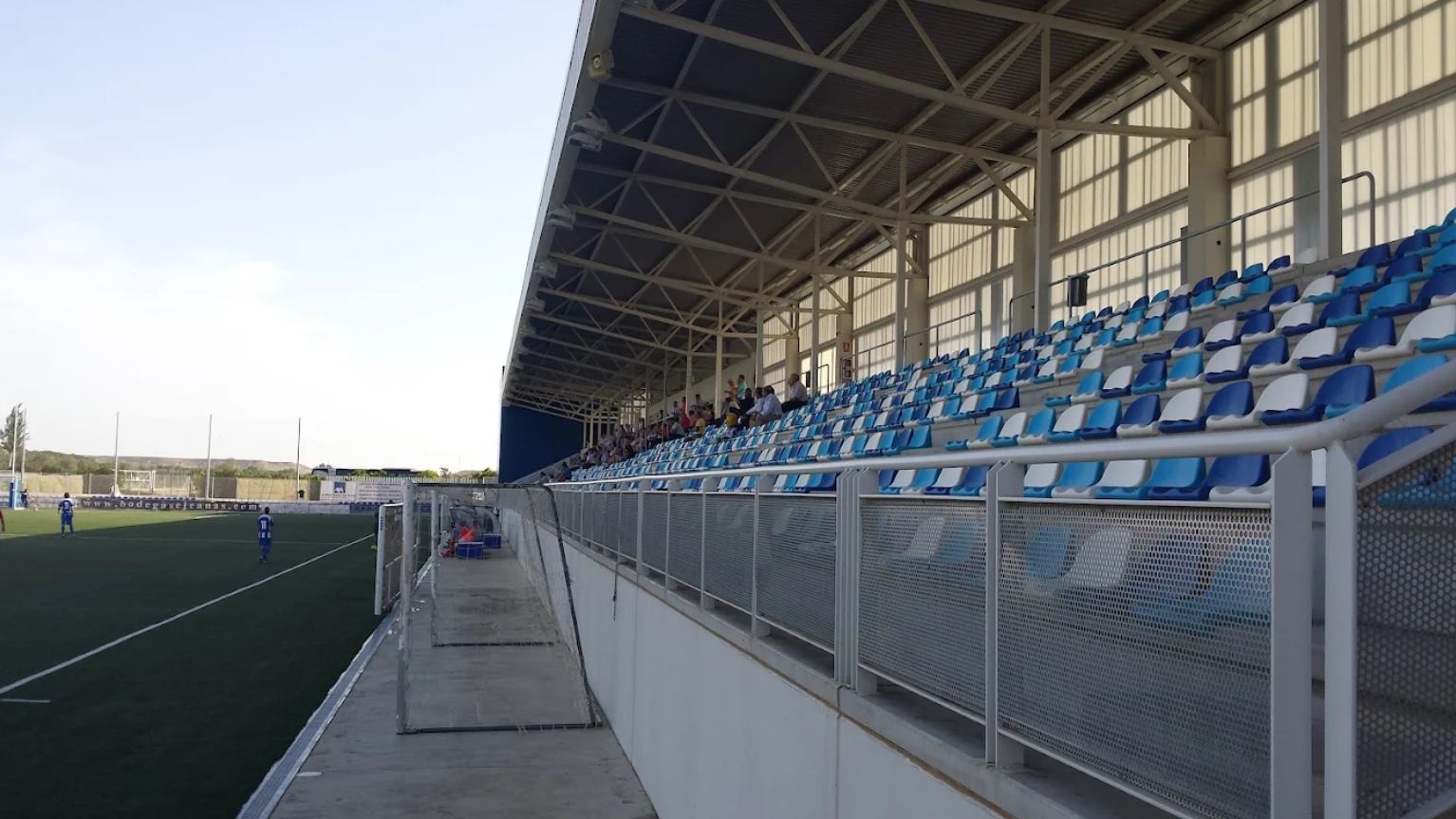
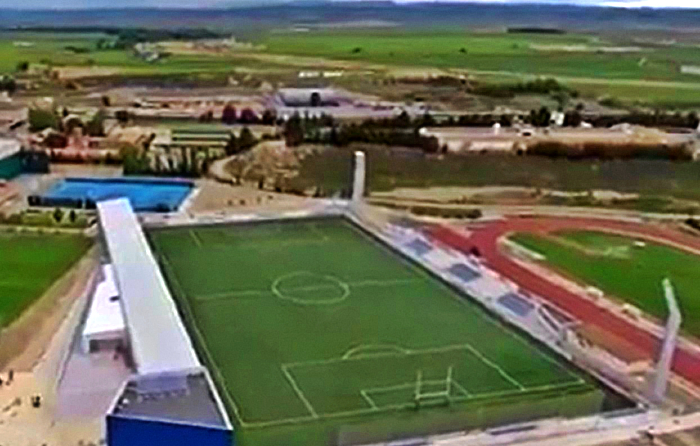
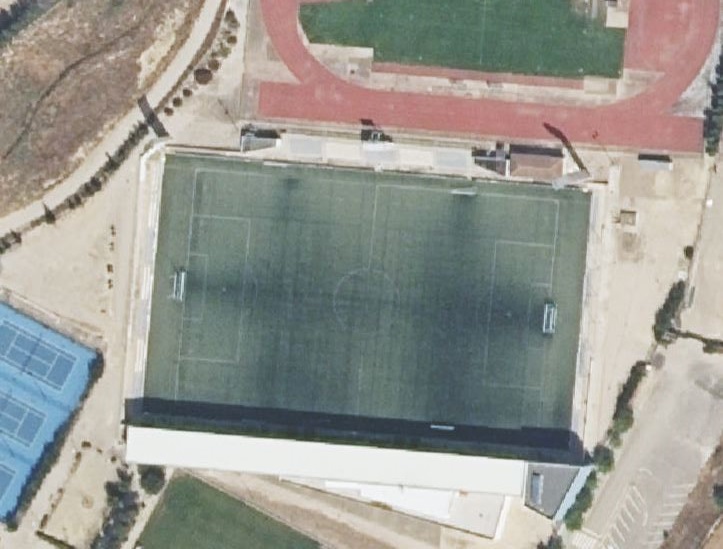
The new stadium was built to the east of the town, on the site of the municipal sports centre that had been built in the 1990s. At a cost of €3.2m, the build was completed in 8 months, using the site of the sports centre’s football field, next to the existing athletics track. It is a simple but effective design, offering better views and more cover than Luchán ever did. The main grandstand houses 1315 seats over eight rows, all under a propped cantilevered roof. The seating deck is raised a metre above pitch level, underneath which are housed four changing rooms and other municipal offices. The players’ tunnel to access the pitch is off-centre and situated near the penalty box at the southern end of the ground. A further 1000 seats are contained on three narrow banks that surround the other sides of the synthetic pitch, which saw its first match on 8 August 2010 when Andorra CF were the opponents. Form remained impressive as SD Ejea reached the playoffs again in 2013-14 and 2016-17, but promotion to the third tier continued to prove elusive. Then in June 2018, a third-place finish led to SD Ejea seeing off the challenges of the reserve sides from Rayo Vallecano, Tenerife & Cádiz in the playoffs to reach Segunda B for the first time.
After finishing 14th in their first season in Segunda B, the COVID-19 restrictions saw SD Ejea play only 46 matches over the next 2 years before the RFEF restructured the Spanish leagues. SD Ejea where placed in the Segunda Federación, but struggled from the off, eventually finishing bottom of the table, some 19 points from safety. The club finished fourth upon their return to the Tercera, now the fifth tier, but their playoff hoodoo returned when they lost to Ibizan club Societat Esportiva Penya Independent. A fourth Tercera title was won in 2023-24, and with no playoffs to navigate, SD Ejea returned to the Segunda Federación.
 Estadios de España