
Article updated: 26/09/2025
There is some debate over the formation date of Real Murcia Club de Fútbol. Some list it as 1906, others 1908, whilst the club states that its official birthday is 6 December 1919. What we do know is that, like many other cities in Spain, football first appeared in Murcia at the turn of the twentieth century, courtesy of English ex-patriot students. By 1906, the city of Murcia had two main football clubs, Association Murcia Foot-ball Club and Murcia Foot-ball Club. Over the next decade and a half, these two clubs, along with several others, attempted to make an impression beyond their regional boundaries before the original Murcia FC disbanded in the summer of 1919. Within weeks, former players of Murcia FC, along with members from other clubs, formed Levante Foot-ball Club and set up home at the former ground of Murcia FC, the Campo de la Torre de la Marquesa.
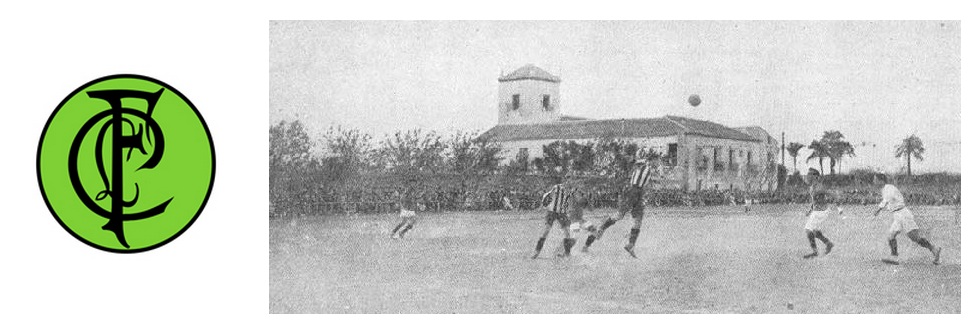
The ground was owned by a local nobleman, Diego Chico de Guzmán, the Conde de la Real Piedad, and had previously been an orchard before the club cleared the land. It was opened on 27 January 1918 with a match between Murcia FC and Hispana, but little over a year later, the ground stood empty after Murcia FC folded following financial difficulties. Levante moved in and found immediate success when winning the Levantine championship in 1920-21. Levante changed their name to name to Murcia FC in 1922 and switched from olive green shirts to the now familiar red. A year later, the club gained royal patronage from King Alfonso XIII, becoming Real Murcia Foot-ball Club. Don Guzmán had other plans for the land and served notice to the club in the spring of 1924. The land would become a prison and part of the Caravaca railway station. The last game took place on 7 December 1924 when Real Murcia beat Club Natación de Alicante 2-0. You can still see the old tower that was incorporated into the prison on the Camino del Portillo, just to the north of the city centre.

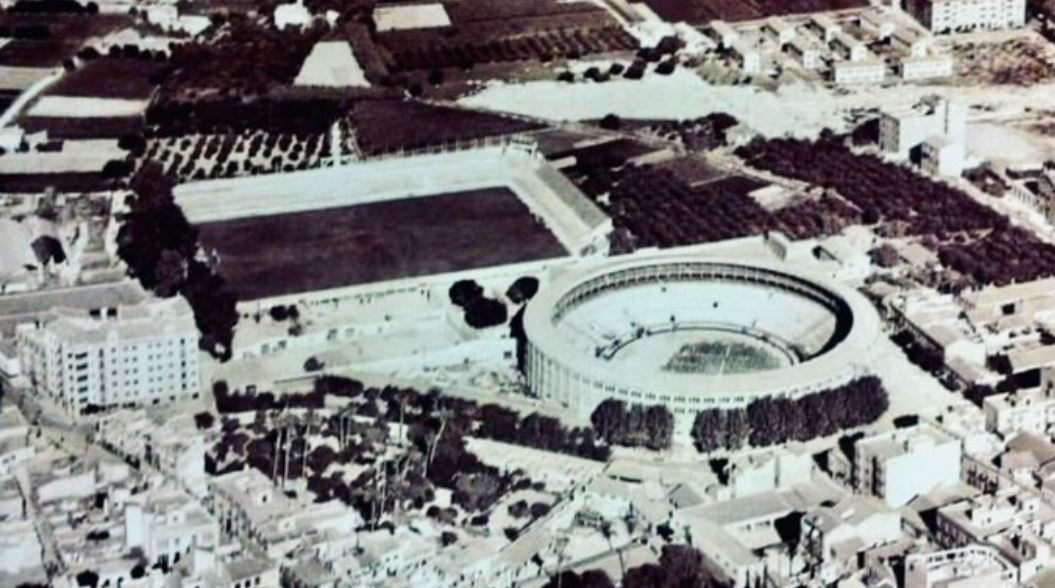
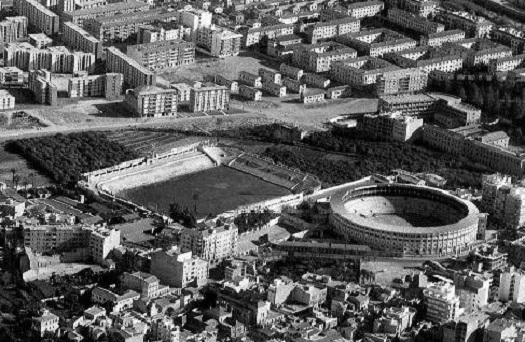
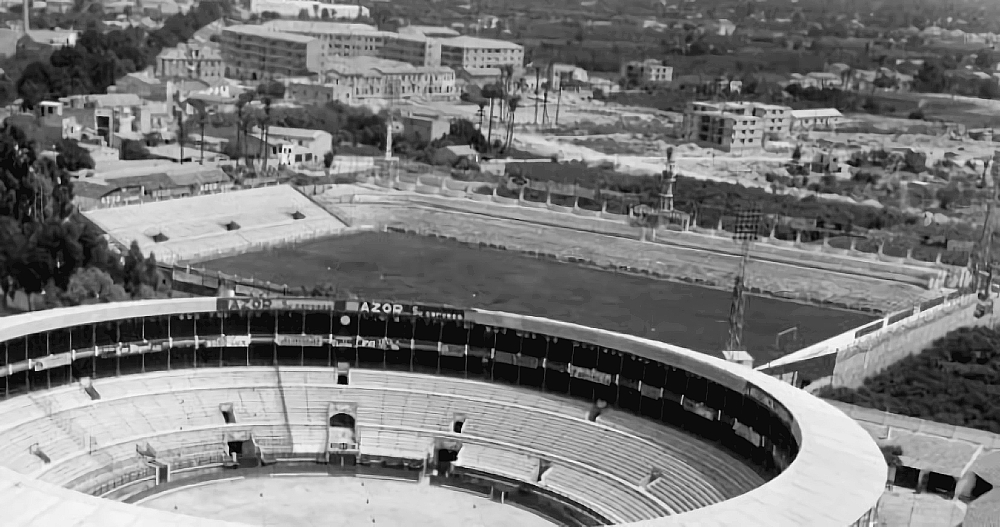
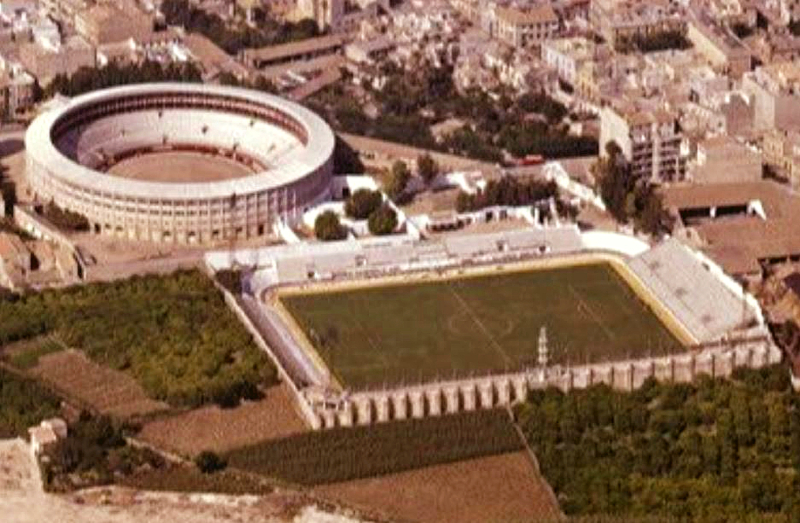
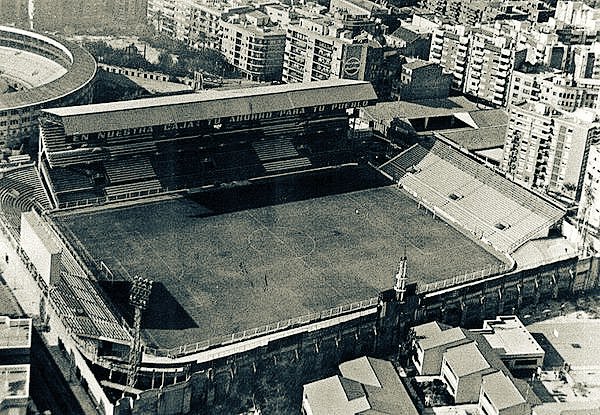
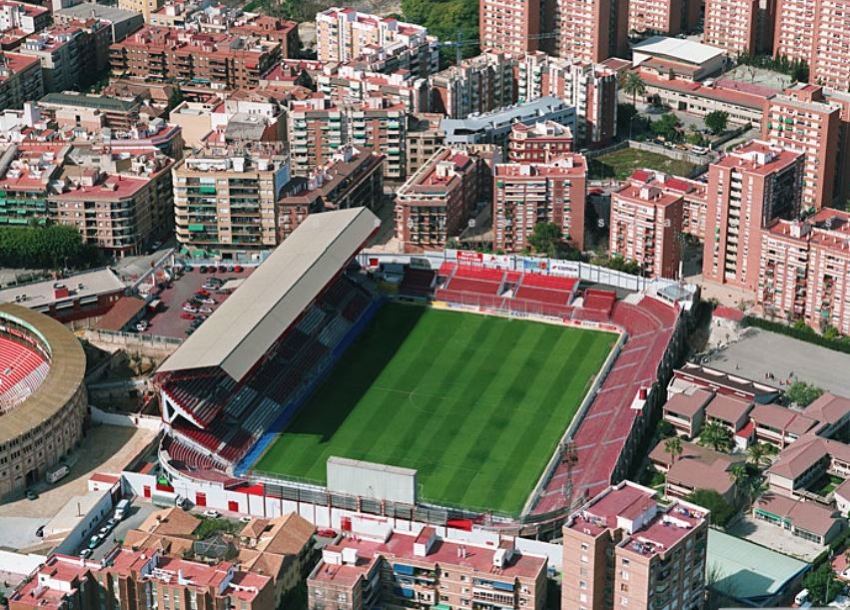
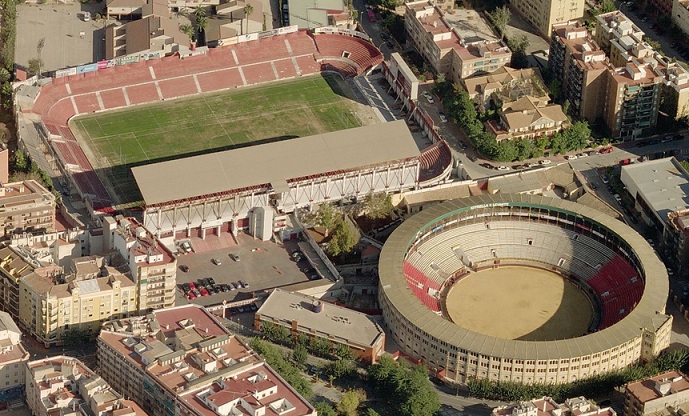
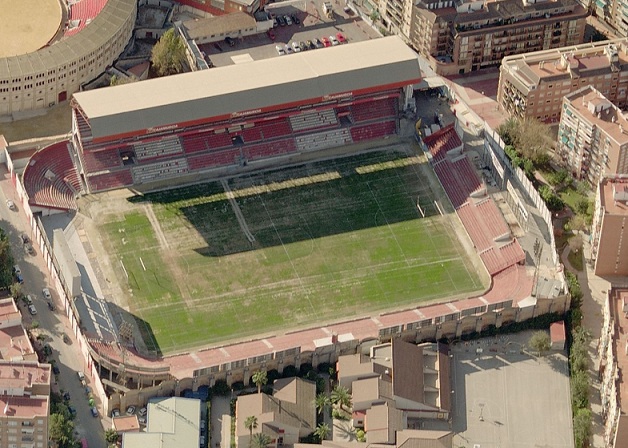
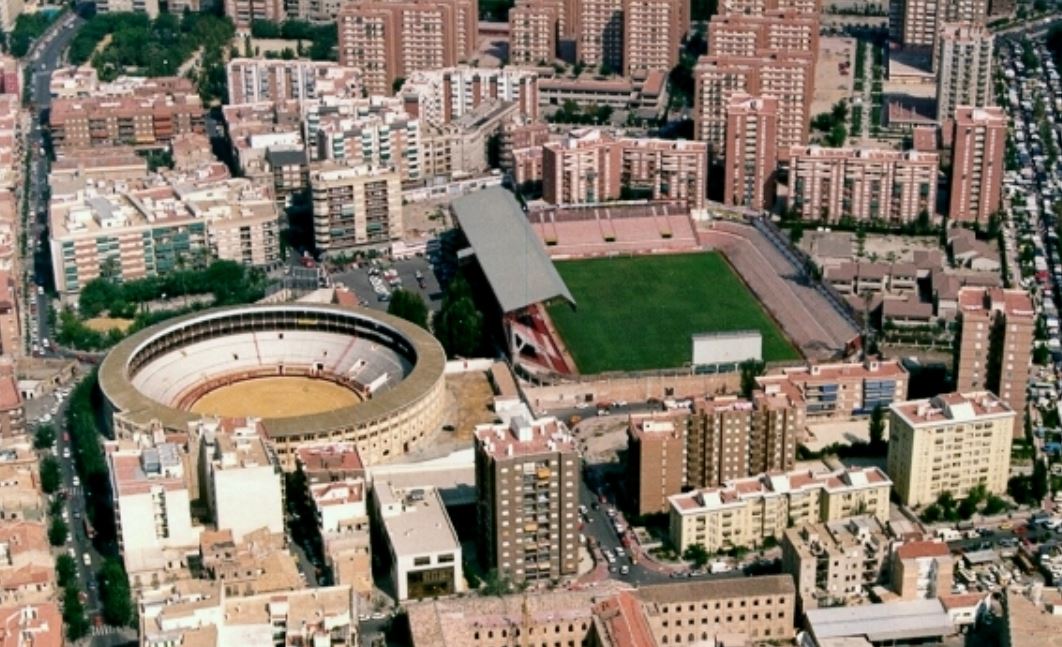
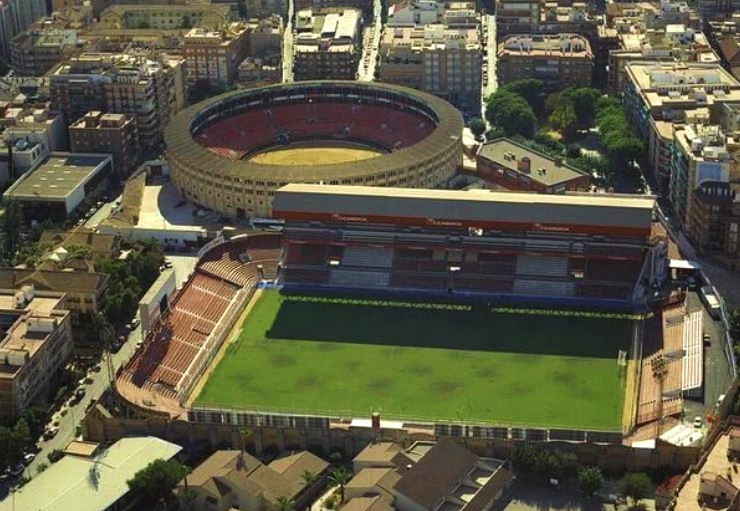
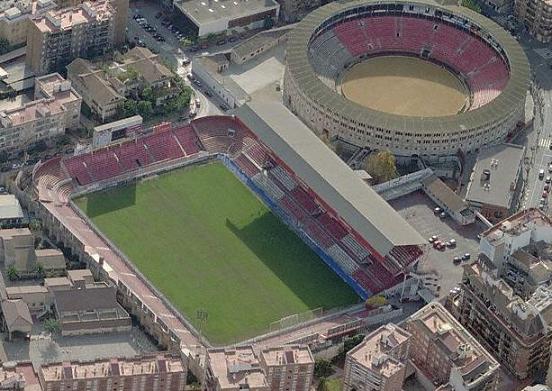
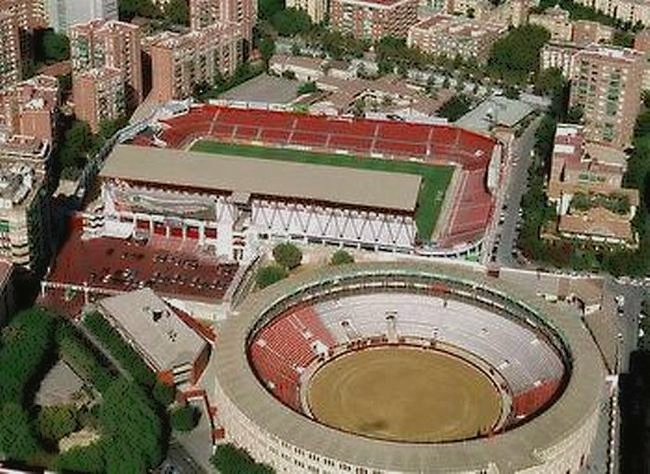
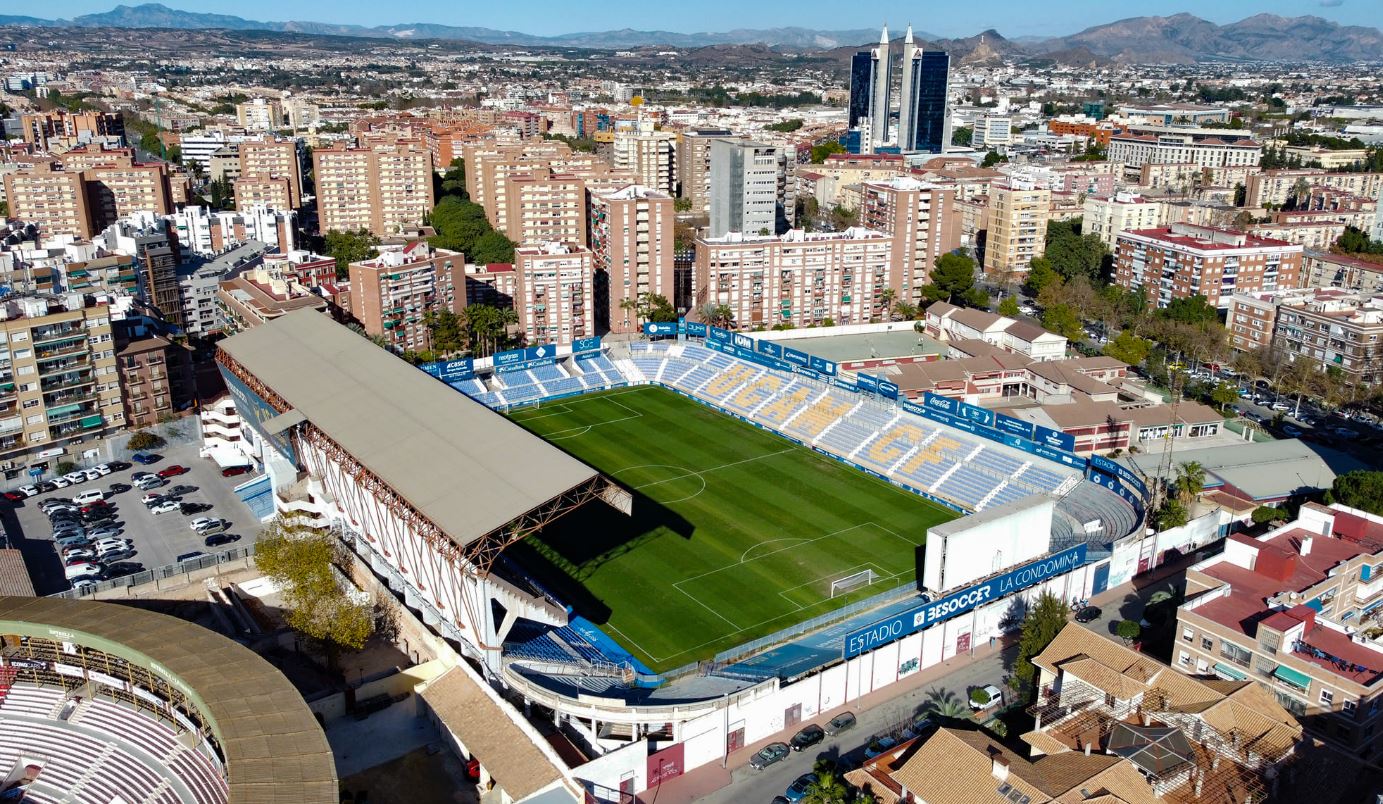
The forced move was a blessing in disguise as the Campo de la Torre Marquesa offered little in the way of spectator facilities and had poor access. The club was already looking for new ground and in April 1924 found a plot of land behind the city’s bullring. Opened on 25 December 1924 with a match against Martinenc of Barcelona, the ground was named La Condomina after a drain that ran along its east side into the Rio Segura. It was designed by engineer and former player Eduardo Menoyo and featured a narrow terrace and short stand on the west side, with hard standing on the other sides. With a capacity of 4,000, the new stadium was the ideal base for a club that was about to dominate the newly formed Murcian Federation. Those championship victories earned Real Murcia a place in the inaugural Segunda B in the 1928-29 season. Real Murcia finished runners-up and debuted in La Segunda in the 1929-30 season, finishing eighth. The club continued to make progress and reached playoffs for La Primera in 1934-35 and 35-36, but narrowly missed out. There would be no immediate chance to make it third time lucky, as on 3 October 1936, the Spanish Football Federation suspended the league due to the worsening Civil War. Murcia was a Republican stronghold for much of the war, and La Condomina was initially used as a drill field for soldiers and volunteers before being used to repair lorries and tanks. Finally, as the Nationalists closed in, the stadium was stripped of all valuable material.
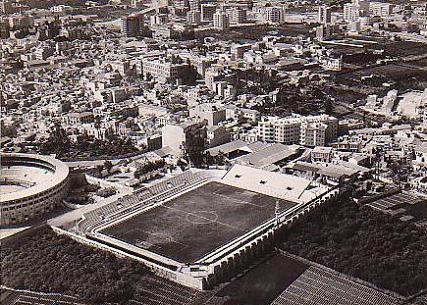
After the war, the stadium was in no fit state to be used, so work commenced before and during the 1939-40 season on major redevelopment. New terraces were built behind each goal, the western terrace was extended, and a thin terrace was added to the east side. Whilst work was progressing off the pitch, Real Murcia was making good progress on it. On 5 May 1940, the club travelled to the Campo de Deportes Mirandilla to face Cádiz CF in a match where the winner would be promoted to La Primera. Real Murcia prevailed 0-2 and won promotion to the top division in 1940-41. The first season at the top proved very difficult, and after just five wins, the club finished bottom and was relegated. Three years later, however, Real Murcia finished second in La Segunda, and with the playoffs scrapped, automatically ascended to the top flight. This time, Real Murcia managed to stay in La Segunda for three seasons before dropping back to La Segunda in 1947.
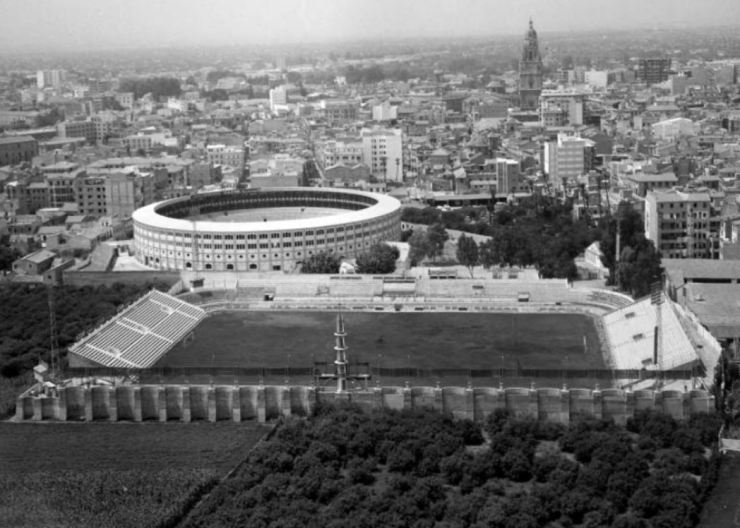
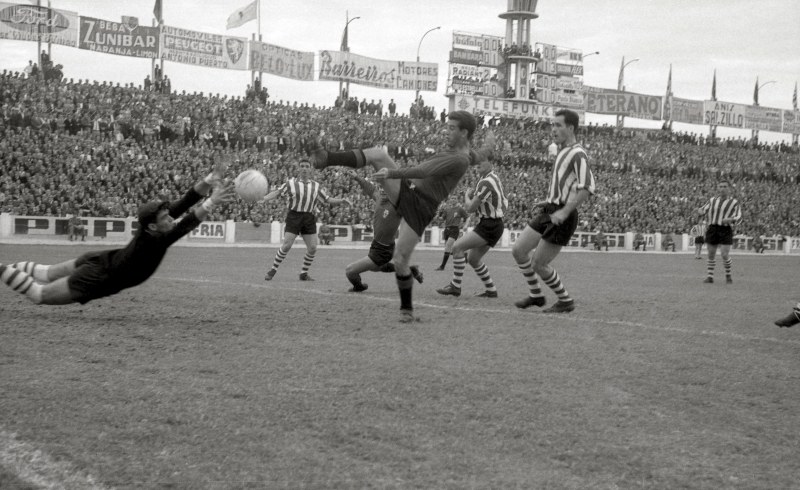
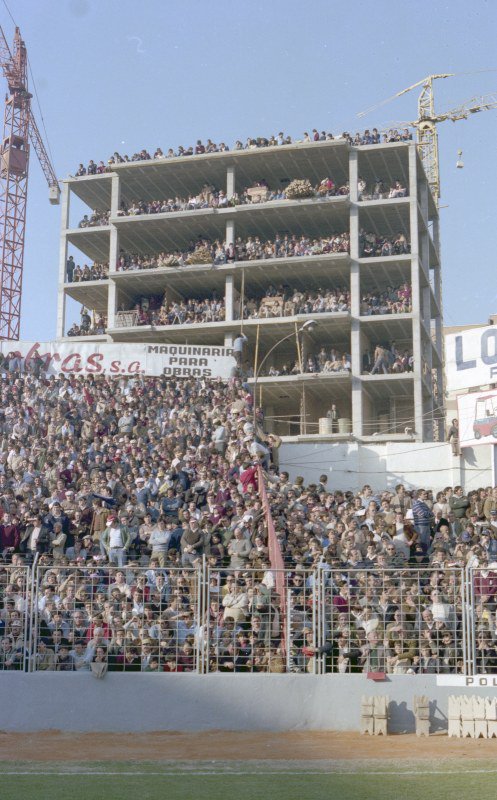
Despite a very healthy record in La Segunda, 9 titles and 11 promotions, Real Murcia has only managed to spend 18 seasons in the top tier, losing more than half of their matches. They have a best-placed finish of eleventh and have never managed to stay in the top tier for more than three consecutive seasons. This is in stark contrast to their record in La Segunda, where they have played a record 53 seasons. It was during one of its longer stays in La Segunda that La Condomina underwent its next redevelopment. The east terrace was extended and floodlights were added in the summer of 1961. These were switched on for the league match against Real Mallorca on 30 August 1961. At this point, La Condomina had a capacity of around 25,000, and it was full on 21 April 1963 when the club won promotion back to the top division. A two-year stay followed, but when they were relegated in 1965, it signaled the start of a decline that eventually resulted in relegation to the Tercera in 1970. Real Murcia is nothing if not resilient, and after two seasons, it won promotion back to La Segunda. The success did not stop there, and a second successive promotion saw the club back in the top flight, nine seasons after they last exited.
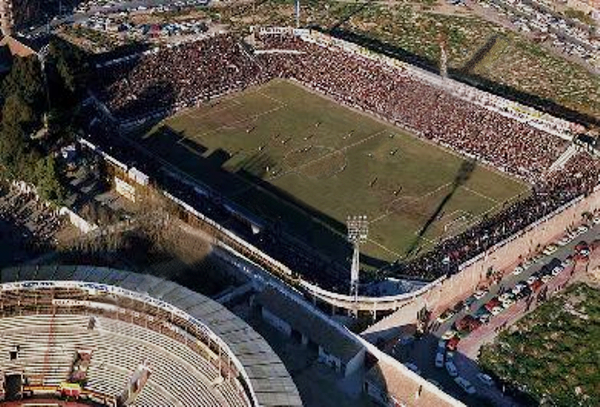
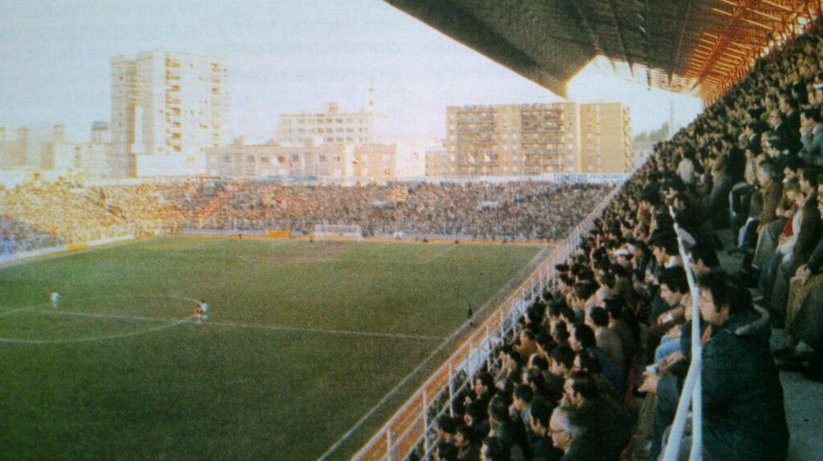
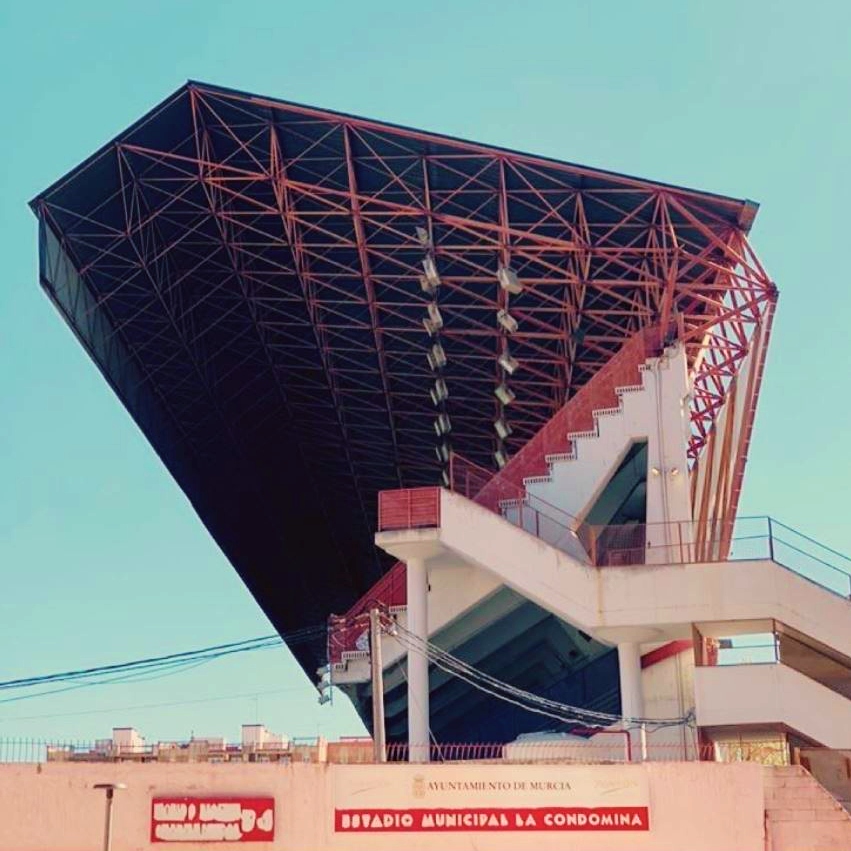
As if to emphasise its unpredictable nature, Real Murcia managed to stay in La Primera for two seasons in the mid-1970s before two successive relegations saw the club back in the Tercera, just five years after leaving it. Once again, Real Murcia didn’t hang around and were back in the second division for the start of the 1977-78 season. During the summer of 1978, work commenced on a new two-tiered terrace & amphitheatre on the west side, after faults were found with the structure of the 1940s build. This was opened on 15 October 1978, and the upper tier would gain a roof for the start of the 1980-81 season, as Real Murcia returned to La Primera. The eighties were the club’s most “successful” decade, with six seasons being spent with the elite. However, as sure as night follows day, a downturn was just around the corner for Real Murcia. The 1990s saw the club at its lowest ebb in terms of results, with relegation to Segunda B in 1992 and the Tercera in 1995, as well as a host of financial difficulties. This saw the club bailed out in September 1995, when debts were cleared with the sale of La Condomina to the Municipality for a sum that was equivalent to €40 million. The club fought back, and although the ascent was not quite as meteoric as earlier, the club won promotion in 1995-96 and 1999-00 to earn a place in La Segunda. However, during the summer of 1999, a new pretender arrived on the scene when former Real Murcia player Enrique Pina formed Club de Fútbol Ciudad de Murcia. A team that, within 5 years, would challenge Real Murcia for the position of top dog in town.
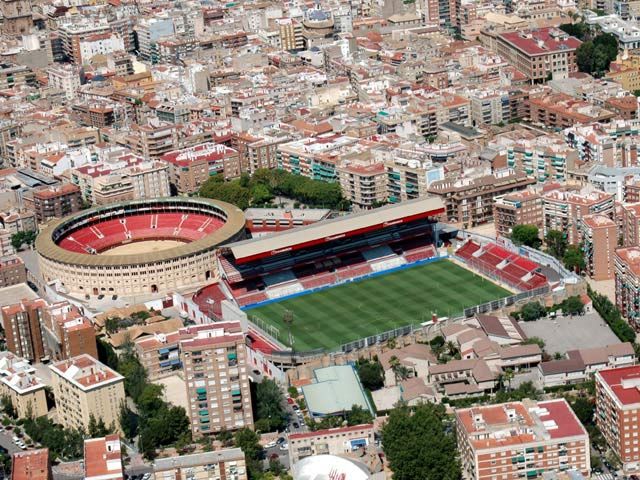
The turn of the century saw an upturn in Real Murcia’s fortunes, and after two steady, if unspectacular seasons, the club won its ninth La Segunda title and promotion back to La Primera after a 14-year absence. The minimum standard for stadiums had evolved dramatically since the mid-1980s, and with La Condomina now an all-seater stadium, its capacity was reduced to just 17,000. Home matches had an average attendance of little over 11,000, only slightly better than their promotion season. This low figure was in part due to another woeful season in the top division. Real Murcia won just five matches and returned once again to La Segunda at the end of the season. Back in the second tier, Real Murcia had the nasty shock of having to play against and share La Condomina with Ciudad de Murcia, who had won promotion to La Segunda in their absence. At least they had the comfort of coming out on top in the La Derbis and the final league position, finishing 12th to Ciudad’s 18th. A year later, however, the positions were reversed, with Ciudad de Murcia just missing out on promotion and Real Murcia finishing 16th. Work had already begun on a new stadium a few miles to the north of the city, and it was imperative that Real Murcia, with its larger fan base, got back to the first division.
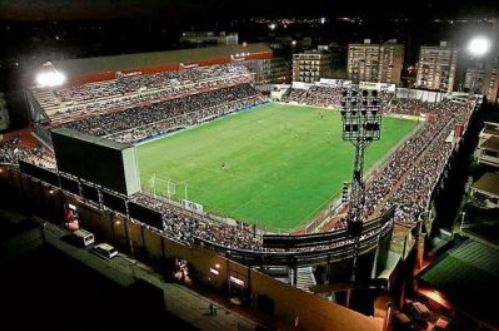
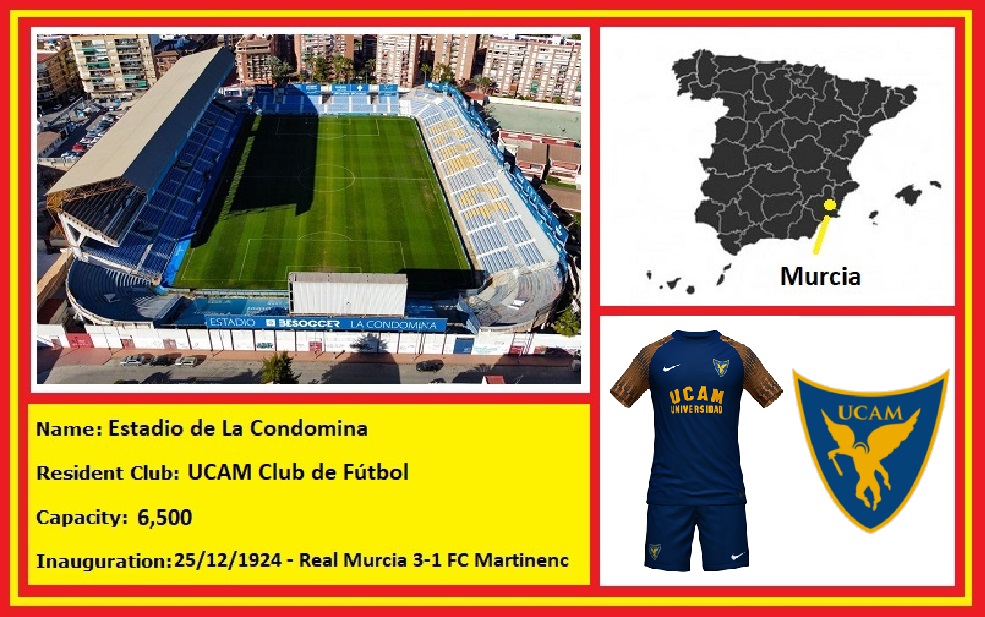
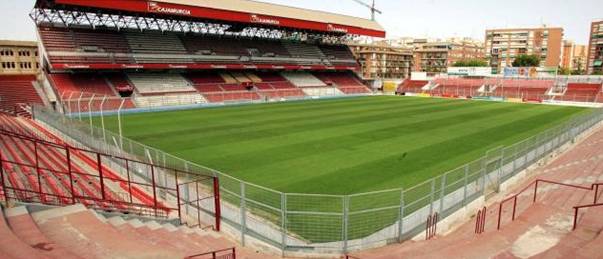
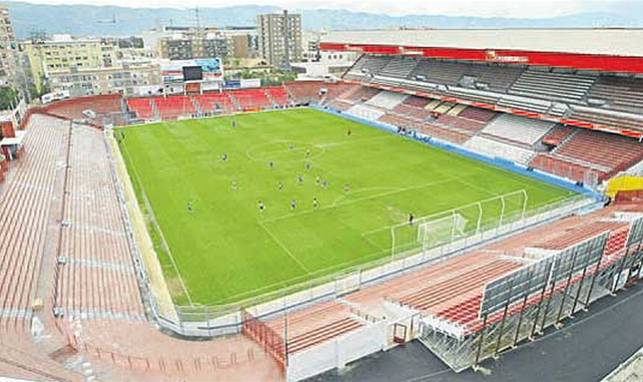
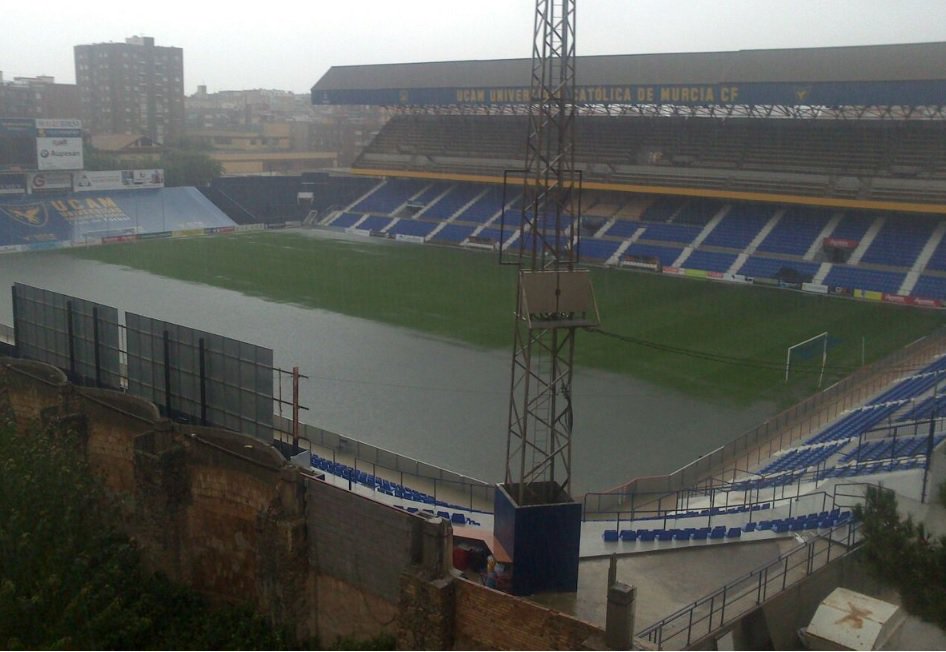
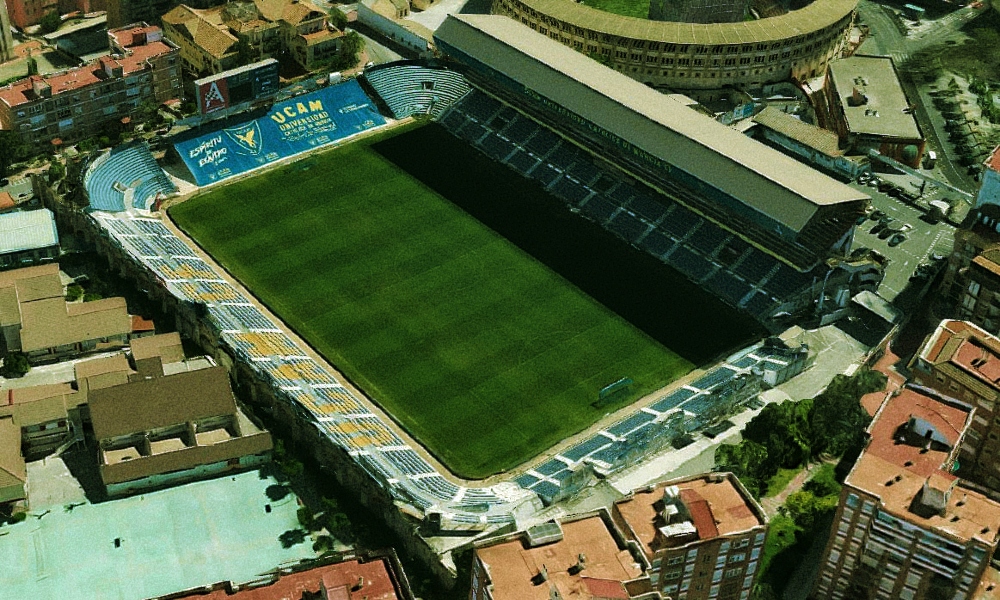
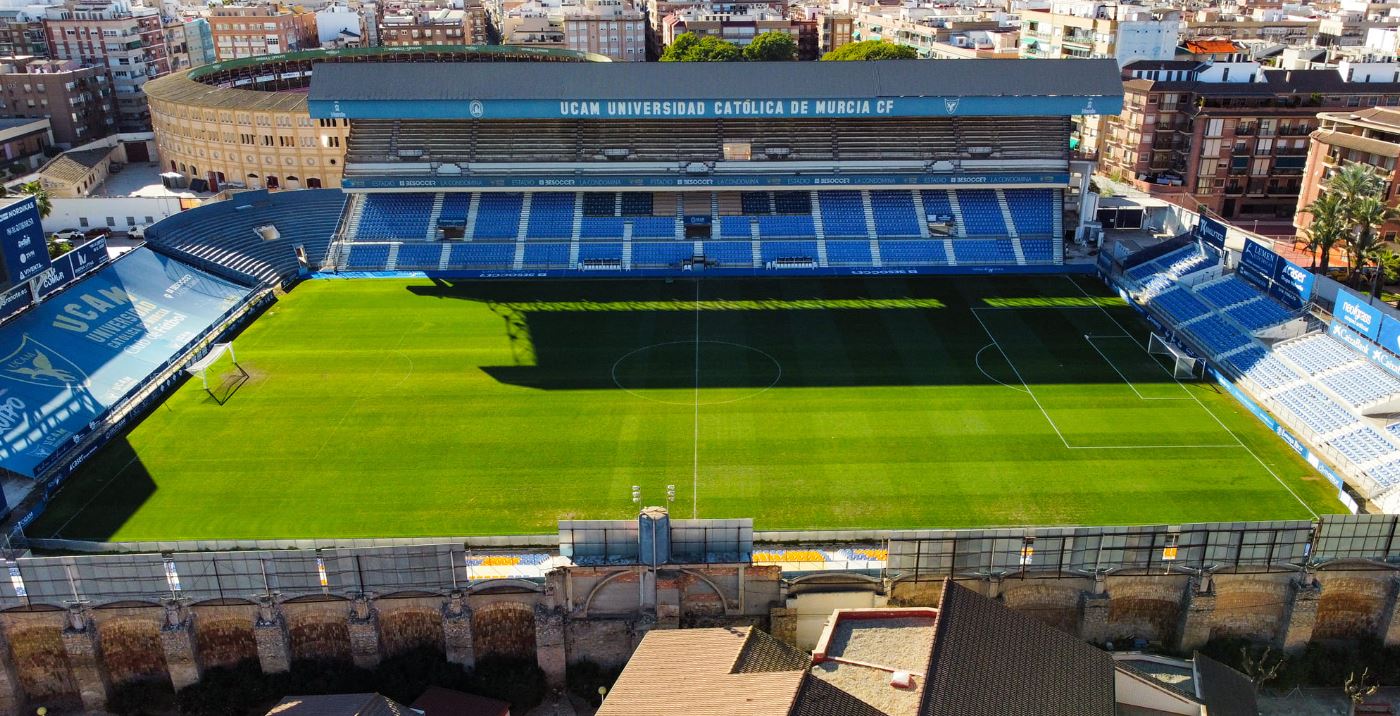
Real Murcia started the 06-07 season at La Condomina, but played their last home match at the venue on 11 November 2006, losing to Polideportivo Ejido 0-1. Whilst Real Murcia headed to the new 31,179 capacity stadium to the north of the city, winning promotion at the end of the season, Ciudad de Murcia, with their attendances of little over 3,000, continued on at La Condomina. The club almost pulled off a Murcian promotion double, finishing fourth, one place behind their promoted city rivals. However, during the summer of 2007, the club was sold to Carlos Marsá Valdovinos, president of little-known Granada 74, for €27m and moved lock, stock, and barrel 330 km west to Motril. Football finally returned to La Condomina in September 2014, when UCAM Murcia CF moved from the suburb of Sangonera La Verde into the centre of town. Rather than open the whole of the stadium, UCAM’s supporters are confined to the lower tier of the main stand, and the available capacity now stands at 6,500. With UCAM Murcia CF winning promotion to La Segunda in 2016, the old stadium had a bit of a makeover. Blue (yes, blue!) seats were installed in the lower tier of the main stand, whilst the north and east terraces were re-faced and blue seating installed.
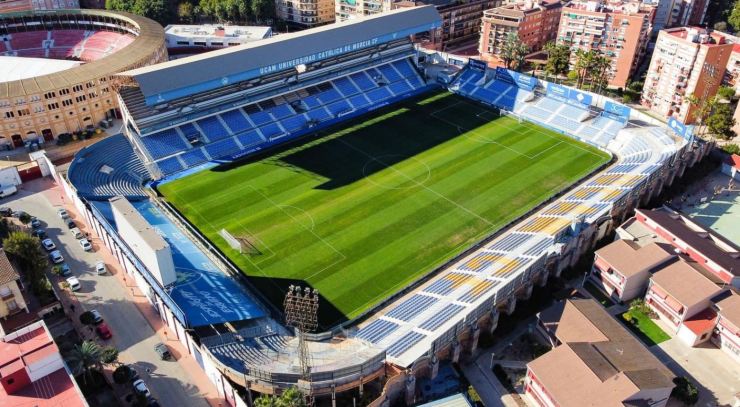
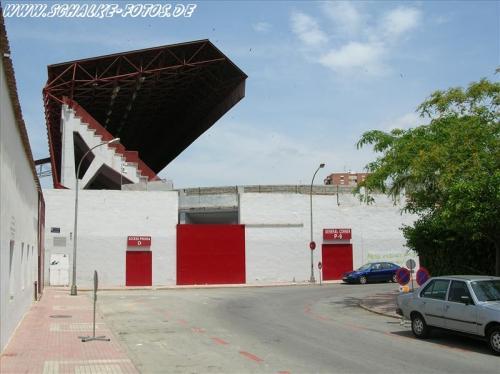
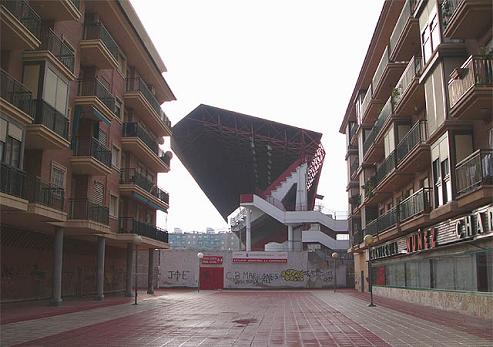
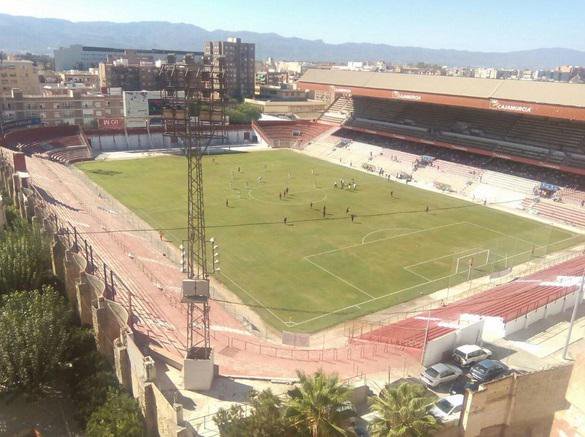
La Condomina has hosted professional football for over a century. It is a great example of a dying breed; A relic of an era when football clubs wanted to be in the heart of the city. Terracing is tight up against the touchlines, whilst the main stand towers high above the pitch. There is nothing in the way of additional spectator facilities inside the ground; you just walk across the street to the bars that line the adjacent avenues. Great for pre- and post-match atmosphere, but a disaster for today’s corporate conscious clubs. The stadium was due to be demolished in 2008 and make way for housing and a sports centre, but the global financial crisis put a stop to that. Problems with the structure of the south terrace led to its demolition in 2009. Nowadays, the biggest crowds to attend La Condomina have come for the music festivals and concerts that the stadium hosts during the summer months. With little in the way of money to develop the site, the fat lady can wait in the wings for a little longer.




 Estadios de España