Article updated: 16/09/2025
The history of FC Barcelona‘s reserve teams is a complex affair, marked by stories of mergers, fan alliances, and teams going their separate ways, before the current structure was established in 1970, when Futbol Club Barcelona Atlètic, or Barcelona Atlético as it was then known, was formed.
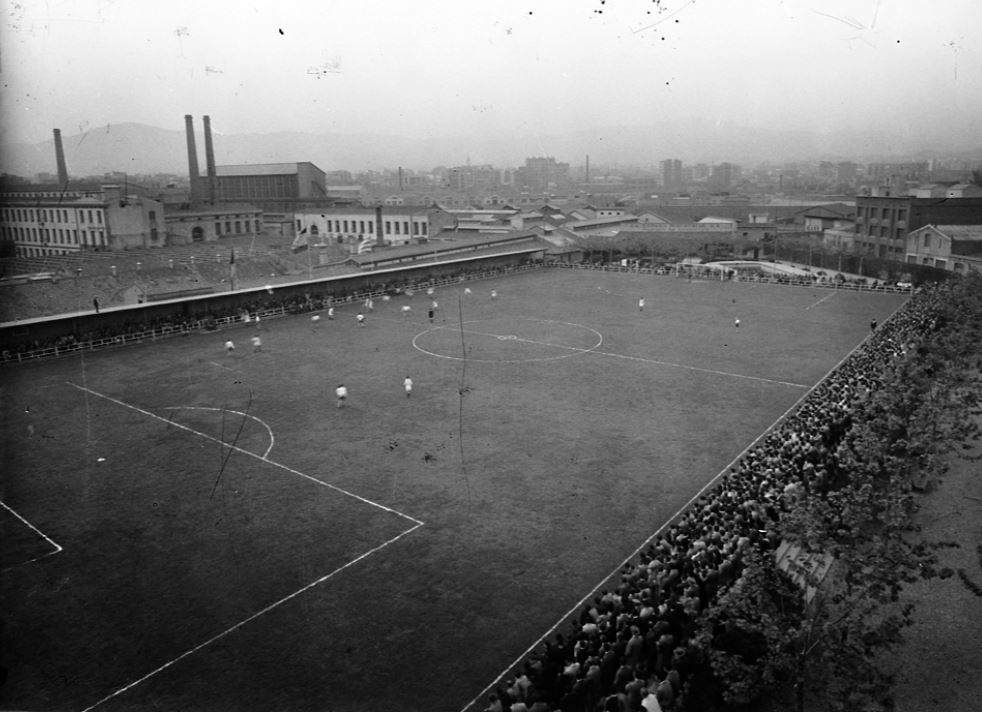
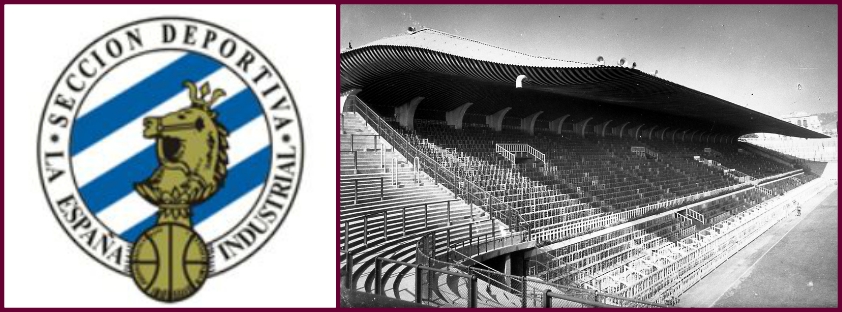
The first club to become an affiliated entity of FC Barcelona was Sección Deportiva La España Industrial. Founded in 1923, the factory team was owned by the family of Josep Antoni de Albert, who later became President of FC Barcelona in 1943. In 1945, the team officially became Barça’s reserve side and started to play occasionally at the Camp de Les Corts, although the majority of fixtures were played at Campo de Hostafrancs. In 1952, the club reached La Segunda, finishing second in its first season and second in the playoff group. However, the club was not eligible for promotion, much to the relief of Celta Vigo, who retained their top-flight status by default. Four years later, La España Industrial won promotion to La Primera, and in order to avoid a repeat of the 1952-53 season, the club broke away from FC Barcelona and took on the name Club Deportivo Condal. The club continued to play at Les Corts, but their stay in La Primera lasted just a single season, and they finished in bottom place. Their matches against FC Barcelona were both played at Les Corts. The first match on 12 January 1957, with Condal as the home team, ended in a 1-1 draw. The return match at er… Les Corts took place on 7 April 1957 and was a one-sided affair with Barcelona winning 5-0.
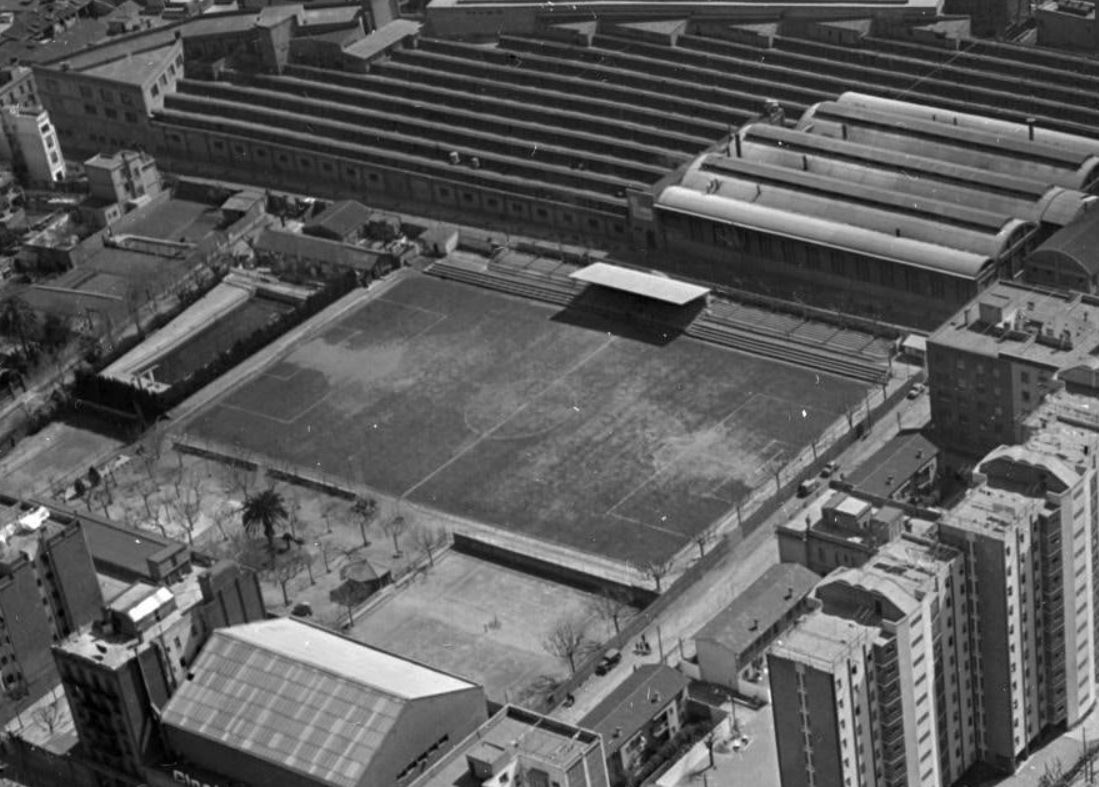
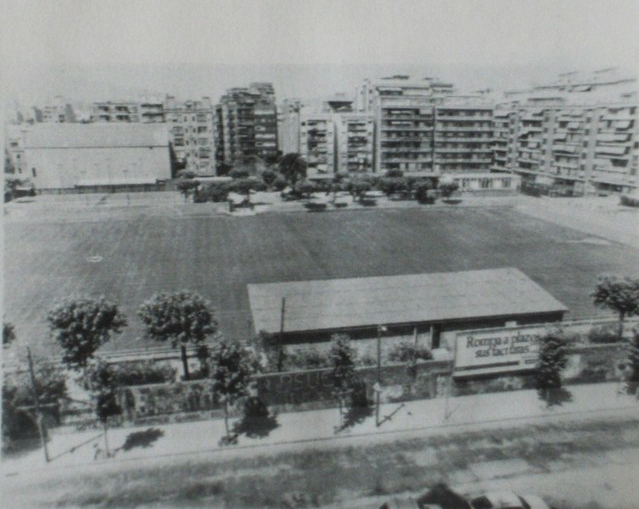
Back in La Segunda, CD Condal played on until 1961, when beset with financial problems, they resigned and dropped to the regionalised Tercera. They moved out of Les Corts and set up home back at the Campo de Hostafrancs before moving to Camp Nou when they regained their place in La Segunda in 1965. In 1970, they merged with Atlético Cataluña CF, a team set up by Barça’s fans in 1965, to form the current reserve side. Atlético Cataluña had previously merged with another factory team, Club Deportivo Fabra y Coats, and it was their ground, sandwiched between the Passeig de Fabra i Puig and Carrer de Dublin, that the newly monikered Barcelona Atlético used from 1970. Two seasons after the merger, the club dropped to the Catalan Regional Primera, however, two successive title wins earned Barcelona Atlético promotion to La Segunda. Their three-season stay saw a high finish of sixth in 1975-76 before dropping to Segunda B in June 1977.
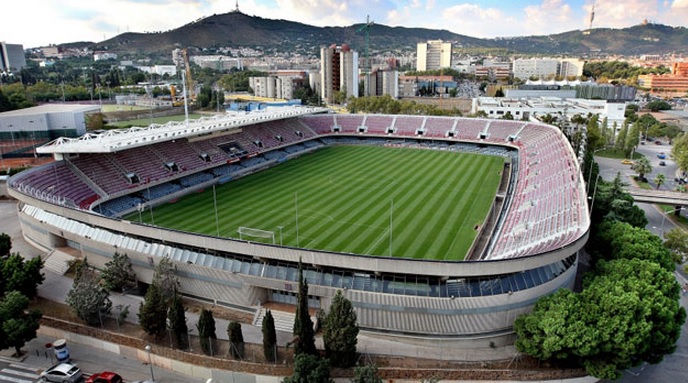
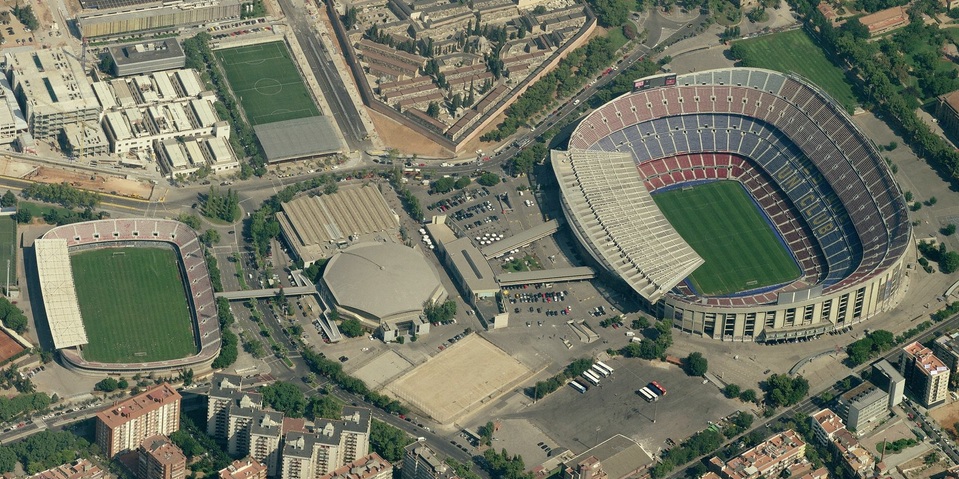
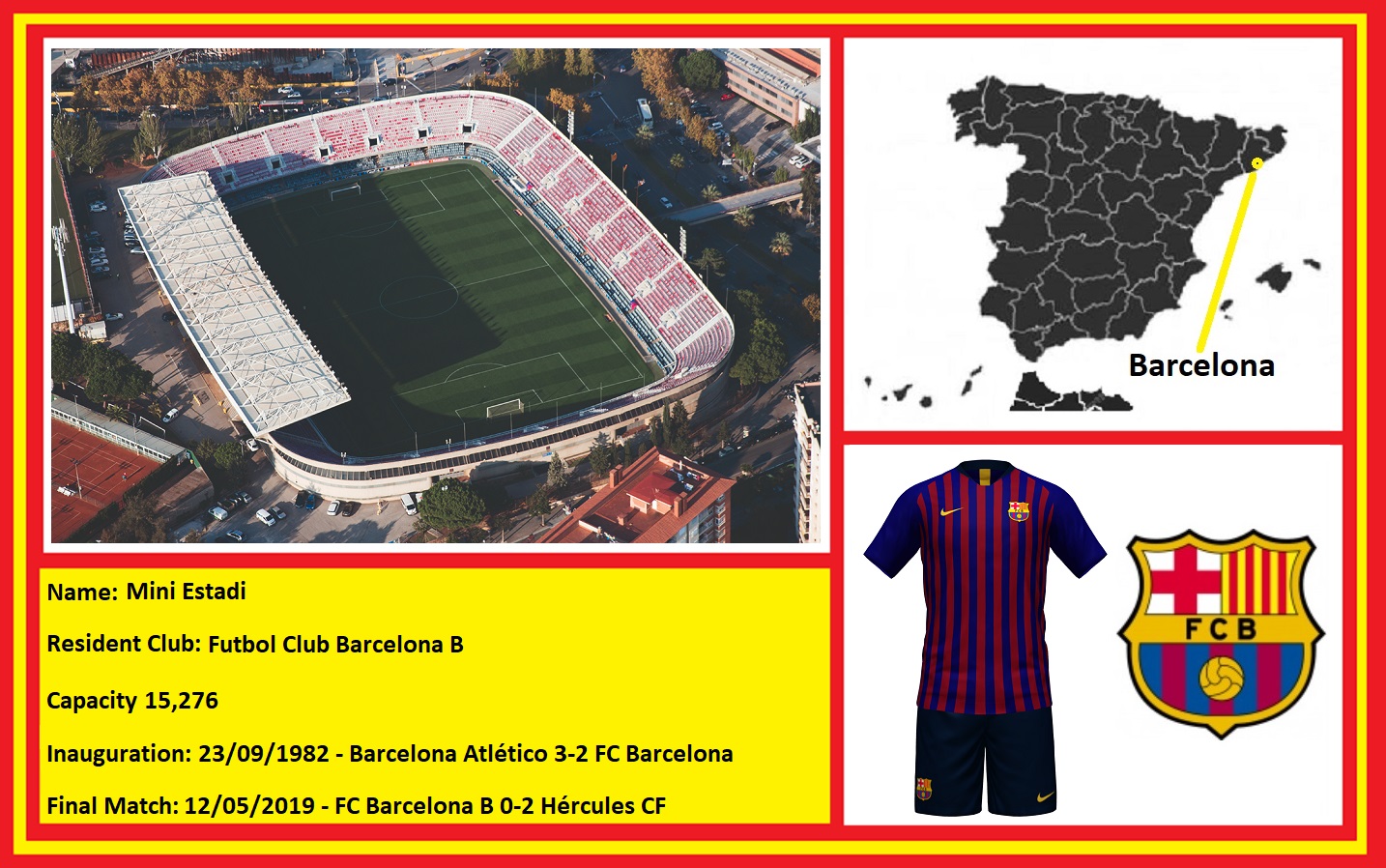
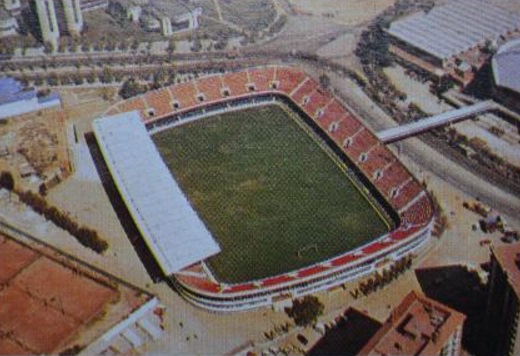
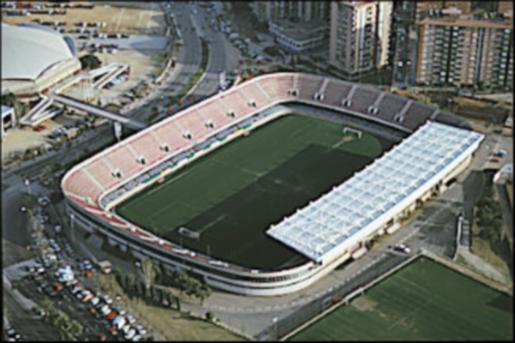
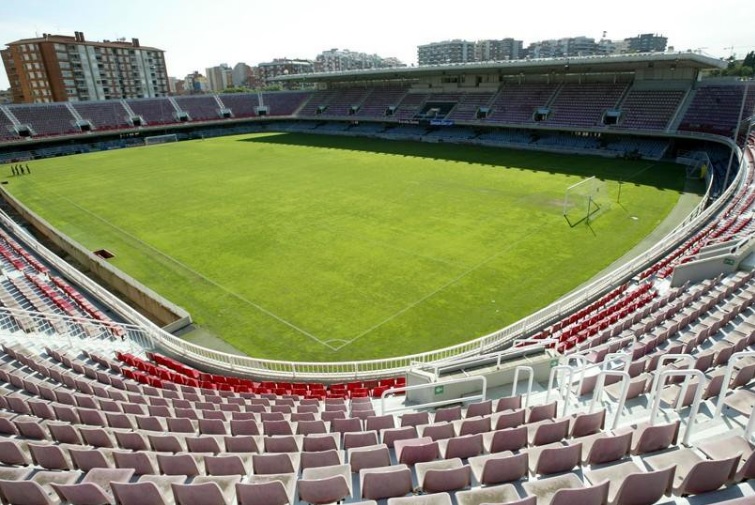
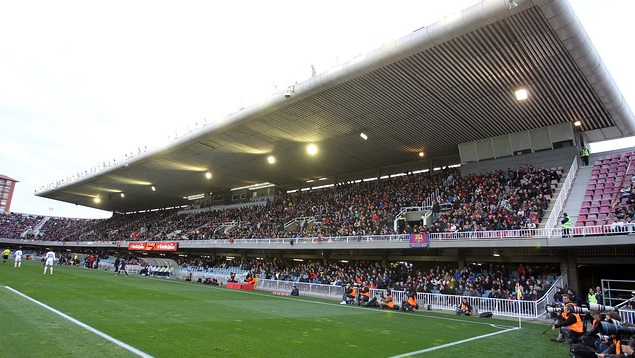
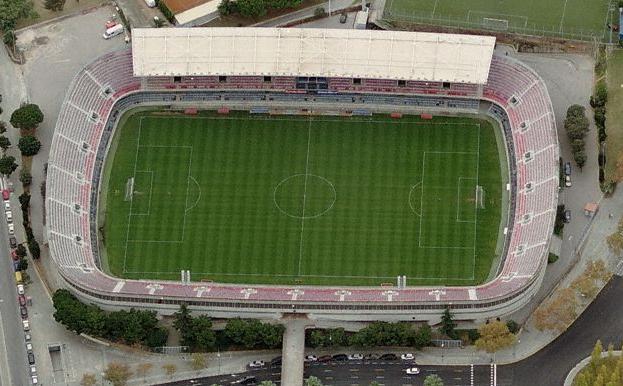
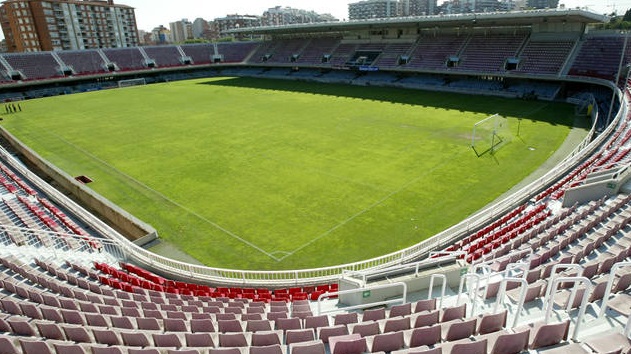
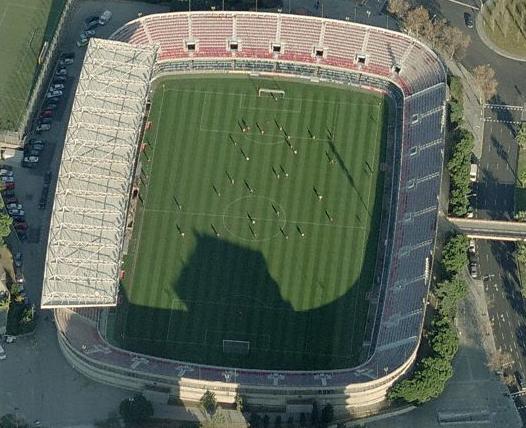
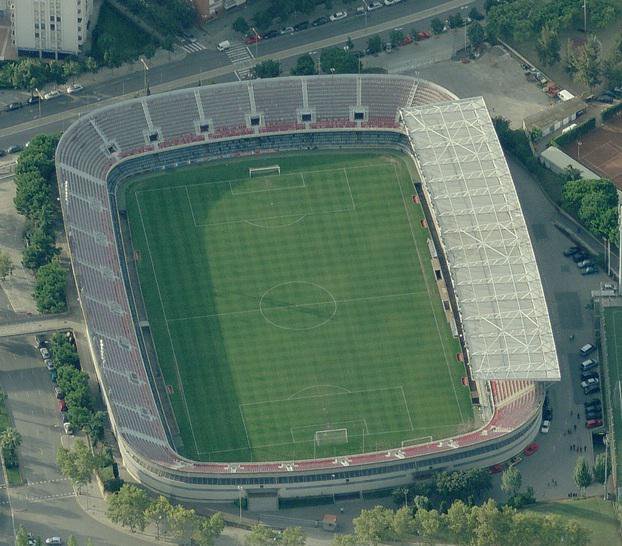
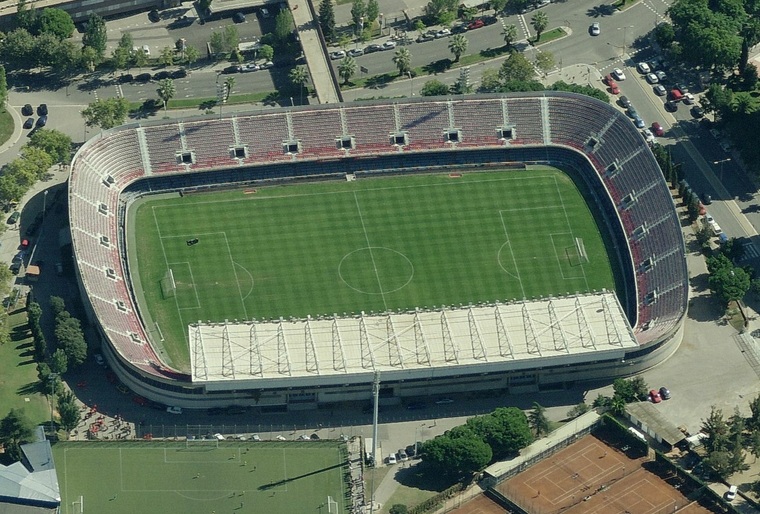
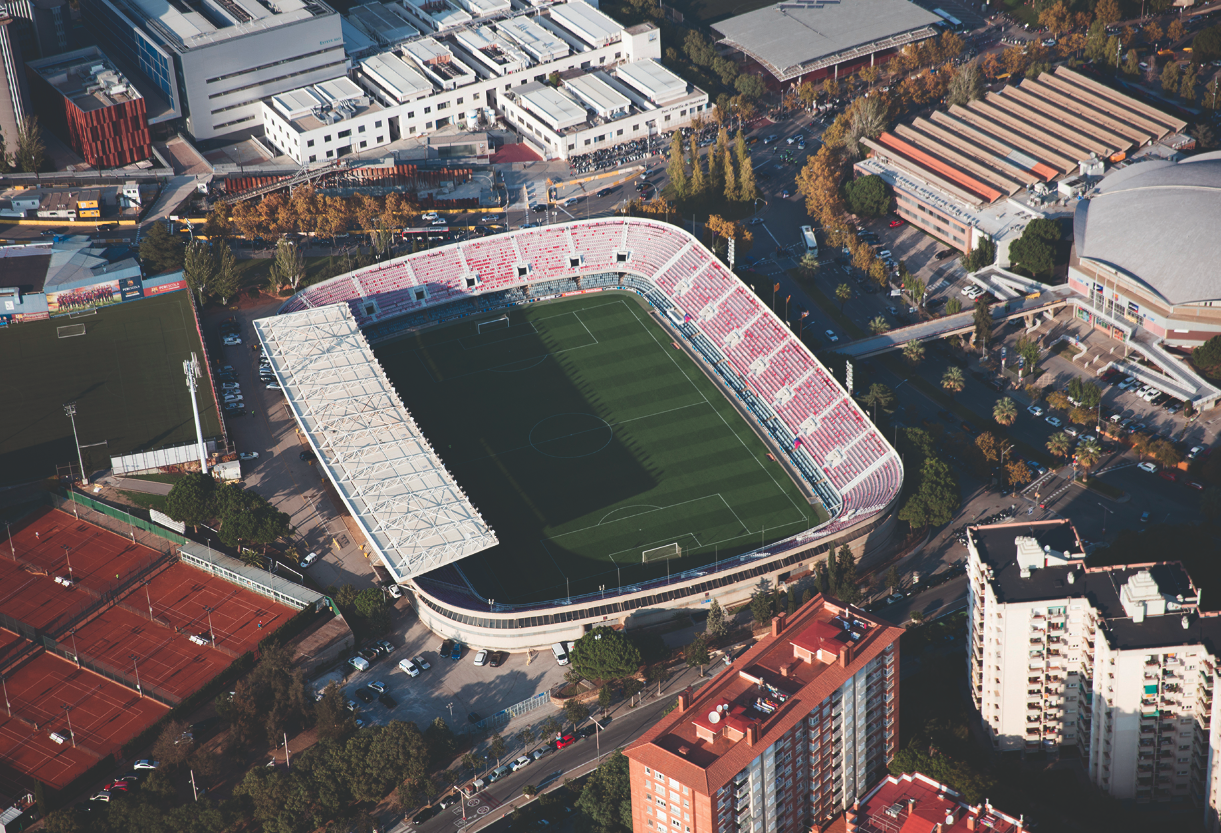
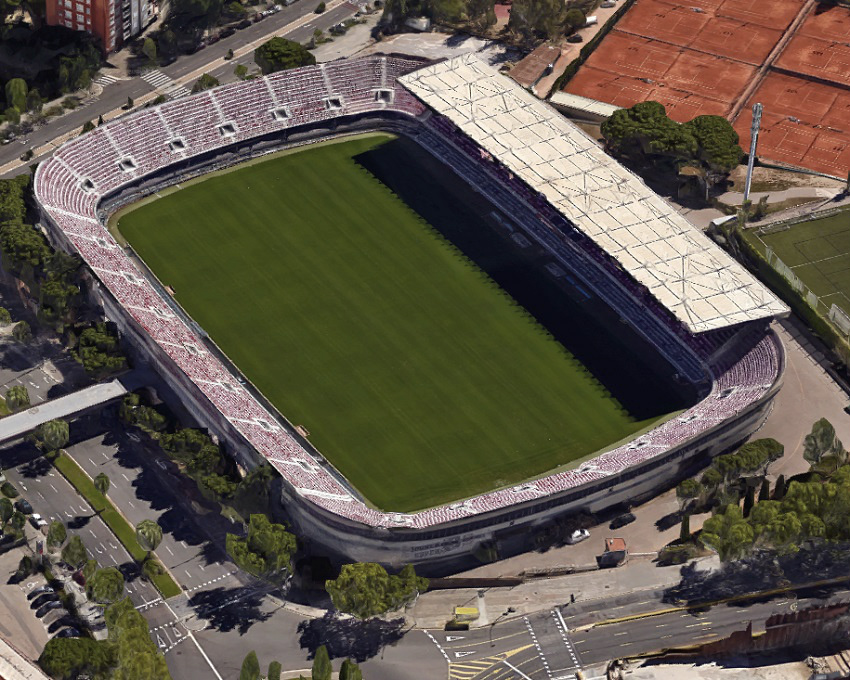
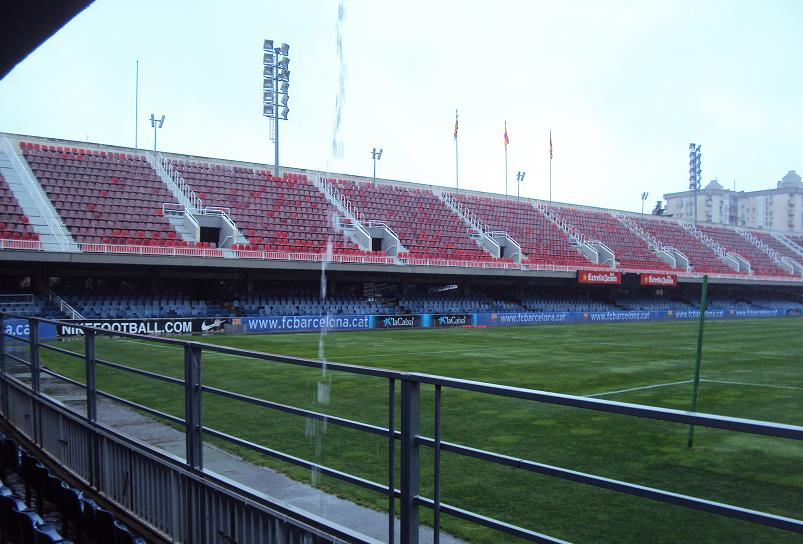
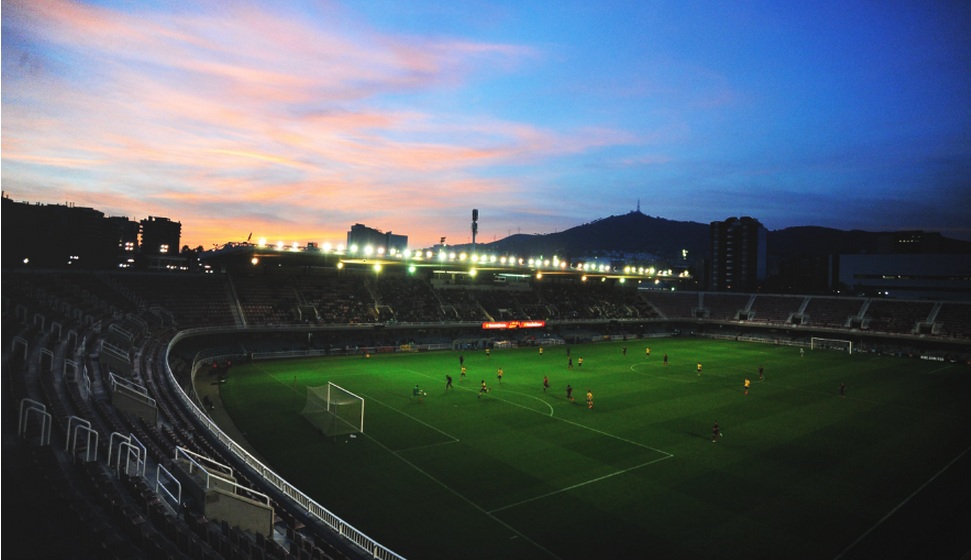
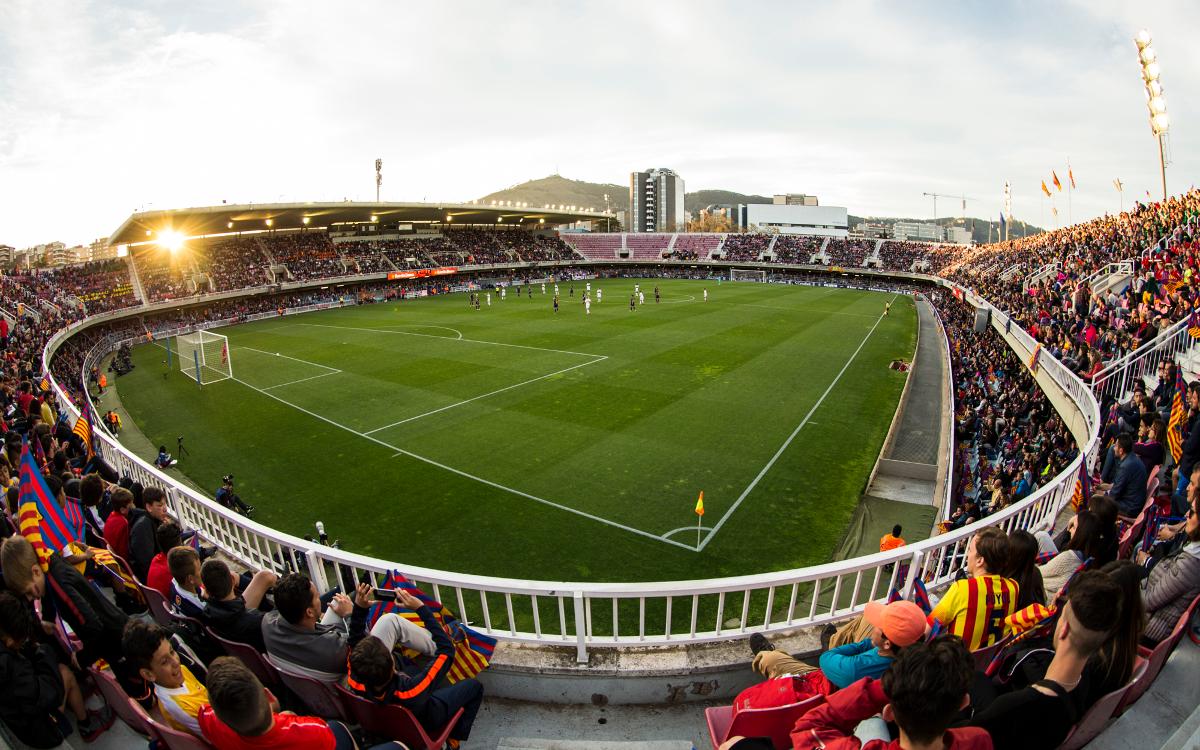
On 23 September 1982, Barcelona Atlético played the first team in the inaugural match at the Mini Estadi, with the 2nd XI winning 3-2. The stadium was designed by local architect Josep Casals. It had seating for 15,276 over two tiers and a cantilevered roof over the west side. The new stadium cost 270 million pesetas and made a stunning statement about the size of Barça. Here was a club with 110,000 members, sports sections that are among the best in Europe, and its Second XI plays in a purpose-built, all-seater stadium. This compact design was copied elsewhere in Spain, with CD Castellon opening the Nou Castilia in 1987 and FC Cartagena opening the Estadio Cartagonova a year later.
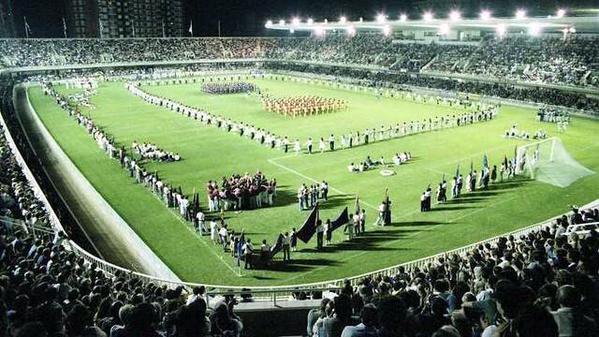
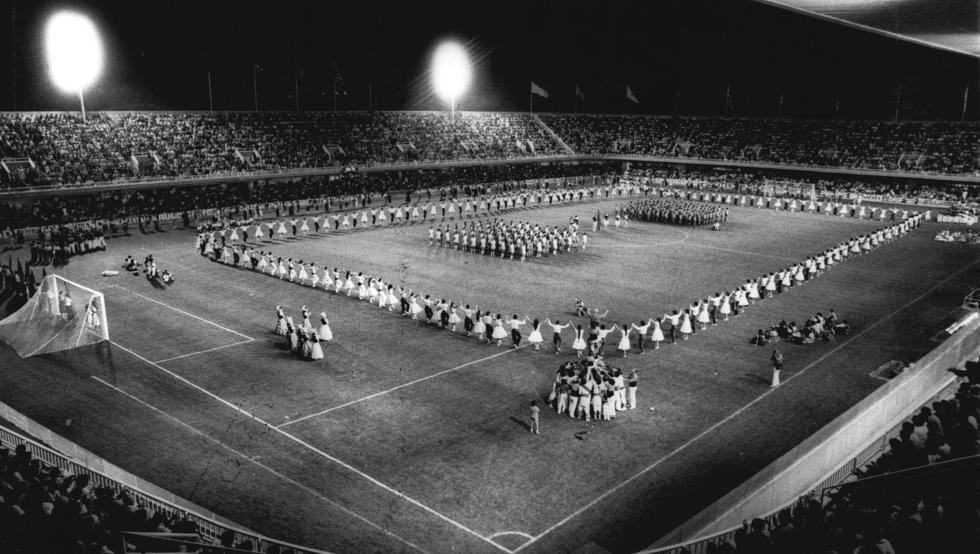
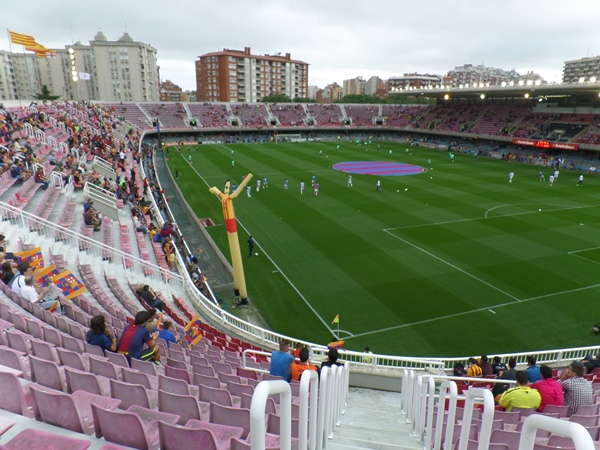
In its heyday, the stadium saw full houses, such as in the Copa del Rey in 1984 when Barca B drew 0-0 with Real Madrid and Andorra’s international matches against Holland & The Republic of Ireland. Queen, Elton John & David Bowie have all packed out the Mini Estadi, although the ill-fated attempt to bring American Football to Europe failed to tempt the Catalan public to the Mini Estadi, and the Barcelona Dragons folded in 2003. However, its most important role over nearly four decades of service was to act as the stage where the club’s most promising talent took their first steps in senior football.
After moving to the Mini Estadi, Barcelona B (there were a number of name changes between 1990 and 2010) spent 14 of the next 17 seasons in La Segunda, achieving the highest placed finish of sixth on two occasions. They dropped to Segunda B in 1999 and took another eleven seasons to regain their place in the second tier. They returned to La Segunda in 2010, finishing the 2010-11 season in third place. The Spanish League obviously outlaws any reserve team playing higher than La Segunda, and with no chance of a Condal-style breakaway, this is as high as the team can go. The exploits of the youngsters did attract decent crowds to the Mini Estadi, with average gates as high as 6,000 in its final few seasons.
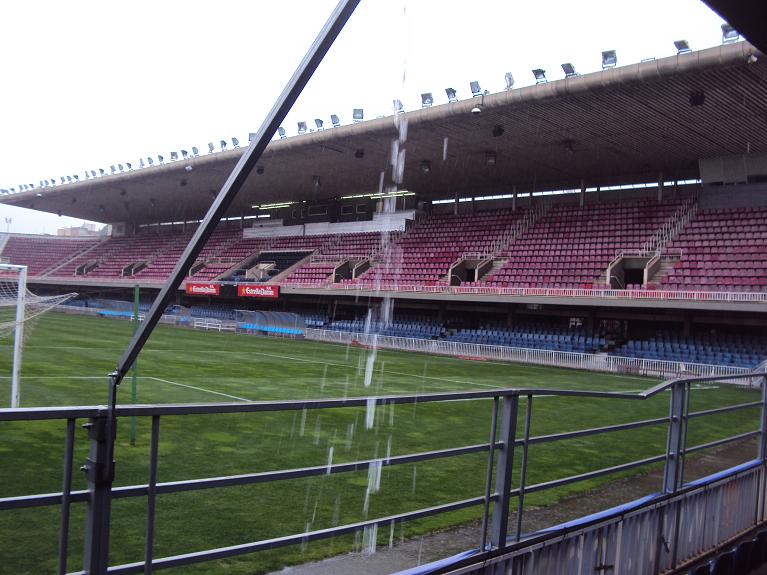
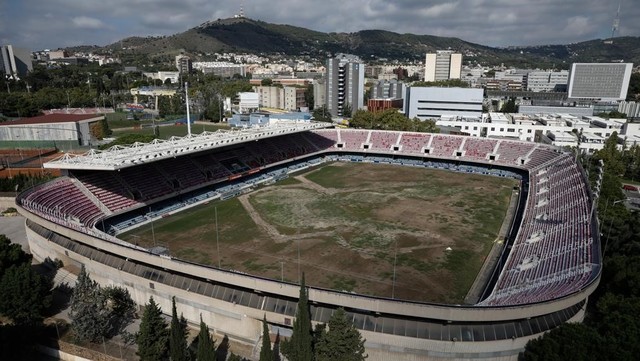
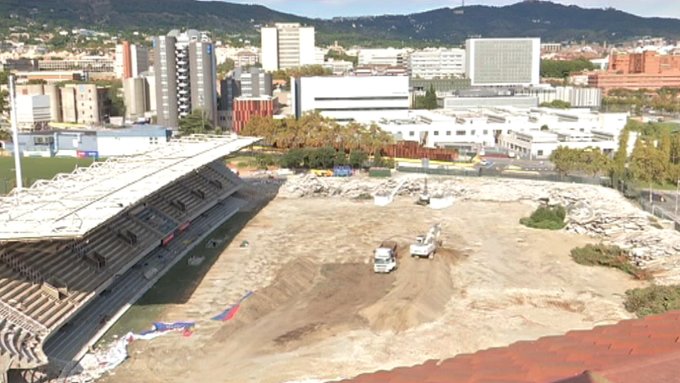
Whilst most clubs would bite your hand off for such a stadium, I have to say that when I visited in 2013, the Mini Estadi was looking rather tired. Quite a few seats were either broken or working loose from their moorings, and all of them have faded in the Catalan sun. Talk of selling the ground to aid funding of the redevelopment of the Camp Nou was first raised in 2007. Whilst there were a couple of stays of execution, the axe finally fell in September 2019, when, as part of Barça’s plans to expand the Camp Nou, demolition commenced on the Mini Estadi. The stadium hosted its final competitive match on 12 May 2019, when Hércules beat Barcelona B 0-2.
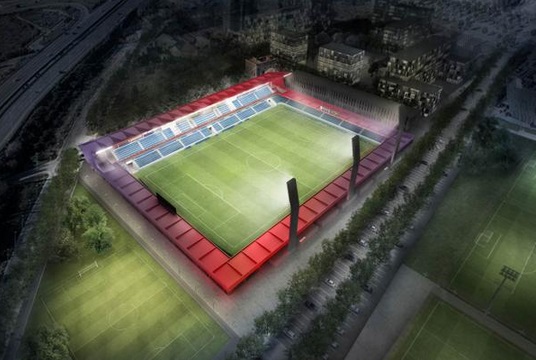
Barcelona followed the lead of many other La Liga clubs and now bases its B team at the club’s out-of-town sports city. The Estadi Johan Cruyff is the new home of FC Barcelona Atlétic (there was another change of name in 2022) & Barcelona Femení. The 6,000-capacity, state-of-the-art stadium may not be the grandiose statement that the Mini Estadi was back in 1982, but it is a commitment to the club’s continued development of exceptional young talent.
 Estadios de España