
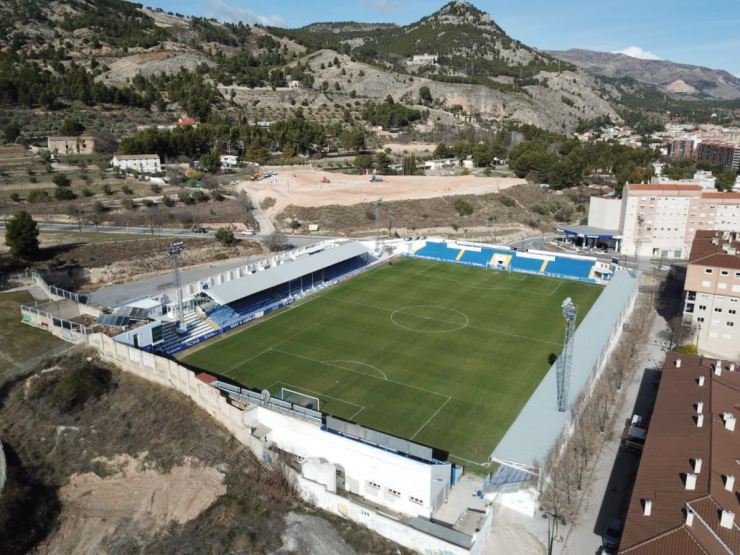
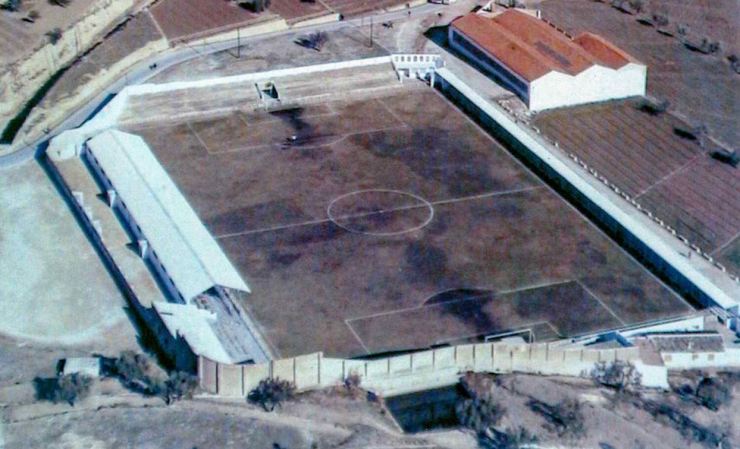
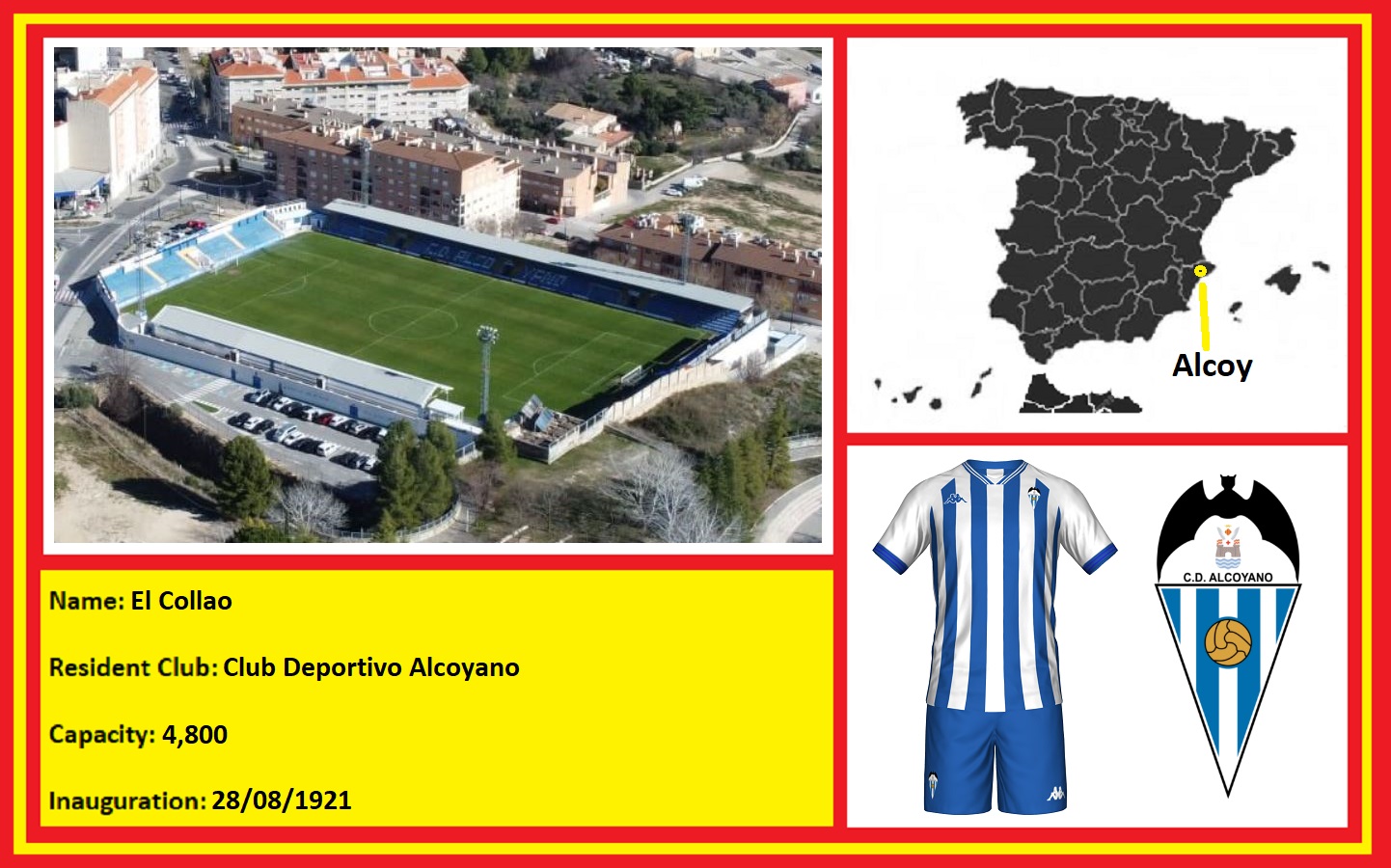
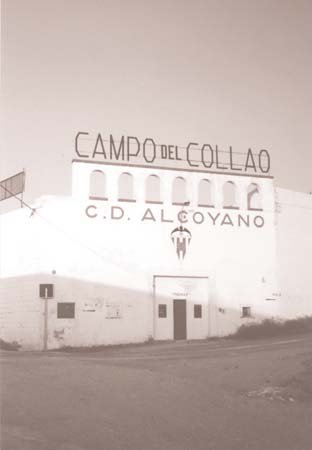
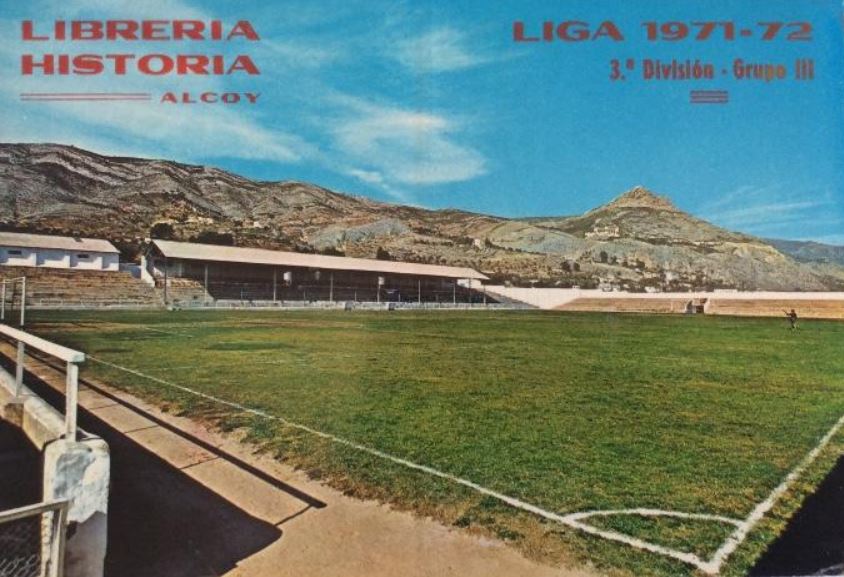
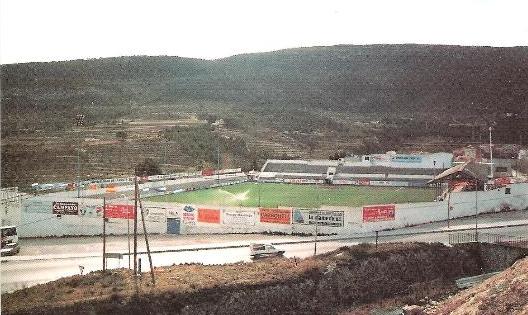
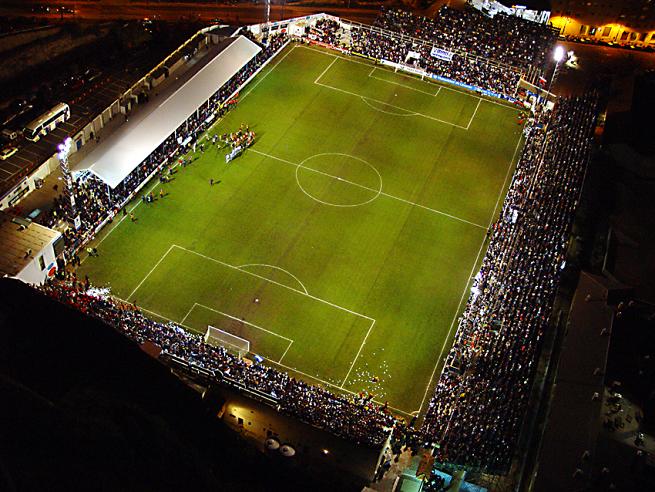
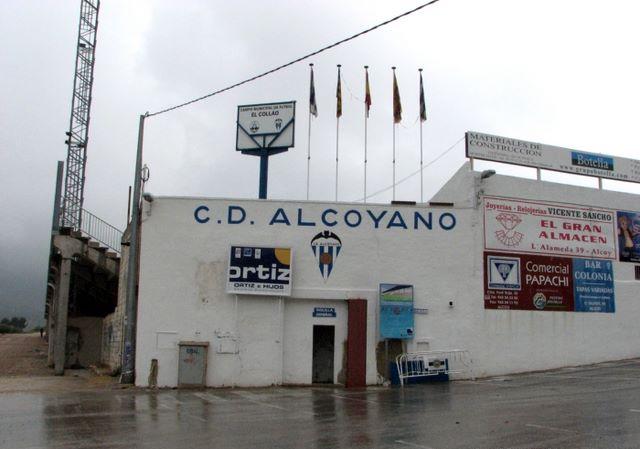
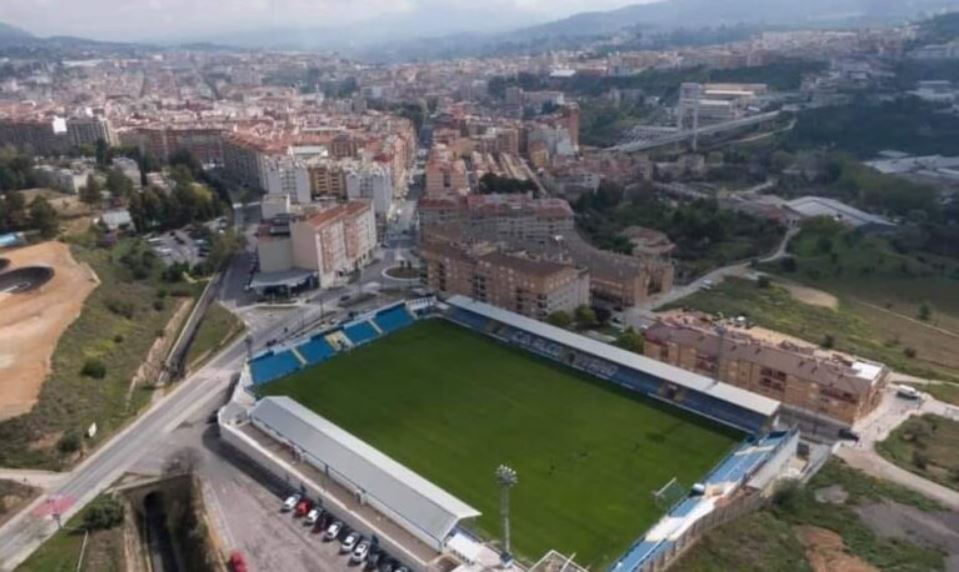
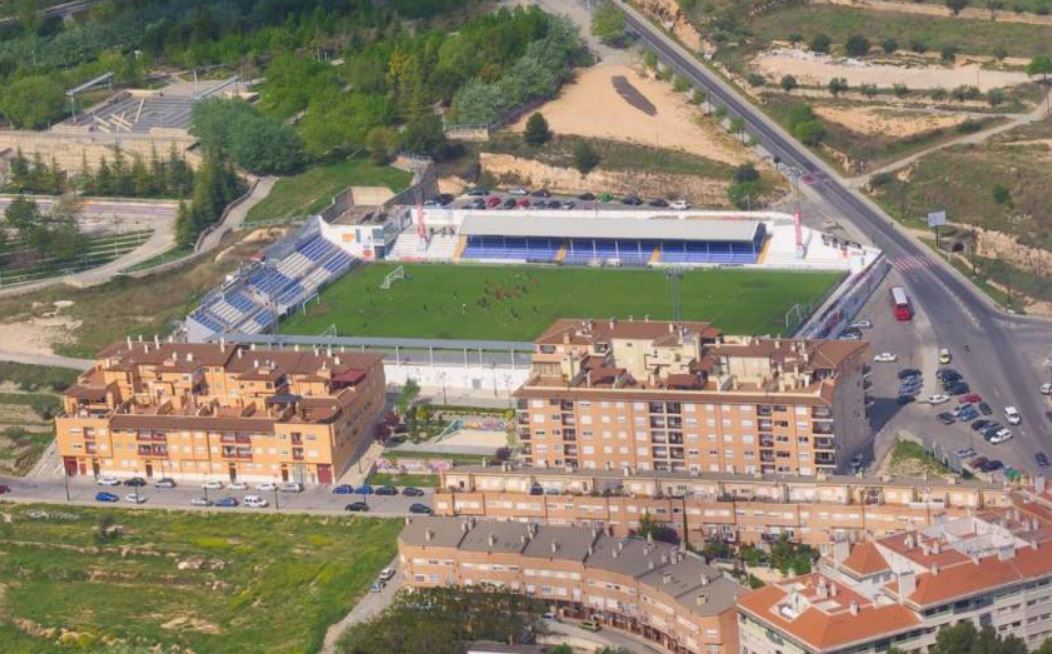
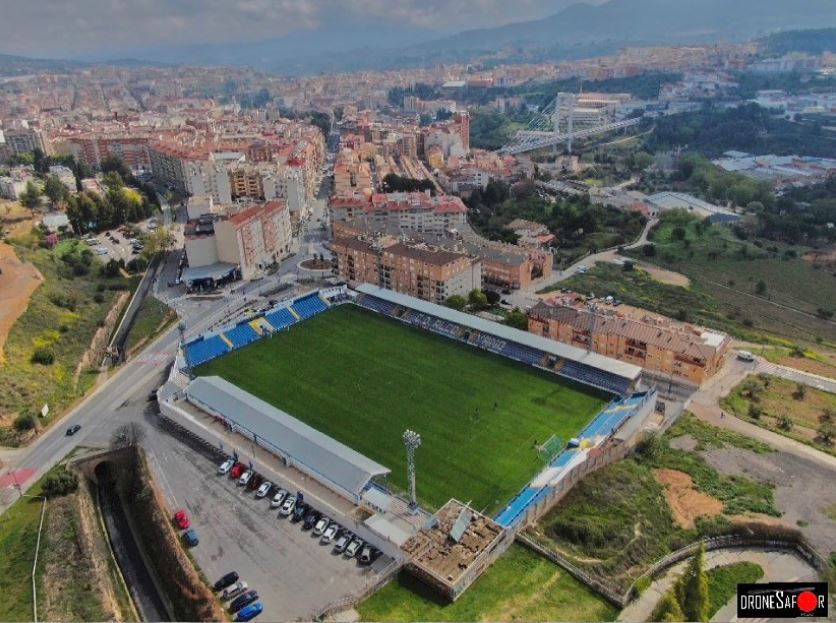
The city of Alcoy is tucked away in a valley in the Sierra del Menejador, 600 metres above sea level. It has the sixth largest population (61,500) in the province of Alicante and, thanks to CD Alcoyano, is one of only three cities in the province that have staged top-flight football. That was over seventy years ago, and you’d be forgiven for thinking that all physical traces of their last foray in La Primera had been knocked down and replaced with housing. CD Alcoyano, however, has El Collao, a time capsule and real throwback to a time when fans were tightly packed into terraces on all four sides of the ground, and opposition goalkeepers could feel the breath of the home support, and often other things as well, on the back of their necks. The ground predates the club by 7 years, but it was Alcoyano who developed & nurtured this little gem.
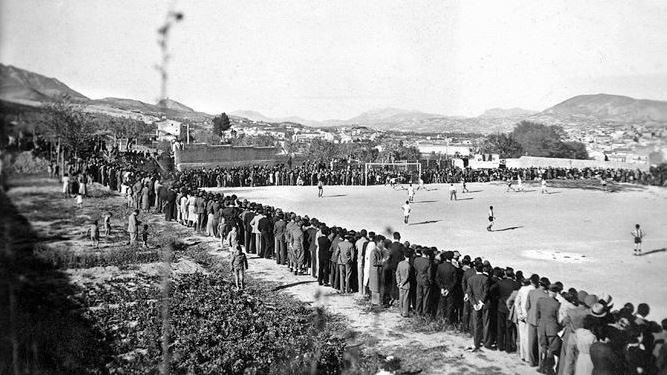
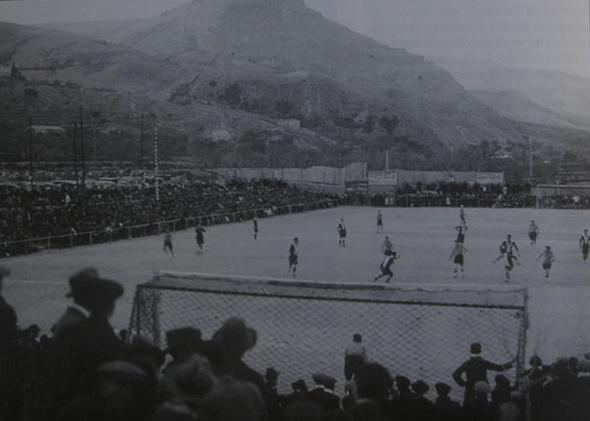
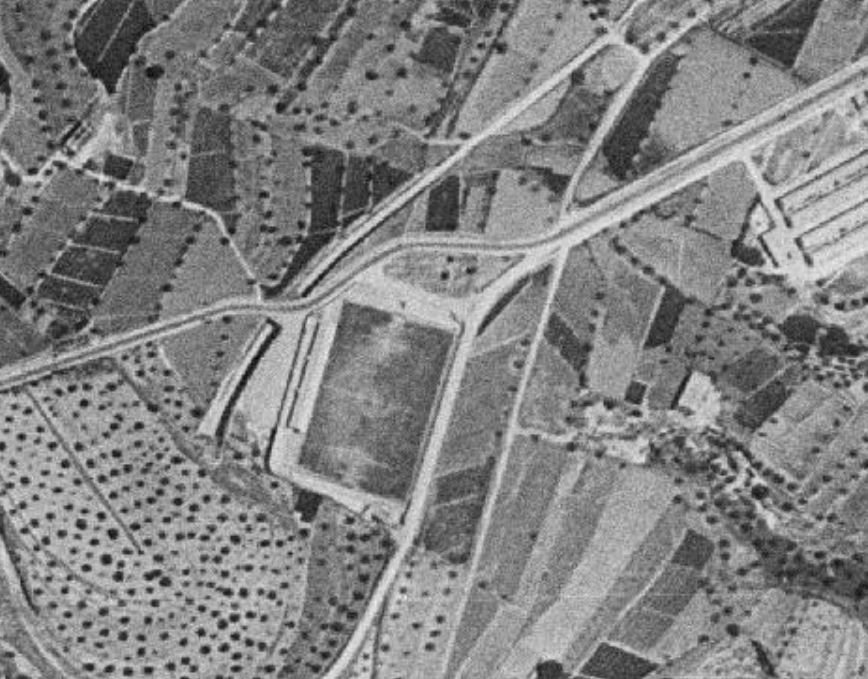
The first club from Alcoi to gain renown beyond the city was Real Alcodiam Deportivo. Founded in 1921, the club’s directors developed a field around a kilometre southwest of the city centre. On 28 August 1921, the Campo El Collao staged its first match. The Real Alcodiam project eventually faltered, and the club folded in 1925. In 1927, the football division of the Sociedad de Boxing Club Deportivo Alcoyano was formed and, to everyone’s surprise, started to dominate the local amateur scene. Noting how other cities in the province had seen clubs merge to create a stronger entity, Camilo Jordá Carbonell, a journalist member of the boxing club, had an idea. On September 13, 1928, Carbonell and representatives of the various clubs that served in the local League met, and Club Deportivo Alcoyano was officially established. The aim was to bring together the best players from all the city’s clubs and play as CD Aloyano at El Callao. After a series of trial matches, CD Alcoyano took to the field on 17 February 1929 and beat Regimiento de Otumba nº49 de Xàtiva 4-1. On 11 September 1929, the club was admitted to the Federación Murciana, joining the Segunda División. The club progressed to the Primera in 1931 and qualified for the playoffs to the Tercera a year later but failed to progress. Alcoyano joined the Federación Valenciana in September 1933, reaching the Primera in 1935-36, finishing third in the last season before the Civil War.
Alcoyano returned to activity in 1940, finishing third in the Valenciana Primera. A year later, the club won the league title and, via the playoffs, won promotion to La Segunda and started the most successful decade in the club’s history. The 1942-43 season was a struggle for the club, as they finished eighth and bottom of their regional group. They entered the relegation playoffs as favourites for demotion but prevailed and found themselves in a remodeled Segunda that went national for the 1943-44 season. Alcoyano exceeded all expectations and finished third, but in a single match playoff with Espanyol, they lost 7-1 and returned home to lick their wounds and prepare for another season in La Segunda. The 1944-45 season saw Alcoyano win La Segunda by a single point from near neighbours Hércules CF and gain automatic promotion to La Primera. In the top flight for the first time, Alcoyano started their campaign with a 3-2 win in the away match at Real Murcia. Remarkably, the club would achieve only one more away win in 53 further matches on the road, which were spread over four separate seasons in the top flight. Unfortunately, despite impressive home form, their first season ended in relegation, but if the fans were disappointed, they didn’t have to wait long for success.
Alcoyano won La Segunda title for a second time in 1946-47, finishing 3 points ahead of Gimnástic de Tarragona, and headed to La Primera a little wiser. Their experience showed as they maintained their top-flight position, based almost entirely on home form, eventually finishing tenth, and one place above Real Madrid. Home form held up again in the 1948-49 season, but a paltry 2 points from their travels led to a 13th-place finish and relegation. Back in the second division, which was once again regionalised, Alcoyano won a third title but had to gain promotion via the playoffs, this time defeating Gimnástic de Tarragona 6-3. 1950-51 was to prove to be the club’s last in La Primera. Home form deserted them, and their wretched away form continued with 14 out of 15 matches ending in defeat and 66 goals conceded. Their one success came with a 1-0 victory at Real Valladolid, Alcoyano’s second and last away win in La Primera. Despite some heavy defeats during this period, the club showed great spirit and morale, and they earned the expression “Tens mes l’Alcoyano moral”, which translates as “To have more spirit than Alcoyano”.
The glory days were over, and after three seasons in La Segunda, the club dropped to the Tercera in 1954. Alcoyano made two fleeting returns to the second tier (1957-58 & 1967-69) but fell into the regional leagues in the mid-seventies. It spent most of the 1980s through to the 2000s playing in Segunda B, then in June 2011, the club returned to La Segunda after a 42-year absence. It was a season-long adventure that ended in relegation, leaving Alcoyano back in Segunda B. Alcoyano made a couple of valiant efforts to return to the second tier but in the playoffs to SD Eibar in 2017 and FC Cartagena in 2017. Somewhat unexpectedly, the club became embroiled in a relegation battle at the end of the 2018-19 season. With destiny in their own hands, all they had to do was beat already relegated UB Conquense or match CD Castellón‘s result. They did neither and entered a relegation playoff against Celta Vigo B, which they contrived to lose 0-1 on aggregate. A first visit to the Tercera in 16 years was dealt with impressively, winning the Valenciana section of the Tercera by 11 points, then disposing of Inter City CF and Atzeneta UE in the playoffs. Another promotion followed in the COVID-shortened 2020-21 season, earning Alcoyano a place in the Primera Federación.
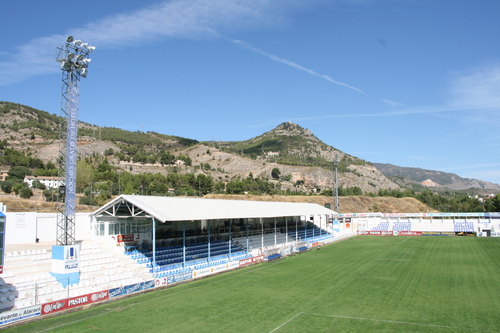
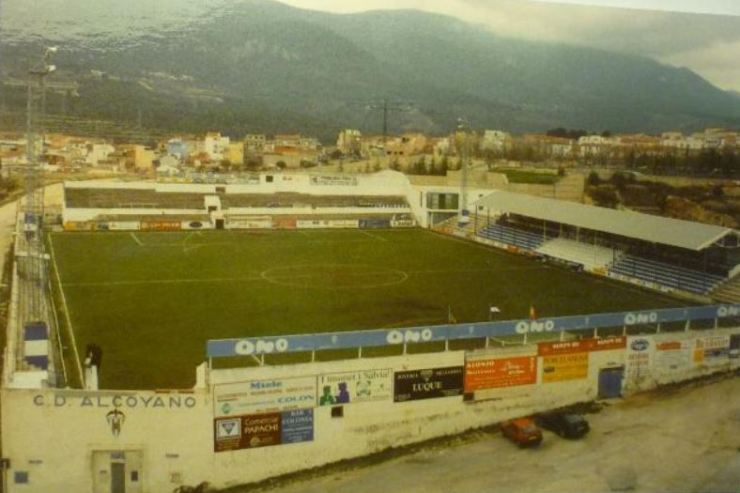
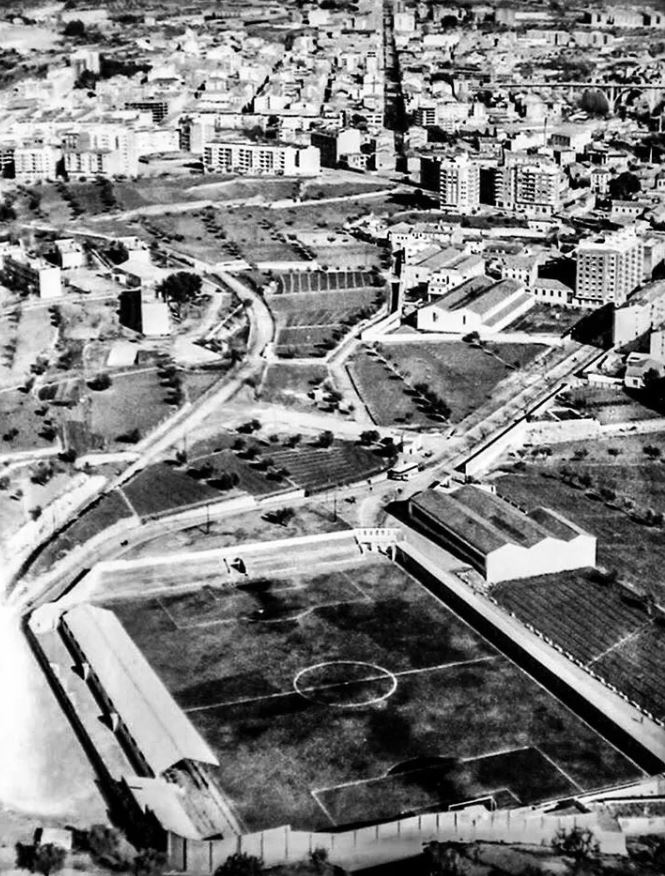
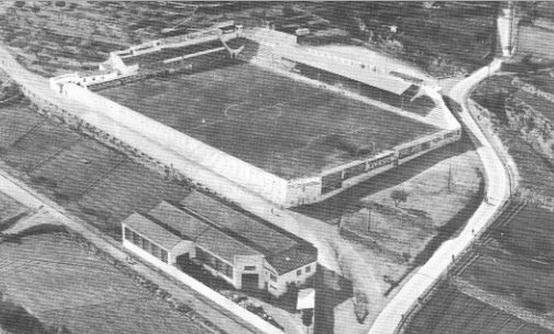
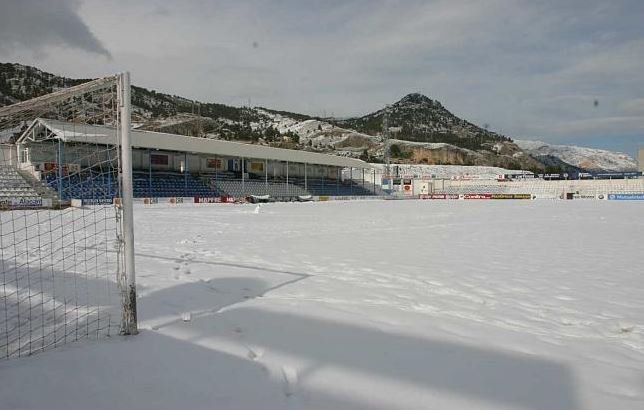
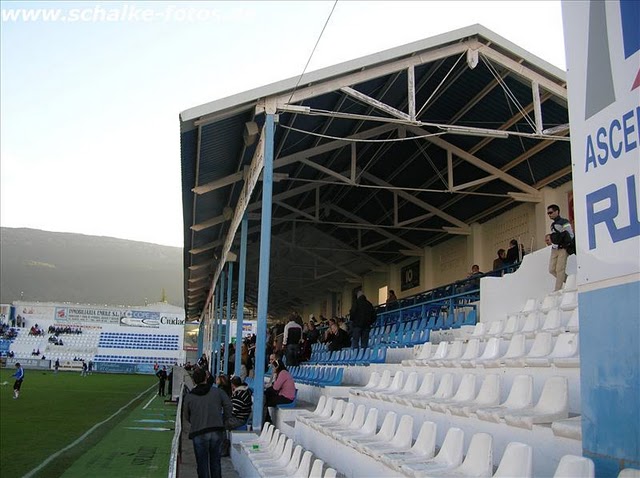
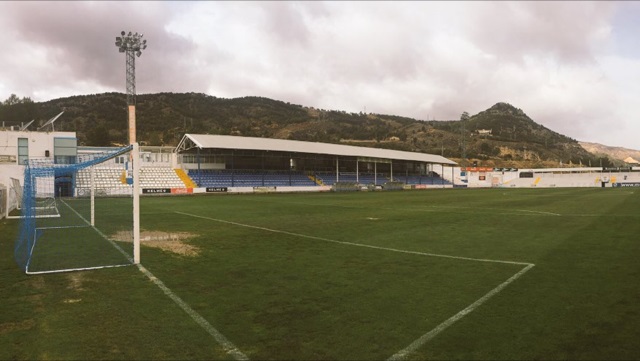
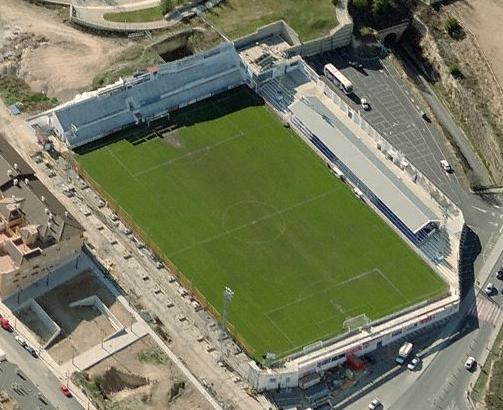
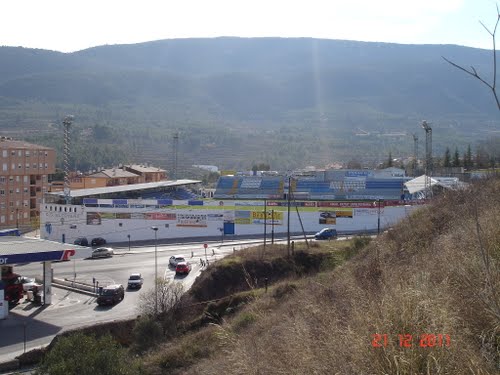
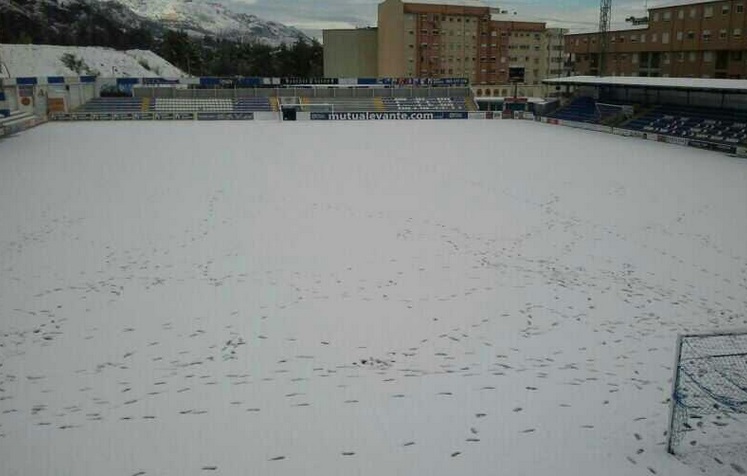
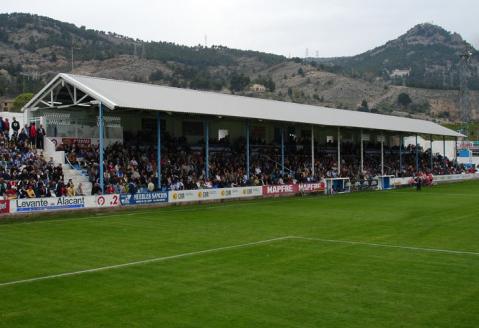
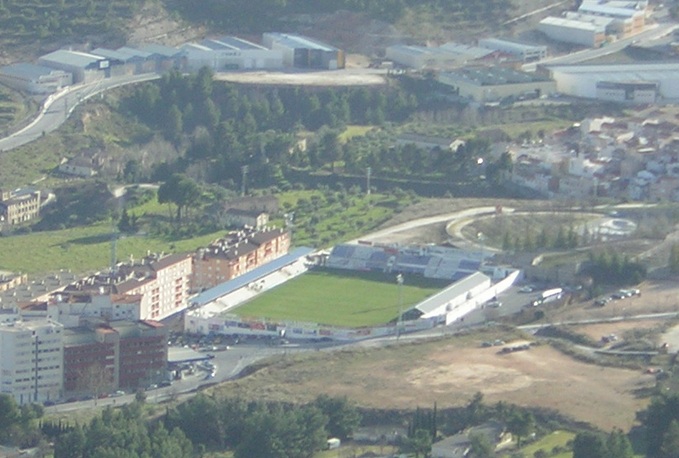
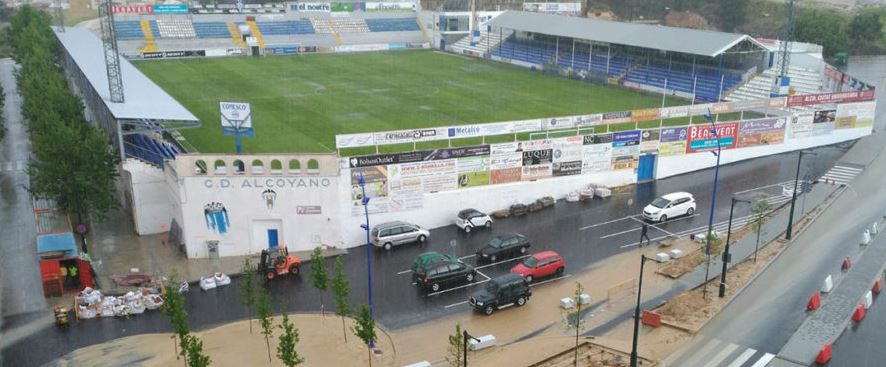
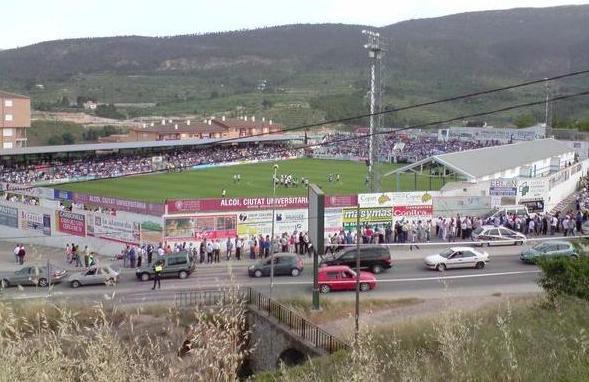
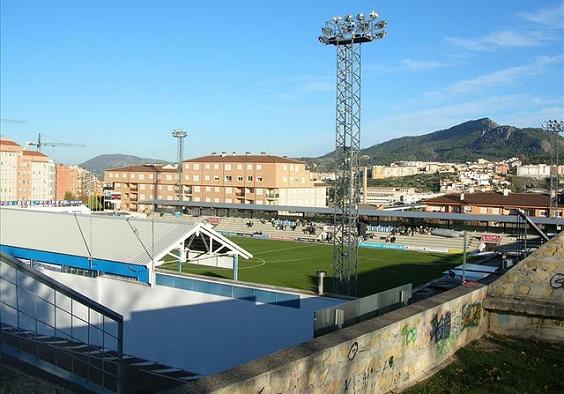
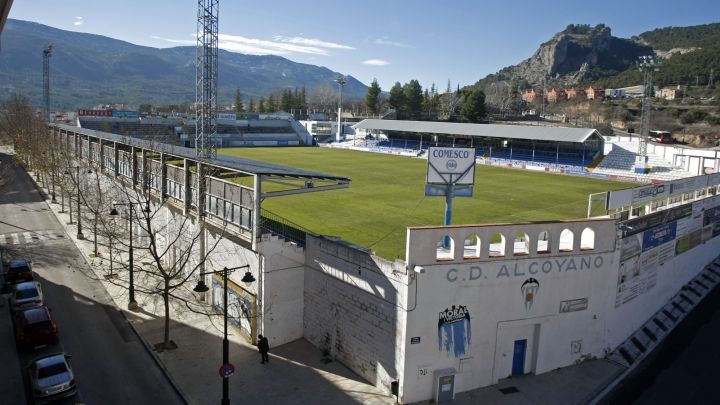
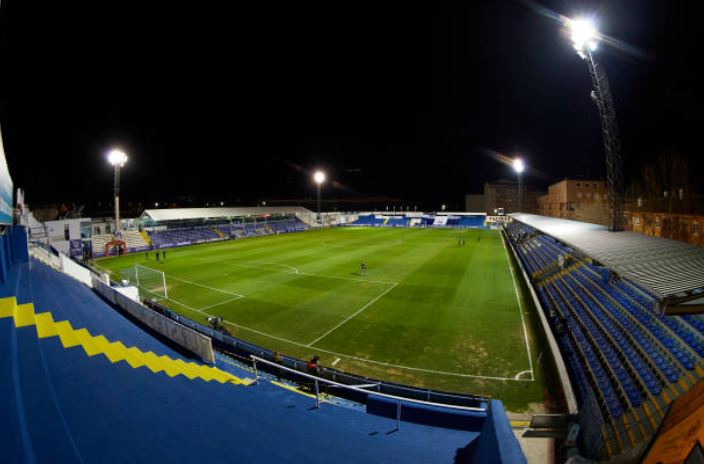
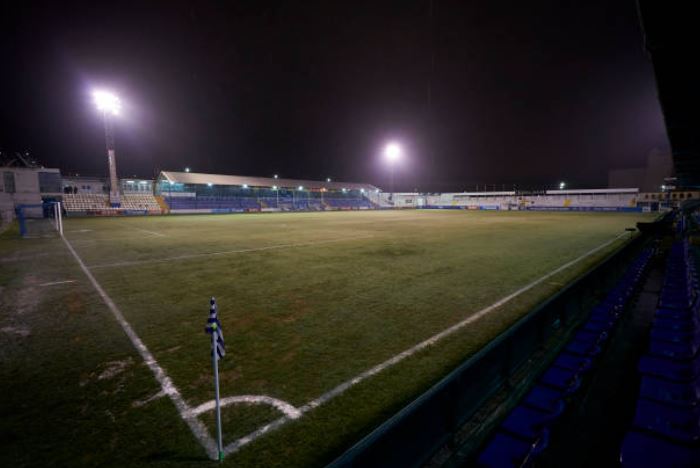
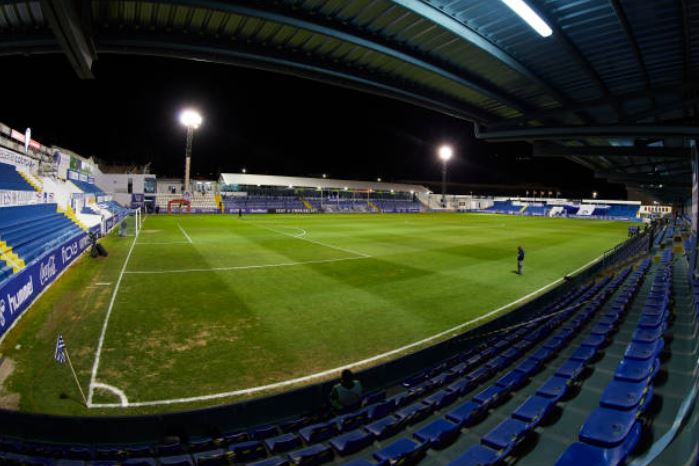
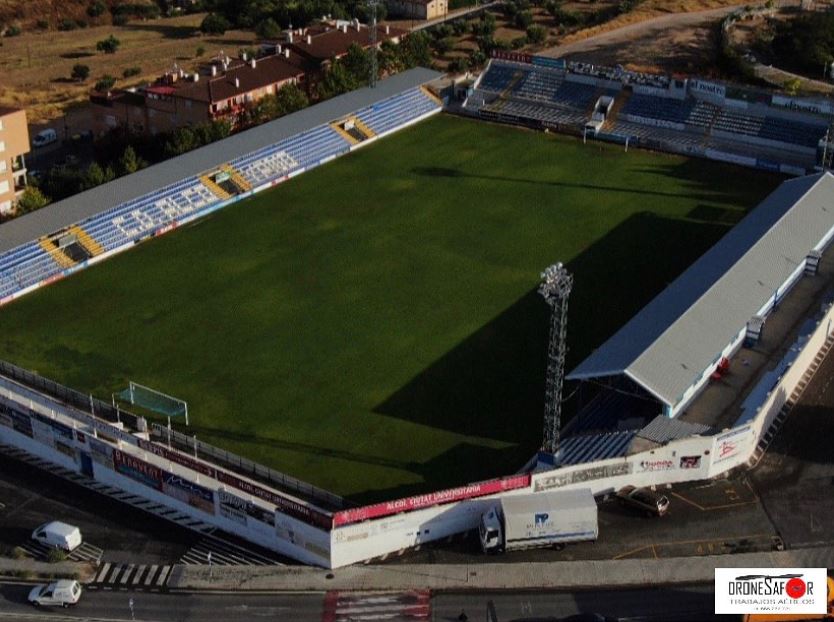
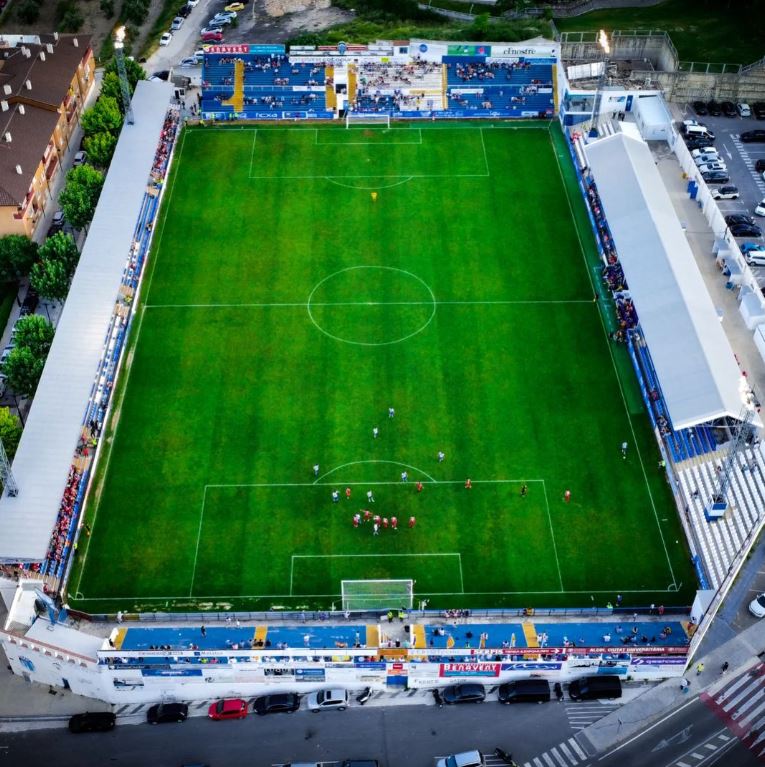
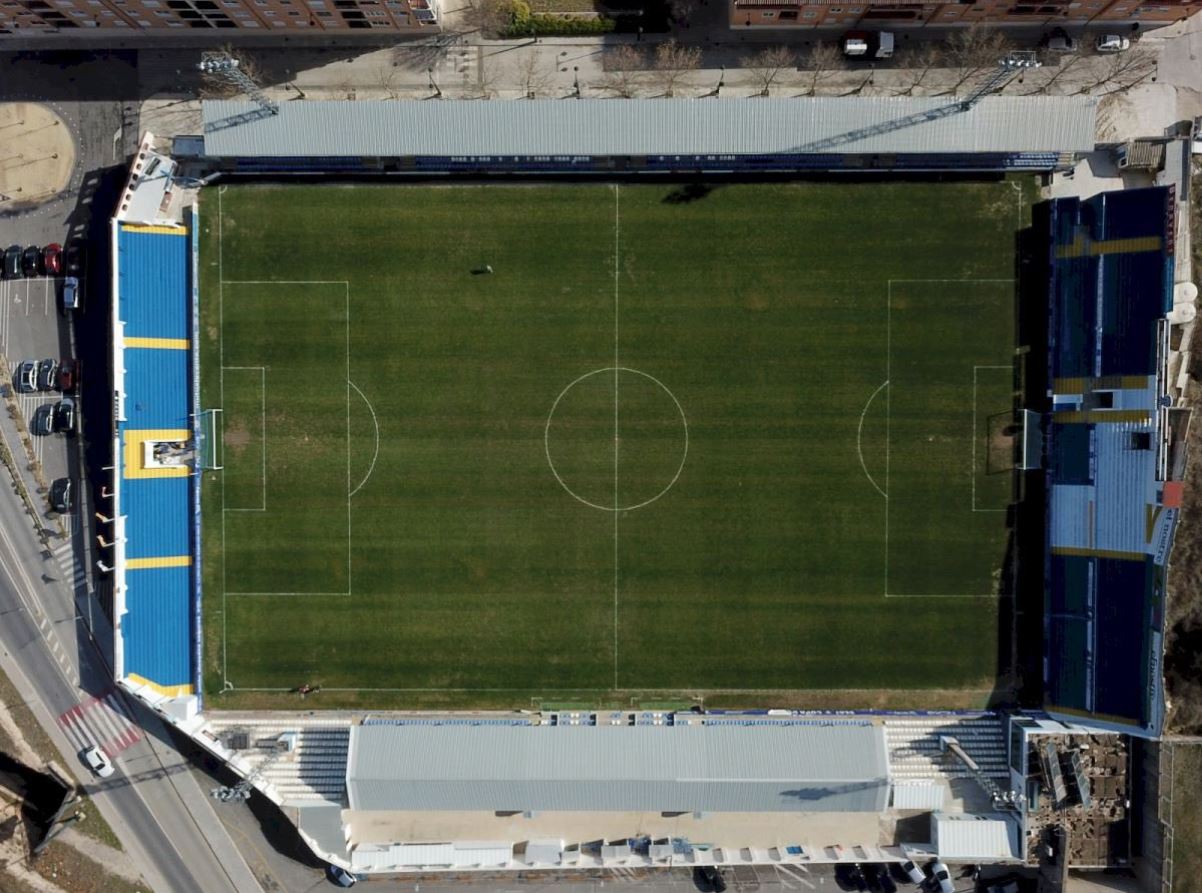
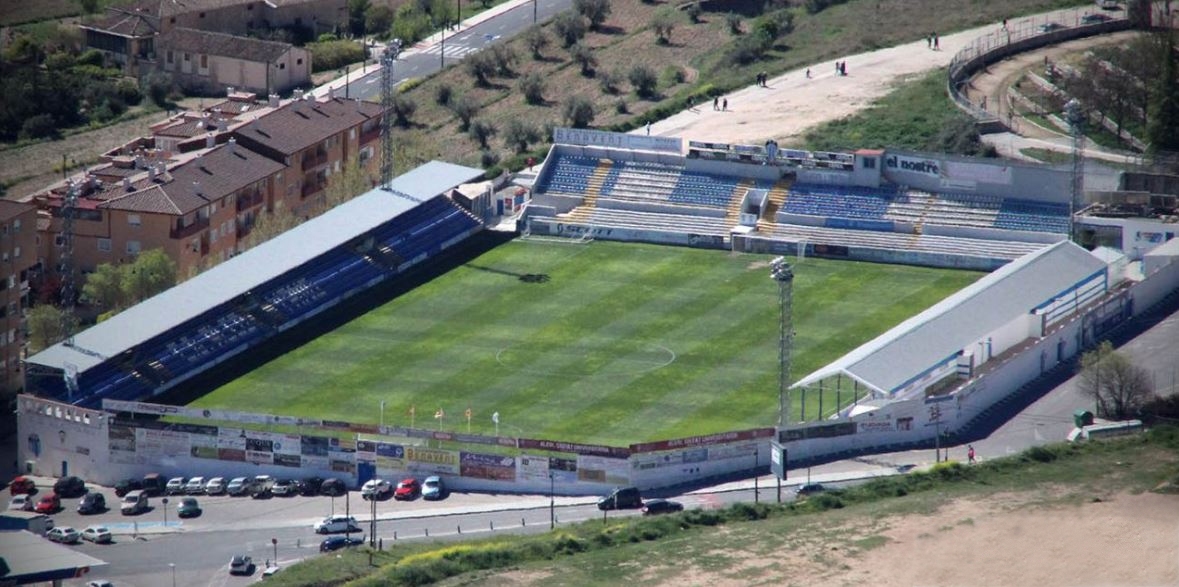
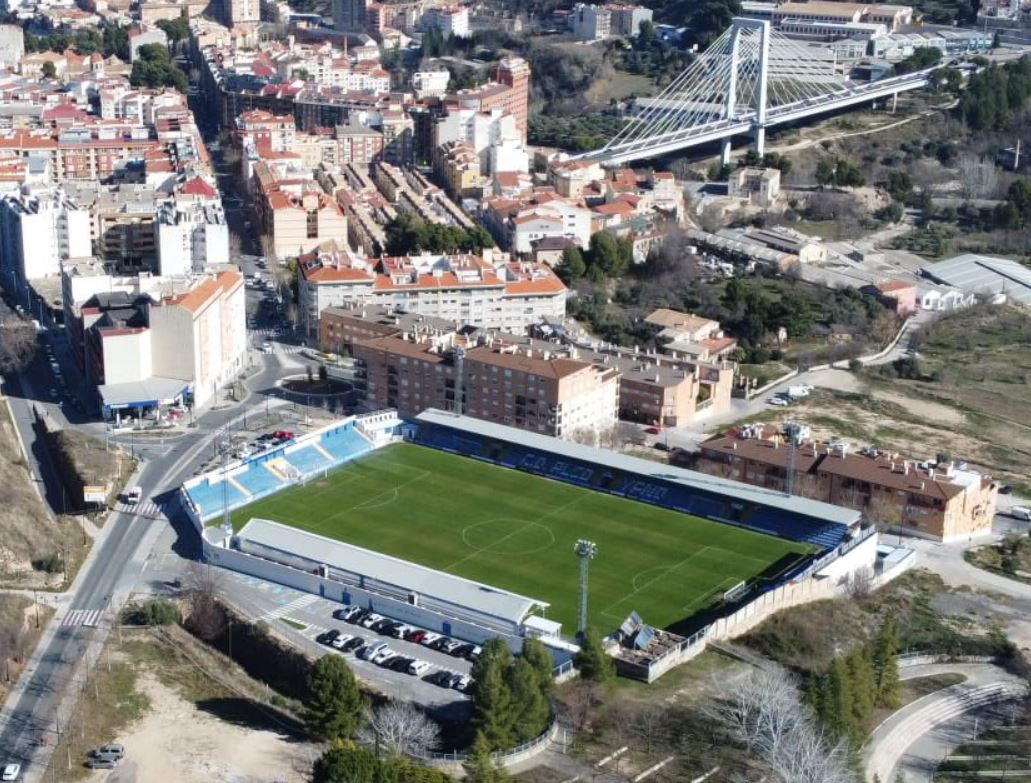
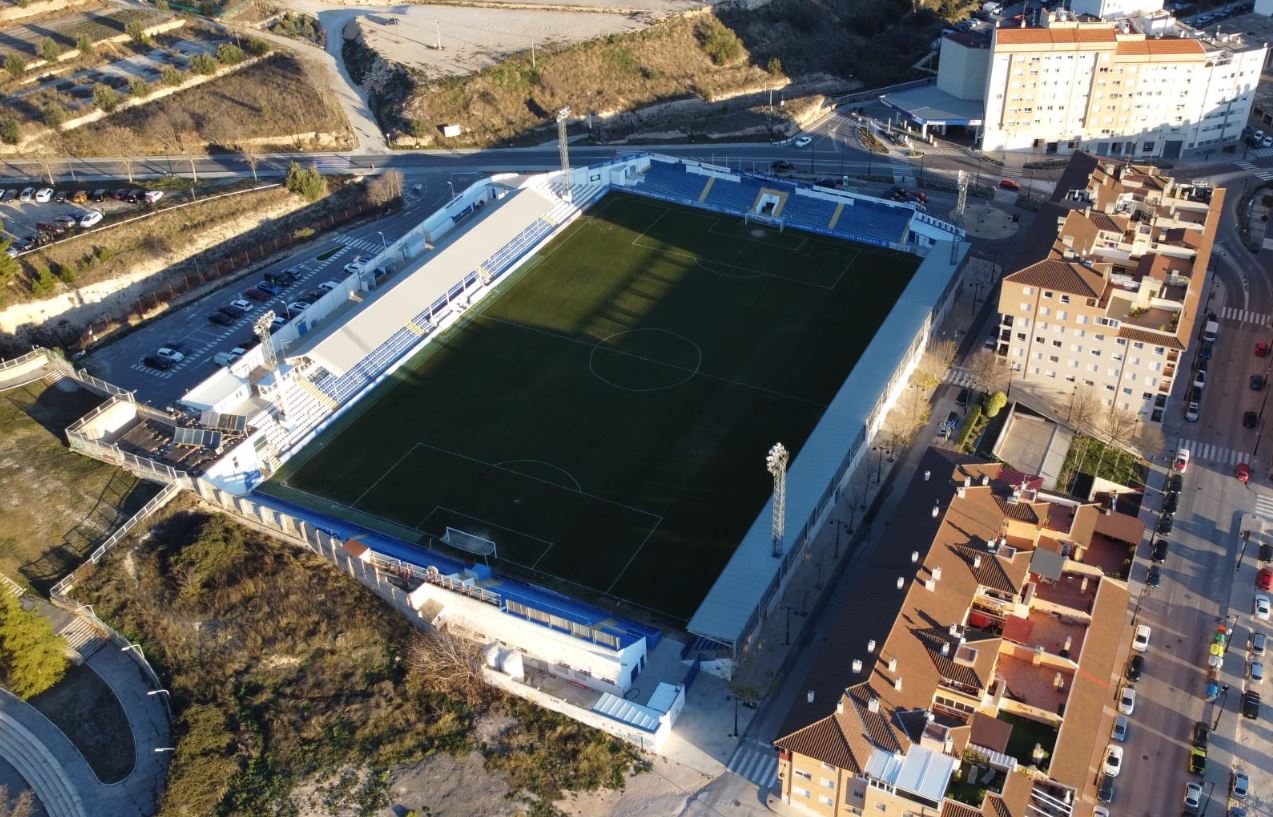
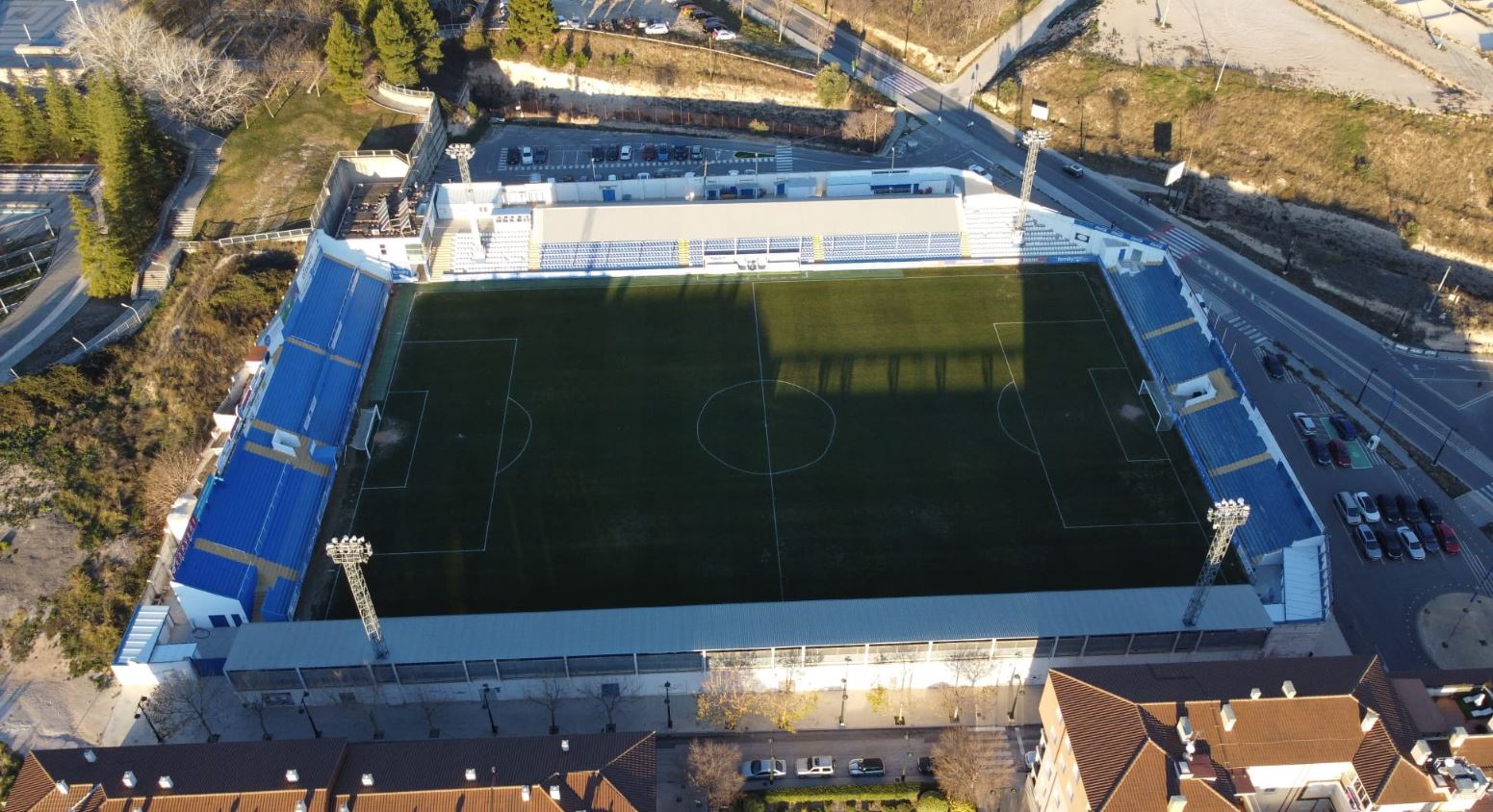
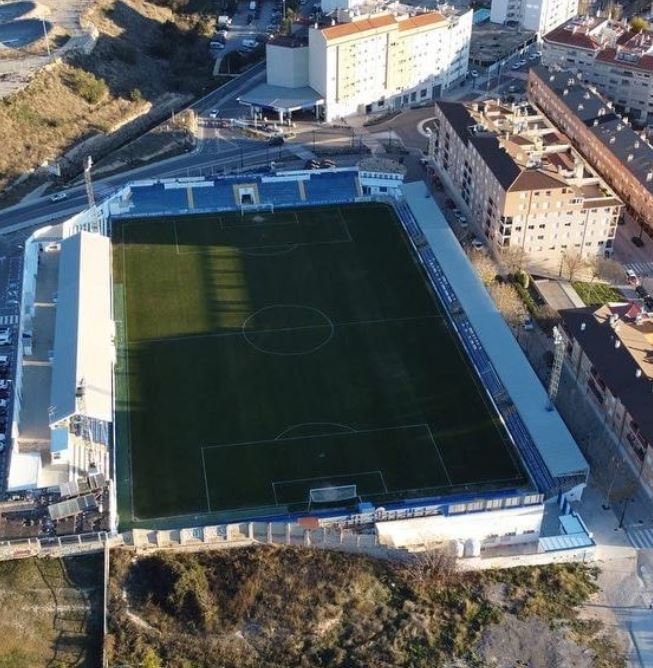
The Spanish describe A Callao as campo de estadio inglés or English style ground, which is rather ironic given that you won’t find a stadium looking like El Collao in the English Football League. You would have, but most disappeared in the 1980s & ’90s after the Popplewell and Taylor reports. The main stand on the west side of the ground features a basic pitched roof that sits over 10 rows of 600 blue and white seats. The roof is supported at the front by 14 thin columns. Either end of the stadium is now seated, with the south terrace being the slightly larger of the two, featuring twin-decks, beneath which are the changing rooms for players & officials. The east side is the newest development but is still in keeping with the rest of the ground. This narrow stand was built in 2007, replacing a set of very narrow, covered steps. It has a shallow cantilevered roof covering eight rows of blue seats, with the club’s name picked out in white. El Collao may be small, with a capacity of just 4,800, but boy, it can generate an atmosphere.
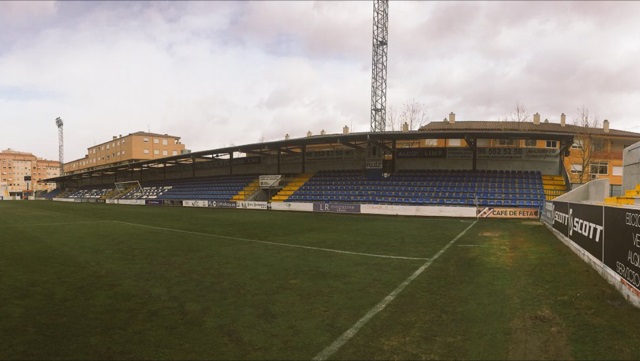
Like Compostela’s Estadio San Lazaro, El Collao has staged matches in the top five levels in Spain, but it is a credit to its longevity that it has done so over 80 years. CD Alcoyano is some way from the heights they hit in the late 1940s, but few have “Tens mes l’Alcoyano moral”, and with that, anything is possible.

 Estadios de España