
Article updated: 12/11/2025
The Romans liked what they saw of Calahorra. Arriving in 189 BC, they renamed the city Calagurris and made it a ‘Civis Romanus’, building baths, a Circus Maximus and an amphitheatre. The city also minted coins and served as the region’s judicial centre. Unfortunately, being a bigwig in the Ancient Roman Empire doesn’t necessarily mean you’ll cut the mustard in modern-day Spanish football. Except for a few short visits to the third tier, the city’s main club, Club Deportivo Calahorra, has spent the majority of its time playing in the regional Tercera.
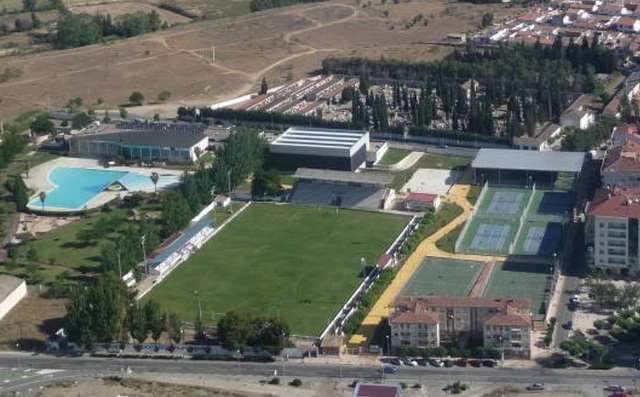
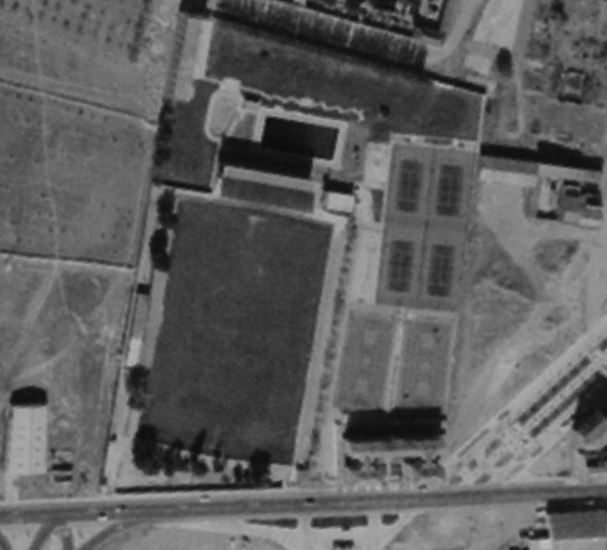
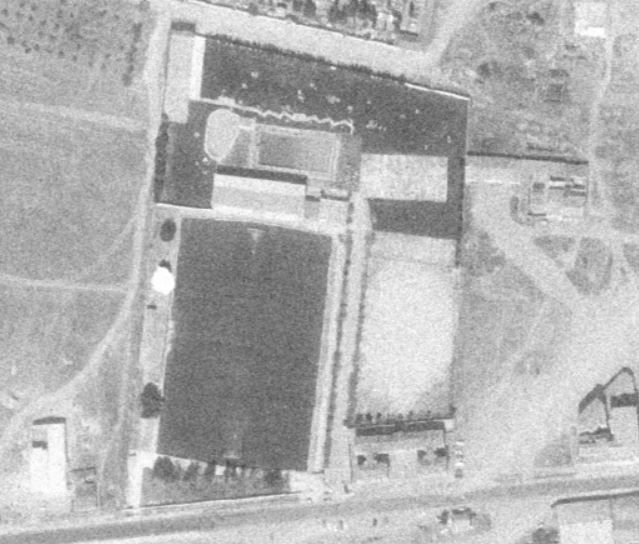
The first serious club to emerge from the city was Sociedad Cultural Deportiva Calahorra. Formed in 1923, they played on land that overlapped the current site of La Planilla, albeit at a 45° angle from today’s layout and parallel with the Avenida Nuestra Señora de Valvanera. By 1933, Calahorra FC had taken on the mantle of the city’s senior team and played its matches at a field to the east of the city, close to the Calle de la Algarrada. Calahorra FC was a member of the Federación Cantabra and reached the Playoffs for La Segunda in 1936, losing out in the first round to Santoña. Following the Civil War, the Mayor of Calahorra, Antonio Martín Pérez, allocated funds for the development of the old football field that SCD Calahorra had used. The site opened in 1942 and was renamed Campo de La Planilla. By 1944, the ground was enclosed and the pitch was fenced off. However, any momentum that Calahorra FC had built before the war was lost, and in 1946, the current club, Club Deportivo Calahorra, was formed.
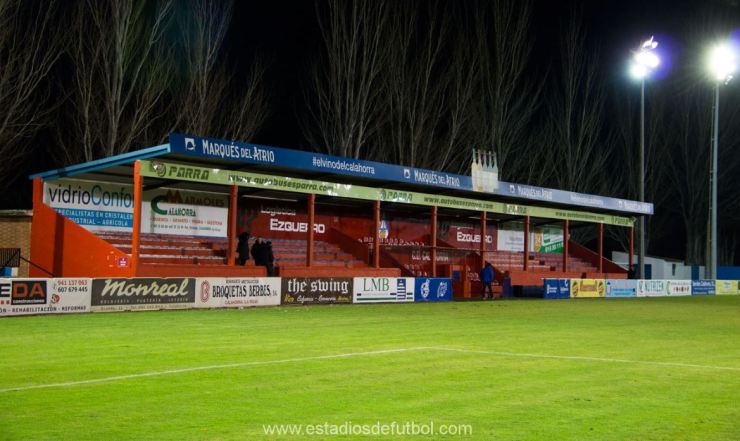
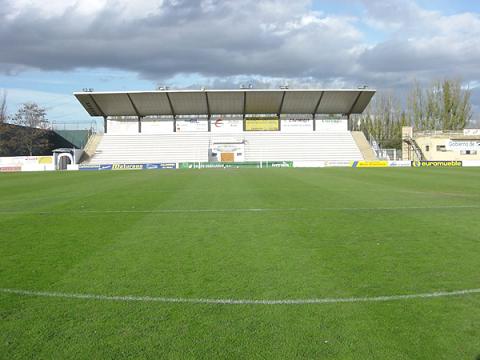
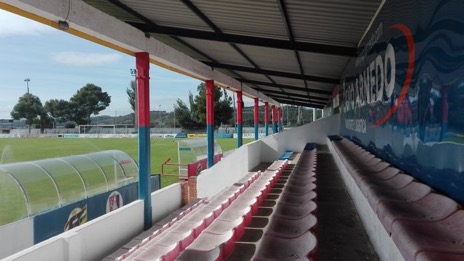
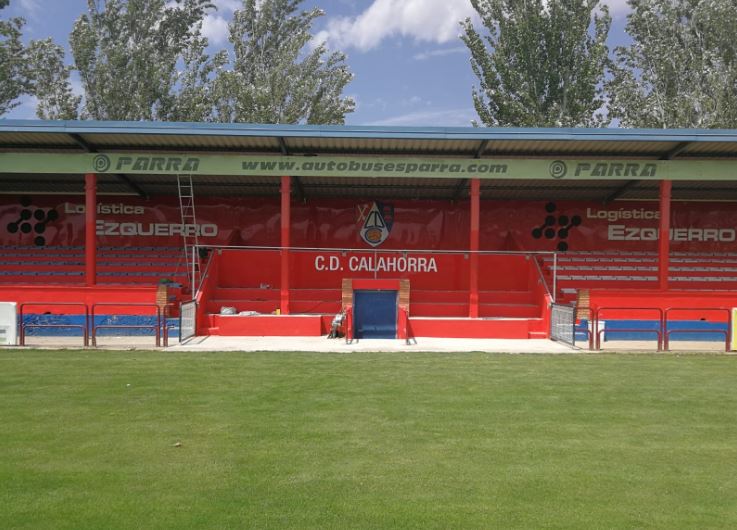
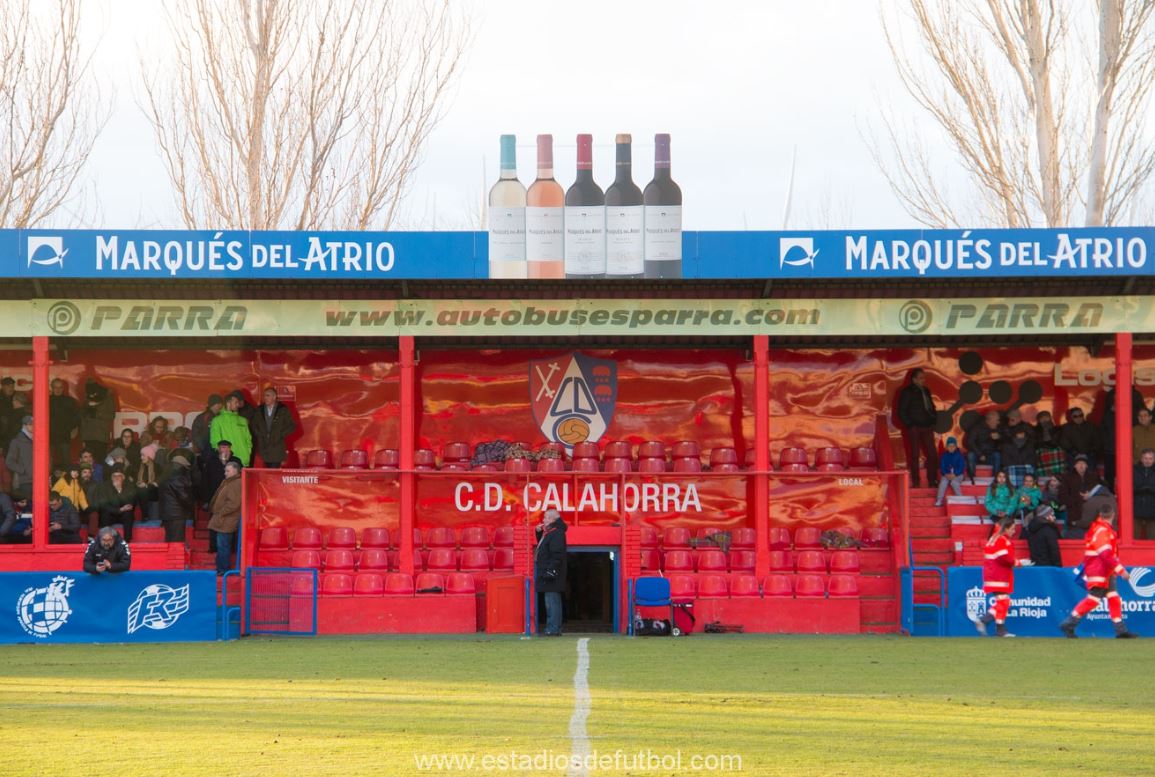
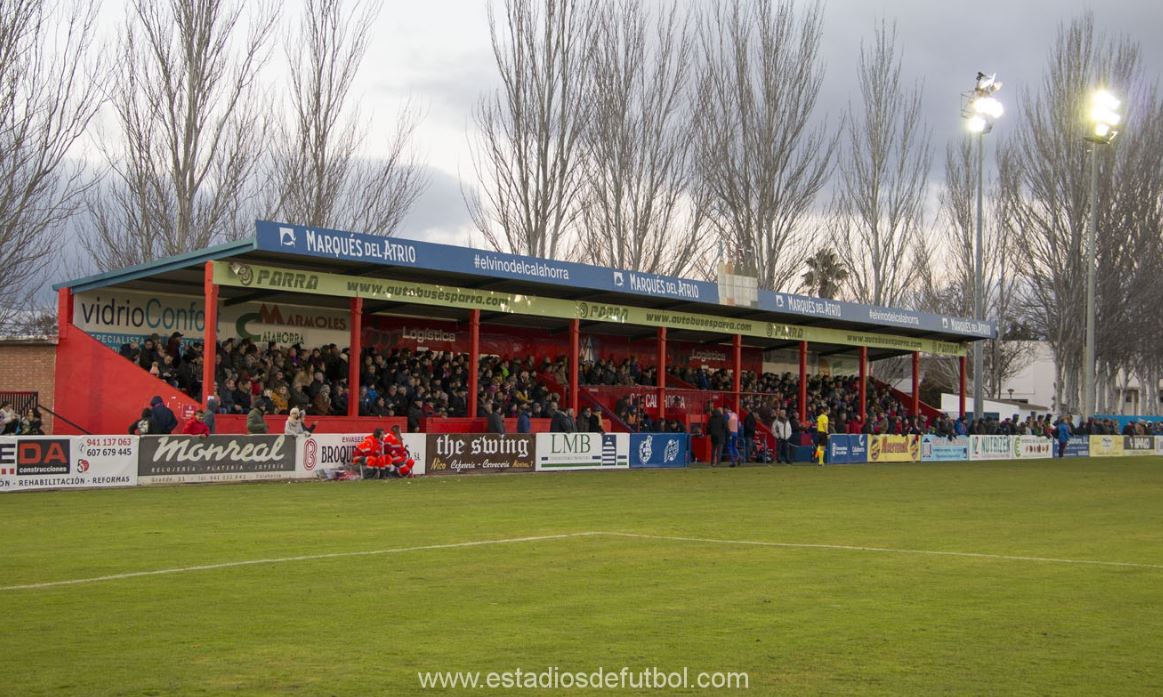
In 1947, the CD Calahorra joined Federación Guipuzcoana, winning the La Riojana section, before joining the Federación Navarra a year later. Further success followed with promotion, and on 4 September 1949, CD Calahorra made its debut in the Tercera with a 3-1 defeat in Zaragoza at the home of SD Escoriaza. Despite a close call in its debut season in the Tercera (they survived a relegation playoff), thoughts turned to developing La Planilla. In 1952, a new 45-metre-long Tribuna was opened on the west side of the ground. Featuring six rows of bench seating under a propped roof, this delightful stand still adorns the enclosure, and thanks to a new roof and liberal amounts of red & blue paint, it belies its age. CD Calahorra spent 25 of the next 35 seasons in the Tercera, whilst the only significant change at La Planilla was the erection of a covered stand at the northern end of the ground in the mid-1970s.
The club won its first Tercera title at the end of the 1987-88 season, and with it promotion to Segunda B. A respectable 13th position was earned in their first season in the third tier, which was followed by a more difficult season and a penultimate finish that resulted in relegation back to the Tercera. A period of relative dominance followed at the regional level, marked by four additional league titles and six playoff appearances over an eight-year period. The new end-of-season format had proved troublesome for the club, but after their fifth league title in 1998, CD Calahorra topped their playoff group and returned to Segunda B. This was to prove a longer stay, with the highlight being a third-place finish in the 2000-01 season. This led to an appearance in the playoffs for a place in La Segunda. The fight went to the final tie, and despite finishing level on points with Polideportivo Ejido, they lost out on the head-to-head record. The squad (which included a young Carlos Cuéllar) disbanded, and there followed a slow decline and a return to the Tercera in May 2004.
For the next 14 seasons, CD Calahorra remained in the Tercera, with the play-offs proving to be a stumbling block on no less than 9 occasions. Finally, after completing the 2017-18 regular season unbeaten, CD Calahorra won promotion to Segunda B thanks to a victory over Atlético Levante in the playoffs. What followed proved to be the club’s longest spell in the third tier since those six seasons at the turn of the millennium. Two mid-table finishes were followed by a 2020-21 season that was complicated by the twin factors of the COVID-19 pandemic and the RFEF’s restructuring of the Spanish football pyramid. CD Calahorra’s consistent form earned a fourth-place finish in the promotion group, which in turn secured a place in the newly formed Primera Federación. After a respectable 11th-place finish in the 2021-22 season, the wheels came off a year later, and CD Calahorra was relegated to the Segunda Federación. Worse was to follow, and as of the start of the 2025-26 season, CD Calahorra play in Group XVI of the Tercera Federación.
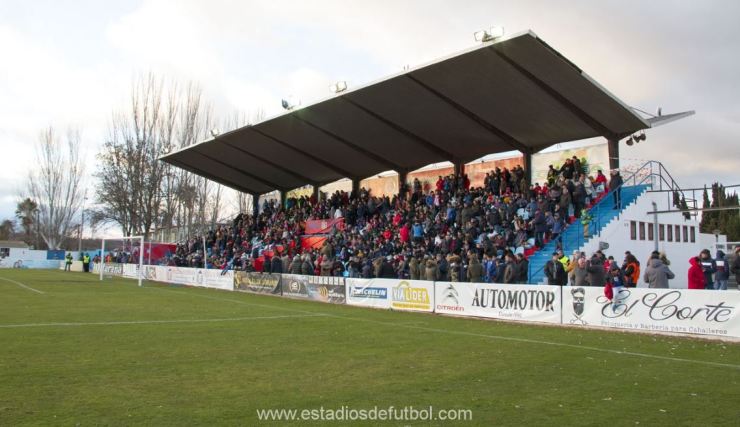
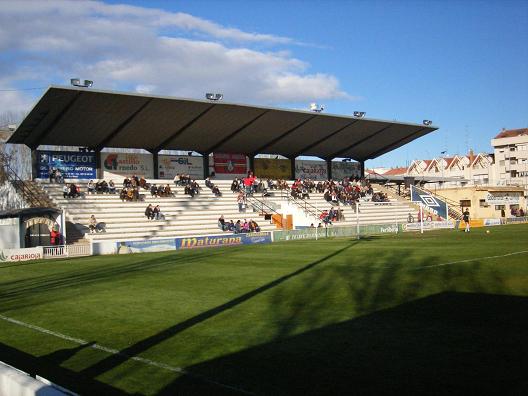
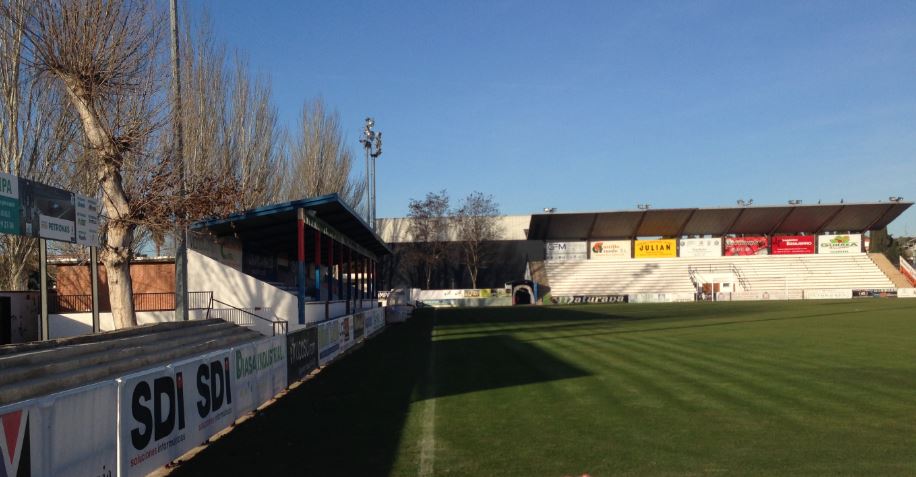
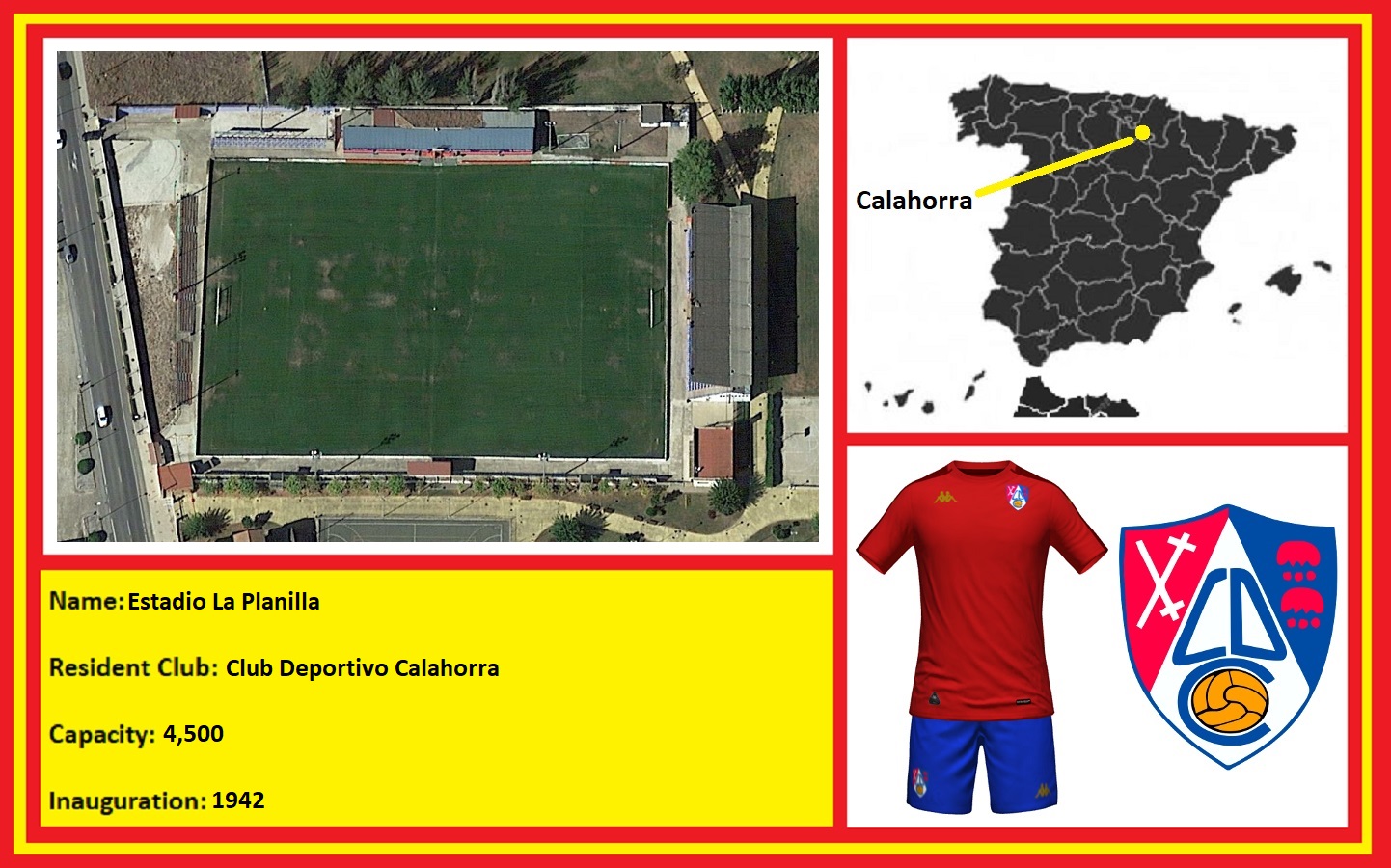
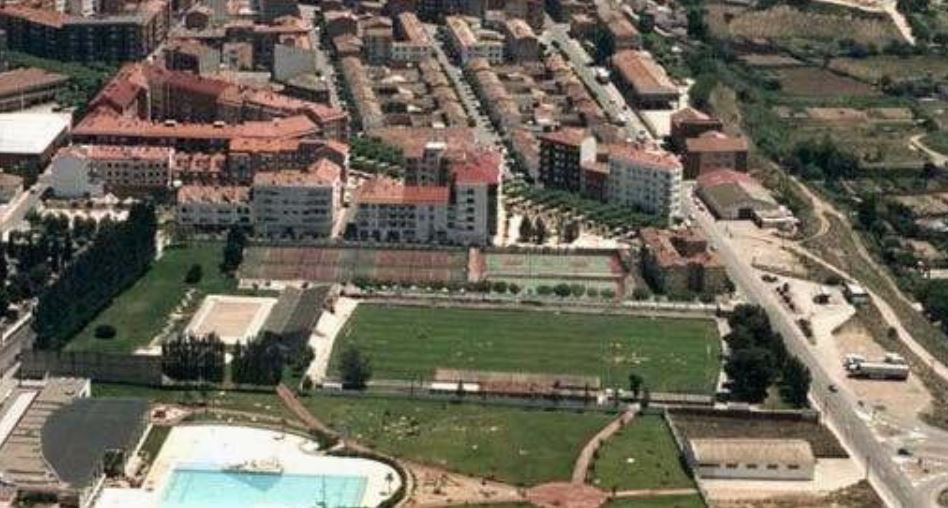
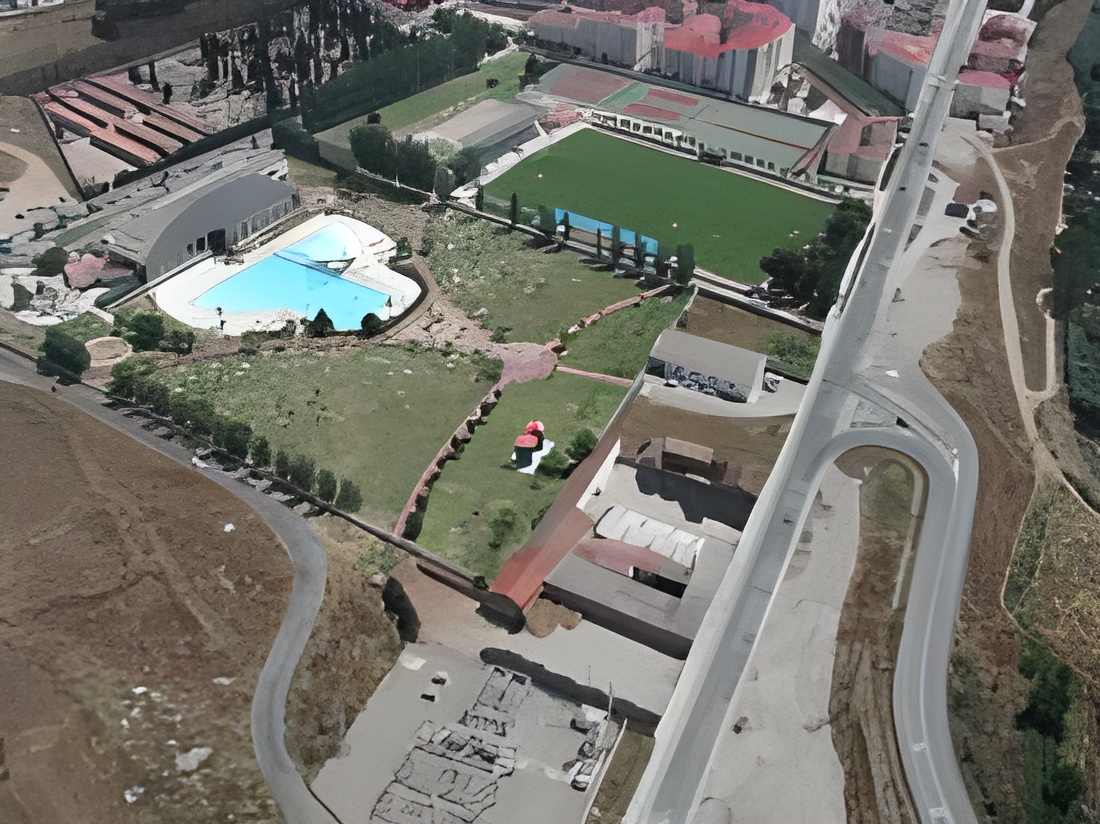
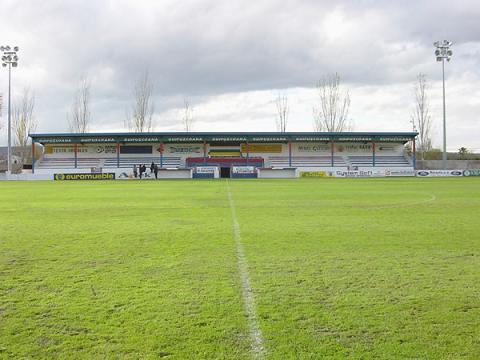
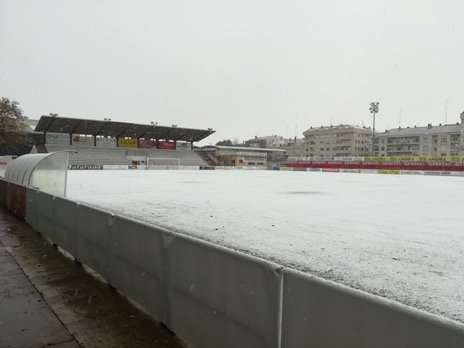
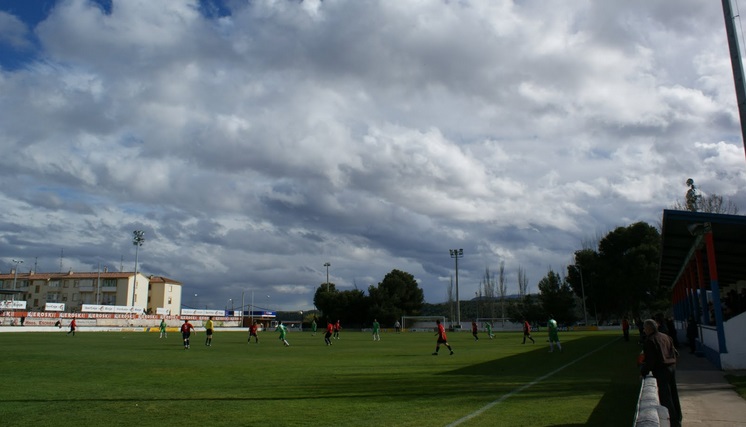
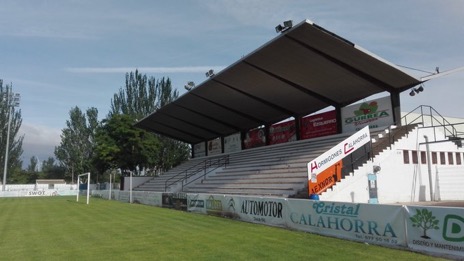
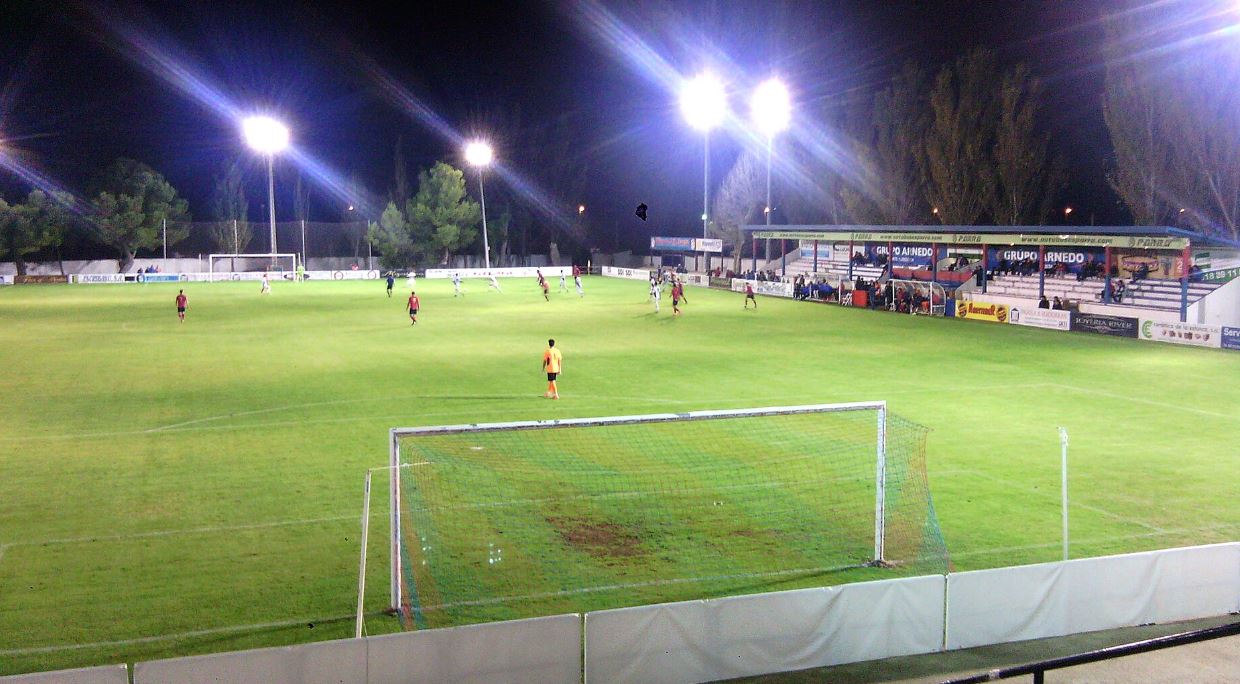
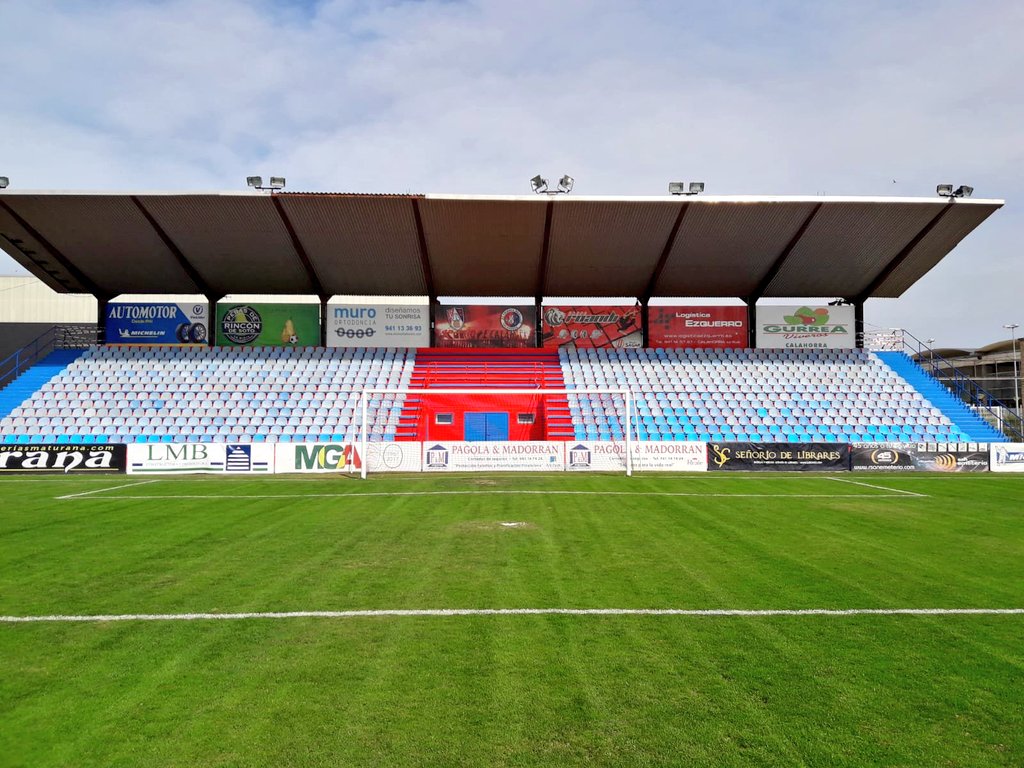
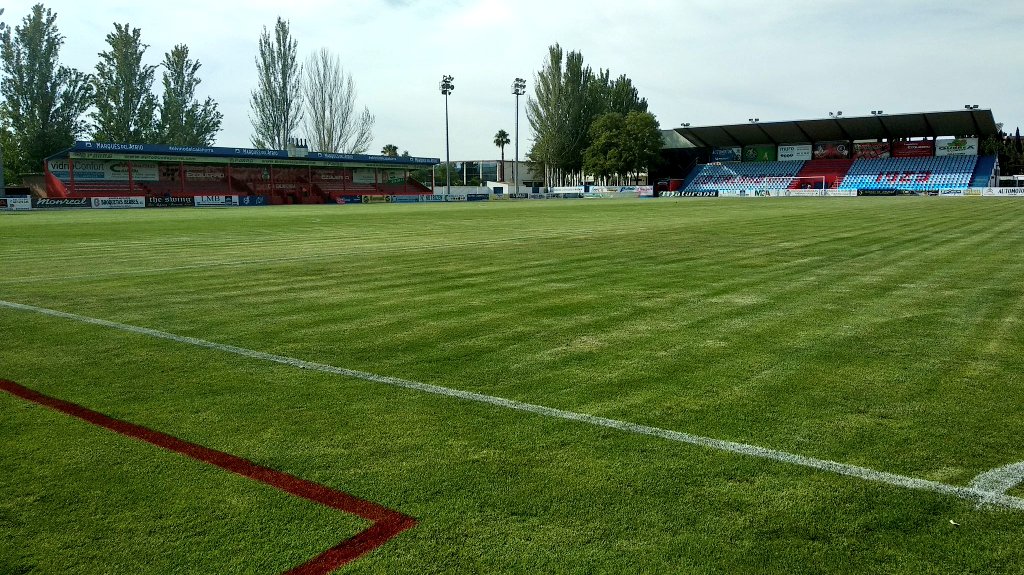
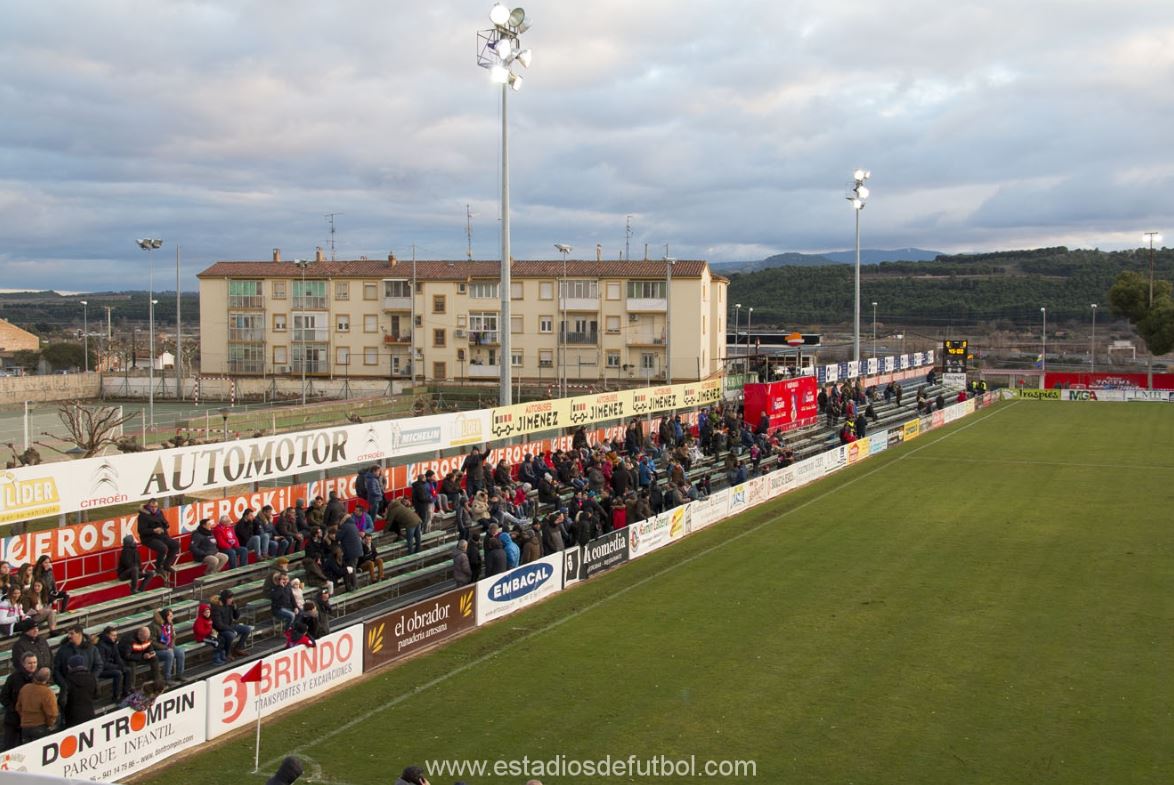
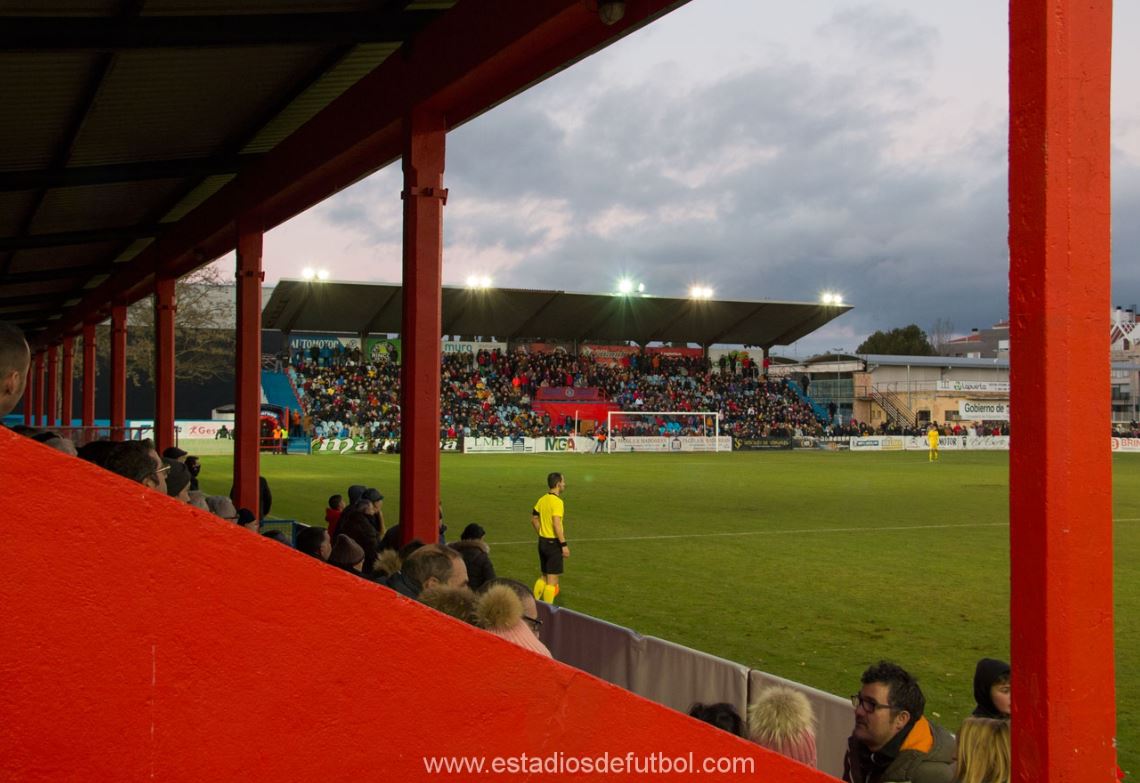
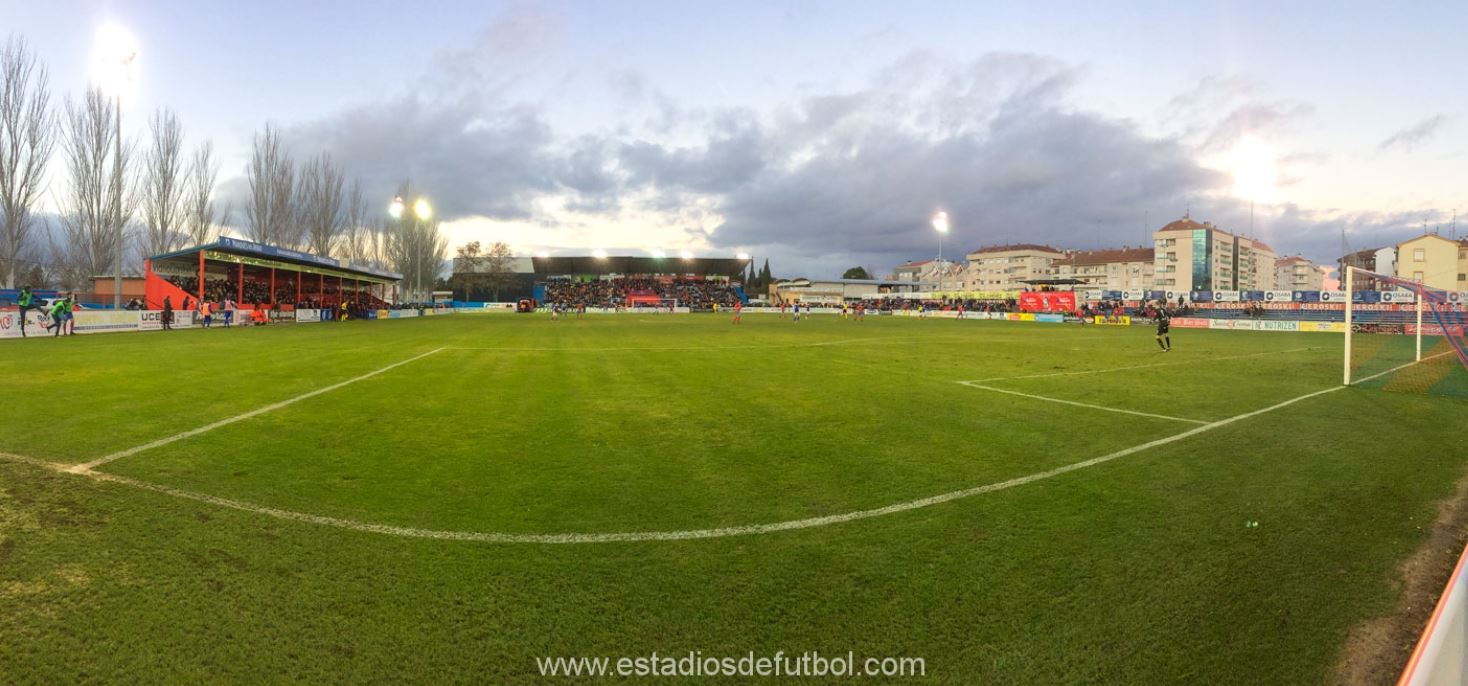
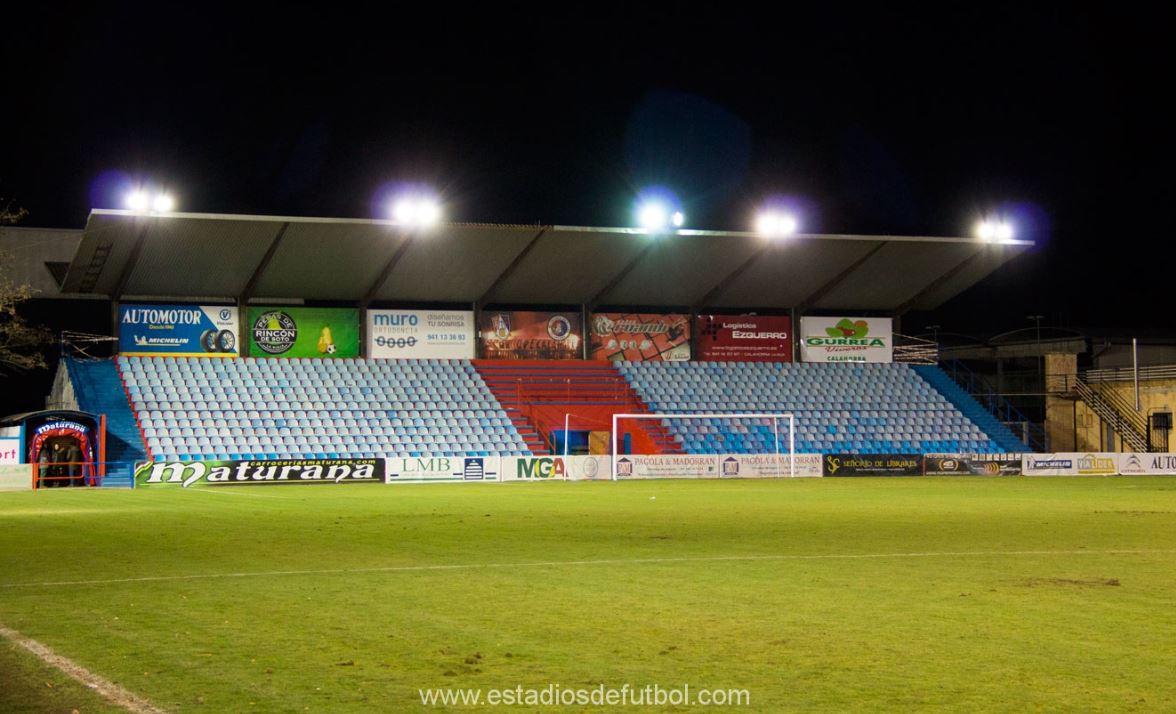
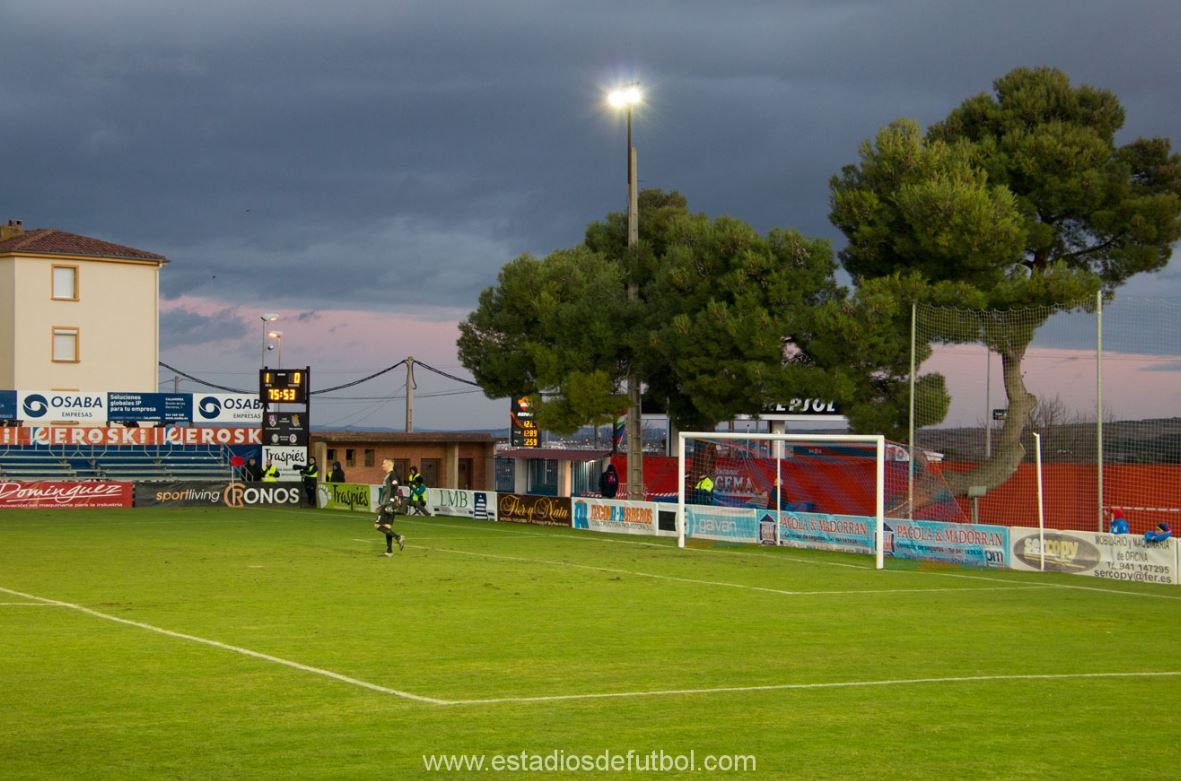
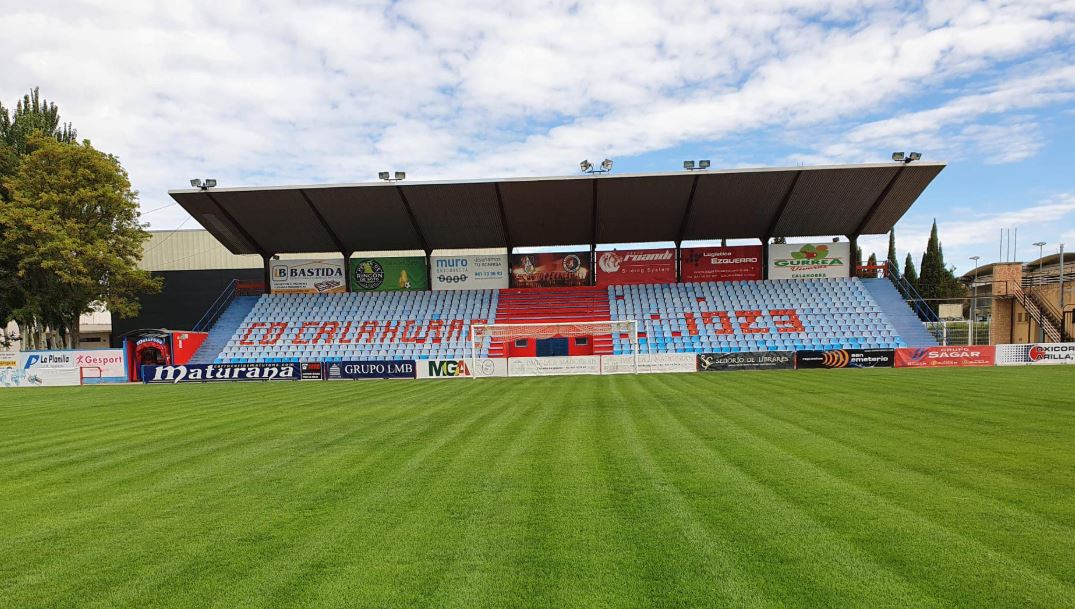
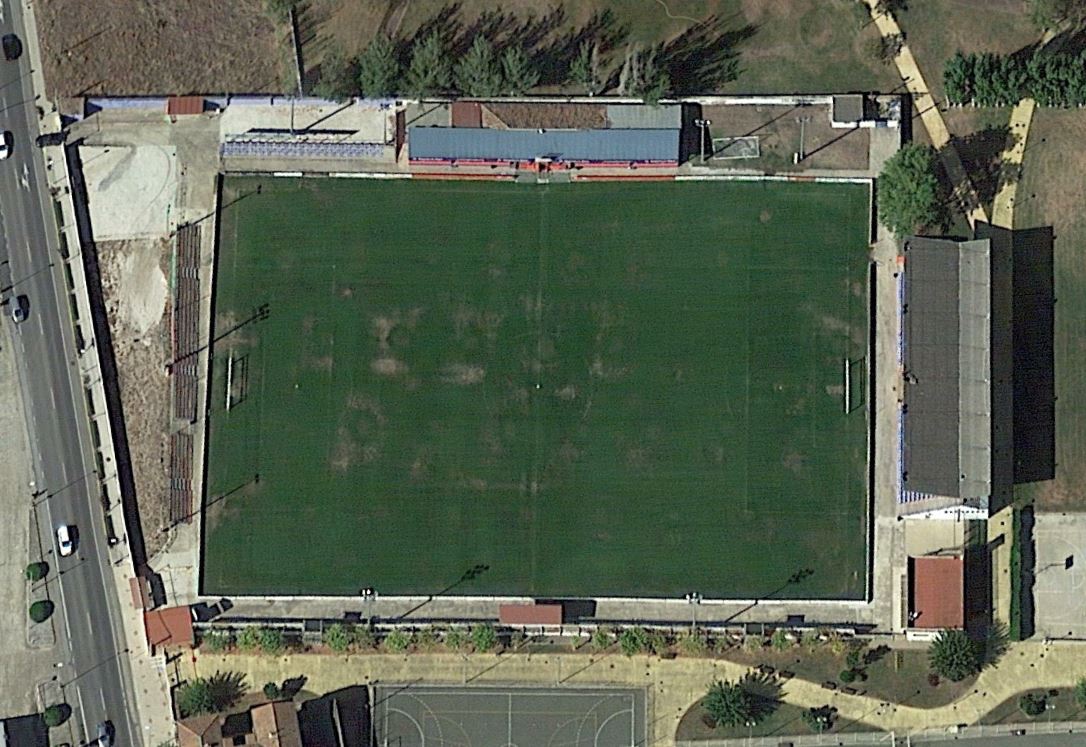
The actual footprint of the Estadio La Planilla has remained largely unchanged since the mid-1970s. Opposite the refurbished West Tribuna is an open terrace of four steps, at the centre of which stands a television gantry. Bench seating was added to this terrace when CD Calahorra returned to Segunda B in 2018. The newest structure is the Fondo Norte, which dates from 1975, and features 12 rows of seating under a “Y-shaped” cantilevered roof. Its unusual design of the roof allows it to also provide cover to a shallower section of seating that overlooks a basketball court at its rear. The stand also includes changing facilities, a club room, and a bar. When CD Calahorra reached the Primera Federación in 2021, temporary seating was added to the open southern end of the ground and the adjoining area next to the Tribuna. Sadly, this necessitated the felling of a wonderful old Stone Pine tree, which had woven its way around the floodlight pylon next to the scoreboard. With the temporary seating now removed, La Planilla’s current capacity stands at 4,500. While its architecture is hardly on a Roman scale, La Planilla epitomises the typical Spanish provincial stadium that has had its moments at a higher level.








 Estadios de España