
Article updated: 28/09/2025
Navalcarnero is a small town, 30 kilometres southwest of Madrid. Nothing remarkable in that, but for a stadium aficionado (AKA geek), it has something rather special tucked away in its southern suburbs. But before we get too excited, too soon, let me tell you about the town’s resident club, the rather grandiosely named Club Deportivo Artístico Navalcarnero.

Founded in 1953 as Club Deportivo Artístico Navalcarnero de la Guardia de Franco, the club joined the Castilian Federation in August 1961 and played in the regional leagues of Madrid until winning promotion to the Tercera in 1987. Six seasons of mediocre finishes followed before the club dropped back to the Regional Preferente in 1993. However, when the club returned to the Tercera in the late 1990s, they began to make their mark. They qualified for the playoffs for promotion to Segunda B for the first time at the end of the 2001-02 season, but failed to progress, finishing third in the group behind Avilés Industrial & Palencia. A season later, the playoffs were their downfall again, finishing behind Palencia & Atlético Arteixo. However, a year later, after ending the 2003-04 season in fourth position, they beat CCD Cerceda and Norma San Leonardo CF to gain their place in Segunda B.
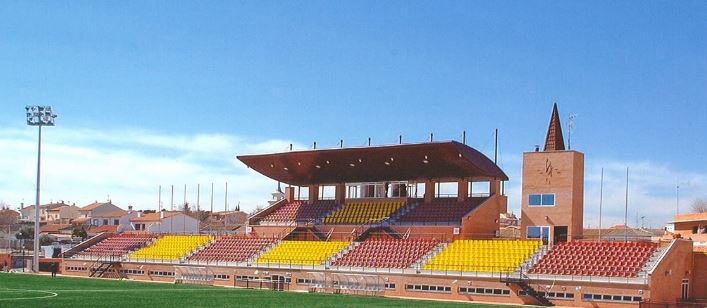
Their first season in the third tier was a bit of an eye opener, with the team well off the pace throughout the season. Ultimately, 7 wins in 38 matches were not good enough, and they were relegated in last but one place, with only Atlético Arteixo saving them from the indignity of finishing bottom. Back in the Tercera, but now back at their remodelled stadium, Navalcarnero consolidated for a couple of seasons before mounting another push for promotion. A second-place finish saw the club enter the 2007-08 playoffs and beat Granada Atlético and Atlético Granadilla to regain a place in Segunda B. The club put together a stronger challenge for their second visit to Segunda B, but ultimately fell short with a total of 37 points and seventeenth place. Back in Tercera, the club struggled and returned to the Regional Preferente for the first time in 16 years at the end of the 2011-12 season. The club returned to the Tercera in 2014, and two seasons later won promotion back to Segunda B, beating SD Tenisca, Deportivo B and SD Tarazona in the playoffs.
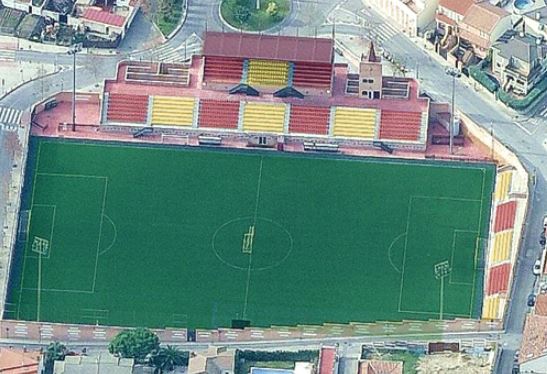
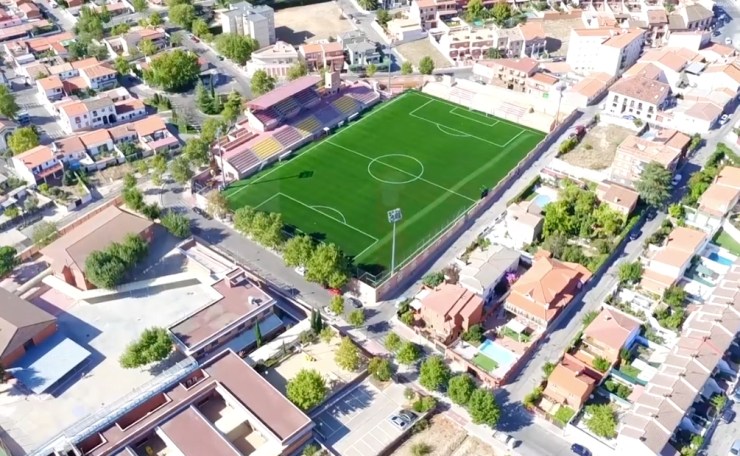
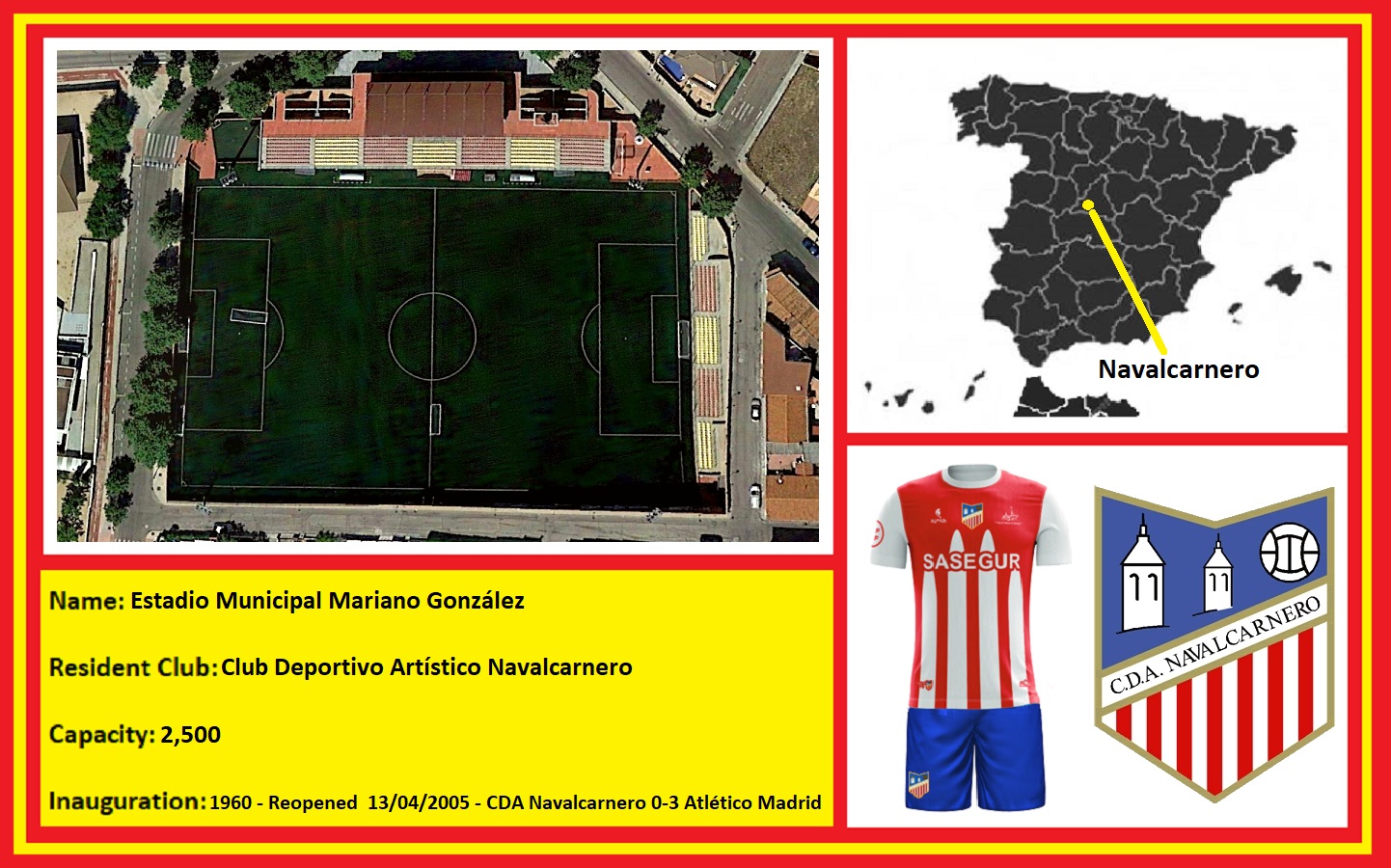
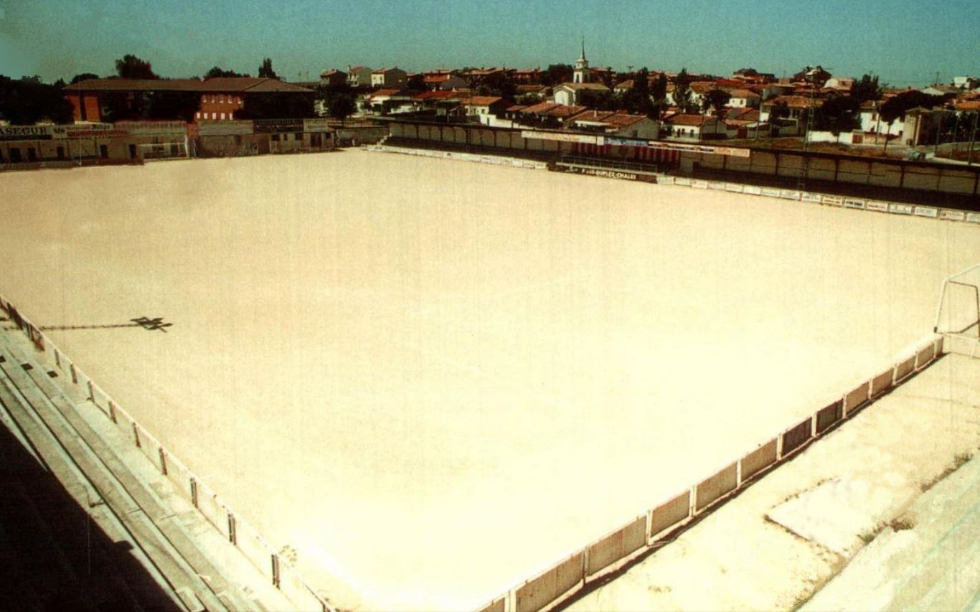
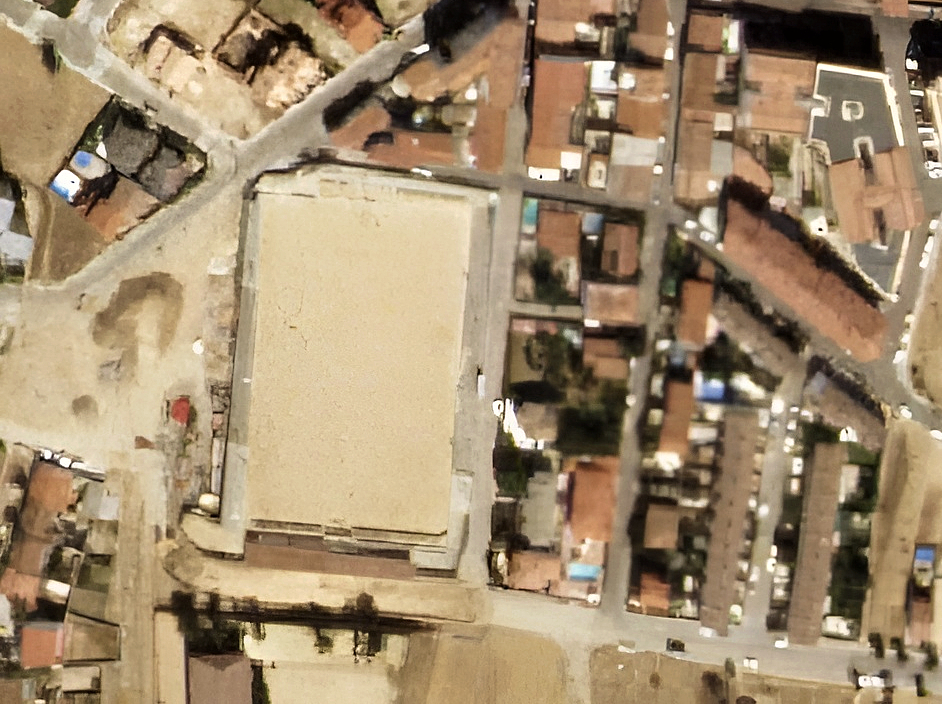
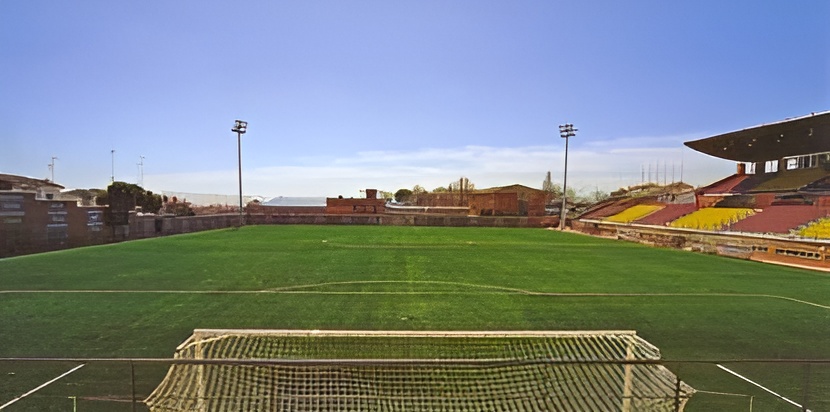
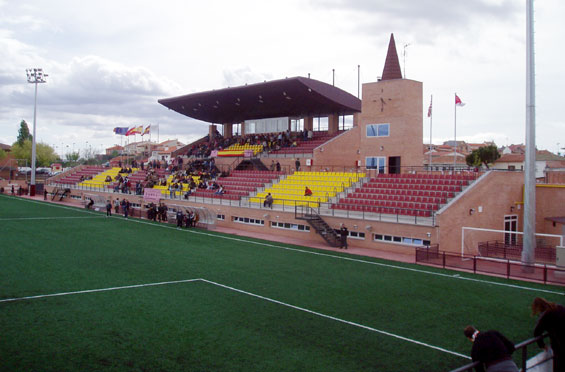
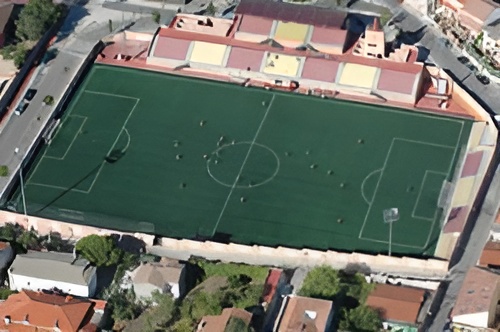
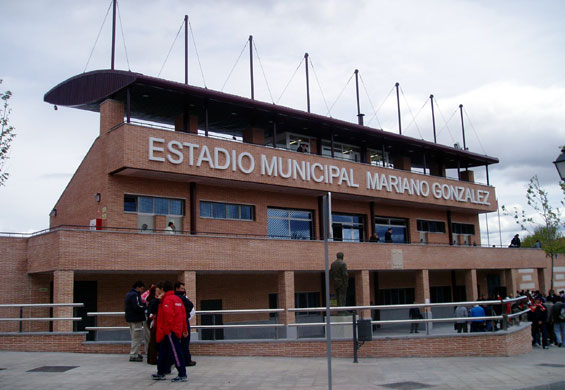
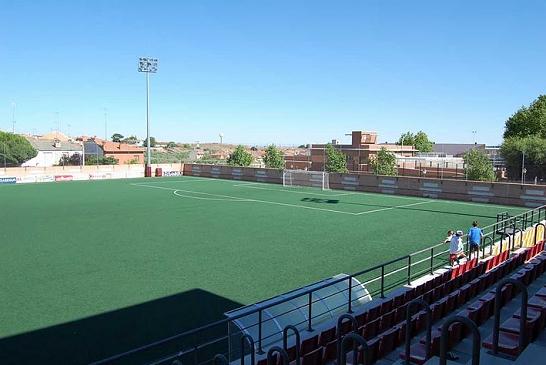
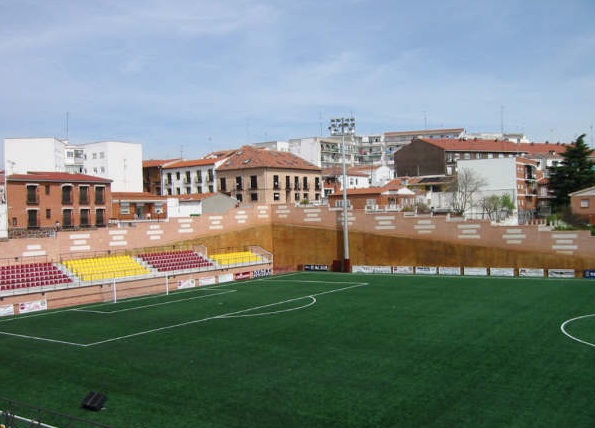
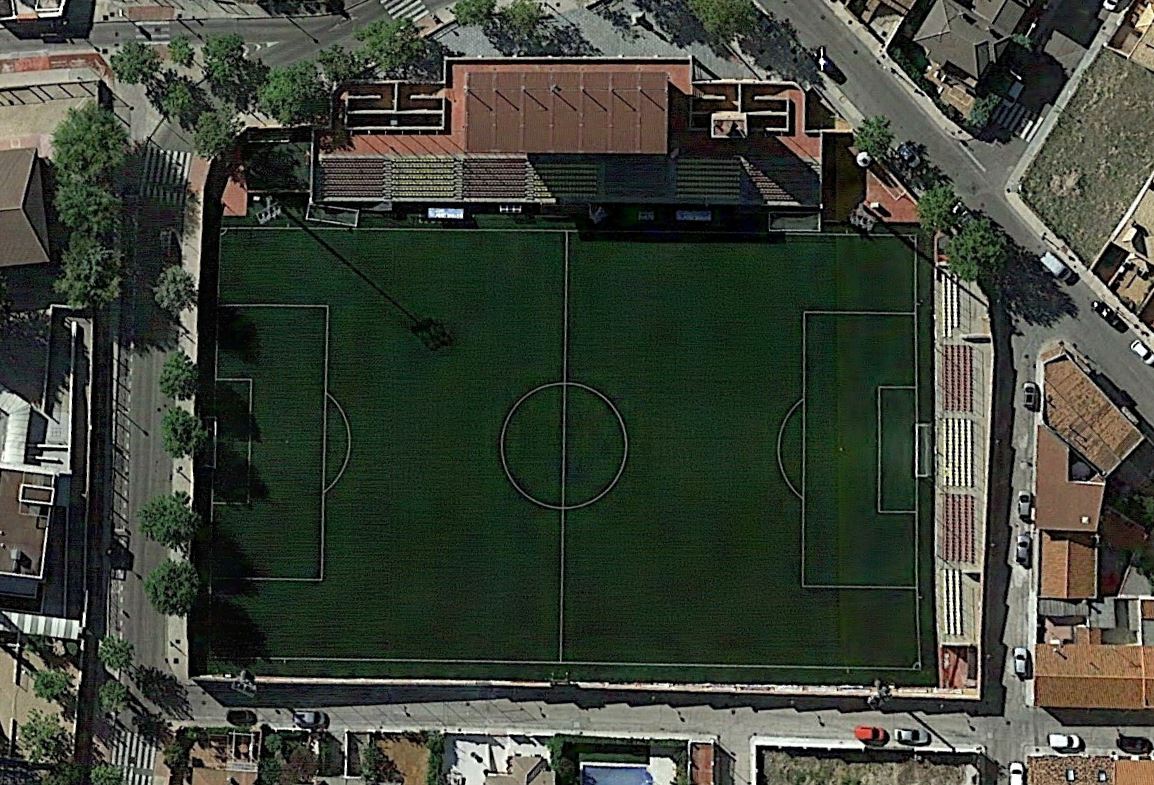
I have to say that the Estadio Municipal Mariano González is one of the quirkiest small stadiums in Spain. Constructed in 2005 on the site of the club’s existing home, it was originally called the Campo Colonia Covadonga or simply the Campo de Deportes when it opened in 1960. The land had been donated to the council by its owner, Mariano González, and featured a low cover that ran the full length of the western side, with a small, seated central section. There was a clubhouse and changing facilities at the southern end, while the northern end and eastern side cut into the side of a hill and featured narrow terraces. Redeveloped at a cost of €5 million and with an all-seater capacity of 2,500, it was officially opened on 13 April 2005 with a friendly match against Atlético Madrid. The stadium has retained its original alignment, but the new synthetic pitch is now located a few metres to the south-east. This has allowed more room to develop the main stand, as well as the larger northern end, which features a bank of five rows of seats, cut into the side of the hill.
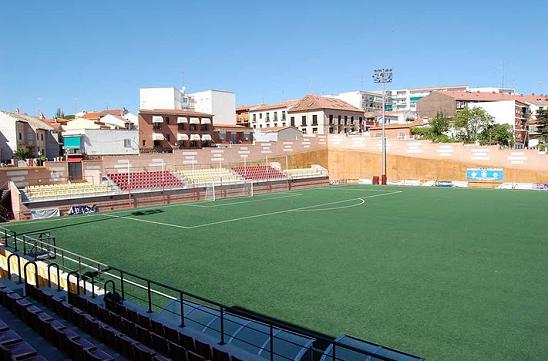
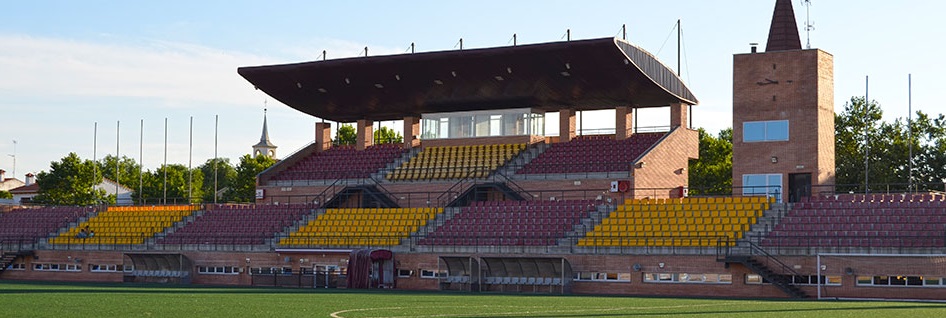
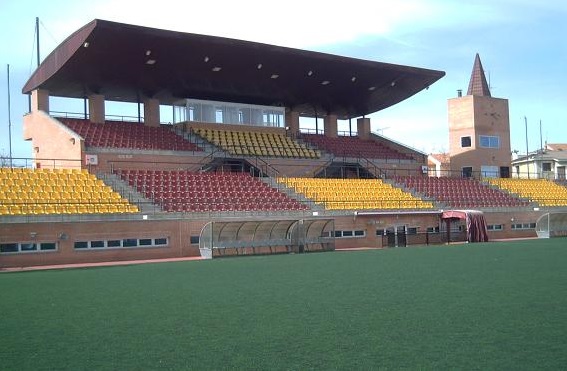
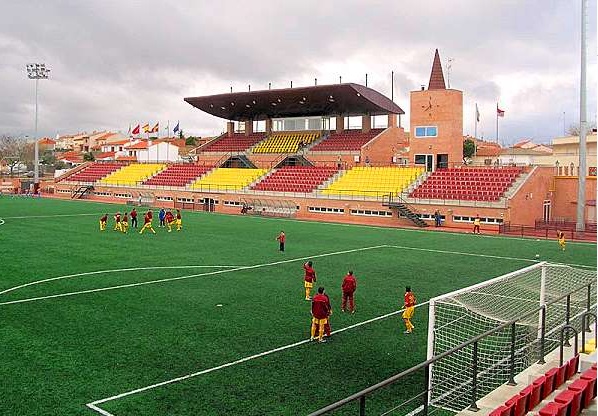
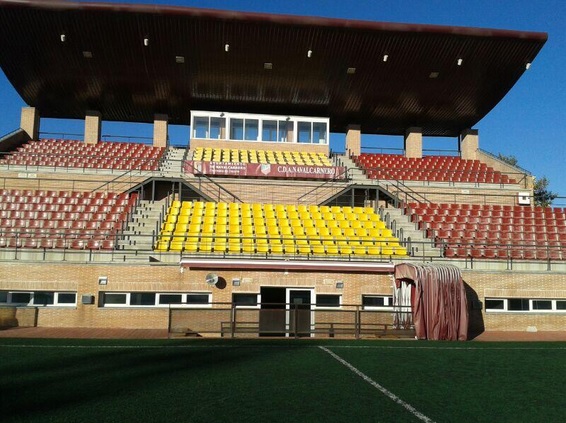
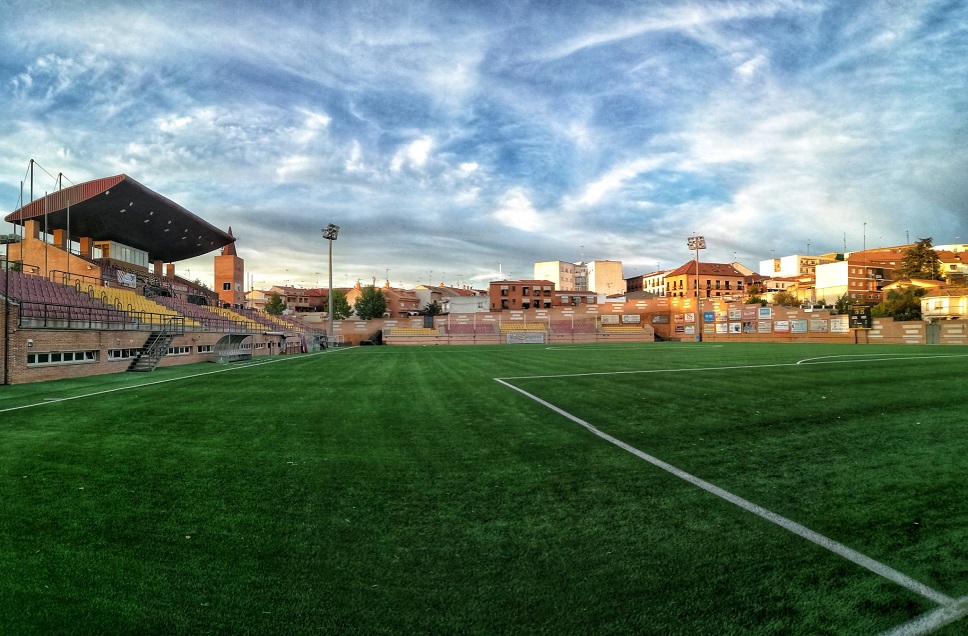
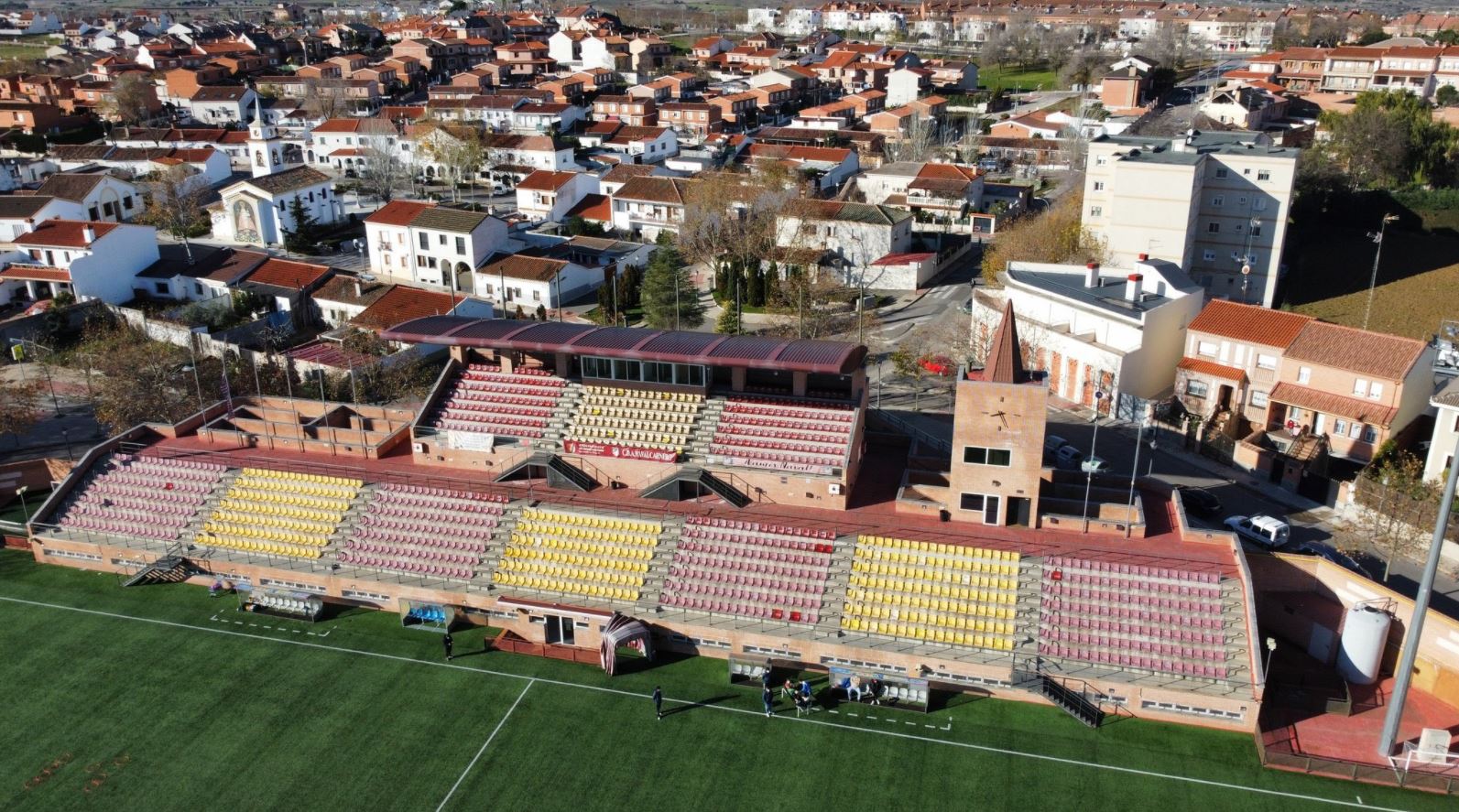
But it is the main stand that really sets this ground apart. Bedecked in burgundy and yellow seats, the colours of the town, it is a two-tiered structure, with a lower bank of seats that runs between each penalty area. The second tier is only 30 metres in length and is covered by a burgundy cantilevered roof. To the right of the upper tier is a tower that features the stadium control centre, a clock, and, to cap it all, a 4-metre spire (in burgundy, of course!). The municipality really does deserve congratulations, as it would have been so simple to build a faceless stadium that ticked all the boxes. Instead, they have built a stylish and distinctive stadium that sets Navalcarnero apart from so many other new builds in Spain. The excellent The Team On Tour paid a visit to the Estadio Municipal Mariano González in August 2018. You can watch their video here.
The past decade has seen the club establish itself, first in Segunda B, and then following the reorganisation of the Spanish football pyramid in 2021, the Segunda Federación.

 Estadios de España