
For 107 years, the primary focus for football in this city on the Portuguese border was Club Deportivo Badajoz. That heritage came to a calamitous end in the summer of 2012, and it could be argued that this new stadium played a part in the club’s demise.
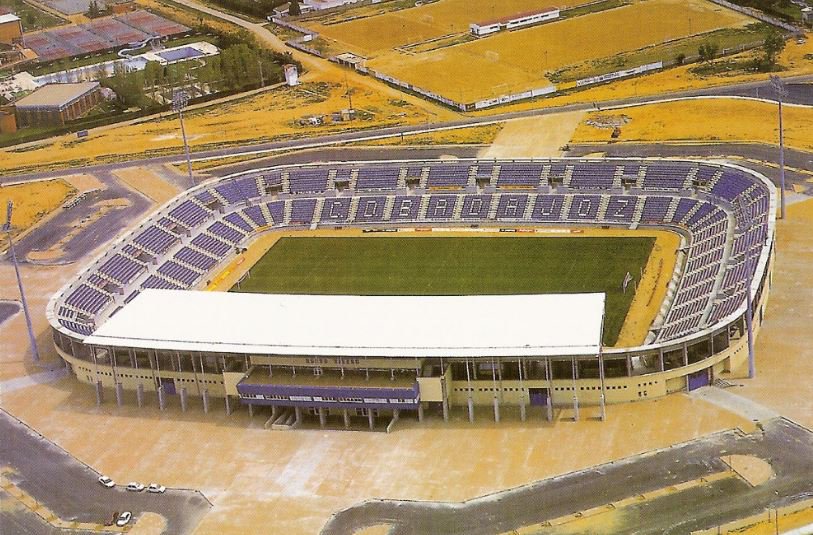
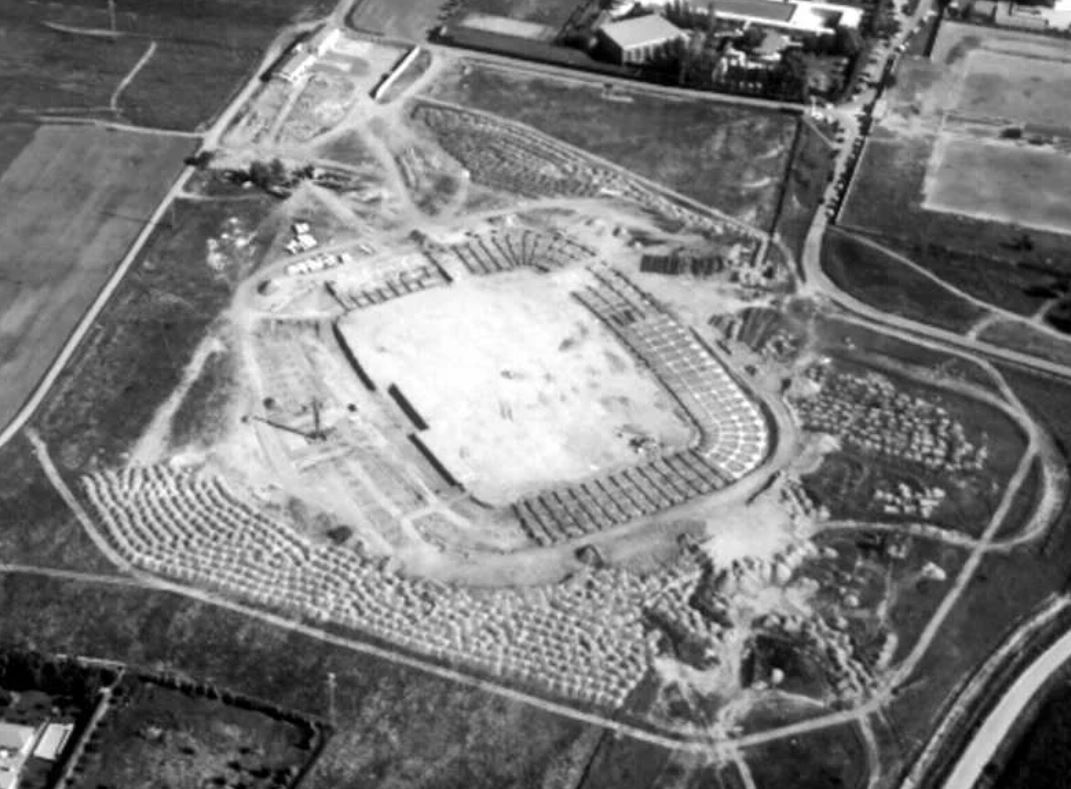
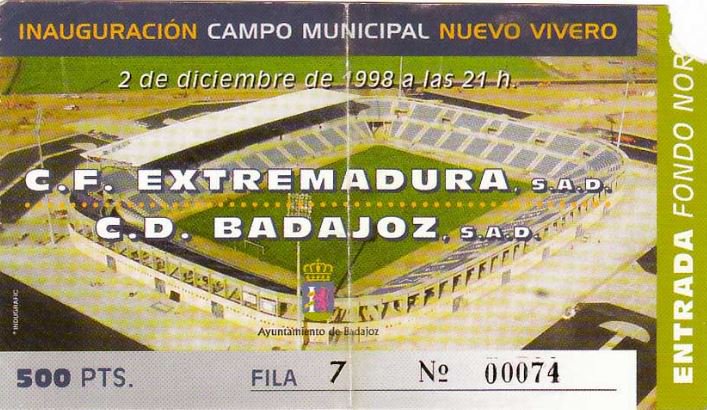
Founded in August 1905, CD Badajoz spent 81 years at the Campo de El Vivero. This was a basic ground north of the Rio Guadiana, which hosted second-division football as recently as 1998. El Vivero was hopelessly outdated, and with the club eyeing top-flight football, work commenced on a new stadium to the west of the city in September 1997. After 81 years north of the Rio Guadiana, CD Badajoz headed south to the Estadio Nuevo Vivero. The stadium was inaugurated on 2 December 1998 with a friendly match against local rivals CF Extremadura that ended 0-0. The stadium staged its first competitive match 4 days later, with the second division tie against CD Toledo. Regrettably, and possibly as a sign of things to come, CD Badajoz lost 0-1. The club’s dream of top-flight football never quite came off. They regularly spent beyond their means, particularly in the early 2000s when the club bought a host of Argentinian players. In July 2006, CD Badajoz was on the brink of folding, until a last minute deal with the President of the local amateur club AD Cerro de Reyes, saw CD Badajoz’s debts paid off. There was a downside, however, as AD Cerro de Reyes took CD Badajoz’s place in Segunda B. Very Faustian!
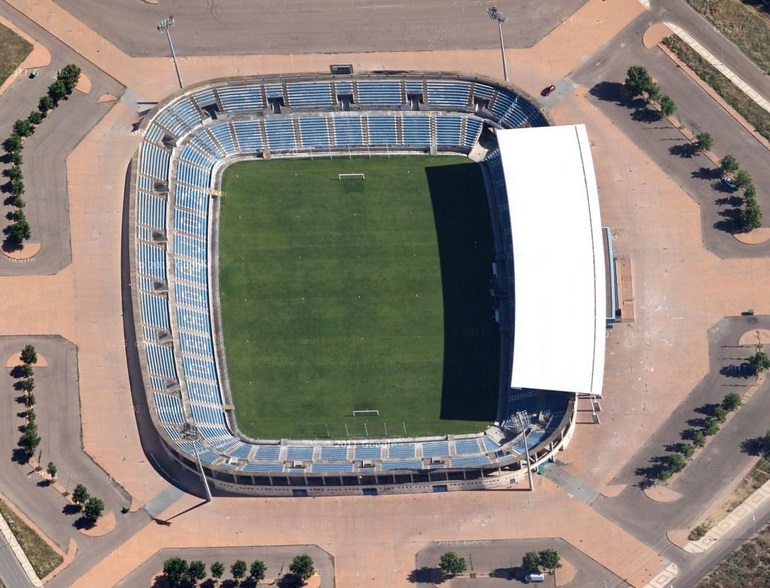
Following four seasons in the Tercera, CD Badajoz was promoted back to Segunda B for the start of the 2010-11 season. It proved to be a false dawn, for after two mid-table finishes, the club was wound up with debts totalling over €8m. Badajoz’s football fans had to content themselves with Tercera division football and the exploits of UD Badajoz at the rebuilt Estadio Viejo Vivero, whilst the Nuevo Vivero lay empty. Then in the summer of 2013, UD Badajoz joined forces with Badajoz CF, who had emerged from the remnants of the old CD Badajoz, to form Badajoz Club de Fútbol. They changed their name to Deportivo Pacense in the summer of 2014, following the emergence of CD Badajoz 1905, a Phoenix club that won promotion to the Tercera in June 2014 and Segunda B in 2017. The upshot of this is that the new Club Deportivo Badajoz now resides in the spacious surroundings of the Estadio Nuevo Vivero.
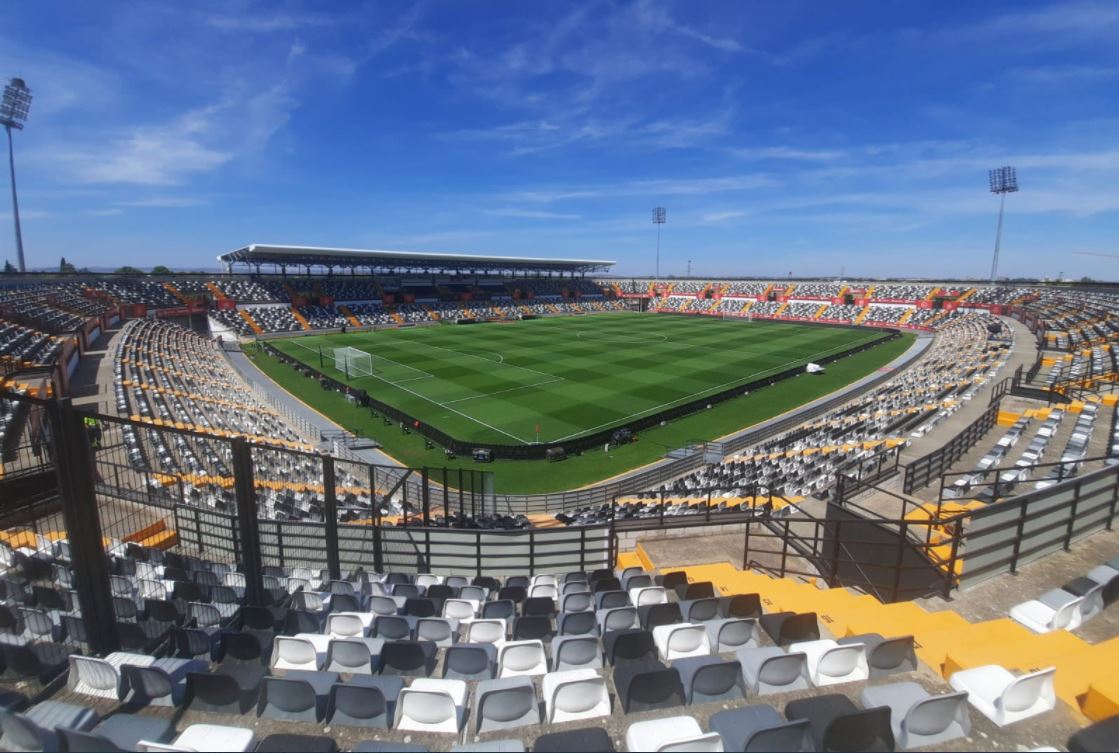
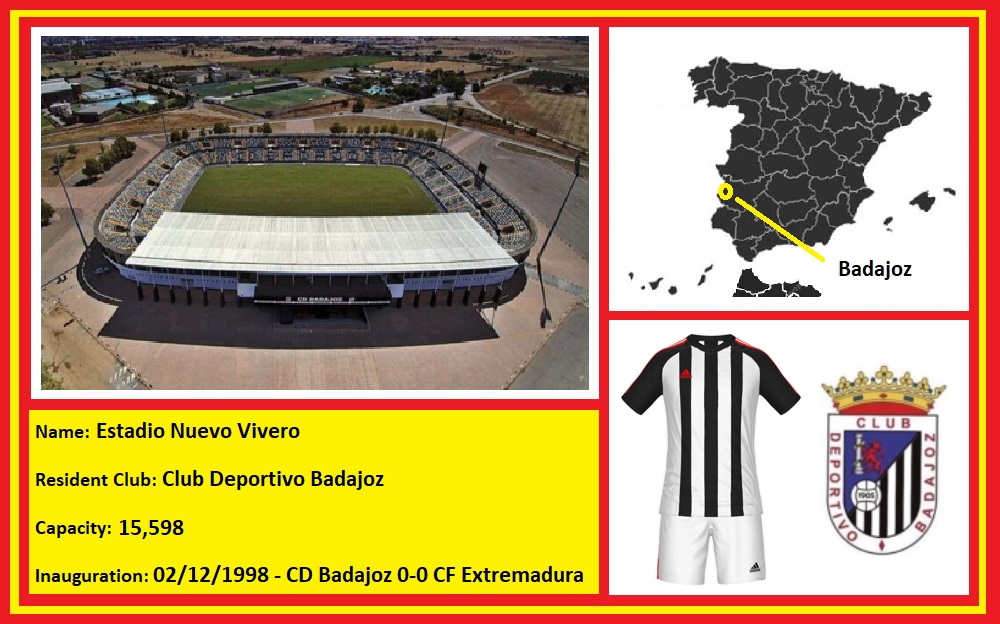
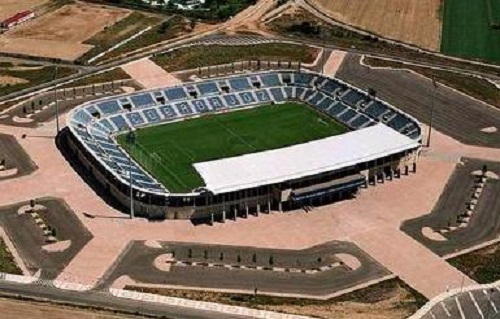
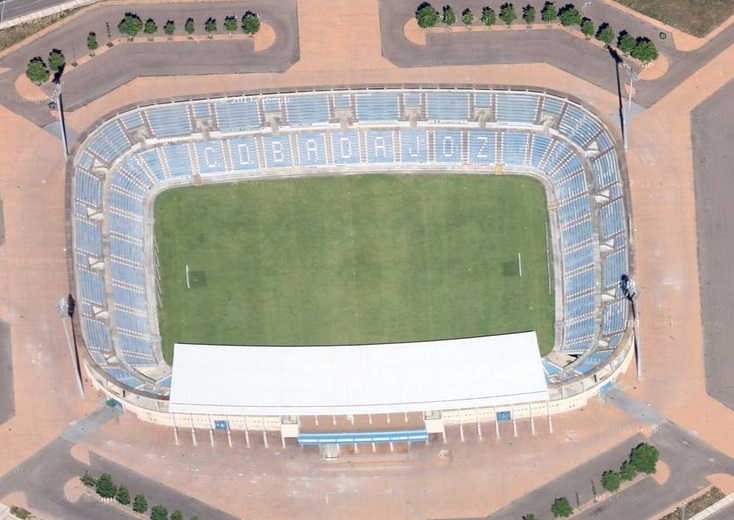
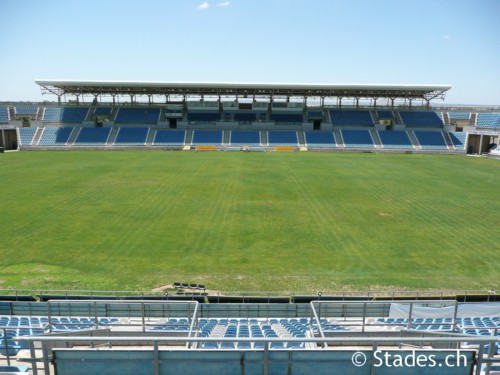
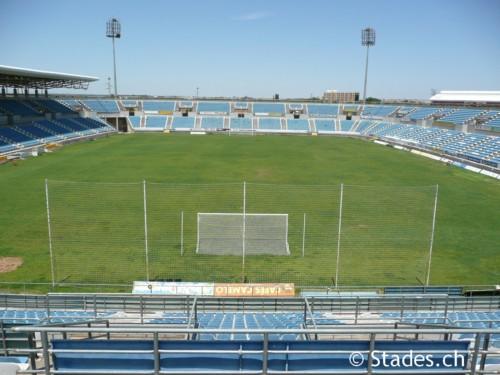
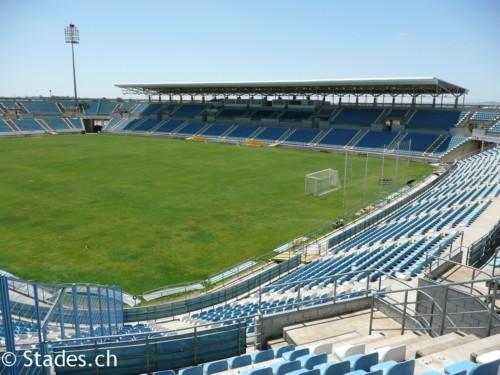
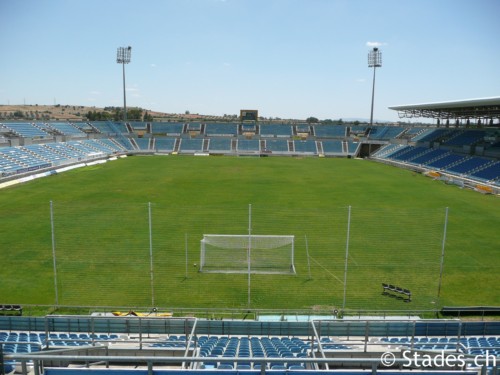
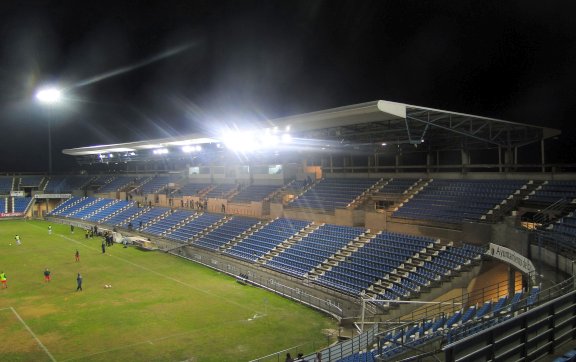
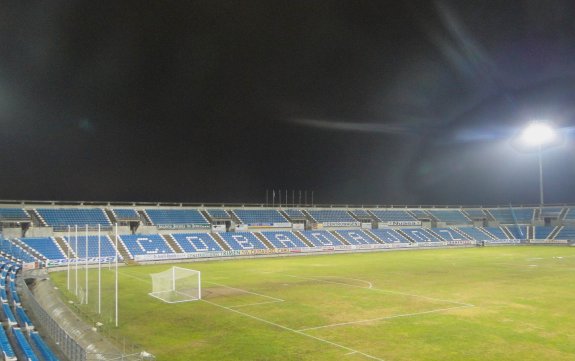
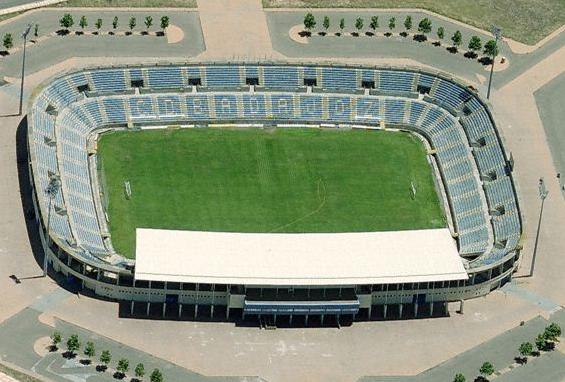
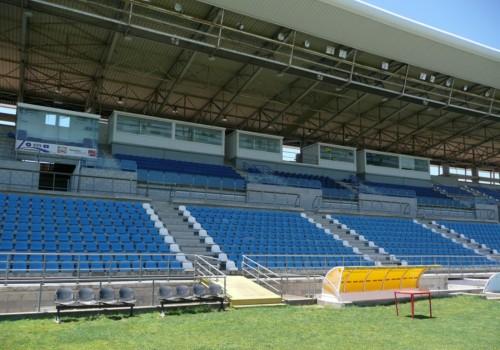
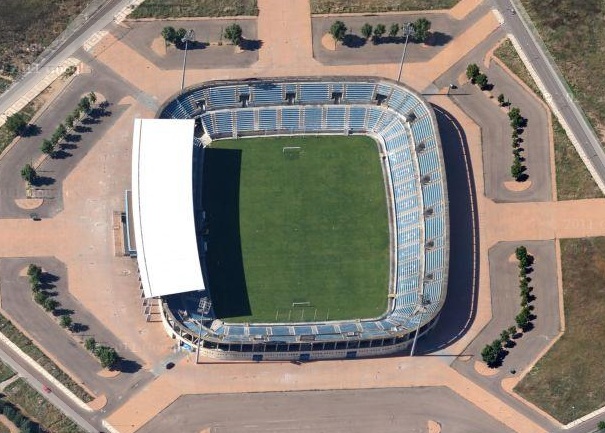
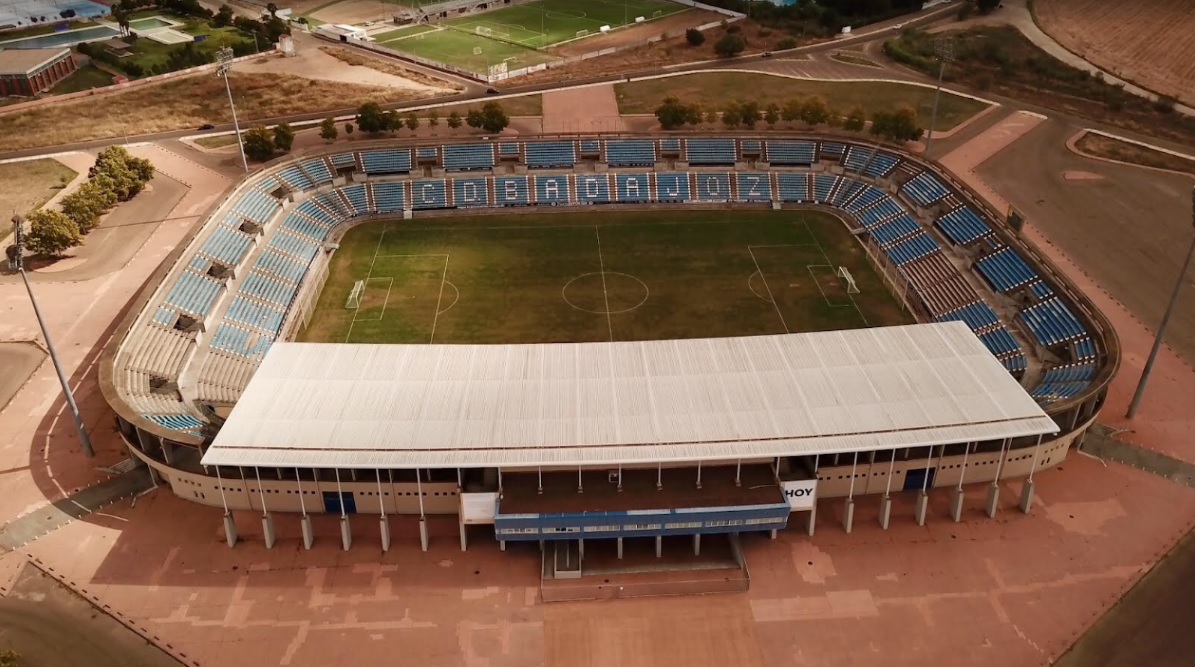
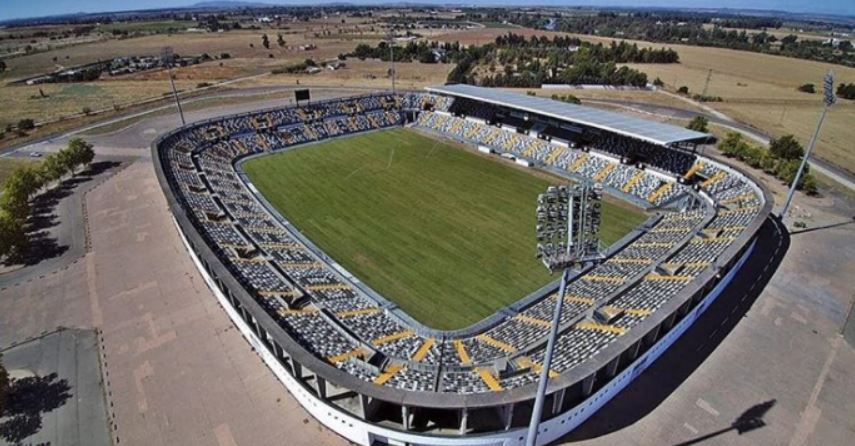
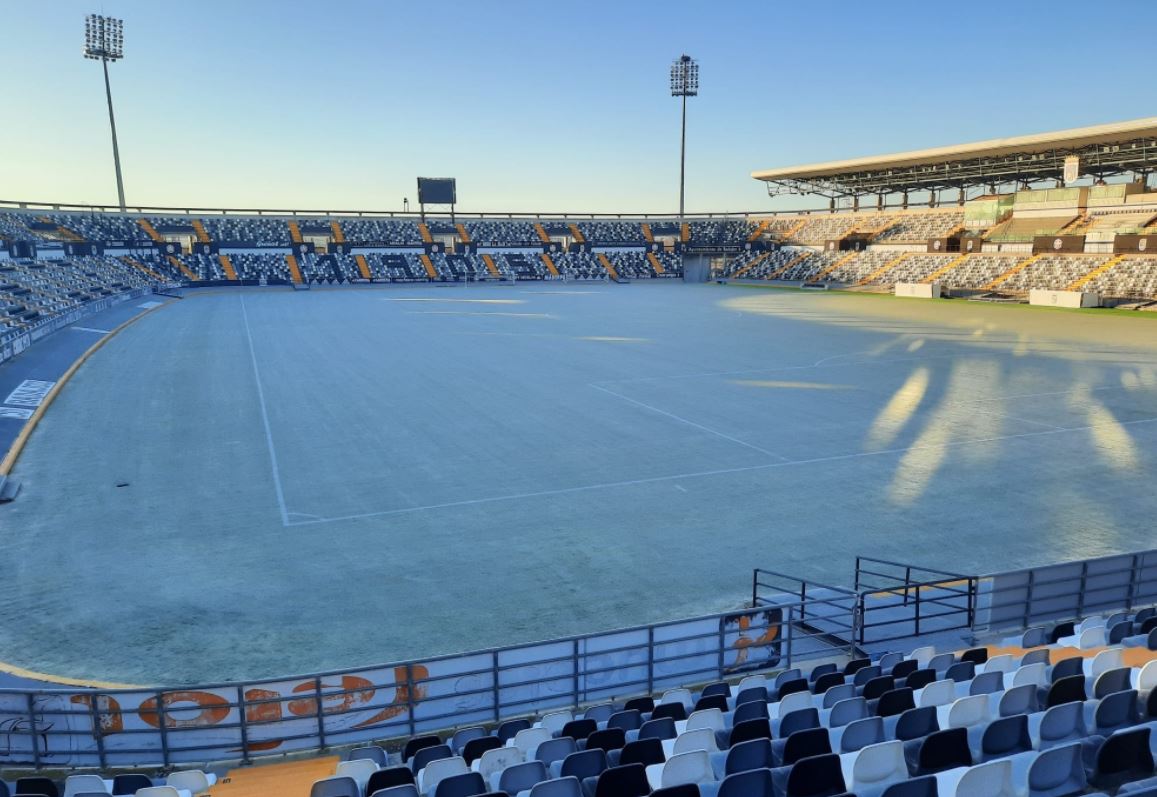
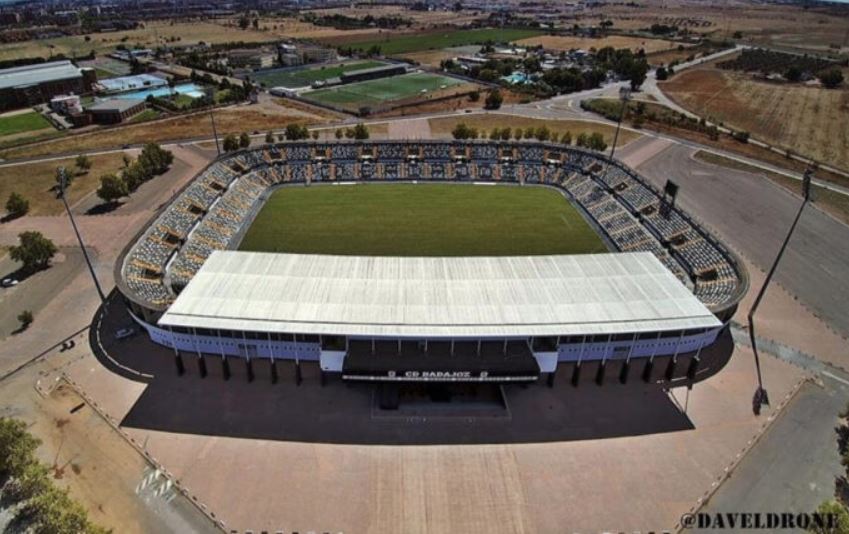
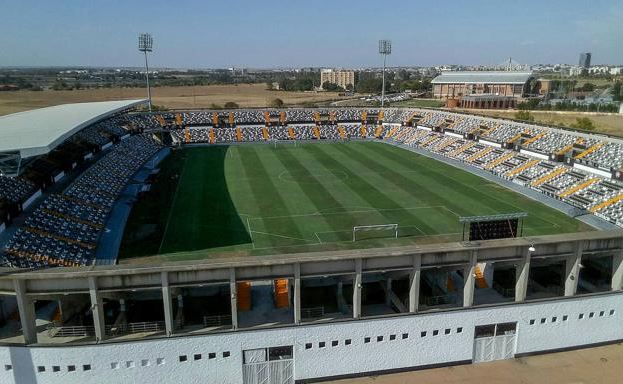
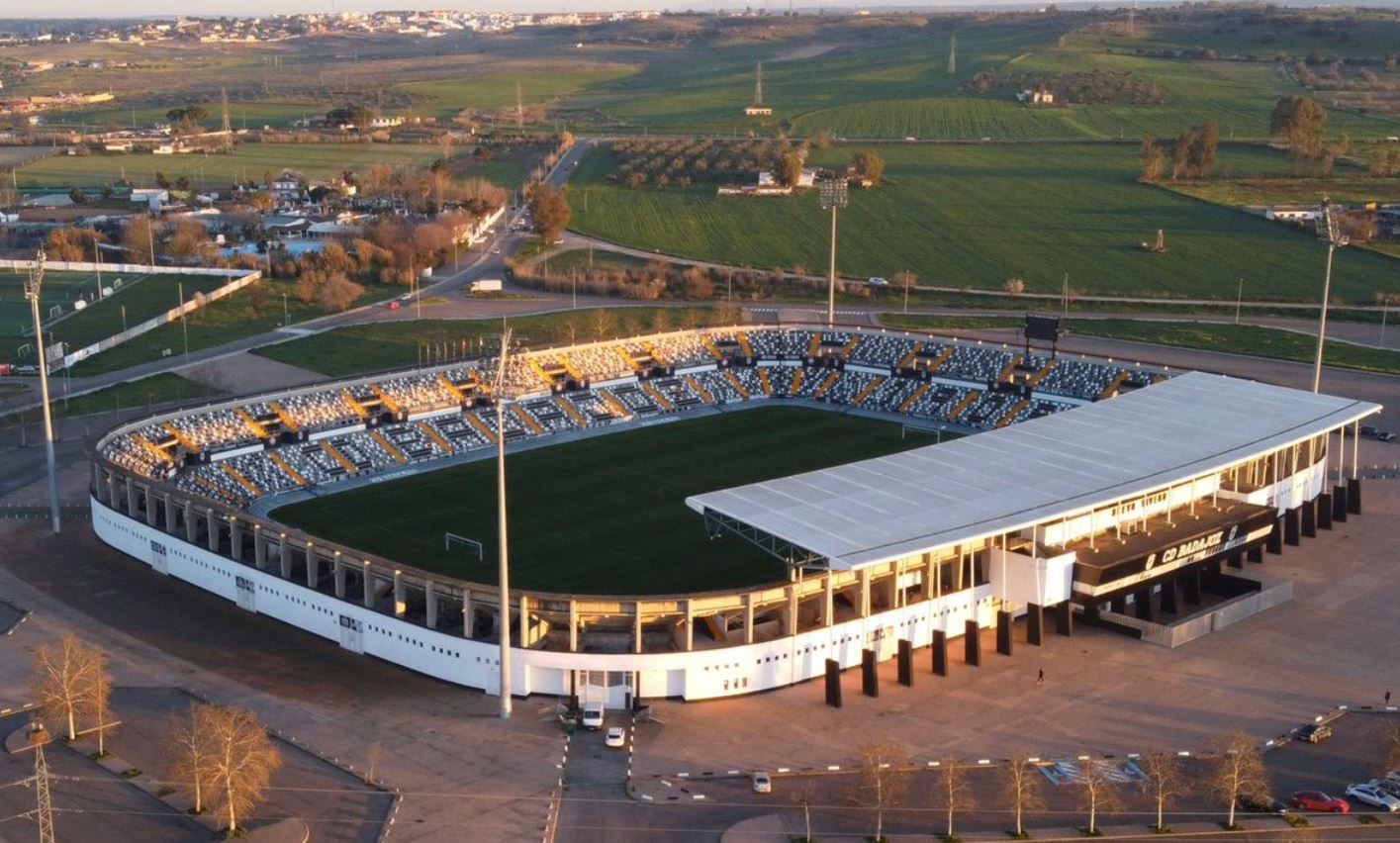
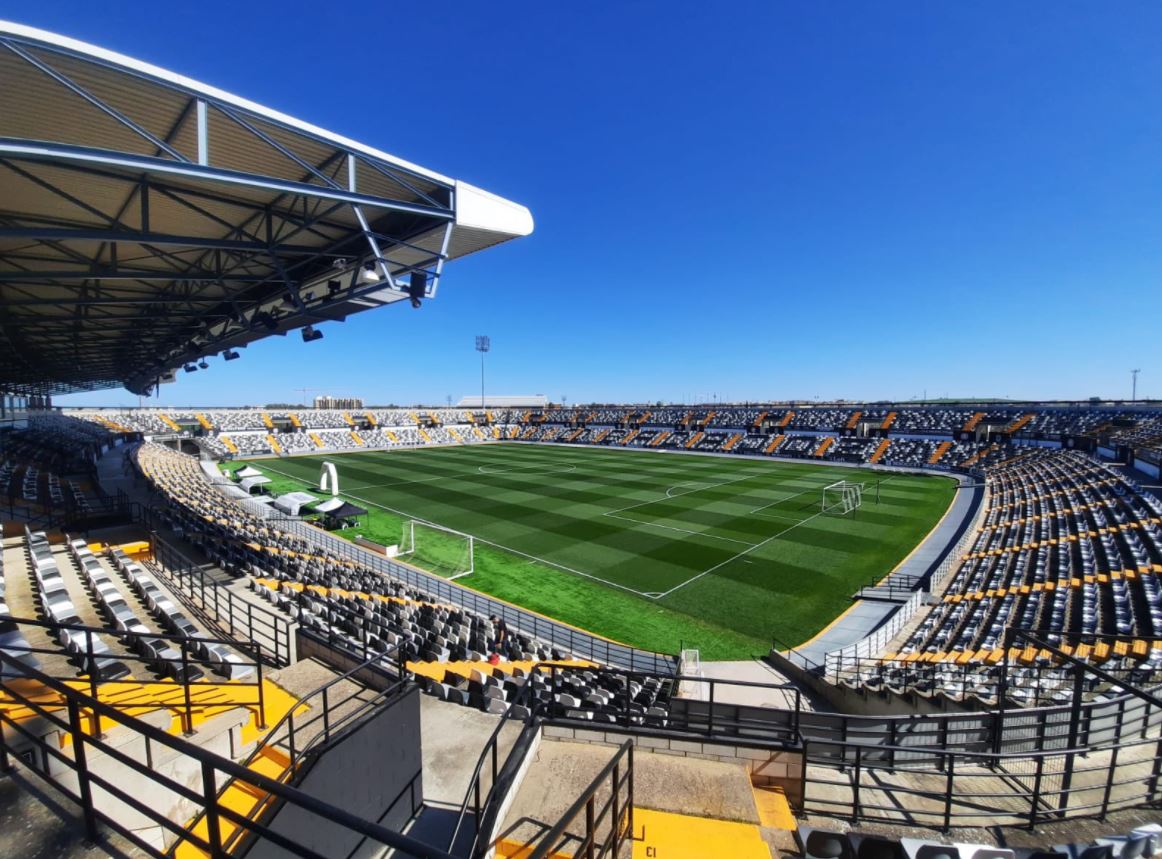
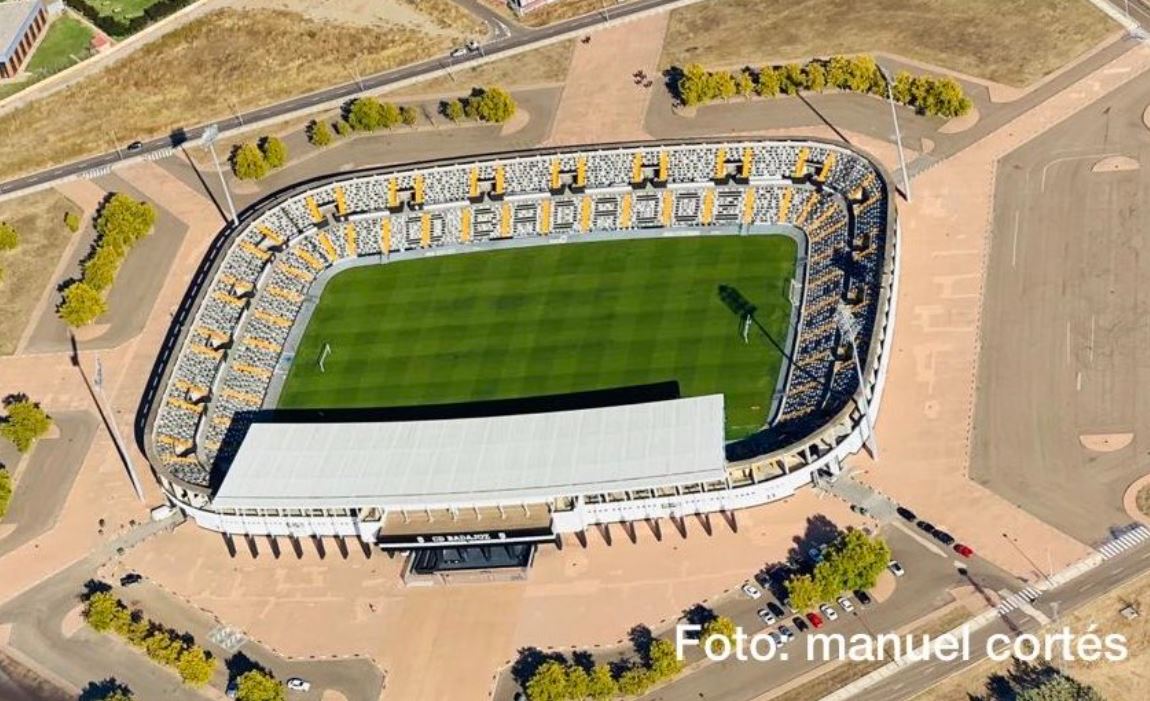
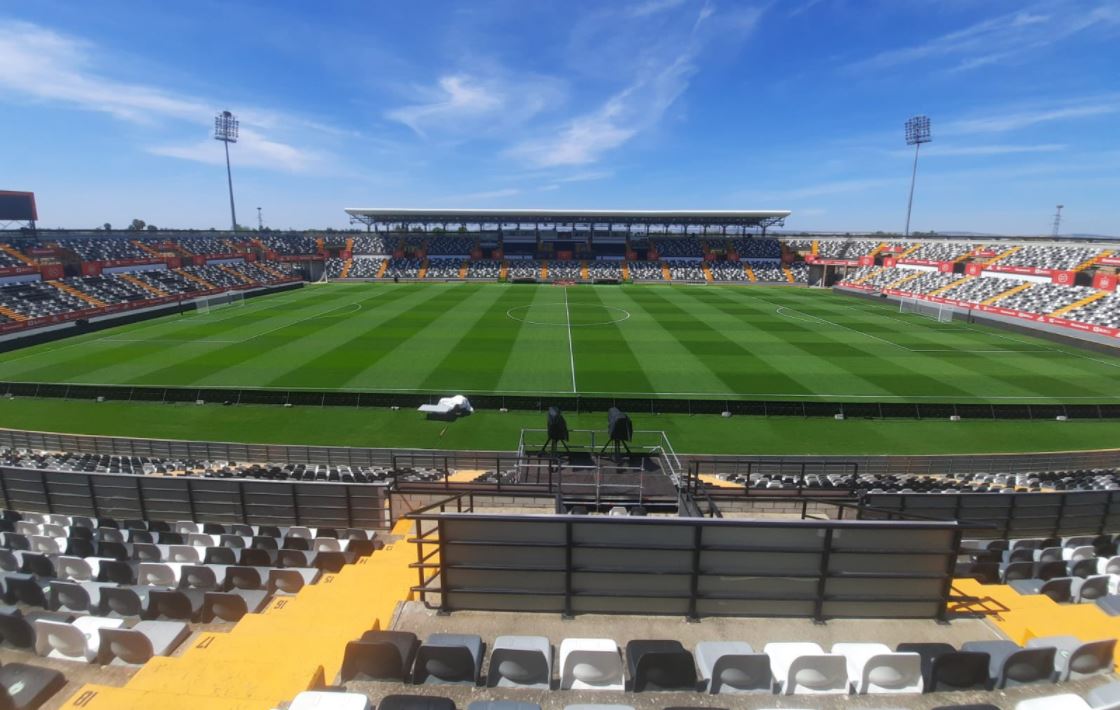
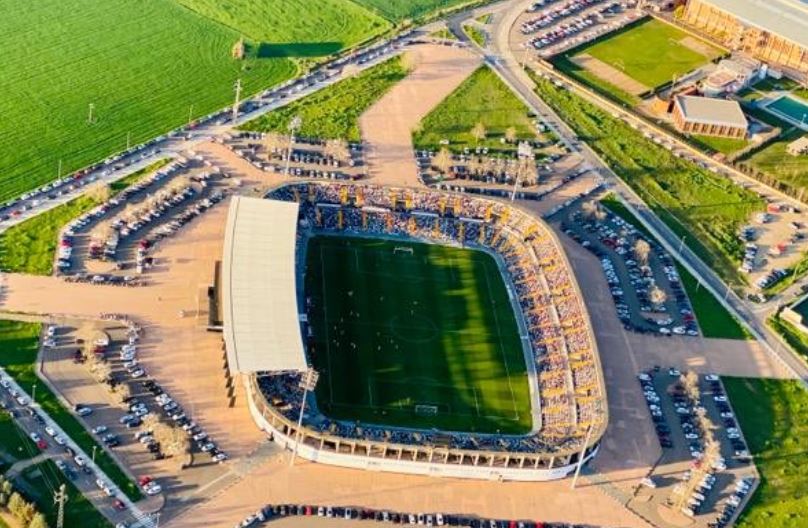
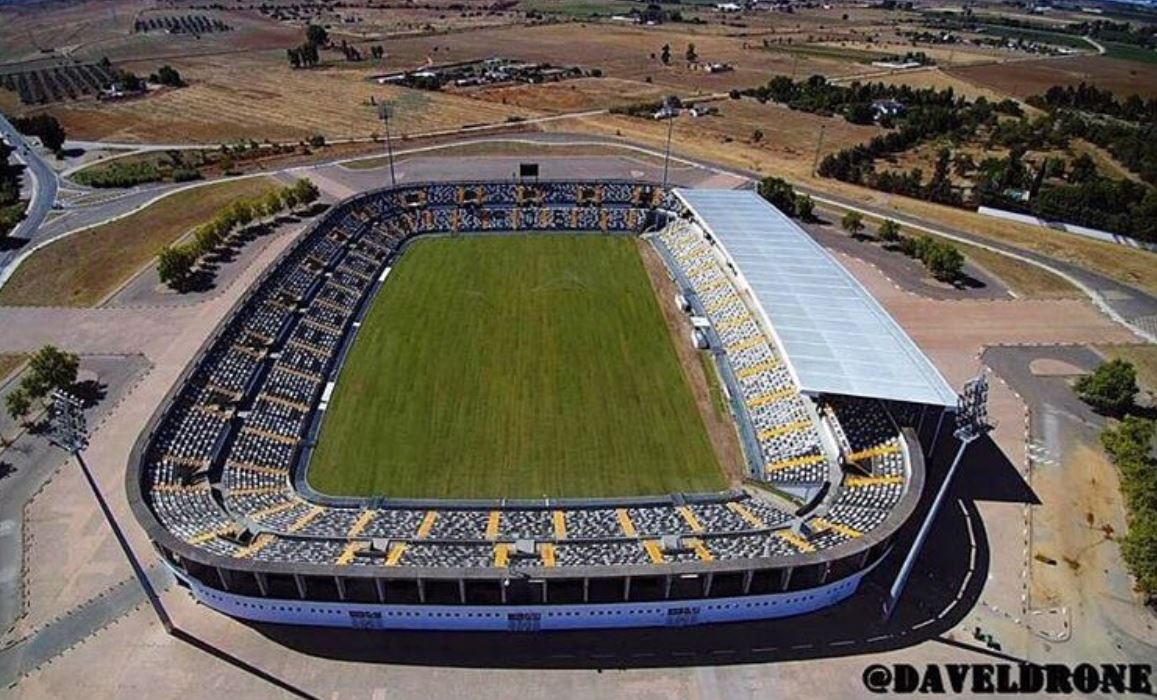
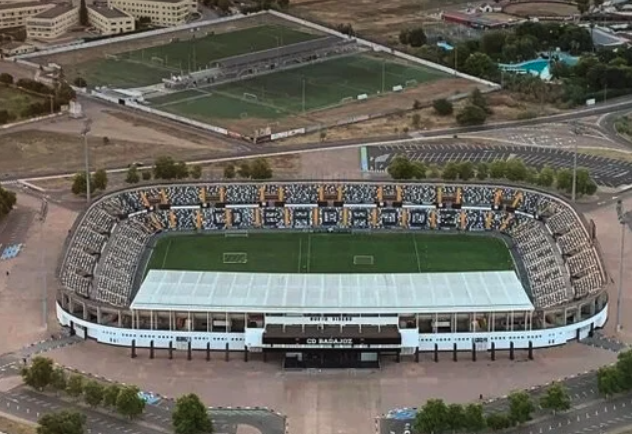
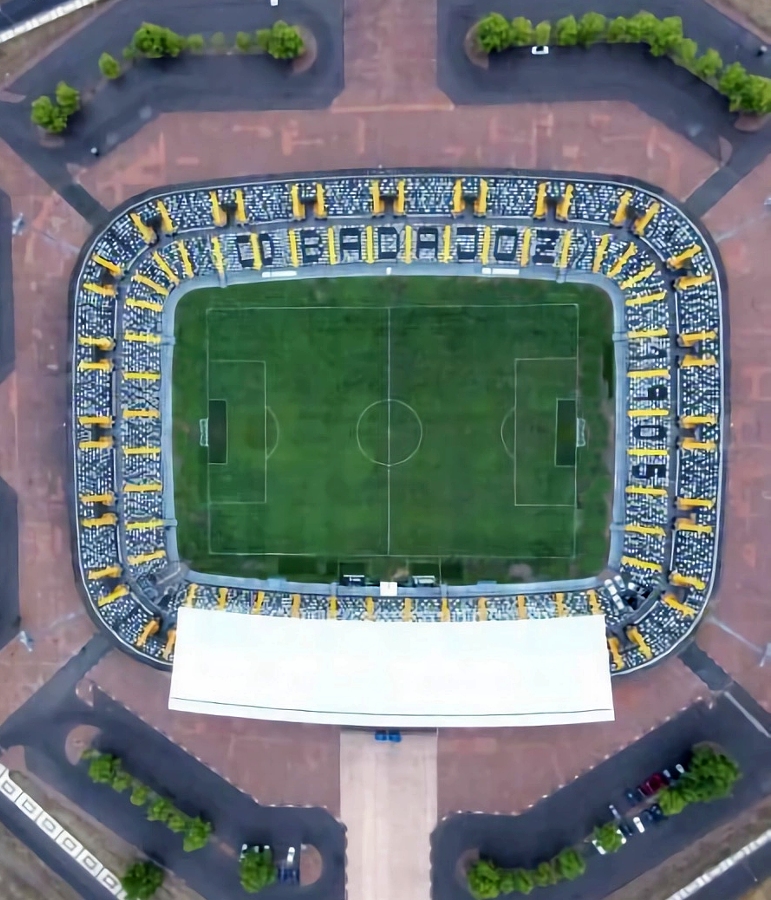
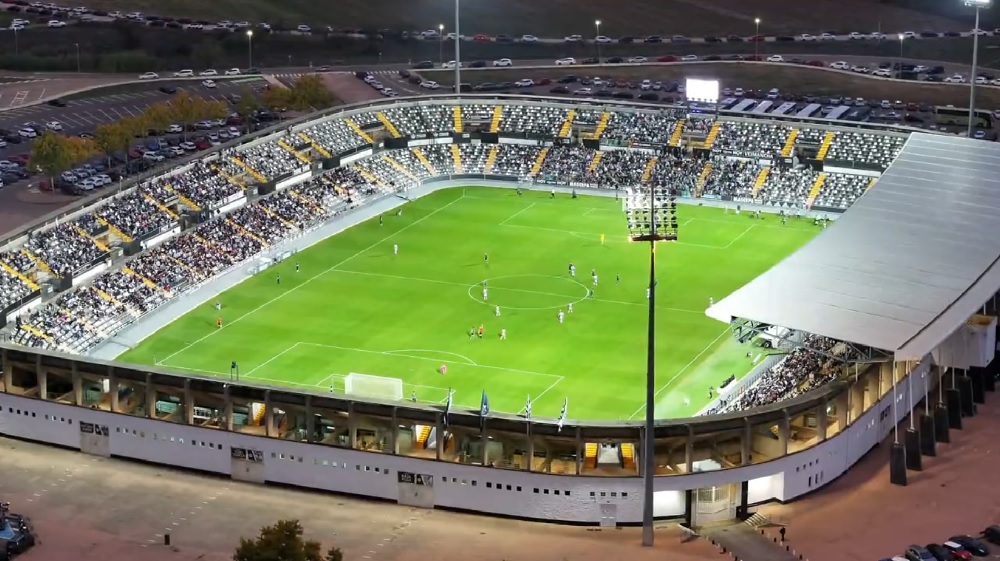
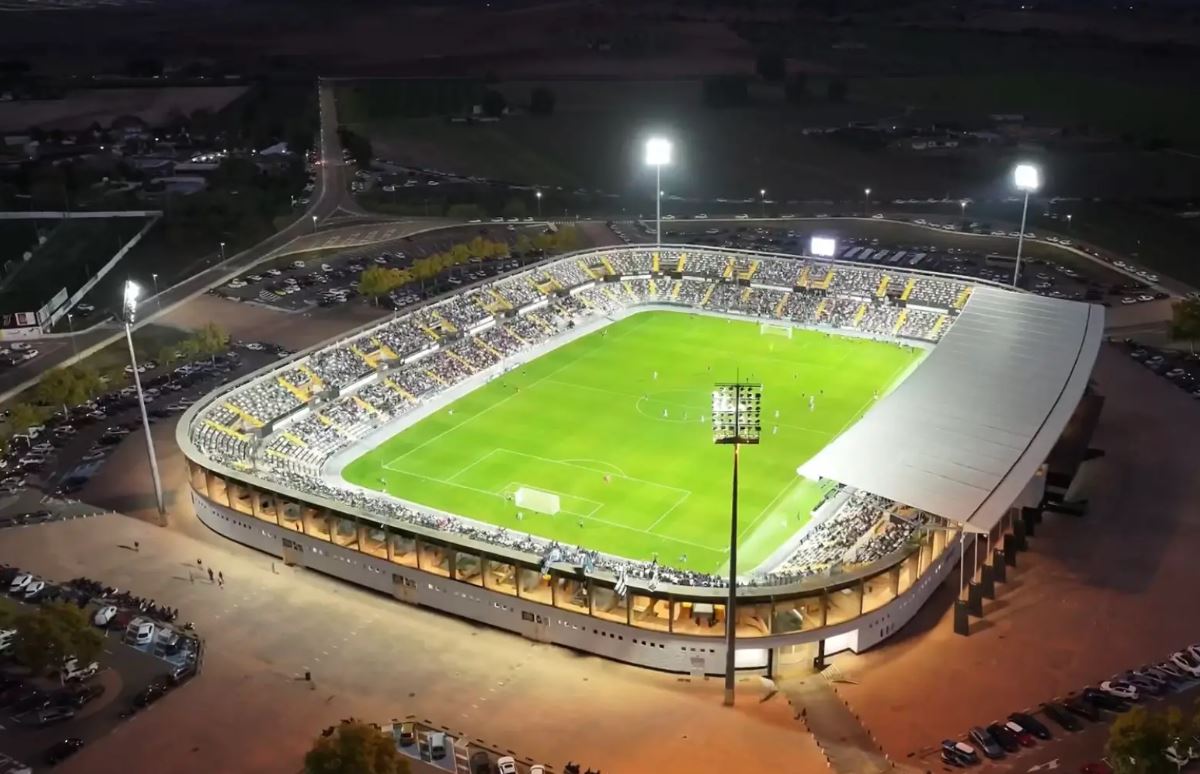
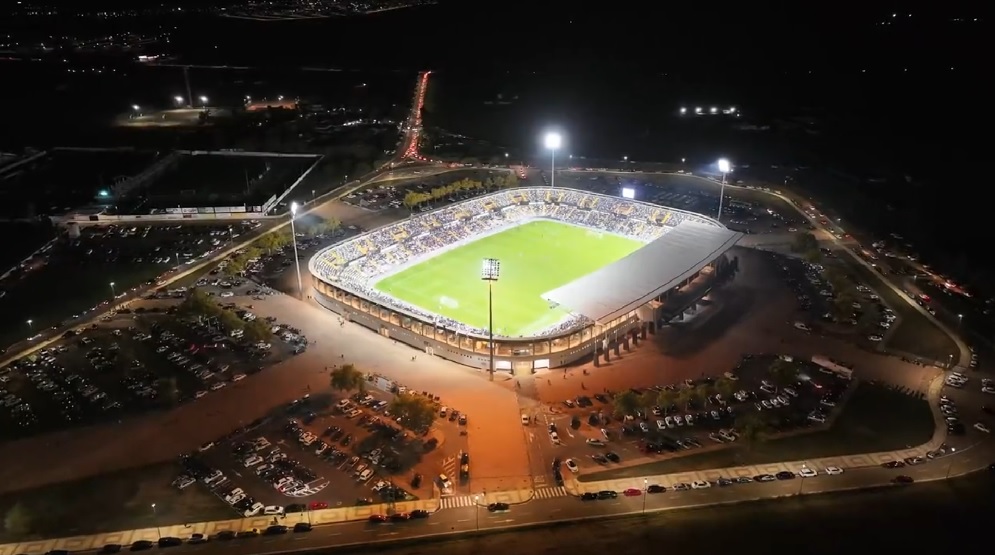
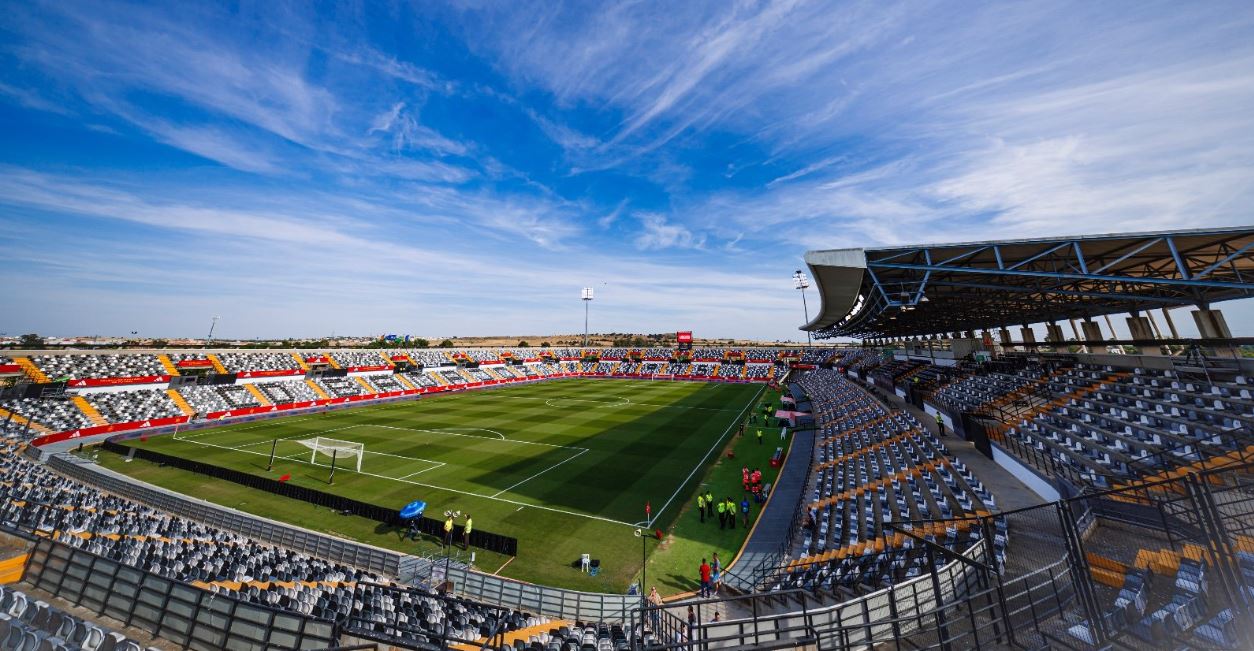
The Estadio Nuevo Vivero is the largest stadium in Extremadura with a capacity of 15,598. Situated on the south bank of the Guadiana, about a mile west of the city, it was built for €4.5m with funding from Extremadura’s regional government. The stadium sits on the edge of the development of a series of sports facilities, of which the municipality is rightly proud. It is a bright, modern, if slightly formulaic stadium, featuring a single tier of black & white seats. The cantilevered roof on the west side of the stadium is impressive, snapping onto the supports like a giant white lid. The Nuevo Vivero was one of the stadiums included in Spain’s unsuccessful bid to host the 2018 World Cup. That would have seen the stadium increase to over 35,000, which bearing in mind CD Badajoz struggled to get a tenth of that, did seem ridiculous. It has seen international football however, with La Selección choosing the stadium to host four full internationals at the ground between 1999 and 2024. Spain has won all four matches with an aggregate of 23-0.
 Estadios de España
1 thought on “Badajoz – Estadio Nuevo Vivero”
Comments are closed.