
Article updated: 23/10/2025
The citizens of Badajoz have Luciano Sampérez Arroyo, a physical education teacher and director of the Gran Gimnasio de Badajoz, to thank for their introduction to football. From 1899, he promoted physical fitness and hygiene among local youth, using football as a teaching tool. Through annual demonstrations at the city’s Fair, he helped establish the sport as a popular activity, laying the foundation for its growth in the early 20th century. Inspired by Don Luciano’s teachings, students at the city’s Liceo Artístico y Literario formed Sporting Club del Liceo on 15 August 1905. Matches were confined to the playing fields of the college, but in 1908, former students established Club Sportivo Pacense and played its first match on 23 November, defeating Club Politécnico 2–1. The match was played at the Real de la Feria grounds, which stood to the northwest of the old city, across the Rio Guadiana.
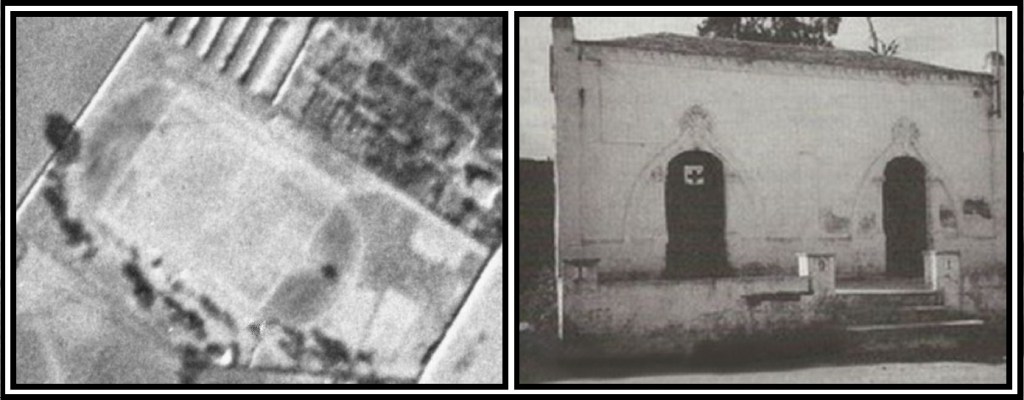
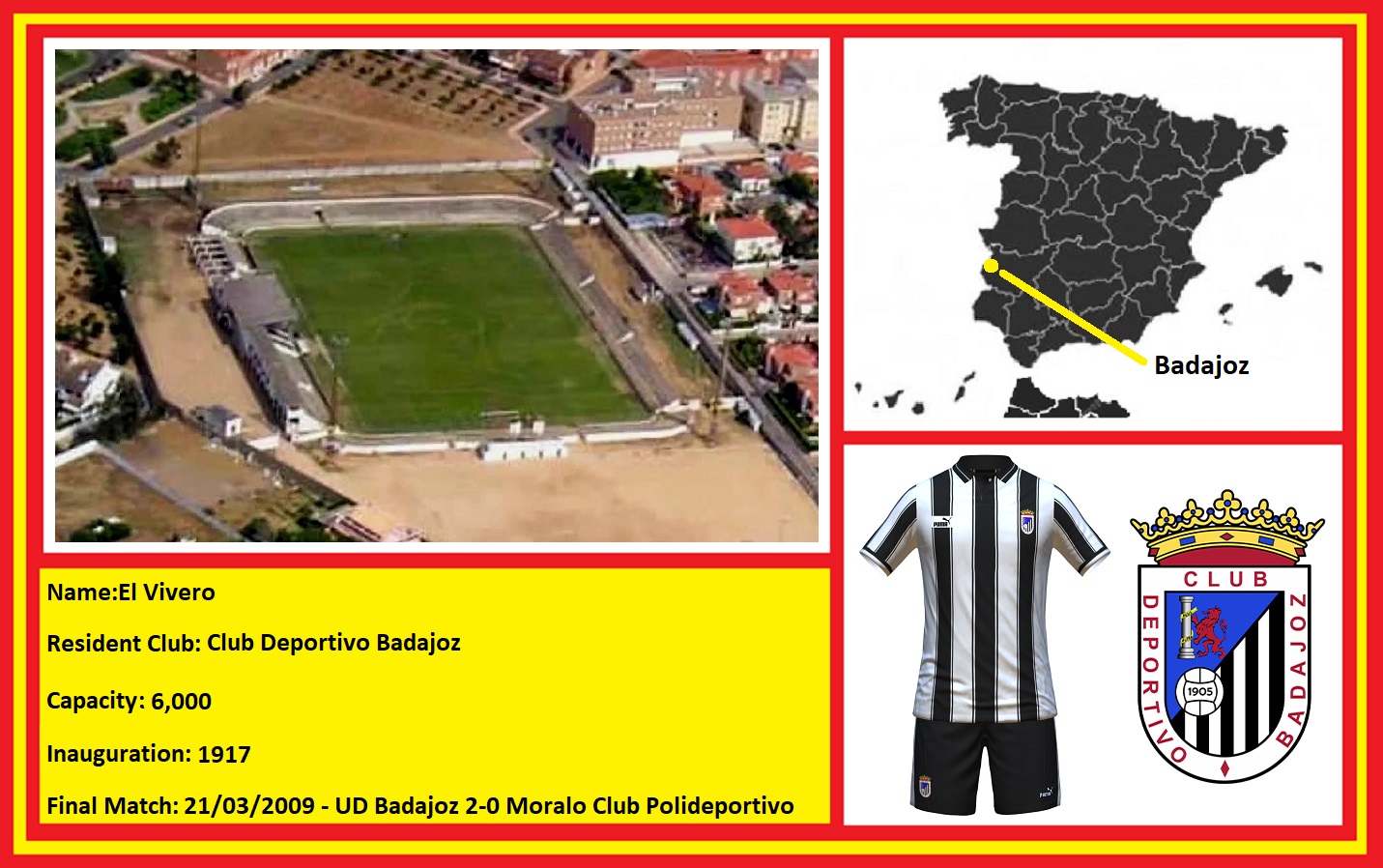
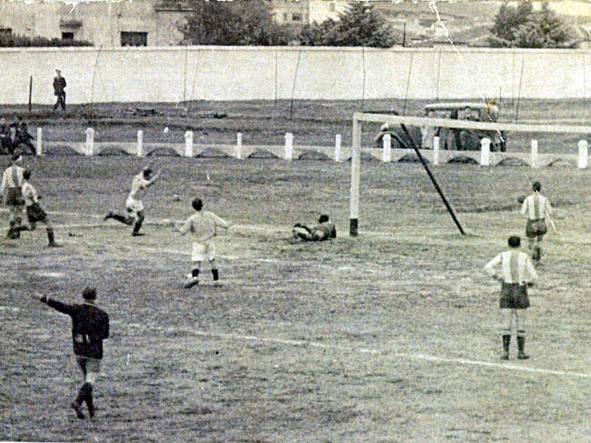
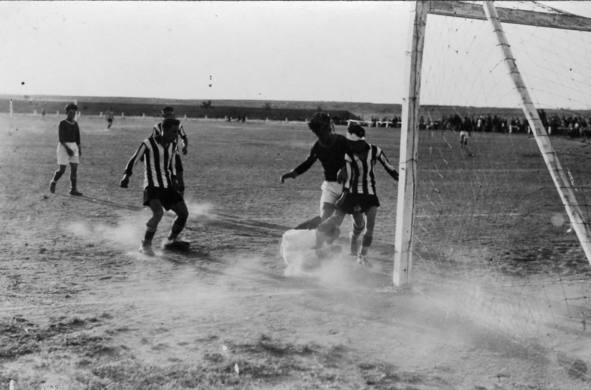
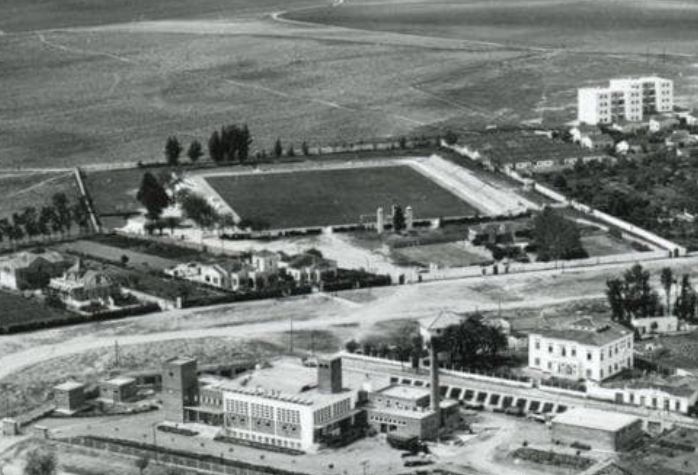
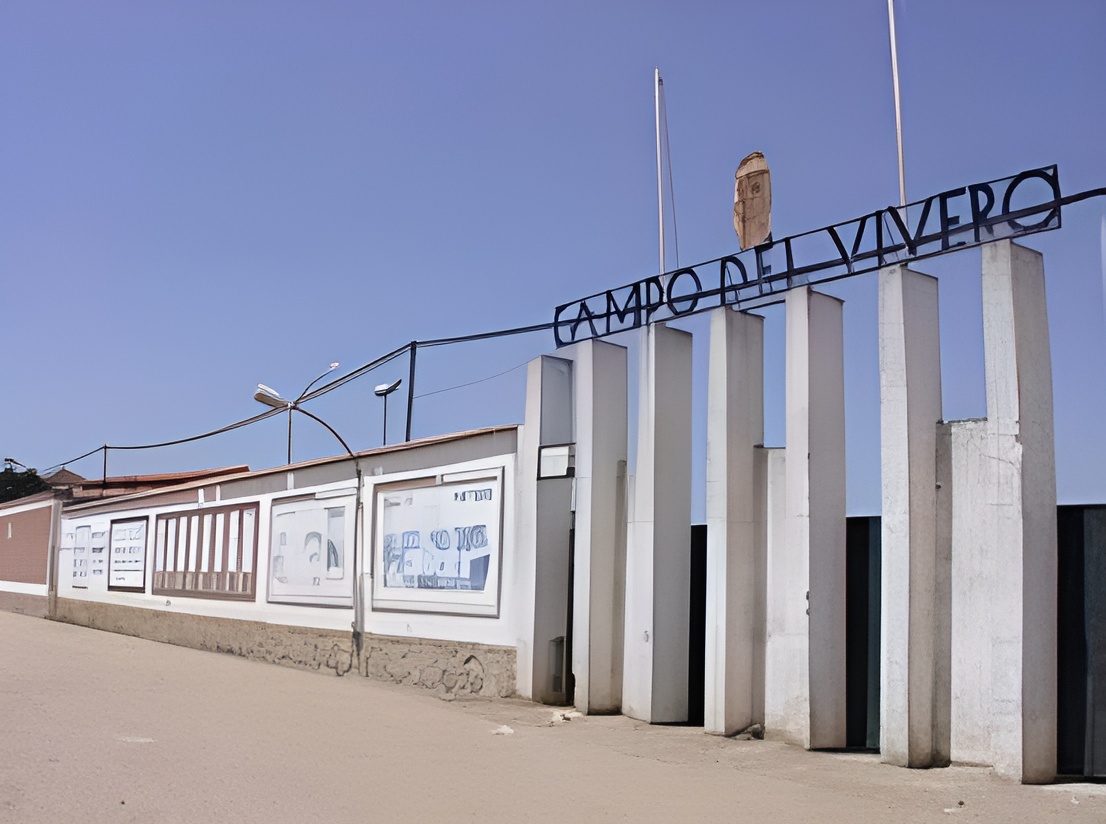
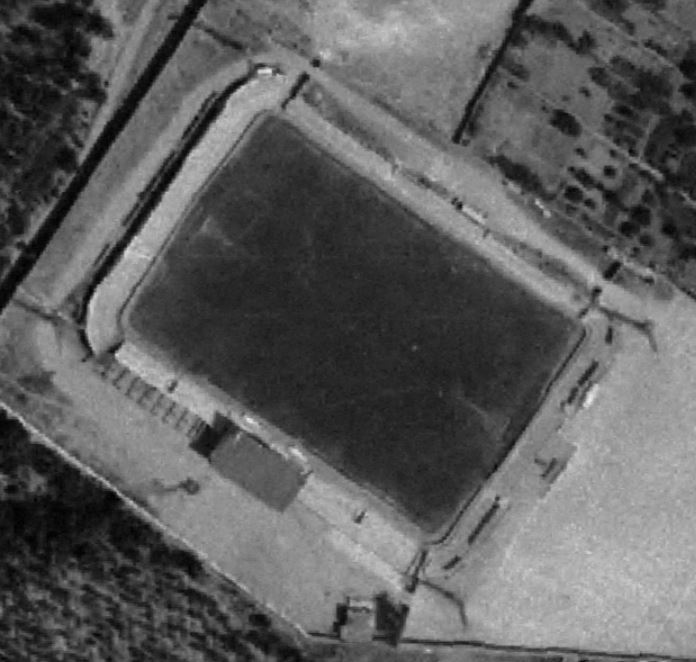
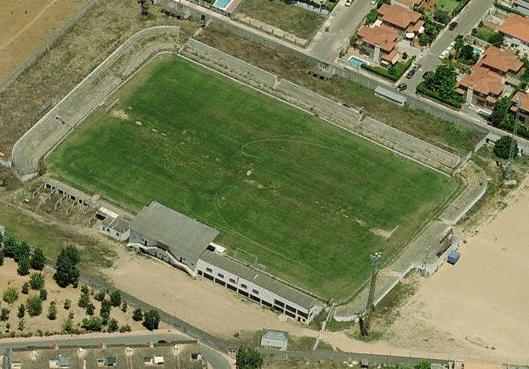
In 1910, the club joined the Spanish football federation and incorporated the city into its new name, Badajoz Sporting Club. There was another change in 1915, when the club merged with Comercial Foot-ball Club to form Sport Club Badajoz. The club adopted the now familiar black & white striped shirts and switched to playing at the home of Commercial FC, the Campo de Santa Marina. The Campo de Santa Marina was owned by Demetrio Medina, the former owner of Commercial FC, and following a series of disagreements, he left the board, evicting Sport Club Badajoz in the process. Thankfully, Francisco Fernandez Marquesta, the Conde de la Torre del Fresno, came to the rescue and rented a patch of land to the club back across the Rio Guadiana at El Vivero, which would remain the club’s home for the next 81 years. El Vivero was initially enclosed with a simple barbed wire fence, but upon joining the new Federación Regional Extremeña in 1924, the ground was properly enclosed, proper entrance gates were built, and dressing rooms, which resembled a small chapel, were built in the southeast corner. Francisco Fernandez Marquesta passed away in 1931, and ownership of El Vivero switched to the club. That year also saw Sport Club Badajoz join the Federación Oeste, with the clubs such as Recreativo Huelva, CP Cacereño and a new club, Racing Club Badajoz. Racing would suffer the disappointment of a playoff defeat to Racing Club de Córdoba in February 1936, and a month later, it was absorbed into Sport Club Badajoz under the new name of Badajoz Foot-ball Club.
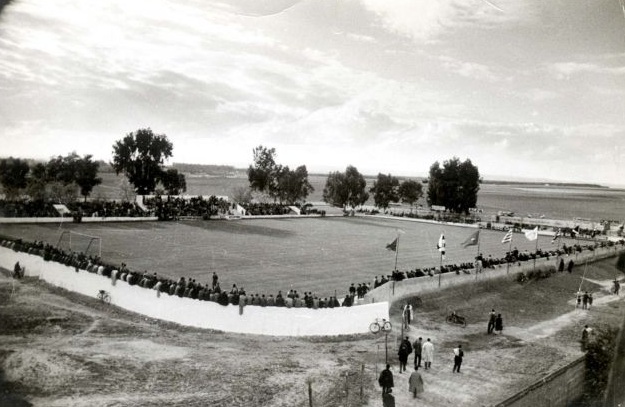
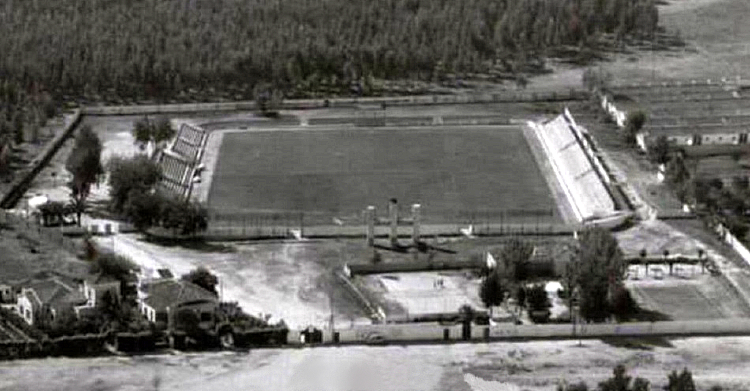
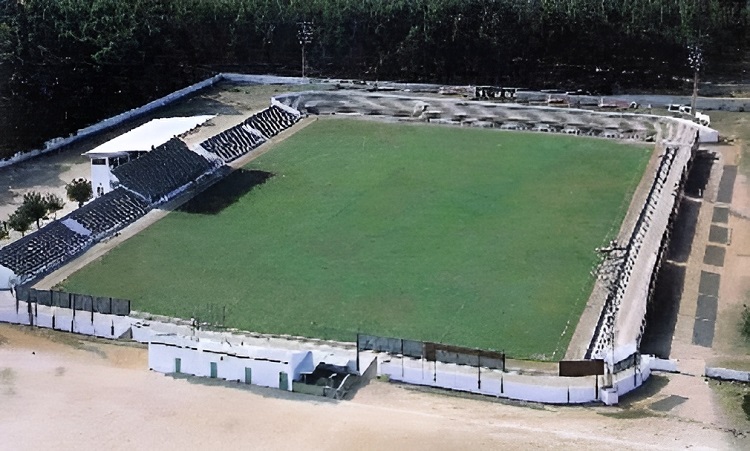
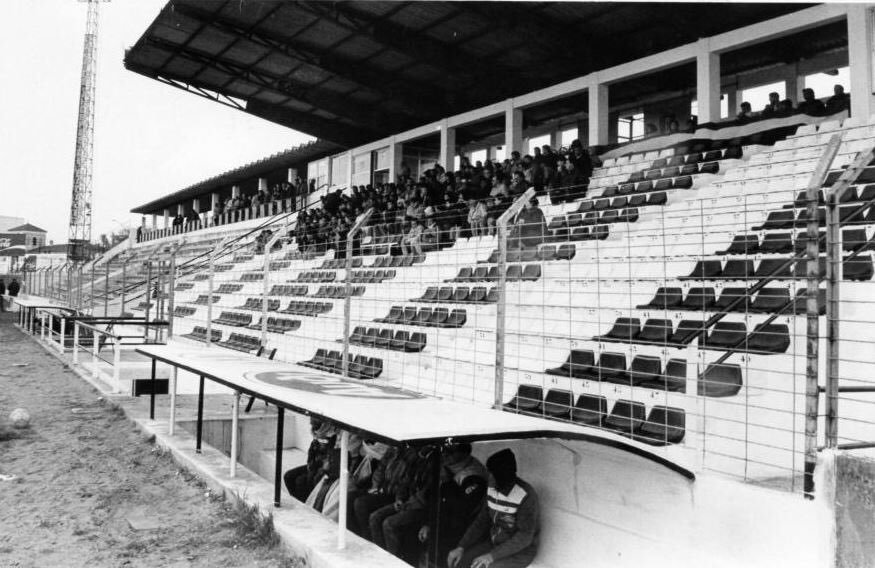
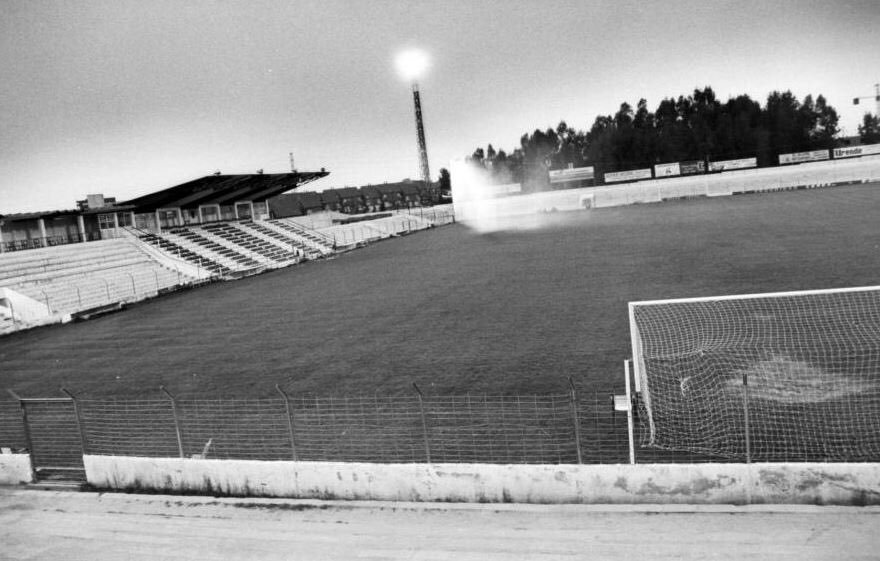
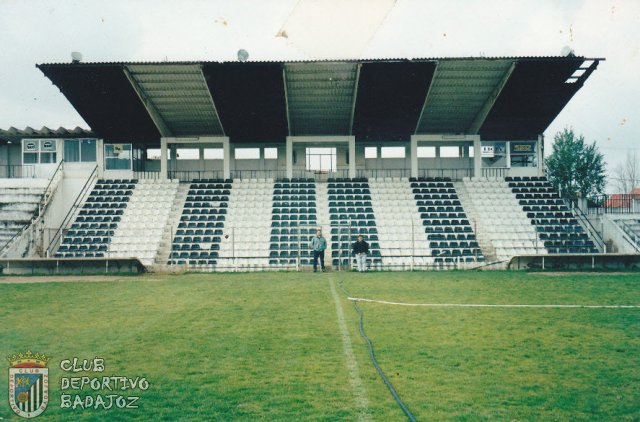
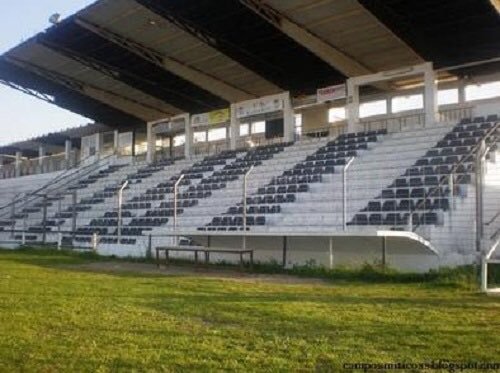
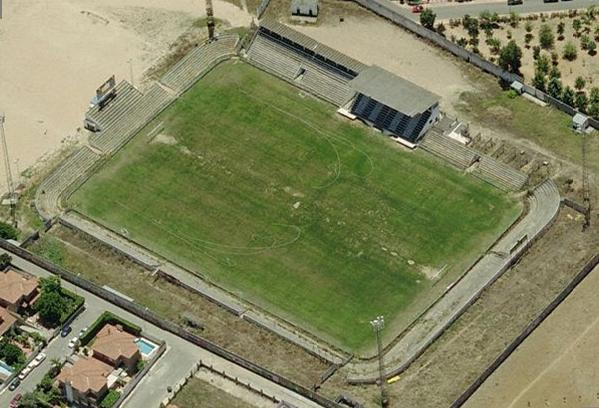
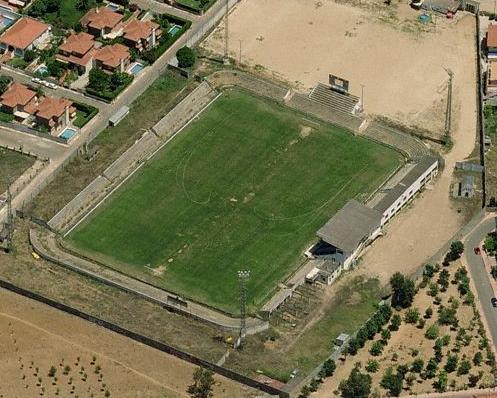
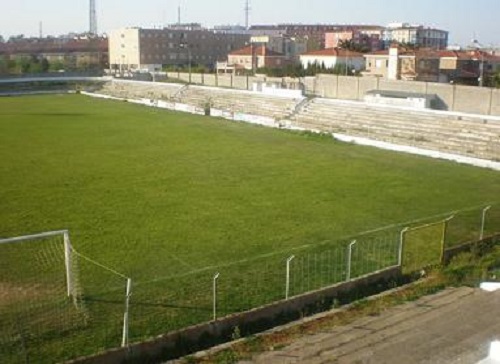
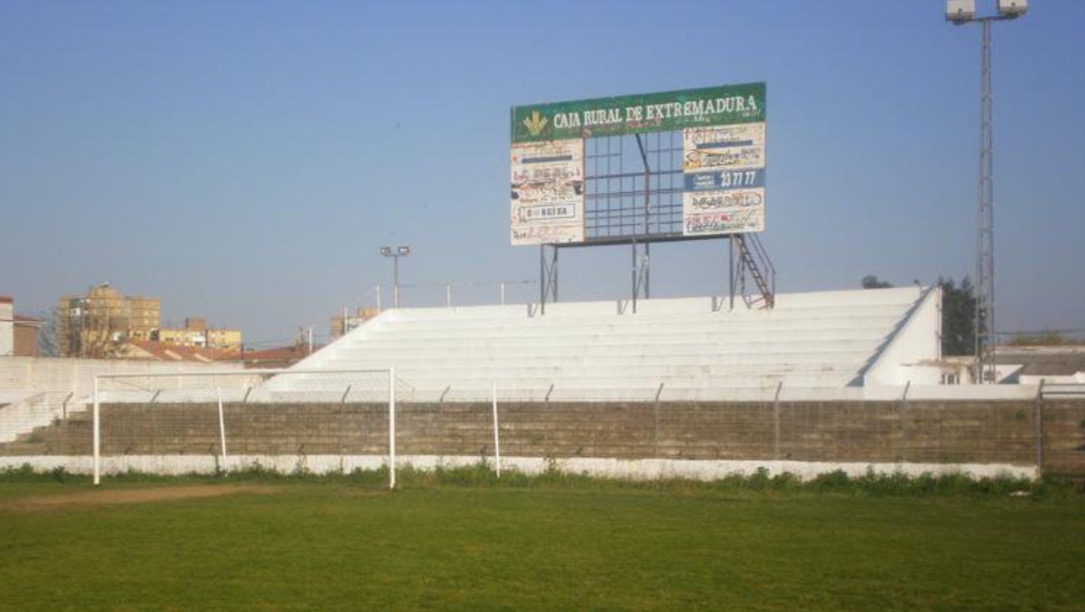
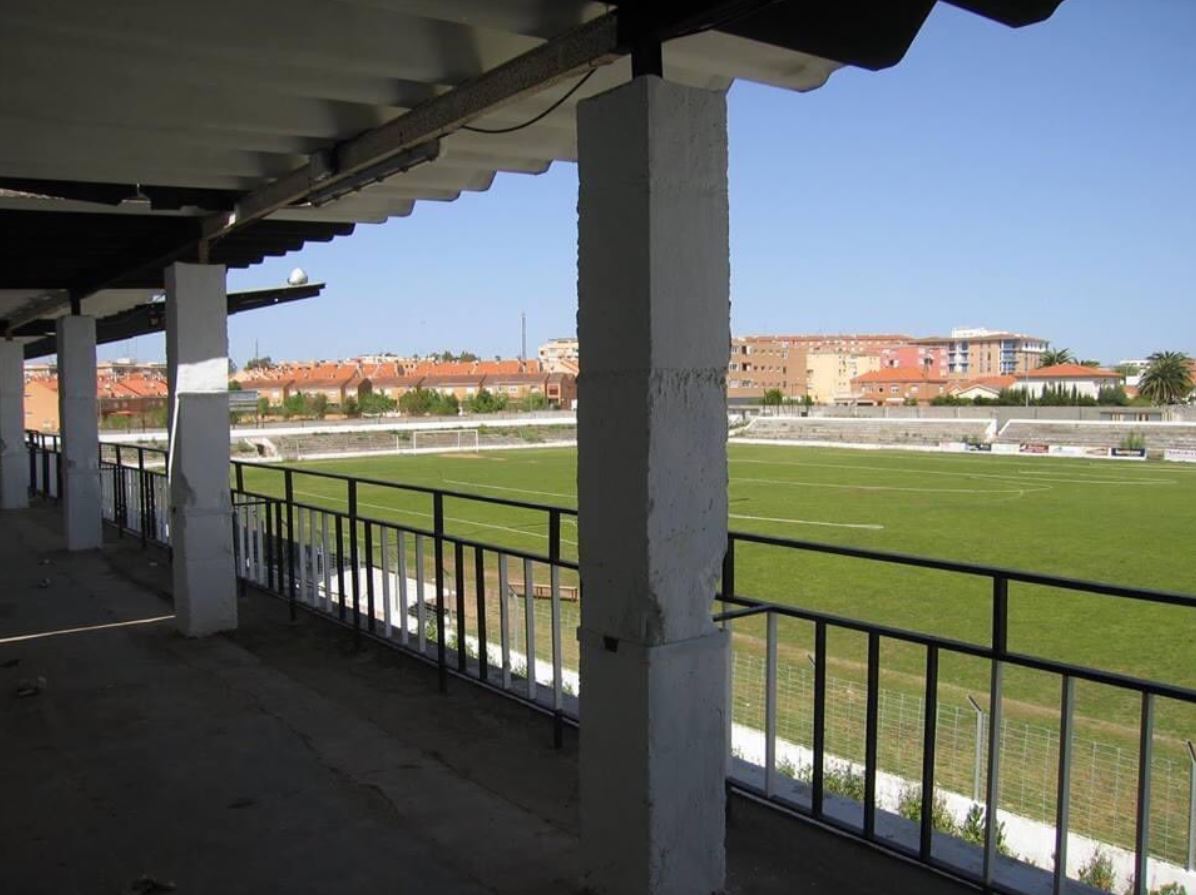
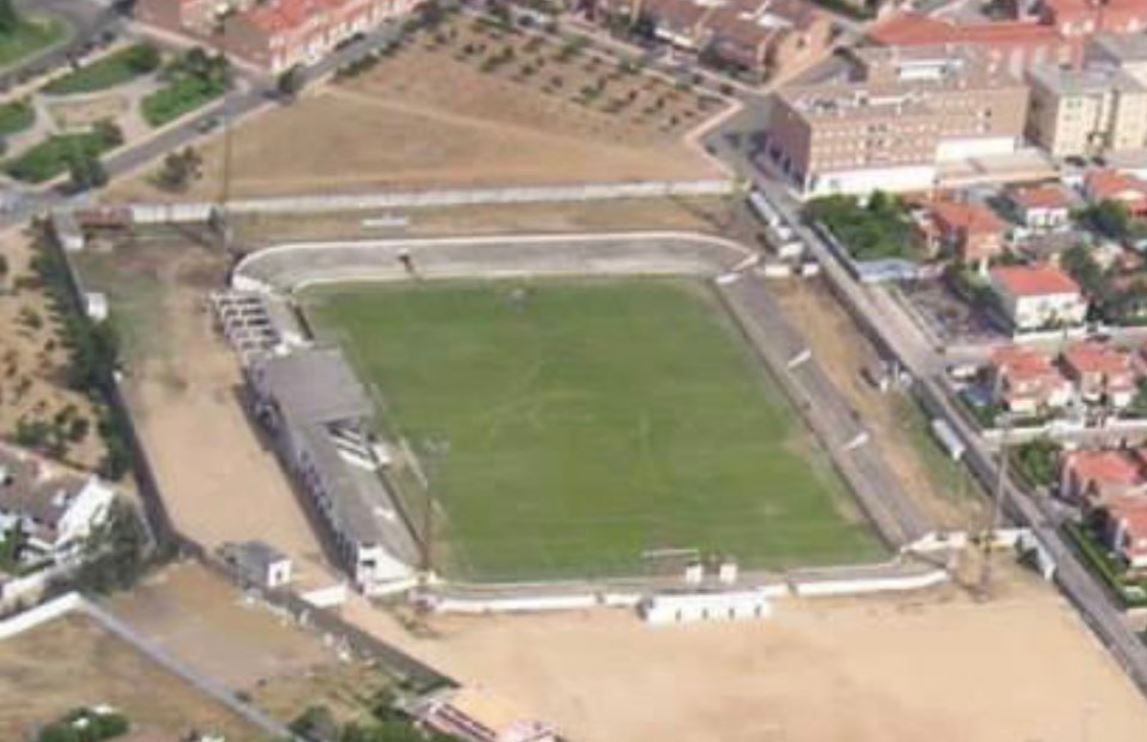
With Badajoz far from the front line, Badajoz Foot-ball Club continued to host matches at El Vivero during the Civil War. Although the club president felt it was necessary to move his family to El Vivero to stop its occupation by troops. The end of hostilities brought about another name change, with the club finally settling on Club Deportivo Badajoz in January 1941. Despite all the upheaval at an administrative level, little changed with the Campo de El Vivero. A small wedge of open terracing had been added on the southern touchline, whilst a cinder track ran around the pitch. CD Badajoz won back-to-back Tercera titles from 1944 to 1946, but performed poorly in the playoffs. That changed in 1953, when CD Badajoz won a third Tercera title and was promoted directly to La Segunda. The pitch at El Vivero was properly enclosed for the first time, with terraces on all four sides. The tribuna was extended along the full length of the southern side, with the middle section increased in height, and pitchside dug-outs added at the front. The second tier was regionalised throughout CD Badajoz’s seven-year stay, with the club competing in the southern section. A best placing of seventh was achieved in the 1956-57 season, but their stay came to an end the following season, when they finished bottom of the table, 9 points from the safety of twelfth place, which was occupied by their provincial rival, CF Extremadura.
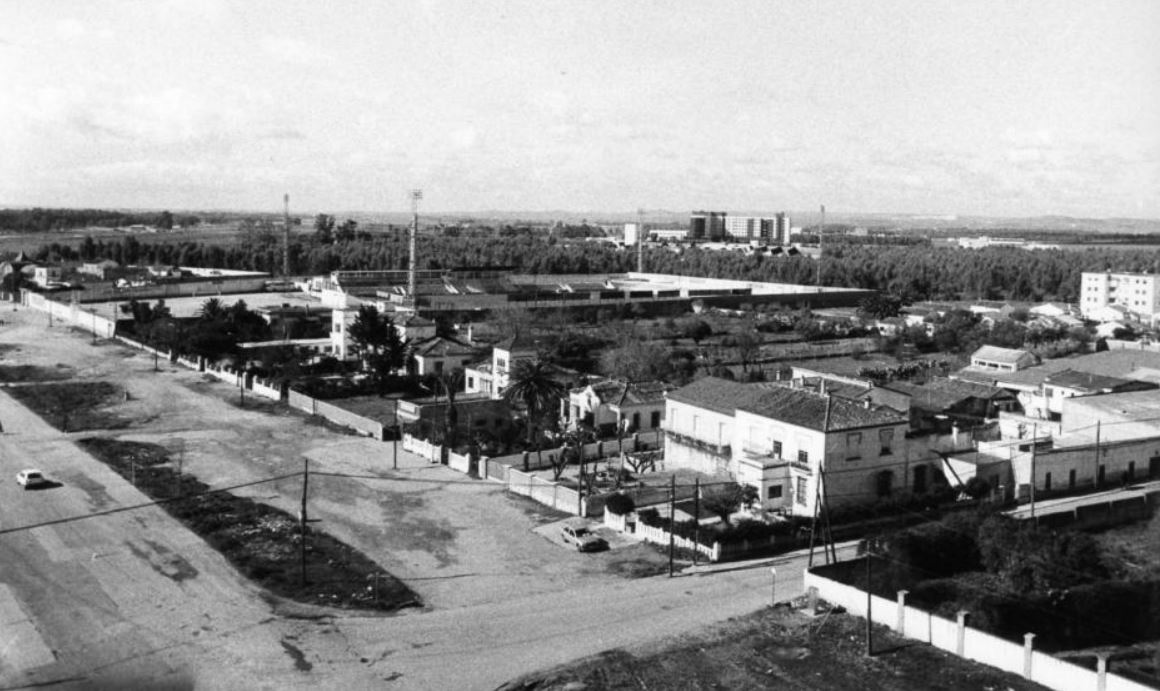
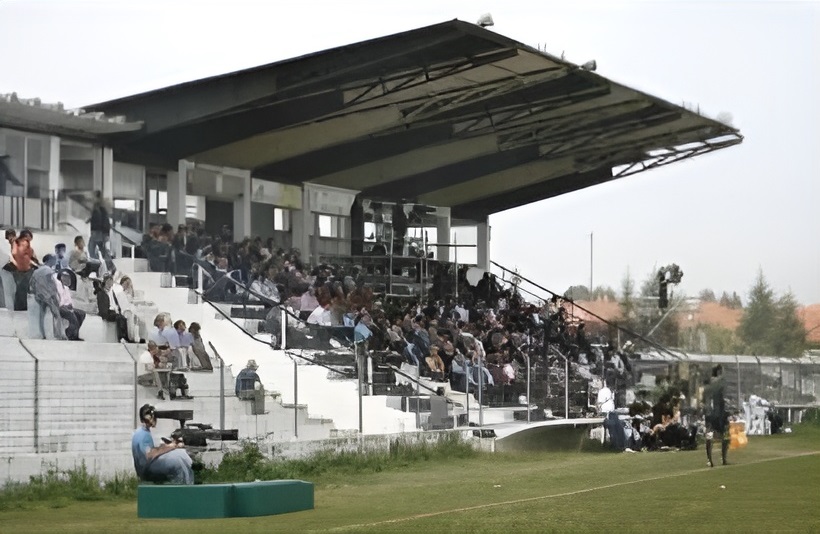
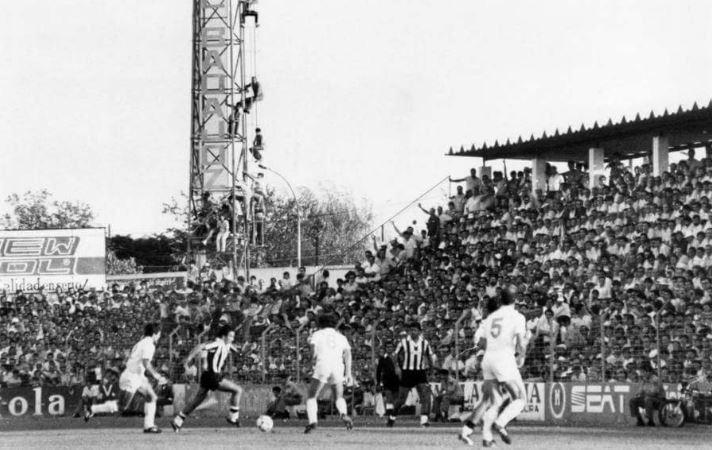
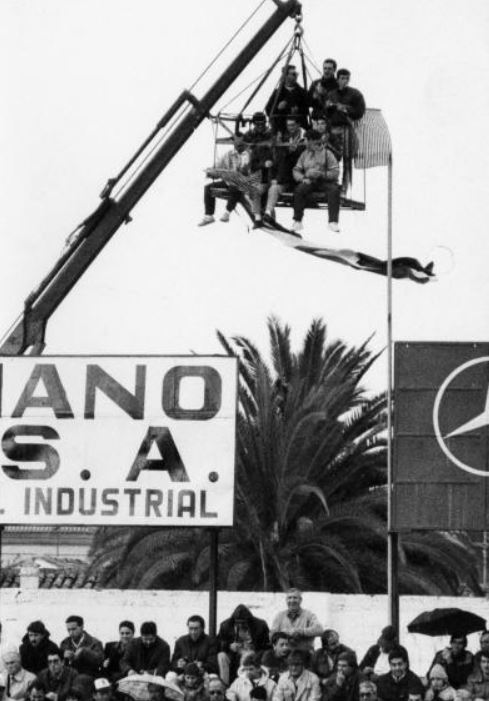
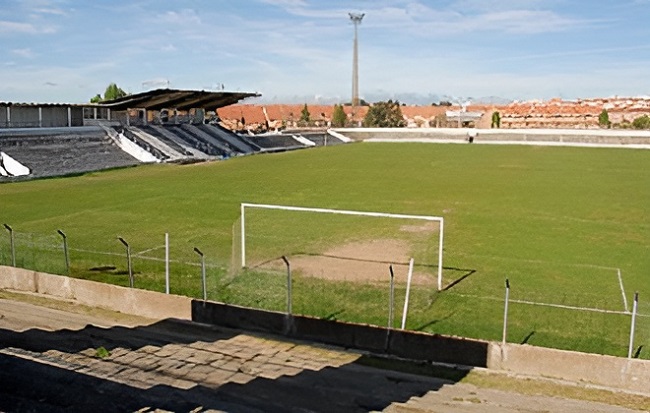
The majority of the 1960s was spent in the Tercera, but title wins in 1965 and 1967 earned season-long stays back in La Segunda. Ahead of the 1965-66 season, a cantilevered cover was erected over the central section of the tribuna, whilst the east end terrace gained a central “kop” section. The club’s return to La Segunda in 1967 coincided with the first floodlights being erected at El Vivero. There followed a period when CD Badajoz were becalmed in the Tercera, which only changed when Segunda B was extended for the 1977-78 season. Except for the 1983-84 campaign, when the club finished fourth, CD Badajoz did not trouble the top half of the table. The club dropped back to the Tercera at the end of the 1984-85 season, but re-grouped under the presidency of Antonio Guevara. Promotion back to Segunda B was secured in June 1987, and unlike their last stay in the third tier, CD Badajoz was a permanent fixture in the top six. The club won the Group III title in the 1990-91 season, and led the playoff group going into the final fixture. However, a 3-1 defeat away at SD Compostela condemned the club to another season in the third tier. The following season saw CD Badajoz finish runners-up to Atlético Marbella, before earning promotion back to La Segunda by topping their playoff group, which included Cartagena FC, Deportivo Alavés and Sporting Gijón B.
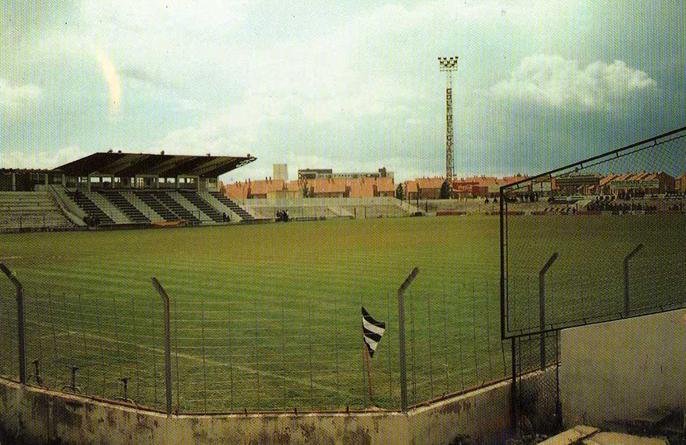
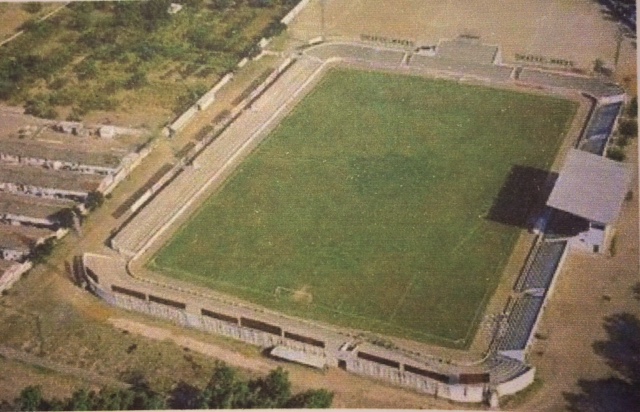
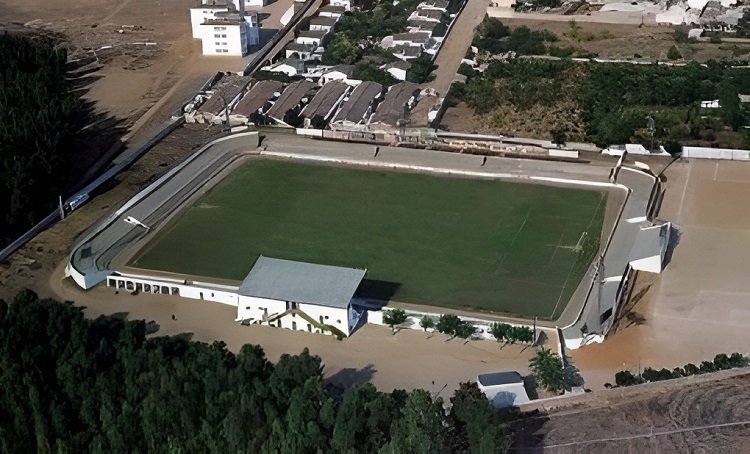
Upon the club’s return to La Segunda, El Vivero’s only concession to modern football was the extension of the terrace to the left of the main tribuna, the addition of new changing rooms, and the obligatory fencing-off of the pitch. Foundations were laid to extend the main stand towards the west end, but this project was never completed. The club recorded three successive sixth-place finishes between 1996 and 1998, coming closest at the end of the 1995-96 season when they lost out on a playoff place to CF Extremadura on an inferior head-to-head record. What was believed to be CD Badajoz’s final match at El Vivero took place on 22 November 1998. The club provided a fitting send-off, as Barcelona B was defeated by a single goal, which was scored by Sandro. Work had commenced on a new stadium to the west of the city in September 1997, and it was clearly designed with La Primera in mind. After 81 years north of the Rio Guadiana, CD Badajoz headed back to the south of the city and the Estadio Nuevo Vivero. Regrettably, their new dream home was about to be the catalyst for a 15-year-long descent into receivership. CD Badajoz did make a final appearance at the old El Vivero in 2006. After the pitch at the Nuevo Vivero was relayed ahead of La Selección’s Euro 2008 qualifier with Liechtenstein, the club played SP Villafranca, losing 0-1 on 27 August 2006.
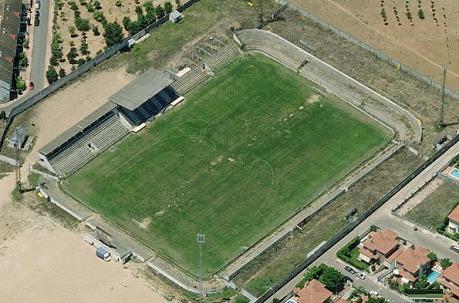
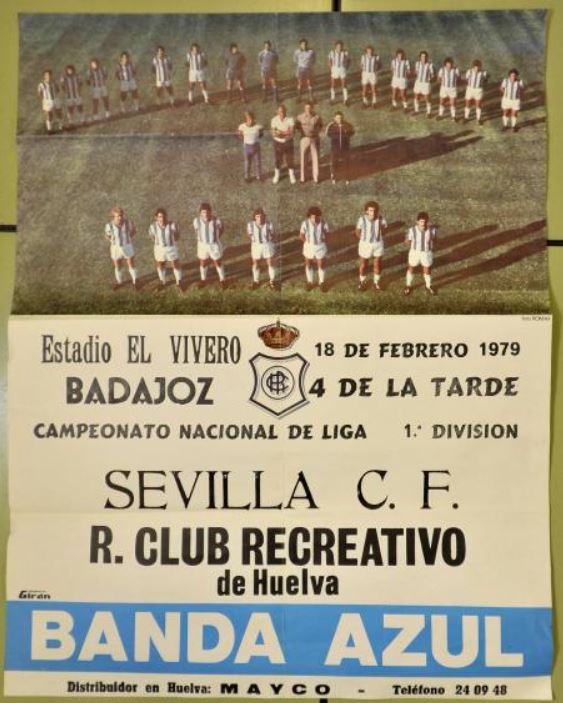
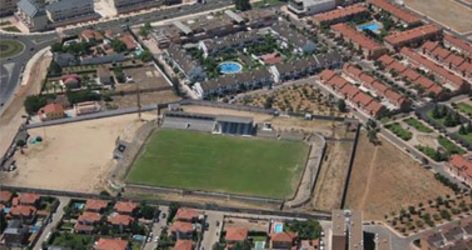
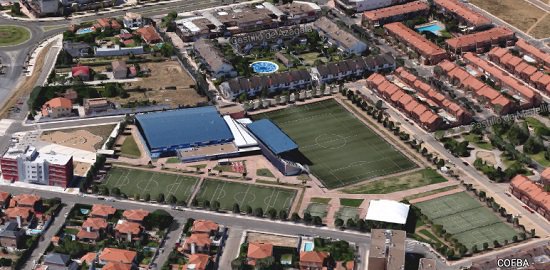
El Vivero was kept open by the local municipality until 2009, when a 4.8 million euro development saw it replaced with a smaller, one-sided stadium and a sports centre. The new stadium, named ironically the Ciudad Deportiva del Viejo Vivero, overlaps the site of El Vivero, but runs at 90 degrees to the old stadium. As you know, CD Badajoz never quite made it to La Primera; however, El Vivero did get a taste of life in La Primera, albeit a very brief one. On 18 February 1979, El Vivero hosted Recreativo Huelva’s “home” match against Sevilla following the closure of their own Estadio Colombino because of crowd disturbances. Recre won the match 2-1, but their first season in the top flight ended in relegation.
 Estadios de España
1 thought on “Badajoz – El Vivero”
Comments are closed.