
The return after a 12-year absence of UD Las Palmas to La Primera in 2000, brought about much-renewed hope and optimism. It also brought with it the development by the municipality of a new stadium to the south of the city. The club had spent over fifty seasons at their beloved Estadio Insular, but even their most loyal supporters would agree that the old stadium was antiquated and past its use by date. However, the new 50 million euro development did not meet with much approval from the club’s supporters.
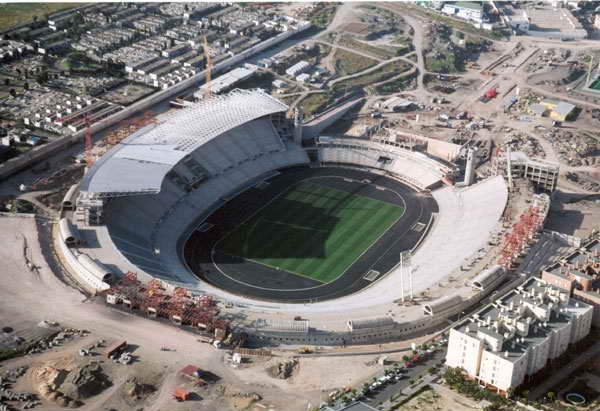
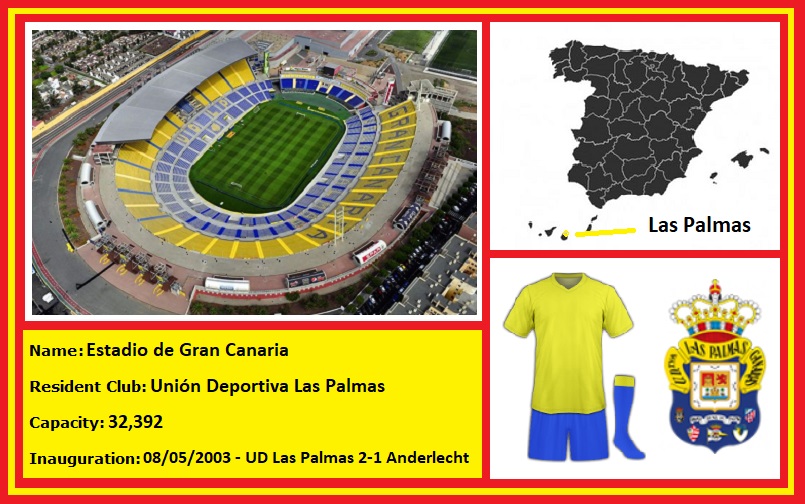
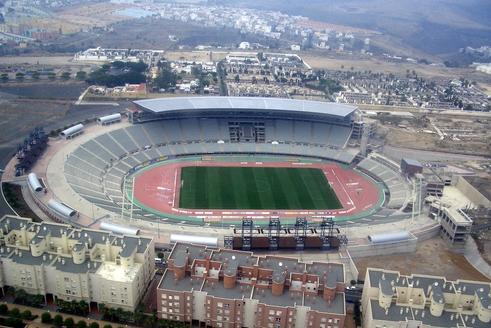
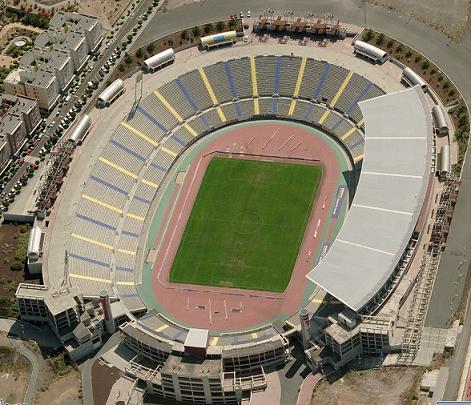
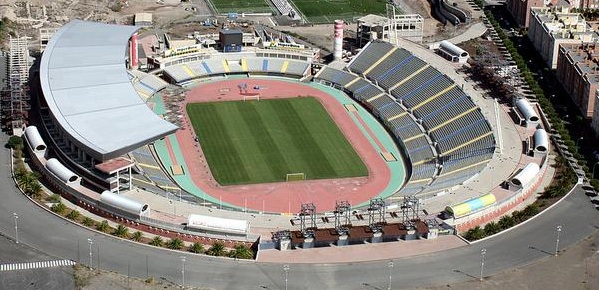
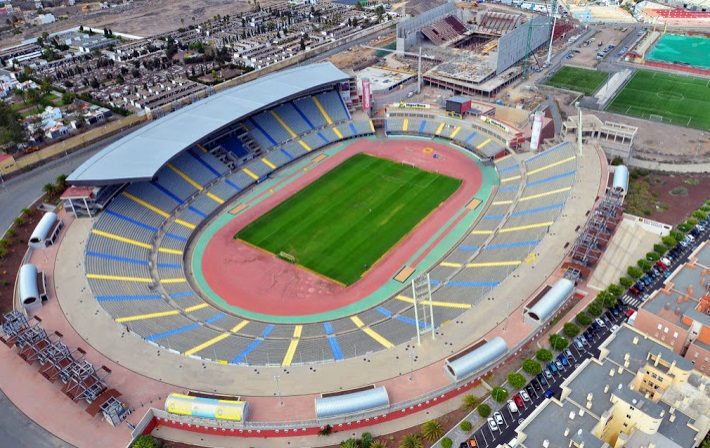
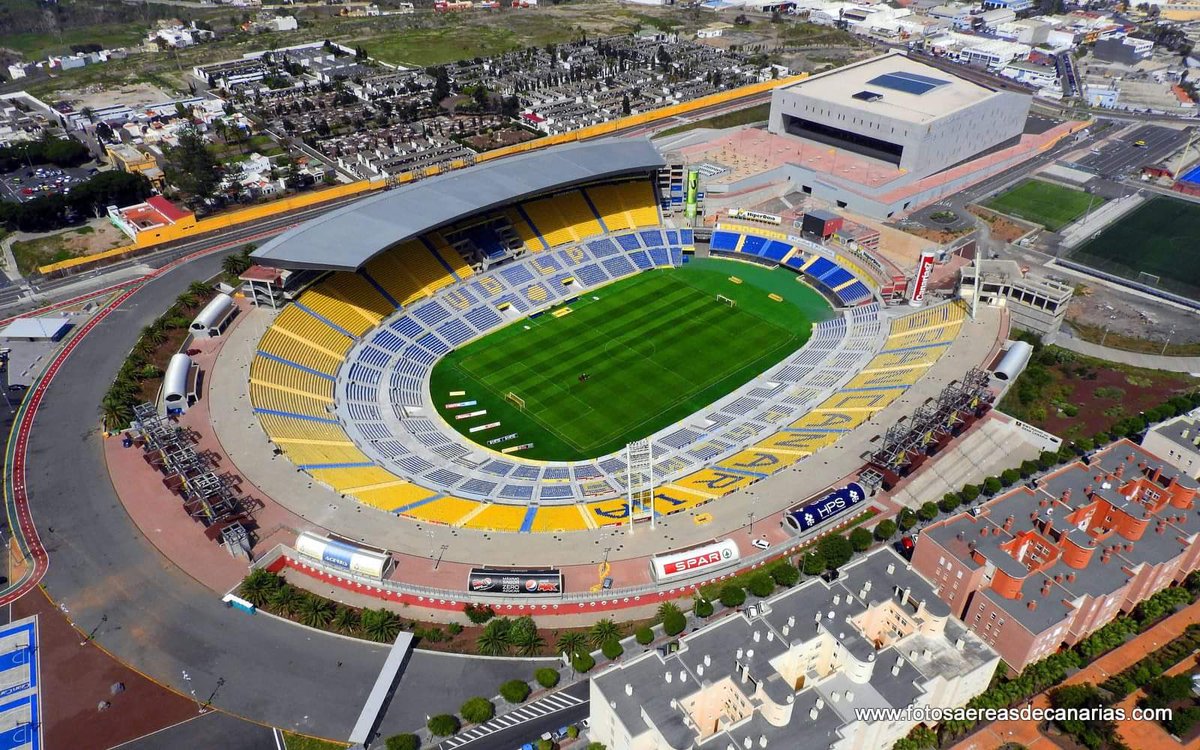
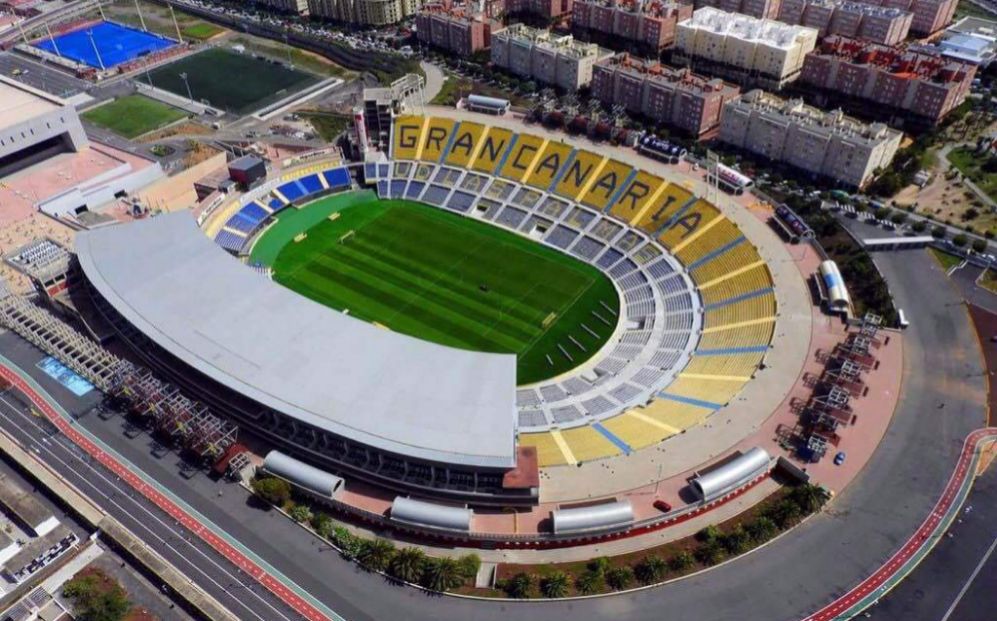
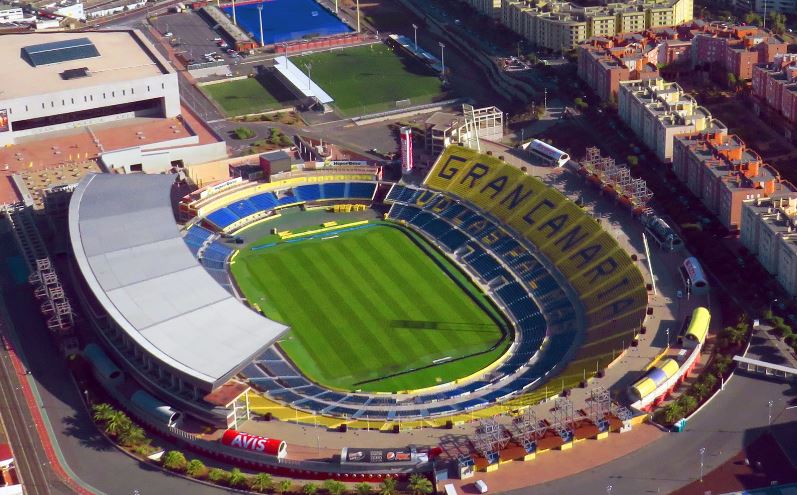
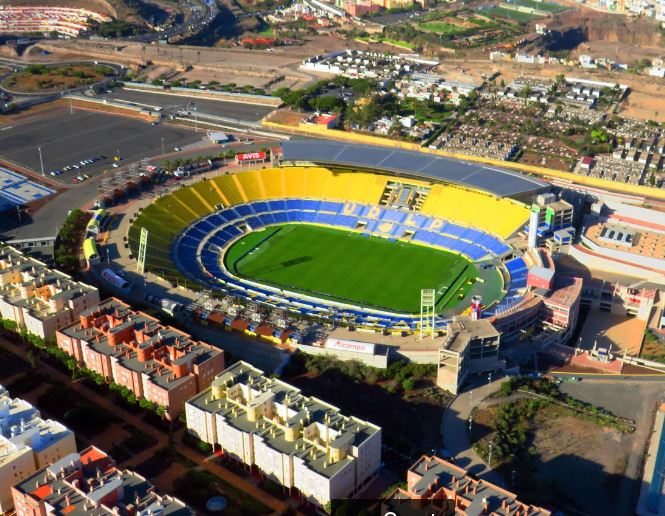
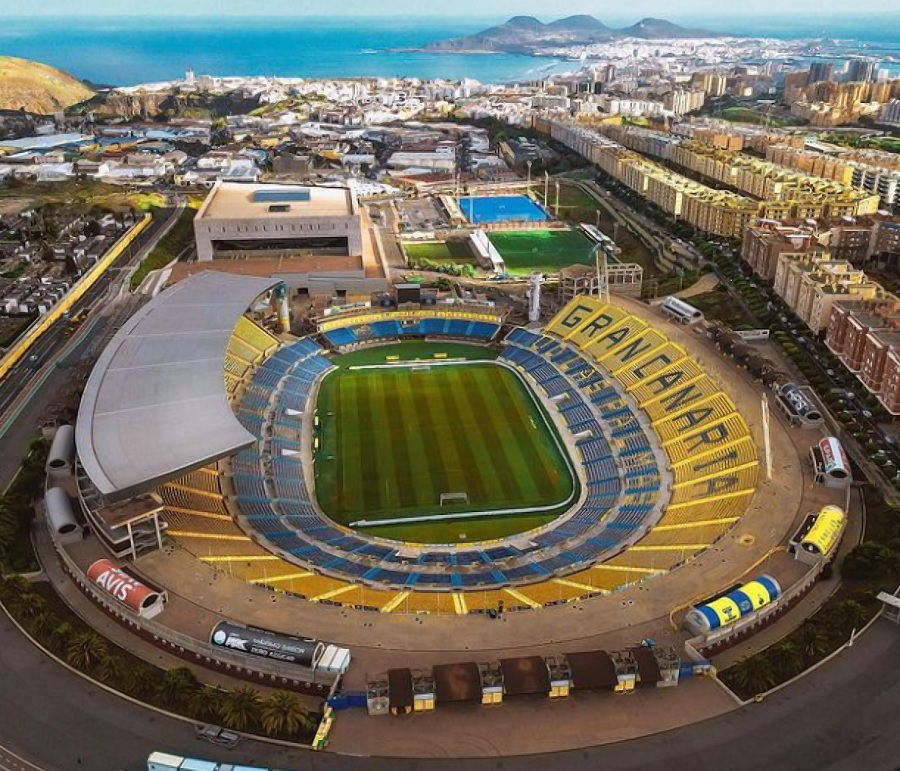
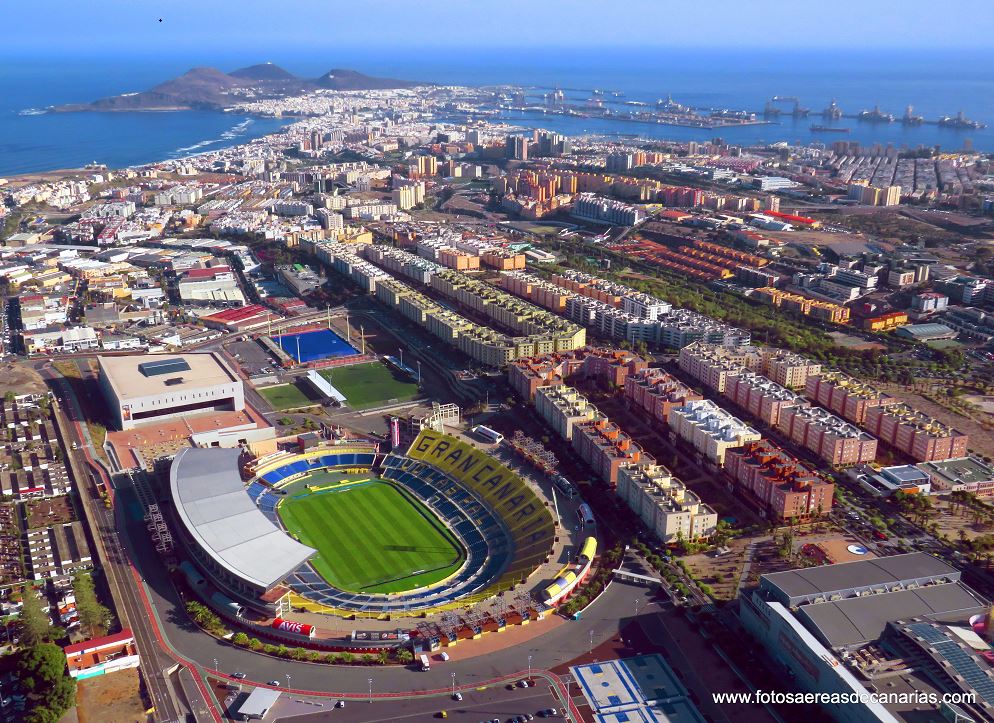
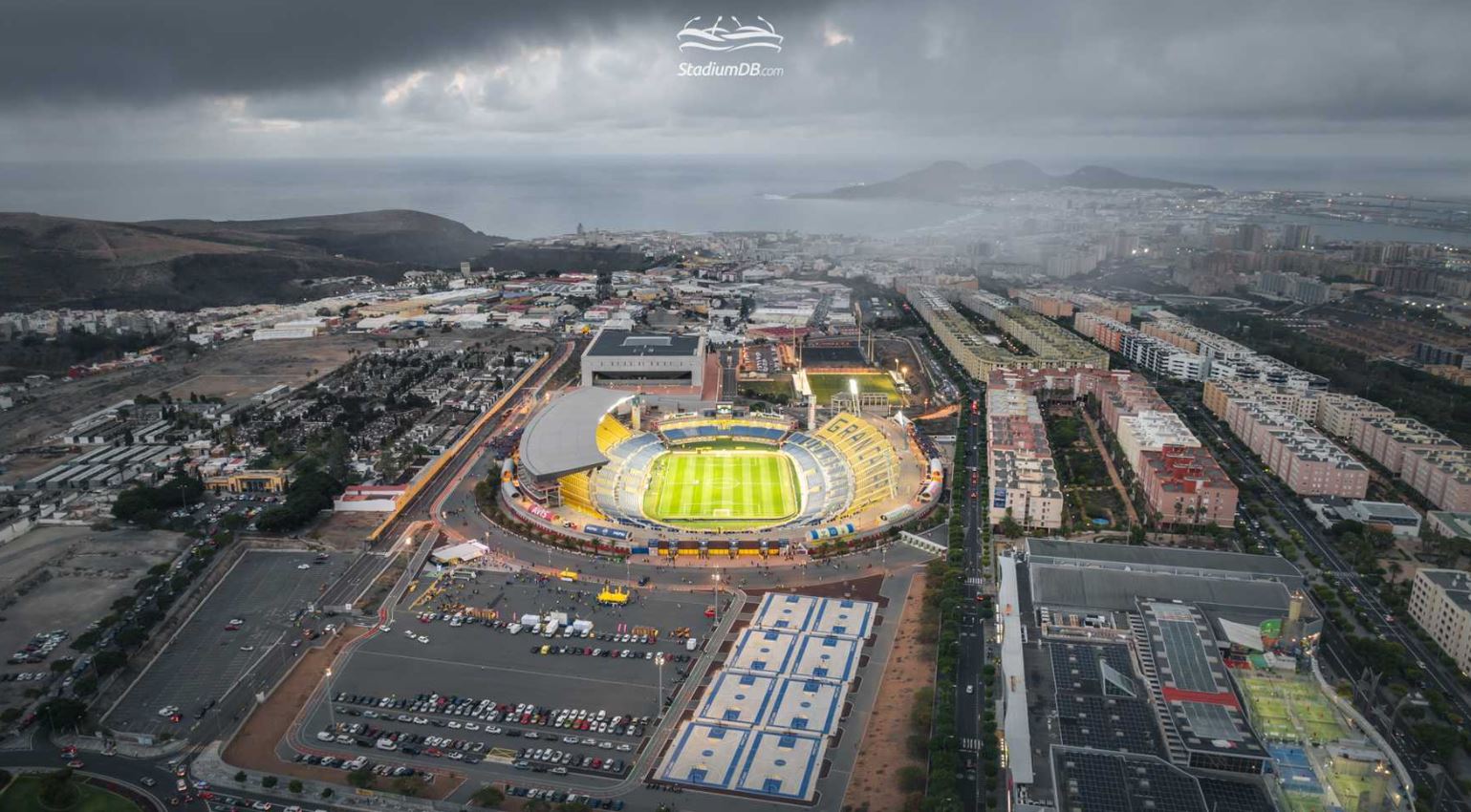
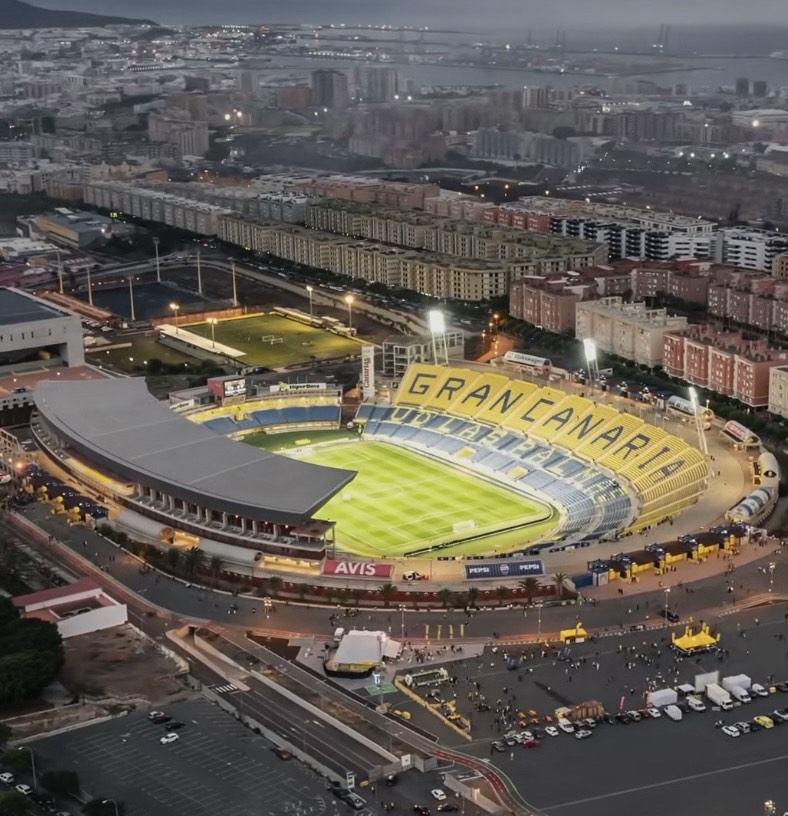
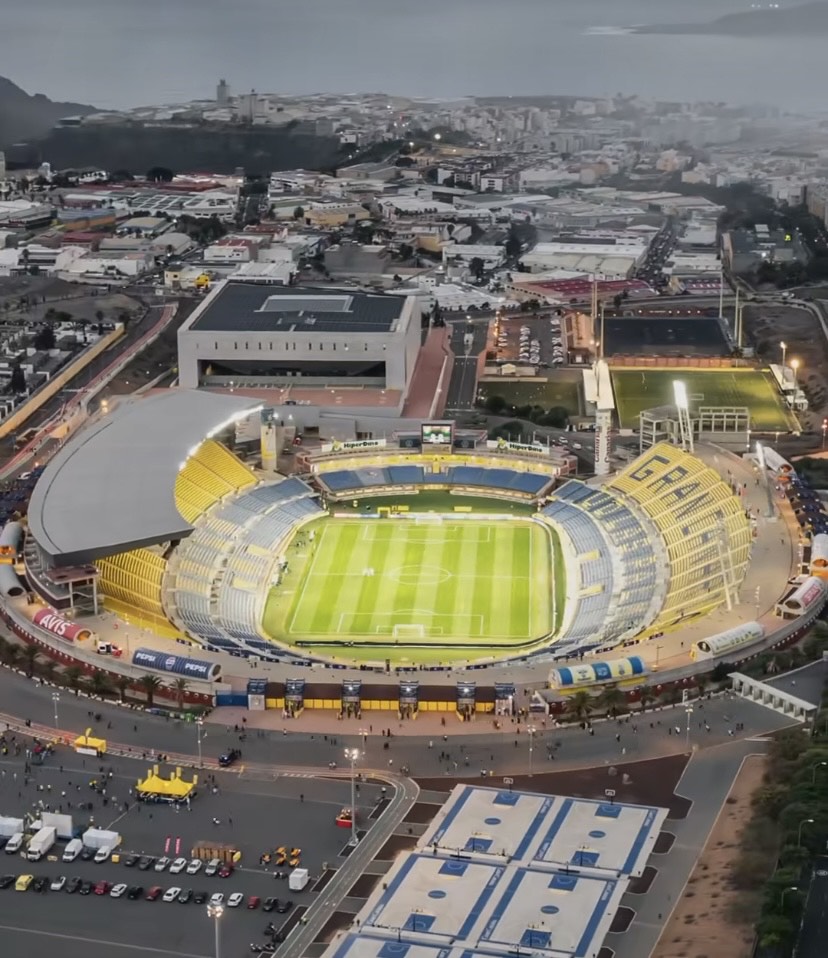
Designed by Pedro Medina, the municipality’s brief of a multi-sports and leisure development. There is an indoor arena, hockey stadium and a smaller football stadium (where Las Palmas Atlético play) to the north of the main stadium. The brief for the stadium was followed to the nth degree and what was delivered was about as far away from the old Insular as one could possibly get. Now followers of this website will know that I am not a big fan of stadiums that feature an athletics track. They are often featureless bowls that lack atmosphere and ultimately ruin the match day experience. But boy, the Estadio de Gran Canaria took this to a new level. Almost universally disliked by any follower of the club, it opened on 8 May 2003 with a friendly match against Anderlecht, which Las Palmas won 2-1. There was also a problem that had nothing to do with the stadium’s design. Las Palmas was no longer in the top flight and there was no hope of filling the 32,392 seats at the new arena. Worse was to follow, as in their first full season at the Estadio Gran Canaria, the club finished twentieth in La Segunda and was relegated to the regionalised third tier.
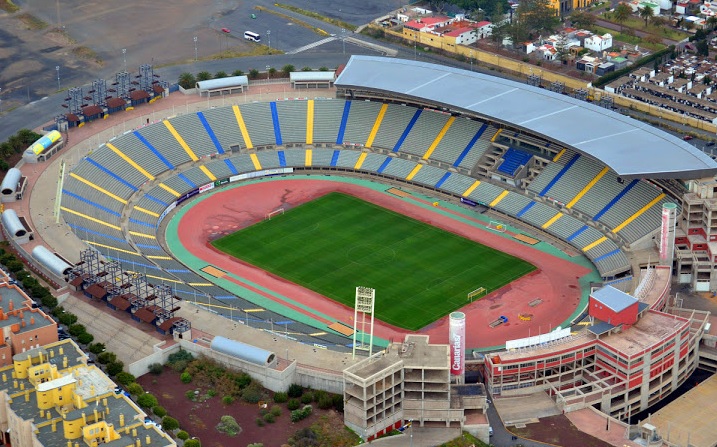
With debts of over 60 million euros, the club was saved in part by new bankruptcy laws, and new club president Miguel Angel Ramirez. It took two seasons to escape Segunda B and in the final of the 2005-06 playoff, a record attendance of 30,210 watched Las Palmas beat CD Linares 1-0 to clinch promotion back to La Segunda. Initially, the club’s form when returning to the second flight was consistent, in that it has successfully battled against relegation in four of the first five seasons. Only an eighth-place finish in 2007-08 lightened the mood. Form improved and backed with a good group of players from the club’s academy, Las Palmas reached the promotion play-offs in 2013-14, only to throw away promotion in the last minute of the final against Córdoba. Las Palmas finally returned to La Primera, via the playoffs, in June 2015.
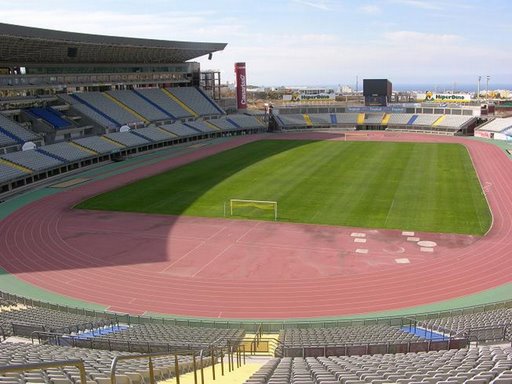
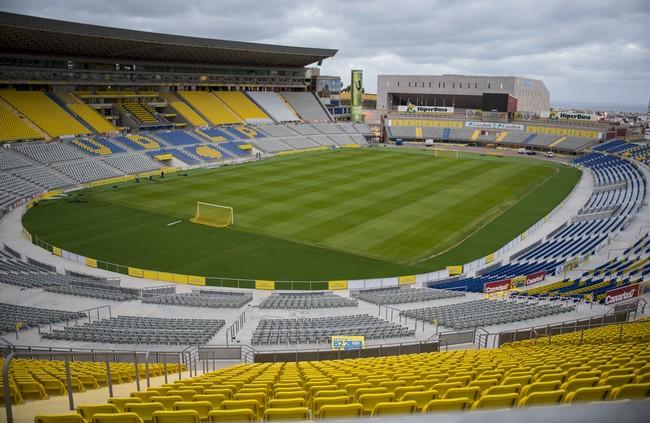
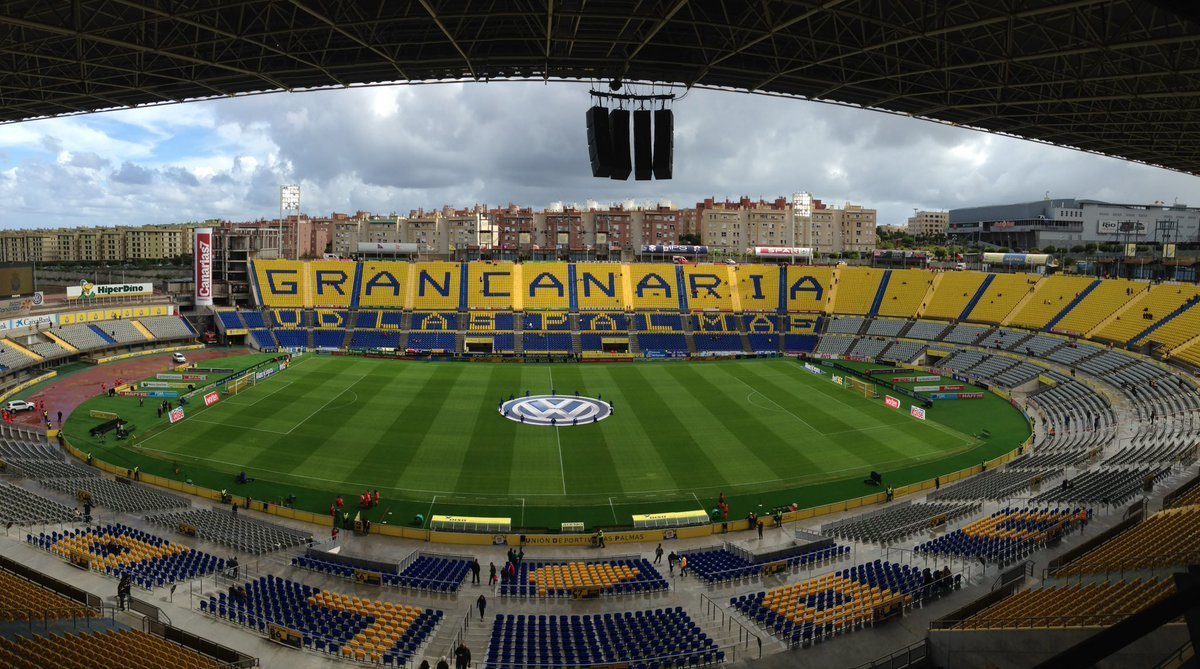
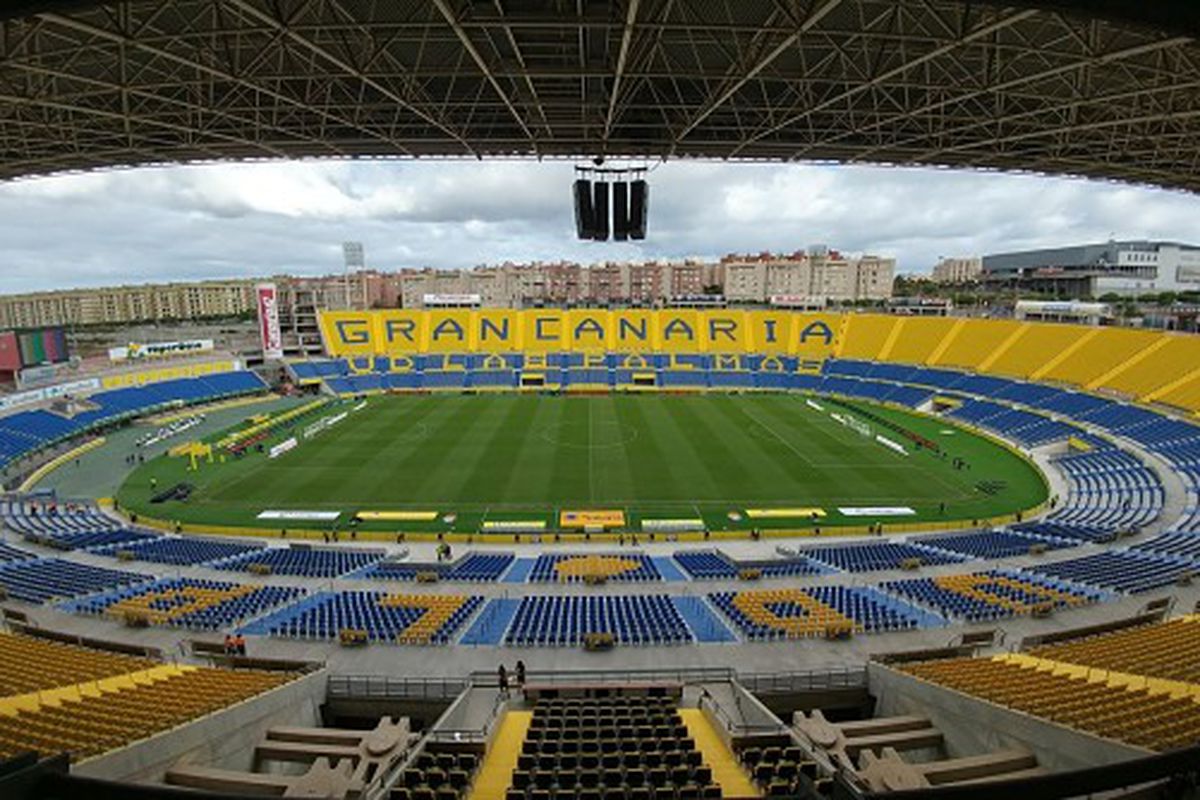
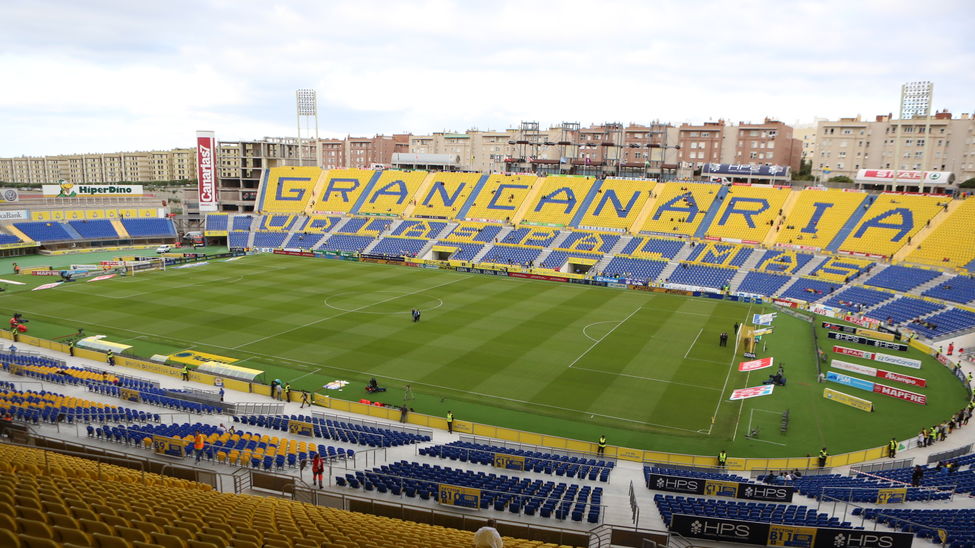
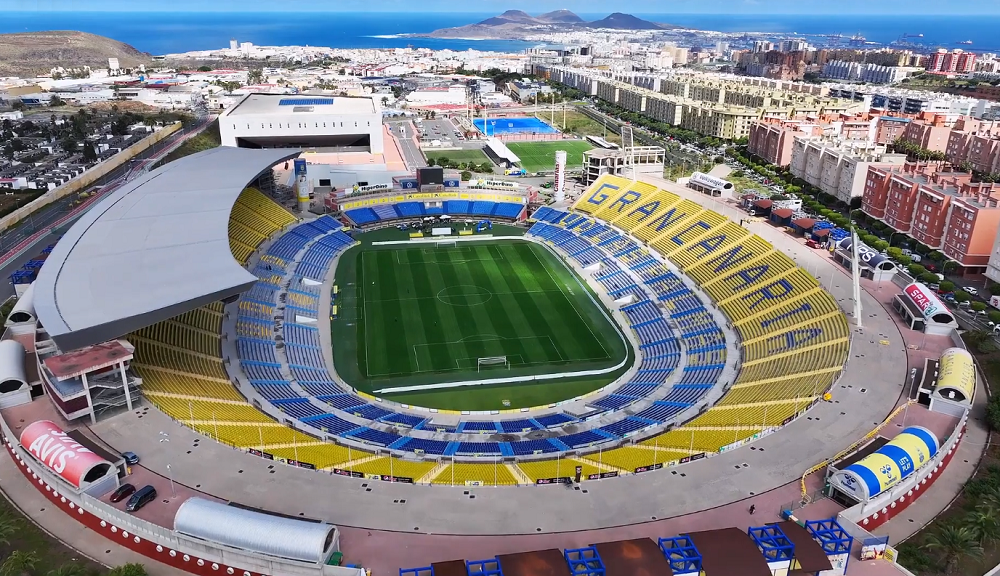
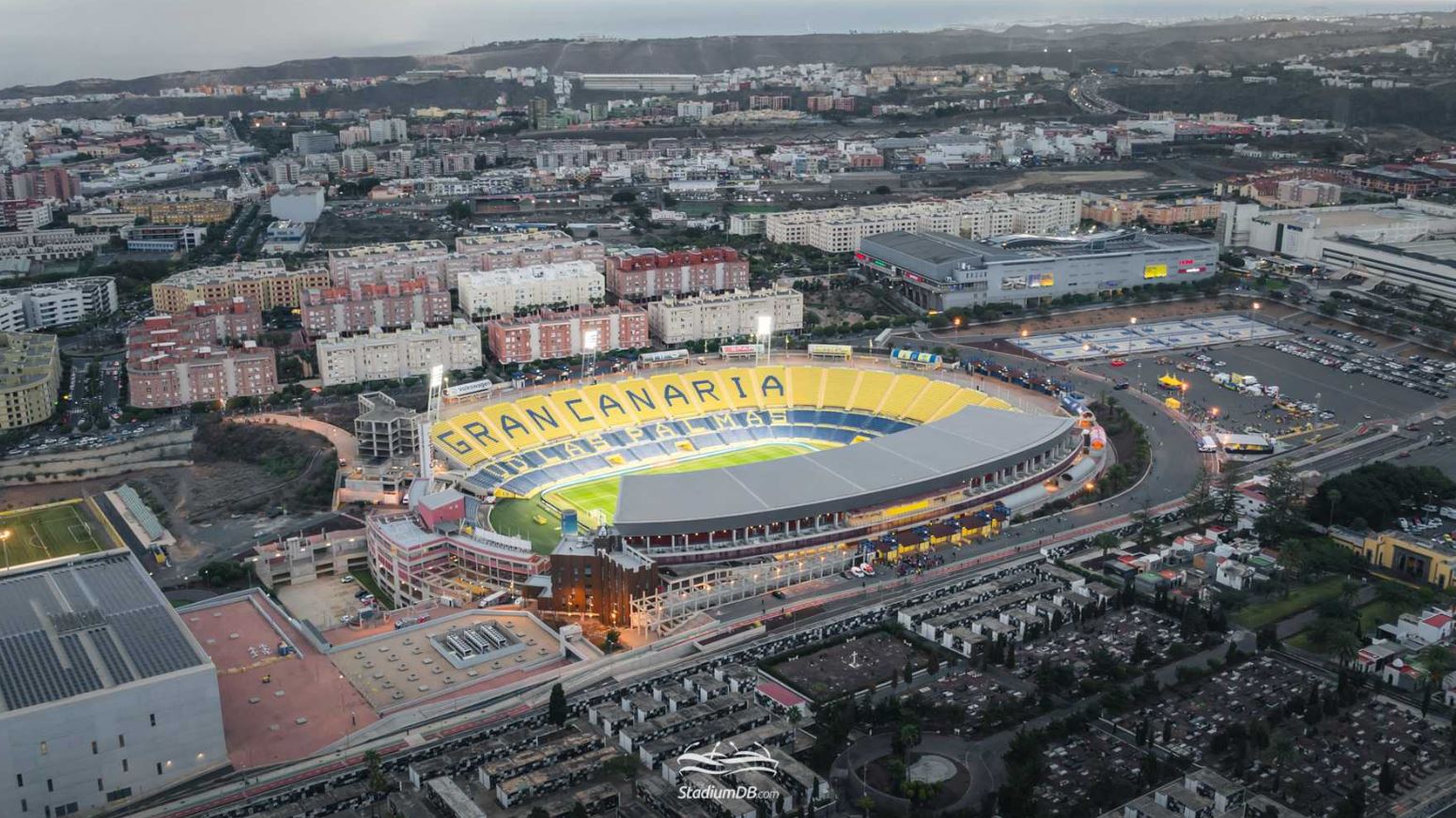
The Spanish national side has played three matches at the stadium. The first was a friendly in August 2004 against Venezuela, which La Selección won 3-2. Then 3 years later in November 2007, Spain beat Northern Ireland by a goal to nil in a Euro 2008 qualifier. Spain hosted Bosnia-Herzegovina in a friendly at the stadium in November 2018, winning 1-0. The Estadio de Gran Canaria was big and grey and rather unloved. So much so that the club was seriously considering a move back to a redeveloped Insular. This prompted the local municipality to spring into action with a €3m plan to remove the athletics track, lower the pitch and increase the capacity to 32,392. Work began in November 2014 and was finally completed in February 2016.
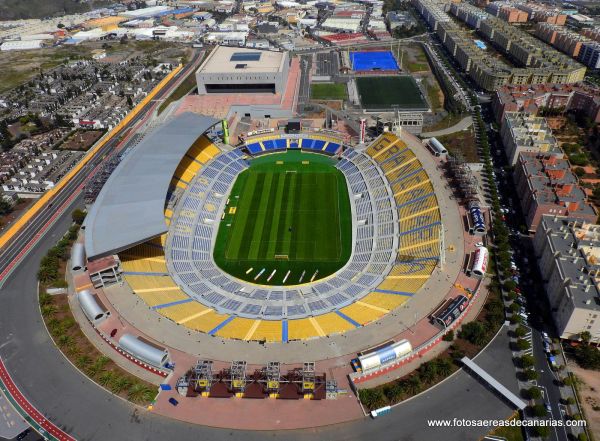
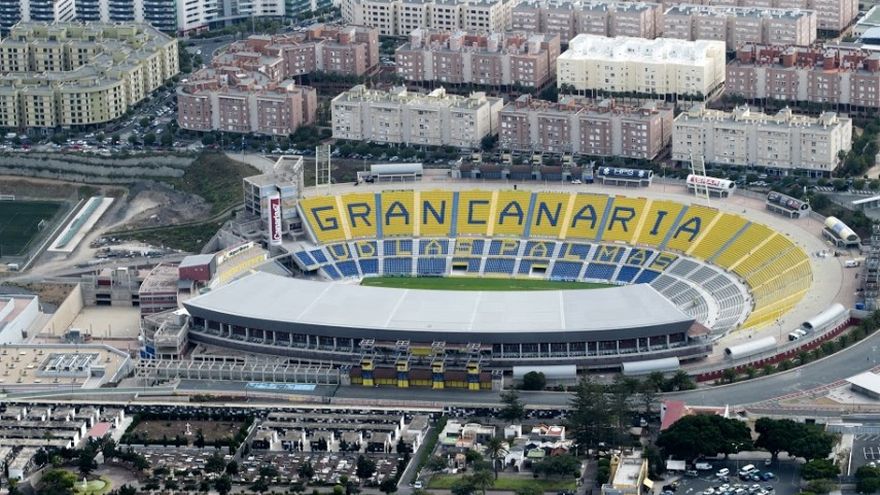
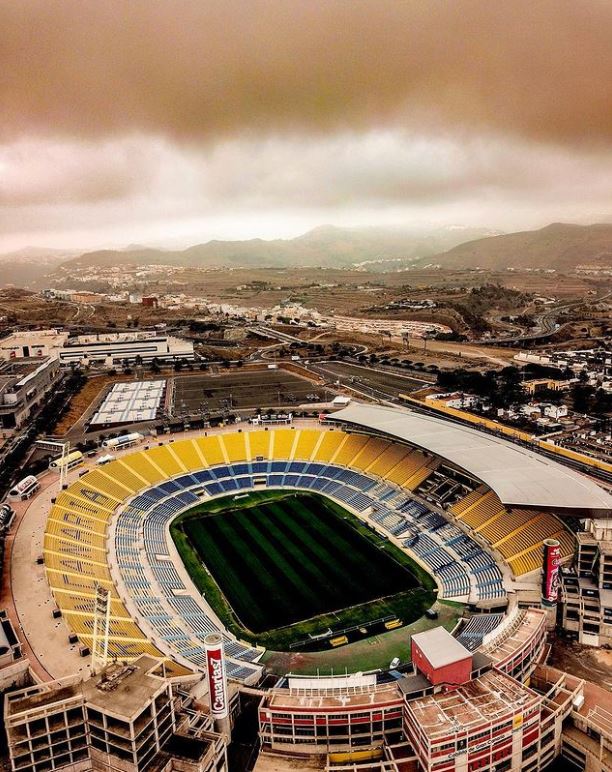
As expected, the result is something of a comprise. On the plus side, the athletics track has been consigned to history and viewing a match from either side of the stadium is fine, with the seats in the new lower tier now much closer to the action. However, the view from the southern end has barely improved, and with the northern end left untouched by the redevelopment, UD Las Palmas’ most passionate supporters are somewhat isolated. The combination of bands of yellow and blue seats seats (always a striking combination) give the stadium much more identity than the former anodyne grey seats, but as before, the stadium’s best feature is the covered west side. The cavernous roof provides cover over the upper tier of seats and three levels of hospitality boxes at the rear. It was the stadium’s only redeeming feature, and whilst mk.II of the Estadio de Gran Canaria is an improvement on the original design, you can’t help feeling that an opportunity has been missed when you look at the outcomes of similar projects at La Coruña & San Sebastian.




 Estadios de España