Through the ages, the city of Córdoba has had its fair share of ups and downs. Roman and Islamic occupation saw the city’s stature grow, so much so that by 1000AD it was the largest city in the world with a population of 500,000. The decline and fall was rapid however and by the mid-sixteenth century, Córdoba was a backwater with little over 20,000 inhabitants. It’s back on its feet now and is a confident modern city with a fantastic old heart. The football clubs that have represented the city can never claim to have been the biggest in the world, nor do they score highly on heritage, but they certainly have had their share of highs and lows. You can read about the early years of football in Córdoba and the old El Arcángel stadium here

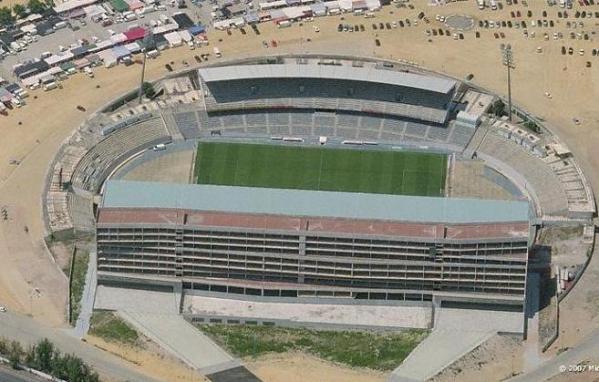
This article moves forward to 1991 when the old El Arcángel was coming towards the end of itself useful life. It had always been susceptible to flooding and the municipality decided to build a new multi-sports stadium around 500 metres to the south of the old El Arcángel. This new stadium was only a little bit further away from the troublesome Guadalquivar, but was raised on a circular bank of land to avoid any repeat of flooding. Opened on 7 November 1993 (vs Recreativo Huelva 4-0), The Estadio Nuevo Arcángel featured a curved cantilevered stand on the west side and not a lot else. The stand sat atop a single tier of shallow open seats that ran around the stadium. This tier was separated from the pitch by that pantomime villain of stadium design, an athletics track. The new stadium had a capacity of 15,280 and was not universally loved. In fact, the fans despised it.

Unsurprisingly, the new stadium did not inspire Córdoba. It lacked the atmosphere and intimacy of the old El Arcángel, and so the club just muddled on in Segunda B. They did win the league in 94-95 & 96-97, but were undone in the play-offs by Sestao SC and Elche CF respectively. A third place finish in 1998-99 saw the club enter the play-offs and top a group featuring Cartagonova FC, Racing Ferrol and Cultural Leonesa. So after a sixteen-year absence, Córdoba were back in La Segunda and after a couple of season of staving off relegation, the club and the municipality decided to experiment with the stadium’s layout. Maybe taking their inspiration from Italy, where Cagliari did similar work to their Stadio Sant’Elia, temporary stands were erected at either end of the ground over the athletics track. The pitch was moved towards the west stand leaving the way open for the next major development of the stadium, a huge east Tribuna, which would form part of Madrid’s bid for the 2012 Olympiad. However, just as work was about to start, the plans received two massive body blows. First Córdoba managed to get itself relegated form La Segunda at the end of the 2004-05 season, then during the summer of 2005, Madrid lost out to London in the race to host the Olympics.
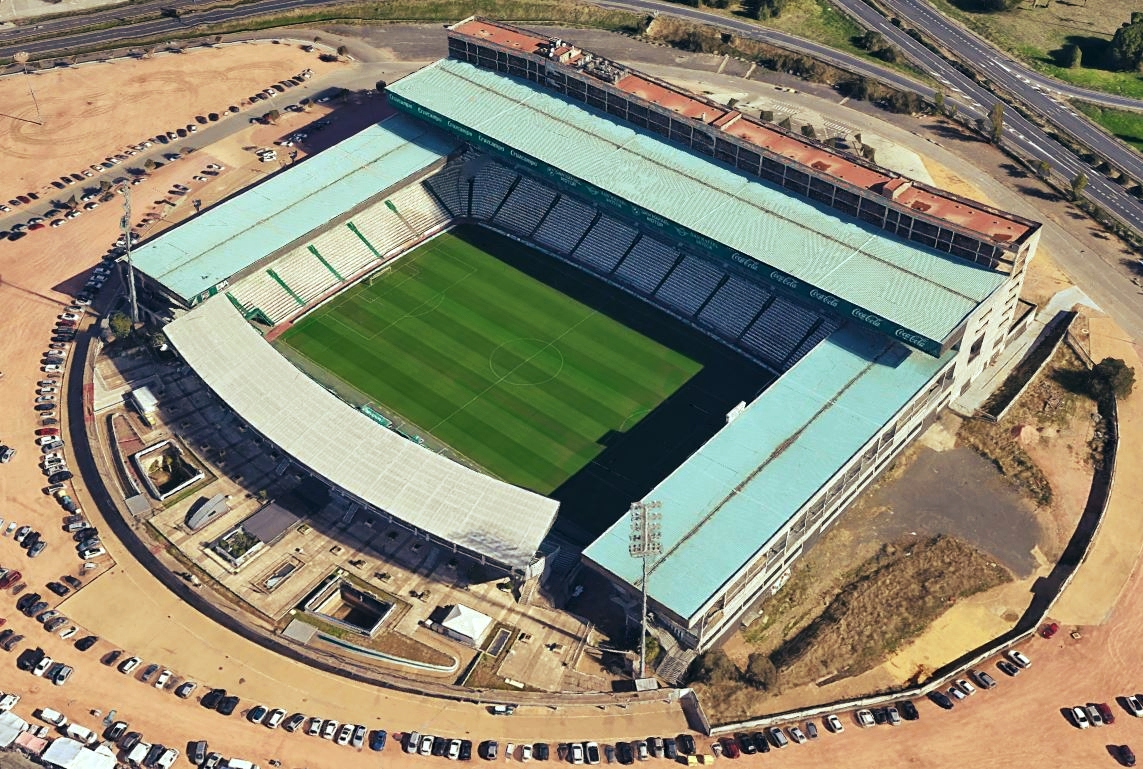
Undeterred, Córdoba and the local municipality pressed on with the brave decision to completely redevelop the stadium. The first phase saw the completion of a two tiered east tribuna with a capacity of 8,000. This huge building dominates the skyline of the rather flat and featureless river bed area and incorporates an (empty) 8 story office block at the rear of the stand. In September 2007 and with the club back in La Segunda, work commenced on the north end of the stadium. A little over a year later, the twin deck stand was opened, featuring a large bank of white seats on the lower tier and a slim section of green seats upstairs. The two new stands link seamlessly on the lower tier, but the upper tiers are joined with some rather boxy fascia work on the top level. The south stand is identical to the north and was completed at the start of the 2011-12 season. Plans to replace the existing west stand have been shelved, so with a capacity of 21,000, this phase of the project is complete.

The stadium is a world away from the bland and sterile Estadio Nuevo Arcángel of the 1990s & early 2000s, and after Córdoba won promotion to La Primera in 2014, ending a 42 year absence from the top flight, the world got to see this fantastic arena. It certainly helped detract from a dreadfully under-cooked host team, who managed only a single victory at the Arcángel and just two on the road. This was the start of a decade-long decline, which bottomed out in the 2021-22 season when Córdoba found themselves playing in the fourth tier of Spanish football for the first time since 1985. Thankfully, two rapid promotions saw the club back in La Segunda for the 2024-25 season.
Surprisingly, the Spanish National side had only ever played in Córdoba when the Arcángel had its original configuration, a 1-0 friendly victory over Japan in April 2001. A couple of months after the completion of the southern stand, the Spanish Under 21 side paid a visit on 14 November 2011 for a qualifier against Switzerland. It took until 15 October 2024 for La Selección to return to Córdoba, when they hosted Serbia in a Nations League tie. Hopefully, it the city and the Arcángel won’t have to wait another 23 years for La Roja’s all-conquering army to return.
 Estadios de España
1 thought on “Córdoba – Estadio Nuevo Arcángel”
Comments are closed.